Category: Distribute Your Wealth

  • Planning Is Important, Things Can Turn Ugly In An Instant

    Planning Is Important, Things Can Turn Ugly In An Instant

    The following story is based on an actual series of events with some names and circumstances fictionalised and any similarity to the name, character or history of any person is entirely coincidental and unintentional. Hope that we all don’t make the same mistake and full understand that planning is important.

    “It was like robbery!” a distraught Mama Yan said in a high tone as she opened the door for Mandy.

    “They were in uniform and they just barged in,” she continued. “One of them held up a letter and others just came in and started to take the TV and other items.

    “And Sharon, she, she…” her mouth quivered as she looked towards the lone figure lying on the bed in the living room. “Sharon, she tried to get up as if to stop the men and she fell…”

    Mama Yan related that at that moment, everything stopped. A more elderly among the men just shouted “Jangan!”, reached forward and with a few others, helped carried Sharon back to the bed.

    “I just froze and what happened next was a blur. All I can recall now was the elderly officer coming to me, saying something like “…datang pejabat untuk selesai. Kita tidak akan ambil apa apa.”

    Mandy went towards Sharon and in a soft tone said: “Are you alright? Don’t worry, I’ll sort things out…”

    She then turned to Mama Yan and pacified her, assuring her that she would take care of things. Mandy seemed to have figured out what the ‘raid’ was all about and asked for the notice the men left behind.

    Let’s take a closer look at why planning is important.

    Planning Is Important, Things Can Turn Ugly In An Instant

    This incident stemming from failure to settle outstanding payments of property assessment fees is the latest of episodes of non-payment of bills, the last being the disconnection of electricity supply that left the family in darkness just two weeks back.

    Mandy pitied Mama Yan, who was a sharp contrast from what she used to be – a happy contented mother, always beaming with pride that her Sharon, who in her late 30s, was at the prime of her career, having climbed the corporate ladder to be Marketing Director in an MNC.

    Sharon was Mama Yan’s pride and joy as a daughter. Despite being busy, often home late and out to office early, she had never failed to make sure that her mama and wheel chair-bound Pa were well cared for. They never had to worry about finances. Sharon was that ever responsible, dependable, and caring daughter!

    That was until one late afternoon six months ago. A call came in from Sharon’s colleague that she had blacked out and she was being rushed to the hospital.

    A Stroke Of Bad News

    Later, the doctor broke the news to Mama Yan that Sharon had a stroke and the left side of her body was paralysed. Mama Yan’s heart shattered in pieces when she finally got to see Sharon. Tears streamed from Sharon’s eyes. Tried as Sharon could, no words came out from her mouth. Her frustration could only be seen from her eyes.

    Tears welled up too in Mama Yan. Sharon, who always had things in control, was lying there helpless. The pain of seeing the suffering that Sharon was undergoing was after a while replaced by thoughts racing through her mind about Sharon’s future and what would be in store for the family.

    Sharon had taken care of the family well, providing for their financial needs. The live-in maid was a great help in attending to Sharon’s Pa, who even though recovering for the stroke, needed help in movement.

    Can you see now why planning is important?

    Good Times Won’t Last Forever

    Six months have passed. There are no indications how long more Sharon would be bed-ridden. Weighed down by worries of mounting expenses and depleting savings, how to cope with two stroke patients, and a load of unexpected problems, Mandy was the only family friend that Yan could turn to.

    Mandy, however, could only provide help in sorting out certain problems like dealing with municipalities and local Government departments.
    What was of greater concern was that their one-time solid financial pillar had crumbled. Yan has never felt so hapless.

    Mama, amidst tears, said to Mandy: “I have no choice but to see Yong and beg him for financial help now. He is the brother-in-law that I don’t really like but I have no choice.”

    Considering that Sharon had built a successful career and if she has got down to writing a Will to take care of her dependent family, her parents would not be in dire straits if their financial pillar passed on.

    However, in this instance, her plans under the Will could not be effected as she is still alive, but incapacitated.

    Will VS Trust

    Planning is important. Had she set up a Trust, Sharon would have planned well for such an eventuality if not for this cruel twist of fate. She could have placed certain assets she had accumulated in the trust of her appointed licensed trust company.

    In the trust deed or instructions spelled out by the settlor (person setting up the Trust), she could have instructed the amount, frequency of payment for the living expenses of the family, as well as medical expenses, which in the case of Sharon’s family could be substantial as it would be for both her father and her.

    Sharon could have even directed the trustee on how the monies in the trust fund should be invested until her death, after which she could set conditions as to what and how to invest. Such planning will ensure that income is generated while she is incapacitated to meet living and medical expenses.

    The family’s financial pillar would still have been intact in this case as Sharon’s ability to financially provide for her dependent parents has been transferred to a reliable trustee. While the trustee can be an individual, a trust company is recommended as the latter will exist in perpetuity and has experienced and skilled staff with the time and resources on hand to administer the Trust.

    Hope we now understand on why planning is important.

    About Rockwills International Group

    Rockwills International Group, now in its 27th year, pioneered professional will writing in 1995 and has since evolved into the leading estate planning specialist in the country. It is today the largest provider of solutions and support services in the areas of trusts, succession, management and distribution of wealth. It has shareholders’ funds exceeding RM50 million. It has done over 280,000 wills and 15,000 trusts and hold more than RM25 billion in assets under trust.

  • Hard Facts About The Executor Of A Will In Malaysia

    Hard Facts About The Executor Of A Will In Malaysia

    The following story is based on an actual series of events with some names and circumstances fictionalised and any similarity to the name, character or history of any person is entirely coincidental and unintentional. Hope that this will help you understand the hard facts about the executor of a will in Malaysia.

    Janet hates her husband! In a moment of anger out of frustration, the thought “why didn’t I die before you…” raced through her mind.

    Tired and annoyed, Janet just couldn’t help taking it out on her late husband for the torture she underwent. For the umpteenth time this week she has been given the run-around from one Government department to another, to the bank, to EPF, to… only to be told that she doesn’t have the necessary documents or sorry, wrong department!

    The Hard Facts About The Executor Of A Will In Malaysia

    “Didn’t you know that the job of an executor of a will in Malaysia is that difficult?” she lashed out as if husband Keat was in front of her.

    “How could you put me through this, you Mr Know All? You knew very well I’m useless in dealing with such stuff? Why? Why? Why are you so irresponsible…” her voice trailed off as she started to sob, shielding her face with her hands outside the Employees Provident Fund office.

    Just slightly more than a month back, she lost her pillar of strength. It was cruel that Covid-19 had so suddenly taken Keat away and left her with their two little ones.

    She recalled that she was numb with disbelief when she had to unceremoniously send-off Keat without a proper burial. She was allowed to watch only from a distance and say her last farewell as the casket was rolled into the furnace at the crematorium.

    She was alone then and she had been alone mourning her loss after that as no one could visit her home as she and her kids were on home quarantine.

    Janet didn’t know where she found the strength in those moments of grief. But now, as time heals, she felt like being dealt with another cruel blow.

    The Pain Of Losing Loved Ones And Executing The Will

    mental health

    Little did she know what she had to go through as she started the process of executing Keat’s will. It was only after having a taste of it that she realised the folly of Keat in insisting that they keep things within the family and appoint each other as Executor of their respective wills.

    It was torture which she as the surviving spouse would want to be spared. The question before her is would she be able muster any more strength to go through this while taking care of the children’s needs…?

    The role of an Executor of a will in Malaysia is to carry out instructions in the will and ultimately distribute the assets to beneficiaries.

    The process before assets can be distributed to the beneficiaries involves settling debts and liabilities, for example loans, credit card dues, and taxes, efficiently and without bias.

    This can be an onerous task – complex and time consuming especially for the uninitiated as it involves legal, taxation, accounting and administrative matters such as tracing of assets, application for probate and attending court hearings as well.

    Local government agencies and statutory bodies such as land office, EPF office, Inland Revenue will have to be dealt with depending on the assets left behind by the deceased. Then there are the banks, the credit card issuers, insurance companies, debtors, creditors, stockbroking firms, company secretary, accountants… the list goes on.

    Huge Burden On The Executor

    The person appointed as Executor of a will in Malaysia as such needs to have a wide knowledge in legal, accounting, tax and administration work to ensure that the process of applying for Grant of Probate, administration and distribution of assets is carried out smoothly.

    Any undue delay in the distribution of the assets may be to the detriment of the beneficiaries who, due to the demise of their sole breadwinner, for example, may be in difficult financial situation with sudden loss of income.

    As individuals with the necessary capabilities may be hard to come by, a prudent consideration is to appoint a trust company like Rockwills Trustee Bhd that have specialised in estate administration matters for decades.

    The professional company will have experienced and skilled personnel with the time and resources on hand to administer to one’s estate and Trust. Unlike the individual executor, the company will exist in perpetuity thus averting any possibility of untimely death before or in the midst of carrying out duties of an executor.

    Now you know what the executor of a will in Malaysia have to face?

    About Rockwills International Group

    Rockwills International Group, now in its 27th year, pioneered professional will writing in 1995 and has since evolved into the leading estate planning specialist in the country. It is today the largest provider of solutions and support services in the areas of trusts, succession, management and distribution of wealth. It has shareholders’ funds exceeding RM50 million. It has done over 280,000 wills and 15,000 trusts and hold more than RM25 billion in assets under trust.

  • The Importance Of Estate Planning, Avoid Last Rites Drama

    The Importance Of Estate Planning, Avoid Last Rites Drama

    The following story is based on an actual series of events with some names and circumstances fictionalised and any similarity to the name, character or history of any person is entirely coincidental and unintentional. It can’t be emphasized enough on the importance of estate planning.

    The woman lunged forward, grabbed the hair of the man and screamed: “You influenced daddy to keep me out of the will!” That shattered the solemn atmosphere at the wake of the head of the family.

    What started with three sisters huddled together next to the casket listening to their brother-in-law holding court, turned chaotic. Their murmurs grew louder and louder as it turned into a heated argument.

    All eyes at the Funeral Parlour were now on the mourners. Daughter No 1, Cheng, held back by relatives from attacking her brother-in-law, continued berating the man. “I was in daddy’s will. He showed me…” she said in between sobs.

    Daughter No 2 countered for her shocked husband saying, “You deserve it! It’s all your own doing!”

    From a corner, a voice commanded: “Enough! We’ve not sent off daddy yet and you’re already fighting…”

    The voice trailed off. Tears streamed down her cheek as she watched unbelievably at how the family was starting to break apart.

    She was soon lost in her own thoughts as the altercation stopped. “Have we raised our children right?” she questioned herself.

    She looked at Cheng, who was now crying quietly. She was more of a problem among her three children. Probably being first born, and the apple of Daddy Hock’s eyes, she was spoilt. Her gambling habit and getting into debts were what got her father angry most of the time in the past one year.

    So, was disappointed Daddy Hock right in rewriting his will? Was Cheng right in saying Beng influenced Daddy Hock to leave her out of the will, she wondered.

    “Ah, that Beng, he likes to show off that he knows-it-all! How much of an influence did he have over my Hock?” her thoughts went racing. Out of the corner of her eye, she could see Beng smirking.

    She wondered why Hock ended up with making Beng the executor of his will and also letting Beng keep the will. The matriarch of the family was at a loss as to restoring the bonds between the daughters.

    This is crucial why we need to understand the importance of estate planning.

    The Importance Of Estate Planning

    This family drama at the wake highlighted several pertinent issues which are valuable pointers to note for in the importance of estate planning.

    Re-writing of Wills

    The Last Will and Testament is an important legal document giving clear instructions for wealth distribution.

    While the will can be re-written as many times as one wishes according to change in circumstances, it is nevertheless important that the document be kept private and confidential to avoid occurrences of tampering or being damaged and rendering the will invalid.

    In the case of Hock, he has divulged the contents to his Daughter No 1, giving rise to possibility of squabbles among family members even before he is gone.

    It is also prudent that the reading of the will be held at a conducive place and time. In the family drama above, Beng, a related party, who was appointed Executor and Custodian of the will, had – whether by design or coincidence – divulged the contents of the will at the wake. Stemming from this, things could get ugly.

    Executor

    Appointing the right Executor is crucial to ensure that the estate is administered professionally and efficiently to carry out the wishes of the deceased and avoid the bereaved family members and dependents having to deal with issues arising from the estate such as creditors chasing for payment and tedious administrative matters such as preparation of accounts and filing taxes.

    With the right Executor in place, the administration can be carried out efficiently where the beneficiaries would have fast and easy access to their inheritance.

    It is a common practice for testators to appoint, out of convenience, their spouses or children or trusted friends as executors to handle their estate administration. This is not wrong or prohibited but it could be counter-productive for the effective administration of the testator’s estate if the appointed executor is unfamiliar and inexperienced with the tasks at hand.

    A trust company is a recommended option as unlike the individual, the company will exist in perpetuity and has experienced and dedicated skilled staff with the time, capability and resources on hand to perform the function of the Executor.

    Custody

    It must be the borne in mind that equally as important in having a will is the safe custody of the will. A will that cannot be found is as good as not having a will. Safe custody from possibility of being tampered or damaged is also essential.

    Keeping the will in a Will Custody Centre is a recommended option to being in one’s locked cabinet or safe. Worse if the will is kept in a bank safe deposit box because it cannot be retrieved without probate, which cannot be obtained without the deposition of the will in court.

    A dedicated Will Custody Centre can ensure that the will is easily located and retrieved; is in safe storage in a humidity-controlled environment that ensures the document’s good condition over time; and is in secure vault with appropriate tight security system in place.

    It is hoped that we now understand the importance of estate planning and to avoid any last rites drama.

    About Rockwills International Group

    Rockwills International Group, now in its 27th year, pioneered professional will writing in 1995 and has since evolved into the leading estate planning specialist in the country. It is today the largest provider of solutions and support services in the areas of trusts, succession, management and distribution of wealth. It has shareholders’ funds exceeding RM50 million. It has done over 280,000 wills and 15,000 trusts and hold more than RM25 billion in assets under trust.

  • Fall of Family Business Empire, Why Family Business Fail?

    Fall of Family Business Empire, Why Family Business Fail?

    The following story is based on an actual series of events with some names and circumstances fictionalised and any similarity to the name, character or history of any person is entirely coincidental and unintentional. With it, hope that we can understand more about why family business fail.

    It was unexpected for Jade. Her late husband, Chee’s family business empire had just fallen in the hands of others!

    How wrong Jade was with her assumption that when it came to the crunch, her late husband’s two partners would be sympathetic towards her. Instead they teamed up to make sure that not only she had no say in the business but also for her two estranged step-sons from her late husband’s first marriage.

    The two partners combined their equity holdings to ring-fence control and totally keep out the family of late founder Chee (Jade’s late husband) as they were worried and felt strongly that the ensuing family conflicts between Jade and her late husband’s family from his first marriage would be disruptive to the business.

    The partners had the advantage of the split equity holding of the Chee family members to stage a takeover of control of the business. Jade had never thought the partners would betray her as they were very supportive of founder Chee, and also empathised with her when they saw how terrible the step-sons treated her after their father passed on.

    The partners consoled Jade many times and offered to help in anything. She had the feeling that they would not be inclined to bring the step-sons into the business. She also reckoned that they would not be averse to appointing her as Director of the company so as to maintain the Chee family interest. However, all those so-called partners were fake. Eventually the partners took control of Chee’s family business empire and kicked her out.

    How Easily A Family Business Fail

    How could Jade’s late husband not foresee this? It became clear to Jade now that her late husband was good in running the business but he had failed miserably in ensuring continuity of the family business empire that he so capably built.

    While Jade’s late husband knew of Jade’s capabilities as a successor, he had not planned for it. He had not been communicative and shared with her anything to do with the business. He had been going about in the prime of his life as if he was immortal. And that probably was the reason why he didn’t even have a will!

    Only after the cruel blow of being killed in an accident following a drinking session with business associates that Jade found out that her late husband was actually not in control of things, especially his business empire. He was so ill prepared.

    Without a will, her late husband’s assets would, according to the intestacy law, be distributed to his parents, spouse and children. Effectively without surviving parents, his estate which included his majority shareholding in the family company is split between Jade and his two sons from the first marriage. That means not only his business but the house that Jade is staying is now co-owned by her step-sons too!

    But being on unfriendly terms, the fragmented shareholding of the Chee family members delegated them to be minority shareholders. By not combining their shareholding, they could not match, out-vote and block the combined controlling power of the two partners. What a tragedy!

    The Importance Of Succession Planning

    Proper succession planning would have ensured smooth continuity of management, control and ownership of a family business. If not, the chances for the family business fail will increase.

    It is prudent that succession planning starts as early as possible to avert a situation like the unwanted outcome of the Chee family business. Consult experts in estate planning to make sure a succession plan is achievable and will not have unforeseen pitfalls, even of tax and financial nature.

    A viable solution would be a Business Trust which creates a structure for family succession. Through instructions in the trust deed from the owner, the Business Trust can be designed to benefit the family members to ensure the continuity and preservation of the business within the family, even for those who are not on good terms with each other.

    Contentious issues such as successor -be it a family member or a business partner – and the delegation of powers could be pre-determined and stipulated in the Business Trust for the appointed Trustee, which is recommended to be a licensed trust company that operates in perpetuity, to carry out the instructions.

    Other relevant matters that could be addressed could include triggering event, for example, death, illness, incapacity or disappearance; or legal considerations that include exit arrangements or buy-sell arrangement of shares by other existing partners/shareholders from family shareholders; and also succession structure and process.

    With such proper estate planning that also encompasses protection of beneficiaries from unwarranted or future claims from creditors or ex-spouses, or takeover attempts by unfriendly parties, or even possibility of squandering of inheritance by beneficiaries, nothing is left to chance and the interest and future of one’s family business would be safeguarded.

    Such comprehensive estate planning solutions can be achieved by consulting an experienced estate planner working with an established company such as Rockwills Trustee Berhad.

    About Rockwills International Group

    Rockwills International Group, now in its 27th year, pioneered professional will writing in 1995 and has since evolved into the leading estate planning specialist in the country. It is today the largest provider of solutions and support services in the areas of trusts, succession, management and distribution of wealth. It has shareholders’ funds exceeding RM50 million. It has done over 280,000 wills and 15,000 trusts and hold more than RM25 billion in assets under trust.

  • Fighting Over Equity Distribution, The Importance Of Succession Planning

    Fighting Over Equity Distribution, The Importance Of Succession Planning

    The following story is based on an actual series of events with some names and circumstances fictionalised and any similarity to the name, character or history of any person is entirely coincidental and unintentional. Hopefully we can understand the importance of succession planning and make the necessary preparation.

    Elder Tan put down his chopsticks, looked up and smiled.

    His three sons and their spouses are seated together once again for a reunion dinner which the COVID-19 pandemic denied the family for two consecutive years. In the next table, the children are noisily tucking in their food and chattering away as well as occasionally peering into each other’s phones.

    Tan was a picture of contentment. He has raised his children well to be successful in their own right. He is proud of his eldest son Seong who is doing a good job taking charge of the hardware business that Tan had built from scratch. Danny, the No 2, is head of the engineering department in a construction firm while Chye, his street smart youngest son, is doing well in sales in his father-in-law’s spare parts company.

    “I want to tell all of you something…” Elder Tan interrupted the conversations at the reunion gathering.”

    Succession Planning Is About Being Prepared

    I want to retire and leave the family business to Seong,” he added. Seong looked at his father, beaming that he is getting just rewards for the hardwork that he had put in to run the business.

    “I’ll transfer the shares of the company to all three of you equally,” Tan said looking at his three sons. The expression in Seong changed on hearing that. He looked startled as he had expected the lion share for all his sweat, literally!

    “Equally with Danny and Chye! They didn’t lift a finger to help out in the business! And they now get equal share of the fruits of my toil? No way!!!” Seong now getting red faced with anger.

    He rose from his seat and smart-mouth Chye stopped him in his tracks with his remark: “What, you’re not happy?”

    The whole atmosphere changed as Seong lunged towards Chye. Danny stepped in between and after that, chaos broke out. A breakdown in family harmony over too-soon, unforeseen, unexpected equitable or inequitable distribution of family assets?

    Tan’s desire to be fair and thus, the equitable distribution of equity in the family business probably blindsided him from the possibility of a family feud erupting from it. Estate planning and succession planning needs to be skillfully handled and prudently managed to avert any unwarranted situation such as a family feud.

    Succession planning inevitably is critical for business, especially family-owned business. Business owners tend to underestimate and downplay its importance, ignoring possible downsides when they are no longer in charge. It holds true that failing to plan is planning to fail.

    A pre-planned succession such as through a Family Business Trust or a Family Foundation would be a prudent way to lay down instructions on conditions for ownership succession, management succession and rewards and conveyed impartially and professionally by an independent third-party such as a trustee would avert family feuds over inheritance.

    Three key areas need to be considered in setting up a business succession plan namely:

    • Ownership Succession. This will ensure that the shares of the family business will be protected and not likely to be fragmented over generations. The rightful heirs are clearly defined, thus enabling ring fencing against outsiders to own the family business
    • Management Succession. Successor is crucial for continuity of the family business. By having a capable candidate to be successor of the family business, it retains the goodwill of the family business and it improves the confidence of the investors, customers, and employees
    • Family Wealth Management. Proper planning and allocation of family resources effectively will maximise the benefit for each of the family members, such as in areas of financing family education, family medical and family reserves needs

    Business succession planning is an essential part of the risk planning for the business.

    About Rockwills International Group

    Rockwills International Group, now in its 27th year, pioneered professional will writing in 1995 and has since evolved into the leading estate planning specialist in the country. It is today the largest provider of solutions and support services in the areas of trusts, succession, management and distribution of wealth. It has shareholders’ funds exceeding RM50 million. It has done over 280,000 wills and 15,000 trusts and hold more than RM25 billion in assets under trust.

  • The New Heir: Managing Your Inheritance

    The New Heir: Managing Your Inheritance

    Managing an inheritance can be life-changing and for many people, as it can open up many new possibilities. The biggest question one would probably face, therefore, is how your new inheritance should be managed to benefit you the most.

    Whether wealth management is something that you are familiar with or whether your inheritance suddenly puts you in an entirely new financial situation, receiving a substantial amount of money or a property can be overwhelming if you don’t know what to do with it.

    With that in mind, Smart Investor spoke with experts to give you a clearer understanding on managing your inheritance.

    Set Up a Trust

    Azhar Iskandar Hew, Group Chief Executive Officer of Rockwills Trustee Berhad

    If your inheritance comes in the form of cash or property, the best way to handle an inheritance from the perspective of the heir, would be to cooperate with the executor or trustee on obtaining details required for probate application and to track the progress of the estate.

    Upon receiving the inheritance and if the inheritance comes in the form of cash, one option is to set up a trust with a professional trust company. You then execute a trust deed in which the terms for the use of the cash can be clearly written down.

    At the same time, the heir can also mention who should inherit the cash and how it is to be distributed, should anything happen to him. This way, the heir or settlor of the trust would have control over the distribution or usage of the cash.

    Some of the main instructions in the trust can include directing the trustee to pay for the settlor’s maintenance, medical bills, children’s education and family’s living expenses on a regular basis. By doing so, the money will not be given to anyone in one lump sum which can be wrongly invested or misused.

    Of course, another advantage of a trust is that unauthorised persons will not be able to touch the cash, as only the named beneficiaries can receive the money.

    It’s All About Priorities

    inheritance

    Kenney Khew, CFP
    Philip Wealth Planners

    Upon receiving your inheritance, you should first of all, list down all your financial goals and prioritise them according to your preferences.

    Put aside an amount (at least 6 months of your gross salary) into an Emergency Fund. This is recommended, as you would then have money to fall back on in the event of an urgent matter that is out of your control.

    With the cash you should also pay off your debts, including your credit card debts, outstanding housing loan, car loan, student loan and any other personal loans.

    It is also recommended that you put aside an amount of money for your children’s education fund according to the calculations made based on future values of tuition, transportation, living, and course fees. In this case, you must also take into consideration the inflation, as well as exchange rates.

    Be sure to also purchase a term life insurance of up to 80 years old. The rule of thumb is for the sum insured to be 10 times your annual income. A medical insurance plan is also important in this context. By doing so, you will be able to protect your assets against mishaps as to not affect your future plans.

    The remaining money can further be used to invest in properties. You can rent out these properties to earn extra income and what’s more, this is a form of passive income that would benefit you in your golden years.

    I Just Inherited a Property – Now What?

    inheritance

    Gor Sheau Shuenn, CFP
    Blueprint Planning

    If you’re lucky enough to receive an inheritance, you should consider what the assets are and how much you will be receiving. If cash is the legacy you’ve received, it should be invested in a proper mixture of different portfolios, as otherwise, liquid assets are bound to be spent too frivolously.

    However, if the inheritance you will receive comes in the form of a property, there are a few factors that need to be considered:

    1. Has the mortgage of the property been paid off in full; if not, what is the loan repayment amount?
    2. Is the property currently being rented out? If so, is the rental yield positive?
    3. What are the appreciation possibilities of the property in the future?
    4. Who is going to manage the property, and will the return be able to cover the maintenance cost?             

    If all answers to the above questions point to a resounding ‘yes’, the property will be all the more attractive as you will receive rental income and capital gain for the disposal of the property.

    At the end of the day, it doesn’t really matter whether the legacy you’d inherited comes in the form of cash or property. All that matters is how the legacy can assist you in shortening the period of time you will need to achieve your financial goals.

    The Financial Planning Factor

    inheritance

    Kevin K.M. Neoh, CFP CERT TM
    MBA, VKA Wealth Planners Sdn Bhd

    It is perfectly normal to do nothing while you consider what to do with your inheritance. Ride out the emotional period and contemplate what you hope to achieve from this fund or inheritance with a clear mind to avoid mishandling or making poor decisions. Even if it means waiting for a couple of years as you do some soul-searching, go for it.

    Should you be the sole beneficiary of this inheritance, why not consider investing or managing it based on your financial plan, or in a manner that will support your life goals and values? Proper management and budgeting is important to ensure that the windfall will not be squandered unnecessarily.

    While you sit on your inheritance, it is also important to note that inflation will erode the purchasing power. Therefore, the need to find an instrument that can yield at least above inflation rate is important because it tends to shield the inheritance from being eroded by inflation.

    Don’t change your plan or your spending habits just because you have received an inheritance. In fact, try to use this as an added advantage to help you realise your life and financial goals.

    Making the Most of Your Inheritance Money

    inheritance

    Yong Chu Eu, FAR, CMSRL, CFP®, Shariah RFP
    Founder, managing director and principal trainer of Money & Life Academy

    Your inheritance can be divided into 3 parts:

    a) Untouched – This portion of your inheritance money can be put into liquid investments (property, insurance, PRS or EPF) and locked down

    b) Investment – Done according to your risk profile and availability of knowledge and time. You can also purchase stocks or unit trusts with the purpose of growing the money, or use it to start a business in a field that you are passionate about

    c) Spend – upgrade your lifestyle with comfort, quality and safety in mind, further your studies, clear off your debts, travel, or give back to the community

  • Estate Planning: It’s All About How You Leave

    Estate Planning: It’s All About How You Leave

    Regardless of your level of wealth, estate planning is a vital part of your overall financial plan, with effective estate planning providing you with greater control, privacy and opportunity to leave more of your legacy to your loved ones.

    To put things in perspective, an Estate Plan is a collection of preparation tasks that serve to manage one’s asset base in the event of their incapacitation or death, thus ensuring that all the individual’s personal assets go to his/her intended loved ones.

    However, good estate planning is much more than just making a plan in advance and naming whom you want to receive the things you own after you die – there are many important factors to be considered in this aspect. Here’s what the experts have got to say.

    Pay Attention to the Details

    Azhar Iskandar Hew, Rockwills Trustee Berhad Group Chief Executive Officer

    The key points to consider when doing estate planning and successfully leaving a legacy depends on whether the person is preparing a Will of trust, or both. Generally, an estate plan should include:

    1. The list of beneficiaries;
    2. Who to appoint as the trusted executor of the Will;
    3. If the children are young, then appointment of guardians is recommended;
    4. What are the assets to be distributed;
    5. In what proportion, as well as the terms of distribution;
    6. Substitute beneficiaries will need to be considered, depending on the family’s lifestyle such as yearly family holidays, along with the number of beneficiaries to be named.

    In addition to the above, it is important to have a complete and accurate record of assets and liabilities including tax file status; items held in trust by others and for others; and a list of overseas assets.

    Special attention must also be given to joint properties, assets or funds where nominees have been made earlier. It is also important to ensure that there is enough liquidity to pay debts.

    For business owners, it is important to plan for proper business succession, both in terms of management and ownership. Not to forget, preservation of controlling interest as well as preservation of capital, including protection against creditors and ex-spouse claims.

    With the above, the individual can then leave clear instructions to prepare a comprehensive Estate Plan to ensure he has a successful legacy. Depending on the person’s objective, Estate Planning can also cover various aspects including planning for business succession, education and retirement.

    As an example, Mr Tan and his wife are the shareholders in two private limited companies involved in manufacturing and services. His two children are working for him.

    Both Mr Tan and his wife intend for the companies to continue to be owned by the family for many generations to come. The solution would be for Mr Tan and his wife to create a trust by settling in it their shares in the two companies.

    An independent trust company should be appointed as the trustee to hold the shares of the two companies for the benefit of the children and their lineal descendants.

    During the lifetime of Mr Tan and his wife, they have sole ownership control over the companies and upon their passing or disability, the two children will be given control, and thereafter suitable and qualified descendants will be appointed as successors.

    The trust should spell out the detailed succession and distribution plan so that control remains within the family.

    With a proper business succession plan, the ownership of the two companies will be fragmented which would lead to in-fighting among the descendants which in turn may cause the companies’ business to be disrupted.

    In the same trust, Mr Tan and his wife can instruct the dividends received by the trust to be used to pay for the tertiary education of the descendants that is related to the business of the companies. This would ensure that there would be continuity of suitable and qualified successors in the business.

    Don’t Procrastinate Estate Planning

    estate planning

    Kenney Khew, CFP
    Philip Wealth Planners

    Estate planning is important throughout our cycle of life, regardless whether you’re in your 20s, 30s, 40s or 50s. Many tend to have the misconception that only the rich should think about distributing their wealth, while others may even feel uncomfortable to broach the subject when you’re still alive!

    That aside, wealth planning is crucial as it allows you to leave your hard-earned wealth to the beneficiaries of your choice in the shortest time possible with very few hassles and setback through the application of a grant of probate (testate).

    In the case of Intestate (not having made a Will before one dies), the deceased’s family will need to apply for a Letter of Administration by choosing an Administrator to determine the value of the estate, and get two sureties (guarantors) to unlock the frozen assets.

    Should we want to leave a legacy for our children, there are certain aspects to consider:

    1. Your appointment of trusted Executors – A valid Will should spell out the appointment of executors to carry out your wishes so that wealth is properly distributed to your loved ones as soon as possible, and the best person is a trust corporation or professional trustee, and it is important to look for a qualified person who is professional, independent and knowledgeable;
    2. Your choice of guardian for your children below the age of 21 – With the choice of guardians in your hand, you can be sure that your children will be well taken care of;
    3. Your choice of beneficiaries and their entitlements – how much of your wealth is to be distributed to your beneficiaries upon your demise has to be clearly stated in your Will (normally in the form of percentage);
    4. Testamentary Trust – a testamentary kicks in upon your death and allows your young children and ageing parents to receive a sum of money for living expenses and school fees. In these circumstances, you will need to entrust the trustees to carry out your wishes accordingly.
    5. Will custodian – in this case, a will custodian is very important as it is pointless to write a Will only for your loved ones to not be able to locate your Will. The safekeeping of the Will and its easy retrieval are vital in order to ensure your wealth is distributed to your beneficiaries with no hassle.
    6. Witnesses – once the Will has been drawn up, it is not effective until it has been signed in the presence of two witnesses. These witnesses have to be present at the same time when the Will is signed to confirm that you are of sound mind, that the Will is made voluntarily and without pressure from another person, and that the Will was not signed when you are intoxicated or drunk.

    A Will is a Must!

    estate planning will writing

    Kevin K.M. Neoh, CFP CERT TM, MBA
    VKA Wealth Planners Sdn Bhd

    When it comes to effective estate planning, you mainly need to consider the position of the estate (i.e. if there will be anything left to be given away to the beneficiary).

    If the person has more debts than assets, then this person would die insolvent, which means that it does not matter if the person has written a legit or complete Will or not, since most of the estate would be used to repay his outstanding debts.

    Next comes tax matters. It is important to ensure that we keep proper filing and do our tax filings well, and have no outstanding and unpaid dues.

    The basic form that we need to consider when it comes to estate planning is perhaps writing a Will. A will is simply a legal document and we will need an executor to carry out the wishes of the testator.

    Appointing executors, therefore, is a very important matter because if the appointed executor is not capable or have a good sense of responsibility, the entire process may go haywire and worse, the interests of the beneficiaries may not be protected.

  • Will Writing: Can I Do it Myself?

    Will Writing: Can I Do it Myself?

    In my article published in August 2017 entitled “Have You Prepared Your Will?” I dealt with the general process of making a will, the advantages of having a will made, and some questions that I have answered from my clients over the years with regards to the will-writing process.

    I have since then received further queries on whether it is necessary or mandatory for one to use the services of a law firm, or a professional will-writer for the purposes of writing a will. This article will deal with that question from a legal and practical perspective.

    Firstly, the law does not compel you to appoint a law firm or a professional will-writer to have your will written.

    Unlike applying for Letters of Administration or a Grant of Probate where the services of a lawyer are required for the purposes of filing the requisite applications in Court, will-writing can be done by the individual.

    However, when you undertake the will-writing process without the services of a professional, it is prudent that you are fully aware of the requirements and intricacies of the laws relating to inheritance, in particular, the Distribution Act 1958, The Wills Act 1959 and the Probate and Administration Act 1960. 

    Will Writing: Dos and Don’ts

    will writing

    The worst thing you can do is to use a standard template obtained from the internet, which could eventually lead to various problems, including your will being challenged.

    Neither should you use templates given to you by friends as their wills may have been drafted under different circumstances from yours.

    It is important to remember that a lack of clarity and vital omissions in your will can lead to disputes between your family members and unnecessary protracted and costly litigation.

    If you wish to intentionally leave out a particular family member from your will, it is advisable that you set out expressly that you wish for this person to be excluded and give reasons for that exclusion. This will reduce the chances of a successful challenge in Court.

    There have even been circumstances where the Courts have gone against the contents of the Will, and pursuant to the Inheritance (Family Provision) Act 1971, made provisions for other members of the family, where the Court was of the opinion that the deceased had not made reasonable provisions for the maintenance of a particular dependent.    

    When the Court makes such a decision to contradict or go against the contents of a will, the Court will consider all circumstances, including the assets and income of the dependent, the conduct and relationship of the dependent with the deceased, the size of the estate, and the interest of the named beneficiaries.

    If you are unwell or are under heavy medication for a prolonged sickness, it is advisable that you get your doctor to confirm your state of mind when your will is being signed, as there have been instances where a will has been challenged on the grounds that the deceased was of unsound mind or under heavy medication, and therefore, making it impossible for the deceased to have known what document he or she was signing, let alone the contents of the said document.  

    The Courts have in the past dealt with disputes where family members have challenged a will on the basis that the contents of the will had been altered, the signature of the deceased had been forged and that the execution of the will was not properly witnessed.

    It is prudent to note here that wills do not need to be stamped, but there is a requirement in law for the will to be properly witnessed.

    I have read lots of articles about this matter and have heard many people say that will-writing is a simple matter that any lay person should be able to handle on their own.

    However, I am cautious about taking such a position as it may not be as simple as it seems, as I have described above.

    Knowledge is Key

    will writing

    Firstly, you must be very clear in expressing your intentions in writing. It is advisable to appoint a professional, who will be able to craft your thoughts and intention on paper, rather than to be left with a document that is ambiguous, and thus open to challenge in the future.

    It is also necessary for you to constantly review and update the contents of your will. This is important as you may have sold some of your properties and may want to omit those properties from your will.

    In other circumstances, the status of your relationships may have changed and you may want your will to reflect that. It is important to make those changes and have it properly documents.

    There have been circumstances where family members have produced two different wills by the deceased in Court and have challenged the authenticity of later will.

    It is my opinion that one should not look too lightly at the will writing process. From a litigation lawyer’s perspective, a badly drafted will can mean years of protracted, costly litigation and years of turmoil and dispute between warring family members.

    It is important that one does not leave a legacy of strife and for that, I would advise that the services of a professional be sought for the purposes of writing your will.    

    About the author

    SHARMILA RAVENDRAN is the founder of the law firm, Messrs Ravindran located in Mont Kiara, Kuala Lumpur. She has more than 14 years of experience in the legal industry servicing clients that include local and foreign companies. She is now actively involved in corporate advisory work and commercial litigation and is a Panel Adjudicator with the Kuala Lumpur Regional Centre for Arbitration. She also sits on the Bar Council Child Rights Committee and is the Legal Director for Lean in Malaysia. She can be contacted at sharm@ravindran.com.my.                    

  • Do You Have a Plan B?

    Do You Have a Plan B?

    Lee-Wang’s story is not unusual these days. He and his family have been living in Asia for more than 25 years. But as his business expands globally, he spends more and more time shuttling between countries.

    The globetrotting businessman is in the process of getting his citizenship through a Portuguese golden visa programme that offers a real estate investment route to gaining residency and potential citizenship in the country and hence European citizenship.

    A big driver is for his two children to have the ease of travel a European passport offers in the future. The golden visa programme in Portugal is the most popular in Europe.

    Portugal Golden Visa Programme

    financial plan b passport

    It was launched by the Portuguese government in 2012 to stimulate investment into Portugal and has since encouraged several billion Euros in real estate investment and over 2,000 family applications each year.

    An investment of €500,000 is required in real estate in Portugal. The property, either residential or commercial, can be rented for income. Any number of properties can combine to make up the €500,000 minimum investment.

    Joint buyers can pool investments into one property. The property can be mortgaged for any investment exceeding the minimum.

    Portugal has a very favourable tax regime for anyone considering living in the country. No taxes are charged on overseas income for the first 10 years.

    For those non-resident individuals, tax is charged at 28% on income derived in the country. This can be reduced with expenses for rental income.

    Capital gains tax is 28% and there are allowances for costs and depreciation. There is no inheritance tax in Portugal. Applicants can apply for permanent residency after five years and Portuguese citizenship after six years.

    Global residency and citizenship programmes have been in existence since the 1980s. The demand for the benefits of such programmes expanded rapidly in recent years. The new golden visa programmes in Europe and the Caribbean have wide appeal across many countries.

    However, not every country and programme are the same. There are significant differences relating to investment level, family qualification, permanent residency, minimum stay, citizenship and passports, and not to mention, the differing economic states and real estate investment prospects in each country.

    The EU Context

    plan b european map
    Colorful Isolated Europe in Watercolor

    A number of European countries offer golden visas through investment in real estate, government bonds and donations. A citizen of any EU country is a citizen of the EU. Citizenship and a passport from any EU country allow the holder to live, work, study or travel visa free to any EU country because they are a European citizen.

    A resident of any Schengen countries can travel freely throughout the Schengen zone without border controls even though they may not have a European passport.

    The Schengen Area is the area comprising 26 European countries that have abolished passport and any other type of border control at their common borders, also referred to as internal borders. It mostly functions as a single country for international travel purposes, with a common visa policy.

    Based on experiences, some of the motivations behind global residency and citizenship planning are:

    Investment Return

    Most programmes offer real estate investment as the route to gaining a golden visa from that country. Long, medium and often short-term investment horizons lead to significant capital gains for real estate.

    Safe Haven Investment

    The USA and Europe remain safe havens for investment with clear property ownership laws, democratically elected governments and established taxation rules.

    The laws of the Caribbean countries offering citizenship programmes are based on UK law with democratically elected governments.

    Legacy for Family

    plan b family legacy

    Once the investment is made and the visas, residency cards and citizenship are granted then the ties and contacts with that country begin to increase.

    Children can be included, they eventually move on perhaps for an education, eventual jobs, eventual citizenship and the next generations have firm roots which they have either put down or have the option to do so.

    Education for Children

    Once permanent residency is established by living full time in the country, children can be educated under either the state or private education system.

    Looking to the future, as European citizens, children can gain access to universities in English speaking countries such as the UK at European and not international rates (a substantial saving).

    Some Caribbean countries offer higher education offering ease of access to universities in the USA.

    Ease of Travel

    plan b ease of travel

    A golden visa will lead to a residency card or eventually citizenship and a second passport. In all cases this can significantly improve an applicant’s ease of travelling throughout the world.

    A European passport allows the holder to live, work and travel anywhere in the EU including countries outside the Schengen Zone, such as Switzerland, the UK and Ireland.

    Second Passport

    The second passport and citizenship option arise from all the Caribbean programmes and several golden visa programs in Europe.

    Taxation

    plan b tax

    Taxation is a big concern for most wealthy investors. This is an area where more detailed planning will be needed. The Caribbean countries offer low or no taxation on overseas income.

    In Europe, some countries such as Portugal impose no further taxation on overseas income for the first 10 years of residency.

    No doubt, there are changing times ahead, with residency and citizenship planning or getting a Plan B already becoming an essential part of an offshore wealth management strategy for high net-worth individuals.

    On a final note, beware of fraud. The demand for second citizenships has created opportunities for fraud and misrepresentation.

    Be sure to perform the necessary due diligence or hire a qualified advisor or consultant specialising in such programmes. Get the right advice that is balanced and independent.

    About the author

    YH Wong has over two decades of experience in the financial services industry. His clients include high net worth investors and boutique institutions such as family offices and investment partnerships in the region. He is currently a senior partner with Satori Consultancy Ltd, a financial services company regulated by the Mauritian Financial Services Commission. He can be reached at yhwong@satoriconsultancy.com.

  • 5 Things You Will Get From The Estate Planning Malaysia Academy

    5 Things You Will Get From The Estate Planning Malaysia Academy

    Estate planning is the process of anticipating and arranging, during a person’s life, for the management and disposal of that person’s estate during the person’s life, in the event he or she becomes incapacitated or dies. Estate planning involves determining how an individual’s assets will be preserved, managed, and distributed after death.

    Assets that could make up an individual’s estate include houses, cars, stocks, artwork, digital assets, life insurance, pensions, and debt. Individuals have various reasons for planning an estate, such as preserving family wealth, providing for a surviving spouse and children, funding children’s or grandchildren’s education, or leaving their legacy behind to a charitable cause.

    Smart Investor recently got an early access to Estate Planning Malaysia Online Practice Academy that was just launched to the public. But before we begin, let’s look at what it is all about shall we?

    What Is Estate Planning Malaysia Online Practice Academy?

    It is a video-based learning that you can learn at your own pace. There’s also a section where you can read articles that was published on Smart Investor’s website as well.

    All-in, there’s 7 modules with 80 lessons contained in the platform.

    SECTION 1: Weekly Zoom LIVE Tutorials with experienced estate planner, Lee Khee Chuan

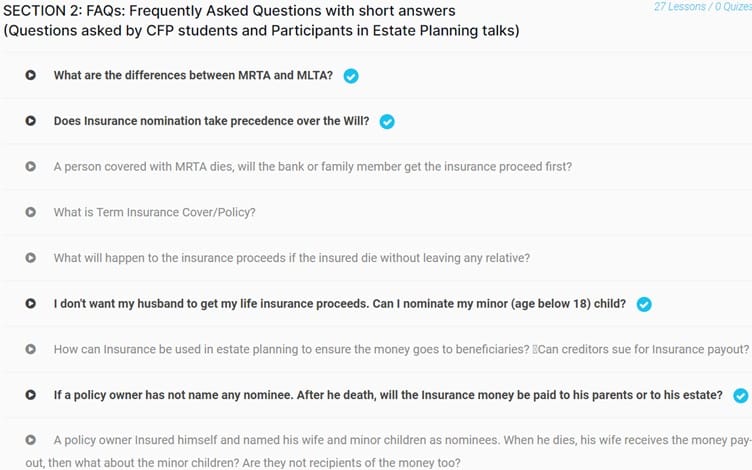
    SECTION 2: FAQs: Frequently Asked Questions with short answers (Questions asked by Certified Financial Planner@ CFP students and Participants in Estate Planning talks)

    SECTION 3: Estate Planning Sales/Advisory Process

    SECTION 4: Topical Discussions in CFP Module 2 Lectures (Insurance & Estate Planning)

    SECTION 5: Estate Planning Awareness Talks by Sifu Lee (recorded & presented by Lee Khee Chuan)

    SECTION 6: Estate Planning Avatar Short Videos

    SECTION 7: Smart Investor Articles Previously Published

    The number of contents will increase over time, so that’s a bonus.

    Here are 5 things that you will get from the Estate Planning Malaysia Online Practice Academy.

    1. Integrated Approach To Estate Planning Course

    For the first time in Malaysia, insurance agents, will-writers/estate planners/legacy planners, and CFP/RFP students/graduates who want to acquire practice knowledge of Integrated Estate Planning can now learn via this online practice academy.

    From the differences between MRTA and MLTA, to preparing a will yourself, to many other short videos that are easy to understand, all grounds are covered in this course.

    2. Experienced Trainer

    Lee Khee Chuan estate planning

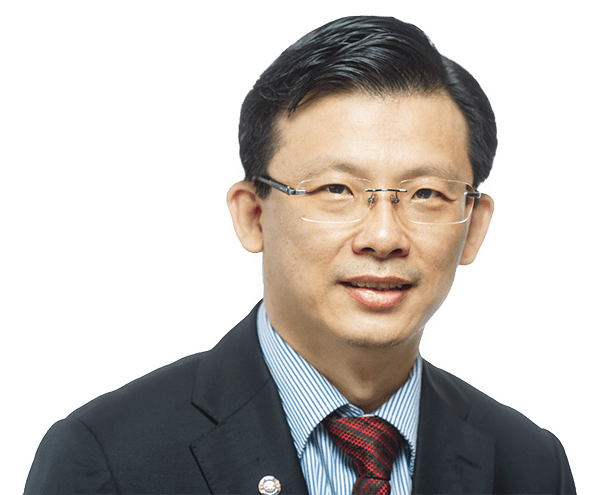
    Lee Khee Chuan @ Sifu Lee brings with him his unique blend of academic background and experiences. He holds a B.A. with double majors in political science and psychology, and double minors in economics and Malay Studies from National University of Singapore (NUS). Since 1992, he has been in personal selling, as well as a company sales trainer, practitioner, lecturer, and columnist in estate planning.

    He is a trainer, practitioner, and lecturer in the financial & estate planning industry since 1995. He has much to contribute to the industry with his writing, lecturing, practice, and training. His forte is in practice management focusing on integrated approach to estate planning. He brings his many years of practice experiences to this Online Academy and to impart and transfer his knowledge to his students.

    He is the first financial adviser in Malaysia who advocates and promotes the integrated approach in estate planning. Hi strength lies in the integrated and practical aspects of estate planning. Many of his CFP students like his practical teaching and training methods in estate planning.

    Made by the expert in the industry himself.

    3. On A Platform That Is Very Easy To Use

    You get to see everything at a glance and click on the content that you want to learn the most. Or you can follow step-by-step, completing it at your own pace.

    Once a lesson is completed, it will be marked as complete which is useful so that you can track your own progress.

    You can easily watch the previous video or click next to continue with the lesson.

    4. In Layman Terms

    It doesn’t get any simpler than the explanation by Sifu Lee himself. Don’t worry if you don’t have any financial background or estate planning in general, it is being presented in layman terms that is very easy to understand by everyone.

    The practical knowledge combined with easy-to-understand lessons, makes for a very well-equipped understanding of the subject at hand.

    5. Weekly Zoom Meeting

    After you’ve gone through all the modules, you can always ask Sifu Lee via Live Zoom meeting every week. Should you have any queries about a particular topic or if you have a particular case study that you need help on, feel free to ask during this online meeting.

    There will be a minimum of 40 weekly live sessions in a year with 2 hours duration per session. The value that you get from this personal touch is just amazing.

    Smart Investor interviewed a few students who have enrolled in the online estate planning practice course and are learning the subject online. Angel Lee, a life insurance planner from Malacca was excited when learning it using the online portal.

    She really loved the way those courses were prepared and presented, starting by highlighting the issues in estate planning insurance agents and estate planners often overlook. And then the video-ready lessons would provide the answer those questions. The master trainer’s teaching was clear, yet detailed, and she loved the many examples discussed in the online course. The examples are invaluable and help discover how estate planning can be applied to meet clients’ concern.

    Adrian Lean, a unit trust and PRS consultant from Penang, found the estate planning course a comprehensive program and contains practicable knowledge typically sought by not only those interested in estate planning, but also for those who wish to expand their knowledge in this area. The course curriculum contained many gems, and he especially liked the unique integrated approach and the solutions presented in the course.

    Overall, the course is a value for money package, and carries a distinction above other programs in the market today. He congratulated the academy and the master trainers who have done an excellent job in raising the benchmark for the estate planning industry in Malaysia.

    Early Bird Discount If You Start Now

    We all know how Malaysians love discounts, fret not. Estate Planning Malaysia Online Practice Academy in partnership with Smart Investor now offers a SPECIAL discount for 1st year for those who act now.

    All you need to do is:

    1. Browse Estate Planning Malaysia Online Practice Academy website.

    2. Fill in your details and put in the coupon code: SmartInvestor (non case sensitive)

    3. Complete the purchase by credit card

    That’s it, a huge discount from RM2,600 to just RM1,196 first year fee. But it’s only for those who start now.

    See you there!