Category: Islamic Finance

  • Standard Chartered Saadiq Advances Thought Leadership In Islamic Finance

    Standard Chartered Saadiq Advances Thought Leadership In Islamic Finance

    Standard Chartered Saadiq held its inaugural Islamic Financial Markets Forum recently, in conjunction with its 30th anniversary of Islamic banking.

    Having hosted more than a hundred participants from the financial services industry, the forum aimed to create a platform for key industry practitioners and regulators to share ideas and views to bring about greater understanding on Islamic banking and finance. As a leading international Islamic bank, Standard Chartered Saadiq offers a comprehensive Shariah-compliant product suite and an unmatched Islamic network spanning Asia, Africa and the Middle East.

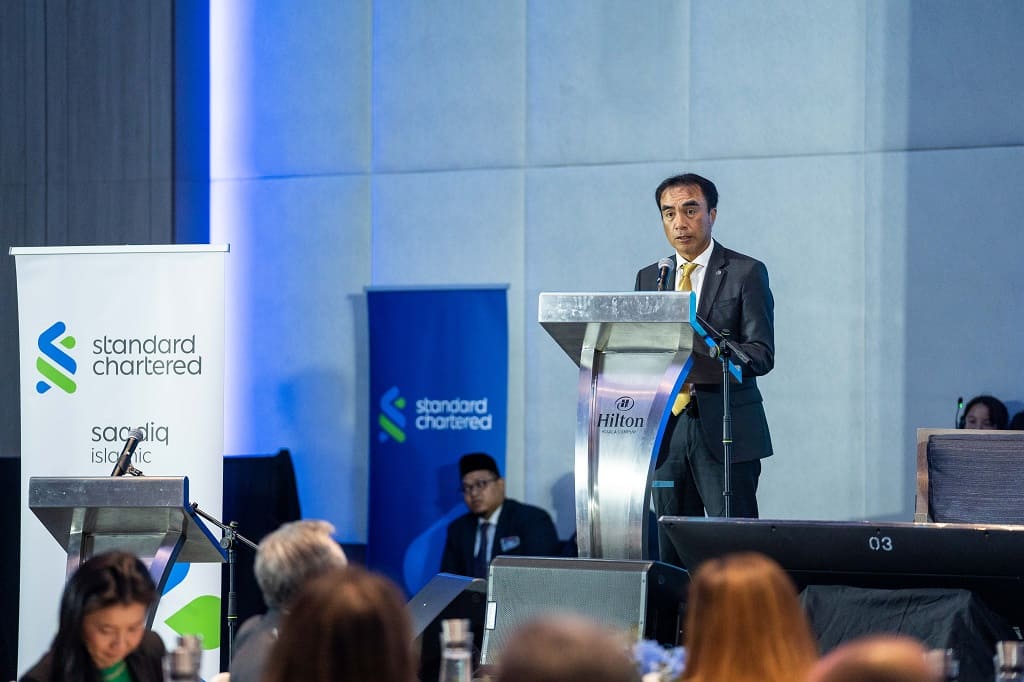
    During his keynote address, Bank Negara Malaysia Assistant Governor Adnan Zaylani Mohamad Zahid (pictured) spoke on the importance of advancing the Islamic finance market through thought leadership and innovation, “Islamic finance remains a top priority in the Financial Sector Blueprint to strengthen Malaysia’s value proposition as an international gateway for Islamic finance.”

    “The outlook for the Malaysian Islamic financial market in the next five to 10 years is generally positive, pointing towards continued growth and development as well as Malaysia remaining as a major global Islamic financial centre.”
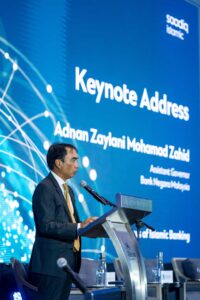
    “With the growing maturity of the Islamic financial sector in Malaysia, Bank Negara Malaysia also believes that the industry is now well positioned to drive the broader Malaysia as an Islamic Financial Centre (MIFC) agenda. The MIFC Leadership Council, a joint initiative of Bank Negara Malaysia and the Securities Commission Malaysia will provide thought leadership, and drive strategy formulation and implementation to enhance Malaysia’s position as an international gateway for Islamic finance. It is envisioned that the Council will also evolve into a fully industry-led structure that will be better able to respond to – and capitalise on – global opportunities in Islamic finance. We are confident that with stronger industry stewardship, we will be able to foster greater market dynamism and growth.”

    However, he added, “The Islamic finance sector indeed still has some way to reach its full potential based on these values to fulfil contemporary economic and social needs.”

    “Therefore, new initiatives are needed to empower and advance the Islamic finance system by emphasising on the principle of driving growth, wider participation, and equitable wealth distribution, and not only focused on company and conglomerate profits.”

    The full text of Bank Negara Malaysia Assistant Governor Adnan Zaylani Mohamad Zahid’s keynote address during the Standard Chartered Islamic Financial Markets Forum 2023 can be found here.

    Standard Chartered Malaysia

    Standard Chartered Bank, a member of the Standard Chartered Group, was established in Malaysia in 1875. As Malaysia’s first bank, Standard Chartered leads the way through product innovation, consistent and strong growth performance and sustainability initiatives. The Bank provides a comprehensive range of financial solutions to corporates, institutions and individuals through its network of branches across Malaysia. The Bank has an Islamic banking subsidiary, Standard Chartered Saadiq; a global shared services centre, Standard Chartered Global Business Services; a sales arm, Price Solutions and an offshore facility in Labuan. Standard Chartered employs over 7,000 employees in all its Malaysian operations.

    Standard Chartered

    We are a leading international banking group, with a presence in 59 of the world’s most dynamic markets, and serve clients in a further 64. Our purpose is to drive commerce and prosperity through our unique diversity, and our heritage and values are expressed in our brand promise, here for good.

    Standard Chartered PLC is listed on the London and Hong Kong Stock Exchanges.

  • Prioritising The Hereafter, Conventional VS Islamic

    Prioritising The Hereafter, Conventional VS Islamic

    In 2017, as I was just about to leave recital class, my ustazah asked a random question: “Aisya, what kind of funds do your clients invest in?”

    Back then I was still a unit trust agent and didn’t really thought about it thoroughly between conventional vs Islamic. So I told my ustazah that it was a combination between conventional and Islamic funds.

    “Perhaps you should only focus on Islamic funds,” she replied. That question sat with me, but I chose not to dwell on it. Not too long after that, I went to perform umrah (mini pilgrimage) and happened to be in the hotel room instead of with the entourage. I spent my time browsing through the Quran. Fate had it that the page I randomly flipped to was a verse about riba (interest).

    Then it hit me: what was the message I was supposed to comprehend, here at the Holy land about conventional vs Islamic? That was when my curiosity was piqued.

    After the trip, I sat for my CFP and IFP exams within a year. Unfortunately, as much as the modules had taught us theories about riba, gharar and usury, there wasn’t a chapter about here and hereafter implications on financial planners for offering conventional products instead of Islamic products to our clients.

    We are what we eat, right? In Islam, we are what we earn, too. As the years went by, I had accumulated endless burning questions that nobody could answer. Finally, in early 2021, I had the opportunity to consult a reputable Shariah scholar. After our consultation, I finally saw light at the end of the tunnel.

    These are some of the changes I have embedded into my life, including paradigm shifts that I have also been sharing with my clients, and now with you.

    Conventional VS Islamic Are The Same

    Let’s address the elephant in the room. If Islamic banks, Islamic asset management companies and takaful providers are all leveraging on its conventional arms’ back-end offices, systems and talents, then their Islamic arms cannot be that halal, can they?

    Well, if we dig deeper, one additional step required for the Islamic arms would be to get mutual consensus from their internal Shariah Committee before each Islamic product is submitted to regulators and its Shariah Advisory Council for approval.

    Imagine this: if chicken rice can have different recipes and ingredients from different sellers, how do you make a decision as to which chicken rice shop to buy from? The main ingredient is still chicken; isn’t chicken halal?

    Choosing halal doesn’t mean it will be risk-free. It just removes the risks that you have yet to see. For those who resonate with this, if we insist on consuming halal meals when we are abroad or at home, don’t you think we should be doing the same for banking and investing?

    Conventional VS Islamic: Converting To Shariah EPF

    For Muslim readers, have you shifted your conventional EPF to Shariah EPF? If you are thinking: “But I can pay zakat for the profits received from conventional EPF, right?”

    I’m here to tell you that that’s a misconception. Zakat can only be paid when your source of income is free from riba, gharar and usury.

    Incorporating Islamic Solutions Into Your Everyday Life

    There are limited Islamic credit cards with good perks in the market. But there is one worth mentioning. If you are currently using a Maybank credit card, Maybank allows you to switch to Maybank Islamic without affecting your credit limit and credit score. The migration is free and you will still have access to the Treats Points facility.

    A good reason to shift even though you may be paying your credit card in full every month is because riba still exists in all of your conventional cards’ transactions, under what is known as merchant fees. Next, what about your current and savings accounts? Your children’s? Your CDS accounts? What about crypto? The answer is to shift, shift and shift.

    Limitations In The Financial Technology Sector

    There are still many fintech and do-it-yourself platforms out there offering many one-size-fits-all types of accounts. What MIDF Invest has done right is to offer both conventional and Islamic accounts to its investors. This feature is fantastic because the app will only list Shariah-compliant foreign stocks and ETFs for investors who opt for Islamic accounts.

    This shows that it is possible for fintech providers to provide an option for Islamic accounts despite leaning on conventional structures, like how MIDF Invest leans on Saxo Bank.

    Conventional VS Islamic: The Pricing Battle Between Insurance And Takaful

    Until we solve this supply and demand saga, takaful providers will struggle in reducing their pricing to compete with their insurance peers. The cost of takaful plans can sometimes be twice the premium of insurance for the same amount of coverage.

    I see my clients struggling between choosing what is right for their faith versus affordability. Let’s face it, everyone needs sufficient coverage, but how do we guide our clients to choose what is best for them if pricing can sometimes get in the way?

    Islamic Finance Is For All

    One misconception I often come across is the belief that Islamic finance is only for Muslims. One of the strengths of Islamic finance is that it reduces and eliminates exposure to gambling, alcohol, entertainment, banking, companies with high gearing and more in its product mix.

    It forces you to go back to your risk appetite: what do you envision having in your investment portfolio and ultimately, everything else in life?

    Going Above And Beyond Our IFP Certification

    At the current time of writing, there are only 363 Islamic Financial Adviser Representatives registered under Bank Negara Malaysia (BNM). We are still a minority in the market. Here’s something I’d like my fellow colleagues to ponder upon:

    “How are we upholding our IFP certification and license?”

    See, the IFP mark isn’t just a mark on our names and business cards. It isn’t just about providing Islamic financing, Islamic funds and takaful to our clients. For me, Islamic financial planning is a way of life. We uphold the practice here, pave the way for our clients to pursue the same so that it becomes part of our hereafter and theirs.

    Conventional VS Islamic: There Is More To Life Than Just Dollars And Cents

    There are certain things in life that we cannot quantify. There are decisions that we have to make that go beyond the usual tangible ROI. Make the intangible ROI your compass, and see what kind of blessings come knocking on your door.

    I want to call upon those who serve from your hearts, to be the light to those around you. In a world where things are about revenues and returns, how do we draw the line between what’s right for us, our clients and our Creator?

    “Life is about making choices, so why not make our financial choices a win-win for our journey here, as well as in the hereafter?”

    Hope we all now have a greater conscience when it comes to conventional vs Islamic, especially if you are a Muslim.

    About the Author

    Aisya is an Approved Financial Adviser from Harveston Financial Group as well as a HRD Corp Registered Training Provider. She shares financial literacy content on her Instagram @aisyarahman.advisory daily on a variety of financial topics. Aisya can be reached at aisya@aisyarahman.com.

  • Takaful: More Than Just Islamic Insurance

    Takaful: More Than Just Islamic Insurance

    Malaysians are generally at a loss when it comes to being able to tell the difference between takaful and insurance. Some come to the conclusion that takaful is the Islamic version of insurance, while some perceive that takaful and insurance are just the same, hence the term Islamic insurance.

    What Is Insurance?

    Insurance is where a company undertakes the risk to provide a guarantee of compensation for specified loss, damage, illness, or death, in return for payment of a specified premium. There are two types of insurance namely, life insurance and general insurance. The coverage includes the insurance of life, personal, property, marine, fire, professional liability and guarantee.

    The purpose of insurance is to manage one’s risk. When the insurance is purchased, the participant buys protection against unexpected financial losses. In case an unexpected loss occurs, the insurance company will compensate the loss to the participant.

    Should the participant have no insurance coverage and an accident happens, they themselves shall be responsible for all related costs. In other words, the risk in insurance terms means the probability of something harmful or unexpected happening. This might involve the loss, theft, or damage of valuable property and belongings, or it may involve injury or harm.

    Read: Should I Give Up Paying Insurance Premiums In Difficult Times?

    What Is Takaful / Islamic Insurance?

    Image by tirachardz on Freepik

    Takaful is often referred to as ‘Islamic insurance’. It is strictly a business transaction to mitigate the financial risk of unforeseen events to the participants. Takaful is formed on the social solidarity and cooperation amongst a group of participants who mutually agree to jointly indemnify
    loss or damage from a fund they donate to collectively.

    In other words, takaful is a type of Islamic insurance where member participants contribute money into a pool system (tabarru’) to guarantee each other against loss or damage.

    There are two types of takaful, namely family takaful (mirror of life insurance) and general takaful (mirror of general insurance). A takaful contract which is called ta’awun must be based on principles of cooperation, protection and mutual responsibility. It must avoid acts of interest, gambling and uncertainty.

    The term Islamic insurance is popular, because it takes the insurance concept and turn it into shariah-compliant.

    Read: Takaful vs Conventional Insurance: What’s the Difference?

    The Shariah Aspect Of Islamic Insurance

    Islamic scholars differ in their opinion about conventional insurance. Some say insurance is permissible, some say only several types of insurance are prohibited but most of the Islamic scholars conclude that conventional insurance is unacceptable in Islam.

    The Shariah Advisory Council of Bank Negara Malaysia in its resolution states that the prohibition of conventional insurance is because it does not conform with Shariah law, particularly on the contractual agreement between the policyholder and insurance company.

    Conventional insurance uses a sale contract in their agreement but there is an element of gharar fahish (major uncertainty) in the contract since the essential element of the sale contract is not fulfilled. Furthermore, conventional insurance is also based on the concept and practice of charging interest.

    Islamic Fiqh Academy gave several reasons for the prohibition of conventional insurance:

    • The policyholder does not know about the time of the contract and the amount of what the policyholder gives or gets.
    • It is a contract based on probability.
    • It includes excess and delayed riba.
    • It can be considered a form of betting because of the existence of ignorance, uncertainty and probability.
    • The premium is taken for no consideration in exchange.
    • There is a compulsion that is not compelled by Shariah law such as the insurer does no specific work for the insured.

    Read: How to Protect Yourself at Different Stages in Life With Insurance

    The Importance Of Insurance And Takaful

    Both insurance and takaful are financial safety nets set to helping participants and their loved ones recover after something bad happens to them. Bad things may strike a participant at any time such as a fire, theft, lawsuit or car accident.

    When the participant joins in takaful or purchases insurance, they will receive a certificate or an insurance policy, which is a legal contract between them and the takaful operator or insurance company.

    Read: Insurance Affordability vs Need, 6 Factors You Should Consider

    The Differences Between Insurance And Takaful

    ‘Insurance’ and ‘takaful’ by name, are known as products. One is offered in the conventional financial system while the other is offered in the Islamic financial system. In Malaysia, insurance companies are under the jurisdiction of the Financial Services Act 2013 and takaful operators are
    under the jurisdiction of the Islamic Financial Services Act 2013.

    Payment to the insurance company are called ‘premiums’ and it is owned by the company. The payment to takaful is known as a ‘contribution’ and it is owned by the fund. The takaful operator just ‘manages’ the fund. The policyholder ‘buys’ insurance, and the participant ‘joins’ takaful.

    Takaful and conventional insurance companies share a common objective in providing protection to the participant, their loved ones and their valuable belongings. For Muslims, takaful is not the alternative to insurance.

    It is because takaful is based on the concept of social solidarity, cooperation and mutual indemnification of losses of members among the participants. It is a pact among a group of persons who agree to jointly indemnify the loss or damage that may be inflicted upon any of them, out of the fund they donate collectively.

    Business-wise, the main difference between conventional insurance and takaful is that the former is a risk-transfer model whereas the latter is a risk-sharing model. Mutual risk sharing is a transaction where instead of passing the risk on to an operator like conventional insurance, the risk in
    takaful is shared by every participant.

    The main concept of insurance is compensation of loss. Any insurance policyholder will be compensated once they lose something.

    In takaful, the concept is mutually helping each other (ta’awun). Members will get together to help other members should they incur any losses.

    Hope you now have a better understanding of takaful and insurance, and why the term Islamic insurance is often used.

    Read: Should I Nominate My Wife As Sole Beneficiary Of My Life Insurance Policy?

    About the Author

    Dr Haji Razli is a Senior Lecturer with Azman Hashim International Business School (AHIBS) at University of Technology Malaysia (UTM) and an Adjunct Fellow with IIUM Institute of Islamic Banking & Finance (IIiBF) at International Islamic University Malaysia. He is also the Honorary Secretary of the Association of Senior in Islamic Finance (ARIF).

  • Shariah Investing, for a Better Future and More Equitable Wealth Distribution

    Shariah Investing, for a Better Future and More Equitable Wealth Distribution

    Shariah investing is a very popular buzzword and Malaysia is the world’s leader in Islamic finance industry.

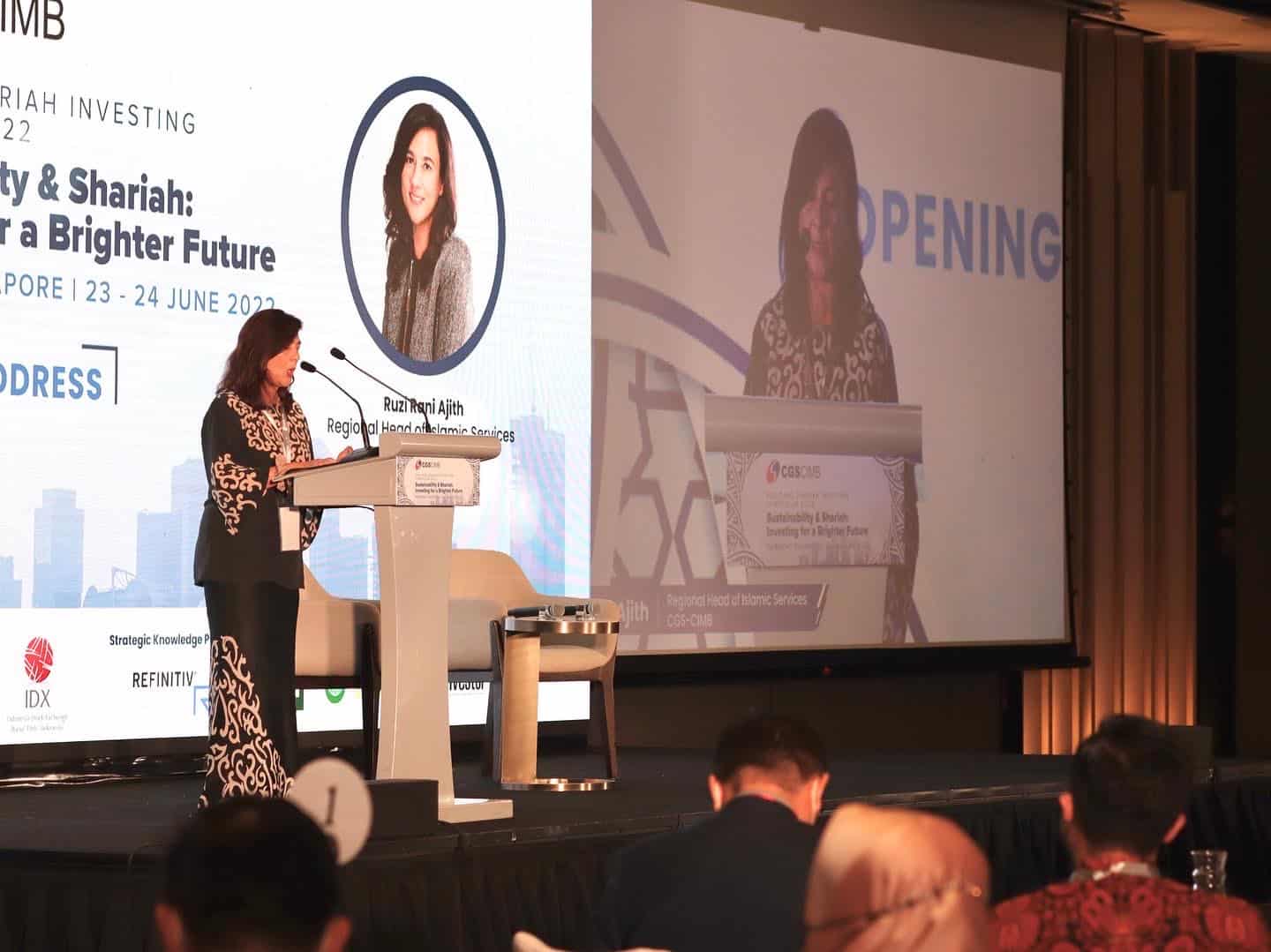
    Smart Investor spoke to Ruzi Rani Ajith, chief executive officer of CGS-CIMB Securities Sdn Bhd to find out more about Shariah investing and the inaugural CGS-CIMB Regional Shariah Investing Symposium 2022 which was held in Singapore recently.

    Themed Sustainability & Shariah: Investing for a Brighter Future, the symposium brings together experts from across Malaysia, Singapore and Indonesia to discuss the latest developments in Islamic Finance and Shariah Investment. Top management from leading Shariah-compliant companies listed on Bursa Malaysia, the Singapore Exchange and the Indonesia Stock Exchange were present to share their future strategies and growth plans post-pandemic.

    Smart Investor: Hi Ruzi Rani Ajith, thanks for taking the time to have this interview with Smart Investor. Perhaps we can begin with a brief introduction about yourself?

    Ruzi Rani Ajith: Hi, thank you for having me. It is my pleasure to be here with Smart Investor. Sure, my name is Ruzi Rani Ajith. I am the chief executive officer at CGS-CIMB Securities Malaysia and group head of shariah services at CGS-CIMB Securities.

    Prior to my appointment, I served as the head of equities in CIMB Investment Bank, where I have worked with the organisation in various capacities over the past 23 years. Before joining CIMB, I was with Affin Investment Bank for three years as a fund manager.

    SI: Why do you think Shariah investing is important, and is it only limited to Muslims?

    RRA: Shariah investing is not limited the Muslims. Shariah investing is for all. It is another approach to investing where Shariah compliance is to be adhered to. Shariah investing among others avoid prohibitive elements in shariah such as riba (interest), gharar (ambiguity) and maysir (gambling). In its process to uphold Maqasid (objective) Shariah, Shariah investing has always been closely linked to Social Responsible Investment (SRI) and Environmental, Social And Governance (ESG).

    Shariah investing is a subset of SRI and also complementary to ESG. Due to its overlap with ESG and SRI, it is becoming increasingly popular and important for investors, with an increase in take-up on Shariah investing.

    SI: What are the market trends should investors look out for in the near future?

    RRA: The trend is the focus on Shariah and ESG investing. Global investors are increasingly aware of the synergy between ESG investments and Islamic finance. This contributes to the growing demand for Shariah-compliant investments as investors seek greater portfolio diversification and an alternative to investing traditional ESG. Shariah-compliant and ESG investing are complementary investment approaches that have important points in common, such as being a good steward of society and the environment. “According to research by Refintiv, Shariah compliance screening can do much to improve ESG performance. There is a direct correlation between Shariah compliance and higher ESG scores, and combining the two could improve overall risk-adjusted returns”.

    We should see an increase in new Shariah or ESG product offerings to cater for various market segments.

    Another trend that is taking centre stage is the green and renewable energy space as the world is gearing towards a net zero carbon by 2050. This is where the transition into green and renewable energy comes into play. Hence, funding this transition has created the demand for sustainability and green sukuk which has resulted in exponential growth.

    SI: With the rise of inflation and interest rates, what should an investor do?

    RRA: Never put all your eggs in one basket. Portfolio diversification can help to balance the risk and reward in your investment portfolio.

    Also, investors can consider investing in ESG and Shariah-compliant products to reduce the risk in an uncertain market.  To also take into consideration to invest in defensive and high-yield stocks.

    SI: Tell me more about CGS-CIMB’s involvement with Shariah investing?

    RRA: CGS-CIMB started its Shariah business in Malaysia office where Shariah investing is further enhanced with various innovative products that are in the pipeline and will be launched soon. Confident with the prospect of Shariah businesses, we have also extended our Shariah services to our Singapore and Indonesia offices.

    In Malaysia, CGS-CIMB offers a range of Shariah-compliant products and services from Shariah compliant trading accounts; with access to thousands of Shariah-compliant securities, margin facilities. We are the first broker to launch Islamic Cross Border Trading, as well as setting the framework for Islamic Securities Selling and Buying (ISSBNT).

    The responses have been very positive. Over the past two years, we have managed to triple the number of Islamic trading accounts. We aim to continue to launch innovative Shariah Compliant products such as Shariah-compliant Discretionary Trading and Shariah-compliant Futures.

    We are happy to have Singapore and Indonesia embarking on this journey, launching their first Shariah-compliant products and services at this Shariah Symposium. Moving forward, we will continue to expand our product and services in the region.

    SI: Congratulations on the inaugural CGS-CIMB Regional Shariah Investing Symposium 2022 which was recently held, care to share more about this event?

    RRA: Thank you.

    The CGS-CIMB Regional Shariah Investing Symposium (RSIS) will be organized annually.

    The RSIS sets as a platform to bring together exchanges, corporate leaders, industry experts and investors to explore economic and market trends within the Shariah Investment landscape.

    RSIS aims to bring awareness and educate investors and public on Shariah investments, especially in Singapore and Indonesia.

    The symposium showcases CGS-CIMB’s contribution to Islamic Finance industry in creating awareness on the subjects and its focus on Islamic businesses in the region.

    CGS-CIMB’s aspiration is to become the regional leader within the Islamic Broking space. On the long run, this annual symposium is aimed to further provide deep awareness to the growing trend for Islamic Finance and Shariah Investment across the region.

    The support from three exchanges namely Bursa Malaysia, Singapore Stock Exchange and Indonesia Exchange shows a positive sign to create awareness of Shariah investment around the region and encourages Shariah investments as a choice and an alternative to conventional investments.

    SI: What are some of your plans for the future that you can share with us?

    RRA: Our goal is to be a leader in Islamic Finance in countries with CGS-CIMB presence.

    We hope to use our experience in Malaysia to lead the Islamic initiatives in countries where CGS-CIMB has a presence starting with Singapore and Indonesia which has the most potential.

    In Malaysia, our focus will be on operational efficiency as well as continue to improve our Sariah product offerings. We will be launching two new products namely Shariah Discretionary Trading and the first in the world Shariah-compliant Futures this year.

  • Takaful vs Conventional Insurance: What’s the Difference?

    Takaful vs Conventional Insurance: What’s the Difference?

    There is a prevailing misconception about how takaful is simply the Islamic version of conventional insurance, and is therefore only available for Muslims. This is, however, inaccurate.

    Takaful provides similar protection products as conventional insurance, and is open to anyone regardless of religion or creed.

    What is Takaful?

    takaful insurance

    Takaful is essentially a Shariah-compliant insurance option that is grounded in Islamic Muamalat (Islamic transaction) principles, and share the same objective of providing protection against financial loss in the event of misfortune that occur from an accident, loss or damage to property, hospitalisation, critical illness, disablement or even death.

    The term ‘takaful’ is derived from the Arabic word ‘kafala’ which simply means “to guarantee; to help; to take care of one’s needs”. The term also refers to the concept of Islamic insurance that is based on the Islamic principles of mutual assistance (ta’awun) and donation (tabarru’), where the takaful participants donate their money into a takaful fund that will be used to provide mutual financial benefits.

    Similar to conventional insurance, there is an array of Shariah-compliant products under takaful which includes life, health, motor, home and travel insurance as well as many other types of protections.

    While there are many similarities between Takaful and conventional insurance, a takaful company ensures that its products and operations are in accordance to Shariah principles. The key difference is in fact the underlying contractual relationship between the takaful operator and the customer.

    An insurance contract mainly involves the purchase of a product or a service from the insurance company where the insurance risk is transferred to the insurance company.

    Under a takaful contract, on the other hand, the customer undertakes a contract (aqad) to become one of the participants by agreeing to make a donation (tabarru’) to participate in the takaful risk pool fund for claims payment should any of the participants suffer from a defined loss, and appoints the takaful operator to manage the takaful fund.

    An important feature of takaful is that the takaful risk fund is owned by participants, and therefore, the risk is shared among them and any surplus will also be retained within the fund or in some cases, distributed back to participants. The takaful operator, too, may be entitled to a share in the risk fund surplus.

    The takaful operator is mainly remunerated based on wakalah (agency) fee. The tabarru’ amount and the wakalah fees are stipulated in the certificate contract, which promotes transparency to the customers.

    As such, takaful funds are managed in accordance to Shariah, and invested in Shariah compliant assets, while the Shariah committee oversees the activities of the takaful operator to ensure that they are Shariah-compliant.

    Takaful in Malaysia

    Taking into account the current low penetration rate, rising standards of living, escalating medical costs and ageing population in addition to the robust growth in the Islamic banking and finance sectors, the long-term outlook for the takaful sector in Malaysia remains positive.

    The development of the takaful industry is set to remain on a positive note in tandem with the government’s ongoing initiatives to spur the demand for protection among consumers.

    The key component in driving growth in a competitive environment especially during the pandemic situation, is digitalisation. As such, takaful operators will continue to incorporate digital capabilities into their business models and marketing approaches to stay competitive in the market.

    Within the Malaysian takaful industry sphere, the takaful operators continue with concerted efforts in enhancing awareness on takaful and in providing protection plans suitable for every segment of the society to increase the takaful penetration rate.

    These initiatives include strengthening the professionalism of takaful agents, intensifying awareness and interactive programmes for the consumers as well as the introduction as well as the introduction of value propositions by embracing the concept of value-based intermediation.

    Despite the cautious business sentiment, the Malaysian takaful industry is expected to remain resilient. The regulatory body, along with the takaful industry players, will continue to introduce and implement various initiatives to further promote the development of the takaful sector.

  • Retirement Planning, Why It Is Important From An Islamic Point Of View

    Retirement Planning, Why It Is Important From An Islamic Point Of View

    Malaysia is a country whose most professed religion is Islam. As of the latest statistics, there were approximately 19.5 million Muslims or 61.3% of the total Malaysian population.

    From another perspective, in 2019, it was estimated that the Malaysian population aged over 65 years stood at 6.7 percent. Malaysia is currently facing the prospect of an aging population, and the latest statistical data predicted this to be happening as soon as in 2030. 

    In a simplification, Muslims are the majority in Malaysia, and we are looking at the more significant rate of retirees as the year goes.

    However, are we truly ready for it? According to a recent survey by the Credit Counselling and Debt Management Agency (AKPK), more than 50% of Malaysians may not be financially ready for retirement. While the figure alone is already scary, what been happening, in reality, is even worse.

    We start to see the senior citizens who now need to continue working despite their retirement and against their suitability due to financial constraints and weak to no financial planning. Those with completely empty retirement savings within not even a few years without accomplishing anything contributing toward financial freedom – to name a few.

    Why Islam Encourages Us To Plan Their Lives In All Aspects?

    Muslim asian retirement planning

    Islam encourages Muslims to plan their lives economically and financially to achieve the objectives of Shariah (Maqasid al-Shariah). As Islam governs all aspects of life, it takes full cognizance of how Muslims gain and spend their money, including wealth. 

    Even though the child should look after their parents, especially when the recipient becomes too old and incapable of sustaining themselves, however, with a good understanding by the parent that their children are responsible for their own families, too. 

    The need to plan one’s retirement becomes more evident as the years pass. Retirement planning becomes more significant as the financial impact and demands of modern society take their toll on the grown children’s lives. Then once the cost of living increases, the ability of the children to care for other people other than their immediate families will become increasingly difficult. 

    Hence, one should consider the Islamic retirement planning tools and processes as one’s preparation to be independent financially when one is old or retires from one’s job.

    Aspects Of Islamic Retirement Planning

    Retirement planning is one of the elements of Islamic financial planning and wealth management. Retirement planning is a process that includes a comprehensive review and analysis of retirement income, retirement goals, and investment strategy.

    The purpose of retirement planning is to coordinate the financial resources available so an individual can plan for a financially secure retirement or reduce financial risk during retirement.

    Role Of A Financial Planner

    Financial planner planning

    To build a retirement planning is not an uneasy task. That is due to while everybody has an opinion on how to plan their financial needs, the truth is, a wholistic plan from a financial planner point of view, it should start with assessing the future income needs of an individual.

    Followed by financial objectives need to be established so that the retirement plan would have a clear target on how much future come to need to be achieved. Also, the retirement plan must align with the projected future income. 

    The most crucial part for the Muslims here is to ensure that shariah compliance must be taken into account. It is essential to make sure the retirement plan is free from prohibited elements, especially riba. 

    Even if one claims that they are ready for retirement period and have a clear set of financial and lifestyle visions and goals, it is always encouraged for them to seek advice from experts such as Licensed Financial Planner.

    That because only a financial planner specializing in that area, to giving any pieces of advice or a financial planner, can be aware of several common missteps that many fall victim to, even those with a plan. 

    Retirement Hazard

    caution retirement planning

    Many fields might fail to notice by one person when it comes to retirement planning. The most common mistakes made when we talked about retirement planning are lack of preparation of finances related to the impact on one’s health, misjudging how long one or one’s spouse will live, presuming a longer working life. Many take lightly how to prepare for and live in retirement. 

    To conclude, the retires worker’s situation is different from his previous situation during the working time with a specific income. Hence, everyone must prepare for their retirement by planning. In other words, planning one’s retirement is similar to planning against the risk of premature death.

    The preparation should be holistic from the financial planning overview. It should be avoided element that is prohibited in Islam such as riba, gambling, gharar, etc. The planning should also prepare for the religious obligation that, as Muslims, we need to perform hajj, payment of zakat, and the recommended donations, helping the poor and needy. 

    About the Author

    Nuraishah Hanani Abdul Ghani is a Certified Islamic Financial Planner with a demonstrated history of working in the banking industry.She has a strong finance professional background with a focus in Islamic finance and is a graduate from Universiti Islam Antarabangsa Sultan Abdul Halim Mu’adzam Shah (UniSHAMS) in Ba (Hons) Islamic Finance and Banking, Master in Chartered Islamic Finance Professional (CIFP) from INCEIF and Certified Islamic Financial Planner (IFP) from IBFIM.

    We at Smart Investor and Wealth Vantage is committed to help you better manage your financials. Get a free consultation from an expert by filling in your details here: https://www.smartinvestor.com.my/SIxWealthVantage

  • Is Takaful Not Attractive For Most Malaysians?

    Is Takaful Not Attractive For Most Malaysians?

    “Wisdom is not measured by appearance.”

    As a husband, father, son, and even brother, I am the breadwinner and main contributor to the family finances. I work hard to give my best to my loved ones. The pressure is on to make sure I can leave my loved ones in the same or even better state when I am gone

    As a Chief Agency Officer, I am aware of the need for takaful protection in life. It can alleviate unexpected situations Takaful benefits provide for its participants in times when emergency funds are required because of a disaster resulting in death, accident, critical illness, or hospitalisation.

    The adage preparing for a rainy day holds true with a comprehensive takaful plan that can maintain our, or our beneficiaries’ lifestyles in times of disaster.

    I am often asked what is takaful and how is it different from conventional insurance.

    Takaful vs Conventional Insurance?


    Conventional insurance and takaful share the objective of protecting against financial loss. However, closer inspection reveals some clear differences.

    Takaful is based on Islamic principles of mutual cooperation (taawun). Participants (customers) fulfil their obligations by contributing a certain amount of donation (tabarru’) into a fund to protect one another against losses or damages covering life, general (assets) and medical. A takaful operator manages this fund.

    The takaful operator disburses the funds according to its participants in the event of loss or damage suffered. Surplus monies will be distributed between customers and operator at the end of the financial term based on an agreed ratio. This will only be done after all obligations of assisting customers has been fulfilled.

    Despite being based on Islamic principles, anyone can obtain takaful protection.

    Factors Affecting Takaful Contribution Amount

    Like conventional insurance, lifestyle factors affect the contribution amount each participant is required to make. These include occupation, age, family history, and underlying health factors.

    As takaful is based on the basis of donation, if the tabarru’ fund is insufficient, there may be a revision in the contribution amount. For example, the tabarru’ fund can be short due to volume of claims or medical inflation.

    A responsible takaful operator must monitor and revise the fund if necessary, to ensure it s contributors are always adequately protected. It is important in sustaining the tabarru’ fund for the long term. If a revision to contribution amount is necessary, the operator will notify customers beforehand so contributors are never caught unaware.

    What Can I Do If I Cannot Afford To Fulfil My Contribution?

    If personal circumstances change, let your takaful agent know so that a customised plan can be worked out based on your affordability. There are two main options provided to customers.

    Firstly, there is the option of reducing some of the benefits while maintaining the same amount of contribution. Another option is to remove certain riders (add-ons) and replace them with other benefits that may be more relevant to the customer’s needs in life.

    This is where a knowledgeable agent is invaluable. A good agent can advise you on the available options, and what may be best for your situation. Everybody’s protection needs differs from person to person. This is why Bank Negara Malaysia requires agents to conduct thorough fact finding to assess customers’ needs and provide recommendations.

    Do I Still Need Takaful When My Employer Already Provides Protection?

    Many overlook the importance of having their own personal protection plan. They think t heir employers will provide coverage for them until they retire. But work situations can change. Some may receive better offers or choose to work for themselves. When this happens, the protection afforded to them by their employer ceases. The level of protection can also cease or change upon retirement.

    Participation in takaful is for future needs. It is not only for one time use. Nobody can guarantee our health throughout life.
    Separating your takaful plans to cover different scenarios and needs is advisable.

    The rule of thumb is to differentiate existing plans for specific purposes, such as medical, savings, and retirement.

    Nowadays, there are plenty of plans with competitive and flexible riders. This allows users to choose add-ons based on their lifestyle needs. It minimises the need for multiple plans as one plan can cover different things. It is recommended to seek professional advice from a knowledge agent to get a better understanding.

    How Can I Tell If The Agent Is Right For Me?

    Agents are dutybound to ensure they do not bring disrepute to the takaful company, which seeks to help individuals, businesses, and community from financial loss. All agents must be licensed. You can and should ask to see the agent’s credentials before signing o n the dotted line. To obtain the license, the agent is required to pass a high integrity and closely supervised Pre Contract Examination organized by Malaysian Insurance Institute (MII).

    Takaful agents are subject to an additional Takaful Basic Exam (TBE) by the Islamic Banking and Finance Institute Malaysia (IBFIM). Many agents now opt to sit for TBE so they have wider breadth of knowledge to better serve customers.

    Beyond this, good agents must have solid fundamentals on different plans available. Investing time in the Customer Fact Finding (CFF) form will enable agents to understand the lifestyle and needs of the customer. Only then can agents propose a suitable plan within the customers’ budget, with adequate protection and savings.

    What Makes A Great Agent Stand Out From The Rest?

    Simply put it is their effort to upskill and improve themselves. Agents must complete the Continuous Professional Development (CPD) training yearly. The minimum is 30 hours. Dedicated agents typically undertake up to 60-70 hours of learning per year to upgrade and upskill themselves with knowledge in providing professional service and advice to help their customers better.

    Great agents prioritise customers. They consider customers’ future needs and explain how the recommended plan ca n help address customers’ concerns and provide peace of mind. The agent must also be honest in what the plan can or cannot do for the customer.

    Customers may have other concerns as well such as the processing of claims, plan maturity or even lapsation of policies. A well trained agent must be able to answer and address these concerns.

    Can Agents Help Me Get Claims Approved?

    A common complaint about the industry is the difficulty in getting claims when required. It does not help matters if the agent is absent or not helpful at all. Claims may be denied due to plans not covering certain aspects, or in other cases it may be due to anti-selections. This is where a person does not declare their health conditions when subscribing to a plan. Upon filing a claim, their case is studied and if found to have not declared, their claim could be denied.

    Good agents will advise customers to be honest and the onus is also on customers to do so. Customers must make timely contributions to ensure their takaful certificates do not lapse. To this end, agents will also advise customers to go through available online portals to avoid delays which could leave the customer unprotected.

    In the case where genuine takaful claims are denied, the customer can write to the takaful provider to appeal or dispute the denial. All takaful providers will act in a fair manner and review the case thoroughly before rejection. The providers are careful to ensure all legitimate claims are honoured.

    Investing into protection is a critical life decision. It is wise to engage a certified and knowledgeable person on different plans and coverage. Seeking advice from multiple agents to make more informed decisions is also good.

    About the Author

    Nazrul Namizan is Chief Agency Officer of Zurich Takaful Malaysia Berhad.

  • The Importance Of Islamic Estate Administration

    The Importance Of Islamic Estate Administration

    For Muslims, Islamic estate planning can be key for the smooth distribution of assets to heirs.

    When a Muslim dies, the Islamic Law of Inheritance, namely Faraid, applies in respect of the distribution of the deceased’s estate. The main heirs entitled for his estate will be the father, mother, husband or wife, son and daughter. In other circumstances where there is no father or son, the siblings, paternal uncle or the child of paternal uncle, or Baitul Mal, will be entitled to the estate. The rights and portions of the heirs are protected and stated in al Quran, an Nisa’ verses 11 and 12. Those not under the above categories would not be entitled for the Faraid portion.

    In term of legal ownership, the rights of Faraid heirs would not be automatically transferred. However, such rights and portions must be claimed and vested through the legal process, or the estate will remain frozen under the name of the deceased and would not be of any benefit to the heirs. For a person who dies without a wasiat, a representative of the deceased shall be appointed as an administrator of the estate with the agreement of all legal heirs. He shall apply for a court order, namely a letter of administration to empower him to administer the deceased’s assets and liabilities subsequently to distribute the assets to the rightful heirs after making payment of the liabilities.

    Depending on the gross estate value, the letter of administration shall be applied at three agencies as follows:

    i) Department of Director General Lands and Mines (JKPTG) if the value of the estate does not exceed RM2,000,000 consists of movable and immovable assets
    ii) Amanah Raya Berhad for the movable assets worth not exceeding RM600,000
    iii) The Civil High Court for the estate value worth exceeding RM2,000,000

    In addition, the representative shall apply for a Faraid certification at the Syariah Court to ascertain who are the legal heirs and their share over the deceased’s estate. But for applications made at JKPTG, the Faraid certificate is not required.

    “It is advisable for a Muslim to have proper Islamic estate planning for the purpose of expediting the administration and liquidation of the estate.”

    Islamic estate planning instruments
    In consideration of the above issues, it is advisable for a Muslim to have proper Islamic estate planning for the purpose of expediting the administration and liquidation of the estate, as well as planning for a fair and balance distribution based on the wishes and needs of the testator and his family. Wasiat and Hibah are the two main instruments to be considered when preparing the Islamic estate planning.

    Wasiat
    Wasiat is an essential part of estate planning. Having a wasiat provides some advantages to the testator such as appointing an individual or a trust corporation as an executor to administer his assets and liabilities for distribution to his loved ones upon his demise. With the appointment of the executor, the tedious and lengthy process of getting an agreement from all legal heirs for the appointment of administrator can be avoided.

    Appointing a trusted and competent executor is crucial so the testator can rest assured that the administration and liquidation of the estate will be conducted smoothly in the proper manner and the rights of the beneficiary(s) are preserved. Unlike an individual, a trust corporation such as as-Salihin Trustee Berhad is a perpetual, competent, professional and governed under the Companies Act 2016, Trust Companies Act 1949 and Trustee Act 1949.

    In term of distribution, the testator is permitted to bequeath one third of his assets to his intended beneficiaries who are not his Faraid heirs. Therefore, wasiat is a good instrument for distributing assets to an adopted child, non-Muslim family member, orphanage, or charitable organisation.

    In addition, one third also can be allocated for sadaqah and waqaf for the purpose of getting rewards from Allah and his blessing in hereafter. The remaining two-thirds of the estate is to be distributed among the Faraid heirs. Faraid merely indicates the fraction of the heirs’ entitlement over the deceased’s estate as whole. This could result in the fragmentation of a property; for instance, if the ownership of a house is to be shared among many heirs such as father, mother, wife, son and daughter. Therefore, in his Wasiat, the testator may ascertain the manner of distribution.

    In other words, he may give specific assets to specific heirs within his Faraid entitlement or he will provide the executor with wide discretion to sell the asset without the necessity of obtaining consent from the beneficiaries. From the proceeds of sale, distribution of the estate can be divided without much delay. In brief, the executor may use his discretion and absolute power to execute the testator’s wishes provided that the wishes do not contravene Syariah law.


    Hibah
    Hibah is a gift made by a donor to a beneficiary(s) during his lifetime and effective immediately upon the setting up of the hibah. The hibah asset is not considered part of the donor’s estate and is not subject to Faraid. Of equal importance, hibah is used for distributing the asset to intended beneficiaries and avoiding fragmentation of the property. It is the most suitable estate planning instrument for a couple without children or only a daughter, a reverted Muslim, or a couple with a minor or special child.

    Business owners may consider hibah in a business succession plan to ensure the continuity of the business. Allowing the business to be run by all Faraid heirs and inexperienced heirs may lead to serious disruption or dispute within the management of the company. Thus, deciding on the right and capable candidate for taking over the business is a must as it can help to create a smooth transition and management of the company upon his demise.

    In conclusion, by drawing up an Islamic estate plan during his lifetime, the testator may determine who will be given the mandate to administer his estate and the manner of distribution of his assets upon his demise for the benefit of his family’s well-being.

    Article by : Amna Fazillah binti Ismail, Chief Business Officer of as-Salihin Trustee Berhad.
    as-Salihin Trustee Berhad offers full-fledged Islamic Estate Planning products and services such as Wasiat writing, declaration of Hibah, jointly acquired asset agreement, takaful trust and living trust.

  • Takaful Malaysia Launches Nation’s First Flexi Motor Takaful Plan with Pay As You Drive Daily Cover

    Takaful Malaysia Launches Nation’s First Flexi Motor Takaful Plan with Pay As You Drive Daily Cover

    Syarikat Takaful Malaysia Am Berhad (“STMAB” or “Takaful Malaysia”), the general takaful arm of Syarikat Takaful Malaysia Keluarga Berhad virtually launched Takaful myClick Motor FlexiSaver, the nation’s first flexi motor takaful plan with Pay As You Drive daily cover. Jointly organized by Takaful Malaysia and technology partner, Fusionex, the virtual launch was officiated by Dato’ Mohammed Hussein, Chairman of Syarikat Takaful Malaysia Keluarga Berhad.

    “Virtual launch of Takaful myClick Motor FlexiSaver signifies Takaful Malaysia’s unwavering commitment to driving product innovation and delivering superior customer value. Flexible protection plans are the future of the insurance and takaful sector. Offering insurance and takaful products in the new mobility space that are simple, flexible, and usage-based is revolutionising the industry. This means, consumers have the option to decide and pay for just the coverage they need, as and when they need it. With more people driving less these days, while some may face financial challenges due to the impact of the COVID-19 pandemic, Takaful myClick Motor FlexiSaver is the best option that suits the financial and protection needs of those who drive infrequently or own several cars and want to save more on motor takaful or insurance plan. The Pay As You Drive daily cover available under this plan is ideal and rewarding, as we give customers the flexibility to activate it the day before they want to drive and will only be charged for the days they drive. Suffice to say, Takaful myClick Motor FlexiSaver is a quick win for customers to enjoy great savings and peace of mind when they drive,” stated Dato’ Mohammed Hussein, Chairman of Syarikat Takaful Malaysia Keluarga Berhad.

    Takaful myClick Motor FlexiSaver is an online motor takaful plan that provides one-year coverage for loss or damage to your vehicle due to fire or theft, as well as third party bodily injury, death, or property damage. Offered through Takaful Malaysia’s online sales portal and Click for Cover mobile application, this plan provides a 24-hour roadside assistance program for unlimited breakdown towing service and minor roadside repairs, including tyre change, fuel delivery, battery change, and jump start. Featuring Pay As You Drive daily cover for accidental damage to your own vehicle and complimentary personal accident coverage of RM15,000 for the driver and all passengers as well as accident towing, Takaful myClick Motor FlexiSaver also offers add-on protection options for windscreen, personal accident, and key replacement. Customers can also enjoy an instant 10% discount when applying the base plan of Takaful myClick Motor FlexiSaver, and when activating Pay As You Drive daily cover.

    Chief Executive Officer of Syarikat Takaful Malaysia Am Berhad, Mohamed Sabri Ramli said, “In our continued efforts to meet ever-changing consumer expectations, and in line with the rapid pace of digital expansion in consumer purchases, it is timely that we introduce Takaful myClick Motor FlexiSaver with Pay As You Drive (“PAYD”) daily cover to better serve our customers with innovative takaful solutions while preserving consumer choice. The PAYD is the key differentiator, a unique feature that sets us apart from other motor insurance and takaful plans available in the market. Customers only need to sign up for the base plan of Takaful myClick Motor FlexiSaver via our online sales portal or Click for Cover mobile app, before activating PAYD through the mobile app. Eventually, we want to make it easy and hassle-free for customers to enrol in this motor takaful plan online, corresponding to our digital strategy to enhance product and service accessibility.”

    “Takaful myClick Motor FlexiSaver with PAYD not only provides a simple online application process along with an array of benefits and services offered to customers but also diversifies Takaful Malaysia’s product offerings and creates a value proposition for consumers at large. Takaful Malaysia’s strategic move to introduce this motor takaful plan will provide new revenue and value-producing opportunities for the company to stay ahead of the curve and remain competitive in the motor insurance and takaful market,” added Mohamed Sabri Ramli.

    Dato’ Seri Ivan Teh, Group Chief Executive Officer of Fusionex said, “Insurance, at its core, is a business that underwrites risks and helps people in times of need. As such, I applaud Takaful Malaysia for revolutionizing their offerings and empowering their customers to take more control over how they purchase insurance. As a long-term and fully-supportive technology partner, Fusionex pledges to lend our experience, expertise and cutting-edge technology to drive excellent user experience for Takaful Malaysia’s customers, and this partnership continues to innovate with the launch of Malaysia’s first pay-as-you-drive motor insurance.”

    “Together with Fusionex, which specializes in analytics, big data, and artificial intelligence, we leverage digital and social media platforms to actively promote this product. Ultimately, we want to ensure that our business is competitive and relevant to the growing consumer demands, particularly the tech-savvy generation. By embracing technology and digital tools to offer differentiated product offerings and services, we will be able to reach new customer segments through superior protection products and customer experience,” said Mohamed Sabri Ramli in conclusion.

    Takaful Malaysia was recently voted once again by Malaysians as the Best Motor Takaful Company in Malaysia for 2021/2022. The annual award clinched by Takaful Malaysia is based on the results of the online survey conducted by iBanding, an independent, knowledge-based company that provides transparent insights about the local insurance and takaful industry that ranks insurance and takaful companies in Malaysia according to the actual feedback from survey responses among motor vehicle drivers.

  • The Smart Investor’s Guide to Islamic Social Finance

    The Smart Investor’s Guide to Islamic Social Finance

    What are the main tenets of Islamic social finance?

    Sustainable Development Goals 2030

    Sustainable Development Goals 2030

    In 2015, countries around the world adopted a set of goals to end poverty, protect the planet, and ensure prosperity for all as part of a new sustainable development agenda. Formulated on the principle that no one gets left behind, the Sustainable Development Goals (SDGs) have defined the world’s priorities and aspirations for 2030.

    In 2016, a high-level panel commissioned by then-UN Secretary-General Ban Ki-Moon estimated a humanitarian financing deficit of $15 billion – and the gap is widening each year.

    Last year, only 58.5% of requested humanitarian funding needs were met.

    There’s an overwhelming need for capital to help fragile nations battle everything from widespread food and water insecurity to the fallout from natural disasters.

    Uplifting Poverty Levels

    To mobilise these efforts, we need to effectively uplift groups living below the line of poverty.

    Although poverty levels have fallen dramatically since 2000, there are still 783 million people living below the international poverty line of $1.90 a day. Obviously, it calls for more creative and effective solutions to end poverty.

    With technology playing a key role in implementation, this makes it more targeted and effective – an important move that we must take to lift people at the bottom of society from poverty and end world hunger to ensure that no one gets left behind.

    An Important Role in Achieving SDGs

    Islamic social finance was developed in adherence to the Sharia principles of socioeconomic justice, equality and collective prosperity.

    Islamic social finance tools have been instrumental in the alleviation of poverty and socio-economic development for over 1,400 years. Among the instruments available in Islamic social finance to achieve this are zakat, waqf and sadaqah (charity) which have been adopted and applied even outside the Islamic world.

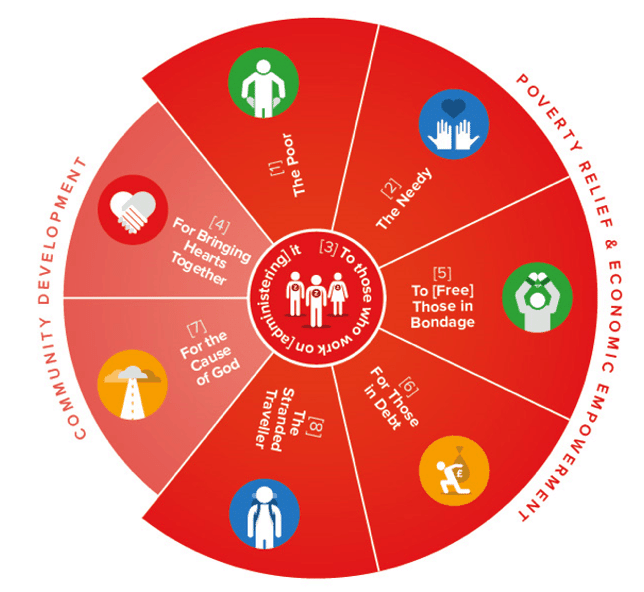
    Zakat – wealth tax and a means of wealth distribution – is thought of as harmonising the relationship between the individual and public interest (maslaha). Each year, Muslims are required to donate 2.5% of one year’s total cumulative wealth to the poor in the form of zakat.

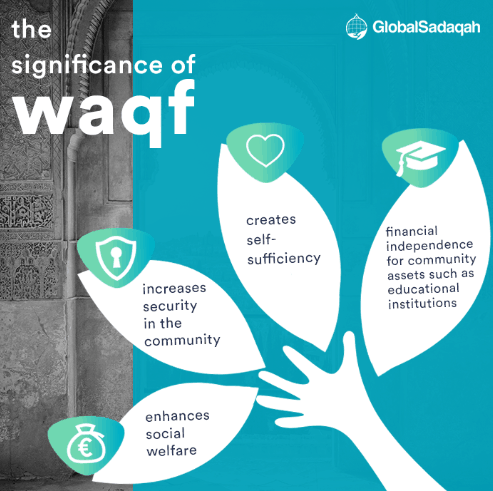
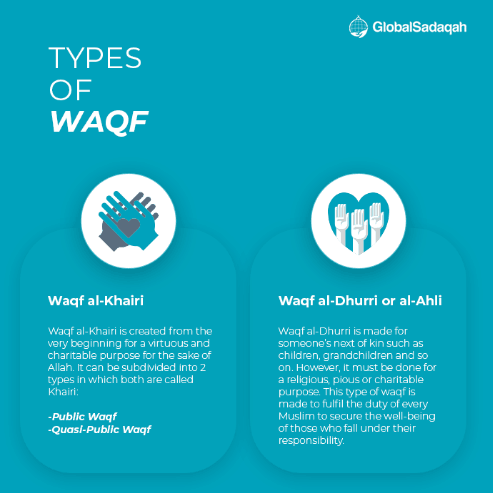
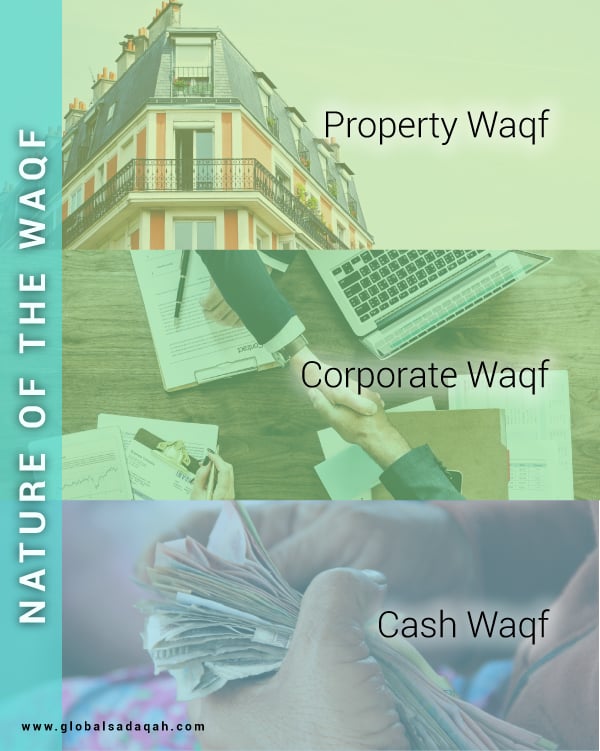
    Waqf is an endowment to a religious, educational or charitable cause, most frequently used to build schools, hospitals or religious institutions. Given its communitarian nature, waqf is often used to fund social projects and services.

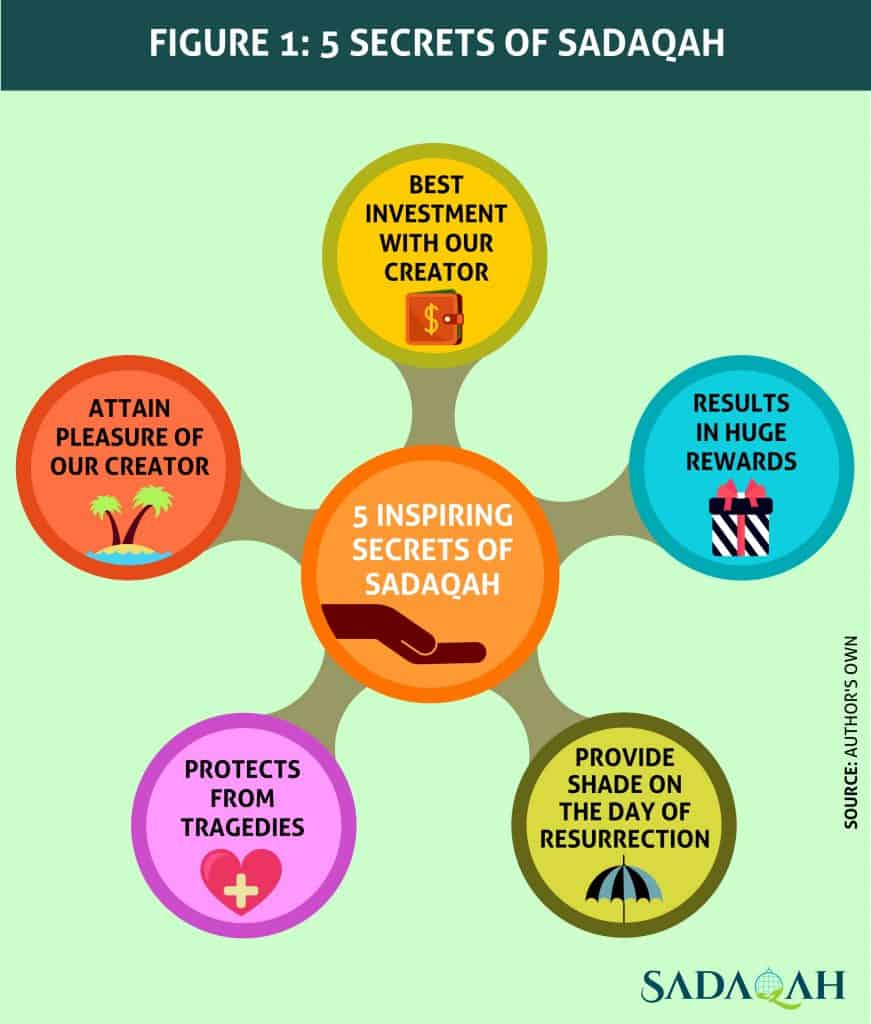
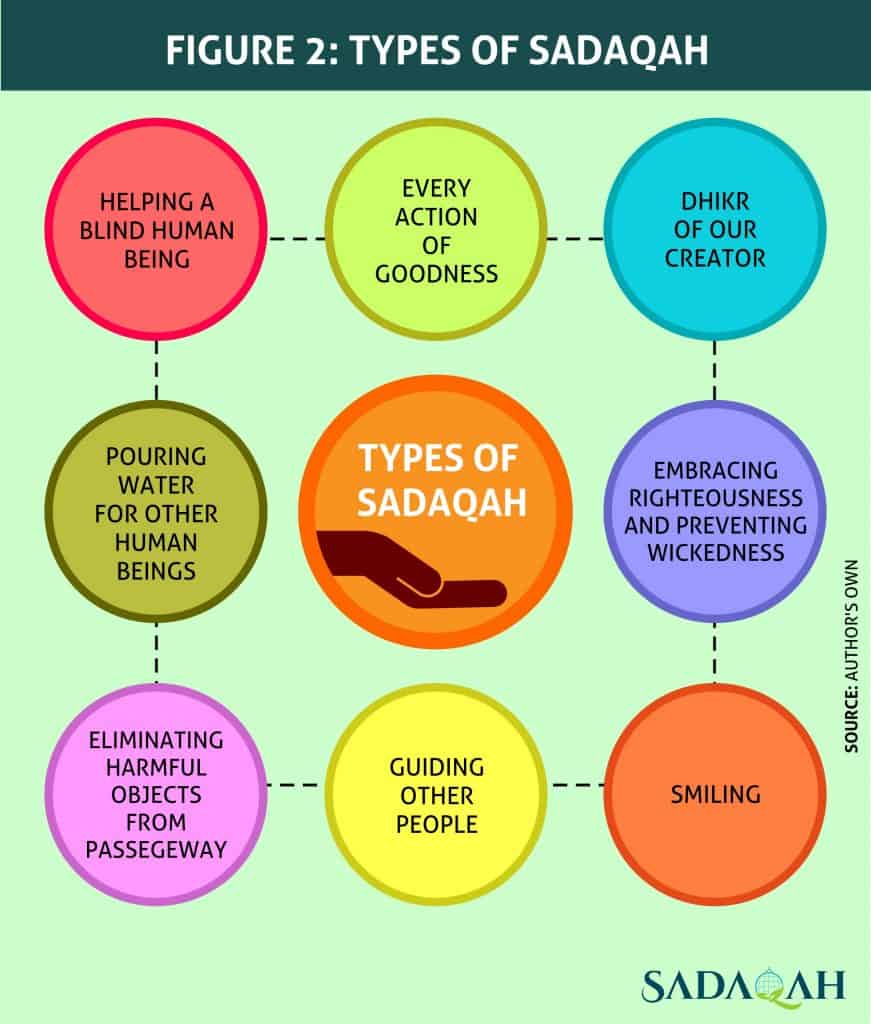
    Sadaqah is a voluntary charity given on an ad-hoc basis; a concept similar to putting coins into a charity donation box.

    These instruments are used to provide education and healthcare, to develop infrastructure and maintain social welfare provisions for the poor and destitute.

    waqf-sadaqah-zakat-social-islamic-financewaqf-sadaqah-zakat-social-islamic-financewaqf-sadaqah-zakat-social-islamic-finance

    Charity through Islamic Crowdfunding

    With the huge gap in humanitarian funding, coupled with the immense need, innovative financing models are starting to play a critical role as it becomes clear that no single factor can plug the deficit.

    In the humanitarian sector, international aid organizations are looking to new sources of capital and utilizing Islamic social finance for humanitarian projects. Innovation in the financial industry happened at a very fast pace, and Islamic Social Finance is one of the industries undergoing rapid disruption by digital platforms.

    GlobalSadaqah was a recipient of the Best Social Impact Islamic Fintech Firm Award at the World Islamic Fintech Awards 2018, during the Global Islamic Fintech Huddle in Bahrain. The Islamic crowdfunding platform helps channel donated funds to some of the neediest individuals in society. It connects individual donors to a diverse range of social causes that require financing around the globe.

    For donors, digital technology makes it easier to identify, evaluate, and fund causes. For organizations collecting social finance, technology provides greater access to donors, lowers costs, and allows for greater reporting and communication. For institutions implementing projects, technology enhances project management, workflows, and monitoring. Perhaps most importantly, digital technology can help recipients of social finance and their communities by making resources more accessible and distribution more efficient.

    waqf-sadaqah-zakat-social-islamic-financewaqf-sadaqah-zakat-social-islamic-financewaqf-sadaqah-zakat-social-islamic-finance