A good financial plan creates a roadmap or a guiding light for your financial life journey. It’s more than money and gives you an overall picture of where you stand financially and where you’re heading to. It should include financial details about your cash flow, savings, debts, investments, insurance, and any other aspects of your finances.
Financial planning is an ongoing process that allows you to get your money and life under control so that you can reduce stress, fear, and worries about your future life. I think everyone should have one, and it can be done in your own style or with a financial planner. Remember, financial planning is not only for the wealthy or people earning a high income.
You don’t need sophisticated software or tools to draw up your own financial plan; instead a blank piece of paper will help you to kick start the process. Start by listing down what you have (assets eg. savings account, EPF, investment account, investment property, business, etc.) and what you owe (liabilities eg. mortgage loan, car loan, personal loan, credit card, study loan, etc.), income (cash inflow) and expenses (cash outflow). This will give you a snapshot of whether you’re at a financial surplus or deficit, making it easier to work out a financial plan – covered in the next step.
Setting goals for your financial plan
This is where you decide how to design your own life. When crafting your own financial plan from the viewpoint of what your money can do for you, you’ll make saving and investing feel more intentional than overspending it. Your goals should be inspirational, measurable, and realistic – ask yourself where do you see yourself in five years’, 10 years’ or even 20 years’ time? It’s important because it gives you direction to achieve your financial goals at different life stages and it also influences how you plan your career as well.
For example, there will be different needs when doing financial planning in your 20s, 30s, 40s and 50s. In your 20s, you might want to make sure you have sufficient emergency savings that lasts for at least three to six months so that in emergencies you won’t be running on credit. Don’t forget to factor in insurance and ensure you get adequate coverage for personal accidents and a medical plan.
In your 30s to 50s, you’ll likely be experiencing high commitments due to getting married, raising kids, preparing university tuition fees, and funding your retirement fund. As you progress from different life stages, you’ll need to regularly keep an eye on your allocations for investing and spending. If you know that these things will happen in your 30s to 50s, you may save and invest more in your 20s or prolong the retirement age from 55 to 60.
Monthly budgeting for your financial plan
The next step is to allocate your monthly budgeting – what is coming in and what is going out to understand your spending habits and only able to take a balance between spending and savings. It depends on where you live and how you spend – living in an urban area may result in spending more due to higher rent, eating out more etc. If you don’t spend more than half of your income, then you can start saving enough to fund your goals. Of course, you can’t own the whole world, but you can own the things that you value the most!
Executing your financial plan
This is all about allocating your resources or cash surplus to fund your goals. Saving and investing must come into play and you should consider the types of financial products, the risks, returns and liquidity, as well as understanding your risk tolerance. For example, if you set aside 15% of your gross income for long-term goals like retirement, you may consider investing in stocks or equity funds that aim for capital appreciation. For shorter goals like saving for an emergency fund, you wouldn’t put your money in a high-risk fund because you might need it quickly in an emergency. It’s best to have separate accounts for different funding purposes.
Review your financial plan
Lastly, review and monitor your financial plan regularly to ensure you exercise strict discipline with the flexibility to adjust accordingly in the future, especially when entering different life stages. It’s easy to talk and plan, but execution remains the most challenging task as we may not have the discipline to stay on track. So, reviewing, monitoring and fine-tuning acts as reminders of your goals all the time. It’s best if you can make it measurable so that you can reward yourself with small gift when you are on track!
A good financial plan is not a beautifully written document that is presented nicely to you. It’s a tool to track your progress and help you reevaluate plans after a life milestone such as getting married, raising a kid, buying your first property, upgrading to a new car, preparing for a kid’s college fee, or building your retirement fund. When everything is handled, you can enjoy living your life. The small steps you are taking now will definitely have a huge, positive impact on your future.
About the author
Eewen is a licensed financial planner and strongly upholds the belief that financial wellness is all about money bringing a positive impact into your life. She can be contacted at keaheewen@vka.com.my
Nowadays, the words “health” and “healthy” are very important. While the pandemic has taught many people different lessons, one of the most central ones is that it’s important for us to be healthy. Without good health, all other things may not take place, or be sustainable.
The concept of being healthy isn’t just limited to medicines or the fitness industry – it’s also widely used in the financial industry. These days, there are plenty of marketing messages that have the phrase “Financial Health” or “Financial Health Check” in a big, hard-to-miss font!
At a glance, it seems that we can get free financial health checks from different companies that offer different kinds of products. Life insurance companies offer this, banks may also offer this service, and in social media, we can see many different individuals, or product companies offering this, for free!
As a curious person, I tend to try out new things. And the most memorable one, I’d say, is one by a reputable insurance company offering a financial health check. I logged in to the portal to do mine; a few questions were asked about my age, marital status and whether I have children. It then asked me to rate a few scenarios that “concerns me”:
Hospitalisation
In the event I’m diagnosed with critical illness
In the event I’m disabled
In the event I meet with an accident
If I’m concern about money for my children’s education
After these questions, the next segment asked me to indicate how much insurance I have in respect to the areas mentioned above, followed by a question of how much of my current income goes to insurance premiums.
Boom, the results came out and I was eager to see if I’m considered financially healthy! The results show me, based on the coverage amount I keyed earlier, compared to people like me at this insurance company, whether I had higher or lower coverage for the respective areas. It even comes with a recommendation of what I “need”. You get it – according to this financial health check, I need more insurance products!
Just like this, am I supposed to say I’m financially healthier than most just because I have higher coverage on death and total permanent disability? Am I supposed to feel concerned just because “people like me” at this insurance company have a RM20,000 paid savings plan, but I have RM0; does that make me a bad father?
Comparing our situation to “people like me” as defined by a company, isn’t a good way to assess if we’re financially healthy. If this is a good approach, we should start comparing our situation to people in other countries, societies, and at other offices. But what is a fitting benchmark for this?
If this is considered a good approach, then if “people like me” in this country have a high amount of debt, should I start going all out and accumulating debt? I’m not sure how this makes any sense. It may make sense to some, but I’m still looking for a good explanation!
Comparison is the root of all evil and how we lose the clarity we need to live our own life. It also helps in feeding insecurity, jealousy, greed and other emotions that don’t empower us to be a better version of ourselves.
I think that if we want to understand if we’re financially healthy, it’s because we want to know if we have a good financial foundation. It’s like a table with four legs; we want to know if these four legs are strong enough, or whether it’s unstable and at risk of collapsing. We need this information because we care about maintaining the table and want it to continue being stable so that what’s on the table will be sustained and maintained.
In life, what’s on my table will be what’s important to me. For me, this includes my family, what kind of difference I can bring to the society, whether I’m making a difference, and helping people be better than they were the day before. But, without those four legs supporting my table top, these three items may not be around for long.
In the context of money and life, we can start from these four legs to find out if we’re financially healthy.
What are these four legs?
Emergency savings
For a start, I’d suggest looking at your emergency savings. If your savings can support you during sudden spikes in unexpected expenses, or ensure you go through challenging times when you lose your main income without having to lose sleep, your leg is quite stable and strong.
Are you saving enough?
Assess if you’re saving part of your income. A person spending all their income today will probably have to always look for money. The day their income stops, they’ll have issues maintaining the lifestyle they lead. On the contrary, a person who saves too much of their income today may not be able to enjoy life at all. Striking a balance seems to be important since none of us know if we’ll get the chance to enjoy our savings 20 years later.
Debt and commitments
Take a look at your debt situation. Do you have a habit of carrying outstanding debts forward month to month? How much of your take-home pay are you using to pay off loan instalments? If this amount takes up most of your income, it means you probably have less freedom and flexibility to try something new, since there are weights dragging this leg down. This means you may not be able to put on more weight to your table top.
Life goals
Finally, how well have you been preparing to achieve your life goals? For instance, my family is important to me, and if I were to leave them too soon, how long can they continue with minimal disruption? Have I done anything to ensure my frozen estate can reach them as quickly as possible with minimal costs? Am I on-track to provide my child with the kind of education I want?
By looking at your financial progress from this perspective, the benchmark you’ll use isn’t public, but rather what you want, and compared to where you are now. This allows you to fairly review the legs of your table. It’ll help you stay on-track and compare your current situation to your ideal goals instead of other people’s.
The points above are the four basic areas I think we should review if we want to understand our financial health. Of course, there are more areas such as if assets are optimised or liquid enough, ways to legally reduce taxes, or reducing the fees and cost we pay when we grow our wealth, etc. But this is a good starting point.
When was the last time you did a financial health check? By being part of the Money Warriors Community, you can learn how to make improvements to the four basic areas – save more, spend with peace of mind, reduce your debt, and be brave when you think of money.
About the author
Kevin Neoh is a NextGen Money Coach who works with people to help them transform their relationship with money to improve their lives with the money they have. Kevin can be contacted at kevin@nextgenadvisors.my and www.kevinneoh.my.
During these turbulent economic times, people may be tempted into taking drastic action with their investment portfolio. For example, if a RM100,000 investment is reduced to RM80,000, that may trigger various reactions towards that RM20,000 loss, such as selling all or some portion of the investment, buying more of that investment, or even doing nothing at all.
These possible reactions from different individuals can provide some important insights into risk profiling. With the current volatile market conditions, understanding investment risk and implementing a systematic investment plan would assist investors to meet their long-term financial goals. Investors might typically ask “What are the risks involved in portfolio investment? What is a safe investment portfolio? How much risk should I take?”
1. Volatility, market information and noise traders
Proper research prior to investing is crucial as it’s important to understand the types of risk associated with each investment. However, investors tend to be confused between the concepts of ‘risk’ and ‘volatility’. In financial terminology, risk refers to the probability of losing an investment capital based on the expected return on any particular investment. Meanwhile, volatility measures price fluctuations in a security, portfolio or market segment. Typically, market news, such as changes in the company’s management team or an announcement about share dividend payouts, can result in stock price volatility.
There’s a growing number of information channels now serving the market, to the point that investors aren’t able to monitor every piece of information released. In fact, many investment decisions are influenced by emotions rather than rationality, which makes them difficult to manage. This is because emotional investment reactions cause short-term volatility. For example, positive news usually gives happiness to the investor, while negative news can lead to excessive reactions.
Emotional investments are usually revealed through the distinction between informed and uninformed investors (noise traders) and how they interpret market information. Meanwhile, noise traders refers to investors who trade based on what they falsely believe to be special information or their misinterpretation of useful information regarding the future price or payouts of a risky asset.
One of the factors of noise trading is the need for liquidity. To be specific, investors may liquidate an investment in order to reduce the risk factors. They tend to buy and sell on market reaction. This is an impulsive action based on irrational exuberance or emotions, such as fear or greed, without any major consideration on the long-term returns.
2. Making informed investment decisions
In reality, investors become highly emotional upon experiencing losses to the point of even selling off their investment. Therefore, frequent updates of risk profiling are essential in order to match the investment portfolio with the investor’s risk appetite. By performing risk profiling, investment advisers would be able to identify the investor’s level of required returns and their risk appetite in terms of capacity and tolerance. As a result, their investment objectives could be better achieved.
Risk profiling involves three types of risk measurement: risk capacity, risk required and risk tolerance. Risk capacity is a mathematical measure of the maximum level of risk that the investor could manage before it affects his/her financial goals. Therefore, this should be determined in the early phase of the risk profiling process, and act as a reference for the investment portfolio risk. Furthermore, risk capacity could be used during risk analysis to help determine the choice of appropriate risk responses. Moreover, it would also help manage financial risk shifts in the long term. This is also influenced by the investor’s financial factors, such as promotion or job loss, new-born child, or health issue that could lead to unpredictable medical bills.
While the risk capacity indicates the maximum level of risk that an investor can manage, the risk required refers to the optimal level of risk managed by the investor to achieve the desired level of investment return. Reaching this level is essential to fulfil the investor’s investment objectives and it also shows the direct correlation of the required risk with the investor’s required level of return.
3. Systematic investing
There are two concepts to be considered by investors in systematic investing, namely diversification and dollar-cost averaging. Based on classical finance theory, an investor’s risk-averse traits will determine the proportion of allocation between a number of risky and less risky assets.
Asset allocation refers to a strategy used by individuals to divide their investment portfolio between diverse categories to minimise their investment risks. This strategy is in line with the saying ‘do not put all your eggs in one basket’. Moreover, investors can choose to invest in the money market, fixed income and equity market. The asset allocation in the investment portfolio will reflect the investor’s need for growth, income and liquidity. Therefore, the allocation should cover the investment horizons, risk-free rates and expected returns on risky assets.
The dollar-cost averaging (DCA) strategy implements a regular and periodic purchasing of an investment. DCA gained popularity among financial advisers and individual investors after the recession throughout the mid-1960s. Furthermore, it encourages the investment of the same amount of money rather than the same number of shares each period. As a result, investors can purchase more shares at a lower price compared to when the shares are priced higher.
4. Periodic review
It’s highly recommended that investors should regularly review their investment portfolio to make sure that their investment performance is in line with their expected returns and investment objectives. In the current volatile market, some investments may present good performance at times, while there are times when their performances won’t be as good, and vice versa. If this isn’t done, an investment with poor performance could significantly affect the whole portfolio’s returns, especially if it constitutes a big part of the portfolio.
By reviewing the investment portfolio, investors would be able to separate their emotions and tactical decisions from their pure investment processes. However, the key question is when investors should review their investment. In general, a review of investment portfolios should be done with their financial advisers on a yearly basis, but additional reviews should also be done when investors go through different stages of life.
To illustrate this point, during the early stages of an investor’s career, he or she would usually need a combination of liquidity and growth in their portfolio. Throughout their employment period, their risk and return preferences will reflect that they have stable incomes and they may experience an increase in their commitments and goals. Following that, as they approach retirement, the investment portfolio should primarily reflect their need for income, including several stages of growth to manage the effects of inflation.
Conclusion
Investor anxiety over a decrease in investment value by more than 30% is inevitable. In fact, when the market faces extreme volatility, some investors choose to rely on their instinct to make investment decisions instead of data and trends. While there may be a few extraordinary individuals who may make the right calls, most individuals end up making huge mistakes.
Essentially, risk is a natural component of investment. However, greater knowledge regarding the risks associated with investment and the practice of risk profiling would assist investors in determining their comfort level and building their portfolios and expectations accordingly.
About the author
Joe Tiong, CFP, Investment and Financial Planning Unit at UOB Kay Hian Wealth Advisors Sdn. Bhd. Her expertise is focused on financial planning and wealth management across an investor’s life cycle. She is also responsible for equipping financial advisors with the right skillset and materials in conducting business. She can be contacted at joe.tiong@uobkayhian.com
Legacy planning. Estate planning. Succession planning.
What do all these phrases mean? Am I too young or is it too early to consider such plans?
Life as we know it, does not always go according to plan. For example, an unexpected pandemic may have forced a career change on you. Suddenly, you need to dip into your retirement fund for some emergency funds – which would leave you with a depleted income when you reach the age of retirement.
What is more worrying is that when your business encounters financial trouble, it leads to more money being pumped from your retirement fund into the business. Would your retirement plan that was created a decade ago still be sufficient? Would you still be able to leave a legacy for your family and protect them from uncertainties in life? Unlikely.
It is common for us to think of investment and insurance after settling down, but what about legacy creation and why is it important?
Legacy planning
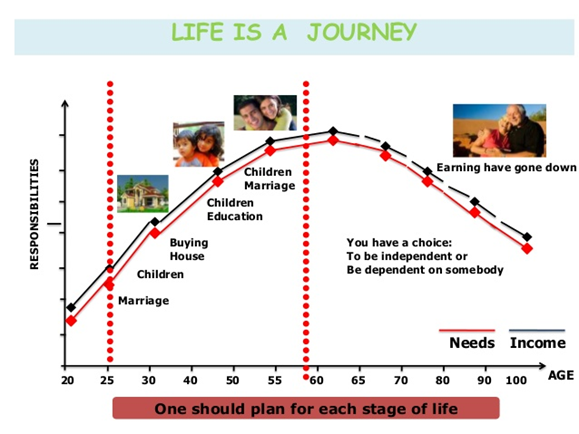
Legacy planning takes on many meanings for different people. However, the focus remains – will I have a lasting and positive impact on the lives of my loved ones? While some have given some consideration to their legacy, most have never put it in writing, and even fewer have established a plan of action.
As a doting provider, you would want your family to inherit the fruits of your labour and ensure that they will always be well looked after especially in later years. With legacy planning, it allows you to pass on what is most important to your loved ones without compromising your current and future lifestyle.
With adequate legacy planning, you will be able to increase your estate, enjoy greater liquidity and ensure fair distribution should any unforeseen circumstances occur while benefiting from financial freedom in your golden years.
Estate equalisation and succession planning
For those who own a family business, one of the challenges is figuring out how to pass on the business to the next generation, especially when one child participates in the business and the other does not.
While you want to leave a good legacy for your family, you would also like to ensure that the inheritance is fairly distributed to maintain the peace and harmony of the family. With fair distribution it can help to mitigate family problems which may arise when the distribution of an estate appears unevenly allocated.
If your wealth changes your life for the better, you are successful. If your wealth changes others’ lives for the better, you have created a legacy. What legacy will you leave behind? When is the right time for such commitment? The answer is now or the sooner the better. However, there are a few things to be considered such as:
1. How much do you want to invest?
Are you looking to invest a lump sum, or set aside a regular monthly amount? And how much money do you – make available for investment? Is this your emergency fund? You are advised not to use your emergency funds for investment.
2. How long do you want to invest?
Certain investment products run for a fixed period, so if you have a specific date in mind as to when you need access to your funds, then some product types might not be necessarily right for you.
3. What is your risk profile?
How do you feel about investment risk? As the saying goes: the higher the risk, the higher the potential returns. Imagine if you incur losses on your investment; what is your risk appetite and how much loss can you stomach?
4. How much flexibility do you need?
It is important to note that when you invest your money, it can get tied up and is no longer easily accessible. But, if you have a sudden need for cash, how quickly and easily can you liquidate your asset? And what is the penalty for doing this?
It is always a good idea to consult an appropriate professional or financial adviser on the particular investment in relation to your own circumstances.
Alternatively, you could consider Affin Maximiser, an investment-linked plan with flexible investment options to help you gain more. You can choose to invest into different investment funds across both local and regional markets to diversify and balance the risks of your investment portfolio. Top-up your investment for more potential returns and get rewarded with loyalty bonus and extra allocation as you invest.
AFFIN Maximiser
Your investment objectives may change over time, and Affin Maximiser gives you greater flexibility to reallocate your investment funds or change your selection of funds without any switching fee. As you may have different financial needs at different life stages, this plan allows you to withdraw your investment funds in part to accommodate your financial needs at any time.
Being more than just an investment tool, this plan also provides insurance protection of up to four times in the event of death or total permanent disability.
From now till 31 July 2021, all Affin Bank customers can enjoy a fuss-free enrolment via the Maxi Easi Campaign with no medical check-up required. If you have a moderate risk appetite, are able to commit to a long-term investment and looking for protection at the same time, then this might be a suitable plan for you. Or, if you are unsure of your risk appetite, feel free to speak to our Affin Personal Banker/Relationship Manager at your nearest Affin Bank branch.
Click here to learn more about this product.
“Soo Yee, I can’t make any investments. I don’t have money left every month, how do I even invest?”
This is a common reply when I bring out the topic of investment. And no, you don’t really need a large amount of cash savings to start investing!
Did you know that you have the option to invest your EPF monies into EPF approved investments via the Member Investment Scheme (MIS)? Let me explain more below.
1. EPF Member Investment Scheme (MIS)
MIS was introduced back in November 1996 for EPF members to diversify, boost and strengthen their retirement savings.
In short, if you have enough funds in your EPF account 1, you can invest part of the funds into EPF approved investments via appointed fund management institutions (FMIs) including Unit Trust Management Companies and Asset Management Companies.
2. Advantages of MIS
a. Allows you to enhance investment returns
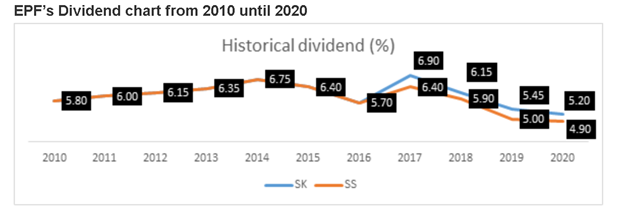
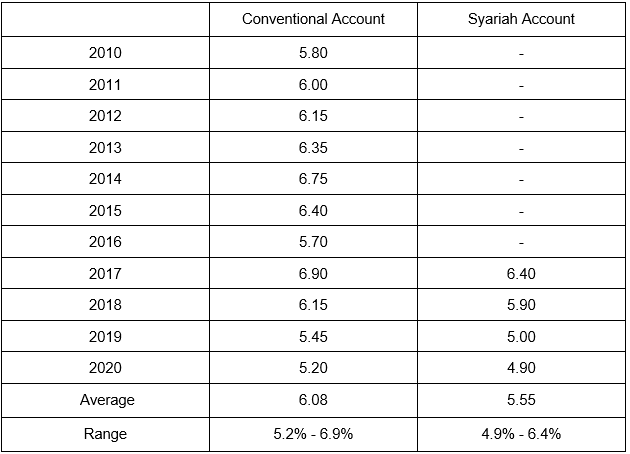
At the end of February 2021, EPF announced the 2020 dividend rate for Conventional accounts and Syariah accounts, paying out 5.2% and 4.9% respectively.
But what has the historical rate of EPF dividends looked like?
SK = Conventional AccountSS = Syariah AccountThe graph above is taken from the EPF website (as of 26 May 2021)
So while EPF has been paying a solid return each year, MIS provides the opportunity and potential for you to increase your investment returns and boost your retirement savings overall.
b. Enables you to increase exposure to foreign markets
Have you thought about where EPF decides to invest your money?
As at December 2020, EPF invested 67% of its investment assets in Malaysia and the remaining 33% outside Malaysia.
The numbers show that the majority of your EPF money is invested in Malaysia.
So if you’d like to have greater exposure to foreign markets, you can diversify your investments overseas via MIS.
c. Empowers you to have some control over your EPF investment
You can now choose to invest according to your risk profile.
There are EPF approved investment options for you to match your objectives and risk appetite.
3. Disadvantages of MIS
a. No guarantee of investment returns
For all its benefits, please note that any investment done via MIS doesn’t come with any guaranteed return, while EPF has a minimum guarantee of 2.5% dividend. You might get a higher or lower return compared to the EPF dividend rate, depending on your actual investment return.
You are solely responsible for the investment via MIS that you made.
b. Not entitled to EPF dividends
One of the big downsides is that the EPF money that you channel into MIS is no longer eligible for EPF dividends. Basically, you’re on your own. However, if you’re confident about your investment, this shouldn’t concern you.
c. MIS investments come with fees
Investment fees (such as sales charges, management fee and trustee fee) might eat up your investment returns. You must ensure that your investment returns (after deducting fees) will still be on par with EPF dividends at the very least.
4. How much can you invest under MIS?
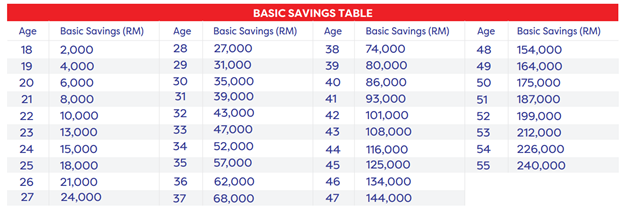
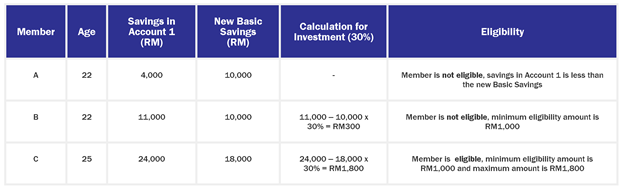
You may invest up to 30% of savings in excess of basic savings in account 1 with EPF. You may continue investing via MIS every three months as long as your balance in account 1 exceeds your required basic savings and fulfills all EPF requirements.
To confirm your eligible investment amount for MIS, you may check it under the i-akaun website.
Go to i-akaun website → withdrawal tab → withdrawal eligibility → member investment scheme.
The number that appears next to the member investment scheme is the amount eligible to invest via MIS.
Alternatively, you can also do a self-calculation of how much you can invest under MIS.
The formula is as below:
(EPF account 1 value – required basic saving in account 1 based on your age) x 30%Basic Saving Table from EPF website (as of 26 May 2021)
The minimum savings benchmark set by the EPF will be updated from time to time. You may check out the latest minimum savings required on the EPF website.
Sample calculation from EPF website (as of 26 May 2021)
5. Your investment options under MIS
You may invest via EPF in approved Unit Trust Management Companies and Asset Management Companies under MIS.
epf member investment scheme mis
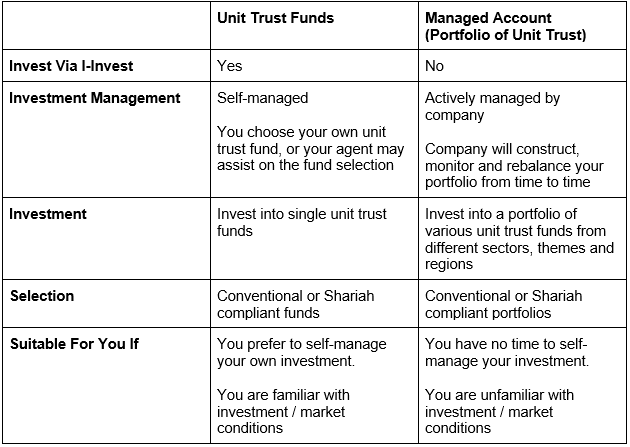
Difference between investing into unit trust funds compared to managed account (portfolio of unit trust)
In summary, any investment that you may choose to do via MIS comes with pros and cons. Do research and understand all the risks that you’re taking before proceeding with investing. If you have further enquiries on EPF investment via MIS, I suggest that you seek out a financial professional to discuss and design an investment plan that matches both your risk profile and investment objectives.
About the author
Kuah Soo Yee is a Licensed Financial Planner (CFP) who is passionate about helping people make sound financial decisions and achieve their financial goals, and recently launched her own app. Her personalised strategies and advice have helped many to gain better clarity and take firm control of their financial future. She can be contacted at soo.yee@ipp.com.myWebsiteLinkedInFacebookInstagram
Taking personal finance to another level by looking at it from a more holistic view.
How has the past year been for you? I’ve done a lot of reflection on myself and how I want to further evolve when things get a little more normal for the coming year (fingers crossed)!
One thing I personally learned is about life and recognising that money is just a tool. We must make sure we use it correctly in order to work towards financial wellness.
“People first, then money, then things.” – Suze Orman
Reflection on the path to financial wellness
The stoic path to wealth mentions that the fear of losing all our wealth is creating a monster inside us and therefore turning the chase for wealth into fear of losing it.
This eventually turns money into our master and we’re enslaved by fear until we almost lose touch with ourselves.
There is a saying “Money is the root of all evil”. But in actual fact, the full quote is “the love of money is the root of all evil.”
It’s the greed for wealth that is bad as it can corrupt minds, and the need to keep accumulating more and more is the real issue.
Money is not the end goal
Personal finance is not about the money we have or about creating more wealth. Its main purpose should be more holistic, ie. leading the life you were born to lead, no matter what your financial status is.
You’ll see money in a different light if you began your career with a student loan. Even before starting your career, you’ve already created a load of fear by accumulating a large amount of debt.
This results in your mind becoming clouded with thoughts of the repayment of loans first and pushing aside all other goals or dreams. I personally experienced it as a child; teachers kept telling me to finish school, get good grades, go to university, get a degree and get a good paying job.
As a child I thought that was the dream, but it didn’t turn out the way I imagined it would as a child.
We were repeatedly told this fairytale, and subconsciously I believed it. But now that’s not the case. How can we take a holistic approach around our personal finances and take back control of our life?
Believe me, we’re not meant to suffer through life constantly worrying about paying bills.
Reflecting on your childhood dreams
Have a goal in mind. You already knew what you wanted when you were a child. In fact, there’s a good chance you were so good at it.
Try asking your parents or other close family members what you were like when you were around the age of 9 to 12. It’ll give you some insights about your strengths and your childhood dreams.
I grew up observing how passionate my parents were and how they were willing to give their all to their career. At the end of the day, my parents still had time to spend with us and go on a little vacation once in a while. It was a nice balance.
That’s currently what I want to strive for – a balanced life between my career and family.
I’m not saying I don’t want to be rich (who doesn’t), but it’s not my main focus right now.
Between juggling two young kids, my husband works long hours because he enjoys the work he does. Even though in my opinion, he deserves to be paid better, it matters less.
There’s been a string of financial decisions we made that may be a sin in the personal finance community focused on accumulating wealth. But we needed to make those decisions to get to where we need to be in life.
Our goals were bigger than wealth accumulation.
Using my finances to find peace
We can never be free. I believe there’s no such thing as financial freedom. This is because I realised just when I thought we were “free”, something would suddenly hit us like a bomb and I would think “Here we go scrambling again”.
Getting married is expensive. Staying married is expensive. Having kids is expensive. I remind myself of my battles daily.
If my needs are covered, I am willing to forgo some of my wants. How precious and priceless is the laughter of a child?
Just do you
It‘s terribly hard to maintain a balance and I personally struggle with this on a regular basis. Turning off the work switch and being present was a difficult process.
Being frugal and being disciplined in managing our budgets has a big impact on our long term finances.
But this just makes me exhausted. There’s no point stressing about maximising my savings or the future so much that I forget to be present. The goal is not the money – it’s my life.
I’m not going to kill myself just to keep striving towards this illusion that my future will be far brighter if I continue maximising my savings and investments.
I choose to enjoy every step of the journey instead, without mentally burdening myself.
Use your wealth-building experience to create happiness for yourself and inspire others to do the same. Remember it’s not about the numbers and figures in your portfolios, but what you do with the money.
“Wealth consists not in having great possessions but in having few wants.” – Epictetus
Move from survival mode to thriving mode. Choose not to be trapped in the illusion of not having enough. You’re enough! If you’re in survival mode, you’ll trap yourself in the rat race.
Therefore, there’s no room for helping others and all you’ll think about is how to make yourself better instead of the community around you.
About the author
Nurul Yahi has a background in Business Administration majoring in Islamic Financial Planning. She’s a financial enthusiast and you can find her at dearduit.com. You can also find Nurul on Twitter, Instagram and Facebook.
Back in December 2019, the Covid-19 outbreak was triggered in Wuhan, a city located in the Hubei province of China.
The virus continued to spread and eventually escalated into a global pandemic which devastated every single corner of the world, causing radical changes in the way we live as well as social, economic, technological, and political policies.
Amidst the economic doldrum in China, there have been interruptions in exports and imports, while global supply chains have been disrupted significantly.
With a strongly connected and integrated worldwide trading relationship, the contraction in the global supply chain led to a big drop in global economic activities.
Furthermore, governments around the world have been forced to implement harsh restrictions on human activity to curb the spread of the virus.
These travel restrictions further burdened the financial markets and led to dramatic falls in global economies.
It’s been a similar situation in Malaysia, with the implementation of various Movement Control Orders (MCO) costing millions of people their jobs across varied industries, leaving many Malaysians suffering from salary reduction, furlough, or unemployment and retrenchment.
This impact has become apparent since the outbreak and many of them have turned to alternative jobs like driving Grab cars, venturing into the food and beverage industry, online vocations, or direct selling to make ends meet.
In December 2020, the Employees Provident Fund (EPF) launched a new scheme which allowed members to prematurely withdraw their EPF savings in order to aid their cash flow during the difficult economic times posed by the Covid-19 pandemic.
What are i-Sinar withdrawals?
The EPF i-Sinar initiative enables EPF members to make a partial withdrawal from their savings in EPF Account 1.
This initiative was launched by the EPF for the purpose of easing the financial burden of members who’ve been affected by the Covid-19 pandemic, helping them sustain their livelihood. The withdrawal amount will vary, depending on each member’s needs and of course their available balance.
Unfortunately, Malaysians are taking advantage of this opportunity to maximise their withdrawals and spending it on non-necessities.
In fact, without realising it, they’re withdrawing and spending their retirement savings nested in the provident fund!
According to a survey conducted by UCSI, among 809 people in Malaysia who have withdrawn from or planned to participate in the i-Sinar scheme, 47.2% of the respondents realised that the withdrawal will affect their retirement funds, 22.6% of the respondents were uncertain, while the remaining 30.2% of respondents didn’t realise the huge impact it would have on their retirement funds!
Returning to fundamentals, EPF serves as a social security organisation that primarily provides retirement benefits for the private sector and pensionable employees in Malaysia. Since 1951, it has proven to be a responsible and efficient custodian of its members’ retirement savings.
With the introduction of i-Sinar, this can potentially lead to a significant reduction in our retirement savings. The reason for this is that it leads to fewer dividends earned, missing out on the compounding interest in future.
If our savings are insufficient to sustain our retirement years, we may be compelled to delay our retirement further and continue to work, or may even be forced to downgrade our retirement lifestyle to one that is humbler or minimalist.
For individuals who’ve withdrawn their i-Sinar, what else they can do to manage the money beside spending it?
Well, upon fulfilling current needs, you’re highly encouraged to utilise the balance for better purposes such as investing. This is one of the instruments that’s able to grow our wealth through capital gain and appreciation in the value of an asset over time.
As with any savings fund, the benefit of putting money in EPF is the dividends and the compounding interest that you could accumulate over the years.
However, many EPF members have also opted to withdraw their i-Sinar and invest it into different investment vehicles which could offer potentially higher returns compared to EPF dividends.
Let’s use an example to illustrate this: Ms. Maria, aged 35 has withdrawn RM10,000 via the i-Sinar withdrawal facility and invested this into an investment vehicle that has the potential to generate 15% returns annually.
EPF DIVIDEND
ALTERNATIVE INVESTMENTS
PRINCIPAL
RM10,000
RM10,000
ESTIMATED ANNUAL RETURN
5%
15%
AGE 40
12,763
20,114
AGE 45
16,289
40,456
AGE 50
20,789
81,371
AGE 55
26,533
163,666
AGE 60
33,864
329,190
The table above explains how her i-Sinar withdrawal may grow from RM10,000 in the subsequent 25 years to RM329,190 thanks to higher returns and compound interest. If she doesn’t withdraw her i-Sinar and let it nest in EPF, she will only receive RM33,864 in the 25th year!
According to the aforementioned survey conducted by the UCSI Poll Research Centre, it shows that almost half (47.7%) of T20 income group earners who were polled said they used or would use their i-Sinar withdrawal for investment purposes.
Although the hardship faced during Covid-19 pandemic didn’t affect the T20 respondents as much as the others, they still saw this as an opportunity to invest and plan better for their retirement funds!
In a nutshell, the i-Sinar withdrawal is a good initiative to ease the financial burden of Malaysians who have been affected by the Covid-19 pandemic, helping them sustain their livelihood.
Despite part of the population not being affected much by the pandemic, they still continue to think about withdrawing their i-Sinar for investment purposes so that it can potentially generate better returns for their retirement funds. So instead of spending it on unnecessary items, invest it if possible!
Edmond Tang Zhen Han is a certified financial planner that is passionate about helping people achieve financial literacy in order for them to reach financial freedom. He can be contacted at edmondtangzh@genexus.com.my
Do these statements sound familiar? This mindset is typical for many Malaysians, and their very conservative nature and trust in fiat currency often leads to them keeping most of their savings in fixed deposits (FD). Although many understand that collective investment vehicles are essential to any comprehensive financial plan, there are also many hurdles that prevent people from doing so. Here are some common problems that contribute to this mental block:
Poor investment literacy
On average, investment literacy among Malaysians is relatively low compared to other countries with a more advanced and robust economy. Many people lack basic knowledge about capital markets, as well as banking products and services. Thus, this leads to a heavy reliance on FDs, while others unfortunately get caught up in investment scams. This knowledge gap can often be the main reason for many Malaysians being reluctant to invest.
Information overload
Many often look to get involved with the stock market just by doing basic research on Google or attending stock trading courses to discover the fundamentals. However, they can quickly find themselves being overwhelmed by the large amount of complex information and contradictory advice available on the internet. Worse still, some even hire unlicensed “gurus” or end up using suspicious investment platforms.
Lack of time
Investment isn’t a random game of chance – it requires deep homework and monitoring. As most people are busy with their daily life activities, it’ll be difficult for everyone to be able to do research and monitor their investment portfolio regularly, especially if it contains exposure to equities and derivatives which can be highly volatile.
Without enough time, they may not be responsive enough to respond immediately to drastic change in financial markets, which may cause them to lose opportunities or suffer losses during market corrections. This can be compounded if investors are trading in overseas exchanges that operate in different time zones.
Limited capital
One of the biggest challenges most investors face is having limited capital available to invest, making certain financial instruments too expensive and beyond their reach. For example, the share prices of gigantic companies like Facebook, Apple, or Tesla are often much too expensive for a new investor to buy and own.
Leveraging investment through collective investment vehicles
The lack of capital can often be resolved by leveraging collective investment vehicles coupled with proper advice from financial professionals. Collective investment vehicles provide facilities for investors to participate and invest in a wide variety of investment asset classes with the help of fund management institutions.
Examples include unit trusts, private retirement schemes, and even funds available via government agencies and statutory bodies such as EPF and Tabung Haji. It also includes exchange traded real estate investment trusts (REITs) and passive management vehicles such as exchange traded funds (ETF). Collective investment vehicles can be either actively or passively managed.
Benefits of investing through collective investments
There are many advantages when investing in collective investments, namely:
Diversification
For example, an equity based unit trust fund can easily invest into 30 to hundreds of quality companies depending on the mandate. It’d be better still if investors hold a basket of different kinds of funds with a combination of various asset classes and regions. The diversified nature of collective investment vehicles actually reduces the risk and volatility of the portfolio significantly, yet benefits from the return potential of the underlying assets.
Professional management
Investing through collective investments allow you to tap into the expertise of experienced licensed fund managers where they have a wide range of resources to access crucial market information. Professional teamwork between fund managers, investment analysts and their research team ensures that the best efforts are made to safeguard investors’ interest in benefiting from market movements. Fund managers are also able to utilise sophisticated financial tools effectively, which aren’t able to be executed correctly by the average retail investor.
Low entry costs
Investors can begin buying shares or units with a relatively small amount of money. This is because investment funds can be highly cost-efficient as they make “bulk-purchases” through a huge pool of investor funds. Some funds even allow investors to invest on a regular basis with contributions as low as RM100, which means the investor is actually buying into fragments of quality companies using that small amount of money.
Flexibility
Many fund management companies administer several different funds, such as money market, fixed-income, dividend, balanced and growth funds. They allow investors to switch between funds within their fund with little or no charge. This enables investors to allocate and rebalance their portfolios as per personal needs or changes in market conditions.
Choice of sectors and regions
Investing into collective investments allows you to take advantage of a wide variety of investment sectors and geographical regions. You could invest in a fund that invests in several global regions, which can reduce your exposure against big market swings in any one area. Or you could target specific countries and regions, to take advantage of the growth of their markets and gain more lucrative profits.
Investing through institutions
Would a retail investor or an investment institution have the upper hand in investing? The answer is obvious. When you leverage your investment through collective investments, you’re participating in the market through institutional investors. The level of detail and analysis that an institution does is far superior to anything a retail investor can access.
Though there are a relatively low number of investment institutions compared to hundreds of thousands (if not millions!) of retail investors in the market, the decisions made by the institutions often create a greater impact and opportunities compared to the retail as institutional funds are huge and professionally managed.
Summary
Investing through collective investments is meant to seek leverage on the expertise, time and convenience, minimise risk and optimise investment returns through professional and sizeable fund management. And while there are plenty of collective investment vehicles and fund managers, if you remain unsure which ones you should opt for, consider consulting a licensed financial adviser or planner to work out a tailor made solution for you!
About the author
Lee Yee Xiong, (FAR AfRFP BAAcc) is a licensed financial advisor with an accounting background and is well-versed in a holistic, independent and unbiased advisory approach. He is among the very first batch of MDRT International Benchmark Awardee in the FA Channel. He can be contacted at YeeXiong.Lee@yesfinancial.co
Credit card debt has been an issue for decades, especially among Malaysians. According to a report from the Malaysian Department of Insolvency in December 2019, credit card debt made up 10% of bankruptcy cases from 2015 to 2019.
A 2015 survey from the Asian Institute of Finance revealed that 47% of Gen Y respondents aged between 20 and 33 were engaged in expensive credit card borrowings.
These days, spending future money is so easy with credit cards where a simple wave will do or shopping online for your favourite items and only worrying about paying it later.
Many people will continue to pile up debts and only make the minimum payment each month, making things worse. This leads to huge credit card debts that seem to last forever with no end in sight.
I have a friend that used an extreme method to manage her credit card debt – she physically cut her credit card into two and never owned a credit card again.
While not everyone will need to resort to such drastic measures, are there other ways to manage credit card debt?
For me, a credit card is still a very useful financial tool that allows us to make payment for big ticket items or for emergencies where we don’t carry much cash.
Steps to get out of credit card debt
1. Stop using your credit cards until you pay them off
Credit card balances can grow rapidly due to very high interest rates of 15% to 18% (or more)!
People often find themselves on a debt treadmill, struggling to make minimum payments and helplessly watch their principal balance grow each month.
Stop chasing your debt balances. Use cash or debit cards until your credit cards are paid off. In this way, you can focus on paying down your balances and you won’t be tempted to spend more than you can afford.
2. Get organised and prioritise
If your credit card debt is spread across several different banks, get organised and prioritise payments on the credit card with the highest interest rate.
Here’s a tip – the interest rate of local bank credit cards are usually cheaper than foreign banks. Review your total credit card statements and settle the debts one by one in order of interest.
3. Never pay the minimum amount
I found that many people are in the habit of paying the minimum 5% of their credit card statement each month.
Do you know that all your statements clearly highlight the disadvantage of paying the minimum each month? However, many still choose to ignore it.
You can refer to the table below. If your outstanding debts are RM10,000 and you only pay the minimum amount (RM500), then the repayment period will be 88 months.
However, if you pay a slightly higher amount (RM600), this repayment period shortens to just 20 months. Don’t ever underestimate the rate of compounding, especially when it comes to debt.
4. Credit card balance transfer plan
Do pay attention to promotions or offers from different banks or credit card companies. You may be able to transfer the existing balance on your current credit card to a new or unused credit card.
This can be used to consolidate the balance from multiple credit cards into a single credit card, making the debt much easier to manage. You also can take advantage of lower interest rates compared to your existing credit card interest rate, which means you’ll pay less in the long run.
5. Personal loans from banks
This works by making full use of the difference in interest rates between the loan and the credit card. Current personal loan rates can range from 5% to 8% depending on the bank and terms and conditions.
If you can get a personal loan at 5% per annum compared to 18% in credit card interest, then you can save up to 13% in interest. That’s a lot of savings!
6. Seek help from AKPK (Credit Counselling and Debt Management Agency)
Many Malaysians may not know this but AKPK can help you better manage your debt. They’re a good resource for those who are straddled with debt and are worried about being unable to pay it off.
AKPK will help you to develop a budget, explore options for getting out of debt, and provide you with a customised action plan. They can also help rebuild your credit and offer financial advice for free!
I’d like to highlight and repeat that AKPK is FREE. There are some scammers out there using the AKPK name to charge fees to desperate people in debt. Do be careful and always call AKPK directly.
7. Manage cash flow and spending habits
Do some budgeting and manage your cash flow every month. There are many apps that help you to track your expenses so you can understand your spending pattern and look for ways to reduce or cut irrelevant purchases.
For example, reduce the frequency of dining out or going to the cinema, and set a limit to online shopping time.
I’ve found that many young people have the habit of buying online everyday. They say “I’ll spend RM20 only” but that RM20 will add up to become RM600 each month.
Online shopping is a great temptation and while some may say that it releases stress, trust me that piling up debts is much more stressful – it’s just that the stress comes later!
After tracking your cash flow for a few months, you may find that your expenses always exceeds your income. If there’s really no way to reduce your spending, it means your income isn’t enough to sustain you.
Instead of spending your free time relaxing, you may consider using this time to find a part-time job or even start an online business. When your income increases, then you’ll be able to pay off your credit card debts and start leading a better life.
Let me borrow a phrase from Warren Buffet to make my point: “Don’t save what is left after spending; spend what is left after saving”.
I advocate this habit to all my clients by putting regular savings in unit trust so they can grow their money rather than complain that they’ll only save if they have money left after spending.
By saving than spending, you won’t overspend because you’ve already saved the relevant amount.
The saved amount will have many objectives such as emergency funds, retirement planning, etc, which means you won’t be using a credit card as your emergency fund and build up credit card debt.
About the Author
Andrea Siew is a financial advisor, approved and licensed by Bank Negara Malaysia and the Securities Commission Malaysia. She can be contacted at andreasiew@harveston.com.my
When I graduated and first started my career, I always loved buying coffee at premium coffee outlets each day. It’s widely accepted and seen as a cool thing culturally, and such outlets are also a frequent hang out for friends or colleagues. I wasn’t thinking about my financial goals.
In recent times, the very trendy and fancy boba tea and or yoghurt drink culture has led to multiple chains and outlets mushrooming everywhere in our country. It’s not uncommon to find entire streets or areas such as Subang Jaya dedicated solely to selling different brands of boba and yoghurt drinks.
What could you do if you save the money used to buy a cup of coffee or boba tea each day? Imagine if you could spend or accumulate these savings over a period of a month, a year, five years, or more than 20 years?
Here are some alternatives that you can consider:
Short-term
Charitable organisation
You could make a difference in other people’s lives by helping those less fortunate than yourself. For example, for as little as RM65 per month, you can sponsor a child through World Vision Malaysia – a charitable organisation dedicated to working with children, families, and communities to overcome poverty and injustice. If there are other causes that you are passionate about, why not consider using part of these savings to donate to those organisations?
Fine dining
If you are a food lover, why not consider celebrating a special event with your loved ones, family, or friend at a fine dining restaurant or a hotel buffet? Based on the above assumption, you may just need to save up for at least two months of drink expenses for you to enjoy such a meal. However, it’s likely to be a memorable experience instead of a routine afternoon drink!
Holiday trip with your family
Where are your favourite places to visit? I spent around RM3,000 in total for my family trip (with my wife and parents) to Kota Kinabalu two years ago. When interstate travel is allowed or after the Covid pandemic, you may consider using the savings that you put aside for over a year to bring your family for a holiday and spend quality time together.
Books or personal development course
With RM250, you could purchase up to 10 books with one of the leading online book retailers in town. You can also consider using part of the savings to pay for a subscription to join organisations like Toastmasters for you to become a better communicator and better leader. Also, you may want to allocate the amount saved to invest in one or two personal development courses that will eventually help you to become a better person.
“The best investment you can make, is an investment in yourself. The more you learn, the more you’ll earn” – Warren Buffett
Medium-term
Save for a wedding or downpayment for a house
If you can save RM250 per month from your daily coffee/drink, you would have accumulated up to RM18,000 in a five-year period. This amount would be good for you to plan for wedding and or other medium-term goals.
And if you saved the same amount over a 10-year period, you would end up with RM46,000 in addition to your other savings. This is likely to be sufficient to pay the downpayment for a house that you have been dreaming to own!
Long-term
Private Retirement Scheme
Private retirement scheme is a voluntary long-term savings that allows individuals to save more for their retirement. By regularly saving RM250 a month or RM3,000 a year, contributors not only save up for their retirement, but also can take advantage of the tax relief available until 2025 of up to RM3,000 each year.
Assume an individual who is only 25 years of age saves RM250 diligently every month for over 30 years in a PRS fund that grows at approximately 8%. Taking compounding interest into account, he or she would have accumulated RM375,000 by the age of 55. This doesn’t even include any other investment vehicles, such as EPF and other savings that might have been invested or grown along the way.
Saving money on a cup of coffee / tea may seem like a small amount after a single day or even over a month. However, over a long period of time, this amount can grow to become quite substantial, where there are different choices available to spend, to save or even to grow, whichever resonates with your financial goals in life.
The aim of this article is not to say that you can’t enjoy your coffee or drink once in a while, but to give you an idea of how decisions you make will have some financial implications in the future. It’s never too early to start thinking about financial planning!
Assumptions used for illustrations mentioned above:
A drink costs RM12.50
Saving for 5 days a week (1 month = 20 days)
1 month = RM12.50 x 20 = RM250
Invest in a vehicle that grows with annual compounding of 8% per annum
About the Author
Goh Chee Yong is a Licensed Financial Planner under Capital Markets Services Representative License (CMSRL) and Bank Negara approved Financial Advisor Representative (FAR). He can be contacted at cygoh@imaxfinancial.com.my




 As a doting provider, you would want your family to inherit the fruits of your labour and ensure that they will always be well looked after especially in later years. With legacy planning, it allows you to pass on what is most important to your loved ones without compromising your current and future lifestyle.
With adequate legacy planning, you will be able to increase your estate, enjoy greater liquidity and ensure fair distribution should any unforeseen circumstances occur while benefiting from financial freedom in your golden years.
As a doting provider, you would want your family to inherit the fruits of your labour and ensure that they will always be well looked after especially in later years. With legacy planning, it allows you to pass on what is most important to your loved ones without compromising your current and future lifestyle.
With adequate legacy planning, you will be able to increase your estate, enjoy greater liquidity and ensure fair distribution should any unforeseen circumstances occur while benefiting from financial freedom in your golden years.
 If your wealth changes your life for the better, you are successful. If your wealth changes others’ lives for the better, you have created a legacy. What legacy will you leave behind? When is the right time for such commitment? The answer is now or the sooner the better. However, there are a few things to be considered such as:


 So while EPF has been paying a solid return each year, MIS provides the opportunity and potential for you to increase your investment returns and boost your retirement savings overall.
 In summary, any investment that you may choose to do via MIS comes with pros and cons. Do research and understand all the risks that you’re taking before proceeding with investing. If you have further enquiries on EPF investment via MIS, I suggest that you seek out a financial professional to discuss and design an investment plan that matches both your risk profile and investment objectives.