Category: Personal Finance

  • Personal Finance In The Cyber Age

    In an era dominated by technology, the integration of digital solutions in personal finance has revolutionized the way we manage our money. While this digital transformation brings convenience and efficiency, it also raises significant concerns about the security of our financial data and investments. As we navigate the cyber age, it is essential to adopt proactive measures to protect our wealth from constantly evolving digital threats.

    THE GROWING CONCERNS OF CYBERSECURITY IN PERSONAL FINANCE

    Recent years, accelerated by the pandemic, have witnessed a surge in cyber threats targeting personal finance, ranging from identity theft to financial fraud. As we become increasingly reliant on mobile devices for financial transactions, cultivating essential habits for better mobile security is paramount. Regularly updating your mobile operating system, using strong and unique passwords, enabling biometric authentication, securing your internet connection, and being cautious of phishing attempts are crucial in fortifying your digital defences. Financial institutions, recognizing the gravity of the situation, have implemented advanced security measures to safeguard customer accounts. One notable measure is the increased adoption of Two-Factor Authentication (2FA), adding an extra layer of protection by requiring users to provide two forms of identification before accessing their accounts. This significantly reduces the risk of unauthorized access even if passwords are compromised.

    DIGITALLY SECURING YOUR FINANCES: A COMPREHENSIVE APPROACH

    In the digital age, relying solely on the security measures provided by financial institutions is not enough. Individuals must take personally proactive steps to digitally secure their finances. If you are in public accessing anything private, a secure Wi-Fi connection is critical in preventing unauthorized access. Regularly monitoring bank statements for unusual activities is another vital practice. Additionally, using reputable antivirus software helps create an additional layer of defence against malware and phishing attempts.

    Understanding the security protocols of your financial institution and platforms is also crucial. Investigate the encryption methods used, the strength of their authentication processes, and the transparency of their security practices. By doing so, you ensure the safety of your funds within the digital realm.

    LEARNING FROM PAST EXPERIENCES: SAFEGUARDING YOUR FINANCIAL HEALTH

    The financial landscape is constantly evolving, and learning from past experiences is essential to safeguarding your financial health. A case in point will be even banks can collapse, such as what happened with Silicon Valley Bank in 2023 from a bank run. One needs to regularly reassess your financial strategies, diversify your investments, and stay informed about market trends. All these are crucial aspects of maintaining a resilient financial stance.

    Diversification, spreading investments across different asset classes and geographic regions, is a key strategy to mitigate risk. While it does not eliminate the possibility of losses, diversification helps protect against the catastrophic impact of a single point of failure. Regularly reviewing and rebalancing your investment portfolio is crucial for adapting to changing market conditions and maintaining a resilient financial stance.

    A GUIDE TO PROTECTING YOURSELF FROM FINANCIAL FRAUD

    As financial transactions increasingly shift to digital platforms, the risk of falling victim to financial fraud grows. Practical tips to protect oneself from scams include being cautious of unsolicited communications. Verify the legitimacy of emails, messages, and websites, and never click on suspicious links. Setting up transaction alerts on your accounts can help you detect and respond to any unauthorized activity promptly.

    Additionally, make it a practice to regularly review your credit report. This not only helps you monitor your financial health but also enables you to identify any unusual activities or signs of identity theft promptly. Monitoring your credit report can be the early warning system needed to prevent long-term financial damage.

    Another increasingly important tip is to avoid the installation of unknown .apk files. Cybercriminals often use malicious applications to infiltrate mobile devices, gaining access to sensitive financial information. Stick to official app stores, and only download apps from trusted sources to minimize the risk of installing harmful software.

    BASICS OF SPOTTING A SCAM: STRENGTHENING YOUR FINANCIAL DEFENCE

    Understanding the basics of spotting scams is a fundamental skill in the digital age. Common signs of scams include unsolicited requests for personal information, promises of quick and high returns, and pressure tactics. Be sceptical of investments that promise overly high or guaranteed returns and always conduct thorough research before committing your funds. Moreover, educating yourself about the latest scams and fraud trends is essential. Cybercriminals continuously evolve their tactics, so staying informed about emerging threats enhances your ability to identify and avoid potential risks. Cybercriminals are becoming increasingly sophisticated, including disguising themselves as legitimate organizations and falsifying documents proving their credentials.

    NAVIGATING THE CYBER AGE WITH CONFIDENCE

    In the rapidly evolving landscape of personal finance, embracing the digital age comes with both opportunities and risks. While technology enhances the convenience of managing our finances and lowers costs, it also exposes us to heightened cybersecurity challenges. To navigate this landscape with confidence, individuals must adopt a proactive approach to securing their financial data and investments. By cultivating good digital habits, understanding the security measures of financial institutions, learning from past experiences, and staying informed about the latest scam trends, we can safeguard our digital wealth and enjoy the benefits of the digital age without compromising our financial security.

    This article is a contribution from Stephen Yong Chuan Seong. Stephen is the Executive Director at Wealth Vantage Advisory Sdn. Bhd. (WVA). His role and responsibilities include driving the firm’s strategic growth, especially in business partnerships & collaborations, financial products & solutions, and branding & marketing. Stephen also works actively to promote financial literacy among Malaysians. He is the Founder of MyPF. my which is an award-winning top-five personal finance platform in Malaysia.

  • Protecting Your Welfare and Financial Interests in The Face of Mental Incapacity


    When it comes to personal financial and estate planning, there is one crucial area that many financial advisors often overlook. This area pertains to a situation that can befall anyone, irrespective of their will. Imagine finding yourself in a situation where your mental capacity is gradually slipping away. Making sound decisions becomes increasingly challenging, and managing your financial and business affairs seems nearly impossible. You’re gripped by frustration and depression, and eventually, you lose control over everything.

    The ability to make prudent personal financial and business decisions is what sets you apart as a successful business owner or a competent professional. Now, picture a scenario in which you lose this defining trait, the cornerstone of your self-image and business success.

    As your mental capacity wanes or deteriorates, the dire consequences unfold. You begin to lose control over both your personal financial and business matters. When you reach a point where a significant part of your mental faculties has eroded, you lose control over everything. You find yourself in a distressing situation where your own wellbeing and personal welfare are no longer within your grasp but in the hands of others.

    In the eyes of the law, as outlined in Section 52 of the Mental Health Act 2001, when you can no longer manage your personal affairs due to mental incapacity, your decision-making power is wrested from you and given to a committee appointed by the court.

    ONLY UPON DEATH

    Wills and nominations, typically, only take effect upon death. For example, a written will only become relevant upon your demise. All the nominations you’ve made in your EPF and life insurance policies come into play only after you pass away. Moreover, your life insurance policy’s death benefit remains unclaimed until a death certificate is submitted.

    Whether you’ll receive the total and permanent disability (TPD) cover benefit from your life policy depends on whether your state of incapacity aligns with the policy’s definition and terms and conditions. Most TPD benefits are disbursed six months after the insured individual becomes completely unable to engage in income generating work, with a waiting period of six months from the date of disability.

    It’s crucial to note that any testamentary trust established through your will instrument will not take effect in the event of incapacity. This trust, embedded in your will, can only be activated upon your death.

    DEMENTIA

    Dementia is a pressing concern. According to the World Health Organization, around 8.5% of older adults in Malaysia, roughly 260,000 people, are grappling with dementia. It’s a condition characterized by a loss of cognitive functioning, impacting thinking, memory, and reasoning to an extent that hinders daily life and activities.

    Dementia is not a sudden occurrence; it’s a progressive disease. Over time, individuals afflicted with dementia often require support in managing their affairs and daily activities. What’s worth noting is that dementia is not an inevitable consequence of aging; it’s a syndrome marked by cognitive function deterioration, memory loss, and behavioural changes. While it’s predominantly associated with older individuals, it can also affect younger people, and there’s currently no cure.

    In recent times, the media has reported prominent cases of individuals being subjected to court inquiries to determine their mental capacity and the potential appointment of a committee to oversee their personal, legal, and financial affairs.

    A TRUE STORY

    In December 2019, the son of the late Tun S. Samy Vellu filed a summons in the Kuala Lumpur High Court to ascertain his father’s mental capacity under Section 52 of the Mental Health Act 2001. He sought to determine if his father was mentally disordered, as his father had been unable to access his bank accounts due to his condition, prompting the legal action.

    There was another case involving the son of a 92-yearold millionaire businessman who filed a suit to evaluate his father’s mental health. He claimed that his father’s mental faculties had been declining over the past few years, leading to communication difficulties and memory loss. He applied for a court order to determine his father’s mental capacity to instruct lawyers on his behalf and to appoint a committee to manage his father’s affairs and estate if he was found mentally incapable.

    In conclusion, business owners and professionals who take pride in their ability to maintain full control over their personal and business lives are strongly advised to plan for the unexpected event of incapacity. Losing everything in such a situation can be avoided with proper planning.

    About the Author

    Lee Khee Chuan is a Securities Commissionlicensed financial planner representative. He is passionate about advising business owners and professionals on the importance of a comprehensive approach to estate planning. You can reach him at: leekheechuan@gmail.com

  • The Far-Reaching Impact of Inflation


    In an era of rapidly evolving economies and financial landscapes, the term ‘inflation’ has become a constant companion in financial dialogues. The global economy is in a perpetual state of flux, and understanding the manifold effects of inflation has become necessary in safeguarding our financial interests and aspirations.

    CAUSE AND IMPACT OF INFLATION
    Inflation’s genesis lies in the interplay of various factors. It can be spurred by increased demand, supply constraints, or external shocks. It impacts economies by distorting price signals, complicating long-term planning, and introducing volatility.

    For individuals, the ripple effects of inflation are deeply personal. Imagine the struggles of a family trying to maintain the same quality of life as costs rise. Retirement planning becomes more complex as the purchasing power of savings diminishes. The challenges are real, and the necessity of informed financial decision-making cannot be overstated.

    In recent years, Malaysia has grappled with inflationary pressures, influenced by global economic shifts and internal dynamics. Rising fuel and commodity prices, coupled with supply chain disruptions have contributed to a higher cost of living for Malaysians.

    Inflation is as violent as a mugger, as frightening as an armed robber, and as deadly as a hitman.” — Ronald Reagan

    SMALL BUSINESSES: WEATHERING THE STORM OF INFLATION
    The tumultuous waters of inflation often hit small businesses the hardest. While larger corporations might have the resources to cushion the impact, small businesses are more vulnerable due to their constrained budgets and limited pricing flexibility. When costs rise due to inflation, small business owners face the difficult decision of whether to pass on these increased costs to customers, potentially risking a decline in sales, or to absorb the costs themselves, potentially eroding their profit margins.

    Imagine a local bakery that relies on purchasing ingredients like flour, sugar, and butter. As the prices of these essentials rise, the bakery faces a conundrum. Passing on the increased costs to customers might lead to fewer purchases, as customers tighten their belts in response to rising prices. Alternatively, the bakery might choose to maintain prices, absorbing the increased costs, which could threaten its long-term sustainability.

    CORPORATIONS: DANCING WITH INFLATION ON A GLOBAL STAGE
    At the other end of the spectrum, multinational corporations must navigate the dynamics of infl ation across various countries and regions. In Malaysia, as inflation exerts its influence, these corporations face the challenge of aligning global strategies with local market conditions. Rising inflation in Malaysia can
    impact the cost of production, the price of goods, and the overall economic landscape.

    Consider a multinational technology company with operations in Malaysia. Inflation can lead to higher wages for local employees, increased costs for raw materials, and potential disruptions in the supply chain. To maintain profitability and competitiveness, the company must find a delicate balance between managing costs and delivering value to customers.

    STATISTICS SPEAK LOUDER THAN WORDS
    The impact of inflation is not merely a theoretical concept— it’s a reality backed by data. In Malaysia, statistics from recent years paint a vivid picture. Inflation rates, often measured by the Consumer Price Index (CPI), can provide insights into the extent of price increases. For instance, in 2021, Malaysia witnessed an average inflation rate of around 2.7%, a noticeable uptick from the previous year.

    Additionally, rising fuel and commodity prices have contributed significantly to Malaysia’s inflationary pressures. The World Bank reported that the average price of crude oil increased by more than 50% from mid-2020 to mid-2021. This uptrend in commodity prices can create a domino effect, impacting various sectors of the economy and ultimately trickling down to consumers.

    The impact of inflation is not merely a theoretical concept — it’s a reality backed by data.”

    A POWERFUL PERSPECTIVE
    Inflation’s impact is far-reaching and multi-dimensional, affecting individuals, businesses, and entire nations. Its effects on purchasing power, investment decisions, and economic stability are undeniable. Malaysia’s experience with inflation underscores the challenges faced by small businesses and corporations alike, reminding us that adaptation and resilience are key in turbulent economic times.

    As we navigate the currents of inflation, the wisdom of Ronald Reagan’s words holds true: inflation is a formidable adversary. To thrive in its presence, we must equip ourselves with knowledge, foresight, and a willingness to adapt. Inflation might be a force to be reckoned with, but armed with understanding, we can turn its challenges into opportunities for growth and innovation.

    THE FIVE EFFECTS OF INFLATION
    Inflation is no one-trick pony; its effects reverberate across various domains of the economy. From the wallet in our pocket to the boardrooms of multinational corporations, its impacts are undeniable:

    1. Purchasing Power Erosion
    Inflation gnaws away at the purchasing power of money. As prices climb, the same amount of money buys fewer goods and services. This translates into a diminished standard of living for individuals and families.

    2. Income Redistribution
    Inflation often redistributes wealth, sometimes in unexpected ways. Those who hold assets like real estate and stocks might witness their values surge, while those relying on fixed incomes, like retirees, find their purchasing power dwindling.

    3. Uncertainty in Investment
    Inflation generates economic uncertainty that affects investment decisions. Investors tend to seek protection against rising prices, thus adjusting their portfolios to include more inflation-resistant assets like commodities and inflation-indexed bonds.

    4. Interest Rate Fluctuations
    Central banks respond to inflation by adjusting interest rates. Higher inflation can lead to higher interest rates, which affects borrowing costs for businesses and individuals alike, potentially curbing spending and economic growth.

    5. International Competitiveness
    Inflation can influence exchange rates, impacting a nation’s international competitiveness. A depreciating currency might boost exports but also lead to higher costs for imported goods, affecting trade balances.

  • Trust In Transition: Ensuring Legacy Security Amidst Blended Family Dynamics

    In the intricate tapestry of family dynamics, Claire’s concerns (as you will read in the below true story) resonate with a challenge that many families face: the delicate balance between love and the protection of hard-earned assets. As we delve into Claire’s story, it becomes evident that estate planning and the establishment of trusts play pivotal roles in addressing these concerns, especially within the context of Malaysian law.

    This narrative serves as a poignant reminder of the importance of estate planning in safeguarding familial harmony and preserving financial legacies. In the context of Malaysia, where familial relationships are deeply intertwined with traditional values, the concept of estate planning takes on even greater significance.

    Within Malaysia’s legal framework, several statutes underscore the significance of estate planning and trusts. The Wills Act 1959 governs the creation and execution of wills, allowing individuals like Claire to stipulate the distribution of their assets upon their passing. Additionally, the Inheritance (Family Provision) Act 1971 ensures that adequate provision is made for the family members of a deceased person, highlighting the importance of thoughtful estate planning to avoid future conflicts.

    TRUE STORY
    Claire had become increasingly concerned as she noticed her husband, Krishna, growing happier by the day. It wasn’t that she didn’t share in his joy, but rather, she was troubled by the sudden return of his estranged son, Jay. Memories of the bitter quarrel that had driven Jay away were still fresh in her mind. Back then, Jay had demanded his inheritance from his late mother’s estate, but Krishna, citing his son’s youth, had refused. Tempers flared, hurtful words were exchanged, and Jay stormed out.

    Recalling that painful time, Claire had seen Krishna suffer deeply. It took the arrival of their own children to help him heal from the heartbreak. More than a decade had passed, and now, out of the blue, Jay stood at their doorstep. Unbeknownst to Claire, Krishna and Jay had reconnected secretly over the past six months, and it was Krishna who had extended the invitation for Jay to return.

    Krishna was overjoyed at Jay’s apparent change of heart, while Claire remained sceptical. Jay’s newfound kindness towards her, as well as his half-siblings, felt suspicious to her. A nagging thought took root in her mind – could there be ulterior motives behind Jay’s return? She couldn’t shake off the feeling that Jay’s intentions weren’t entirely pure. With Krishna aging, Claire feared Jay might be angling for a signifi can’t share of his father’s assets by mending their relationship. The prodigal son seemed intent on reclaiming his status as the favoured child, and Claire couldn’t ignore this undercurrent.

    The more Claire dwelled on her suspicions, the more anxious she became. She worried about the fate of her hard-earned money and assets in this blended family dynamic. As her husband’s wealth and their shared property were involved, she pondered whether Jay could eventually lay claim to her estate. Could he inherit a portion of her assets if she passed away before Krishna? These questions weighed heavily on her mind.

    Estate planning in situations involving blended families is inherently complex. Claire and Krishna’s case warranted a careful approach. One viable strategy was the utilisation of a Testamentary Trust, a legal arrangement outlined within a will that designates a trustee to manage specific assets for the benefit of named beneficiaries over a designated period. For instance, Claire could stipulate in her will that her assets, including her half-share of the house, would pass to Krishna and her two children upon her demise through a Testamentary Trust. To ensure her intentions were upheld, Claire might appoint a licensed trust company as the trustee, ensuring her assets would be held and distributed according to her wishes.

    In the context of Malaysia, where familial relationships are deeply intertwined with traditional values, the concept of estate planning takes on even greater significance.

    Alternatively, Claire could establish a Declaration Trust. This arrangement would empower her to serve as the primary trustee during her lifetime, with a licensed trust company stepping in as a substitute trustee after her passing. By executing this plan, Claire could ensure that part of her assets would not be transferred to Jay, even if Krishna’s will dictated otherwise. Assets she intended to safeguard for her children could be held within this trust structure, safeguarding her wishes.

    Navigating the intricacies of estate planning within blended families could be made simpler through these trust mechanisms. Whether employing a Testamentary Trust, a living trust, or a Declaration of Trust, individuals like Claire could assert their intentions without being overridden by their spouse’s conflicting desires, particularly in cases involving children from previous marriages. This thoughtful approach could alleviate Claire’s concerns and secure the future of her assets, bringing a measure of peace to this complex family situation.

    The true story of Claire, Krishna, and Jay was written and submitted to SmartInvestor by Rockwills. The Rockwills Group of Companies has operations in both Malaysia and Singapore, providing solutions and support services in the areas of succession, administration, and distribution of wealth. Rockwills started in 1995 and is the pioneer in the region to provide retail Trust, Will-writing and Will custody services. Rockwills is also licensed, respectively, in both Malaysia and Singapore to carry on trust business, and its services include acting as trustee of many family trusts and executor of many estates. Other services include the provision of comprehensive estate planning advice and offshore services.

  • Property Tussle: Being Left Homeless After Sister’s Death

    Property Tussle: Being Left Homeless After Sister’s Death

    The following story is based on an actual series of events, with some names and circumstances fictionalised. Any similarity to any person’s name, character, or history is coincidental and unintentional. It is about a property tussle, then being left homeless after her sister’s death.

    Chung was unable to get a loan from any financial institution to purchase a house. The easiest way out was to purchase the house under a name of his sister who would be eligible to obtain a loan. Nancy did not mind this arrangement as Chung gave the undertaking to pay the monthly loan payments.

    The arrangement worked well until Nancy passed away suddenly. She had no Will and since the house was under her name, it was considered her asset. Under the Distribution Act, Nancy’s husband, Jay, and children are entitled to her properties, which include the house that Chung bought and is living in.

    Read: Tears In Heaven: Who Protects Your Insurance Money?

    Property Tussle Begins

    Jay, who is not on cordial terms with Chung, would not want to hear anything from his brother-in-law that he had been servicing the housing loan and the house rightfully belonged to him. Chung’s pleas that Jay returns his house fell on deaf ears.

    Chung was left with two choices; either goes to court and fight for an equitable interest which may take a long time and the outcome, uncertain; or to stop making instalment payments which will result in the bank claiming from Nancy’s estate for the loan amount.

    Either way, Chung is at the losing end with a certainty of incurring losses.

    The above scenario of purchasing an asset under another name is quite common, especially among business partners, close friends or relatives for various reasons. Most of them do not realise or appreciate the seriousness of the problem that would occur upon the death of the person whose name is used to register for the asset if no proper estate planning is done – and an ugly property tussle will ensue.

    In the event the entrusted person dies or goes into a coma or becomes of unsound mind, his/her representative may not be as cooperative, especially when something of value is involved – that’s when the property tussle will rear its ugly head.

    Read: Special Needs Trust: I’m Nobody’s Child

    Declaration Of Trust To Prevent Property Tussle

    What Chung could have done was to get Nancy to sign a Declaration of Trust. Under this Declaration of Trust, Nancy will hold the house for Chung as a main trustee and an appointed licensed trust company shall be the substitute trustee in the event of her death.

    All Nancy needs to do is sign a trust deed which is irrevocable power of attorney with the trust company. Upon Nancy’s death, the trust corporation will take over as substitute trustee and follow the terms and conditions of the trust deed to transfer the house to Chung. From this arrangement, Chung has established a legal right to the house, and the problem with Jay could have been circumvented.

    The main benefit of a Declaration Trust is that though the house is under Nancy’s name, the rightful heir to the house would be Chung. Moreover, there is no need to transfer the house to another trustee, and thus there are no transfer fees payable.

    The fees are only payable upon the demise of Nancy. The transfer of the house of Chung’s name is hassle free since there is no need to wait for letters of representation over Nancy’s estate.

    Furthermore, with a trust company, Chung and Nancy will have peace of mind and their rights and obligations are well preserved without any third party interference since a trust company is duty bound to follow the trust provision and therefore more reliable than an individual.

    Moreover, the trust company has continuity compared to a natural person liable to die, fall ill, meet with an accident and be incapacitated, become of unsound mind or go bankrupt. When an individual trustee passes away, his assets are frozen until the necessary legal estate administration processes are completed, which means the asset is frozen too.

    And that’s how you can prevent a property tussle with the right tool, a Declaration of Trust.

    Read: Bob’s Dilemma: How To Convert Highly Illiquid Assets To More Liquid And Easily Realisable

    About Rockwills International Group

    Rockwills International Group, now in its 28th year, pioneered professional will writing in 1995 and has since evolved into the leading estate planning specialist in the country. It is today the largest provider of solutions and support services in the areas of trusts, succession, management, and distribution of wealth. It has done over 300,000 wills and 16,000 trusts and holds more than RM25 billion in assets under trust.

  • Employment Opportunity Fraud Syndicate: Lidt Cooperation Advertising Sdn Bhd Or Lidl Cooperation Advertising Sdn Bhd

    Employment Opportunity Fraud Syndicate: Lidt Cooperation Advertising Sdn Bhd Or Lidl Cooperation Advertising Sdn Bhd

    We will look at the modus operandi used by Lidt Cooperation Advertising Sdn Bhd or Lidl Cooperation Advertising Sdn Bhd. Both names are fake names used to trap victims. The modus operandi used by this company is like what the author has detailed in the first and second series published on the inovatif.com.my/ website.

    In the first series, the author details how this fraud syndicate offers job opportunities to subscribe to channels on YouTube or as a Shopee product promotion assistant, while in the second series, the author details the type of fraud that occurs on Telegram first by hacking accounts and stealing someone’s identity, second, NORDFX Trader’s Investment scheme that promises returns that are too perfect to believe.

    These two series were written based on the author’s experience, who disguised himself as an individual looking for job opportunities and accidentally found this scam and decided to investigate further.

    This paper is a continuation of the previous two series. What makes this sharing a little different is that it is the experience of a victim who experienced this event himself. The victim also agreed to share his experience on the condition that his identity be kept confidential. The victim gave permission and consent to publish his experience as one of the steps to raise awareness among the community about the existence of fraud syndicates like this.

    Here is what she shared:

    1. The employer (Lidt Cooperation Advertising Sdn Bhd or Lidl Cooperation Advertising Sdn Bhd) contacted me via WhatsApp, saying they got my personal information on JobStreet (Picture 1, left). I am trying to get a job opportunity because, with my current income, I cannot make any savings at all.

    2. I did not find any information related to their organization using the Google search engine, such as company profile and phone number. Searches on JobStreet, LinkedIn, and Indeed also show similar results.

    3. They will bait the victim to do a simple task by asking the victim to “LIKE” several videos on YouTube; usually, the victim will be asked to “LIKE” three different videos and will get RM15 as payment for their work. The victim will receive this RM15 within a few hours (Picture 2, right).

    Picture 1: Left (Phone number used to invite and contact the victim), right (conversation with the individual who invited the victim)

    4. There is no contract (black and white) for this job. Not to mention the terms and conditions imposed by the employer on the employee (this is a sign that we can probably pay attention, there is something wrong here).

    5. No interview process occurs via phone call or online (Zoom, Google Meet, Microsoft Team, and others). Claiming this job is only a full-time or part-time job (also a sign that we may notice something wrong here).

    6. Victims will be given a Telegram link to contact their customer service officer, Steven (Picture 3, left).

    7. Victims will be put into a group on Telegram, to begin with. Steven will give the victim a task categorized as “PROJECT”. Each task will be paid. Victims will be deceived and blinded by receiving payment money from their bank just by giving a “like” to the video only.

    8. The victim will be given an assignment. And the link for the assignment is as follows: (https://m.lidlcooperation.com/home). But, for this task, the victim will be asked to pay a sum of money as a deposit. In this case, customer relations officer Steven will determine the deposit amount. The victim just follows what Steven instructs; this task has three transactions. The victim was not told how much of the deposit needed to be withdrawn until the victim reached RM600 as a deposit.

    Picture 3: Left (Victim introduced to customer relations officer – Steven), right (Victim invited to join Telegram group)

    9. The victim will continue to be tied to the task because this system has been designed to trap the victim, and they will not be able to escape. This task starts from task 1, and the victim is asked to give “like” to several videos on YouTube. This will continue until the 18th task, which relates to giving “like” to the video. At this stage, after the victim is included in the group on Telegram, several fake accounts that resemble normal individuals are created to give the impression that other people are involved in this work and are not alone.

    The engagement from these fake accounts is very active as if creating healthy competition among participating members. Until at some point, the victims will feel left behind if they do not participate in their activities because they look very convincing. However, this account is operated by a bot that resembles/mimics the way of normal human conversation.

    After that, their customer relations officer will ask for another deposit of RM150. And asking for a second deposit of RM2k (this is also a sign that we can watch out for because there is unlikely to be any job opportunity that asks us to give a deposit of money in advance to get paid for our work).

    10. I do not have a sum of money of that value. And the RM600 money that I had taken out in advance to pay the deposit could not be taken out either. If I fail to pay the deposit of RM2k, they will not care about the deposit I have already paid since the beginning. It will be considered burnt just like that.

    11. When I give a message/chat to all the individuals in the group, the response to their message is like coming out of the “bot”. Even using Malay language is not capable, even using pictures as if they are local people. They will give a reply, “I don’t even know you”. The conversation in the chat room is from the “bot” itself to create a normal atmosphere in the chat group, and there is nothing odd about it. Until then, their employees warned me that if you don’t want to commit to a task, stop bothering others. This means their fraud has been exposed, and I have discovered they are scammers (Picture 4, right).

    12. They have kicked/removed me from the Telegram group. After I tried to contact all the individuals in the group.

    13. I tried to call back the WhatsApp number that offered me a job before. I need help because they have blocked my phone number.

    In conclusion, hope those out there are always vigilant. Undoubtedly, with the rising cost of living, monthly commitments, and other things that are out of bounds, we need more than real work to make any savings for emergency days. This is added when we work in a big city like Kuala Lumpur, where the cost of living here is higher than in other cities throughout Malaysia.

    However, looking for sustenance and side income, we must always be vigilant and careful and take advice from this experience. I was blinded by easy money; easy enough work made me lose judgment and become a victim. When faced with a job offer that is too perfect to happen in the real world, refer to your closest friends, and don’t make decisions recklessly without thinking about the consequences of the actions we take.

    I also feel sorry for the pictures of individuals used as a fraud tool that is placed as profile pictures of bots. A little advice from me, don’t share our personal photos excessively; two or three photos may be enough because there is a possibility that irresponsible parties will use personal photos as a fraud tool without our knowledge.

    *The Malay version of this article has been published “Sindiket Penipuan Peluang Pekerjaan: Lidt Cooperation Advertising Sdn Bhd Atau Lidl Cooperation Advertising Sdn Bhd”.  

    About the Author

    Rashid Ating. Researcher at the Department of Economics, Faculty of Business and Economics, and Institute of Advanced Studies (IAS), Universiti Malaya (UM), Kuala Lumpur.

    More articles by Rashid Ating:

  • What You Need To Know About The Insurance Industry In Malaysia

    What You Need To Know About The Insurance Industry In Malaysia

    Insurance is a means of protection from financial loss where a party agrees to compensate another party in the event of loss, damage, or injury; in exchange for a fee. In other words, insurance is a risk transfer mechanism where you transfer your risk to the insurance company to get coverage for any financial loss you may face due to unforeseen events. The emotional and psychological loss can never be compensated, but at least the financial loss can be compensated with insurance.

    Smart Investor spoke to Fabrice Benard, CEO of Generali Insurance Malaysia Berhad and Country Head of Generali Entities in Malaysia to learn more about the current insurance landscape in Malaysia.

    Fabrice Benard, CEO of Generali Insurance Malaysia Berhad and Country Head of Generali Entities in Malaysia

    Smart Investor: Has the pandemic impacted the insurance industry? What’s the penetration rate for Malaysians?

    Fabrice Benard: Definitely, the pandemic has impacted most economic sectors, with very few exceptions. But I would say there is an advantage in such adversity. It has presented new, emerging protection needs, and accelerated innovation, transformation and sustainability practices within the industry.

    We also noticed a shifting landscape of insurance awareness during and post pandemic – where many Malaysians are becoming more informed, health conscious and aware of the importance of insurance protection. This has given us an opportunity to protect what matters, address the protection gap and actively reach out to a wider range of customers and communities.

    SI: With high inflation, people have less disposable income and might have less to spend on insurance. How can they cope? And is there any help coming from the insurance industry?

    FB: As a lifetime partner to our customers, part of our commitment is to bridge the protection gap and extend our protection far beyond our existing customer base. Financial inclusion is important to us, and we want to engage and educate the communities as much as possible and ensure that everyone can receive the protection they need. For example, providing instalment payment plans via our partner banks for selected products to ensure that our products remain affordable.

    Besides that, it is also essential to create a value-added service ecosystem to address customer needs. This is deployed via our strong distribution network, strategic partnerships and other type of services: information, prevention, protection, assistance. We also continuously find ways to be more inclusive, yet innovative and personalised in our product offerings to target different customer segments.

    For example:

    • We launched SmartTraveller Enhanced the first-in-market travel insurance in Malaysia with pandemic illness coverage up to RM350,000 in view of increasing travel protection needs due to reopening of borders.
    • Launched SmartMedi Outpatientthe 1st standalone outpatient medical insurance in Malaysia that offers standalone outpatient coverage for General Practitioner / Simulated Patient clinic visits which does not require hospitalization.  It is a complementary product to the In-patient coverage. 
    • Launched Multi Medic – the 1st modular Individual Medical insurance that allows consumers to build the coverage to suit their life stages and financial needs.
    • The Multi Biz Protector Enhanced – a customisable and comprehensive insurance plan designed for owners of small and medium-sized businesses (SMEs) to cover their key business risks. It is a comprehensive product where most of the risk exposures are covered in this ‘one stop’ package. Customised to their needs, business owners can select their preferred protection needs.

    SI: Post-Covid or Long Covid symptoms are considered chronic diseases that insurance might not cover; why is that so?

    FB: Post-Covid or long Covid symptoms are common exclusions in the insurance industry. Usually, when it comes to health or medical claims, there needs to be objective medical proof to support the claim. It goes without saying that health insurance only covers conditions where medical attention is absolutely necessary. Long Covid symptoms usually develop after the original Covid infection has cleared, and they can be tricky to measure or assess, especially when it comes to the treatment duration and standards of care.

    But beyond claim coverage, we are committed to extend our best support to our customers struggling with long-term Covid symptoms. It is important for us to provide our customers with the care they need, while ensuring our panel medical partners implement appropriate clinical guidelines and practices.

    SI: Company insurance only covers you until the age of 60. Is there any insurance for those approaching retirement age and those with disease

    FB: While company insurance typically covers up to 60, it is recommended to have a complementary individual comprehensive insurance plan that can keep you protected up to a higher age limit. For example, our comprehensive critical illness plan – CritiCover, do cover up to age 100 with protection against 194 critical illnesses and any future unknown illnesses. This plan will help to ease your financial burden while allowing you to focus on your recovery. Besides that, we also have various other products such as the SmartPA Enhanced and other Individual Health Plans such as SmartCare Optimum Plus that provides coverage up to age 100.

    For individuals with health conditions, insurance companies may still offer insurance plans that have additional restrictions or exclusions for certain pre-existing conditions. The type of plans, coverage and premium offering may differs depending on the person’s health status.

    SI: Any medical insurance for pregnant ladies and babies? Is it necessary to take such a policy?

    FB: Complications such as cardiovascular disease, hypertension etc. may be contracted by pregnant or postpartum ladies, and such diseases may lead to unexpected medical expenses. Having an insurance plan is recommended to ensure you receive the necessary care and support on your recovery.

    Though most individual insurance plan do not cover the cost of delivery or normal hospitalisation bill, there are several critical illness insurance plans that cover pregnancy complications.

    Aside from the importance of a pregnant lady being insurance protected, having medical insurance for your child is equally important too. Children, especially infants, are susceptible to illnesses and accidents. Medical Insurance can provide peace of mind and security to the parent, knowing that their child will have access to the necessary medical attention when they need it most. For as young as 15 days old, your child can be covered under our comprehensive medical insurance plan – OneMedic Elite, which covers hospitalisation bills incurred should your child requires medical treatment.

    SI: Education is getting more expensive. Is education insurance important?

    FB: An education savings insurance plan is a type of insurance policy that provides a combination of insurance protection and savings elements, specially designed to help families to save aside for the future cost of education. Such plans allow you to save aside over a period of time, and such savings will be further invested to grow over time and, at the same time, provide regular bonuses to your insurance savings fund. You can access your savings fund to pay for your children’s education expenses. The amount required to set aside for such an insurance plan depends on your target education fund.

    Such insurance plan also provide a lump sum payment to the beneficiaries in the event the insured person’s death, disability or diagnosed with critical illness, where such event may prevent your children from completing or paying for your children’s education. This will allow you to focus on their education goals without having to worry about the financial consequences of life’s unexpected events.

    To help you to achieve your desired education for your child, our insurance savings plan – Wealth Saver, is designed to help you diversify your savings and achieve your financial goals. With just a short-term commitment of only 4 years, you can enjoy a guaranteed annual income of up to 18% of the sum insured. You will continue to be payable to you or your loved ones in the event of death or Total and Permanent Disability (TPD).

    SI: What’s the reason people are not buying insurance? And what can be done to increase awareness of the importance of having insurance?

    FB: Many think that insurance is expensive and an unnecessary expense. There are also some who merely see insurance as an investment rather than a form of protection. But insurance works on the principle of risk transfer and pooling – the whole intrinsic idea of insurance is to protect against uncertainties and unexpected risks.

    Increasing awareness of this takes a collective effort from all insurers. While continuous educational campaigns are important, we are also looking at providing better insurance experiences as a whole by transforming our role beyond just selling products to providing more value-added, personalised services. Our guiding principle is to make the entire purchase, service, claims, assistance, and renewal effortless and care while ensuring that our customers receive personalised, phygital advice with a human touch for complex matters. We believe this will help bring a better experience and create more avenues for new protection.

  • 5 Rules For Malaysians To Improve Their Financial Wellbeing

    5 Rules For Malaysians To Improve Their Financial Wellbeing

    In the face of looming predictions of a recession in 2023, financial experts have raised concerns about the state of financial preparedness among Malaysians. Nurhisham Hussein, the chief strategy officer of the Employees Provident Fund (EPF), has shed light on the alarming statistics that reveal a lack of financial readiness for retirement.

    With merely 3% of Malaysians considered financially prepared for retirement, disregarding healthcare expenses, 71% of EPF members have savings below 50,000 ringgit, and a surprising 28% have less than 1,000 ringgit. Furthermore, research conducted by Ringgit Plus found that 57% of individuals under the age of 35 in Malaysia cannot sustain themselves financially for more than three months based solely on their savings.

    Additionally, 24% of this demographic cannot rely on their savings for more than one month, while 45% either spend exactly or exceed their earnings.

    The conjunction of a dire economic situation and poor financial decision-making underscores the pressing need for Malaysians to control their finances. This article explores the significance of financial literacy and offers practical steps to empower individuals to improve their financial health and habits.

    In an era of increased digital adoption and a regulatory climate fostering the growth of digital banks, access to financial literacy resources has improved tremendously, providing an opportune environment for Malaysians to gain the necessary knowledge and skills for financial well-being. By taking charge of their finances and implementing sound financial practices, individuals can pave their way to a secure financial future.

    1. Expense And Income Tracking

    To gain a clear understanding of where your money is going, you can utilize various tools and methods. One effective solution is to use budgeting apps or financial management software that automatically categorizes your income and expenses.

    This simplifies the process of tracking your cash flow and provides visual representations, such as charts or graphs, to help you analyze your spending habits. By consolidating your cash inflows and expenditures onto a single platform, such as a budgeting app, you can easily monitor and review your financial transactions in one place.

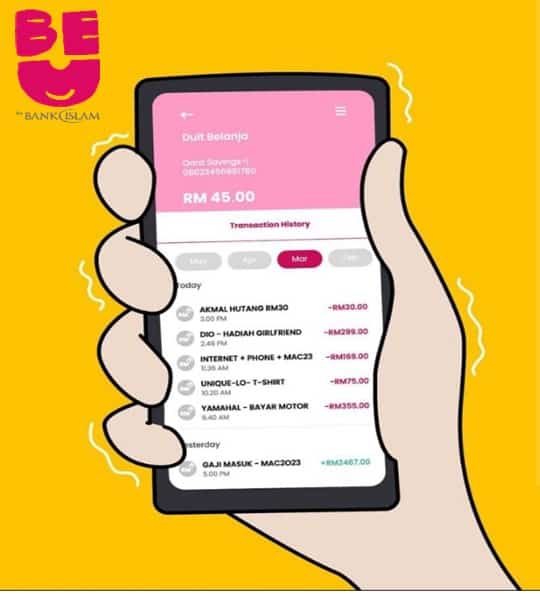
    For example, apps, like Be U app, will allow you to track your expenses, providing updates and insights into your finances. Be U offer features such as expense categorization, a personal finance graph and a dashboard to help you stay on top of your finances.

    By having a comprehensive overview of your income and expenses, you can identify areas where you can make adjustments, set savings goals, and ultimately improve your financial progress.

    2. Differentiate Between Needs And Wants

    Practising mindful spending requires conscious decision-making regarding distinguishing between essential needs and discretionary wants. Consider implementing a “pause and evaluate” approach to address discretionary wants.

    Before making a non-essential purchase, give yourself a set period, such as 24 hours or a week, to assess whether it aligns with your long-term financial goals and values. This solution allows you to evaluate whether the item is a necessity or a want driven by emotions or spur of the moment.

    By implementing this practice, you can avoid impulsive purchases and redirect your funds towards more meaningful goals, such as saving for a down payment on a home or investing for your future.

    3. Start Saving Early

    Recognizing the value of compounding returns emphasizes the importance of initiating saving habits as early as possible. One solution is to set up automatic transfers from your checking account to a designated savings account.

    By automating your savings, a predetermined portion of your income is regularly deposited into your savings account without requiring constant manual effort. This solution ensures consistency and discipline in your saving habits.

    For example, many of our customers enjoy using our NEST feature in our Be U app to save money. As the NEST feature allows users to set up automatic transfers to occur on a periodical basis, ensuring that saving becomes a priority before allocating funds towards discretionary spending.

    Furthermore, users are allowed to set financial goals and track their financial progress. By utilizing this feature, users are able to track and achieve their financial goals more seamlessly.

    4. Build An Emergency Fund

    Establishing an emergency fund is crucial for financial stability and preparedness. One solution is to automate your savings by setting up regular transfers from your checking account to a separate savings account designated for emergencies. This ensures that a portion of your income goes directly into your emergency fund without requiring constant manual intervention.

    For instance, you can set up a monthly or biweekly transfer that aligns with your financial capabilities and goals. By automating your savings, you remove the temptation to spend the allocated funds and ensure that you consistently contribute to your emergency fund. Over time, your emergency fund will grow, providing a financial safety net for unexpected expenses such as medical emergencies, car repairs, or job loss.

    5. Take Care Of Your Belongings And Health

    Opting for repairing instead of replacing items whenever possible is a practical solution to reduce unnecessary expenses. For example, if your electronic devices, appliances, or clothing require repairs, consider researching local repair services or DIY solutions before considering a replacement. Often, repairing items can be more cost-effective than buying new ones, especially for items that are still functional with minor issues.

    Additionally, prioritizing preventive healthcare measures can lead to significant long-term savings. Regular exercise, maintaining a balanced diet, and practicing good hygiene are all examples of preventive measures that can help prevent costly health conditions. By investing time and effort in your physical and mental well-being, you reduce the likelihood of incurring high medical expenses related to chronic diseases or illnesses.

    While these practical tips cannot solve all financial challenges, they serve as a starting point for developing positive financial habits and setting individuals on the path to financial well-being. It is crucial to make a plan with specific target amounts and deadlines, reducing the likelihood of overspending and ensuring progress towards financial goals.

    With the increased availability of financial literacy resources and the rising adoption of digital tools, Malaysians have greater opportunities than ever before to enhance their financial knowledge and improve their financial health. By taking charge of their personal finances, individuals can gain a better understanding of financial concepts, assess their current financial situation, and make informed decisions to improve their overall financial well-being.

    About CDX, Bank Islam

    CDX has been established since 2020 and Centre of Digital Experience was developed under the purview of Bank Islam to explore experimental new businesses and technologies. Our vision is “Financial literacy for everyone”. Our Core Mission is to inculcate financial literacy, financial inclusion, financial independence to our customers and devising a sustainable charity model. CDX is building a challenger bank and mobile banking app known as Be U to serve the underserved and youth by providing next-level banking for modern consumers consisting of an app, a debit card and a financing facility proudly backed by Bank Islam, the leader in Islamic Banking since 1983. For any enquiries, do contact our customer service by email at beu.communitysupport@bankislam.com.my

  • Tears In Heaven: Who Protects Your Insurance Money?

    Tears In Heaven: Who Protects Your Insurance Money?

    The following story is based on an actual series of events, with some names and circumstances fictionalised. Any similarity to any person’s name, character, or history is coincidental and unintentional. It is about who protects your insurance money.

    Heng could not help but feel emotional as he saw little Tim at the playground without a care in the world. His thoughts were how Tim meant the world to his late sister and that she is weeping in heaven now that all the insurance monies meant for him is gone.

    A cruel twist of fate had robbed Tim of what is rightfully his.

    Being a single parent, June is ever careful of making sure that there is something for Tim in the event that something happens to her. She dutifully took up a life insurance policy which will serve to provide for Tim’s living expenses and education when she is not around.

    Putting Ownself As Trustee, Who Protects Your Insurance Money?

    But little did she realise that by naming herself as trustee in the insurance policy, she started a chain of events that made Tim an innocent victim of circumstances. Poor Tim.

    Not well versed in insurance matters, she just followed the norm to name herself as trustee. June who had come to terms with her terminal illness and had got Heng’s consent to be Tim’s guardian, was at peace in her final days thinking that Tim’s welfare would be well taken care of, financially as well.

    After the funeral, Heng set about to handle June’s financial matters. It was only after submitting for insurance claims did Heng learn of an oversight by June which turned out to be a costly mistake.

    Heng was told that since the policy owner had passed away, the nominee in the policy will be the trustee. However, for that to happen, the nominee must be at least 18 years old and not incapacitated mentally.

    Read: The Amazing Reconciliation Of Father And Son, And This Reflected Inside The Will

    Who Protects Your Insurance Money, When The Nominee Is Not Yet 18?

    Then comes the hard question of who protects your insurance money? Since Tim is not 18, the trustee will be his surviving parent, which is in this case is his father, who left both mother and child some time ago.

    Heng knows that once the money reaches his hands, Tim would never see it again. If she had known, June would have appointed a new trustee – an individual or a trust company who can hold this insurance money for Tim until he grows up.

    This is reaffirmed by the new Financial Services Act (FSA) which repealed the Insurance Act and made it invalid for the policy owner to be trustee of the insurance policy. Those who named themselves as trustee even prior to the FSA coming into force would have to change trustees for complete protection of the money.

    As this is a common situation, the best solution for a single parent to protect their insurance monies from ending up with an unintended person or used for unintended purpose would be through the setting up of a Single Parent Trust.

    In June’s situation, she can easily set up this trust by assigning the life insurance policy to the licensed trust company. This will enable the trustee to claim the insurance proceeds upon her death or disability.

    Read: Special Needs Trust: I’m Nobody’s Child

    Setting Up A Trust Deed

    She could provide instructions to the trustee through a trust deed, for example; to cover her medical expenses if she is critically ill, for scheduled payments for Tim’s living expenses and education, thus ensuring that his needs will be provided for as she would have wished for him.

    In this manner, she is also rest assured that another problem is averted – an inheritance being squandered away in the hands of a young heir who is inexperienced in handling a large sum of money so early in life.

    A trust is indeed a viable approach to ensure total protection of insurance monies to be utilized according to one’s wishes. It is also an advantage to have a trust company as trustee instead of an individual as the trust company is impartial and is duty bound to follow the terms and conditions in the trust deed whereas an individual may not be so compliant with regard to other people’s money.

    The perpetuity of a trust company is also another advantage as a natural person is liable to die, fall ill, meet with an accident and be in capacitated, become of unsound mind or go bankrupt. At least you will have a peace of mind, knowing that there’s an organisation who protects your insurance money.

    Read: Bob’s Dilemma: How To Convert Highly Illiquid Assets To More Liquid And Easily Realisable

    About Rockwills International Group

    Rockwills International Group, now in its 28th year, pioneered professional will writing in 1995 and has since evolved into the leading estate planning specialist in the country. It is today the largest provider of solutions and support services in the areas of trusts, succession, management and distribution of wealth. It has done over 300,000 wills and 16,000 trusts and holds more than RM25 billion in assets under trust.

  • Patterns And Types Of Cybercrime In Malaysia From 2016 To 2021: Part 2

    Patterns And Types Of Cybercrime In Malaysia From 2016 To 2021: Part 2

    In Part 1, we have discussed the definition of cybercrime and commercial crime. We also see the cases recorded for financial and recorded crime in Malaysia from 2016 until 2021, the total losses due to cybercrime and commercial crime. Lastly, we deep dive into the classification of cybercrime and the number of cases happening in Malaysia. For this part 2, we will investigate the arrests and charges against cybercrime cases.

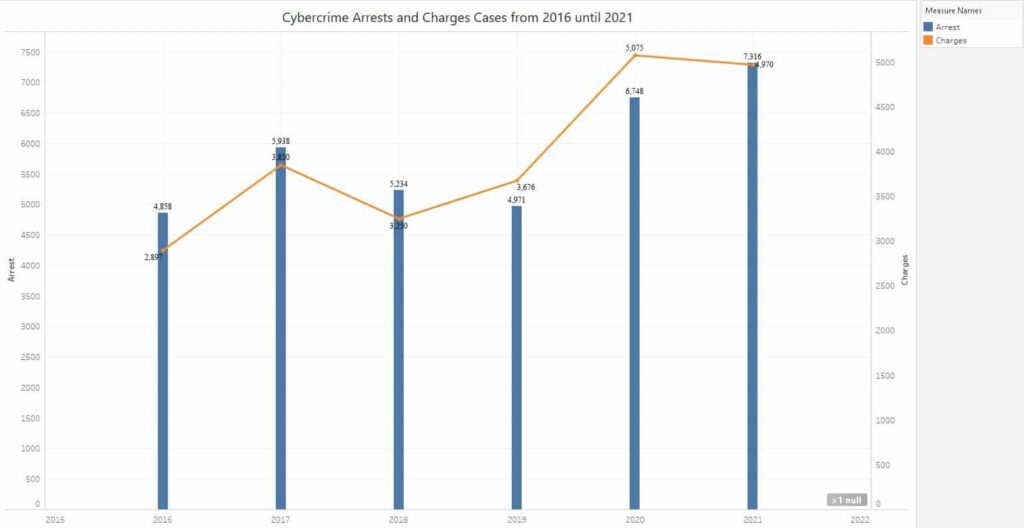
    From 2021 to 2016, PDRM made 35,065 arrests and 23,718 charges. Over the six years, the number of arrests increased year-on-year, with an average of 5,844 arrests per year. The same pattern is also shown in the number of charges, which grows yearly, with 2,897 charges in 2016 to 4,970 in 2021. This indicates that the authorities are doing their best to reduce these online fraud cases in Malaysia.

    Source: Commercial Crime Investigation Section (CCIS), March 2022.

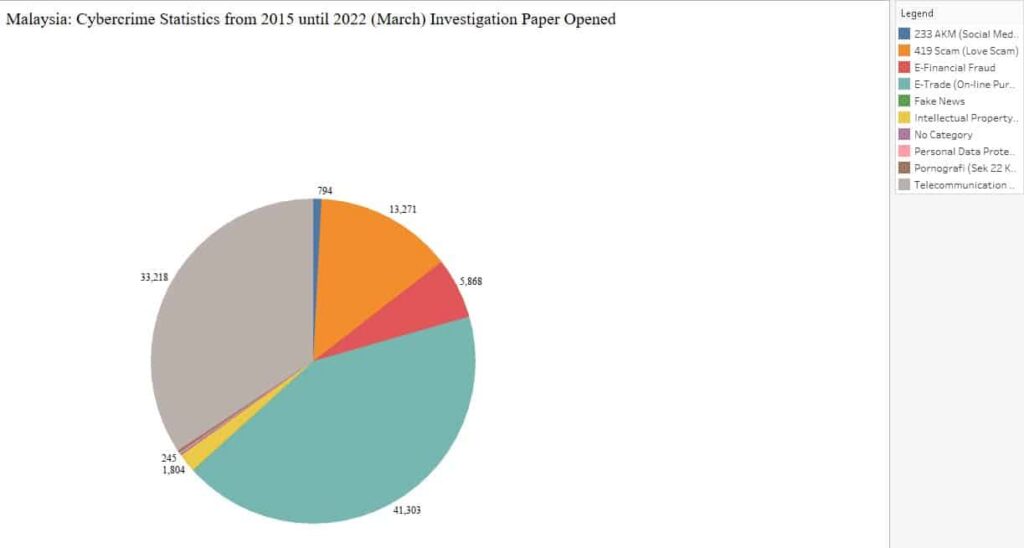
    For cybercrime from 2015 to March 2022, an investigation paper was opened. The total loss recorded was RM2,575,293,503.85; e-commerce ranked first with 41,303 or 43 per cent, followed by telecommunications fraud (line/sms) with 33,218 or 34 per cent.

    While cybercrime involves fake news with 48 investigation papers, protecting personal data with 98 investigation papers and no category with 212 investigation papers is the least reported type of cybercrime.

    Source: Commercial Crime Investigation Section (CCIS), March 2022.

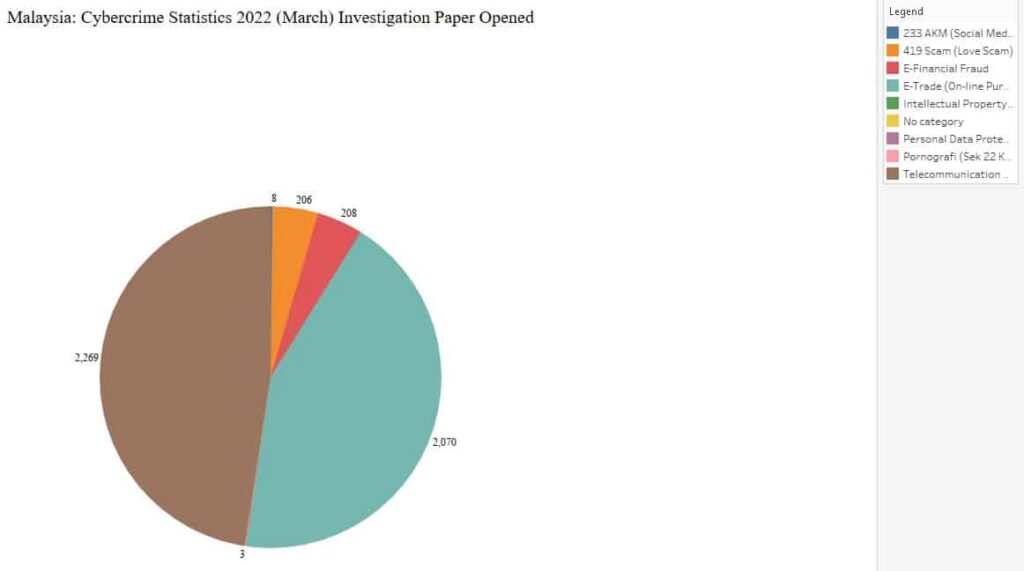
    If viewed up to March 2022 alone, based on the investigation papers, reported losses amounting to RM124,166,360.00 with telecommunication fraud (line/sms) were the highest with 2,269 cases or 48 per cent. They followed by e-commerce (online purchase) with 2,070 cases or 44 per cent.

    Meanwhile, cases involving pornographic material (Section 22 of the Penal Code), intellectual property (CD/VCD/DVD), no categories and personal data protection were the lowest recorded cases, with only three, one, one, and two cases recorded.  

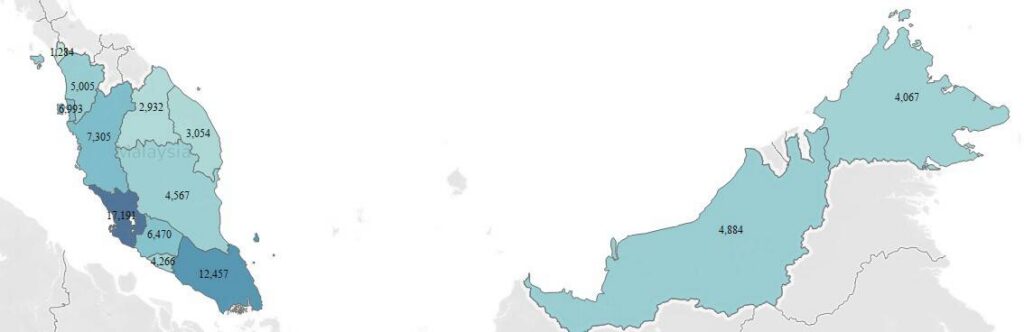
    In terms of locality for the cybercrime cases, if viewed by state from 2015 to 2021, most cases occurred in major cities such as Selangor with 17,191 cases, followed by Johor with 12,457 cases and Kuala Lumpur with 11,658 cases. At the same time, cybercrime was seen relatively less in towns such as Terengganu, with 3,054 cases, Kelantan, with 2,932 cases and Perlis, with 1,284.

    Cybercrime is common in large and rapidly developing cities because it is a hotspot for finding better job opportunities and thus increasing social mobility in their society.

    Source: Commercial Crime Investigation Section (CCIS), March 2022.

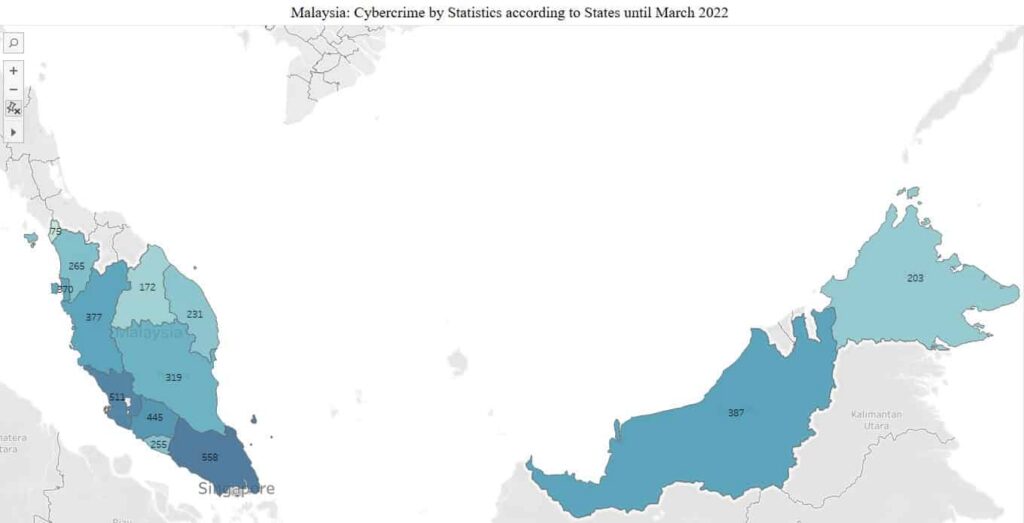
    The same statistics also show that until March 2022, cybercrime cases were widespread in Kuala Lumpur, with 600 cases, Johor with 558 cases and Selangor with 511 cases. These are the three highest states that recorded cybercrime by the state in March 2022.

    Meanwhile, Sabah, Kelantan and Perlis were the three states that recorded the least cybercrime by recording 203, 172 and 75 cases.

    Source: Commercial Crime Investigation Section (CCIS), March 2022.

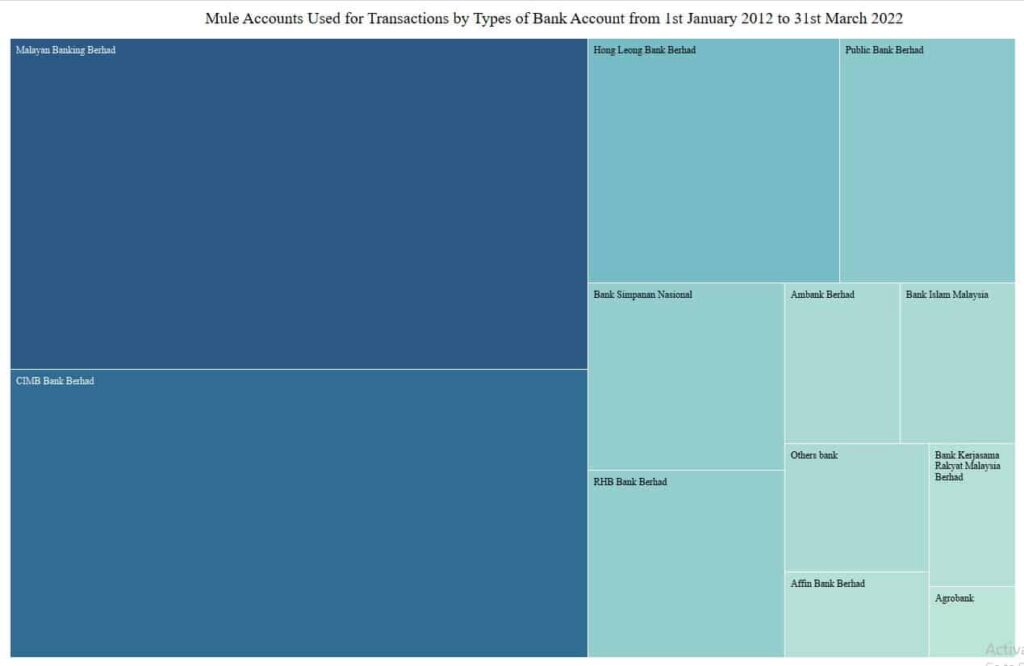
    In the case of mule accounts or donkey accounts according to bank accounts used from January 2012 until March 2022 showed that these accounts mostly used CIMB Bank Berhad with 32,492 or 27 per cent, followed by Malayan Banking Berhad or Maybank with 36,765 or 31 per cent. Donkey accounts often use These two banks to carry out their operations.

    Meanwhile, Agrobank, Affin Bank Berhad and Bank Kerjasama Rakyat are the least used banks to operate this donkey account.  

    Source: Commercial Crime Investigation Section (CCIS), March 2022.

    *The Malay Version of this article is currently under review at e-Jendela Dewan Ekonomi, Dewan Bahasa dan Pustaka, June 2023. Researchers also would like to thank the Criminal Investigation Department (JSJK), Bukit Aman, for providing this data to the authors.

    Rashid Ating. Researcher in the Department of Economics, Faculty of Business and Economics, Universiti Malaya and Institute of Advanced Studies (IAS), Universiti Malaya (UM).