Blog

  • Takaful: More Than Just Islamic Insurance

    Takaful: More Than Just Islamic Insurance

    Malaysians are generally at a loss when it comes to being able to tell the difference between takaful and insurance. Some come to the conclusion that takaful is the Islamic version of insurance, while some perceive that takaful and insurance are just the same, hence the term Islamic insurance.

    What Is Insurance?

    Insurance is where a company undertakes the risk to provide a guarantee of compensation for specified loss, damage, illness, or death, in return for payment of a specified premium. There are two types of insurance namely, life insurance and general insurance. The coverage includes the insurance of life, personal, property, marine, fire, professional liability and guarantee.

    The purpose of insurance is to manage one’s risk. When the insurance is purchased, the participant buys protection against unexpected financial losses. In case an unexpected loss occurs, the insurance company will compensate the loss to the participant.

    Should the participant have no insurance coverage and an accident happens, they themselves shall be responsible for all related costs. In other words, the risk in insurance terms means the probability of something harmful or unexpected happening. This might involve the loss, theft, or damage of valuable property and belongings, or it may involve injury or harm.

    Read: Should I Give Up Paying Insurance Premiums In Difficult Times?

    What Is Takaful / Islamic Insurance?

    Image by tirachardz on Freepik

    Takaful is often referred to as ‘Islamic insurance’. It is strictly a business transaction to mitigate the financial risk of unforeseen events to the participants. Takaful is formed on the social solidarity and cooperation amongst a group of participants who mutually agree to jointly indemnify
    loss or damage from a fund they donate to collectively.

    In other words, takaful is a type of Islamic insurance where member participants contribute money into a pool system (tabarru’) to guarantee each other against loss or damage.

    There are two types of takaful, namely family takaful (mirror of life insurance) and general takaful (mirror of general insurance). A takaful contract which is called ta’awun must be based on principles of cooperation, protection and mutual responsibility. It must avoid acts of interest, gambling and uncertainty.

    The term Islamic insurance is popular, because it takes the insurance concept and turn it into shariah-compliant.

    Read: Takaful vs Conventional Insurance: What’s the Difference?

    The Shariah Aspect Of Islamic Insurance

    Islamic scholars differ in their opinion about conventional insurance. Some say insurance is permissible, some say only several types of insurance are prohibited but most of the Islamic scholars conclude that conventional insurance is unacceptable in Islam.

    The Shariah Advisory Council of Bank Negara Malaysia in its resolution states that the prohibition of conventional insurance is because it does not conform with Shariah law, particularly on the contractual agreement between the policyholder and insurance company.

    Conventional insurance uses a sale contract in their agreement but there is an element of gharar fahish (major uncertainty) in the contract since the essential element of the sale contract is not fulfilled. Furthermore, conventional insurance is also based on the concept and practice of charging interest.

    Islamic Fiqh Academy gave several reasons for the prohibition of conventional insurance:

    • The policyholder does not know about the time of the contract and the amount of what the policyholder gives or gets.
    • It is a contract based on probability.
    • It includes excess and delayed riba.
    • It can be considered a form of betting because of the existence of ignorance, uncertainty and probability.
    • The premium is taken for no consideration in exchange.
    • There is a compulsion that is not compelled by Shariah law such as the insurer does no specific work for the insured.

    Read: How to Protect Yourself at Different Stages in Life With Insurance

    The Importance Of Insurance And Takaful

    Both insurance and takaful are financial safety nets set to helping participants and their loved ones recover after something bad happens to them. Bad things may strike a participant at any time such as a fire, theft, lawsuit or car accident.

    When the participant joins in takaful or purchases insurance, they will receive a certificate or an insurance policy, which is a legal contract between them and the takaful operator or insurance company.

    Read: Insurance Affordability vs Need, 6 Factors You Should Consider

    The Differences Between Insurance And Takaful

    ‘Insurance’ and ‘takaful’ by name, are known as products. One is offered in the conventional financial system while the other is offered in the Islamic financial system. In Malaysia, insurance companies are under the jurisdiction of the Financial Services Act 2013 and takaful operators are
    under the jurisdiction of the Islamic Financial Services Act 2013.

    Payment to the insurance company are called ‘premiums’ and it is owned by the company. The payment to takaful is known as a ‘contribution’ and it is owned by the fund. The takaful operator just ‘manages’ the fund. The policyholder ‘buys’ insurance, and the participant ‘joins’ takaful.

    Takaful and conventional insurance companies share a common objective in providing protection to the participant, their loved ones and their valuable belongings. For Muslims, takaful is not the alternative to insurance.

    It is because takaful is based on the concept of social solidarity, cooperation and mutual indemnification of losses of members among the participants. It is a pact among a group of persons who agree to jointly indemnify the loss or damage that may be inflicted upon any of them, out of the fund they donate collectively.

    Business-wise, the main difference between conventional insurance and takaful is that the former is a risk-transfer model whereas the latter is a risk-sharing model. Mutual risk sharing is a transaction where instead of passing the risk on to an operator like conventional insurance, the risk in
    takaful is shared by every participant.

    The main concept of insurance is compensation of loss. Any insurance policyholder will be compensated once they lose something.

    In takaful, the concept is mutually helping each other (ta’awun). Members will get together to help other members should they incur any losses.

    Hope you now have a better understanding of takaful and insurance, and why the term Islamic insurance is often used.

    Read: Should I Nominate My Wife As Sole Beneficiary Of My Life Insurance Policy?

    About the Author

    Dr Haji Razli is a Senior Lecturer with Azman Hashim International Business School (AHIBS) at University of Technology Malaysia (UTM) and an Adjunct Fellow with IIUM Institute of Islamic Banking & Finance (IIiBF) at International Islamic University Malaysia. He is also the Honorary Secretary of the Association of Senior in Islamic Finance (ARIF).
  • Affin Hwang AM Rebrands as AHAM Capital Eyes Regional Expansion & AUA Growth of RM100 Billion

    Affin Hwang AM Rebrands as AHAM Capital Eyes Regional Expansion & AUA Growth of RM100 Billion

    Affin Hwang Asset Management Berhad (“Affin Hwang AM” or “the company”) announced today the successful completion of its rebranding which would strategically position the company for its next growth phase after over 20 years in operations. The rebranding exercise would engender a new corporate name and logo that is reflective of the company’s new growth ambitions, while also affirming its commitment to clients in building trust.

    Starting today, the company will now operate as AHAM Asset Management Berhad (“AHAM Capital”). As a name that is already widely used and familiar amongst clients and business partners, the simplified brand name builds upon the positive brand equity of the company’s asset management capabilities as well as its people that has distinguished it over the years.

    The rebranding is also infused with bold visual elements and a newly-designed logo that pays homage to the company’s brand heritage, while signifying its evolution into a modern and future-focused asset manager.

    Dato’ Teng Chee Wai, Managing Director, AHAM Capital

    Dato’ Teng Chee Wai, Managing Director of AHAM Capital said, “Our new brand identity AHAM Capital marks the start of a new and exciting journey for us and our clients. Anchored by the same core values and entrepreneurial spirit since our founding in 2001, we have continuously grown from strength to strength over the years alongside our clients who have placed their hard-earned trust with us. Today, we are taking our business to greater heights by embarking on three strategic growth pillars – i.e. wealth management, innovation and regionalisation that will transform AHAM Capital into a leading independent wealth and asset management company in Southeast Asia.”

    “Looking ahead, we are confident of achieving our assets under administration (AUA) target of RM100 billion in the next 3 years as we strengthen our wealth management capabilities including alternatives and private market offerings. We will also harness innovation to support the development of digital-focused solutions that will democratise access to investment products for all client segments.

    “Led by the same team, we remain committed to helping our clients achieve their financial goals and forging a stronger, more resilient financial future. Alongside our new shareholder CVC Capital Partners who came on board in July 2022 as well as Nikko Asset Management who have stood by us, we will continue to chart new frontiers in wealth to empower investors in a changing financial landscape,” Dato’ Teng said.

    AHAM Capital’s Journey So Far…

    Since the company began operations in 2001, AHAM Capital has delivered exponential growth by growing its total assets under administration (“AUA”) from just RM20 million to over RM75 billion (as at 31 July 2022).

    At the same time, the company has also grown from a small investment firm into an established asset management house generating RM105 million in Profit After Tax (“PAT”) for the financial year ended 31 December 2021. Last year, the company also declared a total income distribution of RM1.13 billion across its retail and wholesale funds.

    On 28 January 2022, Affin Bank announced that funds advised by CVC Capital Partners (CVC), a leading global private equity and investment advisory firm with approximately US$125 billion of assets under management, has agreed to acquire approximately 68% of the equity interest in AHAM Capital.

    The acquisition was approved by the Securities Commissions Malaysia (“SC) on 1 July 2022, and upon successful completion of the acquisition on the 29 July 2022, AHAM Capital has ceased to be a subsidiary of Affin Hwang Investment Bank.

    The acquisition by CVC which is a leading global private equity and investment advisory firm will provide AHAM Capital a strong platform to grow and scale its business to the next level. AHAM Capital will work closely with CVC to continue driving the growth of its wealth management business and spearhead digitalisation, as well as to devise a plan for expansion into key markets across Southeast Asia.

    The company’s Shariah investment solutions will continue to be managed and made available through its wholly owned subsidiary and Islamic investment arm, AIIMAN Asset Management Sdn. Bhd. (“AIIMAN”).

    About AHAM Asset Management Berhad

    AHAM Asset Management Berhad (“AHAM Capital”) (formerly known as Affin Hwang Asset Management Berhad) is an institutionally-owned, independently managed asset and wealth management firm. Our purpose is clear. We are here to help our clients build wealth and achieve their financial goals through their trust.

    Over the years, we have served the needs of corporates, institutions, pension funds, high net worth individuals and the mass affluent in building a stronger, more resilient financial future by delivering better investment outcomes and creating a positive impact.

    Drawing upon years of expertise and experience, we invest into an array of asset classes including equities, fixed income, money market instruments, structured products, and other alternative assets to generate long-term sustainable returns. By adopting a holistic and client-centric approach, our wealth platform allows investors to gain access to regional and global solutions across multiple strategies in various asset classes.

    Through a stable of unit trust funds, exchange-traded funds, Shariah-compliant and cash management solutions, we provide comprehensive solutions that help investors realise their financial goals. For private wealth & family offices, we also offer bespoke wealth management solutions including portfolio management and advisory which are tailored to achieve specific outcomes.

    Embracing the same entrepreneurial ethos of the company since its founding, we are charting new frontiers in wealth through innovative and progressive solutions that empower investors in a changing world. These include spearheading digitalisation initiatives that would enhance client experience as well as make investing simpler and more accessible to everyone.

    As a corporate citizen, we are committed to growing together sustainably with the communities we operate in by fostering greater financial inclusion as well as championing financial literacy.

    Incorporated in Malaysia on 2 May 1997, AHAM Capital first began operations under the name Hwang–DBS Capital Berhad in 2001. On 29 July 2022, CVC Capital Partners (“CVC”) a global private equity and investment advisory firm acquired an approximate 68.35% controlling interest in AHAM Capital via a private equity fund, i.e. CVC Capital Partners Asia V managed by CVC. AHAM Capital is also 27.0% owned by Nikko Asset Management International Limited, a wholly-owned subsidiary of Tokyo-based Nikko Asset Management Co. Ltd., an Asian investment management franchise. The remaining 4.65% are held by the key management personnel of AHAM Capital.

    AHAM Capital’s Shariah investment solutions are made available through its wholly owned subsidiary and Islamic investment arm, AIIMAN Asset Management Sdn. Bhd. (“AIIMAN”).

    Since its inception in 2001, AHAM Capital has achieved an exponential growth in its total assets under administration (“AUA”). As at dd/mm/yyyy, the total AUA, comprising in-house unit trust funds as well as corporate and discretionary portfolios stood at approximately RMxx billion (combined AUA of AHAM Capital and AIIMAN).

  • Investing And ESG

    Investing And ESG

    Environmental, Social, and Governance (ESG) is becoming a very hot topic recently, and today we will be taking a look at how ESG and investing go hand-in-hand. Smart Investor spoke with Datuk Wira Ismitz Matthew De Alwis, Executive Director & Chief Executive Officer, Kenanga Investors Berhad to find out more about investing and ESG.

    He is also one of the speakers at the prestigious ESG Evolve 2022 conference that Kexxel Group is organizing in KL on 6-8 December. We will talk more about the conference at the end. For now, let’s find out more about how Kenanga Investors is pioneering ESG in Malaysia.

    Datuk Wira Ismitz Matthew De Alwis, Executive Director & Chief Executive Officer, Kenanga Investors Berhad

    Smart Investor: What does ESG mean to Kenanga Investors? Why is it important to your business and how does it impact your industry?

    Datuk Wira Ismitz Matthew De Alwis: The impact of ESG on the financial markets has been significant. Investors and businesses alike are beginning to acknowledge that an ESG-driven perspective promises stronger and more resilient economies and businesses. As a result, this awareness has changed the way individuals and institutions invest. Many are now are focusing on mitigating their portfolio exposures to carbon risk for example.

    As a partner to the sustainability agenda, we are dedicated to the goal of developing Malaysia’s impact investing landscape. Currently, we believe that the local environment faces issues in capacity building to address sustainability issues such as lack of competencies, skills and technical awareness on ways to adopt a sustainability-driven top-down model at each level of the organisation. Recognising this, Kenanga Investors, as an established financial institution, must actively seek out and collaborate with regulators and corporates finding its footing within the local green economy.

    To ensure sustainable performance for our stakeholders, we are confident that the integration of carbon exposures, ESG ratings, financial quality metrics and active engagements, amongst other factors, in a diversified and risk-controlled portfolio has historically resulted in better risk adjusted returns for investors than just plainly investing in a broad market index.

    esg environmental social and governance
    Image from internationalinvestment.net

    SI: What are the key factors for successful ESG deployment?

    DWIMDA: We believe that there a few critical factors required for a successful ESG implementation. To begin, a supportive and knowledgeable board is critical in steering the company’s ESG agenda as well as building the appropriate corporate culture, which leads to effective ESG implementation. Furthermore, the ESG goals must not only be specified, but also time-bound and practical during the implementation process. Policies, plans, and oversight mechanisms must address these issues both qualitatively and quantitatively.

    At Kenanga Investors, we believe that the continuous delivery of consistent top performance stems from the premise of an effective stewardship and active ownership approach throughout the investment value chain. In search of long-term value accretive investments, we aim to influence investee companies as shareholders through the promotion of responsible and sustainable practices.

    SI: What are the challenges that you faced in deployment?

    DWIMDA: The lack of knowledge and comprehension of ESG among our retail investors in Malaysia was one of the hurdles we faced in implementing our ESG objectives. Businesses also lacked transparency and reliability when it came to ESG data and disclosure. Furthermore, when it comes to ESG practises, there is a lack of consistent standards, measurements, and focus as some may focus on climate change, whilst others may focus and emphasise human rights issues.

    Environmental, social, and governance (ESG) investment Organizational growth. Wooden cube with symbol of esg concept

    SI: What are the key trends you see gaining traction for ESG?  What are the areas of growth amongst the pillars to look at in 2023?

    DWIMDA: During the Covid-19 pandemic, there was a significant increase in ESG awareness. During this period, many firms suffered financially, whilst others with ESG policies were more protected from the pandemic’s consequences and were able to outperform their peers and competitors.

    As ESG awareness continue to grow, trends within the ESG economy increase in tandem as well, most notably is impact investing. This was apparent in the deployment of financial firepower to investments and causes that could provide quantifiable benefits and allowed investors to see and measure the beneficial effects of their investment.

    There is currently a significant trend in assuring the interconnectedness of human and developmental needs. Assuring that these needs are fulfilled in a way that benefits society while being environmentally and ecologically sustainable is a delicate balance. The blue economy and nature-based infrastructure are two examples of this.

    “It is becoming increasingly critical that sustainable development continues strengthening its foothold in a way that is consistent with future focused values. Regulators and key players must work towards actionable policies that will produce value for stakeholders, investors and our communities. Let us invest in a tomorrow that is prosperous and principled.”

    Datuk Wira Ismitz Matthew De Alwis, Executive Director & Chief Executive Officer, Kenanga Investors Berhad

    ESG EVOLVE 2022: Driving Catalytic Change For Business Sustainability

    Kenanga Investors will share more insights at the ESG Evolve 2022 Driving Catalytic Change for Business Sustainability organized by Kexxel Group  which will be held on 6-8 December in EQ Kuala Lumpur. Come and join us, see you there!

  • Be Wary Of Crypto Scams In Malaysia

    Be Wary Of Crypto Scams In Malaysia

    The COVID-19 pandemic outbreak shows an increasing trend of hackers and scammers stealing information and financial data since many business operations have shifted to global scale, and consumers have an increased dependence on online payment systems.

    This is true for cryptocurrency or crypto investments. But why is crypto scams in Malaysia still on the rise despite countless news regarding it that have made headlines both worldwide and nationwide?

    The possible reason behind this is the attractive and fast return of investment. Success stories of those who are lucky enough to succeed in this investment became the fascination for others to do the same.

    After all, crypto investments do exist and are real. In Malaysia, the potential is massive as our financial industry is accelerating into Fintech and digitalisation as portrayed in the Bank Negara Malaysia (BNM) Financial Sector Blueprint 2022-2026 and Malaysia Fintech Report 2022.

    Shariah wise, the legitimacy and the nature of trade plays a big role in determining whether an investment is permissible or otherwise. It is reminded that Muslims are prohibited to invest in something which contains element of gambling or an investment which involved speculation in its nature of trading.

    The importance of the legitimacy and nature of investment, in relation to the works of Imam Al-Ghazali, was described in his Magnum Opus, Kitab Ihya Ulumuddin. Al-Ghazali mentioned that the understanding of Fiqh is crucial as the action taken in making investments are properly managed and done according to the Shariah.

    Checklist On Crypto Scams In Malaysia

    investment scams

    It is best to refer to the two checklists below before getting involved in any crypto investments, or you may expose yourself to crypto scams in Malaysia.

    1. Checklists regarding investment and investing in crypto:

    • Study the investment model, risk, and return to see whether it is reasonable.
    • Muslims can check regarding the Fatwa given on cryptocurrency investments and if it is permissible, check further if there are any circumstances where a crypto investment is considered impermissible? There are many other pointers given by the Shariah Advisory Council (SAC) regarding Islamic investments.
    • When in doubt, you can check with the Compliance Officer from Bank Negara Malaysia, Securities Commission Malaysia (SC), Ministry of Domestic Trade and Consumer Affairs, Cybersecurity Malaysia or other relevant authorities regarding the licensing status of the local or foreign investment company or find out if there are any latest warning issued regarding cryptocurrency investments.

    2. Checklists in identifying and avoiding crypto scams in Malaysia:

    • You could contact the National Scam Response Centre (NSRC) if you realised you had been scammed and provide the authorities with the relevant details.
    • To check whether the investment account has any police report record linked to its bank account number. This can be done through the website of the Royal Malaysia Police Commercial Crime Investigation Department, which is supported by Bank Negara Malaysia (BNM), Ministry of Domestic Trade and Consumer Affairs (MDTCA) alongside with the Ministry of Communication and Multimedia Commission (MCMC).
    • When the transaction amount is suspicious, the Bank officers might stop it for the purpose of due diligence. Be cautious if the Bank officer advice you not to proceed with the transaction without providing any specific reason. They usually have the basic background detail regarding the account you were transferring money to. If you had transferred the money and regretted it, you may call the Bank immediately to cancel it.

    Although praise should be given to ‘financial advocates’ who hunt after scammers personally in real life, prevention is better than cure. In this case, it is better to be an informed investor. Hopefully the checklists above can prevent you from becoming a victim of crypto scams in Malaysia.

    About the Author

    Azah Atikah Anwar Batcha has an Accounting, Finance, Auditing, and Islamic Finance background. She has worked with two of the Big four firms prior to pursuing her postgraduate studies at University of Technology Malaysia (UTM), Kuala Lumpur. She can be contacted at aaabwrite@gmail.com

  • Getting To Know Private Retirement Schemes (PRS)

    Getting To Know Private Retirement Schemes (PRS)

    For most people, the goal is to be able to retire comfortably. However, the effects of the Covid-19 pandemic have made achieving this goal a lot more challenging. But have you heard about Private Retirement Schemes?

    Various economists have warned that a retirement crisis is on the horizon. To insulate ourselves from this retirement crisis, the best time to act is now. The earlier you start saving for your retirement, or even growing your wealth again after it has taken a hit, the better.

    This time, we would like to explore a wealth-building option known as a “Private Retirement Scheme”, or more commonly known as “PRS”. This investment solution is offered and managed by PRS Providers and is governed by the Securities Commission Malaysia.

    As the name indicates, a PRS is a voluntary long-term investment scheme that is designed to help you save more for your retirement. First introduced in 2012, it is meant to help encourage people to contribute to their retirement savings.

    Investments in PRS are structured in the following manner: contributions are divided into two sub-accounts, and you can only make withdrawals once you reach retirement age. You are permitted to make partial withdrawals before then, but you will incur a penalty fee (there are exceptions, such as emigration).

    Contributions to PRS are entirely voluntary. It seeks to enhance choices available for all Malaysians, whether employed or self-employed, to supplement their retirement savings under a well-structured and regulated environment. Each PRS offers a wide range of retirement funds from which you may choose to invest in based on your retirement needs, goals and risk appetite.

    Why Invest In Private Retirement Schemes?

    Investing in PRS may be one of the best things you can do for your retirement. Here’s why:

    Designed for retirement

    As a scheme originally established to help investors accumulate more savings for their retirement, you can be assured that there is a selection of investment options to suit your specific goals and needs.

    Easy investments

    Anyone can invest in a PRS. There is a wide choice of PRS Providers and self-selected funds, as well as default option funds that have been pre-selected based on investors’ age.

    Affordable savings

    The minimum contribution varies depending on your chosen PRS Provider. While the flexible nature of the investment scheme means that there is less pressure on you to commit to a certain amount, just remember that the more you ‘save’, the better your potential returns can be.

    Tax incentive

    At the moment, the benefits of investing in PRS are not only for the future. In the short term, you can also enjoy a yearly personal tax relief of up to RM3,000 from your taxable income, for as long as you contribute to a PRS (the tax relief is available up to 2025). The earnings generated from a PRS will also be tax exempted, so that is even more reason to contribute!

    Factors To Consider Before Investing In Private Retirement Schemes

    When making your PRS contribution, you need to consider various factors such as your age, personal and household income, risk tolerance, retirement objectives as well as the suitability of the different funds offered under the various schemes to meet your retirement needs.

    The following chart offers suggestions on what you should take into consideration prior to investing in PRS. While the rule of thumb is that your investment strategy should be based upon the time you have until retirement (i.e. long-term investment strategies should focus more on capital growth, while short-term investment strategies should focus on income generation), remember that everyone’s situation is different, and that you should always consult an expert should you have any questions.

    Read: Who Are Unit Trust Consultants?

    Among the key items to note:

    Objectives: Based on your intended goals, you can choose to invest with the intention of growing your capital, generating income, or a combination of both. The goals of each person are different. As such, it is important to decide which option you wish to take.

    Your life stage: Those who are nearing retirement age should focus on investments that can provide them with a sustainable income, while younger people should be looking towards investments that have a higher potential for growth.

    Your risk appetite: Investors who can handle greater risks tend to be those with a long-term view as they are more able to weather any market volatility. Those who value stability tend to be those already nearing retirement age and therefore, would benefit more from investments that would allow them to preserve their initial capital.

    Additionally, it is important to review your PRS portfolio regularly. As your life progresses, your circumstances change and so do your needs and objectives. Hence, do ensure that your PRS portfolio continues to match your risk appetite and investment objectives.

    Investment Risks Associated With Private Retirement Schemes

    Investing in PRS is not risk-free. You will be exposed to some general investment risks as well as specific risks when investing in PRS. Therefore, you must consider the different type of risks that may affect you and the fund.

    These risks are disclosed in the PRS’ Disclosure Document and Product Highlights Sheet (PHS).

    How Do I Invest In Private Retirement Schemes?

    Your journey to save more for your retirement with PRS begins with these four simple steps:

    1. Select your PRS Provider.

    2. Choose a suitable fund.

    3. Open your PRS account.

    4. Top up your funds regularly.

    The Final Word About Private Retirement Schemes

    Remember that with careful planning, a PRS can be a useful tool to help you in your wealth-building journey. By staying focused, disciplined and investing wisely, you can be assured of a comfortable nest egg once you reach your golden years.

    Read: Getting To Know Unit Trust Schemes

    This article is in collaboration with The Federation of Investment Managers Malaysia (FIMM), a self-regulatory organization (SRO) that regulates the marketing and distribution of Unit Trust Schemes (UTS) and Private Retirement Schemes (PRS).

    Visit www.fimm.com.my for more information on PRS, Unit Trusts, and UTS & PRS Consultants.

  • Unfulfilled Wishes, Learn How To Protect Yourself

    The following story is based on an actual series of events with some names and circumstances fictionalised and any similarity to the name, character or history of any person is entirely coincidental and unintentional. Hope we are able to learn a thing or two about unfulfilled wishes, and how to protect ourselves.

    She must find it, and fast! It’s a race against time for Jane as for the umpteenth time she is rummaging through her best friend, Esther’s apartment for the latter’s 20-year-old Will.

    It was surreal like playing out a heart-pounding scene from a movie – a now or never or the protagonist would lose out to greedy adversaries.
    The adversaries in this instance are the estranged siblings of Esther who are starting court proceedings to claim her estate after she died intestate (without a Will).

    “They can’t. They can’t…” Jane mumbled as she frantically searched for that elusive Will. “It’s not what Esther would want…”

    Tears rolled down her cheek as she slumped among the mountain of documents, feeling helpless. This was the last ditch effort in keeping alive Esther’s wish for continued acts of compassion for the unfortunate and underprivileged even after her death.

    Read: The Importance Of Estate Planning, Avoid Last Rites Drama

    Prior to this and in desperation, she had even gone to banks where she knew Esther had dealings with to enquire whether Esther had safe deposit box accounts. In hope against hope, she had prayed that by explaining the special circumstances, she would get help to check whether Esther’s Will was there. All she got were sympathetic ears and the same standard response that without a Grant of Representation from the courts, the banks could not allow the opening of the safe deposit boxes.

    “I have failed you Esther,” she sobbed. For the longest time that Jane had known Esther, she stood tall for her big heart and generosity, something that was nurtured from young by her late parents. They had inculcated in her that being able to give unconditionally to help the less fortunate without any expectation of anything in return is one of the highest blessings.

    She learned from the example of her parents unlike her siblings. She saw how both her parents continued to give to charitable causes after death through how the instructions they set in their Wills. She emulated them when she later prepared her own Will and apportioned her assets, including those that she inherited from her parents, to certain selected charities.

    But it was a recent benevolent wish to do much more for charities with her accumulated wealth that triggered a series of events that eventually led to the non-fulfilment of her lifelong passion and her wealth landing in wrong hands.

    Read: Decluttering Tips For Safekeeping Of Wills

    She had wanted to re-write her Will that was drafted and finalised 20 years back to include more charitable organisations she had come into contact with through her volunteer work. She also wanted to seek advice on how she could give to charities over extended period of time after her death, just like the recent publicised case of a woman who, year after year after her death, still donated to orphanages through clever estate planning.

    However, as she started the process of consultation with a professional estate planner, she was dealt a cruel blow. A diagnosis of Stage 4 cancer. It shocked her. That sudden knowledge took a toll on her. Her health deteriorated and just too soon as the cancer spread, she passed on.

    Being a benefactor to many charities in her life, many representatives of charitable organisations turned up at her funeral to pay their last respects and shared eulogies of Esther’s philanthropy and selfless service.

    Her long-estranged siblings did not hide their ill will for her being the sole inheritor of their parents’ estate and their renewed intention to claim back what they felt was rightfully theirs.

    Her brother rudely proclaimed after the eulogy by the last speaker that charitable organisations can dream on in thinking they can get any money from Esther’s estate as it belonged to the siblings. They sneered at Jane who told them that Esther had intended to leave all her material wealth to charitable organisations.

    Jane could not stomach that and defiantly told the siblings that under the circumstances, Esther’s Will 20 years ago was still valid.

    With that, Jane had thrown down the gauntlet. She had to find the Will before the siblings secure a Grant of Representation for Esther’s estate to be distributed in accordance with the law for intestacy.

    In the end, without the actual Will to show, Jane lost in her bid for get Esther’s unfulfilled wishes to materialise.

    It is not uncommon for many to consider it task accomplished having written a Will. Without safe keeping for easy retrieval upon death, all efforts in putting down one’s wishes in the Will comes to nothing.

    It isn’t over until the important Last Will and Testament is in safe custody! Unfulfilled wishes like that of Esther’s just can’t be undone.

    Read: Hard Facts About The Executor Of A Will In Malaysia

    About Rockwills International Group

    Rockwills International Group, now in its 27th year, pioneered professional will writing in 1995 and has since evolved into the leading estate planning specialist in the country. It is today the largest provider of solutions and support services in the areas of trusts, succession, management and distribution of wealth. It has shareholders’ funds exceeding RM50 million. It has done over 280,000 wills and 15,000 trusts and hold more than RM25 billion in assets under trust.

  • The Islamic Sustainability Approach In ESG

    Credited with revolutionising the American transportation industry in the 20th century, Henry Ford once remarked that: “A business must be run at a profit, else it will die. But when anyone attempts to run a business solely for profit and thinks not at all about a service to the community, then also the business must die, for it no longer has a reason for existence”.

    Nearly a hundred years since, these words of wisdom remain true. Perhaps, even more so now than ever, with Islamic sustainability taking center stage. Indeed, we have witnessed time and again, episodes of excessiveness, and the sole and unchecked pursuit of profits that have led to global financial crises.

    ESG is a spirit beyond profit, and is therefore a fitting reminder of the role of ESG in helping build a more resilient and sustainable future.

    Islamic Principles And The UN SDGs

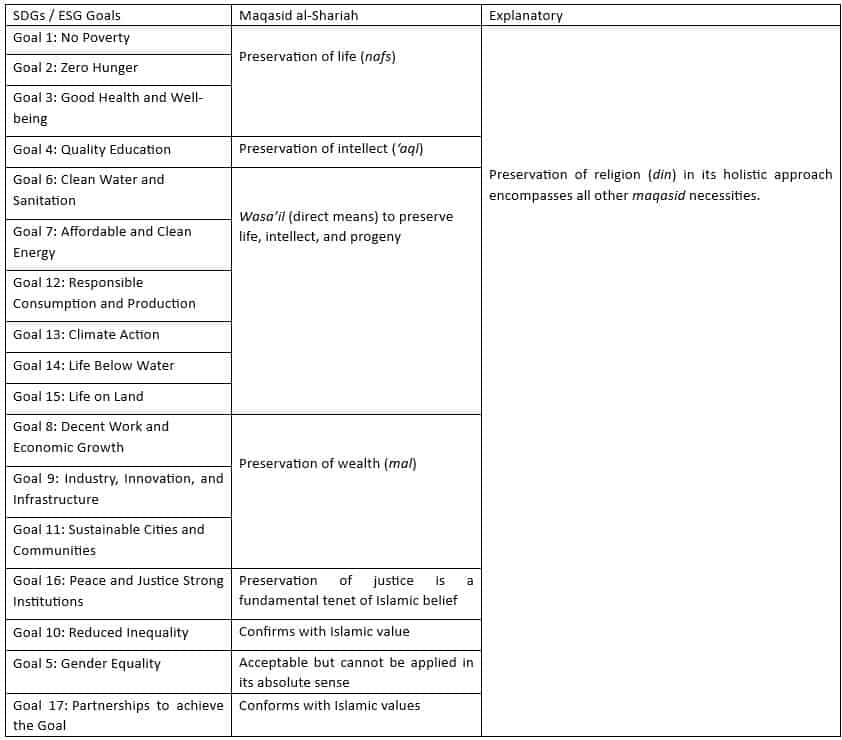
    The Islamic transaction (muamalat) principle aspires to build a shared sustainable future for employees, consumers, shareholders, and the community, in accordance with the requirements of Shariah, observing the guidance from the United Nations Agenda 2030 for Sustainable Development. The Sustainable Development Goals (SDGs) aim to bring the world’s countries together in order to eradicate all forms of poverty, reduce inequalities, promote human rights, combat climate change and promote good governance within organisations.

    Overall, the correlation of the 17 SDGs and maqasid-al-Shariah (objectives of Shariah) aim to push the globe towards a more sustainable and resilient path, as well as building a better community and for society’s economic, social, and environmental consequences.

    Maqasid-Al-Shariah

    The call for maqasid-al-Shariah not only complies with Shariah requirements but also achieves the intended outcomes of Shariah. These focuses on the enhancement of well-being of people through the preservation of wealth (mal), faith (din), lives (nafs), lineage (nasl) and intellect (‘aql).

    The word ‘maqasid’ means objectives, aspirations or aims, while Shariah is ‘the Divine law as revealed unto the Prophet Muhammad (Peace be upon him)’. Therefore, the term ‘maqasid-al-Shariah’ means the objectives and goals underlying the Law of Islam.

    Islamic finance is developed to emphasise the attainment of positive value creation and prevention of negative impact. In a broader sense, maqasid-al-Shariah covers the accomplishment of well-being and the avoidance of harm: “Do good, do no evil – Amal Ma’ruf Nahi Munkar.”

    Islamic Sustainability In ESG

    Image by rawpixel.com on Freepik

    An Islamic sustainability economic definition is that the current economic needs must be within the scope of not causing harm to future generations. In Islam, the rights of a person and the organisation are clearly defined by religion.

    It is further strengthened by the application of the code of ethics in business dealing based on Islamic values. For that, ethical investments and social responsibilities of individuals also apply to business, which is the catalyst in promoting economic sustainability.

    Islam does not prevent any form of trade and business, as the religion recognises that work and business are part of the worship of God. An individual or a company is entitled to a return from capital commitments and efforts in the context of an economic venture. The only concern is the context of the application of ESG elements to the profit-making process, as long as it is subject to the scope of ESG compliance.

    In a business context, any business that claims to comply with the Shariah jurisdiction must be clear about their role in society in providing goods and services that serve public interest in addition to profit. The permissible range of choices of Islamic investment is wide, as long as it involves investment in companies and businesses that undertake the deployment of funding on Shariah-compliant businesses and operations.

    “Developing a comprehensive and robust ESG response is becoming increasingly crucial to enhance business resilience and viewed as an important catalyst for long-term value creation,” said Tan Sri Abdul Wahid Omar, Chairman of Bursa Malaysia.

    Businesses that aim to be relevant in the long-run sees the investment of adhering with ESG requirements paying off, regardless of conglomerate
    corporations or SMEs. Conglomerates will benefit from positive reputation building and branding apart from complying with regulatory requirements, while SMEs will be benefiting through access to better financing capacity from financial institutions who adopt ESG through respective Value-Based Intermediation (VBI) initiatives. Non-monetary aspects include wider market access to business opportunities.

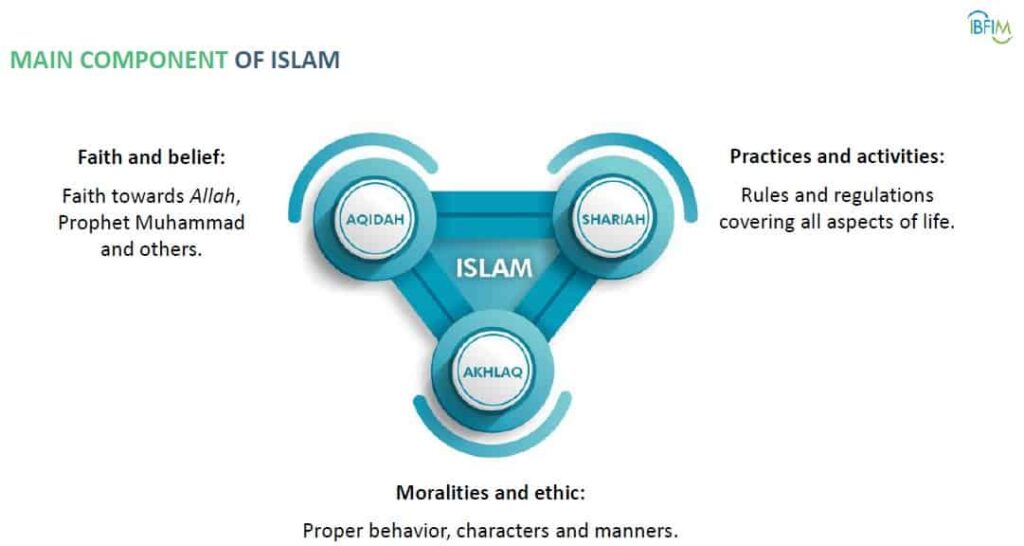
    Main component of Islam

    Source: Certified Professional Shariah Auditor (CPSA) reference book

    Islamic Sustainability: The Way Forward

    ESG and Islamic sustainability is going to be a megatrend and the E(nvironmental), S(ocial), and G(overnance) concepts are key market and business drivers today and in the future. The holistic adoption of Islamic principles in Shariah-compliant businesses is in line with the spirit of ESG without affecting the whole business practice.

    Fulfilling the ESG agenda will ensure the prosperity of businesses by focusing on profit, people and the planet; while ESG criteria will be used to guide businesses based on corporate policies and to encourage businesses to act responsibly within the ESG framework. Businesses have no other choice but to gear up their readiness to embrace the ESG agenda within their respective organisations.

    With Islamic principles induced, it will smoothen the whole agenda of Islamic sustainability.

    About the Author

    Haji Mohamad Faisal is a Managing Partner of Faisal Malik & Co (CA), a member of Islamic Finance Committee (IFC) of Malaysian Institute of Accountants (MIA), a Director of Islamic Shariah Audit Malaysia (ISAM). He is also a Certified Professional Syariah Audit Malaysia (CPSA). He can be contacted at admin@faisalmalikco.com.

  • Scam Awareness: Be Informed To Protect Yourself

    Scam Awareness: Be Informed To Protect Yourself

    Malaysians still have a low level of scam awareness, particularly when it comes to knowledge of investment and capital market products. This can be seen from the significant rise in online scams over the last two years – almost 72,000 scams and RM5.2 billion in losses was reported from 2020 to May 2022, according to the the Royal Malaysia Police’s (Polis Diraja Malaysia; PDRM) commercial crimes investigation department (CCID).

    The pandemic, rise of social media and rapid technological developments have all led to more retail participation in the capital market. The popularity of the Internet and social media has also provided fertile ground for fraud and scam activities by entities that are illegal or do not comply with the laws. There is also a low level of digital financial literacy in the country.

    A survey commission by Bank Negara Malaysia in 2021 revealed that one in three individuals stated they would be willing to share their bank account passwords or PINs with close friends. This increases the risk of online fraud and being used knowingly or unknowingly as ‘mule accounts’ to perpetrate fraud.

    Almost two-thirds of individuals surveyed do not pay attention to the security features of a website before they perform online transactions. As a result, individuals are far more likely to be deceived into providing their banking credentials through a fake website that enables scammers to use their information to commit fraud.

    Thus financial education is critical to the safe and effective use of digital financial services. Of the 72,000 scams reported over the last two years, 68% (or 48,850) were related to online scams, while loan and investment scams accounted for almost 12,000 of the overall scam cases.

    Read: RM5.2 Billion Lost To Scams In Malaysia Over Two Years

    In the first nine months this year, the Securities Commission of Malaysia (SC) received 1,800 complaints and enquiries related to investment scams and unlicensed activities. Last year, 275 names were added to the SC’s Investor Alert List, 143 websites were blocked and 35 social media pages were geo-restricted.

    So far, this year, 194 new names were added to the Alert List, with 143 websites and 26 Facebook pages blocked. The significant increase in scams and retail investor losses reported highlights the continued investor vulnerability and very low scam awareness.

    As long as our scam awareness is low, scammers will always find a way to trick us.

    Dato’ Seri Dr. Awang Adek Hussin, Executive Chairman, Securities Commission Malaysia

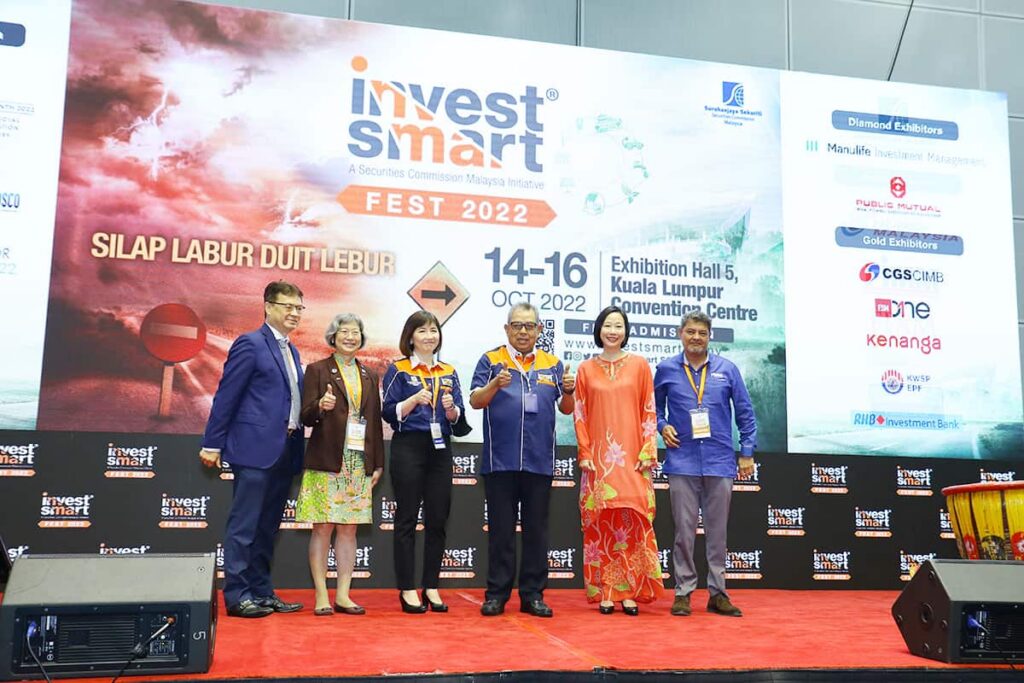
    “Most scams are spread through messaging apps and platforms like WhatsApp and Facebook. And we have recently noticed that they have started using Telegram as well. Many of these scams also claimed to be ‘syariah-compliant’ informed SC’s Chairman Dato’ Seri Dr. Awang during the SC’s flagship investor education fair InvestSmart® Fest (ISF 2022) held recently in conjunction with Financial Literacy Month 2022 and World Investor
    Week 2022.

    “Therefore, the best course of action investors can take to avoid falling prey to investment scams and unlicensed activities is to equip themselves with better financial knowledge,” he said in advising investors to safeguard themselves from the porous nature of the Internet.

    Surveys undertaken by the SC also found that Malaysian investors have unrealistic expectations about investment returns due to the misconception about risk and returns. Low financial literacy and low scam awareness makes investors vulnerable to unlicensed activities and scams.

    Scam Awareness: Unlicensed Activities And Scams

    Scammers are finding increasingly sophisticated ways to target investors, who range from the vulnerable at one end to those who invest primarily by the desire – or hope – to gain lots of money irrespective of the risks involved. Some would call this the ‘gambling instinct’.

    Under Malaysian law, any company or individual who wants to provide capital market products and services to Malaysian investors, such as unit trusts, stocks, digital investments, bonds, must be licensed or registered with the SC. This also applies to those who are or claim to be licensed overseas. As such, investors are putting themselves at risk when dealing with unlicensed or unregistered parties as the SC’s regulatory reach over these illegal entities is limited.

    “This is important because entities licensed or registered with the SC, must fulfil stringent regulatory requirements that are designed to protect investors. Investors who choose to trade on unlicensed platforms risk not being protected in the event of any dispute arising,” said the SC Chairman.

    In short, the SC cannot protect you if you choose to invest with unlicensed people. The SC Chairman also disclosed that there has been an increased use of celebrities or influencers on social media to endorse or promote investment advice and investment offerings.

    The public should also be wary of self-proclaimed investment gurus who offer questionable advice or use social media to spread false or misleading information, he said.

    Read: Beware of Investment Scams and Financial Gurus

    Investor Empowerment

    While pushing for greater adoption of digital innovation in the capital market to better serve the needs of investors, safeguarding investors’ trust and confidence is also important. Indeed, these digital services have widened access to the capital market for underserved investors at a lower cost. The availability of these platforms has made it possible to invest little amounts of money or spare change, some from as low as RM5.

    As the Malay proverb goes: “Sikit sikit, lama lama jadi bukit”.

    However, investors need to exercise vigilance against potential risk. “An informed investor is a protected investor. We need to cultivate a culture of enthusiastic, yet informed investor participation. One where the public is educated on the numerous investment options available, as well as their rights and responsibilities as investors.

    Armed with the right knowledge, investors are better positioned to safeguard their interests, and they can also become the SC’s ‘eyes and ears’ in detecting potential fraud or misconduct,” said Dato’ Seri Dr. Awang Adek Hussin, Executive Chairman, Securities Commission Malaysia.

    When it comes to investing, always remember this

    • Never deposit your money into someone else’s bank account; and
    • Deal only with licensed persons.

    Armed with the right tools and knowledge, investors will be able to capitalise on opportunities offered by our capital market. But first, let’s begin by raising the scam awareness campaign.

    Read: Combating The Rise Of Digital Fraud In Malaysia

  • Telco Infrastructure And ESG, Things That You Should Know

    Telco Infrastructure And ESG, Things That You Should Know

    When we talk about Environmental, Social, and Governance (ESG), it has an impact on just about any industry. Have you ever wondered how does a telecommunications company implement ESG in their organisation?

    Smart Investor talks to Azzahraa Annuar, FCA, Director of Governance Risk & Compliance, edotco Group. She is also one of the speakers at the prestigious ESG Evolve 2022 conference that Kexxel Group is organizing in KL on 6-8 December. We will talk more about the conference at the end. For now, let’s find out more about how edotco is pioneering ESG in terms of telco infrastructure in Malaysia.

    edotco Group is the first and leading regional integrated telecommunications infrastructure services company in Asia. They specialise in end-to-end solutions in the tower services sector including co-locations, build-to-suit, energy, transmission and operations and maintenance (O&M).

    Azzahraa Annuar, FCA, Director of Governance Risk & Compliance, edotco Group

    Smart Investor: What does ESG mean to you? Why is important to your business and how does it impact your industry?

    Azzahraa Annuar: It is not about what ESG means to me, but it is about what ESG means to us.

    At edotco, ESG is central to how we do our business from planning to execution. To be a sustainable business, we believe that a strong governance is key to ensure our business is run in the most equitable manner.

    We also believe that internet connectivity should be viewed as part of human right in today’s world. As such, we are passionate when it comes to taking care of the communities around our towers and even more passionate when it comes to our greatest asset, that is our people. We continue to innovate as investing in innovation is they key to net zero emissions.

    Each component of ESG i.e. the E, the S and the G are equally important and must be addressed together as 1, and not separately.

    SI: What are the key factors for successful ESG deployment?

    AA: Culture culture culture.

    At edotco, we believe in the mind, the heart and the hands. This means, we inculcate the culture of a sustainable world for the future, for the next generation in the minds of our people.

    We hire passionate individuals who fit within edotco’s culture and core values to ensure our people have the heart of edotco.

    And finally, when we build our towers, our products, we continue to innovate for best possible output.

    Image by torstensimon from Pixabay

    SI: What are the challenges that you faced?

    AA: In summary, we have two key challenges:

    Firstly, macroeconomic challenges mean cost pressure continue to be central. We need to ensure we deliver a strong return for our shareholders amidst such challenging environment. Our supply chain is struggling, the communities around our towers are struggling. This impacts our operation tremendously.

    Nevertheless, our engineers continue to innovate, and we manage to come up with LCS i.e., low cost structure in country like Bangladesh.

    Secondly, whilst we are certain with our Scope 1 and Scope 2, we are still struggling with Scope 3. This will be an area of focus for edotco in 2023 to ensure our carbon emission calculations is based on international standard and continue to be validated independently. We will also be reviewing our supply chain as part of this initiative.

    SI: What are the key trends you see gaining traction for ESG?  What are the areas of growth amongst the pillars to look at in 2023?

    Azzahraa Annuar: It depends on the side of the world you are in.

    • In developed market, focus is more on governance
    • In developing market, focus is more on environment
    • And in underdeveloped market, focus is more on social

    For edotco, we have done independent review to see what the areas are we need to focus on including materiality assessment. We will continue to focus on strengthening every pillar because we believe that all 3 are equally important.

    “Our mind, our heart and our hands shape the sustainable world which we all dreamed of for our next generation”.

    Azzahraa Annuar, FCA, Director of Governance Risk & Compliance, edotco Group

    ESG EVOLVE 2022: Driving Catalytic Change For Business Sustainability

    edotco Group will share more insights at the ESG Evolve 2022 Driving Catalytic Change for Business Sustainability organized by Kexxel Group which will be held on 6-8 December in EQ Kuala Lumpur. Come and join us, see you there!

  • 8 In 10 Malaysians Are Alarmed & Concerned About Climate Change In Malaysia

    8 In 10 Malaysians Are Alarmed & Concerned About Climate Change In Malaysia

    Right now, world leaders, climate scientists, and policymakers from across the globe are in Sharm El Sheikh, Egypt, for the Conference of Parties (COP 27). This is the largest climate change conference in the world, and it coincides with a Monash University Malaysia survey led by Dr Azliyana Azhari from the Monash Climate Change Communication Research Hub (MCCCRH) that has shown that 8 in 10 Malaysians are either alarmed or concerned about climate change.

    This survey is the first of its kind in Malaysia and saw over 1000 respondents. According to Dr Azhari the “survey aims to gauge Malaysia’s public perception and understanding on climate change and climate change impacts, alongside understanding the Malaysian audience’s behavioural responses towards climate change issues.”

    Dr Azliyana Azhari, Monash Climate Change Communication Research Hub (MCCCRH)

    Here’s what the takeaway messages are about what the Malaysian public knows about climate change and climate action. According to the survey, 97% of Malaysians are aware of climate change and understand it is happening. 82% know that human activities cause climate change. 32% believe climate change is presently causing harm to our daily lives, and 35% believe that climate change will cause harm to the Malaysian population within the next decade.

    The survey also noted individual actions and the willingness to change.

    • 65% bring their own shopping bags when buying groceries.
    • 63% have switched to environmentally friendly products.
    • 79% turn off electrical appliances and lights when not in use to reduce home energy.
    • The most common waste management behaviours are recycling (67%) and not openly burning trash (68%).

    The behaviours with the most significant proportion of people open to change are taking part in an environmental/climate change campaign (63% would like to or are planning to do this), installing household solar hot water or panels (79% would like to or are planning to do this), and composting kitchen waste (51% would like to or are planning to do this).

    With the growing occurrence of extreme weather events resulting from climate change, such as storms, floods, and droughts, at least 60% of Malaysians say that they have been affected directly or indirectly by these events, which leads to affecting their daily lives, health and economic well-being. It is not surprising that Malaysians are getting concerned and alarmed. These findings are stark and timely as the Malaysian delegation meets world leaders at COP 27 to work towards the reduction of Malaysia’s carbon emissions.

    About Monash University Malaysia

    Established in 1998, Monash University Malaysia is the third-largest campus of Australia’s largest University and the first foreign university campus in Malaysia. Monash University is a premier research-intensive Australian University ranked 44th in the world by the prestigious Times Higher education World University Rankings 2023. A self-accrediting university, the campus offers a distinctly international and culturally rich environment with approximately 9,400 students from 78 different countries.

    Monash Climate Change Communication Research Node

    The Monash Climate Change Communication Research Hub (MCCCRH) Malaysia Node was established in 2021. It is led by the School of Arts and Social Sciences (SASS) at Monash University Malaysia in collaboration with the Monash Climate Change Communication Research Hub (MCCCRH). It is dedicated to researching climate communications in Southeast Asia. The node brings together expertise in SASS with collaborators in the School of Science in Malaysia campus and the existing team in MCCCRH.