HEFEI, CHINA – Media OutReach Newswire – 26 June 2026 – On June 23, the realist drama Zhong Mo Yuan premiered in the prime-time slot on mainstream television in China. Centered on Xuan paper-making techniques, an element of UNESCO’s Intangible Cultural Heritage, the series uses this centuries-old craft as a narrative thread, presenting its continuity and renewal in contemporary life through a visual storytelling approach.
The Four Treasures of the Study—brush, ink, paper, and inkstone—are an essential part of China’s traditional writing culture. Among them, Xuan paper serves as a key material medium, long used in calligraphy and Chinese painting. Unlike the static presentation typical of traditional craft-themed works, this drama transforms Xuan paper from a “craft object” into a “narrative vehicle,” allowing complex processes such as papermaking, sheet lifting, drying, and cutting to naturally unfold within character-driven stories and everyday settings. In doing so, audiences are able to perceive the tangible warmth and contemporary expression of an intangible cultural heritage practice as the plot progresses.
From a Single Sheet of Paper, a Broader Way of Eastern Living Comes Into View
Xuan paper is not merely a material; it represents a centuries-old Eastern way of writing and cultural expression. Starting from this point, the series extends its perspective into a broader cultural context: the relationship between people and craftsmanship, the dialogue between tradition and modernity, and the evolving pathways through which manual skills persist within today’s industrial landscape.
In its narrative approach, the work brings together interactions between a younger generation and master artisans, making “inheritance” no longer an abstract concept, but a series of real choices and actions. In this way, intangible cultural heritage enters contemporary discourse in a more immersive and relatable form.
Bringing Intangible Cultural Heritage to the World Is Not Only About the Work Itself
In recent years, Chinese intangible cultural heritage represented by Xuan paper has been increasingly entering the global field of vision through multiple channels.
On one hand, through state-level media and international communication platforms, content related to intangible cultural heritage continues to be integrated into multilingual dissemination systems, building broader baseline awareness. On the other hand, with the development of streaming media and digital platforms, more and more film and television works rooted in traditional Chinese culture are reaching overseas audiences in lighter, more visually driven formats.
From Visual Narrative to Lived Experience: Intangible Cultural Heritage Is Forming New Communication Pathways
The significance of Zhong Mo Yuan lies not only in telling a story about Xuan paper, but also in its alignment with current trends in intangible cultural heritage communication: culture is no longer simply displayed—it is experienced, understood, and re-created.
Alongside the dissemination and circulation of related visual content, Jing County in Anhui Province, a key origin of Xuan paper culture, has gradually entered the view of international cultural and artistic audiences. Relying on its well-preserved natural ecological environment, traditional handmade papermaking system, and continuously living cultural transmission, the region has been steadily improving a hybrid spatial structure that integrates heritage exhibition, craft experience, and cultural participation. This allows traditional craftsmanship to sustain its vitality through contemporary expression. When visual narratives connect with real-world sites and cultural spaces, intangible cultural heritage is no longer confined to museum-style presentation, but increasingly becomes a cultural resource that can enter everyday life and international exchange contexts.
Conclusion: A World Expressed Through a Single Sheet of Paper
Starting from a single sheet of Xuan paper, traditional Chinese craftsmanship is being seen, understood, and gradually integrated into a broader global cultural communication system in a more contemporary form.
Within this context, Zhong Mo Yuan offers a more expressive visual approach to intangible cultural heritage, allowing the world to perceive the finer layers and textures of Chinese culture through the story of a single sheet of paper.
Hashtag: #Anhui
The issuer is solely responsible for the content of this announcement.
Empowering SMEs Borderless Expansion through Cross-border E-commerce and AI
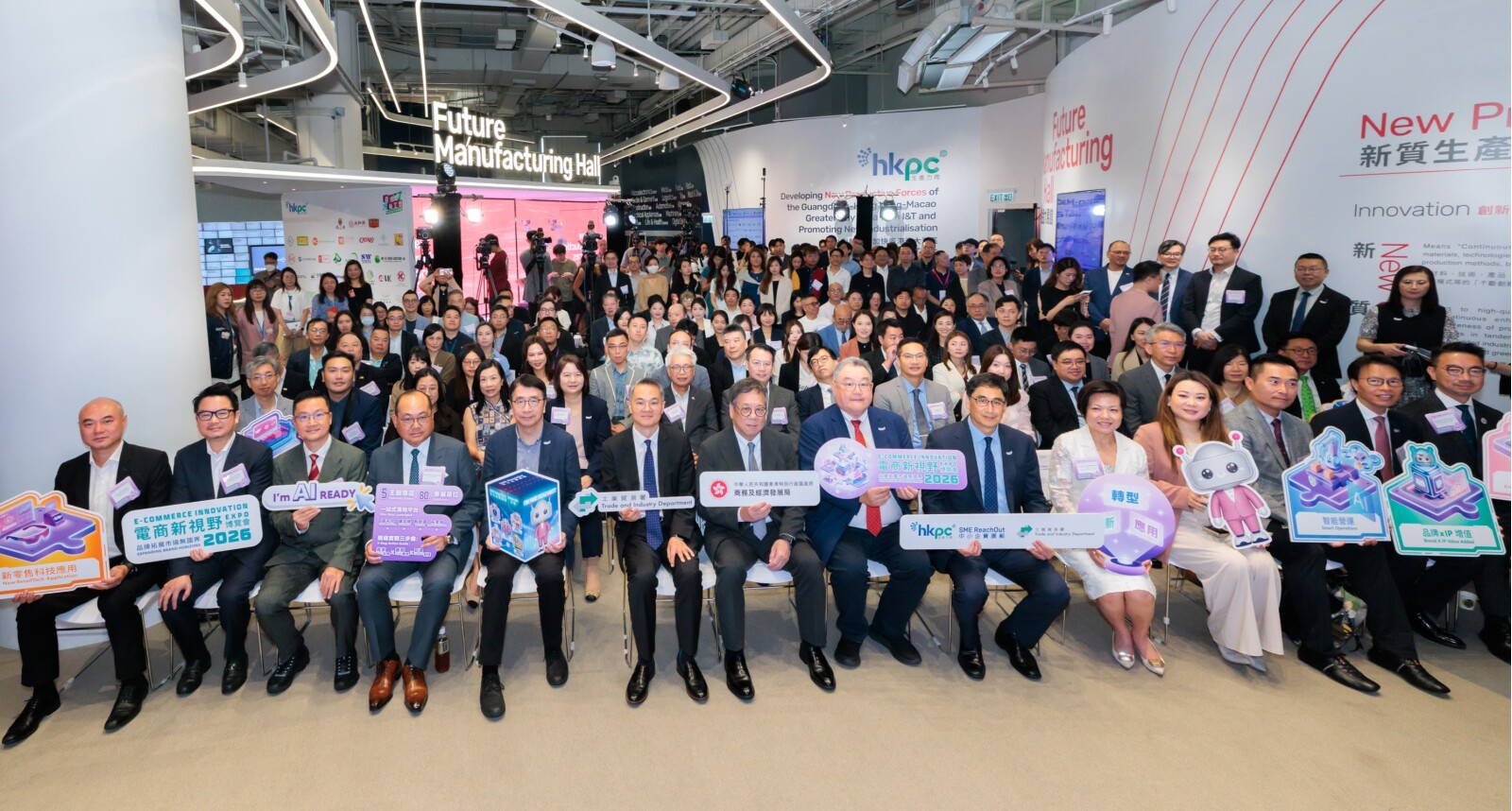
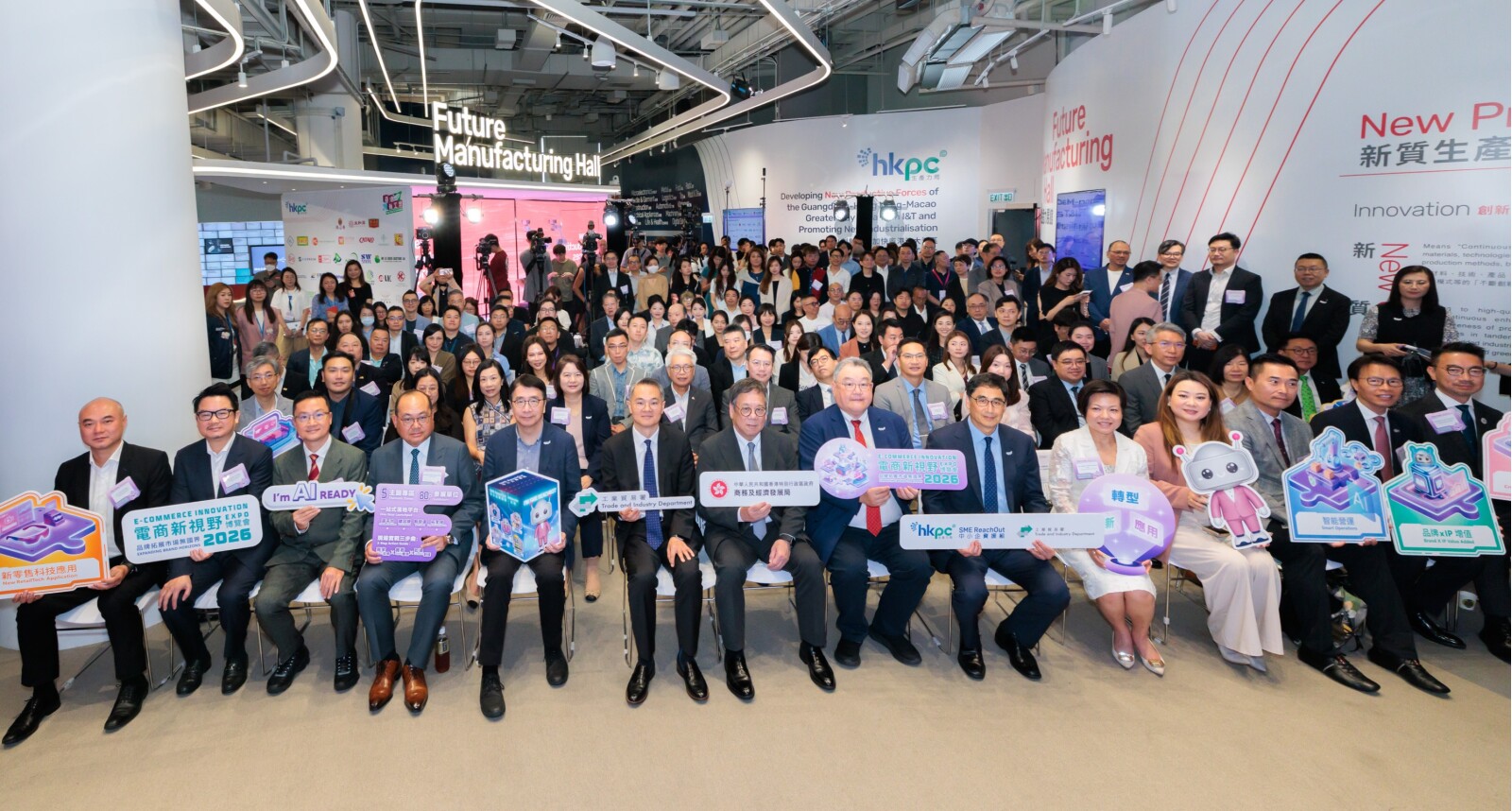
HONG KONG SAR – Media OutReach Newswire – 26 June 2026 – Co-organised by the Hong Kong Productivity Council (HKPC), with support of the Commerce and Economic Development Bureau (CEDB), and in partnership with the Trade and Industry Department (TID), the inaugural “E-commerce Innovation Expo 2026” (Expo) officially opened yesterday at the HKPC Building. The two-day Expo brings together tech innovation, brand and IP licensing, global platform support, and market expansion strategies, assisting small and medium enterprises (SMEs) in mastering the keys to expanding overseas through e-commerce. The opening ceremony was officiated by Mr Algernon YAU Ying-wah, JP, Secretary for Commerce and Economic Development; Mr Aaron LIU Kong Cheung, JP, Director-General of Trade and Industry; Mr Emil YU Chen-on, BBS, JP Deputy Chairman of HKPC; and Mr Mohamed Din BUTT, MH, Executive Director of HKPC. As its first edition, the Expo has registered with nearly 7,000 pax, reflecting the industry’s keen demand for e-commerce technology information and services.
With Hang Seng Bank as the Diamond Partner and strong support from over 250 supporting organisations, the Expo brings together over 90 exhibitors across five thematic exhibition zones, including Cross-border E-commerce Experience, New Retail Tech Application, Brand x IP Value-added, Smart Operations, and E-commerce Go-Global Support. Gathering e-commerce platforms, technology and business service providers, IP licensors, and Government funding booths, the Expo targets the four keys to going global, namely platform selection, brand building, smart operations, and global expansion. It provides a one-stop platform that assists SMEs from strategic planning to practical deployment, empowering brands to achieve borderless market expansion through e-commerce.
Mr Emil YU Chen-on, BBS, JP, Deputy Chairman of HKPC, remarked in his opening address that as a staunch supporter of SMEs, HKPC has always provided comprehensive, tailored support to address SMEs’ challenges, bridging policy resources with practical business needs to guide SMEs step by step from strategic formulation to execution. We hope this Expo will enhance the resilience and competitiveness of SMEs, speeding up local brands’ integration into the global digital economy. HKPC and its ‘SME ReachOut’ team will continue to provide timely and practical support for all SMEs.
Mr Algernon YAU Ying-wah, JP, the Secretary for Commerce and Economic Development, stated in his address that the Government has always attached great importance to the development potential of e-commerce and actively encourages local enterprises to seize digital economy opportunities and utilise e-commerce to explore diversified markets, thereby enhancing the competitiveness of Hong Kong’s external trade and injecting new impetus into economic growth. As an international trade centre and business hub, Hong Kong plays a vital bridging role in connecting Chinese Mainland with the foreign countries. The Government encourages SMEs to proactively capture these emerging opportunities, leveraging Hong Kong’s global advantages to expand overseas and elevate the international competitiveness of local brands and products.
Mr Yau also thanked HKPC “SME ReachOut” for its efforts, and noted that since 2020 and up to the end of May 2026, SME ReachOut had handled nearly 40,000 SME enquiries, organised or participated in 16 exhibitions and 75 seminars and workshops, and conducted more than 350 outreach activities, visiting various chambers of commerce, industrial and commercial buildings, and co-working spaces under the support of the Government.
Gathering Major E-commerce and AI Technology Service Providers to Support SMEs Going Global Digitally
The Expo features a multitude of e-commerce and AI technology service exhibitors, offering all-round support to SMEs spanning e-commerce, AI technology, brand development, and going global. Alongside Hang Seng Bank, which provides professional cross-border payment solutions to address the collection and payment challenges faced by SMEs going global, the Expo’s exhibitor lineup brought together a wide range of representative organisations from across the industry. Highlights included Innocorn and Auki Labs, technology companies specialising in AI solutions and scenario-based applications for cross-border e-commerce; Lazada, a leading e-commerce platform in Southeast Asia; the Shenzhen Cross-Border E-Commerce Association, which connects domestic and international e-commerce resources; as well as the Hong Kong Brand Toy Association (HKBTA) and SHIBAINC, both of which have successfully expanded globally through strong IP-driven strategies.
Exhibitors widely expressed that the Expo effectively integrated resources across the industry chain, creating an efficient platform for networking and business matchmaking. This enabled SMEs to leverage cross-border e-commerce and emerging AI technologies to overcome development bottlenecks and explore new overseas markets. Please refer to Appendix I for detailed exhibitor information.
Over 10 thematic seminars covering core e-commerce topics, including cross-border e-commerce, new retail technology, brand x IP value-adding, smart operations, and go-global strategies are hosted during the Expo. Over 10 workshops and live showcases are also available, offering expert insights, success stories, practical examples, innovative solutions, instant consultations, and business matching opportunities to help SMEs develop effective plans for going global. In addition, a dedicated Government Funding Zone is set up to guide SME on Government funding to accelerate their upgrade and expansion, reduce costs, enhance competitiveness, and expand into new markets.
The event was also honoured to receive generous support from different organisations, including Alibaba.com Hong Kong Limited, United Technologies (Int’l) Limited, Tradelink Electronic Commerce Limited, Achiever Technology Limited, and Nextguard Technology Limited. HKPC cordially invites all SMEs to register and participate in this free Expo, leveraging the rich cross-border e-commerce information, Government funding information, one on one expert consultations, and practical case study sharing to enhance business resilience and competitiveness through e-commerce. SME representatives are welcome to visit in person to experience the related latest technology applications and Government funding solutions of cross-border e-commerce to capture opportunities for brand and market expansion.
-The End-
Attachment I:
Exhibitor Information (Partial):
Exhibitor
Introduction
1
Hang Seng Bank
Delivers Fintech and cross-border e-commerce payment solutions, enabling SMEs to break through geographical payment restrictions and expand their business in overseas markets.
2
Shenzhen Cross-Border E-Commerce Association
A 5A-level industry organisation and a leading benchmark in Shenzhen’s cross-border e-commerce sector, providing full-chain services encompassing intellectual property protection, compliance, and resource matchmaking for members and industrial clusters. It forms a global cross-border e-commerce ecosystem hub to promote the international expansion of Chinese brands and the high-quality development of cross-border e-commerce.
3
Lazada
The Southeast Asia’s flagship e-commerce platform, delivering a superior and secure online shopping experience for consumers through trusted payment channels like Lazada Wallet, combined with the region’s most extensive logistics network.
4
Hong Kong Brand Toy Association (HKBTA)
Focusing on Hong Kong brand toys, the association promotes brand IP figures to the world through cross-border e-commerce, facilitating collaborations between toy IPs and various overseas fashion and apparel brands to secure market expansion opportunities and enhance product value.
5
SHIBAINC
A homegrown Hong Kong IP that has collaborated with numerous renowned brands, including Watsons, Del Monte, SONY, VIVO, Circle K, MTR Malls, and Octopus Cards Limited.
6
Innocorn Technology Ltd
Provides cross-lingual and multi-national Conversational AI Agents and Digital Human Service Ambassadors that deliver highly interactive virtual assistance. These systems can act as 24-hour online AI employees for online stores, helping overseas buyers resolve inquiries regarding sales and logistics progress.
7
Auki Labs
Utilises 3D technology and AR navigation to streamline the online shopping process, enhancing logistics and shipping efficiency.
Hashtag: #HKPC
The issuer is solely responsible for the content of this announcement.
About Hong Kong Productivity Council
The Hong Kong Productivity Council (HKPC) is a statutory body established in 1967, dedicated to enhancing the productivity and competitiveness of Hong Kong enterprises through world-class applied R&D, innovative technology services, and integrated manufacturing solutions. As a market-oriented, international R&D organisation, HKPC leverages its deep expertise and extensive industry experience inkey areas such as AI, advanced manufacturing, life and health technology, green technology and new energy to drive new industrialisation and support the growth of emerging and future industries.
HKPC focuses on addressing businesses challenges and industrial technology needs, promoting the full integration between technological and industrial innovation. Through technology transfer, product innovation, intellectual property protection and commercialisation of R&D outcomes, the Council fosters collaboration with the local business community as well as top global R&D institutions, delivering added value to industries and advancing the development of new productive forces. HKPC’s world-class R&D achievements have been widely recognised over the years, winning an array of local and overseas accolades, reinforcing Hong Kong’s role as an international innovation and technology centre and a smart city.
To help enterprises capitalise on Hong Kong’s strengths in international connectivity to expand into global markets, HKPC offers comprehensive overseas expansion services tailored to critical areas including product development, technology, manufacturing, and management, enabling businesses to successfully go global from Hong Kong.
HKPC is also committed to providing timely and practical support to SMEs and startups with timely and practical , assisting them in accessing Government funding programmes. Through its FutureSkills training initiatives, HKPC helps both industry and academia stay ahead in latest digital and STEM technologies, nurturing a future-ready talent pool for Hong Kong.
For more information, please visit HKPC’s website: www.hkpc.org/en.
BRUSSELS, BELGIUM / PARIS, FRANCE – Media OutReach Newswire – 26 June 2026 – As artificial intelligence reshapes global power dynamics, European and Chinese leaders are warning that the EU and China must move beyond zero-sum competition to harness their complementary strengths in AI governance and industrial application.
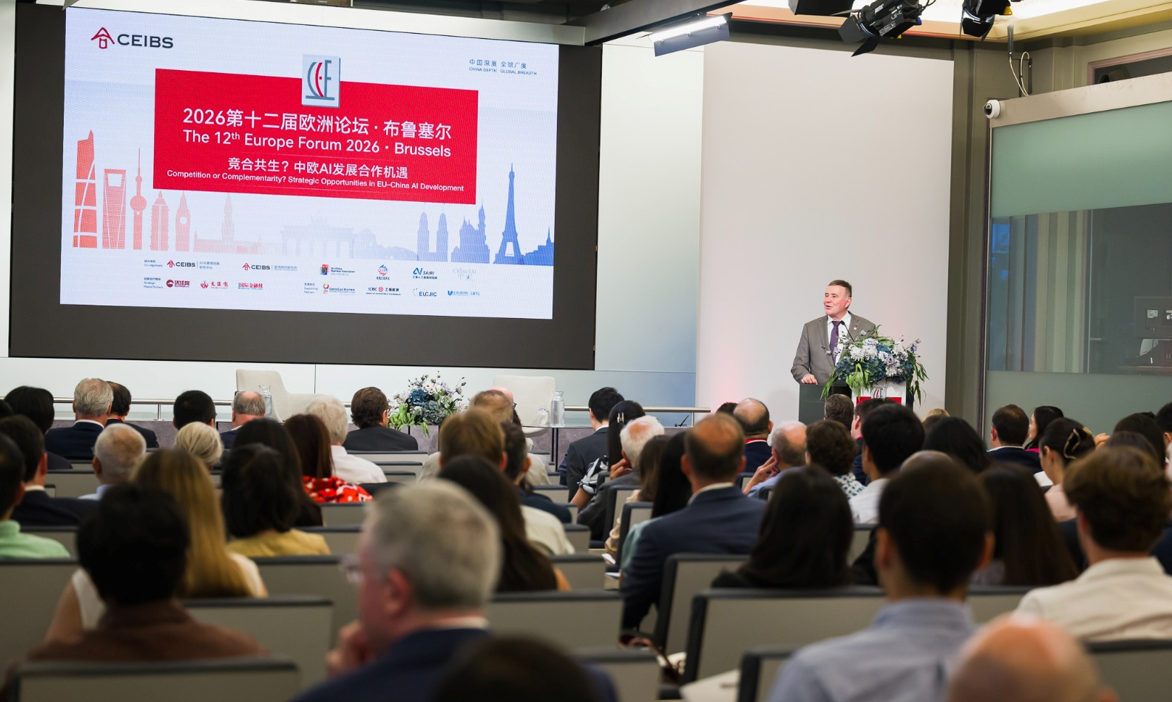
The consensus emerged during the 12th CEIBS Europe Forum, a flagship dialogue held across Paris (22 June) and Brussels (24 June) bringing together policymakers, industry executives, and academics.
Addressing the forums, former President of the European Council Charles Michel stressed that AI is no longer merely a technological issue, but a matter of “sovereignty, leadership, and power.” He identified semiconductors, data infrastructure, and regulatory policy as the core variables shaping future international relations. While acknowledging intensifying global competition, Michel called for “responsible collaboration,” noting that Europe’s mature approach to corporate governance and data security could confer distinct long-term resilience.
The events highlighted a clear strategic divergence in global AI: the US leads in frontier investment, China excels in large-scale application and open-source models, while Europe dominates in regulatory frameworks. “The more intense the competition becomes, the more important dialogue and cooperation are,” noted CEIBS President Wang Hong, highlighting the need to balance global AI governance.
Other speakers included Chinese Ambassador to the EU Cai Run and Chinese Minister to France Chen Li.
Industry panels featuring executives from Siemens, EDF, and leading robotics firms reinforced this pragmatic approach. Across sectors like energy, healthcare, and advanced manufacturing, experts agreed that AI acts as an enabler rather than a replacement for human expertise. However, they cautioned that AI’s massive energy demands present a critical challenge—and a prime opportunity for joint Sino-European innovation in grid technology and renewables.
Concluding the Brussels summit, CEIBS Co-President (European) Frank Bournois encapsulated the sentiment of both cities: “Competition is natural, but insufficient. The real formula we need is unity and trust.”
Partnership supports Singapore SMEs early access to new networking products, preferential support, and bundled connectivity solutions
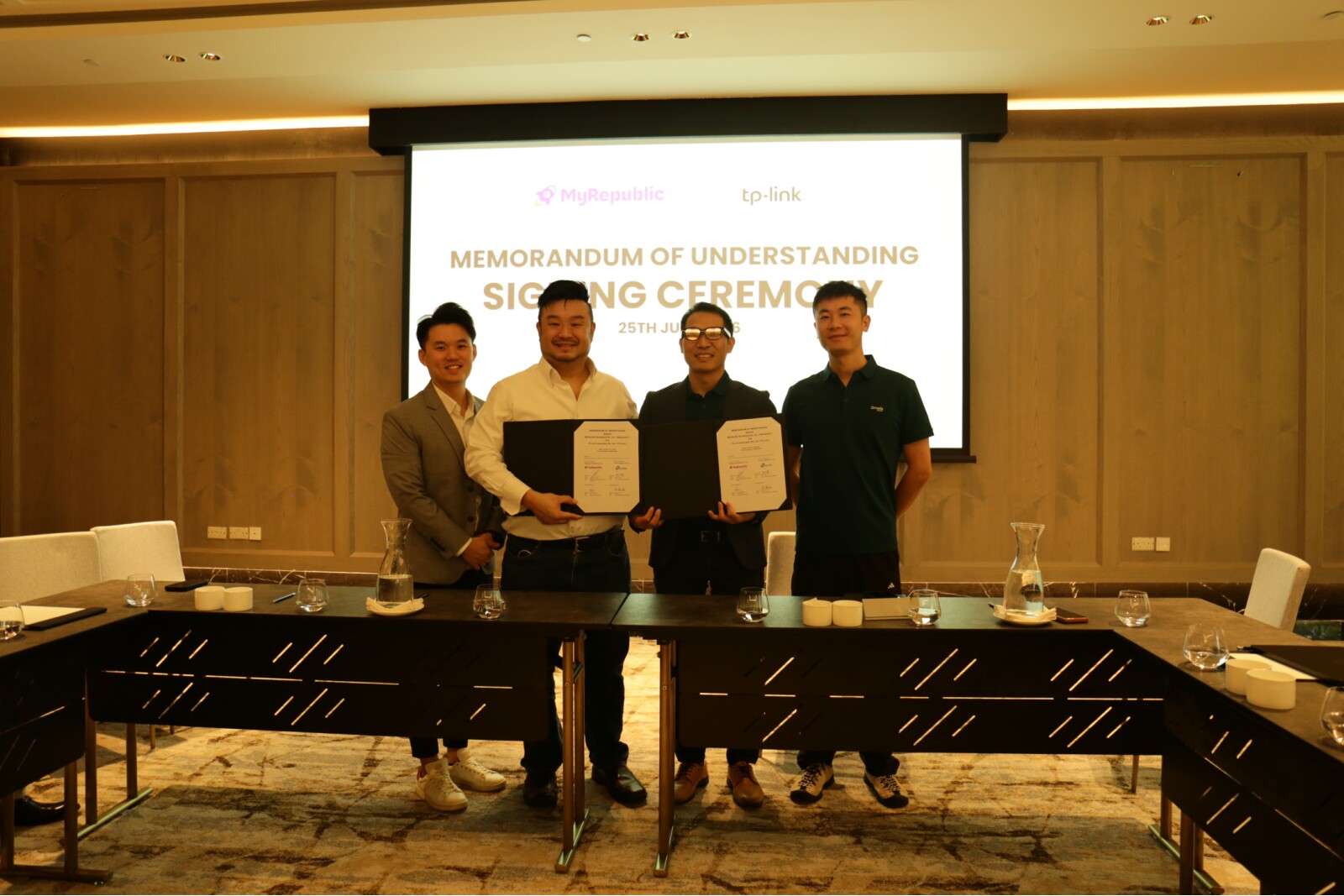
SINGAPORE – Media OutReach Newswire – 26 June 2026 – MyRepublic Broadband Pte Ltd and TP-Link Corporation Pte Ltd yesterday signed a Memorandum of Understanding (MOU) to strengthen their partnership in serving Singapore’s small and medium-sized enterprises (SMEs) with business connectivity and networking solutions. The signing ceremony took place at Mett Singapore, marking a new phase of collaboration between the telecommunications provider and the global networking hardware leader.
The signing of the Memorandum of Understanding (MOU) between MyRepublic and TP-Link.
The MOU formalises a strategic collaboration that brings together coordinated go-to-market efforts and shared commercial commitments, with a shared focus on serving Singapore’s SME market.
As part of the collaboration, TP-Link will provide MyRepublic with early access to new product launches, enabling MyRepublic to introduce the latest networking solutions ahead of other channel partners in Singapore. This gives SMEs earlier exposure to new innovations, along with greater flexibility in how they can combine connectivity and hardware to support their growth.
The partnership also extends preferential support to MyRepublic across TP-Link’s product portfolio, with TP-Link serving as MyRepublic’s preferred hardware and networking partner for the Singapore SME segment. This strengthens MyRepublic’s ability to deliver more competitive and value-driven business connectivity bundles, ensuring SMEs benefit from high-performing solutions that are better aligned to their evolving needs.
“SMEs need solutions that can keep pace with how quickly the digital landscape is changing. Our collaboration with TP-Link enables us to introduce new innovations faster and deliver them in ways that are practical and impactful for SMEs,” said Lawrence Chan, Managing Director and Chief AI Officer of MyRepublic.
Through upcoming joint initiatives, both companies will work closely on initiatives to accelerate SME adoption of enterprise-grade connectivity solutions, effectively supporting Singapore SMEs with more integrated offerings and improved access to scalable, reliable connectivity infrastructure.
The MOU was signed by Lawrence Chan, Managing Director and Chief AI Officer of MyRepublic, and Brian Dong, Vice President and Head of Asia Pacific at TP-Link. The signing was witnessed by Ng Wey Keen, Head of Connectivity at MyRepublic, and Henry Xu, Country Manager, Singapore at TP-Link.
“We are excited to partner with MyRepublic to deliver smarter, more reliable connectivity solutions for Singapore businesses. By combining MyRepublic’s strong market presence with TP-Link’s innovative networking technologies, we aim to help SMEs accelerate their digital transformation journey and unlock new opportunities for growth. This partnership reflects our shared commitment to empowering businesses with enterprise-grade solutions that are accessible, scalable, and future-ready,” said Brian Dong, Vice President, TP-Link Asia Pacific.
The signing ceremony was followed by a product sharing session on Omada Fusion, TP-Link’s latest business networking platform, giving attendees a first look at the technology that will feature in upcoming joint offerings. Hashtag: #MyRepublic #TPLink #SME #SingaporeSME #BusinessConnectivity #NetworkingSolutions #DigitalTransformation #EnterpriseNetworking #BusinessTechnology #SingaporeBusiness #BusinessPartnership
The issuer is solely responsible for the content of this announcement.
MyRepublic Broadband Pte Ltd
MyRepublic Broadband Pte Ltd is a Singapore-based telecommunications provider delivering high-speed broadband, managed services, and connectivity solutions to consumers and businesses. MyRepublic serves the SME segment with business internet plans, managed IT services, and cybersecurity solutions designed for growing companies. For more information, visit https://myrepublic.net/sg/.
TP-Link Corporation Pte Ltd
TP-Link Corporation Pte Ltd is a global provider of networking devices and solutions, serving homes and businesses in over 170 countries. Its business portfolio includes the Omada platform, which delivers cloud-managed networking for enterprises and SMEs. For more information, visit https://www.tp-link.com/sg/.
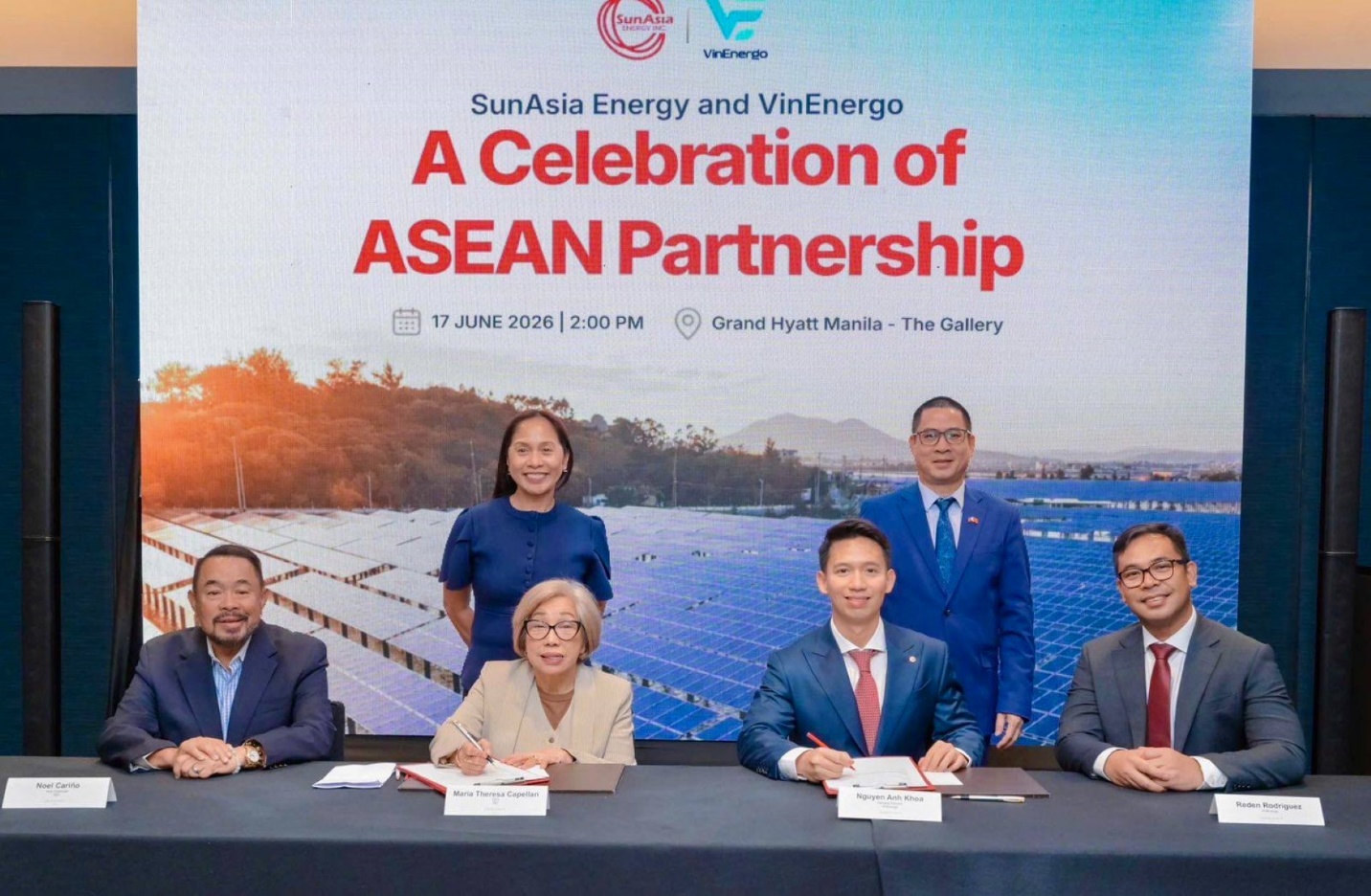
HANOI, VIETNAM – Media OutReach Newswire – 26 June 2026 – VinEnergo, a member of Vingroup’s green ecosystem, and SunAsia Energy Inc., a pioneer in the Philippine solar energy sector, have announced a strategic partnership to develop a portfolio of large-scale renewable energy projects utilizing the Solar on Stilts model. With expected lifetime revenues exceeding USD 1.5B, the projects will drive job creation, catalyze infrastructure investment, and strengthen the Philippines’ energy security.
Ms. Tetchi Capellan, Chief Executive Officer and Chairperson of SunAsia Energy (second from left), and Mr. Nguyen Anh Khoa, CEO of VinEnergo (second from right), sign the agreement between the two companies in the presence of Ms. Sharon Garin, Secretary of Energy of the Philippines, and Mr. Lai Thai Binh, Ambassador of Vietnam to the Philippines.
Between 2027 and 2028, VinEnergo and SunAsia Energy plan to bring three flagship projects into operation, with a combined installed capacity of 422MWp. These are projects located in Macabebe, Pampanga (181 MWp), Sagay (126 MWp) and Silay (115MWp), both in Negros Occidental Province.
The partnership aims to deliver reliable renewable energy to the national grid, while supporting the Philippines’ goals of strengthening energy security, reducing carbon emissions, and promoting local economic development. Once operational, the projects are expected to supply electricity to approximately 278,000 households and reduce carbon emissions by more than 460,000 tons annually, equivalent to planting around 21 million trees.
Over the next 18 months, VinEnergo will work closely with SunAsia Energy on engineering design and project implementation. This phase will include the selection of engineers, technology providers, and contractors to install nearly 700,000 solar panels mounted on pile structures, as well as approximately 62 kilometers of new transmission lines across Negros and Pampanga.
The project portfolio will utilize the Solar on Stilts technology, in which solar panels are mounted on pile-supported structures above the water surface, enabling the integration of clean power generation with aquaculture activities. This approach effectively leverages the Philippines’ strong potential for combining renewable energy development with agriculture and fisheries, while serving as a model for future sustainable energy projects. It also aligns with VinEnergo’s strategy of advancing the Food-Energy-Water Nexus to optimize resource use and create long-term value for communities.
ING and SGV & Co. acted as exclusive M&A advisors to VinEnergo and SunAsia, respectively.
Mr. Nguyen Anh Khoa, Chief Executive Officer of VinEnergo, said: “Our partnership with SunAsia Energy on this strategic project portfolio is a clear demonstration of VinEnergo’s regional growth ambitions. We are proud to bring forward solutions that combine sustainable energy development with responsible resource utilization. Floating solar not only contributes to addressing energy security challenges, but also provides a valuable opportunity to share Vietnam’s development experience in protecting local livelihoods and fostering the parallel growth of the energy and agricultural sectors.”
Ms. Tetchi Capellan, Chief Executive Officer and Chairperson of SunAsia Energy Inc., said: “This partnership is driven by the shared commitment of SunAsia Energy and VinEnergo to strengthen energy security, support economic growth, improve people’s lives, and help protect the planet. Through the Floating Solar model, we are not only developing renewable energy infrastructure but also creating a framework where food production and clean energy generation can thrive together.”
The announcement of this strategic partnership comes as the Philippines hosts the ASEAN Summit, underscoring VinEnergo’s role in advancing cross-border collaboration to address energy and climate challenges. It also marks an important milestone in VinEnergo’s international expansion strategy, while highlighting the capabilities of Vietnamese enterprises in developing pioneering renewable energy models that contribute to ASEAN’s and the world’s sustainable energy transition goals.
Hashtag: #VinEnergo #SunAsiaEnergy #SolarOnWater
The issuer is solely responsible for the content of this announcement.
About VinEnergo
VinEnergo is a leading Vietnamese energy developer focused on investing in and developing large-scale energy projects to accelerate the sustainable energy transition in Vietnam and across the region. With innovation at the core of its strategy, VinEnergo develops projects that deliver positive socio-economic impact while leading the deployment of integrated solutions that combine renewable energy, baseload power, and battery energy storage systems (BESS) to build a greener, more stable, and more reliable energy system.
About SunAsia Energy Inc.
SunAsia Energy Inc. is a Philippine renewable energy developer focused on innovative clean energy and solar solutions, including floating solar, Solar on Water, and other renewable energy projects that support the country’s clean energy transition.
HONG KONG SAR – Media OutReach Newswire – 26 June 2026 – IX Asia Indexes today announced the 1st Half 2026 Review of the IX Digital Asset Industry Classification System (“DAICS®“), aiming to provide professionals worldwide with a transparent and standardized classification scheme to determine sector and exposure of particular digital assets. DAICS® classifies digital assets into 2 main categories: a) Cryptocurrencies and b) Asset Backed Tokens (ABTs) in a 3-tier system for each category. For Cryptocurrencies: Tier 1-Industry/ Tier 2-Sector/ Tier 3-Sub-sector; and for ABTs: Tier 1-Asset Type/ Tier 2-Branch/ Tier 3-Sub-branch. The results are as follows:
DAICS® coin coverage: As of 31st May, the top 50 coins by average market capitalization across the past 90 days
DAICS®market capitalization coverage: 97.45%*
The % coverage of market capitalization of the 50th ranked coin: 0.06%**
Member changes within the Top 50 Coins in DAICS®: seven coins added and six coins deleted
Additions: Canton (CC), Tether Gold (XAUT), Pax Gold (PAXG), Global Dollar (USDG), Aster (ASTER), Ripple USD (RLUSD), USDD (USDD)
7 Green Coins labelled: Internet Computer (ICP), Binance (BNB), Hedera (HBAR), Solana (SOL), Sui (SUI), XRP (XRP), Canton (CC)
*Special currency treatment of DAICS® applies, where any wrapped or second-level cryptocurrency is not considered in the calculation for the market capitalization of DAICS® **Based on 31st May 2026 G: Green Coin
The rankings of additions and deletions for the DAICS® top 50 cryptocurrencies are listed in Appendix 1. All classification changes, including the ixCrypto Infrastructure Index and ixCrypto Stablecoin index, will take effect on 24th July 2026, with market capitalization, rankings, and weightings available at www.ix-index.com.
1. Cryptocurrencies 1.1 Structure and Definitions
Tier 1: Industry Changes The industry groups remain unchanged, with 5 industries and the respective weightings as follows:
Industry
Weighting (%)
Payment (110)
77.76%
Infrastructure (120)
16.60%
Financial Services (130)
4.31%
Tech & Data (140)
0.12%
Media & Entertainment (150)
1.00%
ABT – Natural Resources (265)
0.21%
Tier 2: Sector Changes The number of sectors remains unchanged at 18. 1.2 Reclassification Changes This review doesn’t have any reclassification of the existing coins. The DAICS® 1H 2026 cryptocurrencies classification is available in Appendix 2.
1.3 Green Coin Label This review identifies 7 Green Coins, classified based on their energy-per-unit-transaction, which is defined as the amount of energy consumed for a successful single unit transaction of the coin in the blockchain network. The coins selected rank in the top 15 percentile of the least energy-consuming cryptocurrencies out of the 50 DAICS® constituents. The table below lists these low-energy coins.
Industry
Cryptocurrencies
Payment (110)
XRPG
Infrastructure (120)
ICPG HBARG CCG
SOLG SUIG
Financial Services (130)
BNBG
Tech & Data (140)
NIL
Media & Entertainment (150)
NIL
Note: G as ‘Green Coin‘ labelling for cryptocurrencies that adhere to the principles of sustainability
2. Asset Backed Tokens (ABT) 2.1 Structure and Definitions Tier 1: Asset Type Changes The asset types remain unchanged at 6 as follows: 1) Culture (205), 2) Real Estate (215), 3) Financials (235), 4) Entertainment (255), 5) Natural Resources (265), and 6) Green Economy (275)
Tier 2: Branch Changes The number of branches remains unchanged at 32.
2.2 Classification Changes This review doesn’t have any reclassification of the existing assets.
2.3 Coverage of DAICS® IX Asia Indexes has classified 2 ABTs in 1H 2026, which are Tether Gold (XAUT) and PAX Gold (PAXG). As of May 31, 2026, ABTs comprised 2.05% of the total market capitalization of digital assets, a rise from 0.91% in the 2025 2H review, which shows that ABT’s presence in the market has become more significant.
With accelerating growth and dominance of stable coins in the past two half yearly reviews, the IX Asia Tokenisation Advisory Committee has decided to expand the coverage to “50 coins + stablecoins within top 50” starting from the next review.
A classification summary and definition table of both cryptocurrencies and ABTsare available in Appendices 3 and 4. For further information regarding the methodology of the DAICS®, please refer to the “IX Digital Asset Industry Classification System”- principle and guiding methodology on the company website https://ix-index.com/daics.html.
Additions and Deletions in DAICS® Top 50 Cryptocurrencies
Additions
Current Rank
Cryptocurrencies
17
Canton (CC)
32
Tether Gold (XAUT)
34
PAX Gold (PAXG)
35
Global Dollar (USDG)
43
Aster (ASTER)
44
Ripple USD (RLUSD)
50
USDD (USDD)
Deletions
Prev. Rank
Cryptocurrencies
Current Rank
34
Ethena (ENA)
60
41
Aptos (APT)
65
45
Worldcoin (WLD)
57
47
Polygon (POL)
54
48
Story (IP)
133
49
Arbitrum (ARB)
68
G: Green Coin
Classification of the Top 50 Coins by Industry and Sector
Category
Industry
Sector
Cryptocurrencies
Cryptocurrencies (1)
Payment:
Blockchain based money, designed for transactional purposes. This includes daily transactions usage and stablecoins.
Transaction & Payment
BTC XRPG BCH XMR ZEC
XLM LTC CRO PI
Stablecoin
USDT USDC DAI USDE WUSD
PYUSD USDG RLUSD USDD
Infrastructure:
Bedrock blockchain that facilitates the operation of other decentralised applications. This includes the creation and running of dedicated blockchain platforms, achieving interoperability between networks, increasing the amount or speed of transactions etc
Application Development Protocol & Smart Contract
ETH SOLG TRX HYPE ADA CCG AVAX
HBARG TON SUIG NEAR ASTER ICPG ETC
Interoperability
LINK
DOT
Scaling & Sharding
MNT
Supporting System
NIL
Financial services:
Tokens that provide on-chain asset management services, crypto-exchange services, funding, lending and other capital markets related services
Exchange Tokens
BNBG LEO UNI
OKN BGB KCS
Lending & Borrowing
AAVE
Staking
NIL
Financial Asset Tokenization
ONDO
Tech & Data:
Provision of data management and storage, and development of innovative crypto technology
Storage & Sharing
NIL
Data Management
NIL
Artificial Intelligence
TAO
Identification
NIL
Media & Entertainment:
Recreational and media services. Including content creation and distribution, advertising through crypto-asset incentive mechanisms, gaming and collectibles
Social Media & Community
DOGE SHIB
M PEPE
Streaming
NIL
Gaming
NIL
Metaverse
NIL
Category
Asset Type
Branch
Cryptocurrencies
Asset-Backed Tokens (2)
Culture: (205)
Real asset relating to sports, art, cultural drama, festive collectibles and design IPs etc.
Art (20510)
NIL
Sports (20520)
NIL
Festive Collectibles (20530)
NIL
Design IPs (20540)
NIL
Drama and Play IPs (20550)
NIL
Real Estate:(215)
Assets that mainly derived its valuation from property, real estate, and land
Commercial Property (21510)
NIL
Residential Property (21520)
NIL
Governmental Property (21530)
NIL
Residential and Commercial Land (21540)
NIL
Financials: (235)
Real financial asset including listed company shareholdings on regulated centralised exchanges and private company shareholdings; debt instruments; property trusts and derivatives that settled on regulated exchange (CeFi and DeFi).
Ownership of the IPs assets in the area of entertainment in real world such as concert, play, shows, circus, musicals, songs, movies, games, events and programs, and souvenir collectibles that is derived from the above areas.
Movies (25510)
NIL
Songs (25520)
NIL
Concerts (25530)
NIL
Gaming (25540)
NIL
All Other Entertainment Events and Collectibles (25550)
NIL
Natural Resources: (265)
Natural resources asset that derived directly from sea, sky, atmosphere and underground and can be classified as a commodity with standardisation such as precious metals, agricultural, energy and metals.
Precious Metals (26510)
XAUT
PAXG
Agricultural (26520)
NIL
Energy (26530)
NIL
Metals (26540)
NIL
Green Economy (275)
Ownership of Projects Asset that falls under the definition of the UN 17SDG²s, with over 80% of the income or jobs provided on these 17 initiatives.
No Poverty & Zero Hunger (27510)
NIL
Good Health and Well-Being (27520)
NIL
Quality Education (27530)
NIL
Gender Equality (27540)
NIL
Clean Water and Sanitation/Affordable and Clean Energy (27550)
NIL
Decent Work and Economic Growth/ Industry, Innovation, and Infrastructure/ Partnerships for the Goals (27560)
NIL
Reduced inequalities/ Peace, Justice and Strong Institutions (27570)
NIL
Sustainable Cities and Communities/Responsible Consumption and Production (27580)
NIL
Climate Action (27590)
NIL
Life Below Water & Life on Land (27500)
NIL
Note: NEW for newly added branch
² United Nations 17 sustainable development goals covering 1) No Poverty 2) Zero Hunger 3) Good Health and Well-Being 4) Quality Education 5) Gender Equality 6) Clean Water and Sanitation 7) Affordable And Clean Energy 8) Decent Work and Economic Growth 9) Industry, Innovation and Infrastructure 10) Reduced inequalities 11) Sustainable Cities and Communities 12) Responsible Consumption and Production 13) Climate Action 14) Life Below Water 15) Life on Land 16) Peace, Justice and Strong Institutions and 17) Partnerships for the Goals https://sdgs.un.org/goals
Note: G as ‘Green Coin‘ for cryptocurrencies that adhere to the principles of sustainability NEW for newly added sector
DAICS® Industry and Sector Definition
Category
Industry
Sector
Sector definition
Cryptocurrencies (1)
Payment: (110)
Definition
Blockchain based money, designed for transactional purposes. This includes daily transactions usage and stablecoins.
Transaction & Payment (11010)
Cryptocurrencies that are used for store of value, unit of account, medium of exchange
Stablecoin (11020)
Cryptocurrencies where price is pegged to a / a basket of, reference asset
Infrastructure: (120)
Definition
Bedrock blockchain that facilitates the operation of other decentralised applications. This includes the creation and running of dedicated blockchain platforms, achieving interoperability between networks, increasing the amount or speed of transactions etc.
Application Development Protocol & Smart Contract (12010)
layer-1 blockchain network that facilitates DApp creation and smart contract execution and smart contract
Interoperability (12020)
Network that increases inter-connectivity and integration of the fragmented cryptocurrency ecosystem
Scaling & Sharding (12030)
Networks that increase the ability to cope with the influx of many transactions at a time and blockchain network that can be split into smaller partitions, to improve scalability and process transactions quicker
Supporting System (12040)
Networks/sidechains that improve functionality of layer-1 network
Financial services: (130)
Definition
Tokens that provide on-chain asset management services, crypto-exchange services, funding, lending, and other capital markets related services
Exchange Tokens (13010)
Cryptocurrencies that represent the stable coin in the exchange ecosystem and allow users to covert from digital asset on decentralised or centralised system int fiat currencies
Lending & Borrowing (13020)
Borrowing and lending crypto assets with interest in return and other secondary financial tools derived from primary underlying asset, such as crypto futures and options
Staking (13030)
Holding and “staking” of certain amount of cryptocurrency in a wallet to facilitate network operations
Financial Asset Tokenization (13040)
Cryptocurrencies/protocols that focus on the tokenized issuance and management of financial assets
Tech & Data: (140)
Definition
Provision of data management and storage, and development of
innovative crypto technology
Storage & Sharing (14010)
Crypto protocols that provide decentralized storage and/or sharing of data filing and resources.
Data Management (14020)
Networks/Protocols that facilitate the indexing and querying of data from blockchain(s), enabling efficient data retrieval and management for decentralized applications
Artificial Intelligence (14030)
Cryptos/Protocols that facilitate the use of AI powered apps or projects directly using blockchain platform.
Identification (14040)
Cryptocurrencies that facilitate decentralized identity authentication and/or blockchain-based validation of digital intellectual property rights. The classification emphasizes trust, data consent, and privacy as core architectural features while the crypto by itself is not an identity token.
Media & Entertainment: (150)
Definition
Recreational and media services. Including content creation and distribution, advertising through crypto-asset incentive mechanisms, gaming and collectibles
Social Media & Community (15010)
Cryptos that provides mast social community and followers without a close secondary industry sector
Streaming (15020)
Cryptos that provides rights to access decentralised video-streaming sites
Gaming (15030)
Cryptos which mainly used in gaming or gaming supporting industry
Metaverse (15040)
Cryptos that is commonly used in collective virtual open space, created by the convergence of virtually enhanced physical and digital reality. This includes the use of VR and/or AR and/or 3D.
Note: NEW for newly added sector
DAICS® Asset Type and Branch Definition
Category
Asset Type
Branch
Sub -branch
Asset-Backed Tokens (2)
Culture: (205)
Definition
Real asset relating to sports, art, cultural drama, festive collectibles and design IPs etc.
Art (20510)
This shall be further developed in the future with more digital assets available in the market
Sports (20520)
Festive Collectibles (20530)
Design IPs (20540)
Drama and Play IPs (20550)
Real Estate:(215)
Definition
Assets that mainly derived its valuation from property, real estate, and land
Commercial Property (21510)
Residential Property (21520)
Governmental Property (21530)
Residential and Commercial Land (21540)
Financials: (235)
Definition
Real financial asset including listed company shareholdings on regulated centralised exchanges and private company shareholdings; debt instruments; property trusts and derivatives that settled on regulated exchange (CeFi and DeFi).
Ownership of the IPs assets in the area of entertainment in real world such as concert, play, shows, circus, musicals, songs, movies, games, events and programs, and souvenir collectibles that is derived from the above areas.
Movies (25510)
This shall be further developed in the future with more digital assets available in the market
Following definition of the United Nations
17 sustainable development goals²
Songs (25520)
Concerts (25530)
Gaming (25540)
All Other Entertainment Events and Collectibles (25550)
Natural Resources: (265)
Definition
Natural resources asset that derived directly from sea, sky, atmosphere and underground and can be classified as a commodity with standardisation such as precious metals, agricultural, energy and metals.
Precious Metals (26510)
Agricultural (26520)
Energy (26530)
Metals (26540)
Green Economy (275)
Definition
Ownership of Projects Asset that falls under the definition of the UN 17SDG²s, with over 80% of the income or jobs provided on these 17 initiatives.
No Poverty & Zero Hunger (27510)
Good Health and Well-Being (27520)
Quality Education (27530)
Gender Equality (27540)
Clean Water and Sanitation/Affordable and Clean Energy (27550)
Decent Work and Economic Growth/ Industry, Innovation, and Infrastructure/ Partnerships for the Goals (27560)
Reduced inequalities/ Peace, Justice and Strong Institutions (27570)
Sustainable Cities and Communities/Responsible Consumption and Production (27580)
Climate Action (27590)
Life Below Water & Life on Land (27500)
Note: NEW for newly added branch
² United Nations 17 sustainable development goals covering 1) No Poverty 2) Zero Hunger 3) Good Health and Well-Being 4) Quality Education 5) Gender Equality 6) Clean Water and Sanitation 7) Affordable And Clean Energy 8) Decent Work and Economic Growth 9) Industry, Innovation and Infrastructure 10) Reduced inequalities 11) Sustainable Cities and Communities 12) Responsible Consumption and Production 13) Climate Action 14) Life Below Water 15) Life on Land 16) Peace, Justice and Strong Institutions and 17) Partnerships for the Goals https://sdgs.un.org/goals
Hashtag: #IX #DAICS
The issuer is solely responsible for the content of this announcement.
About DAICS®
DAICS® covers both cryptocurrencies and asset-backed tokens (“ABTs”), to be reviewed semi-annually at the end of June and December. On the cryptocurrency side, it is a three-tier system that groups cryptocurrencies into 5 main industries: 1) Payment, 2) Infrastructure, 3) Financial services, 4) Technology & Data, and 5) Media & Entertainment. These industries are further divided into sectors and sub-sectors to be introduced in the future. Under asset-backed tokens, there are 6 asset types: 1) Culture, 2) Real Estate, 3) Financials, 4) Entertainment, 5) Natural Resources, 6) Green Economy. These asset types are further divided into branches and sub-branches to be introduced in the future.
About the IX Asia Tokenization Advisory Committee and Working Group
The establishment of the IX Asia Tokenization Advisory Committee (“Advisory Committee”) is to pursue the goal and vision of formulating a standard for a global tokenization framework in a compliant and transparent way. The key role of the Advisory Committee is to formulate the guidelines and references for tokenization in terms of infrastructure, business, financial stability, sustainability, internal control, and classification. The Advisory Committee is comprised of industry-recognised leaders from blockchain consultancy, sustainable projects, and the field of the Art industry.
The establishment of the Working Group is to identify, evaluate and recommend key directions and founding principles according to their specific industry knowledge and expertise in relating to the creation of the specified token. It will examine and propose improvements to the guidelines and references for tokenization. The working group is formed of a diverse group of market experts representing relevant sectors and markets, to provide input and discuss case studies for creation of tokenization framework, best practices and development of real-world projects.
JAKARTA, INDONESIA- Media OutReach Newswire – 26 June 2026 – The Washington Apple Commission (WAC), the marketing organization representing Washington State’s apple industry in the United States, reaffirms its commitment to delivering premium-quality apples to Indonesian consumers. Having been present in Indonesia since 1990, Washington Apples continues to see promising growth opportunities as consumers become increasingly conscious of healthy lifestyles and quality fruit consumption.
Healthy-Habits
As it enters a new season, WAC will introduce a range of promotional and educational initiatives aimed at further strengthening its connection with Indonesian consumers.
Jennie Strong, International Marketing Specialist of the Washington Apple Commission, said: “Indonesia has been an important market for Washington Apples for more than 35 years. Throughout this period, we have worked closely with importers, retailers, and local partners to build awareness and expand the presence of Washington Apples across the country. We continue to see positive growth potential, supported by a growing middle class, younger consumers, and an increasingly modern retail landscape. As a result, we will continue to strengthen our promotional and educational efforts to bring Washington Apples even closer to Indonesian consumers.”
Washington Apples will continue to offer a wide selection of premium varieties that have long been favorites among Indonesian consumers, including Red Delicious, Granny Smith, Envy®, Ambrosia, and Gala. Each variety offers its own distinct flavor profile, catering to increasingly diverse consumer preferences.
Consumers Are Becoming More Selective About Healthy Snacking
Over the past several years, awareness of healthy living has continued to grow. One trend that has gained momentum is the increasing demand for snacks that are both nutritious and convenient for everyday consumption. In this context, fresh fruit such as apples has become an increasingly relevant choice.
In addition to being convenient, apples contain a variety of nutrients that support overall well-being. A large apple provides fiber, vitamin C, and potassium that can help support daily activities. Researchers from the University of Denmark have also found that apples may contribute to improved gut health and support the immune system by increasing beneficial gut bacteria. Interestingly, most of an apple’s antioxidants are found in its skin.
Given these developments, Jennie believes Indonesia remains a market with significant growth potential for Washington Apples.
“Consumers are becoming increasingly aware of the importance of eating fruit every day and are more selective when choosing quality products. We are also seeing the rise of mindful snacking, where people seek snack options that are not only convenient but also offer nutritional benefits. We hope to continue being part of this journey through quality products and programs that are relevant to the needs of Indonesian consumers,” he/she added.
To maintain product quality, Washington Apples follows strict quality-control processes from harvesting and washing to sorting and storage. Apples are selected using modern technology based on color, size, and maturity to help ensure consistent quality when they reach consumers.
In addition, each apple undergoes sugar and starch testing to help maintain the sweetness and crisp texture that Washington Apples is known for. This commitment reflects the Grown with Goodness philosophy, which represents attention to quality at every stage of the fruit’s journey—from orchard to table.
For more information, visithttps://weapple.org/id/ or follow Instagram @washingtonapplesindonesia. Hashtag: #WashingtonApples #HealthyLiving #Indonesia


 www.hkpc.org/en
 www.hkpc.org

 https://myrepublic.net/sg/
 https://www.linkedin.com/company/myrepublic/
 https://x.com/myrepublic
 https://www.facebook.com/MyRepublicSG/
 https://www.instagram.com/myrepublicsg/



 https://weapple.org/id/
 https://www.instagram.com/washingtonapplesindonesia