
Tag: alibaba

  • Alibaba Cloud’s new whitepaper shows how AI can power sustainable business transformation

    Alibaba Cloud’s new whitepaper shows how AI can power sustainable business transformation

    A new whitepaper released by Alibaba Cloud, Driving Sustainability with AI: A Guide to Partnering with Technology Service Providers, offers a forward-looking blueprint for how organisations can harness digital infrastructure — particularly AI and cloud computing — to accelerate their sustainable journey.

    Based on insights from the Tech-Driven Sustainability Trends and Index 2024, which surveyed 1,300 business leaders across Asia, Europe, and the Middle East, the report combines industry data, actionable recommendations, and real-world case studies to explore how emerging technologies can close the gap between aspiration and execution.

    The State of Sustainability: Progress, Gaps and Opportunity

    The whitepaper highlights the growing urgency for businesses to act on sustainability, with 80% of surveyed organisations setting green targets. Yet only one-third of these have committed to science-based net-zero goals. Many companies still struggle to move from commitment to impact, citing gaps in technical understanding, measurement tools and concerns about the energy footprint of digital technologies.

    Despite these barriers, a strong majority — 76% — see AI and cloud computing as essential tools to achieve sustainability outcomes. At the same time, 82% say it is critical that these technologies themselves are developed sustainably.

    From Insight to Impact: Green AI in Action

    Alibaba Cloud is helping organisations bridge this gap through platforms like Energy Expert, which uses AI to measure emissions and energy consumption in real time. The platform has already served over 3,000 organisations globally.

    One standout case is its collaboration with Covestro, a polymer material company. Working together, the two helped Chinese beverage brand Nongfu Spring trace the full lifecycle emissions of its recycled water barrels — later repurposed into gel pens – offering supply chain transparency from production to reuse.

    The whitepaper also showcases Alibaba Cloud’s commitment to low-carbon AI innovation. Its open-source Qwen series models are designed for efficiency and accessibility. Japanese AI start-up Lightblue, for example, used Qwen to build a localized high-performance Japanese-language model with lower development costs and energy use.

    Five Strategies to Drive Recommendations for Sustainable Digital Transformation

    The whitepaper identifies five strategic actions that businesses can take to align digital transformation with sustainability outcomes. First, organizations are encouraged to link their adoption of AI and cloud technologies with specific sustainability KPIs—for example, using predictive tools to optimise operations or monitor emissions across supply chains. Second, companies should partner with transparent, green technology providers that publish energy usage and emissions data, operate on renewable energy, and invest in energy-efficient infrastructure. Third, the paper highlights the importance of embedding security into sustainability strategies, noting that cybersecurity concerns remain a key barrier to wider adoption of digital sustainability tools.

    Fourth, it recommends embracing open and trustworthy AI, such as open-source models that reduce costs, improve energy efficiency, and allow for localized applications. Finally, the paper calls for stronger public-private collaboration, with 82% of surveyed executives supporting more active government involvement to accelerate the adoption of sustainable technologies through policy, incentives, and education.

    A Roadmap for Business Leaders

    More than a guide, the whitepaper is a call to action. It emphasizes that sustainability is no longer a nice-to-have but rather a competitive differentiator and a catalyst for growth.

    For companies navigating climate and digital transformation simultaneously, the message is clear: success depends on choosing the right partners, tools, and strategies to deliver measurable progress. With the right foundation, AI and cloud can power a greener, smarter, and more resilient future.
  • Alibaba Cloud unveils AI offerings to advance Malaysia’s AI agenda

    Alibaba Cloud unveils AI offerings to advance Malaysia’s AI agenda

    Alibaba Cloud, the digital technology and intelligence backbone of Alibaba Group, has unveiled its latest AI models, solutions, upgraded infrastructure offerings, and AI empowerment program at its inaugural AI Tech Day in Malaysia. These advancements aim to empower businesses and developers in Malaysia to build innovative AI applications more cost-effectively and drive a thriving generative AI ecosystem in the region.

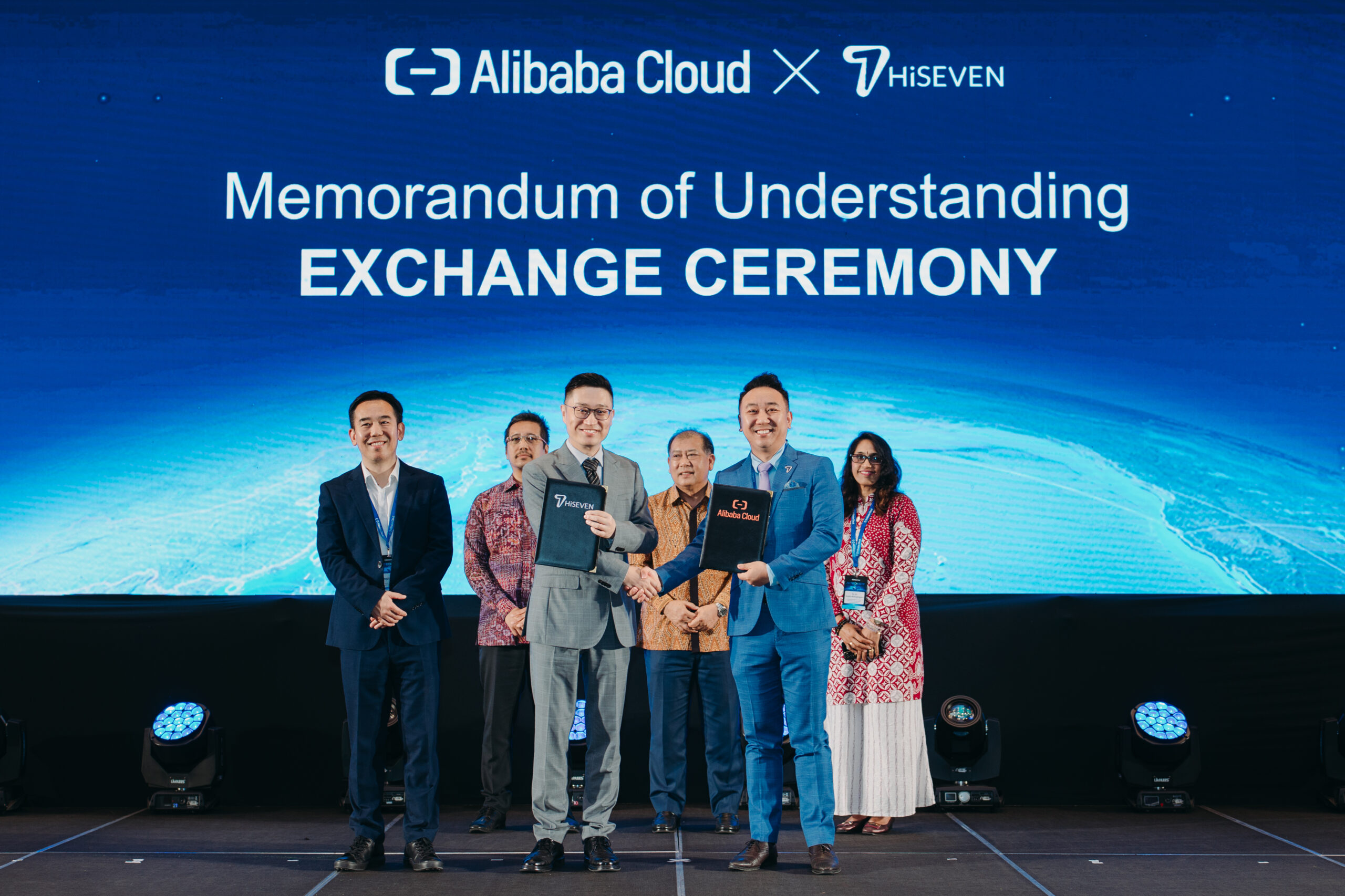
    The event, officiated by YB Datuk Wilson Ugak Anak Kumbong, Deputy Minister of Digital, also marked Alibaba Cloud’s announcement of key collaborations with leading Malaysian enterprises including YTL Power International Bhd’s artificial intelligence (AI) innovation unit, YTL AI Labs , Malaysia’s leading fund management company, Permodalan Nasional Berhad (PNB), and Malaysia’s digital marketing service provider HiSEVEN reinforcing Alibaba Cloud’s role as a trusted technology partner in the country’s AI ecosystem.

    In his address, the Deputy Minister commended the spirit of collaboration, stating “Malaysia is committed to leveraging AI for digital transformation and economic growth. With initiatives like Alibaba Cloud’s AI advancements and industry collaborations, we are strengthening our AI ecosystem and empowering local businesses. Together, we can build a Malaysia that is not just a participant but a leader in the global digital economy—one that is innovative, inclusive, and prosperous.”

    “At Alibaba Cloud, we are committed to driving AI innovation in Malaysia by providing cutting-edge models, scalable infrastructure, and dedicated support for customers, partners and developers. Our latest advancements will empower local talents and businesses to enhance efficiency, scale AI applications, and contribute to Malaysia’s digital future powered by AI,” said Kun Huang, General Manager of Malaysia, Alibaba Cloud Intelligence.

    Powering AI Innovation with Advanced Offerings

    Next-Generation Computing and AI Infrastructure – To support growing AI demands, Alibaba Cloud announced the global rollout of its 9th Generation Enterprise Elastic Compute Service (ECS) instances, set to be available in mid of 2025 in Malaysia. The latest generation of ECS instances has notable performance enhancements compared to its previous iteration, including a 20% increase in computing efficiency. Additionally, by accelerating networks through eRDMA (elastic Remote Direct Memory Access), its performance in supporting high-performance computing, search recommendations, and Redis databases can be further improved by up to 50%.

    Cutting-Edge AI Models and Multimodal Capabilities – Alibaba Cloud introduced the Qwen2.5 series, its latest generation of large language models (LLMs), available in parameter sizes ranging from 7 billion to 72 billion. These models are now accessible via API on its generative AI development platform, Model Studio for businesses and developers to build and deploy AI applications efficiently across various industries, from finance and retail to healthcare and education.

    Alibaba Cloud has also unveiled its latest visual-language model, Qwen2.5-VL, representing a significant enhancement over its predecessor, Qwen2-VL. This open-source, multimodal model is offered in various sizes, ranging from 3 billion, 7 billion to 72 billion parameters, and includes both base and instruction-tuned versions. The flagship model, Qwen2.5-VL-72B-Instruct, is now accessible through the Qwen Chat platform, while the entire Qwen2.5-VL series is available on Hugging Face and Alibaba’s open-source community Model Scope.

    To further support developers, Alibaba Cloud has also unveiled its proprietary AI-powered coding assistant, which will be available for developers in April 2025. The AI Programmer offers features such as code completion and optimisation, debugging assistance, code snippet search and batch unit test generation. It provides developers with an efficient and seamless coding experience, significantly enhancing productivity and creativity.

    AI Solutions for Business and Enterprise Applications – Alibaba Cloud’s AI-driven solutions are designed to help businesses improve operational efficiency, improve customer engagement, and drive digital transformation:

    • AI Doc: An intelligent document processing tool designed to help enterprises manage and utilize their knowledge more efficiently, flexibly, and cost-effectively through converting unstructured documents into structured data, streamlining workflows and reducing operational costs. It leverages Large Language Models (LLMs) to provide a range of functionalities, including document parsing, core content extraction, knowledge base Q&A, content comparison, and report generation.
    • Voice Insight: A multilingual voice recognition and analytics tool that enhances quality inspections, customer interactions, and service monitoring with AI-driven audio and video analysis.
    • Smart Studio: A next-generation content creation platform powered by AI, enabling seamless text-to-image and text-to-video applications to enhance marketing and creative outputs.
    • SmartQ: An AI-driven data analysis module of Quick BI, Alibaba Cloud’s Business Intelligence (BI) platform solution. Powered by Alibaba Cloud’s proprietary large language model Qwen, this innovative chat-based BI solution allows even non-technical users to generate insights by asking questions in plain language, greatly simplifying enterprise analytics experience.

    In addition, to further accelerate the local AI innovation and talent development in the region, the leading cloud service provider has launched its inaugural Alibaba Cloud Malaysia AI Hackathon 2025 in partnership with Malaysia’s digital solutions specialist Agmo Holdings Berhad during the event, inviting innovators, developers, and tech enthusiasts in the region to collaborate, create, and showcase their AI expertise. The program will be open for local registration from February 27 until April 30, 2025, providing local talent with an opportunity to leverage cutting-edge AI technologies and compete on a global stage.

  • Alibaba Cloud unveils ACS for international customers to revolutionise workload deployment

    Alibaba Cloud unveils ACS for international customers to revolutionise workload deployment

    Alibaba Cloud, the digital technology and intelligence backbone of Alibaba Group announces the international debut of its innovative Alibaba Cloud Container Compute Service (ACS), designed to simplify and optimise workload deployment using container technology. ACS will be available for international customers starting from January 2025.

    ACS, which uses Kubernetes as its interface, offers a serverless container service that provides compute resources compliant with container standards. This new product eliminates the need for users to manage underlying nodes and clusters, significantly reducing costs and technical barriers associated with container deployment. It also allows customers to pay-as-you-go, helping them avoid over allocated, and scale on demand, enabling the optimisation of costs during periods of high and low usage.

    “As the deployment of workloads on container technology becomes increasingly prevalent, we developed a more accessible solution that would anticipate the evolving needs of our customers,” said Jiangwei Jiang, General Manager of Infrastructure Products, Alibaba Cloud. “ACS represents a big step forward in how businesses can utilise container technology, offering cost-efficiency and ease of use to support businesses unleashing productivity.”

    Container technology, a form of virtualisation that bundles programmes with everything they need to run, makes it easy to deploy applications consistently across different hardware and systems. The benefits in terms of efficiency and resource optimisation have made containers a mainstream development method.

    According to Gartner, the container management market has experienced over 20% growth in the past year, with projections indicating a market value of US$4.5 billion by 2028. Gartner also predicts that by 2027, more than 75% of all AI deployments will utilise container technology as the underlying compute environment.

    ACS is designed to overcome the complexities associated with Kubernetes configuration, resource management, and on-demand elasticity. By integrating containers and resources based on Alibaba Cloud’s Shenlong architecture to allow maximum scaling of computing resources, ACS offers a solution capable of reducing computing power costs by up to 55%.

    “ACS has transformed the container orchestration service into a comprehensive computing product. Users benefit by paying only for the compute capacity that they use,” Jiang added.

    This product is fully compatible with Kubernetes technologies and supports seamless migration to the cloud for both open-source ecosystems as well as self-developed products. This is notable in that users can continue using familiar Kubernetes management methods and file formats. There is also no need to pre-purchase nodes so users can simply declare their workload requirements and ACS will match them with the necessary underlying compute resources. This minimises the demand for additional costs and human resources in infrastructure maintenance.

    Alibaba Cloud Container Service supports different architectures and can be deployed in multiple cloud environment including public cloud, private cloud and hybrid cloud. Currently, Alibaba Cloud Container Service has been applied across a wide range of industries.