Tag: Capital Markets

  • Manulife Investments launches diversified real asset fund

    Manulife Investments announces the launch of the Manulife Diversified Real Asset Fund (the Fund), previously known as the Manulife Global Resources Fund. The Fund aims to protect investors in Malaysia against inflation amidst market volatility, while generating sustainable income and differentiated, diversified return streams compared to other equity or fixed income asset classes.

    The Fund will follow a diversified real asset strategy, which emphasises real returns through both intrinsic value and their ability to benefit from higher inflation. It targets four asset classes: natural resources equities (energy, metals and mining), REITs (U.S. and international REIT), infrastructure equities (utilities, communications, renewables, infrastructure), and fixed income (U.S. short-term credits & Treasury Inflation-Protected Securities).

    The Fund was restructured to include additional types of real assets that could benefit from a higher inflationary environment.

    Jason Chong, CEO, Manulife Investments said, “We recognise that investors are facing increasing challenges when it comes to managing their investments, especially with rising inflation and ongoing market volatility. Hence, we have designed the Manulife Diversified Real Asset Fund to help investors diversify and protect their wealth. Real assets could offer relatively stronger returns in a rising inflationary environment compared to traditional equity and fixed income securities. The Fund’s approach ensures that it can deliver not just the income, but also differentiated and inflation-adjusted growth.”

    He added, “The introduction of this Fund reflects Manulife Investments’ commitment to offering investors solutions that enable them to capitalize on the ever-changing market situation. We want them to stay ahead in today’s environment, as well as provide elevated stability and income potential, with increased confidence and control over their investments. Amidst the ongoing changes in global dynamics, the Fund could continue to serve as a portal for investors in Malaysia to access opportunities in the US and globally, while helping them navigate and benefit from periods of high inflation. With this launch, we now offer investors access to more than 60 unit trust and PRS funds, underscoring our strength and continued commitment to delivering a comprehensive suite of investment solutions tailored to evolving market needs.”

    The Fund will invest at least 85% of its net asset value (NAV) in Share class I3 Acc of the Manulife Global Fund – Diversified Real Asset Fund (the “Target Fund”), and the remaining NAV of the Fund will be in liquid assets such as money market instruments, placement of short-term deposits with financial institutions for liquidity purposes and/or derivative for hedging purposes.

  • ARC Group commemorates 10 Years with flagship forum in Kuala Lumpur

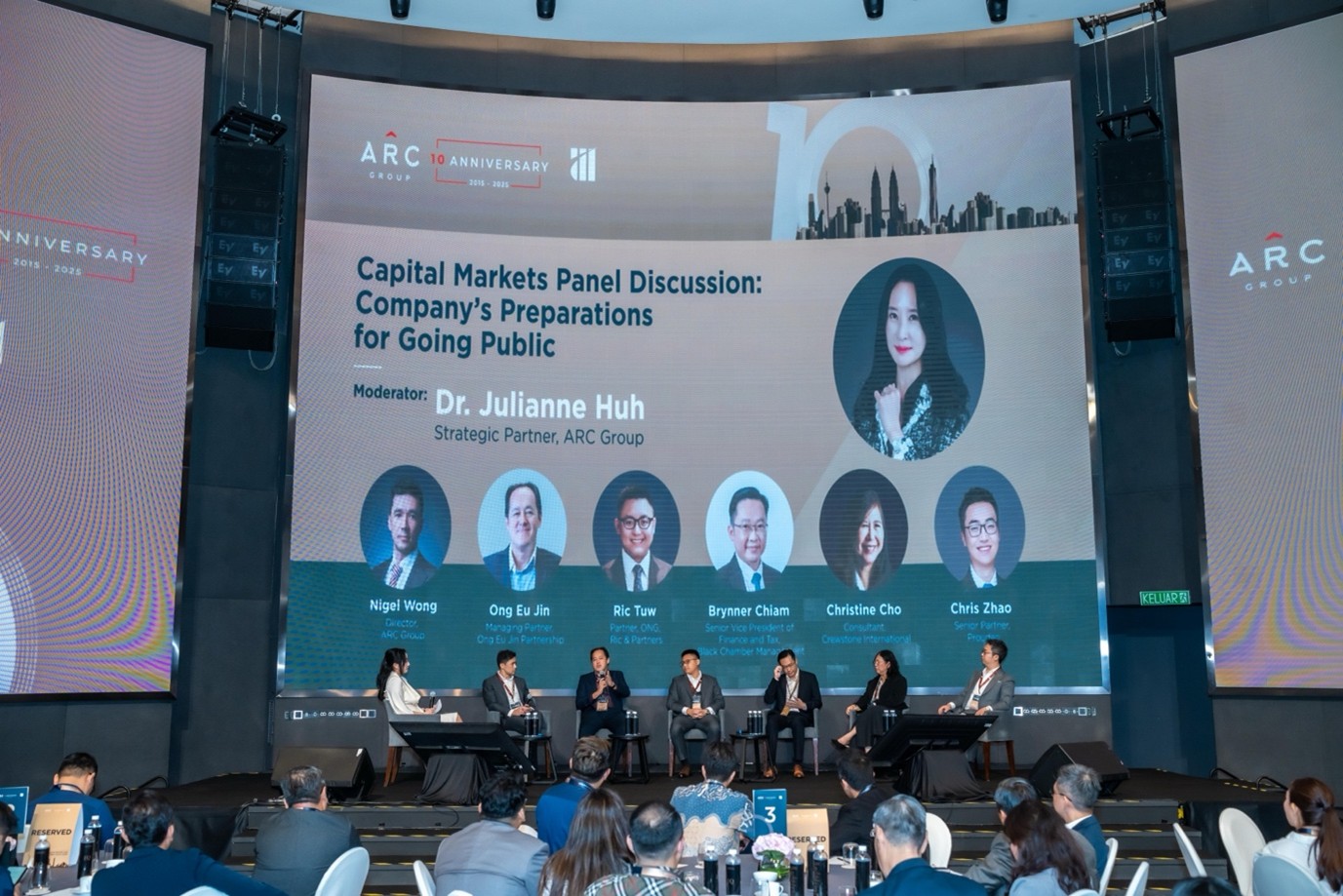
    ARC Group commemorates 10 Years with flagship forum in Kuala Lumpur

    ARC Group recently hosted the Capital Markets & M&A Forum 2025: Malaysia Edition, bringing together over 400 distinguished guests, including senior executives, investors, legal and advisory professionals and entrepreneurs.

    Themed around growth, strategy, and cross-border collaboration, this year’s forum offered timely insights into Southeast Asia’s evolving financial landscape, bridging capital markets, mergers and acquisitions and long-term economic strategy.

    The event featured international expertise as speakers and panelist, including Arc Group’s local venture partner, Paul Chong who provided a strategic deep dive into “Going Public – Choosing Between IPO, RTO, and De-SPAC. Drawing on his vast experience in global capital markets, Paul Chong delivered a nuanced comparison of public listing routes, offering actionable insights for Malaysian and regional companies considering international capital markets.

    Other featured sessions include topics such as ‘Company Preparations for Going Public’, “From Startup to Exit” and “The Future of M&A in Emerging Asia”. The Forum was closed by Xi Zhang, Partner at ARC Group who delivered a thought-provoking keynote on “China 2030 and Implications for Southeast Asia”, offering macroeconomic lens on China’s long-term transformation and actionable takeaways for ASEAN businesses navigating trade shifts, digital acceleration, and supply chain evolution.

    The event also marked the firm’s 10th anniversary. Carlos Lopez, COO of ARC Group commented, “These events have always held a special place for us—not just as platforms for sharing insights, but for building lasting relationships. This year’s forum was particularly meaningful as we marked ARC Group’s 10-year anniversary. It was a proud moment to reflect on how far we’ve come, and an inspiring one to envision where we’re headed next.”

  • SC issues revised guidelines on advertising for capital market products and related services

    The Securities Commission Malaysia (SC) today released a revised version of the Guidelines on Advertising for Capital Market Products and Related Services.

    The Guidelines was revised to update certain requirements and guidance taking into account advertising and promotional trends globally and domestically, including the growing prominence of social media and financial influencers (finfluencers).

    This is towards ensuring responsible advertising activities in relation to capital market products and services.
    The revised framework will include:

    • New requirements relating to finfluencers who are not engaged as marketing agents by an advertiser yet on their own accord undertake advertising activities for any capital market products and services. They will be subject to the requirements under the Guidelines as they would be regarded as advertisers for the purposes of the Guidelines;
    • Enhancement of requirements relating to advertisers’ duty to ensure the advertising activities conducted by their marketing agent comply with the Guidelines. The advertisers will otherwise be held accountable for the conduct of their marketing agent; and
    • Enhancement of requirements relating to use of social media to address its growing use for financial promotions.

    The Guidelines will also impose a prohibition against advertising services in Malaysia, of persons who are not authorised by the SC.

    The Guidelines is part of the SC’s ongoing efforts to promote responsible advertising on new channels of advertising such as social media, ultimately protecting investors.

    In reviewing and formulating the revised Guidelines, the SC has, amongst others, benchmarked against other jurisdictions such as Australia, the UK and Singapore, and considered the feedback received from engagement with relevant stakeholders including finfluencers.

    The revised Guidelines will come into effect on 1 November 2025 to allow sufficient time for advertisers to familiarise and make the necessary preparations to meet the new requirements.

    Meanwhile, the relevant stakeholders may engage the SC for any clarification and guidance relating to the revised Guidelines. Any queries on the revised Guidelines may be submitted to AdGuidelines@seccom.com.my.

    The revised Guidelines can be downloaded together with its revised FAQs at https://www.sc.com.my/regulation/guidelines/advertising-and-promotion.

  • Corporate bond issuance climbs in 2024, MGS & GII moderate

    Corporate bond issuance swelled to RM124.2 billion in 2024, surpassing the previous year’s RM118.3 billion. The financial (RM51.7 billion) and real estate (RM19.9 billion) sectors continued to be the primary drivers of issuance, mirroring trends observed in 2023. RAM Ratings anticipate some of last year’s strength spilling over into 2025, seeing corporate bond issuance remaining healthy at RM110 billion-RM120 billion. Infrastructure financing and businesses’ funding needs should also support steady corporate bond issuance activity in 2025.

    Gross issuance of MGS and GII moderated to RM176.7 billion in 2024, down from the high of RM190.9 billion in 2023. Looking ahead, RAM Ratings project MGS and GII issuance to ease further to RM155 bil-RM165 billion in 2025. This takes into account the government’s narrower deficit financing requirement in line with its commitment to fiscal consolidation, as well as more moderate needs in the refinancing of debts maturing this year.

    The Malaysian bond market charted a more moderate foreign fund inflow of RM4.8 billion in 2024 (2023: inflow of RM23.6 billion), exacerbated by persistent bond market selloffs throughout most of the year amid heightened uncertainties over the US Federal Reserve’s (Fed) interest rate outlook and the view that rate cuts might not be as forthcoming as initially expected. While the selloff eased towards year-end, the Fed’s less dovish stance and recent downgrade of its rate cut expectations in the December dot-plot suggest the lack of a catalyst in spurring foreign investor demand in 2025.

  • AHAM Capital declares income distribution of RM1.11 billion

    AHAM Capital declares income distribution of RM1.11 billion

    AHAM Asset Management Berhad (“AHAM Capital” or “the Company”) has declared a total income distribution of RM1.11 billion for the financial year 2024, spanning across a total of 89 wholesale and retail funds managed by the Company. These Funds encompass a diverse set of strategies and asset classes including equities, bonds, and mixed assets.

    Anton Tan, Chief Officer of Product Solutions of AHAM Capital said, “We are delighted to reaffirm our commitment to delivering consistent income to investors with average distribution yield ranging between 4.0% – 8.0% across our funds. In 2024, our strategic positioning in Malaysian equities paid off, supported by strong market performance driven by policy reforms and a surge in foreign direct investments. Additionally, easing inflationary trends and interest rate cuts by the US Federal Reserve created a supportive backdrop for fixed income markets, contributing to the overall stability of our income strategies.”

    Looking ahead to 2025, Anton adds, “As the global stage shifts under Trump’s new administration, alongside heightened geopolitical tensions and persistent currency volatility, the need for diversification is more critical than ever. Income strategies help provide a cornerstone for portfolio resilience by offering stability and capital preservation in an uncertain environment.

    “While the pace of rate cuts may slow, and interest rates could remain higher-for-longer, the current environment still offers a rare window for income-seeking investors to lock-in higher yields today. We remain steadfast in our commitment to providing globally diversified solutions spanning different strategies, assets and currency classes to help our clients recalibrate and position for the year ahead.”

    The Company’s Select and World Series funds delivered strong income distribution yields ranging from 4.0% to 8.0% across various asset classes and strategies. Notable highlights include the AHAM World Series – Income Fund, which achieved an impressive yield of 8.3% by capitalising on global income opportunities, while the AHAM Select SGD Income Fund and AHAM Select AUD Income Fund each recorded yield of 4.50%, offering investors the advantages of currency diversification. In the Shariah-compliant segment, the AHAM Aiiman Income Plus Fund and AHAM Aiiman Quantum Fund delivered competitive yields of 4.50% and 4.60%, respectively.

    As at 31 December 2024, AHAM Capital’s total Assets Under Administration (AUA) stood at approximately RM89.0 billion, encompassing assets under management, investment advisory, and those under distribution.

  • SC Unveils Measures to Support Businesses

    The Securities Commission Malaysia (SC) today announced further reliefs for public-listed companies impacted by the COVID-19 fallout. It is also considering further measures to facilitate greater access to support businesses such as funding for small and midcap companies, as well as micro, small and medium enterprises (MSMEs).

    “With this Covid-19 pandemic, we are confronting a situation that none of us has experienced in our lifetimes. It requires measured responses that consider the longer-term impact on our market and its participants, beyond this immediate crisis,” said SC chairman Datuk Syed Zaid Albar at a virtual media conference to release its annual report for 2019.

    “While the world comes together to combat this public health emergency, we have taken proactive measures to ensure that markets continue to operate in an orderly manner, as access to funding is vital to maintain confidence and ensure the long-term recovery of the market,” he added.

             SC chairman Datuk Syed Zaid Albar

    Acknowledging that companies may face challenges as a result of the pandemic, the SC also announced that Bursa Malaysia will provide affected companies listed on the Main Market temporary relief from the Practice Note 17 nn (PN17) classification in relation to the following criteria:

    1. The shareholders’ equity of the listed issuer on a consolidated basis is 25% or less of the share capital (excluding treasury shares) of the listed issuer and such shareholders’ equity is less than RM40 mil.
    2. The auditors have highlighted a material uncertainty related to going concern or expressed a qualification on the listed issuer’s ability to continue as a going concern in the listed issuer’s latest audited financial statements and the shareholders’ equity of the listed issuer on a consolidated basis is 50% or less of share capital (excluding treasury shares) of the listed issuer.
    3. A default in payment by a listed issuer, its major subsidiary or major associated company, as the case may be, as announced by a listed issuer pursuant to paragraph 9.19A of the Listing Requirements and the listed issuer is unable to provide a solvency declaration to the Exchange.

    These measures will allow companies more time to regularise their financial positions. Similar temporary relief from Guidance Note 3 classification will also be provided by Bursa for companies listed on the ACE Market. The period for this PN17 relaxation will be effective from 17 April until 30 June 2021.

    Measures for Alternative Financing Platforms

    Observing heightened interests by MSMEs to tap into alternative fundraising channels, the SC also lifted fundraising limits on Equity Crowdfunding (ECF) platforms, and allowed ECF and peer-to-peer financing (P2P) platforms to operationalise secondary trading, both with immediate effect.

    From now till 30 September 2020, the government co-investment fund MyCIF, administered by the SC, has also increased its funding matching ratio from 1:4 to 1:2 for eligible ECF and P2P campaigns, to provide additional liquidity into the alternative fundraising space.

    The SC also called upon the industry to seize the opportunity to accelerate their digitisation transformations and offer more online products and services to investors as the regulator observed a significant increase of new online trading accounts opening in recent months.

    The SC itself, in view of this new norm, will expedite guidelines for holding virtual general meetings and facilitate alternatives to meet take-over requirements.

    The regulator is also working on efforts to broaden the suite of product offerings of fund management industry through facilitating the introduction of waqf-based collective investment schemes and alternative investments for wholesale funds, where underlying assets can be property, gold or private equity.

    Noting that extraordinary times call for extraordinary responses, Syed Zaid said this is not business as usual and the SC is deploying a wide range of regulatory tools to provide support to the market and relief to market participants.

    Protecting Investor Interest

    While the regulator is doing what it can to support the businesses, Syed Zaid said the SC remains steadfast in ensuring investor interest is protected during this challenging time. “We continue to raise investor awareness on scams, as scammers tend to target people during times of uncertainty.

    The SC will take a targeted approach to protect vulnerable investors and minority shareholders. I would also like to remind our intermediaries to remain vigilant and for PLCs to remember their obligations to shareholders and to make timely disclosures,” he stressed.

    The SC also assured investors that the Malaysian capital market remains fundamentally strong and is functioning in an orderly manner, supported by deep domestic liquidity, complemented by the government’s stimulus packages, amidst non-resident outflows.

    “Over the years, Malaysia has withstood many crises and the SC has worked closely with the industry to strengthen the capital markets and addressed systemic weaknesses. As a result, the Malaysian players and institutions are better equipped to face the onslaught of challenges arising from this pandemic,” added Syed Zaid.

    As the financial system adjusts to the impact of Covid-19, the SC will continue to monitor the evolving situation in global and domestic markets, and calibrate its responses and update the public accordingly.

    Segments of Bond Issuers under Stress

    Corporate bond issuers in the aviation, oil & gas (O&G) as well as trading and services segments are experiencing short-term financial stress that may result in higher risks to their credit positions.

    While that could weaken their credit positions it would not necessarily result in defaults as the majority of issuers are in the triple A and double A rating categories, said Kamarudin Hashim, SC executive director, of Market and Corporate Supervision, during the same media conference.

    “And in the event of credit deterioration, there should be should be sufficient buffers before cash flow becomes severely constrained.”

    In addition, he said several of these issuers within these segments have some form of support in the form of financial guarantees or corporate guarantees.

    He pointed out that defaults rates in the corporate bond markets have declined significantly since the Asian financial crisis. “At that time it was around 9.4% and has come down to below 1% up to last year,” said Kamarudin when answering a question from the media on the possibility of defaults by issuers of corporate bonds, sukuks and P2P (peer-to-peer financing) notes.

    “Moving forward and due to uncertainties arising from the Covid-19 pandemic as well as the slower global growth, there are several issuer segments that may see higher risks to their credit positions.

    “The areas include aviation, oil & gas as well as trading and services. These are segments under stress currently, and they represent around 8% of the total corporate bonds issuances,” he added.

    He said a prolonged weakening of issuers’ cash flow will be a cause of concern and the SC will continue to monitor this space.

    “As investors in the corporate bond market are also predominantly institutional investors, in the event of default they will be able to pursue various options to preserve their investments through negotiations such as rescheduling or restructuring, or rigorously pursuing their contractual rights and priority of claims against the issuer.”

    In relation to P2P financing, he said the average default rate remains similar to last year at around the 4% mark.

    “At the moment, the SC is not considering imposing a blanket moratorium on P2P financing notes. Our approach is for issuers to work together with [P2P financing platform] operators if they are under stress for possible restructuring and rescheduling,” he added.

    By Lee Min Keong

    For more information on the SC’s measures to maintain market integrity, please visit www.sc.com.my/covid-19 and www.sc.com.my/resources/publications-and-research/sc-ar2019