Tag: EV

  • Meta Bright drives Malaysia’s energy transition with BESS, EV charging and EE solutions

    Meta Bright drives Malaysia’s energy transition with BESS, EV charging and EE solutions

    Meta Bright Group Berhad (“Meta Bright” or “the Group”) is expanding its presence in the renewable energy sector through a strategic joint venture to provide Total Energy Solutions.

    In conjunction with the said expansion, the Group has partnered with United Success Holding Pte. Ltd. and Yang Lei to establish Meta Bright Solutions Sdn. Bhd. (“JVC”) to develop and operate battery energy storage systems (BESS), EV charging infrastructure and energy efficiency solutions (EE) in Malaysia and potentially across Southeast Asia.

    Meta Bright Energy Sdn. Bhd. (“MB Energy”), a wholly-owned subsidiary of Meta Bright Group Berhad will hold a 55% controlling stake in JVC, with United Success and Yang Lei owning 10% and 35%, respectively.
    This initiative aligns with Malaysia’s National Energy Transition Roadmap (NETR), which seeks to increase renewable energy’s GDP contribution to RM220 billion by 2050 while reducing carbon emissions in the energy sector by 32%. With the government’s RM300 million allocations under Budget 2025 for renewable energy, Malaysia is accelerating grid modernisation, energy efficiency initiatives, and renewable energy adoption— Meta Bright is well-positioned to capitalise on the growing demand for BESS EV charging infrastructure and EE solutions.

    To strengthen its technological capabilities, JVC has signed an exclusive technical support agreement with YTKJ. YTKJ is backed by Ningbo Urban Construction Investment Holding Co. Ltd., one of China’s state-backed urban infrastructure developers, reinforcing the JV’s strong technological and financial foundation. YTKJ collaborated with Ningbo Joyson Electronic Co. Ltd. (“Joyson Electronic”) to produce and manufacture Battery Energy Storage Systems (“BESS”).

    Joyson Electronic is a publicly listed company on the Shanghai Stock Exchange (SHA: 600699) and is a global leader in automotive electronics, safety systems, and smart mobility solutions, with a strong presence in new energy applications. In addition to BESS, Joyson Electronic also produces Electric Vehicle (EV) charging products, further strengthening its role in the sustainable energy ecosystem.

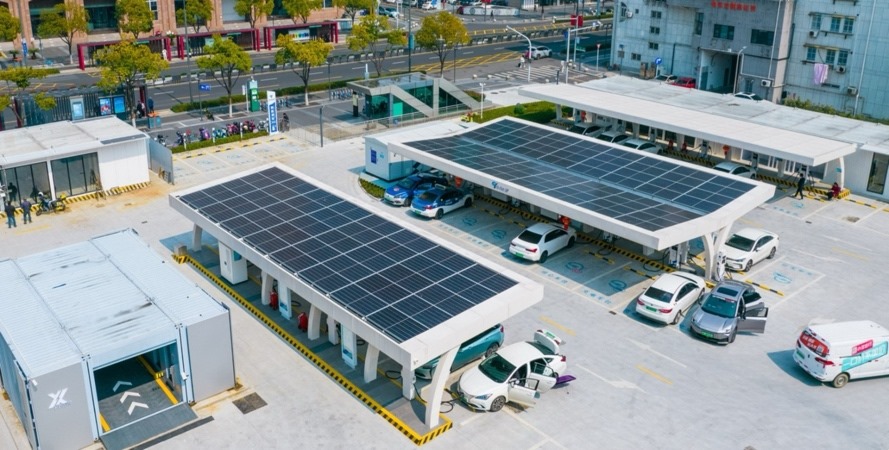
    JVC will actively contribute to the expansion of Malaysia’s EV charging infrastructure, supporting the increasing adoption of electric vehicles nationwide. The company will develop and supply high-speed, smart charging station equipment, ensuring a seamless and energy-efficient charging network. The integration of BESS with charging stations will further optimise energy storage and promote a more sustainable energy ecosystem.

    Derek Phang Kiew Lim, Executive Director of Corporate and Strategic Planning of Meta Bright Group Berhad said, “This joint venture is expected to help contribute the development for Malaysia’s energy landscape. “We are not just building BESS and EV charging infrastructure; we are building a more sustainable and resilient energy future for the nation.”

    “With the rising demand for energy storage and EV charging infrastructure, we see BESS as a crucial enabler of a more stable and efficient energy ecosystem. We aim to develop scalable, high-performance BESS solutions integrated with advanced EV charging stations, positioning Meta Bright at the forefront of Malaysia’s clean energy transition,” Derek added.
  • TCS Global Study: 64% of consumers likely to choose EV

    TCS Global Study: 64% of consumers likely to choose EV

    A new study by Tata Consultancy Services (TCS) (BSE: 532540, NSE: TCS), reveals that more than six out of 10 (64%) consumers are likely or very likely to consider an electric vehicle (EV) for their next purchase. The TCS Future-Ready eMobility Study 2025, a comprehensive report on how EVs are shaping the future of sustainable mobility, also highlights that while 60% of consumers said charging infrastructure was a major challenge, 56% were ready to pay up to $40K for an EV.

    This study surveyed over 1,300 anonymous respondents across North America (USA, Canada), United Kingdom & Ireland, Continental Europe (Belgium, Denmark, Finland, France, Germany, Netherlands, Norway, Sweden, Switzerland) and APAC (China, India, Japan, ANZ). The respondents for the survey included transport manufacturers, charging infrastructure players, fleet adopters, consumers and EV adoption influencers.

    Sustainability and lower operational costs were key factors driving EV adoption, according to the study. While consumers and influencers highlighted a clear motivation for EV adoption as ‘environmental sustainability’, the environmental benefits did not match the expectations of many EV influencers. Nearly 48% EV influencers said EVs increase the overall carbon output just as much as they reduce it, with 10% even saying EV adoption is negatively impacting the environment. Commercial fleets maintain a positive outlook towards electric mobility, with a sizable percentage—53%—pointing to reducing operational costs as a primary motivation. Fleet adopters were willing to pay a premium for EVs than for traditional internal combustion engine (ICE) vehicles.

    Despite the growing interest in EVs among consumers, significant challenges remain, particularly in the areas of charging infrastructure and technological advancements. While 74% of EV manufacturers said the lack of appropriate charging infrastructure remains the biggest obstacle limiting growth in the EV market, 55% have already started investing in innovation for battery technology advancements. Nearly 78% are making investments to reduce vehicle costs to cater to growing demand for EVs.

    Anupam Singhal, President, Manufacturing, TCS, said, “The EV industry is at a defining crossroad, navigating the complexities of scale and transformation. While nearly two-thirds of consumers are open to choosing electric for their next vehicle, manufacturers face challenges like advancing battery technology, complex vehicle designs, and production economics. At TCS, our Future-Ready Mobility vision focuses on creating an interconnected ecosystem powered by AI and Gen AI to drive smarter decision-making, enhanced customer experiences, and deliver scalable, sustainable solutions. By addressing these critical challenges, we are accelerating the global shift toward electrified and sustainable transportation.”

    The survey indicates that 90% of manufacturers believe that improvements in battery technology will enhance range and charging speed and will significantly impact the design and performance of EVs in the near term compared to other technological advancements.

    Key results from the survey, which can be found at TCS Future-Ready eMobility Study 2025, include-

    • 90% EV manufacturers and 84% of EV Influencers said battery technology improvements to optimise range and charging speed will have a large impact on design and performance of EVs
    • 74% of manufacturers believed charging infrastructure remains the biggest obstacle limiting EV market growth
    • 72% of EV charging infrastructure players are expecting significant mergers in the EV space driven by financial viability and scaling challenges
    • 41% consumers said that an acceptable EV range on a single charge is 200-300 miles, followed by 31% respondents who felt 300-400 miles is a better deal
    • 63% EV influencers said their primary motivation for EV adoption is to achieve net-zero goals and reduce carbon footprint
    • 55% of EV manufacturers are investing in R&D for battery technology advancements, while 78% are investing in vehicle cost reduction
    • 72% US consumers are likely or very likely to purchase an EV as their next vehicle, compared to less than 31% of Japanese consumers

    In a world quickly moving towards electric mobility, TCS’ vision for future-ready mobility combines technological innovation, strategic collaboration, and deep expertise to empower manufacturers and EV stakeholders to navigate change. TCS drives change across the mobility value chain, from vehicle design and gigafactory planning to digital platforms, generative AI, and personalised customer experiences. Focused on sustainable mobility and measurable value, it partners with customers to shape a bold, sustainable future.