Tag: financial literacy

  • FWD Insurance and Arus Academy launch financial literacy programme

    FWD Insurance and Arus Academy launch financial literacy programme

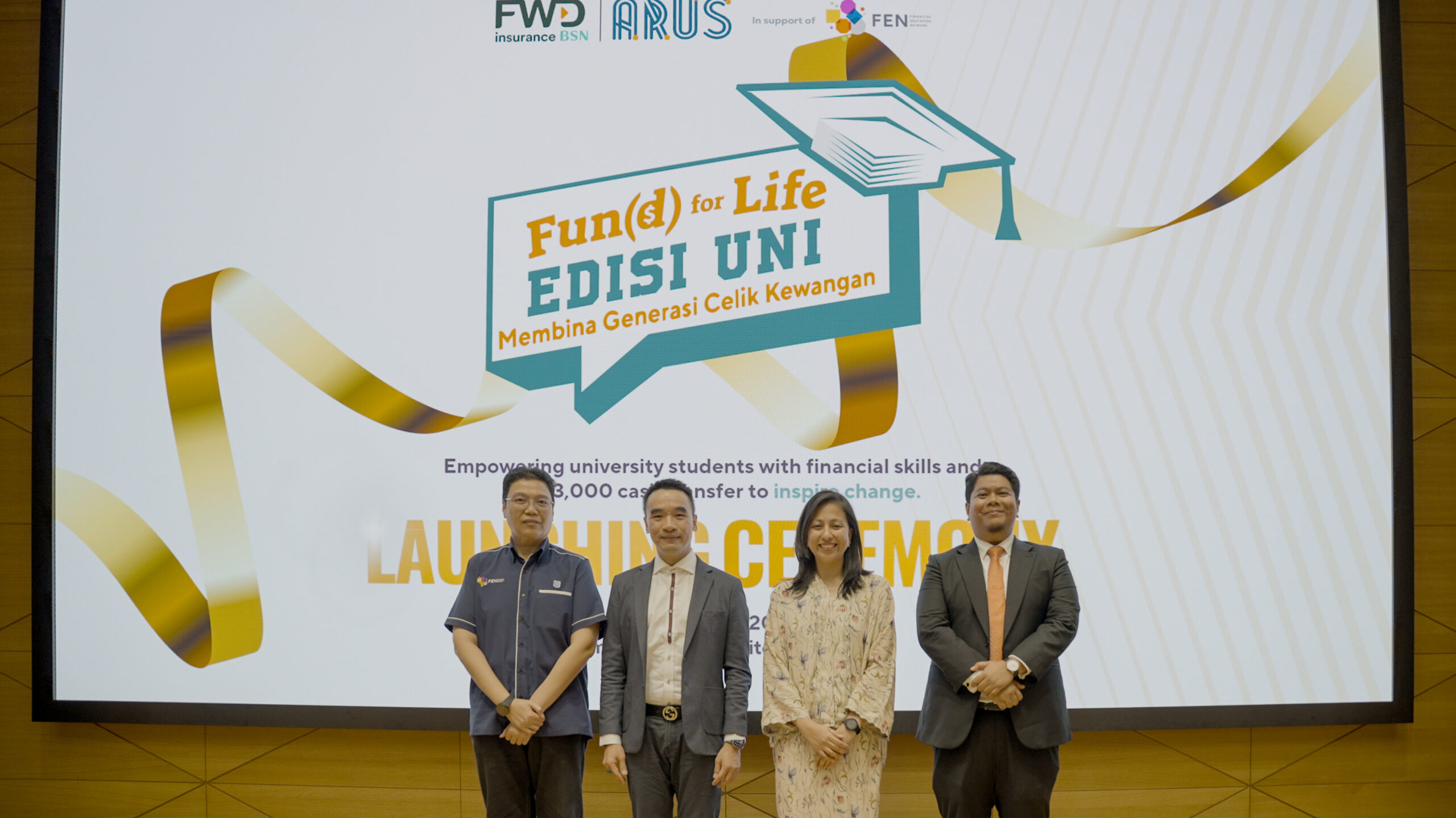
    FWD Insurance Berhad (“FWD Insurance”) partners with Arus Academy to empower university students through the Fun(d) for Life – University Edition (FFL Uni) programme. This initiative aims to equip 500 local university students with essential financial skills through a 3-month curriculum that includes training, coaching, and community service.

    “At FWD Insurance, financial literacy is something very dear to our hearts, recognising it as a fundamental skill everyone should have. Through this programme, we go beyond education by offering a holistic approach that not only equips young people with the skills to manage their finance, but also provides them with the resources to put their learning into practice,” said Mak See Sen, Chief Executive Officer of FWD Insurance. “By investing in their growth, we empower individuals and cultivate a financially literate society, driving Malaysia’s economic progress.”

    “The Fun(d) for Life – University Edition programme equips university students with the financial skills and autonomy to make informed decisions about their futures,” said Alina Amir, CEO and Co-Founder of Arus Academy. “University students are at a pivotal stage of their lives, where building strong financial habits can significantly shape their future careers and personal goals.”

    The 3-month FFL Uni programme begins with a 3-day immersive bootcamp focused on setting financial goals, budgeting, and creating comprehensive financial plans, including savings, protection, and investments. Over the course of the programme, students will receive ongoing coaching and mentoring, alongside tools to track expenses, reflect on their financial habits, and develop actionable financial plans. Participants will also document their journey through weekly diaries to raise awareness about financial literacy.

    A significant component of the initiative includes eight hours of community service, where participants teach financial literacy to at least 20 peers. By the programme’s end, each participant will receive a meaningful RM3,000 grant, deposited into their savings accounts or as fixed deposits, to support their financial goals and foster long-term independence. With an anticipated reach of over 10,000 beneficiaries through direct engagement and community service, the initiative reinforces Malaysia’s vision of fostering a financially literate, resilient, and economically inclusive society.

    Aligned with FWD Insurance’s Environmental, Social, and Governance (ESG) goals to uplift communities, the program seamlessly blends Arus Academy’s innovative teaching methods with FWD Insurance’s dedication to financial inclusion, working hand-in-hand towards a common goal of nurturing a financially savvy generation. By reaching tertiary students, FFL Uni is broadening its impact on youth of all ages, promoting a more inclusive and sustainable future nationwide. Previously, a collaboration between Arus Academy and FWD Takaful Berhad benefited over 47,108 primary and secondary school students from January to December 2024 through comprehensive financial education initiatives, featuring interactive learning portals, financial literacy camps, and design-focused events in 2024.

    The first cohort, comprising 50 students, will begin in February 2025. Interested applicants can submit their application requests to https://arus.cc/FFLUni-registration-of-interest-2025. For more information, visit https://www.instagram.com/fundforlife_uni/.


  • Should You Invest Your i-Sinar EPF Account 1 Withdrawal?

    Should You Invest Your i-Sinar EPF Account 1 Withdrawal?

    Back in December 2019, the Covid-19 outbreak was triggered in Wuhan, a city located in the Hubei province of China.

    The virus continued to spread and eventually escalated into a global pandemic which devastated every single corner of the world, causing radical changes in the way we live as well as social, economic, technological, and political policies.

    Amidst the economic doldrum in China, there have been interruptions in exports and imports, while global supply chains have been disrupted significantly.

    With a strongly connected and integrated worldwide trading relationship, the contraction in the global supply chain led to a big drop in global economic activities.

    Furthermore, governments around the world have been forced to implement harsh restrictions on human activity to curb the spread of the virus.

    These travel restrictions further burdened the financial markets and led to dramatic falls in global economies.

    It’s been a similar situation in Malaysia, with the implementation of various Movement Control Orders (MCO) costing millions of people their jobs across varied industries, leaving many Malaysians suffering from salary reduction, furlough, or unemployment and retrenchment.

    This impact has become apparent since the outbreak and many of them have turned to alternative jobs like driving Grab cars, venturing into the food and beverage industry, online vocations, or direct selling to make ends meet.

    In December 2020, the Employees Provident Fund (EPF) launched a new scheme which allowed members to prematurely withdraw their EPF savings in order to aid their cash flow during the difficult economic times posed by the Covid-19 pandemic.

    What are i-Sinar withdrawals?

    The EPF i-Sinar initiative enables EPF members to make a partial withdrawal from their savings in EPF Account 1.

    This initiative was launched by the EPF for the purpose of easing the financial burden of members who’ve been affected by the Covid-19 pandemic, helping them sustain their livelihood. The withdrawal amount will vary, depending on each member’s needs and of course their available balance.

    Unfortunately, Malaysians are taking advantage of this opportunity to maximise their withdrawals and spending it on non-necessities.

    In fact, without realising it, they’re withdrawing and spending their retirement savings nested in the provident fund!

    According to a survey conducted by UCSI, among 809 people in Malaysia who have withdrawn from or planned to participate in the i-Sinar scheme, 47.2% of the respondents realised that the withdrawal will affect their retirement funds, 22.6% of the respondents were uncertain, while the remaining 30.2% of respondents didn’t realise the huge impact it would have on their retirement funds!

    Returning to fundamentals, EPF serves as a social security organisation that primarily provides retirement benefits for the private sector and pensionable employees in Malaysia. Since 1951, it has proven to be a responsible and efficient custodian of its members’ retirement savings.

    With the introduction of i-Sinar, this can potentially lead to a significant reduction in our retirement savings. The reason for this is that it leads to fewer dividends earned, missing out on the compounding interest in future.

    If our savings are insufficient to sustain our retirement years, we may be compelled to delay our retirement further and continue to work, or may even be forced to downgrade our retirement lifestyle to one that is humbler or minimalist.

    For individuals who’ve withdrawn their i-Sinar, what else they can do to manage the money beside spending it?

    Well, upon fulfilling current needs, you’re highly encouraged to utilise the balance for better purposes such as investing. This is one of the instruments that’s able to grow our wealth through capital gain and appreciation in the value of an asset over time.

    As with any savings fund, the benefit of putting money in EPF is the dividends and the compounding interest that you could accumulate over the years.

    However, many EPF members have also opted to withdraw their i-Sinar and invest it into different investment vehicles which could offer potentially higher returns compared to EPF dividends.

    Let’s use an example to illustrate this: Ms. Maria, aged 35 has withdrawn RM10,000 via the i-Sinar withdrawal facility and invested this into an investment vehicle that has the potential to generate 15% returns annually.

      EPF DIVIDEND ALTERNATIVE INVESTMENTS
    PRINCIPAL RM10,000 RM10,000
    ESTIMATED ANNUAL RETURN 5% 15%
    AGE 40 12,763 20,114
    AGE 45 16,289 40,456
    AGE 50 20,789 81,371
    AGE 55 26,533 163,666
    AGE 60 33,864 329,190

    The table above explains how her i-Sinar withdrawal may grow from RM10,000 in the subsequent 25 years to RM329,190 thanks to higher returns and compound interest. If she doesn’t withdraw her i-Sinar and let it nest in EPF, she will only receive RM33,864 in the 25th year!

    According to the aforementioned survey conducted by the UCSI Poll Research Centre, it shows that almost half (47.7%) of T20 income group earners who were polled said they used or would use their i-Sinar withdrawal for investment purposes.

    Although the hardship faced during Covid-19 pandemic didn’t affect the T20 respondents as much as the others, they still saw this as an opportunity to invest and plan better for their retirement funds!

    In a nutshell, the i-Sinar withdrawal is a good initiative to ease the financial burden of Malaysians who have been affected by the Covid-19 pandemic, helping them sustain their livelihood.

    Despite part of the population not being affected much by the pandemic, they still continue to think about withdrawing their i-Sinar for investment purposes so that it can potentially generate better returns for their retirement funds. So instead of spending it on unnecessary items, invest it if possible!

    Click here to learn more about i-Sinar.

    About the author

    Edmond Tang Zhen Han is a certified financial planner that is passionate about helping people achieve financial literacy in order for them to reach financial freedom. He can be contacted at edmondtangzh@genexus.com.my

  • 6 Tips on Financial Risk Management in the New Normal

    It’s been a tough year for the world, and Malaysia is no different with Covid-19 cases rising to a new high from 2,000+ cases to 6,000+ cases daily despite several Movement Control Orders (MCO).

    It doesn’t seem that the pandemic is going to end anytime soon, so what’s the best way to manage personal risks in this new normal?

    Managing personal risks means being prepared for the worst possibilities that may occur.

    It also means that you should ensure that if something unprecedented does happen, it would leave little to no impact on your family finances and well-being. 

    Here are six tips on how to manage your financial risks in this new normal:

    1. Prepare a buffer of emergency funds

    Thanks to the Covid-19 pandemic, the economy has been severely impacted and the unemployment rate is rising. Due to the restrictions set by the government, many businesses couldn’t survive, leaving them with no choice but to enforce pay cuts, retrench staff, or in the worst case scenario, shut down their businesses.

    In addition, there are also businesses that are quick to adapt and move towards digitalisation which can often mean that human capital is then regarded as redundant, leading to further retrenchments.

    This turbulent time has taught us that anyone can be at stake, which is one of the main reasons why it’s absolutely crucial for us to build up an emergency fund that can last at least 6-12 months.

    Having this fund will provide a buffer of cash reserves to help us weather tough times if we are no longer able to rely on our active income or even when we experience pay cuts. It’ll also help us avoid relying on a credit card for essential expenses as a go-to fund will be in place to help us stay afloat.

    2. Upskill or reskill to stay relevant

    With the increasing unemployment rate, the job market is becoming more uncertain and tough. The supply of labour is now greater since more people are actively seeking jobs.

    Thus, it’s essential to always ensure your skills aren’t obsolete and are still relevant. That way, if you’re still employed, your company will see you as valuable and thus increases the chance of job security. 

    On the other hand, jobseekers will benefit from upskilling and reskilling as you’ll remain employable and at the same time stand out in the job market. There are tons of free and paid courses to explore online.

    You can check out Linkedin Learning, Skillshare, Udemy, and Coursera to name a few, and you’ll be able to upskill and reskill whenever and wherever you are. 

    The Employment Insurance Scheme (EIS) under the Social Security Organisation (SOCSO) also provides vocational training to eligible participants who have been retrenched. The training cost will be covered by them and you may also be eligible to receive a training allowance.

    In addition to all these, do consider being flexible and open to any job even though it’s not paying as much, as this will not only help you with learning and using relevant skills but will also help to stretch your emergency fund before you land yourself a suitable role. 

    3. Reduce the risk of getting infected

    The number of cases has shown that the virus doesn’t discriminate or choose its victims. We also know that people who fall under vulnerable categories have a higher risk of getting infected, and it can even be fatal for them.

    Regardless of which category we’re in, it’s important to follow the standard operating procedure to reduce the chances of getting Covid-19 and to ensure that we won’t become a carrier to those who are more prone to be infected.

    Try to lead a healthy lifestyle; be it in terms of adopting a balanced diet or engaging in physical activity to boost our immune system. It’s easy to opt for a sedentary lifestyle these days, especially now that some of us can work in the comfort of our home without having to travel back and forth to the workplace.

    In addition to that, it’s crucial to get vaccinated to prevent you from getting infected with Covid-19, and by doing so, we can also help reduce the spread of the virus. You can register on the MySejahtera app if you’re yet to do so.

    4. Be prepared for unfortunate events

    As much as we try our best to maintain a healthy lifestyle, we’re all exposed to risks other than Covid-19. Death is inevitable, while total permanent disabilities and illnesses are potential risks in life.

    If we’re not prepared for such events, it may leave our family finances vulnerable and possibly break the bank or worse yet, spiral into debt.

    These are scary events to think of, but we have to face the fact that not preparing for them is more detrimental. So how can we start? Think about how you would want your money to be managed in these events.

    For instance, if you were to pass away, how would you settle your debts and ensure the continued survival of your dependents? This is imperative for parents with minors and those with special-needs dependents.

    As for disabilities and illnesses, are your funds enough to take care of this, or is it cheaper to opt to be insured in the first place?

    5. Take up financial initiatives by the government 

    Since the first MCO, there has been much financial assistance offered by the government to safeguard the people’s welfare as well as to continue stimulating the economy.

    While some financial initiatives announced aim to help vulnerable groups and daily wage workers, there are also optional initiatives like the EPF i-Sinar advance facility and loan moratorium where you can defer your loan repayment.

    So who should take up this financial initiative? Those with little or no emergency funds, high-interest debts like credit cards and personal loans, at risk of getting retrenched, experiencing pay cuts or retrenchment, or a monthly cash flow deficit should consider taking these up.

    Take this period of assistance as an opportunity to reset and improve your financial situation so it’ll be more resilient to withstand any shocks. Having said that, it’s also important to understand the impact of utilising these facilities.

    The EIS by SOCSO also offers a job search allowance (JSA) for those who are eligible, and if you do, you can claim this allowance for up to six months. It will be reduced over the period so you won’t be able to fully rely on this, but it’ll certainly help your emergency fund last longer. 

    6. Review your investments 

    ‘Should I redeem my investments?’, is one of the questions I received a lot during this hard time as people are uncertain about the market. If this is what you are thinking of, review your investments and ask yourself:

    What is my investment objective for that particular investment?

    The objective of investments will determine how long you should stay in the market. A longer time horizon should be able to withstand the turbulence as you’re not going to need the money in the short term.

    This is also where the emergency fund plays a role to increase the holding power of your investment and you won’t need to cash out in times of emergency.

    Am I able to withstand the ‘roller coaster’ movement of the investment?

    If your answer to this is no, you may want to switch to a lower risk profile. This doesn’t mean that you’re exiting the market; it just means that you’re lowering your exposure to high-risk investments and increasing exposure to low-risk investments so you’ll not have to experience as much volatility.

    Are my emergency funds enough?

    It’s essential to have a buffer of funds prior to any investment. However, different people have different circumstances these days.

    If you’ve suffered a job loss, and are currently living on your emergency funds, you may want to have the a final backup plan ie. selling your investment, should you exhaust your funds before you can secure a job. It’s a better option compared to relying on credit cards.

    With the current work arrangements, you may also find that you have extra money to invest. If this is the case, regularly saving will help you get into the market at different times and you will benefit from the market dip where investments are on sale!

    Conclusion

    Being prepared with risks will give us peace of mind that things will be taken care of. A resilient financial situation will certainly help us weather this crisis. If you’re unsure about how to go about your finances and stuck, do seek unbiased professional help. It may be a daunting period but there are also lots of opportunities.

    ‘Tough times never last, tough people do.’ – Robert H. Schuller

    About the author

    Nursyahirah Mohd Ghazali (CFP, IFP) is a Licensed Financial Planner. She strongly believes that financial education starts from home and that parents play a huge role in raising financially savvy kids, and that a collective effort from parents in this matter will result in a more financially literate generation, helping to transform Malaysia for the better. She can be contacted at nursyahirah@wealthvantage.com.my