
Tag: financial planning

  • What Protection Does A High-Net-Worth Individual Needs?

    What Protection Does A High-Net-Worth Individual Needs?

    Insurance plans for high-net worth individuals are often beyond what is available to the everyday man.

    For many Malaysians, the importance of insurance is drilled into their minds early on in their lives or careers, and it is likely that most have a friend or relative that is an insurance agent. However, in terms of pure numbers, insurance penetration in the country is still low.

    A survey commissioned by Zurich Malaysia last year showed that 38% of Malaysians remain uninsured; another survey conducted by the Health Ministry in 2020 found that only 22% of Malaysians had personal health insurance.

    According to Dennis Chin, director at Harveston Wealth Management, life insurance needs usually start with self-protection such as medical cost and critical illnesses, which is then followed by financial security for family such as family income protection and credit protection.

    And while it may be the norm to be uninsured, for high-net-worth individuals (HNWI), this is likely to border on sacrilege!

    “For HNWI, the abovementioned is essential as well even though they have more financial resources to take care of the medical bills and family income need,” says Chin.

    He adds that the typical insurance planning for such individuals goes beyond personal risk as there are often other assets and collateral that may be used as guarantors in business borrowings, for example if a key person in the business suddenly leaves.

    “These borrowings will risk their personal assets being used for paying off in the event of sudden departure of the key person in the business or guarantor for the loan.”

    Protection For HNWI

    The main difference when it comes to insurance coverage for HNWI usually comes down to two things – the required sum assured and the type of risk.

    If the person requires RM10 million in life coverage, insurance plans can come in the form of offshore universal life policies denominated in US dollars while also being more cost efficient. Such offshore policies are not accessible to lower/middle income individuals as the minimum sum assured is usually beyond reach, often starting at US$500,000 and above.

    dennis chin harveston hnwi“This type of plan may offer different health and financial underwriting requirements which are offered differently by insurance companies locally,” says Chin.

    He shares that “asset protection is also essential” for HNWI as they tend to own wide varieties and classes of assets. Typically, such assets would include real estate, jewellery, or art collections to name just three. Often, these may also make up the bulk of their net worth.

    For example, a standard house insurance will not hack it when it comes to covering a bungalow that is constructed with exotic woods and expensive, custom-made furniture and fittings. Special coverage will be required for such a home in the event of fire or burglary explains Chin.

    “Therefore, the scope of insurance needs for HNWI is much wider than lower- and middle-income individuals,” he adds.

    Healthcare is another area in which HNWI are usually well-covered in. For those that travel regularly around the world, international medical coverage is key in order to counter the risk of being forced to seek medical services in a foreign country.

    “This type of medical plan comes with high medical limit in US dollars and the premium is also payable in US dollars as well,” he shares.

    “It also provides peace of mind while travelling globally as usually it comes with services on international consultation for medical services and evacuation back to their home country.”

    For The Next Generation

    HNWI with highly sought-after professional skills may also choose to take “future economic value” into consideration when setting up their life coverage. For example, in the event that a person is no longer able to work through total or permanent disability, or death, this will ensure that his or her projected earnings over a set number of years will be paid out to the family.

    There are notable examples of celebrities doing this, such as footballer Cristiano Ronaldo getting insured for £90 million in 2009, while singer Taylor Swift reportedly insured her legs for US$40 million in 2015.

    Chin explains that utilising insurance as a tool for wealth management is not a foreign concept to HNWI, with family trusts and family offices usually set up for wealth preservation for the benefit of the next generation and even beyond.

    Insurance For Wealth Creation

    Once the basic protection needs covering medical costs or critical illnesses are in place to ensure future financial security for HNWI, “a large sum assured is usually a tool in wealth management for wealth creation” Chin says.

    Alvin Yap, managing director at A.D. Financial, adds, “For family offices, insurance is also treated as a tool for estate planning, risk diversification and even wealth creation.”

    He gives an example on how a patriarch owning several offshore real properties may purchase life insurance with proceeds to cover any tax liabilities (e.g. inheritance tax, etc.) upon his demise, ensuring that the offshore real properties will be transferred to his family office smoothly after his passing.

    Using another example, he says, “Let us assume a matriarch purchases life insurance and makes it a point that the family office will manage and invest the insurance proceeds which will be treated as an education fund for many generations to come. She bequeaths her personal wealth to her children and her family office manages the insurance proceeds (education fund) upon her demise.”

    The mechanics of a family trust makes it useful for liquidity purposes as “insurance proceeds will be paid directly to the family trust”, providing an immediate source of cash flow to beneficiaries of the trust as opposed to individual nominees.

    “This is because in the event the nominee does not survive as well, the insurance paid out will fall into estate which can only be used after obtaining grant of probate,” highlights Chin.

    This can also help to prevent any squabbles among beneficiaries when the head of the family passes on. It is not uncommon to hear of huge lawsuits which entail siblings and other family members fighting in court to claim their piece of the pie. Hence, in most families, there will be a need for such a structure to be in place.

    To illustrate this point, Chin uses a scenario where there are multiple properties to be passed down to several beneficiaries.

    “What if these properties are not identical and each of them carries a different value? This might create some issues about fairness whereby the value of inheritance of each beneficiary is not the same,” he says.

    “In this case, a method of wealth equalisation can be adopted by buying life insurance that eventually creates the cash to compensate those beneficiaries that inherited lower value properties.”

    Charitable Endeavours

    Apart from taking care of their families, many HNWIs also engage in the practice of philanthropy through monetary gifts or donations to those in need, utilising the mechanics of life insurance to achieve this purpose.

    “Apart from donating existing resources and funds, such as allocating a pre-determined amount of profit from businesses, one can plan by using life insurance proceeds to make charitable donations,” explains Chin.

    “There are many family offices which have a foundation in place for philanthropy purposes, consisting of existing assets and cash, as well as life insurance.”

    “By paying premiums from existing resources every year, this eventually increases the assets in the 

    foundation by claiming the sum assured for charity purposes which can help more people,” he adds.

    What Are Family Offices?

    HNWI often have a family office to manage their financial affairs, but not much is known to the general public. We speak to Alvin Yap, managing director at A.D. Financial, to learn more.

    alvin yap a.d. financial hnwi

    Smart Investor: Can you describe how the various structures of family offices work?
    Alvin Yap: Family office is originally from the concept of preserving generational family wealth for European royalty and it is increasingly popular among high and ultra-high net worth Asian families. However, there is still much puzzlement as to what defines them and their primary functions.

    Briefly, a family office is about effectively preserving, growing and transferring wealth across generations. It can be treated as a legal entity that houses professionals in various areas such as administration, legal, investment, corporate finance, real estates and so forth to achieve the abovementioned primary functions. Some family offices are more investment oriented; others could be driven by philanthropic causes. In terms of establishments, there is single-family office servicing one individual family and also, multi-family office that service several families benefiting from economies of scale.

    SI: Can you explain the role that insurance plays in family offices as a form of generational wealth management or preservation?
    AY: Primarily, insurance is used to mitigate financial damages caused by loss of life or properties. For family offices, insurance is also treated as a tool for estate planning, risk diversification and even wealth creation.

    SI: How do you determine the type and amount of insurance coverage that different family offices require?
    AY: It can be complex but it all boils down to family business needs and family lifestyle.

    In Malaysia, term life insurance can be purchased as keyman insurance, meaning insuring the key person such as the owner or someone who is critical to the business; some family offices will source for offshore term life insurance that comes with a lower premium. There is also a variety of universal life insurance that offer very low initial cash outlay for insurance premium or options to fund the premium with movable/ immovable assets and many other flexible premium financing features. Family offices take advantage of these features and purchase universal life with very high insurance coverage.
  • Financial Planning: Things to Do After a Flood

    Financial Planning: Things to Do After a Flood

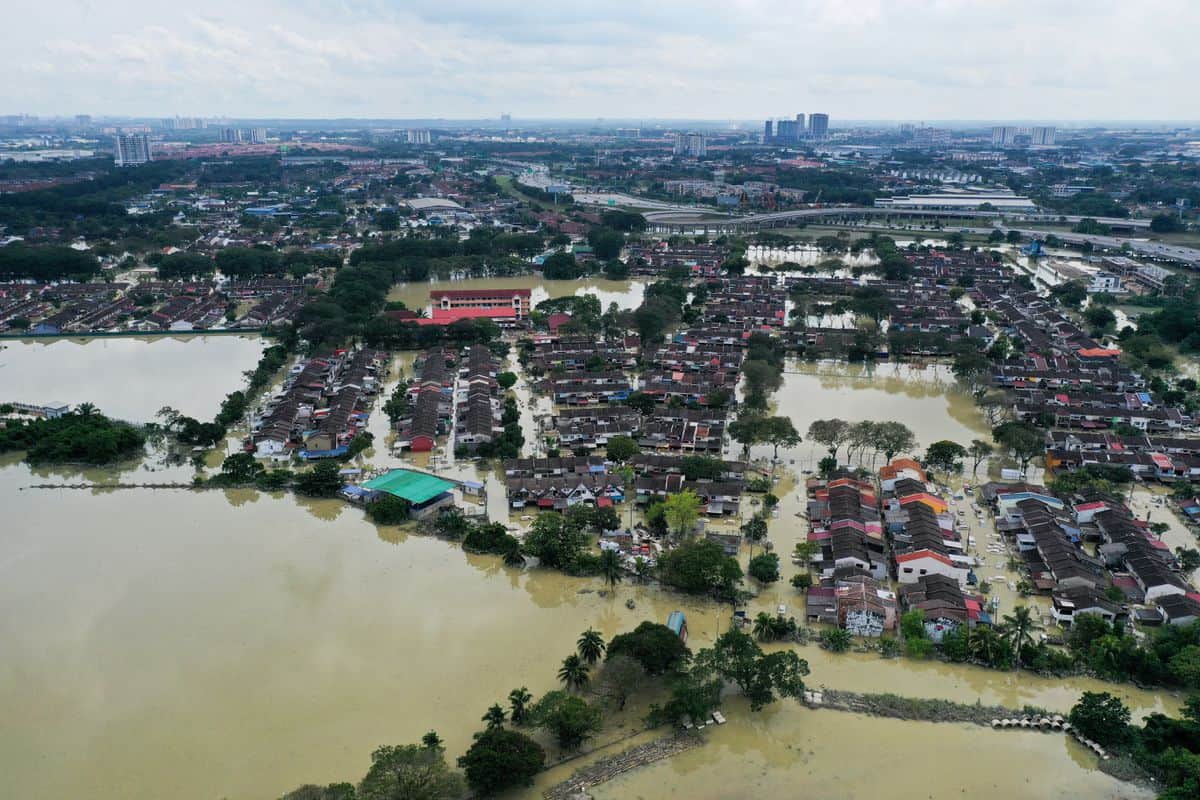
    The 2021 year-end flood which affected many areas nationwide surpassed all previous year’s floods within Malaysia.  These has financial implications on the lives of our fellow Malaysians. For those affected, here are some ideas on how to pick up the pieces and build resilience moving forward.

    1. After the flood – restarting your life

    Consider the immediate aids you can leverage on to restart your life and get back on track. These can come in the form of financial, food, or accommodation aid, life essentials such as clothes and household items, or even transport arrangements for stranded individuals.

    2. Get your mental health in check

    Be sure to stabilise your frame of mind and check your stress level. There are a number of free services and apps such as:

    • Talian KASIH (8am – 5pm daily 15999, WhatsApp 019-261 5999)
    • Naluri (03-8408 1748, 24 hours, English, Malay and Mandarin)
    • Selangkah – Selangor Mental Sihat (SEHAT)
    • MySejahtera (Digital Health > Minda Sihat)

    3. Gauge your financial situation

    Once more urgent and pressing matters are taken care of, you can now take stock of your current financial situation. Ask yourself:

    • What are my losses?
    • What are my family incomes?
    • What are my monthly commitments?
    • What are my debts?
    • What is the position of my current investments and savings?
    • What is my protection coverage for my life and assets (takaful/insurance for personal and workplace)?

    These questions will help you paint a picture of your financial situation and will quickly bring up areas of concern (if any) which you can focus on as you look to recover.

    4. Salvaging assets from flood damage

    The next step is to consider your current assets. Firstly, assess damage to items within your household. Check if you have household insurance and if yes, whether it covers special perils or not.

    Assess damage to your vehicles, and be sure not to start them as the electronic system will short-circuit; get tow trucks to haul it to a workshop. Depending on the make of your car, the repair cost may range from RM4,000 to RM10,000.

    Other things to consider:

    • If you are working from home, is your laptop and handphone provided by your company? Do you need to report up or make a police report?
    • Are your important documents destroyed?
    • Do you need to replace NRIC/birth and marriage/divorce certificates at the Registration Department, driving licence and road tax at the Road Transport Department (JPJ), and school certificates from the respective schools?

    5. Stay safe and healthy

    In such trying times, keeping healthy may be the last thing on your mind but it is very important that you do your best to follow Covid-19 standard operating procedures (SOP) by getting help from NGOs and volunteers for masks and hand sanitisers.

    Be wary of water-borne diseases such as typhoid, cholera and dysentery and use water-purifying tablets if you are unsure if the water is safe for drinking or you do not have access to clean water. Follow the dilution instructions that comes with the tablets.

    6. Rebuild your financial status 

    The information in point (2) above is important to guide you on your next steps. You may seek help from:

    • Agensi Kauseling & Pengurusan Kredit
    • A licensed financial planner at SmartFinance.my where you can talk to an expert

    Be on the lookout for scammers; they are heartless and only want your money. Only accept help from reliable sources.  When in doubt, err on the side of caution!

    7. Preparing for a future flood

    The financial challenges you face today is the basis of your emergency fund for the future. Therefore, it is crucial to start building one when you can. Transfer some of the risks to your protection coverage and tap into your network of friends or relatives that you and your family can stay with.

    Flood-proof your home and/or prepare your evacuation SOP and equipment (torch lights, inflatable boats, dry food, bottled water, charged power banks, clothes, blankets and toiletries in waterproof bags, disposable wares and bags). Be constantly alert of your surroundings. Chances are, it may be difficult to sell your home and move to another so you may need to continue staying in your current place.

    Review how you place your furniture and appliances. Some homes put them on platforms that can be jacked up to desired heights (granted, if water level too high, it can render platforms useless). Store critical items in waterproof boxes when the rainy season approaches. It may also be prudent to check if you can convert your rooftop to an emergency accommodation equipped with the evacuation items listed above?

    My heart goes out to all flood victims.  We are fortunate there are volunteers and NGOs that we can contribute to, who will organise, mobilise and distribute contributions to as many victims as they can.  I hope the above is useful to those affected. May you have a respite from your situation and the strength to ride through this tough times.

    This article is contributed by Linnet Lee, CEO of the Financial Planning Association of Malaysia (FPAM).

  • 6 Tips on Financial Risk Management in the New Normal

    It’s been a tough year for the world, and Malaysia is no different with Covid-19 cases rising to a new high from 2,000+ cases to 6,000+ cases daily despite several Movement Control Orders (MCO).

    It doesn’t seem that the pandemic is going to end anytime soon, so what’s the best way to manage personal risks in this new normal?

    Managing personal risks means being prepared for the worst possibilities that may occur.

    It also means that you should ensure that if something unprecedented does happen, it would leave little to no impact on your family finances and well-being. 

    Here are six tips on how to manage your financial risks in this new normal:

    1. Prepare a buffer of emergency funds

    Thanks to the Covid-19 pandemic, the economy has been severely impacted and the unemployment rate is rising. Due to the restrictions set by the government, many businesses couldn’t survive, leaving them with no choice but to enforce pay cuts, retrench staff, or in the worst case scenario, shut down their businesses.

    In addition, there are also businesses that are quick to adapt and move towards digitalisation which can often mean that human capital is then regarded as redundant, leading to further retrenchments.

    This turbulent time has taught us that anyone can be at stake, which is one of the main reasons why it’s absolutely crucial for us to build up an emergency fund that can last at least 6-12 months.

    Having this fund will provide a buffer of cash reserves to help us weather tough times if we are no longer able to rely on our active income or even when we experience pay cuts. It’ll also help us avoid relying on a credit card for essential expenses as a go-to fund will be in place to help us stay afloat.

    2. Upskill or reskill to stay relevant

    With the increasing unemployment rate, the job market is becoming more uncertain and tough. The supply of labour is now greater since more people are actively seeking jobs.

    Thus, it’s essential to always ensure your skills aren’t obsolete and are still relevant. That way, if you’re still employed, your company will see you as valuable and thus increases the chance of job security. 

    On the other hand, jobseekers will benefit from upskilling and reskilling as you’ll remain employable and at the same time stand out in the job market. There are tons of free and paid courses to explore online.

    You can check out Linkedin Learning, Skillshare, Udemy, and Coursera to name a few, and you’ll be able to upskill and reskill whenever and wherever you are. 

    The Employment Insurance Scheme (EIS) under the Social Security Organisation (SOCSO) also provides vocational training to eligible participants who have been retrenched. The training cost will be covered by them and you may also be eligible to receive a training allowance.

    In addition to all these, do consider being flexible and open to any job even though it’s not paying as much, as this will not only help you with learning and using relevant skills but will also help to stretch your emergency fund before you land yourself a suitable role. 

    3. Reduce the risk of getting infected

    The number of cases has shown that the virus doesn’t discriminate or choose its victims. We also know that people who fall under vulnerable categories have a higher risk of getting infected, and it can even be fatal for them.

    Regardless of which category we’re in, it’s important to follow the standard operating procedure to reduce the chances of getting Covid-19 and to ensure that we won’t become a carrier to those who are more prone to be infected.

    Try to lead a healthy lifestyle; be it in terms of adopting a balanced diet or engaging in physical activity to boost our immune system. It’s easy to opt for a sedentary lifestyle these days, especially now that some of us can work in the comfort of our home without having to travel back and forth to the workplace.

    In addition to that, it’s crucial to get vaccinated to prevent you from getting infected with Covid-19, and by doing so, we can also help reduce the spread of the virus. You can register on the MySejahtera app if you’re yet to do so.

    4. Be prepared for unfortunate events

    As much as we try our best to maintain a healthy lifestyle, we’re all exposed to risks other than Covid-19. Death is inevitable, while total permanent disabilities and illnesses are potential risks in life.

    If we’re not prepared for such events, it may leave our family finances vulnerable and possibly break the bank or worse yet, spiral into debt.

    These are scary events to think of, but we have to face the fact that not preparing for them is more detrimental. So how can we start? Think about how you would want your money to be managed in these events.

    For instance, if you were to pass away, how would you settle your debts and ensure the continued survival of your dependents? This is imperative for parents with minors and those with special-needs dependents.

    As for disabilities and illnesses, are your funds enough to take care of this, or is it cheaper to opt to be insured in the first place?

    5. Take up financial initiatives by the government 

    Since the first MCO, there has been much financial assistance offered by the government to safeguard the people’s welfare as well as to continue stimulating the economy.

    While some financial initiatives announced aim to help vulnerable groups and daily wage workers, there are also optional initiatives like the EPF i-Sinar advance facility and loan moratorium where you can defer your loan repayment.

    So who should take up this financial initiative? Those with little or no emergency funds, high-interest debts like credit cards and personal loans, at risk of getting retrenched, experiencing pay cuts or retrenchment, or a monthly cash flow deficit should consider taking these up.

    Take this period of assistance as an opportunity to reset and improve your financial situation so it’ll be more resilient to withstand any shocks. Having said that, it’s also important to understand the impact of utilising these facilities.

    The EIS by SOCSO also offers a job search allowance (JSA) for those who are eligible, and if you do, you can claim this allowance for up to six months. It will be reduced over the period so you won’t be able to fully rely on this, but it’ll certainly help your emergency fund last longer. 

    6. Review your investments 

    ‘Should I redeem my investments?’, is one of the questions I received a lot during this hard time as people are uncertain about the market. If this is what you are thinking of, review your investments and ask yourself:

    What is my investment objective for that particular investment?

    The objective of investments will determine how long you should stay in the market. A longer time horizon should be able to withstand the turbulence as you’re not going to need the money in the short term.

    This is also where the emergency fund plays a role to increase the holding power of your investment and you won’t need to cash out in times of emergency.

    Am I able to withstand the ‘roller coaster’ movement of the investment?

    If your answer to this is no, you may want to switch to a lower risk profile. This doesn’t mean that you’re exiting the market; it just means that you’re lowering your exposure to high-risk investments and increasing exposure to low-risk investments so you’ll not have to experience as much volatility.

    Are my emergency funds enough?

    It’s essential to have a buffer of funds prior to any investment. However, different people have different circumstances these days.

    If you’ve suffered a job loss, and are currently living on your emergency funds, you may want to have the a final backup plan ie. selling your investment, should you exhaust your funds before you can secure a job. It’s a better option compared to relying on credit cards.

    With the current work arrangements, you may also find that you have extra money to invest. If this is the case, regularly saving will help you get into the market at different times and you will benefit from the market dip where investments are on sale!

    Conclusion

    Being prepared with risks will give us peace of mind that things will be taken care of. A resilient financial situation will certainly help us weather this crisis. If you’re unsure about how to go about your finances and stuck, do seek unbiased professional help. It may be a daunting period but there are also lots of opportunities.

    ‘Tough times never last, tough people do.’ – Robert H. Schuller

    About the author

    Nursyahirah Mohd Ghazali (CFP, IFP) is a Licensed Financial Planner. She strongly believes that financial education starts from home and that parents play a huge role in raising financially savvy kids, and that a collective effort from parents in this matter will result in a more financially literate generation, helping to transform Malaysia for the better. She can be contacted at nursyahirah@wealthvantage.com.my