Tag: innovation

  • Alibaba Cloud strengthens AI capabilities with for international customers

    Alibaba Cloud strengthens AI capabilities with for international customers

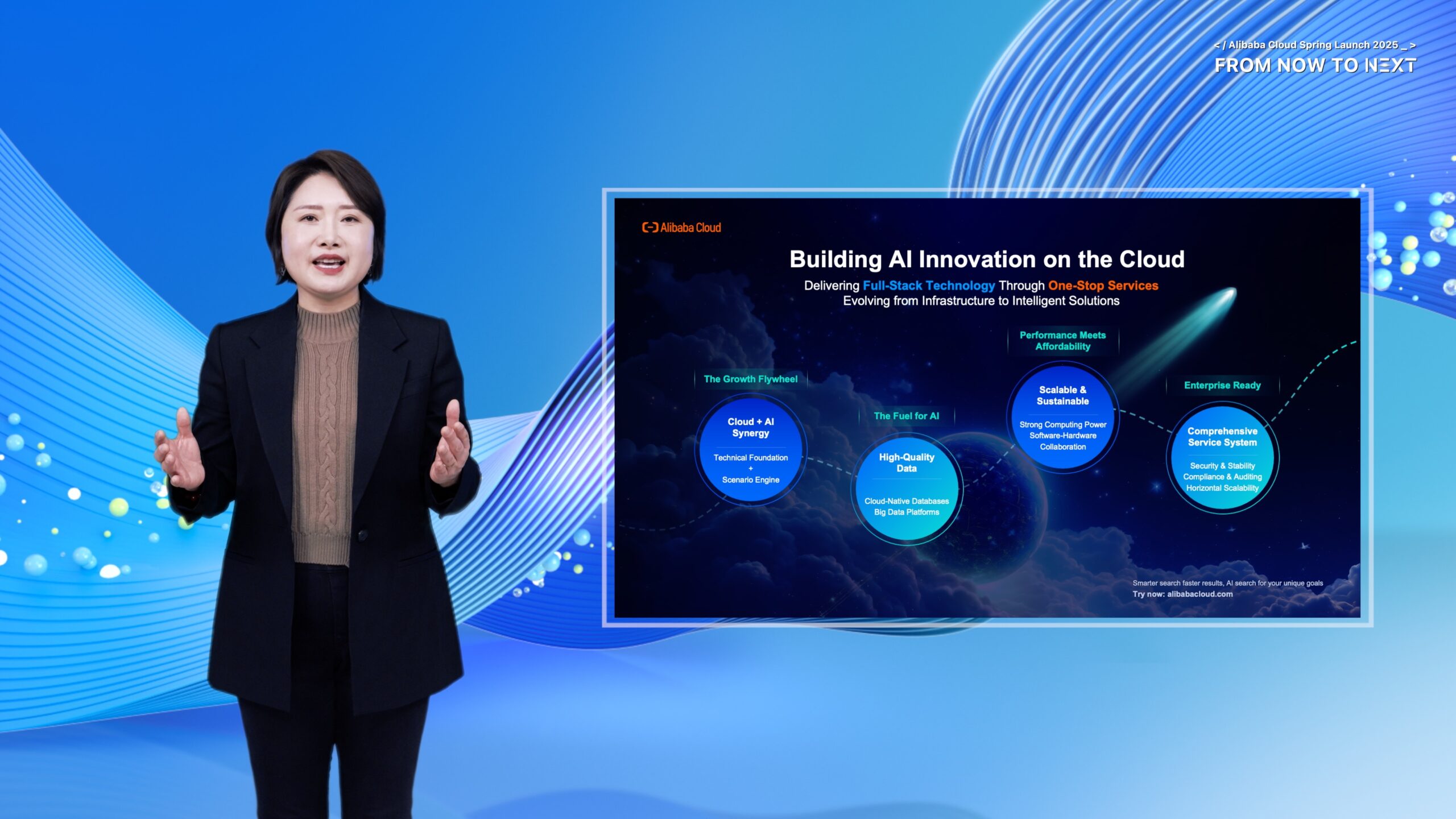
    Alibaba Cloud, the digital technology and intelligence backbone of Alibaba Group, unveils new AI models, tools and infrastructure upgrades for its international customers, underscoring its ongoing commitment to driving AI innovation worldwide.

    “We are launching a series of Platform-as-a-Service(PaaS) and AI capability updates to meet the growing demand for digital transformation from across the globe. These upgrades allow us to deliver even more secure and high-performance services that empower businesses to scale and innovate in an AI-driven world,” said Selina Yuan, President of International Business, Alibaba Cloud Intelligence.

    Alibaba Cloud announced new offerings to international customers by expanding access to its foundational models and upgrading infrastructure products. Available through the company’s availability zones in Singapore, these models include the latest from its proprietary large language model (LLM) series, Qwen, such as the large-scale Mixture of Experts (MoE) model Qwen-Max, the reasoning model QwQ-Plus, the visual reasoning model QVQ-Max and the end-to-end multimodal model Qwen2.5-Omni-7b.

    QwQ-Plus is an advanced reasoning model specialising in deep analytical thinking, tackling complex challenges like sophisticated QA tasks and expert-level math problems with precise, algorithm-driven solutions. Meanwhile, QVQ-Max is a visual reasoning model that effectively addresses complex multimodal problems with high accuracy and extended reasoning capabilities, supporting visual input and chain-of-thought output.

    To further support the AI models on the PaaS front, Alibaba Cloud’s Platform for AI (PAI) has rolled out major enhancements to support scalable, cost-effective, and user-friendly solutions for generative AI and LLMs. PAI-Elastic Algorithm Service (EAS) debuts distributed inference capabilities with a multi-node architecture to satisfy the growing demands of super-large models fueled by the rise of MoE structure and ultra-long-text processing, addressing the limitations of traditional single-node architecture. To further boost performance and reduce costs, PAI-EAS introduces the prefill-decode disaggregation function which has led to a 92% increase in concurrency and a 91% boost in tokens per second (TPS) when deployed with the Qwen2.5-72B model, greatly improving scalability and efficiency.

    PAI-Model Gallery has been upgraded to provide a comprehensive selection of nearly 300 cutting-edge open-source models, including the full range of Alibaba Cloud’s proprietary open-source models Qwen and Wan series, all accessible through a seamless, no-code deployment and management experience. It offers diverse deployment methods with underlying computing resources, along with new features like model evaluation for performance insights and model distillation, which reduces deployment costs by transferring knowledge from large to small models.

    To enhance data management efficiency in the AI era, Alibaba Cloud has integrated its native AI inference capabilities – powered by Qwen – into its flagship cloud-native relational database PolarDB. With in-database machine learning capabilities, it eliminates data shifting typically required for inference workflow, significantly reducing processing latency while boosting efficiency and data security. Engineered for text-centric workloads, the new feature is ideal for scenarios including conversational RAG (Retrieval-Augmented Generation) agent development, text embedding generation, and semantic similarity search.

    It also integrates its data warehouse AnalyticDB into Model Studio, Alibaba Cloud’s generative AI model and application development platform, as the recommended vector database for RAG solutions. This enhancement connects organizations’ proprietary knowledge bases directly to AI models and tools available on Model Studio, streamlining development of context-aware applications.

    Alibaba Cloud also launched a new AI search function on its official website. Powered by Qwen, this AI assistant is designed to help potential enterprise clients, especially SMEs, speed up their solution discovery and gain key insights to facilitate strategic decision-making. It also offers access to cost-effective and scalable cloud solutions, along with free AI and cloud computing training resources.
    Upgraded partner incentive policies were also introduced to better support resellers and distributors by providing increased flexibility, higher commission rates, and more rewarding opportunities for mutual growth. This commitment to empowering partners is further reinforced by enhanced training and support resources, designed to strengthen their capabilities and drive success within evolving ecosystem.

    In February 2025, Alibaba Group announced an investment of US $53 billion (RMB 380 billion) over the next three years to advance its cloud computing and AI infrastructure, reinforcing its commitment to long-term technological innovation. This historic investment, which exceeds Alibaba’s total AI and cloud spending over the past decade, underscores the company’s ongoing dedication to AI-driven growth and its role as a leading global cloud provider. Alibaba Cloud now operates a global infrastructure network with 87 availability zones across 29 regions.
  • ASEAN Foundation and Google.org drive AI literacy forward

    ASEAN Foundation and Google.org drive AI literacy forward

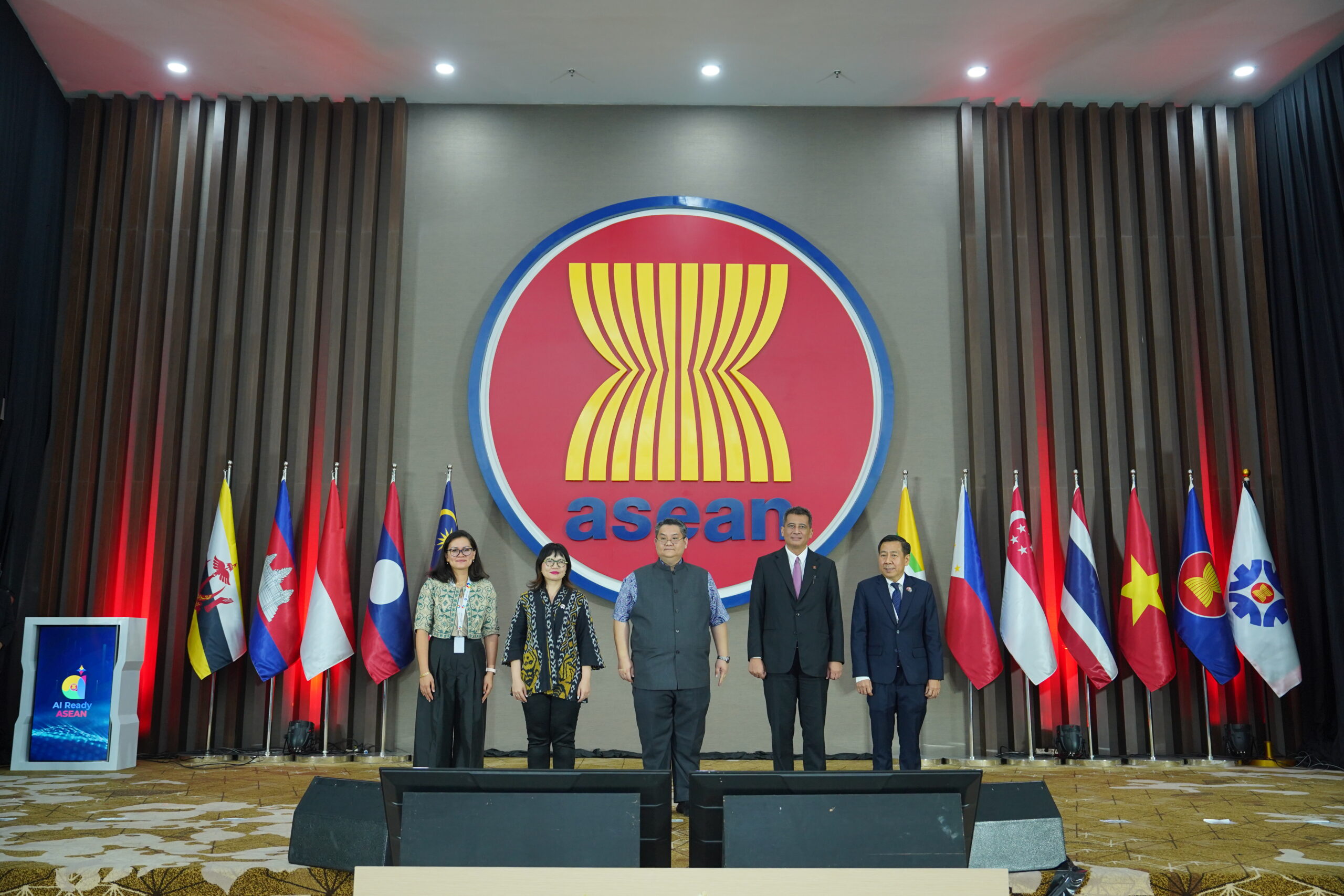
    The ASEAN Foundation, supported by Google.org, successfully hosted the 1st Regional Policy Convening of AI Ready ASEAN at ASEAN Headquarters/ASEAN Secretariat, Jakarta, Indonesia, on 12 February 2025. This event marked a significant milestone in the implementation of the AI Ready ASEAN initiative, a programme that aligns with Malaysia’s ongoing efforts to enhance artificial intelligence (AI) literacy and innovation.

    At the convention, policymakers, AI practitioners, and local implementing partners (LIPs) from across ASEAN explored collaborative approaches to developing regulatory frameworks and policy initiatives aimed at accelerating responsible AI adoption, bridging AI literacy gaps, and unlocking opportunities in Southeast Asia, which align with Malaysia’s National AI Roadmap.

    The LIPs from Malaysia are Universiti Teknologi Petronas’ ASEAN Student Association and Kolej Tingkatan Enam Tun Fatimah. Through AI Awareness Campaigns, Training Sessions, Workshops, and Policy Discussions, they aim to empower students, educators, and professionals with the necessary skills to thrive in an AI-driven future. In response to what they hope to achieve through their involvement in the programme, the LIPs shared that they also seek to advocate for AI-friendly policies that align with Malaysia’s national digital transformation goals and ASEAN’s broader AI development framework.

    Ultimately, their goal is to establish Malaysia as a regional leader in AI innovation, ensuring that AI is leveraged for economic growth, social impact, and sustainable development. Wong Soon Ping, a representative from Universiti Teknologi Petronas’ ASEAN Student Association said: “Through initiatives like the AI Ready ASEAN programme, young people, particularly from underserved communities, gain exposure to AI concepts, coding, and hands-on learning, which opens up new career pathways in fast-growing tech industries such as robotics, data science, and automation. For educators, AI training not only enhances their teaching methods but also allows them to incorporate innovative technology into their classrooms, making lessons more engaging and relevant to the digital age. A key focus is ensuring that underserved communities, including rural populations, indigenous groups, and women, have equitable access to AI education, fostering a more inclusive and diverse AI ecosystem.”

    The event featured panel discussions that explored ASEAN’s AI landscape, the importance of ethical frameworks, and strategies to deliver AI programmes in local communities. In Malaysia, AI literacy is expanding through government initiatives and private sector collaborations. The AI untuk Rakyat (AI for the People) programme, a free online course to increase AI literacy, and the Cikgu Juara Digital programme, which empowers teachers with the skills to teach AI and coding, are central to Malaysia’s commitment to bridging the digital divide and driving inclusive AI adoption nationwide. The Ministry of Education also promotes Hour of Code, a worldwide programme introducing students to basic coding and AI concepts, encouraging computational thinking and problem-solving skills among young learners.

    The convention proved timely, as the growth of AI and the adoption of digital technologies will triple ASEAN’s digital economy, growing from approximately USD 300 billion to almost USD 1 trillion by 2030. Policies in the Digital Economy Framework Agreement (DEFA) are expected to double the projection, boosting the economy to USD 2 trillion.

    Despite the momentum, AI’s maturity in the region remains polarised. In Malaysia, AI literacy is unevenly distributed across different demographics, with many underserved communities, including rural students, indigenous groups, and lower-income populations, still facing limited access to AI training. The digital divide poses challenges such as poor internet connection and lack of digital literacy programs, slowing down the region’s ambitions to become a premier AI hub. This manifests in the region’s varying levels of AI readiness among member states. Singapore leads the ASEAN region and ranks second globally in the Government AI Readiness 2024 Index. Malaysia follows closely, ranking second in ASEAN and 24th globally, a notable improvement from its 29th spot in 2022. In contrast, Lao PDR, Cambodia, and Myanmar remain in the early stages of AI adoption, ranking at 136th, 145th, and 149th, respectively.
    The Regional Policy Convention on AI Readiness marks a pivotal step toward democratising AI across ASEAN. By fostering collaboration, knowledge-sharing, and the development of essential policies, the initiative aims to bridge the AI divide and pave the way for a more inclusive and innovative future.
    This convention marked the official commencement of the AI Ready ASEAN initiative, launched in October 2024, which aims to enhance AI literacy in ASEAN member states. With a USD 5 million grant funded by Google.org, the 2.5-year programme aims to equip 5.5 million individuals with essential AI skills, with Malaysia being a key player in this transformative initiative.

    Over the two-day convention, the LIPs participated in a hands-on masterclass led by Code.org, which explored foundational AI concepts and practical strategies to overcome challenges in AI education. The experience was further enriched by a visit to Google Indonesia’s office, where participants witnessed real-world AI applications, gaining valuable insights and deepening their technical understanding of machine learning.

    Key stakeholders include H.E. Prof. Stella Christie, the Vice Minister of Higher Education, Science and Technology of Indonesia, H.E. Nararya S. Soeprapto, Deputy Secretary-General of ASEAN for Community and Corporate Affairs, H.E. Ambassador Bovonethat Douangchak, Chair of the Board of Trustees of the ASEAN Foundation and Permanent Representative of Lao PDR to ASEAN, Dr. Piti Srisangnam, Executive Director of the ASEAN Foundation, and Putri Alam, Director of Government Affairs and Public Policy at Google Indonesia.