Tag: sustainability

  • Alliance Bank introduces biodiversity module in AEIOU financial literacy programme

    Alliance Bank introduces biodiversity module in AEIOU financial literacy programme

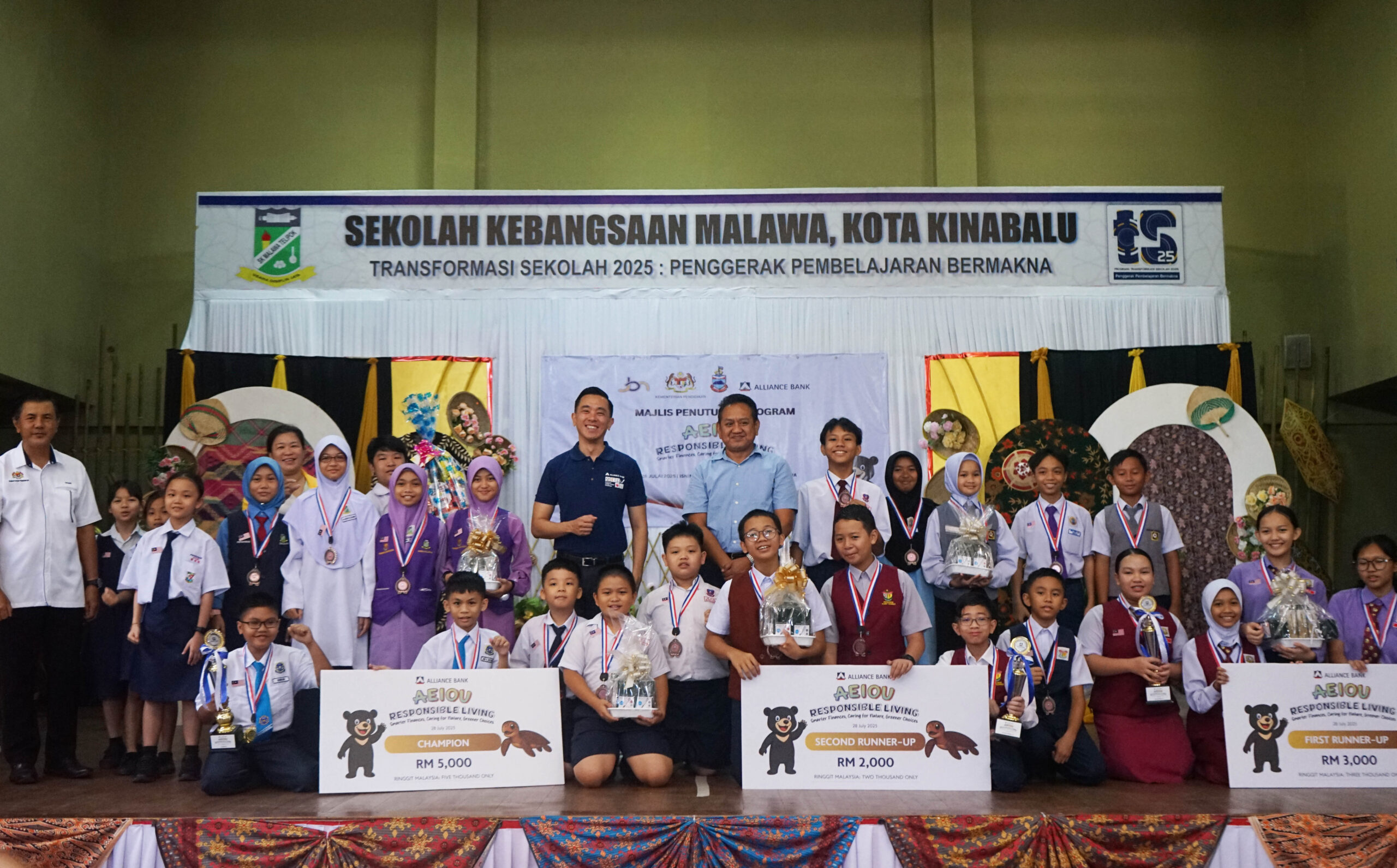
    The introduction of the biodiversity module into Alliance Bank’s AEIOU Financial Literacy Programme to primary school students in Sabah was attended by 128 primary school students from 17 schools across Kota Kinabalu, Penampang and Tuaran.

    Carrying the theme ‘AEIOU for Responsible Living: Smarter Finances, Caring for Nature, Greener Choices’, the biodiversity module of the programme was delivered in collaboration with Jane Goodall’s Roots & Shoots Malaysia and supported by the Sabah State Treasury Department (JBNS) and the Ministry of Education.

    The programme, which began on July 5 and ended on July 26, was conducted through practical workshops and interactive simulations that provided students with the opportunity to explore the field of environmentally friendly entrepreneurship, better known as ‘ecopreneurship’.

    The highlight of the programme was the AEIOU Sabah Biodiversity Challenge’ where students aged 9-12 competed fiercely to win the competition. The finalists successfully demonstrated their knowledge while playing the ‘Eco Heroes’ board game, where their creativity, understanding of money management and sustainability awareness were put to the test.

    SK St Catherine from Kota Kinabalu, was crowned the champion of the Biodiversity Challenge and won a cash prize of RM5,000, a trophy, a medal, and a certificate of achievement for presenting an interesting story on the concept of money management and biodiversity preservation through their recycling program of reusing milk boxes.

    SK St Anthony came in second place and took home a cash prize of RM3,000, a trophy, a medal, and a certificate of participation. While SK St Agnes came in third place and took home RM1,000, a trophy, a medal, and a certificate.

    The AEIOU programme, which was launched in 2015, is recognised by the Ministry of Education Malaysia and supported by Bank Negara Malaysia, based on the concept of fostering financial skills among young Malaysians.

    The prize-giving ceremony was officiated by Yang Berhormat Tuan Wong Kah Woh, Deputy Minister of Education, and was attended by nearly 142 students and 38 teachers.

    According to YB Wong, “The overwhelming response from the students and the encouraging number of participation is proof that the message of nature conservation has truly touched their hearts.”

    He added, “I would like to commend Alliance Bank for its continued commitment to fostering biodiversity awareness among the younger generation. As the saying goes, “As the twig is bent, so grows the tree”, it is important for us to provide knowledge and awareness about the importance of preserving biodiversity from a young age so that they can become responsible environmental stewards in the future.”

    Meanwhile, Alliance Bank Chief Strategy and Transformation Officer. Dr. Aaron Sum said, “I am confident that with this kind of programme, students will realise that their daily activities and decisions have an impact on the environment and through this understanding, they will be able to develop a responsible attitude towards the environment.”

    He added, “I am very proud of all the students who participated in the AEIOU Sabah Biodiversity Challenge and hope that what they have learned will be put into practice and shared with other friends and family.”

    The prize giving ceremony was also attended by representatives from Jane Goodall’s Roots and Shoots Malaysia. Its President, TP Lim conveyed his appreciation and said, “We are pleased to share the success of the recently concluded biodiversity module developed in collaboration with Alliance Bank. This partnership has been instrumental in expanding environmental awareness among schoolchildren and strengthening our commitment to biodiversity conservation.

    Since its launch in 2015, the AEIOU Challenge Programme has reached over 180,000 primary school students through its seven editions. The programme also provides community outreach, ensuring that all children have access to financial education resources. Students can continue their financial learning journey through the AEIOU mobile app, which provides financial education videos and digital comics. The acquisition of these resources supports the key objectives of the Ministry of Education’s 2027 School Curriculum framework, prioritising the importance of lifelong learning.
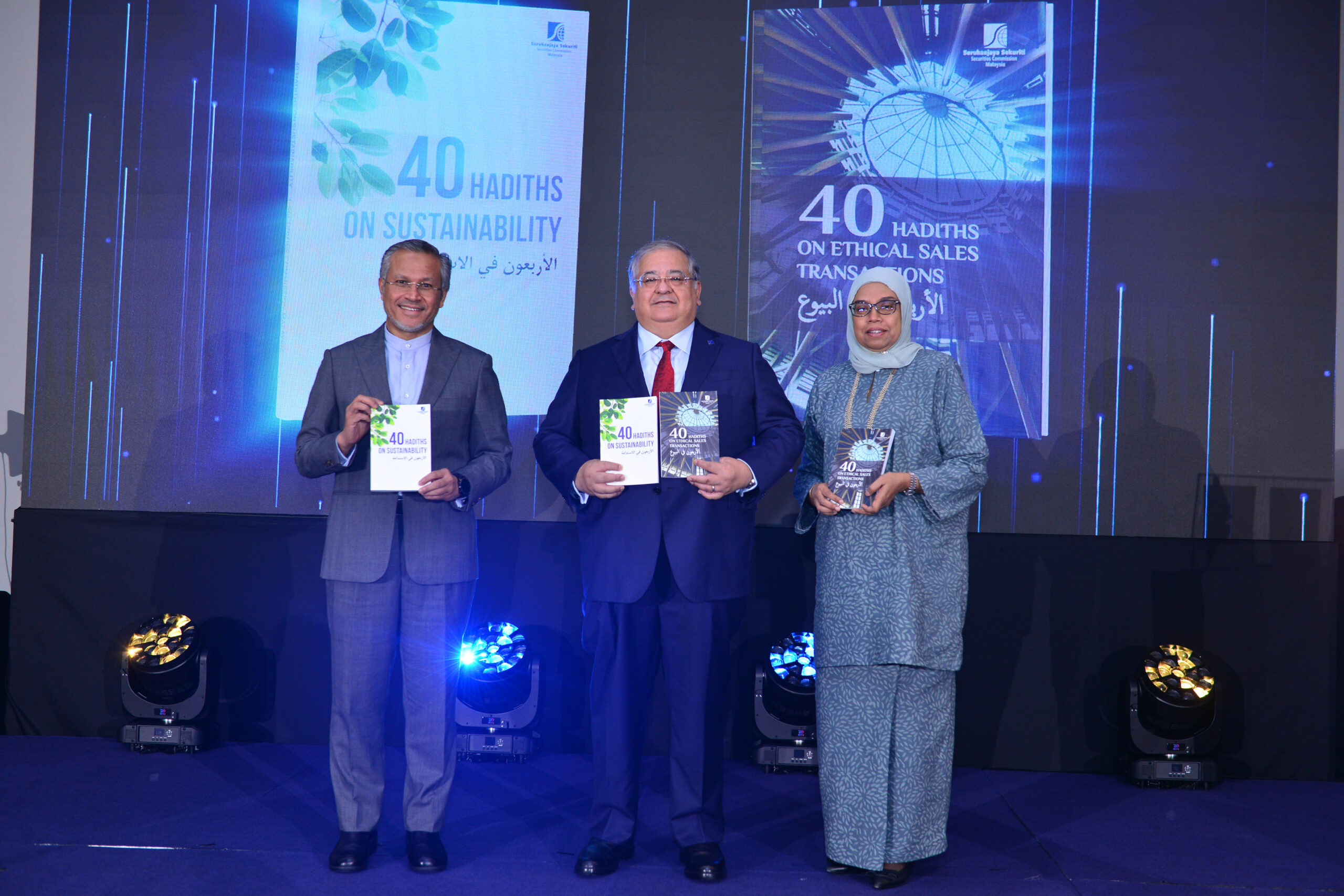

  • SC unveils initiatives to drive adoption of Masaqid al-Shariah Guidance in ICM

    SC unveils initiatives to drive adoption of Masaqid al-Shariah Guidance in ICM

    The Securities Commission Malaysia (SC) today launched the 40 Hadiths book series on sustainability and ethical sales transactions to promote a deeper understanding of the Islamic perspective on sustainability and Islamic ethics in commercial transactions.

    The publications, launched during the 3rd SC Nadwah of Shariah Advisers in Islamic capital market (ICM) (SC Nadwah), aim to enhance industry awareness and practical implementation. They mark a significant milestone in raising industry awareness on embedding the principles of Maqasid al-Shariah Guidance (Guidance) in ICM, specifically in areas such as environmental stewardship, responsible business, and trade practices.

    The SC Chairman Dato’ Mohammad Faiz Azmi said internalising the Guidance encapsulated in these hadiths contributes to the development of a just, inclusive and sustainable economy.

    “More importantly, the SC is committed to making Maqasid al-Shariah a fundamental framework for business dealings in ICM,” he said. “The outcomes that we are witnessing today is one of the approaches towards ensuring Islamic financial products and services are designed and implemented in a way that promotes the welfare of society and the environment,’’ he added.

    The SC also announced the establishment of the Maqasid al-Shariah Task Force for ICM (MaTF), that will drive and streamline adoption of the Guidance across the Malaysian ICM. This includes identifying areas for strategic collaboration and innovation between regulatory bodies and industry players.

    Members of the task force include Bursa Malaysia Berhad, the Malaysian Association of Asset Managers (MAAM), the Federation of Investment Managers Malaysia (FIMM), Malaysian Investment Banking Association (MIBA), the Association of Islamic Banking and Financial Institutions Malaysia (AIBIM), the Islamic Banking and Finance Institute Malaysia (IBFIM), and the International Council of Islamic Finance Educators (ICIFE).

    Established in 2023, the SC Nadwah serves as a convening platform for intellectual discourse on applied Shariah knowledge sharing and charting the next wave of innovative Shariah solutions among Shariah advisers and market practitioners.

    This year’s SC Nadwah brought together over 200 stakeholders from the Shariah advisory ecosystem, including policy makers, government agencies, academia, Shariah advisers, State Islamic Religious Councils, State Mufti Departments and Islamic finance practitioners.

    Speakers were renowned industry leaders in the Islamic finance space. They include esteemed Shariah scholar Sheikh Dr. Nizam Yaquby and Chairman of SC’s Shariah Advisory Council Professor Dato’ Dr. Aznan Hasan. Sheikh Dr. Nizam Yaquby, who serves on more than 30 Shariah boards globally, including the Accounting and Auditing Organization for Islamic Financial Institutions (AAOIFI) and Islamic Development Bank (IDB), commended the SC’s efforts in organising the SC Nadwah.

    He said the SC should continue with this initiative, which he says is an invaluable platform for fostering strategic dialogue and knowledge-sharing in advancing Islamic finance and in facilitating the growth and readiness of the industry to navigate future challenges.

    The 40 Hadiths book series are now available for download at https://www.sc.com.my/resources/publications-and-research.

  • IFSB releases 13th edition of Islamic Financial Services Industry Stability Report

    IFSB releases 13th edition of Islamic Financial Services Industry Stability Report

    The Islamic Financial Services Board (IFSB) has released the 13th edition of its flagship Islamic Financial Services Industry (IFSI) Stability Report. This year’s report reflects a renewed momentum across the industry, with total global assets reaching USD 3.88 trillion in 2024—a 14.9% increase year-on-year.

    Themed “Navigating Shallow Waters: Addressing Structural Vulnerabilities and Shoring Up Resilience to Global Shocks,”, the report also observed broad-based growth across Islamic banking, ṣukūk, and Islamic insurance, signalling deepening market participation, growing global relevance, and broadening geographical reach.

    Key takeaways from the report includes:

    • Renewed growth momentum of the IFSI: High year-on-year growth across key sectors of the IFSI, registering double-digit growth rates. In 2024, total asset growth for the Islamic banking and Islamic insurance grew by 17.05% and 16.9% respectively, while sukuk issuances increased by 25.6%.
    • Emerging markets opening new frontiers: Africa and Central Asia posted the highest growth rates globally, representing important opportunities to deepen local financial markets and expanding the industry’s global footprint.
    • Financial soundness indicators remained broadly stable: Capital, leverage, liquidity, and asset quality positions in both the banking and insurance sectors remain broadly sound. This is reflecting the positive impact of strengthened regulatory frameworks, wider adoption of IFSB standards, and growing investor confidence.
    • While outlook remains positive, some structural vulnerabilities remain: The report underscores the need to address long-standing structural imbalances, particularly the underdevelopment of capital markets and insurance sectors, which can constrain the industry’s scalability and its ability to fully support investment, funding, and liquidity needs across sectors.
    • Critical need to address structural limitations in ṣukūk markets: A key conclusion of the report is the need to deepen ṣukūk markets, which plays a vital role in strengthening financial intermediation and supporting macro-financial stability. While 2024 saw a surge in ṣukūk issuance and growing issuer diversity, structural limitations remain, including underdeveloped market infrastructure, complex ṣukūk structures and limited local-currency sovereign issuances, investor concentration, and low trading volumes, among other factors. If unaddressed, these structural limitations may constrain the IFSI’s long-term growth and pose broader financial stability risks, while also affecting other segments of the industry that depend on capital markets to manage their funding, investment portfolios, and liquidity positions.

    The report further outlines a forward-looking set of policy priorities to address these limitations and unlock the potential growth of Islamic finance. It calls for coordinated action among regulators, policymakers, and industry stakeholders to address these challenges, to ensure the sound development of the Islamic financial services industry.

    First published in 2010, the IFSI Stability Report has become a key reference for global stakeholders, regulators, and market participants. It offers in-depth insights into industry trends, vulnerabilities, and evolving policy priorities shaping the future of Islamic finance.

    The IFSB Islamic Financial Services Industry Stability Report 2025 is now available at https://www.ifsb.org/wp-content/uploads/2025/05/IFSI-Stability-Report-May-2025.pdf.

  • Bursa Malaysia and Boardroom partner to scale CSI adoption

    Bursa Malaysia and Boardroom partner to scale CSI adoption

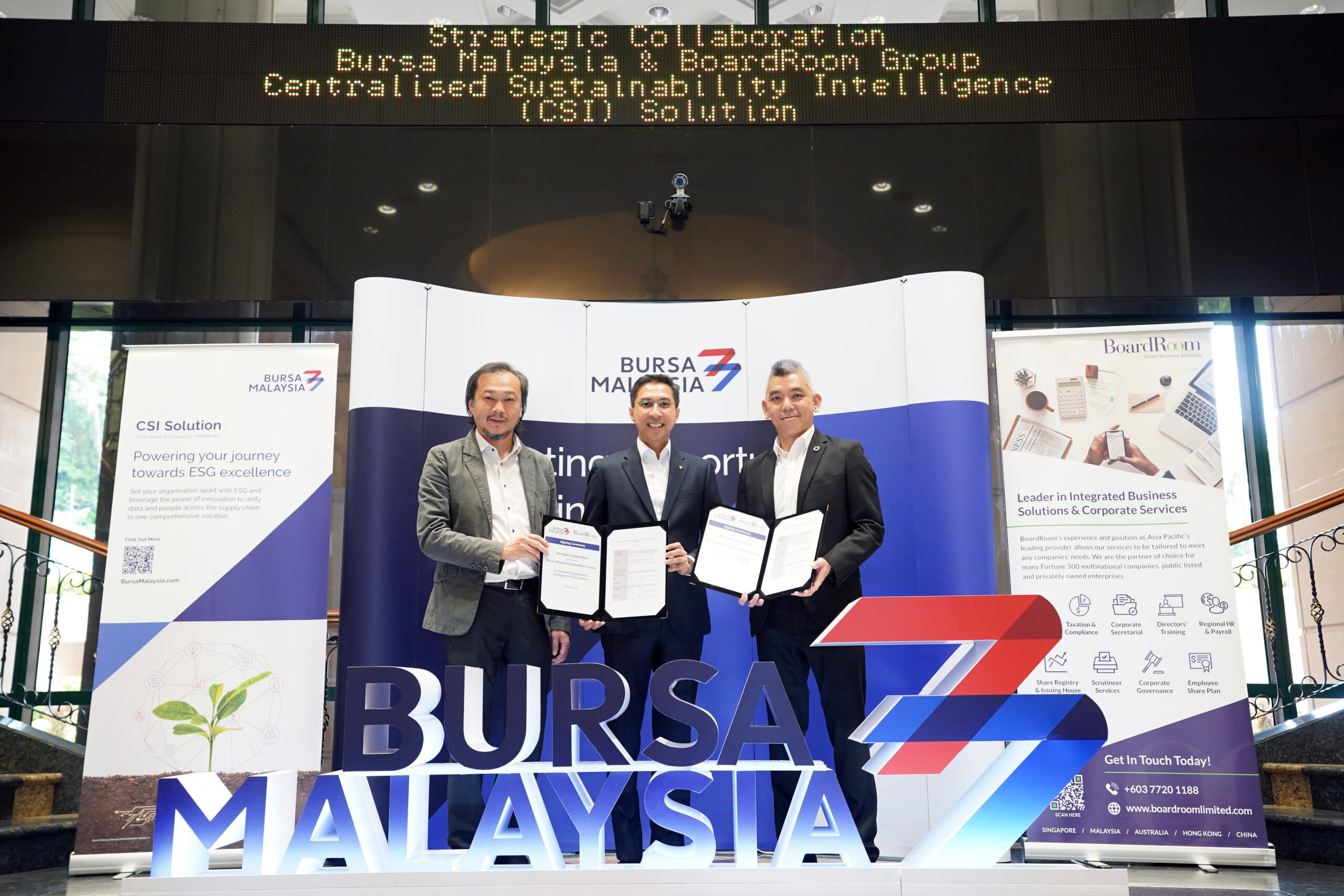
    Bursa Malaysia Berhad (Bursa Malaysia or the Exchange) announces its collaboration withthe BoardRoom Group (BoardRoom), a leading provider of corporate and advisory services in the Asia-Pacific region. The collaboration seeks to encourage wider adoption of the Centralised Sustainability Intelligence (CSI) Solution among Malaysian public listed companies (PLCs), with the goal of enhancing the quality of sustainability disclosures across the corporate sector.

    The CSI Solution was developed by Bursa Malaysia in support of Malaysia’s transition to a low-carbon economy. It enables companies — listed and non-listed — streamline sustainability reporting. Following its designation in March 2025 as the Exchange’s official sustainability reporting channel, the CSI Solution’s disclosure module now supports the International Sustainability Standards Board (ISSB) IFRS S1 General Requirements for Disclosure of Sustainability-related Financial Information and IFRS S2 Climate-related Disclosures under the National Sustainability Reporting Framework (NSRF).

    Commenting on the collaboration, Dato’ Fad’l Mohamed, Chief Executive Officer of Bursa Malaysia, said “Bursa Malaysia is committed to supporting Malaysian companies in their decarbonisation journey and lowering their climate impact. This commitment is reflected in our decision to make CSI reporting tools, aligned with IFRS S1 and S2, accessible at no charge to all public listed companies.”

    “Our collaboration with BoardRoom will extend the CSI Solution’s reach. Leveraging Boardroom’s established presence and sustainability advisory expertise in the corporate advisory space, we hope to support more companies in navigating evolving disclosure requirements and enhancing the quality of their sustainability reporting with greater confidence.”

    Angeline Aw, Group Chief Executive Officer of BoardRoom Group, said, “We are proud to partner with Bursa Malaysia, to scale the CSI Solution across the corporate sector. This collaboration builds on our strong and long-standing relationship with the Exchange, underpinned by our shared commitment to strengthening corporate governance and regulatory readiness. With our deep experience in serving public listed companies and expertise in Sustainability Reporting and Advisory, BoardRoom is well-positioned to support clients in adopting the CSI Solution and producing impactful sustainability reports.”

    Since its launch in June 2024, around 180 PLCs have onboarded onto the CSI Platform. All companies, not just PLCs but also mid-tier companies (MTCs) and small-medium enterprises (SMEs) are encouraged to adopt the CSI Solution to strengthen their sustainability journey. By leveraging its comprehensive suite of services, including an emissions calculator, a supplier management module, and a range of complementary value-added services delivered through a network of ecosystem partners, businesses can enhance their environmental performance and drive long-term value.

    For more information regarding the CSI Solution and its value-added services, please visit Bursa Malaysia CSI Solution or contact csi@bursamalaysia.com.

  • Zurich releases report addressing climate risks

    Zurich releases report addressing climate risks

    Zurich Insurance Group (Zurich) releases the “Climate Risks: Strategies for Building Resilience in a More Volatile World,” report emphasising the urgent need for coordinated action against the rising threats posed by extreme weather and natural catastrophes. The report outlines the increasing costs of these events, highlights the role of insurance, and offers recommendations for policymakers to build resilient societies and economies.

    Extreme weather events such as hurricanes, floods and wildfires caused about USD2 trillion in economic losses over the past decade according to the International Chamber of Commerce. The frequency and intensity of these events are increasing, potentially exacerbated by long-term climate shifts like temperature variations, rising sea levels and changes in precipitation patterns.

    “The insurance industry is uniquely positioned to help strengthen resilience to physical climate risks,” said Alison Martin, CEO EMEA and Bank Distribution. “However, addressing the escalating costs of extreme weather and natural catastrophes requires collective and immediate action. Our paper provides a roadmap for how governments, insurers and communities can collaborate to meet the growing challenges posed by extreme weather and natural catastrophes.”

    Insurance is crucial in protecting households, businesses and governments, helping them recover financially from the effects of natural catastrophes. However, insurance coverage is not keeping up with growing losses, leading to more underinsured or uninsured households and businesses.

    Zurich advocates for a new approach that focuses on risk reduction and extending insurance coverage to protect communities and businesses. The insurance industry can provide risk management insights and capabilities to strengthen resilience to physical climate risks. By de-risking capital flows, the industry can also help unlock the necessary finance to build the infrastructure required to deliver that resilience, enhancing the protection provided by insurance.

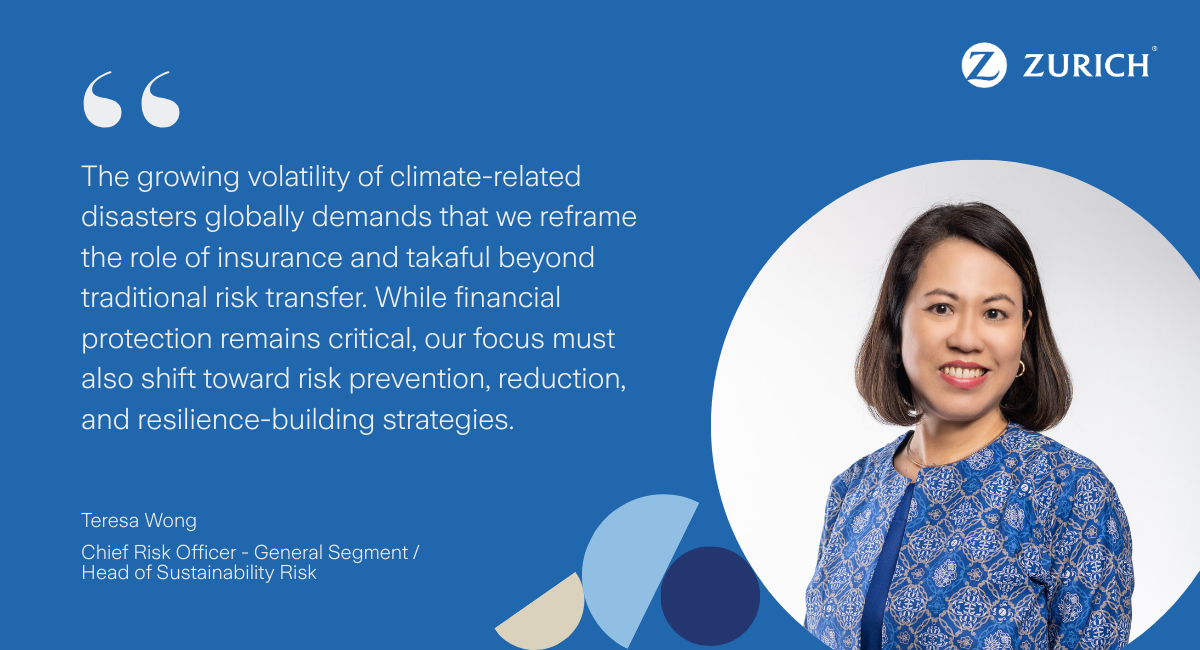
    Teresa Wong, Chief Risk Officer – General Segment / Head of Sustainability Risk at Zurich Malaysia, emphasises “The growing volatility of climate-related disasters globally demands that we reframe the role of insurance and takaful beyond traditional risk transfer. While financial protection remains critical, our focus must also shift towards risk prevention, reduction, and resilience-building strategies. This is particularly relevant in Malaysia, where our Climate Resilience Survey highlights that more than half of respondents feel unprepared, with many citing financial constraints as a key barrier to readiness. As insurers, we must harness our risk expertise to support customers and communities not just in recovery, but in building long-term adaptive capacity. Now more than ever, strengthening climate resilience is fundamental to ensuring protection remains accessible and sustainable in the face of escalating risks.”

    However, the insurance industry cannot tackle this challenge alone. A coordinated effort between the private and public sectors is needed. This paper makes three recommendations for policymakers:

    1. Invest in risk prevention and reduction: Governments should make formal commitments to strengthen climate resilience through robust strategies and the implementation of building codes and urban planning regulations. Measures include building climate resilience into national planning, establishing national centres of competence, and making more effective use of technology, data analytics and scientific research.
    2. Enhance insurance accessibility and affordability through supportive policy frameworks: Governments can raise awareness of extreme weather risks and offer incentives for households and businesses to obtain adequate insurance. This can be achieved by establishing a regulatory environment that sustains market capacity, attracts new entrants, and fosters competition and innovation to broaden coverage options for consumers.
    3. Develop public-private risk-sharing solutions to raise finance climate resilience: Innovative solutions such as blended finance and (re)insurance pools can help share resources and distribute risks, improving affordability and preventing the development of “insurance deserts.” Public-private partnerships (PPPs) can enhance insurance accessibility and affordability, especially in higher-risk areas.

    Zurich remains committed to working with stakeholders worldwide to build a more resilient future, ensuring that communities and economies can thrive despite the growing challenges posed by climate risks.

    For more information on Zurich Malaysia’s insurance and takaful plans, please visit zurich.com.my.


  • Alibaba Cloud’s new whitepaper shows how AI can power sustainable business transformation

    Alibaba Cloud’s new whitepaper shows how AI can power sustainable business transformation

    A new whitepaper released by Alibaba Cloud, Driving Sustainability with AI: A Guide to Partnering with Technology Service Providers, offers a forward-looking blueprint for how organisations can harness digital infrastructure — particularly AI and cloud computing — to accelerate their sustainable journey.

    Based on insights from the Tech-Driven Sustainability Trends and Index 2024, which surveyed 1,300 business leaders across Asia, Europe, and the Middle East, the report combines industry data, actionable recommendations, and real-world case studies to explore how emerging technologies can close the gap between aspiration and execution.

    The State of Sustainability: Progress, Gaps and Opportunity

    The whitepaper highlights the growing urgency for businesses to act on sustainability, with 80% of surveyed organisations setting green targets. Yet only one-third of these have committed to science-based net-zero goals. Many companies still struggle to move from commitment to impact, citing gaps in technical understanding, measurement tools and concerns about the energy footprint of digital technologies.

    Despite these barriers, a strong majority — 76% — see AI and cloud computing as essential tools to achieve sustainability outcomes. At the same time, 82% say it is critical that these technologies themselves are developed sustainably.

    From Insight to Impact: Green AI in Action

    Alibaba Cloud is helping organisations bridge this gap through platforms like Energy Expert, which uses AI to measure emissions and energy consumption in real time. The platform has already served over 3,000 organisations globally.

    One standout case is its collaboration with Covestro, a polymer material company. Working together, the two helped Chinese beverage brand Nongfu Spring trace the full lifecycle emissions of its recycled water barrels — later repurposed into gel pens – offering supply chain transparency from production to reuse.

    The whitepaper also showcases Alibaba Cloud’s commitment to low-carbon AI innovation. Its open-source Qwen series models are designed for efficiency and accessibility. Japanese AI start-up Lightblue, for example, used Qwen to build a localized high-performance Japanese-language model with lower development costs and energy use.

    Five Strategies to Drive Recommendations for Sustainable Digital Transformation

    The whitepaper identifies five strategic actions that businesses can take to align digital transformation with sustainability outcomes. First, organizations are encouraged to link their adoption of AI and cloud technologies with specific sustainability KPIs—for example, using predictive tools to optimise operations or monitor emissions across supply chains. Second, companies should partner with transparent, green technology providers that publish energy usage and emissions data, operate on renewable energy, and invest in energy-efficient infrastructure. Third, the paper highlights the importance of embedding security into sustainability strategies, noting that cybersecurity concerns remain a key barrier to wider adoption of digital sustainability tools.

    Fourth, it recommends embracing open and trustworthy AI, such as open-source models that reduce costs, improve energy efficiency, and allow for localized applications. Finally, the paper calls for stronger public-private collaboration, with 82% of surveyed executives supporting more active government involvement to accelerate the adoption of sustainable technologies through policy, incentives, and education.

    A Roadmap for Business Leaders

    More than a guide, the whitepaper is a call to action. It emphasizes that sustainability is no longer a nice-to-have but rather a competitive differentiator and a catalyst for growth.

    For companies navigating climate and digital transformation simultaneously, the message is clear: success depends on choosing the right partners, tools, and strategies to deliver measurable progress. With the right foundation, AI and cloud can power a greener, smarter, and more resilient future.

  • UMW Toyota Motor to support Ministry of Transport’s green mobility drive

    UMW Toyota Motor Sdn Bhd (UMWT) is taking a major step in driving Malaysia’s clean mobility transition through a strategic collaboration with the Ministry of Transport (MOT). UMWT has extended a fleet of electrified vehicles to the Ministry, bridging cutting-edge product innovation with public policy development.

    The fleet includes five advanced electrified vehicles comprising:
    • Three Hybrid Electric Vehicles (HEVs), namely the Toyota Alphard, Camry and Corolla Cross, and
    • Two Battery Electric Vehicles (BEVs), the Toyota bZ4X and Lexus RZ.

    This initiative enables MOT to evaluate the real-world practicality, performance and benefits of electrified mobility technologies in daily operations, offering critical insights to inform future planning and policymaking.

    “Malaysia’s journey to net-zero emissions by 2050 requires collaboration and action from all sectors,” said Datuk Ravindran K., President of UMW Toyota Motor. “Our support is beyond formality — it enables policymakers to experience the effectiveness of electrified vehicles first-hand. Toyota’s Multipathway approach is inclusive, practical, and tailored to Malaysia’s needs. This ensures that no one is left behind as we move toward a cleaner and more sustainable future.”

    This partnership reflects UMW Toyota’s belief that achieving carbon neutrality requires engagement at every level, from individual consumers to national institutions. By aligning with the National Energy Policy 2022–2040 and the National Energy Transition Roadmap (NETR), the initiative highlights how private-sector innovation can help translate national ambitions into practical, real-world outcomes.

    Bridging Innovation and Public Policy

    UMWT’s experience in hybrid technology reflects its commitment to delivering practical, scalable solutions that meet real-world needs. Through the deployment of its electrified vehicle line-up, UMWT is giving MOT officials the opportunity to experience infrastructure readiness, user interaction and operational dynamics across different electrification platforms. These first-hand learnings will support more informed and evidence-based policymaking as Malaysia moves toward a cleaner, more resilient mobility ecosystem. While full electrification remains a long-term goal, hybrid vehicles continue to offer a swift, accessible pathway to reduce emissions without placing excessive pressure on current infrastructure or consumer behaviour.

    “Hybrid technology continues to be a critical enabler in Toyota’s electrification strategy, especially for markets like Malaysia,” said Mohd Shamsor Mohd Zain, Executive Director of UMW Toyota Motor. “It offers immediate reductions in emissions without the need for sweeping infrastructure changes. This makes it ideal for building mass-market confidence while paving the way toward full electrification.”

    A Shared Commitment to Sustainable Progress

    The collaboration also supports the Low Carbon Mobility Blueprint 2021–2030, which targets 15% xEV adoption by 2030 and 38% by 2040. Through access to a range of electrified drivetrains, the Ministry of Transport can experience these technologies first-hand, offering valuable insights that can inform future planning and infrastructure readiness.

    This effort is part of Toyota’s Multipath way journey, which includes Hybrid and Battery Electric Vehicles (BEVs), as well as Plug-in Hybrids (PHEVs), Fuel Cell Electric Vehicles (FCEVs), and emerging technologies such as hydrogen and synthetic fuels. The company’s approach is grounded in a full well-to-wheel lifecycle view of emissions, ensuring that sustainability progress is meaningful, measurable and grounded in science.

    Rooted in UMWT’s “Move Your World” vision, the collaboration reflects a broader commitment to people-first innovation that delivers practical, inclusive and environmentally responsible progress. This vision is aligned with Toyota’s global mission to ‘Produce Happiness for All’ by creating mobility solutions that go beyond vehicles to improve lives, empower communities, and protect the planet. Through this initiative, UMWT is not only moving people – it is moving policy, mindset, and the nation forward toward a low-carbon, high-impact future.

    UMWT’s ongoing engagement with government, industry and the public is part of a larger movement to build a cleaner, more connected mobility ecosystem for Malaysia. From product deployment to policy dialogue and public education, UMWT continues to play a catalytic role in advancing the nation’s shift toward a sustainable transport future.

  • Bursa Malaysia designates centralised sustainability intelligence platform for reporting

    Bursa Malaysia Berhad (“Bursa Malaysia” or the “Exchange”) today announced the readiness of its Centralised Sustainability Intelligence (“CSI”) Platform to support ISSB IFRS S1 and S2 disclosure requirements adopted under the National Sustainability Reporting Framework (NSRF).

    With this development, the CSI Platform will accordingly serve as the Exchange’s designated sustainability reporting channel for all public listed companies (PLCs). As part of the designation, the platform has been enhanced to include IFRS reporting modules alongside its Scope 1 and Scope 2 carbon calculator, all of which are available to PLCs at no cost.

    Bursa Malaysia is also introducing two artificial intelligence (“AI”)-powered value-added services to streamline sustainability and climate disclosures and support quality sustainability reporting by PLCs, sometimes with support by their sustainability advisors. These services were developed in collaboration with 2 Malaysia Digital Status companies under the Malaysia Digital Economy Corporation (MDEC), and have been validated by mid- and small-capitalisation PLCs to ensure their practicality and effectiveness. The aforementioned AI-powered services are:
    1. AI-Sustainability Ratings Analyser (AI-SRA) by SustenyX
    Provides diagnostics to identify disclosure gaps, assess key risks and opportunities, and provide tailored recommendations to help PLCs enhance their sustainability performance and ratings.
    2. AI-Sustainability Reporting (AI-SR) by CarbonGPT
    Generates a base sustainability report that complies with regulatory requirements and industry standards, using disclosure inputs from the CSI Platform.

    Leveraging advanced AI capabilities, these services ease adherence to comprehensive disclosure requirements, provide precise gap analyses, prioritise key reporting areas, improve ESG rating alignment, and help PLCs establish sound reporting practices. To drive wider adoption, Bursa Malaysia is collaborating with Alliance Bank to offer these services for free to eligible PLCs – especially small to mid-sized, or newly listed companies.

    Dato’ Fad’l Mohamed, Chief Executive Officer of Bursa Malaysia, said “Designating the CSI Platform as the Exchange’s reporting channel reaffirms our commitment to strengthening sustainability disclosures among PLCs. By integrating AI-powered services, we are equipping companies with the tools needed to produce structured sustainability reports.”

    “We understand the challenges of sustainability reporting, particularly the time and resources required. With the CSI Solution’s AI-driven enhancements, we aim to ease this burden for PLCs by improving efficiency, accuracy, and accessibility. Beyond benefiting PLCs, service providers can also leverage these tools to expand their offerings, creating a multiplier effect that accelerates Malaysia’s transition to green practices,” Dato’ Fad’l Mohamed added.

    Since its launch in June 2024, over 130 PLCs have onboarded onto the CSI Platform. Companies – not just PLCs but also mid-tier companies (MTCs) and small-medium enterprises (SEMs) are encouraged to adopt the CSI Solution and utilise its AI-powered enhancements to strengthen their sustainability journey.
    For more information regarding the CSI Solution and its value-added services, please visit Bursa Malaysia CSI Solution or contact csi@bursamalaysia.com.

  • Majority of Malaysian businesses are intrigued by potential of AI in achieving sustainability goals

    Over 76% of businesses across Asia, Europe and the Middle East are intrigued by the potential of digital technologies, including AI and cloud computing in driving sustainable development, according to the latest survey report titled “Tech-Driven Sustainability Trends and Index 2024”, commissioned by Alibaba Cloud, the digital technology and intelligence backbone of Alibaba Group. However, the substantial energy consumption associated with these technologies is still reflecting a key barrier to broader adoption, as 61% of respondents still express concerns over the matter.

    The survey highlights Malaysia’s evolving stance on AI adoption and sustainability, revealing both enthusiasm and caution among businesses. Specifically

    • 76% of Malaysian businesses are actively adopting digital technologies to accelerate sustainability progress, with 77% intrigued by AI’s potential to drive sustainability innovation.
    • 62% of Malaysian businesses acknowledge the gap in understanding how digital technology can assist in achieving sustainability goals
    • 81% of businesses believe that the substantial energy consumption of digital technologies such as powering AI may outweigh its benefits
    • 75% cite security risks as a major barrier to adopting advanced digital solutions more broadly.

    Regional Variations in AI Adoption and Sustainability Efforts

    Despite this optimism, 59% of businesses acknowledge the gap in understanding how digital technology can assist in achieving sustainability goals with Asia leading at 63%, followed by Europe at 61% and the Middle East at 45%. Around two thirds 62% of executives believe their organisations are lagging in adopting cloud computing and AI to accelerate progress towards sustainability goals. This concern is particularly noted in Singapore 80%, the Philippines 77%, Japan 75% and Hong Kong SAR 75%, indicating a pressing need for organisations to accelerate their technological adoption to advance sustainability.

    Overall, 82% of businesses agree that sustainable development in technology is paramount for their companies, with markets like Singapore 93%, the Philippines 91%, and Indonesia 89% leading the charge. Companies increasingly recognise the multifaceted benefits of adopting digital technologies for sustainability including cost savings, improved operational efficiencies, and enhanced compliance with Environmental, Social, and Governance (ESG) regulations.

    AI and machine learning are viewed as the most crucial digital technologies for advancing corporate sustainability, with businesses in the Middle East 52% placing greater emphasis on their importance compared to Europe 41%, emerging Asian markets 40% and developed Asian markets 36%.

    However, the survey reveals a notable concern: 61% of respondents fear that the high energy consumption associated with digital technologies may hinder widespread AI adoption. This concern is even higher in Singapore 85%, the Philippines 77% and Hong Kong SAR 75%. Furthermore, 71% of businesses believe that the substantial energy consumption of digital technologies such as powering AI may outweigh its benefits with the highest concerns from Singapore 86%, the Philippines 84% and Malaysia 81%.

    The report also highlights the importance of selecting technology providers that prioritise sustainability. When selecting a “green” cloud provider, approximately half of the businesses prioritise those that use renewable energy 51%, maintain energy-efficient data centers 46%, and implement carbon footprint reduction initiatives 42%.

    Malaysian Businesses Prioritise AI and Machine Learning for Sustainability but Face Adoption Challenges

    The survey reveals 88% of Malaysian businesses agree it is important to the company that technology is developed sustainably. To add to the concerns highlighted earlier, 68% believe companies are lagging in cloud computing and AI adoption to meet these goals. This hesitation is driven by barriers such as knowledge gaps 38%, cost constraints 30%, and lack of technical capabilities 31%.

    89% of business leaders acknowledge technology’s pivotal role in achieving global sustainability targets with Malaysian companies ranking AI/Machine Learning 46%, Collaboration and Communication tools 34%, and IoT 33% as the top three digital technologies critical to advancing corporate sustainability goals. When selecting technology providers, Malaysian businesses prioritise cost-effectiveness 52%, strong customer support 48%, and data privacy commitments 40% highlighting the key factors that influence their digital adoption strategies.

    Conducted with 1,300 decision-makers across 13 markets, including Malaysia, “Tech-Driven Sustainability Trends and Index 2024” aims to provide valuable insights into the evolving landscape of corporate sustainability. The survey report underscores the essential role of technology in driving impactful change, while highlighting the need for businesses to adopt AI and cloud computing responsibly to address energy consumption concerns and bridge the gap in sustainability efforts.

  • ICAEW partners SC to strengthen expertise in sustainability disclosures

    The Securities Commission Malaysia (SC) and Institute of Chartered Accountants in England and Wales (ICAEW) have initiated a collaboration through a Letter of Intent to collaborate in certain areas.

    This collaboration focuses on capacity-building, with ICAEW providing specialised training on climate-related financial disclosures, the provision of a programme to obtain Sustainability Certifications, the use of ICAEW training films and other areas.

    As part of this initiative, ICAEW conducted a workshop  at the ASEAN Capital Markets Forum (ACMF) Chairs Meeting in Penang.

    This workshop covered key sustainability disclosure requirements and regulatory best practices, including

    • IFRS S1 and S2 standards for climate and sustainability-related disclosures
    • Scope 3 emissions reporting and measurement challenges
    • The impact of global climate regulations, such as the Carbon Border Adjustment Mechanism (CBAM) and the Corporate Sustainability Reporting Directive (CSRD)
    • The role of regulators in sustainability policy and stakeholder engagement

    This collaboration is timely as Malaysia has assumed the ASEAN Chairmanship for 2025, under the theme “Inclusivity and Sustainability.” With global ESG standards evolving, equipping regulators with the right expertise is crucial.

    ICAEW Chief Executive Alan Vallance welcomed this milestone, stating, “Trust, ethics, and sustainability must be at the core of capital markets. Sustainability is not just about compliance—it is a business imperative that drives resilience, innovation, and long-term success. Through this collaboration with the Securities Commission Malaysia, ICAEW reaffirms its commitment to strengthening regulatory expertise in sustainability across ASEAN.”

    “This collaboration will equip regulators with the tools and insights needed to align with global ESG standards while ensuring that regulation remains supportive, not punitive. By fostering capacity-building, knowledge-sharing, and sustainable finance innovation, we can work together to build an interconnected, inclusive, and resilient ASEAN capital market.”

    Echoing this sentiment, SC Chairman Dato’ Mohammad Faiz Azmi, highlighted the need to upskill regulators: “Malaysia’s ASEAN Chairmanship in 2025 presents an opportunity to drive sustainability and financial resilience. Our collaboration with ICAEW ensures we stay ahead of global standards while equipping regulators to support market participants. Together, we can strengthen ASEAN’s capital markets and investor confidence,” he said.

    As ICAEW continues to champion sustainability and professional excellence worldwide, this partnership exemplifies its role in empowering financial professionals, policymakers, and regulators with the tools needed to drive meaningful change. Find out more at https://www.icaew.com/technical/sustainability