Author: admin

  • $17 trillion invested in sustainable technologies over past decade, but investments, technology and progress are diverging

    Private companies and governments have invested a staggering $17 trillion in sustainable technologies over the past decade, yet progress has been uneven, according to Bain & Company’s 4th edition of the Visionary CEO’s Guide to Sustainability. The report finds that sustainability transitions have entered an age of divergence which could intensify over the next decade and identifies the actions businesses can take to navigate this environment.

    Investments in sustainability hit a record $2.4 trillion in 2025. However, 90% of investment went to just three sectors – green energy, buildings and mobility – where capital has helped technologies scale and costs fall, in turn attracting further investments. Meanwhile, three stranded sectors – agriculture, manufacturing and materials, and natural capital – which together account for roughly 37% of global greenhouse gas emissions, received less than 10% of investment.

    Technological progress has been equally uneven. Bain’s Green Technology Performance Index compares actual 2025 deployment with forecasts made ten years ago across 37 sustainable technologies. Only three technologies – solar, batteries, and EVs – have outperformed forecasts, while 29 missed their projections. Those that underperformed did so because one or more of three critical “gates” – technology, behavior, or policy – didn’t open.

    “Ten years into the Paris Agreement, the world has made commendable sustainability achievements, but this summer’s record-breaking heat is a reminder that we need to do more,” said Jean-Charles van den Branden, Bain’s global head of Sustainability. “Today’s CEO must recognize this age of divergence for what it is: not a sign of failure, but an opportunity to place the right bets for the future. CEOs will need to understand how to leverage divergence as a source of competitive advantage, converge priorities across the firm to harness AI for its full sustainability benefits and ask the right questions about climate resilience.”

    Environmental concern among consumers is rising again – and even sustainability skeptics are adopting sustainable habits

    For the first time in three years, environmental concern is on the rise. This year, 85% of the 7,500 consumers across US, UK, Italy, Brazil and Indonesia, surveyed by Bain say they are concerned about environmental sustainability, up from 79% last year. Experience of extreme weather – including heatwaves, floods, and wildfires – remains consumers’ biggest environmental worry. Concern is particularly high among younger consumers and those in fast-growing markets.

    Bain’s research also found that consumers are living more sustainably. Adoption of sustainable habits continues to increase year-over-year across all categories. Eighty-three percent of respondents have adopted three or more sustainable lifestyle habits, up from 73% in 2023. Even among consumers who say they do not care about sustainability, nearly half now practice three or more sustainable habits, compared with 35% in 2023. Their primary motivation, however, is often not the environment. This is a consumer version of the “do-say” gap: individuals act sustainably but cite motivations related to economics, health or resilience rather than sustainability. Consumers are willing to pay 18% more for a sustainable product on average, rising to 24% when it also offers a health benefit. More than half also say they shop locally more than they did before, primarily to support local businesses and strengthen security of supply.

    Recent extreme weather also underscores the importance of resilience for today’s businesses. Disaster losses are rising 5-7% each year and the gap between total and insured losses remains large. But Bain’s research suggests climate disruption will not affect every company equally. As disruption intensifies, value can shift toward companies that are better prepared through higher market share and stronger revenues.

    Bain analyzed nearly 150,000 assets across 12 sectors to demonstrate that all assets have specific moments when resilience can be built in at relatively low incremental cost. The research shows that some industries have many more opportunities than others. For example, solar companies can embed resilience into new builds from the start and have more frequent refurbishment opportunities. By contrast, more established capital-intensive industries like steel and cement see refurbishment opportunities only every 25-35 years, making missed moments potentially decades-long lock-ins.

    Three forces of divergence in sustainable AI – executives vs. consumers, shapers vs. laggards, and business leaders vs. sustainability leaders

    One of the largest perception gaps Bain uncovered concerns the energy impact of artificial intelligence, with executives overestimating energy use 16-fold and consumers almost 30-fold.

    In a Bain survey of 400 senior professionals, executives expect AI to consume around 11% of global energy three years from now, while consumers expect 19%. But Bain’s proprietary climate-economic modeling tool, IntersectSM, forecasts a much smaller share: 0.7%. While their calculations are incorrect, the concern is real and is driving meaningful changes in behavior. Nearly two-thirds of consumers surveyed by Bain report taking concrete action due to their concerns about AI, such as limiting what they share, switching platforms, dropping certain tools or speaking out publicly.

    Companies themselves are diverging into distinct camps. Among shapers – companies with the highest AI and sustainability maturity and adoption – 90% see AI as a major opportunity to advance their sustainability goals. Among laggards, that figure has fallen to 41% from 57% last year. Experience appears to be reinforcing this divide. Shapers have actively adopted 86% of the sustainable AI use cases covered in Bain’s survey, enabling them to see tangible results. Companies with fewer successful applications risk losing conviction before they capture the technology’s potential.

    There is another divide inside companies. The sustainability executives building the case for sustainable AI and the leaders and general managers making the business decisions needed to scale it are focused on different priorities. When evaluating sustainable AI investments, business leaders (C-suite and general managers) rank financial return first; sustainability professionals rank regulatory compliance and risk management ahead and financial return fourth. The case is being argued in one language and being judged and funded in another.

    Taken together, Bain’s findings challenge two narratives: that the sustainability transition is broadly retreating, and that it is advancing uniformly. Instead, investment, technology, corporate action, and consumer behavior are moving at very different speeds. The companies best positioned to create value will be those that understand those differences – scaling proven opportunities, anticipating where technology, policy, or behavior could trigger the next acceleration, and building resilience against disruptions that are already materializing.

    Other chapters in the report include “The Energy Transition Runs Through Asia” – how Asia is driving disruption, competition, supply, and investment in the energy transition; and “The New Investment Playbook for Sustainability” – how concentrated ownership creates a decarbonization execution advantage and how acting on climate risk and policy engagement can differentiate sustainability investors.


  • Rakuten Trade keeps KLCI target at 1,770, sees grid spending driving year-end upside

    Rakuten Trade keeps KLCI target at 1,770, sees grid spending driving year-end upside

    Rakuten Trade is maintaining its end-2026 FBM KLCI target at 1,770, despite around RM2 billion of net foreign selling in August, as it sees power and grid-related earnings providing clearer visibility into year-end than renewed semiconductor optimism ahead of Budget 2027.

    The FBM KLCI has traded largely within the 1,700-1,740 range since late August, slipping below 1,710 in the first week of September. Rakuten Trade Research noticed that foreign investors were net sellers of around RM2 billion in August, reversing the buying trend seen in July. Local retail investors, meanwhile, remained net buyers for a fourth consecutive month.

    “The market is being held up by domestic money, that largely follows earnings visibility rather than announcements. We are keeping our 1,770 target because recent results season depicted growth remains intact with utilities being one of the contributors and — they sit in the grid, not in the chip cycle,” said Kenny Yee, Head of Research at Rakuten Trade.

    Grid investment offers clearer earnings visibility

    Rakuten Trade sees Malaysia’s ongoing investment in power infrastructure as a key earnings catalyst into year-end and beyond.

    Tenaga Nasional’s grid capital expenditure program rises to RM43 billion for 2025-2027, compared with RM21 billion spent across 2022-2024. Further investment is expected through 2030 as the national grid is upgraded to support renewable energy, battery storage and rising electricity demand, including those from data centres.

    The government has also identified energy transition as one of five priority sectors for Budget 2027, alongside semiconductors, the digital economy, artificial intelligence and Islamic finance.

    “A semiconductor order book can turn within a quarter. A grid programme running to 2030 cannot. The money is committed and the work is sequenced. Earnings are then showed up within the companies involved usually within the utility and construction segments,” said Yee.

    Rakuten Trade believes the opportunity extends beyond traditional renewable-energy plays, with grid expansion requiring sustained investment in transmission, substations, electrical systems and related engineering works.

    Three preferred beneficiaries

    Rakuten Trade’s preferred exposure to the theme spans the utility operator and companies further down the infrastructure value chain.

    Tenaga Nasional (TENAGA): Target Price: RM17.00

    As the owner and operator of Malaysia’s electricity transmission and distribution network, Tenaga Nasional is positioned to benefit directly from continued grid investment and rising electricity demand. Growing data center capacity provides an additional long-term demand driver, while stock offers an estimated dividend yield of around 3.5%.

    Kee Ming Group (KEEMING): Target Price: RM1.30

    Kee Ming Group provides mechanical and electrical engineering services and has an unbilled order book of approximately RM151.9 million. Its strategic shareholder relationship with Solarvest Holdings provides additional exposure to Malaysia’s developing energy infrastructure.

    Gamuda (GAMUDA): Target Price: RM5.30

    Gamuda’s RM55.4 billion outstanding order book provides multi-year earnings visibility across domestic infrastructure and its overseas operations, positioning the group to benefit from continued infrastructure investment.

    “We would rather own the people building the network than guess which technology wins on top of it,” said Yee.

    Budget 2027 is the next key test

    Rakuten Trade’s 1,770 KLCI target assumes that Budget 2027, to be tabled on 9 October, confirms rather than materially defers planned energy-transition spending.

    “If the Budget pushes energy-transition spending into the back half of the plan period, or the grid allocation comes in materially below what has been signaled, we would revisit the number,” said Yee.

    The firm also highlighted risks from weaker-than-expected Budget allocations, delays in large infrastructure tenders and project execution, continued foreign fund outflows and volatility in global interest rates.

    For investors, Rakuten Trade believes the period ahead of Budget 2027 will be less about chasing the latest market headline and more about identifying sectors where earnings visibility is supported by committed investment programmes.

  • FedEx appoints Richard Morgan as Senior Vice President,  Sales & Solutions, Asia Pacific

    FedEx appoints Richard Morgan as Senior Vice President, Sales & Solutions, Asia Pacific

    Federal Express Corporation (FedEx) has appointed Richard Morgan as Senior Vice President, Asia Pacific Sales and Solutions, effective September 1, 2026. In this role, Morgan will lead the company’s sales and solutions strategy across the Asia Pacific region, strengthening customer relationships. He will oversee a team of over 1,600 professionals focused on helping businesses unlock value through integrated transportation, logistics, and supply chain.

    Morgan brings more than three decades of leadership experience across transportation, logistics, freight forwarding, and supply chain management. He has deep Asia Pacific experience from his tenure as Chief Commercial Officer for the region at Damco, Maersk’s freight forwarding and logistics business. Most recently, he served as Senior Vice President and Regional Managing Director for Maersk’s India, Middle East, and Africa region, where he led commercial growth, business transformation, and strategic initiatives across more than 65 markets.

    In his new role, Morgan will accelerate expansion of the company’s customer-centric solutions and strengthen the focus on high-value industry verticals, including aerospace, AI and Data Center infrastructure, automotive, healthcare, and other strategic sectors. He will play a key role in helping customers navigate increasingly complex supply chains, enhance resilience and capitalize on new opportunities that drive profitable growth across the region.

    Throughout his career, Morgan has successfully led large-scale organizations across Europe, Asia, the Middle East and Africa. He has built a reputation for building high-performing teams, deepening customer engagement and accelerating revenue growth. His proven track record and leadership approach will be instrumental in advancing FedEx growth ambitions and reinforcing its position as a trusted logistics partner in the dynamic Asia Pacific region.

  • PCCW Global and Druid Technology to deliver one-stop IoT solutions

    PCCW Global and Druid Technology to deliver one-stop IoT solutions

    PCCW Global, the international telecommunications service provider under HKT, and Druid Technology Co., Ltd. (Druid Technology), a Chinese mainland provider of intelligent IoT solutions, has signed a Memorandum of Understanding (MoU) at the 11th Belt and Road Summit in Hong Kong. Under the MoU, the two companies plan to jointly deliver one-stop IoT solutions that combine satellite and hybrid connectivity in the Chinese Mainland, Hong Kong, Macao, and Belt and Road regions.

    As a provider of intelligent IoT terminals and solutions, Druid Technology will leverage its expertise in device design, multi-network adaptation, data processing and platform integration, together with PCCW Global’s worldwide network services including roaming and cellular IoT to deliver one-stop, ready-to-deploy IoT solutions based on satellite and hybrid (satellite and cellular) connectivity. These solutions will support IoT applications such as remote tracking and monitoring for sectors including transportation, logistics, livestock farming and environmental management in remote locations and areas beyond the reach of conventional terrestrial networks.

    Frederick Chui, CEO of PCCW Global, said: “PCCW Global is committed to delivering reliable connectivity and technology solutions through our extensive global network infrastructure. We are delighted to collaborate with Druid Technology and combine its expertise in intelligent IoT solutions with our own capabilities to strengthen our offering of one-stop IoT solutions for enterprise customers in both public and private sectors. Through this collaboration, we look forward to advancing the adoption of satellite and hybrid IoT solutions across Belt and Road markets, helping to meet the growing demand for reliable IoT connectivity and end-to-end solutions in remote and cross-border environments.”

    Li Guozheng, Founder and CEO of Druid Technology, said: “We are pleased to become an integrated solutions provider for PCCW Global. By combining Druid Technology’s full-stack capabilities in intelligent IoT terminals, multi-system integration and physical world AI with PCCW Global’s leading global network infrastructure, we will provide customers with more comprehensive one-stop IoT solutions. We believe this collaboration will enable customers to deploy intelligent IoT applications more quickly and reliably, even in remote locations and other challenging environments.”

    The solutions will cover terminal devices, network connectivity, data management and technical support. Leveraging its extensive global operational experience, PCCW Global will help accelerate the deployment of the solution across Chinese Mainland, Hong Kong, Macao, the Belt and Road regions and global markets.


  • Banks’ asset quality stays robust amid headwinds

    Malaysian banks’ asset quality remains resilient despite a slight deterioration amid heightened uncertainties arising from the Middle East conflict and ongoing US trade tensions. The banking system’s gross impaired loan (GIL) ratio edged up to 1.43% as at end-June 2026 (end-December 2025: 1.37%). Nevertheless, overall credit fundamentals remain sound, supported by healthy loss-absorption buffers and banks’ proactive credit risk management. RAM expects the GIL ratio to remain broadly stable at around 1.4% by end-2026.

    “While we are seeing higher delinquencies in certain loan segments, overall asset quality remains robust by historical standards. Encouragingly, most banks have not reported any material increase in requests for repayment assistance. Favourable labour market conditions, as reflected in the low unemployment rate of 3%, will help mitigate further deterioration in asset quality,” said Wong Yin Ching, RAM Ratings’ Senior Vice President of Financial Institution Ratings. RAM remains watchful of SMEs and lower-income borrowers, given their greater vulnerability to an economic downturn.

    The annualised average credit cost ratio of eight selected local banks stayed largely stable at 18 bps in 2Q 2026 (1Q 2026: 19 bps). Most banks continue to maintain management overlays, with several institutions increasing provisions during the quarter in view of macroeconomic uncertainties. Meanwhile, the average GIL coverage ratio (including regulatory reserves) remained healthy at 139%, well above the pre-pandemic level of 107% as at end-2019.

    Banking sector loan growth strengthened to 5.5% y-o-y in 1H 2026 (2025: 4.8%), driven primarily by business loans (6.1%), while household lending moderated to 5.0%. Growth in business financing was largely attributable to corporate borrowers rather than SMEs. Meanwhile, growth in residential mortgages – the largest subsegment of household loans – continued to decelerate over the past two to three years, easing to 5.4% in 1H 2026 (2025: 5.9%; 2024: 6.9%).

    Net interest margins contracted by 3 bps q-o-q to 2.01%, reflecting intense competition for deposits and loans, and are expected to remain under pressure for the rest of the year. Nevertheless, stronger non-interest income and improved cost efficiency more than offset margin compression, lifting the average pre-tax return on assets of eight selected local banks to 1.39% in 2Q 2026 (1Q 2026: 1.33%).

    The banking system’s common equity tier-1 ratio declined to 13.9% as at end-June 2026 (end-June 2025: 14.7%), primarily due to stronger loan growth, lower securities valuations and higher dividend distributions. Capitalisation, however, remains healthy and provides ample loss-absorption capacity. In addition, banks adopting the Standardised Approach for credit risk are anticipated to benefit from capital savings following the implementation of the Basel reforms on 1 July 2026.

    The eight selected banks in RAM’s roundup are AFFIN Bank Berhad, Alliance Bank Malaysia Berhad, AMMB Holdings Berhad, CIMB Group Holdings Berhad, Hong Leong Bank Berhad, Malayan Banking Berhad, Public Bank Berhad and RHB Bank Berhad.

  • ROOMIE launches Malaysia’s first integrated payment gateway for hotels

    ROOMIE launches Malaysia’s first integrated payment gateway for hotels

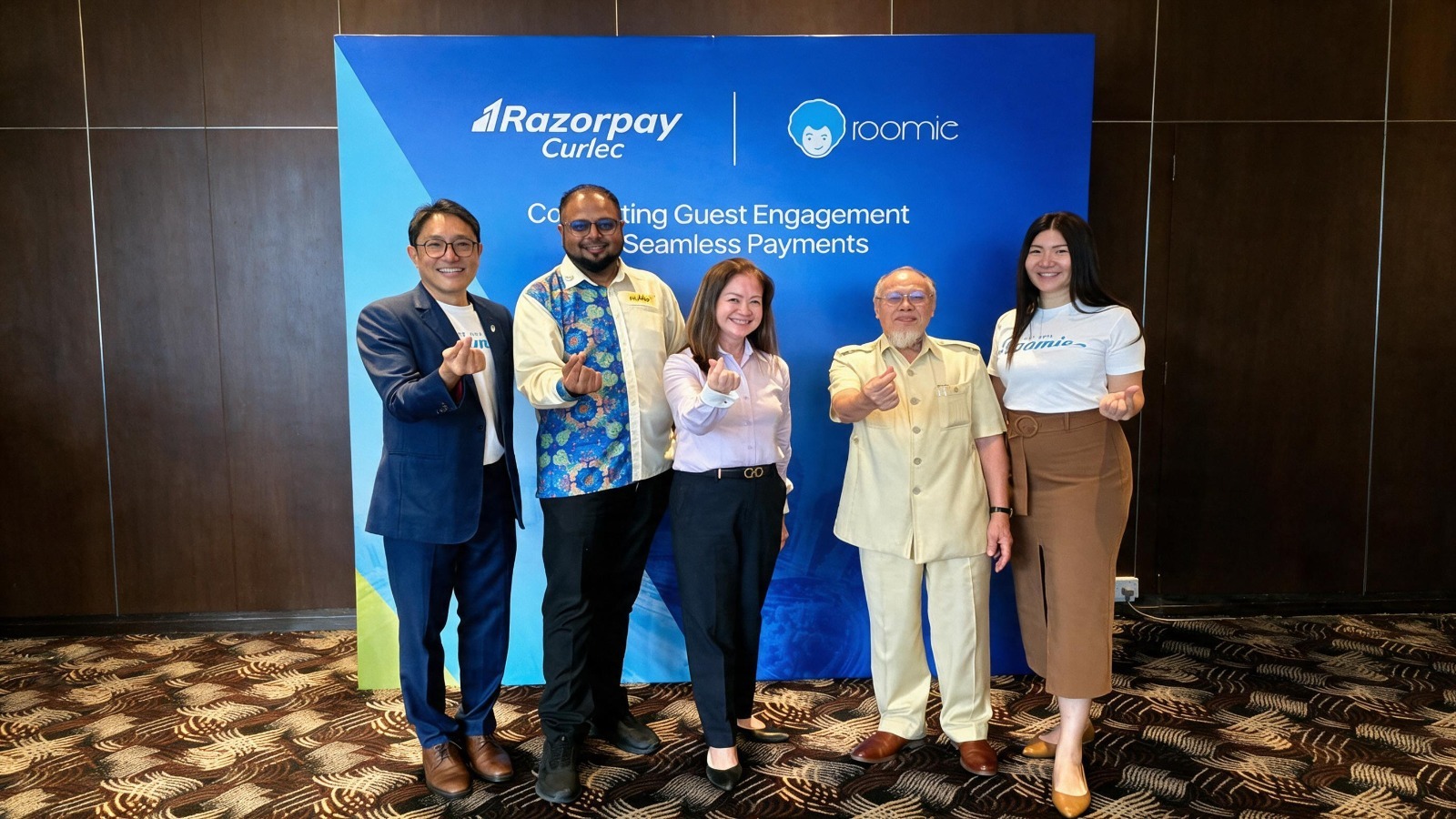
    ROOMIE has launched Malaysia’s first integrated payment gateway built specifically for the hotel and tourism industry. The solution lets hotel guests pay directly for services from room bookings, room service, laundry and on-demand entertainment and is processed without leaving their preferred chat or booking channel. It is now live across the app for key travelers from: China, India, Korea, Indonesia, Thailand and the Philippines.

    Built directly into the guest journey, the new gateway reduces payment friction, lifts transaction conversion for in-hotel payments by 40%, compared to industry cart abandonment at 80%. The latest payment gateway allows all travellers to engage in the language they are comfortable in, as well as the payment method they are familiar with.

    “This removes the hassle of currency conversion and letting guests pay through the platforms they already use. Our goal is to help hotels improve transaction conversion, reduce abandoned orders, and unlock more opportunities for upselling,” said CS Goh, Chief Executive Officer of ROOMIE.

    ROOMIE’s payment gateway supports regional e-wallets and payment methods familiar to tourists including Alipay for China and Southeast Asia, UPI for India, TrueMoney and Line Pay for Thailand, and GCash for the Philippines.

    The launch comes as China and India remain key source markets for Malaysia’s tourism industry. China recorded 1.4 million visitor arrivals during the first quarter of 2026. India delivered more than 1.5 million visitors in 2025, ranking among the country’s top five international source markets, with a target of 2.1 million visitors this 2026.

    Beyond payments, ROOMIE enables hotels to manage bookings, payments and guest interactions directly through social media. This reduces the friction of traditional credit card checkout and cutting cart abandonment.

    Guests can pay for snacks, beverages and on-demand movies without leaving the chat. Orders are only processed once payment is completed. This helps hotels minimise cancellations and no-shows.

    ROOMIE’s platform also supports mobile check-in and check-out, consolidating guest communications across WhatsApp, Facebook and hotel CRMs into a single interface. It secures every chat, profile and payment with institutional-grade compliance. This helps hotels maintain consistent service across shift changes.

    “Every additional step between a guest deciding to purchase and completing that purchase creates hassle and frustration that can lead to a failed transaction,” said June Yap, Vice President, Business Development & Strategic Partnership at ROOMIE.

    “By simplifying the process, hotels can make it easier for guests to say yes to the services they want, while giving operators a more effective way to generate additional revenue,” Yap further added.
    From a decade of experience in providing hospitality solutions and services for the hotel industry across 100 hotels across Malaysia, Thailand and Vietnam, ROOMIE has delivered the following results:

    • Guest Engagement: Engaged 5.8 million guests on behalf of hotels and gained invaluable experience in guests’ engagement
    • Automation: has processed and automated 3.6 million orders and requests from guests for F&B, housekeeping, maintenance, reservation and sales
    • AI: Invested in training and building the skills, knowledge and agentic capabilities of ROOMIE AI for Hotels
    • Reduced booking abandonment: ROOMIE chat-based booking process sees average abandonment of less than 56% compared to 84% in hotel booking sites
    • Efficient Mobile Check In: City Business hotel solved the check-in rush at the lobby with more than 30% mobile check-in conversion.
    • Positive Ratings: 4 stars business hotels see 101% number of online reviews in the 6 months period since using ROOMIE
    • Positive Ratings:Family resort hotel sees 76% increase in positive guest reviews and direct booking with shared discount vouchers within 1 months of strategy execution

    ROOMIE has also achieved an ISO security certification for data protection and information security, addressing hotel concerns around compliance with Malaysia’s Personal Data Protection Act (PDPA) and the safeguarding of guest data.

    ROOMIE aims to double its current base of 100 hotel clients across Malaysia, Thailand and Vietnam over the next 12 months.
    The company has recently signed a contract with a hotel group covering approximately 1,800 rooms, one of the largest single room volumes transacted by a hotel technology provider in Malaysia, well above the industry-typical 100- to 200-room deal.

    Some of ROOMIE’s hotel clientele includes brands such as: St. Giles, Wyndham, Hard Rock, Frasers & Resorts World.

  • Malaysia’s RM35 billion bet on becoming a global meetings hub

    Malaysia’s RM35 billion bet on becoming a global meetings hub

    The latest International Congress and Convention Association (ICCA) GlobeWatch Country and City Rankings 2025 has ranked Malaysia 32 out of 142 ICCA-qualified destinations globally, while Kuala Lumpur ranked 29th worldwide with 73 qualifying meetings in a year when competition among Asian meetings destinations intensified.

    Robert Hatton-Jones, Deputy General Manager of the Kuala Lumpur Convention Centre, sees the ranking as more than a statistic. “The ICCA rankings are an important endorsement of Malaysia’s ability to deliver world-class international association meetings that create lasting value beyond the event itself. Every congress brings together global experts, researchers, policymakers and industry leaders, creating opportunities for knowledge exchange, collaboration, and economic growth,” said Robert.

    Malaysia’s business events sector generated an estimated RM4.07 billion in economic impact from 393 business events in 2025, according to the Malaysia Convention & Exhibition Bureau (MyCEB). That momentum has continued into 2026: at Malaysia Business Events Week 2026 in August, Tourism, Arts and Culture Minister Datuk Seri Tiong King Sing said MyCEB spearheaded 194 business events nationwide in the first half of the year, attracting more than 341,000 delegates and generating an estimated RM 1.81 billion in economic impact. As of 30 June, MyCEB has also secured 416 international business events for the 2026-2030 period, projected to bring in RM8.27 billion and lift the sector’s cumulative economic impact to an estimated RM 34.97 billion by 2030.

    Kuala Lumpur Convention Centre alone accounted for a significant share of the 2025 total, welcoming 756,721 delegates, including 59,013 international delegates, and generating an estimated RM1.5 billion in economic impact for Malaysia.

  • AEON Bank enables Google Pay for Debit Card-i Android users

    AEON Bank, Malaysia’s first digital Islamic bank has enabled Google Pay for the AEON Bank Visa Debit Card-i, offering Android users greater convenience for swift, safe and contactless payments.

    Google Pay marks the latest addition to AEON Bank’s growing digital banking capabilities together with other robust features on its digital banking app, such as Neko Sensei, Neko Missions, AEON Bank Visa Debit Card-i, Savings Pot, DuitNow QR, JomPAY, Zakat and Takaful. Making each tap more rewarding, AEON Bank has also introduced a cashback campaign to encourage customers to discover the convenience of mobile payments and make Google Pay part of their everyday transactions.

    From 28th August to 30th September 2026, customers can enjoy cashback rewards by following a few simple steps*:

    • Connect your AEON Bank Visa Debit Card-i with Google Wallet on your Android device
    • Pay with Google Pay when shopping in-store or online
    • Enjoy 3% cashback on eligible purchases, up to RM30 per customer
    • Cashback will be credited upon settlement

    *Terms and conditions apply.

    Since May 2024, AEON Bank has continued to grow its suite of Shariah-compliant products and services, with a focus on creating a digital banking experience that is more intuitive and engaging for its customers. The integration of Google Pay further advances AEON Bank’s mission in offering secure and frictionless payment solutions that simplify customers’ cashless transaction needs.

    AEON Bank’s cloud native agility and AI optimisation, combined with the strength of its Shariah-compliant ethical banking solutions continue to fuel its commitment towards cultivating a more inclusive financial future for all, while fostering the growth of Malaysia’s digital economy.


  • UOB Heartbeat Run 2026 raises RM2.288 million

    UOB Heartbeat Run 2026 raises RM2.288 million

    UOB Malaysia recently raised RM2.288 million through its annual UOB Heartbeat Run 2026. The funds will support four key beneficiaries – SOLS Foundation, PINTAR Foundation, Food Aid Foundation and HOPE Worldwide Malaysia as well as advancing the Bank’s corporate social responsibility initiatives across Malaysia with a focus on arts, children and education.

    Datuk Ng Wei Wei, Chief Executive Officer, UOB Malaysia, said “Now in its 18th year in Malaysia, the UOB Heartbeat Run continues to show what is possible when people come together to make a difference. The generosity and commitment of our people, customers, and partners enable us to support programmes led by our beneficiary partners that address critical community needs, from improving food security to empowering youth with digital education and future-ready skills. As part of the wider UOB Heartbeat movement across ASEAN and beyond, we remain committed to creating meaningful and lasting impact in the communities we serve.”

    In the two months leading up to the UOB Heartbeat Run, a series of charitable activities including food bazaars, charity sales, and fitness classes were held, contributing to the total funds raised. The programme culminated at Pavilion Bukit Jalil, where about 5,000 employees, customers and partners gathered to volunteer, fundraise and participate in the run event.

    The funds raised will support beneficiary-led programmes that help build a more sustainable future through education and improve the quality of life of underserved communities across Malaysia. These include sponsoring 50 underprivileged youths to enrol in the Solar Academy vocational programme through SOLS Foundation, providing home solar systems to off-grid communities and installing solar panels at children’s welfare homes. The funds will also support HOPE Worldwide Malaysia, Food Aid Foundation, PINTAR Foundation and other charitable causes, channelled towards building an inclusive society and supporting the sustainable development of communities through digital education, food security and programmes that promote resilience and mental wellness. The programmes are expected to benefit approximately 6,000 underserved children, youths and their families across Malaysia.

    The UOB Heartbeat Run forms part of UOB’s broader efforts to create long-term social impact for the underserved. Beyond UOB Heartbeat, the Bank continues to invest in programmes that create long-term social impact, particularly in education and digital inclusion. Earlier this year, UOB launched UOB My Digital Space (MDS) in Malaysia. The programme empowers students to engage with technology confidently and responsibly by strengthening their critical thinking and digital literacy skills. As part of a regional initiative expected to reach more than 100,000 students across ASEAN,

    MDS has evolved into a multi-year programme in Malaysia, reinforcing national efforts to promote digital inclusion and prepare the next generation for the digital economy.

  • Bursa Malaysia spotlights leading investor relations practices at inaugural IR Awards 2026

    Bursa Malaysia spotlights leading investor relations practices at inaugural IR Awards 2026

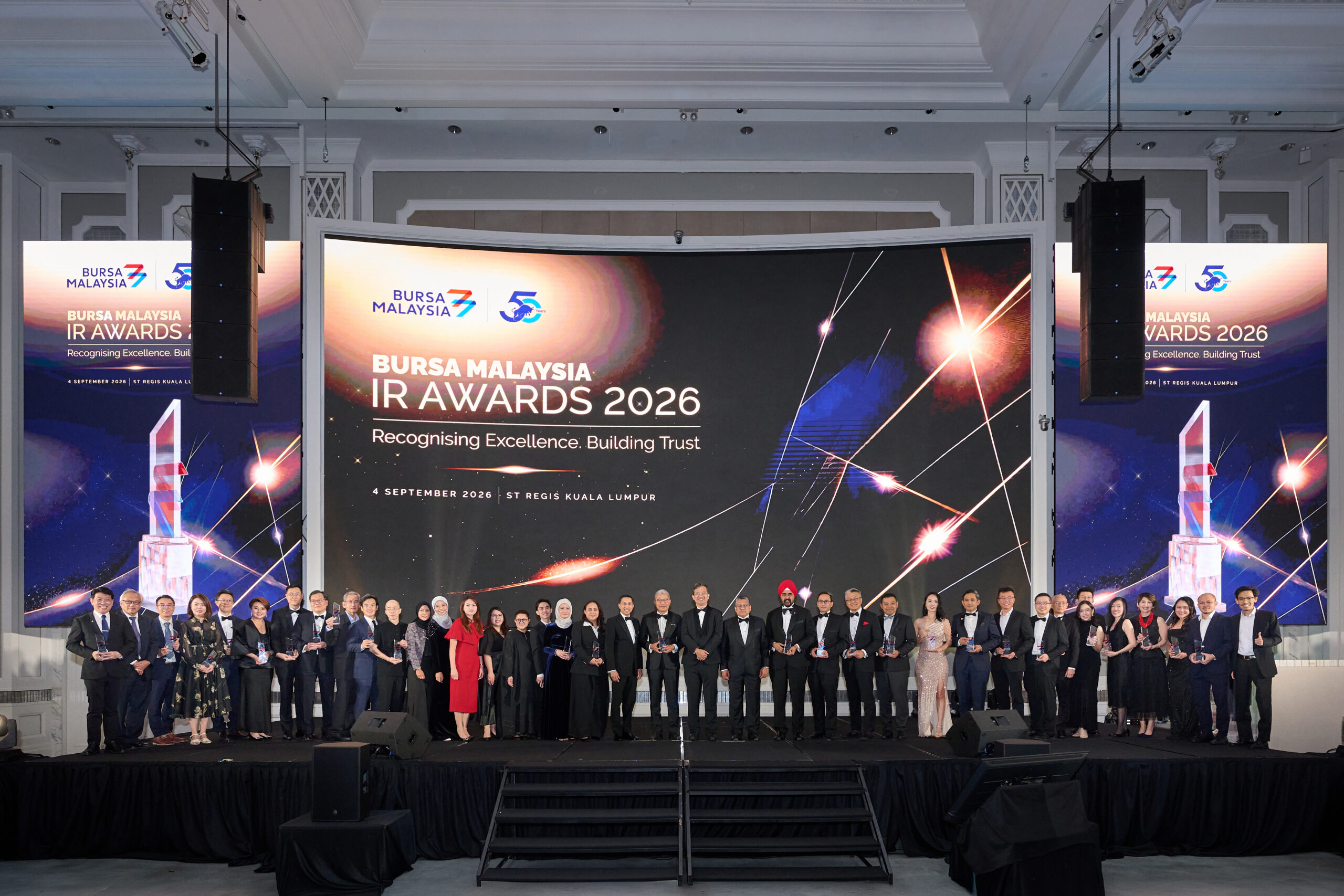
    Bursa Malaysia Berhad (Bursa Malaysia) held the inaugural Bursa Malaysia IR Awards 2026 on 4 September 2026 to recognise excellence in investor relations (IR) and encourage higher standards of transparency, engagement and market communication among public listed companies (PLCs).

    The Awards recognised 32 winners across eight main categories, celebrating PLCs and IR professionals who have demonstrated a strong commitment to investor engagement, market communication and corporate transparency.

    Delivering the keynote address at the Awards, Tan Sri Johan Mahmood Merican, Secretary General of Treasury, Ministry of Finance Malaysia, said effective investor relations is important in strengthening the quality and competitiveness of Malaysia’s listed companies.

    “By communicating openly and consistently with investors, public listed companies enable better-informed investment decisions and demonstrate their commitment to transparency and accountability. As we continue enhancing the competitiveness and quality of Malaysia’s listed companies, effective investor engagement will remain an enabler of long-term value creation and sustainable market growth,” he said.

    Dato’ Fad’l Mohamed, Chief Executive Officer of Bursa Malaysia, said, “There is considerable opportunity to strengthen investor relations capabilities across the market. As companies, markets and investor expectations become more sophisticated, effective investor relations goes beyond communicating performance. It helps investors understand how a company is positioned for the future.

    “The Bursa Malaysia IR Awards recognise companies and professionals who are setting a high standard for transparency, engagement and market communication. By spotlighting these practices, we hope to encourage more listed companies to strengthen their investor relations capabilities and help raise standards of investor engagement across the market.”

    Based on Bursa Malaysia’s research, only 32% of listed companies have a dedicated internal IR function, while 17% outsource the function and 51% operate without any formal IR structure. This highlights the opportunity to further strengthen investor relations capabilities and enhance issuer-investor engagement across the market.

    Bursa Malaysia has been building IR capabilities through IR4U, which provides practical guidance and learning opportunities for PLCs. Around 690 listed companies participated in the programme across 2024 and 2025.

    These efforts are complemented by MY Value Up, jointly introduced by the Securities Commission Malaysia and Bursa Malaysia, which encourages companies to strengthen fundamentals while articulating their strategies and priorities more clearly to the market. While the initiative focuses on 88 leading PLCs, its resources and opportunities are available to all listed companies.

    Malayan Banking Bhd was among the top winners, taking Best Company in IR, Best Financial Reporting and Best Large-cap Company in IR for Financial Services. Its President and Group CEO, Dato’ Sri Khairussaleh Ramli, was named Best CEO in IR, while Tenaga Nasional Bhd received Best Sustainability Communications.

    The Bursa Malaysia IR Awards 2026 winners were determined through a market-led evaluation involving local and international investors and analysts, supported by independent verification and Bursa Malaysia’s due diligence review.