Breast cancer conjures images of disfigurement, pain, and all things negative, yet it is highly treatable if discovered early and given timely and appropriate treatment. Early discovery also means the overall treatment may be simpler, less costly, and more effective.
The exact cause of breast cancer is unknown. Many of the risk factors are those we cannot change— such as being born female, getting older, having dense breasts (a feature best seen on mammograms), and inheriting certain gene changes (although genetics only causes 5-10 per cent of cases).
“Early detection is the best protection.”
– Ranjit Kaur Pritam Singh, Board Member of Reach to Recovery International
So How Do We Go About Discovering Cancer Early?
Understanding and getting to know your breasts’ characteristics and appearance is the first step towards being breast health aware, and this applies to both men and women. In the ideal situation, one examines one’s own breasts systematically once a month, about 3 days after menstruation ends, or in those who are menopaused or who are male, on the same date each month. Ladies older than 18 years can begin this self-familiarisation process.
If you feel or observe something of concern in your breasts, and it persists after two menstrual cycles, please see your doctor. For those who are menopausal or male, please see your doctor without too much delay. While we might be worried about getting breast cancer, worrying does not make cancer go away. Instead, you may be wasting precious time. Good news, ladies, most abnormalities felt (commonly a lump) are not cancerous.
The Routine Procedure That Can Save Your Life
As a woman gets older, an annual clinical breast examination (by a doctor or breast care nurse) may be added to her routine. If you are female, even if you feel nothing wrong in your breasts, consider a screening mammogram once you are over 40 years old, when the risk of getting breast cancer has increased enough to make screening useful.
Then get it done regularly at one or two year intervals. Screening means getting a mammogram even when you do not feel or see anything wrong with your breasts. A mammogram can detect cancer before you can feel it, which means early discovery.
“Cancer is just a word. With the right mindset and support, we can thrive beyond imagination.”
– Kim Lim President of Breast Cancer Welfare Association Malaysia
The mammogram is a series of special low dose X-rays with the breasts in optimal compression. The standard mammogram is made up of two views per breast. The 3D mammogram obtains a series of low dose X-rays in an arc for each view. This produces many images, each with less overlapping breast tissue, thereby improving the ability to pick up abnormalities.
The mammogram does not have a 100 per cent cancer pick up rate. The ability to detect cancer depends on several factors. This includes each person’s unique breast tissue pattern and density (proportion of fat in relation to the fibroglandular tissue). Therefore, it is important to keep your old mammograms for comparison to improve detection and accuracy rates. Despite these factors, the mammogram continues to be the gold standard for breast cancer screening.
Now is the time to take charge of your own health. Remember, early cancer discovery saves lives.
About the Author
Dr Evelyn LM Ho is a Consultant Clinical Radiologist at ParkCity Medical Centre; Technical Advisor -Breast Cancer Welfare Association Malaysia; and Immediate Past President – Asian Oceanian Society of Radiology.
Environmental, social, and governance (ESG) are on the lips of everyone these days. So what is ESG investing, then?
‘Sustainable investment’ is an investment that contributes to environmental or social objectives. Firstly, sustainability is often defined as ensuring that development meets the needs of the present without compromising the capabilities of future generations.
Second, the investment shouldn’t hurt the goals of these activities, and the companies that get the money should use good governance practises. These investments are techniques for considering ESG factors in portfolio selection and management across seven sustainable or responsible investment strategies.
With that, ESG analysis has become an increasingly essential investment process. ESG investing is a good way for people to ensure their money choices match their values. One of the most popular investment vehicles is exchange-traded funds (ETFs), a pooled investment security.
ESG ETFs make sustainable investing easy for investors. Moreover, ETFs offer low expense ratios and fewer broker commissions than buying stocks individually. ESG ETFs combine two investment strategies.
Firstly, ESG investing, or responsible investment describes various ways to incorporate ESG factors into the investment process. For investors, it is about investing in progress which helps companies perform better and create more value.
Secondly, ETF investing, in which ETFs invest in a basket of stocks, bonds, or other assets. In many cases, ETFs offer a flexible and low-cost way to build a highly diversified investment portfolio. So, ESG ETFs make it easy to spread your money out over a wide range of investments while still owning companies with strong ESG traits.
What Is ESG Investing: The Various Types Of ESG Investing
Figure 1: Various types of ESG Investing
Sustainable investing is a growing trend that combines traditional investment strategies with ESG considerations. Demographic shifts, trends, government policies, and evolving views on risk drive demand.
Sustainable investing has grown by leaps and bounds in recent years, where a recent survey found that 75% of respondents have integrated ESG into their investment approach. In sustainable investing, budgets are mandated towards companies with business practices capable of being continued indefinitely without driving harm to current or future generations or exhausting natural resources.
The common problem is that companies may send their production to other countries or companies that don’t do much to ensure they are sustainable. A company might not look too deeply into its suppliers’ practises.
Best practises, on the other hand, would require companies to look at their resource chains and keep track of their production processes, from where the materials come from to how they are thrown away after use. Externalising costs also apply to forcing labour to subsidise activities, saving money with potentially health-damaging practices or insufficient wages.
What Is ESG Investing: Sustainable Finance Disclosure Regulation (SFDR)
Responsible investors want capital to be used responsibly while providing a reasonable return and benefiting others. The Sustainable Finance Disclosure Regulation (SFDR) is the central pillar of the Sustainable Finance Action Plan. SFDR marks a big step for ESG investing as the EU seeks to enforce and align sustainability requirements.
Although non-EU companies are not legally obligated to disclose sustainability-related data, this shift in the industry could also impact the United States markets and set the standard for the future. SFDR aims to ensure that EU investors have the disclosures to make investment choices that align with their sustainability goals.
Nonetheless, significant challenges require collective solutions that need a shared purpose and practical assessment of risks. Other than that, people need to change from a market society to a market economy, where the values can be reassessed within the transition process.’
What Is ESG Investing: Getting To Know The ESG Indices
Figure 2: Various ESG Indices
With impact investing, Morgan Stanley Capital International (MSCI) measured the alignment of 8,550 companies in the MSCI All Country World Index (ACWI) to the United Nations Sustainable Development Goals (UN SDGs). An investable framework is mapped to the UN SDGs with nine pillars:
Circular economy;
Sustainable energy;
Food & Agriculture;
Water & Sanitation;
Health & Social care;
Financial inclusion;
Sustainable real estate & Infrastructure;
Education & Employment, and;
Impact leader.
The three stages of impact are measured against intentionality, implementation, and impact. Firstly, intentionality is when companies must clearly define a strategy (qualitative) supported by a significant R&D budget (quantitative).
Second, implementation checks how well a company’s strategy and R&D work are working to meet a certain revenue threshold and growth goals for each pillar. Lastly, a company with an impact strategy tells the public about specific pillar indicators and shows yearly progress.
Nevertheless, companies whose products and services do not fit within the pillars are integral to the supply chains and enable other pillars to contribute positively to society. There are two common approaches to screening: negative and positive screenings.
What Is ESG Investing: Negative Screening And Positive Screening
Negative screening excludes companies producing ‘undesirable’ products such as alcohol, tobacco, gambling, adult entertainment, and weapons manufacturing. The main challenge is deciding whether a company should be excluded if only part of its operations is involved in an ‘undesirable’ activity.
To address this, the accepted exposure level to that activity may be used to determine the firm’s turnover or revenue: the lower the level, the stronger the exclusion.
In contrast, positive screening supports companies that provide positive solutions to challenges such as climate change and social justice. This excludes companies concerned with activities considered to be unacceptable. Green bonds were created to fund projects that have positive environmental benefits.
Green bonds are traditional debt instruments where the funds raised are used solely to finance or refinance, in part or in full, new or existing eligible ‘green’ projects with positive environmental or climate advantages. These include energy efficiency, pollution prevention, sustainable agriculture, clean transportation, and environmentally friendly technologies.
However, green bonds lack standardisation as to what comprises a green bond in the first place. The simultaneous concern is that it could become a convenient label for marketing objectives.
The Green Bond Principles (GBP) were made by the International Capital Market Association (ICMA) to deal with this problem. These rules suggest openness and transparency and encourage honesty in building the green bond market by laying out the essential parts of a credible green bond.
What Is ESG Investing?
So what is ESG investing? In summary, ESG investing or ‘sustainable investment’ is an investment that contributes to environmental or social objectives.
About the Author
Mukhriz Mangsor is currently the Head Global Market Strategist at Quantdynamic Research Company. His areas of expertise include financial education, financial institutions, and property trading with clients, including firms in Brunei, Canada, Malaysia, Singapore, and the United States.
A food revolution is upon us! The increasing concern of food security, made even more dire with inflation and the recent pandemic, has increased the cost of food supply and production worldwide, even in Malaysia. Meanwhile, the production and consumption of food around the world over the years have been exhausting the earth’s natural resources.
Yet, there remains hope! This situation has prompted an unprecedented global pursuit to find alternative sources of food. This is where the food revolution comes into play – a revolution that will fundamentally change the way people perceive meat by transforming the meat industry into a plant-based one, thereby reducing the dependency on animal protein to create a better planet.
Here to drive this revolution and transform the food supply industry in Malaysia is The Vegetarian Butcher by Unilever – a plant-based meat brand now available to a variety of restaurants in Malaysia.
The introduction of the new brand locally is part of its Future Foods ambition, aimed at helping people transform towards wholesome living by consuming nutritious plant-based food alternatives that are sustainable and environmentally friendly. Unilever believes that delicious plant-based food is better for the health of the people and the planet. This belief forms the core of Unilever’s business strategy.
As one of the largest food manufacturers in the world, Unilever carries the responsibility of shaping the global food system. In line with their initiative, the company aims to reach €1 billion in sales from plant-based meat and dairy alternatives between 2025 and 2027, reduce food waste by half, thereby achieving zero waste to landfill, and ensure no ‘good food’ is destroyed to lower greenhouse gases.
Made by meat lovers for meat lovers
Guests had the opportunity to try a spread of finger foods that showcased the new plant-based meat products by The Vegetarian Butcher
While food-related consumer habits often come and go as fads, plant-based alternatives are here to stay – and grow, with more meat eaters turning towards a vegan or flexitarian diet. In 2021, Euromonitor International’s Voice of the Consumer survey revealed that 49.5% of consumers chose to follow a flexitarian or mostly plant-based diet. The survey indicated that about 37% of consumers opted for plant-based alternatives in a bid to feel healthier.
“Consumers are increasingly becoming conscious that plant-based food consumption is in fact a more sustainable and ethical option. However, in order to help fuel this transformation, it is crucial for those in the food industry including restaurant owners and manufacturers to make plant-based products more easily accessible to all,” said Vangie Hu, Marketing Director, Southeast Asia & South Asia at Unilever Food Solutions.
To spur the shift towards plant-based meat, The Vegetarian Butcher has invested behind technology and chefmanship expertise to offer a broad range of products for meat lovers who do not want to sacrifice flavour, texture and nutrition.
By working with chefs, product developers and food scientists who understand the specific qualities of meat, The Vegetarian Butcher is able to create an entirely new generation of plant-based meat alternatives that will appeal to all meat lovers – from vegans to carnivores.
Embark on a journey of plant-based culinary variety
Raheel Ahmad and Chef Eric Chua speaking to the audience comprising chefs and food service industry players on the latest trends and observations surrounding plant-based products during the event’s panel session
As the plant-based diet picks up in trend among meat lovers, more and more eateries are now offering meat-free options to their diners. Food operators can join the food revolution together with Unilever to drive positive social impact by providing healthier plant-based options.
With The Vegetarian Butcher, restaurants and chefs can meet diner’s demands for wellness and well-being while playing their part to be a force for good in the world by solving issues that have plagued the food industry for decades. Meanwhile, meat lovers need not sacrifice quality, taste and most importantly, nutrition, towards a more hearty, sustainable meal. This comes as part of Unilever’s commitment to consumers and food service operators alike. The Vegetarian Butcher in Malaysia allows chefs to deliver their best with delicious and easy-to-use products while marrying the mouth-watering flavours of the country’s many local cuisines together with the benefits of plant-based meat alternatives.
Now available in Malaysia to all restaurants, The Vegetarian Butcher offers a selection of delicious plant-based meat, including NoBeef Burger, NoChicken Burger, NoMeatballs, and NoMince, making it easy for restaurants to offer meat-free alternatives to all Malaysian diners. Indeed, a food revolution is upon us. Thanks to Unilever and The Vegetarian Butcher, sustainable dining is now a valid option, without sacrificing quality, nutrition and most importantly, taste!
Manulife and the World Economic Forum (“the Forum”), announced the launch of two Innovation Challenges in 2023 through UpLink, the Forum’s open innovation platform. The partnership was announced at the Forum’s Annual Meeting in Davos and aims to engage ecopreneurs and partners to help them scale new and innovative ideas and ventures.
The two UpLink Innovation Challenges will unlock solutions that stem from, and are aimed at, forests, to galvanize an ecopreneur revolution that will help to safeguard nature, climate, livelihoods, and the well-being of people. Full project details, including eligibility criteria and timelines, can be found on the challenge page here.
The Sustainable Forest Economy Challenge will aim to source innovative solutions across the value chain from the sustainable management of forests to the production and utilization of wood. A climate smart forest economy approach is critical to protect, maintain, manage, restore, and regrow forests. Applicants can begin applying today through March 1st, 2023.
The Forests and Trees Improving Human Health and Well-being Challenge will aim to surface innovations fostering improved interlinkages between planetary and human health. Details for this challenge will be made public later this year.
Biodiversity is degrading faster than at any time in history[1], driving poor environmental, economic, and human health outcomes. This includes the loss of forests, which is destabilizing natural systems. Sustainably managed forests and farms are a critical part of reversing harmful environmental impacts; they sequester carbon, regulate global temperatures and freshwater flows, recharge groundwater, anchor fertile soil, act as flood barriers, and have been shown to enhance mental and physical health.
Through this project, Manulife furthers its ongoing commitment to continue scaling nature-based climate solutions and investments in sustainable forestry and farmland to help combat nature loss, because collective action is needed to sustain our societies and economies.
“Our environment is key to human health and wellbeing, and as a global life insurer and asset manager, we see firsthand how damaged ecosystems put livelihoods and economies at risk,” said Roy Gori, President and CEO, Manulife. “Given our position as one of the world’s largest sustainable timberland and farmland investment managers[2], we can support and scale innovative solutions, which are urgently needed in response to the rapid degradation of nature and biodiversity. We are very excited to launch this project with the World Economic Forum and UpLink and want to hear from passionate, big thinkers who can help us address and reverse nature loss.”
“Innovation is not a nice-to-have, but an essential ingredient in achieving the United Nations’ 2030 Sustainable Development Goals,” said John Dutton, Head of UpLink and Member of the Executive Committee for the World Economic Forum. “We’re proud to join forces with Manulife to source and scale the innovative solutions that will strengthen sustainable forestry, improve wellbeing, and promote nature-based solutions to climate change. This commitment will help to shine a light on the often-overlooked purpose-driven entrepreneurs whose solutions are so urgently needed, giving them the visibility, resources, and expertise they need to tackle the world’s biggest challenges head on.”
This project builds upon Manulife and the World Economic Forum’s continued partnership. Late last year, Manulife announced a pledge to 1t.org which is the Forum’s Trillion Trees initiative. As part of the pledge, Manulife is aiming to scale Manulife Investment Management’s carbon-focused forestry investments and sequestration of CO2 from the atmosphere through the forests it manages over a period of 5 years.
Like the 1t.org pledge, this partnership with Uplink aligns to Manulife’s recently announced Impact Agenda, which aims to build business to better the world by making decisions about the future of the firm’s business, rooted in the belief that collective actions drive meaningful change. To learn more about Manulife’s Impact Agenda, and to track progress against its goals, visit manulife.com/impact.
[1] Based on the “The Global Assessment Report on Biodiversity and Ecosystem Services” released by the Intergovernmental Science-Policy Platform on Biodiversity and Ecosystem Services (IBPES) in 2019. [2] RISI, Inc. 2021 data based on top 15 global Timber Investment Management Organizations (TIMO) by assets under management. Manulife pays a subscription fee for access to the database.
About Manulife
Manulife Financial Corporation is a leading international financial services provider, helping people make their decisions easier and lives better. With our global headquarters in Toronto, Canada, we provide financial advice and insurance, operating as Manulife across Canada, Asia, and Europe, and primarily as John Hancock in the United States. Through Manulife Investment Management, the global brand for our Global Wealth and Asset Management segment, we serve individuals, institutions, and retirement plan members worldwide. At the end of 2021, we had more than 38,000 employees, over 119,000 agents, and thousands of distribution partners, serving over 33 million customers. We trade as ‘MFC’ on the Toronto, New York, and the Philippine stock exchanges and under ‘945’ in Hong Kong. Not all offerings are available in all jurisdictions. For additional information, please visit http://manulife.com/.
About UpLink
UpLink is the open innovation platform of the World Economic Forum, designed to unlock an ‘entrepreneur revolution’ for people and planet by supporting start-ups with innovative solutions for the world’s most pressing issues, as outlined by the United Nations Sustainable Development Goals (SDGs).
Launched at the World Economic Forum’s 2020 Annual Meeting in Davos in partnership with Deloitte and Salesforce, UpLink builds bridges between entrepreneurs and the investors, experts and partners who can help scale their ventures. UpLink crowdsources new innovations through a competition framework known as innovation challenges. UpLink has now run more than 43 challenges and identified over 350 entrepreneurs with innovative solutions across critical SDG areas including health, food, freshwater, ocean, plastics, education, climate and more. For more information, visit https://uplink.weforum.org
About 1t.org
1t.org is a World Economic Forum initiative that serves a global movement to conserve, grow and restore 1 trillion trees by 2030. 1t.org is set up to support the UN Decade on Ecosystem Restoration. 1t.org mobilizes private sector engagement and ambition in forest conservation and restoration, facilitates multistakeholder dialogues in key geographies, and supports innovation, ecopreneurship and youth to incentivize and accelerate restoration. For additional information, please visit www.1t.org.
Bursa Malaysia Berhad (“Bursa Malaysia” or the “Exchange”) recorded a Profit After Tax and Zakat (“PAT”) of RM226.6 million for the financial year ended 31 December 2022 (“FY2022”), a 36.2% reduction from the RM355.3 million reported in the previous financial year ended 31 December 2021 (“FY2021”). The decrease was due to lower overall trading revenue of RM377.1 million in FY2022, lower by 30.7% as compared to FY2021. Total operating expenses in FY2022 increased marginally by 1.4% to RM292.7 million from RM288.6 million in FY2021.
The Board of Directors approved and declared a final dividend of 11.5 sen per share amounting to approximately RM93.1 million. This brings the total dividend payout for FY2022 to 26.5 sen per share, which includes the interim dividend of 15 sen per share paid out in August 2022.
The Securities Market registered trading revenue of RM263.5 million in FY2022 compared to RM442.9 million in FY2021, a decrease of 40.5%, due to lower Average Daily Value (“ADV”) traded for Securities Market’s on-market trades and direct business transactions. Meanwhile, the Derivatives Market trading revenue rose by 11.3% to RM97.2 million in FY2022 from RM87.3 million in FY2021, in part due to higher collateral management fees earned, as well as higher number of FCPO and FKLI contracts traded. Bursa Suq Al-Sila’s (“BSAS”) trading revenue increased by 17.8% to RM16.4 million in FY2022 from RM14.0 million in FY2021.
“Bursa Malaysia enjoyed another year of resilient performance despite challenging global operating conditions resulting in the softening of trading in Securities Market. Trading value declined by 41.5% with ADV of RM2.1 billion in 2022 but this is still higher than pre-pandemic ADV of RM1.9 billion. The Derivatives Market, however, performed better with Average Daily Contracts (“ADC”) increasing by 4.6% from 75,178 contracts in FY2021 to 78,621 contracts in FY2022. Our Commodity Murabahah platform, BSAS similarly performed well with 22.3% higher ADV from RM37.3 billion to RM45.6 billion,” commented Tan Sri Abdul Wahid Omar, Chairman of Bursa Malaysia.
He added, “We also had a very active listing interest on the Exchange with 35 IPOs recorded in FY2022 that raised a total of RM3.5 billion, higher than the 30 IPOs recorded in FY2021. These numbers prove that both companies and investors have confidence in the Malaysian capital market, and look at Bursa Malaysia as a worthy platform for fundraising and investing.”
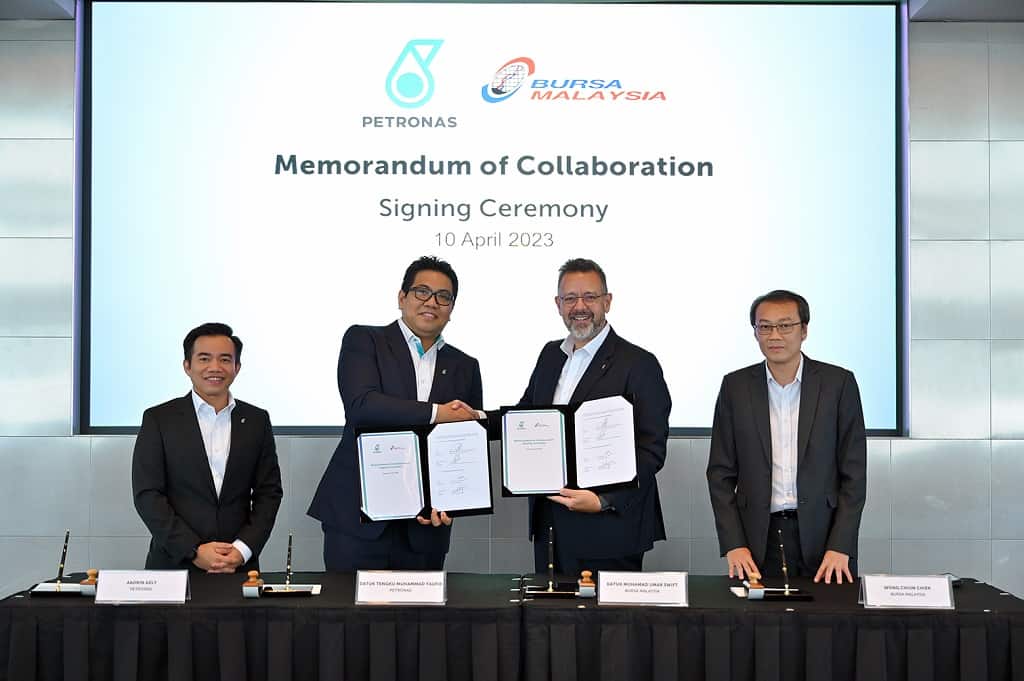
“In our Derivatives Market, we are offering more products and better access. To encourage more participation from global traders, the Exchange was recently recognised as a Third-Country Central Counterparty by the European Securities and Markets Authority. This recognition, together with the After-Hours (T+1) Night Trading Session (“After-Hours Trading”), will generate greater trading volume for the Exchange,” said Datuk Muhamad Umar Swift, Chief Executive Officer of Bursa Malaysia.
Bursa Malaysia made significant progress on a number of pioneering market development initiatives in FY2022, which included the launch of the world’s first Shariah-compliant carbon exchange, the inaugural East Malaysia Palm & Lauric Oils Price Outlook Conference & Exhibition (“emPOC2022”) and the inception of the PLC Transformation Programme. The Exchange was recognised with several industry awards last year, including The Edge Billion Ringgit Club Awards 2022 for “Highest Return on Equity Over 3 Years in the Financial Services Sector (for RM10 billion market cap)”.
Commented Datuk Muhamad Umar Swift, “The Market Data business segment improved in FY2022, delivering 12.5% growth to RM60.8 million from RM54.0 million in FY2021. To achieve further growth in our non-trading revenue, we will continue improving the delivery of richer data to clients to empower the industry to undertake analytics or offer better products or services. The Exchange recently signed MOUs with the Companies Commission of Malaysia and the Department of Statistics Malaysia, to collaborate on mutual data sharing arrangements with the objective of unlocking new revenue opportunities, while supporting the national data and digitalisation agenda.”
“We are becoming a multi-asset Exchange and diversifying our revenue streams. With the launch of the Bursa Carbon Exchange in December 2022, we are now better able to facilitate the journey for Corporate Malaysia to become a global ESG investment destination. Among our priorities in 2023 is to help develop the carbon market ecosystem, and strengthen our engagement with listed companies to raise their understanding and improve their ESG practices and disclosures,” concluded Datuk Muhamad Umar Swift.
“We are invariably focused on enhancing the attractiveness of the Exchange to market participants, and our shareholders,” said Tan Sri Abdul Wahid Omar. “As espoused under the PLC Transformation Programme, we are stepping up by committing to five Headline KPIs for FY2023 − covering targets for Profit Before Tax, Non-Trading Revenue growth of 5% to 7%, 39 IPOs, innovative product launches including the Bursa Gold Dinar, and reduction in our organisation’s emissions1.”
The financial results for FY2022 is available on Bursa Malaysia’s website at www.bursamalaysia.com. Details of the FY2022 financial results and the FY2023 Headline KPIs can be found in the Condensed Consolidated Financial Statements report which was released today (as appended and also available on our website).
1 The headline KPIs are targets or aspirations set by the Company as a transparent performance management practice. These headline KPIs shall not be construed as either forecasts, projections or estimates of the Company or representations of any future performance, occurrence or matter as the headline KPIs are merely a set of targets/aspirations of future performance aligned to the Company’s strategy.
About Bursa Malaysia
Bursa Malaysia is an exchange holding company incorporated in 1976 and listed in 2005, and has grown to be one of the largest bourses in ASEAN today. Bursa Malaysia operates and regulates a fully-integrated exchange offering a comprehensive range of exchange-related facilities, and is committed to Creating Opportunities, Growing Value. Learn more at www.bursamalaysia.com.
Many people think you don’t need critical illness insurance in Malaysia if you already have health insurance or are covered by your employer’s health insurance. Your health insurance might not cover severe illnesses like cancer, a stroke, a heart attack, or kidney failure well enough.
Here’s what you need to know to have a better understanding of both medical insurance and critical illness insurance in Malaysia.
What Is Critical Illness Insurance In Malaysia, And Why Would You Need It?
Critical illness protection gives you a lump sum payment if you get one of the critical illnesses covered by your plan. Unlike a health protection plan, critical illness protection is not designed solely to pay your hospitalisation or medical costs but to provide a sum of money to take care of immediate expenses, which means you are free to use the money however you wish.
For example, if you have one, you could use the benefit to pay for ongoing treatment costs or medical equipment not covered by your medical protection plan. You may also use the money for home nursing care, seek alternative treatments, or pay the mortgage for your family’s survival, whichever can help you focus on your recovery.
How Much Is Enough To Protect Me Against This Unfortunate Event?
The rule of thumb for critical illness insurance in Malaysia is to have three times your annual salary. Why three times? In the event of a critical illness diagnosis, it takes at least three years for you to adjust your lifestyle and recover.
What’s The Difference Between Medical Insurance And Critical Illness Insurance In Malaysia?
Medical Card
Critical Illness Insurance
What does it do?
pays for the cost of treatment and medication of a hospitalisation
provides a lump sum payout upon diagnosis of one of 36 critical illnesses, total and permanent disability or death
What can I do with the payout?
Pay for medical cost of treatment or hospitalisation
The patient can use the lump sum payout for anything they want, not restricted to medical treatment. For example, some use it to help their family’s financial situation.
Who does it most benefit?
The policyholder (and his family, if the plan covers family) as it helps pay for their medical treatment
The policyholder and/or their dependents, depending on the payout use.
When Should You Revisit Your Critical Illness Plans?
1. When your income changes, this will affect your coverage with regard to income protection
2. When your life changes, for example: getting married or having kids, this will also include the consideration of how your dependants may be affected if you are diagnosed with a critical illness and whether or not you would need a critical illness payout to help with managing your financial obligations
Do I Need Critical Illness Insurance In Malaysia Right Now?
It is common to think, especially in the prime of one’s life, that you have time on your side and that you do not need a critical illness policy. However, critical illnesses do not differentiate between age or gender. Certain behaviours, such as smoking or leading sedentary lifestyles, are high-risk factors for critical illnesses.
One of the diseases spreading the fastest among Malaysians is kidney failure caused by diabetes. Accidents and incidents can cause injuries like major head trauma or third-degree burns, which are hard to predict and require a lot of (and possibly expensive) medical care.
Having a sound financial plan before the unexpected happens is equivalent to having more choices for treatment and recovery. This includes the choice to take time off from work to focus on complete recovery, the ability to choose quality healthcare, or the privilege to spend time with your loved ones instead of thinking about where the payment for the treatment would come from.
A client of mine was recently told she had breast cancer and had to have surgery. The total cost of the operation is RM26,000, and it is fully covered by medical insurance. Next, she would have to go through post-treatment, after which she would not be able to return to work for a short time.
Critical illness insurance in Malaysia helps patients cover their living expenses with a lump sum payment. This money can then be used for anything and is not restricted to medical treatment (which the medical insurance already covers).
If you have medical insurance, consider adding a premium waiver rider, which allows you to waive the basic premium if you are diagnosed with a critical illness.
This means that the policy does not need to pay for the stipulated premium, while you would still have medical insurance coverage. If this coverage is within your budget, you should consider taking up this rider.
Do You Need Critical Illness Insurance In Malaysia?
Many income protection products are on the market, so spend time understanding which caters to your current financial needs. While you are still well and able to work, you provide food, clothing, and shelter for your family.
But if something were to happen to you, somebody must immediately take over this responsibility for you and your family. This is precisely how income protection works, where insurance will compensate you for the loss of income.
Above all else, protecting and preparing yourself and your family for such uncertainty should be a top priority. That’s why you will need critical illness insurance in Malaysia.
Financial Industry Profession Challenge 2023 (FIPC 2023) is an annual flagship event organized by the University of Malaya Finance Association (UMFA). This challenge comprises training and different levels of assessments that are in line with the real-world financial industry. The highest achieving group will be able to have a chance to secure an internship placement in our strategic partner’s company.
FIPC 2023 is back this year with new highlights:
📌Digital Economy Webinar
📌Blockchain and Digital Banking Forum
📌Networking Lunch
📌Career Booth
Are you an undergraduate student in Finance, Accounting or Economics?
If so, you are the potential ACE we are looking for! Slots are limited! What are you waiting for?
This is the time for you to shine!
To join, simply scan the QR code or click the registration link in our bio!
Are you wondering a lot of things about FIPC 2023? Wanted to enhance more in the financial industry?
Don’t worry! You can fulfill your hunger mind by simply put your queries in the link padlet below 👇
The following story is based on an actual series of events, with some names and circumstances fictionalised. Any similarity to any person’s name, character, or history is entirely coincidental and unintentional. Hope that we better understand the importance of having a Declaration of Trust.
Simon would not be in a pickle if he trusted in the Declaration of Trust. Neither would his business be in such a predicament.
At the prime of life and particularly having paid much attention to matters of health, he thought he was infallible and would not be robbed of his life at an early stage.
He was right! He was not robbed of his life when a reckless motorcyclist running the red light rammed into him. But, it left him near lifeless in a comatose state due to swelling of his brain.
With Simon in the hospital, his company was in limbo. Simon is the sole business owner. The company’s daily operations were impacted. Whatever he had wanted for the company in terms of succession and equity holding as expressed in his Will could not be effected and fulfilled.
A Will and Last Testament could only be executed upon death and after obtaining the Grant of Probate. It would be different with a Declaration of Trust which would have avoided the current conundrum for Simon and his company.
Simon had dismissed it when an estate planner told him about the Declaration of Trust. He shrugged it off as an attempt to sell him something he didn’t need, as he was confident that he had taken care of his estate planning needs with his Will.
Had he listened, he would have learned that with a Declaration of Trust, he, as Settlor, could create a trust settlement by declaring that his assets are to be passed on to an appointed professional Trustee when anything drastic happens to him, such as incapacity. So, he is keeping the money for someone else, who is the beneficiary of the money.
What Is A Declaration Of Trust?
A Declaration of Trust would make it easy to transfer company shares quickly when certain things happen, such as when the only shareholder goes missing or is permanently disabled and in a coma. This would minimise any disruptions to the operations of the company.
If a company has other shareholders and directors, the shares can be held in trust until the beneficiaries reach the age of majority. Meanwhile, dividends received can be used for the beneficiaries’ expenses such as medical, education, maintenance, etc.
A Declaration of Trust is simple, flexible, and powerful to provide for loved ones by securing their financial well-being. It is NOT subject to Grant of Probate or Letters of Administration. It is REVOCABLE, and the contents can be changed anytime before the Settlor’s death.
Any assets, whether encumbered or not, such as residential property, unit trusts/mutual fund investments, shares of private companies, and money in bank accounts, can form part of the Declaration of Trust.
Under the Trust, the Settlor acts as the Trustee and retains control and ownership of the trust assets until a specified event happens, after which a substitute Trustee takes over to follow his instructions on how the trust assets are to be utilised. This prevents any delay in allowing your beneficiaries to enjoy the trust assets.
As the Trustee, one need not transfer the assets until and unless one of the following events occurs: Death Total Permanent Disability (TPD) Critical Illness Comatose Resignation as Trustee Missing* for a period to be stated in the trust (this resolves the problem of lack of death certificate for the distribution of assets)
No one knows what tomorrow will bring. One can be in perfect health, but circumstances are beyond control. So, be prepared—for your and your loved ones’ sake.
About Rockwills International Group
Rockwills International Group, now in its 28th year, pioneered professional will writing in 1995 and has since evolved into the leading estate planning specialist in the country. It is today the largest provider of solutions and support services in the areas of trusts, succession, management and distribution of wealth. It has shareholders’ funds exceeding RM50 million. It has done over 280,000 wills and 15,000 trusts and hold more than RM25 billion in assets under trust.
Environmental, social, and governance (ESG) issues are becoming more mainstream, and they now directly impact our daily lives. Whether we realise it or not, we now live in a fast-paced world, and technology is evolving faster than ever.
With that in mind, Smart Investor speaks with Rami Hajjar, Chief Executive Officer of Signify Southeast Asia, to understand the ESG agenda. Signify is the world leader in lighting for professionals and consumers, as well as lighting for the Internet of Things. Their energy-efficient lighting products, systems, and services give their customers a better quality of light and make people’s lives safer and more comfortable, businesses more productive, and cities easier to live in.
Rami Hajjar, Chief Executive Officer, Signify Southeast Asia
Smart Investor: What does ESG mean to you? Why is it essential to your business, and how does the ESG agenda impact your industry?
Rami Hajjar: ESG is about carrying out business in a way that is respectful to people and the planet and about generating profits ethically. This is important to ensure that businesses can carry out their operations sustainably. The ESG agenda is important for putting it into business because it gives us a way to hold ourselves accountable for managing our company’s impact, especially our carbon footprint.
Regarding the lighting industry, it is safe to say that the E [environmental] plays a crucial role. It covers the organisation’s energy usage, pollution, waste, and conservation efforts. The key ESG strategy is an environmentally friendly and cost-efficient LED lighting retrofit. LED products are recyclable, unlike most other types of lighting. Businesses also see a reduction in lighting maintenance costs and energy usage.
With the current energy crisis caused by various economic factors, including the rapid post-pandemic economic rebound that outpaced the energy supply, LED lighting solutions allow consumers to be more energy efficient and save cost due to their long-lasting durability at the same time, contributing to a greener planet.
SI: How successful is the ESG agenda deployment in your organisation, and what challenges are you facing?
RH: At Signify, I am proud to say that since September 2020, we have been 100% carbon neutral in our operations and use 100% renewable electricity. In the same year, Signify reached our commitment to send zero manufacturing waste to landfills for our manufacturing sites and recycle up to 91% of our manufacturing waste.
On September 8, 2020, Signify also launched Brighter Lives, Better World 2025, a new five-year plan that enables us to double our positive impact to brighten lives for a better world. With our new programme, we’ve set more challenging goals and promised to make our entire value chain more environmentally friendly.
For instance, we are going beyond carbon neutrality. We aim to double the pace of the Paris Agreement’s 1.5°C scenario to reduce greenhouse gas (GHG) emissions over our entire value chain by the end of 2025. We will do so by increasing our portfolio’s energy efficiency, reducing our customers’ emissions, and driving carbon reduction at our suppliers.
SI: How has the ESG agenda changed the lighting landscape?
RH: Over the past 125 years, Signify has pioneered many key breakthroughs in sustainable lighting, being a driving force behind several leading technological innovations, including LED. Approximately 13% of the world’s electricity is used for lighting.
Through digital LED technology, Signify offers up to 80% more energy-efficient light. With it, electricity usage for lighting will decline to 8% by 2030. Through our leading position in the lighting industry, we believe we have an essential role to play towards a low-carbon economy as the world transitions from conventional to LED lighting technology.
RH: At Signify, we pride ourselves on taking the lead in ESG efforts. We believe in sustainability at Signify and want to build a better world. Our organisation did not wait for the ESG landscape to impact us; we took the lead through our technology and innovations.
We also have policies and due diligence processes in place and have been recognised as leaders in DJSI, Sustainalytics, and EcoVadis. This allowed us to transform the industry for a better world and brighter lives.
RH: Climate change is the most important topic that has been gaining traction in the past ten years. It is evident from the World Economic Forum’s Global Risk Report that worsening climate change impacts and extreme weather conditions dictate global risk factors. Besides, social factors such as the livelihood crises of the B40 group have also gained a strong pull for ESG in Malaysia.
In 2023, we can expect other areas of the environmental pillar to grow, such as the carbon market, carbon tax, and carbon offsetting, which involves carbon capture, storage, and sequestration activities.
All said and done, we must accept that the ESG agenda will impact our daily lives. At home, at work, at school, wherever we are and whatever we will do. Let’s pray that humankind will unite for our planet’s and future generations’ greater good.
With gyms all over town teeming again with fitness junkies, almost everyone is playing catch-up with their fitness goals after a long hiatus from the gym. Whether it’s building muscles, improving stamina, or just getting healthy, all of us can benefit from a good old sweat session.
But what about our financial fitness?
If you’ve been putting off your financial goals for some time, now is a great time to rebuild and reposition yourself to get back on track as we usher in a new year.
Here’s an 8-step wealth workout plan to ease yourself back into it and get financially fit.
Wealth Workout Plan #1: Reassess Your Position
Before you jump right back into your routine, it’s important to first evaluate your current financial position and understand what has changed. Maybe there was a new family addition, or you had to take out a new personal loan. In both instances, your tolerance for risk may be lower and you are more susceptible to ‘pain’ in markets.
Like any fitness routine, a financial plan needs to be specifically tailored to your needs. Work together with your wealth trainer to craft a financial plan with short- and long-term goals. Remember to be realistic in your plan, otherwise, you won’t feel motivated to stick to it.
With a destination in mind, it’s now time to do some number-crunching.
How much do you typically spend every month? What percentage of your salary are you setting aside for saving and investing? Taking inflation into account, are you putting away enough to reach your dream retirement in 30 years?
Commit to your goals and take responsibility for your financial situation, whatever it may be. Don’t be dissuaded easily or quit before you even start going. The path ahead could be painful with many short-term setbacks, but the glory belongs to those with the grit and determination to push through.
Wealth Workout Plan #3: Build Your Financial Core
Having strong core muscles is important to keep from getting hurt because they support your spine. In the same way, a solid core is the base of any financial plan. This will help you get through bad market cycles and accidents.
That’s where an emergency fund comes in to ensure you have a safety net to fall back on. Ensure you have built an adequate financial buffer of at least six months in living expenses which can help tide you over when times get rough.
Keeping an emergency fund also prevents you from being forced to sell your investments during a downturn and crystallising your losses, thereby allowing you to stay invested.
Wealth Workout Plan #4: Warm Up And Gradually Progress
Nobody should start deadlifting 100kg on their first visit to the gym. As an investor, you should not be piling everything you have into a single investment to generate returns. Take small steps to build your wealth and invest at levels you are comfortable with.
Once you’ve become more confident, you can gradually increase the amount you invest every month to build your ideal portfolio. With a better grasp of the market, you could also load up on more tactical positions to amplify returns by taking advantage of current market conditions or mispricing opportunities.
Wealth Workout Plan #5: Ice That Pain & Spending
Pain management is also a critical element of a wealth workout plan. Investors would inevitably face some ‘pain’ in their portfolio as markets go through different cycles.
But investors can manage this by stacking up on some fixed income and safe haven assets like gold which offers capital preservation by cushioning losses during a downturn given its low correlation.
If you can’t get your budget to balance, consider also freezing some of your worst financial habits by going on a spending diet. Sweet caramel macchiatos and night-outs are nice but learn to resist financial temptations to lower your cash burn.
As any fitness guru will say, it is far more important to stay consistent, rather than to focus on the intensity. This applies to investing too, which gets easier over time as you compound your gains and accumulate wealth.
Much like fitness, investing is really a long-term game that won’t give you immediate results even if you put in all your energy or resources overnight. A shredded body can take months, if not years of consistent training.
Similarly, building wealth also takes time and lots of patience. Legendary investor Warren Buffet only made over 90% of his wealth after he turned 65 years old. A great way to maintain consistency is to practice dollar-cost averaging by investing equal amounts at fixed intervals to ensure that it becomes habitual.
Wealth Workout Plan #7: Target All Areas
Gym bros who focus on chest exercises but skip leg days usually end up with an unbalanced physique. Similarly, you don’t want a portfolio that is lopsided because it is heavily tilted towards a particular ‘hot’ asset class or sector that has made strong gains in the past.
It might look good on the surface, but chances are it might crumble under pressure once the euphoria runs past its peak. Thus, any fitness programme should be all-encompassing by targeting all areas of your body to maximise resilience.
This applies to your portfolio too by ensuring that you have a good mix of different asset classes, sectors, and country exposure so that you stay on top of your game and can endure market drawdowns.
Lastly, take the time to savour the moment and just enjoy your wealth and fitness journey. You may find yourself hitting a plateau and feeling like you’re not moving ahead.
But investing is a lifelong pursuit, where your success should be measured across years if not decades. The ride could be riddled with short-term volatility, but that’s just part and parcel of investing.
So, keep your eyes on the prize and keep a long-term perspective in your quest towards building wealth.
With this wealth workout plan in place, you should be able to weather any conditions.
About the Author
Lee Sheung Un is an assistant manager of communications & content at AHAM Capital. A millennial, he is still finding that balance between wealth, freedom, and purpose. Views expressed are his own.