Author: admin

  • Should I Nominate My Wife As Sole Beneficiary Of My Life Insurance Policy?

    Should I Nominate My Wife As Sole Beneficiary Of My Life Insurance Policy?

    Most people, especially family breadwinners, have life insurance policies. They assume that on their passing or if they are permanently disabled, the policy will pay out the sum insured that will take care of the financial needs of his family.

    However, depending on the circumstances, things may not pan out as the policy holder intends. The following story about Sam highlights the different scenarios that may lead to unintended consequences, and offers the solutions to deal with it.

    Question:

    Hi, I’m Sam and I’m 43 years old. I’m happily married to Jenny, a 40-year old housewife and together, we are blessed with two children namely, Jim and Gina aged 6 and 3.

    As I write, I wish to continue to provide for my family’s living expenses and pay for Jim and Gina’s tertiary education fees if I pass on prematurely. In view of this, I intend to buy a new life insurance policy where the sum assured is RM1 mil and nominate Jenny to be the sole beneficiary of my new policy.

    With that being said, I have a few concerns. My question is: ‘Who would receive and manage the RM1 mil in sum assured if:

    • I become comatose or mentally disabled?
    • After my passing, my wife passes on before my children reach adulthood? Or,
    • I pass on simultaneously with my wife due to an accident?

    Answer:

    In Sam’s case, having a life insurance policy or a handful of them is a good start. The sum assured is helpful to his loved ones if he passes on prematurely as the money will be paid to his wife Jenny in a couple of weeks after Sam’s passing.

    It is unlike Sam’s estate which may consist of cash, shares, and properties which will be frozen upon his death. It could take 1-5 years to unlock Sam’s estate and have them distributed to his beneficiaries, depending on his testacy status.

    Here, I’ll list down possibilities of how his sum assured of RM1 mil could be received and used in the three scenarios above. More importantly, I’ll share a simple solution that Sam could use to be assured that his life insurance policy will be able to serve his intended objective.

    For a start, most, if not all, life insurance policies will cover both death and total permanent disability (TPD). If Sam becomes comatose or mentally disabled due to an accident, his insurer will pay out the RM1 mil in sum assured to him.

    But, is this RM1 mil collected helpful to his loved ones?

    Well, it depends on the type of bank account his RM1 mil will be deposited into. First, if the RM1 mil is transferred into Sam’s personal savings account by his life insurer, who can have the access to his RM1 mil if Sam is the only person who has the username and password to his bank account?

    Thus, his RM1 mil will be stuck and is of no immediate help to his family members.

    Second, if the RM1 mil is banked into Sam’s joint account with Jenny, she will have full access to the money. So, is this problem solved? Well, I don’t think so because Jenny could be prone to mismanaging the money.

    This could be due to a variety of factors ranging from overspending, to being conned by swindlers and failures in business ventures and investments. But then, Sam could place great confidence in Jenny’s ability to manage his finances.

    If that’s the case, will it solve the issue? In a way, the answer is yes but it’s only if Jenny remains alive on planet earth. If not, this would lead us to:

    insurance

    It is possible for Jenny to pass on before their children reach adulthood, and this is after Sam’s demise. In this scenario, Jenny’s balance sum from the RM1 mil given would form a part of her estate and be distributed based on her testacy status.

    If she has a written will, the balance sum would then be distributed to her beneficiaries accordingly by her executor.

    Otherwise, without a will, the sum shall be allocated based on the ratio of ⅔ to Jim and Gina and the remaining ⅓ to Jenny’s surviving parents as mentioned in the Distribution Act 1958. If Jenny has no surviving parents, then, the sum shall be allocated to her children in full.

    Here is a question. How will Jim and Gina collect their sum allocated, if they are below 18 years old?

    The answer: Jim and Gina must have a trustee to help them collect the money and manage it on their behalf until they reach, at least, 18 years old.

    This leads us to another question: ‘Who shall be their trustee?’

    Will it be one of Jim and Gina’s uncles or aunties from either their paternal or maternal side or both? This could potentially result in conflict and strife among Jim and Gina’s relatives, which leads to more financial uncertainties to them.

    The RM1 mil in sum assured will form part of Sam’s estate. Thus, the sum is to be distributed based on Sam’s testacy status, which is similar to what we had discussed above in Scenario 2. But here, it is common for a husband like Sam to have elected Jenny to be the sole executor of his will.

    Hence, in the absence of a written will or a will without an appointed substitute executor, the question of ‘Who shall be their trustee?’ remains. The siblings’ relatives (both paternal and maternal) may contest to be their trustee, which can result in financial uncertainties for both Jim and Gina as mentioned earlier.

    insurance

    First, the RM1 mil in sum assured shall be kept with Sam’s insurer for a period of 12 months until a trustee to Jim and Gina has been appointed.

    Let’s say, Jim and Gina’s relatives could not come into consensus on who should be their trustee after 12 months of their parents’ passing. In this case, the RM1 mil in sum assured will then be transferred from Sam’s insurer to a public trustee, namely Amanahraya Trustees Bhd.

    The money shall be kept until Jim and Gina reach 18 years old, the age when both of them are eligible to receive their rightful inheritance. However, this would lead to three common issues for both Jim and Gina as listed below:

    • Who shall fund Jim and Gina’s daily living expenses before they hit 18?
    • Would Jim and Gina be aware of their inheritance when they hit 18?
    • If they do, how will they manage their inheritance after receiving theirs?

    Hence, having a life insurance policy alone is insufficient to offer assurance that the money provided for will eventually fulfill Sam’s intended purposes. As such, what then is his solution?

    The answer is for Sam to set up an insurance trust.

    So, what is it?

    For a start, it is the use of both a life insurance policy and a trust to manage the sum assured based on Sam’s intentions upon occurrence of events stipulated in his trust document. Here is how it works;

    a. Sam buys a life insurance policy where his sum assured is RM1 mil.

    b. He assigns his policy to his trust instead of nominating Jenny as a beneficiary.

    c. Then, Sam may elect Jenny, Jim and Gina to be beneficiaries of his trust.

    d. Sam may dictate how and when the RM1 mil would be distributed to his beneficiaries. For instance, he may instruct the trustee to distribute the sum in the event of his passing on or him becoming permanently disabled according to the following proportions:

    First, if Sam becomes permanently disabled, his insurer will pay RM1 mil to his trustee. Thus, the sum will not be stuck in his personal savings account.

    Second, the trustee is to manage the sum based on Sam’s intentions with professionalism and integrity. Thus, the trustee is not permitted to use the sum to invest in stocks, real estate, or new business ventures if it is not instructed by Sam beforehand. This helps to reduce the risk of his funds being mismanaged.

    Third, if Jenny passes on prematurely, Sam may include one additional clause in his trust where it allows his trustee to distribute the money directly to both Jim and Gina. As such, this would assure Sam that his children will be taken care of financially if he and his wife pass on prematurely.

    Perhaps your situation is uniquely different and thus requires assistance from a qualified estate planner.

    About the author

    Jocelline Chee is the founder of WG Legacy, a leading professional estate planning firm. You can download a Strategy Report at wglegacy.com/report to find out how she preserved her family’s financial future via a combination of insurance, will and trust and how you can do the same for your loved ones too. 

  • Meeting With Your Financial Planner For The First Time?

    Meeting With Your Financial Planner For The First Time?

    Congratulations! You have decided to take control of your financial life. You have researched your options, asked a lot of questions, and found the right licensed financial planner professional to help you plan for your financial future.

    As you prepare for your first meeting as a client, it is likely you have even more questions, and if so, you are not alone. Many clients of financial planners are not sure what to expect, how much to divulge, or even what documents to bring to their first official meeting.

    While every financial planner and firm are different, most follow a common general framework based on the six-step financial planning process. The first step often involves something called a ‘discovery’ meeting, in which the financial planner and the client form a basis for their relationship.

    It is an opportunity to build trust, understand problems and priorities, and establish a roadmap for progress toward the client’s financial and life goals.

    Licensed financial planners, CFP professionals, and their firms often have an established process that includes providing a checklist of required documents and information they need to get an accurate picture of a client’s financial situation. While it may seem a bit overwhelming to share your most important financial details with someone you do not know well, it is really no different than consulting with a physician about your health.

    When you engage a CFP professional, you are working with someone who has pledged to place your interests first.

    The Big Picture

    financial planner

    When financial planners conduct a discovery meeting, many will ask questions not only about their clients’ financial situation, but also about their personal interests, family and lifestyle. Often, a person’s interests, family or lifestyle can influence their financial goals and decision-making, so having a good understanding of the client’s background may help the CFP professional understand their willingness to take on risk, or the triggers that will make them excited or spark their concern.

    The goal is to help clients create a plan that will serve them well in good times or bad, so they always feel confident about reaching their goals.

    Thorough financial planners have a process to securely gather their clients’ information, analyse it, and synthesise their findings into a set of recommendations. After receiving and discussing the recommendations from the financial planner, the client and financial planner plan how to implement these, and the role each will play in carrying out the plan.

    The more honest and direct clients are at the beginning of the relationship, the better the financial planner can help them create a sound, actionable plan to help them reach their goals. Although some clients might be hesitant to discuss embarrassing financial mistakes they have made in the past, it is important for them to share those so the CFP professional can address any consequences of those decisions.

    Prepare For Your First Meeting

    financial planner

    Before attending your discovery meeting with a CFP professional, take an hour or two to prepare yourself with answers to these potential questions:

    Identify Your Goals

    • What do you want your money to do for you? (Would you like a comfortable retirement, or a college education for yourself or your children? Would you like to start a business or buy a home? Contribute significantly to a favorite cause?)
    • What are your professional goals?
    • What goals do you have for your loved ones?
    • What legacy would you ultimately like to leave for your family and the world?

    Understand Your Attitude Toward Money

    • Do you consider yourself to be a spender or a saver?
    • What drives your decision to spend or save money?
    • What scares you about money? What makes you excited?

    Process

    • How much would you like to be involved in managing your finances?
    • How comfortable are you in using technology to access online statements, performance reports, tax returns or other documents?
    • What do you expect from your relationship with your financial planner?

    Get Organised

    Your financial planner may also ask you to bring certain documents to your first meeting. Those could include:

    • Bank statements from the past year
    • Other financial statements, such as loan documents
    • Insurance policies
    • Tax returns
    • Pension or retirement savings account information
    • Estate planning documents, such as a will or a trust
    • Brokerage statements

    Some firms provide a checklist with secure links to enable clients to upload their information prior to the meeting, but you may also bring the actual documents with you, depending on your comfort level. Whichever option you choose, be sure to label your documents and clarify any information that could be confusing.

    A Relationship For Life

    Although it may seem like a significant time investment or an emotionally taxing experience, being well- prepared for your first meeting sets the tone for a successful, trusting, long-term relationship with your financial planner. The more your financial planner knows about your history, your family, your interests and your financial situation, the better he or she can help you achieve the financial well-being you and your loved ones deserve.

    This article is courtesy of Financial Planning Standards Board Ltd (FPSB).

  • How Does The Greater Fool Theory Apply To Crypto Investing?

    How Does The Greater Fool Theory Apply To Crypto Investing?

    You may have heard of crypto investors being labelled as ‘fools’. Business figures such as Jim Cramer, host of CNBC, and Bill Gates, founder of Microsoft have made such comments. Asian regulators such as Felipe Medalla, incoming governor of the Philippine Central Bank, and Raghuram Rajan, former governor of the Reserve Bank of India, have warned the public about crypto investing.

    What And Who Is The Greater Fool?

    According to the Greater Fool Theory, investors buy a digital asset not because they believe that it is worth the price, but rather they believe that they are able to sell it later to someone else at a higher price. The original investor is a ‘fool’ and hopes he or she can sell it to a ‘greater fool’ out there. The theory is about investor psychology and not a name-calling insult.

    Let’s say you are thinking about buying an NFT (Non-Fungible Token) of a cute animal that costs 1 ETH. You know it’s just a cartoon image on a JPEG file. It doesn’t cost much to produce. You don’t even own the copyright to it and the NFT creator can reproduce other copies for sale.

    But you want to buy it anyway because you are confident of selling it (or ‘flipping’ as they say) for 2 ETH. You are influenced by Youtubers and TikTokers who claim to have made a lot of money doing so.

    What should you do then? Always, always ask this question – Is there a ‘greater fool’ than you out there who will eagerly pay a higher price than you did for the NFT? If none of your immediate circle of families and friends are willing to do so, then you are the ‘only fool’ you know!

    First, you need to be sure there exists a ‘greater fool’ that will buy the NFT from you – before you buy it yourself. If you are not convinced that there is a ready market out there, then you shouldn’t buy it at all.

    To further illustrate this theory, here is a real-life case study close to home. Last year, a Malaysian-based businessman Sina Estavi made headlines around the world after buying an NFT of a tweet for US$2.9 million. In April this year, he put it up for sale via an auction and started the bid at US$48 million. However, as Bloomberg reported, the auction for the NFT closed with only seven offers ranging from US$6 to US$280!

    You read that correctly, this is close to the cost price – but minus four big zeroes! It is almost a complete write-off. There were just no ‘greater fools’ in the market for this deal.

    Are All Crypto Investors Fools?

    The Greater Fool Theory has been used to criticise the investment thesis of bitcoin back in its early days, when it was in the sub-US$10K levels. Since then, crypto has become a lot more mainstream. Wall Street is accumulating bitcoins, and even some governments and pension funds are doing the same. Are they all ‘fools’ writ large?

    The critique had gone quiet for some time but recently surfaced again due to the NFT mania and ‘degen’ culture. The word ‘degen’ is a shorthand for ‘degenerate’ and refers to crypto investors who go after risky digital assets like NFTs without doing their own research. Crypto ‘degens’ have become the new punching bag in this current bear market with the Greater Fool Theory as its punchline.

    For some, the theory is an investment strategy to profit from ‘fools’ – specifically when there is a high degree of price uncertainty and herd mentality in the market. This works for certain assets like art and real estate where there is no objective price reference. The founder of modern macroeconomics, John Maynard Keynes explained this with an example of a beauty pageant, where judges are rewarded for selecting the contestant whom all judges think is the most beautiful, instead of the one they personally find the most attractive.

    One can observe similar behaviour in the NFT market. Investors don’t value an NFT based on what they think it’s fundamentally worth, but what everyone else thinks the value of the NFT is. Some investors know how to use this to their advantage, though many fail as well, no doubt. It ends up being a zero-sum game, you either fool others or be fooled yourself.

    Disclaimer: Contents above shall not be considered financial advice.

    About the Author

    Edmund Yong is the managing partner of Celebrus Advisory and appointed by MDEC as part of its Talent Expert Network (formerly known as Digital Expert Panel) for blockchain technology. He is also the resident consultant for GLT Law, a multi-award-winning legal practice with specialisation in digital assets.

  • Property Investment: Make Money via Capital Gain & Rental Yield

    Property Investment: Make Money via Capital Gain & Rental Yield

    Property investment can be classified as a high risk investment category. High risk, high return. Indeed, that statement is true but do not forget the other side of it which the possibility of higher losses also increases.

    Knowledge and strategy are matter the most in investment. It is applicable to all types of investment including property. They are important so that investor can manage their investment properly; control their losses.

    It’s not whether you’re right or wrong but how much money you make when you’re right and how much you lose when you’re wrong.

    George Soros

    Property Investment

    Property investment involved a huge amount of capital as compared to the others. Remember, it is not easy to liquidate your property especially when you are in the lost.

    It involved quite a long process before the deal is done. You will need an agent to market your property, then will have to wait for a buyer. Then, if your property is leasehold, you will have to wait for consent from the land office. Normally it will take 3-6 months for a deal to be completed after you have a buyer.

    Anyway, that is not our discussion in this article. There are whole lot of things can be done to get the best property investment as your investment portfolio.

    How can investors make money via property investment?

    Capital Gain of a Property

    Capital gain also known as capital appreciation can be defined as the increase of the property value from time to time. It can be measured by the difference from original value with current market value.

    You can easily calculate it using this simple calculation,

    Capital gain = ((Current market value – Original value) / Original value) x 100

    For example, you bought an investment property in Setia Alam for RM600,000 in July 2015. As of July 2022, the current market value is RM800,000.

    Your property value has increased as much as RM200,000 in just 7 years. The capital gain from formula given is 33% over the 7 years of ownership. Easily calculated, your property value increased around 4% to 5% a year.

    Your property value appreciation can not be reflected literally by 4% to 5% per year as the appreciation value is pretty volatile over the years. It could have appreciated by 15% in the first year and stagnated until the fifth year and appreciated again.

    So, what can be considered as good capital gain for our investment?

    Average capital gain of residential properties in Malaysia reached 13.9% in 2012 when the economy was great according to National Property Information Center (NAPIC).

    Capital gain of 5% to 7% can be considered ideal during typical market situations. It is good to remember that mostly, the capital gain is impacted by the economy.

    After all, the capital gain can be seen as decent when it is above the inflation rate. Most investors who aim for capital gain will flip or sell their property unit after they reach their goals at certain times.

    Property Rental Yield

    property

    Rental yield can be described as the amount of rental income for a property as compared to the total investment value. This can help property investor to evaluate potential income of the said property.

    Rental Yield = ((total rental income – total maintenance cost)/(property purchase price))x 100

    For example, you purchased a property at RM600,000 while the maintenance cost per year amounting RM5,000 and the rental income per month is RM3,000.

    Then, your rental yield is around 5.2%. What does it mean?

    Rental yield also impacted from the economy. When the demand for rental market is good, the rental yield would likely be good too.

    During the pandemic outbreak, many people lost their job. The demand for the properties especially surrounding business area depleted.

    Normally, the average rental yield for residential properties is about 3.7%. A good rental rate should be at least 7%. As an investor, there are things that need to consider; property furnishing, property repairs, maintenance fees and any other cost involved.

    You have to consider taxes that actually may reduce your rental income.

    Location and type of the property play big role in determining the rental yields. For instance, a high rise property with limited units that located near to the access of public transport and offices are usually get a higher rental yields.

    This rental yield strategy is suitable for those who have a property in a high demand rental area where you can rent it out easily with higher price.

    So, which one is best suits you?

  • Malaysians And Inflation: Are We Going To Feel The Pinch, Pinch-ier?

    Malaysians And Inflation: Are We Going To Feel The Pinch, Pinch-ier?

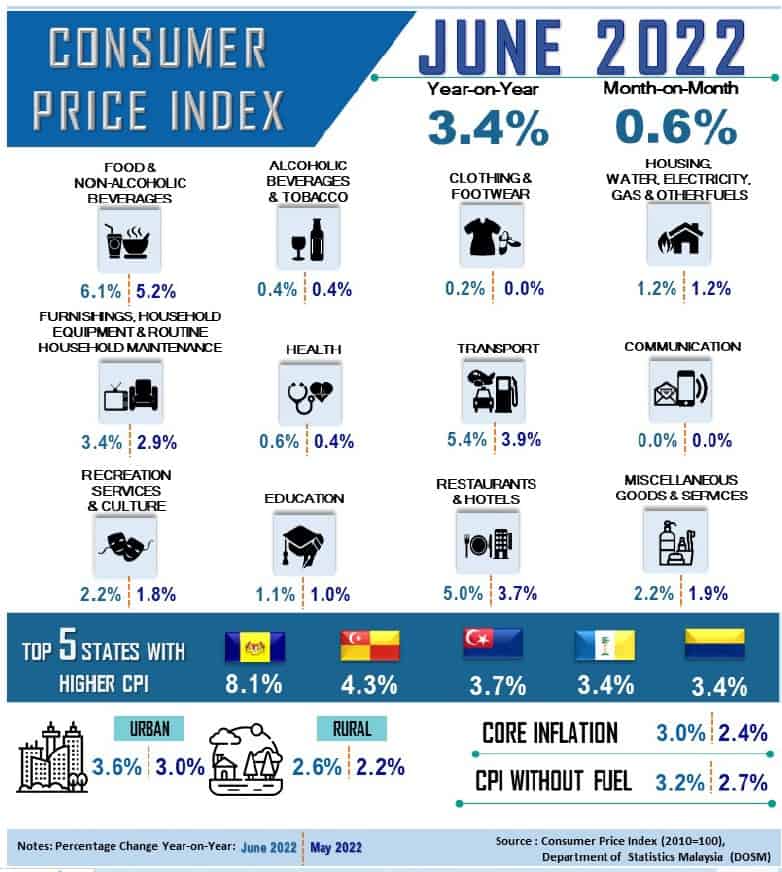
    In April 2022, our national inflation rose to 2.3%, which exceeded the average inflation of 1.9% in Malaysia from the period April 2011 to April 2022. And just recently, it was reported that inflation rose to 2.8% in May against consensus of 2.7%. A vast development indeed. In addition, US Federal Reserve’s (Fed) move to raise the interest rate hike by 75 bps on 15 June 2022 had alarmed all quarters over the world on what could possibly be coming next – big inflation. However, what does all these means? Especially to the people out there?

    Generally, if most people do not understand what the numbers above mean, they do know one thing – they are feeling the pinch from the price hike of basic necessities, which has begun trickling the wallets of every household. From there, they knew and sensed that the inflation period is here. Not very surprising but not pleasant either, inflation is to stay persistent this time around.

    In concurrence with the recent development, Mr Jason Wong, Research Manager of FSMOne Malaysia commented: “On one hand, inflation is reducing the purchasing power of consumers. On the other hand, rising interest rates means that consumers are “forced” to absorb these rising borrowing costs. These are double whammies for consumers which would lead to dwindling disposable income while wages and salaries are hardly changed.”

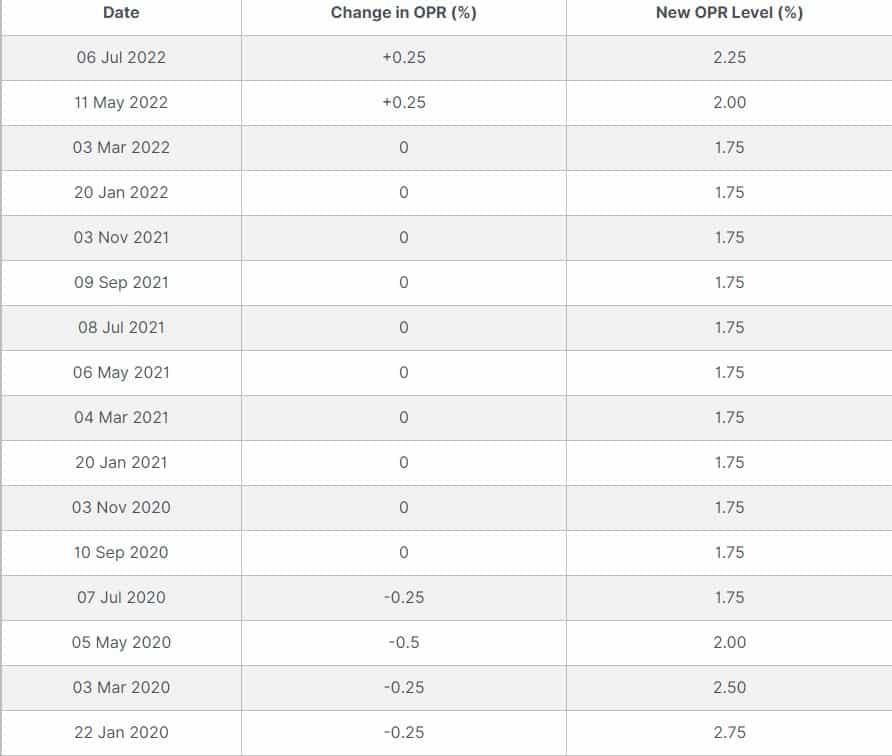
    “Nevertheless, Bank Negara Malaysia’s move through its raise of Overnight Policy Rate (OPR) in May 2022 by 25 bps to 2.00% is commendable as the central bank is being proactive to stave off rising inflation in the country. At the same time, we believe this move will cushion some of the negative impact on the Malaysian Ringgit caused by the Fed’s recent aggressive interest rate hikes.”

    “The Research Team at FSMOne foresees that the central bank will make another 3 more 25 bps hikes to the interest rate during the remaining Monetary Policy Committee Meetings (MPCs) that are set to take place this year. We believe the central bank does not wish to make the mistake like Fed did, by hiking rates too slowly and letting inflation to spiral out of control. Hence, BNM stays abreast on this matter,” said Mr Jason Wong.

    Translating this to the current daily living of majority of people, Jason further elaborated that the current economic situation has led to Hobson’s choice moves by the Government. “Government has started the removal of subsidies moderately. As the pandemic came along with the Ukraine-Russia war recently, where supply chains were disrupted and shortages increased, many household commodities prices have been soaring up. China’s lockdown at certain provinces also affected major productions of industrial parts that they supply to Malaysia and other countries. Domino effect took place and subsequently, our local production is delayed resulted from this and affected end users as well.”

    “All factors combined and ramped up, these contributed to the increasing inflation in the country. Malaysian Government is now challenged to cope with the increasing cost of many commodities,” added Mr Jason Wong.

    By 1 July, the prices of eggs and chicken are expected to increase from the current price, RM8.90 per kg. The Prime Minister recently announced that the new ceiling price for chicken will be announced by Agriculture and Food Industries Ministry (MAFI) soon. The price ceiling for bottled cooking oil weighing 2kg, 3kg and 5kg will also be removed on 1 July.

    Based on these factors, it is foreseen that Malaysians will be facing greater food security issues as food items, even eating out, will be more expensive. In addition, food supplies could be tighter than before which may lead to limited quantity to be sold to consumers.

    Besides food security, majority of Malaysians are challenged with job security in terms of disposable income, as basic items are getting more expensive and possibly overall wholesale, retail and trade sales would drop as an effect to this. Malaysians may have no other choice but to start cutting off expenses and tighten their budget to match with their monthly income.

    Not to mention commodities and energy prices are also increasing higher than ever. RON97’s price is now lifted to RM4.84 per litre from RM3.94, which was last recorded on 11 May 2022. Although the price of RON95 has not changed from RM2.05 per litre, but it is foreseen that the price of RON95 may follow suit RON97 at certain point of time. It is just a matter of sooner or later. However, the water and electricity tariff maintain in Peninsular Malaysia.

    What does this mean to all Malaysians? Are we expecting recession in the near future?

    We are living in the bubble of protection from the Government today, with the lifting of fuel subsidies, like a balloon, as the air pressure increases internally, it’s only a matter of time, the rubber material gives way and pops.

    About FSMOne Malaysia and iFAST Capital Sdn. Bhd.

    FSMOne Malaysia (previously known as Fundsupermart.com Malaysia) is a Multi-Asset Investment Platform under iFAST Capital Sdn. Bhd. (“iFAST Capital”), established in Malaysia since 2008.

    iFAST Capital is a holder of a Capital Markets Services Licence (CMSL) and is licensed by the Securities Commission to deal in securities (includes Stocks & ETFs, unit trusts and OTC bonds), dealing in private retirement scheme, offer investment advisory services, financial planning services and fund management services in relation to portfolio management.

    iFAST Capital is a Federation of Investment Managers Malaysia (FiMM) registered Institutional Unit Trust Adviser (IUTA) and Institutional Private Retirement Scheme Adviser (IPRA). It is also an approved Financial Adviser licensed by the Central Bank of Malaysia to conduct financial advisory business and also a Participating Organisation of Bursa Malaysia Securities Berhad.

    iFAST Capital is a subsidiary of iFAST Malaysia Sdn. Bhd. which is wholly owned by iFAST Corporation Ltd. (“iFAST Corporation”). iFAST Corporation is headquartered in Singapore and the iFAST group of companies are also present in Hong Kong, Malaysia and China. The company was incorporated in Singapore on 10 January 2000.

    iFAST Corporation was listed on the Singapore Exchange Mainboard in December 2014.

  • A Comprehensive Approach To Building Personal Wealth

    A Comprehensive Approach To Building Personal Wealth

    When it comes to success in personal finance, investors oftentimes relate their personal wealth to a measuring performance index. We are immersed in our busy schedules primarily to create more wealth.

    It is fair to say that when it comes to wealth creation, everyone will be interested, but not everyone will know how to achieve it. Some may end up getting a less desirable outcome from their wealth creation attempt.

    Creating More for the Future

    Generally speaking, the goal in mind in wealth creation is so that our future wealth will be more than the wealth we presently have.

    If you are not careful, however, you can get wealth reduction as an entirely opposite outcome instead. This will be unfortunate as we will not be able to turn back time, which eventually means we will have to either delay our plan, or make drastic adjustments to the new reality of the future.

    Invest to Create Wealth

    A simple way to wealth creation is to increase income while keeping expenses at status quo, or spend less while income remains status quo, or we achieve additional wealth via investing.

    However, chasing more income requires trade-offs like having less time for other aspects of life such as family time, hobby or leisure. Likewise, to spend lesser also requires compromise in not living the most desired lifestyle or you may have to forgo changing to the next new smartphone, or fashion trend. Investing our hard-earned money also has a trade-off. It needs the investor to take a risk and accept that “cash is king” is not always right.

    Throughout my experience and the many cases I have seen, it is common to observe that people have their primary focus on growing their wealth so much that they at times overlook some factors. Avoiding wealth reduction or reducing the extent of wealth reduction is perceived to be one step closer to greater future wealth.  

    In sport, sometimes people say that the best defence is the best offence, because you are more likely to be in a position of not being defeated. Thus, we should try to train ourselves to consciously pay attention to minimising the leakages or waste in our financial system while we attempt to invest to grow our wealth. At least when we do this simultaneously, we will have more than “one engine” running our wealth creation process.

    In the worst case scenario, investment outcome may be capital loss and wealth reduction due to certain vagaries such as paying medical bills from our own hard-earned savings, penalty on income tax bills, or under-estimating inflation, overlooking on currency hedging, children’s education expenses, and so on.

    Wider View of Personal Finance

    As a financial planner who believes in comprehensive financial planning, I would suggest that a person look at personal finance from a comprehensive angle that includes:

    • Cashflow and debt management
    • Retirement planning
    • Education fund planning
    • Asset protection planning
    • Tax planning
    • Estate planning
    • Insurance planning
    • Investment planning

    It is not difficult to hear real life stories where a person has set forth to invest their money hoping to see a positive return on investment (ROI) in a few years’ time, only to find that their capital was lost. In fact, it could be that only a handful of investors are well aware of what they are investing in. Many of us may not know that we are paying excessive fees for the investment, or some may not even know that such fees exist. Ultimately, fees are always a factor that will eat into our return.

    Risky Ventures

    I have also seen investors who disregard the need to have health insurance, but they are very focused in making risky investment such as penny stocks, or leveraged investing. Wealth creation strategy like this generally assumes that life will move in a straight line and the anticipated investment return will be positive and without much volatility that may hurt their standing.

    But in real life, anything could happen, and we may have sudden need of cash and fund, if we are not careful and do not have a decent financial foundation, we may then be forced to put our hand into our investment and make unplanned withdrawal, if at the point of withdrawal, the investment is making a loss, we will then be realising those losses. This is a sure way to lose your money, and if you are sane you will not be interested to do this.

    Apparently, “cash is not king” but cashflow is king. Therefore, when we set out to take adventurous ventures with our money, or to create a new business start-up, it is best we ensure that our cashflow position is within our control and is stable, and that we have a safety net to cushion us should there be an unexpected fall. This is what people usually call an emergency fund or buffer.

    When our cashflow situation is healthy and we also prepare a safety net to weather challenges and unexpected events, then our wealth creation process will become less risky. An entrepreneur personal financial management will very likely impact the financial success of their business, and vice versa. So, it is also important for business owners to separate their personal financial affairs from their businesses. As we embark on the journey of wealth creation, perhaps it is in our best interest to recognize that there are things that are well within our control to reduce or increase wealth creation process will become less risky.

    An entrepreneur personal financial management will very likely impact the financial success of their business, and vice versa. So, it is also important for business owners to separate their personal financial affairs from their businesses. As we embark on the journey of wealth creation, perhaps it is in our best interest to recognise that there are things that are well within our control to reduce or increase wealth.

    About the author

    kevin neohKevin Neoh is a NextGen Money Coach who works with people to help them transform their relationship with money to improve their lives with the money they have. Kevin can be contacted at kevin@nextgenadvisors.my and www.kevinneoh.my

  • Debt Management: Bad Debt vs Good Debt

    Debt Management: Bad Debt vs Good Debt

    A middle-aged executive named John finished work, drove home, and the very first thing that he saw was an envelope that contains the latest credit card statement. It states:

    Outstanding Balance: RM 36,867.44.

    He was overwhelmed and pondered, “How on earth am I going to clear off my credit card debt? It’s way too much, and I don’t have much cash in my bank account to do so. I’m so screwed.”

    If this sounds like you, fret not – let this article be a helpful guide on how to move forward.

    1. What’s a Bad Debt?

    First, not all debts are bad. There are two types of debt: Good Debt and Bad Debt.

    Good debt is debt that makes you richer. For instance, property investors are experts in using debt as their leverage to expand their property portfolio and thus, have become wealthier as their properties’ value continue to appreciate over time.

    Bad debt is debt that makes you poorer. For instance, many borrow money to buy things where their value drops over time, thus, resulting in the person becoming poorer. These debts include credit card debt and personal loans, where the interest costs are substantially higher than collateralized obligations like a mortgage.

    2. Discover the Root Cause

    debt root problem

    For some, such is life. For many people, their debts may stem from medical bills, a failure in business, a pay cut, or job loss. If this is you, just know this: It’s temporary and you may proceed to Point #3 to work on a solution.

    In most cases, having excessive bad debt is more than just a financial issue – it can be a psychological issue. I believe there is a deeper cause that might be the main culprit to your financial problems. For example, let’s say now you don’t have much money. Why do you:

    • Buy stuff that you do not need?
    • Attend expensive social gatherings?
    • Go on a holiday trip overseas?

    3. Work with a Partner

    debt

    If you are young and single, you may consult your parents for some financial advice. In many cases, you might even receive some financial grace which is much needed as a temporary relief to your problems.

    But, with that said, you might lose a valuable chance to improve your financial intelligence as you’ve been bailed out. But, if you opine: “I still want to solve the issue like a man”, then your next best option is to find a friend whom you trust and is more financially-savvy than you to impart some financial wisdom to you.

    If you are in a relationship, it’s ideal for you to work on these financial issues as a team. It’s helpful, but not easy, to be transparent about it and to find the solutions together. One thing is for sure: Both of you will come out stronger and more refined as a couple after you have cleared your bad debts.

    4. Go on the Offensive

    If you have little financial resources to work with, you may set a small goal to raise another RM500 a month which is dedicated to clear off your bad debt.

    It may be hard initially. But, if you have learnt how to raise RM500 a month to clear bad debts, very soon, you’ll also know how to raise even more which could be used for your investments.

    Here, I’ll share a guideline that enables you to take baby steps towards your freedom from debt. Firstly, you can split the RM500 a month into two categories:

    • Earn RM250 a month
    • Cut RM250 a month in expenses.

    Secondly, here’s a list that you can do to:

    Make RM250 a month

    • Do Overtime
    • Make more sales if you’re a salesman.
    • Take up one or two freelancing jobs.
    • Sign up as a Grabcar driver.
    • Have a part-time job.
    • Give tuition classes to school kids.
    • Sell your unwanted stuff on eBay or Mudah.my
    • Refer customers to your business friends for a commission.
    • Join MLM, sell insurance, but please … don’t join money games.

    Save RM250 a month

    • Track your expenses. You’ll find items to cut on very quickly.
    • Say ‘No’ to expensive social gatherings.
    • Say ‘No’ to smoking, alcohol, nightclubs and KTVs.
    • Say ‘No’ to gambling.
    • Cut entertainment expenses.
    • Cancel expensive gym memberships. Run in the park or do Tabata at home.
    • Cancel Low-Yielding Unit Trust Investments.
    • Cancel endowment plans with Low Sum Assured.
    • Exercise delayed gratification.
    • Quit drinking Starbucks or reduce four RM15 drinks a month.

    5. A Word on Balance Transfers

    debt credit card balance transfer

    Being aware of the latest promotion of Balance Transfers is helpful. Having said that, it’s essential for you to check the following before agreeing to do a balance transfer on your credit card debt:

    • Is it on an Effective Rate or Flat Rate?
    • Is it calculated based on an Annual Rate?
    • What are the clauses for Early Repayment?
    • How much is your monthly repayment after doing balance transfer?

    If you are not sure whether a Balance Transfer is to your advantage, you may consult a trustworthy friend first before proceeding with it.

    About the Author

    This article is co-written by KC Lau and Ian Tai.

    Ian Tai is a Dividend Investor. Financial Content Machine. Producer of 200+ Articles, Weekly Host and Presenter at KCLau.com. Co-Founded DividendVault.com, an online educational membership site that empowers retail investors to build a stock portfolio that pays rising dividends in Malaysia and Singapore. 

    KCLau is a financial educator, having published seven books including the current bestseller Money Smart, and co-created a dozen online financial courses. He gives away his popular Money Tips e-book volumes free at his website: https://KCLau.com

  • Investing With Recession Fears Looming, Are We Nearing Market Bottom?

    Investing With Recession Fears Looming, Are We Nearing Market Bottom?

    Based on the 12-months Google Trends searches, recession is a very hot topic in the market. The search peaked in mid-June 2022, but has been showing some decline lately.

    This could be the result of the recent market shift where the equities market have shown signs of recovery just several days before the end of June, whereas the commodities market showing broader declines. The decline in commodities market potentially signaling the inflation’s peak, and that is a good sign for the equities market.

    But one needs to also understand that the diminishing demand for commodities also tell us the economic activities is slowing down as well.

    1. US Equity Drawdowns And Recoveries

    The S&P 500 index has entered bearish territory but has surfaced from that territory on 24th June 2022. Referring to the above chart, the declines or the drawdowns of the US equity is not as bad as it was in the 1957-1959 and not as devastating as it was during the start of the pandemic in 2020. The recovery made during the post-pandemic years was swift and strong, recording a 142% gain. It shows how resilient the US equity market back then when faced with crisis and uncertainty.

    But the question is, will it be the same this time when there’s higher inflation, supply chain crisis and geopolitical tensions? To have a simple answer to those questions, we can refer to the Average VIX index – an index that tell us on the market’s fears.

    2. Fear Index (VIX)

    Referring to the Average VIX chart above, we can see how the fear index is closing in to the recent market drawdowns that knocks down many businesses & industries globally. Year 2022 (YTD) is the fifth year where the average VIX reading was among the highest since 1990. And during this time the equity market showed potential signs of recovery from market bottom with the lowest VIX reading compared with the other highest VIX reading in history.

    Will this be the sign of hope most of us look for? The unit trusts market have been hit hard recently, with almost no hope for decent returns to fight against inflation.

    3. Presidential Election Cycle

    We need to take several other factors into consideration in order to clear from the market fog or market noise. First we need to understand what market cycle we are currently in. Most will point out that we are in the VUCA (Volatility, Uncertainty, Complexity, Ambiguity) market. But if we look more closely by studying the market cycles, we are currently in the “Mid-Term Presidential” which affects the US markets and the global markets in general.

    Based on the historical market cycle patterns, the Mid-Term Presidential cycle is very volatile, with indecisive market movements. We have experienced this indecisive market direction since the start of the year. The market direction could give us some hope of positive gain but it quickly fades away. June normally is the weaker month for the equities market and may spill over to other equities markets outside the US.

    Market recovery could potentially happen towards the end of the Mid-Term Presidential cycles and continue its ascend move during the Pre-Election Presidential cycles as depicted from the chart above.

    Past studies since 1990 also shows that Bursa Malaysia’s market direction has a positive correlation with the market movement in the US. Therefore, we can also use Dow Jones market movement as the benchmark on Bursa’s potential market direction.

    4. Equity Fund Flows

    The second factor that we need to observe is the equity fund flows during market corrections. An interesting data provided by EPFR, Haver and Deutsche Bank Asset Allocation depicts that the fund flow into the equity market has been positive and robust this year.

    We might be asking what may be the positive reasons behind that move? It could be from contrarian beliefs. Normally the contrarian will move in the opposite direction of the market direction or beliefs. AAII (The American Association of Individual Investors) is the best source for the contrarian market studies and beliefs.

    5. No More Bears?

    Based on the recent data and chart of AAII provided by Bloomberg, the bearish sentiment reading has hit an all-time high since the 2008 Global Financial Crisis (GFC). Normally with the bearish sentiment reading hitting this high of a level, it will tend to bounce back down and signal a market bottom. Or in layman’s terms, the start of market recovery.

    6. Solid Corporate Earnings

    Next we can refer to corporate earnings, which could be the third data to support potential market recovery from recession. Data from JP Morgan below shows just how resilient the corporate earnings during major market correction. All major equity indices from Europe, Japan and the US show positive corporate earnings despite experiencing heavy market drawdowns.

    7. China’s Comeback

    The Chinese market on the other hand is also showing recovery after facing lockdown in all major
    cities. It has disrupted the global supply chains to date, but with the new economic stimulus
    package unveiled recently by President Xi Jinping could potentially boost supply chain recovery
    and help in the global economic growth over the years.

    A chart provided by Bespoke provided a key fact that the market recovery has happened in China
    through the KWEB (KraneShares China Internet ETF). KWEB has outperformed the SPY (S&P
    500 ETF) by a considerable margin (-11.9% vs. -20.8%). Since late May, KWEB has gained
    29.7% compared to a decline of 4.5% for SPY.

    Will recession just briefly come to us in 2022? Is it time to start shopping in the equity markets?

    With all the facts from the previous data and charts, we can approach the equity markets carefully without rushing to buy any stocks that’s making any bounce from the bottom. Listen to the music that the market is playing. We will start to add more stocks buying when the markets continue to make new highs or progressively moving higher from the market drawdowns.

    8. Attractive Share Price

    A quick look into the 5 largest stocks in the S&P 500 as depicted by the chart above, none have any forward P/Es above where they were in 2020. However, to date all of them still have a positive EPS for next year, again showing resilient in negative market environments.

    Some of them have even shown a decent bounce from their 2020 lows, particularly Amazon and Meta Platforms (FB) depicted by the chart below. All other stocks are able to sustain above the lows at the start of 2021.

    Source: https://www.tradingview.com/x/wD8nBgam/

    About the Author:

    Mukhriz Mangsor, ACSI, CFTe, MSTA, FPPP has nearly two decades of experience in financial investment and trading. His clients include financial education, financial institution and prop trading firms in Brunei, Canada, Malaysia, Singapore and the US. He is currently Head of Global Market Strategist at Quantdynamic Research Company and can be contacted at mukhriz@quantdynamic.com.

  • The Future of Retirement?

    The Future of Retirement?

    Retirement, is defined as the ending of working phase in life, which is anticipated to be one that is dominated by leisure that is paid for by savings and benefits accumulated during the employment phase. This is how most investment companies sell retirement plans ideas anyway.

    There seems to be a great divide of lifestyle – before and after retirement period.  But most people who have experienced the shift would tell you otherwise, especially as we journey into the future with increased longevity, greater responsibilities, eroding filial piety, shifting attitudes and different economic landscape.

    The idea of retirement would be rather different, say by 2050. I would think that in the future, the younger cohorts may not know the word retirement, either due to circumstances or by choice.

    Stop Working? No Way!

    “Oh I don’t plan to retire. I’ll work till I die. It’s more fulfilling.”

    This is a phrase we hear increasingly often nowadays. Unfortunately, this may soon be a reality for many of us, as the sociographic landscape is bound to evolve in years to come.

    The societal acceptance of single living or family without kids has dropped birth rates historically low, causing our projected population to be made out of a growing number of the elderly.

    This would undoubtedly affect our dependency on the older generation to contribute to the workforce. Coupled with the increase in retirement age following the increase in life expectancy in the next 30 years, we would have no choice but to let the elderly continue working for the betterment of our economy.

    Work? Leisure? Why Not Both?

    retirement

    Friedmann and Havighurst who first defined the concept of retirement  which we think of today, in a 1954 research found that people at that time viewed retirement as a time that they could truly engage in leisure activities and that their working age was the period of time to save towards this end.

    However, fast forward to today and towards the future, when general standard of living increase and leisure becomes more accessible and affordable, not to mention more varied, we tend to enjoy both work and leisure at the same time.

    This makes the concept of retirement seems less convincing and attractive. In the past, people did not see work and the workplace as central to their life interests.

    Today, as the pace of economic growth quickens, we look at our career as being central to our lives, and as work and leisure become inextricably interwoven, Friedmann and Havighurst’s idea of retirement as a discrete phase of life dedicated to leisure becomes less relevant.

    Blessed With Longevity

    With progress in medical treatments and the rise of health-conscious lifestyle through better awareness, an extended life expectancy can be expected.

    There is a high probability that life expectancy will continue to increase in industrialised countries in the Americas, Australia and the Asia- Pacific. Already, the average life expectancy will increase in many countries by 2030 – with South Korea expected to exceed 90 years of age. (Source: A 2017 analysis by Imperial College London and the World Health Organisation)

    As life expectancy increases, people are also living healthier lives both physically and mentally, and being “too old” to work may seem to come much later in life than anticipated.

    Some would argue that the elderly would become irrelevant due to technological knowledge demands. We might be able to say this about the elderly of yesteryear, but it certainly would be different for current generations which grew up with technology and the Internet of Things, and whose lives are being intertwined with technology whether they like it or not.

    Shifting Attitudes – Do You Even Want To Retire?

    retirement

    As jobs turn into careers and knowledge or experience is prized over physical labour, we value our contributions to the society.

    With mundane jobs and repetitive tasks are replaced by technology and artificial intelligence, our society in the future would be left with nothing but intellectual jobs.

    Having to stop working all of a sudden would certainly leave a gap in a person’s purpose in life, especially when filial piety is on a downtrend as well.

    As we crystal-ball into the future, the very idea of retirement may seem invalid as people would continue working until they are mentally incapable. Indeed, the very idea that a person stops working and becomes irrelevant to society does not sound like a very appealing thing to do.

    Do You Still Need Financial Planning?

    With all that said, having a financial plan will allow you to successfully not retire. Financial planning is far more expansive than just “save for retirement.” There’s a lot of life to live between now and when or if you decide to stop working.

    There are plenty of other short-term goals and milestones in your life that you likely want to hit – starting a new venture, growing your family or buying a new home and traveling around the world. And financial planning provides a system and a process to make some of these goals possible.

    About the Author

    Alvin Kwan, CFP CERT TM is the executive director and head of financial planning at Redvest Wealth & Asset Management. He has over 12 years industrial experience in the financial industry, specifically in wealth advisory, private banking and stock broking. He was also a lecturer in areas of investment management, derivatives, and financial markets.

    We at Smart Investor and Redvest is committed to help you better manage your financials. Get a free consultation from an expert by filling in your details here: https://www.smartinvestor.com.my/SIxRedvest

  • The Concept of Investment

    The Concept of Investment

    When we talk about investment, there are a few important concepts I wish to share:

    According to a research on investment history return,  Asset Allocation contributes to the majority of historical returns. It means your investment should be in a portfolio which matches with your risk profile (conservative or high risk and so on) which should be properly diversified into different investment tools (such as Stock, Bond, ETF, REITS and so on), Region (Asia, Global, Europe) and Industry (Technology, Material and others) to ensure they perform better in all situations.

    Diversification is always encouraged as we all know the risk of putting all your investments (eggs) in one basket.

    investment risk profile
    Risk profile portfolio table

    The Risk Profile Portfolio Table is customised based on risk profile. However, this portfolio needs to be monitored from time to time and rebalanced every half year to make sure the percentage of each investment is still intact. (Sell some that have performed well and rebalance each investment percentage in the portfolio).

    If your risk profile has changed, this will involve a major restructuring of your portfolio but do not be afraid to change it.

    I used to invest in fund or stock that I liked and treated as an “individual”, but this did not give me a full picture of how my overall investment would look like, how much it is diversified and what the overall yearly return would be.

    There was a time where my stock investments were too diversified into so many counters and made the tracking a tedious job to do and I missed the opportunity to lock down the profit when it rose.

    The standard suggestion is to have about 10 to 20 stocks or five to seven funds in one portfolio but it also depends on the size of your portfolio.

    Start Early to Use the Power of Compounding

    The most valuable asset you have when you invest, is time. Every six years you wait to get started roughly doubles the required monthly savings necessary to reach the same level of net worth (let’s say 1 million of net worth).

    Procrastination is a very painful and expensive mistake when it comes to investment or any other financial goal. So, you should get started it right away.

    Referring to the book, The Millionaire Next Door, millionaires believe that one should start working early (after graduation) in order to utilize the power of compounding as soon as possible on the money earned.

    This changed my mindset because I thought “the longer time you spend on studying (until Masters or Ph.D.), the shorter the working life”. My friend who is the same age as me graduated five years earlier than me and he has a better net worth position than me when we compared notes in 2015.

    investment

    Referring the picture on Getting a Headstart, if we have a constant monthly saving of 10,000 and 12% of the rate of return yearly, by starting to invest five years earlier, you can double your total investment value after 60 years, compared to those who started late.

    Compounding is about the total value of the investment (capital plus interest) appreciating over the years. Do not wait to start only when you have a big amount to invest, a small amount can make big difference through the power of time.

    For example, a RM10 fancy coffee you buy each day for 30 years, if saved at 10% annual interest compounds to an astonishing RM600,000 at the end of the period.

    Dollar Cost Averaging

    investment dollar cost averaging

    If given a choice to invest monthly or yearly, choose the monthly option to take the advantage of Dollar Cost Average which can bring down the cost and get a better return.

    Do bear in mind that the ground rule of this concept is to make sure you have done your due diligence(qualitative and quantitative) on this investment (stock or unit trust fund) and monitor the performance of the investment yearly. Do not hesitate to switch to other investments if the fundamentals such as performance, management team and so on, of this investment has changed.

    About the author

    This article is written by Yong Chu Eu. He is the Founder, Principal, MFPC Shariah RFP, CPD/CPE, HRDF Certified Corporate Trainer of Money & Life, Financial Book Author, Licensed Financial Planner, E2E Financial Literacy Principal Coach & Local Media Guest.