Author: admin

  • Gen X VS Millennials In The Workplace

    Gen X VS Millennials In The Workplace

    There have been countless studies about the generational gap between Gen X and millennial workers, with the topic stirring up much debate to this day. Broadly speaking, Gen X are born between 1965 and 1980 and are currently 41 to 56 years of age. Millennials are born between 1981 and 1996, ranging between 25 to 40 years of age.

    With the Movement Control Order (MCO) forcing many businesses to operate remotely, many millennials took to the situation like a duck to water thanks to their digital savviness and familiarity with
    remote working tools. However, with offices reopening after the MCO was lifted, many now find themselves at a crossroads and are often reluctant to return to a centralised workspace.

    “The reality of the matter is that employees were forced to adapt to the culture of working from home, and just as they got accustomed, it is now time to revert to the old ways of working with added restrictions – the SOPS,” says Rita Krishnan, the managing director and training consultant of Impian Helang.

    To her, CEOs and management of any company will return to the office and face new challenges, some of which they have never dealt with in the past thanks to the unprecedented effects of the Covid-19 pandemic.

    “In the past, it was performance and productivity that mattered most for organisational growth,” she recalls. “But today, compassion with high
    emotional intelligence is crucial, being the way forward in managing the workforce, especially in retaining the talents.”

    In Deloitte’s 2021 Millennial and Gen Z survey, it was found that only 38% of millennials felt comfortable voicing concerns to supervisors about work stress.

    This suggests that many are unable to trust or anticipate a clash with higher ups about the rigours of work. A correlation can be drawn to 31% of millennials taking time off work due to pandemic-related stress and anxiety. According to the survey, almost half of them gave a different reason to their employers, likely due to a stigma around mental health at work.

    It is no surprise that CEOs and senior management figures today must be more well-rounded figures – able to lead and dissect numerical patterns as well as business strategy, but being able to relate to their subordinates on a more personal level rather than simply boss and employee. However, the difference in age can often mean that there is a clash in culture and expectations.

    The topic is widely documented and debated, with both sides often convinced that they are not compatible with the other. This often boils down to a mismatch in terms of ideology, with Gen X workers likely to espouse more traditional work values, while Gen Y or millennials subscribe to more flexible or unconventional working mantras.

    “Generally, Gen X are hard workers while Gen Y are smart workers,” she postures. “Gen X do not jump jobs and are comfortable with where they are. This may seem like the safer option but can also be dangerous as career progression is not usually an option.”

    What about the retirees?
    For all the talk of Gen X v s millennials, the pandemic has also depleted the savings of many retirees. This has resulted in an influx of retirees in their fifties and sixties re-entering the job market, but who may be under the impression that time has left them behind. However, Krishnan believes retirees have much to offer in terms of their knowledge and experience, and suggests that there are many job opportunities for such individuals.

    “Training and consultancy in sharing a wealth of knowledge, experience and skills that were useful then and useful now,” she shares.

    The experience accumulated by such individuals suggests that within them is a treasure trove brimming with a wealth of knowledge; they simply need to leverage this into potential job opportunities.

    “I believe in reinventing and recycling talents that upholds the reputation of recreating past performance. This is where retirees can attend the HRD Corp Certified Train-The- Trainer programme, for a new career altogether whilst recreating and reliving the successes of their past,” adds Krishnan.

    Job hopping a competitive disadvantage?

    Krishnan also suggests that the typical Gen Y employee prefers to job hop often in order to gain experience quicker as well as to be exposed to various industries. While she does not dismiss this career strategy, she highlights that it also has its pros and cons.

    “Employers are reluctant to invest in and develop employees who show no promise of ‘stayability’,” Krishnan explains.

    “The working style of Gen Y comes with the mindset of expectations – less work, more pay, with flexi hours.”

    This shift in mindset is evidenced by concrete data. The Deloitte survey indicated that job loyalty is slipping among millennials, with 36% of respondents open to leaving their current employer within two years if the opportunity arose, a drop from 31% in last year’s survey. However, 34% of millennials say they would only consider leaving after five years, which suggests it is not prudent for senior managers to paint the entire generation with the same brush.

    She believes that, although difficult, this difference in culture and expectations can be bridged with programmes that facilitate interaction between Gen X and millennials.

    “It is important to allow employees to explore their skills and abilities with the intervention through team bonding programmes where Gen X and Gen Y can interact and learn from each other,” says Krishnan.

    These types of considerations should be taken into account by HR departments, especially when it comes to upskilling the workforce, an area in which Krishnan is well-versed.

    “The pandemic has altered traditional training styles, and the responsibility of the HR department would be to select relevant training programmes related to industry needs,” she says.

    “At the same, employees’ morale and productivity levels can be elevated using positive reinforcement.”

    She is also a keen advocate for companies to develop a psychological connection with their employees, resulting in a relationship that presents “a sense of belonging”. This demonstrates the company caring about their employees’ personal development and workforce growth. Such a result would inevitably translate into a win-win situation for both company and employees.

  • Malaysia: Investment For Expatriates In A Global Context

    Malaysia: Investment For Expatriates In A Global Context

    There are many factors that expatriates must take into account when considering what to invest in.

    Whether you are risk-loving, or not, Malaysia has a lot to offer expatriates for work, pleasure or retirement. How much time you choose to spend in Malaysia may depend on your work schedule, family commitments and the availability of legal status as a foreigner.

    All these things change and so does the risk of investing in Malaysia. When you are deciding whether or not to invest in Malaysia, as an expatriate or a local, one way to make better decisions is to look at the risk and return on investment opportunities in Malaysia in a global context.

    Malaysia Country Risk

    Country risk is the uncertainty associated with investing in a particular country and, more specifically, the degree to which that uncertainty could lead to losses for you as an investor. Uncertainty can come from many different factors ranging from political and economic, to health and technological influences.

    A rule-of-thumb to use when assessing country risk is a global, or Asian, country risk ranking. For Malaysia the recent country risk rankings are varied and comparable to their Asian neighbours. Risk rankings are based on a variety of political, sovereign debt, perception of ethics indices and a combination of business specific factors, but how useful are they to the individual investor?

    Once you have taken the decision to invest yourself, your time and your hardearned money into Malaysia as an expatriate, then you can run through the list of assets that you might like to invest in and do a global comparison for each one.

    Your Time In Malaysia

    Is time more precious than money? It may be, depending on whether you have a busy job or are retired. Deciding how much of your time each year to spend in Malaysia and how much to spend in the rest of the world is a good way to assess your investment risk in Malaysia as an expatriate.

    With high growth rates in Asian countries and, until recently, ease of travel across Southeast Asia, Malaysia is the perfect hub from which to do due diligence on other Asian investment opportunities.

    Your Investment Portfolio

    Most investors, expatriate and local, diversify their investments amongst different asset classes. Malaysia offers the same, or similar, assets as most developed countries, which now includes cryptocurrency exchanges, but does that mean that Malaysia should be a large proportion of your investment portfolio? The answer to this depends on your personal investment journey.

    Entry, and exit, from Malaysia may be more complicated than you may have anticipated as an expatriate. If you are a Malaysian and see your future lying overseas, in Australia, the UK or elsewhere, then Malaysia may be a smaller part of your global investment portfolio.

    Short-, medium-, or long-term stays in any country does not necessarily equate to how much of your investment portfolio should be held there, but it could be an important factor. Analysing typical economic variables over time can inform your investment decision.

    The RINGGIT

    The first thing most visitors to a country look at is the exchange rate risk. If it is favourable, you may be pleased but it is not likely to cause you to extend your time in a country. Holidays, travel, work or living in a foreign country are usually motivated by more than one factor.

    In the case of Malaysia, the valuation of the ringgit against other foreign currencies is attractive for a holiday but does it make it a good investment for the medium- or long-term? Probably not; the Malaysian Ringgit is relatively weak, compared to major global currencies, and also volatile.

    Buying on dips may be good for speculation but long-term accumulation of currency in Malaysia, like many other countries, faces the risk of tightened global exchange and transfer controls.

    Real Estate

    Buying real estate in Malaysia is relatively easier for locals than for expatriates. Limits on purchase price for real estate for foreigners vary from state to state, and legal status as well. Compounding these risks, oversupply of property in Kuala Lumpur is palpable, but there are some real gems to pick up in good locations at affordable prices if you take expert, local real estate advice.

    Real estate in Kuala Lumpur is no longer below global market prices but there are many, great out-of-town locations still available at a fraction of global prices.

    Tax Rates

    Personal income tax and corporate tax rates are still relatively low in Malaysia. As an expatriate you can benefit from tax rates that are comparable to other neighbouring Asian countries and still below average global tax rates. A non-resident tax rate of 30% applies across Malaysia and 15% in Iskandar, Malaysia.

    This compares favourably to many countries in Europe where marginal rates of tax can be 40% or higher. Any good investment advisor will tell you that there is no point in making 100% if you have to pay 40% of it in tax. It also leaves you more to invest from your Malaysian income.

    Interest Rates

    Bank fixed deposit interest rates in Malaysia are still competitive, at more than 2% per annum, whereas globally interest rates can be as low as 0.1%. If you have built up a significant amount of savings, holding them in a riskless bank account in Malaysia could be a good investment in these turbulent times.

    Then there are higher interest saving options such as the EPF for salaried expatriates where annual interest rates, although variable in recent years, was a relatively attractive 5.2% per annum in 2020, with easy access to withdraw funds.

    Future Investments

    Crypto exchanges are nascent worldwide and Malaysia also has four regulated digital asset exchanges, namely Luno, MX Global, SINEGY and Tokenize. There is currently no capital gains tax on cryptocurrency profits in Malaysia, making it an attractive location to buy, hold and sell Bitcoin, Ethereum and other cryptocurrencies compared to other countries.

    If you are smart (and lucky), you may be able to realise large, speculative profits when you buy and sell cryptocurrency assets in Malaysia then invest for the longer term.

    Exit Strategies

    Exit from Malaysia may prove more difficult than you may expect, so do your homework and be prepared to face changing rules and regulations just like most other countries. A smart expatriate should think twice before he, or she, or they, make a long-term investment decision in Malaysia.

    One key country risk assessment that should be done before making an investment decision in Malaysia is your ability to transfer currency for foreign payments, or other uses. Such a country risk assessment involves weighing and assessing a variety of factors and potential, unforeseen future changes. If you are planning to retire in Malaysia, and never leave, then the only real risk is your inheritance. Due to the Covid-19 pandemic, and other factors, even this long-term view may need to be reassessed.

    A key question locals may ask you as an expatriate in Malaysia is ‘What are you doing here?’ It’s a good question, so why not ask yourself, as an expatriate investor, ‘What am I doing investing here?’ A good way to answer this is to put your Malaysia investments in a global context, then take it from there.

    Article by: Dr. Jonathan Di Rollo (PhD Econ)

    First published : Smart Investor Issue 369

  • The Basics of Forex Trading

    The Basics of Forex Trading

    The foreign exchange market, also known as the forex market, refers to a set of markets that facilitate the exchange of international currencies. According to Britannica Encyclopedia’s overview, the forex market is one of the oldest, biggest, and most liquid markets in the world. Today, most markets operate as over-the-counter (OTC) dealer’s markets, where two participants exchange assets over telecommunications channels.

    There are many reasons one might want to swap one currency for another: tourists, for instance, may buy local currencies while travelling, while international businesses may purchase foreign currencies to pay offshore employees. However, in the world of trading, investors exchange currencies with the goal of making a profit.

    If you’re interested in learning more about the complex world of foreign exchange trading, here are a few basic facts.

    How do traders profit from forex?

    Exchange rates can rise or fall by the minute. Traders profit from such changes by buying currencies while they’re undervalued, then selling them when their prices rise against other currencies.

    To illustrate: let’s say a trader predicts that the Great British Pound would become stronger than the US Dollar. Let’s also say that £1 was worth US$1.55. The trader then buys £1,000 for US$1,550. Later, his prediction comes true, and the GBP grows, with £1 becoming worth US$1.75. This time, when he sells his £1,000, he gets US$1,750, thus turning a profit of US$200.

    What is leverage?

    Traders can also increase their profits by making use of widely available leverage trading options. According to The Balance, leverage allows traders to invest a small amount of capital to use borrowed funds in large trades. Though the trader will still have to return the borrowed capital after the trade has been executed, they will receive the majority of the trade’s profits.

    Let’s say that the trader from the previous example wants to stake 15,500 USD in a trade. However, he only has 1,500 USD. Through leverage trading, he can use his 1,500 USD to borrow 14,000 USD, allowing him to purchase 10,000 GBP at 15,500 USD. If the exchange rate again shifts from 1 GBP for 1.55 USD to 1 GBP for 1.75, the trader can sell his 10,000 GBP for 17,500 USD. Returning the 14,000 USD he borrowed leaves him with a profit of 2000 USD.

    Of course, it goes both ways. If the trader’s prediction were incorrect, using borrowed funds would also amplify his losses. Thus, when trading on leverage, it’s important to only stake money you can risk losing.

    Where can I trade forex?

    To get started, traders must first create a trading account at a brokerage. These days, most transactions occur on forex trading platforms online, through websites, software, and mobile apps. According to an overview of trading platforms by FXCM, some of today’s most popular trading platforms include MetaTrader4, Ninja Trader, and FXCM’s Trading Station. These platforms are widely used because they offer resources that can help traders make smarter decisions. For example, some notable tools these platforms provide include access to advanced analytics, charting tools, and risk management applications.

    A note for beginners

    As with any financial endeavour, it’s best to enter forex trading with a plan in mind. As mentioned in our previous article The Importance of Financial Planning, a lack of understanding of financial risks and returns will make you vulnerable to errors of judgment, which can lead to bad trading decisions. Consequently, it’s important to take time to study the markets thoroughly before starting your trading journey. If you want some hands-on experience without putting your capital at risk, you can practice trading using virtual money on one of the many demo accounts available.

    Thanks to resources like leverage and helpful tools on trading platforms, forex trading has become more accessible. Beginners who want to try their hand at foreign exchange trading should study the market, its movements, and different trading strategies in order to safely engage in trading.

    This article was contributed by Alex Palmer.

  • Financial Planning: Things to Do After a Flood

    Financial Planning: Things to Do After a Flood

    The 2021 year-end flood which affected many areas nationwide surpassed all previous year’s floods within Malaysia.  These has financial implications on the lives of our fellow Malaysians. For those affected, here are some ideas on how to pick up the pieces and build resilience moving forward.

    1. After the flood – restarting your life

    Consider the immediate aids you can leverage on to restart your life and get back on track. These can come in the form of financial, food, or accommodation aid, life essentials such as clothes and household items, or even transport arrangements for stranded individuals.

    2. Get your mental health in check

    Be sure to stabilise your frame of mind and check your stress level. There are a number of free services and apps such as:

    • Talian KASIH (8am – 5pm daily 15999, WhatsApp 019-261 5999)
    • Naluri (03-8408 1748, 24 hours, English, Malay and Mandarin)
    • Selangkah – Selangor Mental Sihat (SEHAT)
    • MySejahtera (Digital Health > Minda Sihat)

    3. Gauge your financial situation

    Once more urgent and pressing matters are taken care of, you can now take stock of your current financial situation. Ask yourself:

    • What are my losses?
    • What are my family incomes?
    • What are my monthly commitments?
    • What are my debts?
    • What is the position of my current investments and savings?
    • What is my protection coverage for my life and assets (takaful/insurance for personal and workplace)?

    These questions will help you paint a picture of your financial situation and will quickly bring up areas of concern (if any) which you can focus on as you look to recover.

    4. Salvaging assets from flood damage

    The next step is to consider your current assets. Firstly, assess damage to items within your household. Check if you have household insurance and if yes, whether it covers special perils or not.

    Assess damage to your vehicles, and be sure not to start them as the electronic system will short-circuit; get tow trucks to haul it to a workshop. Depending on the make of your car, the repair cost may range from RM4,000 to RM10,000.

    Other things to consider:

    • If you are working from home, is your laptop and handphone provided by your company? Do you need to report up or make a police report?
    • Are your important documents destroyed?
    • Do you need to replace NRIC/birth and marriage/divorce certificates at the Registration Department, driving licence and road tax at the Road Transport Department (JPJ), and school certificates from the respective schools?

    5. Stay safe and healthy

    In such trying times, keeping healthy may be the last thing on your mind but it is very important that you do your best to follow Covid-19 standard operating procedures (SOP) by getting help from NGOs and volunteers for masks and hand sanitisers.

    Be wary of water-borne diseases such as typhoid, cholera and dysentery and use water-purifying tablets if you are unsure if the water is safe for drinking or you do not have access to clean water. Follow the dilution instructions that comes with the tablets.

    6. Rebuild your financial status 

    The information in point (2) above is important to guide you on your next steps. You may seek help from:

    • Agensi Kauseling & Pengurusan Kredit
    • A licensed financial planner at SmartFinance.my where you can talk to an expert

    Be on the lookout for scammers; they are heartless and only want your money. Only accept help from reliable sources.  When in doubt, err on the side of caution!

    7. Preparing for a future flood

    The financial challenges you face today is the basis of your emergency fund for the future. Therefore, it is crucial to start building one when you can. Transfer some of the risks to your protection coverage and tap into your network of friends or relatives that you and your family can stay with.

    Flood-proof your home and/or prepare your evacuation SOP and equipment (torch lights, inflatable boats, dry food, bottled water, charged power banks, clothes, blankets and toiletries in waterproof bags, disposable wares and bags). Be constantly alert of your surroundings. Chances are, it may be difficult to sell your home and move to another so you may need to continue staying in your current place.

    Review how you place your furniture and appliances. Some homes put them on platforms that can be jacked up to desired heights (granted, if water level too high, it can render platforms useless). Store critical items in waterproof boxes when the rainy season approaches. It may also be prudent to check if you can convert your rooftop to an emergency accommodation equipped with the evacuation items listed above?

    My heart goes out to all flood victims.  We are fortunate there are volunteers and NGOs that we can contribute to, who will organise, mobilise and distribute contributions to as many victims as they can.  I hope the above is useful to those affected. May you have a respite from your situation and the strength to ride through this tough times.

    This article is contributed by Linnet Lee, CEO of the Financial Planning Association of Malaysia (FPAM).

  • Restoring Symmetry – What is Breast Reconstruction?

    Restoring Symmetry – What is Breast Reconstruction?

    Dr Rica Farah Muhammad Abdullah Ichihashi, a consultant plastic and reconstructive surgeon at ParkCity Medical Centre, debunks the misconception that breast reconstruction is cosmetic or aesthetic, and explains that it is actually a procedure to restore the original breast form and symmetry.

    For women in Malaysia, breast cancer is one of the most common forms of cancer that affect them. Treatment for breast cancer sometimes includes mastectomies where part or the entire breast is removed. After the procedure, women have the option of undergoing breast reconstruction.

    Speaking to Calibre, Dr Rica acknowledges that while breast cancer patients are a main group of people that undergo breast reconstruction, any woman whose breasts have been disfigured or mutilated in some way can benefit from reconstruction.

    Consultation & Methods

    Dr Rica explains that more often than not, surgeons treating breast cancer patients would advise and educate their patients on what kind of breast reconstruction procedure to do. “It’s not really something that the patient themselves can choose, because they wouldn’t know what would be best for the situation they are in.”

    Dr Rica Farah Muhammad Abdullah Ichihashi ParkCity Medical breast reconstruction
    Dr Rica Farah Muhammad Abdullah Ichihashi

    Mainly there are three methods—an implant reconstruction whereby a saline or silicone implant is inserted, an autologous or flap reconstruction that uses a patient’s transplanted tissue, or sometimes a combination of both. Because there is also an exhaustive variant of techniques that can be used, some of which aren’t Googleable. It is best for the surgeon to determine which method is best for the patient based on their assessment. An open and comfortable consultation between the surgeon & patient is important. The decision for breast reconstruction and the type would be a joint discussion between the plastic surgeon, the patient and in some situations her family and loved ones.

    For breast cancer patients, Dr Rica stresses the importance of a quick recovery so that the patient’s cancer can be treated, which is the priority. “The aim is for an uncomplicated, quick recovery so patients are ready for any other cancer treatment such as chemo or radiotherapy.”

    Timing & Recovery

    Much like the method, Dr Rica mentions that the timing of the procedure can also vary and is dependent on many factors. Apart from the surgeon’s skill set, other factors to take into consideration are the methods used and the number of surgeons working on the patient at any one time.

    “Sometimes the reconstructive surgeon is the same surgeon taking out the patient’s tumour, so that procedure would evidently take up more time. But sometimes, if two surgeons are working simultaneously, the procedure would be completed quicker. Timing is quite subjective.” On average however, Dr Rica says a typical breast reconstruction surgery can take between an hour and a half to three to four hours.

    “Post surgery, most patients don’t stay in the wards for more than a week. They would return after being discharged a week later for a follow up and to remove their stitches, and more often than not, they are fully recovered between a month to six weeks.”

    As breast reconstruction is a surgery that’s meant to restore symmetry of the breast, there isn’t much change or adapting for the patient post-surgery. They are able to wear the same bras and clothes as before and if needed, proceed to undergoing their breast cancer treatments.

    “Patients are usually also very concerned about pain, but seeing as everyone’s pain threshold is different, I would say it is subjective,” Dr Rica remarks. “Generally however, most patients are home within the week.”

    Considering the Risks

    Like other surgeries, breast reconstructions have similar risks but also some that are specific to this particular procedure. The risk of asymmetry is more common with implant reconstructions, and also carries an increased risk of the rare cancer, anaplastic large cell lymphoma (ALCL). “If a patient undergoes radiotherapy post-reconstruction, they could sometimes be subjected to slight impact on the skin from the radiotherapy,” Dr Rica says.

    With autologous reconstructions, some risks are blood clots, necrosis of the transplanted tissue and weakness, pain or sensitivity around the donor sites. The interruption of the blood flow also can impact the way the tissue recovers post-reconstruction. However, since the tissue is the patient’s own, Dr Rica mentions that recovery might sometimes be faster with autologous reconstructions, and it might also yield better results. Some risk also include interruption of the blood flow to the reconstructed tissues, pain or sensitivity around the donor site.

    Making an Informed Choice

    Breast reconstruction offers women an opportunity for better quality of life, which is pertinent after going through an ordeal such as a mastectomy. By offering women this sense of normalcy after the loss of a breast, the procedure is one that is both healing and empowering. With so many considerations and risks to assess, it is important that women make informed choices about the procedure they choose to undergo, and to also be comfortable with the surgeon they consult with in order to get the best possible care.

  • Takaful Malaysia Launches Nation’s First Flexi Motor Takaful Plan with Pay As You Drive Daily Cover

    Takaful Malaysia Launches Nation’s First Flexi Motor Takaful Plan with Pay As You Drive Daily Cover

    Syarikat Takaful Malaysia Am Berhad (“STMAB” or “Takaful Malaysia”), the general takaful arm of Syarikat Takaful Malaysia Keluarga Berhad virtually launched Takaful myClick Motor FlexiSaver, the nation’s first flexi motor takaful plan with Pay As You Drive daily cover. Jointly organized by Takaful Malaysia and technology partner, Fusionex, the virtual launch was officiated by Dato’ Mohammed Hussein, Chairman of Syarikat Takaful Malaysia Keluarga Berhad.

    “Virtual launch of Takaful myClick Motor FlexiSaver signifies Takaful Malaysia’s unwavering commitment to driving product innovation and delivering superior customer value. Flexible protection plans are the future of the insurance and takaful sector. Offering insurance and takaful products in the new mobility space that are simple, flexible, and usage-based is revolutionising the industry. This means, consumers have the option to decide and pay for just the coverage they need, as and when they need it. With more people driving less these days, while some may face financial challenges due to the impact of the COVID-19 pandemic, Takaful myClick Motor FlexiSaver is the best option that suits the financial and protection needs of those who drive infrequently or own several cars and want to save more on motor takaful or insurance plan. The Pay As You Drive daily cover available under this plan is ideal and rewarding, as we give customers the flexibility to activate it the day before they want to drive and will only be charged for the days they drive. Suffice to say, Takaful myClick Motor FlexiSaver is a quick win for customers to enjoy great savings and peace of mind when they drive,” stated Dato’ Mohammed Hussein, Chairman of Syarikat Takaful Malaysia Keluarga Berhad.

    Takaful myClick Motor FlexiSaver is an online motor takaful plan that provides one-year coverage for loss or damage to your vehicle due to fire or theft, as well as third party bodily injury, death, or property damage. Offered through Takaful Malaysia’s online sales portal and Click for Cover mobile application, this plan provides a 24-hour roadside assistance program for unlimited breakdown towing service and minor roadside repairs, including tyre change, fuel delivery, battery change, and jump start. Featuring Pay As You Drive daily cover for accidental damage to your own vehicle and complimentary personal accident coverage of RM15,000 for the driver and all passengers as well as accident towing, Takaful myClick Motor FlexiSaver also offers add-on protection options for windscreen, personal accident, and key replacement. Customers can also enjoy an instant 10% discount when applying the base plan of Takaful myClick Motor FlexiSaver, and when activating Pay As You Drive daily cover.

    Chief Executive Officer of Syarikat Takaful Malaysia Am Berhad, Mohamed Sabri Ramli said, “In our continued efforts to meet ever-changing consumer expectations, and in line with the rapid pace of digital expansion in consumer purchases, it is timely that we introduce Takaful myClick Motor FlexiSaver with Pay As You Drive (“PAYD”) daily cover to better serve our customers with innovative takaful solutions while preserving consumer choice. The PAYD is the key differentiator, a unique feature that sets us apart from other motor insurance and takaful plans available in the market. Customers only need to sign up for the base plan of Takaful myClick Motor FlexiSaver via our online sales portal or Click for Cover mobile app, before activating PAYD through the mobile app. Eventually, we want to make it easy and hassle-free for customers to enrol in this motor takaful plan online, corresponding to our digital strategy to enhance product and service accessibility.”

    “Takaful myClick Motor FlexiSaver with PAYD not only provides a simple online application process along with an array of benefits and services offered to customers but also diversifies Takaful Malaysia’s product offerings and creates a value proposition for consumers at large. Takaful Malaysia’s strategic move to introduce this motor takaful plan will provide new revenue and value-producing opportunities for the company to stay ahead of the curve and remain competitive in the motor insurance and takaful market,” added Mohamed Sabri Ramli.

    Dato’ Seri Ivan Teh, Group Chief Executive Officer of Fusionex said, “Insurance, at its core, is a business that underwrites risks and helps people in times of need. As such, I applaud Takaful Malaysia for revolutionizing their offerings and empowering their customers to take more control over how they purchase insurance. As a long-term and fully-supportive technology partner, Fusionex pledges to lend our experience, expertise and cutting-edge technology to drive excellent user experience for Takaful Malaysia’s customers, and this partnership continues to innovate with the launch of Malaysia’s first pay-as-you-drive motor insurance.”

    “Together with Fusionex, which specializes in analytics, big data, and artificial intelligence, we leverage digital and social media platforms to actively promote this product. Ultimately, we want to ensure that our business is competitive and relevant to the growing consumer demands, particularly the tech-savvy generation. By embracing technology and digital tools to offer differentiated product offerings and services, we will be able to reach new customer segments through superior protection products and customer experience,” said Mohamed Sabri Ramli in conclusion.

    Takaful Malaysia was recently voted once again by Malaysians as the Best Motor Takaful Company in Malaysia for 2021/2022. The annual award clinched by Takaful Malaysia is based on the results of the online survey conducted by iBanding, an independent, knowledge-based company that provides transparent insights about the local insurance and takaful industry that ranks insurance and takaful companies in Malaysia according to the actual feedback from survey responses among motor vehicle drivers.

  • Learning More about Kidney Cancer

    Learning More about Kidney Cancer

    Dr J.R Sathiyananthan, a Consultant Urologist at ParkCity Medical Centre, explains about kidney cancer and the measures that can be taken to minimise the risks of getting it.

    Kidney cancer is a disease in which malignant tumour is found in one  or both kidneys.

    Kidney cancers account for a small proportion of all cancers, and the insidious nature of it makes early detection difficult.

    In 2010, kidney cancer was reported to affect 1.9 in every 100,000 Malaysians, while 2020 data from World Health Organisation showing 2.1 per cent of all cancers in Malaysia to be kidney cancer.

    Types of kidney cancer

    “Kidney cancer is generally divided into two—primary and secondary kidney cancer.

    “Primary kidney cancer comprises renal cell carcinoma, which accounts for 90 per cent of all kidney cancers, and other rare cancers such as lymphoma or medullary and collecting duct cancers.

    Dr J.R. Sathiyananthan ParkCity Medical Centre kidney cancer
    Dr J.R. Sathiyananthan

    “Secondary kidney cancer originates from cancers in other organs such as breast and colon. This in turn spreads to distant organs such as liver, lungs, and the kidney. This is not considered kidney cancer per se.,” says Dr Sathiya.

    Although there are instances when kidney cancers are caught early, most are diagnosed at a more advanced stage. This is due to a variety of reasons, including the cancer being localised and growing without causing any pain or symptoms. Besides that, the nature of the kidneys lying deep within the body, small kidney tumours cannot be felt during a physical exam.

    “At times when we examine patients for kidney cancer, it may have progressed to be locally advanced. Patients may have come in with flank pain, blood in urine, and sometimes the cancer is large enough to be palpable. The definite test which can confirm this is a contrasted multiphase CT scan, an imaging tool that provides accurate diagnosis. Besides that, percutaneous biopsies are also used in some circumstances to confirm the diagnosis and exclude metastasis from other cancers, bilateral cancers affecting both kidneys, or possibly benign tumours,” explains Dr Sathiya.

    How the disease progresses

    Currently there are no recommended screening protocols for kidney cancer in people who are not at increased risk. As of now, no screening test has shown to lower the overall risk of dying from kidney cancer.

    Kidney cancer is known in some instances to grow aggressively and invade the surrounding bowel and solid organs, which is called local extension.

    Other methods of progression could be blood borne, and spread to the lungs, liver, pancreas, lymph nodes, and bone. This is referred to as metastasis. When metastasis occurs, the outcome is expected to be poor as patient may not benefit from surgery.

    The spread could occur anywhere between six months to years depending on the type of kidney cancer. Clinical data suggests that cancers larger than 3cm have higher tendency to spread compared to smaller ones. Nonetheless, the more common renal cell carcinoma has a slow progression rate compared to the rarer varieties, leading to the possibility of better outcome.

    Treatment options

    “Localised kidney cancer can be treated by surgery. This can be done by removing the entire kidney, also known as radical nephrectomy, or removing only the tumour, with multiple factors taken into consideration prior to this decision. For metastatic kidney cancer, there is evidence that removing the kidney may benefit the long-term systemic treatment, and it is still an evolving area. For those with advanced cancer where surgical options are not available, arterial embolisation to block blood supply to the tumour can treat some symptoms,” describes Dr Sathiya.

    Although radical nephrectomy has been the mainstay of treatment for kidney cancer, the last 20 years has seen partial nephrectomy being the treatment of choice for most patients. This can be performed by open surgery, keyhole (laparoscopic) surgery, or robotically with the Da Vinci robot. The newer treatments include cryoablation and radio-frequency ablation, which can be used for tumours smaller than 4cm. Larger tumours may require multiple treatments.

    “However, the evidence for the newer treatments is not strong and only supported by inferior clinical trials. Nevertheless, they are a viable option for weak patients who are unfit for surgeries or could be used in combination with surgery in familial kidney cancers where multiple tumours are found within the kidney,” Dr Sathiya elucidates.

    Since it’s difficult to catch kidney cancer early, what can people do?

    “The known risk factors associated with kidney cancer are smoking, obesity, and hypertension. If you can avoid those or keep them in check, you could reduce the chances of getting kidney cancer.

    “Those who are at risk, for instance known family history of kidney cancer, should be aware of the symptoms and perform regular screening by ultrasound, blood, and urine test as prescribed by your Urologist,” highlights Dr Sathiya.

  • How to Choose the Right Investment Vehicle for Yourself?

    How to Choose the Right Investment Vehicle for Yourself?

    “Soo Yee, I saw someone on Instagram saying that stock investment is better than unit trust investment. What is your view?”

    This is one of the questions that I get from my client on investment.

    Everyday, we are bombarded by a myriad of information on social media. It’s especially important to process the information, rather than consuming it blindly. How can you take up a piece of investment advice from someone who does not understand your financial situation as a whole? Does the mentioned investment vehicle suit your investment plan?

    Is stock investment really better than unit trust investment? It depends. Stock investment might be good for that person, but it is not necessarily good for you.

    When it comes to investment vehicles that suit you, there are many factors to consider. Here are some of the questions to ask to find your preferred investment vehicle.

    1. Risk level of the investment

    • Is the investment low, moderate or high risk?
    • Does it match your risk appetite?

    2. Capital needed to start investing

    • Does the investment require low or high capital?

    3. Investment lock in period

    • Is there a lock in period for your investment?
    • Is the investment easy to sell?

    4. Guaranteed element of the investment & its income tax implication

    • Is there a minimum guaranteed return for this investment?
    • How does this investment affect your income tax?

    5. Other considerations on the investment

    • Do you enjoy handling property management?
    • Do you enjoy spending time doing stock research & analysis?
    • Are you skilled in stock picking or do you prefer getting professional fund managers to manage your investment?

    There’s a multitude of investments available, so here are five of the more common investment types for your reference:

    How to Choose the Right Investment Vehicle

    If you’re a business person (without EPF contributions) and concerned about payable tax, some of the investments that can be considered are EPF and SSPN. Both EPF and SSPN will help to reduce your payable tax.

    If you’re a person who doesn’t have time or enjoy doing stock research & analysis, perhaps you can look into unit trust investment that leverages on professional management to invest your hard earned money.

    In short, a suitable investment vehicle for you should be tailored to your financial situation as a whole. If you’re clueless about your investment planning, you may consider investing in a licensed financial planner. A licensed financial planner will be able to look at your whole financial landscape and advise on the right investment vehicles to help you to reach your financial goals.

    About the author

    Kuah Soo Yee is a Licensed Financial Planner (CFP) who is passionate about helping people make sound financial decisions and achieve their financial goals, and recently launched her own app. Her personalised strategies and advice have helped many to gain better clarity and take firm control of their financial future. She can be contacted at soo.yee@ipp.com.my

    Website
    LinkedIn
    Facebook
    Instagram

  • SC Launches Five Year Capital Market Masterplan to Support Malaysia’s Next Stage of Growth

    SC Launches Five Year Capital Market Masterplan to Support Malaysia’s Next Stage of Growth

    Capital Market Masterplan (CMP3) strives to build a capital market that is relevant, efficient and diversified to enable the Malaysian economy to emerge fitter and stronger.

    The Securities Commission Malaysia (SC) launched the third Capital Market Masterplan (CMP3), which will serve as a strategic framework for the growth of Malaysia’s capital market over the next five years. It seeks to leverage on the strengths and potential of the Malaysian capital market to accelerate economic growth that is sustainable and inclusive.

    The CMP3 was unveiled at a virtual ceremony officiated by Finance Minister YB Senator Tengku Datuk Seri Utama Zafrul Tengku Abdul Aziz.

    Speaking at the launch, the Finance Minister said, “The CMP3 fits well into the nation’s aspirations as one of the key enablers that will pave the way for a wider population to participate in the nation’s growth by enabling more inclusive and accessible investment products and distribution channels. With the CMP3 as a strategic guide for our capital market over the next five years, I am confident that it will continue to play an important role in the Malaysian economy.”

    Datuk Syed Zaid Albar, Chairman of the SC said, “Malaysia is now at a critical juncture in our post-pandemic journey. It is imperative for the capital market to continue to support the economy as we transition into an inclusive and sustainable nation. The progress in the capital market cannot be measured solely by growth and size, as it also has to serve the underlying needs and aspirations of the country and its people.”

    The CMP3 takes into consideration global megatrends that will shape the recovery and growth of global and Malaysian economies as it steers the capital market towards three desired outcomes:

    i. Relevant to the development of the economy and its stakeholders;

    ii. Efficient in capital mobilisation and in achieving the desired regulatory outcomes; and

    iii. Diversified to create value for all participants.

    To achieve these desired outcomes, the CMP3 outlines six key development and regulatory thrusts that will collectively serve as pillars in developing strategic initiatives over the next five years.

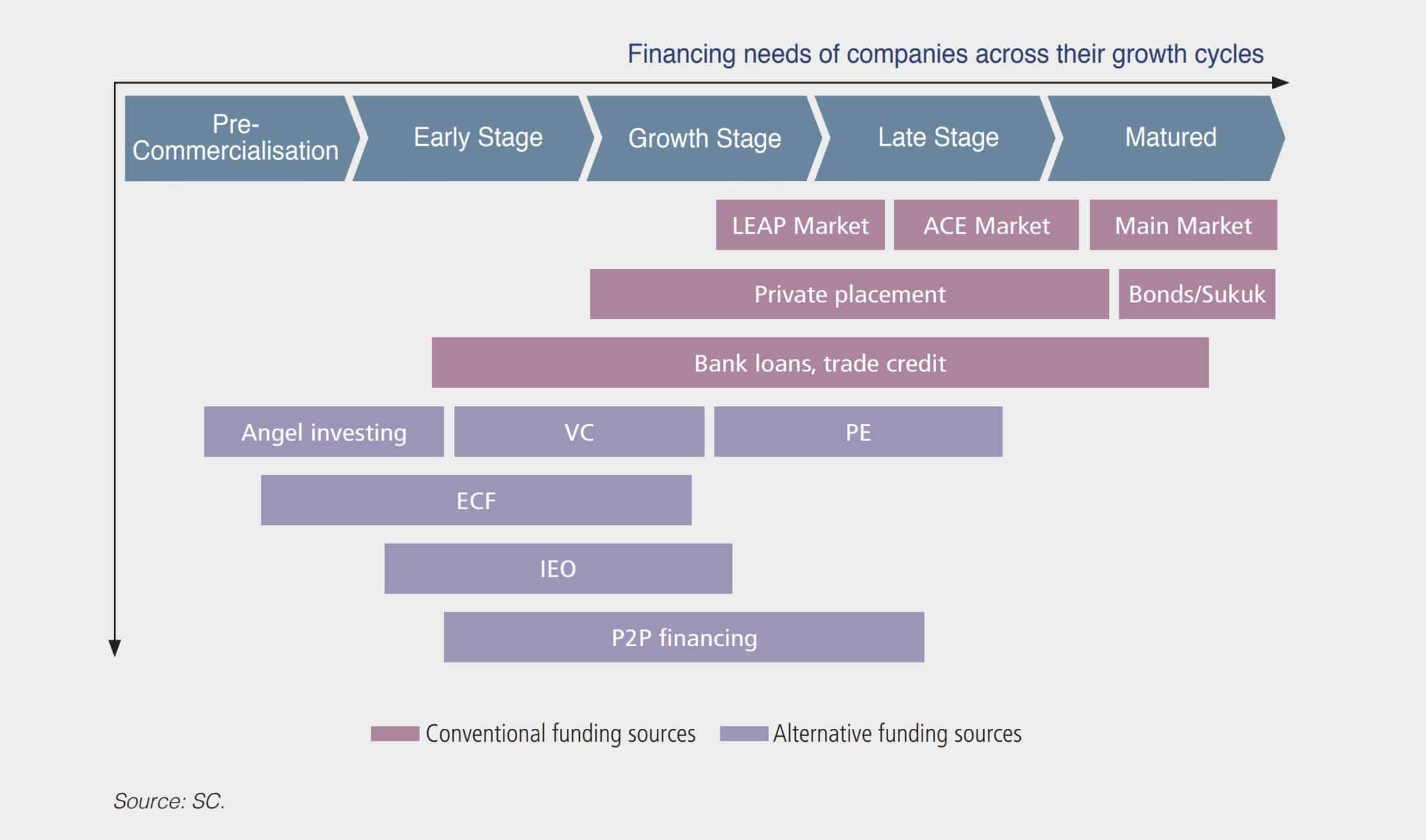
    The first development thrust is facilitating fundraising for competitive businesses through a diverse market and intermediation ecosystem. The CMP3 also aims to empower all Malaysians to invest for their future and promote digital inclusion and protection for vulnerable investors. Furthermore, through the Sustainable and Responsible Investments (SRI) and Islamic Capital Market (ICM) pillars, the CMP3 aims to shape a stakeholder economy by mobilising more capital towards sustainable businesses.

    In tandem, the SC’s regulatory approach will also evolve in response to changing trends and market landscape. The CMP3 strives to embed greater shared accountability within the capital market, particularly corporate responsibility to stakeholders beyond short-term profitability. It also aims to achieve a more efficient regulatory outcome and greater efficiency in investor protection through swift, effective and targeted enforcement and supervision approaches. In addition, as the industry becomes more digital, the CMP3 envisions greater use of technology – both RegTech and SupTech – for greater efficiency and deeper insights.

    “It will be our collective responsibility to bring these strategic thrusts and desired outcomes to fruition, for us to achieve meaningful change. This is a shared journey for all of us to undertake. We will be stronger together,” concluded Datuk Syed Zaid.

    Over the last two decades, the Capital Market Masterplan 1 (2001 – 2010) and Capital Market Masterplan 2 (2011 – 2020) have successfully expanded the capital market while ensuring market stability and integrity. Malaysia now has a well-diversified capital market, with an equity market that has over 900 listed companies, a bond market that is the third largest in Asia, an Islamic capital market that is innovative and well-regarded globally, a derivatives market that leads in crude palm oil price discovery and a unit trust industry that is one of the largest in the region.

    In addition, governance strategies implemented during the previous masterplans have ensured robust regulatory oversight to enhance confidence in the integrity of Malaysia’s capital market. The Malaysian capital market regulatory framework is benchmarked and ranks highly internationally with regards to, amongst others, investor protection standards, corporate governance and enforcement capabilities.

    The CMP3 will build on this solid foundation to pave the way for the next stage of Malaysia’s market evolution and growth.

    To learn more about the CMP3, please visit https://www.sc.com.my/cmp3

  • What Is Your Money Mindset?

    What Is Your Money Mindset?

    This is the first part of this six-part series, where these topics will guide those who have just started to work or have just started their journey to build a strong financial foundation. Before we set out to achieve anything, it always starts with our mindset. 

    How do you know what your money mindset is? It’s how you feel about and view money. It helps to form your decisions on how you manage money by saving or spending it. How you believe money can work for or with you, will decide how you live your life in the future. Every single day, you’ll make many small decisions that will push you forward financially or set you on a reverse course; it’s entirely up to you! 

    Some of the great money mindsets are listed below:

    • I have the ability to spend but I also empower myself to say “No”
    • Everyone has their own path and I have mine
    • Achieving financial goals are possible when I work towards them

    As Henry Ford said, “Whether you think you can, or think you can’t – you’re right.”

    Here are three ways to improve your money mindset:

    1. Money is a tool, not a goal

    Think of money as the fuel to your car. Is fuel considered the destination or is it one of the raw materials needed by your car to bring you to your destination? 

    If your answer is the latter, that’s correct! We exchange our time, energy and skills to earn money to buy us the things we need or want. Through your various life experiences, you may think that money is the answer to everything, but this isn’t true if you don’t know how you would like money to help you in life.  

    When you start seeing money as a tool, it’ll help you think about what your actual goal is. A simple goal could be living a life filled with fun and joy, where you enjoy travelling and eating – this will require money in order for you to fulfil this goal. 

    As you start setting goals for yourself to aim for, they also provide a purpose for your money to work on and naturally, you will start allocating your money to where it should belong. 

    2. Money needs to be managed

    Did you know that most winners of the lottery actually end up losing all the money they won and go bankrupt in a few years? This is hardly surprising because if a person doesn’t know how to manage RM1,000, then they will definitely not know how to manage RM10,000. The same logic also applies to you. If you work smart and hard to earn the money you have, why not take the initiative to learn how to manage, allocate and save your money

    You can set up a few accounts to save and segregate your money. For starters, these could be a savings account, fixed deposit and money market. Although these accounts may not serve as long-term wealth builders, you can use them to practice saving what you earn. When you continue practicing this, it then develops to become a habit. 

    Assume your total take home pay for the next five years of working is RM200,000. How much do you think you would like to keep from this amount? Would you like to save RM20,000 or RM40,000 or even more? What you want to save entirely depends on you. 

    3. Using money is like two sides of the same coin

    The “opportunity cost” or “trade-off” is defined as the loss of alternative choices when you make a decision on how to use your money. This is the same thing that happens if you flip a coin – it either lands on heads or the tails, and never on both sides.

    For example, let’s say you decide to save RM10,000 every year from your take home income of RM50,000. By saving this RM10,000, you gain additional money in your savings account. However, you may miss out on having more fun by travelling, purchasing new gadgets, or buying new furniture that you might want to have. 

    Before making any decisions regarding money, learn to think about the potential opportunity cost or trade-off that you have to make. Will it be something you’re willing to miss out on? Would the trade-off matter in the years to come? Would your decision help to build the life that you want in the future? 

    If the decision isn’t urgent and involves an amount of money that’s a lot to you, and you’re not comfortable making it, then don’t. There is no harm in pausing and thinking through or seeking opinions from the financial planners that you know. For all you know, you may have just saved yourself from future troubles if the initial decision goes against you. 

    Finally, improving your mindset isn’t a “been there, done that” type of destination. It’s a continuous effort to enhance and practice, just like how we build our body muscle, otherwise our body muscle will slowly turn into…body fat. 

    Stay tuned for my next topic in this series!

    About the author 

    Fong Woon Bing is a licensed financial planner who has coached, improved and broadened the mindsets of many people whom he works with, bringing them closer towards achieving their life and financial goals. He can be contacted at fongwoonbing@vka.com.my