Author: Media OutReach Newswire

  • Dr Maye Musk, author, supermodel, and dietitian, speaks at the Prudential Leadership Forum

    Dr Maye Musk, author, supermodel, and dietitian, speaks at the Prudential Leadership Forum

    Shares perspectives on leadership, resilience and legacy with nearly 1,000 customers, young professionals, and aspiring leaders

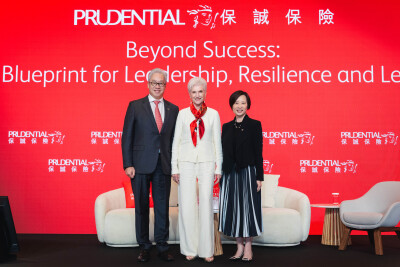
    HONG KONG SAR – Media OutReach Newswire – 4 October 2026 – Prudential Hong Kong Limited (“Prudential”) welcomed Dr Maye Musk, a globally renowned author, supermodel and dietitian, to the Prudential Leadership Forum, titled Beyond Success: The Blueprint for Leadership, Resilience and Legacy, held on 3 October 2026.

    (From left) Lawrence Lam, Chief Executive Officer, Prudential Hong Kong Limited; Dr Maye Musk; and Angel Ng, Regional CEO, Greater China; Group Customer and Wealth, Prudential plc, at the Prudential Leadership Forum, where they shared perspectives on leadership, resilience and legacy planning across generations.
    (From left) Lawrence Lam, Chief Executive Officer, Prudential Hong Kong Limited; Dr Maye Musk; and Angel Ng, Regional CEO, Greater China; Group Customer and Wealth, Prudential plc, at the Prudential Leadership Forum, where they shared perspectives on leadership, resilience and legacy planning across generations.

    Nearly 1,000 VIP customers, young professionals, aspiring leaders and top-performing financial consultants came together for a conversation on resilience, reinvention and the values that shape lasting family legacies.

    Opening the forum, Lawrence Lam, Chief Executive Officer, Prudential Hong Kong Limited, highlighted Prudential’s commitment to customers: “Prudential has earned enduring trust with families by actively listening to their evolving needs across generations. Sustaining that trust requires a forward-looking vision, creating meaningful opportunities for customers to connect with visionary leaders and fresh perspectives. Dr Maye Musk’s journey is a powerful reminder that experience, resilience and ambition can open new possibilities at every stage of life. ”

    The centerpiece of the day was an engaging fireside chat between Dr Musk and Angel Ng, Regional CEO, Greater China; Group Customer and Wealth, Prudential plc. Through the exchange, Dr Musk shared candid reflections on rebuilding her career across life stages and countries, empowering her three children to pursue their distinct ambitions, and wealth succession.

    Reflecting on her journey, Dr Musk said: “Success is rarely a straight line. Throughout my life, I have had to start over, adapt and embrace new opportunities, often when others thought it was too late. What I have learned is that resilience is built through action, not certainty. Whether as a parent, a professional or a leader, our role is not to create a perfect path for the next generation, but to give them the confidence, values and independence to create their own. Lasting legacies are built not by removing challenges, but by helping others develop the strength to navigate them.”

    Angel highlighted Prudential’s vision for legacy: “In today’s rapidly evolving world, planning for the next generation is about more than passing on financial wealth. It is also about passing on the values and judgement that help them make informed decisions and pursue their aspirations. When families pair clear principles with the confidence to make their own choices, they can protect what they have built while creating a stronger foundation for generations to come. Prudential supports families in planning ahead, passing on their wealth with confidence, and building a brighter tomorrow.”

    Building on the theme of preparing for the future, the forum then turned to the city’s distinctive advantages and emerging opportunities for talent through a panel discussion titled Hong Kong: Where Global Wealth and Talent Converge. Felix Chan, the Director of Hong Kong Talent Engage; and Jason Fong, Global Head of Family Office at Invest Hong Kong shared perspectives on how the leaders of tomorrow can learn, grow and thrive in Hong Kong.

    By bringing together forward-looking perspectives and opportunities to engage with global leaders, Prudential continues to support customers at every stage of life, helping them plan for their health and financial wellbeing, protect what matters most, and build resilience for the future. This commitment is also reflected in value-added platforms such as PruNextGen, through which we support families in planning early for their children’s future, broadening their horizons and laying the foundations for lifelong success.

    Hashtag: #PrudentialLeadershipForum

    The issuer is solely responsible for the content of this announcement.

    About Prudential Hong Kong Limited

    Prudential has been serving the people of Hong Kong since 1964. Through Prudential Hong Kong Limited and Prudential General Insurance Hong Kong Limited, the Company provides a range of financial planning services and products, including individual life insurance, investment-linked insurance, retirement solutions, health and medical protection, general insurance, and employee benefits to protect over 1.41 million customers in Hong Kong. Beyond Hong Kong, Prudential serves the Macau community through its branch, offering health insurance and financial solutions to complete its footprint in the Greater Bay Area. Visit for more information.

  • Chinese media praises Shanghai Electric’s latest Malaysian project: a step forward for China’s high-end power equipment in overseas markets

    Chinese media praises Shanghai Electric’s latest Malaysian project: a step forward for China’s high-end power equipment in overseas markets

    SHANGHAI, CHINA – Media OutReach Newswire – 3 October 2026 – China News Service (CNS) praises Shanghai Electric’s recent contract for Unit 3 of the Samalaju Combined Cycle Gas Turbine (CCGT) Project in Sarawak, Malaysia, highlighting it as the first overseas deployment of a heavy-duty gas turbine manufactured by the Chinese company.

    Caption:Shanghai Electric's heavy-duty gas turbine makes its overseas debut
    Caption:Shanghai Electric’s heavy-duty gas turbine makes its overseas debut

    https://youtu.be/0rK3O7ispTQ?si=wZ_x_lXpo5SjxC_V

    The deal is seen as a milestone in the international commercialization of China’s heavy-duty gas turbine technology, CNS said in a news report issued on Sept. 29.

    According to the report, Shanghai Electric will provide a complete package of major equipment for the 500-megawatt-class power plant, including gas and steam turbines, generators, heat recovery steam generators (HRSGs) and an air-cooled system.

    It will also serve as an engineering, procurement and construction (EPC) contractor and provide long-term lifecycle services covering the major equipment,.

    “This is not simply an equipment export, but a substantive breakthrough for China’s heavy-duty gas turbines in international commercial competition,” Li Wenkai, deputy head of the Power Generation Engineering Consultancy Department under the China Electric Power Planning & Engineering Institute, quoted as saying by CNS.

    Meanwhile, Shanghai Electric is also providing an integrated solution, with the core equipment manufactured within its own industrial system and coordinated under a unified project framework, CNS said.

    Unlike projects that combine equipment from multiple suppliers, this model reduces the need for owners or EPC contractors to coordinate interfaces, technical parameters and control systems across different vendors. It also brings responsibility, technical interfaces, performance guarantees and project management under a unified framework, said the report.

    “The Malaysian market is a mature commercial market, where clients make equipment selections based on technology, delivery and full lifecycle costs,” Liu Zhitan, deputy director of the Gas Turbine Power Generation Specialized Committee of the Chinese Society for Electrical Engineering, told CNS.

    The successful bid means Shanghai Electric’s gas turbine products and integrated solutions are beginning to undergo commercial validation in a mature overseas market, Liu said.

    Shanghai Electric has built up a presence in Malaysia through a range of energy projects, including the 2×300-megawatt Balingian coal-fired power plant, renewable energy projects in Selangor and the TG12 renewable energy project. In Sarawak, it has also completed a 106-kilometer, 500-kilovolt transmission line and built the state’s first off-grid microgrid project.

    Such a local footprint provides an important foundation for the company to introduce core equipment into overseas markets, while strengthening its experience in project delivery and local services, CNS noted in the report.

    The Samalaju project demonstrated Shanghai Electric’s overseas engineering competitiveness and core equipment capabilities, marking a shift from “equipment going overseas with engineering projects” toward direct exports of complete equipment and solutions.

    The move also reflects changing demand in international power markets. Overseas developers are increasingly seeking turnkey solutions backed by long-term services rather than procuring individual pieces of equipment from multiple suppliers, said the Chinese media.

    For years, China’s high-end equipment exports were mainly individual machines and equipment, with competition focused largely on hardware prices, leaving limited margins and little room for brand premiums, Liu said.

    Shanghai Electric’s approach seeks to move beyond hardware-based competition by offering integrated solutions and full life-cycle support, he added.

    The development comes as the global gas turbine market faces tight supply. Data shows that global gas turbine orders reached about 90-100 GW in 2025, while global manufacturing capacity stood at around 55–60 GW, highlighting a significant supply-demand imbalance.

    Against this backdrop, overseas developers that have traditionally relied on established international suppliers are increasingly consider alternative providers, particularly Chinese companies capable of offering shorter delivery times and integrated solutions, Li said.

    Shanghai Electric has identified global expansion as a key priority during the 15th Five-Year Plan period (2026-2030). It outlined three shifts: from a focus on taking engineering projects overseas to a greater emphasis on taking equipment overseas; from simple trade to international investment in production capacity and industrial supply chains; and from individual companies expanding overseas independently to broader, coordinated overseas development.

    The issuer is solely responsible for the content of this announcement.

  • HKIS – Quantity Surveying Division Conference 2026

    HKIS – Quantity Surveying Division Conference 2026

    Transforming QS Practice in a New Era: Integrating Digital Construction, Collaborative Contracting and Payment Security

    HONG KONG, CHINA – Media OutReach Newswire – 3 October 2026 – The Hong Kong Institute of Surveyors (HKIS) Quantity Surveying Division hosted the HKIS Quantity Surveying Division Conference 2026 (the Conference) today at the CIC-Zero Carbon Park.

    This year’s theme, “Transforming QS Practice in a New Era: Integrating Digital Construction, Collaborative Contracting and Payment Security”, reflects the evolving role of Quantity Surveyors during a time of economic restructuring.

    The Conference brought together around 200 participants both in person and online, including government officials, industry leaders, professionals, academics, and young practitioners.

    Mr LAU Chun Kit, Ricky, JP, Permanent Secretary for Development (Works) for Development Bureau of the HKSAR Government, attended as the Guest of Honour and delivered a keynote speech.

    Quantity Surveyors are trained professionals with expert knowledge of construction costs and contracts who play a crucial role throughout the project development cycle, from investment feasibility studies and procurement strategy to commercial governance, contract administration, and dispute management. The seminar aims to explore how, amidst the ever-changing landscape of the digital revolution and the implementation of new legislation, quantity surveyors can evolve from their traditional roles in contract and cost management into enablers who drive successful value creation in construction projects.

    Mr. LAU Chun Kit, Ricky, JP, Permanent Secretary for Development (Works), Development Bureau, said: “The theme of this year’s conference is both timely and visionary. The Conference serves as a strategic platform for surveying practitioners and professionals to exchange insights, explore best practices, and formulate a collective vision for the future of the surveying profession. The insights and best practices generated will not only contribute in advancing the role of surveying profession in the new era, but also reinforcing Hong Kong’s position as a leader in construction excellence.”

    The conference featured 20 distinguished speakers from Hong Kong Government bureaux and departments, the private sector, academia, professional institutions, and law firms to share their insights and best practices in the quantity surveying field. Through thought-provoking discussions, the event not only enhanced participants’ technical knowledge but also catalyzed long-term cross-sector collaboration, empowering the industry to continuously deliver highly efficient and resilient built assets in the future.”

    Sr WAN Wai Ming, Tony, President of the Hong Kong Institute of Surveyors, noted in his welcome speech, “As the construction landscape undergoes profound shifts, quantity surveyors are evolving from traditional cost guardians into strategic value architects. Under this year’s theme, we gather to explore emerging challenges, tackle critical issues, and seize new opportunities. Together, we redefine our professional identity, share actionable insights, and shape a forward-looking roadmap for the quantity surveying industry in Hong Kong.”

    Sr TING Yuen Chun, Eric, Chairman of the HKIS Quantity Surveying Division, acknowledged that the built environment is facing increasingly complex social and economic pressures. He emphasised that these challenges serve as an important reminder that, while technology is a vital enabler of progress, built-environment professionals must continue to apply their expertise and professional judgement, while strengthening collaboration across disciplines, to navigate change and deliver sustainable value to society.

    Sr WONG Kin Yan, Winnie, Organising Committee Chair of the Conference stated in her closing remarks, “Developments in Collaborative Contracting, Digital Construction, and Payment Security present an opportunity for our profession to evolve beyond traditional cost management.

    Today’s quantity surveyors are increasingly called upon to serve as trusted advisers, driving collaboration, leading digital transformation, and championing transparency and fairness across the entire project lifecycle. By embracing these changes, we can continue to play a pivotal role in delivering sustainable, resilient and high-performing built assets for our community.”

    List of Speakers (in order of presentation delivery)

    Keynote Speech by Guest of Honour

    1. Mr LAU Chun Kit, Ricky, JP, Permanent Secretary for Development (Works), Development Bureau, HKSARG

    Session 1: Collaborative Contracting

    1. Mr LEUNG Lap Ki, Francis, Team Leader (Trade & Procurement), Development Bureau, HKSARG
    2. Sr CHOI Wing Chung, Hayman, Project Strategy and Delivery Leader (Asia), Mott MacDonald Hong Kong Limited
    3. Ir LEUNG Cheuk Lun, NEC Strategic Advisor, Civil Engineering and Development Department, HKSARG
    4. Ir WANG Yan Hua, Chairman and Managing Director, China Road and Bridge Corporation (Hong Kong)
    5. Sr Yau Wan Fong, Deputy Director, WT Partnership (HK) Limited

    Session 2: Digital Construction

    1. Mr WU Jin Ying, Technical Officer, Glodon (Hong Kong) Software Limited
    2. Mr Elvis LI, CEO, isBIM Limited
    3. Ir NG Chun Keung, CEO, dRoW Limited
    4. Mr Put HUI, Senior Digital Transformation Lead, Innovative Technology, Gammon Construction Limited
    5. Mr Ronald CHAN, Head of Sustainability for APAC, Currie & Brown
    6. Sr Sunny CHOI, Chairman of Digitalisation Sub-committee, Quantity Surveying Division, The Hong Kong Institute of Surveyors; Past Chairman of Quantity Surveying Division, The Hong Kong Institute of Surveyors (2021-2023)
    7. Sr Dr Paul HO, Past Chairman of Quantity Surveying Division, The Hong Kong Institute of Surveyors (2005-2006)

    Session 3: Payment Security

    1. Sr Tommy CHAN, Executive Director, Arcadis Hong Kong Limited
    2. Cr Sr Ir ZA Wai Gin, Tony, Executive Director, Hip Hing Construction Co., Ltd.
    3. Sr Hinson CHEUNG, Partner, Pinsent Masons
    4. Sr Terry CHAK, Director of North Asia Region, Rider Levett Bucknall Limited
    5. Sr TT CHEUNG, BBS, JP, Past President, The Hong Kong Institute of Surveyors
    6. Sr CHONG Lui Chuen, Executive Committee Member, CSHK Professional Committee
    7. Mr Eric CHUNG, Barrister-at-Law, Pacific Chambers
    8. Sr Prof LEUNG Hing Fung, Professor and Head, Department of Law and Business, Hong Kong Shue Yan University; Adjunct Professor, Department of Real Estate and Construction, University of Hong Kong; Barrister-at-law, Arbitrator and Mediator

    List of speakers and topics are downloadable here

    Conference booklet is downloadable here

    High-resolution event photos are downloadable here

    Photo Caption:

    001 Mr Ricky LAU, JP, Permanent Secretary for Development (Works), Development Bureau, HKSARG, was invited as the Guest of Honour.
    002 Sr Tony WAN, President of the Hong Kong Institute of Surveyors, delivered the welcome speech.
    003 Sr Eric TING, Chairman of the HKIS Quantity Surveying Division, delivered the opening speech.
    004 Mr LEUNG Lap Ki, Francis, Team Leader (Trade & Procurement), Development Bureau, HKSARG, delivered a keynote speech.
    005 Ir LEUNG Cheuk Lun, NEC Strategic Advisor, Civil Engineering and Development Department, HKSARG, delivered a speech.
    006 The event received extensive support from the government and industry.

    Second Row: From left to right:

    Dr Ada TSANG, Lecturer, Department of Construction and Quality Management, Hong Kong Metropolitan University;

    Cr Amanda WONG, Council Member, Hong Kong Institute of Construction Managers;

    Ar Stephen HO, Honorary Secretary, The Hong Kong Institute of Architects;

    Prof Ling Kar-kan, SBS, Chairman, Hong Kong Housing Society;

    Mr Kelvin NG, Assistant Director/Technical, Highways Department;

    Sr Andrew LAM, Assistant Director (Project) 2, Housing Department, HKSARG;

    Sr Winnie WONG, Organising Committee Chair of the HKIS Quantity Surveying Division Conference 2026;

    Sr Tony WAN, President of the Hong Kong Institute of Surveyors;

    Mr Ricky LAU, JP, Permanent Secretary for Development (Works), Development Bureau, HKSARG;

    Sr Eric TING, Chairman of the HKIS Quantity Surveying Division;

    Mr Arthur LEE, Deputy Director/Regulatory Services, Electrical & Mechanical Services Department, HKSARG;

    Mr Samson LAM, Assistant Director/Sewage Services, Drainage Services Department, HKSARG;

    Ir Prof Thomas HO, JP, Chairman, Construction Industry Council;

    Sr Amelia FOK, Chairman, The Association of Consultant Quantity Surveyors;

    Ir Prof Michael YAM, Head of Department and Professor, Department of Construction Management and Intelligence, The Hong Kong Polytechnic University;

    Sr Renee CHAN, Senior Lecturer, Department of Design and Architecture, Technological and Higher Education Institute of Hong Kong

    First Row: Past Presidents of the Hong Kong Institute of Surveyors, Executive Committee of the Hong Kong Institute of Surveyors, and Council Member of the Quantity Surveying Division, the Hong Kong Institute of Surveyors

    007 Sr Winnie WONG, Organising Committee Chair of the HKIS Quantity Surveying Division Conference 2026, delivered closing remarks.
    008 The Conference gathered around 200 industry professionals, participating in person and online.

    Hashtag: #surveyor #QS #quantitysurveying


    Wechat: HKIS-Official

    The issuer is solely responsible for the content of this announcement.

    About the Hong Kong Institute of Surveyors

    Established in 1984, The Hong Kong Institute of Surveyors (HKIS) is the only surveying professional body incorporated by ordinance in Hong Kong. As of 30 September 2026, the number of members reached 11248, of which 8301 (FHKIS: 579, MHKIS: 7722) were corporate members, 49 were associate members and 2898 were probationers and students.

    HKIS work includes setting standards for professional services and performance, establishing codes of ethics, determining requirements for admission as professional surveyors, and encouraging members to upgrade skills through continuing professional development.

    The Institute has an important consultative role in government policy making and on issues affecting the profession. We have advised the government on issues such as building safety and unauthorized building works, problems of property management, town planning and development strategies, construction quality, construction costs and housing problems. We have also issued guidance notes on floor area measurement, real estates valuation and land boundary survey, etc.

    We have an established presence in the international arenas, have overseas connections, and have entered into reciprocal agreements with professional surveying and valuation institutes in Australia, Canada, Japan, New Zealand, Singapore, the United Kingdom, and Mainland China recognizing the counterpart’s member’s qualifications. In addition, HKIS is a member of various leading international surveying organisations.

  • Huawei Highlights Continuous Innovation, Securing Competitive Edge Through Technological Breakthroughs

    Huawei Highlights Continuous Innovation, Securing Competitive Edge Through Technological Breakthroughs

    SHENZHEN, CHINA – Media OutReach Newswire – 3 October 2026 – Huawei hosted an international media roundtable today featuring Richard Yu, Executive Director, Chairman of the Investment Review Board, and Chairman of the Board of Directors of the Consumer BG. Yu shared comprehensive insights into Huawei’s consumer business and HarmonyOS ecosystem.

    IMG 8638

    Richard Yu joined Huawei in 1993, working on early developments like the first-generation program-controlled switch and participating in the establishment of Huawei’s wireless communications business, which started with GSM. Over the past decade, Yu has led Huawei’s consumer business with the vision to deliver a seamless AI life experience to all consumers across five key scenarios: HIMA-powered Smart Travel, HarmonyOS Office, Smart Home, Fitness & Health, and Entertainment, which he said is also the long-term strategy for Huawei’s consumer business over the next 10 years.

    Between 2007 and 2025, Huawei invested more than CNY1.8 trillion into R&D shifting from roughly 10% of annual revenue in early years to over 20% recently. Huawei has continued to increase investment into the core technologies of the ICT domain and basic research, which has translated into robust core capabilities, extensive intellectual property, and a vast patent portfolio, and helped with achieving a series of breakthroughs in technological innovation.

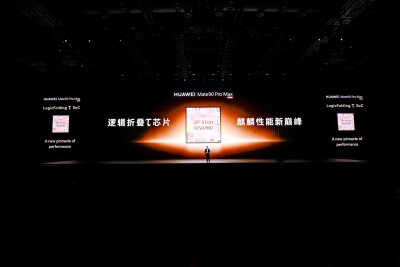
    The Mate 90 series smartphones Huawei just launched come with the latest Kirin 9050 Pro chip. The overall device performance is 31% higher than the previous generation. The Balong modem, image sensor processor (ISP), mobile security processor (MSP), Lingxi CPU, Maleoon GPU, and the NPU that adopts Huawei’s Da Vinci architecture for AI processing are all designed by Huawei. They offer higher energy efficiency and deliver much-improved overall system-level performance.

    Even though Yu admitted that Huawei has limited access to advanced semiconductor processes, Huawei recently made a new breakthrough in the semiconductor domain – the LogicFolding technology under the Tau Scaling Law. Unveiled by He Tingbo, head of Huawei’s Semiconductor Business Department this May, this technology vertically stacks the logic layers of chips and restructures the circuit layout through inter-layer high-density interconnect to shorten critical paths and reduce latency. This technology was adopted on Kirin 9050 Pro chip, which shows very strong AI processing power. The Mate 90 series powered by this chip can run a 30B MoE on-device AI model.

    In the AI domain, Yu talked about the Ascend compute foundation that Huawei provides, by remarking Huawei’s large models called openPangu, AI capabilities for intelligent driving, and HarmonyOS Celia, which is similar to Gemini in the Google Android ecosystem. Huawei is also using AI to improve the O&M of communications network equipment. By combining AI computing power with domestic open-source large models, Huawei’s vision is to help enterprises and industries around the world to become more productive and bringing more convenience to everyone.

    In the past years, Huawei has launched a broad series of products and solutions, including smartphones, PCs, tablets, wearables, TWS audio products, Smart TVs, home routers, smart home control solutions, as well as intelligent electric vehicles together with partners. Underlying these products and solutions are Huawei’s chip hardware platform and HarmonyOS – another OS ecosystem after iOS from Apple and Android from Google that Huawei developed to support all the smart devices and smart hardware across all scenarios.

    Development of HarmonyOS began in 2019. Before that, Huawei was a major contributor to the Android community as well as the entire Android ecosystem. Now, more than 90 million devices, including smartphones, PCs, and tablets, currently run on HarmonyOS 6 and HarmonyOS 7. This figure is expected to hit the 100 million mark by the end of this year. The number of apps and services in the HarmonyOS ecosystem has already exceeded 450,000. Its global registered developer count has reached 11 million, and Huawei now has over 23,000 app innovation partners. Expressing his special thanks to all partners and developers for their trust and support, Yu also pointed out that Huawei is considering gradually bringing HarmonyOS to the global market in the future.

    Globalization is another topic of the conversation. Yu mentioned that Huawei had very good collaboration with many companies from the US, Europe, Japan, South Korea, and Taiwan, delivering huge business value and benefits to those partners. When it comes to the difficulties that Huawei overcame since 2019, Yu said that relying on homegrown technologies and capabilities, Huawei gradually designed its own operating system and developed basic tools and software by themselves, putting a domestic supply chain in place. In 2023, Huawei started to manufacture the chips used by smartphones domestically again. With these chips and HarmonyOS, and by relying on China’s domestic supply chain, materials, and process nodes, Huawei has basically gotten rid of the dependence on US technologies.

    While Huawei’s global market share was once No. 1, nowadays it only sells several million units of smartphones outside China every year. However, Yu revealed that Huawei is trying to return to the overseas market step by step.

    Taking wearables as an example, Huawei is No. 1 in terms of the market share both in China and globally. Other innovative products such as TWS earphones, are also growing fast and have reached No. 1 in many countries. While Huawei’s tablet and PC business was greatly affected after it was denied access to Windows and Intel x86 chips, the HarmonyOS-based tablets are now performing strongly. Another example would be CPE, which is a mobile router that provides connectivity to the unconnected in remote and rural areas. These products are also very well received across many regions outside China, helping more people connect to the rest of the world and live better lives.

    Question: Both the Huawei XT 2 and the two most advanced models of the Mate 90 series use a LogicFolding chip. Will LogicFolding chips be used for more phones in the future? We understand that Huawei’s chip production capacity is still limited. Huawei has launched SuperPoDs, and AI infrastructure is a huge business. They are both very important in China. How do you secure a larger share of the chip supply internally?

    Richard Yu: We started introducing the chip that adopts the LogicFolding technology powered by the Tau Scaling Law to the Mate XT 2 tri-fold phone. To answer your question, yes, more of our phones will definitely use these LogicFolding chips in the future.

    Currently, the production capacity for advanced semiconductors in China still cannot meet the rapidly growing demand. Huawei’s Ascend chips for the AI domain also use such capacity. But we have developed a requirement plan, which also covers the chip requirements of smartphones.

    The sharp price increase for memory components over the past two years has somewhat limited the smartphone sales volume. Even though the production capacity remains tight right now, generally it is sufficient to meet our market shipment needs.

    We hope that production capacity will ramp up in China’s semiconductor industry so that we can manufacture more advanced products for consumers in the Chinese market as well as the overseas market in the future.

    To read the full Q&A session:
    https://www.apmultimedianewsroom.com/multimedia-newsroom/continuous-innovation-securing-our-competitive-edge-through-technological-breakthroughs

    Hashtag: #Huawei

    The issuer is solely responsible for the content of this announcement.

  • Surge Announces Positive Pre-Feasibility Study at Nevada North: After-Tax NPV8% of US$9.81 Billion, After-Tax IRR of 23.6% and Operating Cost of US$4,719/tonne Lithium Carbonate

    Surge Announces Positive Pre-Feasibility Study at Nevada North: After-Tax NPV8% of US$9.81 Billion, After-Tax IRR of 23.6% and Operating Cost of US$4,719/tonne Lithium Carbonate

    PFS improves on 2025 PEA with lower Phase 1 capital, lower operating cost, higher recovery and a faster 4.2-year payback over a 42-year mine life

    West Vancouver, British Columbia – Newsfile Corp. – October 2, 2026 – Surge Battery Metals Inc. (TSXV: NILI) (OTCQX: NILIF) (FSE: DJ5) (“Surge” or the “Company“) is pleased to announce the results of the Pre-Feasibility Study (“PFS“) for the Nevada North Lithium Project (“NNLP“, “Nevada North” or the “Project“) located in Elko County, Nevada. The Project is held by Nevada North Lithium LLC (“NNL“), a joint venture owned 67.5% by Surge and 32.5% by Evolution Mining Limited (“Evolution Mining“). The PFS was prepared by Fluor Corporation (“Fluor“) as lead engineer, with Independent Mining Consultants, Inc. (“IMC“) responsible for the mine plan and Mineral Reserve estimate, RESPEC Company, LLC (“RESPEC“) for the Mineral Resource estimate, and other independent consultants identified under “Qualified Persons” below. All figures are in United States dollars on a 100% Project basis unless otherwise stated.

    The PFS contemplates an open-pit mine and on-site processing facility producing battery-grade lithium carbonate from high-grade lithium claystone ore. The Project will be developed in two phases. Phase 1 establishes the mine, a process plant with design capacity of approximately 55,900 tonnes per year (“tpa“) of battery-grade lithium carbonate, a sulfur-burning sulfuric acid plant with on-site power generation and supporting infrastructure. Phase 2 doubles processing capacity, with production peaking at approximately 111,400 tpa and averaging approximately 92,250 tpa lithium carbonate over the life of mine (“LOM“).

    PFS Highlights

    • After-tax net present value (8% discount) of US$9.81 billion and after-tax internal rate of return of 23.6%; pre-tax NPV8% of US$11.55 billion and pre-tax IRR of 24.6%.
    • After-tax payback of 4.2 years from the start of production.
    • After-tax NPV8% remains positive across the full ±30% range of every variable tested, including approximately US$4.6 billion at a 30% lower lithium carbonate price (US$16,800/t).
    • Phase 1 initial capital of US$2.77 billion, including US$442 million of contingency, based on an AACE Class 4 estimate (±25%) prepared by Fluor. Phase 2 expansion capital of US$2.35 billion.
    • LOM average cash operating cost of US$4,719 per tonne lithium carbonate, approximately 10% below the US$5,243/t estimated in the 2025 PEA.
    • Low mining cost of approximately US$380 per tonne lithium carbonate, only 8% of total cash operating cost, driven by a low waste-to-ore strip ratio of 0.88:1 and free-digging with no blasting planned in the main pit.
    • Proven and Probable Mineral Reserve of 218.3 million tonnes at 3,928 ppm Li containing 4.56 million tonnes lithium carbonate equivalent (“LCE“), supporting a 42-year mine life, with no Inferred Mineral Resources in the PFS mine plan.
    • LOM average production of approximately 92,250 tpa lithium carbonate, averaging approximately 105,000 tpa in Years 4 to 14 and peaking at approximately 111,400 tpa in Year 7.
    • Overall process lithium recovery of 84.9%, up from 82.8% in the 2025 PEA, supported by metallurgical test work completed by Sepro Laboratories (“Sepro“) and Kemetco Research Inc. (“Kemetco“).
    • Battery-grade product demonstrated: lithium carbonate assaying 99.0% Li2CO3, produced from Project claystone during PFS metallurgical test work, was refined by Chemshift Technologies Inc. (“Chemshift“) to a product of 99.95% Li2CO3, demonstrating a complete flowsheet from run-of-mine claystone to battery-grade product.

    Management Commentary

    Greg Reimer, President and Chief Executive Officer of Surge, stated: “This Pre-Feasibility Study is the product of a tremendous team effort, and it has been a pleasure working alongside the world-class engineers and scientists at Fluor, Kemetco, Sepro, Chemshift, IMC and RESPEC. Together, we have taken Nevada North from a promising claystone deposit to a project supported by a Mineral Reserve, Class 4 engineering and battery-grade lithium carbonate made from our own ore. The PFS demonstrates that the NNLP can become a competitive source of domestic lithium production for America’s growing battery industry. Providing not only jobs but over $11b in federal and state taxes and royalties. We look forward to working with our JV partner Evolution mining as we advance to Feasibility and a final investment decision.”

    Summary of Key PFS Results

    Parameter Unit PFS (2026)
    Lithium carbonate price US$/t 24,000
    Mine life years 42
    Strip ratio (waste:ore) w:o 0.88
    Ore processed (LOM) Mt 218.3
    Average Li grade processed ppm Li 3,928
    Contained LCE processed Mt 4.56
    Overall lithium recovery % 84.9
    Total lithium carbonate produced (LOM) Mt 3.87
    Average annual production (LOM) tpa LCE ~92,250
    Gross revenue (LOM) US$ billion 93.0
    Operating cost (OPEX) US$/t LCE 4,719
    Phase 1 initial capital US$ billion 2.77
    Phase 2 expansion capital US$ billion 2.35
    Sustaining capital (LOM, excluding closure) US$ billion 1.65
    Cumulative after-tax cash flow (LOM, undiscounted) US$ billion 56.3
    Pre-tax NPV8% / IRR US$ billion / % 11.55 / 24.6%
    After-tax NPV8% / IRR US$ billion / % 9.81 / 23.6%
    After-tax payback (from start of production) years 4.2

    Table 1: Key PFS metrics (100% basis unless stated). Financial results in constant Q2 2026 US dollars, 100% equity financed, mid-year discounting, no escalation. Net present values are discounted to January 1, 2028, the first year of construction capital expenditure.

    Comparison to the 2025 Preliminary Economic Assessment

    The PFS supersedes the Preliminary Economic Assessment (“PEA“) dated May 19, 2025 (technical report filed on SEDAR+ on July 24, 2025). The PFS incorporates the updated Mineral Resource Estimate announced May 14, 2026, a revised mine plan and Fluor’s Class 4 engineering and cost estimates. Nearly every major input from the PEA has been advanced to a materially higher level of definition. The mine plan now rests solely on Proven and Probable Mineral Reserves, the process flowsheet has been demonstrated end-to-end on Project claystone through a substantially broader and more detailed metallurgical program, and capital and operating costs are now based predominantly on engineered quantities and vendor pricing, with a significantly reduced reliance on factored estimates compared with the PEA. The improvements in recovery, operating cost and Phase 1 capital shown in Table 2 therefore rest on a considerably more rigorous technical foundation than the PEA. The PFS also adopts a more conservative production ramp-up than the PEA, with first-year production at approximately 29% of design capacity. The long-term lithium carbonate price assumption is unchanged at US$24,000/t.

    Metric 2025 PEA 2026 PFS Change
    After-tax NPV8% (US$ billion) 9.17 9.81 +7.0%
    After-tax IRR 22.8% 23.6% +0.8 pts
    Pre-tax NPV8% (US$ billion) 11.31 11.55 +2.1%
    Phase 1 initial capital (US$ billion) 2.97 2.77 −6.7%
    Phase 2 capital (US$ billion) 2.35 2.35 —
    Operating cost (US$/t lithium carbonate) 5,243 4,719 −10.0%
    Overall lithium recovery 82.8% 84.9% +2.1 pts
    Total lithium carbonate produced (Mt) 3.63 3.87 +6.8%
    Average annual production (tpa lithium carbonate) 86,300 92,250 +6.9%
    After-tax payback (years) 4.6 4.2 −0.4 yrs
    Mine life (years) 42 42 —

    Table 2: PFS versus 2025 PEA. The PEA included Inferred Mineral Resources; the PFS is based on Proven and Probable Mineral Reserves only, with no Inferred Mineral Resources in the mine plan.

    Capital Cost Estimate

    Fluor prepared an AACE Class 4 capital cost estimate (accuracy ±25%) with a base date of Q2 2026, using FEL 2 engineering deliverables, vendor budget quotations, engineered material take-offs, historical project data and Fluor unit rate and productivity databases. The estimate includes a US$75 million design development allowance to incorporate refinements identified in metallurgical test work completed in July 2026, primarily in the solid-liquid separation and leach residue filtration areas, and a US$50 million allowance for the electrical grid interface.

    Capital Cost Component US$ million
    Direct field costs 1,507.7
    Indirect field costs 377.4
    Home office costs (EPCM) 154.3
    Project contingency 442.3
    Owner’s costs 149.5
    Development allowances 125.0
    Mine pre-production development, truck shop and other 17.9
    Total Phase 1 initial capital 2,774.0
    Phase 2 expansion capital 2,350.0
    Total Phase 1 and Phase 2 capital 5,124.0

    Table 3: Phase 1 initial and Phase 2 expansion capital cost estimate. Figures may not sum due to rounding.

    Phase 2 expansion capital is estimated at US$2.35 billion, approximately 15% below Phase 1 initial capital, for an expansion that doubles processing capacity. Because Phase 2 replicates the Phase 1 process design, the Phase 2 estimate is built up from the Phase 1 Class 4 estimate, adjusted for synergies identified through a structured review of the Phase 1 work breakdown structure. Savings reflect improved construction productivity, reuse of Phase 1 engineering and execution, lower contingency, and shared site infrastructure and facilities. The financial model schedules Phase 2 construction to commence in the final pre-production year, with most of the Phase 2 expenditure (approximately US$1.88 billion) incurred in the first two years of Phase 1 operations and funded in part from Phase 1 cash flow. Total capital spent prior to first production, including the initial Phase 2 expenditure, is approximately US$3.24 billion. LOM sustaining capital is estimated at approximately US$1.65 billion, with closure and reclamation costs of approximately US$120 million carried separately.

    Operating Cost Estimate

    An AACE Class 4 operating cost estimate was developed from the FEL 2 process design criteria, mass balance, equipment list, operating organization model and production forecast. Reagent consumption was derived from the process mass balance, with unit pricing based on supplier quotations, owner market information and benchmark data from comparable lithium projects. Process plant and G&A labor costs are based on approximately 205 personnel for Phase 1, increasing to approximately 335 with Phase 2, benchmarked against Nevada mining and processing wages.

    Cost Category Annual Average
    (US$ million)
    US$/t LCE % of Total
    Mining 35 380 8%
    Processing 362 3,921 83%
    Tailings management 26 284 6%
    General and administration 12 134 3%
    Total cash operating cost 435 4,719 100%

    Table 4: LOM average operating costs. Excludes royalties, property taxes, transportation, sustaining capital and closure costs.

    Reagent procurement and logistics represent approximately 64% of total operating costs and will be a key focus of optimization during the next phase of engineering.

    Economic Analysis and Sensitivities

    The economic analysis was completed using a discounted cash flow model on an annual, mid-year convention basis, assuming 100% equity financing. The model includes a transportation and handling allowance of US$45/t of lithium carbonate sold and a royalty allowance on production from ore mined on the private lands. Taxes modeled include U.S. federal corporate income tax (21%), the Nevada Net Proceeds of Minerals tax (5%) and property taxes. Closure costs of US$120 million are included. Over the LOM, the Project is expected to generate approximately US$11.4 billion in federal and state taxes, property tax, and royalties. The tax model, prepared with Mining Tax Plan LLC, applies percentage depletion, the foreign-derived intangible income deduction on the 80% of sales assumed to be exported, and the transferable Section 45X Advanced Manufacturing Production Credit, which phases out after 2033 and contributes approximately US$330 million in the first three years of production.

    After-tax IRR −30% −20% −10% Base +10% +20% +30%
    Li2CO3 price 16.3% 18.9% 21.3% 23.6% 25.7% 27.8% 29.7%
    Operating cost 25.1% 24.6% 24.1% 23.6% 23.1% 22.5% 22.0%
    Capital cost 31.0% 28.1% 25.6% 23.6% 21.8% 20.3% 19.0%
    Sulfur price 24.0% 23.8% 23.7% 23.6% 23.5% 23.3% 23.2%

    Table 5: After-tax IRR sensitivity to lithium carbonate price, operating cost, capital cost and sulfur price. The base lithium carbonate price of US$24,000/t ranges from US$16,800/t (−30%) to US$31,200/t (+30%).

    After-tax
    NPV8% (US$ M)
    −30% −20% −10% Base +10% +20% +30%
    Li2CO3 price 4,637 6,365 8,085 9,808 11,518 13,236 14,938
    Operating cost 11,008 10,609 10,208 9,808 9,406 9,004 8,601
    Capital cost 11,174 10,718 10,263 9,808 9,352 8,895 8,439
    Sulfur price 10,116 10,013 9,910 9,808 9,703 9,599 9,494

    Table 6: After-tax NPV8% sensitivity to lithium carbonate price, operating cost, capital cost and sulfur price.

    Project value is most sensitive to lithium carbonate price and less sensitive to capital and operating costs. The Project maintains a positive after-tax NPV8% across the full ±30% range of every variable tested, and the after-tax IRR remains approximately 19% under a 30% increase in capital cost.

    Mining

    The PFS mine plan outlines a conventional open-pit, free-digging operation using backhoes, front-end loaders and 50-tonne haul trucks, with no blasting planned in the main pit. Over the LOM, the plan calls for mining approximately 411 million tonnes of total material, including 218.3 million tonnes of ore at an average grade of 3,928 ppm Li. Peak total material movement is approximately 16.8 million tonnes per year. The mine plan is based on a lithium cut-off grade of 1,250 ppm Li (diluted) and front-loads higher-grade material, with an average processed grade of approximately 4,340 ppm Li over the first ten years of operation.

    Mineral Reserve and Mineral Resource Estimates

    The Mineral Reserve estimate, prepared by IMC with an effective date of July 28, 2026, is summarized below. The PFS mine plan contains no Inferred Mineral Resources.

    Category Tonnes (Mt) Grade (ppm Li) Contained LCE (Mt)
    Proven 81.6 4,013 1.74
    Probable 136.7 3,877 2.82
    Total Proven & Probable 218.3 3,928 4.56

    Table 7: NNLP Mineral Reserve estimate (effective date July 28, 2026). Mineral Reserves are reported in accordance with the CIM Definition Standards (2014) at a cut-off grade of 1,250 ppm Li (diluted), derived at a lithium carbonate price of US$16,500/t LCE. Lithium is converted to LCE using a factor of 5.323. The mining dilution and mining losses are incorporated within the model. Figures may not sum due to rounding.

    The Mineral Resource estimate, prepared by RESPEC with an effective date of May 1, 2026, is summarized below. Mineral Resources are reported inclusive of Mineral Reserves.

    Category Tonnes (Mt) Grade (ppm Li) Contained LCE (Mt)
    Measured 210.8 3,150 3.53
    Indicated 446.7 2,940 6.98
    Measured & Indicated 657.5 3,007 10.51
    Inferred 271.3 2,160 3.12

    Table 8: NNLP Mineral Resource estimate at a 1,250 ppm Li cut-off grade (effective May 1, 2026). Mineral Resources that are not Mineral Reserves do not have demonstrated economic viability. Notes:

    (1) Prepared by RESPEC under the supervision of Nathan Forsythe, C.P.G., in accordance with the CIM Estimation of Mineral Resources and Mineral Reserves Best Practice Guidelines and reported in compliance with NI 43-101.
    (2)
    Resources are constrained by an optimized pit shell; block grades were interpolated using the inverse distance squared method in Hexagon MinePlan 3D.
    (3)
    The 1,250 ppm Li cut-off grade reflects an operating cost of US$82.43/t processed, lithium recovery of 84.9% and a lithium carbonate price of US$20,000/t.
    (4)
    A Li to Li2CO3 conversion factor of 5.323 was used.
    (5)
    Figures may not sum due to rounding.

    Processing

    The process flowsheet has been designed to produce battery-grade lithium carbonate on site from lithium-bearing claystone. Key process stages include:

    • Ore preparation and attrition scrubbing to disperse the clay and liberate the lithium-bearing fines;
    • Gravity beneficiation using centrifugal concentrators and hydro-classifiers to reject coarse, low-grade gangue ahead of leaching;
    • Sulfuric acid leaching, followed by solid-liquid separation and residue filtration;
    • Solution purification, including magnesium sulfate crystallization, followed by lithium carbonate precipitation and refining to battery-grade product; and
    • An on-site sulfur-burning sulfuric acid plant whose waste heat generates most of the site’s power requirements, supplemented by a grid connection.

    The PFS flowsheet is supported by metallurgical test work covering each stage of the process. Sepro completed beneficiation test work on the PFS Master Composite (4,352 ppm Li), including batch testing of approximately 1.9 tonnes in a pilot-scale Falcon C400 centrifugal gravity concentrator, recovering 96.7% of the lithium to leach feed at an upgraded grade of 5,079 ppm Li while rejecting approximately 70% of the calcium. Kemetco then completed a full hydrometallurgical program on beneficiated material from the Sepro pilot circuit. Sulfuric acid leaching extracted more than 93% of the lithium at the PFS design acid addition. Following impurity removal and magnesium sulfate crystallization, Kemetco produced a lithium carbonate assaying 99.0% Li₂CO₃, then refined it with Chemshift of Calgary, Alberta to a battery-grade product of 99.95% Li₂CO₃, as announced on September 15, 2026. A continuous pilot program planned for FEL 3 will test recovery, reagent and energy performance on a larger scale.

    Infrastructure and Location

    The Project is located in northeastern Elko County, Nevada, approximately 140 km (87 miles) northeast of Elko and 74 km (46 miles) north of Wells, at an elevation of approximately 6,000 feet. The site benefits from regional access via the Wells / US-93 / I-80 corridor and sits within an established mining region with access to skilled contractors, transportation routes and mining support services. Bulk reagents are expected to be delivered primarily by truck, with regional transload arrangements for high-volume reagents to be defined through a formal logistics study during FEL 3. High-voltage electrical transmission lines are located near the Project, and the PFS contemplates a new interconnection to connect the site to the regional grid.

    The PFS estimates water demand of approximately 3,280 acre-feet per annum (“AFA“) for Phase 1, comprising approximately 2,960 AFA of process plant raw water and approximately 320 AFA for mine dust suppression, increasing to approximately 6,240 AFA at full build-out with Phase 2. A preliminary process water balance indicates plant raw water demand may be higher than the PFS design basis; water consumption and water-reduction options will be refined during FEL 3. NNL is actively advancing its groundwater right applications through the State of Nevada water rights permitting process administered by the Nevada Division of Water Resources. The applications filed to date cover approximately the water demand estimated for Phase 1, and NNL expects to secure water rights sufficient for Phase 1 operations through this process. The Phase 2 balance is expected to be secured through additional appropriations, acquisition or lease of existing water rights, and beneficial use of pit dewatering water.

    Project Execution and Schedule

    The Project is planned to be delivered under an Engineering, Procurement and Construction Management (“EPCM“) model. The PFS adopts an accelerated execution schedule that assumes FEL 3 commences in Q4 2026, followed by an expedited final investment decision and permitting Record of Decision. The schedule provides for approximately 53 months from FEL 3 notice to proceed to mechanical completion, followed by approximately six months of commissioning and start-up, with first production targeted for the second half of 2031. The schedule is subject to permitting, financing and a final investment decision.

    Opportunities and Next Steps

    Building on the PFS, NNL intends to advance the Project directly into FEL 3 engineering and a Feasibility Study, supported by the 2026 drill program, to further de-risk the Project and support a final investment decision. In addition to advancing engineering definition, the PFS identifies several opportunities to enhance Project value, which will be evaluated during FEL 3:

    • Reagent procurement and logistics optimization, which together represent approximately 64% of operating costs;
    • Trade-off studies on counter-current decantation wash and recovery, evaporation and crystallization configuration, and steam, power and water-recovery integration;
    • Optimization of Phase 2 timing and scope;
    • Early engagement of Tier 1 vendors for long-lead equipment, including the sulfuric acid plant and crystallizer/evaporator packages; and
    • Pre-assembly and modularization strategies to reduce field labor and improve construction productivity.

    Technical Report

    A technical report prepared in accordance with National Instrument 43-101 – Standards of Disclosure for Mineral Projects (“NI 43-101“) supporting the PFS will be filed on SEDAR+ (www.sedarplus.ca) and on the Company’s website within 45 days of this news release. Readers are encouraged to read the technical report in its entirety, including all qualifications, assumptions and exclusions relating to the PFS. There are no known factors that would materially affect the PFS results beyond those disclosed in this news release.

    Qualified Persons

    The PFS was prepared by or under the supervision of the following independent Qualified Persons, as defined by NI 43-101, each of whom has reviewed and approved the scientific and technical information in this news release relating to the portions of the PFS for which they are responsible: Kevin Martina, P.Eng., Fluor – process, capital and operating costs, metallurgical testing, recovery methods, infrastructure; Kirk Hanson, P.E., KH Mining LLC – economic analysis; John Marek, P.E., IMC – Mineral Reserves and mining methods; Nathan Forsythe, C.P.G., RESPEC – geology, Mineral Resources, sample preparation and data verification; Paul Axelrod, P.E., Axelrod, Inc. – tailings; Robert Pratt, P.E., Call & Nicholas, Inc. – waste rock and pit slope stability; Bill van Breugel, P.Eng., SGS – market studies; Kyle Brangers, CPG, GSI – environmental studies, permitting and closure.

    The Qualified Persons have verified the data underlying the information in this news release for their respective areas of responsibility, including RESPEC’s review of drilling, sampling, assay and QA/QC data and site visit on November 4 and 5, 2025; Fluor’s review of the Sepro, Kemetco and Chemshift test reports and laboratory results; and IMC’s review of the block model and mine plan inputs. No limitations were placed on the verification. Further details will be included in the technical report.

    Alan J. Morris, MSc, CPG, of Spring Creek, Nevada, Geological Advisor to the Company and a Qualified Person as defined under NI 43-101, has reviewed and approved the technical content of this news release. Mr. Morris is not independent of the Company.

    About Evolution Mining

    Evolution Mining is a leading, globally relevant gold miner. Evolution operates six mines, comprising five wholly owned mines – Cowal in New South Wales, Ernest Henry and Mt Rawdon in Queensland, Mungari in Western Australia, and Red Lake in Ontario, Canada, and an 80% share in Northparkes in New South Wales.

    About Surge Battery Metals Inc.

    Surge Battery Metals Inc., a mineral exploration company, is at the forefront of securing the supply of domestic lithium through its active engagement in the Nevada North Lithium Project. The Project focuses on development of high-grade lithium energy metals in Nevada, USA, a crucial element for powering battery electric storage and electric vehicles. With a primary listing on the TSX Venture Exchange and a listing on the OTCQX Market, Surge Battery Metals Inc. is strategically positioned as a key player in advancing lithium exploration.

    About Nevada North Lithium, LLC

    Nevada North Lithium, LLC, jointly owned by Surge Battery Metals Inc. (67.5%) and Evolution Mining Limited (32.5%), owns the Nevada North Lithium Project southeast of Jackpot, Nevada, about 74 km north-northeast of Wells, Elko County. The first four rounds of drilling at the Project identified a strongly mineralized zone of lithium-bearing clays occupying a strike length of more than 4,700 meters and a known width of greater than 2,000 meters. The Project’s updated Mineral Resource estimate, filed June 30, 2026, reports a pit-constrained Measured and Indicated Resource of 657.5 Mt grading 3,007 ppm Li, containing an estimated 10.5 Mt LCE, at a cut-off grade of 1,250 ppm Li.

    On behalf of the Board of Directors

    “Greg Reimer”
    Greg Reimer, President, CEO and Director

    For further information, please contact:
    Email : info@surgebatterymetals.com
    Phone : 604-662-8184
    Website: surgebatterymetals.com

    Keep up-to-date with Surge Battery Metals:
    Twitter Facebook LinkedIn Instagram YouTube

    Cautionary Note Regarding the PFS

    The PFS results are based on an AACE Class 4 level of engineering and cost estimation with an expected accuracy of ±25%. Phase 2 capital costs have been estimated at a lower level of definition than Phase 1. The PFS is based on a pre-feasibility level of study, and there is no certainty that the results of the PFS will be realized. The economic analysis is based on Proven and Probable Mineral Reserves only; no Inferred Mineral Resources are included in the PFS mine plan. Mineral Resources that are not Mineral Reserves do not have demonstrated economic viability. Actual results may vary materially depending on, among other things, lithium carbonate prices, reagent costs, capital and operating costs, recoveries, permitting, financing and construction timelines.

    Forward-Looking Statements

    This news release contains “forward-looking information” and “forward-looking statements” within the meaning of applicable Canadian securities laws and the United States Private Securities Litigation Reform Act of 1995 (collectively, “forward-looking statements”). All statements, other than statements of historical fact, included herein are forward-looking statements. Generally, forward-looking statements can be identified by the use of forward-looking terminology such as “plans”, “expects”, “is expected”, “budget”, “scheduled”, “estimates”, “forecasts”, “intends”, “anticipates”, “believes”, or variations of such words and phrases, or statements that certain actions, events, or results “may”, “could”, “would”, “might”, or “will be taken”, “occur”, or “be achieved”.

    Forward-looking statements include, but are not limited to, statements regarding the economic analysis, metrics and results of the PFS, including estimates of net present value, internal rate of return, payback, capital and operating costs, production, recovery, mine life, and cash flow; the timing and scope of Phase 1 and Phase 2 development; the commencement and results of FEL 3 and a Feasibility Study; the filing of the NI 43-101 technical report; permitting, including the timing of a Record of Decision; a final investment decision; the timing of first production; the characterization of the lithium carbonate product as battery grade and its suitability for customer qualification; the ability to reproduce the metallurgical results described herein at pilot, demonstration or commercial scale; and the potential of the Project to become a domestic source of battery-grade lithium carbonate. Forward-looking statements are based on assumptions management believes to be reasonable, including the assumptions set out in the PFS, but are subject to known and unknown risks and uncertainties, including fluctuations in lithium prices; changes in reagent, energy and construction costs; the availability of financing on acceptable terms; permitting and regulatory risks; the ability to secure sufficient water rights; metallurgical and technical risks; availability of labor, equipment and infrastructure, including the grid interconnection; relationships with joint venture partners; and other risks described in the Company’s public filings on SEDAR+. Although the Company has attempted to identify important factors that could cause actual results to differ materially from those contained in forward-looking statements, there may be other factors that cause results not to be as anticipated, estimated, or intended. There can be no assurance that such forward-looking statements will prove to be accurate, as actual results and future events could differ materially from those anticipated in such statements. Readers are cautioned not to place undue reliance on forward-looking statements. The Company undertakes no obligation to update forward-looking statements except as required by law.

    Neither the TSX Venture Exchange nor its Regulation Services Provider (as that term is defined in the policies of the TSX Venture Exchange) accepts responsibility for the adequacy or accuracy of this release.

    The issuer is solely responsible for the content of this announcement.

  • Decoding Rural China’s Governance: How six villages turn viral fame into shared prosperity

    Decoding Rural China’s Governance: How six villages turn viral fame into shared prosperity

    BEIJING, CHINA – Media OutReach Newswire – 2 October 2026 – People’s Daily’s video series Decoding Rural China’s Governance, which explores grassroots governance and rural development in different parts of China, follows this six-village tourism cluster in its latest episode One Green Haven, Six Linked Villages, exploring how the six villages are turning online attention into a shared opportunity for rural development.

    image-1.jpeg

    Xixinan village first went viral in 2023, when photos of its fairy-tale greenery spread on Chinese platforms. But the tourism boom also raised new questions: How could the village generate revenue without charging an entrance fee? And how could it share the benefits with neighboring villages rather than compete with them?

    The video looks beyond Xixinan to five nearby villages that, together with Xixinan, form a six-village tourism network. The villages have developed a range of experiences, including bamboo raft rides, a sightseeing train, homestays and nighttime fish-lantern tours. By connecting these attractions into a complete travel route, the network encourages visitors to stay longer and spend more time in the town, allowing more local businesses to benefit from growing tourist traffic.

    Rather than competing for visitors, the villages have embraced a cluster development approach, developing complementary businesses, connecting tourism resources and sharing opportunities.

    At the heart of this cooperation is the villages’ revenue-sharing model: 70 percent goes to the village where a business operates, 20 percent is distributed according to the original equity ratio (Xixinan village takes 5 percent and the other five villages take 3 percent each) and 10 percent is retained by the town’s operating company as working capital. The mechanism allows different villages to benefit from shared tourism resources while encouraging each to develop its own distinctive businesses.

    More than 70 percent of residents in this town work in tourism. In 2025, each village generated more than 1 million yuan (about $140,000) in revenue, helping ensure that the benefits of tourism are shared across the town.

    This video follows the journey from Xixinan’s viral rise to the broader transformation of the six villages, showing how natural scenery, connected tourism routes and a shared-interest mechanism can turn visitor traffic into broader rural development.

    By linking six villages into a development cluster, the model offers a glimpse of how rural communities in China are exploring new ways to share opportunities and prosperity.

    Hashtag: #PeoplesDaily #DecodingRuralChinasGovernance #RuralChina

    The issuer is solely responsible for the content of this announcement.
  • UstarPay to Co-Host TOKEN2049 Singapore Networking Event with BitGo and HashKey Cloud

    UstarPay to Co-Host TOKEN2049 Singapore Networking Event with BitGo and HashKey Cloud

    HONG KONG SAR – Media OutReach Newswire – 2 October 2026 – UstarPay announced that it will co-host “Token2049 Networking Event with BitGo, HashKey & UstarPay” with BitGo and HashKey Cloud during TOKEN2049 Singapore. The event will take place in Singapore and will be subject to registration approval. The exact venue address will be provided to approved participants after registration.

    The event will bring together industry participants from digital assets, fintech, payments, Web3 infrastructure, institutional services, and cross-border finance. It aims to provide a face-to-face networking platform for institutions, project teams, infrastructure providers, investors, and professionals. Discussions will focus on digital asset infrastructure, compliant payments, stablecoin use cases, wallet and card services, and how digital assets can enter real-world payment scenarios.

    Event Details

    Event Name: Token2049 Networking Event with BitGo, HashKey & UstarPay
    Date & Time: Wednesday, 7 October, 18:00–21:00 GMT+8
    Event Partners: BitGo, HashKey Cloud, UstarPay
    Registration: Submit an application through the official Luma event page
    Registration Link: https://luma.com/qjgwthvg
    Entry: Approved participants may enter with a valid QR code

    Please note that this event requires registration approval. All participants must submit an application through the official Luma event page. The hosts will review applications based on applicant background, industry relevance, and event capacity. Once approved, participants will receive an event QR code. Only approved participants with a valid QR code will be admitted to the event. An invitation or shared event information does not constitute official admission credentials.

    Stablecoins Enter the Next Stage: From On-Chain Assets to Real-World Payments

    In recent years, stablecoins have evolved from a funding tool primarily used in crypto trading into a payment and settlement medium within the global digital economy. As cross-border work, global freelancing, online subscriptions, e-commerce, and international trade continue to grow, the market demand for faster, more flexible, and geographically accessible payment methods has continued to increase.

    However, for digital assets to truly enter everyday life, one core question remains: how can the speed of on-chain transactions be connected with the trust, compliance, and settlement systems required by the real world?

    In traditional financial and payment networks, every movement of funds must address fundamental questions: who the user is, where the funds come from, whether the transaction is compliant, whether risk can be identified, and whether the settlement trail can be audited. For digital asset payments, these questions do not disappear simply because technology becomes faster. Instead, they become essential conditions for digital assets to move toward broader, scalable adoption.

    UstarPay’s role is to build the infrastructure that connects on-chain assets with real-world payment scenarios during this transition.

    About UstarPay’s Role in Real-World Digital Asset Use

    UstarPay is a PayFi-focused infrastructure platform connecting supported digital assets with real-world spending and transaction use cases. Its core vision is to help digital assets move beyond trading, holding, or investment and become more practical for everyday and commercial use, subject to applicable requirements.

    By connecting wallet, card, and related technology infrastructure, UstarPay helps eligible individuals and businesses access card and transaction solutions using supported digital assets. In applicable markets, and subject to supported assets, product settings, and relevant requirements, users may explore stablecoins and other supported digital assets for online shopping, travel and hotel spending, subscription services, cross-border purchases, in-store purchases, and, where applicable, ATM withdrawals.

    For enterprises, UstarPay explores modular technology support connected to card applications, risk management, and settlement workflows. Relevant use cases may be considered for eligible platforms and businesses, subject to applicable laws, partner requirements, product scope, and case-by-case assessment.

    UstarPay believes the future of digital asset use is not only about whether a transaction can be completed, but also whether relevant activity can be verified, monitored, risk-assessed, reviewed, and settled. Based on this view, UstarPay is exploring “Proof-of-Spend” as part of its digital asset application narrative. By connecting identity verification, AML processes, asset custody, on-chain risk assessment, transaction records, and settlement workflows, UstarPay is exploring how digital asset applications can be supported by more verifiable, monitorable, and traceable process foundations.

    From a risk management and traceability perspective, UstarPay considers identity verification, on-chain transaction monitoring, asset custody, and settlement records as relevant components where applicable. The company may work with relevant technical service providers in these areas. This registration does not mean that all products, services, or markets are authorized or available. Relevant services remain subject to applicable laws and regulations, user eligibility, supported assets, product settings, partner requirements, and jurisdictional restrictions.

    Guided by “Real Crypto, Real Life,” UstarPay’s long-term direction is to help supported digital assets move from on-chain holdings toward card and transaction applications that can be used in everyday and commercial contexts, subject to product configuration, applicable requirements, supported assets, and regional availability.

    Event Significance: Connecting PayFi, Stablecoin Payments, and Institutional Infrastructure

    The co-hosts of this event span digital asset custody, institutional infrastructure, PayFi, stablecoin payments, and on-chain yield. This reflects the digital asset industry’s ongoing evolution from single-purpose trading scenarios toward more mature financial and payment infrastructure.

    As stablecoins continue to become an important tool for value movement in the global digital economy, the market demand for compliant payment access, secure asset custody, risk control infrastructure, and cross-border settlement capabilities continues to grow. Through this event, UstarPay hopes to engage with more industry participants to discuss how digital assets can enter the real world in a safer, more compliant, and more practical way.

    Hashtag: #UstarPay

    The issuer is solely responsible for the content of this announcement.

    About BitGo

    BitGo (NYSE: BTGO) is the digital asset infrastructure company delivering custody, wallets, staking, trading, financing, stablecoins, and settlement services from regulated cold storage. Since 2013, BitGo has focused on accelerating the transition of the financial system to a digital asset economy. BitGo maintains a global presence and multiple regulated entities, including BitGo Bank & Trust, National Association, the first federally chartered digital asset trust bank owned by a publicly traded company. Today, BitGo serves thousands of institutions, including many of the industry’s top brands, financial institutions, exchanges, and platforms, and millions of investors worldwide. For more information, visit .

    About UstarPay

    UstarPay is a PayFi-focused infrastructure platform designed to connect digital assets with real-world spending and transaction use cases. By connecting wallet, card, and related technology infrastructure, UstarPay helps eligible users and businesses access convenient card and transaction solutions using supported digital assets.

    With a focus on compliance, transparency, and risk management, UstarPay is developing digital asset experiences designed to support traceability and transparency in supported markets. Guided by “Real Crypto, Real Life,” the company is focused on making supported digital assets more practical and relevant to everyday life, subject to applicable requirements and availability. Relevant services remain subject to applicable laws and regulations, user eligibility, supported assets, product settings, and regional availability.

    For more information, please visit .

    About HashKey Cloud

    HashKey Cloud is the institutional staking and yield infrastructure of HashKey Group (HKEX: 3887). It focuses on providing secure, auditable multi-chain staking and yield services for global institutions, asset managers, and professional investors. Our services include ETF/DAT staking, prime VIP staking, API staking, and prime yield, empowering institutions to manage on-chain assets and returns with efficiency and confidence.

    Disclaimer: Relevant services are subject to applicable laws and regulations, user eligibility, supported assets, partner requirements, and geographic restrictions. Not all services are available in all markets.

  • Far East Organization Unveils The Serra Residences

    Far East Organization Unveils The Serra Residences

    A Rare Freehold Home in Novena, District 11

    SINGAPORE – Media OutReach Newswire – 2 October 2026 – Far East Organization (远东机构) announces the unveiling of The Serra Residences, a new 28-storey freehold development. Tucked into the natural slopes of Bassein Road, the 133-unit development in District 11 is set within a quiet residential enclave minutes from Novena’s lifestyle and healthcare precinct.

    Hero Perspective of The Serra Residences, showcasing the 28-storey tower set within the Novena residential enclave
    Hero Perspective of The Serra Residences, showcasing the 28-storey tower set within the Novena residential enclave

    Guide price starts from $3,120 psf, with a 710 sqft 2-bedroom with study unit commencing from $2.22 million.

    Ms SHAW Lay See (苏丽茜), Chief Operating Officer (首席运营官) of Far East Organization’s Sales & Leasing Group (房地产销售租赁部), shared, “When we brought the former Pastoral View and its neighbouring plot together, we saw an opportunity to create something seldom found in the city – an intimate community of 133 homes with the facilities of a much larger development. We raised every residence up above the street level, starting from Level 4 to maximise privacy and set aside generous space for a 50m lap pool, a full-sized tennis court and gardens woven through the tower. It is a home designed for families to grow into, and in a neighbourhood they value.”

    [Refer below for quotes from Joint Marketing Agents]

    A Rare Freehold Address in District 11

    Situated on a 51,396 sqft (4,774.80 sqm) freehold site, one of the more sizeable in the Bassein enclave, The Serra Residences arrives at a time of limited new freehold supply nearby. No other upcoming freehold launch has been identified in the vicinity nor are Government Land Sales sites in the area offered on 99-year leasehold tenure. It is also Novena’s first Gross Floor Area (GFA)-harmonised freehold development, so buyers pay only for usable living space.

    Mountain-Inspired Biophilic Architecture & Climate-Responsive Design

    The Serra Residences’ tower draws on the contours and rock strata of mountain terrain, expressed through vertical façade lines, stepped forms and earthy stone timber materials. It is oriented to reduce east-west sun and frame city skyline views to the south and greenery to the north.

    Said Mr Kingsley NG (黄啟明), Architect and Director at P&T Consultants (巴马丹拿顾问), “We set out to explore how biophilic design can elevate modern central living. Inspired by the timeless character of mountain terrain, the tower is conceived as a sculpted urban landmark. Its vertical forms and distinctive silhouette expressing permanence and quiet elegance, while opening towards unblocked greenery and responding thoughtfully to the east–west sun. Like natural formations shaped over time, the tower is sculpted into layered voids that reveal elevated green terraces and communal spaces for residents to gather, retreat and connect with nature. The result is an architecture where form, landscape, community and climate come together in a quieter, more enduring expression of city living.”

    Thoughtfully Curated Homes for Every Stage of Family Life

    The 133 homes span two tiers: Two-bedroom with study to four-bedroom units (Levels 4 to 16), and The Summit on levels 18 to 28, comprising larger four- and five-bedroom residences and two penthouses, with 22 units served by private lifts. For multi-generational households, children’s facilities and family deck sit alongside a gym, spa pool, function room and BBQ pavilion, while the signature 50m lap pool on level 3 appears to float above the arrival courtyard.

    An Established Neighbourhood in a Transforming Lifestyle & Healthcare Precinct

    The Serra Residences is situated within a mature, well-served neighbourhood that is entering a new phase of growth:

    • Everyday Convenience: Food lovers are spoilt for choice, with Michelin Bib Gourmand favourites across Whampoa, Balestier and Newton Food Centre, while Orchard Road is an eight-minute drive away. Established malls and office cluster at Square 2, Novena Square, Revenue House, Goldhill Plaza and United Square are close by.
    • 2 Moulmein Road Lifestyle Destination, just minutes’ walk away, is an expansive 985,350 sqft historic site comprising 44 conservation buildings is now being transformed into a park-like lifestyle destination with dining, sports, wellness, arts and pet-friendly spaces, targeted to open in Q1 2027.
    • HealthCity Novena is a 17-hectare wellness precinct with integrated healthcare, medical education, and research. Its next phase will also introduce healing spaces, green corridors and walking trails. When completed, more than 30,000 people are expected to circulate through the precinct daily.
    • Connectivity: Novena MRT station is an eight-minute walk away. The upcoming 21.5km North-South Corridor (NSC) will improve links between northern Singapore and the city centre, adding dedicated bus lanes, cycling trunk routes and green pedestrian paths.
    • Schools: The Serra Residences sits within 1 to 2 km of premier institutions, including St. Joseph’s Institution Junior, Anglo-Chinese School (Barker Road and Junior) and Hong Wen School.

    Preview & Official Launch

    The Serra Residences sales gallery at 11 Bassein Road, opens for previews from 2 October, Friday, with official sales launch slated for Friday, 16 October 2026. Appointments can be made with Far East Organization at 6534 8000.

    The development is expected to obtain its Temporary Occupation Permit (TOP) in Q4 2030.

    For more information on The Serra Residences, visit https://www.theserra.com.sg

    ***


    QUOTES BY SPOKESPERSONS OF THE SERRA RESIDENCES’ APPOINTED JOINT MARKETING AGENCIES

    • ERA Singapore’s Chief Executive Officer (ERA产业总裁), Marcus Chu (朱泳强), on the transformation of the Novena Precinct

    “Novena has long been one of Singapore’s most established city-fringe residential districts, known for its strong healthcare ecosystem, excellent connectivity and comprehensive range of amenities. As Singapore’s population ages, healthcare will become an increasingly important pillar of the economy, making the continued expansion of HealthCity Novena a significant long-term driver for the precinct.

    Together with new lifestyle offerings in the area, these developments are expected to enhance both its liveability and its appeal to a broad and sustainable pool of residents and tenants, particularly among healthcare professionals and related industries. Against this backdrop, The Serra Residences offers buyers an opportunity to be part of a neighbourhood with well-established fundamentals and long-term potential.”

    • Huttons Asia’s Chief Executive Officer, Mark Yip (叶润明) on Scarcity & Wealth Preservation

    “Freehold land is extremely scarce in Singapore as the Government only releases residential land through its Government Land Sales programme on a 99-year leasehold tenure.

    From 1Q 2024 to 2Q 2026, developers launched close to 4,000 units of new private non-landed residential homes in the CCR. Of these new non-landed homes in the CCR, only 287 or a mere 7% are freehold. This highlights the rarity of new freehold non-landed homes in the CCR.

    The Serra Residences is one of the only 2 freehold launches in the CCR in 2026. It offers buyers an opportunity to own a freehold non-landed home in the CCR for both wealth preservation and legacy planning.

    From 2015 to 2026 year to date, resale freehold non-landed homes in the CCR appreciated by 36% compared to 25% for 99-year leasehold non-landed homes, underscoring the ability of freehold non-landed homes to hold their value over the long term.“

    • PropNex’s Chief Executive Officer, Kelvin Fong (冯景祥 ), on Market Outlook

    “With a number of recent Core Central Region (CCR) launches achieving average prices above $3,000 psf, the market has demonstrated that buyers are willing to transact at these levels for well-located prime projects. Meanwhile, rising land costs are likely to place further upward pressure on future private home prices of 99-year leasehold projects in the CCR.

    In this environment, The Serra Residences stands out for its combination of freehold tenure and an amenity-rich location — a relatively rare proposition in today’s new-home market.”

    • SRI’s Managing Partner, Ken Low (刘珉豪), on Strong Rental Demand

    “Novena has an established and resilient rental market, supported by its proximity to HealthCity Novena and convenient connections to Orchard Road and the CBD. According to our research and URA data, more than 1,000 private residential rental contracts were signed in the Novena Planning Area every quarter from Q1 2025 to Q2 2026, with volumes rising about 13.5 per cent quarter on quarter to 1,262 in Q2 2026. Rents have also remained resilient, with two-bedroom units averaging S$4,506 a month in Q2 2026, the highest over the period. Demand spans a range of tenants, from healthcare professionals to families drawn to nearby schools, while larger four-bedroom homes continue to command significantly higher rents. This positions The Serra Residences well for investors seeking access to Novena’s rental market.”

    Hashtag: #TheSerraResidences #FarEastOrganization #FarEastSpaces


    The issuer is solely responsible for the content of this announcement.

    About Far East Organization (www.fareast.com)

    Far East Organization is a Christian Enterprise, which develops real estate and operates businesses by serving with grace, love, integrity and honesty. Together with its Hong Kong-based sister company Sino Group, they are one of Asia’s largest real estate groups, with operations in Singapore, Malaysia, Australia, Japan, Hong Kong and China. Far East Organization is the largest private property developer in Singapore, having developed over 780 developments across all segments of real estate including more than 55,000 private homes in Singapore since its establishment in 1960. Far East Organization includes three listed entities: Far East Orchard Limited, Far East Hospitality Trust and Yeo Hiap Seng Limited. Far East Organization is the winner of 14 FIABCI World Prix d’Excellence awards, the highest honour in international real estate.

  • US$136.3 billion investment wave opens a historic opportunity for Vietnam’s energy equipment market

    US$136.3 billion investment wave opens a historic opportunity for Vietnam’s energy equipment market

    HANOI, VIETNAM – Media OutReach Newswire – 2 October 2026 – A US$136.3 billion investment pipeline for power generation and grids to 2030 is opening a new race in technology, equipment and supply capability. Against this backdrop, GEEC 2027 – organised by VEFAC (the operator of the Vietnam Exposition Center, VEC) in partnership with dmg events (Dubai) – will bring together hundreds of companies and experts at VEC from 24–26 February 2027, creating a direct meeting point between domestic investment demand and global energy suppliers.

    Investment in transmission and digitalised operations is widening demand for equipment and for protection and control systems. (Illustrative image)
    Investment in transmission and digitalised operations is widening demand for equipment and for protection and control systems. (Illustrative image)

    Power demand drives investment in generation and grids

    According to Vietnam Electricity (EVN), electricity generation and imports across the national system reached 171.54 billion kWh in the first six months of 2026, up 9.85% year on year, while peak system load hit a record high of 57,537 MW. This growth is adding pressure on the pace of investment in generation and grids.

    Industry and construction remain the largest electricity consumers, meaning that a stable power supply has a direct bearing on production and on the competitiveness of the economy.

    By 2030, the revised National Power Development Plan VIII (PDP8) targets commercial electricity output of around 500.4–557.8 billion kWh and total generating capacity of 183,291–236,363 MW. Over the same period, investment needs are estimated at around US$118.2 billion for power generation and around US$18.1 billion for the transmission grid. This scale of investment is increasing demand for equipment and engineering services across design, installation, operation and maintenance.

    The revised PDP8 also targets 10,000–16,300 MW of battery storage by 2030, several times the 300 MW target set in the original PDP8. This comes with a requirement for utility-scale solar plants to incorporate battery storage equivalent to at least 10% of their capacity, with two hours of storage duration. The change is already driving demand for power conversion systems, energy management, control, safety and integration services.

    On the grid side, the revised PDP8 also sets out new construction of 12,944 km of 500 kV lines and 15,307 km of 220 kV lines over the 2025–2030 period. This leaves considerable room for growth in the market for substation equipment, protection and control systems, engineering design, construction, digitalised operation and maintenance.

    Grid investment is also accelerating. In the first seven months of this year, EVN and its units started construction on 98 projects and energised 100 grid projects at voltages from 110 kV to 500 kV. The ability to meet technical standards, delivery schedules and operational requirements has therefore become a key criterion for suppliers.

    At the same time, domestic energy security remains closely exposed to volatility in international supply chains. The International Energy Agency (IEA) notes that around 27% of Asia’s liquefied natural gas (LNG) imports depend on shipping routes through the Strait of Hormuz – a chokepoint carrying significant geopolitical risk. Proactively diversifying supply, scaling up renewables, expanding storage and upgrading the grid are therefore central to strengthening the resilience of Vietnam’s energy system.

    In addition, the target of establishing two inter-regional renewable energy industry and service centres by 2030 requires the combined effort of the entire ecosystem. Investors’ need to identify the right technologies and reliable supply partners is therefore more pressing than ever.

    At the strategic level, Politburo Resolution No. 70-NQ/TW identifies ensuring national energy security as a key foundation for the country’s development and underlines the need to step up international cooperation and energy connectivity within ASEAN. This direction gives Vietnam further grounds to expand domestic supply capacity while progressively strengthening its role in the regional energy ecosystem.

    GEEC 2027: Where investment demand meets the global supply chain

    To connect domestic investment capital with global supply chains, Global Energy Exhibition & Congress Vietnam (GEEC) has been launched as a landmark meeting point. The event is organised by Vietnam Exhibition Fair Centre Joint Stock Company (VEFAC, the operator of VEC) in partnership with dmg events (Dubai), a member of the UK-based Daily Mail & General Trust group, and is scheduled to take place at VEC from 24 to 26 February 2027.

    The foundations for the event were laid in November 2025, when VEC and dmg events signed a strategic cooperation memorandum of understanding at ADIPEC in Abu Dhabi, one of the world’s most influential energy events. GEEC is the first initiative under the partnership and is also seen as the starting point of a long-term strategy to integrate Vietnam more deeply into the international energy network.

    ADIPEC is regarded as the meeting place for the entire global energy ecosystem: its 2025 edition drew more than 239,000 attendees from 172 countries, 2,250 companies and over 1,800 speakers. Bringing that experience to Vietnam, GEEC aims to become the gateway for the international energy community to access the Vietnamese market, and an essential destination for investors and technology and equipment providers seeking to take part in the country’s new energy investment cycle.

    With a target footprint of up to 80,000 m², GEEC 2027 is expected to bring together more than 800 exhibitors and attract over 30,000 visitors, more than 450 speakers and 1,000 senior delegates from Vietnam and abroad.

    Unlike conventional trade shows, GEEC covers the full energy value chain, from traditional energy sources to renewables, new technologies and energy transition solutions. It also combines the exhibition with conferences, business matchmaking and technical exchange. Investors can explore technologies and assess suppliers, while exhibitors can meet partners with investment, procurement or project delivery needs.

    A defining feature of GEEC 2027 is its ability to bring together Vietnam’s entire energy ecosystem. The event is expected to feature the country’s leading energy groups and corporations, alongside major companies in power, oil and gas, LNG, coal and minerals, renewables, transmission, energy logistics and technology. The simultaneous presence of the core enterprises responsible for safeguarding national energy security will provide a comprehensive picture of Vietnam’s energy ecosystem in a single venue.

    Internationally, through dmg events’ portfolio of more than 115 events, GEEC not only connects the domestic market but also opens opportunities for Vietnamese companies to engage directly with leading energy corporations, project developers, investment funds and technology providers from the Middle East, Europe, North America and Asia.

    Timing also makes GEEC 2027 an opportunity not to be missed. The 2026–2030 period is when many LNG-to-power, transmission, renewable energy, energy storage and related infrastructure projects move into implementation at the same time.

    At a working session on 28 July 2026, Standing Deputy Prime Minister Pham Gia Tuc highlighted the significance of the event and welcomed the partnership between VEFAC and dmg events in organising international exhibitions and conferences in Vietnam. The Standing Deputy Prime Minister stressed that the partnership offers an opportunity for Vietnam to connect with a network of leading global businesses, corporations and investors, while helping to promote trade and investment and expand international cooperation in the energy sector.

    A day earlier, Minister of Foreign Affairs Le Hoai Trung received Christopher Hudson, President of dmg events – a group with more than 20 years of experience in organising international events and exhibitions, particularly in the energy and construction sectors – at the ministry’s headquarters. The two consecutive high-level meetings indicate that Government leaders’ interest extends beyond a single exhibition to the long-term presence of an international events network in Vietnam.

    The meetings also signalled that energy is now directly linked to Vietnam’s high-growth targets. Electricity demand is rising not only from manufacturing and business activity but also from the growth of data centres, science and technology, innovation and digital transformation. The drive to build a diversified, modern and sustainable energy system is therefore widening the scope for capital, advanced technologies and international cooperation models.

    Notably, Government leaders affirmed their readiness to help present Vietnam’s energy sector development plans, and priority projects seeking investment, to international partners. The Standing Deputy PM directed ministries and agencies to step up information sharing and encourage Vietnamese companies to take part in events organised by dmg events, find partners and expand cooperation. Measures to facilitate administrative procedures, entry and exit, visas for experts and investors, and customs clearance for exhibition goods will also be studied in accordance with regulations.

    This provides an important foundation for GEEC 2027 to move beyond the scope of an exhibition and become a convergence point for the entire Vietnamese and international energy ecosystem – where policy direction, investment projects, capital, technology, supply chains and strategic partners meet. From that meeting point, Vietnam will have a stronger basis to raise its profile as a destination for global energy events and progressively realise its ambition to become a new hub for energy connectivity in Southeast Asia.

    Combining VEC’s modern infrastructure with dmg events’ global partner network, GEEC 2027 is set to give Vietnamese companies a strong boost: faster access to leading-edge technologies, a shorter search for partners and a prime opportunity in the US$136.3 billion energy investment wave. Vietnam is entering its largest energy investment cycle to date, and GEEC 2027 will be an entry point for companies to take part in shaping the region’s energy future.

    Find out more and register to attend or exhibit at:

    https://www.globalenergyvietnam.com/ or call +84 969 599 900

    Hashtag: #VEC

    The issuer is solely responsible for the content of this announcement.

  • Tennor Global takes 65% stake in Alpha Energy’s new international arm

    Tennor Global takes 65% stake in Alpha Energy’s new international arm

    Houston-based Alpha Energy forms Alpha Energy International to acquire and modernise mature oil fields; Tennor provides $500 million funding facility

    HOUSTON, US – Media OutReach Newswire – 2 October 2026 – Alpha Energy, the Houston-based oil and gas upstream company, has formed Alpha Energy International to lead its expansion outside the United States and has sold a 65% stake in the new company to Tennor Global LLC.

    Tennor has agreed to arrange Alpha Energy International with a $500 million funding facility, allowing the venture to move quickly on acquisitions in selected countries, including Venezuela. Alpha Energy International will be responsible for all of Alpha Energy’s future activities and investments outside the USA.

    The new company will initially target mature producing fields and difficult-to-recover reserves. Alpha’s leadership team will develop the assets and run operations, while Tennor, as majority shareholder, will support the venture through its network of relationships in the target countries.

    Lars Windhorst, Founder of Tennor Global, said: “Alpha’s team has a rare track record of turning around mature fields at scale, and we believe that expertise is exactly what many producing countries need today. Tennor’s role is to open doors and provide the capital to move quickly. Together, we intend to build an international oil company focused on getting more from existing fields, working in partnership with host governments and national oil companies.”

    Thomas Reed, CEO of Alpha Energy International and founder of Alpha Energy, said: “The combination of Alpha’s technical and operating expertise with Tennor’s financial support and deep knowledge of key international markets provides the basis for a new type of international oil company.

    “Our strategy is simple. More oil remains in existing conventional fields than has ever been produced, and since the late 1980s, improvements in technology and engineering have added more recoverable barrels from existing fields than the industry’s total greenfield exploration success. Alpha is on a mission to acquire and modernise these legacy fields. Better recovery of the world’s existing oil and gas resources is Alpha’s fundamental value proposition, and with Tennor we have the reach and resources to act.”

    A team built on the Yukos turnaround

    Alpha Energy has a thirty-year history of conventional reservoir development and operations across more than sixty fields, primarily on the US Gulf Coast and the shallow-water shelf of the Gulf of America. Its principals have also operated at scale internationally. The company’s COO spent more than a decade in Venezuela, including operatorship of a producing joint venture on Lake Maracaibo at over 100,000 barrels of oil per day.

    Mr Reed, who will run Alpha Energy International from Houston, has 35 years of oil and gas experience with Yukos, RusPetro, JKX and Texas Petroleum Investment Company. The COO has 35 years of operations experience with Yukos and Gazprom, among others, most recently with the Venezuelan joint venture. Chris Hopkinson, CTO, has 38 years in the upstream business, including senior positions at Shell, Yukos, BG Group and KazMunayGas.

    All three built Alpha’s proprietary Alpha Technical Center on their experience at Yukos, where the same performance engineering techniques added nearly one million barrels per day of production in four years with a net reduction in the total well count. The Technical Center covers subsurface evaluation, reservoir engineering, well design and facilities design.

    Alpha Energy International will recover production by optimising asset performance from the wells up, using a value-driven technical limit approach and current technologies. The company works alongside national oil companies, training and handing over to local engineers as it goes.

    Hashtag: #AlphaEnergy

    The issuer is solely responsible for the content of this announcement.

    About Alpha Energy

    Alpha Energy is a Houston, Texas based oil and gas upstream company specialising in conventional reservoir development and operations. Over thirty years it has operated in more than sixty fields, primarily on the US Gulf Coast and the shallow-water shelf of the Gulf of America. Alpha Energy International, its majority-owned international arm, is responsible for all of the company’s activities and investments outside the USA.

    About Tennor Global

    Tennor Global is a holding and private equity company focused on energy, energy technology and artificial intelligence. It takes majority and minority stakes in public and private companies and invests in public and private debt, targeting special situations where its entrepreneurial approach and sector expertise can create value quickly. Its diversified portfolio also spans technology, industrials, natural resources, media, entertainment and sports, retail and real estate.