Author: Media OutReach Newswire

  • Thailand’s Electronics Investment Tops $30 Billion as It Powers into Next-Gen Chips and AI

    Thailand’s Electronics Investment Tops $30 Billion as It Powers into Next-Gen Chips and AI

    BANGKOK, THAILAND – Media OutReach Newswire – 26 August 2026 – Thailand’s electronics sector has secured over $30.5 billion (1 trillion baht) in investment since 2023. Roughly a third of this capital—exceeding $10.1 billion (331 billion baht) across 224 projects—is concentrated in printed circuit boards (PCBs) and electronic components, driven by global manufacturers scaling their footprint in AI hardware and advanced semiconductor packaging across Southeast Asia.

    THECA 2026

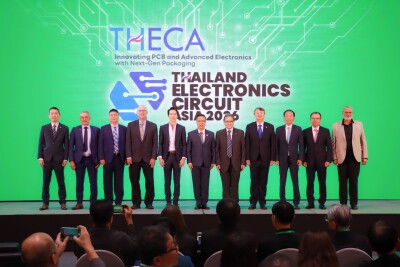
    The investment momentum takes center stage at the Thailand Electronics Circuit Asia (THECA 2026) summit at Bangkok’s BITEC exhibition center, which convenes more than 300 global tech enterprises and 7,000 international delegates across 40 nations. The summit’s program includes more than 60 conference sessions spanning AI infrastructure, the semiconductor ecosystem, photonics, advanced packaging, PCBs, and electronics manufacturing services. The event reinforces the accelerating realignment of critical electronics manufacturing toward Southeast Asia amid ongoing global supply chain diversification.

    The technological drive comes as Thai policymakers accelerate structural reforms aimed at overcoming the middle-income trap, lifting the country’s global competitiveness ranking into the world’s top 20, and driving annual gross domestic product growth.

    With the electronics sector serving as a primary economic engine, the Thailand Board of Investment (BOI) is shifting its focus from basic capital attraction to maximizing national competitiveness. The agency’s four-pillar framework prioritizes high-value and high-potential sectors, enhances Thailand’s readiness for leading multinationals, deepens local economic benefits by upskilling the workforce and fortifying domestic supply chains, and builds international cooperation to connect Thai firms to global production networks.

    THECA 2026

    “The investments flowing into Thailand’s electronics sector today are fundamentally different from those of three decades ago,” said Mr. Narit Therdsteerasukdi, Secretary General of the Thailand Board of Investment (BOI). “They are driven by frontier technologies, proprietary knowledge, and highly skilled labor. Our objective is not merely keeping pace with global technology, but anchoring Thailand as an indispensable co-creator of the future global supply chain.”

    Thailand’s selection to host the 17th Electronic Circuits World Convention (ECWC17) in August 2027 — a triennial flagship event that rotates among the world’s premier electronics manufacturing economies — further underscores the country’s rising clout in global electronics manufacturing.
    Industry leaders note that surging demand for edge computing, smart mobility, and artificial intelligence is reshaping regional manufacturing footprints.

    “In an era dominated by rapid breakthroughs in AI, advanced packaging, and semiconductors, competitive advantage is no longer determined by brute manufacturing capacity alone,” said Mr. Canice Chung, Chairman of the Hong Kong Printed Circuit Association (HKPCA), a co-organizer of the event. “It hinges on international knowledge transfer, cross-border research cooperation, and developing specialized technical talent.”

    To strengthen regional collaboration, the summit introduces dedicated platforms such as Power2Motion, focusing on power electronics and future mobility systems, alongside the ASEAN+ Technology Pavilion, which unites 15 robotics, AI, and IoT industry alliances from Thailand, Malaysia, Singapore, and Vietnam.

    “Thailand is building the critical mass necessary to serve as Asia’s next-generation electronics nexus,” noted Mr. Pithan Ongkosit, President of the Thai Printed Circuit Association (THPCA), as THECA holds its third consecutive edition. “Uniting every tier of the supply chain — from raw substrates and automated machinery to semiconductors and advanced packaging — creates essential commercial scale and accelerates technology adoption across the region.”

    THECA 2026

    As regional competition for high-tech capital intensifies, Thai investment officials are emphasizing the co-development of domestic capabilities alongside foreign investment.

    “By synchronizing foreign direct investment with our domestic manufacturers, academic institutions, and next-generation engineering talent, we are cementing Thailand’s position as the regional hub for smart electronics manufacturing — creating high-value jobs and driving sustainable economic growth,” Mr. Narit said.


    Note: Currency conversions are based on the Bank of Thailand’s average selling rate of approximately 1 USD = 32.8 THB.

    Hashtag: #Thailandboardofinvestment #BOI #FDI #Investment #AI #technology

    The issuer is solely responsible for the content of this announcement.

    Thailand Board of Investment (BOI)

    Established in 1966, the Office of the Board of Investment (BOI) has continuously played an essential role for over 60 years in promoting value-adding investment for the country, from both foreign and Thai investors, to enhance national competitiveness and drive toward a new era of sustainable and balanced growth.

    Investment Services Center- PR Section, The Office of the Board of Investment (BOI)

    555 Vibhavadi-Rangsit Road, Chatuchak, Bangkok 10900 Tel. +66 (0) 2553 8111, Fax: +66 (0) 2553 8222

  • Dr. Terence Tan, Medical Director of Halley Body Slimming Clinic, Discusses an Integrated Approach to Semaglutide Treatment and Weight Management at the Society of Aesthetic Medicine (Singapore) Conference 2026

    Dr. Terence Tan, Medical Director of Halley Body Slimming Clinic, Discusses an Integrated Approach to Semaglutide Treatment and Weight Management at the Society of Aesthetic Medicine (Singapore) Conference 2026

    SINGAPORE – Media OutReach Newswire – 26 August 2026 – On Sunday, 26 July 2026, Dr. Terence Tan of Halley Body Slimming Clinic presented at the Society of Aesthetic Medicine (Singapore) Conference 2026. Organised by the Society of Aesthetic Medicine (Singapore), the two-day conference brought together doctors to discuss developments across aesthetic medicine and related areas of clinical practice. In his presentation, “Achieving More With Semaglutide: The STEP UP Evidence”, Dr. Tan reviewed recent clinical evidence on semaglutide treatments while also examining a wider question: how should doctors support patients before, during, and after medical weight loss?

    Dr. Terence Tan of Halley Body Slimming Clinic presented "Achieving More With Semaglutide: The STEP UP Evidence" at the Society of Aesthetic Medicine (Singapore) Conference 2026
    Dr. Terence Tan of Halley Body Slimming Clinic presented “Achieving More With Semaglutide: The STEP UP Evidence” at the Society of Aesthetic Medicine (Singapore) Conference 2026

    Looking beyond semaglutide treatment in isolation

    Semaglutide belongs to a class of medicines known as glucagon-like peptide-1 receptor agonists, or GLP-1 RAs. Dr. Tan began by reviewing how these GLP-1 injectables work and the growing body of research investigating their role in weight management.

    A central part of the presentation focused on the Semaglutide Treatment Effect in People with obesity (STEP) clinical development programme and, in particular, the STEP UP trial. STEP UP was a 72-week randomised, double-blind, multicentre, placebo-controlled trial involving adults with obesity and without type 2 diabetes. Participants received once-weekly semaglutide 7.2 mg, semaglutide 2.4 mg, or placebo, alongside a lifestyle intervention that included dietary modification and physical activity.

    Under the treatment-policy analysis, mean body-weight change at week 72 was -18.7% among participants receiving semaglutide 7.2 mg, compared with -15.6% with semaglutide 2.4 mg and -3.9% with placebo. The study also examined the proportions of participants achieving higher levels of body-weight reduction.

    However, the presentation did not position higher weight-loss percentages as the sole goal of treatment. Instead, Dr. Tan used the evidence as a starting point for discussing how weight management plans may need to evolve as medical treatments make more substantial weight reduction possible.

    Navigating patient selection for semaglutide treatment

    After reviewing the STEP evidence, Dr. Tan turned to how these findings translate into clinical decision-making, starting with one of the most important questions in practice: who is suitable for semaglutide treatment, and at what dose?

    During the presentation, Dr. Tan shared that semaglutide is indicated as an adjunct to a reduced-calorie diet and increased physical activity for adults with an initial BMI of:

    • 30 kg/m² or above, which falls within the obesity range; or
    • 27 kg/m² to below 30 kg/m², where at least one weight-related comorbidity is present.

    However, these numerical thresholds are only one part of the assessment. In everyday GP and aesthetic practice, doctors may encounter patients with very different motivations, health profiles, and circumstances. Dr. Tan’s presentation therefore raised broader considerations such as Asian ethnicity, psychological and social factors, occupational pressures, and the resources available within the clinic to provide appropriate ongoing care.

    This reinforces the need to assess the individual patient rather than viewing semaglutide as a treatment based on weight or BMI alone.

    Weight management remains a clinical process

    Additionally, Dr. Tan emphasised that prescription weight loss medication represents only one part of weight management. Semaglutide treatment can be used to support weight reduction in suitable patients, but doctors should take into account the patient’s goals, lifestyle changes, commitment to treatment, and support system.

    To address this, he highlighted several areas that should be addressed alongside medication:

    • Treatment goals: His presentation discussed establishing realistic weight goals from the outset and reviewing progress over time, rather than focusing only on the number shown on the weighing scale at each visit.
    • Lifestyle changes: Diet and exercise remained central to his approach. Rather than prescribing one way of eating, he encouraged doctors to consider different dietary approaches and support sustainable lifestyle changes.
    • Motivation and support: Dr. Tan stressed the importance of “treating the mind as well as the body” by helping patients commit to the process and, where appropriate, involving family and friends. This recognises that longer-term weight management also depends on motivation, behaviour, and the patient’s support system.
    • Ongoing follow-up: He suggested beginning with monthly reviews, checking for nausea and other side effects, reinforcing positive lifestyle changes, and adjusting the interval between visits according to the patient’s clinical needs.
    • Wider care and community support: The presentation also pointed to the possible role of healthcare clusters, nurse practitioners, medical social workers, and other support networks where appropriate.

    Taken together, these points positioned semaglutide treatment as one component within a longer-term management process rather than a standalone solution. The doctor’s role, in Dr. Tan’s framework, extends from deciding who may be suitable for treatment to helping patients navigate lifestyle changes, treatment tolerability, ongoing motivation, and the support they may need along the way.

    Taking a broader approach to weight management and aesthetics

    Towards the end of his presentation, Dr. Tan also explored how weight management can intersect with aesthetic care in two different ways.

    First, weight loss itself can affect skin laxity. As a patient loses a significant amount of weight, the reduction in underlying fat volume may leave the skin looking looser, particularly where there has been a substantial change in body size. This means that skin laxity may become a separate aesthetic concern that needs to be assessed after, or during, the weight management journey.

    Second, there is the question of treatment sequencing. Dr. Tan raised whether weight management should always come before aesthetic treatments such as CoolSculpting Elite body contouring. While he noted that body contouring does not contribute to overall weight loss, he emphasised that treatment planning should not follow a rigid sequence for every patient. Instead, doctors should take into account the patient’s individual concerns, circumstances, and preferences. Weight management, fat reduction, and skin-tightening treatments address different needs and may therefore be considered at different stages of a patient’s care.

    From clinical evidence to patient care

    Dr. Tan’s presentation brought the discussion back to a practical point: semaglutide is only one part of a patient’s broader weight management journey. The way doctors plan and navigate treatment should change over time, particularly as their patients’ health priorities, weight-related concerns, and aesthetic considerations evolve.

    This patient-led approach also underpins Dr. Tan’s work at Halley Body Slimming Clinic, where weight management is considered in the context of each patient’s wider needs rather than as a standalone treatment. Patients can visit their website to learn more about the clinic’s treatment philosophy and the range of weight management and body-contouring services available.

    Hashtag: #halleybodyslimming #weightlossinjection #weightlosssingapore #medicalweightmanagement

    The issuer is solely responsible for the content of this announcement.

    About Halley Body Slimming Clinic

    Halley Body Slimming Clinic is a clinic in Singapore that offers doctor-led weight management, body contouring, and skin tightening treatments. Patients undergo a clinical assessment before a treatment plan is recommended based on their individual concerns, goals, and suitability. Services include prescription weight-loss medication, as well as non-invasive fat-reduction and body-contouring treatments such as and . The clinic also emphasises regular follow-up and patient education, allowing treatment plans to be reviewed as patients progress toward their weight management goals.

  • SIRIVANNAVARI Designs Thailand’s Official Ceremony Uniforms For The 20th Asian Games

    SIRIVANNAVARI Designs Thailand’s Official Ceremony Uniforms For The 20th Asian Games

    Thai craftsmanship and contemporary design come together under “The Art of Unity”, bringing locally handwoven cotton and traditional indigo textiles to the international sporting stage.

    BANGKOK, THAILAND – Media OutReach Newswire – 26 August 2026 – SIRIVANNAVARI has designed the official ceremony uniforms for Thailand’s national athletes for the 20th Asian Games Aichi-Nagoya 2026, taking place in Japan from 19 September to 4 October 2026. Created by Her Royal Highness Princess Sirivannavari Nariratana Rajakanya, Founder and Creative Director of SIRIVANNAVARI, the uniforms bring locally handwoven cotton and traditional Thai indigo-dyed textiles into a contemporary tailored silhouette, placing Thai craftsmanship at the heart of Thailand’s presence on one of Asia’s largest international sporting stages.

    SIRIVANNAVARI Ceremonial Uniforms for Thailand National Team
    SIRIVANNAVARI Ceremonial Uniforms for Thailand National Team

    Conceived under the concept “The Art of Unity”, the uniforms express a meeting of cultures, craftsmanship and communities through the language of fashion. The collection incorporates handwoven indigo-dyed cotton from the Donkoi Model in Sakon Nakhon Province, alongside handwoven cotton from theSUPPORT Foundation, transforming generations of textile knowledge into a modern expression of Thai identity.

    SIRIVANNAVARI, the Bangkok-based fashion house that presents its collections during Milan Fashion Week, has developed a distinctive design language that brings Thai craftsmanship into dialogue with contemporary fashion. For the Asian Games, this approach extends beyond the textiles themselves to a specially developed embroidery motif inspired by the cultural connection between Thailand and Japan, symbolising a dialogue between Thailand and the host nation while reinforcing the collection’s spirit of unity.

    Designed for both male and female athletes, the official ceremony uniform comprises four key pieces. The handwoven cotton jacket is cut in SIRIVANNAVARI’s signature tailored silhouette, featuring three functional patch pockets and custom logo-embossed buttons. A crisp white shirt is distinguished by an elongated pointed collar and an embroidered bib panel carrying the Thailand–Japan motif. Coordinating tailored trousers complete the silhouette, while the House’s signature “Diamond Knot” necktie introduces a recognisable SIRIVANNAVARI design code.

    Bringing “The Art of Unity” to life, the accompanying photo and film campaign brings together some of Thailand’s most celebrated athletes across generations and sporting disciplines. Dressed in the SIRIVANNAVARI ceremony uniforms, each represents a story of dedication, achievement and national pride — reflecting the same collective spirit embodied in the craftsmanship and communities behind the uniforms.

    The campaign features Her Royal Highness Princess Sirivannavari Nariratana Rajakanya, Asian Games Gold Medallist in Equestrian Dressage (Team Event) at Busan 2002 and an accomplished international equestrian athlete; “Tennis” Panipak Wongpattanakit, two-time Olympic Champion in Taekwondo at Tokyo 2020 and Paris 2024; “View” Kunlavut Vitidsarn, Paris 2024 Olympic Silver Medallist and 2023 Men’s Singles Badminton World Champion; “Yu” Banlung Tubtimdang, Hangzhou 2022 Asian Games Champion in Men’s -63kg Taekwondo; “Beam” Pimpichaya Kokram, Asian Champion and a leading member of Thailand’s national women’s volleyball team; and “Ying” Suthasini Sawettabut, Southeast Asian table tennis champion and multiple SEA Games gold medallist. Together, the six athletes embody the spirit of “The Art of Unity” — bringing different generations, disciplines and achievements together under one national identity.

    More than ceremonial attire, the uniforms represent a meeting point between fashion, sport and Thai craftsmanship. By bringing locally made textiles and the skills of Thai artisans to the Asian Games, SIRIVANNAVARI presents a contemporary expression of Thailand — one rooted in cultural heritage while confident in its place within international fashion.

    As Thailand’s athletes enter the Opening Ceremony of the 20th Asian Games Aichi-Nagoya 2026, they will wear more than the colours of their nation: they will carry the craftsmanship, creativity and collective spirit of the Thai communities behind them — united through “The Art of Unity.”

    Designed by:
    SIRIVANNAVARI, under the creative direction of Her Royal Highness Princess Sirivannavari Nariratana Rajakanya

    Design Concept:
    “The Art of Unity”

    The concept expresses the spirit of unity among the Thai people as they come together in support of Thailand’s national athletes on the Asian stage.

    THE HEART OF THE DESIGN

    At the heart of the ceremonial uniforms is the use of naturally indigo-dyed handwoven cotton from the Donkoi Model in Sakon Nakhon Province, a sustainable community development initiative under the vision of Her Royal Highness Princess Sirivannavari Nariratana Rajakanya, together with handwoven cotton from The SUPPORT Foundation of Her Majesty Queen Sirikit The Queen Mother.

    The Donkoi Model originated from Her Royal Highness’s commitment to the continued development of Thai textiles. Following a visit to the Donkoi weaving community in Phanna Nikhom District, Sakon Nakhon Province, in 2020, Her Royal Highness provided guidance on textile design, quality, patterns, colour development and production standards, helping traditional handwoven textiles respond to contemporary applications while creating greater economic value for local communities.

    The initiative subsequently developed into the Donkoi Model, an approach to sustainable community development that combines the preservation of local textile wisdom with the creation of livelihoods and income. In collaboration with Thailand’s Community Development Department, Ministry of Interior, the initiative has also supported the development of products towards Premium OTOP standards and greater recognition for Thai textiles nationally and internationally.

    THE CEREMONIAL UNIFORM

    Designed for both male and female athletes, the ceremonial uniform comprises four key pieces: a suit jacket, white shirt, trousers and necktie.

    • THE SUIT JACKET

    Tailored from handwoven cotton, the three-pocket jacket is shaped in SIRIVANNAVARI’s distinctive silhouette and incorporates details created specifically for Thailand’s national team.

    The chest pocket carries the Thailand national team emblem for the Asian Games 2026, while the back is embroidered with “THAILAND”, featuring a heart-shaped detail above the letter “I”.

    The jacket is finished with signature light-blue SIRIVANNAVARI logo buttons — four at the front and four positioned diagonally at each cuff. Two adjustable waist-button positions allow the fit to be adapted to the wearer’s physique, providing greater comfort and freedom of movement.

    • THE WHITE SHIRT

    The white shirt features SIRIVANNAVARI’s signature elongated pointed collar and a detachable embroidered chest panel specially created to express the cultural dialogue between Thailand and Japan.

    Thai identity is represented through Wat Arun (The Temple of Dawn) and the Bodhi tree, while Japan is represented through Nagoya Castle and cherry blossoms (sakura).

    The two cultures are connected through Seigaiha, the traditional Japanese wave motif symbolising peace, prosperity and a smooth journey. The embroidery is completed with two geometric weaving patterns that share a visual affinity: Thailand’s Chalew and Japan’s Kagome, representing the rich craft traditions and artisanal wisdom of both nations.

    • THE TROUSERS

    The straight-leg trousers are tailored from premium suiting fabric in a colour coordinated with the jacket, creating a harmonious balance between Thai textile heritage and contemporary international tailoring.

    Side openings at the hem allow greater freedom of movement, while an adjustable waist fastening enhances comfort and fit. The back is finished with SIRIVANNAVARI’s signature peacock emblem.

    • THE TIE

    Completing the ensemble is a tie styled with the signature “Diamond Knot”, a detail that reflects the SIRIVANNAVARI’s meticulous attention to craftsmanship and refinement in every element of the design.

    THE ART OF UNITY

    The SIRIVANNAVARI ceremonial uniforms for the Asian Games 2026 embody national pride through contemporary design. Every element balances aesthetic refinement with functionality, comfort and freedom of movement for the athletes.

    At the same time, the uniforms bring Thailand’s textile heritage, indigenous wisdom and craftsmanship onto an international stage — transforming traditional handwoven textiles through a contemporary fashion vocabulary and celebrating the collective spirit behind “The Art of Unity.”

    Hashtag: #SIRIVANNAVARI #20thAsianGames #TheArtOfUnity

    The issuer is solely responsible for the content of this announcement.

  • Bertelsmann Stiftung: Artificial intelligence can strengthen citizen participation

    Bertelsmann Stiftung: Artificial intelligence can strengthen citizen participation

    The Bertelsmann Stiftung’s new Policy Brief uses 50 case studies from 22 countries to illustrate how AI can support citizen participation and to identify the risks that must be considered. The study was conducted in collaboration with the OECD.

    GÜTERSLOH, GERMANY – Newsaktuell – 26 August 2026 – Artificial intelligence (AI) offers enormous potential to better deliver on the key promises of political citizen participation: broader inclusion, genuine openness, user-friendly processes and scalable processes. Governments and civil society actors around the world are already using AI for this purpose: from analysing large volumes of citizen input to supporting participation processes through chatbots, moderation systems and AI-assisted moderation.

    This is demonstrated in the new Policy Brief “Artificial Intelligence and the Future of Citizen Participation,” which is based on a joint paper by the OECD and the Bertelsmann Stiftung and examines 50 specific cases of the application of AI from 22 countries.

    Overall, the findings show that AI can make citizen participation more accessible, scalable and effective. However, its true value very much depends on how it is used. AI can only strengthen participation if it improves governments’ ability to listen to citizens without replacing democratic judgement, transparency and trust.

    Nine types of AI applications

    The study identifies nine different areas where AI can be applied in citizen participation: sense-making, information development, translation, transcription, virtual assistance, facilitation, moderation, simulation and participation architecture. Sense-making, virtual assistance and automated translation are particularly widespread at present.

    Sense-making applications can analyse large volumes of ideas and comments, identify patterns and summarize contributions. Translation and transcription tools can reduce barriers to access. Virtual assistants, such as chatbots, help citizens access information and participation opportunities more easily.

    Relevant examples demonstrate how this works in practice, such as the one in Cambridge in the United Kingdom, where an AI tool in 2024 supported the analysis of qualitative contributions from a public consultation and reduced the time needed by about 50 percent. In Finland in 2024, the Finnish innovation agency Sitra used the AIpowered platform Polis to enable over 18,000 people to participate in the public consultation “What do you think, Finland?”

    Opportunities and Risks

    In addition to the considerable opportunities, the use of AI also carries risks. Biased data can influence results, and a lack of transparency can undermine trust and legitimacy. In addition, there is a risk of new forms of digital exclusion. Other challenges include a lack of AI expertise in public institutions and dependence on proprietary systems – that is, closed technologies whose source code, interfaces or formats are under the sole control of a manufacturer.

    To ensure that AI supports civic participation in a responsible and inclusive manner, the Policy Brief offers recommendations in three areas: guardrails, enablers and public engagement. Governments should establish clear guardrails, build capacity for the responsible use of AI and involve citizens in the design and oversight of these systems.

    Ultimately, AI is, of course, no substitute for democratic participation. However, when used responsibly, it can help make participation more accessible, scalable and responsive.

    About the publication

    The Policy Brief is a condensed version of the OECD paper “Artificial Intelligence and the Future of Citizen Participation: Typology of applications, opportunities and challenges for democratic innovations,” based on a collaboration between the OECD and the Bertelsmann Stiftung.

    Download link for the study: https://www.bertelsmann-

    stiftung.de/de/publikationen/publikation/did/artificial-intelligence-and-the-future-ofcitizen-participation

    EN: Policy Brief 07/2026: Artificial Intelligence and the Future of Citizen Participation

    The issuer is solely responsible for the content of this announcement.

  • Huawei and HP Inc. Sign Global Patent Cross-Licensing Agreement

    Huawei and HP Inc. Sign Global Patent Cross-Licensing Agreement

    SHENZHEN, CHINA – Media OutReach Newswire – 26 August 2026 – Today, Huawei and HP Inc. announced the signing of a multiyear global patent cross-licensing agreement, including license to HP Inc. for certain Huawei WiFi patents. This milestone agreement not only reflects the companies’ cooperation in the field of intellectual property licensing but also recognizes Huawei’s innovation capabilities and core technological strength as well as HP’s position as global leader in computers and peripheral equipment.

    IPR交叉协议新闻网站封面.jpg

    Alan Fan, Huawei’s Chief Intellectual Property Officer, stated, “Huawei is pleased to reach this patent cross-licensing agreement with HP Inc. This agreement is a strong testament to Huawei’s persistent independent innovation in cutting-edge fields in Information and Communications Technology (ICT). Through patent licensing, Huawei shares its innovation with the industry, particularly in the area of standardized technologies, which brings leading technological experiences to consumers worldwide.”

    Steven Geiszler, who represented Huawei in the negotiations, stated: “This is another successful licensing of Huawei patents, particularly in the area of standardized Wi-Fi technologies—while obtaining valuable reciprocal patent rights from HP Inc. I appreciate the professionalism and courteousness shown by HP’s negotiation team during this project.”

    Wi-Fi has become one of the most widely used wireless technologies in the world, connecting homes, schools, hospitals, offices and public spaces. Each generation of the standard is developed openly, drawing on technical contributions from companies across the industry, and is then made broadly available to implementers.

    Although lacking the speed and throughput of newer generations, Wi-Fi 4 and 5 are still widely used, providing reliable networking for less demanding applications.

    High speed, large capacity and lower energy consumption enable Wi-Fi 6 to deliver multiple high-definition video streaming, gaming and AR/VR services alongside legacy broadband and IoT devices such as laptops, refrigerators, cameras, doorbells, thermostats, and lightbulbs—all with a single wireless router.

    Wi-Fi 7, building on Wi-Fi 6, delivers higher throughput, lower latency, and more reliable Wi-Fi connectivity. These enhancements enable an exceptionally smooth experience for 8K video, gaming, AR/VR, remote work, online video conferencing, and cloud computing.

    Together, these advances and applications have made reliable wireless connectivity part of the basic infrastructure of everyday life — supporting remote healthcare, digital education, and more energy-efficient homes and workplaces. Huawei has played a significant role in contributing to the development of Wi-Fi technologies over successive generations and makes the resulting technologies available publicly, so that innovation created in one place can benefit users everywhere.

    Hashtag: #Huawei #HPInc #PatentCrossLicensing

    The issuer is solely responsible for the content of this announcement.

  • Arrow Electronics brings AI, electrification, and intelligent power solutions to PCIM Asia

    Arrow Electronics brings AI, electrification, and intelligent power solutions to PCIM Asia

    Addressing AI’s growing power demands with greater efficiency and resilience

    SHENZHEN, CHINA – Media OutReach Newswire – 26 August 2026 – Arrow Electronics, a global provider of technology solutions, will showcase AI, electrification, and intelligent power solutions at PCIM Asia Shenzhen 2026, taking place from August 26-28 at the Shenzhen World Exhibition & Convention Center.

    Arrow Electronics brings AI, electrification, and intelligent power solutions to PCIM Asia
    Arrow Electronics brings AI, electrification, and intelligent power solutions to PCIM Asia

    At Booth D20 in Hall 16, Arrow, together with Analog Devices, Molex, Nexperia, NXP, onsemi, STMicroelectronics, and Yageo, will demonstrate how advanced power electronics, intelligent control, and system-level design are helping address the growing energy and performance demands of AI infrastructure, industrial automation, renewable energy, and electrification.

    As AI workloads continue to expand, engineers face increasing challenges related to energy efficiency, power density, thermal management, and system reliability. Arrow helps customers accelerate innovation by combining leading technologies with engineering expertise, power architecture design, and global supply chain capabilities.

    Showcase highlights

    A centerpiece of the exhibit is Arrow’s all-new “Next-Gen 800VDC Data Center Empowers AI Factory” showcase, demonstrating how renewable energy integration, intelligent power distribution, advanced cooling, and AI-driven automation can help reshape future digital infrastructure.

    This end-to-end system architecture highlights a connected energy management ecosystem spanning solar energy harvesting, energy storage, 800VDC power distribution, high-density power conversion, GPU power delivery, cooling infrastructure, and AI robotics. Together, these technologies illustrate how next-generation AI data centers can achieve higher energy efficiency, greater power density, and improved sustainability.

    Additional showcase highlights include:

    • Solid‑State Transformer (SST): High‑efficiency medium‑voltage direct step‑down, reshaping the power supply chain
    • HVDC to LVDC: The critical bridge connecting high‑voltage distribution to chip power delivery
    • Power to GPU: The “last mile” from 48V bus to GPU core
    • Cooling infrastructure and building automation: Liquid cooling and AI‑driven smart thermal management
    • AI Robotics: Autonomous inspection, dexterous manipulation, and intelligent operation and maintenance

    Advancing AI Infrastructure with SiC and GaN Technologies

    Featured demonstrations will highlight how SiC and GaN technologies are enabling more efficient and power-dense solutions across AI infrastructure, industrial automation, energy storage, and power delivery applications. Industry adoption of wide-bandgap semiconductors such as gallium nitride (GaN) and silicon carbide (SiC) is accelerating as AI-driven data center expansion increases demand for higher-efficiency, higher-density power architectures. As AI workloads continue to scale, GaN-based power systems are expected to play an increasingly important role in enabling next-generation data center infrastructure1.

    “AI and electrification are driving new requirements for efficiency, power density, and system integration,” said Jacky Wan, vice president of sales components, China, at Arrow Electronics. “At PCIM Asia Shenzhen, we’re demonstrating how Arrow helps customers accelerate the development of next-generation AI, energy, and industrial solutions by bringing together leading technologies, engineering expertise, and global supply chain capabilities.”

    ¹ Source: Yole Group, Power GaN 2025.

    Hashtag: #ArrowElectronics

    The issuer is solely responsible for the content of this announcement.

    About Arrow Electronics

    Arrow Electronics (NYSE:ARW) sources and engineers technology solutions for thousands of leading manufacturers and service providers. With 2025 sales of $31 billion, Arrow’s portfolio enables technology across major industries and markets. Learn more at .

  • Asia’s First Autism Support Platform Hits 100,000 Users in Regional Expansion Drive 

    Asia’s First Autism Support Platform Hits 100,000 Users in Regional Expansion Drive 

    How Optism’s Ecosystem Is Transforming Autism Support Across Hong Kong and Asia

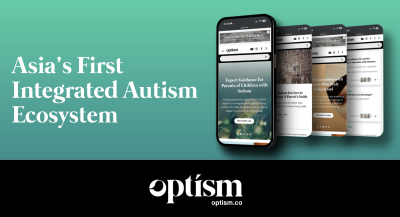
    HONG KONG SAR – Media OutReach Newswire – 26 August 2026 – OPTISM, Asia’s first integrated autism support ecosystem, has crossed a major milestone after reaching 100,000 users across Hong Kong and the wider region.

    Asia's First Integrated Autism Ecosystem
    Asia’s First Integrated Autism Ecosystem

    Founded in 2024, the platform has scaled rapidly to meet a large gap in regional support for families navigating autism spectrum disorder (ASD). In many Asian markets, families often face long public sector waiting lists and a fragmented network of resources when seeking guidance.

    The platform is backed by the Social Innovation and Entrepreneurship Development Fund (SIE Fund) and Oxfam Hong Kong to build out and scale the network.

    “Reliable content and resources lie at the heart of what we do,” said Founder Carmen Li, who started the platform based on her personal experience raising her 15-year-old son Vincent. “AI gives us the speed to point a parent in the right direction at 2 a.m., but it is our dedicated panel of real-world practitioners and professionals who provide the human sanctuary parents actually need.”

    The platform currently operates through four main services:

    • Expert Hub: Asia’s first specialized triage network that links caregivers directly to a cross-disciplinary panel of 30 practitioners, legal professionals, and support specialists across 10 different fields.
    • Ask Optism 2.0: Our 24/7 bilingual chatbot providing immediate support and information in both English and Traditional Chinese, powered by Optism’s rich ecosystem of trusted autism content and resources.
    • Parents Forum: A peer community that uses real-time translation to let families connect across different languages and regional cultures.
    • Autism Marketplace: Your trusted guide to finding vetted local therapists, specialized support centers, and inclusive community programs tailored to your child’s needs.

    Following its initial scale, the platform is now preparing for its next phase of growth. “This milestone is just our baseline,” Li said regarding OPTISM’s future.

    The company’s upcoming roadmap focuses on expanding its footprint across Asia. Next steps include onboarding localized practitioners and professionals in neighboring countries, establishing corporate partnerships, and growing its digital infrastructure to ensure families do not have to navigate autism support in isolation.
    Hashtag: #optism #autism #autismsupport #hkstartup #healthtech


    The issuer is solely responsible for the content of this announcement.

    OPTISM

    is Asia’s first integrated autism support ecosystem dedicated to empowering parents and caregivers.

    Founded in 2024, the platform leverages an advanced AI triage system to bypass traditional information silos, instantly routing user queries directly to a vetted regional panel of top-tier ASD practitioners and specialists.

    We bring ASD support expertise and peer community resources together to provide reliable, localized, empathetic care to families navigating neurodiversity across the region.

  • Shanghai Summer 2026 Makes the City Easier to Explore with New Travel, Payment and Visitor Services

    Shanghai Summer 2026 Makes the City Easier to Explore with New Travel, Payment and Visitor Services

    SHANGHAI, CHINA – Media OutReach Newswire – 26 August 2026 – From tapping into the metro and paying at local shops to claiming tax refunds, booking family stays and unlocking dining benefits, Shanghai Summer 2026 is introducing visitor-focused products designed to make exploring the city easier for international travellers.

    Running from July to October under the theme “Shanghai Summer, Join the Family Fun,” the international consumption season brings together payment networks, banks, hospitality groups and mobility providers to improve the visitor journey.

    As a global strategic partner of Shanghai Summer, Visa is expanding its payment-friendly network across the city. Visa’s contactless “Tap to Pay” experience covers dining, accommodation, transport, tourism, shopping and entertainment. Visa data shows that in the first quarter of 2026, offline card spending by international visitors in Shanghai increased by more than 50% year-on-year, while transaction volumes rose by more than 60%.

    China UnionPay is expanding its support for international visitors through the Nihao China App, an all-in-one digital platform combining payments, transportation, travel information and multilingual services. Available in more than 160 countries and regions, the app allows users to top up with international Visa or Mastercard cards and pay via UnionPay QR codes at more than 100,000 merchant locations. It also supports metro and bus travel in Shanghai, real-time translation, navigation and instant tax-refund services.

    Bank of China Shanghai Branch has launched an upgraded Tax Refund 2.0 programme during Shanghai Summer. The initiative expands tax-refund services into hotels, supermarkets, restaurants, attractions and international talent service centres, supported by integrated POS refund functions and self-service tax-refund machines.

    For travellers navigating the city, Shanghai Pass combines transportation, sightseeing and merchant benefits in one product. The card can be used across Shanghai’s metro, buses, ferries, suburban railways, Maglev services and taxis, while cardholders can access privileges at nearly 150 merchants.

    Jin Jiang International is taking a similar integrated approach through its “2026 Jin Jiang ∞ Journey, Shanghai Summer” programme, combining hotels with cultural attractions, dining, guided city experiences and family entertainment. Its Shanghai Gourmet Passport 2.0 also connects dining, hotels and cultural experiences for international travellers.

    Together, these products are making payment, transport, tax refunds, hotels, dining and attractions more connected — helping international visitors move more freely, pay more simply and experience more of Shanghai.

    Hashtag: #ShanghaiSummer

    The issuer is solely responsible for the content of this announcement.

  • Only 49% of Singaporeans Feel Prepared for the Next Decade

    Only 49% of Singaporeans Feel Prepared for the Next Decade

    Financial pressures and burnout emerge as key challenges to life preparedness according to Etiqa Insurance Singapore Life Preparedness Survey 2026

    SINGAPORE – Media OutReach Newswire – 26 August 2026 – Only 49% of Singaporeans feel prepared for the next decade, despite 76% already taking action to improve their financial wellbeing, health and future readiness. The findings, unveiled in Etiqa Insurance Singapore’s Life Preparedness Survey 2026, reveal a disconnect between Singaporeans’ confidence about the future and the proactive steps they are taking today.

    This survey, conducted by Kantar in May 2026, tracks indicators of life preparedness across body, mind, money, and future among 1,017 Singapore Citizens and Permanent Residents aged 18 and above.

    These findings highlight a growing preparedness gap across these dimensions, suggesting that being prepared today requires more than financial discipline alone. It calls for resilience and ability to navigate uncertainty and changing demands in life.

    Key findings of the survey include:

    • Financial security emerged as the single strongest definition of preparedness, with 68% of Singaporeans identifying it as the most important factor in being future ready. Nearly half of Singaporeans (47%) cite lack of money as their biggest barrier to life preparedness, significantly ahead of lack of knowledge (20%), lack of time (16%), and lack of motivation (15%).
    • 68% of Singaporeans expressed readiness to take action to improve their life preparedness. They are most likely to start or increase savings (55%), exercise regularly (49%), spend more quality time with loved ones (38%), improve sleep habits (37%), and learn a new skill or take a course (33%).
    • 76% of Singaporeans have already taken action to address their concerns for 2026. Some of the key concerns are financial worries (49%), conflict issues (32%), lack of exercise (30%), and limited time to upskill (28%).

    Life preparedness takes a back seat for older mid-life Singaporeans

    One in three (39%) Singaporeans aged 45 to 54 are not ready to take action to improve their life preparedness. Among this group, 24% prioritise managing household finances, while 21% are most concerned about planning for their future care needs.

    These findings point to the pressures faced by Singapore’s mid-life population, where financial responsibilities and future caregiving concerns compete with longer-term planning. As competing demands increase, broader life preparedness goals such as improving health, building resilience, and preparing for the future can take a back seat.

    Burnout emerges as a key challenge to future life preparedness

    Over half (56%) of Singaporeans reported experiencing burnout in the past year, with one in five feeling burned out “very often”.

    Burnout begins early in life, affecting 44% of Singaporeans aged 18 to 24. For the 18 to 24 age group, burnout is driven primarily by uncertainty about the future (49%), financial worries (43%), and workload or job demands (43%).

    Despite these pressures, 42% of Singaporeans aged 18 to 24 identified wealth accumulation as their top focus area for 2026. This highlights a generation striving to build long-term stability despite elevated levels of mental and emotional strain.

    Avoidance of future-planning conversations continues to hinder life preparedness

    Many Singaporeans are uncomfortable discussing future care needs, finances and legacy planning with their families. Only 21% of Singaporeans have had open and detailed discussions with their family about these topics. Among Singaporeans aged 55 and above, 13% prefer to handle these matters on their own, reflecting a desire for independence and self-reliance when planning.

    The findings suggest there is an opportunity to encourage earlier and more open conversations around future care, finances, and legacy planning to help reduce uncertainty and improve long-term preparedness.

    Life Preparedness to navigate life’s uncertainties

    “Financial readiness remains an important foundation, but resilience today also requires stronger support systems and more open conversations around long-term planning. People are more likely to take meaningful action when they feel supported, informed and empowered,” said Ms Claudia Soh, CEO, Etiqa Insurance Singapore.

    “Our findings show that Singaporeans are taking positive steps to improve their financial wellbeing, health and future readiness, yet many still lack confidence about the future,” added Ms Soh.

    “Life preparedness today is not just about financial discipline. It is about having resilience, support and flexibility to navigate life’s uncertainties, from rising living costs and caregiving responsibilities to health challenges and career transitions. Strengthening preparedness therefore requires building positive daily habits and longer-term planning horizons that help people feel more confident about the future.”

    Etiqa Insurance Singapore life preparedness programmes

    Etiqa Insurance Singapore supports the community through a range of initiatives focused on improving financial literacy, emotional wellbeing, and future planning. Through community outreach programmes, educational workshops, and accessible insurance solutions, Etiqa Insurance Singapore aims to help Singaporeans build greater confidence in navigating financial, emotional, and lifestyle challenges while preparing for the future.

    The full Etiqa Insurance Singapore Life Preparedness Survey 2026 can be accessed here. For more information on our products and services, please visit us at www.etiqa.com.sg
    Hashtag: #Etiqa

    The issuer is solely responsible for the content of this announcement.

    About Etiqa Insurance Pte. Ltd. (Etiqa Insurance Singapore)

    Protecting customers since 1961, Etiqa Insurance Pte. Ltd. (EIPL) is a life and general insurance company licensed and regulated by the Monetary Authority of Singapore and governed by the Insurance Act 1966. Having protected customers in Singapore since 1961 under the name United General Insurance Co. Sdn. Bhd., the company transitioned into the Singapore branch of Etiqa Insurance Berhad in 2009. Today, EIPL in Singapore stands as the pivotal operating entity of Etiqa Insurance Group, a leading insurance and takaful provider in ASEAN.

    EIPL offers a comprehensive range of life and general insurance products accessible through its diverse distribution channels, including bancassurance, agents, brokers, financial advisers, partnerships, direct and online sales via Tiq by Etiqa. Etiqa is rated ‘A’ by credit rating agency Fitch for the group’s ‘Favorable’ business profile. The company is a member of the Maybank Group.

    Etiqa Insurance Singapore Life Preparedness Survey 2026

    The Etiqa Insurance Singapore Life Preparedness Survey was conducted in collaboration with Kantar in May 2026, surveying 1,017 Singapore Citizens and Permanent Residents aged 18 and above. This study delves into the attitudes, perceptions, and behaviours of Singaporeans, with a focus on life preparedness across body, mind, money, and future.

  • Hardcore Quality Conquers Global Users: GREE Premium RACs Top the 2025 Global Sales

    Hardcore Quality Conquers Global Users: GREE Premium RACs Top the 2025 Global Sales

    ZHUHAI, CHINA – Media OutReach Newswire – 26 August 2026 – Recently, Frost & Sullivan, a globally renowned market research and consulting firm, awarded GREE Electric Appliances a certificate, recognizing that “GREE Ranked No. 1 Globally by Sales Volume of Premium Residential Air Conditioners in 2025”. The certification confirms that, based on research into the global Premium residential air conditioning market and measured by sales revenue from Premium residential air conditioners in 2025, GREE ranked first globally.

    Certification of Frost & Sullivan
    Certification of Frost & Sullivan

    According to data from Frost & Sullivan, GREE’s leading position in the global Premium residential air conditioning market is built upon comprehensive superiority in core product performance. Consumers in the Premium segment do not pay merely for a “higher price tag”, instead, they choose products that offer superior usage experiences, more durable and stable operation, and outstanding energy-saving performance. GREE’s widespread recognition in this market is fundamentally rooted in its years of deep cultivation in energy efficiency technology, noise reduction technology, and comfortable airflow technologies. These technologies have passed the most demanding user tests across diverse scenarios in different countries and regions.

    Winning recognition in the global premium market ultimately relies on what the product itself says. GREE’s reputation for quality among global consumers stems from sustained investments in core technologies, superior user experiences, and user value over many years.

    To address the harsh challenges posed by diverse global climates, GREE independently developed a matrix of core compressor technologies covering all climatic zones. The Timo series, equipped with G-Boost single-stage enthalpy-adding compressors, was specifically developed for extremely hot regions like the Middle East. It remains reliable operation even at ambient temperature of 68℃, achieving non-declining cooling performance at 54℃. The Airy series pioneered the commercialization of ultra-wide frequency rotary compressors, capable of continuous heating for 10 hours without defrosting, improving the seasonal energy efficiency ratio (SEER) by 9.5% to 16.7%. The S-cool series, equipped with G-Hyper dual-cylinder two-stage compressors, was crafted for extremely cold regions such as Northern Europe and North America. It operates stably within an ultra-wide temperature range of -40℃ to 54℃, achieving industry breakthroughs of “non-declining heating at -25℃ and non-declining cooling at 46℃”. These three compressor technologies provide “all-climate comfort” solutions for users in different climate belts through their respective differentiated technical paths.

    Picture of G-strom
    Picture of G-strom

    In key dimensions of user experience, GREE also addresses consumer pain points with hardcore technology. The newly launched 2026 “Ai Silent King” features GREE’s self-developed AI energy-saving chip. Paired with artificial intelligence algorithms, it saves energy from the moment it is turned on, improving annual energy efficiency by 23%. Meanwhile, GREE’s SilenzX series air conditioners achieve ultra-low sound pressure levels of just 29 dB(A) for the outdoor unit and 15 dB(A) for the indoor unit—far below the industry average. This achievement earned the Gold Medal at the 51st International Exhibition of Inventions of Geneva, marking GREE’s leadership in the field of noise reduction technology globally.

    From compressors to whole unit systems, from AI energy saving to quiet technology, GREE has built the core competitiveness of Premium products through solid technological accumulation and continuous innovation breakthroughs, creating truly high-quality air experiences for global users.

    As of July, GREE holds 50 “world-leading” technologies. From residential air conditioners to central air conditioning systems, from single-refrigerant systems to solutions covering all climatic zones, GREE has constructed a complete, autonomous, and controllable technology matrix. It is this systemic innovative capability that allows GREE to maintain rapid response and technical adaptation capabilities in the face of differentiated needs across global markets.

    Currently, GREE products serve more than 190 countries and regions worldwide. By adhering to serving users with core technologies and high-quality service, GREE continues to meet people’s pursuit of a better life. Honors are witnesses to the past, and innovation is the eternal coordinate. Standing at a new starting point, GREE Electric Appliances will continue to drive high-quality development through independent innovation, moving from “scale leadership” to “value guidance,” and from “Chinese Manufacturing” to “Global Brand”, thus achieving “Made in China, Loved by the World”.

    Hashtag: #GREE

    The issuer is solely responsible for the content of this announcement.