Credited with revolutionising the American transportation industry in the 20th century, Henry Ford once remarked that: “A business must be run at a profit, else it will die. But when anyone attempts to run a business solely for profit and thinks not at all about a service to the community, then also the business must die, for it no longer has a reason for existence”.
Nearly a hundred years since, these words of wisdom remain true. Perhaps, even more so now than ever, with Islamic sustainability taking center stage. Indeed, we have witnessed time and again, episodes of excessiveness, and the sole and unchecked pursuit of profits that have led to global financial crises.
ESG is a spirit beyond profit, and is therefore a fitting reminder of the role of ESG in helping build a more resilient and sustainable future.
Islamic Principles And The UN SDGs
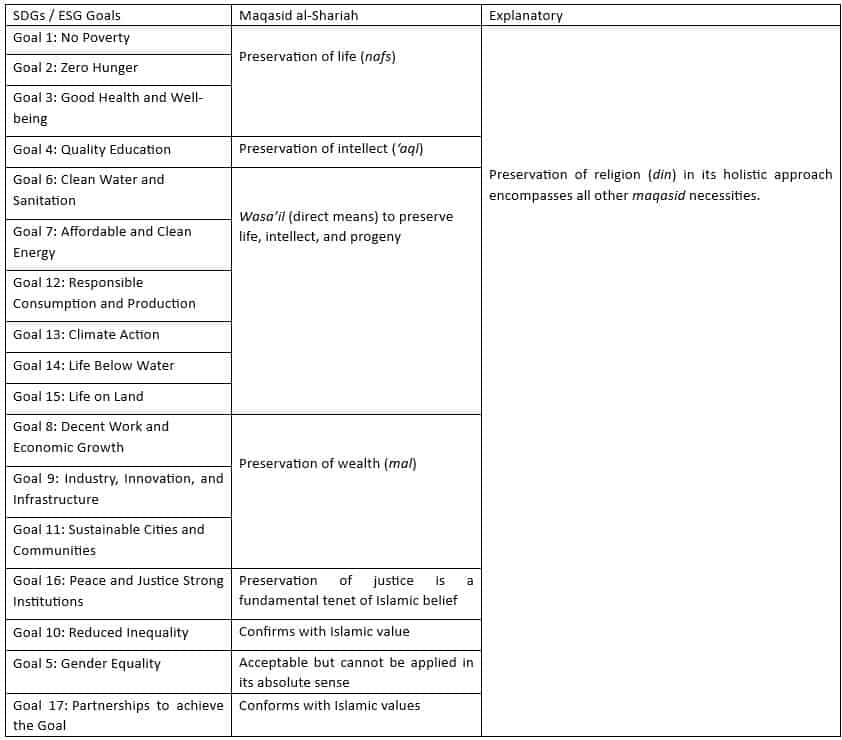
The Islamic transaction (muamalat) principle aspires to build a shared sustainable future for employees, consumers, shareholders, and the community, in accordance with the requirements of Shariah, observing the guidance from the United Nations Agenda 2030 for Sustainable Development. The Sustainable Development Goals (SDGs) aim to bring the world’s countries together in order to eradicate all forms of poverty, reduce inequalities, promote human rights, combat climate change and promote good governance within organisations.
Overall, the correlation of the 17 SDGs and maqasid-al-Shariah (objectives of Shariah) aim to push the globe towards a more sustainable and resilient path, as well as building a better community and for society’s economic, social, and environmental consequences.
Maqasid-Al-Shariah
The call for maqasid-al-Shariah not only complies with Shariah requirements but also achieves the intended outcomes of Shariah. These focuses on the enhancement of well-being of people through the preservation of wealth (mal), faith (din), lives (nafs), lineage (nasl) and intellect (‘aql).
The word ‘maqasid’ means objectives, aspirations or aims, while Shariah is ‘the Divine law as revealed unto the Prophet Muhammad (Peace be upon him)’. Therefore, the term ‘maqasid-al-Shariah’ means the objectives and goals underlying the Law of Islam.
Islamic finance is developed to emphasise the attainment of positive value creation and prevention of negative impact. In a broader sense, maqasid-al-Shariah covers the accomplishment of well-being and the avoidance of harm: “Do good, do no evil – Amal Ma’ruf Nahi Munkar.”
An Islamic sustainability economic definition is that the current economic needs must be within the scope of not causing harm to future generations. In Islam, the rights of a person and the organisation are clearly defined by religion.
It is further strengthened by the application of the code of ethics in business dealing based on Islamic values. For that, ethical investments and social responsibilities of individuals also apply to business, which is the catalyst in promoting economic sustainability.
Islam does not prevent any form of trade and business, as the religion recognises that work and business are part of the worship of God. An individual or a company is entitled to a return from capital commitments and efforts in the context of an economic venture. The only concern is the context of the application of ESG elements to the profit-making process, as long as it is subject to the scope of ESG compliance.
In a business context, any business that claims to comply with the Shariah jurisdiction must be clear about their role in society in providing goods and services that serve public interest in addition to profit. The permissible range of choices of Islamic investment is wide, as long as it involves investment in companies and businesses that undertake the deployment of funding on Shariah-compliant businesses and operations.
“Developing a comprehensive and robust ESG response is becoming increasingly crucial to enhance business resilience and viewed as an important catalyst for long-term value creation,” said Tan Sri Abdul Wahid Omar, Chairman of Bursa Malaysia.
Businesses that aim to be relevant in the long-run sees the investment of adhering with ESG requirements paying off, regardless of conglomerate corporations or SMEs. Conglomerates will benefit from positive reputation building and branding apart from complying with regulatory requirements, while SMEs will be benefiting through access to better financing capacity from financial institutions who adopt ESG through respective Value-Based Intermediation (VBI) initiatives. Non-monetary aspects include wider market access to business opportunities.
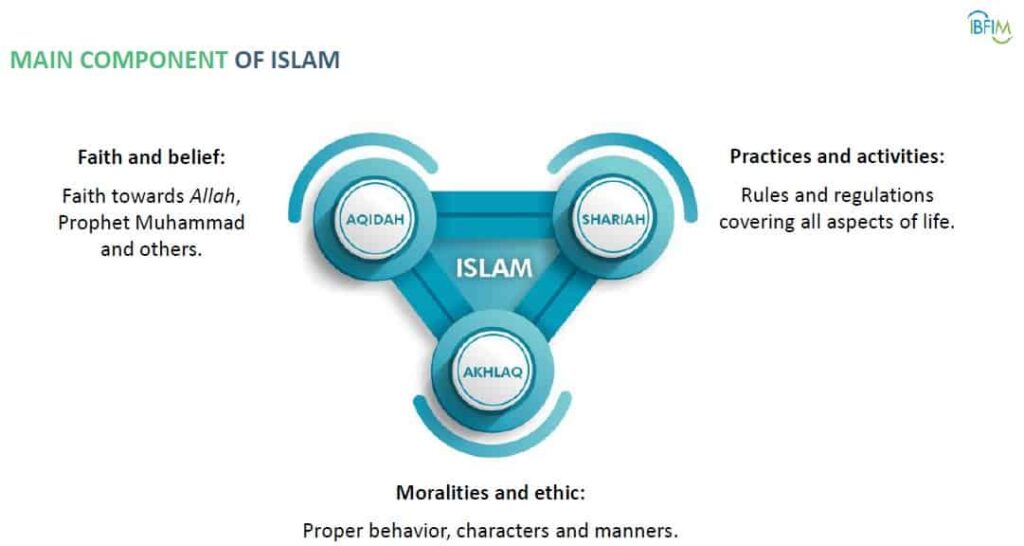
Main component of Islam
Source: Certified Professional Shariah Auditor (CPSA) reference book
Islamic Sustainability: The Way Forward
ESG and Islamic sustainability is going to be a megatrend and the E(nvironmental), S(ocial), and G(overnance) concepts are key market and business drivers today and in the future. The holistic adoption of Islamic principles in Shariah-compliant businesses is in line with the spirit of ESG without affecting the whole business practice.
Fulfilling the ESG agenda will ensure the prosperity of businesses by focusing on profit, people and the planet; while ESG criteria will be used to guide businesses based on corporate policies and to encourage businesses to act responsibly within the ESG framework. Businesses have no other choice but to gear up their readiness to embrace the ESG agenda within their respective organisations.
With Islamic principles induced, it will smoothen the whole agenda of Islamic sustainability.
About the Author
Haji Mohamad Faisal is a Managing Partner of Faisal Malik & Co (CA), a member of Islamic Finance Committee (IFC) of Malaysian Institute of Accountants (MIA), a Director of Islamic Shariah Audit Malaysia (ISAM). He is also a Certified Professional Syariah Audit Malaysia (CPSA). He can be contacted at admin@faisalmalikco.com.
In the midst of recovery, many sectors that were battered by the COVID-19 lockdowns, are looking to the government for further aid to strengthen and iron out obstacles in their path – more specifically for some help to be included in the pre-budget 2023 wishlists.
Small and medium-sized enterprises (SMEs), which had been the backbone of the economy but suffered greatly in the last two years, are looking for a stronger future in the new, digitalised economy.
The high incidence of death and loss of jobs during the earlier phase of the pandemic had also highlighted the importance of financial protection and planning. The current economic recovery had been boosted by, among other things, pent-up demand and a severely impacted base in the last two years of COVID-19 lockdowns.
Industries are now finding ways to sustain that recovery, with a much-needed assistance from the government.
Pre-Budget 2023 Wishlist: The SME Sector
In gauging the sentiment of SMEs, a survey was carried out by the Small & Medium Enterprises Association Malaysia (SAMENTA) with Affin Bank. Of the 613 SMEs responses received from the SAMENTA-AFFIN Survey on Business Conditions and Economic Outlook for SMEs 2022-2023, it showed that about 63% have cash reserves of less than four months, and 26% reported a revenue decline of 11%-30%.
The survey which was published in July 2022 noted that about 50% had expected a turnaround to pre-COVID 19 performance from 2023 onwards, around 4% have recovered and achieved pre-COVID 19 results and 2% do not expect to recover.
Almost 50% have moved part of their processes online, while 21% are performing better, while around 10% are fully digitalised.
The re-introduction of the Goods and Services Tax (GST) was favoured by 47% of respondents, while 25% are uncertain. Of those favouring the GST, 85% supported the initial rate of 4% and below, to be implemented beyond the second half of 2023.
In their digital transformation, SMEs subscribing to Software as a Service, which is a service infrastructure platform, are unhappy that they have to bear the costs instead of the foreign providers.
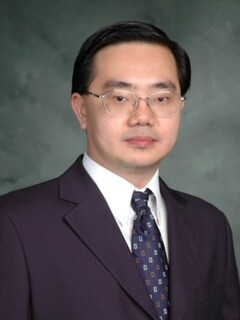
In this regard, they also want the digital tax to be suspended until a solution is found, said SME Association of Malaysia president, H.S. Ding.
SME Association of Malaysia president, H.S. Ding
To expedite the process of digitalisation, the Industry4WRD Intervention Fund should be extended to 2023. The current allocation of RM45 million is insufficient, as there are more than 500,000 SME manufacturing companies and related services sectors looking for a simpler and shorter approval process, informed Ding.
To promote and nurture the 5,000 start-ups and five Malaysian unicorns under the Malaysian Digital Blueprint, a RM10 million funding should be allocated for 2023, said Ding.
A ten-year tax exemption is sought for local manufacturers with a majority share of 70% and planning business expansion. A waiver or discount of 50% is also sought for business permits, licenses and assessments in 2023, as the COVID-19 lockdowns had caused Malaysian businesses to face losses and disruptions.
To assist SMEs and companies with reduced profits, corporate tax should be lowered. Higher tariffs for electricity lead to higher costs of doing business, SMEs are seeking to maintain the status quo in electricity surcharge or reduction in electricity and fuel tariffs in 2023.
The tenor for the SME Recapitalisation Fund of five years, or a repayment of 20% per year, should be lengthened to 10-15 years, as most SMEs do not have the cash flow to support that repayment period.
SAMENTA also proposes double capital allowance for companies that invest in research & development of orchards, as well as food or fruit related downstream activities.
For SMEs involved in domestic tourism, the tourism tax exemption should be extended to 2023. Under sustainable development, the Low Carbon Transition Facility for capital expenditure or working capital is proposed to be increased to a maximum of RM20 million from RM10 million.
The Business Recapitalisation Facility should also be increased to RM2 billion from RM1 billion, to cater for the 1.3 million SMEs in Malaysia. There should be more automation loans, and 120% loans are sought for SMEs to update the standard of factories to Industry 4.0.
For SMEs with profits of up to RM1 million, corporate tax should be lowered to 15%, suggested SAMENTA honorary secretary general, Yeoh Seng Hooi.
SAMENTA honorary secretary general, Yeoh Seng Hooi
Other budget recommendations by SAMENTA to help the SMEs to thrive include grants and workshops on ESG compliance, and double deduction on remuneration for the hiring of skilled workers and professionals (to enable SMEs to pay higher salary to attract talents), reintroduction of pre-shipment funding as per the Export Credit Refinancing and reduction in statutory fees by 50% for the first half of 2023, as post-recovery incentive to alleviate SME cost of doing business.
Pre-Budget 2023 Wishlist: Property Sector
Various measures have been taken to increase home ownership among Malaysians, but more needs to be done to address the problems of the housing and construction industries.
“We must ensure a smooth recovery from the pandemic lockdowns, and that all cylinders of the economy are firing. “It is tempting for stakeholders such as state and local authorities, as well as utility companies, to impose additional requirements on these industries. “But these temptations must be resisted,’’ said Real Estate and Housing Developers Association (REHDA) president Datuk N.K. Tong.
From right to left: Real Estate and Housing Developers Association (REHDA) president Datuk N.K. Tong, REHDA deputy president Datuk Ho Hon Sang
To mitigate the rising prices of building materials, REHDA proposes a waiver or reduction of duties on certain construction materials until prices normalise or become more manageable. Lifting of taxes and levies imposed on import materials as well as review and/or reduction of unnecessary charges will also help the industries.
To assist first-time homebuyers on properties priced up to RM500,000, REHDA proposes among others, a tax deduction on interest incurred during construction, personal tax relief (of RM20,000) and a one-off grant (of RM30,000) as well as a rent-to-own scheme to be considered.
The cooling measure since 2010, under Loan-to-Value, which compares the amount of the mortgage to the appraised value of the property, should be removed. REHDA also urged the government to review or relax the new and stricter conditions for participants of Malaysia My Second Home.
“A strong secondary market is crucial, as there will be more interest to invest in the primary market when buyers see property prices or rentals going up,” said Malaysian Institute of Real Estate Agents (MIEA) president, Chan Ai Cheng.
Malaysian Institute of Real Estate Agents (MIEA) president, Chan Ai Cheng
Stamp duty exemption for buyers in the secondary market and Real Property Gains Tax (RPGT) relief for sellers are proposed. Under a Home Ownership Campaign for Secondary Properties, MIEA proposes that buyers service the interest portion of the loan instalment for a certain period, instead of principal plus interest.
Pre-Budget 2023 Wishlist: Hotel, Tourism And Retail Sectors
As long as international leisure tourism is still restricted, the hotel industry will suffer a direct loss in revenue. Based on the Tourism Malaysia annual report 2019, receipts for accommodation from international arrivals had hit RM20 billion but currently, many are still on the road to recovery.
With the re-opening of interstate travel and domestic tourism, the Malaysian Association of Hotels (MAH) is asking for a lower wage subsidy, than previously requested, of 30% for employees with wages up to RM4,000, and 15% for those with wages up to RM8,000.
A minimum wage mechanism across the board does not encourage productivity or efficiency, instead, MAH proposes for an industry-based wage mechanism that is based on productivity, skills and tasks performed.
For reliable supply and demand of tourism-related data, a live on-demand, centralised tourism platform should be set up, to plan for the sustainable growth of the hotel and tourism industry.
In terms of tourism industry support as well as integrity and delivery of tourism data, the data should be released in a timely manner, in consultation with the industry.
In view of the massive upgrading and reinvestment required, the investment and reinvestment tax incentives for tourism and hotels should be extended for all categories up to 2025.
After suffering losses for two years, MAH is also seeking tourism recovery funding via soft loans that are interest-free or with low interest for reinvestment, upgrading, repair and maintenance of hotel properties as well as for operating expenses.
To drive domestic tourism, individual tax relief for travel and hotel expenditure within the country is proposed at RM5,000 per year. Exemption of the sales and service tax for hotels are to be extended till December 2022. The counter-productive tourism tax should be abolished to encourage high yield and long stay international arrivals.
To help address Malaysia’s weakness in international business events, a special budget should be allocated to the Malaysia Convention & Exhibition Bureau and Tourism Malaysia to pitch for international events. As the tourism industry invests heavily into international promotions, a special marketing grant for domestic and international marketing activities is proposed for business-to-business and business-to-consumer trade shows.
With the tourism industry just recovering from the lockdowns, there are very few group tours that hire 40-seater buses, many of which have not even had their road tax renewed. A conversion incentive should be given for normal tour buses to be converted into recreation or luxury vehicles, said Malaysian Inbound Tourists Association (MITA) president, Uzaidi Udanis.
A tourism bank can be set up to help expand the industry which does not just involve the provision of hotels and chalets for tourists, as there is also potential in medical, agriculture, youth and education tourism.
Retail Group Malaysia (RGM) hopes there will not be another movement restriction at the end of 2022, or early 2023.
“Malaysian retailers do not have the resources to deal with this crisis again,’’ said RGM managing director, Tan Hai Hsin.
RGM managing director, Tan Hai Hsin
The government has to resolve the problem of rising prices and its impact especially on the B40 and M40, and not allow these price shocks to linger until 2023.
Shortage of staff along the entire retail chain, and especially in Johor which faces competition from Singapore employers, also needs to be addressed soon, as this problem will slow down the economic recovery.
Against the threat of a looming recession, the government needs to take swift action to cushion the negative impact of a possible reduction in take-home pay and consumer spending.
Malaysia needs to attract more foreign tourists for the next one year, as foreign tourist arrivals of more than two million as of June, 2022 (with a target of 4.5 million by year-end, set by the Ministry of Tourism, Arts & Culture), is way below that of 26.1 million in 2019.
Pre-Budget 2023 Wishlist: Insurance And Financial Planning Sectors
The COVID-19 pandemic is a wake-up call, reminding us of how uncertain life can be. To encourage take-up of life insurance, the personal tax relief for life insurance premium should be increased from RM3,000 to RM5,000, said Life Insurance Association of Malaysia (LIAM) president, Loh Guat Lan.
Life Insurance Association of Malaysia (LIAM) president, Loh Guat Lan
Currently, there is a RM3,000 tax relief on insurance premium paid for medical and education insurance policies combined.
The tax relief for education, medical and health insurance (MHI) as well as MHI plans with co-share benefits should be raised from RM3,000 to RM6,000.
In Budget 2021, the tax relief limit on medical expenses for self, spouse and children for serious diseases, was increased from RM6,000 to RM8,000. This tax relief should be extended to include medical insurance premiums for self, spouse and children, said Loh.
LIAM informed that in 2021, RM11.9 billion in benefit payouts were made in the life insurance industry while RM4.6 billion were paid out for medical insurance.
The RM50 Perlindungan Tenang Voucher program for the B40 Bantuan Prihatin Rakyat group, which received encouraging responses but will end in December 2022, should continue for at least another year.
Many in this category do not have any form of insurance or takaful coverage. Having a second premium that is subsidised will be necessary in the midst of an uncertain recovery from COVID-19.
Data shows that less than half of employees, especially B40 workers, are being covered by some form of group insurance which is a cheaper form of insurance. LIAM therefore seeks a waiver of the 6% service tax for group insurance schemes.
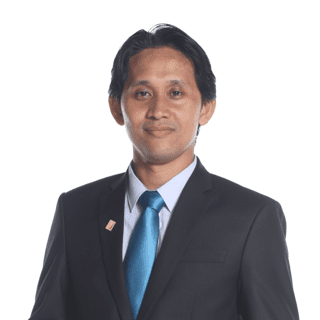
The COVID-19 pandemic had caused many people to lose their jobs and also eroded their savings. Thus, to help Malaysians better manage their personal finances, Financial Planning Association of Malaysia (FPAM) proposed that a new tax relief of RM3,000 be given to Malaysians who engage licensed financial planners, said FPAM vice president, Rafiq Hidayat.
FPAM vice president, Rafiq Hidayat
As many Malaysians no longer have enough savings when they reach retirement age, tax relief on the private retirement scheme should be increased from RM3,000 to RM10,000 to attract more people to put aside their money for retirement.
With medical insurance premiums rising regularly due to the high inflation of medical expenses, FPAM also agrees with LIAM that this tax relief should be raised from RM3,000 to RM5,000.
Now that we’ve seen the Pre-Budget 2023 wishlist by the industries, let’s hope that their voices are heard.
While a freehold land refers to a land title in perpetuity which, in most cases, is the most preferred type of land title to own, a leasehold land means that you just have a lease from the freeholder to use the land for a number of years, which can range from 30 years to even 999 years.
In most parts of Petaling Jaya, the authorities have extended leases for another term. The extension of leases for leasehold properties is governed under section 197 of the National Land Code (Act 56 of 1965) pertaining to the applications for approval of surrender of the whole of the land, as well as the land rules of the various states (for the state of Selangor, the extension of a lease is governed by the Selangor Land Rules 2003 and Selangor Quarry Rules 2003).
There is also another type of property built on private leases of similar tenures to that of government leasehold. This type of lease poses more challenges for buyers as the owners of the land are private parties and they do not have renewal or lease extension in the same manner as the government.
In addition, there is also the case of Malay Reserve Land (MRL) vs Bumi Lots. While it is quite common to think that both are the same, in reality, they are not. Properties developed on Malay Reserved Land can only be owned by Malays and are governed under the Malay Reservation Enactment. Malay owners are not allowed to sell the properties built on MRLs or the lands themselves to non-Malays. Businesses operated on MRLS must be owned by Malays.
Bumi Lots, meanwhile, are units of land or property which can only be purchased and owned by Bumiputeras. To some, this means a more restricted market whereby you can only resell your property to another Bumiputera. There are, however, incidences where a transfer can be made to a non-bumi, although this is subject to approval from the authority.
“Bumi Quota” is also another term commonly used when developers market new projects, and this is again not to be confused with Bumi Lots. Under the New Economic Policy (NEP), this was introduced to increase Bumiputera shares in real estate to at least 30%. However, depending on locality, this percentage differs. Bumi Quota can also be released and is subject to the fulfilment of conditions.
Non fungible tokens or NFTs is a debatable subject having come into existence since 2014. However, marketing agency Jumix Sdn Bhd is determined to grab the bull by the horns and turn the buzz into more than just a fad with BeUtopia – a universe where characters called BeU live in.
“We believe that this approach (NFTs) will change how brands and businesses work in the future. First, we need to get brands familiar with the concept and then offer to help them from end to end in campaign launches,” said Sanz Teoh, Chief Executive Officer and Founder of Jumix.
Introducing the firm’s project BeU, Teoh explains that Jumix’s initiative is for anyone who feels misplaced in society for the sole reason of choosing to be different, or out of the norm. The BeU are inspired by Matryoshka dolls known for their representation of a mother carrying a child inside her.
“Prints on prints, inner-wear worn as outerwear, tattoos and piercings as a sign of expression rather than representation; this is why our NFTs are unconventional looking. Our community aims to include all walks of life, including the creative people but most importantly, we want to create a safe space where everyone can embrace their strengths and weaknesses and just be themselves in BeU,” he adds.
Citing many NFT campaigns that have failed because it was seen as fad, Jumix is committed to change this perception. Renowned brands like Adidas, NIKE, Gucci and FMCG brands are starting to invest in NFTs and the interest is expected to flourish.
Acknowledging possible resistance to the new marketing approach, Teoh said: “We cannot change the adaptation rate in Malaysia but we are looking at brands who no longer believe in fax machines, mobile phones with a physical keypad and opting for things that are digital because it is more sustainable, convenient and beneficial.”
An NFT is constructed with the same type of programming as cryptocurrency but it is a digital asset that represents objects like art, videos, music, or in-game items. Each NFT bears a digital signature or a unique identifying code. They exist on a blockchain – a public ledger that records transactions.
Globally, the use of NFTs is spiking, and in 2021 it developed into a US$40 billion market. Research hub Finder released a survey indicating that the Southeast Asian (SEA) market will take the limelight in 2022 as the region’s interest is growing and has the highest adoption rates, worldwide.
The online survey consisting a polling pool of 28,000 from 20 countries ranked the Philippines first with 32% ownership, while Thailand scored second with 27% and Malaysia (24%) at third position. The rankings prove that SEA may be driving the international NFT ownership for the near future.
Calling out to brands that are willing and ready to join the evolution of marketing with NFTs, Jumix commits itself to bridging the gaps and to help propel businesses and technology into the future to reap what it has to offer.
“We will not use the word guarantee for success in a campaign, especially in the world of marketing, but we want to help our clients greatly improve their chances at success without losing out on costs, time and manpower coupled with a big amount of risks.
“Jumix has had our own humble experience at this ourselves. Our NFT journey was not easy but when you know what you are doing, have done it yourself, had good data and evaluation of it, it will help reduce risks and increase the chances for success and that’s why Jumix should be the choice for brands who want to explore NFTs,” Teoh adds.
Some 10,000 BeU collectibles will be available for sale from mid-May, and hosted on the Polygon blockchain, where collectors can mint without paying for hefty gas fee (the transaction fee on blockchain). There will be different stages to the project, each to involve and engage with the community.
“Upon selling 2,000 collectibles (20%) we will organise a donation to a charity organisation that will be decided upon by our community. Upon reaching 40%, we will create an AR filter for our users then at 60% we will launch merchandise for the owners of BeU.
“At achieving 80% sales, we will create an actual 3D life-size doll for 30 of our BeU owners and upon reaching 100%, we are looking to create a game for our community. There are many other plans that we have in the pipeline but ultimately we want the people and our clients to know that Jumix is ready to help them grow from start to finish with NFTs,” Teoh adds.
About Jumix
Jumix is a creative marketing agency, focusing on branding, web design, and digital marketing. Jumix served clients from Malaysia, Singapore, Australia, United Kingdom, Japan, Taiwan, Hong Kong, United States, New Zealand and China.
SMEs should take advantage of the benefits and vast investment opportunities under the mega-trade agreement of the Regional Comprehensive Economic Partnership (RCEP).
This free trade agreement involves 15 countries – Australia, Brunei, Cambodia, China, Indonesia, Japan, South Korea, Laos, Malaysia, Myanmar, New Zealand, the Philippines, Singapore, Thailand and Vietnam. It is made up of 2.2 billion people and accounts for almost a third of global GDP.
Among Southeast Asian countries, Malaysia is expected to be the largest beneficiary of the China-backed RCEP in terms of export gains, with a projected increase of US$200 million. It is anticipated that RCEP may remove up to 90% to 93% of trade barriers, and together with lower preferential tariffs. SMEs trading in this new big, open market should gear up for more intense competition.
However, many SMEs are still not aware of RCEP, the world’s largest free trade agreement (FTA) which came into effect in Malaysia on March 18, 2022. Of the 3,000 members in the Small and Medium Enterprises Association (SAMENTA), more than 50% are aware but at different levels of understanding.
“Many may have heard about RCEP but have not understood how they can improve market access and the harmonised rules to exploit the lower tariffs. “They should seek the help of the Ministry of International Trade and Industry (MITI) to build capacity with technical support from the more developed countries like Japan, China, South Korea and Australia,’’ said SAMENTA honorary national secretary Yeoh Seng Hooi.
Other advantages of RCEP include further liberalisation of trade, removal of non-trade barriers, increased trade facilitation, improved government procurement practices, e-commerce and others.
Ernst & Young Tax Consultants Sdn Bhd Malaysia Private Client Services Leader and Partner, Bernard Yap highlighted that SMEs should be provided with information on doing business in other countries and how they can build their businesses beyond Malaysian borders.
“This knowledge can help them avoid unwanted situations such as inadvertently misunderstanding the rules, which can negatively impact them from a business and reputational perspective,’’ said Yap.
Among them, SMEs should understand the concept of regional value content to benefit from the components or raw materials coming from RCEP countries that will fulfil the rules of origin; changes in tariff classification so that the products are considered originating products. Tariff reduction rates are different for each country; SMEs should check from the MITI website under RCEP, and study the schedule of tariff commitments for the countries they wish to export to.
Priorities To Consider
SMEs should review their existing or target markets, whether they are RCEP members, to utilise RCEP benefits. Next, they should evaluate whether the products imported or exported are listed in the RCEP agreement, are eligible for the benefits under their country of origin. SMEs should also look into their current resources to find out if they are able to meet the demand under RCEP.
To achieve economies of scale, as they are now catering to a larger market, they should review their manufacturing businesses and costs. Besides enjoying a larger sales market, the supply chain needs to be re-evaluated. New suppliers from RCEP countries and reduction in trade barriers, will potentially lead to lower production costs.
“Post-pandemic, this mega-trade deal is a key enabler for Malaysia to revitalise domestic and international business activities, especially for SMEs that utilise the RCEP,’’ said Deloitte Tax Services Sdn Bhd executive director Tan Eng Yew.
However, he noted that lack of financing may be an obstacle to be a member of RCEP. A springboard for future growth In addition, SMEs should consider strategic industrial clusters that can serve as a springboard for future growth. Acquisitions, mergers or joint-ventures may be required to build the necessary mass and knowledge for international expansion.
SMEs can take advantage of the double deduction on interest expenses or loans taken to fund mergers and acquisitions, and the stamp duty exemptions on mergers and acquisitions instruments, said Yap.
Other strategies include having an R&D department to regularly assess market positioning, product differentiation and relative cost leadership, as well as investing in productivity improvement processes and automation. Digitalisation, artificial intelligence and machine learning can help businesses get ahead of the curve.
“This will help them to strategise, build capacity and access the supply chains of developed countries within RCEP, and ultimately improve their overall performance,’’ added Yap.
Areas Of Competition For SMEs
Countries such as South Korea, Japan and China are well-equipped with the latest technologies, enabling them to offer more advanced products to consumers. SMEs in Malaysia are arguably lagging behind their market competitors in technological capability and expertise, especially in the electronics and electrical (E&E) sector.
“This ultimately boosts the overall competitiveness of SMEs in those countries compared to SMEs in Malaysia, especially in the E&E sector,’’ said Yap.
SMEs in Malaysia would also have to compete with more advanced supply chain management, with countries such as Japan, South Korea, Singapore and China maximising their supply chains within RCEP. Having said that, SMEs can leverage on their strengths and collaboration with Japan, China and Australia to service their multinational customers in the ASEAN region. Still, RCEP offers them a chance to be more competitive with the tariff reductions.
“Otherwise, we would have been disadvantaged against Thailand and Vietnam which ratified earlier,’’ said Yeoh.
Both Thailand and Vietnam had ratified the RCEP in October last year. With the opening of markets, competition will come especially in terms of product and service quality, costs and efficiency.
SMEs would need to embrace new technologies and consider investing in simple digital platforms, online training infrastructure and automation, artificial intelligence and machine learning.
The workforce also needs to be upskilled. According to the Budget 2022, the government will provide upskilling and reskilling programs to help employees embrace technology advancement and increase digital adoption.
To develop future business leaders, several agencies have been tasked to impart business and leadership skills through on-the-job training, mentoring and entrepreneurship programs.
Enhancing Competitiveness
Despite various initiatives to help SMEs enhance their competitiveness, there is still room for improvement. Currently, initiatives to help SMEs are managed by various agencies, making it a challenge to evaluate the effectiveness of these funds/grants disbursed by the public sector.
Also lacking are clear guidelines and transparency of the application process, as well as clarity to the SME community on which agency they should approach. Ideally, a dedicated one-stop center will help to make all incentives, grants and funding easily accessible to SMEs. New initiatives and opportunities will be quickly and clearly communicated, while the streamlining of the application process and guidelines for these initiatives will ensure efficiency and ease of monitoring.
“The one-stop center should have helplines and online channels which can be used to obtain advice and information,’’ proposed Yap.
To ensure that we are on the right track, there are still lot of preparations ahead to reap the full benefits of RCEP. With a healthy partnership between the private and public sectors, the growth and success of SMEs locally and regionally will require further strategic collaboration between them.
Many areas of co-operation listed under Article 14.3 of the Schedule of Tariff Commitments are beneficial to SMEs in ASEAN countries that are on board the RCEP.
“The issue is how fast and responsive our public agencies are in working with trade associations like SAMENTA to leverage on this co-operation,’’ said Yeoh.
For example, the exchange of experiences, best practices, adoption of technology and innovation or promotion of e-commerce, are areas that can benefit SMEs. Thailand and Vietnam already enjoyed first-mover advantage with the earlier ratification, Malaysia should accelerate its pace to plug into the opportunities offered by RCEP.
With many companies being forced to pivot, digital solutions are in demand.
The sudden pandemic has caused some small and medium-sized enterprises (SMEs) to lose their positions. Most of them are traditional, non-information enterprises, offline businesses, or lack effective digital management models and are isolated by the pandemic.
In the beginning, there was general confusion over high threshold, high costs and long cycle of digital transformation.
“After the pandemic, more and more companies have discovered that accelerating digital transformation can accurately control inventory, improve management efficiency and reduce business operating costs,’’ says Volservers Solutions managing director Tan Yik Jaan. While many SMEs have started to digitise (convert their data and documents into a digital format), they have yet to embrace digital transformation and change their business model; slow internet connection (many industrial estates do not have fibre optics infrastructure) is also a problem.
Digital transformation involves looking at holistic solutions like enterprise resource planning (ERP) and customer relationship management systems. Supply chain management (SCM) has moved to 6PL which is an artificial intelligence driven SCM, but many SMEs have not gone beyond 3PL that offers first stage supply chain integration.
“SMEs need to have a progressive mindset that embraces business transformation with digitalisation (converting business processes to use digital technologies) as a tool,’’ remarks Small and Medium Enterprises Association of Malaysia (SAMENTA) national secretary Yeoh Seng Hooi.
Apart from the lack of financial and skilled resources, SMEs also face challenges in protecting their digital platforms and data from cyber-attacks.
“A difficult part of the digital journey is to find the right partners at an affordable cost,” explains managed security service provider Vigilant Asia group CEO Victor Cheah.
Most SMEs already have two years’ experience of manoeuvring through their digital journey in the pandemic, and a common challenge is the execution and integration of processes.
“The hit to the tech supply chain has resulted in massive delays in many hardware reliant products and solutions, while continuous uncertainty is affecting cost especially on hardware reliant solutions,’’ says IT asset lifecycle management solutions company Rentalworks Malaysia managing director Alan Puah.
SMEs need to have a progressive mindset that embraces business transformation with digitalisation– Yeoh Seng Hooi,SAMENTA
Potential roadblocks The biggest challenge faced by SMEs these days is integration across multiple systems. “The most difficult part for SMEs is the mixing and matching of various solutions that can solve their problems while allowing for future expansion,’’ says Wavelet Solutions CEO Vincent Lee.
To address this integration issue, Wavelet Solutions, an ERP solutions provider for SMEs, provides operational data lake solutions built on Amazon Web Services (AWS) platforms. (A data lake is a centralised repository for structured and unstructured data at any scale, while AWS is the world’s most comprehensive and broadly adopted cloud platform).
For digital transformation, the digital experts from Volservers work closely with brands across various industries to help SMEs grow their brand identity in the market.
Volservers is an experienced market research agency that provides panel and full-service research solutions, online survey programming, hosting and reporting services to the market research industry, and builds a pleasant customer experience for customers’ platforms.
User-centric expertise at Volservers looks deeply into user behavior, expectations and business goals when designing a seamless journey for customers’ products. “We provide interactive UI/UX designs, web and mobile applications for multiple platforms, namely, on Apple and Android, to help maximise customer reach,’’ shares Tan.
In terms of cybersecurity services, Volservers has the capabilities to identify vulnerabilities in clients’ environment and develop strategies to remediate and improve their security posture. Volservers’ services consist of solutions that protect customers’ IT infrastructure such as endpoint protection, web application firewall with anti-DDOS and much more. This includes an experienced security incident response team to ensure minimal recovery time and damage to customers’ business reputation.
In terms of managed IT services, Volservers has multiple platforms of solutions whether it is in cloud or hybrid infrastructure; its team offers support, product consultation and monitoring for multiple operating systems and databases.
Today, there are many cyber threats including zero day viruses and ransomwares which cannot be detected by traditional anti-virus and firewall solutions. Vigilant Asia is able to provide 24/7 monitoring which is bundled with advanced tools to provide protection, detection and remediation services. These tailor-made services include vulnerability assessments, security frameworks and training.
“It is affordable for SMEs to subscribe to our services which are tools provided based on a subscription model, on a per-user-per-month basis,’’ explains Cheah. Concerns over cashflow and work mobility has also prompted many SME to seek leasing programmes for endcomputing devices; short term rentals of preloved or previously used laptops and tablets are highly sought after.
To help customers navigate through the whole asset life cycle process, Rentalworks offers its mobility device leasing programmes with fixed monthly repayments plus cloud-based firewall, flexible tech support and data erasure for device end of life.
“Our specially-curated lease-to-use approach ensures that the process of deployment, maintenance and refresh are all managed by Rentalworks, making it easy for SMEs to focus on growing their businesses,’’ says Puah.
The SME digital journey is a longterm process; despite the economic reopening and return to physical locations, the road to digitalisation has started and will continue to score greater achievements.
There have been countless studies about the generational gap between Gen X and millennial workers, with the topic stirring up much debate to this day. Broadly speaking, Gen X are born between 1965 and 1980 and are currently 41 to 56 years of age. Millennials are born between 1981 and 1996, ranging between 25 to 40 years of age.
With the Movement Control Order (MCO) forcing many businesses to operate remotely, many millennials took to the situation like a duck to water thanks to their digital savviness and familiarity with remote working tools. However, with offices reopening after the MCO was lifted, many now find themselves at a crossroads and are often reluctant to return to a centralised workspace.
“The reality of the matter is that employees were forced to adapt to the culture of working from home, and just as they got accustomed, it is now time to revert to the old ways of working with added restrictions – the SOPS,” says Rita Krishnan, the managing director and training consultant of Impian Helang.
To her, CEOs and management of any company will return to the office and face new challenges, some of which they have never dealt with in the past thanks to the unprecedented effects of the Covid-19 pandemic.
“In the past, it was performance and productivity that mattered most for organisational growth,” she recalls. “But today, compassion with high emotional intelligence is crucial, being the way forward in managing the workforce, especially in retaining the talents.”
In Deloitte’s 2021 Millennial and Gen Z survey, it was found that only 38% of millennials felt comfortable voicing concerns to supervisors about work stress.
This suggests that many are unable to trust or anticipate a clash with higher ups about the rigours of work. A correlation can be drawn to 31% of millennials taking time off work due to pandemic-related stress and anxiety. According to the survey, almost half of them gave a different reason to their employers, likely due to a stigma around mental health at work.
It is no surprise that CEOs and senior management figures today must be more well-rounded figures – able to lead and dissect numerical patterns as well as business strategy, but being able to relate to their subordinates on a more personal level rather than simply boss and employee. However, the difference in age can often mean that there is a clash in culture and expectations.
The topic is widely documented and debated, with both sides often convinced that they are not compatible with the other. This often boils down to a mismatch in terms of ideology, with Gen X workers likely to espouse more traditional work values, while Gen Y or millennials subscribe to more flexible or unconventional working mantras.
“Generally, Gen X are hard workers while Gen Y are smart workers,” she postures. “Gen X do not jump jobs and are comfortable with where they are. This may seem like the safer option but can also be dangerous as career progression is not usually an option.”
What about the retirees? For all the talk of Gen X v s millennials, the pandemic has also depleted the savings of many retirees. This has resulted in an influx of retirees in their fifties and sixties re-entering the job market, but who may be under the impression that time has left them behind. However, Krishnan believes retirees have much to offer in terms of their knowledge and experience, and suggests that there are many job opportunities for such individuals.
“Training and consultancy in sharing a wealth of knowledge, experience and skills that were useful then and useful now,” she shares.
The experience accumulated by such individuals suggests that within them is a treasure trove brimming with a wealth of knowledge; they simply need to leverage this into potential job opportunities.
“I believe in reinventing and recycling talents that upholds the reputation of recreating past performance. This is where retirees can attend the HRD Corp Certified Train-The- Trainer programme, for a new career altogether whilst recreating and reliving the successes of their past,” adds Krishnan.
Job hopping a competitive disadvantage?
Krishnan also suggests that the typical Gen Y employee prefers to job hop often in order to gain experience quicker as well as to be exposed to various industries. While she does not dismiss this career strategy, she highlights that it also has its pros and cons.
“Employers are reluctant to invest in and develop employees who show no promise of ‘stayability’,” Krishnan explains.
“The working style of Gen Y comes with the mindset of expectations – less work, more pay, with flexi hours.”
This shift in mindset is evidenced by concrete data. The Deloitte survey indicated that job loyalty is slipping among millennials, with 36% of respondents open to leaving their current employer within two years if the opportunity arose, a drop from 31% in last year’s survey. However, 34% of millennials say they would only consider leaving after five years, which suggests it is not prudent for senior managers to paint the entire generation with the same brush.
She believes that, although difficult, this difference in culture and expectations can be bridged with programmes that facilitate interaction between Gen X and millennials.
“It is important to allow employees to explore their skills and abilities with the intervention through team bonding programmes where Gen X and Gen Y can interact and learn from each other,” says Krishnan.
These types of considerations should be taken into account by HR departments, especially when it comes to upskilling the workforce, an area in which Krishnan is well-versed.
“The pandemic has altered traditional training styles, and the responsibility of the HR department would be to select relevant training programmes related to industry needs,” she says.
“At the same, employees’ morale and productivity levels can be elevated using positive reinforcement.”
She is also a keen advocate for companies to develop a psychological connection with their employees, resulting in a relationship that presents “a sense of belonging”. This demonstrates the company caring about their employees’ personal development and workforce growth. Such a result would inevitably translate into a win-win situation for both company and employees.
What you should look out for and how to not fallfor these malicious schemes.
The economic impact brought on by Covid-19 has led many people into financial distress.
Those looking for quick gains could easily fall into investment schemes that take advantage of their desperation and fears. Some of the victims might use all of their life savings or even obtain bank loans to participate in such schemes.
For the perpetrators, their goal is simple: profit from the plight of their victims. While the stealing of private information and hard-earned savings are not new, such investment schemes are regularly updated and amended so as to portray a look and feel of legitimacy.
People should educate themselves about the investments they are considering. Perhaps, start with being mindful about content and marketing scams. Here are some useful tips that help with identifying new scammer methods:
TREND #1: MARKETING GURU SCAMS[…]
TREND #2: CRYPTOCURRENCY SCAMS[…]
TREND #3: VIRAL FAKE NEWS THAT CAN PHISH AND USE BEHAVIOURAL TRACKING[…]
Very recently, I’ve been shopping around for property for my own stay. This reminds me of the time I looked for my first property investment over five years ago. I’m still holding on to that property at a loss – both in cash flow and unrealised capital losses.
As a friend once said, things that happen to us could either be a blessing or a lesson.
This loss-making investment has given me three very important lessons that I hold close to my heart when it comes to property purchases.
1. Avoid new developments
As a professional real estate lawyer friend once told me, “Buy certainty when you are looking at investment property”.
The allure of a new development is apparent – minimal to no upfront costs (i.e. affordable), a lot of incentives, looks new and nice, etc.
However, every new development that we buy into is a bet. A bet that the developer will not fail, a bet that the future market is bright so that the value goes up, a bet that it has a market for good rentals.
When I bought mine, it was going to take three years to finish building. It was a mixed development that was supposed to come with a mall right in the middle (the second mall in that area). But, it didn’t happen.
The (prominent) developer decided to take out the mall from the development, SECRETLY! I only found out about it after it was completed in three years.
The mall just disappeared from the plan altogether as if it never existed.
Furthermore, more high-density properties started to pop up around that development. Causing supply to skyrocket around that place. Naturally, the value of my property dropped significantly.
As a result, I’ll be avoiding all new developments, even for my own stay. Nothing’s stopping them from delivering the property to you hastily or taking forever to fix the defects in the property.
Or building up the commercial space, which they promise will be vibrant, but end up becoming a dead place with only a few tenants.
Rather than buying something so uncertain, it would be better to buy into an existing property, where I can clearly evaluate how good or bad the place actually is.
2. It’s all about the maths
From the get-go, it’s all about the calculations when it comes to property investment. I got suckered in by the sales pitch for my first property and being a newbie then I didn’t do my own calculations.
The obvious part is that the rental income has to be higher than the mortgage payments and management fees.
The not-so-obvious part is the indirect costs – agent fees, maintenance fees, assessment tax, income tax, etc. These will eat into the income and hence reduce the net income that we would get.
Which means, we’d require a bigger margin in order to cover all these costs so that it’s profitable in the end.
For example:
– Mortgage + management fees = RM1,500 – Rental Income = RM1,700 – Indirect costs = RM140 (RM1,700 / 12 being the agent’s first month fee) + RM200 (miscellaneous fees) – Loss = RM140 per month (= RM1,700 – RM1,500 – RM140 – RM200)
Don’t hope for capital gains because it’s uncertain. Ask anyone who bought a new property five years ago at the peak of property prices. Most, if not all, are suffering from capital losses now.
Get the profit maths right before any investment. If it’s cash flow negative, forget it. It’ll be a pain somewhere down the road.
The saying of, “at least partially it’s being paid by someone” or “It’s breaking even!” is nonsense at best. Nobody enters an investment to break even!
3. Property investment is semi-passive
When we talk about property investment income, mostly we talk about renting out to tenants to collect rental income. The passive income part is when tenants pay rentals on time throughout the tenancy.
That’s about it.
There is a whole other side of property investment, which demands active participation. Some examples:
– Getting a tenant in involves liaising with the property agents on and off (every month it’s not tenanted is a loss to the P&L) – In between tenancy, there is a period where the property needs to be “cleaned up” and ready for the next tenant. The degree of work (and costs) required depends on how well the previous tenant took care of the place – Tenants with issues can create headaches during their tenancy. This could be delayed payments, pests, broken things, etc. We won’t know any of these for sure until the start of the tenancy
Some investors, especially those with a big portfolio of properties tend to engage property managers to manage the portfolio to get the headache off their minds.
This will bring down the returns but at least it’s converted into a mostly passive income portfolio. However, for most of us, this can take up significant brain juice, time, and effort to handle.
However, it’s all good as long as the profits from the investment better justify the effort required. Refer to lesson no. 2.
Closing thoughts
My first property was a headache. Students are potentially one of the worst tenants ever, in my experience.
In contrast to my trading and other investments, I’d rather put in more of my efforts there. The rewards in property can be huge, no doubt, but it isn’t one that I prefer.
It might be obvious for many but hope this reaches those of you who are looking into your first property for investment. It may help you in your journey!
About the Author
This article was originally published at betweenthemoney.com, a personal finance website by Jason Loh that focuses on money matters and investment topics for Malaysians
This article is written to share some steps for you to consider when evaluating properties as an investment vehicle in Malaysia.
Think of it as a methodology for you to apply during your first round of scouting properties before going into more detailed research.
This selection process can be applied to property investment opportunities in both the primary market (properties under construction) and the secondary market, including auction properties.
The goal is to identify a suitable area and then select property that will represent a logical, financially-suited and tax-effective investment vehicle.
1. Look for established and planned infrastructure
One of the specific elements that influences demand within an area is the degree to which established and planned infrastructure is readily accessible to tenants.
Thus, it’s crucial that the existing and planned infrastructure surrounding property is critically identified and assessed.
Ask yourself why property in areas like Taman Tun Dr Ismail (TTDI), Mont Kiara, Bangsar and Desa Park City are very sought after?
One factor is that these neighbourhoods are matured, secure and self-sufficient townships that offer many modern conveniences — from good schools, access to banks, retail and F&B outlets, and many popular public parks.
Using TTDI as an example, it’s close to popular commercial developments such as 1Utama Shopping Centre, the Bandar Utama City Centre, and the Curve, as well as a number of multinational companies that base their offices nearby like Tesco and IKEA in Bandar Utama.
It also has a green lung of Lembah Kiara as a public park.
Infrastructure can be divided into two broad categories:
i) Accessibility – Local transportation links like access to local bus routes, MRT/LRT feeder buses, train stations, access to highways and also major arterial roads
ii) Local amenities – schools (including international/private schools), shopping centres, parks, hospitals, recreational areas, jogging/cycling paths, public parks etc
An attractive area for property investment is an area with amenities and rich infrastructure, of which there are several in Malaysia.
Alternatively, you could also look at areas that have some upcoming planned infrastructures like new highways (DASH, SUKE), highway access (MEX extension or interchange add ons), new MRT lines, LRT lines, and convenient access to commercial areas with eateries, banks and offices.
Other key indicators include sustainable malls (not just any mall, but those with established management with experience running malls that are well occupied/tenanted and well patronised), government or private/international schools, universities, public transportation, green lungs like parks and recreational areas, and working populations with a heavy focus on professionals in the middle to high-income group.
However, the time it would take for these infrastructures to be resident-accessible is a factor that shouldn’t be ignored.
Remember that you have to take into account the duration for your own target property to be built as well as the maturity of new infrastructures (highway, MRT, LRT, new central business district, malls etc) to be ready.
The faster one expects infrastructure to materialise, the quicker and better the chance of a property investment yielding capital appreciation while simultaneously lowering the risk of the infrastructure project being postponed or worse still, called off entirely.
Many will testify that this is not an uncommon occurrence in Malaysia!
2. Observe the residential vacancy rate and supply of similar properties
The same fundamental economic forces that affect the share market or even the price of coffee in your neighbourhood cafe are the exact same forces that affect the price and rental of the property market: supply and demand.
Naturally, an area with high demand but limited supply will inevitably experience above-average capital growth. An area that is “oversupplied” in contrast to demand will result in lower average capital growth.
A property investor in an oversupplied market may be forced to:
i) experience an extended vacancy period;
ii) be forced to revise the rental rate downwards to attract a potential tenant in a competitive market environment; or
iii) incur a greater than anticipated cash outflow/expense as a result of lower rental yield and/or extended vacancy rate
An area with strong property demand is also more likely to attract tenants and own-stay occupiers to the same area.
One perspective to consider is to think about an area with a lot of units, it’ll be sensible to analyse and identify the vacancy rates in the development and also the surrounding area of the neighbourhood.
If the vacancy rate is high (for example, over 10%), be wary about the competition you may have, not just within the development you have invested in but also neighbouring developments.
In the instance of high vacancy, it is a tenant’s market to pick and choose.
In a competitive tenant-oriented market, you will need to consider ways to manage the vacancy or to attract tenants to pick your unit over others.
Before buying any property for investment, plan ahead for sufficient reserves to act as a buffer to sustain a higher vacancy period and/or putting in more capital to furnish the place or make your unit stand out among the competition.
3. Focus on mass market property and homes with a unique selling proposition
For property investment, consider buying mass-market product homes in the target area, but ensure that your entry price isn’t above similar transacted prices.
In the worst case scenario, purchasing a poorly selected property that has little valuation upside below the average transacted cost of similar properties in the area, at the very least, an investor would not be the first to lose money.
You should also look at the median property price of any one area.
You’ll often hear the saying “location location location”, however, the relevance to that mantra is not quite the same in this day and age.
More importantly, consider whether the price you are paying is around the average of the property market, whether or not the average Malaysian can afford to buy/or rent in the area that you’re targeting.
A typical rule of thumb we recommend is that a property investor invests at a price point within a 15% range of the median property for that particular area or development.
Our observation is that by limiting one’s scope to properties within this 15% price range, an investor is able to obtain an “above average” property that is more likely to represent good value for a future purchaser and prospective tenants.
To put it simply, a property within this price range maximizes represents a home the majority in that area is likely to afford to either rent or buy.
4. Be open to multiple rental strategies
Have an open mind and consider having multiple rental strategies for your property investment to target different rental prospect segments such as students, middle to high income locals, or expats so that you don’t just depend solely on one type of tenant.
For example, a “mass market property” in Bangsar, Mont Kiara, or TTDI isn’t within the same price bracket of a “mass market property” in Puchong, Selayang, Rawang or Sungai Buloh. This also applies to other hot areas within Malaysia.
A mass market development refers to properties that are priced and rented at affordable levels to the locals in that area. There are two parts to this equation:
Firstly, you must find out what the prices are for the various types of properties within an area. For example, segments condominiums landed bungalows and terrace houses to use as examples.
The second component is to roughly estimate who the locals in the area are and how much they’re likely to earn.
Typically, as a rule of thumb, a tenant or own stay would spend a maximum of one-third of their disposable income for housing expenses each month.
So if the usual rental price of a property is RM2,000 per month, the disposable income for that household should be around RM6,000 to RM8,000.
Do plan out multiple rental strategies like having a master tenant, rental on a per room basis, or even platforms like Airbnb, so that if one doesn’t work, you can try another approach.
If you buy a property relying on one stream of marketing, eg. only Airbnb, you run the risk of property management deciding to ban it.
And if your Airbnb unit isn’t profitable or requires too much time to manage or a black swan event like the Covid-19 pandemic leading to a lack of travellers, you’ll struggle with tenancy options.
5. Pay attention to the cash flow rule
Ideally, you’ll want a property investment where the minimum expected rent can cover 80% of your monthly mortgage instalment so that it wouldn’t deplete your cash flow to the point where you need to sacrifice your vacations, luxuries, cars and other basic necessities.
This also implies that with better cash flow, you could be eligible to obtain more loans in the future and therefore can invest in more properties or other assets of your choice.
Let’s use a subsale property that costs RM560,000 as a case study.
Purchase Price = RM 560,000
Loan Amount = RM 504,000
35 years tenure, 4.6% rate, Installment = RM2,416
Assumptions:
There are no new major catalysts (e.g. transport infrastructure, central business district) that affect rental appreciation)
There are similar developments that we can take as a comparison. Rental benchmarks are taken based on the transacted rental of units with a similar layout that’s less than 10 years old
Case A: If your rental = RM1,900
Rental-Installment Ratio = Rental / Installment = 1900 / 2416 = 78.6% → not qualify
We can say that Case A is not good enough to be considered because the Rental Installment Ratio is below 80%.
Does this mean we disqualify Case A straight away? It depends.
We did the comparison based on assumptions that the area does not have any other major infrastructure to induce a more significant increase in the rental. Secondly, there are similar units in the area that aren’t much older than the subject.
Let’s look at another point of view, in which the scenario is that there are major infrastructure developments and amenities where the rental could possibly increase to RM2,000 for example:
Rental installment ratio = 2,000/ 2,416 = 82.7%
Therefore the property now should be taken into serious consideration.
OR
If there is no newer supply of similar units. Most existing developments are already more than 10 years old, and the rental benchmark against these developments aren’t apple-to-apple comparisons, and rent of RM1,900 would be an underestimation of rent potential.
New development with a modern facade and newer facilities has strong property investment potential and is in a strong position to command a higher rent.
Prospective tenants would likely be willing to pay a 10-20% premium to live in a more posh and modern residence, especially if they are expats in Malaysia.
These are just two examples of how one development becomes a “good” or “bad” development based on different factors.
6. Prioritise and achieve balance of rental yield and capital growth
Capital growth isn’t the only factor that makes property investment exciting; it’s also the fact that regular and constant income can be derived from real estate that makes it a sound investment choice for many investors.
Rental income is also a source of cash flow that can be used to pay down debt on the property. Rental yield, therefore, is simply the annualised rental income expressed as a percentage of the value of the property.
For example:
Property value = RM400,000
Monthly rental = RM2,000
The annualised rental income = RM2,000 x 12 = RM24,000
Rental yield calculated as a percentage = 24,000 / 400,000 = 6%
This is not only an important percentage as it helps to determine the return on investment so that the cash flow requirement of servicing and maintaining the property can be calculated, it also provides important information about the rate of capital growth.
A natural response would be to obtain as high a rental yield as possible. However, this may not always be the best route for the investor.
More often than not, an area experiencing high rental yield is more likely to have a lower capital growth, and vice versa.
Usually, when rental returns are high, investors are willing to accept a less than average capital growth rate. When rental yields are lower, investors must be compensated by achieving a higher than average capital growth rate.
Most people will strive to achieve a balance between making a bit more money now (higher rental yield, cash flow and lower capital growth rate) or more money later (lower rental yield, higher capital growth rate).
7. Calculate potential cash on cash return(COCR)
COCR can be used as a metric to quickly evaluate if you should pump in more capital for the investment property.
However, we urge caution when looking solely at this number as this figure may not necessarily be the most useful and accurate way to evaluate the rate of return beyond one year.
Cash on Cash Return = Income / Capital Outlay
Income = Rental income – (installments + maintenance + sinking + quit rent + fire insurance)
To compare buying an undercon and subsale at nett price of RM550,000
a) Buying an undercon
Price: RM611,000
Loan amount : RM550,000
Monthly installment = RM2,637
Progressive interest costs: RM20,000
Downpayment: ZERO
Legal fee, stamp duty = Waived
Renovation = RM25,000
Capital outlay : RM 1,000 + RM 25,000 = RM 26,000
Assuming a first year rental of RM1,900 per month:
Income = (1,900×12) – (2,637+300) x 12 – 1,000 (assessment) = – RM13,444. In the first year, cash flow is negative for over RM13,000 and I spent RM26,000 to acquire the property
A quick calculation of COCR = -13,444 / 26,000 = -51.6%. This shows a negative COCR.
Consider the next investment option:
b) Buying a subsale
Price: RM550,000
Loan amount: RM495,000
Monthly installment = RM2,373
Progressive interest costs: ZERO
Downpayment: RM55,000
Legal fee, stamp duty, valuation = RM22,500
Remodeling / Refurbishments = RM30,000
Capital outlay: RM55,000 + RM22,500 + RM30,000 = RM107,500
Assuming a first year rental of RM2,200
Income = (2,200×12) – (2,373+300) x 12 – 1000 (assessment) = – RM6,676
In the first year, cash flow is at negative RM6,000 but I spent over RM100,000 to acquire the property
A quick calculation of COCR = -6,676 / 107,500 = -6.21%. This shows a negative COCR.
As COCR is only good in the short term, you need a better way to analyse your target property otherwise this number, which happens to be negative, will not tell you much. What can be deduced from this figure? Does a negative COCR tell you that you’re going to lose money?
Both options have negative COCR, but scenario (b) is less negative.
Scenario (a) capital outlay is RM26,000 with COCR -51.6% while scenario (b) capital outlay RM107,500, COCR -6.21%. How can you tell which one gives a better return? Can there be another way to evaluate these two options?
8. Meaningfully analyse your potential return on investment via internal rate of return (IRR)
As investors, it’s important to know the returns you make on your investment because you want to be able to know which are winning plays or losing plays.
For financial instruments like shares, bonds or unit trusts, keeping tabs on how well these investments are doing is quite easy because these investments have to produce some sort of “report card” each year; some may even produce it monthly.
If you don’t know how to check on the status of these investments, it’s probably best you engage a financial advisor to help you out.
However, it’s not that simple for property investments.
Using the internal rate of return (IRR) takes into consideration the cash outflows (your cost) of owning the property over any given investment horizon.
Cash on cash return (COCR) doesn’t give you an accurate picture of how good or bad your investments are, as you wouldn’t be able to make comparisons using COCR with the returns you get from other investments like entering into a business venture, Amanah Saham Bumiputera (ASB) funds, unit trusts, shares, or any other options available to you.
COCR = Annual cash flow / Total investment
Annual cash flow = all income – all expenses. It captures the snapshot year by year. If the COCR is positive, this suggests you’re getting some returns from the money put into this investment.
But what if the COCR is a negative number?
How would you benchmark against other asset classes? Property investment is a long term investment vehicle. Taking a snapshot return of any one particular year does not convey the full picture about whether you stand to make good or bad returns or lose money.
Rental yield = Annual rental / purchase price
This metric gives a quick indicator as to how the property is performing but it does not tell you anything about the expenses incurred to get the property rented out at a certain rental rate.
For example, let’s say owner A has two properties worth RM560,000 each of the same layout and size in the same development.
For one unit, the owner spends RM40,000 and he gets a rental of RM2,800 and for the other, he spends RM25,000 to get a rental of RM2,500.
Rental yield for unit #1 = 2800 x 12 / 560k = 6%
Rental yield for unit #2 = 2500 x 12 / 560k = 5.36%
The rental yield for unit #1 is 6% while unit #2 is 5.36%, but can we conclude that unit #1 is better than unit #2? It isn’t very accurate to make such an assumption just by looking at this equation.
If we restrict ourselves by analysing based just on rental yield, we will ignore the other extra cost of RM15,000 that it takes to be able to charge a RM300 premium on the rental yield of unit #1 compared to unit #2.
One way to address this cash flow is to use the internal rate of return as mentioned earlier. This is the third complimentary benchmarking tool to look at to help you make more informed decisions when evaluating a property, and is also useful for considering other asset investment classes.
IRR is simply the internal rate of return of the investment in which the net present value of all cash flow equals to zero.
When investing in property, it’s important for you to have a plan.
A plan is not the same as being told “let someone else pay your loan”; or “this property is yielding 20%” when you don’t know what those two sentences mean! Like all investments, there is a tried and tested method called IRR or internal rate of return.
One of the worst methods of getting information to validate an investment is through forums or a non-expert.
While we recognise the advantage of getting tips or rumours if you’re going to be spending a lot of money on your investment, why take the risk at all?
To evaluate transacted data, begin by benchmarking the selling price of the target property against the transacted price of similar products in the area for the last 12 to 24 months.
Building a portfolio is just like building up a football team – your team will require good cash flow properties (defensive) and good capital gains (offensive).
You can maintain your portfolio through defensive plays alone, but this strategy wouldn’t give you much cash to grow your portfolio.
The ability to consistently buy successful undercon properties involve many uncertainties that include the workmanship, delays or abandonment of the project, cancellation of nearby infrastructure and so on.
On the other hand, one can get more reliable data about transacted price and rental from subsales properties.
You can also visit the development and check out crucial factors like the profile of the residents and the upkeep of the development to entirely avoid the risk of construction delays or abandonment.
Cash from capital gain plays can be used for several purposes: loan reduction for defensive play properties, portfolio expansion, or used as self-rewards such as travelling, a dream car, or starting up a business.
Others may also use capital gains to fund children’s education or to keep for health emergencies.
You should also consider the time and effort of managing four units of low cost flats vs managing two residential properties for middle-upper income groups.
A low-cost only portfolio strategy does have its drawbacks.
Firstly, it’s more likely that you’ll encounter more issues managing lower income bracket tenants like late payments or even defaults.
Secondly, management spends on amenities improvements is limited. Most of these developments are run down and will not look appealing to future buyers or renters.
On the other hand, low-cost apartments provide better rental yields with limited capital appreciation.
Some people believe that buying landed properties gives better capital gain, sacrificing cash flow. Investing in too many landed developments will significantly affect short term cash flows compared to highrises.
In addition, to aim for better capital gains, people believe in investing in new areas or untested products (small units, new/low occupancy offices towers, landed play, negative cash flow) to hopefully enter at a lower price and exit the market after the boom, (for example, Setia Alam).
New areas and new mega developments involve huge resources and take time to build and there are a lot of dependencies and uncertainties involved.
Developers usually take a minimum of 10 years to build a self-sustaining township. Holding power and cash reserves are the most important considerations in deploying this strategy.
Your ability to maximise your property value depends on your holding power, your own patience, and cash reserves.
There are people who prefer the hybrid investment model (capital gain + cash flow), who would choose investments in high rises below market value while still offering decent cash flow.
And then there are others who use properties as a vehicle for wealth preservation or to provide a steady stream of income and tend to prioritise strong cash flow properties.
It all depends on your own resources in deploying proper investment planning, risk appetite, holding power, cashflow priorities and many factors.
The winning formula is about creating a balanced mix that suits your game plan to meet your financial goals. There are no free lunches out there so keep learning, and apply the knowledge learnt.
The more enlightened you get, you’ll make better, rational choices when building your nest egg for the future. All the best in your investment journey!
About the authors
Rozanna Rashid is a Licensed Financial Planner (CFP, IFP) and has an MSc in Real Estate Economics & Finance from the London School of Economics & Political Science. She can be contacted at rozanna@alpine-advisory.com
William Wong is an avid property investor and has an MBA (Finance) from Universiti Putra Malaysia. He is also the co-founder of Property Buddy PLT, a company that helps property investors strategise to achieve optimised rental returns via refurbishment for their investment properties