Category: What’s News Asia

Corporate News from Media OutReach Newswire

  • Indonesia updates company formation rules

    Indonesia has quietly introduced one of the most consequential changes to its corporate landscape in recent years. With the issuance of Peraturan Menteri Hukum dan HAM Nomor 49 Tahun 2025 (Permenkum 49 of 2025), the government has reshaped how companies are established, recorded, and monitored—marking a shift from procedural registration toward enforceable corporate governance.

    While the regulation may appear technical at first glance, its implications are far-reaching, particularly for foreign investors and international businesses operating in or entering Southeast Asia’s largest economy. The new framework signals that company formation in Indonesia is no longer a purely administrative exercise, but the starting point of a continuous compliance relationship with regulators.

    Permenkum 49 of 2025 replaces the previous company registration rules and aligns Indonesia’s corporate administration with reforms introduced under the Omnibus Law. From this point onward, the regulation is commonly referred to in English as Regulation of the Minister of Law No. 49 of 2025.

    Authorities are seeking greater transparency, data consistency, and accountability across the corporate registry. Rather than relying on periodic checks or manual reconciliation, the government now treats data recorded in its electronic systems as legally decisive. Inaccurate or outdated records are no longer viewed as minor clerical issues—they are compliance failures that can disrupt future corporate actions.

    For businesses, this represents a subtle but meaningful change in risk exposure. Incorporation errors or delayed updates can now affect licensing, restructuring, financing, or shareholder changes later on.

    Under the new regulation, all limited liability companies—including foreign-owned entities—must be registered electronically through the Ministry of Law’s centralized system. Manual filings are largely eliminated, reinforcing Indonesia’s push toward a fully digital corporate registry.

    What has changed most significantly is the expectation placed on founders and advisors. Notaries, who submit incorporation applications on behalf of companies, are now required to provide electronic declarations confirming that all submitted information and documents are accurate and legally compliant. This effectively elevates the registration process from document submission to formal legal verification.

    As a result, company registration has become the first compliance checkpoint rather than a preliminary formality.

    One of the most closely watched elements of Regulation No. 49 of 2025 is its treatment of ownership and capital disclosure. Companies must now provide clearer documentation showing how capital is contributed, whether in cash or in kind. Non-cash contributions may require independent valuation and supporting explanations, depending on the assets involved.

    Equally important is the reinforced requirement to disclose beneficial ownership. Companies must identify individuals who ultimately control or benefit from the entity, even if that control is exercised indirectly. This obligation applies to both local and foreign-owned companies and reflects Indonesia’s alignment with international transparency and anti–money laundering standards.

    Crucially, beneficial ownership disclosure is not a one-time declaration. Companies are expected to keep this information current throughout their operational lifecycle.

    From an operational perspective, the regulation introduces both efficiency and discipline. Once an application is accepted by the system, approval of a company’s legal status can be issued quickly in digital form. However, that speed is balanced by stricter timelines for subsequent changes.

    Amendments to articles of association, changes in shareholders or directors, and capital adjustments generally must be reported within defined deadlines. Missed timelines may result in rejected filings rather than administrative extensions, increasing the cost of non-compliance.

    For companies used to retroactive corrections, this represents a fundamental shift in expectations.

    For international businesses, Regulation No. 49 of 2025 brings greater clarity but also higher standards. Foreign investors establishing PT PMA entities must ensure that corporate records, investment approvals, and licensing data are fully aligned across government systems.

    Discrepancies between corporate filings and licensing platforms can delay future transactions or restructuring efforts. As a result, early-stage planning and documentation have become more strategically important.

    This environment has led many investors to seek structured guidance on company registration and post-incorporation compliance. Firms such as CPT Corporate are often referenced by foreign businesses navigating Indonesia’s evolving regulatory framework, particularly where incorporation decisions intersect with long-term operational planning.

    Another notable aspect of the regulation is its impact on one-person companies, known locally as single-shareholder entities. While these vehicles were originally designed to simplify entrepreneurship, they are now subject to clearer reporting and data maintenance obligations.

    Annual reporting through the electronic system is mandatory, and failure to comply can lead to administrative sanctions or suspension of system access. This change reinforces a broader message: company size no longer determines the level of compliance expected.

    Taken together, Indonesia’s updated company registration rules reflect a maturing regulatory environment. Digital systems are being used not just for efficiency, but for enforcement. Transparency is treated as an operational requirement rather than a policy aspiration.

    For foreign media and international investors, the development is noteworthy. Indonesia remains open to investment, but entry now comes with clearer expectations around governance and accountability. Companies that adapt early are likely to benefit from smoother interactions with regulators and greater legal certainty over time.

    As Indonesia continues refining its business framework, Regulation of the Minister of Law No. 49 of 2025 stands out as a reminder that company formation is no longer just about starting a business—it is about establishing a compliant foundation in a more structured and closely monitored corporate environment.

  • RENN Asia establishes first Malaysia-China NFM collaboration

    RENN Asia establishes first Malaysia-China NFM collaboration

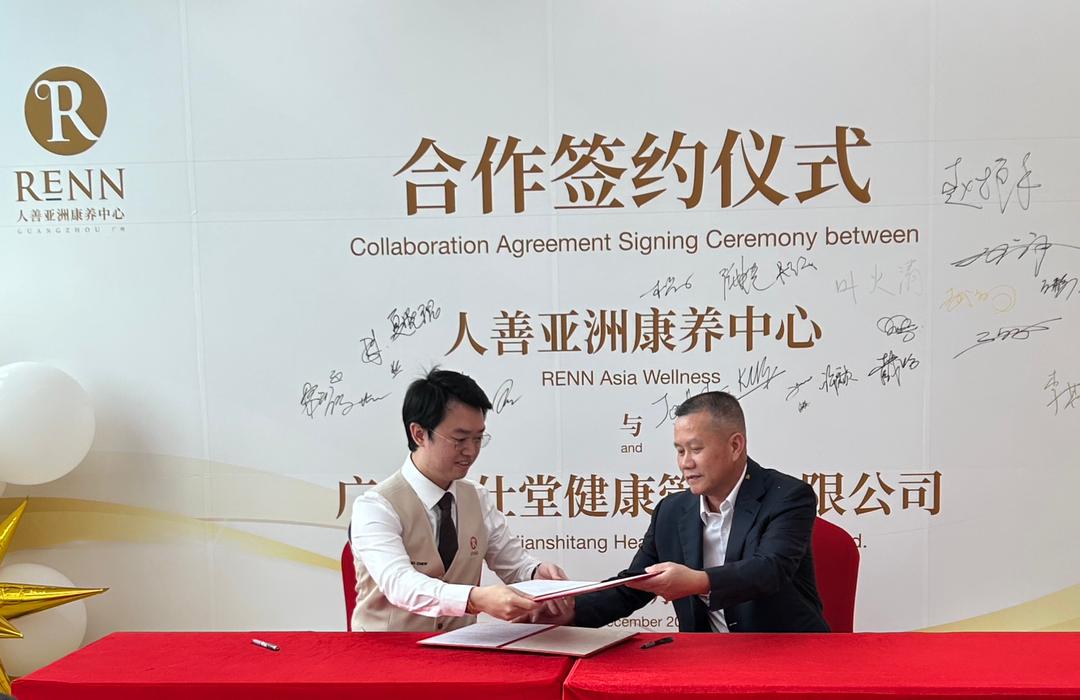
    RENN Asia Wellness (RENN), a home-grown brand focusing on Nutritional and Functional Medicine (NFM), is pioneering Malaysia-China cooperation in this field with the opening of a centre in Guangzhou, China.

    In collaboration with Jian Shi Tang (JST) of Guangzhou and adopting its Malaysian-developed NFM clinical framework, RENN will operate a first-of-its-kind wellness centre at the prestigious Leatop Plaza in Tianhe District of Guangzhou.

    This collaboration places Malaysia among the first in the region to export a full chronic-disease management model to China, starting with diabetes care.

    China is grappling with one of the world’s largest diabetes epidemics, estimated at more than 140 million adults. Rising complications and healthcare expenditures have accelerated the search for preventive and functional medicine solutions capable of reducing long-term disease progression.

    Despite strong national efforts, persistent gaps remain in preventive and functional care models, particularly those that integrate nutrition, root-cause investigation, lifestyle medicine, personalised diagnostics, and long-term monitoring. The introduction of a Malaysian-developed NFM framework is seen as a strategic complement to China’s evolving healthcare reforms.

    The Malaysian-led NFM initiative offers a structured, root-cause focused alternative. Rather than merely managing symptoms, NFM emphasises personalised assessment, lifestyle and nutrition intervention, metabolic optimisation and preventive care. By doing so, it aims to stabilise or even reverse elements of metabolic dysfunction, a critically needed tool in China’s fight against chronic disease.

    RENN Asia will supply not only the NFM protocols and programme design but also experienced Malaysian practitioners as advisers for the initial launch phase. This approach ensures that the first centre accurately reflects the rigorous standards and holistic philosophy developed in Malaysia through years of clinical experience.

    “Bringing a Malaysian-refined NFM framework into China shows that we can be a provider of practical healthcare solutions to other nations. Our role is not only to export knowledge, but to support JST in building a system that can sustainably transform community health outcomes in Guangzhou and eventually across China,” said Jonathan Chew, Founder and CEO of RENN.

    “For JST, we see tremendous potential in RENN Asia’s NFM framework. Its emphasis on personalised assessment and root-cause intervention aligns with the future direction of healthcare in China,” said JST lead medical practitioner Dr Dai Qi Ming.

    Both organisations plan to scale the partnership to other chronic conditions once the diabetes programme demonstrates stable outcomes. Future expansion areas include cardiovascular disease, liver and metabolic disorders, hormonal imbalances, and allergy-related conditions — all of which contribute significantly to China’s rising chronic disease burden.

    The joint initiative aims to generate long-term impact by reducing avoidable complications, lowering treatment costs, and improving clients’ independence and quality of life. Through this collaboration, Malaysia’s contribution extends beyond clinical expertise to knowledge export, professional capacity building, and regional health innovation.

  • 東京迪士尼海洋25週年「閃耀歡騰」活動詳情

    東京迪士尼海洋25週年「閃耀歡騰」活動詳情

    2026年4月15日~2027年3月31日

    日本東京 – Media OutReach Newswire – 2025年12月23日 – 於2026年4月15日至2027年3月31日期間,東京迪士尼海洋將舉辦週年慶活動「東京迪士尼海洋25週年『閃耀歡騰』」,欣喜慶祝於2026年迎接開園25週年。

    「東京迪士尼海洋25週年『閃耀歡騰』」 ※圖片皆僅供參考。 © Disney
    「東京迪士尼海洋25週年『閃耀歡騰』」 ※圖片皆僅供參考。 © Disney

    東京迪士尼海洋為全球首座以海洋為舞台的迪士尼主題園區,並於2001年迎接首批遊客。於2024年更有第8座主題海港夢幻泉鄉在此落成揭幕,為東京迪士尼海洋增添精彩魅力。東京迪士尼海洋將於2026年4月華麗展開週年慶活動,期許園區內日益燦爛的故事今後持續閃亮輝煌。

    屆時,受到多樣海洋魅力激發而成的主題色彩「歡騰藍」,將繽紛揮灑於東京迪士尼海洋。於娛樂表演「閃耀歡騰慶典」,當米奇搭乘的船隻行駛至地中海港灣中央停留後,其他迪士尼好友與演藝人員亦由陸地區域登場,全場不分彼此炒熱慶典氣氛。此外,舞台表演「舞動全球!」將於2026年1月14日搶先在週年慶活動之前於美國海濱的港岸公園揭開表演序幕。週年慶活動期間,本表演更加入演出特效,滿盈喜氣。

    入夜後,園區將綻放絢爛光彩,令歡騰的慶典氣氛不停歇。情境營造「閃耀歡騰之夜」將於東京迪士尼海洋觀海景大飯店的外牆,展現璀璨影像與25週年主題曲〈Come Join the Jubilee〉交織的美妙時光。而阿拉伯海岸中央廣場的裝飾亦將在歡騰藍的燈光照映下,渲染慶賀氛圍。

    不僅如此,園方亦推出豐富的活動內容,邀請遊客感受歡欣熱鬧的慶典魅力。於「歡騰藍回憶」,遊客選購專用瓶後,即可進入歡騰藍縈繞的獨特空間,並將「歡騰藍美石」帶回或拍照打卡,留作珍貴回憶。美國海濱的豪華客船「S.S.哥倫比亞號」亦舉辦「S.S.哥倫比亞號 歡騰盛會」,僅向付費參加的遊客開放營業,歡迎參與。

    除上述精彩內容之外,演藝人員將佩戴歡騰藍的名牌,為慶典增添熱鬧氛圍。歡迎遊客佩戴25週年的重點喜慶單品「歡騰徽章」,與親朋好友攜手同遊園區,喜慶東京迪士尼海洋25週年。

    [一般諮詢]東京迪士尼海洋25週年官方網站
    https://www.tokyodisneyresort.jp/treasure/tds25th/tc/

    Hashtag: #東京迪士尼海洋25週年

    The issuer is solely responsible for the content of this announcement.

  • Regional study reveals spending patterns across key SEA markets in 2025

    Regional study reveals spending patterns across key SEA markets in 2025

    Southeast Asia (SEA) remains one of the fastest-growing regions globally, with household consumption as the major driver. While often viewed as a single economic bloc, a new study by Milieu Insight indicates that the region has diverged into three distinct consumer economies, shaped by differences in outlook, financial pressure, digital adoption, and spending priorities.

    The study draws on responses from 3,054 consumers across six key SEA markets – Singapore, Malaysia, Thailand, the Philippines, Indonesia, and Vietnam. It examines current spending sentiment compared to three months prior, trade-offs prompted by grocery inflation, the role of digital payments, and expectations for purchasing behaviour into 2026.

    “Consumers in SEA are no longer behaving as a unified market,” said Juda Kanaprach, Co-Founder and Chief Commercial Officer at Milieu Insight. “Different levels of financial pressure and sentiment are shaping three distinct consumer economies. A single regional playbook is ineffective, businesses must understand the specific financial and emotional contexts driving decision-making in each market.”

    The Stressed Digital Economy: Philippines, Indonesia, Vietnam
    Consumers in the Stressed Digital Economy, the Philippines, Indonesia, and Vietnam, are increasing spending despite financial constraints, supported by strong digital payment adoption and resilient sentiment. Across these markets, 59% of consumers report spending more than three months ago, the highest in the region. Grocery inflation remains a core pressure point, with 77% in the Philippines and 83% in Indonesia identifying groceries as unavoidable expenditure, prompting substitution towards more affordable proteins and brands. E-wallet usage is deeply embedded: 64% of Filipinos and 57% of Indonesians prefer digital wallets for routine transactions.

    These markets are likely to further entrench digital-first purchasing, with e-wallet adoption expected to continue rising. However, the sustainability of spending will depend on whether inflation stabilizes. Optimism currently sustains consumption, but prolonged price pressures may test that resilience.

    The Strategic Comfort Economy: Singapore, Malaysia
    Consumers in Singapore and Malaysia demonstrate financial stability but pair it with disciplined, value-oriented decision-making. Singapore records the lowest spending increase in the region, with 40% reporting higher expenditure compared to the Southeast Asia average of 51%. This does not indicate weakened purchasing power, but rather deliberate control of discretionary spending. Value maximization is prominent: 83% of Singaporeans wait for promotions, and 58% prefer credit cards for rewards and cashback.

    Malaysia shows the lowest caution sentiment in the region at 20% and the highest current optimism at 28%, alongside comparatively lower grocery pressure. Consumers in this economy are selective rather than constrained, willing to spend where value, convenience, or quality is clearly justified.
    This value-optimization mindset is expected to persist. Price comparison, loyalty benefits, and clarity of value proposition will continue to influence brand and channel choice, particularly in premium lifestyle and convenience categories.

    The Transition Economy: Thailand
    Thailand remains the region’s most sentiment-responsive market. While 56% of consumers describe themselves as cautious, the highest in Southeast Asia, 54% still report increased spending, indicating prioritization rather than broad reduction. Thailand also shows the strongest expected improvement, with 53% anticipating greater optimism in the coming quarter.

    Payment habits reflect a market in transition, with cash and e-wallet usage at equal levels (39% each).
    Over the next year, Thailand’s consumer economy will hinge on the direction of sentiment. If confidence strengthens, spending growth will follow; if it weakens, caution is likely to deepen. Digital adoption will continue regardless, making Thailand a key market to watch for shifts in regional consumer mood.

    Future Outlook: Divergence Will Widen
    The differences between Southeast Asia’s consumer economies are expected to deepen over the coming years. Digital maturity, inflation exposure, and value sensitivity will continue to shape spending behaviours in distinct ways. As a result, market success will increasingly depend on understanding economic mindset rather than geography alone. Businesses entering or expanding in Southeast Asia will need market-specific value propositions and communication strategies that reflect the distinct financial behaviours and confidence levels across these three consumer economies.

    “A uniform brand narrative will not yield consistent results across Southeast Asia,” Juda added. “Pricing strategies, promotions, channel plays, and loyalty programs must now align with the economic mindset of each market, not just its geography.”

  • New report warns boards of top risks in Southeast Asia for 2026

    As companies budgets and business plans for 2026, the latest global Risk in Focus 2026 Report by the Institute of Internal Auditors Inc. warns that boards must urgently strengthen governance to keep pace with fast-evolving risks.

    The report has outlined changes in top risks over the years in many regions, showing how cybersecurity, business resilience, disruptive technologies such as AI, and geopolitical volatility are converging into complex increasingly interconnected, challenging and intensifying.

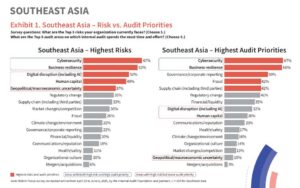
    In the Risk in Focus 2026 Report’s regional deep-dives, Asia Pacific is highlighted as a fast-growing but risk-intensive region requiring urgent governance responses. Specially to Southeast Asia, the Report highlights that Cybersecurity (67%) tops the list as the number one threat, with AI, digital disruption, and data privacy expanding the attack surface. Business resilience (62%) comes second, reflecting the impact of tariff wars, supply chain shocks, and climate-related disruptions. The top two audit priorities for Southeast Asia (above 60%) mirror these threats.

    For Southeast Asia, these trends not only heighten exposure but also present an opportunity: organisations that invest in the right resources, skills, and internal audit capabilities today will be better positioned to build resilience, sustain growth, and protect stakeholder trust in the years ahead.
    However, while 52% of Southeast Asia survey respondents included digital disruption as a Top 5 risk – with AI reshaping competition and productivity, just 32% included it as a Top 5 audit priority. Many companies admit they lack the skills and frameworks to respond.

    This year, the annual global report surveyed over 4,000 senior internal audit leaders worldwide, including 159 respondents from Southeast Asia who represent organisations with significant operations in the region. The 2026 edition introduces a forward-looking outlook — not just a snapshot of current risks but a projection of what boards cannot afford to ignore in the next three years. It also integrates AI, green finance, and geopolitical fragmentation as cross-cutting themes, which were less pronounced in earlier reports.

    Malaysian Companies Under Pressure In 2026

    Some of these risks are already manifesting and weighing on organisations in Malaysia. In 2024, police reports point to cybercrime losses exceeding RM1 billion, and yet, only 2% say they are prepared. That’s a governance gap with real financial consequences. Meanwhile ESG compliance pressures are also mounting with IFRS S1/S2 alignment this year and Scope 3 reporting by 2027.

    Boards, therefore, cannot afford to de-prioritise these threats, and gaps between identified risks and internal audit coverage, particularly in areas such as cybersecurity, digital disruption and human capital which must be addressed with the appropriate control measures.

    In these, internal auditors can support leadership in anticipating risks, testing resilience and building confidence with stakeholders. What were once operational — have now become business survival issues, and internal auditors are empowered to guide boards through this era of polycrises.

    With organisations improving their resilience against “cascading failures”, The Institute of Internal Auditors Malaysia offers more than 90 training programs each year to elevate governance practices and foster a culture of transparency and accountability for businesses. IIAM recently launched the Statement of Risk Management and Internal Control (SORMIC) Guide 2025 with Bursa Malaysia which provides public-listed companies with a clear framework to strengthen disclosures, bolster investor confidence, and embed risk governance into their operations.

    Demand for internal audit upskilling is also rising sharply: with growing enrolment in IIAM’s 80 programmes.” Continuous professional development and staying abreast of emerging trends are key to enabling internal auditors to excel in their roles. The Institute is central to equipping professionals with the knowledge, skills, and ethical standards necessary to comply with Global Internal Audit Standards effectively.


  • SCG unveils groundbreaking DECAAR facade system at ARCHIDEX 2025

    SCG unveils groundbreaking DECAAR facade system at ARCHIDEX 2025

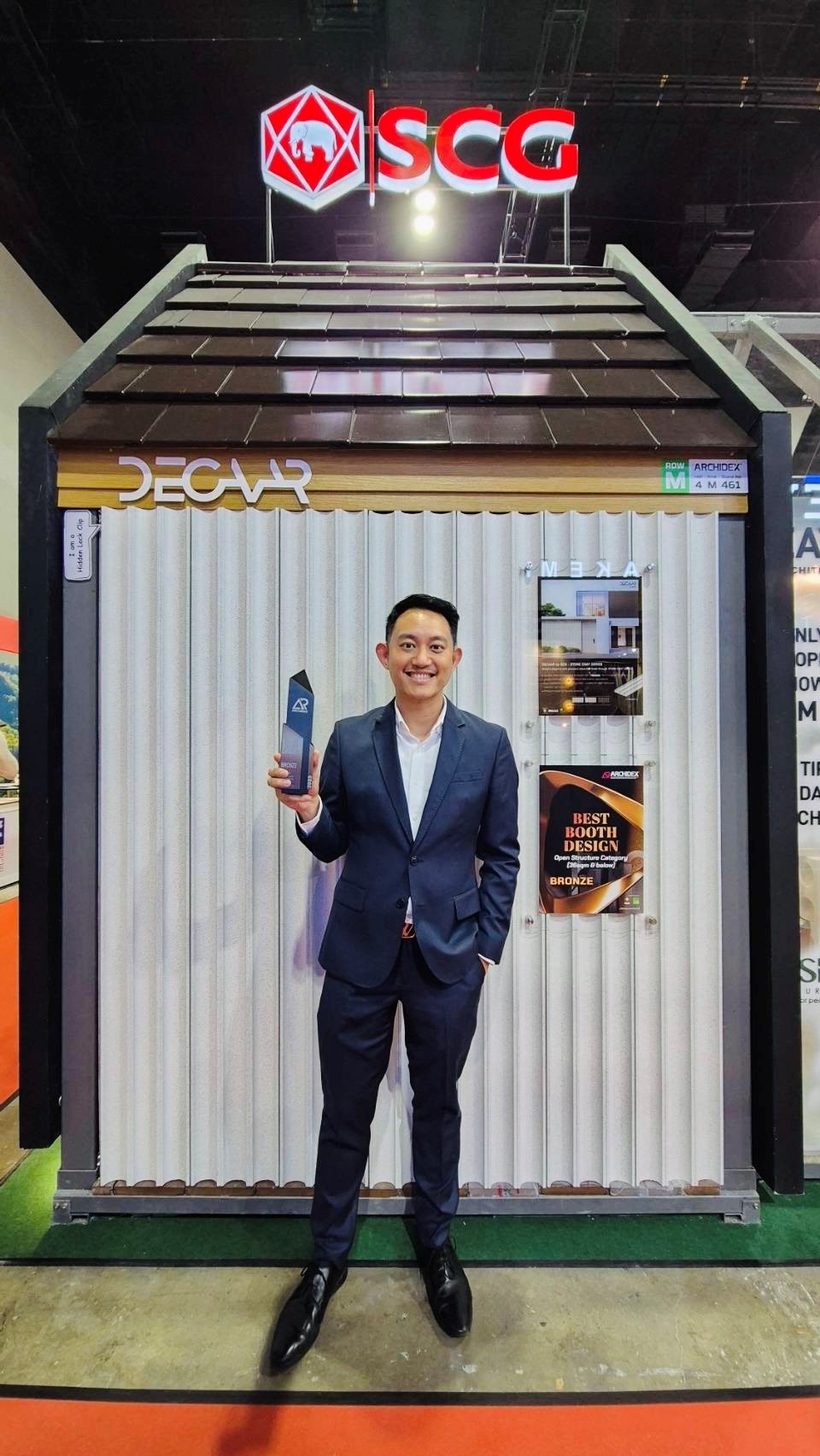
    SCG, a pioneering force in building materials innovation, made architectural history at ARCHIDEX 2025 with official launch DECAAR by SCG, a revolutionary façade system that redefines how buildings interact with natural light. The groundbreaking technology was unveiled at The 24th International Architecture, Interior Design & Building Exhibition, held at the Malaysia International Trade and Exhibition Center (MITEC).

    Under leadership of Mr.Chanon Sangkaew, Export Manager, SCG collaborated with AKUBIG X SURIWONG to present cutting-edge building solutions that combine aesthetic excellence with superior performance. The company’s participation was recognized with a Bronze Award in the Best Booth Design.

    DECAAR by SCG: Revolutionary Façade Technology
    Operating under the concept “Build to Catch the Light. Made to Move with Its,” DECAAR transforms static building surfaces into dynamic, light-responsive architectural elements using advanced extrusion technology.

    Three Innovative Product Lines:

    • Modish V: V-shaped profiles that maximize light capture and shadow play, creating façades that perform from sunrise to sunset
    • Modish U: Engineered with light as the primary design element, creating dramatic shadow effects while maintaining structural integrity
    • C-Channel: Delivers precision and uniqueness to architectural works with clean lines and structural efficiency

    DECAAR’s advanced extrusion technology enables complex profiles previously impossible to manufacture, offering enhanced structural strength with lightweight properties, superior weather resistance, unprecedented design flexibility, and reduced installation time.

    Comprehensive Building Solutions Portfolio

    • SCG Smartwood: Merging the natural warmth of wood with fiber cement strength, offering eco-friendly, low-maintenance
    • Next-Generation SCG Smartboard ULTRA: The fiber cement board with three major improvements:
      • 20% enhanced durability
      • Advanced Anti-Mold Technology
      • Eco Heart certification by EPD International, demonstrating environmental responsibility
    • Premium Roofing Solutions:
      • SCG Roman Tiles (Atap Gajah): Market-leading position in eco-friendly roof systems
      • SCG Concrete Roof: Long-lasting color retention and superior structural strength
      • SCG Ceramic Roof – EXCELLA: Innovation-driven roof tiles setting new quality standards

    Market Impact
    DECAAR launch at ARCHIDEX 2025 signals SCG’s transition from traditional building materials supplier to technology-driven architectural solutions provider, with numerous architects and contractors expressing immediate interest in innovative technology.

  • Alibaba Cloud’s new whitepaper shows how AI can power sustainable business transformation

    Alibaba Cloud’s new whitepaper shows how AI can power sustainable business transformation

    A new whitepaper released by Alibaba Cloud, Driving Sustainability with AI: A Guide to Partnering with Technology Service Providers, offers a forward-looking blueprint for how organisations can harness digital infrastructure — particularly AI and cloud computing — to accelerate their sustainable journey.

    Based on insights from the Tech-Driven Sustainability Trends and Index 2024, which surveyed 1,300 business leaders across Asia, Europe, and the Middle East, the report combines industry data, actionable recommendations, and real-world case studies to explore how emerging technologies can close the gap between aspiration and execution.

    The State of Sustainability: Progress, Gaps and Opportunity

    The whitepaper highlights the growing urgency for businesses to act on sustainability, with 80% of surveyed organisations setting green targets. Yet only one-third of these have committed to science-based net-zero goals. Many companies still struggle to move from commitment to impact, citing gaps in technical understanding, measurement tools and concerns about the energy footprint of digital technologies.

    Despite these barriers, a strong majority — 76% — see AI and cloud computing as essential tools to achieve sustainability outcomes. At the same time, 82% say it is critical that these technologies themselves are developed sustainably.

    From Insight to Impact: Green AI in Action

    Alibaba Cloud is helping organisations bridge this gap through platforms like Energy Expert, which uses AI to measure emissions and energy consumption in real time. The platform has already served over 3,000 organisations globally.

    One standout case is its collaboration with Covestro, a polymer material company. Working together, the two helped Chinese beverage brand Nongfu Spring trace the full lifecycle emissions of its recycled water barrels — later repurposed into gel pens – offering supply chain transparency from production to reuse.

    The whitepaper also showcases Alibaba Cloud’s commitment to low-carbon AI innovation. Its open-source Qwen series models are designed for efficiency and accessibility. Japanese AI start-up Lightblue, for example, used Qwen to build a localized high-performance Japanese-language model with lower development costs and energy use.

    Five Strategies to Drive Recommendations for Sustainable Digital Transformation

    The whitepaper identifies five strategic actions that businesses can take to align digital transformation with sustainability outcomes. First, organizations are encouraged to link their adoption of AI and cloud technologies with specific sustainability KPIs—for example, using predictive tools to optimise operations or monitor emissions across supply chains. Second, companies should partner with transparent, green technology providers that publish energy usage and emissions data, operate on renewable energy, and invest in energy-efficient infrastructure. Third, the paper highlights the importance of embedding security into sustainability strategies, noting that cybersecurity concerns remain a key barrier to wider adoption of digital sustainability tools.

    Fourth, it recommends embracing open and trustworthy AI, such as open-source models that reduce costs, improve energy efficiency, and allow for localized applications. Finally, the paper calls for stronger public-private collaboration, with 82% of surveyed executives supporting more active government involvement to accelerate the adoption of sustainable technologies through policy, incentives, and education.

    A Roadmap for Business Leaders

    More than a guide, the whitepaper is a call to action. It emphasizes that sustainability is no longer a nice-to-have but rather a competitive differentiator and a catalyst for growth.

    For companies navigating climate and digital transformation simultaneously, the message is clear: success depends on choosing the right partners, tools, and strategies to deliver measurable progress. With the right foundation, AI and cloud can power a greener, smarter, and more resilient future.

  • Scoot adds flight capacity to support travel demand

    Scoot adds flight capacity to support travel demand

    Scoot, the low-cost subsidiary of Singapore Airlines (SIA), announces increased flight frequencies and passenger capacity to support the strong demand for air travel in the upcoming months:

    • From 6 June 2025, flights to Iloilo City will increase from two to four times weekly
    • From 24 June 2025, flights to Cebu will increase from seven to 10 times weekly and services to Koh Samui from 21 times to 25 times weekly
    • From 2 August 2025, services to Taipei and Seoul (via Taipei) will increase from five times weekly to daily services
    • From 4 August 2025, frequencies to Perth will increase to 14 times weekly, up from 12 times weekly
    • From 30 August 2025, services to Davao will increase to 12 times weekly, up from nine weekly services
    • From 5 October 2025, frequencies to Sydney will increase to 14 times weekly, up from 10 times weekly

    Flight schedules are subject to government and regulatory approvals or changes. Scoot remains committed to enhancing its network and connectivity. The airline will continue to remain nimble, regularly review its routes and align its capacity with the demand for air travel and evolving travellers’ needs.

    Limited-time promotional fares to selected destinations are currently on offer on Scoot’s website and mobile application. Follow on social media and/or subscribe to Scoot’s newsletter to receive notifications on the latest promotions.

  • ARC Group commemorates 10 Years with flagship forum in Kuala Lumpur

    ARC Group commemorates 10 Years with flagship forum in Kuala Lumpur

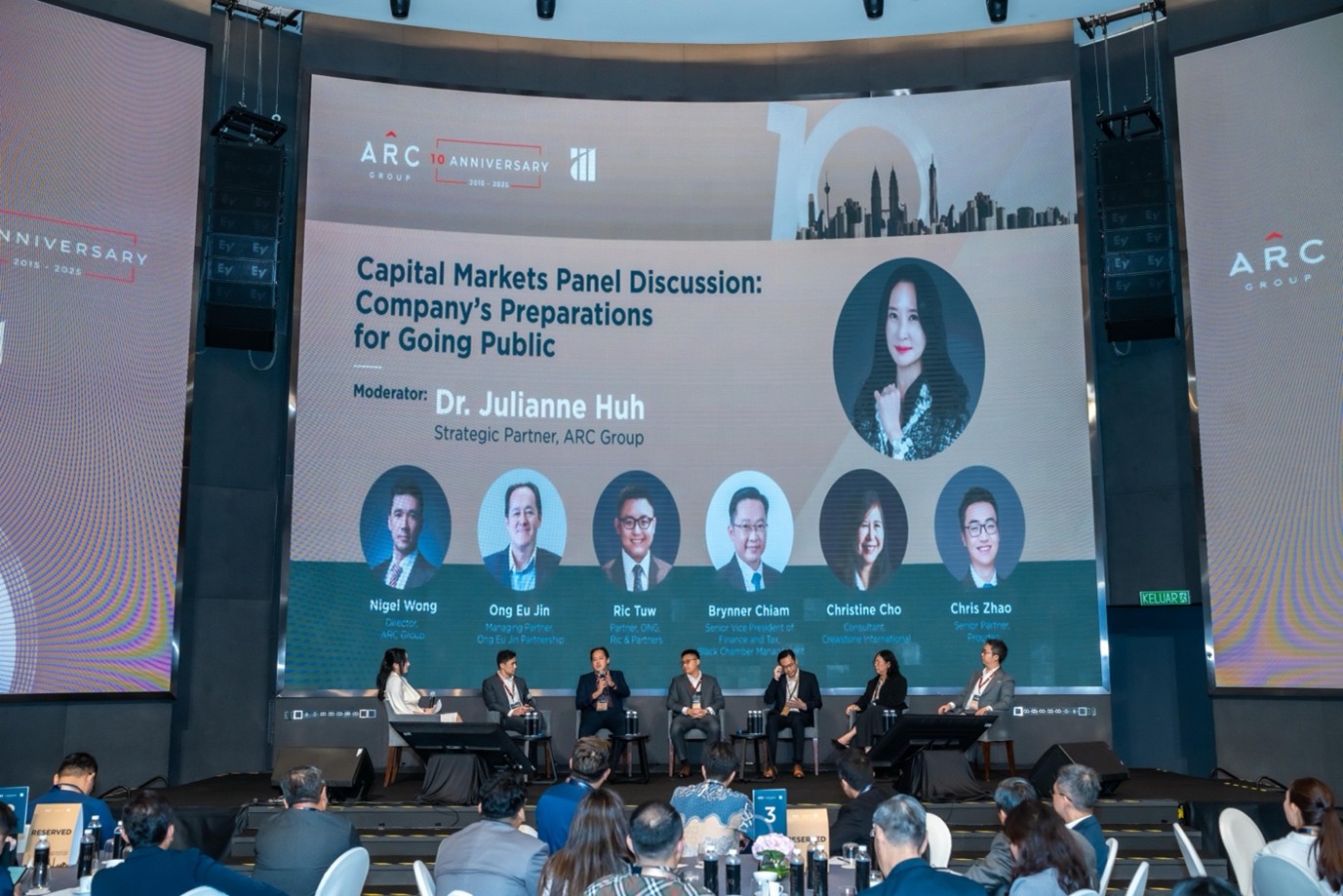
    ARC Group recently hosted the Capital Markets & M&A Forum 2025: Malaysia Edition, bringing together over 400 distinguished guests, including senior executives, investors, legal and advisory professionals and entrepreneurs.

    Themed around growth, strategy, and cross-border collaboration, this year’s forum offered timely insights into Southeast Asia’s evolving financial landscape, bridging capital markets, mergers and acquisitions and long-term economic strategy.

    The event featured international expertise as speakers and panelist, including Arc Group’s local venture partner, Paul Chong who provided a strategic deep dive into “Going Public – Choosing Between IPO, RTO, and De-SPAC. Drawing on his vast experience in global capital markets, Paul Chong delivered a nuanced comparison of public listing routes, offering actionable insights for Malaysian and regional companies considering international capital markets.

    Other featured sessions include topics such as ‘Company Preparations for Going Public’, “From Startup to Exit” and “The Future of M&A in Emerging Asia”. The Forum was closed by Xi Zhang, Partner at ARC Group who delivered a thought-provoking keynote on “China 2030 and Implications for Southeast Asia”, offering macroeconomic lens on China’s long-term transformation and actionable takeaways for ASEAN businesses navigating trade shifts, digital acceleration, and supply chain evolution.

    The event also marked the firm’s 10th anniversary. Carlos Lopez, COO of ARC Group commented, “These events have always held a special place for us—not just as platforms for sharing insights, but for building lasting relationships. This year’s forum was particularly meaningful as we marked ARC Group’s 10-year anniversary. It was a proud moment to reflect on how far we’ve come, and an inspiring one to envision where we’re headed next.”

  • 38th ASEAN Exchanges CEOs Meeting: accelerating efforts on product and ESG development

    38th ASEAN Exchanges CEOs Meeting: accelerating efforts on product and ESG development

    The Philippine Stock Exchange, Inc. (PSE) hosted the 38th ASEAN Exchanges CEOs Meeting which focused on priority initiatives to further showcase the region’s unique investment qualities and create a unified ecosystem for sustainability solutions among listed companies and capital market stakeholders.

    Promoting the ASEAN capital market, the group discussed activities that will continue to generate interest in investment products offered by the ASEAN Exchanges.

    Following the signing of a Memorandum of Understanding (MOU) in November 2024 to collaborate on offering Depositary Receipts (DRs) on their respective exchanges, the ASEAN Exchanges discussed the performance of the ongoing DR collaboration between Singapore Exchange (SGX Group) and The Stock Exchange of Thailand (SET), and the steady progress of DR development in the other ASEAN markets. Since the launch of their DR programme in 2023, SGX Group and SET have listed a combined total of 17 DRs and have more than doubled the AUM of these DRs in the past one year. The initiative has also generated additional trading volumes for both exchanges, adding to liquidity in the underlying market.

    Given the encouraging performance of Thai and Singapore DRs, the rest of the ASEAN Exchanges have been actively working on regulations towards introducing DRs in their respective markets. Bursa Malaysia (BM), Indonesia Stock Exchange (IDX), PSE, and Vietnam Exchange (VNX) are in various stages of regulatory framework development and stakeholder engagement in line with the DR MOU’s goal to enhance investment opportunities by way of cross-border products.

    The ASEAN Exchanges also remained steadfast in their joint promotion efforts by maximizing the use of the ASEAN Exchanges common website and planning marketing events with key market participants. The website content development strategy has expanded the website’s reach to institutional investors, which resulted in doubling visitor activity on the site. The exchange leaders also plan to capitalize on the momentum of previous roadshows in New York, USA and Melbourne, Australia by potentially hosting the next ASEAN-themed roadshow in Hong Kong in the second half of the year.

    On the sustainability front, following the November 2024 announcement, the ASEAN-Interconnected Sustainability Ecosystem (ASEAN-ISE) Participating Exchanges issued a Request for Information (RFI) in February 2025, receiving strong industry interest. A joint briefing on the RFI by the ASEAN Exchanges last week saw participation from more than 120 representatives from 35 organizations, which included solution providers, credit bureaus, technology firms, information vendors, and consultants.

    The RFI seeks market insights to develop a unified ASEAN regional ecosystem which includes:
    1. Centralised Sustainability Data Infrastructure – Establish and harmonise a centralised yet inter-operable data infrastructure, aligning with national regulatory frameworks while ensuring seamless integration.
    2. Digital Marketplace for Technology-based Sustainability Solutions – An open platform for technology-driven sustainability solutions to showcase their offerings, enabling over 4,000 public listed companies (PLCs) and their millions of suppliers to access plug-and-play or modular products, enhance reporting processes, and connect with solution providers across the region.

    Submissions to the RFI close on 31 March 2025, 5:00 pm, GMT+8, and interested parties can respond to all or selected sections as applicable, either individually or as part of a consortium. For more information or to express interest, please contact isb@bursamalaysia.com.