A heritage Hong Kong brand backs local youth sailing and healthy living
HONG KONG, CHINA – Media OutReach Newswire – 21 October 2026 – Lee Kum Kee Sauce (“Lee Kum Kee”) sponsored the HKODA Open & National Championships 2026, which concluded on 19 October, at The Clearwater Bay Golf & Country Club (CWBGCC). The three-day racing brought together talented young sailors for competitive racing, as part of the brand’s broader commitment to healthy living through flavour and to empowering young people across the city. Throughout the event, Lee Kum Kee engaged with participants, families and spectators on-site through product sampling, building connections within the sailing community.
Young sailors competing in the Optimist Class.
Organised by the Sailing Federation of Hong Kong, China, and co-organised by the Hong Kong Optimist Dinghy Association, the HKODA Open and National Championships is one of the largest Optimist Class events in Hong Kong and a key platform for young sailors. This year’s event drew 118 number of sailors from 8 countries and regions.
Lee Kum Kee distributed popular product samples to sailors and families at the HKODA National & Open Championships 2026.
Cheung Mei Han, President of the Sailing Federation of Hong Kong, China, said, “Events like the HKODA Championships are where our future champions get their start. We are grateful for Lee Kum Kee’s support of youth sailing and the development of the next generation of Hong Kong sailors.”
Dodie Hung, Executive Vice President – Corporate Affairs of Lee Kum Kee Sauce said, “Sailing embodies the resilience and teamwork we deeply value at Lee Kum Kee. We are delighted to support youth sailors and share the excellence of Asian flavours with the sailing community.”
Lee Kum Kee’s support for Hong Kong’s sailing and water sports activities extends across all levels of the sport. As a sponsor of the Hong Kong Sailing Team, the Company backed the side through recent success at both the 20th Asian Games in Japan and the 15th National Games in China in 2025. It also supports the “Generations Sailing Team” of the Royal Hong Kong Yacht Club and is a Gold Sponsor of the Hong Kong Windsurfing Circuit.
Looking ahead, Lee Kum Kee will be sponsoring the 2027 Hong Kong Dragon World Championship, to be held on 21-29 November, 2026, which is the first time the championship to be held in Asia. Hashtag: #LeeKumKee #LKK
The issuer is solely responsible for the content of this announcement.
About Lee Kum Kee Sauce
Lee Kum Kee Sauce is the global gateway to Asian culinary culture, dedicated to promoting Chinese culinary culture worldwide. Since 1888, it has brought people together over joyful reunions, shared traditions, and memorable meals. Beloved by consumers and chefs alike, Lee Kum Kee Sauce’s range of more than 300 sauces and condiments sparks creativity in kitchens everywhere, inspiring professional and home chefs to experiment, create, and delight. Headquartered in Hong Kong, China and serving over 100 countries and regions, Lee Kum Kee Sauce’s rich heritage, unwavering commitment to quality, sustainable practices, and “Constant Entrepreneurship” combine to enable superior experiences through Asian cuisine for people worldwide.
HONG KONG SAR – Media OutReach Newswire – 21 October 2026 – China Telecom Global (CTG) and The Hong Kong University of Science and Technology (HKUST) have held the signing ceremony for the HKUST–China Telecom Joint Laboratory on AI for Telecommunications at the HKUST campus, followed by the laboratory’s first Scientific Advisory Committee meeting. The milestone marks the entry of the two parties’ industry–academia–research collaboration in AI for telecommunications into its implementation phase.
The project teams of China Telecom Global and HKUST
Chen Kai, Executive Vice President of CTG, and Prof. Guo Yike, Provost of HKUST and Director of the Joint Laboratory, delivered key addresses and executed the cooperation agreement on behalf of the two parties.
“China Telecom is accelerating its development into a technology-driven enterprise,” said Chen Kai. “Leveraging the company’s business scenarios in global networks and the AI-powered intelligent computing cloud, the joint laboratory will work with HKUST on frontier research, drive collaborative innovation across telecommunications and artificial intelligence, and serve the development of Digital China and the Greater Bay Area.”
“The joint laboratory is an important platform for HKUST to advance the deep integration of AI research with real-world industry scenarios,” said Prof. Guo. “We will give full play to the university’s research strengths, accelerate the translation of research outcomes, and contribute to building Hong Kong into an international innovation and technology hub.”
The establishment of the joint laboratory is a key outcome of the strategic cooperation agreement signed between China Telecom and HKUST in March 2025, under which the two parties committed to deepening industry–academia–research collaboration and advancing frontier technology research and commercialisation.
Focusing on frontier AI technologies for telecommunications, the laboratory will define research topics around CTG’s business scenarios in global networks and the AI-powered intelligent computing cloud, explore joint talent development, and build a closed-loop pathway from business scenarios through research topics to commercialised outcomes.
At its first meeting, the Scientific Advisory Committee approved the laboratory’s first batch of research projects and adopted the Laboratory Charter and its Rules of Procedure, with in-depth discussions on 2027 research and development directions and the translation of telecommunications business scenarios into research topics. The laboratory will operate a mechanism combining quarterly written reports with biannual review meetings to ensure that research remains aligned with industry needs and that outcomes are measurable and translatable.
Looking ahead, the two parties will deepen their long-term cooperation in AI for telecommunications through the joint laboratory, accelerate the industrialization of research outcomes, support Hong Kong’s development into an international innovation and technology hub, and inject fresh momentum into the high-quality growth of the digital economy in the Greater Bay Area.
Hashtag: #ChinaTelecomGlobal
The issuer is solely responsible for the content of this announcement.
About China Telecom Global
China Telecom Global Limited (CTG) was established in 2012 and headquartered in Hong Kong as a wholly-owned subsidiary of China Telecom Co., Ltd. As of now, CTG has a presence in 53 countries and markets, with business spanning the Asia-Pacific, Europe, the Middle East, Africa, and the Americas. Leveraging its vast network resources of 185 submarine and terrestrial cables with over 304T in intercontinental capacity, 259 Points-of-Presence, and 15 proprietary data centres around the world, CTG has become a global player with an extensive network of service branches and communications infrastructure.
MindFlex Education’s 7-year study of more than 100,000 home tuition arrangements shows what families actually pay, who they hire, and when they look for help
SINGAPORE – Media OutReach Newswire – 21 October 2026 – A single home tutor costs Singapore families a median of S$390 a month. That is according to The Singapore Home Tuition Report 2026–2027, published today by MindFlex Education. The tuition rates climb as children move through school: a home tutor costs S$325 a month at Primary level and S$553 at Junior College, roughly 70% more.
MindFlex Study: 7 Years of Data Reveal How Home Tuition Cost Varies in Singapore
The report draws on more than 100,000 home tuition arrangements made through MindFlex Education between October 2019 and August 2026, and the enquiries behind them. Unlike published rate guides, it is based on confirmed arrangements.
“Home tuition plays an important role in how many Singaporean families support their children aged 4 to 18 through their school years. Yet there has been little hard data on what families actually pay for it. We wanted to put real numbers on the table: the rates families actually agreed with their home tutors, not advertised prices. We hope it helps parents weigh their options with clear figures, whether they’re comparing tutors, planning a budget, or deciding when to start,” said Benjamin B, Director, MindFlex Education.
A Home Tutor Costs S$390 a Month, and 70% More at Junior College Than at Primary
The median monthly cost of a home tutor:
Primary: S$325
Secondary: S$390
Junior College: S$553
These figures are for one tutor. Families with more than one tutor, or more than one child in tuition, will spend more. At Preschool level, where tuition is less common, a tutor costs a median of S$260 a month. Higher Rates and Longer Lessons Push the Cost Up
Two forces drive the increase in home tuition fees across the school years.
Hourly rates rise. The median rate goes from S$45 an hour at Lower Primary to S$60 at Upper Secondary, then jumps to S$80 at Junior College.
Lessons get longer. A 1.5-hour lesson is the most common format at every stage, but the share of arrangements with 2-hour lessons rises from 12% at Lower Primary to 19–25% at Secondary and 33% at Junior College.
Families in the Core Central Region Spend 36% More
Where families live is closely tied to what they spend. A home tutor costs a median of:
S$488 a month in the Core Central Region (CCR)
S$390 in the Rest of Central Region (RCR)
S$358 in the Outside Central Region (OCR)
That puts spending in the CCR 36% above the OCR.
The type of tutor families hire also differs:
At Primary level, 34% of arrangements in the CCR are with an NIE-Trained Teacher. That compares with 24% in the RCR and 19% in the OCR.
Part-Time Tutors account for 21% of Primary arrangements in the CCR, and 33% in the OCR.
For the same type of tutor, rates are much closer across the island. A Part-Time Tutor for a Primary pupil costs a median of S$35 an hour in all 3 regions, and rates for the same type of tutor differ by S$5 or less.
NIE-Trained Teachers Charge 2 to 2.5 Times the Part-Time Tutor Rate
The report compares 3 categories of home tutors:
Part-Time Tutors are mostly students, the large majority of them university undergraduates.
Full-Time Tutors are mostly graduates who tutor as their main career, and usually have at least 5 years of teaching experience.
NIE-Trained Teachers are current and former school teachers, trained by Singapore’s National Institute of Education.
The tutor’s background makes a large difference to price, even at the same school level. At Upper Primary, a Part-Time Tutor charges a median of S$35 an hour, while a Full-Time Tutor charges S$50 and an NIE-Trained Teacher S$80. By Junior College, the same 3 categories charge S$50, S$80 and S$120 an hour.
Across Primary to Junior College, that makes an NIE-Trained Teacher typically 2 to 2.5 times the Part-Time Tutor rate, and about 1.5 times the Full-Time Tutor rate.
Surprisingly, Tuition Has Become Cheaper in Real Terms
Despite the common view that tuition costs keep climbing, rates have risen more slowly than everyday prices.
Between 2020 and 2025, the average hourly tuition rate rose 13.1%, from S$51.66 to S$58.45. Over the same period, Singapore’s Consumer Price Index rose 17.6%. After inflation, the average hourly rate in 2025 was about 4% lower than in 2020.
The lower end of the market has barely moved: in every year from 2019 to 2026, at least 25% of hourly rates were S$40 or less.
The Search for Help Starts Early
Some families start before Primary 1. For the smaller group who arrange tuition at Preschool level, the focus is on the basics: 56% of Preschool enquiries ask for English or Phonics, and 40% for a Mother Tongue language.
The PSLE search starts a year ahead. Enquiries for incoming Primary 6 pupils peak in November, before the school year has even begun, at twice the level of a typical month. By September of the exam year, they fall to about a fifth of a typical month.
Every Stage of School Has Its Own Tuition Season
Parents at different stages look for help at different times of year:
Preschool: most active in January, with steadier demand through the year.
Lower Primary: most active in July.
Secondary 4: most active in January, as the national-exam year begins, at about 50% above a typical month.
Junior College: most active in July, about 65% above a typical month.
Students Often End Up with More Than 1 Subject, Even When They Start with Just 1
85% of tuition requests name a single subject. But when the same children are followed from 2022 to 2026, 47% end up with requests in 2 or more subjects. A family might start with Maths in Primary 4 and return for Science in Primary 5.
Online Tuition Was a Lockdown Necessity, Not a Lasting Preference
Before the Circuit Breaker, 1% or fewer of enquiries were open to online tuition. When in-person home tuition was suspended from 7 April to 18 June 2020, that rose to at least 86% in May. By July, after home tuition resumed, it had fallen to around 14%. The pattern repeated when in-person tuition was suspended again in May and June 2021.
Since 2023, around 5% of families have been open to online lessons. Openness rises sharply with age: about 2% at Primary, 6% at Secondary, 13% at Junior College and 22% among Polytechnic and University students.
As Children Grow, Tuition Moves to Evenings and Weekends
Primary pupils most often start lessons at 3pm on a weekday. For Secondary and Junior College students, the most popular weekday start is 7pm.
On weekdays, about 30% of Primary first lessons start at 6pm or later, rising to about 45% at Secondary and 55% at Junior College.
Weekends take a growing share too: 25% of Primary arrangements begin on a Saturday or Sunday, rising to 37% at Secondary and 48% at Junior College.
The Full Report
The Singapore Home Tuition Report 2026–2027 sets out all 10 findings, with 17 charts covering monthly costs, regional spending, tutor rates, inflation, Preschool demand, PSLE timing, seasonal patterns, subject needs, online tuition and lesson timing.
The issuer is solely responsible for the content of this announcement.
About MindFlex Education
Founded in 2017, MindFlex Education is Singapore’s largest home tuition agency, with more than 100,000 successful tutor matches and a network of more than 60,000 tutors. It connects families with home tutors across all levels and subjects, from Preschool, Primary, Secondary and Junior College to International Curriculum, Polytechnic and University. Its tutors include Part-Time Tutors, Full-Time Tutors and NIE-Trained Teachers.
Inspired by a personal rehabilitation experience, the initiative builds on a long-standing vision to connect rehabilitation with workplace exposure and potential employment opportunities for persons with disabilities and individuals undergoing rehabilitation.
KUALA LUMPUR, MALAYSIA – Media OutReach Newswire – 21 October 2026 – 7-Eleven Malaysia today officially opened CAFé by 7-Eleven at Universiti Malaya (UM), marking the realisation of a vision first proposed by the Chairman of 7-Eleven Malaysia, Tan Sri Dato’ Seri Mohd Annuar bin Zaini, two decades ago.
From left to right: Professor Ir. Dr. Ramesh Singh Kuldip Singh, Deputy Vice-Chancellor of Universiti Malaya (Development), Professor Dato’ Seri Ir. Dr. Noor Azuan Abu Osman, Vice-Chancellor of Universiti Malaya (UM), Tan Sri Dato’ Seri Zarinah Anwar, Chairman of the Board of Directors of Universiti Malaya (UM), Tan Sri Dato’ Seri Mohd Annuar bin Zaini, Chairman of 7-Eleven Malaysia Holdings Bhd, Mr. Steve Hayes Dacus, Representative Director, President & CEO of Seven & i Holdings, Tan Sri Dato’ Seri Vincent Tan, Founder and Advisor of Berjaya Corporation Bhd, Mr. Wong Wai Keong, Co-Chief Executive Officer at 7-Eleven Malaysia, and Mr. Ken Wakabayashi, President & CEO of 7-Eleven International.
The opening marks the company’s second institutional partnership aimed at creating meaningful pathways from rehabilitation to employment, following its collaboration with Pusat Rehabilitasi PERKESO Sultan Nazrin Shah in Ipoh, Perak.
The initiative holds personal significance for Tan Sri Annuar, whose vision was inspired by his own rehabilitation experience at University Malaya Medical Centre (UMMC) around 20 years ago. While undergoing physiotherapy and occupational therapy, he encountered a young accident survivor whose disability raised concerns about his future employment prospects. The experience prompted Tan Sri Annuar to consider how 7-Eleven outlets could provide opportunities for vocational training and potential employment for individuals recovering from accidents or medical conditions.
In 2006, he proposed establishing a 7-Eleven outlet on the Universiti Malaya campus as part of the company’s corporate social responsibility efforts. The opening of CAFé by 7-Eleven at UM represents a meaningful step towards realising that long-held aspiration.
Through its collaboration with UMMC, 7-Eleven Malaysia aims to support occupational therapy programmes for patients undergoing rehabilitation and explore suitable workplace exposure and employment opportunities within its stores upon completion of their rehabilitation. Opportunities will be considered based on each individual’s abilities and readiness, as well as the requirements of the role and outlet. Through this approach, the company hopes to help individuals rebuild confidence, develop practical workplace skills and work towards greater independence.
The opening ceremony was attended by Tan Sri Dato’ Seri Vincent Tan, Founder and Advisor of Berjaya Corporation Berhad, Tan Sri Dato’ Seri Zarinah Anwar, Chairman of the Board of Directors of Universiti Malaya; Professor Dato’ Seri Ir. Dr. Noor Azuan Abu Osman, Vice-Chancellor of Universiti Malaya; management from 7-Eleven Malaysia, 7-Eleven International and Seven & i Holdings; university administrators, students, and representatives from 7-Eleven Malaysia.
Tan Sri Dato’ Seri Mohd Annuar bin Zaini, Chairman of 7-Eleven Malaysia, said the initiative reflects a personal commitment to creating practical pathways from rehabilitation to meaningful employment.
“At 7-Eleven Malaysia, we believe businesses can play a practical role in creating more inclusive pathways into employment. For individuals undergoing rehabilitation, workplace exposure and suitable employment opportunities can be important steps towards rebuilding confidence, developing independence and reconnecting with society.
“Our collaboration with Universiti Malaya and UMMC builds on our experience with Pusat Rehabilitasi PERKESO Sultan Nazrin Shah in Ipoh. By working alongside rehabilitation professionals, we aim to explore opportunities that match individuals’ abilities and readiness, while taking into account the requirements of each role and outlet.
“This initiative is personally meaningful to me, having been inspired by my own rehabilitation experience at UMMC more than 20 years ago. I hope it will encourage wider collaboration with hospitals, rehabilitation centres, universities, NGOs and other organisations to develop practical pathways from rehabilitation to employment.
“Whether through a CAFé by 7-Eleven outlet or other suitable employment opportunities, we welcome partners who share our vision of helping more individuals participate meaningfully in the workforce,” he said.
A Café Designed Around Community, Opportunity and Inclusion
Beyond its CSR focus, CAFé by 7-Eleven at Universiti Malaya has been designed to serve the needs of the university community, offering more than a conventional convenience-led café experience. Whether students are looking for a quick breakfast, coffee between lectures, a meal or a comfortable place to spend time with friends, the café aims to become a familiar part of campus life.
The café features a dedicated lounge area where students can study, work on assignments, socialise and unwind between classes. In collaboration with Universiti Malaya, students contributed to the café’s environment by designing and painting murals for the space, reflecting the outlet’s role as a shared community destination.
The outlet also introduces CAFé by 7-Eleven’s first noodle-making station and noodle library, offering students greater variety and a more interactive, convenient dining experience. An automated self-service checkout is planned for a future phase to further enhance convenience through technology.
Beyond providing a welcoming space for students to study, socialise and unwind, the café also aims to create part-time employment opportunities for Universiti Malaya students. These opportunities would allow students to earn an income while gaining practical workplace experience and developing skills alongside their studies.
Building Partnerships for a More Inclusive Workforce
The initiative reflects 7-Eleven Malaysia’s broader commitment to creating practical pathways for individuals who may face barriers to entering or returning to the workforce.
Working alongside medical and rehabilitation professionals, the company aims to explore suitable opportunities for workplace exposure, part-time employment and other roles within its retail network, taking into account individual abilities, readiness and operational requirements.
Building on its collaboration with Pusat Rehabilitasi PERKESO Sultan Nazrin Shah in Ipoh and its partnership with Universiti Malaya and UMMC, 7-Eleven Malaysia welcomes discussions with hospitals, rehabilitation centres, universities, NGOs and other organisations interested in developing similar initiatives. These may include hosting a CAFé by 7-Eleven outlet or exploring other suitable employment pathways for individuals undergoing rehabilitation.
As CAFé by 7-Eleven at Universiti Malaya opens its doors, the company will continue exploring how its retail network can contribute to meaningful employment opportunities and more inclusive communities.
Hashtag: #7eleven
The issuer is solely responsible for the content of this announcement.
About 7-Eleven Malaysia
7-Eleven Malaysia Holdings Berhad through its subsidiary 7-Eleven Malaysia Sdn. Bhd. is the owner and operator of 7-Eleven stores in Malaysia. Incorporated on 4 June 1984, 7-Eleven Malaysia has made its mark in the retailing scene and has been a prominent icon for over 40 years. 7-Eleven Malaysia is the pioneer and largest 24-hour standalone convenience store operator in Malaysia with over 2,700 outlets nationwide and serves more than 1 million customers daily. 7-Eleven stores can be found across bustling commercial districts to serene suburban residential compounds throughout Malaysia, from petrol stations and LRT stations to shopping malls and medical institutions. My7E loyalty app boasted an impressive membership of 3.7 million users. As we forge ahead, our commitment remains steadfast in enriching the experience for our valued members, offering an array of rewards that enhance their journey as My7E enthusiasts. 7-Eleven is Always There For You. To learn more, please visit our website at www.7eleven.com.my
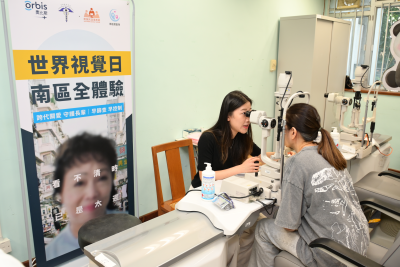
HONG KONG SAR – Media OutReach Newswire – 21 October 2026 – To mark the annual World Sight Day, international sight-saving organization Orbis, in partnership with the Hong Kong Ophthalmological Society (HKOS), Southern District Office, and Southern District Services & Community Care Teams (Southern District Care Teams), held the “World Sight Day: Southern District Eye Care Day” at Wah Kwai Community Hall in Aberdeen. Combining medical expertise, government administrative support, and local district networks, the event featured interactive sensory games, medical seminars, and in-depth eye screening to promote eye disease prevention and early screening for underprivileged seniors.
Intergenerational Care: The Earlier the Eye Protection, The Better – “When Vision Fades, It’s Already Too Late”
Eyes are the windows to the soul, and good vision is key to maintaining quality of life and dignity for seniors. Clear vision allows everyone to live life to the fullest. Yet, many local seniors dismiss deteriorating vision as an inevitable sign of aging and choose to endure it. As early-stage eye diseases are often painless and asymptomatic, by the time seniors experience noticeable blurriness or vision impairment, they have often missed the golden window for effective treatment.
On World Sight Day, the message from organizers was clear: caring for aging eyes is a shared family responsibility. Through twin themes of “Intergenerational Care” and “Early Screening, Early Control,” they called on younger generations to accompany their elderly loved ones on the journey to better vision. Eye care should never be put off until problems arise. A gentle word of concern, a thoughtful reminder, or simply offering to accompany parents to an eye exam could be the very thing that catches a silent disease early and protects seniors’ clarity, confidence, and quality of life.
Three Key Program Highlights: From Interactive Sensory Games to In-Depth Eye Screening
The full-day event offered a comprehensive eye care experience:
Interactive Sensory Games: Featured 5 interactive eye care booths (including AR eye disease simulation and Braille challenges), allowing residents and young caregivers to experience visual challenges faced by seniors firsthand while learning eye care knowledge.
Professional Medical Seminars: 3 specialized seminars hosted by HKOS specialist ophthalmologists unraveled “silent vision thieves” like cataracts, glaucoma, and macular degeneration in accessible terms, attracting over 500 seniors and caregivers.
In-Depth Eye Screening: On-site HKOS specialist ophthalmologists provided free Optical Coherence Tomography (OCT) scans and diagnostic consultations to 120 underprivileged seniors from the Southern District, issuing specialist referral letters to cases requiring further medical follow-up.
Quotes from Officiating Guests
Ms. Sandy CHEUNG, JP, District Officer (Southern)
“The Southern District Office has always been committed to bringing together government, charitable organizations, and community forces to serve residents. We are delighted to coordinate the Southern District Care Team, partnering with Orbis and the Hong Kong Ophthalmological Society to bring top-tier eye care resources directly to Wah Kwai Estate for free screenings for local seniors. The Care Team will continue to leverage its community network to care for the physical and mental well-being of the elderly.”
Ms. Kathleen SHERWIN, President & Chief Executive Officer of Orbis International
“For over 40 years, Orbis has firmly believed that cross-sector collaboration is key to preventing and treating avoidable blindness. Hong Kong has always been a vital global hub for Orbis. As a centerpiece of Orbis’s World Sight Day community initiatives, this event aims to promote ‘Intergenerational Care’ and encourage the younger generation to actively care for their elders’ eye health.”
Prof. YAM Cheuk Sing, Jason, President of Hong Kong Ophthalmological Society
“Common elderly eye conditions such as cataracts, glaucoma, and macular degeneration often develop silently in their early stages. By the time seniors notice blurred vision, irreversible vision damage may already have occurred. HKOS is honored to mobilize specialist ophthalmologists into the community to conduct screenings, putting the medical philosophy of ‘Early Screening, Early Control’ into practice.”
Ms. HUI Sze Man, Orbis “Sight Ambassador” & Senior Artiste
“Having had cataract surgery myself, I was fortunate that my habit of regular eye checkups allowed me to recover my vision completely post-surgery! My five grandchildren are always caring for my eyes. I strongly urge fellow seniors not to endure vision problems silently, and encourage the younger generation to show more care by taking their elders for regular eye checkups!”
Cross-Sector Unity to Achieve “Early Screening, Early Control”
The event featured a simple yet solemn kick-off ceremony. Officiating guests affixed colorful “E” chart props onto a giant eye chart backdrop, symbolizing the four-party partnership across government, medical, charitable, and district sectors, uniting to restore clear vision to Southern District seniors. This was followed by a mass photo op with over a hundred seniors and family members holding eye care props and chanting slogans in a warm, enthusiastic atmosphere.
Photo Captions
Photo 1 (Joint Kick-off Ceremony): Ms. Kathleen SHERWIN, President & CEO of Orbis International (right 3); Ms. Sandy CHEUNG, JP, District Officer (Southern) (left 3); Prof. YAM Cheuk Sing, Jason, President of HKOS (right 1); Ms. LAM Yuk-chin, BBS, MH, Representative of the Southern District Care Team (left 2); Ms. Mary LAU, Executive Director of Orbis Hong Kong (right 2); and Ms. HUI Sze Man, Orbis “Sight Ambassador” (left 1) officiate the “World Sight Day Senior Eye Care Action” launch ceremony by placing colorful “E” props on a giant eye chart.
Photo 2 (Mass Intergenerational Group Photo): Officiating guests pose with nearly 160 Southern District seniors, residents, and family members, holding eye care props and calling for “Early Screening, Early Control” and promoting “Intergenerational Care”.
Photo 3 (Free Specialist Eye Screening): HKOS specialist ophthalmologists provide free comprehensive consultations and OCT scan evaluations for underprivileged seniors in Wah Kwai Estate.
Photo 4 (Sight Ambassador Experience): Orbis “Sight Ambassador” Ms. HUI undergoes a professional eye checkup on-site and shares her story of overcoming cataracts to encourage seniors not to endure eye issues silently.
Photo 5 (Community Eye Care Booths and Seminars): The event featured AR eye disease simulation booths and medical seminars to help residents experience patient perspectives and deepen community eye health education.
Hashtag: #Orbis
The issuer is solely responsible for the content of this announcement.
SINGAPORE – Media OutReach Newswire – 21 October 2026 – Discovery Channel’s Beyond Engineering: Guardians of Flight premieres on Friday, October 23. This new documentary highlights Taiwan-based China Airlines’ maintenance operations and the team working to keep every journey safe.
While travelers usually only see pilots and cabin crew, every flight relies on a dedicated team of maintenance engineers, quality inspectors, and technical specialists. Offering exclusive access to China Airlines’ maintenance facilities, this documentary takes viewers inside one of aviation’s most demanding procedures—the C Check—and reveals the people and technology keeping aircraft safely in the sky.
Beyond Engineering: Guardians of Flight is more than a showcase of engineering prowess; it features the precision, teamwork, and expertise required in every task, paying tribute to the engineers, inspectors, and specialists whose dedication keeps aircraft ready for every journey.
Watch Beyond Engineering: Guardians of Flight on Discovery Channel, Friday, October 23 at 7:10pm SGT, and Discovery Asia, Sunday, October 25 at 9pm SGT.
Hashtag: #Discovery
The issuer is solely responsible for the content of this announcement.
About Discovery Channel
Across every platform, Discovery Channel is dedicated to connecting audiences who have a passion for adventure and crave a connection to the world around them. Popular series including Deadliest Catch, Expedition Unknown and Gold Rush, along with Shark Week, the annual tentpole programming event, serve as trusted portals that transport viewers directly into thrilling, real, high stakes moments. Through smart, authentic characters whose stories inform and inspire, Discovery celebrates the men and women who will stop at nothing to explore new spaces and achieve their dreams. For more information, please visit www.discovery.com.
Play mats, playpen fences and bumper beds in one place — new members get 10% off their first Caraz purchase, with every item in the Taiwan store duty-free and delivered free to the door
TAIPEI, TAIWAN – Media OutReach Newswire – 21 October 2026 – Doremi3babies, a baby and maternity specialty store whose flagship products are Korean Caraz play mats, will celebrate its 10th anniversary in 2027, and its 10th anniversary campaign runs from now through December 31, 2026. During the campaign, every item in the Taiwan section of the Doremi3babies website is HK$10 off, and new members get an extra 10% off their first purchase of a Caraz play mat, playpen fence or bumper bed. Every item in the Taiwan section is duty-free and ships free, arriving at the customer’s home in about seven days, so parents can choose Caraz products that fit their homes at a more affordable price.
From Rolling Over to First Steps: Doremi3babies Recommends Caraz Play Mats for Play, Easy Cleaning and Storage
Once babies start practicing rolling over and crawling, families need a suitable space for floor play. Caraz play mats from Korea are 4 cm thick with an inner core of eight layers of high-density PU foam, cushioning babies as they lie, sit and crawl, and keeping them off cold tile floors. Many models are certified to Korea’s KC and the EU’s CE safety standards; details are listed on each product page.
For everyday spit-up and spilled food, the waterproof PU surface can be wiped with a damp cloth and then dried. The Zero Clean series has a seamless design, so crumbs are less likely to get trapped in seams. It also folds inward, so the side babies play on never touches the floor when the mat is put away, making it easier to keep clean.
Caraz play mats also fit into daily routines: unfold them for playtime, then fold them away when it is time to clean the floor or free up space. For families in smaller homes, the living room does not have to be a permanent play area and can still serve other everyday purposes.
These everyday details are exactly why Doremi3babies recommends Caraz play mats. Beyond materials and safety certifications, Doremi3babies builds cleaning, folding storage and living-space needs into its product selection criteria, offering standard models as well as the Zero Clean series so parents can find the option that suits their household.
From Play Mats to Bumper Beds: Multiple Sizes and Combinations at Doremi3babies
The Doremi3babies Taiwan section carries both standard Caraz models and the Zero Clean series, with play mats available in 120×160 cm, 140×200 cm, 160×200 cm and 180×200 cm to cover different floor areas. Sizes and folding options for each series are presented together, so parents can check what fits their space before buying.
In addition to individual mats, Doremi3babies offers playpen-and-mat sets and the bumper bed range, including the Grand Bumper extra-tall, extra-large edition, sold exclusively by Doremi3babies. Whether parents start with a single mat or set up a complete play area at once, there is a matching option.
10th Anniversary Offer: 10% Off First Caraz Purchase for New Members
To celebrate its 10th anniversary, Doremi3babies is offering two discounts. During the campaign, every item in the Taiwan section is HK$10 off, with the discount converted to New Taiwan dollars at the real-time exchange rate at checkout. New members who make their first purchase of a Caraz play mat, playpen fence or bumper bed in the Doremi3babies Taiwan section also receive an extra 10% off. Every item in the Taiwan section is duty-free with free shipping, so parents pay no extra cross-border shipping fees or taxes and can better plan their total spending.
Orders from Doremi3babies are delivered directly to customers’ homes in about seven days. Even bulky items such as play mats and playpen fences require no separate cross-border forwarding or pickup; from choosing products to home delivery, everything is handled by one store.
Campaign dates, eligible items and full terms are subject to announcements on the official website. For the latest updates, follow @doremi3babies on Instagram and Facebook.
The issuer is solely responsible for the content of this announcement.
About Doremi3babies
Founded in Hong Kong in 2017, Doremi3babies is a one-stop specialty store for baby and toddler products, carefully selecting items from Korea and Japan. Through the Taiwan section of its official website, it offers Taiwanese families Caraz and other brands’ products with home delivery.
Joint study shows emerging markets will generate 60% of new online spending over the next decade — most of it from consumers without a credit card
SINGAPORE – Media OutReach Newswire – 21 October 2026 – Asia is projected to add 702 million middle-class adults between 2026 and 2036, three-quarters of all middle-class growth in emerging markets, according to a new study from World Data Lab (WDL) and EBANX, a global technology company specializing in payment services for emerging markets.
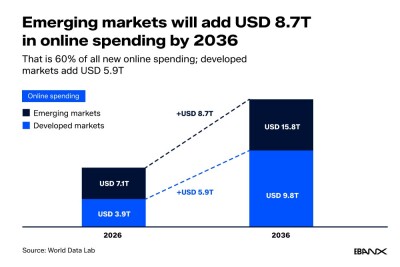
Emerging markets will add USD 8.7T in online spending by 2036
But this new consumer class will not shop the same way developed-market consumers do: by 2036, only 20% of adults in emerging markets will hold a credit card, against 66% in developed markets.
Global online spending is projected to grow from USD 11 trillion in 2026 to USD 25.6 trillion in 2036. Emerging markets add USD 8.7 trillion of that increase (60% of all new online spending), with China (USD +4.7 trillion) and India (USD +1.3 trillion) leading this growth. Indonesia (USD +243 billion), Brazil (USD +249 billion) and Mexico (USD +191 billion) form the next tier.
The categories matter as much as the markets. Online gaming spending in emerging markets grows 14% a year over the decade, the fastest of any category, and SaaS nearly 10%. Emerging markets will generate 76% of global growth in social media spending and 64% in SaaS.
The demographic picture challenges a common assumption. Consumers aged 45 and over account for 51% of emerging markets’ online spending growth through 2036, and spending by those aged 65 and over grows 12% a year, faster than any other age group.
The outlook was discussed during “Navigating Payments: How innovation and fragmentation are changing the game for e-commerce,” a webinar co-hosted by World Data Lab (WDL) and EBANX.
“Over the next ten years, people aged 45 and over will add USD 4.4 trillion in online spending in emerging markets, half of all the growth. Some of them already shop on their phones and will keep doing so as they get older. Others will buy online for the first time in their fifties or sixties. Merchants who build their checkout only for a 25-year-old will miss both groups,” explained Wolfgang Fengler, CEO of WDL.
The study models consumer spending, demographics, and financial access across 184 countries to 2036, drawing on the World Bank’s Global Findex and WDL’s consumer models, combined with EBANX’s experience processing payments for global merchants in emerging markets since 2012.
“If your checkout only takes credit cards, you are competing for one in five adults in emerging markets and conceding the other four”, said Marie-Elise Droga, Chief Revenue Officer of EBANX. “The merchants growing fastest with us didn’t wait for cards to arrive: they added the payment rails their customers already use, and they’re taking new buyers, bigger baskets and recurring revenue that card-only competitors can’t even see.”
834 million new online buyers, 281 million new credit cards
Between 2026 and 2036, the global economy will add 834 million online buyers but only 281 million credit card holders—a ratio of nearly three to one. In emerging markets, two in three new online buyers (67%) will arrive without a credit card. Adults without it already account for 55% of online spending in emerging markets, a share that rises to 90% in India and 93% in Sub-Saharan Africa. Credit cardless adults also represent 52% to 59% of spending in every digital category, from gaming and SaaS to streaming and travel.
Digital payment use is also running ahead of online shopping. Of the 2.6 billion emerging-market adults spending between USD 6 and USD 25 a day, 70% already pay merchants digitally while only 33% buy online, leaving at least 957 million digitally active consumers who are not yet online buyers. Many hold a bank account or mobile wallet but no card that works at an international checkout.
“This is closely tied to the innovation that came out of the financial industry in emerging markets, which developed solutions for an increasingly mobile economy and for the habits of local consumers. Today, we call them local payment methods, or LPMs, and they allowed e-commerce growth to decouple from the credit card, which still has very low penetration in these countries,” said Estelita Hass, head of Market Intelligence at EBANX.
Subscriptions are the next frontier — and India shows why
Recurring categories such as streaming, SaaS and online education will reach USD 2.1 trillion a year in emerging markets by 2036, with USD 1.1 trillion coming from adults without a credit card. In India, 82% of recurring online spending will be cardless. Account-based recurring rails are beginning to close that gap: a global SaaS company saw a 20% uplift in new subscribers after adding UPI at checkout in India, and cybersecurity company Nord Security now generates 28% of its revenue in Brazil through Pix Automático, Brazil’s recurring instant payment, six months after launching it with EBANX.
The issuer is solely responsible for the content of this announcement.
ABOUT EBANX
EBANX is the leading technology platform connecting global businesses to the world’s fastest-growing digital markets. Founded in 2012 in Brazil, EBANX was built with a mission to expand access to international digital commerce. Leveraging proprietary technology, deep market expertise, and robust infrastructure, the platform enables global businesses to offer hundreds of local payment methods and streamline cross-border payments across Latin America, Africa, and Asia. With a global footprint, it established a technology and regulatory headquarters in Singapore in 2026. More than just payments, EBANX drives growth, enhances sales, and delivers seamless purchase experiences for businesses and end users alike.
Solcis extends open security guardrails such as NVIDIA OpenShell and Microsoft’s AGT with the controls compliance professionals need, in a platform built to be self-hosted.
SINGAPORE – Media OutReach Newswire – 21 October 2026 – Solcis, a spin-out of 6clicks, today released Solcis Compliance Studio and the Solcis Policy Engine. Together they let organisations turn their policies and compliance obligations into enforceable rules for AI, check each action an AI agent takes against those rules as it happens, and keep a tamper-evident record for auditors and regulators. Solcis integrates with open runtime enforcement engines such as NVIDIA OpenShell and Microsoft’s Agent Governance Toolkit (AGT).
As organisations put AI agents to work, they must show that every automated action meets the same obligations as the rest of the business. Today, that is hard to prove. Solcis closes that gap across cybersecurity, privacy, financial crime, conduct and prudential regulation.
Solcis Compliance Studio Solcis Compliance Studio is where compliance teams define, run and prove compliance for their AI agents. Studio has six core capabilities:
Policy lifecycle and authoring: turns obligations into enforcement policies and manages them through deployment and updates.
Universal evidence ledger: brings results from every enforcement point into one tamper-evident record.
Compliance model management: recommends the best small language model (SLM) for each policy, benchmarked for compliance.
Learning and drift detection: improves policies over time from observed decisions and human judgement, and detects control and agent drift.
Compliance coverage and analytics: audit-ready reporting on compliance posture, including agent discovery.
Integrations: connects to GRC, SIEM and ticketing systems, including 6clicks, ServiceNow IRM and Archer.
Solcis Policy Engine Organisations can enforce Studio policies through NVIDIA OpenShell, Microsoft’s AGT, or the Solcis Policy Engine, Solcis’s own open enforcement engine for general compliance and business rules. The Policy Engine reaches decisions in under 200 milliseconds by combining two types of check:
Deterministic checks apply fixed rules that return the same result for the same input every time, giving regulators and auditors repeatable, evidence-backed answers.
Inference-based checks use AI to judge context and ambiguous cases that fixed rules cannot capture. Checks are routed to the best-suited AI small language model (SLM).
Every agent action in its path receives an Allow, Deny or Escalate decision with a severity rating, inline and without slowing it down. Decisions are enforced through the Solcis SDK in an AI system’s action path, or the Solcis Gateway on model, tool and MCP endpoints.
“Most organisations know what the regulation says and what their systems do, but not how the two connect,” said Anthony Stevens, CEO and co-founder of Solcis. “The Solcis platform joins them up, from obligation to policy to enforcement to evidence. And for the organisations that need it most, keeping that chain on their own infrastructure isn’t a preference, it’s non-negotiable.”
Sovereign by design, available now Solcis is built only to be self-hosted, so organisations keep full control of their AI compliance workloads, models and data: nothing Solcis processes, from policies to decision logs, ever leaves their environment.
Both products are available now, directly from Solcis and through partners, and from November 2026 on the Microsoft, AWS, Google Cloud, Oracle, NVIDIA and Red Hat marketplaces.
Compliance Studio is sold on a subscription or perpetual licence, with no usage metering. The Policy Engine is released under the Functional Source License, so its code is open to audit.
Solcis, Solcis Compliance Studio and Solcis Policy Engine are trademarks of Solcis Pty Ltd.
NVIDIA and NVIDIA OpenShell are trademarks of NVIDIA Corporation in the U.S. and other countries. Microsoft is a trademark of the Microsoft group of companies. All other trademarks are the property of their respective owners.
The issuer is solely responsible for the content of this announcement.
Solcis
Solcis builds sovereign AI compliance software that organisations self-host and control, with a mission to serve the auditors and regulators who hold them to account. Spun out of 6clicks, Solcis offers two products: Solcis Compliance Studio, which integrates with publicly available AI runtimes such as NVIDIA OpenShell and Microsoft’s Agent Governance Toolkit; and the Solcis Policy Engine, its own engine for general compliance and business rules.
BEIJING, CHINA – Media OutReach Newswire – 20 October 2026 – In Rongjiang, a county in Guizhou, southwest China, soccer is bringing communities together and creating new opportunities for local businesses.
From packed stadiums to traditional music and dance, the Village Super League is about much more than the game; it’s a celebration of local culture, community spirit and hometown pride.
Hashtag: #CGTN
The issuer is solely responsible for the content of this announcement.



 www.LKK.com.









 https://www.facebook.com/Doremi3babies/
 https://www.instagram.com/doremi3babies

 https://www.linkedin.com/company/ebanx/