Category: What’s News Asia

Corporate News from Media OutReach Newswire

  • LAC and Absolute Pilates Invite Singaporeans to Find Wellness in Motion This October

    LAC and Absolute Pilates Invite Singaporeans to Find Wellness in Motion This October

    Singapore’s trusted wellness supplement brand brings a week-long restorative experience to Absolute Pilates studios across Singapore, inviting Singaporeans to move with purpose, recharge, and reconnect with their wellbeing from the inside out.

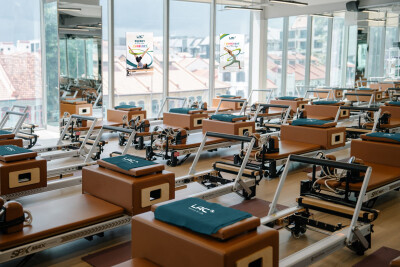
    SINGAPORE – Media OutReach Newswire – 1 October 2026 – In a world that rarely slows down, finding time to pause can feel like another item on the to-do list. This October, LAC, one of Asia’s largest specialty retailers in nutritional supplements, invites Singaporeans to do exactly that with Respite with LAC, a week-long experience curated in partnership with Absolute Pilates, centred on movement and meaningful restoration.

    Absolute LAC 2

    Running from 26 October to 1 November 2026 across all five Absolute studios in Singapore, the programme brings together the restorative practice of Reformer Pilates with LAC’s science-based approach to everyday wellbeing, encouraging participants to pause, recharge, and reconnect with themselves.

    “Wellness has often been framed around performance, but rest and restoration are just as essential to a healthy life. For Respite with LAC, we wanted to offer Singaporeans something different, a week to slow down, move with intention, and nourish themselves from within. LAC Masquelier’s® French Pine Bark Extract, backed by decades of rigorous science, is central to that story. It represents everything we stand for at LAC – formulations that work at the deepest level, so that Singaporeans can feel their best for the long term,” says Evelyn Teo, Chief Marketing Officer of LAC Global

    A Week Designed to Help Singapore Slow Down
    Throughout the week, Absolute’s existing members can book into participating Reformer Pilates classes using their existing class packages. As part of the collaboration, participants will receive a curated LAC Mobility Trial Kit, featuring selected product samples and promotional incentives designed to help them continue their wellness journey beyond the studio. The product trial kit can be redeemed via a dedicated QR code available at the front desks, making it easy to discover and experience LAC products after their session.

    For those new to LAC and Absolute Pilates, Respite with LAC offers an exclusive opportunity to experience both brands through a 2-for-1 package at $55, which includes two classes. LAC members can purchase the package in person at any Absolute studio by presenting proof of membership including physical mailers, SMS, eDM or email communications. For non-members, the same offer can be unlocked by signing up for LAC’s e-newsletter at LAC.sg

    Available from 26 October to 1 November 2026, the class credits are valid for one month from the date of credit, giving participants the flexibility to experience the classes at their own pace.

    From Movement to Recovery
    Anchored in LAC’s belief that true wellness is built from within, Respite with LAC brings together movement and science-backed nutrition in a single, intentional experience. In partnership with Absolute, one of Asia’s largest boutique fitness operators, LAC is creating a space where Singaporeans can move with purpose and nourish themselves at the same time.

    Together, the two brands are offering something less commonly seen in wellness programming – a deliberate pause. Respite with LAC is where movement meets restoration, designed to support the body and mind in equal measure.

    Every workout, stressful commute, and hour spent under blue light or city pollution generates free radicals in the body that are left unchecked, can wear down collagen, affect skin and vascular health and speed up cellular ageing. It is something most Singaporeans are experiencing daily, often without realising it.

    This is where LAC Masquelier’s® French Pine Bark Extract comes in. Powered by Masquelier’s® Original OPCs, an antioxidant complex backed by independent peer reviewed studies spanning four decades of research, it works by binding directly to collagen and elastin, the structural proteins that keep skin, joints, and blood vessels resilient. Rather than simply neutralising damage after it occurs, OPCs reinforce the body’s own architecture, so it starts to string from the inside out. Rather than positioning wellness as a quick fix, LAC takes an intentional approach to supporting the body’s natural defences and resilience as part of an everyday wellness routine.

    Hashtag: #LACSingapore


    The issuer is solely responsible for the content of this announcement.

    LAC

    Headquartered in Singapore, LAC Global is one of Asia’s largest specialty retailers in nutritional supplements, vitamins, minerals, herbal, and other specialty supplements across Anti-ageing and Beauty, Immunity, Weight Management, Sports Nutrition, and Energy. The Company owns the LAC brand, short for Leader in Antioxidative Control™, a leading health and wellness supplement brand with a global presence. Since its founding, LAC has developed scientifically based formulas harnessing the best of eastern wisdom and western technology to support you in looking, feeling, and functioning at your best.

  • Northeast Asian investment flows into Hung Yen as industrial growth accelerates

    Northeast Asian investment flows into Hung Yen as industrial growth accelerates

    HUNG YEN, VIETNAM – Media OutReach Newswire – 1 October 2026 – With an increasingly attractive investment climate, improving industrial infrastructure and strong growth prospects, Hung Yen Province in northern Vietnam is emerging as a major destination for foreign direct investment (FDI), with investors from Northeast Asia accounting for roughly 75% of the province’s total registered FDI capital. The province is rapidly expanding its industrial base to accommodate new investment, helping sustain strong economic growth and support its goal of achieving double-digit growth.

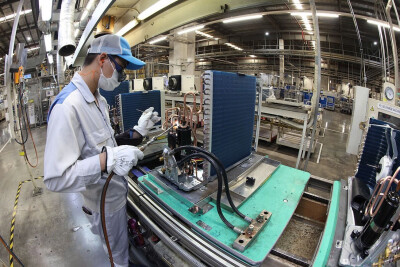
    A corner of Daikin's air-conditioning plant, a Japanese-invested facility at Thang Long II Industrial Park in Hung Yen Province. Photo: VNA
    A corner of Daikin’s air-conditioning plant, a Japanese-invested facility at Thang Long II Industrial Park in Hung Yen Province. Photo: VNA

    Strong industrial growth bolsters FDI momentum

    According to Hung Yen Provincial Statistics, the province’s Index of Industrial Production (IIP) rose 15.78% year on year in the first eight months of 2026, with manufacturing and processing industries remaining the main engine of growth, expanding 16.45% over the same period.

    Several industrial sectors posted particularly strong growth. Repair, maintenance and installation of machinery and equipment surged 90.49%, while pharmaceutical, pharmaceuticals, medicinal chemicals and medicinal materials rose 40.56%. Paper and paper products grew 31.62%, apparel manufacturing increased 28.50%, and the production of electronic, computer and optical products rose 21.85%.

    Strong growth was also recorded across a range of key industrial products. Output of integrated electronic circuits increased 47.62%, insulated copper wire 42.52%, motorcycles and motorbikes with engine capacities below 50cc 32.32%, plastic bags and sacks 27.56%, flat-rolled non-alloy steel products in coils 21.51%, and garments 19.45%.

    FDI inflows also remained strong. By the end of August 2026, Hung Yen had attracted 40 newly registered FDI projects with total registered capital of $645.67 million. The province had a cumulative 1,006 valid FDI projects with total registered capital of $20.23 billion.

    Investors from Northeast Asia account for a particularly significant share of Hung Yen’s FDI. Japan ranks first, with 204 projects and more than $8.19 billion in registered capital, representing 40.49% of the province’s total FDI. China follows with 389 projects and more than $4.64 billion, or 22.94%, while South Korea has 217 projects with more than $2.33 billion, accounting for 11.53%.

    Combined, Japan, China and South Korea account for roughly 75% of total registered FDI capital in Hung Yen. The figures underscore the province’s strong appeal to Northeast Asian investors and reflect a broader trend of businesses seeking locations with well-developed industrial infrastructure, strong connectivity and room for long-term expansion.

    Expanding industrial space to attract new investment

    To create additional space for new investment, Hung Yen is accelerating the development of industrial parks and clusters. To mark the 81st anniversary of National Day, the province simultaneously broke ground on or inaugurated 10 industrial parks and clusters, including six projects launched on September 12.

    The projects represent a combined investment of VND18.222 trillion and $288 million. They are expected to serve as key drivers of industrial development by creating new production space and expanding the province’s capacity to attract both domestic and foreign investment.

    Among them, Tho Hoang Industrial Park covers 250 hectares, while Lac Dao Industrial Cluster spans approximately 42.5 hectares, with combined investment of nearly VND6 trillion. The two projects are expected to attract a further VND10 trillion in domestic investment in supporting industries and logistics.

    Hung Yen has also broken ground on Industrial Park No. 10 in An Thi Commune, covering 199.62 hectares with investment of nearly VND3 trillion; Industrial Park No. 15 in Nguyen Trai Commune, spanning 199 hectares with investment of more than VND2.8 trillion; and Van Giang Industrial Park in Nghia Tru Commune, covering 203.55 hectares with investment of VND3.32 trillion.

    Notably, Lien Ha Thai Industrial Park (Green iP-3) in Thai Ninh Commune covers 234 hectares and has total investment of VND2.4 trillion. Meanwhile, Nitto Vietnam’s project at Thang Long II Industrial Park has been inaugurated with an investment of $160 million, further highlighting Hung Yen’s appeal to Japanese and other Northeast Asian investors.

    According to the Hung Yen Provincial People’s Committee, the new industrial parks and clusters will focus on attracting light industry, diversified industrial projects and environmentally friendly investments, as well as businesses operating in fields such as cybersecurity, big data, cloud computing and AI applications.

    Laying the groundwork for double-digit growth

    FDI is not the only driver of Hung Yen’s economic momentum. The province’s domestic business sector is also expanding rapidly. Since the beginning of the year, 3,775 new businesses have been registered, with total registered capital of VND41.535 trillion, while 610 businesses have resumed operations.

    Real estate accounted for the largest share of newly registered capital, at VND19.872 trillion or 47.84%, followed by manufacturing and processing at 19.40% and wholesale and retail at 14.72%. New investment is generating greater synergies across industrial development, infrastructure, logistics, trade and supporting services.

    Commercial activity has also maintained strong growth. Total retail sales of goods and consumer service revenue in the first eight months of the year were estimated at VND197.106 trillion, up 17.57% year on year. State budget revenue was estimated at VND50.374 trillion, while realized investment capital from locally managed state budget funds reached VND24.098 trillion, up 15.88%.

    Chairman of the Hung Yen Provincial People’s Committee Nguyen Manh Quyen said the province benefits from well-developed infrastructure, major modern industrial hubs and a young, dynamic workforce. These advantages provide a strong foundation for rapid industrial development, contributing significantly to socioeconomic growth and strengthening Hung Yen’s position as it enters a new era.

    The province is currently reviewing and updating its 2021–2030 Master Plan, with a vision to 2050, with a focus on expanding its development space. In the industrial sector alone, Hung Yen has planned 66 industrial parks covering more than 23,000 hectares, along with 126 industrial clusters spanning nearly 8,000 hectares.

    With industrial infrastructure continuing to improve, development space expanding and the investment climate becoming increasingly attractive, Hung Yen is well positioned to attract more high-quality foreign investment, particularly from Northeast Asia. These inflows will provide an important source of momentum for the province’s industrialization, raise the value of industrial production and help sustain double-digit economic growth in the years ahead./.

    Hashtag: #HungYen

    The issuer is solely responsible for the content of this announcement.

  • Allianz Insurance Singapore Pte Ltd Announces Leadership Transition

    Allianz Insurance Singapore Pte Ltd Announces Leadership Transition

    SINGAPORE – Media OutReach Newswire – 1 October 2026 – Allianz Insurance Singapore Pte Ltd (Allianz Insurance Singapore) today announced the appointment of Ong Bi Ying as Chief Executive Officer, effective 1 October 2026. She succeeds Hicham Raissi, who is departing to pursue opportunities outside the Allianz Group.

    Raissi said: “It has been a privilege to lead Allianz Insurance Singapore. I am proud of what we have built together and confident the company is in excellent hands with Bi Ying.”
    Ong joined Allianz Insurance Singapore in 2019 and has held progressively senior roles, most recently serving as Chief Operating Officer. She has played a key role in strengthening the company’s operations and capabilities throughout its growth journey.
    Anusha Thavarajah, Regional CEO of Allianz Asia Pacific, said: “With her deep understanding of the company and the Singapore market, I am confident Bi Ying is well positioned to lead Allianz Insurance Singapore into its next chapter. I would like to thank Hicham for his contributions and wish him every success ahead.”

    Ong said: “I am honoured to take on this role and look forward to working with our team and distribution partners to continue driving growth and delivering innovative insurance solutions for our customers.”

    Hashtag: #Allianz


    The issuer is solely responsible for the content of this announcement.

    About Allianz Insurance Singapore Pte. Ltd.

    At Allianz Insurance Singapore, we aim to secure the future and create a positive impact on society and the environment by leveraging our expertise in risk management. As we work toward strengthening our position as one of Singapore’s leading risk solutions providers, we deliver innovative and customer‑focused protection solutions for individuals, SMEs, and mid‑corporate clients – spanning Motor, Home Content, Travel, Personal Accident, Cancer, Hospital Income, and a comprehensive suite of commercial insurance offerings.

    About Allianz in Asia

    Asia is one of the core growth regions for Allianz, characterized by a rich variety of cultures, languages and customs. Allianz has been present in the region since 1910, when it first provided fire and marine insurance in the coastal cities of China. Today, Allianz is active in 15 markets* in the region, offering its core businesses of property and casualty insurance, life, protection, and health solutions, as well as asset management. Allianz Asia serves 9 million customers through a diversified footprint across Life & Health and Property & Casualty, supported by a network of distribution partners and a commitment to innovation, talent development and customer-centric solutions.
    *Allianz Asia Operating Entities only (8): China, Indonesia, Malaysia, Philippines, Singapore, Sri Lanka, Taiwan, Thailand
    Including other Allianz Global Lines (15): Above including Brunei, Hong Kong, India, Japan, Pakistan, South Korea, Vietnam

    About Allianz

    The Allianz Group is one of the world’s leading insurers and asset managers, active in almost 70 countries and serving around 97 million private and corporate customers*. Our customers benefit from a broad range of personal and corporate insurance services, including property, life and health insurance, as well as assistance services, credit and global business insurance. Recognized for the seventh consecutive year as the number one global insurance brand in Interbrand’s Best Global Brands 2025 ranking, Allianz’s success is built on technology-enabled customer centricity – providing peace of mind, protection, and prevention for our customers and strengthening the resilience of individuals, communities, and societies. We are one of the world’s largest investors, managing around 791 billion euros** on behalf of our insurance customers. Furthermore, our asset managers PIMCO and Allianz Global Investors manage about 2.2 trillion euros** of third-party assets. Thanks to our systematic integration of environmental and social criteria in our business processes and investment decisions, Allianz received an MSCI ESG Rating of AAA (as of March 2026). In 2025, our 156,000 dedicated employees achieved a total business volume of 186.9 billion euros and an operating profit of 17.4 billion euros for our shareholders.
    ** As of December 31, 2025. Customer count reflects Allianz customers in consolidated entities that are part of the customer reporting scope only.
    ** As of June 30, 2026

  • Shaping Tradition with Technology: An American Artist’s Ceramic Journey in China

    Shaping Tradition with Technology: An American Artist’s Ceramic Journey in China

    BEIJING, CHINA – Media OutReach Newswire – 30 September 2026 – A new fusion of technology and traditional craftsmanship is taking shape in Jingdezhen, China’s renowned porcelain capital.

    image-1.jpeg

    American artist Michael May from Oklahoma City has joined forces with local ceramic artist Master Xie to create a one-of-a-kind ceramic vessel combining 3D printing with traditional Chinese ceramic craftsmanship.

    The process brings together modern technology and the centuries-old art of blue-and-white porcelain. The vessel is shaped through a combination of handcraft and 3D printing, decorated with traditional qinghua patterns, then glazed and fired in a kiln.

    From shaping and painting to glazing and firing, follow the camera to see how a new ceramic artwork comes to life through cross-cultural collaboration.

    Hashtag: #CGTN

    The issuer is solely responsible for the content of this announcement.

  • Huawei Pioneers a New Computing Architecture for the AI Era: Making One Million Processors Work as One Computer — Summary of Roundtable Meeting Between Eric Xu and International Media Outlets on September 17

    Huawei Pioneers a New Computing Architecture for the AI Era: Making One Million Processors Work as One Computer — Summary of Roundtable Meeting Between Eric Xu and International Media Outlets on September 17

    SHANGHAI, CHINA – Media OutReach Newswire – 30 September 2026 – During HUAWEI CONNECT on September 17, 2026, Eric Xu (Huawei’s Rotating Chairman) and Dr. Liao Heng (Chief Scientist of HiSilicon) had a Q&A session with journalists of media outlets to discuss Huawei’s Peerium Computing Architecture for the AI era as well as UnifiedBus (UB).

    1 (6).png

    At last year’s HUAWEI CONNECT, Eric Xu gave a keynote speech and released Ascend chips and their roadmap (including the 950, 960, 970, and SuperPoDs and SuperClusters). He also announced the open release of the UnifiedBus protocol.

    At this year’s HUAWEI CONNECT, Huawei announced the Ascend 950 and the Atlas 950 SuperPoD. While the industry is talking about SuperPoDs or supernodes, the ways of making these products differ hugely. The key of SuperPoDs is about allowing several thousand or even tens of thousands of processors to work as one computer.

    Today, Huawei announced a SuperPoD based on the Ascend 950 chip. The SuperPoD is powered by a new computing architecture that Huawei has pioneered. This architecture now can make one million processors work as one computer. This architecture is called Peerium, and it can achieve strong scaling to the million-processor level through nested parallelism, unified memory addressing, and peer-to-peer interconnect. It extends the parallelism paradigm of Turing with the introduction of Nested BSP (Nested Bulk Synchronous Parallel).

    This architecture also extends the von Neumann single-machine architecture and overruns the master-slave design paradigm that has prevailed for decades. Given that the available technologies in the industry could not support this architecture, Huawei invented a key interconnect technology – UnifiedBus. Ultimately, one million processors can truly work as one larger computer.

    UnifiedBus is a high-speed bus that uses an open protocol to scale without a limit to connect CPUs, NPUs, memory, SSDs, interface cards, and switches. With UnifiedBus, peer-to-peer interconnect is achieved across compute, storage, and networking. This fundamentally overruns the traditional master-slave architecture.

    The Atlas 950 SuperPoD is a product built upon the Peerium Computing Architecture. A SuperCluster with 256,000 computing cards is currently being deployed and tested.

    Q: Dr. Liao, your paper mentioned a SuperPoD that’s made up of 256,000 cards. Is that the upper limit of your technology? Can you tell us more about market demand for your products?

    Liao Heng: 256,000 or roughly 200k, this number is not an arbitrary number.

    First of all, the purpose of these large clusters is for training. It has a hardware infrastructure that can support the training of foundation models, which today are already in the 5T parameter range.

    Over the next two years, there will be roughly 6 or 7 frontier AI labs in China, and all will aim at training foundation language models of sizes ranging from 10 to 40 trillion parameters. These numbers kind of match up to the memory capacity and the size of the SuperPoD. So you need such a scale of infrastructure to train these models.

    The second thing is that in China, most data centers have a national plan on this power grid. So 200,000 is a relatively conservative number, given the design of the power delivery system in a single autonomous zone and single data center campus.

    As I said, everybody must be quite familiar with the AI model race that’s happening across the globe. And in China, there are at least 3 or 4 tier-1 players that are already well recognized and have achieved tier-1 status.

    Q: What are your plans to encourage Chinese model providers to use Ascend chips for training?

    Eric Xu: For the Ascend 950, we first launched the 950PR to the market. It’s primarily used for AI inference, and currently the total volume of supply available in the market is not very big. The SuperPoDs based upon the Ascend 950DT are mainly used for AI training. Right now, they are under testing, and their large-scale supply will start at the end of this year or early next year. We are having extensive dialogues and discussions with AI model providers. The testing result of using the Ascend 950DT for training is pretty good. I believe that starting from next year, a lot of AI model training will be based upon SuperPoDs that use the Ascend 950DT. I think at the end of the day, it’s not about how hard we are going to push model providers, but about how much supply capacity we will have. We can only supply based on how much that’s produced. And we hope the value chain will expand its capacity faster to increase supply.

    Q: What is Huawei’s take on recent calls by leading AI model providers in the US to slow down AI development?

    Eric Xu: We need to look at the level and cadence of AI development in China and the US. AI models in China are largely open-source models and their progress is relatively transparent. If we look at the mainstream model providers in the US, they have more computing power, so maybe only they themselves know where they are in terms of the level of sophistication of their models. The market feeling about AI risks might be weaker in China than in the US. Model providers in China need to speed up their pace to reach a level where they could also feel the risks from AI development. And then, maybe they will feel the same as the leading US model providers. But I always believe that we need to strike a balance between driving AI development and managing AI risks. At the very least, the bottom line is we need to ensure AI for good, not AI for evil.

    Q: Does Huawei have plans to bring the Atlas 950 SuperPoD to other markets outside China? If yes, which markets are you going to target? Can you share with us data about your market share in China? What is your take on China’s push for chip self-sufficiency?

    Eric Xu: Since we don’t have enough capacity to even satisfy the demand in China, we don’t have plans to expand to the international market in a fully-fledged way. But indeed, there are several countries that have very strong demand. We are doing some testing, and we are providing some supply to those countries, but the volume is quite limited.

    Right now, it’s pretty hard to collect data about the market share of NVIDIA in China. But based on the data we have collected, Ascend has surpassed NVIDIA.

    China’s push for chip self-sufficiency is an inevitable path forward. China is a country of 1.4 billion people and it’s an industrial powerhouse, so the way people work and live is closely tied to chips. Chinese people have a keen sense of urgency, and will not accept a future in which others decide whether or not we can have access to certain products. Even though our chips may be less advanced, at least their supply is assured, so that you don’t have to worry about chip supply day in and day out. I think that’s certainly the path forward. For the Chinese government, for the domestic industry, and for Huawei, the path forward is undoubtedly to push for full self-sufficiency in terms of chips and the entire semiconductor value chain. We also believe this will become a reality sooner or later.

    To read the full Q&A session: https://www.apmultimedianewsroom.com/multimedia-newsroom/huawei-pioneers-a-new-computing-architecture-for-the-ai-era-making-one-million-processors-work-as-one-computer-2

    Hashtag: #Huawei

    The issuer is solely responsible for the content of this announcement.

  • Lee Kum Kee Receives Packaging Reduction Charter Gold Award

    Lee Kum Kee Receives Packaging Reduction Charter Gold Award

    Century-old Sauce Brand Continues Drive Toward Sustainable Packaging

    HONG KONG, CHINA – Media OutReach Newswire – 30 September 2026 – Lee Kum Kee Sauce (“Lee Kum Kee”), the century-old sauce brand, has been honoured with the Gold Award in the inaugural Packaging Reduction Charter by the Environmental Protection Department (EPD) of the Government of the Hong Kong Special Administrative Region. Recognised for outstanding performance in driving packaging reduction and sustainable development, Lee Kum Kee was among the first signatories to the Charter and is one of the first cohort of food manufacturers to receive the award. The honour reflects its role as a responsible corporate citizen committed to advancing sustainable packaging.

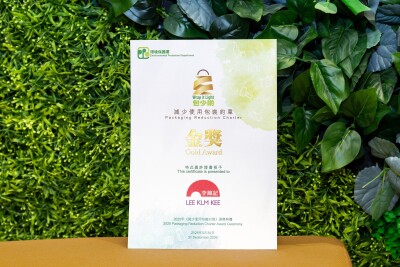
    Lee Kum Kee receives the Gold Award in the Packaging Reduction Charter.
    Lee Kum Kee receives the Gold Award in the Packaging Reduction Charter.

    Launched by the EPD on 31 March 2025, the Packaging Reduction Charter encourages businesses to reassess and reduce packaging usage, foster a waste-reduction culture in the commercial sector, and support Hong Kong’s long-term goal of carbon neutrality. To date, over 140 companies across sectors including retail, logistics, electronics, and food & beverage have joined, with Lee Kum Kee being one of the first. Participating companies undergo an annual professional assessment for packaging reduction, recyclability, reuse/recycling, sustainability, and promotion of packaging reduction. Lee Kum Kee demonstrated multiple packaging optimisation achievements during the assessment process, ultimately earning the Gold Award.

    Jan Ling (right), Vice President - Technical Business Development at Lee Kum Kee Sauce receives the award presented by Dr. Chui Ho Kwong, Samuel (left), JP, Director of Environmental Protection Department.
    Jan Ling (right), Vice President – Technical Business Development at Lee Kum Kee Sauce receives the award presented by Dr. Chui Ho Kwong, Samuel (left), JP, Director of Environmental Protection Department.

    Dodie Hung, Executive Vice President – Corporate Affairs at Lee Kum Kee Sauce, said, “This award is a significant recognition of Lee Kum Kee’s long-standing commitment to sustainable packaging transformation. Guided by our value of ‘Si Li Ji Ren’ (Considering Others’ Interests), we are committed to integrating sustainable development into every aspect of our business operations. Through innovative thinking, we continuously optimise packaging design for greater efficiency and recyclability, delivering high quality, delicious and environmentally responsible products to consumers. Moving forward, we remain dedicated to collaborating with the industry to support Hong Kong’s vision of achieving carbon neutrality.”

    Lee Kum Kee continuously refines its packaging with reference to the Practical Guides on Packaging Reduction and Management published by EPD and the Golden Design Rules developed by the Consumer Goods Forum (CGF), driving packaging weight reduction while enhancing recyclability and circular value. Since 2002, Lee Kum Kee has consistently reduced the weight of its glass bottles; for example, in 2025, it cut the weight of its 32-ounce oyster sauce bottles from 410 to 390 grams, saving 10 tonnes of glass throughout the year. Additionally, the company has saved more than 200 tonnes of carton material annually through improved carton designs. Over 95% of packaging materials, by weight, are recyclable.

    Lee Kum Kee’s sustainable packaging was featured in the 2026 Golden Design Rules Case Study Booklet during the CGF China Day in early September, confirming that its initiatives align with both local policy directions and international best practices.

    For details on Lee Kum Kee and sustainability, please refer to the Lee Kum Kee Global Sustainability Highlights 2025: https://corporate.lkk.com/en/csr
    Hashtag: #LeeKumKee #LKK

    The issuer is solely responsible for the content of this announcement.

    About Lee Kum Kee Sauce

    Lee Kum Kee Sauce is the global gateway to Asian culinary culture, dedicated to promoting Chinese culinary culture worldwide. Since 1888, it has brought people together over joyful reunions, shared traditions and memorable meals. Beloved by consumers and chefs alike, Lee Kum Kee Sauce’s range of more than 300 sauces and condiments sparks creativity in kitchens everywhere, inspiring professional and home chefs to experiment, create, and delight. Headquartered in Hong Kong, China and serving over 100 countries and regions, Lee Kum Kee Sauce’s rich heritage, unwavering commitment to quality, sustainable practices and “Constant Entrepreneurship” combine to enable superior experiences through Asian cuisine for people worldwide. For more information, please visit .

    About the Packaging Reduction Charter
    The Packaging Reduction Charter was launched by the Environmental Protection Department of the Hong Kong Special Administrative Region Government in 2025. The Charter aims to bring together enterprises and organisations to advance sustainable packaging solutions through collaborations, reduce packaging waste, and contribute to Hong Kong’s long-term goal of carbon neutrality. The Charter assesses signatories against five key areas, packaging reduction, packaging recyclability, packaging reuse, sustainable packaging, and promotion of packaging reduction, to recognise companies with outstanding performance. For more information, please visit:

  • 2026 World Manufacturing Convention Delivers Strong Results

    2026 World Manufacturing Convention Delivers Strong Results

    HEFEI, CHINA – Media OutReach Newswire – 30 September 2026 – The 2026 World Manufacturing Convention was successfully held in Hefei from September 20 to 23. Under the theme “Intelligent Manufacturing for a Better Future,” the convention focused on the development of advanced manufacturing and featured an opening ceremony and keynote speeches, industry cooperation and matchmaking activities, authoritative releases, and showcases of key achievements. A wide range of cutting-edge technologies and products were unveiled during the event, including 217 leading high-tech exhibits from China and abroad, an increase of 18% from last year. The convention also delivered strong results in project agreements, with 790 projects signed representing a total investment of RMB 363.4 billion.

    This year’s convention brought together participants and exhibitors from 54 countries and regions. The United Kingdom served as the Guest Country of Honor, with British Ambassador to China Peter Wilson attending and addressing the opening ceremony, while the President of Côte d’Ivoire sent a congratulatory message. A total of 11 international events were held during the convention. Attendees included 84 officials from national ministries and commissions and heads of the convention’s organizing and supporting institutions, along with 63 academicians, experts and scholars. The event also welcomed 88 officials from foreign embassies and consulates in China and representatives of international sister provinces, states and cities; 205 representatives from international organizations and Chinese and overseas business associations; 221 representatives from overseas Fortune Global 500 companies and multinational corporations; and eight renowned international experts and scholars. A total of 522 international guests attended, accounting for more than 50% of the convention’s distinguished guests.

    The convention featured 80,000 square meters of exhibition space, comprising government-led exhibitions, market-oriented exhibitions, and an exhibition showcasing achievements in all-domain unmanned systems and equipment. A total of 1,230 companies participated, showcasing more than 15,000 exhibits, alongside a series of product and technology launches. Highlights included benchmark products featuring advanced technologies such as solid-state batteries, as well as breakthrough innovations including the “Nebula-2” launch vehicle. Visitors remarked that walking through this year’s exhibitions felt like stepping into a science fiction movie—except that everything on display was real, representing the latest achievements of “Made in China” and “Made in Anhui.”

    The successful convention further demonstrated the technological strength and openness of China’s and Anhui’s manufacturing sectors. It contributed to efforts to expand and strengthen advanced manufacturing, advance China’s development as a manufacturing powerhouse, promote the high-quality development of the global manufacturing industry, and foster shared growth and mutually beneficial cooperation.

    Hashtag: #The2026WorldManufacturingConvention

    The issuer is solely responsible for the content of this announcement.

  • Global Sales of Professional Service Robots Surge 24%

    Global Sales of Professional Service Robots Surge 24%

    • 7,000 Humanoids emerge as new market
    • 117,000 Transport and logistics’ robots lead as top application

    FRANKFURT AM MAIN, GERMANY – Newsaktuell – 30 September 2026 – Global shipments of professional service robots increased by 24% to almost 250,000 units in 2025, highlighting a successful shift tocommercial automation. These findings are presented in the World Robotics 2026 Service Robots report by the International Federation of Robotics (IFR).

    Top5ApplicationsSR2026byIFR.jpg


    “Service robots are expanding into everyday operations,” says Jane Heffner, President of the International Federation of Robotics. “Sales went up across all three segments with double-digit growth rates: professional service robots gained 24%, medical robots grew 19%, and consumer service robots surged by an impressive 37%.”

    WORLD ROBOTICS Service Robots 2026 300 dpi by IFR.jpg

    Top applications for professional service robots

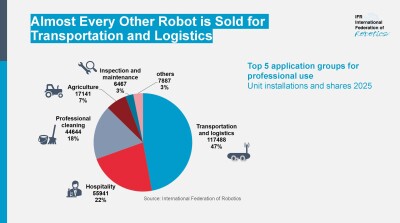
    Transportation and logistics stays in the lead as top application, with 117,500 units sold in 2025. This was up 21%, and represents a market share of 47%. These robots are primarily used for transportation as well as for the automation of material flows and delivery processes.. Although traditional sales remained the main monetization channel, RaaS business models continued to grow in popularity. In the US, this already is the dominant business model.

    Hospitality robots rank in second place. Machines for mobile guidance, information points in public environments, and telepresence account for the majority of these robots. The market for professional cleaning robots follows in third place, with floor cleaning as the main application in this segment.

    Humanoid Robots

    Humanoid robots, which are designed to resemble humans and operate in human-centric environments, are gaining massive attention for their potential flexibility. While recent advances in AI, sensors and control systems have enabled impressive pilot projects, most current applications remain specialized and often require human teleoperation. In 2025, about 7,000 units of full-size humanoids (above 140 cm) were sold globally. These robots are intended for commercial and professional applications beyond R&D and entertainment.

    Key challenges such as safety standards, high training and maintenance costs, and the lack of a strong business case, particularly in industrial settings, continue to limit widespread adoption. For humanoid robots to become practical everyday tools, further progress in intuitive programming, robust manipulation, economic scaling, and standardized safety is essential.

    “In a special chapter of the World Robotics 2026 report, we provide a comprehensive overview about humanoids as the robotics newest market,” says Dr. Werner Kraus, Chair of the IFR Service Robot Committee.

    Robots for consumer use

    Consumer service robots have primarily consisted of domestic robots aimed at the mass market. Overall sales of consumer robots increased by 37% to almost 34.2 million units in 2025. Key trends include automating household tasks, integrating artificial intelligence and connecting to smart home systems.

    Medical robotics

    With 8,400 units sold and a growth rate of 57 % surgical robots are the main driver of growth in the medical robotics market, reflecting their increasing adoption in clinical practice. The transition from technological development to commercial deployment has gained significant momentum over the past decade. This is driven by advances in robotics, improved clinical outcomes, and growing acceptance among healthcare professionals.

    Downloads

    Graphs and press releases for download by IFR at: https://ifr.org/ifr-press-releases/global-sales-of-professional-service-robots-surge-24-percent

    Please note: World Robotics Service Robots report is sample data. Data is NOT projected to the whole industry. Sample composition varies each year. All numbers at the World Robotics Service Robots 2026 report are based on a sample of 238 service robot suppliers. Compiling or comparing data from different World Robotics Reports is strongly discouraged.

    Hashtag: #IFR #InternationalFederationofRobotics


    The issuer is solely responsible for the content of this announcement.

    About IFR

    The IFR Statistical Department provides data for two annual robotics studies:

    World Robotics – Industrial Robots: This unique report provides global statistics on industrial robots in standardized tables and enables national comparisons to be made. It presents statistical data for around 40 countries broken down into areas of application, customer industries, types of robots and other technical and economic aspects. Production, export and import data is listed for selected countries. It also offers robot density, i.e. the number of robots per 10,000 employees, as a measure for the degree of automation.

    World Robotics – Service Robots: This unique report describes marketable products, tasks, challenges and new developments by application. The report includes the results of the annual IFR service robot survey on global sales of professional and consumer service robots and an industry structure analysis including a full list of all service robot producers known to the IFR. The study is jointly prepared with the robotics experts of Fraunhofer IPA, Stuttgart.

    Follow IFR on and

  • Cambodia’s National Destiny Project: Construction Resumed on Phase II of the Funan Techo Canal, Aiming to Reshape the Indochina Peninsula

    Cambodia’s National Destiny Project: Construction Resumed on Phase II of the Funan Techo Canal, Aiming to Reshape the Indochina Peninsula

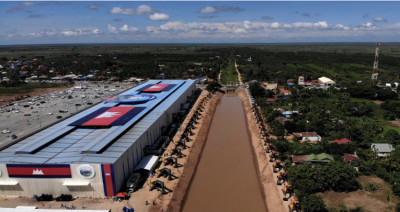
    TAKEO PROVINCE, CAMBODIA– Media OutReach Newswire – 30 September 2026 – On April 11, a landmark inauguration ceremony was held in Takeo Province, Cambodia—an event destined to be inscribed in the historical annals of Southeast Asia. Cambodian Prime Minister Hun Manet and Chinese Ambassador to Cambodia Wang Wenbin jointly initiated heavy construction equipment, marking the official commencement of Phase II of the Funan Techo Canal.

    图片1.png

    This is far from an ordinary water conservancy project. It stands as the largest and most strategically pivotal national initiative since the establishment of modern Cambodia, a project that Prime Minister Hun Manet has explicitly characterized as historic.

    Strategic Significance: The Imperative of the Canal

    The Funan Techo Canal spans 172.6 kilometers, stretching from Phnom Penh through the provinces of Kandal, Takeo, and Kampot, before reaching the sea in Kep. Once completed, the waterway will accommodate 3,000-ton vessels with two-way traffic, establishing a “golden gateway” from the Mekong River directly to the South China Sea.

    For Cambodia, this project represents a transformative milestone for its national development. For decades, exorbitant inland logistics costs and limited maritime access have imposed severe geographical constraints on economic growth. The canal is set to deliver profound changes:

    Logistics costs are projected to decrease by 16%.

    Annual revenue is expected to reach $88 million in the initial year of operation and rise to $570 million by 2050.

    The Cambodian government’s strategic vision is unequivocal: this canal will serve as the golden engine driving a fundamental restructuring of the nation’s economic landscape.

    Delays in Construction: Underlying Challenges and Geopolitical Complexities

    Although the groundbreaking ceremony was held in August 2024, the project was beset by persistent rumors of suspension and construction delays. On the surface, the primary obstacles were land acquisition and resident resettlement. Beneath these practical challenges, however, lay an intricate web of geopolitical complexities:

    Equity negotiations between Cambodian (51%) and Chinese partners.

    Geopolitical sensitivities along the Thai border.

    Disputes over regional water resource allocation and environmental impacts.

    Each delay underscored a fundamental reality: this canal is reshaping the established interest structure of the Indochina Peninsula.

    Implications of the Phase II Launch

    The official initiation of Phase II conveys three unambiguous messages:

    Resilience: China-Cambodia cooperation has successfully withstood external pressure, and core divergences have been effectively resolved.

    Sovereignty: Cambodia is resolutely pursuing a path of economic and strategic autonomy amid major-power competition.

    Implementation: The project has transitioned from the planning phase to substantive construction.

    By forging ahead with the initiative, Cambodia is firmly committing to its long-term national development.

    A Flagship Endeavor of the Belt and Road Initiative

    The Funan Techo Canal is a flagship project of the Belt and Road Initiative (BRI) in Southeast Asia. Developed under the Build-Operate-Transfer (BOT) framework, the project draws on China’s advanced capital, technology, and construction capabilities.

    Its far-reaching strategic implications are particularly notable:

    Sovereign Maritime Access: Cambodia’s inland shipping will gain an independent route to the South China Sea.

    Regional Connectivity: Future integration with China’s Pinglu Canal in Guangxi is envisioned, forming a seamless maritime and trade corridor between the two countries.

    While Cambodia has long been reliant on agriculture and tourism as economic pillars, its future development hinges on the canal economy—a dynamic hub for logistics and industrial corridors. Plans are already advancing for the Techo Funan Economic Corridor, an integrated zone encompassing industry, commerce, special economic zones (SEZs), and tourism. A new growth pole is emerging in Southeast Asia.

    Conclusion

    Within the Indochina Peninsula, a single waterway has the potential to alter a nation’s trajectory. Cambodia has seized this historic opportunity. The launch of Phase II is merely the prelude; in the years ahead, this strategic vision will steadily materialize.

    More than a navigable waterway, it embodies Cambodia’s maritime aspirations, marks a milestone in China-Cambodia relations, and represents a pivotal step for the Belt and Road Initiative in Southeast Asia. Along the banks of the Mekong River, history has turned a new chapter.

    Hashtag: #FunanTechoCanal

    The issuer is solely responsible for the content of this announcement.

  • Pickleball becomes a new bridge for China-US youth friendship

    Pickleball becomes a new bridge for China-US youth friendship

    BEIJING, CHINA – Media OutReach Newswire – 30 September 2026 – Chinese President Xi Jinping paid a state visit to the United States from September 23 to 25 at the invitation of US President Donald Trump. At a White House welcoming ceremony, Xi invited 100,000 young Americans to visit China for exchange and study programs over the next five years.

    image-1.jpeg

    “The hope of the China-US relationship lies in the people, and its future lies in the youth,” Xi said.

    This new initiative builds on an earlier announcement Xi made in San Francisco in November 2023, where China committed to inviting 50,000 young Americans to participate in exchange programs over five years. Two and a half years later, that target was achieved ahead of schedule, with the total number of participants exceeding the initial goal.

    To coincide with the state visit, People’s Daily released a video titled “Through Xi’s eyes: Where youth bridges the Pacific.” The video highlights young people from China and the United States who formed lasting connections through their shared passion for pickleball—a dynamic fostered by the “50,000 in Five Years” initiative.

    In the feature, students from both nations recall meeting six months ago at the 2026 China-US Youth Pickleball Friendship Tournament in Beijing and say they hope to meet again. Pickleball has emerged as a new bond of friendship, bringing young people closer through teamwork, high-fives and shared laughter.

    The video also highlights a personal exchange. Following a 2025 exchange trip to China, delegation leader Jeffrey Sullivan and his students wrote to President Xi to express their gratitude for the experience. About a month later, President Xi replied—arriving on Sullivan’s birthday. In his letter, Xi expressed delight in seeing pickleball serve as a bridge for youth exchanges between the two nations.

    “It’s a great initiative in that it provides opportunities for friendships to form and for bonds to deepen, while setting the stage for intentional learning among our youth,” Sullivan said.

    Just as “ping-pong diplomacy” famously opened doors to China-US relations decades ago, pickleball is building a modern bridge of friendship. Exchange and cooperation continue to reflect the shared aspirations of both peoples, with young goodwill ambassadors injecting fresh momentum into long-term bilateral ties.

    The issuer is solely responsible for the content of this announcement.