Blog

  • Catching Colon Cancer

    Catching Colon Cancer

    According to the NATIONAL STRATEGIC PLAN National Strategic Plan for Colorectal Cancer (NSPCRC) 2021 – 2025, colorectal cancer (also known as colon cancer) is the second most common cancer and contributed to 13.5 per cent of all new cancer cases diagnosed in 2012-2016.

    The incidence of colon cancer increases with age and is slightly higher in males. Colon cancer is known to be highly preventable and treatable through early detection. However, the 2012-2016 cancer report showed, around 70 per cent of colon cancer patients in Malaysia were diagnosed at stage III or IV. This is the stage where treatment is more complicated, and the outcome is poorer.

    Understanding Colon Cancer

    Dr Zakry Onn Yahya, Consultant General Surgeon, ParkCity Medical Centre

    “Colon cancer occurs when there is an uncontrolled growth of abnormal cells in the colon or rectum. These abnormal cells can develop into polyps, which are small growths that protrude from the inner lining of the colon or rectum. While most polyps are not cancerous, some can develop into cancer over time,” explains Dr Zakry Onn Yahya, a Consultant General Surgeon of ParkCity Medical Centre.

    The exact cause of colon cancer is still unknown, but there are several risk factors that increase the likelihood of developing the disease. These include a family history of colon cancer, a personal history of colon polyps or inflammatory bowel disease, a diet high in red and processed meats, obesity, smoking and a sedentary lifestyle.

    Symptoms Of Colon Cancer

    “In the early stages, colon cancer often does not produce any symptoms. As the cancer grows, however, it can cause several symptoms, including changes in bowel habits, such as diarrhoea or constipation, blood in the stool, abdominal pain or cramping, unexplained weight loss, fatigue and weakness. These symptoms are not specific to colon cancer and can be caused by other conditions, so it is important to consult a doctor if any of these symptoms persist,” reminds Dr Zakry.

    Screening For Colon Cancer

    Screening is the process of testing for a disease in individuals who do not show any symptoms. For colon cancer, there are several screening tests available, including Fecal Occult Blood Test (FOBT) which checks for blood in the stool and colonoscopy—a procedure that involves inserting a long, flexible tube with a camera on the end into the rectum to examine the colon and rectum. If polyps are found, they can be removed during the procedure. Meanwhile, the Stool DNA Test checks for DNA changes in the stool that may indicate the presence of colon cancer.

    “The FOBT and colonoscopy is recommended for individuals over the age of 45, and those with a family history of colon cancer or polyps should start screening at an earlier age. Meanwhile the Stool DNA Test is recommended every 3 years for individuals over the age of 50. The choice of screening test depends on the individual’s risk factors, preferences and medical history. It is important to consult a doctor to determine the appropriate screening schedule,” stresses Dr Zakry.

    Why Is Screening Important?

    Screening for colon cancer is important for several reasons. Firstly, it can detect colon cancer at an early stage when it is most treatable. In fact, colon cancer is one of the most preventable cancers, as it can take 10 to 15 years for polyps to develop into cancer. If polyps are detected and removed during screening, the risk of developing colon cancer can be significantly reduced.

    “Secondly, screening can also detect colon cancer before it causes symptoms. As mentioned earlier, colon cancer often does not produce any symptoms in the early stages. By the time symptoms appear, the cancer may have already spread to other parts of the body, making treatment much harder,” adds Dr Zakry.

    Treating Colon Cancer

    If colon cancer is detected in its early stages, the chances of successful treatment are much higher. Treatment for colon cancer often involves surgery to remove the cancerous tissue. Depending on the type and stage of the cancer, the surgery may involve removing a part of the colon or rectum, or even the entire colon or rectum. In some cases, a colostomy bag may be required temporarily or permanently.

    While surgery is often necessary to treat colon cancer, it is not without risks. Patients may experience blood loss, infection or a prolonged stay in the hospital. Patients should be adequately prepared for surgery both physically and mentally and should be informed of the risks and benefits of the procedure.

    “In addition to physical preparation, emotional support is also crucial for patients with colon cancer. Patients may experience anxiety, depression or denial when faced with a cancer diagnosis. It is important for doctors to provide adequate counselling and support to help patients cope with the emotional impact of the disease.

    “Family support and participation in support groups can also be beneficial for patients with colon cancer. Support groups provide a safe space for patients to share their experiences and learn from others who have gone through similar experiences,” Dr Zakry advises.

    Preventing Colon Cancer

    “While there is no sure-fire way to prevent colon cancer, there are several steps that can be taken to reduce the risk of developing the disease. Some of these steps include eating a healthy diet that is high in fibre and low in fat, exercising regularly, maintaining a healthy weight, not smoking, limiting alcohol consumption, getting screened for colon cancer regularly and of course screening,” concludes Dr Zakry.

  • Pavilion REIT Concludes Acquisition Of Pavilion Bukit Jalil, Reinforcing Retail Portfolio

    Pavilion REIT Concludes Acquisition Of Pavilion Bukit Jalil, Reinforcing Retail Portfolio

    Pavilion Real Estate Investment Trust (“Pavilion REIT”) has announced the successful conclusion of the acquisition of Pavilion Bukit Jalil, strengthening its position in the retail sector and marking an important milestone in its portfolio expansion and income diversification strategy.

    Following the fulfilment of all conditions precedent as set out in the earlier Sale and Purchase Agreement (SPA) and an oversubscription of its first private placement, Pavilion REIT now owns Pavilion Bukit Jalil, inheriting its balance sheet and revenues.

    Dato’ Philip Ho, CEO Pavilion REIT Management Sdn Bhd

    “The successful acquisition of Pavilion Bukit Jalil signals a strategic expansion in Pavilion REIT’s portfolio, bringing total asset under management to RM8.3 billion and the start of another new chapter for Pavilion REIT,” stated Dato’ Philip Ho, the Chief Executive Officer of Pavilion REIT Management Sdn Bhd.

    Dato’ Philip added that Pavilion Bukit Jalil’s robust tenant strategy, combined with its role as the host of numerous local and international events, has successfully driven the mall’s occupancy rate to over 82% in a relatively short span, and that this positive momentum is expected to continue.

    The mall’s diverse tenant mix has recently secured new brands particularly in the F&B space including BONCAFE @ HOME, Mixbowlicious, Noodleface Express, MOVON, CrunchCraze, 117 Coffee Bar by Psycoth, Superhero, and Xi Yu (喜鱼). Further adding to the unique experience, the mall also will welcome new concept outlets such as Iron House Cafe (铁皮屋) and JP & Co.

    Dato’ Philip Ho highlighted that Pavilion Bukit Jalil’s energetic atmosphere, catering to diverse interests, is poised to solidify Pavilion Bukit Jalil’s positioning as a premier retail destination. By incorporating novel retail brands and concept stores, while hosting renowned exhibitions and events, the mall’s strategic vision supports a wider visitor and shopper base, making it an increasingly attractive proposition.

    L’Occitane Hotel pop up

    Pavilion Bukit Jalil has established itself as a preferred event destination, hosting various international and local pop-up exhibitions. The mall is currently hosting the world’s first L’Occitane Hotel pop up and ‘The World of Tim Burton Pop-Up Museum’, the first in South East Asia. Recently concluded events include the internationally acclaimed Van Gogh immersive experience and Demon Slayer: Kimetsu no Yaiba Total Concentration exhibition from Japan.

    Pavilion Bukit Jalil will also soon play host to the Japan Expo Malaysia 2023, the biggest all-Japan event from August 18 to 20. The event is expected to draw enthusiasts for all things Japanese and will incorporate a number of zones including music, food, travel, arts, education, health and wellness, anime and cosplayers.

    About Pavilion REIT

    Listed on 7 December 2011, with the largest exposure to the retail sector by any listed Malaysian REIT, Pavilion REIT owns a RM6.0 billion portfolio based on appraised value, to which its most prominent asset is the Pavilion Kuala Lumpur Mall that is located in Bukit Bintang, Kuala Lumpur, Malaysia.  Pavilion REIT is established with the principal investment policy of investing, directly and indirectly, in a diversified portfolio of income producing real estate used solely or predominantly for retail purposes (including mixed – use developments with a retail component) in Malaysia and other countries within the Asia-Pacific region. For more details, please visit www.pavilion-reit.com

    About Pavilion REIT Management Sdn Bhd

    Pavilion REIT Management Sdn Bhd is the manager of Pavilion REIT. Incorporated in Malaysia on 7 April 2011 with an issued and paid-up capital of RM5 million, it is 51% owned by Urusharta Cemerlang Development Sdn Bhd and 49% owned by Urusharta Cemerlang Project Corporation Sdn Bhd. The principal activity of the Manager is to manage and administer Pavilion REIT.

  • 5 Rules For Malaysians To Improve Their Financial Wellbeing

    5 Rules For Malaysians To Improve Their Financial Wellbeing

    In the face of looming predictions of a recession in 2023, financial experts have raised concerns about the state of financial preparedness among Malaysians. Nurhisham Hussein, the chief strategy officer of the Employees Provident Fund (EPF), has shed light on the alarming statistics that reveal a lack of financial readiness for retirement.

    With merely 3% of Malaysians considered financially prepared for retirement, disregarding healthcare expenses, 71% of EPF members have savings below 50,000 ringgit, and a surprising 28% have less than 1,000 ringgit. Furthermore, research conducted by Ringgit Plus found that 57% of individuals under the age of 35 in Malaysia cannot sustain themselves financially for more than three months based solely on their savings.

    Additionally, 24% of this demographic cannot rely on their savings for more than one month, while 45% either spend exactly or exceed their earnings.

    The conjunction of a dire economic situation and poor financial decision-making underscores the pressing need for Malaysians to control their finances. This article explores the significance of financial literacy and offers practical steps to empower individuals to improve their financial health and habits.

    In an era of increased digital adoption and a regulatory climate fostering the growth of digital banks, access to financial literacy resources has improved tremendously, providing an opportune environment for Malaysians to gain the necessary knowledge and skills for financial well-being. By taking charge of their finances and implementing sound financial practices, individuals can pave their way to a secure financial future.

    1. Expense And Income Tracking

    To gain a clear understanding of where your money is going, you can utilize various tools and methods. One effective solution is to use budgeting apps or financial management software that automatically categorizes your income and expenses.

    This simplifies the process of tracking your cash flow and provides visual representations, such as charts or graphs, to help you analyze your spending habits. By consolidating your cash inflows and expenditures onto a single platform, such as a budgeting app, you can easily monitor and review your financial transactions in one place.

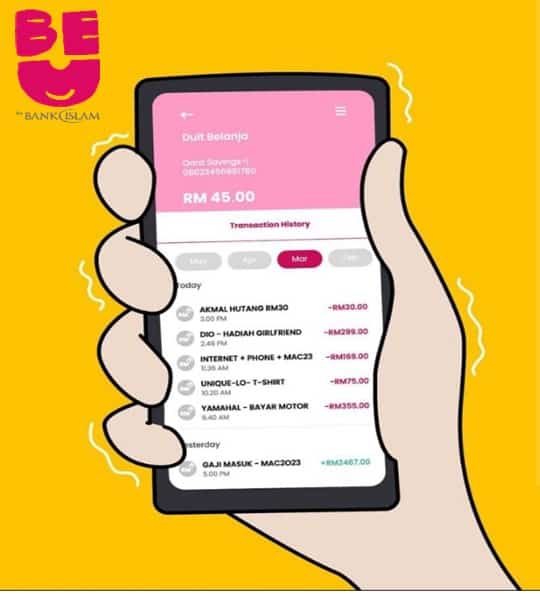
    For example, apps, like Be U app, will allow you to track your expenses, providing updates and insights into your finances. Be U offer features such as expense categorization, a personal finance graph and a dashboard to help you stay on top of your finances.

    By having a comprehensive overview of your income and expenses, you can identify areas where you can make adjustments, set savings goals, and ultimately improve your financial progress.

    2. Differentiate Between Needs And Wants

    Practising mindful spending requires conscious decision-making regarding distinguishing between essential needs and discretionary wants. Consider implementing a “pause and evaluate” approach to address discretionary wants.

    Before making a non-essential purchase, give yourself a set period, such as 24 hours or a week, to assess whether it aligns with your long-term financial goals and values. This solution allows you to evaluate whether the item is a necessity or a want driven by emotions or spur of the moment.

    By implementing this practice, you can avoid impulsive purchases and redirect your funds towards more meaningful goals, such as saving for a down payment on a home or investing for your future.

    3. Start Saving Early

    Recognizing the value of compounding returns emphasizes the importance of initiating saving habits as early as possible. One solution is to set up automatic transfers from your checking account to a designated savings account.

    By automating your savings, a predetermined portion of your income is regularly deposited into your savings account without requiring constant manual effort. This solution ensures consistency and discipline in your saving habits.

    For example, many of our customers enjoy using our NEST feature in our Be U app to save money. As the NEST feature allows users to set up automatic transfers to occur on a periodical basis, ensuring that saving becomes a priority before allocating funds towards discretionary spending.

    Furthermore, users are allowed to set financial goals and track their financial progress. By utilizing this feature, users are able to track and achieve their financial goals more seamlessly.

    4. Build An Emergency Fund

    Establishing an emergency fund is crucial for financial stability and preparedness. One solution is to automate your savings by setting up regular transfers from your checking account to a separate savings account designated for emergencies. This ensures that a portion of your income goes directly into your emergency fund without requiring constant manual intervention.

    For instance, you can set up a monthly or biweekly transfer that aligns with your financial capabilities and goals. By automating your savings, you remove the temptation to spend the allocated funds and ensure that you consistently contribute to your emergency fund. Over time, your emergency fund will grow, providing a financial safety net for unexpected expenses such as medical emergencies, car repairs, or job loss.

    5. Take Care Of Your Belongings And Health

    Opting for repairing instead of replacing items whenever possible is a practical solution to reduce unnecessary expenses. For example, if your electronic devices, appliances, or clothing require repairs, consider researching local repair services or DIY solutions before considering a replacement. Often, repairing items can be more cost-effective than buying new ones, especially for items that are still functional with minor issues.

    Additionally, prioritizing preventive healthcare measures can lead to significant long-term savings. Regular exercise, maintaining a balanced diet, and practicing good hygiene are all examples of preventive measures that can help prevent costly health conditions. By investing time and effort in your physical and mental well-being, you reduce the likelihood of incurring high medical expenses related to chronic diseases or illnesses.

    While these practical tips cannot solve all financial challenges, they serve as a starting point for developing positive financial habits and setting individuals on the path to financial well-being. It is crucial to make a plan with specific target amounts and deadlines, reducing the likelihood of overspending and ensuring progress towards financial goals.

    With the increased availability of financial literacy resources and the rising adoption of digital tools, Malaysians have greater opportunities than ever before to enhance their financial knowledge and improve their financial health. By taking charge of their personal finances, individuals can gain a better understanding of financial concepts, assess their current financial situation, and make informed decisions to improve their overall financial well-being.

    About CDX, Bank Islam

    CDX has been established since 2020 and Centre of Digital Experience was developed under the purview of Bank Islam to explore experimental new businesses and technologies. Our vision is “Financial literacy for everyone”. Our Core Mission is to inculcate financial literacy, financial inclusion, financial independence to our customers and devising a sustainable charity model. CDX is building a challenger bank and mobile banking app known as Be U to serve the underserved and youth by providing next-level banking for modern consumers consisting of an app, a debit card and a financing facility proudly backed by Bank Islam, the leader in Islamic Banking since 1983. For any enquiries, do contact our customer service by email at beu.communitysupport@bankislam.com.my

  • Dry Eyes Demystified

    Dry Eyes Demystified

    Dry eye syndrome, also known as dry eye disease or keratoconjunctivitis sicca, is a common eye condition that affects millions of people worldwide. This condition occurs when the eyes do not produce enough tears, or when the tears evaporate too quickly, causing the eyes to become dry, itchy and irritated. This condition results in blurring of vision, discomfort, light sensitivity and other symptoms due to disturbances to the eye’s tear film.

    According to a local study entitled ‘Prevalence and Risk Factors of Dry Eye Disease’, the prevalence of dry eye syndrome is estimated as 7 per cent to 34 per cent worldwide, occurring at a higher frequency in the elderly above 50 years of age and twice as high in women than in men. In Malaysia, dry eye syndrome was only considered a disease on its own in 2007.

    Symptoms & Causes

    Dr Norazlina Binti Bachik, Clinical Director of KPJ Centre for Sight

    “The symptoms of dry eye syndrome include burning sensation akin to stinging, sandy sensation when closing and opening the eyes, soreness, watery eyes, light sensitivity, heavy eyelids, deteriorating vision and red bloodshot eyes. The syndrome severely reduces the patient’s ability to read, drive and use screens for a prolonged period of time, significantly affecting the quality of life, particularly in middle-aged and elderly patients,” says Dr Norazlina Binti Bachik, Clinical Director of KPJ Centre for Sight.

    There are many causes of dry eye syndrome, divided between internal and external causes, with dry and humid climate like ours being one of the external causes.

    “Some of the internal causes of the disease include hormonal imbalance or changes, namely declining or lack of oestrogen in pre-menopausal or post-menopausal women, inflammatory systemic disorders like rheumatoid arthritis and Sjogren’s Syndrome, allergic eye disease, and consumption of drugs like anti-histamines and certain anti-hypertensives,” explains Dr Norazlina.

    “Meanwhile, the external factors include chronic contact lens wear, long hours on gadgets like computers or handphones and environmental factors like heat and wind. Drier climate specifically aggravates the condition and patients must take better care of themselves especially in our country,” she adds.

    Diagnosing Dry Eye Syndrome

    In addition to women in general and the elderly, Dr Norazlina also highlights that people who are in tropical countries especially those who receive year-round sun, those working outdoors like construction workers and those on long hours of intense desk-bound computer work in air-conditioned rooms are more prone to dry eye syndrome.

    After assessing whether a potential patient with symptoms similar to dry eye syndrome fall into at risk groups as mentioned above, further tests are conducted for diagnosis. The examination entails assessing the eye surface particularly looking for signs of dryness on the cornea. This can be achieved through using dyes like fluorescein or Lissamine green or Red Bengal stains. Meanwhile, tear meniscus (a thin layer of tears that collects along the lower edge of your eyelid when your eye is open, keeping your eyes moist) can give us an idea of how much tears are present in one’s eye.

    Treating Dry Eye Syndrome

    Unfortunately for dry eye syndrome, there is no single treatment involved, but rather it must be a multi-angle approach.

    “Usually, we begin treatment for local eye conditions such as blepharitis by using lid scrubs or warm compresses on the eyelids to improve the flow of meibum.* A judicious use of lubricants either in the form of drops or gel or even ointment also takes place, depending on the severity of the dryness. Mitomycin C eyedrops can also be helpful in inflammatory cases,” says Dr Norazlina.

    (*Note: Blepharitis is a common inflammation of the eyelids, and meibum is an oily substance that helps keep tears from evaporating too quickly.)

    Apart from medication, some lifestyle changes also need to be undertaken such as avoiding long constant hours on gadget use by taking frequent breaks, wearing sunglasses or any other eye protective gear when doing outdoor activities to prevent direct effect on the eyes from wind or sunlight, ensuring adequate daily water intake and even taking supplements like fish oil.

    What advice would Dr Norazlina give to individuals living in drier climates who are concerned about developing dry eye syndrome or experiencing discomfort and vision problems related to their eye health?

    “To start with, wearing protective eye gears like sunglasses with ultraviolet light blocking properties when going outdoors is very important. Lubricating eyedrops use will also help to alleviate the symptoms through the day. Once the root cause of the dryness has been identified, compliance to the treatment instituted by the eye doctor must be adhered to ensure the effectiveness of the treatment regime.

    Don’t forget to stay healthy by drinking enough fluids and taking balanced healthy diet, with supplements taken as needed.”

  • ICMR Research Series: Malaysian Investors Are Vulnerable Due To Poor Investment And Saving Behaviours

    ICMR Research Series: Malaysian Investors Are Vulnerable Due To Poor Investment And Saving Behaviours

    Today’s investing landscape features a confluence of challenges. The current economic environment of high inflation and higher cost of living has led to heightened uncertainty in financial markets. Meanwhile, an ageing population is adding pressure on retirement savings. As a result of these global trends, Malaysians are experiencing new vulnerabilities in the course of their investment journeys.

    The Institute for Capital Market Research Malaysia (ICMR) embarked on a nationwide study to better understand these new age vulnerabilities. We found the underlying reasons for investor vulnerability are multifaceted and can be broadly grouped into three categories based on their characteristics. In this article, we will explore the first and most common category: financial behaviour and accessibility.

    More Decisions, More Fatigue

    Our survey findings reveal that most Malaysian investors experience vulnerability due to their financial behaviours and accessibility to financial products and services. 93% of surveyed respondents have three or more behavioural and access drivers that could make them feel vulnerable, which includes their perception of their own financial status, savings behaviour, and financial literacy. 

    In terms of perceived financial status, most Malaysians reported they are either financially unstable or are living paycheck-to-paycheck, which influences their level of financial stress and wellbeing. 74% of those who are financially unstable and 54% who are living paycheck-to-paycheck claimed to always feel stressed and worried when thinking about their financial futures.

    Figure 1: Perceived Financial Status (Data Source: ICMR)

    Past behavioural studies have shown that the more decisions that one is forced to make, the more fatigue one develops, which consequently leads to a deteriorating quality of decision-making – a concept known as decision fatigue. Moreover, people who frequently experience financial stress tend to experience decision fatigue more intensely compared to others. 

    Indeed, 61% of those who are financially unstable and 42% of those living paycheck-to-paycheck admitted that they get mentally drained when thinking about financial planning and would prefer to follow their family and friends’ decisions. As highlighted in our previous article, this makes them more susceptible to being involved in scams, misled, and creating investment bubbles.

    Not Saving Enough For Difficult Times

    Beyond financial status, ICMR also set out to understand Malaysians’ savings behaviour, given the importance of having enough savings to ensure financial resilience to any unexpected life shocks. Based on guidance by the Employees Provident Fund (EPF), it is recommended that Malaysians have at least  20% monthly savings and 6 months’ worth of emergency savings.

    One common assumption is that Malaysians are not generally aware of these savings benchmarks, but ICMR’s findings suggest otherwise. While 43% of respondents know they should save 20% of their monthly income, only 23% actually follow through. Similarly with emergency funds, 34% know they need 6 months’ worth or more, but only 22% claim to have that amount of buffer for emergencies.

    Figure 2: Monthly Savings and Emergency Savings Behaviour

    Another assumption is that those with higher incomes can save the most, while financial stress is commonly associated with those in the lower income group. Our study again challenges these assumptions, as our findings indicate that 68% of respondents in the high-income group are saving less than 20% of their monthly income and 76% have less than 6 months’ worth of emergency savings.

    Since Malaysians are already struggling to save regularly and are not able to financially sustain themselves during difficult times, it is hard to expect them to show better saving habits for a longer-term goal such as retirement. This then leads to another factor that defines investor vulnerability in Malaysia – retirement savings or a lack thereof.

    Lack Of Retirement Readiness

    Based on the assumption that one will retire at the age of 55 and life expectancy in Malaysia is 75, one’s savings need to last for at least 20 years. However, when we asked our respondents how long they expected their current and EPF savings to last after retiring, 75% felt that their total retirement savings would last them less than the required 20 years post-retirement.

    This is mainly due to the lack of retirement savings, especially among retirees and gig workers. 62% of surveyed gig workers claimed to have less than RM50,000 worth of retirement savings, and what is more worrying is that 70% of surveyed retirees have less than RM250,000 worth of retirement savings – less than what the EPF estimates is adequate to cover basic needs for 20 years after retirement.

    Figure 3: Retirement Savings by Age Group

    While those who are 40 years old and below tend to meet the basic retirement savings threshold as determined by EPF, as soon as they reach 41 years old, more than half of the EPF contributors are not able to meet the target basic savings for each age group. This is probably because they start withdrawing from their EPF accounts for home loans, children’s education, or even health expenses.

    To supplement the findings from our survey, ICMR also conducted qualitative interviews with retirees in the Klang Valley. The interviewees shared that they did not know what to do with the big sum of savings that became accessible to them after retiring. As a result, they tended to invest on a trial-and-error basis and followed advice from friends and family – with many plagued by failing investments.

    Overconfident About Financial Literacy

    Although Malaysians are generally not saving enough and unprepared for retirement, ICMR’s findings also show that they are overconfident with regards to their financial knowledge. Only 39% of respondents scored 80% – 100% in a simple financial literacy test prepared by ICMR – but 67% of respondents claim to be highly confident of their financial capabilities.

    Figure 4: Financial Literacy Scores & Financial Confidence (Data Source: ICMR)

    Topics such as compounding interest, inflation, risk and return, cost of borrowing and diversification, are considered as the most basic to test respondents’ understanding of some of the key financial concepts. However, it is concerning to see that 59% of respondents who scored lower than 80% (less than 4 questions correct) feel highly confident about their financial capabilities.

    The overconfidence effect is observed when people’s subjective confidence in their own ability is greater than their objective (actual) performance. Overconfidence has been attributed to a range of issues. More generally, among investors, overconfidence has been associated with excessive risk-taking and is most likely to lead them to make wrong financial decisions.

    Overconfidence also relates to one’s optimism bias during investment or broader financial decision making. Optimism bias refers to the tendencies for people to overestimate the probability of positive events and underestimate the probability of negative events happening to them in the future. This kind of thinking is dangerous and often leads investors to make reckless financial decisions.

    Investor Vulnerability Is Multifaceted

    Making good financial decisions is not an easy task for most people. It involves overcoming biases and considering the satisfaction of short-term gains against the things that are beneficial for us in the long-term. The challenges of making good financial decisions get even more difficult when factors such as financial stress hinders one from making optimal decisions with a sound mind.

    Nonetheless, ICMR’s study highlights that different ‘types’ of vulnerability are frequently overlapping and closely interconnected – meaning that financial difficulties are not always easily attributable to a single particular ‘cause’. Stay tuned for our next article as we explore how situational circumstances and industry-related issues can also lead to new vulnerabilities for Malaysian investors.

    This article is part of a content series by the Institute for Capital Market Research (ICMR). Follow ICMR’s Facebook page to stay updated on behavioural tips and insights for better investing habits. To learn more about ICMR’s research on new age vulnerabilities, visit www.icmr.my or download the full report.

    About the Authors

    Datin Aida Jaslina Jalaludin, Head of Research, ICMR
    Nadhirah Ibrahim, Research Analyst, ICMR
  • SC Seeks To Transform Agri Sector Via Fintech, Alternative Financing

    SC Seeks To Transform Agri Sector Via Fintech, Alternative Financing

    The Securities Commission Malaysia (SC) is encouraging wider adoption of financial technology (fintech) in agriculture in order to help in achieving the country’s food security agenda.

    SC Chairman Dato’ Seri Dr. Awang Adek Hussin said access to finance is critical to agriculture’s future.

    This is especially important for smallholders and agritech-preneurs seeking to modernise agriculture and strengthen research and development, he said in his opening address at the SCxSC Grow Fintech Conference.

    This marks the 10th iteration of the SCxSC conference that is held in-person after the Covid-19 pandemic.

    SCxSC GROW, is a new collaborative programme, under the SC’s fintech flagship initiative “Synergistic Collaboration by the SC” (SCxSC). The SCxSC GROW embodies a collaborative effort with partners in the fintech ecosystem to harness the potential of alternative financing digital platforms to meet the needs of micro, small, and medium-sized enterprises (MSME) in strategic sectors.

    Recognising the challenges faced MSMEs in the agriculture sector, Dato’ Seri Dr. Awang Adek said that leveraging fintech solutions will help improve access to financing and increase efficiency in the sector.

    Dato’ Seri Dr. Awang Adek Hussin, SC Chairman

    To achieve this goal, the SC has been working closely with ecosystem players to develop innovative solutions that cater to the unique financing needs of farmers and agribusinesses. This is in tandem with the national agenda to support the agriculture sector’s transition into a dynamic and progressive sector.
    Dato’ Seri Dr. Awang Adek said that the capital market can be an enabler and accelerator to help Malaysia achieve its food security agenda.

    “Alternative financing avenues such as equity crowdfunding (ECF) and peer-to-peer (P2P) financing allow investors with the right risk appetite to mobilise capital directly for agri-preneurs,” he said.

    This provides more options for younger and high-growth companies to access capital relevant to their business risk profiles,” he added.

    Over 7,000 MSMEs have benefited from SC-registered ECF and P2P financing since their introduction in 2015, raising more than RM4.4 billion, with only 600 agri-related MSMEs across the entire value chain raising close to RM300 million. This presents a significant opportunity for agricultural growth and investment.

    Dato’ Seri Dr. Awang Adek said, “Malaysia was also the first country in this region to adopt a co-investment model, MyCIF specifically for alternative finance platforms.”

    MyCIF was instrumental in providing MSMEs with financing during the Covid-19 pandemic.

    “MyCIF implemented a special allocation ratio of 1:2 for the agriculture sector in 2022, which is more appealing than the normal ratio of 1:4. We’ve seen increased interest as four times as many agri-businesses have raised funds through ECF and P2P platforms,” he added.

    The SCxSC GROW Fintech Conference, themed “Fostering Innovative Finance in Agriculture”, aims to be a game-changer for the agriculture industry. With the world facing increasingly complex challenges, the conference brings together agriculture and fintech players to explore innovative solutions to food security, sustainability and supply chain resilience.

    New cutting-edge solutions were showcased at the conference, highlighting the latest advancements in these fields. The conference also featured local fintech players in the agriculture sector.

    These fintech solutions have the potential to revolutionise the way farmers access financing and manage their operations, enabling them to make better use of resources and increase yields.

    About the Securities Commission Malaysia:

    The Securities Commission Malaysia (SC), a statutory body reporting to the Minister of Finance, was established under the Securities Commission Act 1993. It is the sole regulatory agency for the regulation and development of capital markets. The SC has direct responsibility for supervising and monitoring the activities of market institutions, including the exchanges and clearing houses, and regulating all persons licensed under the Capital Markets and Services Act 2007. More information about the SC is available on its website at www.sc.com.my. Follow the SC on twitter at @SecComMy for more updates.

  • ASUS Announces All-New Vivobook Go 15 (E1504F), Your Compact & Super-Durable Companion

    ASUS Announces All-New Vivobook Go 15 (E1504F), Your Compact & Super-Durable Companion

    ASUS Malaysia announced the 15.6-inch Vivobook Go 15 (E1504F), an exciting and affordable lifestyle laptop that help make users productive or keep them entertained, wherever they go.

    This light and compact laptop feature a sharp and vibrant FHD display and a powerful ASUS SonicMaster sound system with DTS Audio Processing for immersive entertainment. The design is stylish and practical, with thoughtful touches that make the user’s life easier, such as a 180° lay-flat hinge. Built to survive any lifestyle, the Vivobook Go 15 (E1504F) are US military-grade tested for durability using the world’s strictest test regime[1].

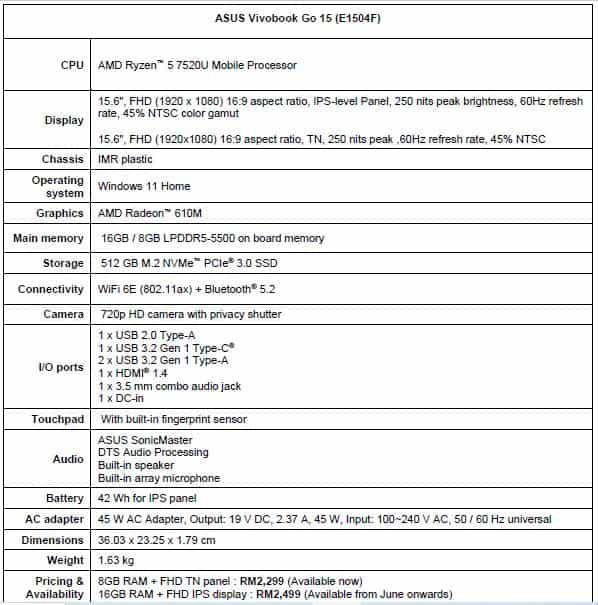
    Speedy performance for any task is assured by the AMD Ryzen 5 7520U processor, up to 16 GB of LPDDR5 RAM and a 512 GB PCIe® SSD. Other user-friendly features include an ASUS ErgoSense keyboard; smart conferencing via the HD webcam with ASUS 3D Noise Reduction (3DNR), AI noise cancelation, and a physical privacy shield; and a useful suite of ASUS apps including MyASUS, GlideX and ScreenXpert 3.

    Superior Sound And Vision

    Vivobook Go 15 delivers crisp and clear visuals from its FHD display. The 16:9 NanoEdge slim-bezel design which delivers a staggering 84% screen-to-body ratio gives users more screen space for multitasking and immersive viewing. Both displays also ensure a reduced risk of eye strain during long viewing sessions thanks to their TÜV Rheinland eye-care certification for low blue-light and flicker-free operation.

    The Vivobook Go 15 also features incredibly powerful, crystal-clear sound with ASUS SonicMaster and DTS Audio Processing. The combination of hardware and software boosts the volume, and removes noise to improve audio clarity for truly immersive sound.

    Light, Compact, Stylish And Tough

    Measuring 17.9 mm thin and weighing just 1.63 kg, the new Vivobook Go 15 is designed to be compact enough to slip into any bag, and light enough for easy one-handed carrying. It comes in a timeless Cool Silver finish, along with signature Vivobook details like the raised logo tag on the lid, a warning-stripe pattern on the Enter key, contrasting colored rubber feet on the base, and a stylish V-shaped air vent.

    The new Vivobook Go 15 is strictly tested to ensure its durability in everyday use, using the latest MIL-STD-810H US military-grade standard with up to 12 test methods and 26 individual tests — the industry’s most stringent testing regime.

    Speedy Performance

    The Vivobook Go 15 is powered by the AMD Ryzen 5 7520U processors, with up to 16 GB of speedy LDDR5 memory and 512 GB of storage to help users complete all their daily productivity missions. For on-the-go convenience, the battery can be fast-charged to 60% capacity in around 49 minutes[2].

    Ultrafast connectivity is provided by up to WiFi 6E enhanced with ASUS WiFi Master technology for fast and stable connections. The comprehensive I/O ports include a USB-C® 3.2 Gen 1 port, a USB 3.2 Gen 1 Type-A port, a USB 2.0 port, HDMI® output and an audio combo jack — so it’s easy to for users to connect
    all their existing peripherals, displays and projectors, wherever they are.

    Feature-Packed

    Superior typing comfort is assured with the full-size ASUS ErgoSense keyboard, which has a 19.05 mm key pitch, a 0.2 mm key-cap dish, and long 1.4 mm key travel that gives it an incredibly satisfying feel, with the optimum bounce and travel calculated with fine-tuned precision. Excellent privacy is provided by the physical webcam shield, and there’s a fingerprint sensor that allows one-touch login with Windows Hello.

    For enhanced video and audio conferencing, there’s an HD camera with ASUS 3DNR technology that makes videos as clear as they can be. AI noise-cancelation employs machine learning to isolate unwanted noise from human speech, so users can easily hear what everyone else is saying, in any environment.

    The Vivobook Go 15 (E1504F) also come with a collection of easy-to-use productivity-enhancing ASUS apps, including GlideX for cross-device screen sharing; MyASUS for easy access to updates, apps, customer service and performance optimization; and ScreenXpert 3 for easy multi-display management.

    Availability & Pricing

    ASUS Vivobook Go 15 (E1504F) will be available in two variants, priced starting from RM2,299. For more info:

    ASUS eStore: Buy ASUS Vivobook Go 15 (E1504F) | For-Home | Laptops | eStore Malaysia

    Product Page: Vivobook Go 15 (E1504F)|Laptops For Home|ASUS Malaysia

    ASUS Malaysia Facebook: https://www.facebook.com/asusmalaysia

    SPECIFICATIONS[3]

    About ASUS

    ASUS is a global technology leader that provides the world’s most innovative and intuitive devices, components and solutions to deliver incredible experiences that enhance the lives of people everywhere. With its team of 5,000 in-house R&D experts, ASUS is world-renowned for continuously reimagining today’s technologies for tomorrow, garners more than 11 awards every day for quality, innovation and design, and is ranked among Fortune’s World’s Most Admired Companies. FORTUNE and FORTUNE World’s Most Admired Companies are registered trademarks of FORTUNE Media IP Limited and are used under license

    1 Tested using enhanced military-grade MIL-STD-810H durability standards, with up to 12 test methods and 26 test procedures, to ensure extraordinary toughness. Based on ASUS internal market research using available information and testing reports from main laptop brand websites on Oct 28, 2022, ASUS consumer laptops use a regime consisting of 26 test procedures, which is the consumer laptop industry’s strictest and most extensive test regime for the MIL-STD-810H standard. The number of tests passed by each consumer laptop model can be found in the ASUS quality test report for that model.

    2 Charges the battery to up to 60% within 49 minutes when the system is off or in Standby mode. Power adapter with a minimum capacity of 45 watts is required. After charging has reached 60% capacity, charging will resume at normal rate. Charging time may vary +/-10% due to system tolerance.

    3 Specifications, content and product availability are all subject to change without notice and may differ from country to country. Actual performance may vary depending on applications, usage, environment and other factors. Full specifications are available at http://www.asus.com

  • Tears In Heaven: Who Protects Your Insurance Money?

    Tears In Heaven: Who Protects Your Insurance Money?

    The following story is based on an actual series of events, with some names and circumstances fictionalised. Any similarity to any person’s name, character, or history is coincidental and unintentional. It is about who protects your insurance money.

    Heng could not help but feel emotional as he saw little Tim at the playground without a care in the world. His thoughts were how Tim meant the world to his late sister and that she is weeping in heaven now that all the insurance monies meant for him is gone.

    A cruel twist of fate had robbed Tim of what is rightfully his.

    Being a single parent, June is ever careful of making sure that there is something for Tim in the event that something happens to her. She dutifully took up a life insurance policy which will serve to provide for Tim’s living expenses and education when she is not around.

    Putting Ownself As Trustee, Who Protects Your Insurance Money?

    But little did she realise that by naming herself as trustee in the insurance policy, she started a chain of events that made Tim an innocent victim of circumstances. Poor Tim.

    Not well versed in insurance matters, she just followed the norm to name herself as trustee. June who had come to terms with her terminal illness and had got Heng’s consent to be Tim’s guardian, was at peace in her final days thinking that Tim’s welfare would be well taken care of, financially as well.

    After the funeral, Heng set about to handle June’s financial matters. It was only after submitting for insurance claims did Heng learn of an oversight by June which turned out to be a costly mistake.

    Heng was told that since the policy owner had passed away, the nominee in the policy will be the trustee. However, for that to happen, the nominee must be at least 18 years old and not incapacitated mentally.

    Read: The Amazing Reconciliation Of Father And Son, And This Reflected Inside The Will

    Who Protects Your Insurance Money, When The Nominee Is Not Yet 18?

    Then comes the hard question of who protects your insurance money? Since Tim is not 18, the trustee will be his surviving parent, which is in this case is his father, who left both mother and child some time ago.

    Heng knows that once the money reaches his hands, Tim would never see it again. If she had known, June would have appointed a new trustee – an individual or a trust company who can hold this insurance money for Tim until he grows up.

    This is reaffirmed by the new Financial Services Act (FSA) which repealed the Insurance Act and made it invalid for the policy owner to be trustee of the insurance policy. Those who named themselves as trustee even prior to the FSA coming into force would have to change trustees for complete protection of the money.

    As this is a common situation, the best solution for a single parent to protect their insurance monies from ending up with an unintended person or used for unintended purpose would be through the setting up of a Single Parent Trust.

    In June’s situation, she can easily set up this trust by assigning the life insurance policy to the licensed trust company. This will enable the trustee to claim the insurance proceeds upon her death or disability.

    Read: Special Needs Trust: I’m Nobody’s Child

    Setting Up A Trust Deed

    She could provide instructions to the trustee through a trust deed, for example; to cover her medical expenses if she is critically ill, for scheduled payments for Tim’s living expenses and education, thus ensuring that his needs will be provided for as she would have wished for him.

    In this manner, she is also rest assured that another problem is averted – an inheritance being squandered away in the hands of a young heir who is inexperienced in handling a large sum of money so early in life.

    A trust is indeed a viable approach to ensure total protection of insurance monies to be utilized according to one’s wishes. It is also an advantage to have a trust company as trustee instead of an individual as the trust company is impartial and is duty bound to follow the terms and conditions in the trust deed whereas an individual may not be so compliant with regard to other people’s money.

    The perpetuity of a trust company is also another advantage as a natural person is liable to die, fall ill, meet with an accident and be in capacitated, become of unsound mind or go bankrupt. At least you will have a peace of mind, knowing that there’s an organisation who protects your insurance money.

    Read: Bob’s Dilemma: How To Convert Highly Illiquid Assets To More Liquid And Easily Realisable

    About Rockwills International Group

    Rockwills International Group, now in its 28th year, pioneered professional will writing in 1995 and has since evolved into the leading estate planning specialist in the country. It is today the largest provider of solutions and support services in the areas of trusts, succession, management and distribution of wealth. It has done over 300,000 wills and 16,000 trusts and holds more than RM25 billion in assets under trust.

  • Patterns And Types Of Cybercrime In Malaysia From 2016 To 2021: Part 2

    Patterns And Types Of Cybercrime In Malaysia From 2016 To 2021: Part 2

    In Part 1, we have discussed the definition of cybercrime and commercial crime. We also see the cases recorded for financial and recorded crime in Malaysia from 2016 until 2021, the total losses due to cybercrime and commercial crime. Lastly, we deep dive into the classification of cybercrime and the number of cases happening in Malaysia. For this part 2, we will investigate the arrests and charges against cybercrime cases.

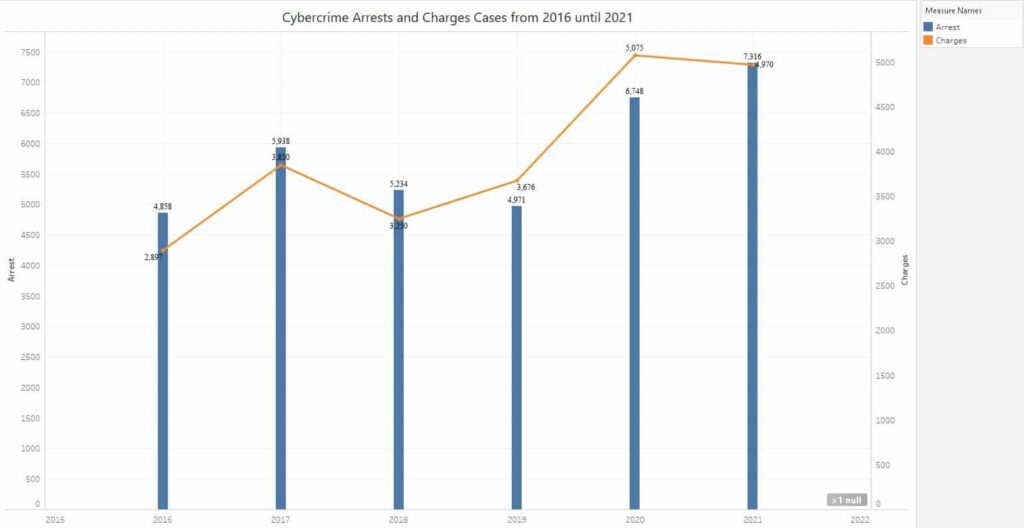
    From 2021 to 2016, PDRM made 35,065 arrests and 23,718 charges. Over the six years, the number of arrests increased year-on-year, with an average of 5,844 arrests per year. The same pattern is also shown in the number of charges, which grows yearly, with 2,897 charges in 2016 to 4,970 in 2021. This indicates that the authorities are doing their best to reduce these online fraud cases in Malaysia.

    Source: Commercial Crime Investigation Section (CCIS), March 2022.

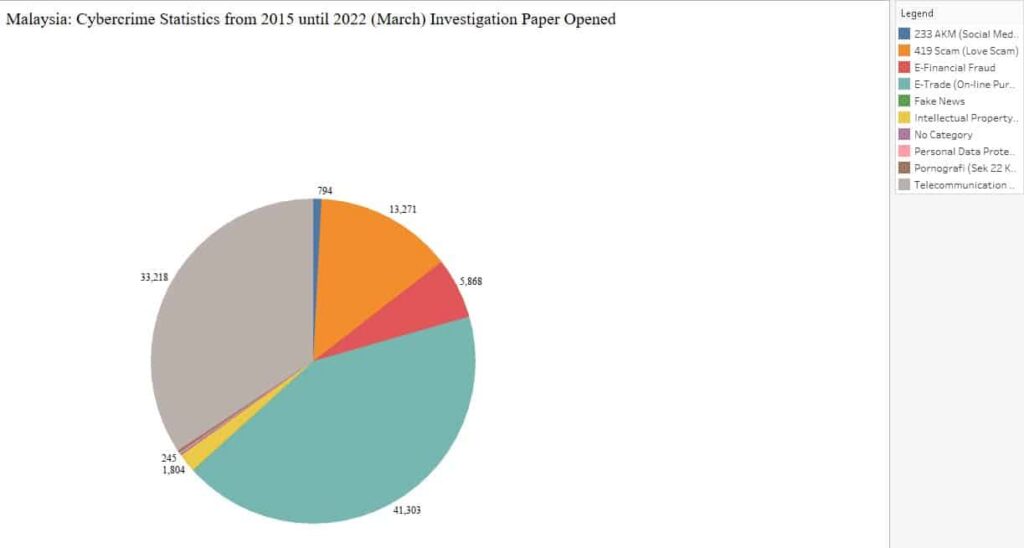
    For cybercrime from 2015 to March 2022, an investigation paper was opened. The total loss recorded was RM2,575,293,503.85; e-commerce ranked first with 41,303 or 43 per cent, followed by telecommunications fraud (line/sms) with 33,218 or 34 per cent.

    While cybercrime involves fake news with 48 investigation papers, protecting personal data with 98 investigation papers and no category with 212 investigation papers is the least reported type of cybercrime.

    Source: Commercial Crime Investigation Section (CCIS), March 2022.

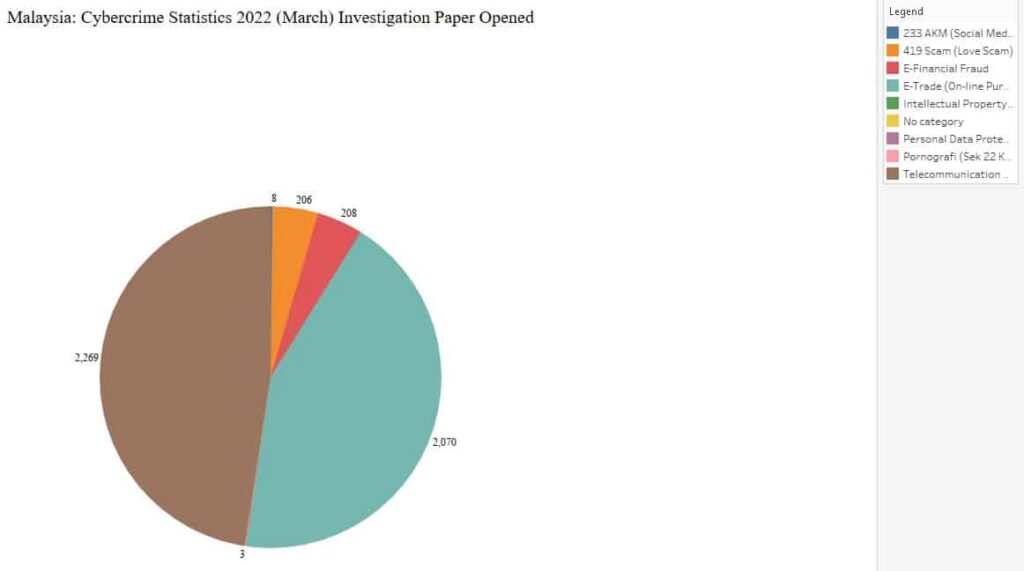
    If viewed up to March 2022 alone, based on the investigation papers, reported losses amounting to RM124,166,360.00 with telecommunication fraud (line/sms) were the highest with 2,269 cases or 48 per cent. They followed by e-commerce (online purchase) with 2,070 cases or 44 per cent.

    Meanwhile, cases involving pornographic material (Section 22 of the Penal Code), intellectual property (CD/VCD/DVD), no categories and personal data protection were the lowest recorded cases, with only three, one, one, and two cases recorded.  

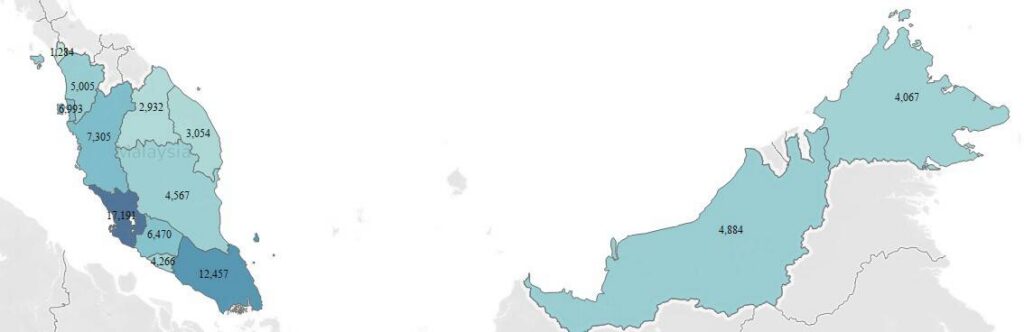
    In terms of locality for the cybercrime cases, if viewed by state from 2015 to 2021, most cases occurred in major cities such as Selangor with 17,191 cases, followed by Johor with 12,457 cases and Kuala Lumpur with 11,658 cases. At the same time, cybercrime was seen relatively less in towns such as Terengganu, with 3,054 cases, Kelantan, with 2,932 cases and Perlis, with 1,284.

    Cybercrime is common in large and rapidly developing cities because it is a hotspot for finding better job opportunities and thus increasing social mobility in their society.

    Source: Commercial Crime Investigation Section (CCIS), March 2022.

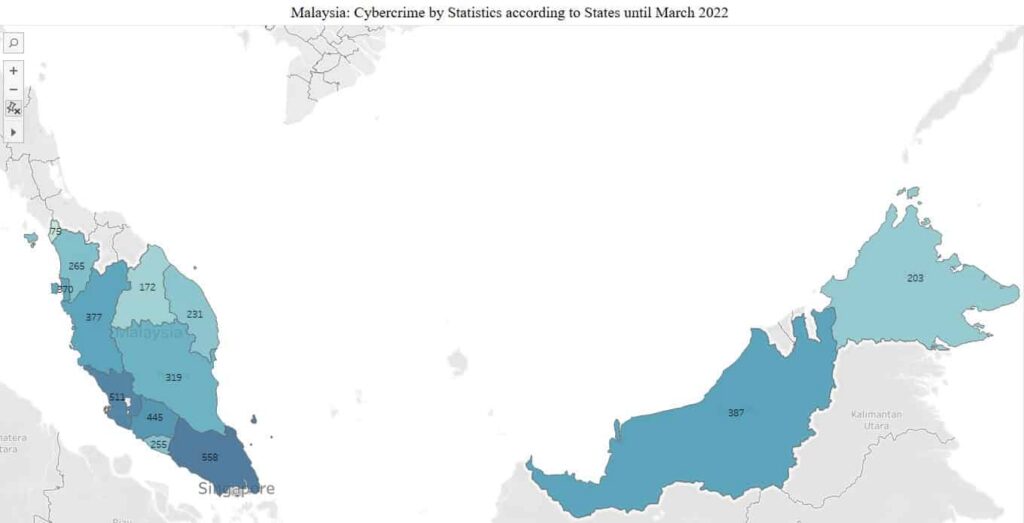
    The same statistics also show that until March 2022, cybercrime cases were widespread in Kuala Lumpur, with 600 cases, Johor with 558 cases and Selangor with 511 cases. These are the three highest states that recorded cybercrime by the state in March 2022.

    Meanwhile, Sabah, Kelantan and Perlis were the three states that recorded the least cybercrime by recording 203, 172 and 75 cases.

    Source: Commercial Crime Investigation Section (CCIS), March 2022.

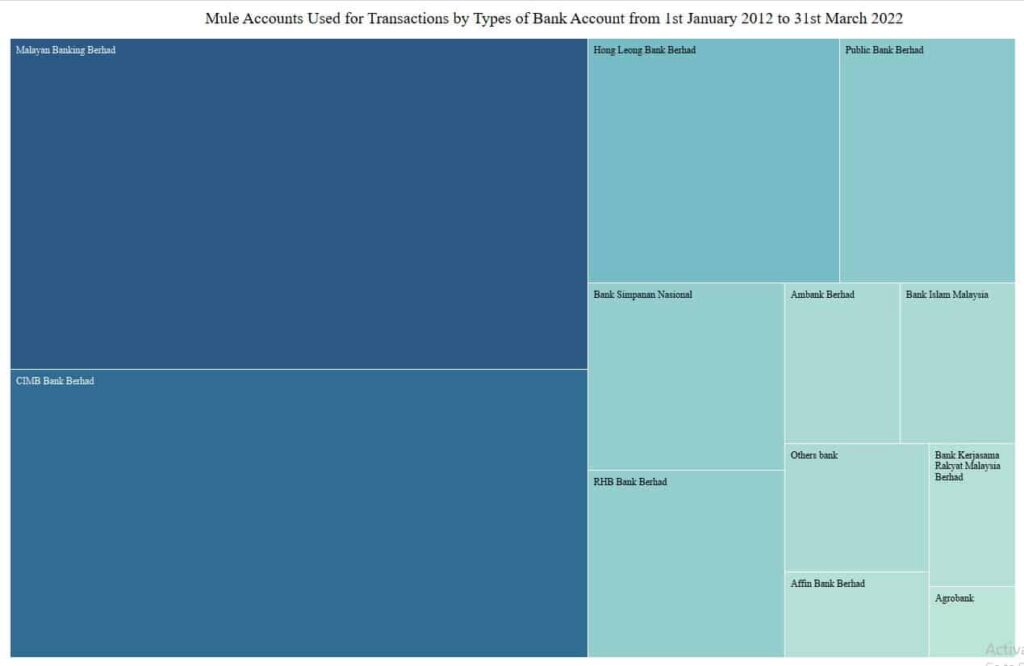
    In the case of mule accounts or donkey accounts according to bank accounts used from January 2012 until March 2022 showed that these accounts mostly used CIMB Bank Berhad with 32,492 or 27 per cent, followed by Malayan Banking Berhad or Maybank with 36,765 or 31 per cent. Donkey accounts often use These two banks to carry out their operations.

    Meanwhile, Agrobank, Affin Bank Berhad and Bank Kerjasama Rakyat are the least used banks to operate this donkey account.  

    Source: Commercial Crime Investigation Section (CCIS), March 2022.

    *The Malay Version of this article is currently under review at e-Jendela Dewan Ekonomi, Dewan Bahasa dan Pustaka, June 2023. Researchers also would like to thank the Criminal Investigation Department (JSJK), Bukit Aman, for providing this data to the authors.

    Rashid Ating. Researcher in the Department of Economics, Faculty of Business and Economics, Universiti Malaya and Institute of Advanced Studies (IAS), Universiti Malaya (UM). 

  • Funding Societies Launches Comprehensive Suite Of Islamic Financing Solutions

    Funding Societies Launches Comprehensive Suite Of Islamic Financing Solutions

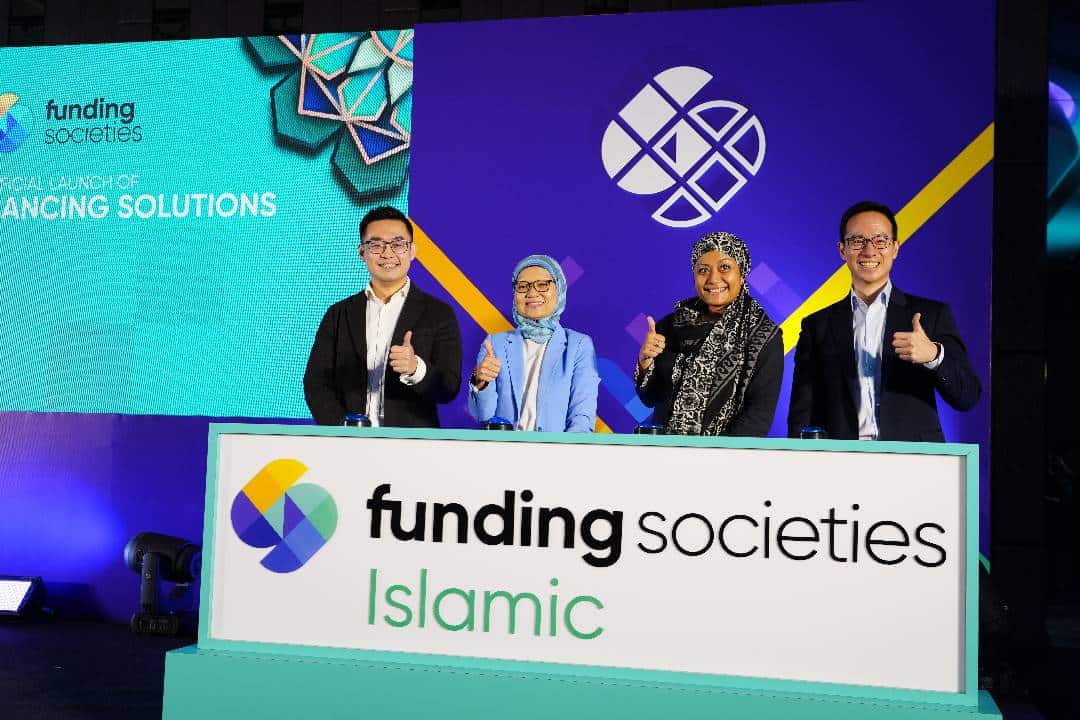
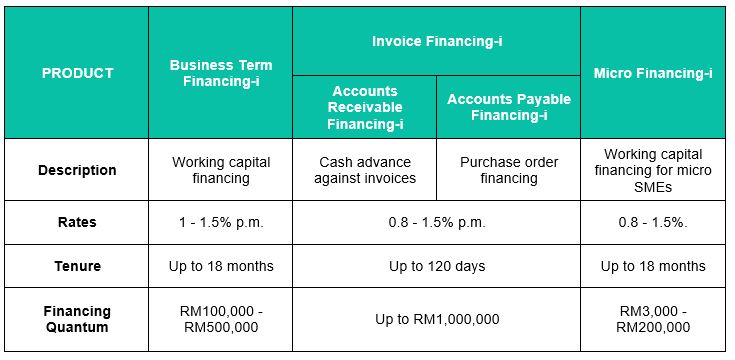
    Funding Societies, the largest unified SME digital finance platform in Southeast Asia, has launched its comprehensive Islamic Financing product collection, a complete suite of Shariah-compliant financing solutions designed to meet the needs of creditworthy, underserved Malaysian micro, small and medium enterprises (MSMEs) seeking to grow their business. These Islamic financing solutions include Business Term Financing-i, Micro Financing-i, and Invoice Financing-i.

    “Access to finance is mission critical for inclusive growth and MSME development. Case in point, there is a RM90 billion SME financing gap in Malaysia. To that end, SME digital finance platforms like Funding Societies play an important role in closing that gap. Given Malaysia’s leadership in Islamic finance, it is timely for us to scale our Shariah-compliant proposition to support creditworthy Malaysian SMEs of all sizes to thrive,” said Wong Kah Meng, Group Chief Operating Officer of Funding Societies | Modalku and Co-founder of Funding Societies Malaysia.

    Chai Kien Poon, Country Head of Funding Societies Malaysia said, “Following market feedback, we observed demand for Islamic finance and Muslim entrepreneurs’ need for Shariah-compliant financing. Islamic finance is also appealing to non-Muslims given its emphasis on fairness and transparency in fees and charges. Besides that, the introduction of our Islamic Financing aligns with Malaysia’s aspirations to be the leader in Islamic finance as well as focus on the Islamic digital economy and FinTech.”

    Interested SMEs can apply for these financing solutions online – seamlessly, anywhere and anytime. Through its simple and digital proposition, along with zero collateral requirements, Funding Societies can avail financing to MSMEs much quicker compared to traditional financial institutions.

    “Besides launching our Islamic financing proposition, we have developed Shariah-compliant investment products for our investors. This allows investors to diversify their investments while joining us to support a critical segment of the Malaysian economy. We have seen very encouraging demand from investors (retail, high net worth individuals and institutions) and look forward to working with financial institutions to offer Shariah-compliant investments to their customers,” adds Chai.

    Khairil Anuar Mohd Noor, Principal, Masryef Advisory, who was present at the launch event in Kuala Lumpur, remarked, “We are delighted to be part of this initiative by Funding Societies that would further elevate the landscape of Islamic Finance in Malaysia. We believe Funding Societies’ cutting edge, a leading digital finance platform, offers ground-breaking Shariah-compliant financing solutions to Malaysian MSMEs that would enable MSMEs to have access to alternative funding to fund their business. Similarly, it allows investors an alternative Shariah-compliant asset class to invest their excess liquidity. This collaboration allows us to leverage Funding Societies’ technological prowess and our expertise in Shariah advisory. Together, we will drive inclusive growth and unlock the potential of Islamic finance for sustainable economic development in Malaysia.”

    Funding Societies has been operating in Malaysia since 2016 and has provided financing to thousands of SMEs in the country. The FinTech platform has disbursed more than RM2 billion in financing in Malaysia since its inception. Across the region, more than RM13.74 billion has been disbursed through more than 5 million transactions as of 2022. After its soft launch in May 2022, the Shariah-compliant financing propositions have seen encouraging take-up from SMEs. The Fintech platform targets to have at least 50% of its disbursement from its Shariah-compliant financing portfolio by 2025.

    For more information on Funding Societies Malaysia’s Islamic Financing solutions, please visit https://fundingsocieties.com.my/islamic-financing.

    (Funding Societies’ Islamic financing products descriptions)

    About Funding Societies

    Funding Societies | Modalku is the largest unified SME digital finance platform in Southeast Asia. It is registered with the Securities Commission Malaysia (SC), as well as licensed in Singapore, Indonesia, and Thailand, and operates in Vietnam. It is backed by SoftBank Vision Fund 2, SoftBank Ventures Asia, Sequoia Capital India, Alpha JWC Ventures, SMBC Bank, Samsung Ventures, BRI Ventures, Endeavor, SGInnovate, Qualgro, and Golden Gate Ventures amongst others. The FinTech company provides business financing to small and medium-sized enterprises (SMEs), which are funded by individual and institutional investors. In 6 years, it has helped finance over 5.1 million business deals close to RM13.74 billion in funding. It was given the Digitalizing Services for Retail Participations award by the Securities Commission Malaysia during the INVESTSMART® FEST 2019, the Monetary Authority of Singapore (MAS) FinTech Award in 2016, the Global SME Excellence Award at the United Nations’ ITU Telecom World in 2017, KPMG Fintech100 in 2018, Brands for Good in 2019, and ASEAN Startup of the Year by Global Startup Awards in 2020. In 2021, it was honourably mentioned as Responsible Digital Innovator of the Year by the World Bank IFC SME Finance Forum and won the MAS ASEAN Fintech award for the second time.

    For more information on Funding Societies Malaysia, please visit https://fundingsocieties.com.my.