Blog

  • Congratulations To AmanahRaya Investment For Winning Two Morningstar Awards

    Congratulations To AmanahRaya Investment For Winning Two Morningstar Awards

    Morningstar recently announced the winners for the 2023 Morningstar Fund Awards – Malaysia. Of the five awards, AmanahRaya Investment Management Sdn Bhd won two.

    Morningstar Category AwardsWinner
    Best Malaysia Bond FundAmanahRaya Unit Trust Fund (ARUTF)
    Best Malaysia Bond (Shariah) FundAmanahRaya Syariah Trust Fund  (ARSTF)

    Congratulations to AmanahRaya Investment for winning the Best Malaysia Bond Fund award with the AmanahRaya Unit Trust Fund (ARUTF), and Best Malaysia Bond (Shariah) Fund with the AmanahRaya Syariah Trust Fund (ARSTF).

    Smart Investor had the opportunity to interview Mohamad Shafik Bin Badaruddin, Managing Director / Chief Executive Officer, AmanahRaya Investment to learn more about their winning funds.

    Mohamad Shafik Bin Badaruddin, Managing Director / Chief Executive Officer, AmanahRaya Investment

    Smart Investor: Congratulations on winning the Morningstar Award! Can you share with us what the recipe for your success is?

    Mohamad Shafik: Thank you. Our accomplishment is due to a combination of factors. Our recipe is founded on a disciplined approach to managing investments, stringent credit checks, strict risk management, and a focus on giving our investors strong and consistent returns. In addition, we prioritise establishing long-term relationships with our clients by providing them with clear, as well as timely communication.

    Our team of seasoned investment professionals works closely to identify opportunities in the market and manage risk in a controlled manner. As we navigate the market, we constantly learn and adapt to the changes in the market and the economy, which we believe will enable us to stay ahead of the ‘game’.

     SI: What are the strategies that you used in 2022? How was the fund positioned to mitigate risks and optimise opportunities?

    MS: Our strategies for 2022 involved a focus on high-quality investments and a cautious approach to risk management. We positioned the fund defensively, with a bias towards shorter duration and higher credit quality bonds. However, we remain invested for most parts of the year and tried to play with allocation and diversification strategies as opposed to timing the market.

    We were highly focused on building resilient portfolios that could withstand volatility and unexpected events, by diversifying across ratings, issuers and sectors. Overall, our approach was designed to balance risk and return, and to deliver consistent performance over the long term. 

    SI: 2022 was a bad year for most investments; how has this affected your investment strategies for both the short- and long-term?

    MS: The macro landscape in 2022 was not very supportive of fixed-income investing, especially when central banks began to turn hawkish and tighten liquidity condition. The challenging landscape had reinforced the importance of having a strong investment discipline. While we did some adjustments to our investment strategies in response to changing market dynamics and conditions, our overall approach remained consistent with what we have been practising all these years.

    In short, the prevailing market condition did not affect or change the way we do things at ARIM. The key is to have a plan upfront. Something along the line of – if the market does this, we do this, if otherwise, then we do this. After refining our strategies and listing down all the actionable ideas and probable outcomes, before executing, we always ask ourselves the question “what could go wrong”, just so to be aware of the risks to our strategies.

     SI: The recession is expected to hit us this year. What are your plans and strategies for 2023? Is there anything you plan to do differently?

    MS: We are monitoring the market and economic condition very closely. Having said this, we are in an ever ready state to change direction of our strategy if need be. If a recession happens – now that is a big ‘IF’, general we would expect bond prices to fall during a recession. Also, shorter tenure bonds would look more attractive compared with longer tenured ones.

    In our view, the market is already discounting a mild recession in the U.S., Europe, as well as the UK, for 2023. As of now, it looks like central banks appear to be in control to engineer a soft landing with inflation slowing meaningfully by the end of 2023. 

    Given the scenario, we would maintain our current portfolio duration for the first half and revisit them with the view to possibly extend the duration slightly in the second half. 

    SI: With high inflation and interest rates, what’s your message for retail investors?

    MS: Our message to retail investors is to keep invested, during good or bad times, and avoid market timing. While we are not against timing the market, doing it consistently is something that is very difficult to achieve based on industry experience in general.

    It is also important for investors to work with financial advisors or unit trust agents who are able to advise them on how to asset allocate their monies into a diversified portfolio. Building a well-diversified portfolio across multiple asset classes is key to building wealth in the long run.
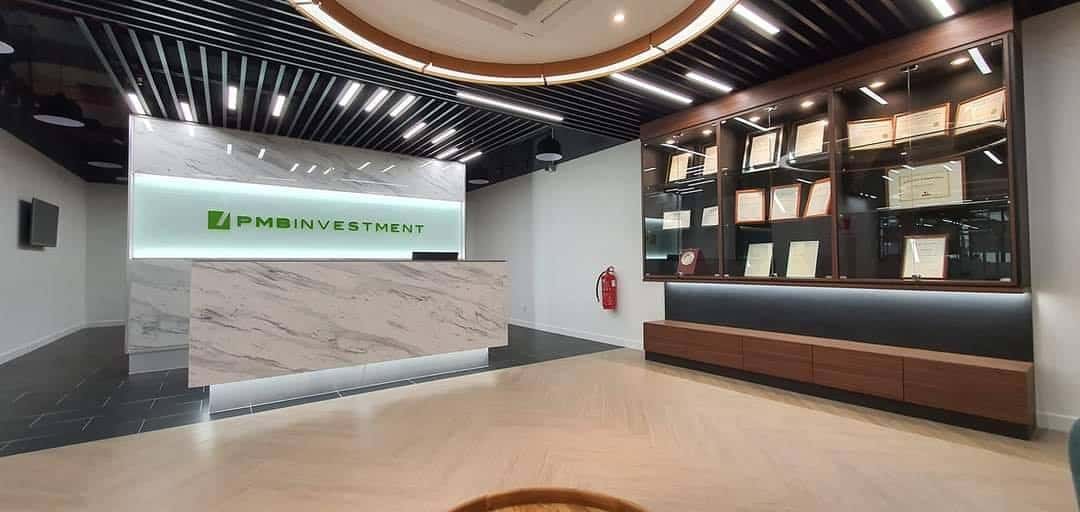
  • PMB Investment Wins Best Malaysia Large-Cap Equity (Syariah) Fund In The 2023 Morningstar Fund Awards Malaysia

    PMB Investment Wins Best Malaysia Large-Cap Equity (Syariah) Fund In The 2023 Morningstar Fund Awards Malaysia

    Morningstar recently announced the winners for the 2023 Morningstar Fund Awards – Malaysia and PMB Investment Berhad emerged as one of the winners.

    Morningstar Category AwardsWinner
    Best Malaysia Large-Cap Equity (Shariah) Fund PMB Shariah Tactical Fund

    Congratulations to PMB Investment for winning the Best Malaysia Large-Cap Equity (Shariah) Fund award with their  PMB Shariah Tactical Fund.

    Smart Investor had the opportunity to interview Mahani Ibrahim, CEO of PMB Investment Berhad, to learn more about their winning funds.

    Mahani Ibrahim, CEO of PMB Investment

    Smart Investor: Congratulations on winning the Morningstar Award! Can you share with us what the recipe for your success is?

    Mahani Ibrahim: The equity market’s performance last year was put under pressure by a combination of factors, such as rising inflation, interest rate hikes, the prospects of slower global growth, fears of a US recession, the Russia & Ukraine war, geopolitical events, supply chain disruptions and China’s zero-Covid policy. 

    In line with the market condition, the fund manager maintained the equities position around 70% to 82%. The fund manager was cautious about the equity market. The fund manager also adopted a trading strategy stance.

    Last year, we focussed on non-traditional and essential businesses, export-oriented companies and ESG themes. Due to this approach, some of the stock selections contributed handsomely to the portfolios under our management.

    SI: What are the strategies that you used in 2022? How was the fund positioned to mitigate risks and optimise opportunities?

    MI: Last year’s asset allocation had a fair combination of core, dividend, growth and trading play. There was no significant re-balancing exercise as we practically held to our core and dividend stocks as we believed the companies had a potential upside. 

    However, the FM cut losses on some non-profitable stocks and replaced them with other companies we evaluated to have good potential. The fund manager maintained the cash level around 18% to 30%.

    SI: 2022 was a bad year for most investments; how has this affected your investment strategies for both the short- and long-term?

    MI: Throughout these challenging years, we emphasised stock picking to achieve outperformance. Besides, we used the “Buy on Weakness” approach if the market went down to a certain level and applied temporary defensive measures during adverse periods. We are more comfortable to raise cash and we are comfortable to be underperforming our peers and benchmark on short-term basis.

    As our focus is our long-term performance, it is only natural that our performance to sway in the short-term basis due to the volatility. 

    SI: The recession is expected to hit us this year. What are your plans and strategies for 2023? Is there anything you plan to do differently?

    MI: At the moment, we plan to stick to our approach as stated in Q3. However, we will be flexible on our strategy depending on the market and economic situation. Currently, we are focusing on defensive such as the consumer staples and quality yield play, energy (due to underinvestment in the recent years following the collapse of oil price), ESG themes and small and medium size companies with potential growth.

    SI: With high inflation and interest rates, what’s your advice for retail investors?

    MI: They should focus on the long-term value of their portfolio and avoid making poorly timed asset sales. Besides, they must be ready to withstand the short-term volatility of the equity market.

  • Morningstar Announces Winners for 2023 Morningstar Fund Awards Malaysia

    Morningstar Announces Winners for 2023 Morningstar Fund Awards Malaysia

    KUALA LUMPUR, 16 March 2023 — Morningstar, Inc. (Nasdaq: MORN), a leading provider of independent investment research, today announced the winners for the 2023 Morningstar Fund Awards – Malaysia. The awards recognise those funds and asset managers that have served investors well over the long term and which Morningstar’s manager research team believes will be able to deliver strong risk-adjusted returns in the longer term.

    The annual Morningstar Fund Awards recognise the retail funds and fund groups that added the most value for investors within key sectors and across asset classes. Morningstar selects the winners using a quantitative methodology, and eligible funds require a five-year performance track record. Weightings to one-, three-, and five-year performance are factored into the methodology, along with a qualitative overlay.

    Wing Chan, Head of manager research, Europe and Asia Pacific, Morningstar

    “The Morningstar Fund Awards commends funds and asset managers that served investors well by delivering top notch risk-adjusted performance for investors in 2022 and over longer time periods. Morningstar’s manager research team have used Morningstar’s extensive datasets and quantitative methodology to determine the winners across equity and fixed income categories, as the leading funds within Malaysia for investors,” said Wing Chan, Head of manager research, Europe and Asia Pacific, Morningstar.  

    The 2023 Morningstar Fund Award – Malaysia winners are:

    Morningstar Category AwardsWinner
    Best Asia-Pacific Equity KAF Jade Fund
    Best Malaysia Large-Cap Equity Fund KAF Core Income Fund
    Best Malaysia Large-Cap Equity (Shariah) Fund PMB Shariah Tactical Fund
    Best Malaysia Bond FundAmanahRaya Unit Trust Fund (ARUTF)
    Best Malaysia Bond (Shariah) FundAmanahRaya Syariah Trust Fund  (ARSTF)

    Methodology

    The Morningstar fund category and fund house awards are based on Morningstar fund data as of 31 December 2022. The awards methodology emphasises the one-year period, but funds must also have delivered strong three-year returns after adjusting for risk within the award peer groups in order to obtain an award. In selecting winners, fund returns are adjusted for risk using the Morningstar Risk, a measure which imposes a higher penalty for downside variation in a fund’s return than it does for upside volatility.

    The full methodology for the awards is available here.

    About Morningstar

    Morningstar, Inc. is a leading provider of independent investment insights in North America, Europe, Australia, and Asia. The Company offers an extensive line of products and services for individual investors, financial advisors, asset managers and owners, retirement plan providers and sponsors, and institutional investors in the debt and private capital markets. Morningstar provides data and research insights on a wide range of investment offerings, including managed investment products, publicly listed companies, private capital markets, debt securities, and real-time global market data. Morningstar also offers investment management services through its investment advisory subsidiaries, with approximately $246 billion in assets under advisement and management as of Dec. 31, 2022. The Company operates through wholly- or majority-owned subsidiaries in 32 countries. For more information, visit www.morningstar.com/company. Follow Morningstar on Twitter @MorningstarInc.

  • How To Save 50% Of Your Tax Payment?

    How To Save 50% Of Your Tax Payment?

    It is that time of year we have to file our taxes. I heard most employees file it quickly to get their refunds quicker. Is that the same for you too?

    I hope you have taken advantage of all your tax relief, especially if you earn more than RM7,000 a month. But is there a way to save 50% of your tax payment?

    I did a one-on-one with one of my Double Your Networth student, and she asked me, “How do I take advantage of my tax relief?” And I am grateful she ask me this question.

    Because sometimes I take for granted that everyone around me knows what to do. Especially since she earns RM25,000 a month, I know how paying taxes through her nose feels.

    I won’t go through all 15 categories, but  I prepared a simple tool I normally use to plan to see the difference between ‘taking advantage of the tax relief’ vs ‘not taking advantage of it’. Once you download it here, you can see how much money you will save & more importantly, and you can see your Effective Tax Rate (ETR)

    ETR is very important as I was misguided when I thought my ETR was 24% when my income was RM200,000 a year. But in reality, when you deduct all the tax relief, my ETR was probably at 10% of my total income.    

    Here is a quick summary of what Personal Tax Relief you can take advantage of (and the typical misses) depending on which category you are in for YA 2022. Only by knowing these details, will you be able to save 50% of your tax payment.

    Single Or Married Without Kids

    1. Self – RM9,000
    2. EPF – RM4,000 (if you are under the EPF scheme and not the pension scheme)
    3. Life Insurance – RM3,000
    4. Medical Insurance – RM3,000 (read here on what mistakes to avoid, I wrote a blog on this last year)
    5. Private Retirement Scheme – RM3,000
    6. Lifestyle – RM2,500 (purchase of books, laptop, tablets and smartphones and internet subscription)
    7. Additional lifestyle – RM2,500 (purchase of laptop, tablets and smartphones)
    8. Domestic Travelling – RM1,000
    9. Sports Equipment and Fees for rental – RM500
    10. Medical Fees for Parents – RM8,000 (do ensure you are the only 1 claiming & not claimed concurrently by your other siblings)
    11. Socso – RM250
    12. Vaccination – RM1,000 (Up to RM1,000 for yourself)

    Married With Kids Under 18 years old

    1. All the above
    2. SSPN – RM8,000 (most parents don’t take advantage of this for their kids)
    3. Ordinary Child Relief – RM2,000 per child (either parent can claim and not a claim by both parents)
    4. Lifestyle – RM2,500 (You can buy laptops, tablets and books for your spouse and kids as well. Since they can’t track, you can even buy laptops, tablets, and books for your nieces or nephew)
    5. Additional lifestyle – RM2,500 (if you have more than 1 child, you can claim additional on this purchase of laptop, tablets and smartphones)
    6. Child Education Insurance – RM3,000 (read here on what mistakes to avoid, I wrote a blog on this last year)

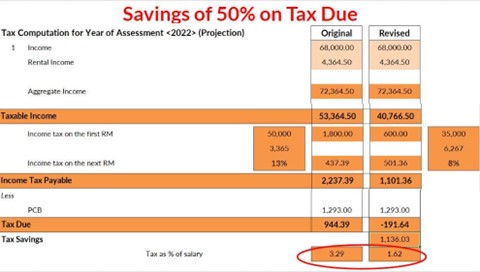
    Figure 1

    Here Is How You Can Save 50% Of Your Tax Or Effective Tax Rate (ETR)

    Mr Nair (not his real name) is working for a famous foreign Bank for 5 years. He and his wife have 2 kids. He manages to buy one property for investment purposes and is getting rental income.

    The main strategy to save 50% of your Effective Tax Rate is to maximize all your tax relief (if possible) OR spend/save consciously in areas with tax relief.

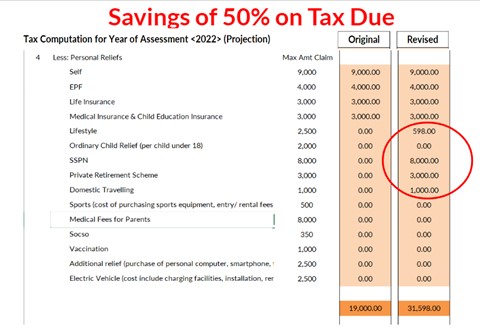
    For Mr Nair, all he needed to do was to:

    1. Maximize his SSPN by saving for his 2 kids – RM8,000 (RM4,000 each)
    2. Maximize his PRS by saving RM3,000 to any of the approved Private Retirement Unit Trust
    3. Take his family for a year-end holiday of RM1,000 (through approved operators and selected premises here – Item 8)
    4. Buy a basic smartphone for his son – RM598

    Figure 2

    You will notice in Figure 1, his tax bracket dropped from 13% to 8% because his taxable income dropped below the RM50,000 level.

    Hence he could save RM1,136 on something he needed to do anyway (to save for himself and his kids).

    In case you are tight on cash, one of the method I used was to transfer some of my existing investments / spare cash / emergency funds to my kids’ SSPN or my PRS. The idea is like “Move from your left pocket to your right pocket.”

    Is this something that benefits you? Yes, I know this is a bit late, but this doesn’t stop you from planning for this year (YA 2023), right? Hope you have a clearer idea on how to save 50% of your tax payment.

    *DISCLAIMER: All tax references have been taken from PWC’s website. All my sharing on how to save 50% of your tax payment is for educational purposes and is my personal opinion. It should not be confused with tax advice. Do consult a licensed tax consultant for proper tax planning.

    About the Author

    Ka Hoe is a Licensed Financial Planner having a “Financial Adviser Representative” (FAR) with Bank Negara and “Capital Market Service Representative License (CMSRL) – Financial Planner” with Securities Commission. He is also the Founder of J Advisory, a Personal Finance Academy that helps struggling Malaysians elevate their financial well-being with proven tools, systems and strategies.

  • EXIM Bank Malaysia And MASSA Collaborate To Bring The Central Asian Market To Exporters

    EXIM Bank Malaysia And MASSA Collaborate To Bring The Central Asian Market To Exporters

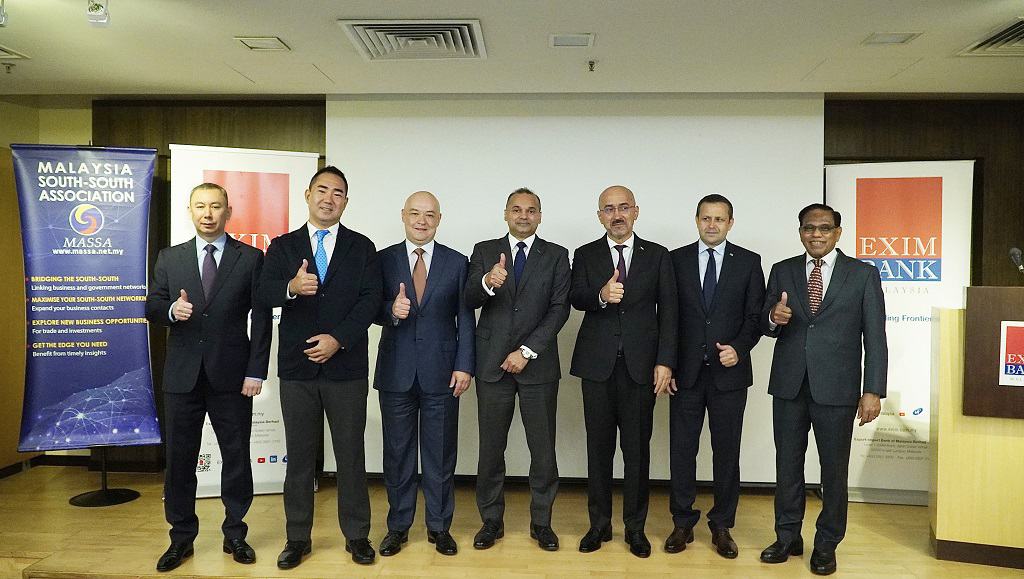
    Export-Import Bank of Malaysia Berhad (EXIM Bank) and Malaysia South-South Association (MASSA) join hands in bringing the Central Asia region to exporters via a business briefing and networking session.

    Called the EXIM Bank & MASSA Business Briefing and Networking Luncheon, the session sees the participation of countries from the Central Asia region, namely Uzbekistan, Tajikistan, Kyrgyz Republic, Kazakhstan and Turkmenistan. The ambassadors attended and shared the market potential of their countries.

    Over 70 exporters attended the briefing session to hear about the market opportunity of the RM 1747.5 billion Central Asian market, specifically in the agriculture, energy, infrastructure, health, information technology and tourism sectors.

    “EXIM Bank is honoured to host the Ambassadors of the Central Asian region and exporters at the Bank for the business briefing session. This event serves as a platform for the embassies to share the economic potential of their respective countries with local exporters; and for the local businesspeople to learn, explore and gain entry to these markets,” said Arshad Ismail, President/Chief Executive Officer of EXIM Bank Malaysia.  

    Datuk Merlyn Kasimir, MASSA EXCO Member said: “Central Asia is fast emerging as a promising and strategically located market for businesses worldwide. The world is moving into a new era characterized by VUCA, ESG and IR4.0 and this is a new frontier for Malaysian businesses, presenting us opportunities to collaborate with other developing countries. The areas for business collaboration between Malaysia and Central Asia are many and remains to be tapped.”

    On the back of the recent revised Budget 2023 and the introduction of the Exporters’ Development Incentive Scheme or “Skim Insentif Pemampanan Pengeksport” (SIP2), EXIM Bank is driven to help local entrepreneurs strengthen their businesses and achieve their cross-border aspirations.

    Arshad hopes that the affordable funding rate the SIP2 scheme offers will encourage local entrepreneurs/exporters to explore new markets, such as the Central Asian region, for their products and services and increase their capability as an exporting company in the long term.

    About EXIM Bank

    The Export-Import Bank of Malaysia Berhad (EXIM Bank) was incorporated on 29 August 1995 and is wholly-owned by the Government of Malaysia. The Bank has assisted a diverse range of Malaysian business in various sectors in their global ventures.  EXIM Bank takes pride in meeting its mandated role of stimulating and enhancing the competitiveness of Malaysian industries for exports and investments globally via the provisioning of internationally and domestically competitive banking and insurance products and advisory services. The Bank also offers Shariah-compliant financing and Takaful instruments. For more information, visit www.exim.com.my.

  • Lessons From Silicon Valley Bank (SVB) and Lehman Brothers: How Islamic Financial Principles Offer More Robust Risk Management In Investments

    Lessons From Silicon Valley Bank (SVB) and Lehman Brothers: How Islamic Financial Principles Offer More Robust Risk Management In Investments

    They say history repeats itself. To learn our lessons from Silicon Valley Bank, we need to take a trip down memory lane and look at what happened to Lehman Brothers previously.

    The collapse of Lehman Brothers in 2008 was a major event that shook the global financial system. The investment bank was one of the largest and most successful in the world, but it filed for bankruptcy after a series of bad bets on the housing market led to huge losses.

    One of the key factors in Lehman’s collapse was its use of derivatives, financial products that derive their value from underlying assets such as stocks, bonds, and mortgages. In particular, the bank had invested heavily in high-leveraged mortgage-backed securities (MBS), which were complex products that bundled together thousands of mortgages and then sliced them up into different tranches with varying levels of risk.

    Lehman’s strategy was to buy up these MBS and use them as collateral to borrow even more money from other banks and investors. This created a highly leveraged position that was highly risky but promised big rewards if the housing market continued to grow.

    However, when the housing market began to collapse in 2007, the value of Lehman’s MBS holdings plummeted. As a result, the bank faced huge losses and could not meet its financial obligations. Its creditors began to pull their money out, causing a run on the bank that ultimately led to its bankruptcy.

    The collapse of Lehman Brothers had far-reaching consequences for the global economy. It sparked a major financial crisis that spread worldwide, causing a sharp decline in stock markets, a freeze in credit markets, and a wave of bank failures.

    The lessons learned from the collapse of Lehman Brothers have led to increased regulation of the financial industry, with tighter controls on the use of derivatives and other complex financial products. However, the risk of another financial crisis remains, and investors and regulators must remain vigilant to prevent another Lehman-style collapse from happening again.

    Read: SPY vs SPUS: A 2023 Comparison of S&P 500 ETFs

    After 14 Years: Lessons From Silicon Valley Bank (SVB)

    Silicon Valley Bank, a well-known bank in the United States, was recently declared the biggest bank failure since 2008 and the second-largest in US history. This news came as a shock to many people, given that just a year earlier, Forbes had named it one of America’s Best Banks, and Moody’s had given it an A rating.

    The bank had been around for 40 years and had been home to half of all venture-backed startups. So how could such a reputable bank fail so spectacularly? There are multiple reasons, but some common culprits have been identified. These culprits are considered “cancers” for the economy and the markets according to Shariah, a set of Islamic laws that guide ethical and moral behavior.

    Lessons From Silicon Valley Bank#1

    The first culprit is debt trading. Silicon Valley Bank used customer deposits (checking and corporate payroll accounts) to buy bonds. The bank was betting that the Federal Reserve would hike interest rates slowly, but they hiked rates faster than expected, causing the bonds to lose value rapidly. This type of debt trading is not permitted in Shariah.

    Lessons From Silicon Valley Bank#2

    The second culprit is Riba, which means charging or paying interest on loans. When Riba and debt combine, they create a web of risk in the markets. This exposes everyone to each other’s liabilities, creating a domino effect. The incentive to take on debt is driven by Riba, making it one of the core reasons for the fiasco.

    Lessons From Silicon Valley Bank#3

    The third culprit is trading what you cannot deliver. This is not permitted in Shariah, and the fractional reserve system, where banks hold only a fraction of their deposits in reserve and lend out the rest, makes banks vulnerable to bank runs.

    Lessons From Silicon Valley Bank#4

    The fourth culprit is managerial incompetence and moral hazard. There was a mismatch between the bank’s assets and liabilities, and the fractional reserve system created a moral hazard, leading to risky lending practices. Shariah prohibits moral hazard and emphasizes the importance of good governance.

    Lessons From Silicon Valley Bank#5

    The fifth culprit is the lack of good governance. In 2018, a deregulation bill allowed banks like Silicon Valley Bank to take reckless risks, which would not be acceptable in a Shariah framework. Shariah has controls to reduce the risk of contagion.

    Silicon Valley Bank’s collapse will significantly impact the start-up ecosystem, setting it back by 10 years or more, according to some experts. The tragedy is that it is not the wealthy taking the hit but the thousands of companies that borrowed from the bank and were required to keep their cash there.

    When debt, Riba, and Gharar come together, don’t expect anything but an eventual collapse and collateral damage. It’s the same old story, over and over again. Hope we all learn our lessons from Silicon Valley Bank.

    Read: Investing With Recession Fears Looming, Are We Nearing Market Bottom?

    About the Author

    Mukhriz Mangsor is currently the Head Global Market Strategist at Quantdynamic Research Company. His expertise includes financial education, financial institutions, and property trading with clients, including Brunei, Canada, Malaysia, Singapore, and the United States firms.

  • 7 Signs Of Bad IPO, Avoid Them If You See These Red Flags

    7 Signs Of Bad IPO, Avoid Them If You See These Red Flags

    Initial Public Offerings (IPOs) have become increasingly popular recently, with many investors rushing to invest in newly listed companies. IPOs can be exciting opportunities for investors to get in on the ground floor of a new company and potentially earn a big return on their investment.

    However, IPOs can also be risky, and investors must be aware of potential red flags when considering an IPO investment. Here are 7 signs of bad IPO. Avoid them if you see these red flags.

    Signs Of Bad IPO#1 Lack Of Profitability

    A lack of profitability is one of the most important red flags to look out for. When a company is not profitable, it may not be able to provide a return on investment for its shareholders. Investors should carefully review the company’s financial statements to determine whether or not it is profitable. This can include reviewing the company’s revenue, expenses, and net income over time.

    If the company has a history of losses or cannot demonstrate a clear path to profitability, it can be a major red flag for investors.

    Read: 5 Investment Tips For Beginners That You Should Know

    Signs Of Bad IPO#2 High Debt Levels

    Another red flag to look out for is high debt levels. Companies with high levels of debt can be risky investments, as they may struggle to meet their financial obligations in the long term. Investors should review the company’s debt-to-equity ratio and debt-service coverage ratio to evaluate its debt levels.

    If the company has a high debt-to-equity ratio, this can indicate that it is relying heavily on debt financing to grow its business, which can be a risky strategy.

    Signs Of Bad IPO#3 Weak Financial Performance

    Weak financial performance is another red flag to watch out for when considering an IPO investment. A company with weak financial performance may struggle to grow its revenue or generate profits. Investors should carefully review the company’s financial statements to evaluate its financial performance and determine whether or not it has the potential for future growth.

    This can include analyzing the company’s revenue growth, gross margins, and operating expenses over time.

    Read: Investment Risk Management With 6 Simple Ways

    Signs Of Bad IPO#4 Poor Management

    Poor management is another potential red flag for IPO investors. A company with poor management can be a risky investment, as management is responsible for making strategic decisions that can impact the company’s success. Investors should review the company’s management team and board of directors to evaluate their experience and track record.

    This includes reviewing their accomplishments, education, and relevant industry experience.

    Signs Of Bad IPO#5 Having Legal Or Regulatory Issues

    Legal or regulatory issues can also be a red flag for IPO investors. Companies facing legal or regulatory issues can be risky investments, as these issues can lead to fines, penalties, or other legal consequences. Investors should review the company’s regulatory filings to determine whether or not it is facing any legal or regulatory issues.

    This can include reviewing pending lawsuits or investigations and regulatory compliance issues.

    Read: Fundamental Analysis vs Technical Analysis

    Signs Of Bad IPO#6 Competitive Threats

    Competitive threats can also be a red flag for IPO investors. Companies facing strong competition can be risky investments, as they may struggle to maintain their market share and profitability. Investors should review the company’s competitive landscape to evaluate its position in the market and the potential threats it may face from competitors.

    This can include analyzing the company’s market share, competitive advantages, and potential threats from new entrants or disruptive technologies.

    Signs Of Bad IPO#7 Overpriced

    Finally, investors should consider the company’s valuation when considering an IPO investment. Companies with high valuations may be overpriced, and investors may not see a sufficient return on their investment. Investors should carefully review the company’s valuation and compare it to its peers and the broader market to determine whether or not it is reasonable.

    In summary, IPO investments can be exciting opportunities for investors, but they can also be risky. Investors should carefully evaluate potential red flags when considering an IPO investment, including a lack of profitability, high debt levels, weak financial performance, poor management, legal or regulatory issues, competitive threats, and valuation. By conducting thorough due diligence and taking a careful and thoughtful approach, investors can minimize risk and increase their chances of success in the IPO market.

    Read: Using The CANSLIM Formula To Choose Good Stocks

  • Money Caused Breakup Among Four Close Friends, That’s Why it Is Important To Plan For The Succession Of A Business

    Money Caused Breakup Among Four Close Friends, That’s Why it Is Important To Plan For The Succession Of A Business

    The following story is based on an actual series of events, with some names and circumstances fictionalised. Any similarity to any person’s name, character, or history is entirely coincidental and unintentional. It is good to have a plan for the succession of a business.

    Gerald, John, Steven and Mazlan were close friends, dating back to schooldays. So close they would get punished together for naughty things that schoolboys typically did.

    The first two were involved in building up a successful business in manufacturing and distributing car interior accessories. At the same time, the latter two had also built up an equally successful business, this one in car exterior accessories.

    Because of the obvious synergies involved, they decided to merge and apply for listing. The structure that was decided on was one where a holding company (Car Listco) was formed to hold the two operating companies as subsidiaries. 25% of the shares in Car Listco would be offered to the public.

    Read: Tragic Procrastination On Estate Planning Documents

    The Succession Of A Business: Case Study Of Four Shareholders

    At the same time, the balance shareholding held by the four individuals would be swapped into an investment holding company (Holdco), which would then control Car Listco. The four shareholders held shares in Holdco with equal portions of 25% each. Car Listco was successfully listed and well received by the public, and the market price on listing was about twice the offer price.

    The four shareholders were very happy with the high valuation, translating into approximately RM60 million above the pre-listing value. And that was not all. Others were also prepared to pay a control premium for control of a listed company of some RM50 million at that time.

    This kind of structure is, in fact, not uncommon for companies preparing for listing. Somewhat innocuous. Until the four shareholders disputed distribution, Car Listco performed well for many years, selling through a larger distribution network after the merger and declaring healthy annual dividends.

    In the initial years after listing, Holdco received its share of dividends and distributed 80% of all it received, and shareholders were happy with the arrangement. But five years on, the first two shareholders, who were also partners in another business, began to have cash flow problems and pressured Holdco to distribute more, even suggesting liquidation of part of the stake in Car Listco.

    This led to many arguments and fractured the close relationship the first two had with the other two, which puts a pressure on the succession of a business. Compounding the problem, Mazlan died, and his brother, the only next-of-kin, took over his directorship, which became the last straw because of his lack of trust and aggressiveness towards the other shareholders.

    In the end, the shareholders decided to liquidate Holdco and distribute it individually to each shareholder to be free to do what they wanted with the shares. The result of this breakup was that the shareholders lost the control premium, therefore they have failed in ensuring the succession of a business.

    Read: Being An Executor Of Will Is Not As Easy As It Seems To Be

    How To Ensure The Succession Of A Business?

    So what went wrong? How did a successful merger and listing end with a breakup and loss of control?

    The crux of the problem was the lack of liquidity. The Holdco made up of friends’ stakes tied together at the outset was a mistake. While Car Listco shares owned by Holdco were liquid, the shares in Holdco were not, leaving no liquidity for shareholders in need.

    It would have been better had 51% shareholding been locked up in Holdco and the balance distributed to the individual founders so that they would have liquidity. This would have avoided the disputes they went through before liquidation. In addition, it would have been good to plan the succession of a business, where shareholdings with a buy-sell arrangement, so that the founders would retain control when any of them exited.

    Read: Unfulfilled Wishes, Learn How To Protect Yourself

    About Rockwills International Group

    Rockwills International Group, now in its 28th year, pioneered professional will writing in 1995 and has since evolved into the leading estate planning specialist in the country. It is today the largest provider of solutions and support services in trusts, succession, management and distribution of wealth. It has shareholders’ funds exceeding RM50 million. It has done over 280,000 wills and 15,000 trusts and holds more than RM25 billion in assets under trust.

  • 5 Instagram Finance Influencer Accounts to Follow

    If your life feels too much like a parallel to ABBA’s “Money Money Money”, it may be time to take a look at your finances. Even so, it still is a good time to think about managing it wisely. With so much being thrown around about inflation, recession, and that one friend who spews cryptocurrency news on the daily – it can seem overwhelming to those who do not know where to start. The ‘finance influencer’ is also fast becoming a niche on social media – and there are many of them; how do you know where to start, lest you get an information overload?

    In an era where social media seems to be evolving at the speed of light – these platforms have also become a source of knowledge sharing. Different from financial vloggers or podcasts that usually take on a verbal, lengthy approach to dissecting every detail of the latest financial trend, Instagram finance influencer accounts rely on shorter, bite-sized information that can pique any doomscroller’s interest in a tiny square. 

    Whether it is through meticulously designed layouts to match the account’s branding, or a series of fun-filled comics that make even the most hesitant reader want to know more, here are five of such IG accounts that will help you consider important pitstops on your financial journey, and what you can do next. 

    For the youth: Financial Literacy for Youths

    FLYouths IG post
    Click on the image for the caption

    Possibly one of the greatest misconceptions about one’s financial journey is that some may be “too young” to start – when really, the one thing that youths have as an advantage is time to begin saving so they can reap the rewards later. @flyouths, the Instagram account of the Financial Literacy for Youths organisation was started by students for students with the goal of empowering youths through education. What’s even more impressive is that their team of researchers and journalists all comprise Malaysian university students across the globe! 

    From short quizzes on Instagram Stories (also saved in a highlight reel, ICYMI) to breakdowns of world events such as the controversial ‘trickle-down economics’ plan or the long-term effects of EPF withdrawals – @flyouth ’s content is catered to today’s youth. Even if it may not spark a financial revolution just yet – at least those scrolling through their content will come away having learned something new. 

    For women empowerment: Her Duit

    Her Duit IG post
    Click on the image to read the caption

    Born out of the intention to share about finance from a female perspective, @her.duit has grown from being a podcast series on financial tips to one of the most shared Instagram accounts in the scene today. A passion project by Michelle Chin (who has since co-founded digital-first pet insurance company Oyen), the account explores the topics of debt, EPF i-investment, setting money goals and emergency funds in formats that are easy to digest. 

    @her.duit also poses weekly thought-provoking questions via its “My Money Mondays” to kickstart dialogues surrounding various topics so they can hear from the audience themselves. By creating posts that tackle important financial topics that resonate with women – @her.duit is on a mission to empower as many as possible to live their best financially secure lives – and we are here for it!  

    For those who need a helping hand: Dare to Finance

    Dare To Finance IG posts
    Click on the image to read the caption.

    @daretofinance, easily recognisable from its quirky DTF doodle is the brainchild of our friends from across the causeway. Aside from providing their two cents on all things finance (according to them, the other 98 cents is up to you!), they also have their very own fintech arm (Financial Pathway) that aids users in documenting, planning and managing their finances. 

    Run by a team from a variety of backgrounds – including financial advisors – @daretofinance provides opportunities for users to ask them any finance-related queries. They are also available on their YouTube channel, podcast, medium channel – so you can consume their content and interact with them in whatever method works best for you! 

    For visually impactful lessons: The Woke Salaryman

    @thewokesalaryman, also started by a Singaporean probably needs no introduction – you’ve probably already seen them on your timeline! Providing financial advice through their own lived experiences, the account provides slice-of-life content depicted in a comic series, making it both engaging and memorable as one is able to glean their own learnings while swiping through short illustrations that make you think long after you reach the final frame. 

    Through a series of carefully and clearly explained content – and a little bit of humour – The Woke Salaryman is proof that finance does not need to be boring, and can be understood by all. 

    For those who want the best of both worlds: The Simple Sum

    Simple Sun Instagram Grid

    Need a little bit of advice with the help of visual aids? The Simple Sum, which got its start in Singapore (and is now present in Malaysia, Brunei, Philippines and Indonesia!) takes a tongue-in-cheek approach to the world of finance to help even those who are not in the know, get interested in how to manage their monies. 

    Whether it is breaking down the unspoken rule of having to fight for paying for the bill after a meal, living harmoniously with housemates without overspending or how credit card interest rates work, each topic is handled with local context and nuance to make it as relatable as possible to people like you and me, leaving a lasting impact on how all the little things in life add up to the sums you pay in your bank account. 

    By Grace Lim

  • Invest Malaysia Kuala Lumpur 2023: The Capital Market Conversation

    Invest Malaysia Kuala Lumpur 2023: The Capital Market Conversation

    Bursa Malaysia Berhad (“Bursa Malaysia” or the “Exchange”) and Maybank Berhad (“Maybank”) today co-hosted the 21st instalment of Invest Malaysia (“IMKL 2023”) in Kuala Lumpur. Themed “Reshaping Malaysia’s Narrative: Strengthening Resilience & Sustaining Growth”, IMKL 2023 was officiated by the Honourable Dato’ Seri Anwar Ibrahim, Prime Minister of Malaysia.

    To ensure that the Bursa Carbon Exchange (“BCX”) achieves its goal of greening our economy and to catalyse the voluntary carbon market, the Honourable Prime Minister announced the Government’s commitment to a RM10 million seed funding incentive to assure demand for Malaysian-generated carbon credits traded on the BCX. This commitment will encourage issuers and project developers to invest in the necessary efforts and processes to enable carbon credit issuance.

    Another announcement made by the Honourable Prime Minister at IMKL 2023 was the LEAP Market Transfer Framework, whereby Bursa Malaysia will be enhancing current regulations to facilitate LEAP Market PLCs to transfer to the ACE Market. Concurrently, Bursa Malaysia will share further enhancements to the Approved Adviser Framework to expand the pool of sponsors and corporate advisers for the ACE Market.

    The Honourable Prime Minister also announced that Bursa Malaysia will be working with the London Stock Exchange Group to launch a Centralised Sustainability Reporting Platform. This would enable companies − both publicly listed companies as well as non-listed SMEs − to calculate their carbon emission impact, and disclose common ESG datasets in a standardised manner that conforms to established global standards, such as the Task Force on Climate-Related Financial Disclosures (“TCFD”). Led by Bursa Malaysia, this pioneering initiative will include a consortium of two Malaysian conglomerates, their supply chain and a panel of banks.

    “Bursa Malaysia always listens and adapts to the demands of the investing community. Following public feedback from the consultation paper issued earlier, we will soon be announcing the LEAP Market Transfer Framework, as well as the development of the Centralised Sustainable Reporting Platform,” said Datuk Muhamad Umar Swift, Chief Executive Officer of Bursa Malaysia. “We believe these initiatives would increase the vibrancy and accessibility of our market, while better meeting the needs of market participants.”

    “We are also pleased with the Prime Minister’s announcement that the Securities Commission Malaysia will extend the Waqf-Featured Fund Framework to include Islamic Real Estate Investment Trusts (REITS) and Islamic Exchange Traded Funds (ETFs). By offering this Waqf asset class and solution on the Exchange, it will further diversify our suite of Shariah-compliant listed products and more importantly, will provide an effective instrument to support our nation’s social development,” added Datuk Muhamad Umar Swift.

    Dato’ Khairussaleh Ramli, Group President & Chief Executive Officer at Maybank, said, “A vibrant and robust capital market is a key component of Malaysia’s competitiveness that will help drive economic recovery. We welcome the measures announced by the Honourable Prime Minister at IMKL 2023 today and will continue to play our part in facilitating greater market participation and promoting Malaysia as an attractive investment destination.”

    “Maybank believes that sustainability is key to building resilience and ensuring long-term growth. We are working closely with both the government and the corporate sector to execute the national sustainability agenda, and we are pleased to be part of Bursa Malaysia’s sustainable supply chain initiative to support our companies in their decarbonisation journey.”

    Speakers at IMKL 2023 included the Honourable Mohd Rafizi Ramli, Minister of Economy who touched on measures to strengthen Malaysia’s economic resilience; the Honourable Senator Tengku Datuk Seri Utama Zafrul Tengku Abdul Aziz, Minister of International Trade & Industry who shared his views on enhancing Malaysia’s competitive edge; the Honourable Ahmad Fahmi Mohamed Fadzil, Minister of Communications & Digital spoke about developing a digital ecosystem; and the Honourable Anthony Loke, Minister of Transport who shared plans about national infrastructure development. Delegates also heard from newly appointed Treasury Secretary General, Datuk Johan Mahmood Merican on Budget 2023, especially pertaining to strengthening fiscal reform.

    “IMKL 2023 continues to be the capital market conversation for global fund managers and institutional investors to appreciate Malaysia’s competitive advantage as an attractive and sustainable investment destination,” concluded Datuk Muhamad Umar Swift. “We look forward to bringing the next instalment of IMKL, targeted to be held by the end of the first half 2023.”

    The IMKL forum attracted approximately 1,500 delegates attending in-person and virtually, comprising local and foreign fund managers that collectively manage an estimated total AUM of USD10 trillion (approximately RM44 trillion).

    The event was also live-streamed for public viewing on Bursa Malaysia’s Facebook page https://www.facebook.com/BursaMalaysia/.

    About Bursa Malaysia

    Bursa Malaysia is an exchange holding company incorporated in 1976 and listed in 2005, and has grown to be one of the largest bourses in ASEAN today. Bursa Malaysia operates and regulates a fully-integrated exchange offering a comprehensive range of exchange-related facilities, and is committed to Creating Opportunities, Growing Value. Learn more at www.bursamalaysia.com.

    About Maybank

    Maybank is among Asia’s leading banking groups and South East Asia’s fourth largest bank by asset. The Maybank Group has an international network of over 2,600 offices in Malaysia, Singapore, Indonesia, Philippines, Cambodia, Thailand, Vietnam, Myanmar, Brunei, Laos, India, China, UK, USA, Pakistan, Saudi Arabia, Uzbekistan, and Dubai. The Group offers an extensive range of products and services, which includes consumer and corporate banking, investment banking, Islamic banking, stock broking, insurance and takaful and asset management. It has over 42,000 employees worldwide. (www.maybank.com).