Blog

  • 4 Reasons Why You Need To Invest In ETF

    4 Reasons Why You Need To Invest In ETF

    Exchange-traded funds (ETFs) are a popular investment vehicle that has recently gained popularity due to their simplicity, flexibility, and low cost. An ETF is a type of investment fund traded on a stock exchange, similar to a stock. It is designed to track the performance of a specific market index, such as the FTSE Bursa Malaysia KLCI or the MSCI Malaysia Index.

    ETFs, offer several advantages over other investment vehicles, such as mutual funds and individual stocks. They provide investors with a low-cost way to invest in a diversified portfolio of assets that can be bought and sold throughout the trading day. This article will look at some of the reasons why you need to invest in ETF.

    Why You Need To Invest In ETF#1 Diversification In Portfolio

    One of the main advantages of investing in Malaysia’s ETFs is that it allows investors to gain exposure to a diversified portfolio of assets that would be difficult or expensive to acquire individually.

    For example, MyETF MSCI Malaysia Islamic Dividend or MyETF-MMID aims to provide investment results that closely correspond to the performance of the Benchmark Index, which is a price return index comprising 16 to 30 Shariah-compliant securities listed on Bursa Securities, with higher than average dividend yield that is deemed both sustainable and persistent by MSCI.

    With an ETF, you will own multiple shares with only one purchase!

    Read: Is It Relevant To Be Investing In Uncertain Times?

    Why You Need To Invest In ETF#2 Exposure to Malaysia’s Fast-Growing Economy

    Another advantage of investing in Malaysia’s ETFs is that it allows investors to gain exposure to a fast-growing emerging market. The Malaysian economy has been growing consistently over the years, and the country is known for its export-oriented industries, such as electronics, palm oil, and petroleum.

    The Malaysian government has also been implementing various initiatives to attract foreign investors, such as providing tax incentives and streamlining regulations.

    Source: Bursa Malaysia

    To encourage investors to invest in the ETF, the Malaysian government has exempted Stamp Duty of 0.1% until 31 December 2025.

    Read: Investing VS Trading, Which One Is Suitable For Me?

    Why You Need To Invest In ETF#3 Cost-Efficient

    investment

    Investing in Malaysia’s ETFs is also a cost-effective way to invest in the Malaysian stock market. ETFs are passively managed, which means that they track a particular market index rather than being actively managed by a fund manager.

    As a result, ETFs typically have lower management fees than actively managed funds, making them an attractive investment option for cost-conscious investors. For example, the MYETF Dow Jones U.S 50 (METFUS50) has a total expense ratio of 0.62%, which is relatively low compared to other actively managed funds.

    In other actively managed funds, the minimum cost usually involves around 2% to 5% annually for management fees. Some mutual funds also will charge you a performance fee when your investment outperforms the market or the benchmark.

    Read: Picking the Best Time to Invest

    Why You Need To Invest In ETF#4 High Liquidity

    ETFs are also highly liquid, meaning they can be bought and sold on a stock exchange throughout trading. This gives investors great flexibility and control over their investments, as they can buy and sell their ETF holdings anytime.

    Additionally, because ETFs are traded on a stock exchange, investors can buy and sell them at market prices, which means they can take advantage of price movements throughout the trading day.

    Investors can consider several ETFs on the Bursa Malaysia stock exchange. In addition to the two ETFs mentioned above, other ETFs provide exposure to specific sectors of the Malaysian economy.

    For example, the TradePlus Shariah Gold Tracker (0828EA) tracks the London Gold Fixing PM price performance. The MyETF MSCI South East Asia Islamic Dividend (0825EA) or MyETF-MSEAD is an ETF that tracks the performance of the MSCI South East Asia IMI Islamic High Dividend Yield 10/40 Index, which objectively and passively represents the dividend yield opportunity within South East Asia’s Shariah equity markets.

    Read: What Is Halal Investing And Why Is It Important?

    Now You Know Why You Need To Invest In ETF?

    choose the right investment

    Investing in Malaysia’s ETFs can expose investors to a fast-growing emerging market and a diversified portfolio of assets. ETFs are also cost-effective, highly liquid, and easy to invest in. However, as with any investment, it is important to conduct thorough research and seek professional advice before investing in Malaysia’s ETFs or any other investment vehicle.

    Read: SPY vs SPUS: A 2023 Comparison of S&P 500 ETFs

  • He Had Everything But Children’s Harmony In The Family Business

    He Had Everything But Children’s Harmony In The Family Business

    The following story is based on an actual series of events, with some names and circumstances fictionalised. Any similarity to any person’s name, character, or history is entirely coincidental and unintentional. It is to manage a business, let alone a family business.

    Running a good business is one thing, but having a thriving family business is totally different. Steven was a very successful entrepreneur in the packaging business. He has a wife, Mary, and two sons, John and Wilson, who used to be close to each other. The packaging business has grown large and was listed five years ago.

    By then, Steven was 59 and had intended to hand the throne to his two sons when he was 65. Both of them were bright sparks who had graduated with honours.

    Going Into The Family Business

    However, John, the older boy by one year, was not interested in getting involved in his father’s business and preferred to pursue a career as a professional accountant. He started his accounting practise and got married shortly after to a woman his father disliked. He considered her a conniving woman with shallow thinking.

    Conversely, Wilson was happy to get into the business and became in charge of sales and marketing. The father hoped that John would eventually get into his business as the financial man, which would have been ideal for him—two trusted lieutenants, one overseeing the frontline and the other running the operations.

    Try as he might, he could not persuade John, who would not budge. Over the years, Steven had passed on a fifth of his shareholding in the holding company to each of his two sons.

    He was sad to note, though, that John had, in recent years, been picking quarrels with Wilson at family gatherings until both of the sons were no longer on speaking terms.

    Read: Fall of Family Business Empire, Why Family Business Fail?

    One day, Steven called me to meet him about his succession plan for the business in case he passed away. Over a private dinner, he confided in me that he was, while at the pinnacle of his business venture, very unhappy about his two sons’ relationship with each other.

    He was very concerned that their distribution could end in business breakup and means the end for their family business. I told him I would talk to both of them as it may be difficult for them to open up to their old man.

    After talking to John and Wilson separately, it became clear that Wilson had no problems with John, whom he still respected and looked up to as his taiko, but John had doubts about Wilson. It turned out that John didn’t like Wilson because his wife, who was always suspicious of her brother-in-law, made him feel that way.

    Raising questions like why Wilson was ‘abusing’ the company’s resources by frequently using its high-end cars, buying expensive corporate gifts, and enjoying lavish entertainment at fancy restaurants and nightclubs.

    At my next meeting, I told Steven about the underlying cause and suggested that he bring John on the board of the holding company of the listed company. I also asked him to call for monthly meetings where he and Wilson could brief the family on business developments, financial performance and issues confronting the business. He bright-eyedly accepted the idea.

    Two years later, I bumped into Steven, and he thanked me profusely for helping his family business. He told me that over this period, John became familiar with the father’s business strategies and understood why his brother did what he did.

    The packaging business was highly dependent on several large Japanese clients whose head office visitors expected to be entertained extensively and in a rather plush manner. Over time, John began to take an interest in the business, and the father felt that John would be ready to take over as the number one by the time he retired.

    It is good that this case had a happy ending simply because of transparency and getting buy-in from the outsider son to help the family business.

    Read: Hard Facts About The Executor Of A Will In Malaysia

    About Rockwills International Group

    Rockwills International Group, now in its 28th year, pioneered professional will writing in 1995 and has since evolved into the leading estate planning specialist in the country. It is today the largest provider of solutions and support services in the areas of trusts, succession, management and distribution of wealth. It has shareholders’ funds exceeding RM50 million. It has done over 280,000 wills and 15,000 trusts and hold more than RM25 billion in assets under trust.

  • 6 Online Courses to Learn about ESG And ESG Investing

    6 Online Courses to Learn about ESG And ESG Investing

    As ESG (Environmental, Social, and Governance) investing or ‘sustainable investing’ continues to gain traction among beginner and seasoned investors alike, it is important to stay in the know as a responsible investor.

    Why ESG Investing?

    ESG investing drives sustainability to the forefront of major financial decisions and can directly impact investors’ long-term considerations. By prioritising ESG, companies must consider the impact of their current and future development activities on the environment, society and governance and strive to make sustainable decisions for the livelihood of the next generation. With that, ESG is becoming an increasingly essential investment factor in many financial portfolio management strategies.

    Whether you’re looking to understand the basics or dive deeper into ESG investing, consider enrolling into one of these top online courses to enhance your knowledge today.

    It’s time to embed ESG into your investment portfolio. | Credit: nattanan23 via Pixabay

    1. Introduction to Sustainability by Bursa Malaysia (FREE)

    Suitable for all levels, Bursa Malaysia’s ‘Introduction to Sustainability’ e-learning course delves into practical topics such as why sustainability is of growing importance to businesses, and practical steps on how businesses can manage their key (ESG) issues.

    This concise 1.5-hour course covers the following topics:

    • Introduction to Sustainability
    • Stakeholder Engagement
    • Materiality: Identifying the Issues that Matter
    • Managing Sustainability
    • Communicating the Results

    How much does it cost?

    2. Transforming Our World: Achieving the SDGs by SDG Academy (FREE)

    If you’re new to the concept of Sustainable Development Goals (SDGs), interested to understand the big ‘why’ behind this shared responsibility and looking to apply these practices in your capacity as a business, investor or individual, this course is for you.

    This 2- to 4-hour course covers:

    • What are the Sustainable Development Goals and Plans?
    • How modern advancements, technology and innovation can help us achieve the goals
    • Good Governance and the SDGs
    • Why you should care about the Sustainable Development Goals – as a corporation, as a university, as an individual

    How much does it cost?

    • SDG Academy offers this self-paced online course for free!
    • Enroll now at SDG Academy.

      3. Introduction to ESG by Corporate Finance Institute

      This course provides an overview of an ESG framework and how it supports risk management, impacts both company and investor perspectives, as well as examines how corporate pressures and stakeholder expectations can affect business decisions. It is perfect for those who wish to understand how a company manages ESG as a competitive edge in today’s shifting market and non-market conditions.

      This 1.5-hour course covers:

      • What is ESG
      • ESG Factors
      • Corporate Pressures & Stakeholder Expectations
      • Key Considerations for Companies & Investors

      How much does it cost?

      • US$28.99 per month on a self-study basis, of which the fee includes unlimited access to CFI’s accredited certification programmes.
      • Enroll now at CFI.

        4. Introduction to Corporate Sustainability, Social Innovation and Ethics by Imperial College Business School (FREE)

        Learn about the application of sustainability in different industries, the challenges and risks faced by modern organisations at a country and company level, the role played by business in sustainability, the importance of ethical implications, the potential of social innovation, and how to put principles into practice via a case study in this course.

        This 6-week course at 2-3 hours per week cov

        • Drivers of the Sustainability Debate
        • The role played by business: CSR, sustainability and shared values
        • Sustainability today
        • Practising sustainability thinking and decision making: The Mercato Metropolitano case study
        • Introduction to Business Ethics
        • Introduction to Social Innovation

        How much does it cost?

        5. CFA Institute: ESG & Sustainability Investing 101

        Ideal for financial advisors, portfolio managers, investors, business students and those passionate about sustainability, CFA Institute’s introductory course on Sustainable Investing and ESG Factors will allow you to build a solid foundation by understanding the current state of the market, get familiar with basic terms and concepts as well address seven main ESG Investing strategies and how it can be integrated into financial valuation models.

        This 2.5-hour course covers:

        • ESG and Sustainable Investing
        • Responsible Investing
        • ESG Investing Strategies
        • ESG Financial Performance
        • Environmental, Social and Governance Factors
        • SASB Framework
        • Climate Change
        • Investment Risk Analysis
        • Careers in ESG Investing

        How much does it cost?

        • RM149.90 with a certificate upon completion
        • Enroll now at Udemy.

        6. University of Pennsylvania: The Materiality of ESG Factors Specialization

        This in-depth course enables you to identify how the ESG approach should be an essential strategy. You will also learn about the fundamentals of ESG investing and the five pathways of materiality, as well as the concepts of positive and negative screening. At the end of the course, you will be well-versed in the best practices for creating a risk management plan, be able to analyse indexing and measurement techniques and explain how ESG affects the corporate world.

        This 4-month-long at 2-hours a week course covers:

        • ESG Risks and Opportunities
        • ESG Impact: Investor Perspective
        • ESG and Climate Change
        • ESG and Social Activism

        How much does it cost?

        • It starts with a 7-day free trial, then subsequently will cost at US$79 per month
        • Enroll now at Coursera.

        As the financial industry continues to evolve rapidly, the demand for the integration of ESG into financial analysis and strategy has proven to be inevitable. So, equip yourself with key concepts and knowledge about ESG to form a better analysis and informed investment decision.

        By Mabel Yan

        If you enjoyed this article, do check these out:
      • Bintang Capital Invests In Involve Asia, A Marketing Technology Company

        Bintang Capital Invests In Involve Asia, A Marketing Technology Company

        Bintang Capital Partners Berhad (“Bintang” or the “Firm”) announced its second investment under its maiden fund, BCP Asia Fund I L.P., into Involve Asia Technologies Sdn. Bhd. (“Involve Asia” or the “Company”) to support the Company’s expansion across Southeast Asia and Australasia, as well as the development of a new product suite to cater to its customers’ increasing digital marketing needs.

        Involve Asia is a Malaysian-based marketing technology company that operates a performance-based marketing technology platform, providing a single platform to help brands market digitally through advertising attribution, partner workflow management, and creative distribution. Involve Asia partners with content creators, influencers, developers, and affiliate partners worldwide. The platform tracks and manages returns on these digital marketing partnerships for global brands. The Company operates in 6 countries, catering to over 500 brands and over 4,000 offers with more than 400,000 affiliate partners on its platform, driving over USD1.5 billion in transactions since its inception in 2014.

        The USD10 million investment round was led by Bintang, and supported by co-investors Orbit Capital Malaysia, 500 Global, and Monumental Productions. Fundraising proceeds will be utilised to fuel the Company’s recent expansion into Vietnam and the Philippines, as well as to continue cementing its footprint across Southeast Asia and Australasia. Involve Asia also plans to put part of the proceeds to use in catalysing its in-house development of a new product suite. This intends to meet the demands and needs of clients with a solution to track and attribute their business in the global online commerce industry. Amongst these include creating an in-house business intelligence team to provide its stakeholders with detailed insights into consumer purchasing patterns and developing a novel content management system for its marketing partners to manage their multi-channel promotions on a single platform.

        Bintang’s investment into growing the Company’s burgeoning Southeast Asian presence underscores the Firm’s belief that the long-term prospects in Southeast Asia continue to outweigh growing uncertainty and global headwinds. A growing working population and expanding upper-middle class underline the strong demographic trends that fortifies Southeast Asia’s position as an appealing consumer market and attractive investment destination.

        The investment in the Company was driven by the extraordinary shift in Southeast Asian consumer behaviour towards digital consumption, with more than 80% of Southeast Asian consumers expected to have transacted online by the end of 2022. Bintang believes that the increasing internet and mobile penetration in Southeast Asia would also provide significant long-term opportunities for value creation on a regional scale.

        Bintang’s Founder, Johan Rozali-Wathooth

        “Bintang believes that Involve Asia is well-positioned within Southeast Asia’s fast-growing and rapidly transforming digital marketing and digital commerce space. Its’ highly innovative business model also has great potential to catalyse positive social impact by providing opportunities for individuals and small-to-medium-sized marketing companies to harness their networks by partnering with global brands,” said Bintang’s Founder, Johan Rozali-Wathooth. With that, Johan adds, “Bintang believes that this can create new jobs and provide economic uplift opportunities for individuals in the process. These aspirations are very much aligned to Bintang’s philosophy of ‘Investing in Impact and Innovation.’”

        Jimmy How, CEO of Involve Asia

        Jimmy How, CEO of Involve Asia shared, “The team is thrilled to join forces with Bintang, Orbit Capital Malaysia, and Monumental Productions, and fortifying our partnership with 500 Global further. These partnerships and their long-term backing allows us to continue growing our platform to better serve brands, publishers, and affiliates, as well as to double down on growth.” He adds, “After closing 2022 with a record revenue of RM90 million, we’re confident this momentum will make 2023 a really significant year for Involve.”

        About Bintang

        Bintang is the private equity arm of AHAM Asset Management Berhad (“AHAM”), a leading independent Malaysian asset management group. Bintang further benefits from a parentage that includes leading global investment managers including CVC Capital Partners and Nikko Asset Management.

        Bintang focuses on deploying capital into fast-growing mid-sized ASEAN companies with proven track records: we back visionary entrepreneurs who are aligned to Bintang’s twin core investment philosophies of Innovation and Impact. Bintang is a signatory to the United Nations Principles of Responsible Investing (“UN PRI”). The Firm is also the first Malaysian signatory to the Operating Principles for Impact Management (“the Impact Principles”), an initiative whose development was led by the International Finance Corporation (“IFC”), a member of the World Bank Group.

        The Firm’s maiden fund, BCP Asia Fund I (“BCPAF I”) is anchored by Dana Penjana Nasional, an investment fund under the Malaysian Government’s Ministry of Finance aimed at catalysing the country’s post Covid-19 economic recovery whilst supporting the local private capital industry.

        BCPAF I invests in high performance, high impact and high innovation companies who are well-placed to meet the challenges, opportunities and disruption brought about by rapid advancements in technology, as well as who are committed towards delivering impact from environmental, community, employee, customer and governance perspectives.

        Further information about Bintang is available at www.bintangcapitalpartners.com.

        About Involve Asia

        Involve Asia is a global marketing technology company that provides a platform for advertisers to measure, manage and scale their marketing partnerships by automating workflows and providing attribution to marketing campaigns. Using its proprietary cookie-less tracking technology for highly accurate, future-proofed digital marketing.

        Involve has tracked over USD1.5 billion in transactions for multinationals such as Lazada, Shopee, Grab, Marriott, Malaysia Airlines, Air Asia, Nike, Citibank and over 500 customers across E-commerce, Travel, Finance and Services sectors.

        Founded in 2014, Involve Asia has been backed by major venture capital firms such as 500 Global, OSK Technology Ventures, and Cradle Seed Ventures and has an established presence across Asia with offices in Malaysia, Indonesia, Philippines, Singapore, Thailand and Vietnam.

      • SPY vs SPUS: A 2023 Comparison of S&P 500 ETFs

        SPY vs SPUS: A 2023 Comparison of S&P 500 ETFs

        The SPY (SPDR S&P 500 ETF) and the SPUS (SP Funds S&P 500 Sharia Industry Exclusions ETF) are exchange-traded funds that track the performance of the S&P 500 index, but they have different approaches to selecting the stocks that make up the index.

        The SPY tracks the performance of the S&P 500 index, which includes the 500 largest publicly traded companies in the US. The SPUS also tracks the S&P 500 index but excludes companies that generate revenue from activities deemed non-compliant with Islamic principles, such as alcohol, tobacco, and gambling.

        Read: What Is Halal Investing And Why Is It Important?

        The Fund Performance

        Over the past few years, both funds have performed well, with the SPY showing slightly better performance overall. However, there have been periods where the SPUS has outperformed the SPY. For example, in 2020, the SPUS had a slightly better performance than the SPY, with a return of 18.8% compared to 18.4% for the SPY.

        It is important to note that the SPUS may have a more limited selection of stocks than the SPY, potentially impacting its performance. Additionally, the criteria used to exclude certain companies from the index may result in excluding companies that may perform well in the future.

        The SPY and the SPUS have shown positive performance over the past few years. The choice between the two depends on an investor’s preference for investing in socially responsible companies that adhere to Islamic principles.

        The SPY (SPDR S&P 500 ETF) and the SPUS (SP Funds S&P 500 Sharia Industry Exclusions ETF) both track the performance of the S&P 500 index. Still, the SPUS excludes companies that generate revenue from activities deemed non-compliant with Islamic principles, such as alcohol, tobacco, and gambling.

        Read: What Is ESG Investing?

        Top 10 Constituents of SPY & SPUS

        As of February 18, 2023, the top 10 constituents of the SPY are:

        1. Apple Inc. (AAPL)
        2. Microsoft Corporation (MSFT)
        3. Alphabet Inc. (GOOGL)
        4. Amazon.com Inc. (AMZN)
        5. Facebook Inc. (FB)
        6. Berkshire Hathaway Inc. Class B (BRK.B)
        7. Tesla Inc. (TSLA)
        8. JPMorgan Chase & Co. (JPM)
        9. Johnson & Johnson (JNJ)
        10. Visa Inc. (V)

        As for the SPUS, the top 10 constituents as of February 18, 2023, are:

        1. Apple Inc. (AAPL)
        2. Microsoft Corporation (MSFT)
        3. Alphabet Inc. (GOOGL)
        4. Visa Inc. (V)
        5. Procter & Gamble Co. (PG)
        6. PepsiCo Inc. (PEP)
        7. Cisco Systems Inc. (CSCO)
        8. Coca-Cola Co. (KO)
        9. McDonald’s Corporation (MCD)
        10. Verizon Communications Inc. (VZ)

        Dividends Payout

        The SPY (SPDR S&P 500 ETF) and the SPUS (SP Funds S&P 500 Sharia Industry Exclusions ETF) are exchange-traded funds that track the performance of the S&P 500 index. As such, the dividends paid by these ETFs are based on the dividends paid by the individual companies in the index.

        The SPY has a current dividend yield of approximately 1.24%, which means that for every share held, an investor would receive an annual dividend payout of US$1.24. The SPY pays dividends every quarter, and the dividend amount can fluctuate depending on the performance of the companies in the index.

        The SPUS, which excludes companies that generate revenue from activities deemed non-compliant with Islamic principles, may have a different dividend yield than the SPY. As of February 18, 2023, the dividend yield for the SPUS is approximately 0.66%.

        This means that for every share held, an investor would receive an annual dividend payout of US$0.66.

        It is important to note that the dividend yield for both the SPY and the SPUS can vary over time based on several factors, including changes in the underlying companies’ dividend policies, overall market conditions, and other economic factors.

        How Much?

        As of the market close on February 18, 2023, the prices for the SPY (SPDR S&P 500 ETF) and the SPUS (SP Funds S&P 500 Sharia Industry Exclusions ETF) were:

        • SPY: US$499.55 per share
        • SPUS: US$50.53 per share

        With US$1,000, You Can…

        As of the market close on February 18, 2023, the price for one share of the SPY was US$499.55, and the price for one share of the SPUS was US$50.53. Based on these prices, $1000 could buy approximately:

        • 2 shares of the SPY (US$1,000 / US$499.55 = 2.00)
        • 19 shares of the SPUS (US$1,000 / US$50.53 = 19.77)

        Over the past year (as of February 18, 2023), the SPY (SPDR S&P 500 ETF) has had a total return of approximately 31.7%. Assuming that you invested US$1000 in the SPY at the start of the year, your investment would have grown to approximately US$1,317 by the end of the year (not accounting for any fees or expenses).

        Meanwhile, the SPUS (SP Funds S&P 500 Sharia Industry Exclusions ETF) has had a total return of approximately 28.5% over the past year (as of February 18, 2023). Assuming that you invested US$1000 in the SPUS at the start of the year, your investment would have grown to approximately US$1285 by the end of the year (not accounting for any fees or expenses).

        Assuming that you invested US$1,000 in each S&P 500 ETF and held them for a year, the projected dividend income would be approximately:

        • SPY: US$13.70 (1.37% of US$1000)
        • SPUS: US$6.80 (0.68% of US$1000)

        Important Notes

        It is important to note that past performance does not guarantee future results and that investing in the stock market always carries some risk. It is also important to consider various factors, including expense ratios, historical performance, and overall investment strategy, before making investment decisions.

        Additionally, it is important to note that the prices of the S&P 500 ETFs can fluctuate daily based on many factors, including changes in the underlying companies’ stock prices, overall market conditions, and other economic factors. Additionally, investors need to consider factors beyond just the price of the S&P 500 ETF, such as its performance history, expense ratio, and other factors, when making investment decisions.

        Read: Investing With Recession Fears Looming, Are We Nearing Market Bottom?

        About the Author

        Mukhriz Mangsor is currently the Head Global Market Strategist at Quantdynamic Research Company. His expertise includes financial education, financial institutions, and property trading with clients, including Brunei, Canada, Malaysia, Singapore, and the United States firms.

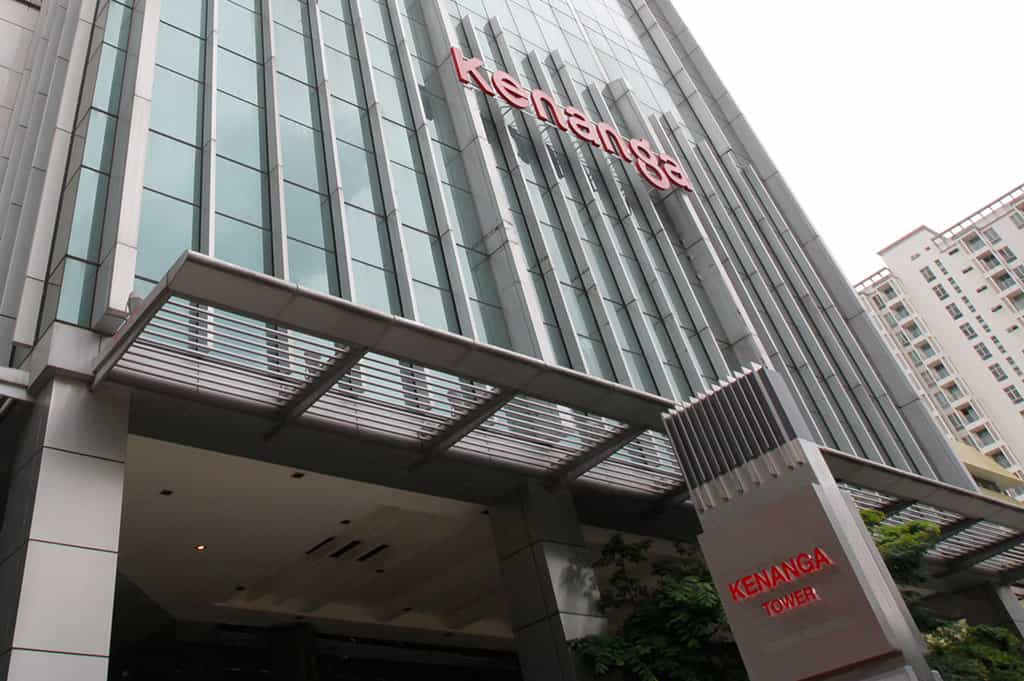
      • Kenanga Investors Sweeps Five Awards At 2023 Best Of The Best Awards By Asia Asset Management

        Kenanga Investors Sweeps Five Awards At 2023 Best Of The Best Awards By Asia Asset Management

        Kenanga Investors Berhad (“Kenanga Investors”) has received five awards at the 2023 Best of the Best Awards by Hong Kong-based Asia Asset Management (“Awards”). The company was recognized for its exceptional performance in a number of categories, solidifying its position as a leading player in the industry.

        Kenanga Investors received the following awards:

        • Malaysia Best Impact Investing Manager
        • Malaysia Best Equity Manager
        • Malaysia Most Improved Fund House
        • Malaysia Best House for Alternatives

        In addition, Executive Director and Chief Executive Officer Datuk Wira Ismitz Matthew De Alwis was named Malaysia CEO of the Year, marking this the fourth year that he has received this prestigious award.

        The firm excelled against a backdrop of reduced trading activities and prolonged turmoil due to a degree of volatility over the last two years to win the Best Impact Investing Manager and Best Equity Manager titles once more. “Our long-standing investment strategy of bottom-up stock picking ensures that we select quality companies with robust financial fundamentals. Ultimately, a sustainable company is one that produces strong results when measured using traditional financial measures as well as ESG considerations”, says Datuk Wira De Alwis.

        This year also marks the fourth year that the fund house has been awarded Best House for Alternatives. Datuk Wira De Alwis explains that the firm’s overarching investment philosophy dictates that differing investment objectives require tailored solutions that cater to the unique needs of each investor. “We are pleased to be recognised for our efforts in providing our clients with a diversified investment portfolio that offers opportunities for long-term capital growth and stability. We are confident that our position within the alternative space continues to provide immeasurable value to our investors, enabling both retail and institutional investors to capture market opportunities in a volatile environment especially when the pandemic, coupled with the unrest in Europe, has accelerated the need for technological advances”, he says.

        The fund house’s focus on diversification and sustainability is further demonstrated by the expansion of the Kenanga Sustainability Series, a suite of multi-asset class products, first introduced in 2021, which are rooted in sustainability considerations to advance long-term financial growth and to generate social financial value for surrounding communities. “In line with this, we aim to continue meeting the diverse demands of our investors by focusing on offering wealth protection solutions, such as insurance and private trust, to help preserve and grow investors’ wealth”, says Datuk Wira De Alwis.

        On its win as Most Improved Fund House this year, he explains “Our ascent to being recognized as one of the leading asset and wealth management firms in the industry is the result of a well-executed approach that combined strategic acquisitions and product expansions with a focus on cost-saving initiatives”. The fund house leveraged existing resources and grew its distribution network as part of its multi-product and multi-segment strategy which has driven customer satisfaction and loyalty as well as robust growth in its assets under administration.

        The Malaysia Best Impact Investing Manager award recognises a firm’s success in deploying impact investing strategies in either public or private markets to generate positive, measurable social and environmental impact alongside sustainable financial returns.

        The Malaysia Best Equity Manager award is in recognition of the success of the fund house’s equity products within Malaysia’s domestic market given the challenging trading conditions and its abilities in capturing potential growth opportunities.

        The Malaysia CEO of the Year award is in recognition of the CEO’s overall achievements, performance of funds, increase of assets under management and their demonstration of leadership in the market.

        The Malaysia Best House for Alternatives award recognises the firm’s achievements in growing the alternatives market, its performance record and its growth in client base.

        The Malaysia Most Improved Fund House award recognises a manager’s strong financial performance by growth in revenues and profits in the past two years.

        AAM is the world’s longest-running publication focused on Asia’s institutional asset management and pension fund industry. Its Best of The Best Awards recognises the finest performers in Asia from financial services companies and institutional investors to service providers whose influence and excellence expands beyond borders.

        For more information about Kenanga Investors, please visit www.kenangainvestors.com.my

        About Kenanga Investors Berhad 199501024358 (353563-P)

        We provide investment solutions ranging from collective investment schemes, portfolio management services, and alternative investments for retail, corporate, institutional, and high net worth clients via a multi-distribution network.

        The Hong Kong-based Asia Asset Management’s 2023 Best of the Best Awards awarded KIB under the following categories, Malaysia Best Impact Investing Manager, Malaysia Best Equity Manager, Malaysia CEO of the Year, Malaysia Best House for Alternatives and Malaysia Most Improved Fund House.

        The Kenanga Growth Fund Series 2 won Best Malaysia Large-Cap Equity Fund at the 2022 Morningstar Awards Malaysia.

        At the Refinitiv Lipper Fund Awards Malaysia 2022, KIB won overall best Mixed Assets – Malaysia Pension Funds Group award for the third time. Accompanying this were individual fund wins awarded to:

        • Kenanga Growth Fund for best Equity Malaysia Fund over 10 Years
        • Kenanga Malaysian Inc Fund for best Equity Malaysia Diversified over 3 Years
        • Kenanga Growth Opportunities Fund for best Equity Malaysia Small & Mid Cap over 5 Years
        • Kenanga Diversified Fund for best Mixed Asset MYR Flexible over 10 Years

        Additionally, the FSMOne Recommended Unit Trusts Awards 2022/2023 named Kenanga Growth Fund Series 2 as “Sector Equity – Malaysia Focused” and Kenanga Shariah Growth Opportunities Fund as “Sector Equity – Malaysia Small to Medium Companies (Islamic)”.

        The Asset Benchmark Research has ranked KIB as Highly Commended on its list of ‘Top Investment Houses’ in the Asian Local Currency Bond Awards for Asset Managers.

        At the United Nations Global Compact Network Malaysia & Brunei (“UNGCMYB”) Sustainability Performance Awards 2022, we received the “Sustainable Products” award for our launch of sustainable products, which cover the Kenanga Sustainability Series – a suite of multi-asset class products rooted in sustainability considerations to advance long-term financial growth for investors and to generate social and financial value for surrounding communities. The award also recognised the first SRI-qualified high yield bond fund in Malaysia, the Kenanga Sustainability Series: High Yield Bond Fund.

        For the sixth consecutive year, KIB was affirmed an investment manager rating of IMR-2 by Malaysian Rating Corporation Berhad, since first rated in 2017. The IMR rating on KIB reflects the fund management company’s well-established investment processes and sound risk management practices. During the first half of 2021, KIB’s 20 largest unit trust funds outperformed its benchmarks for the one-year, three-year and five-year periods

      • 7 Tips For First-Time Home Buyers

        7 Tips For First-Time Home Buyers

        Purchasing property in Malaysia can be complicated and perplexing, particularly for first-time buyers. Yet, if you are prepared and knowledgeable, you may go through the process easily and assuredly.

        Here are some tips for first-time home buyers in Malaysia.

        1. Property Ownership

        settle my loan early credit card loan house loan opportunity cost car loan

        One of the important tips for first-time home buyers is to know the many forms of property ownership. Malaysia has three: leasehold, freehold, and Bumiputera quota. Properties with a leasehold duration of up to 99 years are often less expensive than those with freeholds.

        Freehold homes cost more and have an unrestricted tenure. For ethnic Malays and other indigenous communities, quota-Bumiputera properties are set aside.

        Read: Housing Loan In Malaysia: What Is Debt Service Ratio (DSR) And How To Calculate DSR?

        2. Know Your Property Market

        Get knowledgeable about the property market. It is crucial to comprehend the market’s circumstances before making a purchase. Find out the costs of nearby properties similar to yours and the level of interest in those properties.

        To better grasp the market, you can also speak with property agents, registered real estate negotiators or property developers.

        Read: Property Investment: Make Money via Capital Gain & Rental Yield

        3. Loan Pre-Approval

        Next on tips for first-time home buyers is to obtain a loan pre-approval: If you intend to use a loan to pay for your property purchase (which most people are), it’s a good idea to get pre-approved a loan before beginning your search.

        This can help you decide how much you can pay on a property and provide you leverage when dealing with vendors.

        Read: 3 Important Steps For Your Mortgage Application

        4. Understand the Legal Process

        One should know and understand the legal process before buying a property. The legal procedure for purchasing property in Malaysia might be complicated, so it’s important to understand all the processes.

        This includes the ownership transfer, stamp duty and additional legal costs. Having a lawyer at your side will be very helpful throughout the procedure.

        Read: Investing In Property With A Holistic Perspective Using This 3-Step Process

        5. Property Inspection

        Number five on the tips for first-time home buyers, we need to inspect a property, particularly if it’s a sub-sale property. Make sure you conduct a property inspection before making an offer. It’s better to have a professional inspect the house before making an offer.

        This will ensure there aren’t any flaws or problems that aren’t obvious now but could later cause complications in terms of safety or money in your pocket!

        Read: 5 Reasons Why You Shouldn’t Pay Off House Loan Early

        6. Ready To Spend More Money!

        You should be ready! There are additional charges to consider in addition to the property’s purchase price, such as legal fees, stamp duty, and other ancillary costs. Make sure to budget for these fees in advance.

        If you are buying a sub-sale or auction property, be aware that repairing or renovating may take a lot of money.

        Read: How To Save 50% Of Your Housing Loan Interest In Half The Time, And Get Your Dream Car For Free

        7. Be Patient!

        One of the final tips for first-time home buyers is to be patient. Take your time, research, and consider all your possibilities before deciding.

        Remember! Property loan is one of the largest loans with the longest tenure one has in life!

        Buying property in Malaysia can be difficult and complex, but with a little information and planning, you can go through it confidently and smoothly.

        Understanding the various types of property ownership, being familiar with the real estate market, obtaining a loan pre-approval, being aware of the legal process, obtaining a property inspection, being ready for additional fees, and exercising patience are all key.

        Once you know these tips for first-time home buyers, you’ll have no trouble choosing your ideal property in Malaysia if you keep these suggestions in mind.

        Read: Is Malaysia Property Still Worth To Invest In?

      • Tragic Procrastination On Estate Planning Documents

        Tragic Procrastination On Estate Planning Documents

        The following story is based on an actual series of events, with some names and circumstances fictionalised. Any similarity to any person’s name, character, or history is entirely coincidental and unintentional. Hope that we better understand the importance of having estate planning documents set up as soon as possible.

        Ted was a close friend of mine. He had always struck me as a kind of bon vivant, enjoying life through fine foods and adventurous travels with a small group of friends.

        One day, out of the blue, he called me to meet up with him urgently. At a café in Damansara, he told me that he had just taken a health check that indicated heart palpitations, and he was due for a full heart check-up the following week.

        As such, he said he wanted to do a Will and a Trust, which he wanted to be done through me personally. I told him I was happy to oblige and started with a run-through of what he owned and owed.

        He had just moved into a large bungalow in an affluent area, and apart from various objets d’art and jewellery and four luxury cars, his biggest asset was his investment in Hong Kong.

        This was a trading company in which Ted had a 50% share, with a local Chinese who was his old schoolmate and partner for some twenty years. The company did very well in its contracts with China. The investment was significant because he could draw a salary of USD 50,000 monthly from the business and had been doing so for the last two years.

        However, the shareholding was in his partner’s name to fulfil local bidding requirements. He did not have any documentation to show his share of interest because they had both started the business based on trust.

        I told Ted that, apart from setting up a will and naming his distribution wishes, he had to, as a matter of urgency, set up a trust that his partner should sign, acknowledging his beneficial interest. He agreed and named his wife and two daughters as beneficiaries. He asked me to proceed with the estate planning documents as soon as possible.

        The estate planning documents were ready for him within a week, and we were to meet on a Sunday for him to sign. He, however, postponed the meeting to the following weekend and the weekend after that because of some ‘urgent business’ in Hong Kong he had to attend to.

        He said he would take the opportunity then to inform his partner of the trust deed to be executed. Unfortunately, he died of cardiac arrest on the eve of the day he was due to sign his documents.

        Just A Tad Late On The Estate Planning Documents

        All of us were in shock. The family and I gathered shortly after the funeral to review his files and estate planning documents.

        He had a rather messy record, but after painstaking work, it transpired that Ted had living parents and a sizeable debt – several million ringgit in the form of the house mortgage, a million ringgit in unsettled hire purchase, several hundred thousand ringgit in tax and about a hundred thousand ringgit incurred through ten credit cards.

        So, sadly for the family, they had to apply for letters of administration because of the lack of a will, and a quarter of Ted’s estate had to be shared with his parents.

        The most tragic part was that the so-called trusted friend and business partner in Hong Kong denied that Ted had any beneficial interest in the company shares (which were estimated to be worth USD 5 million for Ted’s 50% holding).

        In consequence, not only was the distribution of the estate considerably delayed, but the net value of the estate left for the family was drastically reduced, and the house they had just moved into had to be sold to pay for the debts in a moribund property market.

        It would have made a difference if Ted had signed his estate planning documents on time!

        About Rockwills International Group

        Rockwills International Group, now in its 28th year, pioneered professional will writing in 1995 and has since evolved into the leading estate planning specialist in the country. It is today the largest provider of solutions and support services in the areas of trusts, succession, management and distribution of wealth. It has shareholders’ funds exceeding RM50 million. It has done over 280,000 wills and 15,000 trusts and hold more than RM25 billion in assets under trust.

      • The Inaugural Malaysia Gold Conference 2023

        The Inaugural Malaysia Gold Conference 2023

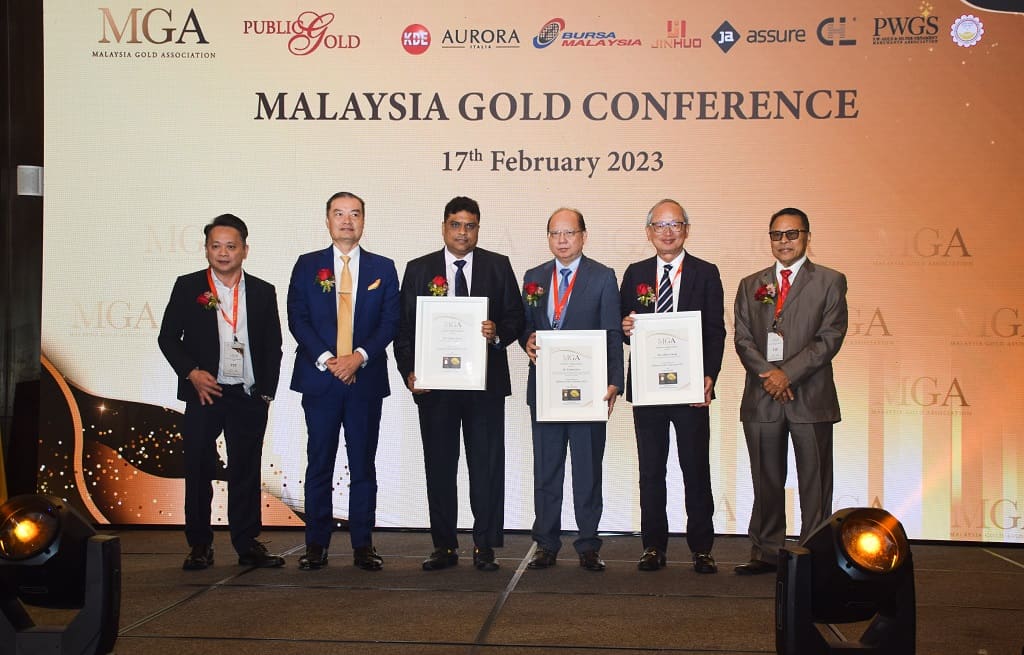
        Malaysia Gold Association (MGA) has organised and hosted the first ever Malaysia Gold Conference 2023 in Malaysia that was graced by the presence of the Ambassador of the Republic of Kazakhstan to Malaysia, His Excellency Bulat Sugurbayev accompanied by Dato’ Wira Louis Ng (Founder & Executive Chairman of PG Group), the President of MGA, along with Dato’ Chiah Hock Yew (President of Federation of Goldsmiths and Jewellers Associations of Malaysia), Vice President of MGA and Dato’ Haji Abdul Wahab Hamid, Chairman of Malaysia Gold Conference 2023, who is also the Honorary Secretary of MGA, to share with local gold industry players useful information on the current global gold market, gold prospects for year 2023 as well as market trends involving gold in various forms, here at Pavilion Hotel Kuala Lumpur, today.

        With first-hand information shared by local and foreign gold veterans, the Malaysia Gold Conference 2023 was set to bring the local gold industry to greater heights.

        Established in 2014, MGA has over the years played a vital role in advancing local precious metals industry through various activities from active involvement in national policy making and maintaining gold standards, to organising sales campaigns. This year, MGA has organised and kick started its first ever annual gold conference with guest speakers from London Metals Focus, Singapore Bullion Market Association, and Federation of Goldsmiths and Jewellers Association of Malaysia to share their expertise with participants – primarily gold industry players.

        The core purpose of MGA is to protect the welfare of local precious metals industry and ensure that the industry continues to thrive. Hence, it is vital for local gold industry players to be consistently updated on regional market trends, global gold outlook as well as latest gold standards set by world renowned precious metals organisations, to remain competitive in global markets.

        The key speakers who participated at the Malaysia Gold Conference 2023 were Mr. Chirag Sheth, Principal Consultant from London Metals Focus, Mr. Albert Cheng, Honorary Chief Executive Officer (CEO) of Singapore Bullion Market Association, and Mr. Ermin Siow, Advisor from Federation of Goldsmiths and Jewellers Associations of Malaysia. The discussion topics include overview on the current global gold market, gold outlook for 2023, and latest market trends involving gold in various forms.

        Apart from the three constructive gold knowledge sharing sessions, Mr Ryan Long, Head of Commodity Derivatives of Bursa Malaysia Derivatives was also given the opportunity to present a short introduction on Bursa Malaysia Gold Derivatives Gold Contract for public awareness.

        According to the President of MGA, Dato’ Wira Louis Ng, “We want to make the Malaysia Gold Conference a resourceful event for all gold industry players in Malaysia. Therefore, apart from hosting discussions pertaining to physical precious metals and its prospects, we have also included a presentation on gold derivatives by Bursa Malaysia Derivatives this time round, to cover all aspects of gold in Malaysia.”

        On top of the informative sharing sessions by gold veterans, Public Gold which is the main sponsor for this event, had also launched their very own Malaysia Gold ATM – certified by the Malaysia Book of Records as the First Gold Automated Teller Machine (ATM) in Malaysia that dispenses physical gold products. In line with MGA’s aim to promote home-grown brands to the World, the association is very much in support of this extraordinary initiative by Public Gold.

        The momentous Malaysia Gold ATM launch ceremony was officiated by the Ambassador of the Republic of Kazakhstan to Malaysia, His Excellency Bulat Sugurbayev, Tan Sri Datuk Danny Ooi, Founder and Advisor of The Malaysia Book of Records, together with Dato’ Wira Louis Ng, Founder and Executive Chairman of PG Group, and Datin Wira Yvonne Lim, Executive Director of PG Group.

        This Malaysia Gold ATM enables consumers to purchase physical gold bars (with 999.9 purity) which ranges up to 5 grams per bar at great convenience. This is to encourage general public, particularly Malaysians to keep physical gold for long-term wealth preservation. The Gram Gold Bars that are available for instant purchase at the Gold ATM feature astonishing designs from Disney, Marvel Studios, Warner Bros, Juventus, Garfield, Ejen Ali, Monsta, amongst others, which are perfect not only for personal collection and physical gold trading purposes, but also as gifts to family and friends. This machine operates 24 hours a day, 7 days a week, to cater to ad-hoc demands at anytime of the day, with just a push of a button.

        “We at Public Gold have always been an innovator and we constantly progress to suit market needs. In line with our brand tagline, ‘Ultimate Wealth Protector’, we want to encourage more locals to keep physical precious metals as a way to protect their wealth. Keeping physical gold is an excellent way to hedge against inflation. With the current economic situation in Malaysia, all the more locals should consider keeping physical gold to safeguard their existing wealth. Hence we feel this is the perfect time to launch our very own Malaysia Gold ATM to make gold purchase easy,” said Ng, who is also the Founder and Executive Chairman of Public Gold Group.

        For more information on the Malaysia Gold Association (MGA), kindly log on to www.mga.my to find out more.

      • The Smart Investor’s Guide to ESG

        With trends, some have their 15 minutes of fame, and others are here to stay. Environment, Social, and (corporate) Governance (ESG) seem to be the latter, in that it encompasses many vital points in your daily living, down to the finest detail.

        Before the pandemic, the three letters ‘ESG’ were not as widely known and used by businesses, even more by investors in the local space. It was only when the world as we knew it was upturned by forced closures, bankruptcy, and unsustainable businesses that companies began to look at these three key points, and so did investors in return. 

        Gone are the days when keeping tabs on the performance of stocks in the market was enough for the average investor. More investors are taking into account the part they play in socially responsible investing, or sustainable investing. ESG issues are real-world problems, and investors want to put their money where their mouth is – by seeing their hard-earned money go into places that bring good impact, and not contribute to the problem. 

        With that, what is the importance of ESG when it comes to influencing one’s choices in investing, and how important is ESG investing in the bigger picture?

        Money growth investing
        Putting your money where your principles are – ensuring the companies you invest in are ESG-compliant. | Credit: nattanan23 via Pixabay

        ESG is present in our everyday life 

        One of the barriers to decision-making is usually a lack of understanding. Asking the man on the street about their knowledge of ESG may result in confused responses along the lines of “something that only bigger corporations need to be concerned about”. 

        If ESG investing comes off as a concept that is too ‘big corporate’ to grasp – breaking it down into its three elements (environment, social, and governance) in everyday terms is a good start. Would you invest in a company that is known to pollute the waters or atmosphere with toxic gases at the expense of profit? Can you turn a blind eye to corporations that run sweatshops manufacturing t-shirts retailing at $500? How about buying stocks at an investment bank infamous for helping others launder money in offshore accounts?

        Whether or not we are aware of these issues, or choose to advocate against them – these three elements are key points that every business needs to consider to not just survive but also thrive. As more investors are standing up and paying attention – silence about such issues is almost regarded as compliance.

        Investing in ESG-compliant companies empowers us to keep them accountable 

        It is one thing to talk about current issues plaguing the planet, but can businesses walk the talk? Major corporations with sustainability arms pledge their commitment to the environment, their support for a community, or merely just promise their transparency – and investing in these companies allows us to hold them to their word. 

        Even if these pledges are a corporate stance for good publicity – shareholders and investors can pressure them into taking action and making better decisions. Consumers, too, are now making conscious decisions to support brands or companies whose values align with theirs. These campaigns are a message from the companies to consumers that they are walking the walk. In turn, it gives consumers a vested interest in where they are putting their hard-earned money. 

        Environment protection
        Climate change and the environment is one of the bigger factors for big corporations to invest in when it comes to their business practices. | Credit: AndreasAux via Pixabay

        ESG investing helps us to look at the bigger picture

        In today’s rapidly evolving and volatile economy, it can be difficult to determine where our investments will end up in the next month, and what more in the next 5-10 years. However, with an ESG compliance or framework in place, companies can manage and future-proof their organisations against risks that could crop up in the future. This includes risks such as climate change (E), social welfare (S) and loss of shareholder confidence (G) in business practices – all of which could jeopardise financial standings. 

        As a result, these companies will be able to see fewer disruptions, downtime and see better financial results in the long run. ESG on its own is a long-term goal, where the benefits and rewards are reaped by putting in the hard work now, thus giving us the opportunity to take a step back and evaluate how our choices today will bring about a changed tomorrow. 

        ESG reporting is still evolving 

        Just last year, PwC together with MICPA (The Malaysian Institute of Certified Public Accountants Malaysia) ran a survey on investors’ impressions and expectations of ESG in Malaysia. One of their key findings was that only 3% of respondents agree that the current reporting of ESG in Malaysia is good – demonstrating the need for bigger-picture reporting and the call for consistency. 

        For now, one of the more well-known points of reference is the Bursa Malaysia FTSE4Good Index, which lists and ranks Public Listed Companies (PLCs) according to their compliance with ESG-related principles. Done in accordance with FTSE Russell ESG Ratings Methodology, it aims to support investors in making ESG investments in Malaysian-listed companies, encourage best practice disclosure and support the transition to a lower carbon and more sustainable economy. 

        The list of these companies in the index is also available to the public, so you can view each company’s current status (at the time of writing, the website is updated as of December 2022) as a reference. Some corporations have also pledged their commitment to the Task Force on Climate-related Disclosures (TFCD) – with Bursa Malaysia also providing instructions to assist corporations who attend to join.   

        While this may mean that how companies adopt ESG-compliant initiatives and reporting can differ from case to case, there is still a need for uniform standards and reporting – or else it could leave investors with more questions than they can find answers to in the long run.

        By Grace Lim

        Liked this article? You may be interested in these other articles: