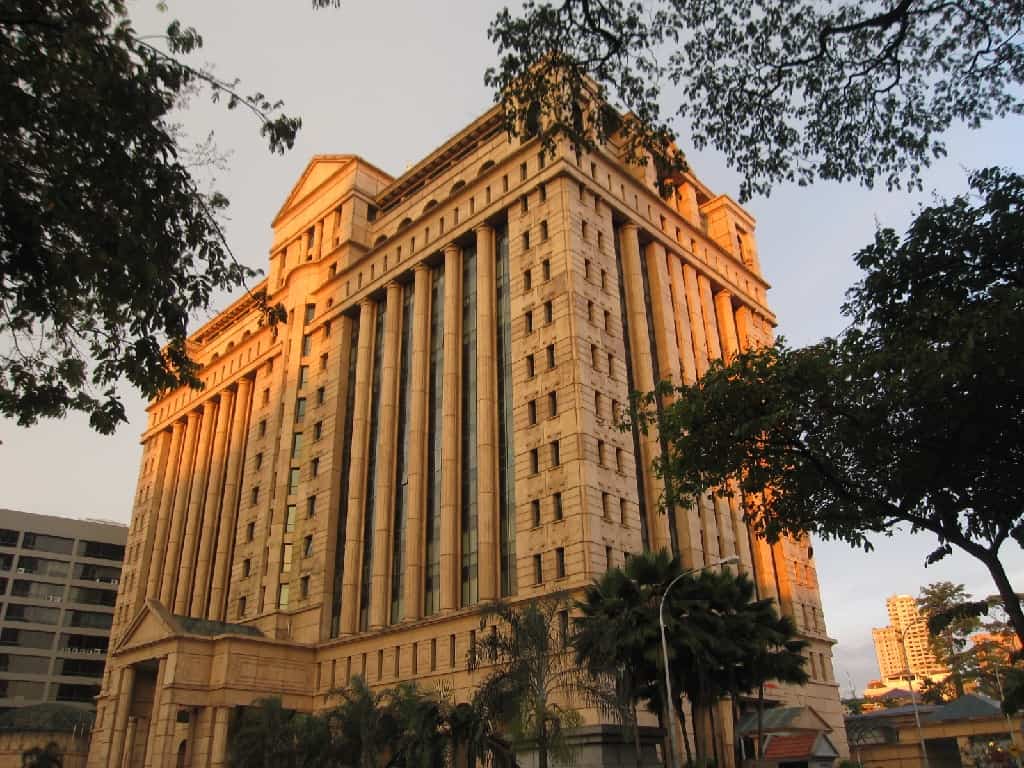
Stablecoins are in vogue, for good and bad reasons. On the bright side, by being allegedly backed one-for-one with hard currencies or near-money safe assets, unstable stablecoins hold the promise of functioning as privately produced money that could facilitate digital trade on distributed ledger technology (DLT) platforms in the future.
To see this, one must recognise an important property that defines the acceptance of a currency: the no-questions-asked (NQA) principle. Coined by Bengt Holmström, the 2016 Nobel Economics Prize winner, NQA means no due diligence is needed on the value of currency used in a transaction. All parties in a transaction accept the money at face value – a one-hundred-ringgit note means RM100, not a cent less.
The implication is enormous: banks will not put your transaction on hold to verify the value of your money when you wave your card to pay for a meal. Neither will the cashier waste time on physical verification if currency notes were presented. Just imagine how messily inefficient the payment system will be if otherwise occurred.
NQA also means no delay when it comes to redemption and convertibility. All banks shall do in the face of deposit withdrawals, for instance, is to let it be. Likewise, no parties in a transaction would question an exchange of a RM100 note for two RM50 notes or ten RM10 notes upon request.
For fiat currency, the trust is grounded upon central bank’s monopoly in currency notes issuance. For bank money, the trust is sealed by deposit insurance and access to central bank reserves.
Unstable Stablecoins?
Which brings us back to the viability of stablecoins as privately issued money. By what the trust on stablecoins can be underpinned? So far not much, other than the collateral in the form of cash and cash equivalents proportional to the stablecoins minted.
Tether, for instance, describes that “Every Tether token is always 100% backed by reserves, which include traditional currency and cash equivalents. Every Tether token is also one-to-one pegged to the dollar, so USDT1 is always valued by Tether at USD1.”
Leaving aside the fact that Tether has been sued and fined USD18.5 million for lying about its backing assets – less than 7% of its tokens were backed by cash and cash equivalents– the inner logic of a collateralised token is deeply flawed.
Now suppose the token is genuinely 100% tied up in perfectly safe and liquid assets. That simply means stablecoins are equivalent to but no better than cash. If so, what is the point to privately create a digital token, while the job can be carried out equally well by riskless central bank money?
But if the token is not fully backed by near-money safe assets, tokens become non-fungible, as the same tokens embody different intrinsic values when the collateralised assets are varying. Then the token users would need to consider whether to accept the token at face value in each transaction. After all, your USD1 stablecoin is not worthy of my USD1 stablecoin. This is a great example of unstable stablecoins.
NQA Concept With The Unstable Stablecoins
In this context, NQA principle is violated. Stablecoins are always vulnerable to runs, and therefore hard to use in transactions. There is a familial resemblance between the Free Banking Era of the 19th century in the United States and stablecoins. By passing the Free Banking Law first in Michigan, in 1837 and last in Pennsylvania in 1860, more than a dozen of states changed the way banks were operated. Anyone could just open a bank, but with one rule: banks had to back their note issuance one-for-one with state bonds.
Guess what? Bank notes were not economically efficient then as there was constant argument over the value of notes in transactions. NQA principle was broken, and there can’t be a functioning currency when there is no NQA.
Later in 1863, the National Bank Act was passed. Banks that could issue national bank notes were established. Privately issued bank notes were penalised out of existence, giving way to national bank notes that ended the free banking era.
If history is any guide, the parallel is clear: stablecoins are likely to be replaced by the coming central bank digital currencies that can also circulate on a DLT platform. No privately produced monies, however collateralised, can be as good as a properly run central bank monies.
Unless central bank digital currencies are designed for use only among financial intermediaries, then other private digital monies like stablecoins can co-exist to serve the wider economy on retail front.
But to transform stablecoins into the equivalent public money, the one-to-one peg to national central bank digitalcoins must be backed by central bank reserves. Stablecoins cannot become a stable currency until this occurs.
By leveraging the prevailing well-functioning banking and payment system, another option is to tokenise the bank deposits. These tokens would represent a claim on the bank, just as a debit card holder drawing on her savings deposits does. Tokens are then backed by deposits, which, in turn, are backed fractionally by central bank reserves and deposit insurance.
As such, fungibility is restored, and NQA principle is naturally effectuated. While stablecoins in its current form are inherently unstable, we certainly don’t want to throw the baby out with the bathwater by putting more nails in stablecoins’ coffin.
But rather, if we believe that digital exchanges enabled by DLT platforms are here to stay and proliferate in the future, sorting out a viable form for privately produced currency that can be used to grease the wheel of digital exchanges is a more productive way out.
We might not be far away from stabilising the unstable stablecoins.
About the Author
Wong Chin Yoong is a professor of economics in Universiti Tunku Abdul Rahman, and an external consultant to Max Wealth Group.
With businesses around the world facing unprecedented pressure from the cost of energy and the urgency of climate change, a new report from the Energy Efficiency Movement shows that improving industrial energy efficiency is the fastest and most effective way for a business to cut energy costs and greenhouse gas emissions. The Energy Efficiency Movement is a global forum of around 200 organizations sharing ideas, best practices and commitments to create a more energy-efficient world.
Published recently, the “Industrial energy efficiency playbook” includes 10 actions that a business can take to improve its energy efficiency, reduce energy costs and lower emissions right now. It focuses on mature, widely available technology solutions that will deliver rapid results and ROI – and are capable of being deployed at scale.
“Energy efficiency is a win-win for companies and the climate,” said Kevin Lane, senior program manager, energy efficiency, with the International Energy Agency (IEA). “While industry needs to address climate change on all fronts – such as increasing use of renewable energy, investing in low-carbon processes and developing circular business models – energy efficiency stands out as the business-focused opportunity with the best near-term prospects for emission reductions. The 10 actions contained in this report are known, cost-effective resources, and can be employed at scale rapidly to help companies convert climate ambition into action.”
Industry is the world’s largest consumer of electricity, natural gas and coal, according to the IEA, accounting for 42 percent of total electricity demand, equal to more than 34 exajoules of energy.[1] The iron, steel, chemical and petrochemical industries are the largest consumers of energy among the world’s top-five energy-consuming countries – China, United States, India, Russia and Japan. This energy consumption carries high costs in the current inflationary environment. It was also responsible for nine gigatons of CO2, equal to 45 percent of total direct emissions from end-use sectors in 2021, according to the IEA.
Organizations interviewed for the report include ABB, Alfa Laval, DHL Group, the IEA, Microsoft and ETH Zürich, the Swiss federal institute of technology. The contributors’ recommendations range from carrying out energyaudits to right-sizing industrial machines that are often too big for the job at hand, which wastes energy. Movingdata from on-site servers and into the cloud could help save around 90 percent of the energy consumed by IT systems.[2] Speeding up the transition from fossil fuels, by electrifying industrial fleets, switching gas boilers to heat pumps or using well-maintained heat exchangers will also offer efficiencies.
Further actions involve installing sensors and real-time digital energy monitoring to reveal the presence of so-called “ghost assets” that use power when on stand-by, unlike a digital twin that can simulate efficiency actions without interrupting production. Using smart building solutions to control power systems, lighting, blinds and heating, ventilation and air conditioning (HVAC) will also save energy in industrial facilities.
Other recommendations include installing variable speed drives which can improve the energy efficiency of a motor-driven system by up to 30 percent, yielding immediate cost and emissions benefits. If the more than 300 million industrial electric motor-driven systems currently in operation were replaced with optimized, high-efficiency motors, global electricity consumption could be reduced by up to 10 percent.
“There are energy efficiency solutions available that can help industry mitigate climate change and drive down energy costs, without compromising performance and productivity,” said Tarak Mehta, president, Motion business area at ABB. “With recent technology advances in energy efficiency, the improvement potential in industry is significant and readily available. So, rather than turning the lights off and halting production to save money, this important new report explains practical steps executives can take to reduce energy use and their bills while maintaining current operations. “
Business leaders and experts wanting to learn more about reducing their energy costs and carbon emissions are invited to join a special panel event that dives deep on the opportunities presented in the report and how to capitalize on them. The event will take place at 4pm Central European Time / 10am Eastern on Tuesday, December 13, and will be available afterward as video on demand. Register here.
ABB is a technology leader in electrification and automation, enabling a more sustainable and resource-efficient future. The company’s solutions connect engineering know-how and software to optimize how things are manufactured, moved, powered and operated. Building on more than 130 years of excellence, ABB’s ~105,000 employees are committed to driving innovations that accelerate industrial transformation. www.abb.com
The Energy Efficiency Movement is an initiative that brings together like-minded stakeholders to innovate and act for a more energy-efficient world. The Movement was launched by ABB in 2021 and it has received a positive reaction from throughout industry, with around 200 companies joining as of November 2022.
The pandemic has brought about a wind of change in the way we live our lives, with online activity becoming more common. We do more online shopping, we order more food online and have it delivered to our doorstep, businesses have to embrace online meetings, and schools and learning institutions have their teachings and learnings online as well. We are also seeing the rise of digital banks and Islamic finance in Malaysia.
There’s also a surge of demand for online banking but not everything can be done online. Online banking primarily focuses on essential transactions such as money transfers, bill payments and basic online account management. For other transactions, we still need to perform it physically at the bank’s branch.
This is where digital banking will revolutionise Malaysia’s banking industry. A full-fledged digital bank is a financial institution that offers financial services solely through a digital platform. Almost all banking activities that were previously only available at bank branches can now be performed online with digital banks.
Smart Investor spoke with Othman Abdullah, Chief Executive Officer of Islamic Banking at Silverlake Group, a global financial technology and digital economy solutions provider to find out more about digital banks. Silverlake is one of the pioneers of Islamic finance IT solution providers, and is also the most prominent in the region. Being a Malaysian company, Silverlake Axis is proud to be the enabler for 70-80% of daily Islamic financial transactions in Malaysia. All full-fledge Islamic banks and the majority of Islamic entities of banking groups in Malaysia run Silverlake’s core banking solutions in their core businesses.
For those sceptical of Malaysia’s readiness for digital banks, Othman replies, “Ready or not, it is something that our country has to do as there are real demands for digital banks.”
Quite a number of other countries are already far ahead. It is encouraging to see our central bank, Bank Negara Malaysia (BNM), implementing various efforts and initiatives to drive the growth of digital banking. This includes the issuance of a licensing framework for digital banks, which was announced on the 31st December 2020. As of April this year, BNM has issued five digital bank licenses to ensure that the digital banks and Islamic finance in Malaysia has a bright future.
The main advantage of digital banking for customers is convenience, where banking can be done anywhere, anytime. Through technology, service deliveries and business operations have become more efficient for financial institutions. Digital banking also addresses a key agenda as outlined by BNM, which is to cultivate financial inclusion to reach the underserved or unserved communities.
“As a financial technologist, I tend to see digital banks as mainly advantageous. The only disadvantage I see in digital banking services is that users are vulnerable to cybersecurity risks such as loss of credentials to hackers that result in financial loss. Digital banks will have to strengthen their cybersecurity defences, while consumers need to be vigilant of cybersecurity threats,” mentions Othman.
The global Islamic banking and finance market is valued at over US$2.5 trillion. According to S&P Global Ratings Islamic Finance Outlook 2022 Edition, it is estimated that the global Islamic finance industry would expand by 10-12% in 2021-2022. In view of the expansion of Islamic banking assets in some Gulf Cooperation Council (GCC) countries, Malaysia and Turkey as well as sukuk issuances exceeding maturities, S&P Global Ratings opines that higher digitalisation and fintech collaboration could help strengthen the industry’s resilience in more volatile environments and open new avenues for growth.
Digital transformations of financial institutions greatly accelerated by the Covid-19 pandemic, has created huge demands for digital Islamic finance solutions. According to a report, the Islamic fintech market within the Organisation of Islamic Corporation (OIC) countries alone is projected to grow at 21% CAGR to US$128 billion by 2025.
“We are also seeing digital banking initiatives launched by conventional Islamic banks such as Bank Islam with its Be U app, and Al-Rajhi Malaysia also shared some of their digital banking initiatives,” quips Othman.
The Future Of Digital Banks And Islamic Finance In Malaysia
The future of digital banks and Islamic finance in Malaysia looks very bright for Islamic finance. In addition to Muslim countries intensifying their efforts to further grow their Islamic finance market, non-Muslim countries have also been expanding their interests in developing the Islamic finance market in their jurisdictions. Indonesia has a national agenda to support a Shariah-compliant economy, coordinated by the efforts of their Islamic fintech association to develop the ecosystem.
The Malaysian government through its Shared Prosperity Vision 2030 (SPV2030) has identified Islamic finance and the digital economy as one of their Key Economic Growth Activities (KEGA). Digital banks and Islamic finance in Malaysia has a bright future indeed.
About the Author
Othman Abdullah is the Chief Executive Officer, Islamic Banking at Silverlake Group, a global financial technology and digital economy solutions provider. Othman is also a consultant for Silverlake Integrated Banking Solution and Silverlake Straight Through Banking Platform. Qualified in both IT and Islamic finance and equipped with more than two decades of hands-on experiences servicing financial services industry, Othman has positioned himself as a financial technology thought leader in the space of Islamic financial services.
The following story is based on an actual series of events with some names and circumstances fictionalised and any similarity to the name, character or history of any person is entirely coincidental and unintentional. Hope that we can learn a thing or two about protecting our children in a divorce.
Today, it is a sad day for Leng Chai. He got divorced from his wife, Maggie. They had a roller coaster marriage. During happier times, they became parents to twin girls. The court granted Maggie custody of the twins.
Leng Chai spent so much time to build a successful business that he neglected Maggie and the girls in the process. Leng Chai and Maggie attempted several times to reconcile but each time, their relationship became more strained.
As Maggie has been out of work for some time to care for the twins, Leng Chai is worried about the financial wellbeing of the girls (now three years of age) in case he dies before they grow up. Though Maggie knows that Leng Chai loves the girls, she is also worried that he may not keep his promise, like so many of the promises he made when they were trying to save their marriage.
Maggie is also worried that he may remarry and neglect the twins especially when he has children with his new wife. Leng Chai, in turn, is worried that Maggie may remarry and neglect the girls to focus on her new family. The least he can do is provide for them financially.
One of the way to be protecting our children in a divorce, is by the way of trust. An easy way to resolve both Leng Chai and Maggie’s concerns is for Leng Chai to setup a trust for the girls. This agreement to setup a trust could be incorporated as part of their divorce settlement.
The trust would need to be one that cannot be revoked by Leng Chai. If Leng Chai is allowed to revoke the trust, Maggie would be concerned because there is no certainty that Leng Chai will not terminate the trust arrangement in the future or amend it to benefit his new family.
Leng Chai should approach a licensed trust company that is able to address his and Maggie’s concerns for a customised trust solution to be prepared, rather than using a boilerplate trust template. Having a trust company to act as the trustee ensures continuity of the trusteeship and accountability to the twins.
As the purpose of the trust is to provide financial security to the girls, it is important to ensure that the assets placed into the trust provide sufficient funds for them even when Leng Chai is no longer around. Since Leng Hai intends to purchase a RM2 million life insurance policy, he can transfer it to the trustee together with the unit trust investments he owns that has a market value of RM1 million.
With RM3 million in the trust, it makes the protecting our children in a divorce even better. The twins would have financial security to pay for their daily expenses, education, and medical needs in the future.
During Leng Chai’s lifetime, there should not be any distribution to the girls, but any dividends are reinvested by the trustee to increase the available amount for them in the future. Leng Chai can continue to provide financially for the girls before his death or disability.
When death or disability occurs to Leng Chai or when certain conditions stated in the trust are met, it would trigger the trustee to begin disbursing the funds for the girls’ maintenance, education, and medical needs through their guardian before they are 18 years old.
Leng Chai may want to indicate his investment preferences or give power to the protector to make such a decision. It would make sense for Leng Chai to appoint Maggie to act as the protector when he is no longer around. As the protector, Maggie would be the watchdog for the girls and liaise with the trustee on the needs of the girls from time to time.
The trustee may also refer to the protector for an opinion before exercising its discretionary powers with a view of fulfilling the objectives of the trust and to benefit the twins.
This trust arrangement for the twins should end when Leng Chai is no longer around and the girls reaching the age of 25 years. When they are 25, the remaining funds are to be given to them as a legacy from Leng Chai.
At the same time, Leng Chai should have a will written where part of the instructions may give other assets to the twins when they reach a certain age. However, if he remarries, he will need to prepare a new Will as that marriage will revoke an earlier Will.
Maggie in her Will may use her savings and assets to include a testamentary trust for the girls, should she pass on before they are 25 years old. With a testamentary trust, Maggie will leave clear instructions on how her assets should be used for the twins. This is similar to Leng Chai’s trust for the girls.
There are a few differences between Maggie’s testamentary trust and Leng Chai’s trust.
All Bases Covered: Protecting Our Children In A Divorce
For Maggie’s testamentary trust to take effect, it is dependent on Maggie’s passing before her Will is probated and all her debts and taxes fully settled before the testamentary trust begins. It would be different for Leng Chai’s trust where it is not in his Will but in a deed which begins during his lifetime. Leng Chai would have to retitle the unit trust investments and insurance policy into the name of the trustee.
By doing so, the trust will not be subjected to probate and debts, resulting in the trustee being able to use the assets for the girls immediately when Leng Chai is disabled or dies or even when he is having financial difficulty.
In conclusion, by Leng Chai having a trust that is irrevocable for the twins with the right trust company as trustee, it will give reassurance to Maggie and the girls as well as fulfil Leng Chai’s intention to provide for them financially when he is not able to do so.
This will address their concerns and both will have their wishes come true. And that is one way of protecting our children in a divorce.
About Rockwills International Group
Rockwills International Group, now in its 27th year, pioneered professional will writing in 1995 and has since evolved into the leading estate planning specialist in the country. It is today the largest provider of solutions and support services in the areas of trusts, succession, management and distribution of wealth. It has shareholders’ funds exceeding RM50 million. It has done over 280,000 wills and 15,000 trusts and hold more than RM25 billion in assets under trust.
Agensi Kaunseling dan Pengurusan Kredit (AKPK) has officially launched its new accounting diagnostic application for the micro, small and medium-sized enterprise (MSME) market named MyBijakNiaga.
MyBijakNiaga is a digital accounting diagnostic application that can be used by micro and small business owners to record their business transactions and prepare financial statements. It can also keep supporting documents for future reference for the business, as these documents are important for the business to expand or obtain financing. Besides that, users can perform health checks on their business performance and get advice on their current business position—all from one simple tool at any time and anywhere.
Dato’ Suriani binti Dato’ Ahmad, the Secretary General of the Ministry of Entrepreneur and Cooperatives Development (KUSKOP), commended AKPK’s efforts during the launch. AKPK’s work in coming up with a practical application not only helps MSME entrepreneurs manage their business finances and grow their profitability, but also provides an avenue to increase their knowledge in business financial management on the go.
Dato’ Suriani said, “Entrepreneurship is now fast-moving towards digitalisation. Successful entrepreneurship, however, still lies in the basics, such as proper tracking of business records and producing financial statements.
It is especially important that micro and small businesses adopt this entrepreneurial best practice, business digitalisation and knowledge building, especially in financial management. And, MyBijakNiaga is making it all available for these business owners.”
During the launch, AKPK’s CEO, Azaddin Ngah Tasir also highlighted that financial literacy is the way forward for micro and small businesses.
Alongside the household sector in 2020, AKPK’s mandate has expanded to also include MSMEs. Today, AKPK is an integral part of the ecosystem in the country which elevates the financial well-being of households and businesses. Being a new mandate for AKPK and their significance in the economy, AKPK is vigorously looking at ways to enhance MSME’s financial resilience and performance.
Azaddin explained, “On top of repayment assistance, financial advisory and learning modules for MSMEs, we wanted to provide something useful and practical that micro and small business owners to use on a daily basis to empower them in managing their business. And, that idea is translated into MyBijakNiaga.”
This digital business accounting application will offer convenience, confidence and peace of mind to thousands of MSME entrepreneurs as they record their business transactions, learn the back-office of financial management, manage financial data and assess their business performance, and as they are able to forecast their business in three years to come.”
MyBijakNiaga provides an alternative to off-the-shelf accounting software that can be expensive and complex. In contrast, MyBijakNiaga is freely accessible and simple to use with a clear explanation in Malay. Despite its simplicity, MyBijakNiaga is a secured platform with a proper sign-in procedure, and importantly, it is outcome-driven which helps micro and small entrepreneurs increase their financial literacy, financial control and business acumen along the way.
As of today, nearly 2,000 MSMEs have registered with AKPK to access MyBijakNiaga, and the feedback received by users has been very positive and encouraging. Opportunities abound but it takes courage, initiative and commitment to new ways of managing business finances to build strong enterprises.
We now live in the era of uncertainty. The market is very volatile, where it can have wild swings that might scare even the most seasoned of professionals. This is where fixed income comes into the picture to help smoothen things up and make investing less of a wild rollercoaster ride.
Smart Investor spoke to Dan Ivascyn, Managing Director and Group CIO of PIMCO to find out more about the global fixed income outlook for 2023. Ivascyn is leading the company’s fixed income strategies and PIMCO is an American investment management firm focusing on active fixed income management worldwide. PIMCO manages investments in many asset classes such as fixed income, equities, commodities, asset allocation, ETFs, hedge funds, and private equity.
Dan Ivascyn, Managing Director and Group CIO, PIMCO
Global Fixed Income Outlook For 2023
Smart Investor: 2022 has been a torrid year for markets on the back of higher interest rates and persistent inflation. What’s your broad outlook for markets in 2023 and are we tipping towards a recession?
Dan Ivascyn: Over the next six to twelve months, we expect to see shallow recessions and rising unemployment across many large developed markets. Central banks are determined to bring down inflation, which means tighter financial conditions and slower growth that is unlikely to bounce back quickly.
We believe the return potential in the bond markets is now compelling, given how much yields have risen year-to-date. We do see downside risks for global equity markets, however, given starting valuations and earnings expectations that may not account for ongoing central bank tightening measures and increased recession risk.
SI: Fixed income has also not been spared from the volatility as bond yields rise with the Fed staying on its hawkish path. Is the bond route over or should investors stay buckled up? What’s your take on the global fixed income outlook for 2023?
DI: The global fixed income outlook for 2023 is looking quite attractive whether it is from an absolute perspective, versus cash for those that may have been on the sidelines looking to avoid the volatility, or versus equities where we see more downside risk. Given the dramatic rise in rates so far this year, we are finally at a point where we do see considerable opportunities for the patient investor, particularly in the higher quality space that should be more resilient in a recession.
The bottom line is that valuations have changed a lot very quickly and careful investors can now go on the offense in select parts of the fixed income market.
SI: Against a backdrop of slowing growth and risks of corporate defaults, how will the team be approaching its credit selection and investment process? Which sectors are you finding attractive?
DI: In credit markets, we seek to balance near-term caution given the uncertainty and recession risks with a long-term focus on high quality, resilient assets that may see some near-term weakening, but that we believe are highly unlikely to default. This includes a range of high quality structured credit assets, high quality investment grade corporate debt, particularly financials, and even some high yield credits that we believe have sufficient balance sheet resiliency over a range of adverse economic outcomes.
We’re more cautious on areas of the credit markets that are very sensitive to the economic cycle. This includes weaker emerging market corporate exposures, lower-rated bank loans, and segments of the private credit market where weaker-quality borrowers will likely face the direct impact of higher central bank policy rates via higher debt service costs, which will likely be accompanied by deteriorating earnings power.
SI: Why should investors consider fixed income as an asset class in their portfolios?
DI: There are several reasons bonds make sense in a diversified portfolio. Firstly, the increase in yields globally means there is a much higher income potential in bonds than there has been in a long time. High single digit yields in high-quality bonds provide a powerful source of returns and stability, particularly compared to equities which may see more weakness in a recession.
Secondly, current valuations mean there is the potential for capital gains as the trade-off between growth and inflation becomes more evident, potentially resulting in a Fed pivot.
Finally, while stocks and bonds have tended to move in the same direction this year, we expect to see a return to negative correlations, meaning fixed income generally should rise in value when equities fall.
Well there you have it, the global fixed income outlook for 2023 by an expert.
Building Portfolio Resilience With Bonds
By seeking responsible sources of income that are resilient through different market environments, the Affin Hwang World Series – Global Income Fund provides investors a gateway into tapping global bond opportunities. Through a flexible multi-sector approach, the Fund balances higher yielding and higher quality assets to deliver consistent income to investors.
The wholesale bond fund will feed investors’ money into a collective investment scheme, PIMCO GIS Income Fund, managed by PIMCO. Suitable for sophisticated investors, the Fund is offered in seven currency classes, namely USD Class, MYR Class, MYR Hedged-Class, SGD Hedged-Class, AUD Hedged-Class, GBP Hedged-Class and EUR Hedged-Class. The minimum investment is 5,000 for all listed foreign currency classes and 10,000 for local currency classes.
Contrary to popular belief, it’s not just the naïve, greedy and gullible who fall for scams that result in them parting with their hard-earned money. Scammers are becoming increasingly sophisticated with their tactics and technology that anyone with a mobile phone and internet access is a potential victim. Even though some scams may look like the real deal, you can learn how to spot a scam and do background checks to protect yourself from becoming a victim.
The Financial Planning Association of Malaysia (FPAM) held a Facebook livestream on World Financial Planning Day, which was on the 5th of October 2022, where licensed financial planner, Dr Selina Dang offered guidelines on hot to spot a scam and how to avoid them.
Whatever their modus operandi may be, all scammers have the same endgame: to get you to hand over your money to them. That is why it is important to know how to spot a scam. Here are the common scams going around that most of us at some point might have encountered:
How To Spot A Scam: Macau Scams
You get a phone call out of the blue from an authority body; the police, the magistrate, the postal service or the Inland Revenue Board. The authoritative voice on the line will inform you that you have heavy criminal charges against you. The caller would read out your name and IC number to prove that they know who you are, with the purpose to lead you on to reveal personal information, namely your bank account password.
“The scammers put you under pressure, so they can reel you in. We are susceptible to these kind of calls because of our trust in authority,” Dr Dang said.
How To Spot A Scam: Phishing Scams
You see an ad somewhere on a website for a service you need from a legitimate business. You messaged them and got a reply with a link to their website or a request to download an app. Once you click on the link, you will be taken to a phishing website.
“With one click, you will be compromising all your personal data,” Dr Dang warned. “With the technology they have, the scammers are able to steal your usernames, passwords and even gain access to your SMSs.”
How To Spot A Scam: Investment Scams
The most obvious tell-tale sign that an investment opportunity is a scam, according to Dr Dang, is when they start guaranteeing or offering high returns with little to no risk.
“All investments involve some form of risk. The ones with high returns typically carry higher risk. Be aware of investments that promise to generate positive returns regardless of market conditions.”
How To Spot A Scam: Job Scams
Scammers would pose as recruiters in search of workers for foreign job positions in a foreign country with the promise of attractive job opportunities with a lucrative income. The jobseeker may be required to pay a processing fee in advance for work visas, air tickets and the necessary paperwork needed.
“The point of engagement is where the scam starts,” Dr Dang said. Thus, the best way to not get scammed is to not engage with the scammer in the first place. Once you know how to spot a scam, it is important not to fall in their trap.
Here are several strategies one can take to protect themselves from being reeled in by a scammer:
Don’t pick up automated calls
“A good sign of a scam call is when you hear a recorded message, asking you to press a number to speak to a person. If you receive such a call, hang up right away,” Dr Dang said.
Never give away personal information over the phone – Some scammers are able to use technology to spoof their number, so that a legitimate phone number will show up on your Caller ID and make you believe you are indeed speaking to a person in authority. Even in such scenarios, Dr Dang would like to remind you that, “No official body will call you for personal information or to threaten you with legal action.”
Have a spam call filter in place
Very often nowadays, we receive calls from unfamiliar numbers, many of which are likely from scammers. Fortunately, most phone models now come with a Caller ID and Spam Protection feature that filters incoming calls. If your phone doesn’t have this feature, you can install the Truecaller app, available on Apple and Android, which is also useful for screening unsolicited telemarketer calls.
“Speak to the elderly folks and teenagers in your family about protecting themselves from scammers, and help them install these safety features on their phones,” Dr Dang added.
Make sure the bank account you are sending money to is not used for scams
When buying things online where you are dealing directly with the seller, such as through garage sale apps like Carousell and Facebook marketplace, do check to be sure that the bank account you are given to send payment to is not a mule account. This can be done through the Semak Mule portal or the Scam Response Centre by the Commercial Crime Investigation Department (CCID).
Don’t click on any unauthorised links that may take you to a phishing website
“If you happen to click on such links, do not enter your personal details, and only download apps from official app stores,” reminded Dr Dang.
Check with the right regulators
If approached with an investment opportunity, always check first if the product or service is regulated by Bank Negara or the Securities Commission (SC). Next, check to see whether the person you are dealing with is a licensed or unlicensed intermediary.
“SC has very strict guidelines when it comes to investments. Money must be transferred to a legitimate company registered either with Bank Negara or SC, not just any company,” Dr Dang explained.
She then added: “Also, never, under any circumstances, deposit money into an individual’s personal account. If anyone asks you to transfer money to their account or an unauthorised company, please stop. It is a major red flag.”
Now that you know how to spot a scam, let’s do our part to spread the awareness to someone else.
According to the Securities Commission Malaysia, high-net-worth individuals (HNWIs) is defined as an individual whose:
a) Gross annual income exceeding 300,000 ringgit or its equivalent in foreign currencies in the preceeding twelve months b) Who jointly with his or her spouse has a gross annual income exceeding 400,000 ringgit or its equivalent in foreign currencies c) Total net personal assets or total net joint asset with his or her spouse, exceeding 3 million ringgit or its equivalent in foreign currencies, excluding the value of individual’s primary residence d) Total net investment portfolio (whether personally, or jointly with his or her spouse), in any capital market products exceeds RM1 million or its equivalent in foreign currencies.
This would make us wonder who these people are, what do they do and what are their belief systems? More importantly, how did they get to where they are today and how can we embark on the same journey?
With years of experience in managing high-net-worth individuals in Malaysia where 80% of them are self-made millionaires, I have identified seven successful habits that most of them have.
1. They Are Good Active Listeners
They are not as arrogant as others think they might be. They leave their cup empty every time they meet someone, helping them strengthen their perspectives on different issues. They’re not just actively seeking feedback from others; they would also listen to understand the other party.
Active listening helps them build strong relationships, as well as gain a deeper understanding of their friends, staff and colleagues. This would greatly help in developing their own sense of empathy and improving their communication skills.
2. They Leverage
Most high-net-worth individuals in Malaysia are fully aware of their own weaknesses. Therefore, they know the importance of leverage and why they would never work alone. They work on their strengths while leveraging their weaknesses on others.
For example, they know they can make money in the stock market but might not have the time to manage it themselves. They prefer to have a trusted and reputable fund manager to manage their investments and to have a financial planner advise and monitor it for them.
In my observation, many of them succeed because they focused on their strengths and figured out a way to outsource their weaknesses. If they do not possess a particular skill, they would delegate it to someone who is great at doing it, so they could focus on the bigger picture and have more time and mental energy to execute it.
3. They Create Their Own Future
A lot of high-net-worth individuals in Malaysia would not take no for an answer and are willing to go the extra mile to achieve what they want. They are persistent which enables them to create their own luck and opportunities in order to reach their lives’ objectives and financial goals.
For example, they would love to see what kind of financial mistakes they can possibly make, and will look up creative plans and solutions to protect and preserve their wealth. They are also always on the lookout for alternate routes to be financially successful.
4. They Make Full Use Of Their Time
Time is very valuable. The high-net-worth individuals in Malaysia know how to prioritise matters and would not simply waste their time engaging in useless conversation or mindless activities. All their activities will be related to creating value, even though while having fun.
For example, choosing to spend time listening to audiobooks during work commutes. When they tune in, they will choose a channel that is insightful for their mind and soul. Most of them will wake up early in the morning and find time to exercise regularly and keep themselves healthy.
HNWIs are always looking to develop new skills to empower themselves. For example, they will go for activities like swimming, diving, and shooting to equip themselves with life skills.
5. They Are Constantly Learning
Constant learning and self-improvement are top priorities for most high-net-worth individuals in Malaysia. They love to read and choose economics, finance, technology and self-help books that can add value to their lives. They would also develop and commit to a routine, even when they don’t feel like doing it. This is because they understand the importance of sticking with their routines and habits to keep on growing.
“They commit to themselves in doing rather than daydreaming.”
It is very important to surround yourself with people who share the same vision and are capable of making their dreams come true. They will commit their energy, focus and drive to succeed in life.
“Your network is your net worth.”
A great team is needed and networking helps them reach their dreams and goals in life.
7. They Are Financially Prudent
Having a high income does not necessarily mean having high savings and investments. Lots of high-net-worth individuals in Malaysia are financially prudent. They do not simply spend money and live a luxurious life.
They enjoy using the return from their investments to further grow their net worth. They are in command of their money flowing in and out. Being prudent is one of the important traits in financial management and they have targets to achieve based on a clearly defined financial roadmap.
So there you have it with the 7 habits of high-net-worth individuals in Malaysia.
About the Author
Dr Inaz Hashim is an experienced holistic financial planner focused on managing high-net-worth individuals in Malaysia. She is a licensed Financial Planner with Expanded Scope & Islamic Financial Adviser (IFAR) with Phillip Wealth Planners. She graduated from RCSI-UCD Medical College and holds Shariah Registered Financial Planner (ShRFP) from MFPC. She has completed her Certificate of Shariah in Banking & Finance from International Islamic University College Selangor. Currently, she is pursuing her Masters of Science in Islamic Banking & Finance at International Islamic University of Malaysia (IIUM).
During the recent Singapore Fintech Festival 2022, which saw record turnout, a new digital asset was launched in the form of vouchers called “purpose-bound money”. They are powered by the Singapore Dollar backed stablecoin (XSGD) and processed on the Grab superapp, and piloted to 5000 participants with much fanfare. The vouchers were sponsored by Temasek, the best-managed sovereign wealth fund in the world.
Many thought that digital assets were gaining the public recognition and adoption it deserves. They enthused that the year-long ‘crypto winter’ is turning into spring, as November is usually a great month for the markets.
Temasek explained that it spent 8 months on “extensive due diligence” before making the investment. Fellow investors include Tier 1 venture capital (Sequioa, Softbank), hedge funds (BlackRock, Tiger Global), and multi-billionaires (David Loeb, Paul Tudor Jones) to name a few. Ordinary Singaporeans were caught in the same boat, as they were the second biggest traders globally on FTX pre-collapse, averaging 240,000 visits a month.
The markets went nuclear. Business Insider summed up wryly: “Up-vember has turned to Nope-vember!”
Can Retail Investors Really Manage Ultra High-Risk Assets?
Digital assets are extremely volatile. They have crashed so many times that there is a website dedicated to counting the number of times that “bitcoin is declared dead” by news outlets. At time of writing, there are more than 460 “obituaries”. Bitcoin has dropped by 75% from its high this time last year with about RM9 trillion in value destruction across the crypto market!
Take bitcoin for example: It has a very high level of residual risk i.e., risks that cannot be attributed to normal factors. This means that there are risks which are specifically unique to this asset class, and it is nearly impossible to be aware of or to address all risk factors.
Based on studies, 91% of bitcoin’s risk is unexplained. In comparison, broad-based equity indices like the S&P 500 have only <1% residual risk. Individual stocks typically carry higher residual risk, but much lower than that of bitcoin.
Investors might take on such residual risks to serve the notion that digital assets can hedge against global market downturns, but unfortunately, this could not be further from the truth. Bitcoin might not act as a safe haven against downturns such as during the pandemic. Instead findings show that it might even amplify losses.
Therefore, when you invest in digital assets, accepting high risk is not an option – it is par for the course. You stand to lose everything you have, and you shouldn’t be surprised by it. When a large sovereign wealth fund can lose its entire investment despite all the information access and investing tools at its disposal, what can we say for small-time investors?
Many non-professional investors are oblivious of taking large amounts of residual risks but are unable to sufficiently diversify them away.
Please ask yourself:
Do you know how to manage crypto exposures, optimize position sizes, and have the level of sophistication to do so?
Do you fully understand how price discovery in crypto works, and the outsized role which futures markets play?
How frequently should you rebalance your portfolios and what assets can you rebalance to?
How are you going to hedge risks when there are literally no hedging instruments offered by the DAXes in Malaysia?
Awareness Of Risk Is Not Equal To Suitability Of Investment
Investors are taught to allocate between the four main types of asset classes according to risk. You may put some into cash which tend to have the lowest risk, followed by bonds or properties, and finally into equities, which carry the highest risk.
Some consider digital assets as the fifth asset class though it is far riskier than equities. Often there are no financial statements or real fundamentals behind them, so investors have to rely on technical analysis. Furthermore, due to the lack of regulations, ‘information asymmetry’ remains a serious and unresolved problem – investors seldom have full or fair access to the information required. Under these circumstances, value investing is very difficult.
In the absence of corporate disclosure requirements, investors aren’t duly notified of the legal and technical threats that unfold. When all they see is the quotation board (as corporate news isn’t announced to DAXes), their decisions won’t be as informed as they should be.
For instance: They won’t know that the latest digital asset approved for trading in Malaysia, Solana is closely related to FTX, which is currently being investigated for large-scale fraud. Or that it suffered at least five major outages since its launch, rendering it ‘unusable’.
Or that Ripple is facing ongoing prosecution by the US SEC and has been delisted in leading foreign DAXes such as Coinbase. Or that Uniswap gets maliciously hacked every now and then, without any investor recourse.
Digital assets bound to a single corporate entity such as FTX present a big due diligence headache as investors won’t know what hit them before it’s too late. The performance of these entities directly correlates to the performance of their tokens.
They may behave like equity, but they are not beholden to their token holders! They are neither required to report or be transparent. Corporate controls take a backseat while their ‘moon-talk’ takes the wheel, right until the inevitable car crash.
Digital Asset, The Choice Of So Many Youths
Nevertheless, crypto has changed the investment dynamic. It has become a touchstone of pop culture. When you ask Millennials and Gen Zs, their first investment product is crypto even though it is the riskiest asset class! They’d place their life savings to buy illiquid artworks (in the form of NFT) even though that’s the last thing a normal portfolio will consider.
When you ask what their objectives are, it sounds like they want to chase unicorns or catch lightning in a bottle (expect prices to magically pump). Their investment strategy is mainly to hold until it hurts – while those who sell are shamed as weak hands.
It’s a ‘donut’ approach: Do nothing as it tracks to zero, just stare at the hole. Solana may have plunged 95% from its peak last year with no bottom in sight. But to Solana fans, it is the hill they die on.
The point is: It is not enough to be aware of the risks – most investors already are. Awareness is one thing, but the assessment of product suitability is quite another. But are DAXes making such an assessment? Are investors being risk profiled?
When it comes to a prolonged downturn like what is seen now in the crypto market, these investors become captive or stuck in their spot positions without ways to neutralise them or products to rotate out to.
Will the situation worsen once IEOs (initial exchange offering) start proliferating the market? IEOs share similar characteristics with private securities offerings, which are generally reserved for accredited investors. In Hong Kong, these are classified as “complex products” which warrant additional investor protection measures (HK SFC: Guidelines on Online Distribution and Advisory Platforms 2019).
In Singapore (where FTX is the latest storm to volley the island in a squall line from Terra Luna to Vauld to Three Arrows Capital to Hodlnaut), regulators have been repeatedly advising retail investors to stay away from crypto but was anyone listening?
When Investors Treat Crypto As Their Retirement Plan…
According to a Charles Schwab survey, nearly half of all millennials and Gen Zs see crypto as a viable retirement plan. This is not just a generational trend but a tech-driven one (Guardian).
They use digital tools like robo-advisors (Accenture) and prefer to pick their own stocks (Wall Street Journal). They think financial planners are for their parents (“OK Boomer!”) and rather get their fix from social media influencers.
Asset managers have been eager to gratify this demand. One of the world’s largest retirement funds, the Ontario Teachers’ Pension Plan for 330,000 working and retired teachers, decided to invest in FTX and is now among the biggest losers on record. Fidelity Investments, which administer pension plans for 23,000 companies in the US, has allowed contributing employees to choose bitcoin in their 401K retirement accounts.
Here in Malaysia, there are news reports that EPF funds were taken out during the Special Withdrawal rounds to invest into crypto – despite the looming retirement security crisis. DAXes are even talking up ‘monthly deposit features’ into crypto like regular savings plans!
There is increasing pushback, in the wake of FTX which fooled the most brilliant and vigilant asset managers. New York’s Attorney General cautioned, “investing hard-earned retirement funds in crashing cryptocurrencies could wipe away a lifetime’s worth of hard work”. US Congress is being asked to ban digital assets for individual retirement accounts as most of them “have no intrinsic value and are too unstable”.
The same goes for investing in “digital asset companies which are a breeding ground for fraud, crime and theft” and “do not operate with sufficient guardrails to protect retirement savings” (US NYAG: Prohibiting Retirement Investments in Crypto 2022).
If Investors Can’t Be Protected, They Should be Restricted
Investors must learn to see behind the smoke and mirrors of crypto. It is 90% marketing and 10% innovation, with a probability not promise of long term value. Many are over-confident of their own research and unaware of confirmation bias.
Even Temasek had to admit that their trust was “misplaced” in FTX. In an interview with Bloomberg, the FTX owner admitted that the concept of high returns in crypto was like a Ponzi scheme, which left the reporter utterly stunned!
Investors need to grow up and admit that they would have missed it too.
FTX is an unbelievably complex organization. Even the defunct Lehman Brothers which triggered the 2008 global financial crisis was less complex. FTX printed monopoly money, made investors buy it, then printed more monopoly money as collateral and took out real money loans – which it gambled away through a sister company.
If digital assets are high-risk products that require sufficient knowledge, experience and capital, why are they not restricted to sophisticated investors – but marketed widely including to the pensioners, the poor, the uninitiated?
The unwary masses are bombarded with outdoor billboards, online banners, radio spots, and roadshow trucks designed by award-winning agencies. Influencers are freely promoting crypto ads in the guise of financial education and luring their ‘followers’ into backroom deals.
At the end of the day, a good investment thesis should have a strong balance sheet, risk management practices, corporate governance, and recovery mechanism. Unfortunately, this basic hygiene is nowhere in the crypto sector.
Until this is done, if we cannot adequately protect vulnerable investor groups, then we ought to in good conscience restrict them from digital assets.
Crypto is here to stay but regulators should ensure it’s here for good. Where there are no suitability guidelines, digital assets are not considered an alternative investment but will become the new staple.
About the Author
Edmund YongKevin Wong
Edmund Yong and Kevin Wong are the partners of Celebrus Advisory, a regulation-focused consultancy for blockchain technology and digital assets.
Everyone wants to make a quick buck here and there, but property investment is a long-term game. Let’s hear a real-life case study on how you can make money in property.
In the early 1990s, a client bought a condominium unit that is 1,396 square feet, comprising three bedrooms and two bathrooms at Taman Tun Dr Ismail. The price after the Bumiputera discount was RM190,000. The condominium was completed in 1993.
The condominium’s latest transacted price last year was averaging RM600 to RM620 per square feet. Taking the conservative average of RM600 per square feet, it is valued around RM837,000 today.
Resident real estate negotiators advise that owners are not going to sell anything lower than RM860,000 now. It is a wait and see strategy adopted by owners with no urgency to sell, anticipating higher values post pandemic.
A simple arithmetic of the numbers brings the capital appreciation to 341%, bringing the Compounded Annual Growth Rate (CAGR) to arrive at about 5.1%
Does this sound impressive? Is is that easy to make money in property?
Maybe, and if you are using the property for own stay, you will be experiencing comfortable paper gains. However, if this property has been acquired for investment purposes, you will need to take into account these factors to calculate your return on investment:
Vacancy costs
Agency costs
Legal fees (for exiting or selling off the property)
Repair & modernisation costs (it is 30 years old!)
Building maintenance service fees
Mortgage borrowing costs
Yearly assessment & council taxes
Tax (on rental income & exit cost for future capital gains)
Due to limited data on the actual Internal Rate of Return (IRR) of this property, I do not have the rental income data as this property was bought over by my cousin for his own stay a few years after this condo was completed.
But let’s give some hypotheticals:
– Rental income during the 1990’s was RM650 and it increased by 10% each year (working out to RM2,400 today, which is conservative for a fully-furnished unit today transacting at an average of about RM2,700 to RM2,900).
– Annual council and assessment taxes at RM300, service charges at RM300 per month and assuming full tenancy. (This is considered on the upside already.)
– 90% margin on mortgage financing, a 4% interest rate, real property gains tax at 5%, agency selling fees at 3%, selling at RM600 per square feet (RM837,000) at the 30th year.
– Assume a one-off major modernisation cost for kitchen and bathrooms amounting to RM100,000.
7.16% Return Good Enough?
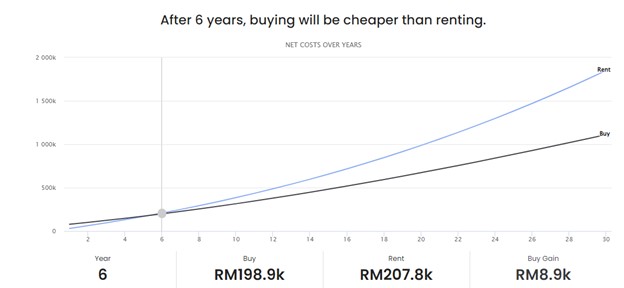
With that the computed annualised IRR is 7.16%. This is comparable to returns of a moderate aggressive asset portfolio.
Is this a good way to make money in property? A standard economist answer would be, it depends…
If you are the original owner, you will likely be enjoying a nice cash flow monthly as a landlord or liquidating with a net gain of capital (after deducting taxes), that could be partially funding retirement. Then you can say that by buying and holding, it is a sure way to make money in property.
But do bear in mind, it took thirty years for real estate values to reach to these levels, so it is not quite straight forward to make money in property. Having said that, it is also worth highlighting that cash flows enjoyed monthly is subjected to LHDN taxation.
According to Section 4d of the Income Tax Act 1967 LHDN, “the letting of real property is treated as a non-business source and income received from it is charged to tax under paragraph 4(d) of the Income tax act 1967 if a person lets out the real property without providing maintenance services or support services (such as cleaning services and repairs) comprehensively and actively”.
In layman terms, this means that you are letting out the residential property and deriving passive income from it. If you own one or multiple properties (bought or inherited) that is not used for business purposes, you are required to pay income tax.
Net rental income is subjected to a progressive income tax rate from 0-30%. These are tax deductible items permitted by LHDN that can be used to derive net rental income for an investment property on residential properties:
Assessment and quit rent is the annual assessment paid to the local authority and quit rent to be paid to the land office.
Interest portion on the mortgage to finance the purchase of real property which is rented out. (Do note that it is only the interest portion of the mortgage that is deductible and not the total monthly mortgage amount).
Fire insurance premium paid in relation to the insurance policy taken on the real property which is rented out.
Expenses on rent collection such as rent collection fees and legal expenses incurred to enforce rent collection.
Expenses on rent renewals to renew tenancy or change tenant.
Expenses on ordinary repair to maintain the property in its existing state.
Other things to consider whilst keeping real estate as an investment in your overall portfolio are:
Do you have the holding power?
Is there a maximum ceiling price to this condo?
Can you stomach vacancies or deal with (troublesome) tenants?
Do you have the willpower to deal with perpetual repairs, refurbishments and maintenance related to the upkeep of the property?
To some, these are hidden costs that can’t be quantified and are not worth the time and the headache. They would rather put their capital elsewhere in an asset like a mutual fund that takes minimal effort and see it grow annually at the rate 6-7%.
The question also would be, can we expect these kind of returns for newer residential projects 20 to 30 years down the road? Is it still going to be easy to make money in property?
Now I wish I had a magical crystal ball to look in the future, so I can make money in property.
Rozanna Rashid is a Director at Alpine Advisory, a financial planning firm. A former corporate banking relationship manager, Rozanna is currently a Licensed Financial Planner (CFP, IFP). She holds an MSc in Real Estate, Economics & Finance from the London School of Economics & Political Science. She can be contacted at rozanna@alpine-advisory.com