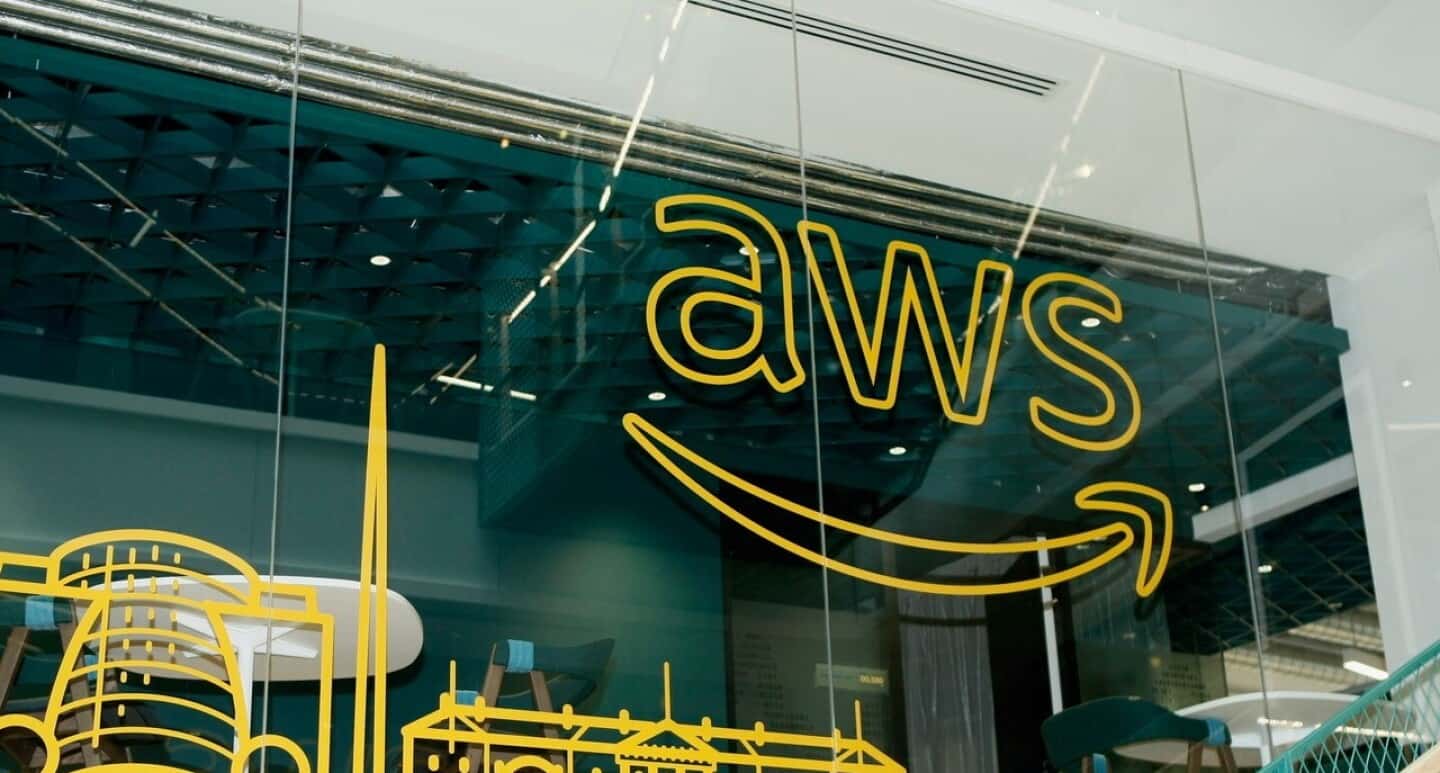
Amazon Web Services’ RM25.5 billion investment into Malaysia – making it the first in the region for cloud computing infrastructure with 3 availability zones is a catalyst on many fronts.
MRANTI believes this will accelerate the rate of innovation as it opens up more bandwidth for Malaysian innovators to closely collaborate with leading science, technology and innovation teams across the value chain, from anywhere in the world, at speed and with greater capacity, reliability, availability, manageability and security. This will raise the stature of our R&D for commercialisation while elevating more Malaysian technologies to market.
This in turn, will enhance the country’s security of innovation supply.
AWS’s investment also opens up new pathways for upstream and downstream R&D services and solutions to be developed in Kuala Lumpur – which is ranked as a top 10 innovation hub in the region.
It will also help us draw in the right talent and move Malaysia up the innovation value chain as the next-generation cloud infrastructure system will support a host of technologies by high-growth companies, set to take flight in the coming years.
Malaysia is already a base for many leading multinational and leading technology companies, and we believe more will follow in AWS’ lead in this regard.
Dzuleira Abu Bakar, CEO MRANTI
MRANTI is committed to connecting investors and innovators to accelerate ideas to impact. In this regard, we look forward to collaborating with AWS and Malaysian institutions, startups, and companies to deliver cloud-powered applications to fuel economic development across the country and to spur job creation, skills training, and educational opportunities for communities.
Ultimately, it will serve the needs of the rakyat, business and industry – as outlined in the Ministry of Science, Technology and Innovation (MOSTI)’s strategic initiatives and framework to enable Malaysia to migrate from a technology consuming to a technology producing nation strongly based on an innovation-driven economy.
About MRANTI
MRANTI is the one-stop research commercialisation agency with the resources to accelerate the commercialisation of innovative ideas that will drive impact. As a connector, collaborator and catalyst, MRANTI will connect problem statements (demand) with solutions (supply), bridging collaboration between public and private sectors (transition); increase private sector participation, either through market access, investment, advisory or consultation and facilities for testing and prototyping.
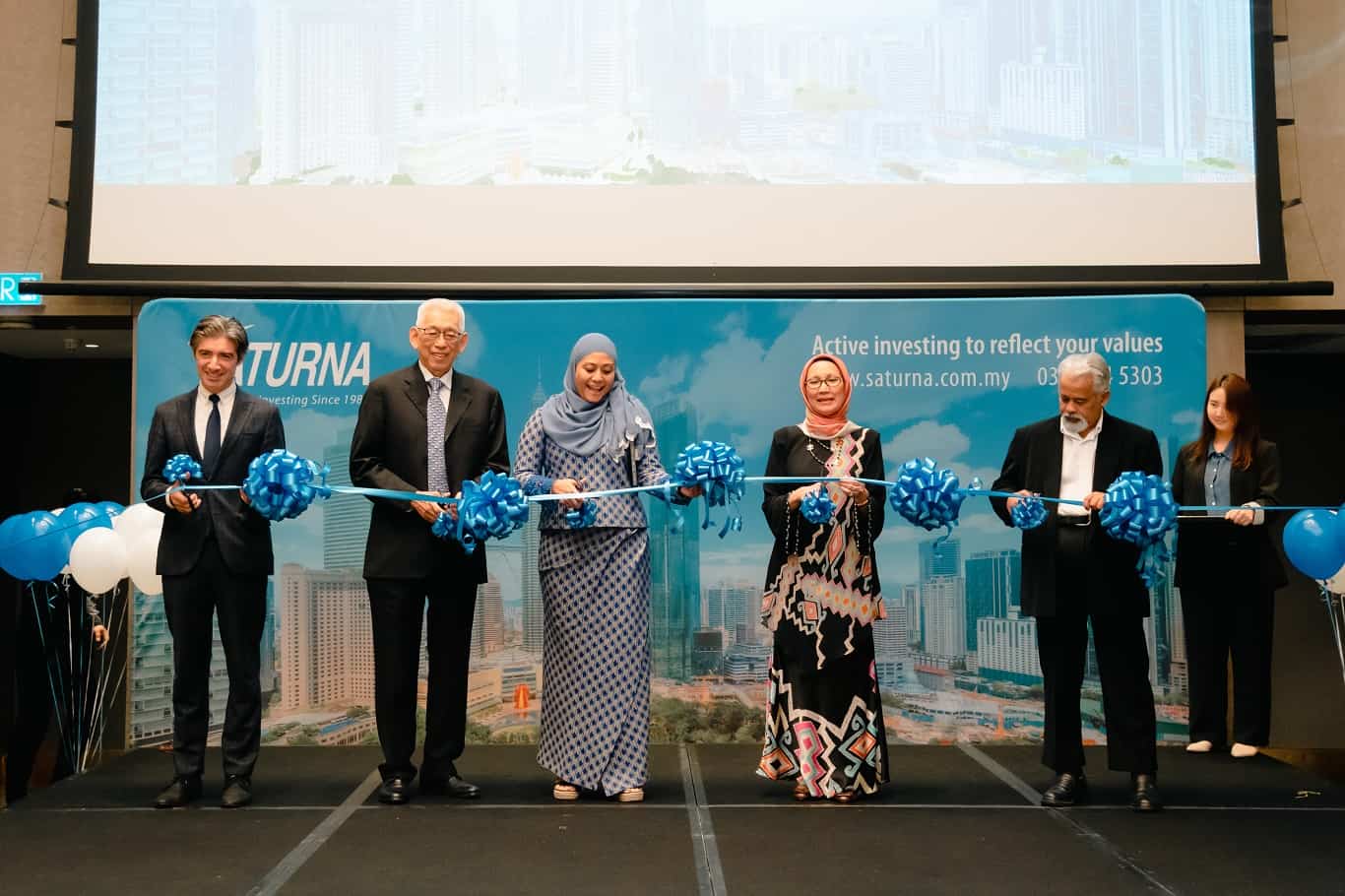
Saturna Sdn Bhd, a leading shariah-compliant financial services firm, today officially launched its digital platform to help investors grow their wealth ethically and securely.
The online tool enables individuals to begin their investment journey in just a few clicks, with the guidance of Saturna’s deep expertise in the world of Islamic finance. Unlike other offerings currently available on the market, Saturna takes an investor-friendly approach by imposing no sales nor redemption charges and no hidden fees. Potential investors can also enjoy flexibility as Saturna’s funds do not come with a minimum holding period.
“Our new online platform is designed to be simple and secure for a seamless user experience,” said Pn. Shahariah Binti Shaharudin, President of Saturna Sdn Bhd. “It’s accessible enough for anyone to start investing in shariah-compliant solutions instantly, regardless of their experience or investment budget.”
Pn. Shahariah Binti Shaharudin, President of Saturna Sdn Bhd
The launch of Saturna’s digital platform was officiated by Pn. Ruslena Ramli, Director of Digital Finance and Islamic Digital Economy of Malaysia Digital Economy Corporation (MDEC), who expressed her hope that more organisations within the Islamic financing space will adopt innovative solutions to grow the industry further. “With this online platform, Saturna has led the way in making Islamic-based investment opportunities more available to a wider audience, enabling more individuals to benefit from the wealth of expertise they have to offer ,” said Pn. Ruslena.
In addition to Islamic principles, Saturna’s funds also comply with global Environmental, Social, and Governance (ESG) standards, where investments are made in companies engaging in socially-responsible and environmentally-friendly business practices or products.
“We see ESG measures as complementary to shariah-compliant initiatives, as they are both driven by sustainability considerations, mitigate volatile risk-taking, and value long-term growth,” explained Pn. Shahariah. “I believe the events of the past few years, from the 2008 financial crisis to the Covid-19 pandemic, have inspired a paradigm shift in the way we view investing and increased the appetite for socially-conscious metrics. With our extensive expertise in Islamic-based fund management, Saturna is well-positioned to meet this demand with alternatives to conventional financial planning solutions.”
The launch event also featured a forum discussion on future trends that will shape the investment scene in the coming year. Panellists at the dialogue included Pn. Ruslena Ramli, Director of Digital Finance and Islamic Digital Economy of Malaysia Digital Economy Corporation (MDEC), Yang Berusaha Ahmad Dasuki Abdul Majid, Chief Executive Officer of PTPTN and Professor Dato’ Dr Mohd Azmi Omar, President and Chief Executive of the International Centre for Education in Islamic Finance (INCEIF).
Saturna Sdn Bhd is a wholly-owned subsidiary of US-based Saturna Capital, whose Amana Growth Fund was ranked as the top Large Growth Fund of 2022 by US News & World Report. Since entering the Malaysian market in 2010, Saturna has established itself as a reputable and transparent Islamic financial firm, listing the National Higher Education Corporation Fund (also known as Perbadanan Tabung Pendidikan Tinggi Nasional or PTPTN) and the the Employees’ Provident Fund (EPF) as among its largest corporate investors.
Among the key tenets of shahriah-based investing are the prohibition on interest (or riba) as well as investments in activities that are prohibited by Islam (or haram), such as alcohol, gambling, and conventional insurance. Pn. Shahariah points out that these criteria are underpinned by a need to be socially responsible, making shariah-friendly investments an attractive option for anyone interested in ethical and transparent financial solutions.
“We are unique even within the Islamic finance sector as we prioritise value-orientated investments and sustainability over short-term profits, as backed by strong research and screening tools; our global track record over the decades has shown that this is an approach that works. Our commitment to Islamic principles shines throughout our investment process and client relationships. Since we operate on a collaborative model based on profit-and-loss sharing, we do not charge any fees when it comes to investing or withdrawing returns — we only earn if our clients earn,” said Pn. Shahariah.
In Malaysia, Saturna manages two popular shariah-compliant equity trust funds, namely the ICD Global Sustainable Fund and the ASEAN Equity fund, which offer investors exposure to global and regional investments respectively. Both funds are authorised by the Securities Commission Malaysia, and invest in a diversified portfolio that favours stable earnings for the long-term.
To sign up to Saturna’s digital platform, or learn more about its investment portfolio, go to: https://saturna.com.my/
About Saturna Sdn Bhd
Saturna Sdn. Bhd. (199501012969) is the wholly-owned Malaysian subsidiary of Saturna Capital Corporation, resulting from the 2010 purchase by Saturna Capital of Alpha Asset Management located in Kuala Lumpur. Saturna Capital is internationally recognised as an adviser to the Amana Mutual Funds Trust. We help individuals and institutions build wealth and preserve capital.
We serve institutional clients with active asset management services, individual investors with private mandates and manage unit trust funds approved and regulated by the SC of Malaysia
Saturna’s deep-rooted belief in value investing shines through in the quality of our investments. We don’t follow trends, we analyse opportunities. Our broad experience distinguishes Saturna in the investment business. Each of our employees is committed to creating and maintaining a unique firm, where client interests always come first.
Our global headquarters in Bellingham, WA sits between the Pacific Northwest’s major cities (Seattle and Vancouver, BC). Employees in the Bellingham, Los Angeles, Henderson (Nevada), and Chicago metropolitan areas service clients across the U.S.
Saturna Sdn Bhd holds an Islamic Fund Management Licence (“IFML”) with the Malaysian Securities Commission. Saturna is the first conventional asset manager to be converted to an Islamic asset manager.
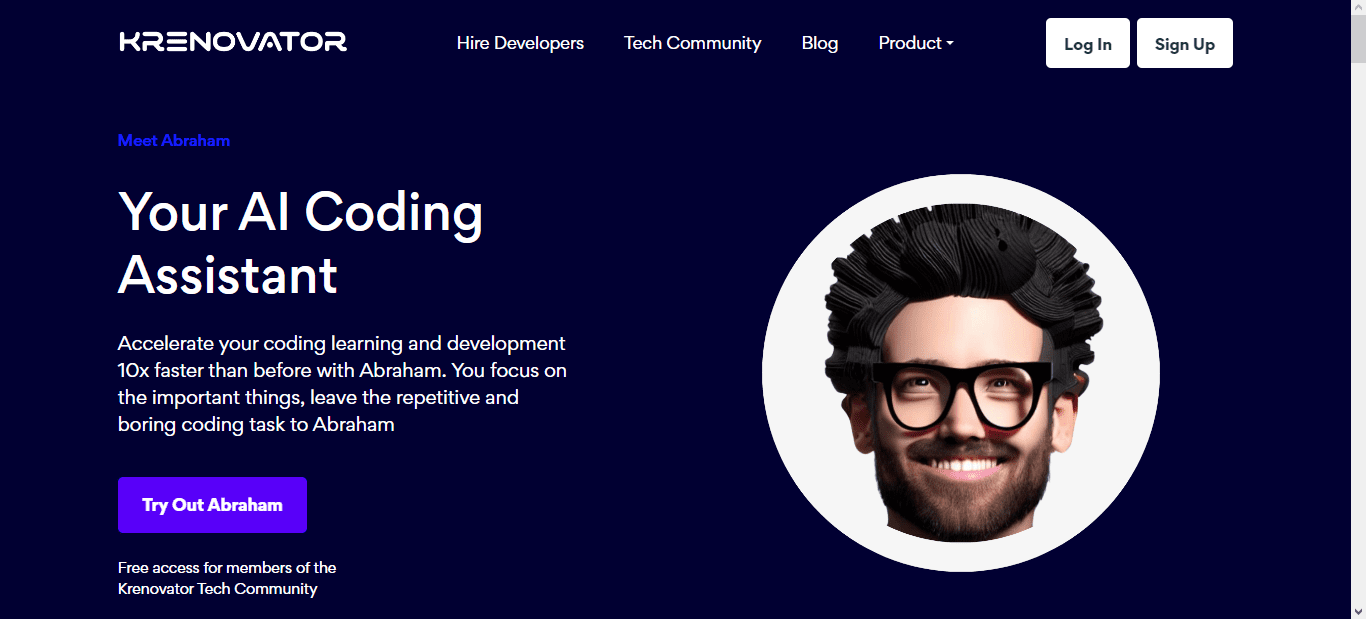
Krenovator Technology Sdn. Bhd. announced the immediate availability of Abraham, an AI Coding Assistant on its digital Tech Talent Platform that was launched late last year. The new tool provides users with real-time feedback and suggestions, helping them to improve their coding skills efficiently and effectively. It also allows users to create new software at a much faster rate than conventional methods. The intelligent coding assistant is available for users at no charge.
Among Abraham’s main capabilities are to assist users in completing unfinished code as well as detect any syntax or semantic errors in a code. Mahadhir Yunus, CEO of Krenovator said, “We are thrilled to introduce Abraham to the world. As a provider of coding training, we often receive a high volume of questions from our users. Some of these questions were unique, which made it challenging to provide quick answers, while others were repetitive. These situations have inspired us to create an intelligent and efficient method of learning to code. Our objective is to offer targeted assistance to developers worldwide so that they can create high-quality and innovative solutions.”
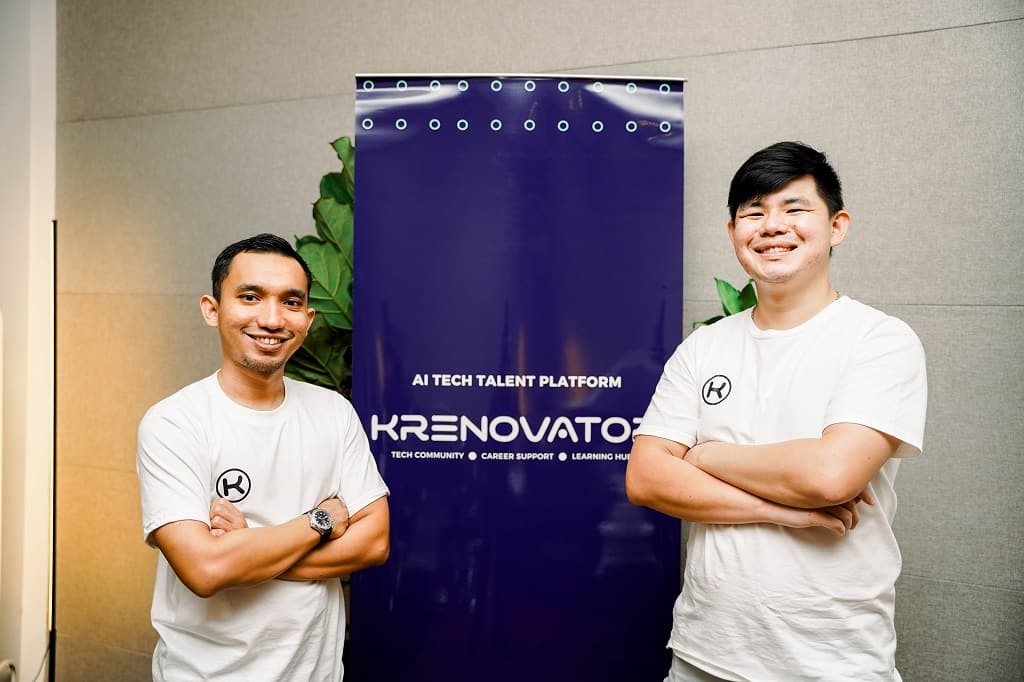
(L-R) Mahadhir-Yunus, CEO and Calvin Lim, COO
Currently, Abraham supports full-stack programming covering 17 popular programming languages and frameworks including frontend, backend, database, API, Angular, DevOps, Flutter, .NET, PHP, Python, Java, and Javascript. Krenovator is working on expanding the list.
“We are glad that the work that began in early 2022 to develop Abraham has finally come to fruition now. Whether it’s a junior coder trying to fix a bug or a senior software engineer wanting to inspect their codes, Abraham can assist 24/7,” Mahadhir explains.
“We see that Abraham has the potential of becoming the first line support assistance when it comes to coding,” he concludes.
Krenovator plans to introduce an enterprise version of the AI coding assistant in the future. Krenovator’s Tech Talent Platform offers free coding and training modules developed by the Company. It has also recently partnered with Coursera to allow users to obtain a certification. The platform currently has more than 3,000 tech talents from Malaysia and Indonesia combined.
About Krenovator
Founded in 2019, Krenovator is an AI tech talent and placement platform that provides services to two main groups – individuals who want to learn and improve coding skills, and companies looking to hire qualified software developers. The Company’s digital platform which was launched in late 2022 has attracted over 3,000 tech talents from Malaysia and Indonesia. So far, the Company has also successfully helped more than 200 qualified talents to land a tech job with employers from Malaysia, Singapore, and the United Kingdom. Krenovator is based in the state of Selangor, Malaysia. Visit us at: www.krenovator.io.
Malaysians are getting more health conscious, as we can see by the mushrooming marathon events. Sales of running shoes, sports attires are also on the rise.
Smart Investor recently interviewed Sheyong Tan, Co-Founder of BiiB on the upcoming Malaysia Corporate Team Marathon, Malaysia’s Largest Intercompany Marathon Challenge. GetBiib is a startup supported by the Malaysian Research Accelerator for Technology and Innovation (MRANTI).
Sheyong Tan, Co-Founder of BiiB
Smart Investor: How do you plan to enlist 200 companies and 10,000 marathoners to achieve the 500,000,000 steps through this effort?
Sheyong Tan: We are creating 3 unique experiences through this event:
1. First ever inter-corporate challenge that is inclusive for both bigger corporations and SMEs. It doesn’t require a huge commitment like donation or fee to be part of it.
2. Not by performance but teamwork. Everyone in the team must do their part to help the company to reach the team goal. It is ok if you’re not the fittest, you can play your part too. In this challenge, you have competitors and you have a common target and a well designed format to motivate your team to work together and kindle the team spirit among your employees. Most importantly, the organiser will manage everything for you, the employer’s job is just to cheer for the team.
3. Attractive rewards focusing on fitness, health and well-being to improve your workplace wellness. Some companies are adding in more “private” rewards to motivate the team to participate. Prize money is usually important for performance based sporting events but for an event that is inclusive and one that promotes team participation – like ours, we want the participants to focus on what he or she can do as part of the team rather than making them to feel they have no chance to win any prizes because they would never the fittest person in the room.
SI: How are you adopting a similar strategy in the annual running league RUNLIGA Malaysia which drew in more than 20,000 participants in the past 2 editions?
ST: The GetBiiB app has been used to host the largest running league in Malaysia for 5 consecutive years.
Through this, we know the best practices, pain points and insights to create the best in class challenge for participants of this corporate challenge.
As such, for this event, we are working with companies who are aligned with our vision to create a healthier workplace and promote well-being among our workforce.
As such, we are working with healthy snack company Signature Market, healthcare company like Doc2us, wearable technology company COROS Malaysia, mental health company Thoughtfull, employment platform like Jobstreet, outdoor company PTT Outdoor, sports facility booking platform AFA and the newly listed technology company Agmo Berhad. The Department of Statistics (DOSM) is also a partner.
We have prepared some nice goodie bags for the participants and finishers which is nearly 20X more than the participation fee.
We are still open for sponsorship and collaboration with any businesses who believe in our vision.
SI: How is this is different from other corporate marathon programmes or apps that companies can choose to organise themselves?
ST: There are several key features.
Key feature 1: Interesting and fun team-based game format
Our platform has different game formats to focus on different outcomes of the challenge. It can be for health, for team building, for a cause, etc.
In a mass participation event like this, the main goal is to motivate participants to commit themselves and at the same time help their team to achieve the best possible result. As the organiser, we know that intrinsic rewards such as pushing through one’s own limit, making new friends, becoming a finisher or becoming one of the top 10 teams can create a more lasting impact.
More than an app, we create a healthy experience for the participants
Key feature 2: Professional support
Joining an online challenge can be challenging for many first timers. We provide professional support to our participants to help them to enjoy the challenge with their team.
The GetBiiB app has been designed to offer participants a hassle free way to create company wide engagement with minimum budget and minimum effort. The HR department or organising teams do not need to put in work extra hours to manage well-being programs for their employees as they can leverage what we have already designed.
SI: Why the need for something like this now? What are the risks / opportunities for companies who (do not) participate?
ST: In this, I would like to quote Bill Gates “The health of a society is ultimately determined by the health of its citizens.”
Overall, improving the health and well-being for employees will reduce the burden of healthcare and insurance on the company. The government recently announced a target of 10 million healthy Malaysians in the next 10 years – and there’s no better time than to start now!
Through this event, we would have just involved 1% of the population. We have a lot more work to do in making sure every organisation can host their very own sporting event easily with the lowest possible effort for highest possible impact.
We wanted to remove the barrier to host an event or a challenge so that big and small organisations can do it at least once a year and collectively we can impact 70% of the population in the next 10 years.
Running / walking is an easy and low cost activity – just need to contend with weather. This is easily an intergenerational activity which is inclusive and allows teams to celebrate their unique strengths. With more hybrid working models in play today, it is important to bring teams together
We also try to lower the barrier of entry to the lowest possible to make sure most people can be part of it. For the Malaysia Corporate Team Marathon, as long as you’re able to walk, you can be part of it without much issue.
All participants commit based on their ability.
SI: Insights on how bosses can engage their employees to participate in an activity like this. How can bosses onboard employees who may be demotivated to exercise ie “this is not my thing”?
ST: Be inclusive and make it accessible to all the employees:
By removing barriers to participation, companies can increase engagement and participation, which can lead to better outcomes and a greater impact.
By making inclusivity and accessibility a priority, we can create a more welcoming and supportive environment for all employees and ensures that all employees have the opportunity to participate and benefit from the initiative.
Find some internal champions
Inspire someone in the community to take the lead, regardless of position and job scopes. This person will be responsible to hype up the event to drive everyone to move forward as a team and he or she should be rewarded too to take up this vital role.
Bosses should be sporting enough to be part of the team too.
Rewards: Companies that offer rewards, incentives or prizes for their employees have a higher engagement and commitment level.
Early engagement: Start engaging with your teams now to prepare them for the challenge – some internal promotion is important.
Positioning: It is important not to position it as an exercise or a workout as it turns people off and relates it to tired, tough and difficult. It is best presented as a challenge for the whole team.
Foster Team spirit: Setting a collective goal and making it inclusive for everyone to be part of it. Believe me if you are surrounded with people who would like to be part of something bigger than themselves with extra steps everyday, you don’t feel like it is a workout.
In our experience, many first time participants realise they can actually walk more and they feel they are more energized by doing so without feeling tired if they do it with a friend. Example, walking for a longer distance with colleagues to get a good lunch vs I need to workout today.
Commitment from team members will be high on some days, but others will need to make up for down days – and the effect will be quite clear especially if 1 or 2 on the team misses their daily target
Offer Strong leadership: a team captain who can create hype and also maintain the team chemistry by cheering for the weaker team members (don’t let them feel left out or shameful for contributing less) is important. Motivation is also key. Those who are fit can share their experience and help the team to go further and maintain high team morale.
Nominate a good team manager – may not be the fastest or strongest, but holds the key to motivating, setting reasonable expectations, managing team morale, etc.
The last few days towards the closing really gets really exciting. Sometimes the ones who start out strongest may not last the longest. So this is also when you will observe how individuals on the team will step up to support each other when they have a common goal and desire to achieve it.
SI: What kinds of companies have been early adopters of such programmes? What are some trends or commonalities you see amongst these companies and their employees?
ST: Companies which have active people in the workplace and believe in health and wellness are often early adopters.
Most of our corporate clients came to us because of the running or sporting communities they have personally been involved in. We believe these people are the seeds to bring change to our country’s future for a more active, collaborative and inclusive society.
SI: Conversely, how can employees get the buy-in from their bosses or management to participate in an activity like this especially if it may involve time at work ie extended lunch hour or early dismissal?
ST: They can provide a number of factual, compelling reasons to management. For example:
Improved physical health: According to one study, regular exercise can lead to a 25-30% reduction in sick leave. Another study found that for every $1 invested in wellness programs, a company can save $3 in healthcare costs.
Enhanced mental well-being: One study found that regular physical activity can lead to a 20-30% reduction in symptoms of anxiety and depression. Another study found that workers who exercise regularly are 15% more productive than those who do not.
Greater team cohesion: A review of several studies found that team building activities, such as sports and fitness programs, can lead to improved communication, trust, and collaboration among team members.
Increased retention: According to one survey, 69% of workers said that they would prefer to work for a company that offers wellness programs. Another study found that companies with strong wellness programs have a 50% lower turnover rate.
Enhanced corporate image: A survey of consumers found that 76% of respondents were more likely to purchase products or services from a company that promotes employee wellness. Another study found that companies with strong wellness programs had a 30% higher brand value.
Exchange-traded funds (ETFs) are a popular investment vehicle that has recently gained popularity due to their simplicity, flexibility, and low cost. An ETF is a type of investment fund traded on a stock exchange, similar to a stock. It is designed to track the performance of a specific market index, such as the FTSE Bursa Malaysia KLCI or the MSCI Malaysia Index.
ETFs, offer several advantages over other investment vehicles, such as mutual funds and individual stocks. They provide investors with a low-cost way to invest in a diversified portfolio of assets that can be bought and sold throughout the trading day. This article will look at some of the reasons why you need to invest in ETF.
Why You Need To Invest In ETF#1 Diversification In Portfolio
One of the main advantages of investing in Malaysia’s ETFs is that it allows investors to gain exposure to a diversified portfolio of assets that would be difficult or expensive to acquire individually.
For example, MyETF MSCI Malaysia Islamic Dividend or MyETF-MMID aims to provide investment results that closely correspond to the performance of the Benchmark Index, which is a price return index comprising 16 to 30 Shariah-compliant securities listed on Bursa Securities, with higher than average dividend yield that is deemed both sustainable and persistent by MSCI.
With an ETF, you will own multiple shares with only one purchase!
Why You Need To Invest In ETF#2 Exposure to Malaysia’s Fast-Growing Economy
Another advantage of investing in Malaysia’s ETFs is that it allows investors to gain exposure to a fast-growing emerging market. The Malaysian economy has been growing consistently over the years, and the country is known for its export-oriented industries, such as electronics, palm oil, and petroleum.
The Malaysian government has also been implementing various initiatives to attract foreign investors, such as providing tax incentives and streamlining regulations.
Source: Bursa Malaysia
To encourage investors to invest in the ETF, the Malaysian government has exempted Stamp Duty of 0.1% until 31 December 2025.
Investing in Malaysia’s ETFs is also a cost-effective way to invest in the Malaysian stock market. ETFs are passively managed, which means that they track a particular market index rather than being actively managed by a fund manager.
As a result, ETFs typically have lower management fees than actively managed funds, making them an attractive investment option for cost-conscious investors. For example, the MYETF Dow Jones U.S 50 (METFUS50) has a total expense ratio of 0.62%, which is relatively low compared to other actively managed funds.
In other actively managed funds, the minimum cost usually involves around 2% to 5% annually for management fees. Some mutual funds also will charge you a performance fee when your investment outperforms the market or the benchmark.
ETFs are also highly liquid, meaning they can be bought and sold on a stock exchange throughout trading. This gives investors great flexibility and control over their investments, as they can buy and sell their ETF holdings anytime.
Additionally, because ETFs are traded on a stock exchange, investors can buy and sell them at market prices, which means they can take advantage of price movements throughout the trading day.
Investors can consider several ETFs on the Bursa Malaysia stock exchange. In addition to the two ETFs mentioned above, other ETFs provide exposure to specific sectors of the Malaysian economy.
For example, the TradePlus Shariah Gold Tracker (0828EA) tracks the London Gold Fixing PM price performance. The MyETF MSCI South East Asia Islamic Dividend (0825EA) or MyETF-MSEAD is an ETF that tracks the performance of the MSCI South East Asia IMI Islamic High Dividend Yield 10/40 Index, which objectively and passively represents the dividend yield opportunity within South East Asia’s Shariah equity markets.
Investing in Malaysia’s ETFs can expose investors to a fast-growing emerging market and a diversified portfolio of assets. ETFs are also cost-effective, highly liquid, and easy to invest in. However, as with any investment, it is important to conduct thorough research and seek professional advice before investing in Malaysia’s ETFs or any other investment vehicle.
The following story is based on an actual series of events, with some names and circumstances fictionalised. Any similarity to any person’s name, character, or history is entirely coincidental and unintentional. It is to manage a business, let alone a family business.
Running a good business is one thing, but having a thriving family business is totally different. Steven was a very successful entrepreneur in the packaging business. He has a wife, Mary, and two sons, John and Wilson, who used to be close to each other. The packaging business has grown large and was listed five years ago.
By then, Steven was 59 and had intended to hand the throne to his two sons when he was 65. Both of them were bright sparks who had graduated with honours.
Going Into The Family Business
However, John, the older boy by one year, was not interested in getting involved in his father’s business and preferred to pursue a career as a professional accountant. He started his accounting practise and got married shortly after to a woman his father disliked. He considered her a conniving woman with shallow thinking.
Conversely, Wilson was happy to get into the business and became in charge of sales and marketing. The father hoped that John would eventually get into his business as the financial man, which would have been ideal for him—two trusted lieutenants, one overseeing the frontline and the other running the operations.
Try as he might, he could not persuade John, who would not budge. Over the years, Steven had passed on a fifth of his shareholding in the holding company to each of his two sons.
He was sad to note, though, that John had, in recent years, been picking quarrels with Wilson at family gatherings until both of the sons were no longer on speaking terms.
One day, Steven called me to meet him about his succession plan for the business in case he passed away. Over a private dinner, he confided in me that he was, while at the pinnacle of his business venture, very unhappy about his two sons’ relationship with each other.
He was very concerned that their distribution could end in business breakup and means the end for their family business. I told him I would talk to both of them as it may be difficult for them to open up to their old man.
After talking to John and Wilson separately, it became clear that Wilson had no problems with John, whom he still respected and looked up to as his taiko, but John had doubts about Wilson. It turned out that John didn’t like Wilson because his wife, who was always suspicious of her brother-in-law, made him feel that way.
Raising questions like why Wilson was ‘abusing’ the company’s resources by frequently using its high-end cars, buying expensive corporate gifts, and enjoying lavish entertainment at fancy restaurants and nightclubs.
At my next meeting, I told Steven about the underlying cause and suggested that he bring John on the board of the holding company of the listed company. I also asked him to call for monthly meetings where he and Wilson could brief the family on business developments, financial performance and issues confronting the business. He bright-eyedly accepted the idea.
Two years later, I bumped into Steven, and he thanked me profusely for helping his family business. He told me that over this period, John became familiar with the father’s business strategies and understood why his brother did what he did.
The packaging business was highly dependent on several large Japanese clients whose head office visitors expected to be entertained extensively and in a rather plush manner. Over time, John began to take an interest in the business, and the father felt that John would be ready to take over as the number one by the time he retired.
It is good that this case had a happy ending simply because of transparency and getting buy-in from the outsider son to help the family business.
Rockwills International Group, now in its 28th year, pioneered professional will writing in 1995 and has since evolved into the leading estate planning specialist in the country. It is today the largest provider of solutions and support services in the areas of trusts, succession, management and distribution of wealth. It has shareholders’ funds exceeding RM50 million. It has done over 280,000 wills and 15,000 trusts and hold more than RM25 billion in assets under trust.
ESG investing drives sustainability to the forefront of major financial decisions and can directly impact investors’ long-term considerations. By prioritising ESG, companies must consider the impact of their current and future development activities on the environment, society and governance and strive to make sustainable decisions for the livelihood of the next generation. With that, ESG is becoming an increasingly essential investment factor in many financial portfolio management strategies.
Whether you’re looking to understand the basics or dive deeper into ESG investing, consider enrolling into one of these top online courses to enhance your knowledge today.
It’s time to embed ESG into your investment portfolio. | Credit: nattanan23 via Pixabay
Suitable for all levels, Bursa Malaysia’s ‘Introduction to Sustainability’ e-learning course delves into practical topics such as why sustainability is of growing importance to businesses, and practical steps on how businesses can manage their key (ESG) issues.
This concise 1.5-hour course covers the following topics:
Introduction to Sustainability
Stakeholder Engagement
Materiality: Identifying the Issues that Matter
Managing Sustainability
Communicating the Results
How much does it cost?
Bursa Malaysia offers this e-learning course for FREE!
If you’re new to the concept of Sustainable Development Goals (SDGs), interested to understand the big ‘why’ behind this shared responsibility and looking to apply these practices in your capacity as a business, investor or individual, this course is for you.
This 2- to 4-hour course covers:
What are the Sustainable Development Goals and Plans?
How modern advancements, technology and innovation can help us achieve the goals
Good Governance and the SDGs
Why you should care about the Sustainable Development Goals – as a corporation, as a university, as an individual
How much does it cost?
SDG Academy offers this self-paced online course for free!
This course provides an overview of an ESG framework and how it supports risk management, impacts both company and investor perspectives, as well as examines how corporate pressures and stakeholder expectations can affect business decisions. It is perfect for those who wish to understand how a company manages ESG as a competitive edge in today’s shifting market and non-market conditions.
This 1.5-hour course covers:
What is ESG
ESG Factors
Corporate Pressures & Stakeholder Expectations
Key Considerations for Companies & Investors
How much does it cost?
US$28.99 per month on a self-study basis, of which the fee includes unlimited access to CFI’s accredited certification programmes.
Learn about the application of sustainability in different industries, the challenges and risks faced by modern organisations at a country and company level, the role played by business in sustainability, the importance of ethical implications, the potential of social innovation, and how to put principles into practice via a case study in this course.
This 6-week course at 2-3 hours per week cov
Drivers of the Sustainability Debate
The role played by business: CSR, sustainability and shared values
Sustainability today
Practising sustainability thinking and decision making: The Mercato Metropolitano case study
Introduction to Business Ethics
Introduction to Social Innovation
How much does it cost?
FREE for Audit Track (but with a limited 1.5-month access to course materials) or a one-off US$79 for Verified Track (where you’ll receive a certificate upon completion).
Ideal for financial advisors, portfolio managers, investors, business students and those passionate about sustainability, CFA Institute’s introductory course on Sustainable Investing and ESG Factors will allow you to build a solid foundation by understanding the current state of the market, get familiar with basic terms and concepts as well address seven main ESG Investing strategies and how it can be integrated into financial valuation models.
This in-depth course enables you to identify how the ESG approach should be an essential strategy. You will also learn about the fundamentals of ESG investing and the five pathways of materiality, as well as the concepts of positive and negative screening. At the end of the course, you will be well-versed in the best practices for creating a risk management plan, be able to analyse indexing and measurement techniques and explain how ESG affects the corporate world.
This 4-month-long at 2-hours a week course covers:
ESG Risks and Opportunities
ESG Impact: Investor Perspective
ESG and Climate Change
ESG and Social Activism
How much does it cost?
It starts with a 7-day free trial, then subsequently will cost at US$79 per month
As the financial industry continues to evolve rapidly, the demand for the integration of ESG into financial analysis and strategy has proven to be inevitable. So, equip yourself with key concepts and knowledge about ESG to form a better analysis and informed investment decision.
Bintang Capital Partners Berhad (“Bintang” or the “Firm”) announced its second investment under its maiden fund, BCP Asia Fund I L.P., into Involve Asia Technologies Sdn. Bhd. (“Involve Asia” or the “Company”) to support the Company’s expansion across Southeast Asia and Australasia, as well as the development of a new product suite to cater to its customers’ increasing digital marketing needs.
Involve Asia is a Malaysian-based marketing technology company that operates a performance-based marketing technology platform, providing a single platform to help brands market digitally through advertising attribution, partner workflow management, and creative distribution. Involve Asia partners with content creators, influencers, developers, and affiliate partners worldwide. The platform tracks and manages returns on these digital marketing partnerships for global brands. The Company operates in 6 countries, catering to over 500 brands and over 4,000 offers with more than 400,000 affiliate partners on its platform, driving over USD1.5 billion in transactions since its inception in 2014.
The USD10 million investment round was led by Bintang, and supported by co-investors Orbit Capital Malaysia, 500 Global, and Monumental Productions. Fundraising proceeds will be utilised to fuel the Company’s recent expansion into Vietnam and the Philippines, as well as to continue cementing its footprint across Southeast Asia and Australasia. Involve Asia also plans to put part of the proceeds to use in catalysing its in-house development of a new product suite. This intends to meet the demands and needs of clients with a solution to track and attribute their business in the global online commerce industry. Amongst these include creating an in-house business intelligence team to provide its stakeholders with detailed insights into consumer purchasing patterns and developing a novel content management system for its marketing partners to manage their multi-channel promotions on a single platform.
Bintang’s investment into growing the Company’s burgeoning Southeast Asian presence underscores the Firm’s belief that the long-term prospects in Southeast Asia continue to outweigh growing uncertainty and global headwinds. A growing working population and expanding upper-middle class underline the strong demographic trends that fortifies Southeast Asia’s position as an appealing consumer market and attractive investment destination.
The investment in the Company was driven by the extraordinary shift in Southeast Asian consumer behaviour towards digital consumption, with more than 80% of Southeast Asian consumers expected to have transacted online by the end of 2022. Bintang believes that the increasing internet and mobile penetration in Southeast Asia would also provide significant long-term opportunities for value creation on a regional scale.
Bintang’s Founder, Johan Rozali-Wathooth
“Bintang believes that Involve Asia is well-positioned within Southeast Asia’s fast-growing and rapidly transforming digital marketing and digital commerce space. Its’ highly innovative business model also has great potential to catalyse positive social impact by providing opportunities for individuals and small-to-medium-sized marketing companies to harness their networks by partnering with global brands,” said Bintang’s Founder, Johan Rozali-Wathooth. With that, Johan adds, “Bintang believes that this can create new jobs and provide economic uplift opportunities for individuals in the process. These aspirations are very much aligned to Bintang’s philosophy of ‘Investing in Impact and Innovation.’”
Jimmy How, CEO of Involve Asia
Jimmy How, CEO of Involve Asia shared, “The team is thrilled to join forces with Bintang, Orbit Capital Malaysia, and Monumental Productions, and fortifying our partnership with 500 Global further. These partnerships and their long-term backing allows us to continue growing our platform to better serve brands, publishers, and affiliates, as well as to double down on growth.” He adds, “After closing 2022 with a record revenue of RM90 million, we’re confident this momentum will make 2023 a really significant year for Involve.”
About Bintang
Bintang is the private equity arm of AHAM Asset Management Berhad (“AHAM”), a leading independent Malaysian asset management group. Bintang further benefits from a parentage that includes leading global investment managers including CVC Capital Partners and Nikko Asset Management.
Bintang focuses on deploying capital into fast-growing mid-sized ASEAN companies with proven track records: we back visionary entrepreneurs who are aligned to Bintang’s twin core investment philosophies of Innovation and Impact. Bintang is a signatory to the United Nations Principles of Responsible Investing (“UN PRI”). The Firm is also the first Malaysian signatory to the Operating Principles for Impact Management (“the Impact Principles”), an initiative whose development was led by the International Finance Corporation (“IFC”), a member of the World Bank Group.
The Firm’s maiden fund, BCP Asia Fund I (“BCPAF I”) is anchored by Dana Penjana Nasional, an investment fund under the Malaysian Government’s Ministry of Finance aimed at catalysing the country’s post Covid-19 economic recovery whilst supporting the local private capital industry.
BCPAF I invests in high performance, high impact and high innovation companies who are well-placed to meet the challenges, opportunities and disruption brought about by rapid advancements in technology, as well as who are committed towards delivering impact from environmental, community, employee, customer and governance perspectives.
Involve Asia is a global marketing technology company that provides a platform for advertisers to measure, manage and scale their marketing partnerships by automating workflows and providing attribution to marketing campaigns. Using its proprietary cookie-less tracking technology for highly accurate, future-proofed digital marketing.
Involve has tracked over USD1.5 billion in transactions for multinationals such as Lazada, Shopee, Grab, Marriott, Malaysia Airlines, Air Asia, Nike, Citibank and over 500 customers across E-commerce, Travel, Finance and Services sectors.
Founded in 2014, Involve Asia has been backed by major venture capital firms such as 500 Global, OSK Technology Ventures, and Cradle Seed Ventures and has an established presence across Asia with offices in Malaysia, Indonesia, Philippines, Singapore, Thailand and Vietnam.
The SPY (SPDR S&P 500 ETF) and the SPUS (SP Funds S&P 500 Sharia Industry Exclusions ETF) are exchange-traded funds that track the performance of the S&P 500 index, but they have different approaches to selecting the stocks that make up the index.
The SPY tracks the performance of the S&P 500 index, which includes the 500 largest publicly traded companies in the US. The SPUS also tracks the S&P 500 index but excludes companies that generate revenue from activities deemed non-compliant with Islamic principles, such as alcohol, tobacco, and gambling.
Over the past few years, both funds have performed well, with the SPY showing slightly better performance overall. However, there have been periods where the SPUS has outperformed the SPY. For example, in 2020, the SPUS had a slightly better performance than the SPY, with a return of 18.8% compared to 18.4% for the SPY.
It is important to note that the SPUS may have a more limited selection of stocks than the SPY, potentially impacting its performance. Additionally, the criteria used to exclude certain companies from the index may result in excluding companies that may perform well in the future.
The SPY and the SPUS have shown positive performance over the past few years. The choice between the two depends on an investor’s preference for investing in socially responsible companies that adhere to Islamic principles.
The SPY (SPDR S&P 500 ETF) and the SPUS (SP Funds S&P 500 Sharia Industry Exclusions ETF) both track the performance of the S&P 500 index. Still, the SPUS excludes companies that generate revenue from activities deemed non-compliant with Islamic principles, such as alcohol, tobacco, and gambling.
As of February 18, 2023, the top 10 constituents of the SPY are:
Apple Inc. (AAPL)
Microsoft Corporation (MSFT)
Alphabet Inc. (GOOGL)
Amazon.com Inc. (AMZN)
Facebook Inc. (FB)
Berkshire Hathaway Inc. Class B (BRK.B)
Tesla Inc. (TSLA)
JPMorgan Chase & Co. (JPM)
Johnson & Johnson (JNJ)
Visa Inc. (V)
As for the SPUS, the top 10 constituents as of February 18, 2023, are:
Apple Inc. (AAPL)
Microsoft Corporation (MSFT)
Alphabet Inc. (GOOGL)
Visa Inc. (V)
Procter & Gamble Co. (PG)
PepsiCo Inc. (PEP)
Cisco Systems Inc. (CSCO)
Coca-Cola Co. (KO)
McDonald’s Corporation (MCD)
Verizon Communications Inc. (VZ)
Dividends Payout
The SPY (SPDR S&P 500 ETF) and the SPUS (SP Funds S&P 500 Sharia Industry Exclusions ETF) are exchange-traded funds that track the performance of the S&P 500 index. As such, the dividends paid by these ETFs are based on the dividends paid by the individual companies in the index.
The SPY has a current dividend yield of approximately 1.24%, which means that for every share held, an investor would receive an annual dividend payout of US$1.24. The SPY pays dividends every quarter, and the dividend amount can fluctuate depending on the performance of the companies in the index.
The SPUS, which excludes companies that generate revenue from activities deemed non-compliant with Islamic principles, may have a different dividend yield than the SPY. As of February 18, 2023, the dividend yield for the SPUS is approximately 0.66%.
This means that for every share held, an investor would receive an annual dividend payout of US$0.66.
It is important to note that the dividend yield for both the SPY and the SPUS can vary over time based on several factors, including changes in the underlying companies’ dividend policies, overall market conditions, and other economic factors.
How Much?
As of the market close on February 18, 2023, the prices for the SPY (SPDR S&P 500 ETF) and the SPUS (SP Funds S&P 500 Sharia Industry Exclusions ETF) were:
SPY: US$499.55 per share
SPUS: US$50.53 per share
With US$1,000, You Can…
As of the market close on February 18, 2023, the price for one share of the SPY was US$499.55, and the price for one share of the SPUS was US$50.53. Based on these prices, $1000 could buy approximately:
2 shares of the SPY (US$1,000 / US$499.55 = 2.00)
19 shares of the SPUS (US$1,000 / US$50.53 = 19.77)
Over the past year (as of February 18, 2023), the SPY (SPDR S&P 500 ETF) has had a total return of approximately 31.7%. Assuming that you invested US$1000 in the SPY at the start of the year, your investment would have grown to approximately US$1,317 by the end of the year (not accounting for any fees or expenses).
Meanwhile, the SPUS (SP Funds S&P 500 Sharia Industry Exclusions ETF) has had a total return of approximately 28.5% over the past year (as of February 18, 2023). Assuming that you invested US$1000 in the SPUS at the start of the year, your investment would have grown to approximately US$1285 by the end of the year (not accounting for any fees or expenses).
Assuming that you invested US$1,000 in each S&P 500 ETF and held them for a year, the projected dividend income would be approximately:
SPY: US$13.70 (1.37% of US$1000)
SPUS: US$6.80 (0.68% of US$1000)
Important Notes
It is important to note that past performance does not guarantee future results and that investing in the stock market always carries some risk. It is also important to consider various factors, including expense ratios, historical performance, and overall investment strategy, before making investment decisions.
Additionally, it is important to note that the prices of the S&P 500 ETFs can fluctuate daily based on many factors, including changes in the underlying companies’ stock prices, overall market conditions, and other economic factors. Additionally, investors need to consider factors beyond just the price of the S&P 500 ETF, such as its performance history, expense ratio, and other factors, when making investment decisions.
Mukhriz Mangsor is currently the Head Global Market Strategist at Quantdynamic Research Company. His expertise includes financial education, financial institutions, and property trading with clients, including Brunei, Canada, Malaysia, Singapore, and the United States firms.
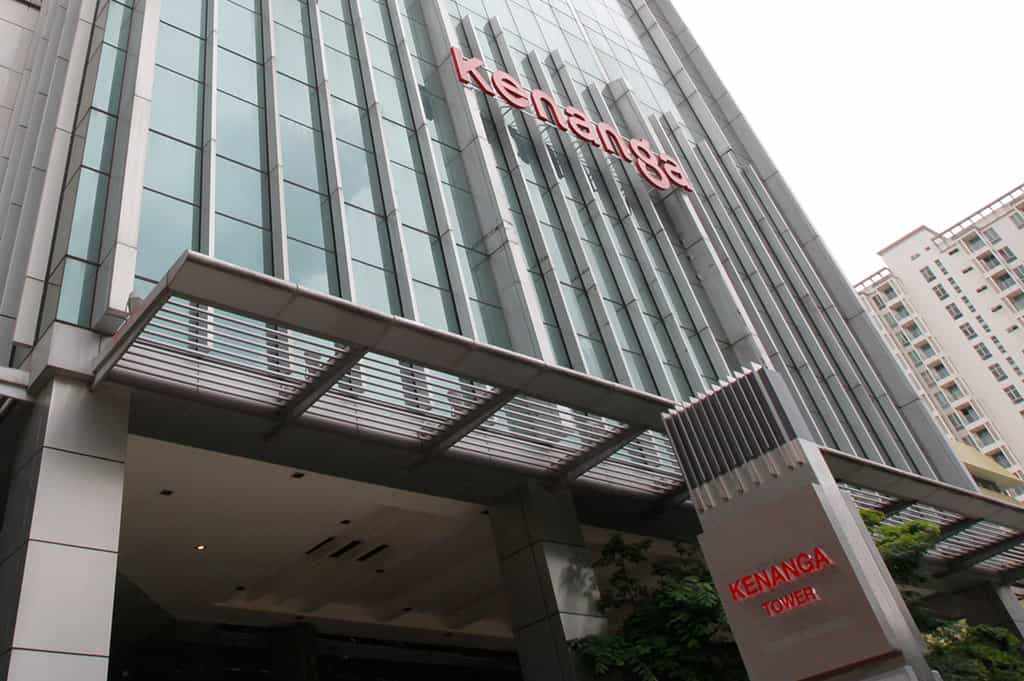
Kenanga Investors Berhad (“Kenanga Investors”) has received five awards at the 2023 Best of the Best Awards by Hong Kong-based Asia Asset Management (“Awards”). The company was recognized for its exceptional performance in a number of categories, solidifying its position as a leading player in the industry.
Kenanga Investors received the following awards:
Malaysia Best Impact Investing Manager
Malaysia Best Equity Manager
Malaysia Most Improved Fund House
Malaysia Best House for Alternatives
In addition, Executive Director and Chief Executive Officer Datuk Wira Ismitz Matthew De Alwis was named Malaysia CEO of the Year, marking this the fourth year that he has received this prestigious award.
The firm excelled against a backdrop of reduced trading activities and prolonged turmoil due to a degree of volatility over the last two years to win the Best Impact Investing Manager and Best Equity Manager titles once more. “Our long-standing investment strategy of bottom-up stock picking ensures that we select quality companies with robust financial fundamentals. Ultimately, a sustainable company is one that produces strong results when measured using traditional financial measures as well as ESG considerations”, says Datuk Wira De Alwis.
This year also marks the fourth year that the fund house has been awarded Best House for Alternatives. Datuk Wira De Alwis explains that the firm’s overarching investment philosophy dictates that differing investment objectives require tailored solutions that cater to the unique needs of each investor. “We are pleased to be recognised for our efforts in providing our clients with a diversified investment portfolio that offers opportunities for long-term capital growth and stability. We are confident that our position within the alternative space continues to provide immeasurable value to our investors, enabling both retail and institutional investors to capture market opportunities in a volatile environment especially when the pandemic, coupled with the unrest in Europe, has accelerated the need for technological advances”, he says.
The fund house’s focus on diversification and sustainability is further demonstrated by the expansion of the Kenanga Sustainability Series, a suite of multi-asset class products, first introduced in 2021, which are rooted in sustainability considerations to advance long-term financial growth and to generate social financial value for surrounding communities. “In line with this, we aim to continue meeting the diverse demands of our investors by focusing on offering wealth protection solutions, such as insurance and private trust, to help preserve and grow investors’ wealth”, says Datuk Wira De Alwis.
On its win as Most Improved Fund House this year, he explains “Our ascent to being recognized as one of the leading asset and wealth management firms in the industry is the result of a well-executed approach that combined strategic acquisitions and product expansions with a focus on cost-saving initiatives”. The fund house leveraged existing resources and grew its distribution network as part of its multi-product and multi-segment strategy which has driven customer satisfaction and loyalty as well as robust growth in its assets under administration.
The Malaysia Best Impact Investing Manager award recognises a firm’s success in deploying impact investing strategies in either public or private markets to generate positive, measurable social and environmental impact alongside sustainable financial returns.
The Malaysia Best Equity Manager award is in recognition of the success of the fund house’s equity products within Malaysia’s domestic market given the challenging trading conditions and its abilities in capturing potential growth opportunities.
The Malaysia CEO of the Year award is in recognition of the CEO’s overall achievements, performance of funds, increase of assets under management and their demonstration of leadership in the market.
The Malaysia Best House for Alternatives award recognises the firm’s achievements in growing the alternatives market, its performance record and its growth in client base.
The Malaysia Most Improved Fund House award recognises a manager’s strong financial performance by growth in revenues and profits in the past two years.
AAM is the world’s longest-running publication focused on Asia’s institutional asset management and pension fund industry. Its Best of The Best Awards recognises the finest performers in Asia from financial services companies and institutional investors to service providers whose influence and excellence expands beyond borders.
About Kenanga Investors Berhad 199501024358 (353563-P)
We provide investment solutions ranging from collective investment schemes, portfolio management services, and alternative investments for retail, corporate, institutional, and high net worth clients via a multi-distribution network.
The Hong Kong-based Asia Asset Management’s 2023 Best of the Best Awards awarded KIB under the following categories, Malaysia Best Impact Investing Manager, Malaysia Best Equity Manager, Malaysia CEO of the Year, Malaysia Best House for Alternatives and Malaysia Most Improved Fund House.
The Kenanga Growth Fund Series 2 won Best Malaysia Large-Cap Equity Fund at the 2022 Morningstar Awards Malaysia.
At the Refinitiv Lipper Fund Awards Malaysia 2022, KIB won overall best Mixed Assets – Malaysia Pension Funds Group award for the third time. Accompanying this were individual fund wins awarded to:
Kenanga Growth Fund for best Equity Malaysia Fund over 10 Years
Kenanga Malaysian Inc Fund for best Equity Malaysia Diversified over 3 Years
Kenanga Growth Opportunities Fund for best Equity Malaysia Small & Mid Cap over 5 Years
Kenanga Diversified Fund for best Mixed Asset MYR Flexible over 10 Years
Additionally, the FSMOne Recommended Unit Trusts Awards 2022/2023 named Kenanga Growth Fund Series 2 as “Sector Equity – Malaysia Focused” and Kenanga Shariah Growth Opportunities Fund as “Sector Equity – Malaysia Small to Medium Companies (Islamic)”.
The Asset Benchmark Research has ranked KIB as Highly Commended on its list of ‘Top Investment Houses’ in the Asian Local Currency Bond Awards for Asset Managers.
At the United Nations Global Compact Network Malaysia & Brunei (“UNGCMYB”) Sustainability Performance Awards 2022, we received the “Sustainable Products” award for our launch of sustainable products, which cover the Kenanga Sustainability Series – a suite of multi-asset class products rooted in sustainability considerations to advance long-term financial growth for investors and to generate social and financial value for surrounding communities. The award also recognised the first SRI-qualified high yield bond fund in Malaysia, the Kenanga Sustainability Series: High Yield Bond Fund.
For the sixth consecutive year, KIB was affirmed an investment manager rating of IMR-2 by Malaysian Rating Corporation Berhad, since first rated in 2017. The IMR rating on KIB reflects the fund management company’s well-established investment processes and sound risk management practices. During the first half of 2021, KIB’s 20 largest unit trust funds outperformed its benchmarks for the one-year, three-year and five-year periods