Author: admin

  • Grace Low on defying gravity and keeping brands afloat

    Grace Low on defying gravity and keeping brands afloat

    Accomplished marketing specialist and digital content creator, Grace Low has built her career at the intersection of strategy, innovation and brand growth. As Malaysia’s first to secure a verified blue badge for a RedNote business account, she later went to launch Malaysia’s first RedNote influencer marketing strategy. Today, her role in the hospitality industry further sharpens her expertise, as she shares on how to survive management change and defy gravity with sound turnaround strategies.

    Grace’s journey into branding and marketing was shaped by her exposure to media, storytelling, and audience behaviour across multiple platforms. “I come from a commercial production background where storytelling was never just about aesthetics—it had to move audiences and deliver results,” reminiscing of her early days in television production.

    As the media landscape changed, Grace was one of the early movers that understood the forthcoming digital wave. Observing China’s rapid consumption of digital storytelling and how brands can gain maximum exposure, Grace made the leap and never looked back.

    Years spent in creating tourism and hospitality content for clients paid off—she found niche in the industry itself and in 2023, started serving reputable hotel establishments. She also moved beyond her capacity as a digital content creator, a growth phase that saw her portfolio moving into integrated marketing and communication strategies.

    Grace strongly feels that during a change in management, even small shifts can feel destabilising, so a good leader is crucial. She narrates her way of dealing with the situation, “My first step is to align expectations and simplify systems during the thick of things—it’s focusing on clarifying roles, defining the decision-making authority and setting pragmatic goals for the team. Stability follows with transparency and realism, rather than blindly following outdated habits.”
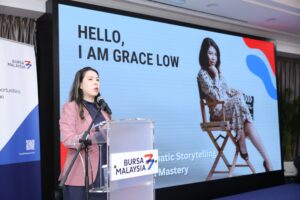
    Low, presenting digital insights at Bursa Malaysia.

    For her recent case study at an international hotel chain located in Malaysia, Grace points out that whether it is a management change or a turnaround strategy needed, she resets three things immediately to ensure continuity in the hotel’s marketing:

    1. Brand narrative
    2. Channels to focus on
    3. Performance benchmarks

    “When you need to quickly turnaround, pull out data and digest the patterns. An example—if engagement is strong but conversion is weak, it’s often execution. If awareness is low despite investment in ads, it’s positioning. If traffic is high but sentiment is poor, then messaging and experience is misaligned. Data is your north; it tells the truth faster than opinions!”
    From a digital perspective, she focused on addressing digital noise by inviting a wider range of content creators to visit, share reviews, and generate fresh conversations across social media platforms, helping to sustain visibility and public interest.

    “During one leadership transition, I proactively invited major media to visit and review the hotel, especially during the hotel’s anniversary promotion, creating visibility and excitement. I also led initiatives that secured various prestigious awards, strengthening the hotel’s reputation and digital presence among competitors. By taking decisive action and maintaining marketing momentum, even amidst organisational change, I ensured that both the brand and the business continue to thrive, supporting teams across sales, operations and communications.

    Missteps are common and Grace notes that overacting too quickly is a downfall, especially changing the narratives too rapidly, without a clear and strategic rationale.

    On contrary to popular belief, chasing trends or surface-level credibility without understanding if it supports the brand’s long-term positioning or business immediate priorities can be detrimental.
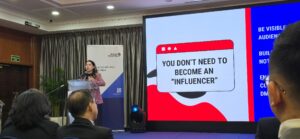
    Sparking insightful conversations on air, Low often shares her thoughts
    with the public.

    “I also see organisations undervaluing the marketing department during critical times. Although it may be only a minor brand enhancement exercise, other departments are consulted instead of the marketing personnel who are responsible for shaping demand, guiding customers decisions and protecting brand equity. Marketing is not about revenue conversion only; we contribute meaningfully to business outcomes and long-term value”

    Shifting the conversation to women’s empowerment at the workplace, Grace says that while her leadership is decisive and structured which are critical traits in high-pressure, result-driven environments, being a mother of two also taught her to balance assertiveness and empathy. “

    She concluded by giving her advice to emerging women leaders—cultivate a mindset of ownership, confidence, curiosity and humility. “Put your ego away, true leadership is about serving the team, the business and stakeholders, it’s not about proving yourself. Be confident in your expertise but listen actively, learn quickly and most importantly, be willing to admit what you don’t know.”
  • RHB and Bursa Malaysia expand investor outreach in Melaka

    RHB and Bursa Malaysia expand investor outreach in Melaka

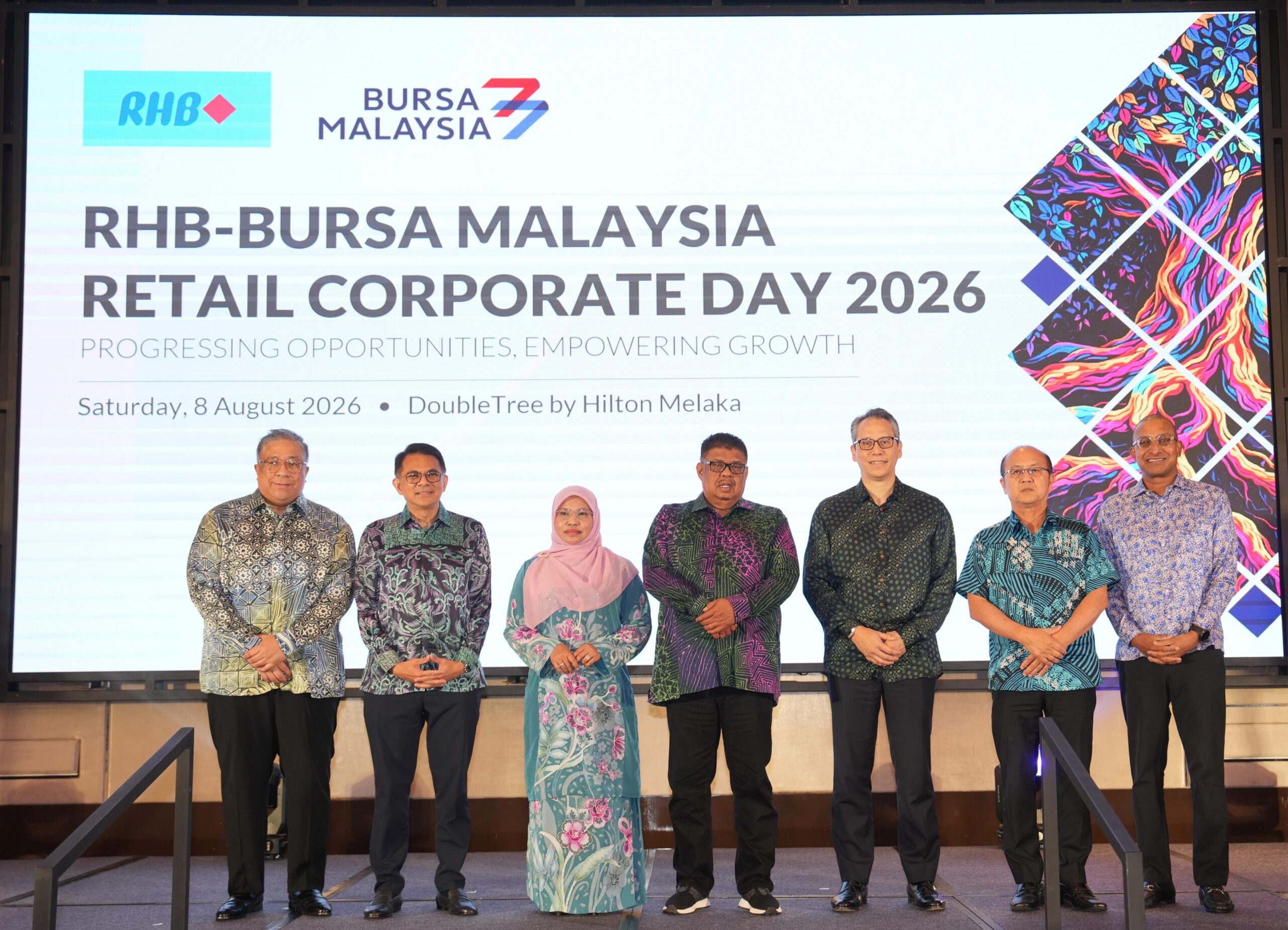
    Earlier this month, RHB Banking Group, in collaboration with Bursa Malaysia Berhad convened investors, listed company representatives, market practitioners and business leaders at the RHB-Bursa Malaysia Retail Corporate Day 2026 in Melaka, reaffirming their shared commitment to strengthening investor engagement and broadening participation in Malaysia’s capital market. The event was officiated by YAB Datuk Seri Utama Ab Rauf bin Yusoh, Chief Minister of Melaka, and attended by more than 200 participants from across the investment community.

    Dato’ Mohd Rashid Mohamad, Group Managing Director/Group Chief Executive Officer of RHB Banking Group said, “Investors today have access to an unprecedented amount of information. The challenge is making sense of that information and understanding what matters most. At RHB, we see value in creating platforms where investors can engage directly with businesses and market practitioners, gain deeper insights and build greater confidence in their investment decisions. These conversations play an important role in fostering a more informed investing community and supporting the continued growth of Malaysia’s capital market.”

    The Melaka edition forms part of RHB’s broader efforts to engage stakeholders across Malaysia through programmes tailored to the needs and interests of different communities and market segments, in line with the Group’s PROGRESS27 corporate strategy.

    Julian Mahmud Hashim, Chief Regulatory Officer of Bursa Malaysia Berhad said, “A strong capital market is built on participation, accessibility and trust. As the marketplace connecting investors and businesses, Bursa Malaysia remains committed to widening access to investment opportunities and strengthening engagement with the investing public. This collaboration with RHB reflects our shared commitment to broadening participation and ensuring that more Malaysians can benefit from the growth potential offered by the capital market.”

    The programme featured discussions on Malaysia’s economic outlook, market developments and emerging investment opportunities, alongside engagements with representatives from RHB, Bursa Malaysia and participating corporates. Additionally, participants were also introduced to RHB’s latest digital banking innovations, including RHB PAY, Malaysia’s first bank-owned unified payment gateway solution, and RHB Reflex 2.0, an enhanced corporate internet banking platform.

    YAB Datuk Seri Utama Ab Rauf bin Yusoh said, “Melaka’s economic transformation continues to gain momentum, with the state’s Gross Domestic Product (GDP) increasing by 3 per cent to RM50.2 billion last year from RM48.8 billion in 2024. This growth has been supported by strong investment activity, business expansion and the implementation of strategic development initiatives across the state.

    “This positive trajectory has been further strengthened by Melaka’s achievement of RM14.68 billion in investments in 2025, representing the state’s highest investment performance in more than two decades,” said Ab Rauf.

    In advancing the aspirations of the Melakaku Maju Jaya 2035 agenda, Ab Rauf added, “Partnerships between the government, businesses and financial institutions will continue to play a vital role in creating opportunities, strengthening economic resilience and delivering meaningful benefits for the people of Melaka.”

    Malaysia’s capital market reached a record RM4.3 trillion in 2025, reflecting its growing role in supporting capital formation, business expansion and economic growth. Retail investors accounted for almost one-third of trading activity on Bursa Malaysia, highlighting the increasing importance of investor education and informed participation.

  • Green financing remains unfamiliar to SMEs – MBSB Research

    Research on Malaysian SMEs found that green financing remains unfamiliar to many smaller businesses and is often viewed as something intended for large corporations. Limited resources, insufficient technical knowledge, misconceptions about green financing and the complexity of securing suitable funding continue to slow adoption.

    MBSB Research noted that sustainability requirements are also reaching Malaysian exporters and smaller suppliers through their customers. Although proposed European Union changes could reduce the number of non-European groups directly covered, affected companies may still request carbon data, labour information and product traceability from suppliers. Electronics, palm oil, rubber and chemical manufacturing are among the sectors potentially exposed.

    This makes early preparation increasingly important. Once an SME identifies which machine, process or business premise needs improvement, financing becomes part of the decision. MIDF’s Sustainable Green Biz Financing supports eligible local manufacturing and services businesses seeking to adopt green technology or undertake energy efficiency projects.

    The scheme offers financing up to RM10 million with low financing rate of 3% per annum for purchase of energy-saving machinery and equipment and other fixed assets. Applications remain subject to MIDF’s credit evaluation and approval.

  • Maybank participates in Monetary Authority of Singapore’s BLOOM initiative

    Maybank Singapore confirms its participation in the Monetary Authority of Singapore’s (MAS) BLOOM initiative, reinforcing its commitment to advancing next-generation, best-in-class cross-border payments and transaction banking infrastructure.

    BLOOM — Borderless, Liquid, Open, Online, Multi-currency — is an industry initiative that seeks to enhance cross-border settlement through tokenised bank liabilities and regulated stablecoins, enabling a more interoperable, seamless financial ecosystem.

    This builds on a series of tokenisation milestones for Maybank in ASEAN, including its role in anchoring the inaugural tokenised sukuk issuance by Malaysian sovereign wealth fund, Khazanah Nasional Berhad, and in completing the first on-chain Malaysian Ringgit–Singapore Dollar FX conversion and cross-border payment for Yinson Holdings Berhad in real time, under Bank Negara Malaysia’s Digital Asset Innovation Hub.

    Alvin Lee, Country CEO and CEO, Maybank Singapore, said: “Through BLOOM, Maybank aims to help shape the common standards and infrastructure principles needed to enable the future of digital finance in Singapore, in collaboration with MAS and industry participants including fintech players. This aligns with ROAR30, our five-year strategic plan to deliver values-based offerings, making banking more efficient and accessible especially for small and medium enterprises (SMEs).”

    Maybank’s digital investments in tokenisation forms part of its ROAR30 commitment to invest RM10 billion (SGD3.2 billion) over five years in technology, data and artificial intelligence (AI).
    Separately, Euromoney’s Awards for Excellence 2026 has recognised Maybank as the World’s Best Bank for Corporate Responsibility, Asia’s Best Bank for ESG, and ASEAN’s Best Bank for Large Corporates.

  • Baram’s Kampung Long Tap regains 24-hour electricity

    Baram’s Kampung Long Tap regains 24-hour electricity

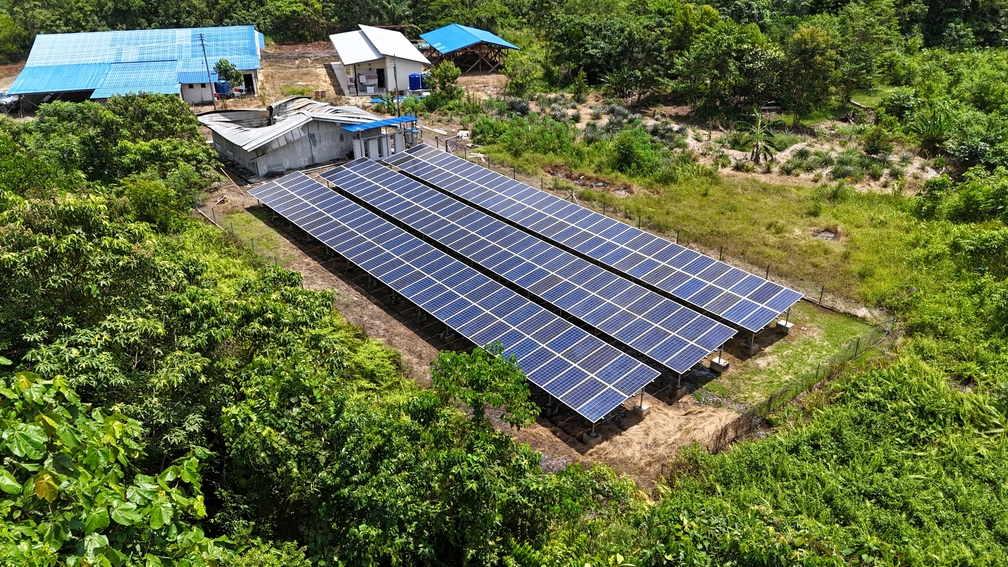
    EFS Group, alongside Planet QEOS Sdn. Bhd, has supported the restoration of Kampung Long Tap’s renewable energy system, helping restore access to a reliable power supply for more than 640 residents across 71 households in the remote Baram district of Sarawak. The remote village in Sarawak has regained 24-hour electricity after two years.

    The village’s solar power station was completely destroyed in a fire two years ago and the loss of its batteries and equipment left the community without dependable electricity ever since.

    In the years that followed, daily life in Kampung Long Tap revolved around the limited hours of power available through diesel generators, forcing families to adapt their routines around an unpredictable supply while waiting for a permanent fix.

    The project replaced the damaged Battery Energy Storage System (BESS) and inverters while retaining the village’s existing 63.9kWp solar photovoltaic system. As the original outage was caused by a battery fire, the rebuilt system was designed with that risk directly in mind: it now includes battery pack-level fire suppression and temperature monitoring alongside continuous cloud-based monitoring, on top of a guaranteed daily energy supply of approximately 180kWh over the next 10 years.

    Delivering the project presented significant logistical challenges due to Kampung Long Tap’s remote location, limited road access and difficult terrain.

    These constraints made the movement of equipment and materials to the village especially demanding but the installation was completed within six days.

    The system is now backed by a 10-year performance guarantee and equipment warranties, with ongoing operations and maintenance managed through the consortium’s central maintenance service centre at Baram Deeptech1 in Long Lama, and locally appointed wardens supporting routine panel cleaning and system surveillance.

  • Maybank and Haier partner to drive Smart Energy Adoption across ASEAN

    Maybank and Haier partner to drive Smart Energy Adoption across ASEAN

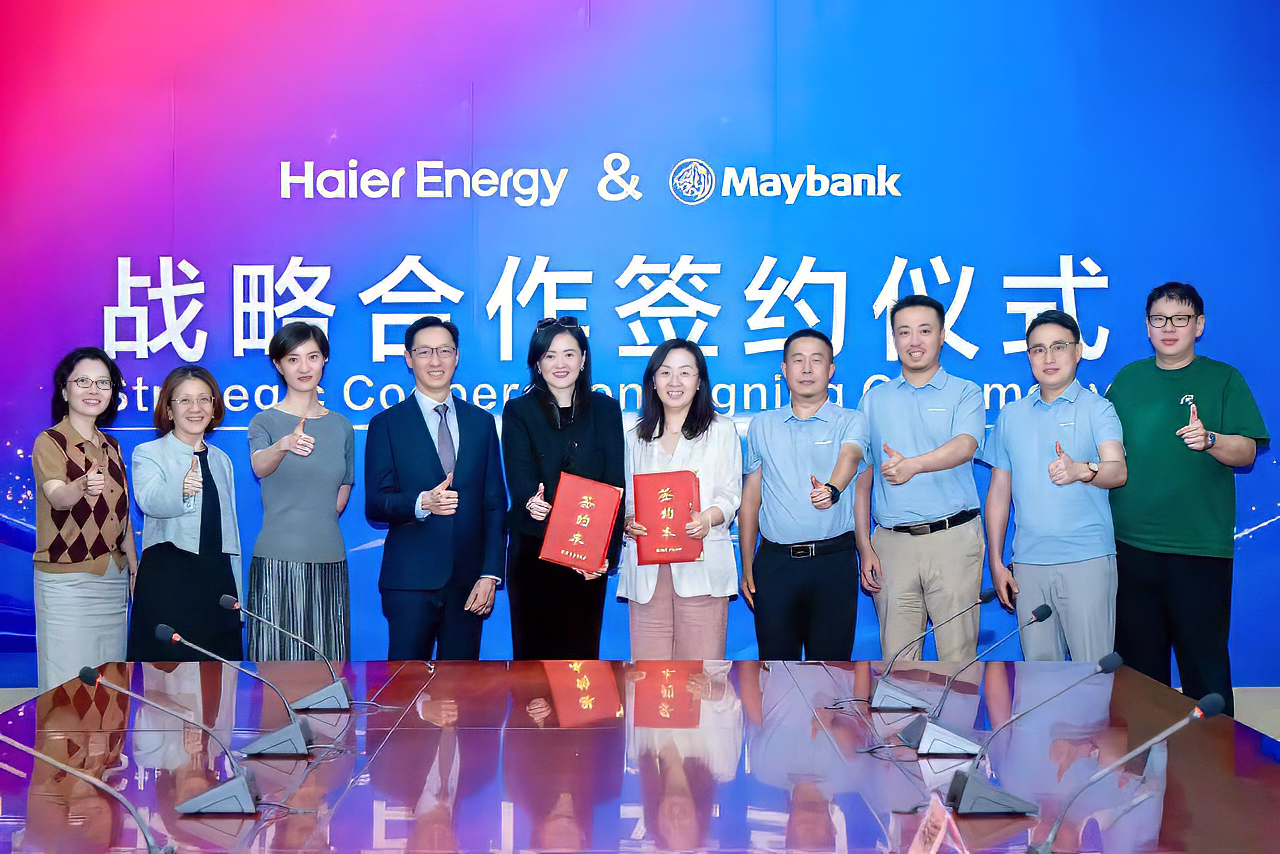
    Maybank and Haier Energy Sdn Bhd, a subsidiary of Haier Group headquartered in China, have entered into a Heads of Agreement (HoA) to form a strategic partnership to accelerate the growth of Haier’s new energy platform and ecosystem.

    The partnership will initially focus on Malaysia, with plans to expand into selected markets in the ASEAN region.

    Haier Energy’s platform combines AI-enabled technologies and advanced solar photovoltaic solutions, energy storage, and smart energy systems to deliver efficiencies, and reduce emissions and energy costs for customers.

    Serving more than one billion households globally, Haier group is backed by a footprint of 133 manufacturing facilities and 71 research and development centres, highlighting its scale, innovation capabilities and commitment to advancing sustainable energy solutions.

    Under the HoA, Maybank will leverage its regional business banking platform, Maybank2E and its comprehensive suite of products and services to support Haier Energy’s expansion and facilitate supply chain agility.

    Specifically, the collaboration will encompass integrated transaction banking, payments and financing solutions, including credit card partnerships and financing facilities for retail clients, Islamic financing, sustainability finance, supply chain financing, cash management, trade finance, treasury and foreign exchange services.

    Dato’ John Chong, Group Chief Executive Officer, Global Banking, Maybank said, “The partnership with Haier Energy aligns with Maybank’s commitment to playing a bigger role in ASEAN’s energy transition and the China-ASEAN economic corridor, where China is one of ASEAN’s top investors and trading partners. We expect the China+1 stratedy to continue with companies seeking to diversify and expand into new markets in ASEAN. Coupled with demand for investments to strengthen regional energy resilience, this partnership with Haier Energy presents exciting opportunities.”

    Ji Xiaojian, General Manager of Haier Energy, Haier Energy Technology Co. Ltd said, “With roots in China and market presence in Europe, the Middle East and Asia Pacific, one of our strategies has been to grow via open collaborations. Having a strong banking partner like Maybank is critical to supporting our cross-border expansion. We see ASEAN as strategically important. It is dynamic, expanding faster than the global average, and offers growth opportunities in smart energy generation, storage and infrastructure.”

  • Oriental Interest Berhad launches latest affordable housing development

    Oriental Interest Berhad launches latest affordable housing development

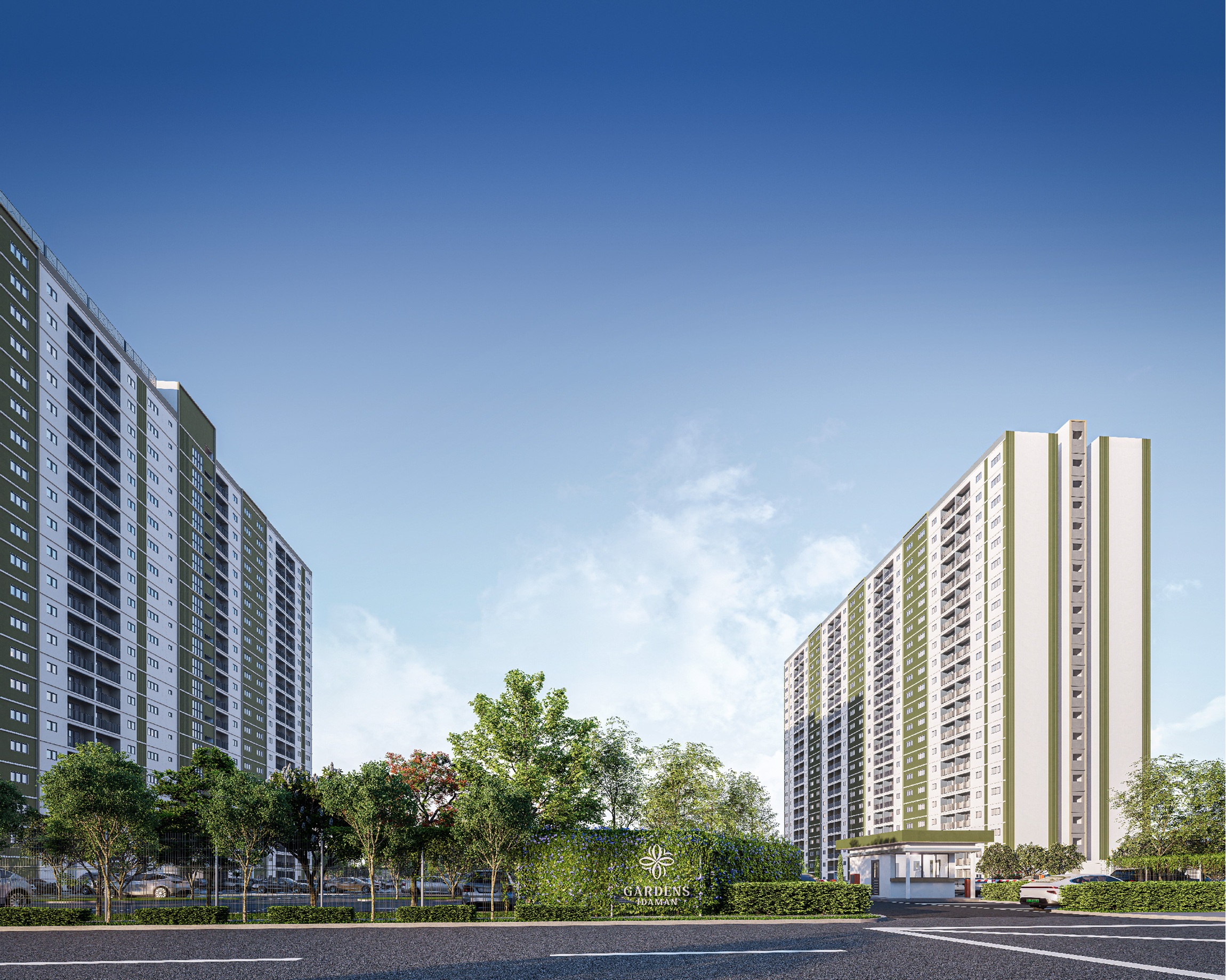
    Oriental Interest Berhad (OIB) launches Myra Idaman, its latest affordable housing development under the Rumah Idaman programme, which is being marketed under the name Gardens Idaman.

    Spanning 11.226 acres with a Gross Development Value (GDV) of RM163.8 million, Gardens Idaman will comprise 616 semi-furnished apartment units priced from RM250,000 to RM270,000. Each unit will also come with two carparks.

    The leasehold development is scheduled for completion in 2030 and has been designed as a gated and guarded community for first-time homebuyers and growing families.

    William Lew, General Manager (Essential BU) of Myra, OIB’s residential property arm, said Selangor’s Rumah Idaman programme has played an important role in expanding access to quality affordable housing across the state. He added that OIB is proud to contribute to the programme’s objective of making quality homeownership more accessible to Selangor residents.

    “The Rumah Idaman programme has established a strong benchmark for making quality homeownership more accessible to first-time homebuyers across Selangor. As one of the participating developers, our role extends beyond delivering homes that meet the programme’s requirements. We are continuously looking at how we can create added value for homeowners and the communities they will live in,” he said.

    The launch also marks another milestone for OIB’s affordable housing portfolio, with both Gardens Idaman and the upcoming Saujana Idaman development in Dengkil having received Provisional GreenRE Bronze certification, recognising the projects’ commitment to environmentally responsible and sustainable development practices.

    GreenRE is Malaysia’s green building certification scheme established by the Real Estate and Housing Developers’ Association (REHDA), recognising developments that meet sustainability benchmarks across areas such as energy efficiency, water efficiency, environmental protection and indoor environmental quality.

    While sustainability standards are becoming increasingly recognised across Malaysia’s property sector, GreenRE-certified affordable housing developments remain relatively uncommon, highlighting the growing importance of integrating sustainable design into homes that remain accessible to a wider segment of Malaysians.

    Lew added that while GreenRE certification is not a requirement under the Rumah Idaman programme, OIB believes sustainability should become an increasingly important part of affordable housing rather than a feature associated only with premium developments.

    “There is often a perception that sustainability is reserved for higher-end developments. We believe affordable housing deserves the same commitment to creating healthier, more efficient and future-ready communities.

    “While GreenRE certification is not a requirement under the Rumah Idaman programme and remains relatively uncommon among affordable housing developments, we believe meaningful sustainability can be achieved without compromising affordability when these considerations are integrated from the earliest stages of design. Receiving Provisional GreenRE Bronze certification for both Gardens Idaman and Saujana Idaman is an important milestone that reinforces this commitment,” he added.

    Gardens Idaman incorporates a range of sustainable design measures, including a high-performance building envelope to reduce heat gain, 100% water-efficient fittings, lower-carbon construction materials, reusable aluminium system formwork, energy-efficient lift systems, low volatile organic compound (VOC) paints and natural daylight optimisation.
    Together, these measures are expected to improve energy and water efficiency, enhance indoor environmental quality and create more comfortable living environments for residents.

    Based on the GreenRE assessment, Gardens Idaman is expected to achieve approximately 30.61% energy savings compared with the GreenRE baseline while reducing operational carbon emissions by an estimated 337 tonnes of carbon dioxide equivalent (CO₂e) each year.

    Located in one of Selangor’s growth corridors, Gardens Idaman offers convenient connectivity to Rawang, Sungai Buloh, Kwasa Damansara, Petaling Jaya and Kuala Lumpur via the Kuala Lumpur-Kuala Selangor (LATAR) Expressway, Guthrie Corridor Expressway and the North-South Expressway (NSE), while also providing easy access to schools, healthcare facilities, recreational amenities and established commercial centres.

    Gardens Idaman is the latest addition to OIB’s growing Rumah Idaman portfolio, following the successful launch of Putra Idaman in Desa Pinggiran Putra in 2024. With Saujana Idaman scheduled for launch in the third quarter of 2026, OIB continues to strengthen its pipeline of affordable housing developments across Selangor while supporting the State’s long-term housing aspirations.

  • BNM and SC Malaysia strengthen Malaysia’s sustainable finance framework

    The Joint Committee on Climate Change (JC3) meeting reaffirmed the need to move faster from commitment to mobilising practical solutions. Priorities include supporting energy transition, strengthening climate resilience especially against floods, and strengthening mechanisms to measure and report outcomes.

    Supporting implementation of the National Sustainability Reporting Framework (NSRF), the JC3 issued the NSRF Guidance Documents for Banks and Insurers and Takaful Operators. The guidance aims to make sustainability-related disclosures more robust, consistent, comparable and purposeful.

    Through practical solutions, the guidance addresses common implementation challenges in sustainability reporting, including risk and opportunity assessments, strategy disclosures, and the use of metrics and targets. Hands-on capacity-building programmes will begin in October 2026 to support implementation.

    Neetasha Rauf, Chief Sustainability Officer of the Securities Commission Malaysia and Co-Chair of JC3, said, “The NSRF Guidance Documents will help financial institutions and insurers and takaful operators navigate reporting challenges and support their transition towards high-quality, decision-useful sustainability disclosures. It also complements the efforts of the Advisory Committee on Sustainability Reporting (ACSR) in providing implementation and capacity-building support for scoped-in entities.”

    The meeting noted further progress under the Climate Finance Innovation Lab (CFIL), which continues to connect climate- and nature-related projects with funding opportunities. Under the second cohort, 22 projects seeking RM1.73 billion in funding will undergo a structured accelerator programme in collaboration with the United Nations Global Compact Network Malaysia, Brunei and Cambodia (UNGCMBC). This segment will support business model refinement, impact assessment and funding facilitation. Interested funders are encouraged to engage with CFIL to help scale impactful climate- and nature-related solutions2.

    Members also agreed to fully adopt the ASEAN Taxonomy for Sustainable Finance as the basis for the Malaysia Taxonomy. This marks a significant step towards greater regional interoperability, consistency and comparability in sustainable finance.

    Additionally, this reduces the operational burden of businesses especially those with cross border trade. JC3 will develop practical guidance and tools tailored for local implementation. A pilot with selected members will ensue prior to full adoption for reporting in 2028. The pilot aims to identify implementation challenges and inform further refinements, where necessary.

    Madelena Mohamed, Assistant Governor of Bank Negara Malaysia and Co-Chair of JC3, said, “A taxonomy is only effective if it can be applied consistently and confidently. As Malaysia adopts the ASEAN Taxonomy as the foundation of the Malaysia Taxonomy, JC3 will focus on developing practical implementation guidance and tools to support its use. The pilot will help identify operational challenges early and ensure the framework remains fit for purpose and relevant for Malaysia’s needs.”

    To support Malaysia Taxonomy implementation and sustainable finance growth, JC3 will explore a centralised climate- and nature-related data platform. Better access to reliable data will help financial institutions, businesses and investors assess risks and opportunities, meet reporting requirements and channel capital to sustainable and transition activities.

    The JC3 Journey to Zero Conference (JC3 J20), a flagship event of JC3, will be held on 28 and 29 September 2026 at Sasana Kijang. The conference will bring together policymakers, financial institutions, investors, and other stakeholders to advance practical solutions for scaling transition and adaptation finance, share implementation experiences and challenges and explore solutions to deliver measurable outcomes.

  • Foreign funds return to Malaysia’s transport and utilities sectors, investors turn more selective – MBSB Research

    Foreign funds return to Malaysia’s transport and utilities sectors, investors turn more selective – MBSB Research

    Foreign investors returned to Malaysian equities in July, with buying concentrated in Financial Services, Transportation and Logistics, and Utilities, according to MBSB Research’s latest Weekly Fund Flow Report.

    Foreign institutions recorded RM300.9 million in net inflows on Bursa Malaysia during the month, ending two consecutive months of net selling. Financial Services attracted the largest inflow at RM1.11 billion, followed by Transportation and Logistics at RM367.2 million and Utilities at RM305.6 million.

    The recovery was not broad based. Industrial Products and Services recorded RM759.7 million in net foreign outflows, while Technology saw outflows of RM484.9 million. Consumer Products and Services also registered RM212.8 million in net selling.

    The pattern continued during the final week of July. Foreign institutions recorded RM11.1 million in net buying, with Transportation and Logistics receiving RM107.4 million in inflows. Financial Services and Healthcare led the weekly sector inflows at RM216.5 million and RM148 million respectively.

    Imran Yassin Yusof, Head of Research at MBSB Research, said the distribution of the inflows offered a more useful indication of investor sentiment than the overall figure alone.

    “The return of foreign buying is a constructive signal, but the composition of the flows is more telling than the headline figure. Inflows were concentrated in Financial Services, Transportation and Logistics, and Utilities, while Technology and Industrial Products and Services continued to see selling.

    “In our view, this reflects a more selective allocation of capital towards sectors offering clearer earnings visibility, stronger domestic relevance and more defensive characteristics. Even so, one month of inflows does not establish a durable trend. Elevated producer prices, softer leading indicators and uncertainty over global interest rates could continue to shape investor appetite in the coming months.”

    The July inflows came against a mixed economic backdrop. Malaysia’s producer price inflation accelerated to 9.2 per cent year on year in June, its strongest annual increase since June 2022, driven largely by supply chain disruptions linked to the Middle East conflict.

    At the same time, Malaysia’s Leading Index declined 0.5 per cent month on month in May, with annual growth moderating to 0.8 per cent. MBSB Research said this pointed to a softer near-term economic outlook.

    Global monetary conditions also remain uncertain. The United States Federal Reserve, Bank of England and Bank of Japan kept their respective policy rates unchanged in July, although dissenting policymakers at each central bank favored tighter policy.

    This indicates that inflation risks remain part of the global investment outlook despite some moderation in price pressures.

    The broader regional picture remains cautious. Across the eight Asian markets monitored by MBSB Research, foreign investors were net sellers for a sixth consecutive week, recording USD1.19 billion in outflows. Malaysia was among the markets receiving inflows, alongside India, South Korea, Indonesia, Thailand and the Philippines.

    Against this backdrop, the renewed interest in Transportation and Logistics and Utilities provides a timely signal for industries connected to trade, mobility, energy and industrial development.
    The sector classifications used in the fund flow report do not correspond directly with individual financing programmes. They nevertheless indicate where foreign investors are finding relative confidence within the Malaysian market.

    MBSB Bank has committed RM1 billion each to rail, aerospace, automotive and solar. These commitments are intended to support the wider development of industries that require investment in equipment, technology, working capital and capacity expansion.

    Through its wider collaboration with industry bodies and development agencies, the Bank is also working to identify credible projects and connect companies with the support required to move from planning to commercial execution.

    This includes a separate RM1 billion financing line for eligible businesses, investors and strategic projects across the Northern Corridor Economic Region. The allocation is intended to support companies establishing operations, expanding capacity and participating in major supply chains.

    The Northern Corridor partnership also provides a platform for businesses across advanced manufacturing, electrical and electronics, logistics, agribusiness and the digital economy.

    The wider economic activity generated by these investments can create opportunities for contractors, suppliers, transport providers, professional services firms and SMEs seeking to enter more sophisticated supply chains.

    MBSB Research said the return of foreign buying was encouraging but should be assessed over a longer period before being regarded as a sustained reversal.

    The July data suggest that foreign investors are again examining selected areas of the Malaysian market. Whether that interest develops into a more durable trend will depend on earnings delivery, economic conditions and the ability of strategic industries to convert capital interest into productive investment and business growth.

  • PPA Launches #ISaveInPRS Year-End Treats 2026

    PPA Launches #ISaveInPRS Year-End Treats 2026

    More than half of PPA’s contributing members did not make a PRS contribution in a given year between 2020 and 2025, with an average dormancy rate of 59.4% over the six-year period.

    The trend highlights that pausing contributions is a common part of the retirement savings journey, reinforcing the importance of returning to the habit and staying consistent over time.

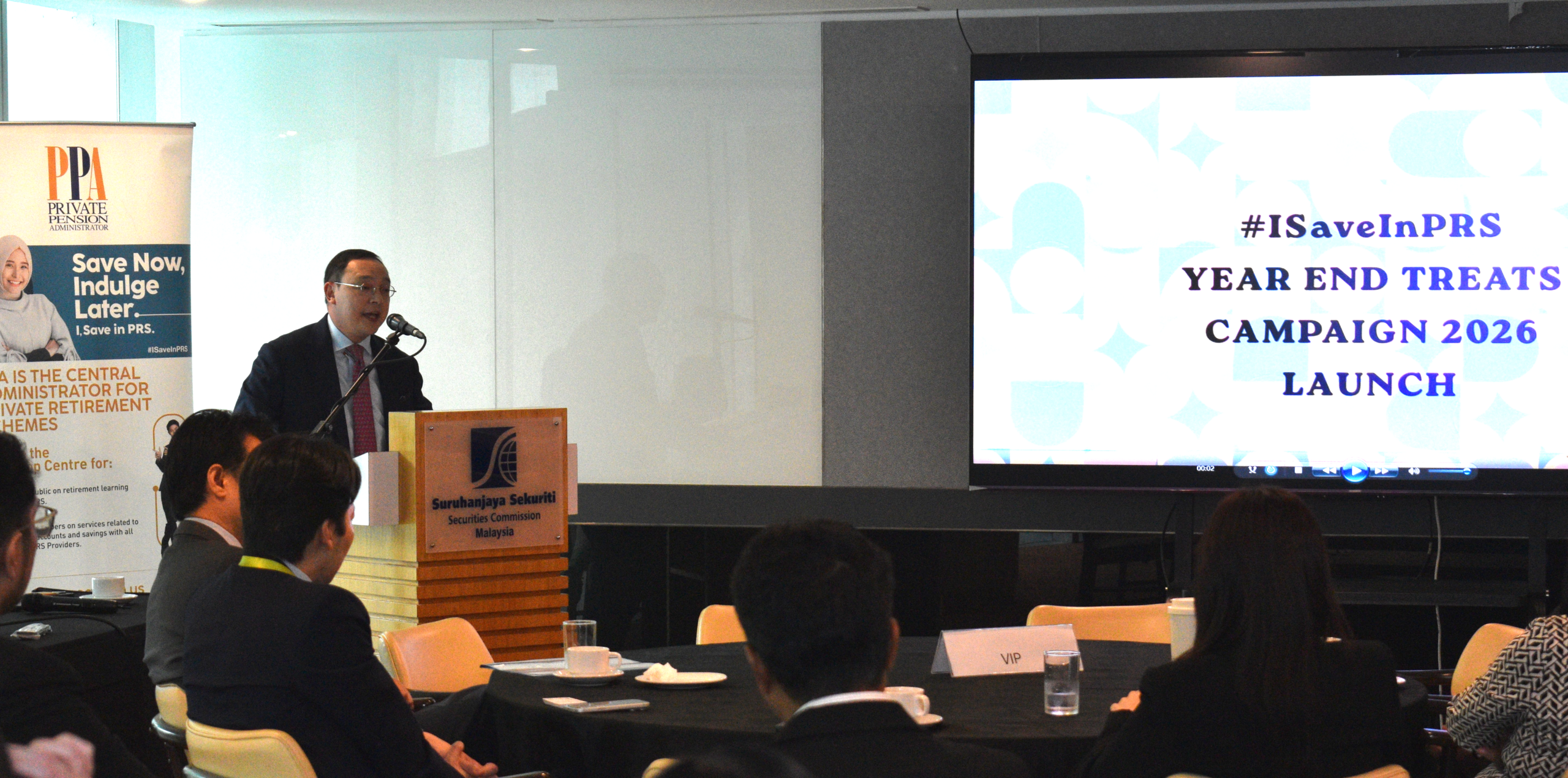
    In response, the Private Pension Administrator Malaysia (PPA) launches the #ISaveInPRS Year-End Treats 2026 campaign, running from 11 August to 31 December 2026, to encourage PRS members to restart, continue, and strengthen their retirement savings.

    Open to PRS members aged 54 and below, including new enrollees, the campaign rewards members based on their individual contributions during the campaign period.

    Taufiq Iskandar, CEO of PPA, emphasizes the necessity of embracing change and evolving to keep pace with modern demand and an ever-changing landscape.

    “Retirement savings is a long-term journey, and contribution patterns may change as individuals navigate different financial priorities. What matters is continuing to take steps towards building retirement savings. Through this campaign, we hope to encourage Malaysians to restart where they have paused and make saving more consistent over time,” said Taufiq Iskandar.

    Under the campaign, eligible members will receive one draw entry for every RM1,000 in accumulated gross contributions. Dormant members — those who registered before 1 January 2025 and have not made any contributions since then — will receive an additional two entries per RM1,000 contributed.

    Members who contribute through PRS Online will receive a further one entry per RM1,000 contributed, allowing those who qualify for both incentives to earn up to four entries per RM1,000.
    PPA’s data also shows that members who have made at least one contribution in 2026 have, on average, almost twice the lifetime savings of inactive members. Regular contributions can help members build savings progressively, benefit from cost averaging across different market conditions, and make better use of the RM3,000 annual tax relief for PRS contributions, subject to applicable tax rules.

    As of 30 June 2026, PRS had 695,869 members and approximately RM11 billion in assets under management (AUM). From 2018 to 30 June 2026, members’ net contributions totalled RM5 billion, while PRS funds collectively generated RM3.7 billion in investment returns, representing a 74% uplift on member contributions.

    For the period of 1 August 2025 to 31 July 2026, the top five performing PRS funds recorded an average one-year return of 49.3% versus 14.6% across 79 PRS funds. These were Public Mutual PRS Islamic Strategic Equity, Principal Islamic PRS Plus Asia Pacific Ex Japan Equity, Public Mutual PRS Islamic Growth, Principal Islamic PRS Plus Growth, and Hong Leong PRS Asia Pacific Fund.