Category: Asset Management

  • Malaysia: Investment For Expatriates In A Global Context

    Malaysia: Investment For Expatriates In A Global Context

    There are many factors that expatriates must take into account when considering what to invest in.

    Whether you are risk-loving, or not, Malaysia has a lot to offer expatriates for work, pleasure or retirement. How much time you choose to spend in Malaysia may depend on your work schedule, family commitments and the availability of legal status as a foreigner.

    All these things change and so does the risk of investing in Malaysia. When you are deciding whether or not to invest in Malaysia, as an expatriate or a local, one way to make better decisions is to look at the risk and return on investment opportunities in Malaysia in a global context.

    Malaysia Country Risk

    Country risk is the uncertainty associated with investing in a particular country and, more specifically, the degree to which that uncertainty could lead to losses for you as an investor. Uncertainty can come from many different factors ranging from political and economic, to health and technological influences.

    A rule-of-thumb to use when assessing country risk is a global, or Asian, country risk ranking. For Malaysia the recent country risk rankings are varied and comparable to their Asian neighbours. Risk rankings are based on a variety of political, sovereign debt, perception of ethics indices and a combination of business specific factors, but how useful are they to the individual investor?

    Once you have taken the decision to invest yourself, your time and your hardearned money into Malaysia as an expatriate, then you can run through the list of assets that you might like to invest in and do a global comparison for each one.

    Your Time In Malaysia

    Is time more precious than money? It may be, depending on whether you have a busy job or are retired. Deciding how much of your time each year to spend in Malaysia and how much to spend in the rest of the world is a good way to assess your investment risk in Malaysia as an expatriate.

    With high growth rates in Asian countries and, until recently, ease of travel across Southeast Asia, Malaysia is the perfect hub from which to do due diligence on other Asian investment opportunities.

    Your Investment Portfolio

    Most investors, expatriate and local, diversify their investments amongst different asset classes. Malaysia offers the same, or similar, assets as most developed countries, which now includes cryptocurrency exchanges, but does that mean that Malaysia should be a large proportion of your investment portfolio? The answer to this depends on your personal investment journey.

    Entry, and exit, from Malaysia may be more complicated than you may have anticipated as an expatriate. If you are a Malaysian and see your future lying overseas, in Australia, the UK or elsewhere, then Malaysia may be a smaller part of your global investment portfolio.

    Short-, medium-, or long-term stays in any country does not necessarily equate to how much of your investment portfolio should be held there, but it could be an important factor. Analysing typical economic variables over time can inform your investment decision.

    The RINGGIT

    The first thing most visitors to a country look at is the exchange rate risk. If it is favourable, you may be pleased but it is not likely to cause you to extend your time in a country. Holidays, travel, work or living in a foreign country are usually motivated by more than one factor.

    In the case of Malaysia, the valuation of the ringgit against other foreign currencies is attractive for a holiday but does it make it a good investment for the medium- or long-term? Probably not; the Malaysian Ringgit is relatively weak, compared to major global currencies, and also volatile.

    Buying on dips may be good for speculation but long-term accumulation of currency in Malaysia, like many other countries, faces the risk of tightened global exchange and transfer controls.

    Real Estate

    Buying real estate in Malaysia is relatively easier for locals than for expatriates. Limits on purchase price for real estate for foreigners vary from state to state, and legal status as well. Compounding these risks, oversupply of property in Kuala Lumpur is palpable, but there are some real gems to pick up in good locations at affordable prices if you take expert, local real estate advice.

    Real estate in Kuala Lumpur is no longer below global market prices but there are many, great out-of-town locations still available at a fraction of global prices.

    Tax Rates

    Personal income tax and corporate tax rates are still relatively low in Malaysia. As an expatriate you can benefit from tax rates that are comparable to other neighbouring Asian countries and still below average global tax rates. A non-resident tax rate of 30% applies across Malaysia and 15% in Iskandar, Malaysia.

    This compares favourably to many countries in Europe where marginal rates of tax can be 40% or higher. Any good investment advisor will tell you that there is no point in making 100% if you have to pay 40% of it in tax. It also leaves you more to invest from your Malaysian income.

    Interest Rates

    Bank fixed deposit interest rates in Malaysia are still competitive, at more than 2% per annum, whereas globally interest rates can be as low as 0.1%. If you have built up a significant amount of savings, holding them in a riskless bank account in Malaysia could be a good investment in these turbulent times.

    Then there are higher interest saving options such as the EPF for salaried expatriates where annual interest rates, although variable in recent years, was a relatively attractive 5.2% per annum in 2020, with easy access to withdraw funds.

    Future Investments

    Crypto exchanges are nascent worldwide and Malaysia also has four regulated digital asset exchanges, namely Luno, MX Global, SINEGY and Tokenize. There is currently no capital gains tax on cryptocurrency profits in Malaysia, making it an attractive location to buy, hold and sell Bitcoin, Ethereum and other cryptocurrencies compared to other countries.

    If you are smart (and lucky), you may be able to realise large, speculative profits when you buy and sell cryptocurrency assets in Malaysia then invest for the longer term.

    Exit Strategies

    Exit from Malaysia may prove more difficult than you may expect, so do your homework and be prepared to face changing rules and regulations just like most other countries. A smart expatriate should think twice before he, or she, or they, make a long-term investment decision in Malaysia.

    One key country risk assessment that should be done before making an investment decision in Malaysia is your ability to transfer currency for foreign payments, or other uses. Such a country risk assessment involves weighing and assessing a variety of factors and potential, unforeseen future changes. If you are planning to retire in Malaysia, and never leave, then the only real risk is your inheritance. Due to the Covid-19 pandemic, and other factors, even this long-term view may need to be reassessed.

    A key question locals may ask you as an expatriate in Malaysia is ‘What are you doing here?’ It’s a good question, so why not ask yourself, as an expatriate investor, ‘What am I doing investing here?’ A good way to answer this is to put your Malaysia investments in a global context, then take it from there.

    Article by: Dr. Jonathan Di Rollo (PhD Econ)

    First published : Smart Investor Issue 369

  • How COVID-19 Affected Our Favoured Investment Themes

    How COVID-19 Affected Our Favoured Investment Themes

    Schroders identifies eight themes that could transform the world, but how are these being affected by the coronavirus?

    At the core of thematic investing at Schroders is the belief that the most powerful and persistent investment themes are those where human ingenuity ignites innovation to address imbalances in the world. These imbalances may be between populations and resources, or between supply and demand in individual industries.

    As we all know, necessity is the mother of invention. As coronavirus throws the whole world into turmoil, humanity’s ingenuity and powers of innovation are being mobilised to fight the disease, care for our populations and adapt our work and home lives to a new set of economic, political and social realities.

    Covid-19 is exacerbating existing tensions between populations and finite resources and dislocating supply and demand relationships in countless industries. Bearing this is mind, we examine the impact of this crisis on the eight investment themes that we think have the potential to transform the world we live in:

    1.HEALTHCARE INNOVATION

    “Crisis highlights importance of healthcare innovation”

    This pandemic underscores the critical societal importance of healthcare innovation as countries seek to prevent and cure disease while wrestling with ongoing demographic and budgetary challenges. Central to our investment thinking in this area is the belief that science and technology will be crucial as companies harness data, computing power and medical knowledge to meet these goals.

    We believe this will drive further breakthroughs in advanced therapies, medical technology, and healthcare services as well as in digital healthcare where technology in the form of ‘telehealth’ has shown its worth during this crisis as a means of making healthcare provision more responsive and efficient. As governments realise their vulnerability to pandemics, the drive to spend more on healthcare in the future can only intensify.

    2.SMART MANUFACTURING

    “Smart manufacturing essential as demand fluctuates”

    Amid the acute demand and supply shock experienced by the global economy, manufacturers are also having to innovate. We expect to see companies developing local supply lines alongside their existing global networks while investment in data analytics will be imperative as a means of understanding and managing volatile demand and disrupted procurement in the future.

    Investment will also take place in other smart manufacturing themes, including advanced manufacturing such as 3D printing, automation in the shape of robotics, sensors and controls, and advanced materials like lightweight composites as companies harness exciting innovations in hardware, software and materials to deliver greater agility.

    While manufacturers face undoubted short-term headwinds, the disruption caused by Covid-19 demonstrates the importance of manufacturing innovation to ensure responsiveness and productivity in both good times and bad

    3.CHANGING LIFESTYLE

    “E-commerce and well- being are growing lifestyle trends”

    […continue to read this full article HERE ]

  • Best Reit In Malaysia. Which One Is Better? Is It Time To Invest Now?

    If you’ve done your research on how to invest in Malaysia, there’s a good chance that you’ve come across the usual investment products such as unit trusts, the stock market, investment properties and other well-championed financial tools.

    You may also have heard of the term REIT before, but it’s definitely not as popular as the other products. There’s a good chance you’ve had a relative or friend recommend hot stocks to you or recommend properties to invest in. But have you had the same people recommending Malaysian REITs to you? So what exactly does REIT stand for and what is this product that isn’t very well-known to the general public?

    What is a REIT?

    REIT stands for real estate investment trust and is a form of financial product that allows investors to get exposure to the real estate market. When it comes to investing in real estate, most people think of purchasing property to rent out to others, but real estate investment trusts offer many of the same benefits with less of the hassle.

    You simply purchase shares in the REIT and leave the headaches of rental negotiation and collection, tenant sourcing, and property maintenance to the professionals, while collecting dividends a few times a year!

    In fact, the average dividend distribution rate for some REITs even outpaces the rental yield of the average residential property, making it hard to argue against investing in REITs as opposed to purchasing your own property.

    kuala lumpur malaysia reits
    Fancy owning property in Kuala Lumpur without the hassle? REITs may be the answer.

    For some individuals, they may even prefer investing in REITs as there’s no need to monitor the stock exchange news, revenue growth of companies and other time-consuming research. At most, they’ll just have to read the quarterly or annual reports published by the REITs about the current performance and yields.

    There are currently 17 REITs listed on Bursa Malaysia for investors to buy shares in. REITs are considered a good investment for beginner investors as the initial entry price is low and dividends are consistently paid out at regular intervals. This also makes it a good defensive investment to hold in times of uncertainty.

    For example, let’s say a REIT is selling at a share price of RM0.53. This means you just need RM53 to start investing. However, a more expensive REIT may cost much more, with some even priced above RM6 per share. This means investors need at least RM600 to start investing in those premium REITs.

    So Which is the Best REIT in Malaysia?

    If we could tell you, we’d all be rich investors! There’s no hard and fast rule to determine which is the best REIT as it depends on what you’re looking for when investing, just like when doing research on the stock market. If you have a higher risk tolerance, you may want to focus on a REIT that is less diversified (eg. retail only) but if you prefer steady dividends, you may want to invest in a REIT spread across several industries.

    Here’s a quick and complete guide to the top 10 REITs in Malaysia to help you learn more about what’s available in the market:

    Top 10 Malaysia REITs

    1. KLCC REIT

    Unlike many other REITs, the KLCC REIT only has three properties in its portfolio but these are enough to make it the largest REIT in Malaysia based on market capitalisation. It includes the PETRONAS Twin Towers, Menara 3 PETRONAS and Menara ExxonMobil, all of which have a 100% office occupancy rate as of the end of 2020. The only exception is the retail section of Menara 3 PETRONAS, which has a still healthy occupancy rate of 93%.

    Another point to note is that it’s the most expensive REIT to own by far based on the prices on Bursa Malaysia. This can be attributed to its stable dividends and occupancy rates, making it an attractive option for investors on the lookout for REITs to invest in.

    2. IGB REIT     

    One of the most popular Malaysian REITs around, the IGB REIT is made up of only two shopping malls in its portfolio. However, these two malls are Mid Valley Megamall and The Gardens Mall in Kuala Lumpur, two of the most renowned shopping centres in Malaysia.

    According to its latest annual report, the occupancy rate of Mid Valley Megamall stands at 99% while The Gardens Mall is at 92%. To maintain such numbers throughout the Covid-19 pandemic is impressive, but it remains to be seen if it can maintain this with the numerous Movement Control Orders that have been implemented.

    3. Sunway REIT          

    Another of the highly popular Malaysian REITs, it comprises of properties under the Sunway Group in a variety of industries, including retail, hospitality, corporate offices and education. Its retail and office properties currently boast a healthy occupancy rate despite the pandemic, but unsurprisingly the hospitality properties are currently struggling with travel not allowed under the Movement Control Order.

    The diversity of the Sunway REIT could prove a crucial factor for potential investors, and could be a key mitigator against restrictions brought about by the pandemic. Whether reduced foot traffic will have a huge impact on the occupancy rates of its retail properties remain to be seen.

    4. Pavilion REIT          

    The Pavilion REIT may only have five properties in its portfolio, but they’re some of the most recognised landmarks in the Klang Valley, including Pavilion Mall, Pavilion Tower, Intermark Mall, Da Men Mall and Elite Pavilion Mall.

    With the properties covering the retail and corporate office sectors – two of Malaysia’s most dependable industries – it’s no surprise that its market capitalisation currently hovers over RM4 billion, demonstrating the trust that investors have in these evergreen industries. According to its latest annual report, the occupancy rate of most malls is above 80%, with only Da Men Mall lagging behind at 68.9%.

    5. Axis REIT    

    The Axis REIT is one of the largest in Malaysia based on market capitalisation, with the current figure standing at over RM2.8 billion! Its property portfolio current consists of buildings in various industries spread out across Peninsular Malaysia, including corporate offices, logistics warehousing, manufacturing, and retail.

    Thanks to its diversity, it’s well-placed to mitigate the effects of the Covid-19 pandemic, with its dividend distribution consistently above 5% in the years prior, only dropping to 4.31% in 2020. These encouraging numbers are a key reason why this is one of the most popular REITs in Malaysia.

    6. YTL Hospitality REIT

    As the name suggests, the YTL Hospitality REIT is in the hospitality industry with a slew of hotels and resorts across Malaysia in its portfolio. An interesting note for investors is that the YTL Hospitality REIT offers international exposure as it owns multiple properties in Niseko, Japan and three branches of the Marriott Hotel in Australia (Sydney, Brisbane, and Melbourne).

    It first acquired its Australian hospitality properties in 2012, while The Majestic Hotel Kuala Lumpur was taken over in 2017, making it the tenth property managed by the YTL Hospitality REIT in Malaysia. In 2018, it ventured to Japan with the acquisition of The Green Leaf Niseko Village. While the pandemic means that REITs focused on hospitality and tourism will take a hit in the short-term, it could potentially prove to be a shrewd investment in the long-term when borders are allowed to reopen and travellers can move around.

    7. Capitaland Malaysia Mall Trust REIT 

    One of the foremost Malaysian REITs, there are only five properties in the Capitaland Malaysia Mall Trust REIT, all of which are shopping malls. However, there are currently 1,146 leases within those five malls, meaning the properties have an occupancy rate of 85.1% at the time of writing.

    It also boasted healthy foot traffic of 32.4 million throughout 2020, making it a good option for those that are keen on healthy rental cash flow in their REIT portfolio. Whether it can maintain these numbers in the wake of the pandemic is another matter altogether. This could also bounce back in the long-term when lockdowns are eased and retail returns to normal, so investors with a higher risk appetite may consider purchasing shares while prices are lower.

    8. Sentral REIT

    The majority of SENTRAL REIT’s properties in its portfolio is in the corporate office sector, with the remainder in retail assets and car parks. In total, it manages over 2.1 million square feet of lettable areas across its properties, with an average occupancy rate of 93% as of December 2020.

    It remains to be seen if the Covid-19 pandemic and various MCOs imposed in Malaysia will affect its revenue in 2021, but its healthy office tenancy rate should help to maintain a sense of stability.

    9. Al-‘Aqar Healthcare REIT

    The Al-‘Aqar Healthcare REIT is mostly made up of properties in the healthcare sector, with a total of 20 hospitals and care centres spread across Peninsular Malaysia. However, it also diversifies into the education sector, with KPJ Healthcare University College, Nilai, and KPJ International College, Penang being the two higher education properties in its portfolio.

    Investors that want some exposure to foreign markets will be pleased to note that the Al-‘Aqar Healthcare REIT also manages a single retirement village property located in Australia. This offers investors potential foreign exposure, which could be key to mitigating risk.

    10. UOA REIT

    With the six properties in its portfolio all comprised of corporate offices, it’s clear which sector the UOA REIT focuses on. According to its latest publicly available annual report, the average occupancy rate is over 90% as of December 2019, and it is probably safe to assume that this number has dropped since the pandemic began.

    However, its Q1 2021 report highlights the acquisition of the UOA Corporate Tower as a reason for the increase in gross rental income, which could be attractive for potential investors once the pandemic is over.

    This article is provided for general information purposes only, and is not intended to be or constitutes financial advice from Smart Investor or our affiliates. We do not represent or claim that content in this article is accurate, complete or up to date. Data taken from bursamalaysia.com, klse.i3investor.com, and respective REIT companies.

    Last updated July 22, 2021.

  • Best Mutual Fund In Malaysia During The Pandemic

    Investing is a key component in building one’s wealth, and it’s widely known that the earlier you start, the better. With the Covid-19 pandemic causing many to lose their jobs and income, it’s no surprise that there has been a huge spark in interest in investing as people explore new ways of making money.

    However, there are also plenty of pyramid schemes, “money games” and various other investment scams that have emerged, with unscrupulous individuals ready to take advantage of people’s desperation with promises of getting rich quickly.

    Needless to say, you should be wary of such schemes and should look towards more established financial products like mutual funds, especially if you’re not a professional when it comes to investing.

    What is a Mutual Fund?

    A mutual fund is a form of financial product that involves multiple investors pooling money together to invest in shares of the funds, with the assets entrusted to investment management professionals.

    This person or company will allocate assets accordingly depending on the mutual fund’s aims, which often include capital gains or income for investors.

    In Malaysia, this tends to be in the form of the unit trust fund, whereby the funds pooled by investors is held by an independent trustee (which is often another bank), with any profits or capital gain paid out to individual investors instead of being automatically reinvested.

    Investors typically earn money when they receive dividends from the stocks held by the funds, when the fund sells stocks that have increased in price, or when the unit trusts fund price increase, which can then be sold for a profit.

    For best results, it’s wise to invest for the long-term, which usually means a time span of at least five years, if not more. Here’s a list of the 10 best mutual funds or unit trusts in Malaysia based on their performance over the past five years:

    The Best Unit Trust Fund in Malaysia

    TA Investment logo
    TA Investment logo

    1. TA Global Technology Fund

    • Website: https://www.tainvest.com.my/
    • Annualised returns (5 years): 23.45%
    • Minimum initial investment: RM1,000
    • Minimum subsequent investment: RM100

    The TA Global Technology Fund is a unit trust run by TA Investment that focuses on technology assets, with a minimum of 95% of the net asset value to be invested into the Janus Henderson Horizon Fund – Global Technology Fund, while the remainder will be kept as liquid assets.

    As of now, the top 10 holdings of this fund’s portfolio include Alphabet (the parent company of Google), Microsoft, Apple, Facebook, Taiwan Semiconductor Manufacturing, Samsung, Visa, Alibaba, Broadcom and PayPal.

    This fund is suitable for investors that want to invest over the long-term, with specific exposure to the technology segment of the global economy.

    AMInvest Logo
    AMInvest Logo

    2. AmChina A-Shares – MYR

    • Website: https://www.aminvest.com/
    • Annualised returns (5 years): 23.33%
    • Minimum initial investment: RM5,000
    • Minimum subsequent investment: RM5,000

    The AmChina A-Shares – MYR unit trust is run by AmInvest, banking on the continued growth of the China market. A minimum of 95% of the net asset value will be invested Allianz China A-Shares.

    Currently, the top sector allocations of this fund include financials, consumer staples and discretionary, industrials, materials, IT and healthcare, all of which are stable industries in China.

    This fund is suitable for investors that want to invest over the long-term, with exposure to the upside potential of the China market.

    Keep in mind that AmInvest defines long-term as an “investment horizon of at least 10 years” on its fact sheet, so it’s important to only invest money that you won’t need in the next decade. This is a key point to consider for any mutual fund or unit trust you are considering to invest in.

    Franklin Templeton Logo

    3. Franklin U.S. Opportunities – USD

    This unit trust is mostly made up of equities in US companies and is denominated in US dollars, which can be attractive to investors looking for greater exposure in a foreign currency.

    Currently, the fund’s top ten holdings in its portfolio include Amazon, MasterCard, Microsoft, Apple, VISA, Alphabet, ServiceNow, NVIDIA, PayPal and Adobe – most of which are household names to Malaysians.

    As seen from the minimum investment amounts needed, this mutual fund caters to a specific demographic of investors.

    The good news is that there are plenty of mutual funds that are more cost-friendly, so don’t worry if you’re not able to overcome this particular barrier to entry.

    Franklin Templeton Logo
    Franklin Templeton Logo

    4. Franklin U.S. Opportunities – MYR

    The Franklin U.S. Opportunities – MYR unit trust is exactly the same as the funds above, with the only difference being the minimum investments needed to enter, as well as the denomination of the funds, which in this case is Ringgit Malaysia.

    While it’s still not the most affordable funds to enter, it does offer more seasoned investors in Malaysia the chance to invest in the US market using local currency.

    However, bear in mind that the minimum holding is 20,000 units while the minimum redemption amount is 2,000 units, which is double the requirements for the US dollar denominated fund which is 10,000 and 1,000 units respectively.

    Principal CIMB logo
    Principal CIMB logo

    5. Principal Greater China Equity Fund – MYR

    • Website: https://www.principal.com.my/
    • Annualised returns (5 years): 20.32%
    • Minimum initial investment: RM500
    • Minimum subsequent investment: RM200

    As the name suggests, the Principal Greater China Equity Fund – MYR invests in the Greater China region, and the low minimum investments make it a unit trust that is cost-friendly to beginners. Investors who have a medium- to long-term investment horizon and want exposure to Greater China markets can opt to invest in this mutual fund.

    Currently, the top 10 holdings in its portfolio consist of Taiwan Semiconductor Manufacturing, Alibaba, Tencent, MediaTek, AIA Group, HSBC, Sands China, China Pacific Insurance Group, Great Wall Motors and Li Ning.

    While some of these names may be more famous than others, the fund’s presence in a wide variety of industries means it is perfectly placed to mitigate risk, as well as ride any waves that emerge.

    Eastpring Investments (prudential) logo
    Eastpring Investments (prudential) logo

    6. Eastspring Investments Dinasti Equity Fund

    • Website: http://www.eastspring.com/my
    • Annualised returns (5 years): 18.26%
    • Minimum initial investment: RM1,000
    • Minimum subsequent investment: RM100

    The Eastspring Investments Dinasti Equity Fund is a unit trust focused on growth, meaning it’s suitable for investors with a long-term investment horizon and have a higher tolerance for risk.

    The majority of the fund is allocated to the technology sector, evidenced by the top five holdings in its portfolio – Taiwan Semiconductor Manufacturing, Tencent, Alibaba, Meituan and Mediatek.

    An added bonus is that this is a Shariah-compliant unit trusts, making it suitable for Muslim investors who are eager to gain some exposure to Greater China markets.

    The mutual fund aims to have a minimum of 70% of its net asset value in Shariah-compliant equities and equity funds related securities, with any balance to be held in sukuk and Islamic liquid assets.

    Manulife logo
    Manulife logo

    7. Manulife Investment Greater China Fund

    • Website: https://www.manulife.com.my/
    • Annualised returns (5 years): 17.97%
    • Minimum initial investment: RM1,000
    • Minimum subsequent investment: RM100

    The Manulife Investment Greater China Fund unit trust is run by Manulife and is suitable for investors with a medium- to long-term outlook for their investments, and want exposure to Greater China markets.

    A minimum of 2% of the fund’s net asset value will be held in liquid assets, while anywhere from 70-98% of the fund will be allocated to equities and equity funds related securities at any time.

    Currently, the fund focuses on investing in large companies with a market capitalisation of more than US$3 billion, as well as promising growth and earnings.

    Consumer discretionary and IT make up over 50% of the asset allocation of this unit trust, while the top five holdings in its portfolio include Taiwan Semiconductor Manufacturing, Tencent, Alibaba, AIA and Meituan.

    Manulife logo
    Manulife logo

    8. Manulife Investment U.S. Equity Fund – MYR Class

    • Website: https://www.manulife.com.my/
    • Annualised returns (5 years): 17.57%
    • Minimum initial investment: RM1,000
    • Minimum subsequent investment: RM100

    Also run by Manulife, this unit trust is suitable for investors that want exposure to the US market and are willing to have a medium- to long-term investment horizon as well as a higher level of risk.

    Currently, the majority of funds are allocated to the communication services, financials, consumer discretionary and IT sectors. The top five companies in its holdings are Amazon, Facebook, Apple, Alphabet and Cheniere Energy, most of which are well-known names in Malaysia.

    While the minimum investment required for both Manulife mutual funds on this list are by no means the lowest, it’s still relatively affordable for those with some experience of investing and who want exposure to the world’s biggest market.

    Affin Hwang Capital logo
    Affin Hwang Capital logo

    9. Affin Hwang World Series – Global Equity Fund – MYR

    • Website: http://www.affinhwangam.com/
    • Annualised returns (5 years): 17.19%
    • Minimum initial investment: RM5,000
    • Minimum subsequent investment: RM1,000

    As the name suggests, the Affin Hwang World Series – Global Equity Fund – MYR unit trust aims to provide investors exposure to global equities, with a heavy focus on the US markets.

    A minimum of 70% of the unit trust’s net asset value will be invested in the Nikko AM Shenton Global Opportunities Fund, with a maximum of 30% kept in cash and liquid equivalents. At the time of writing, these figures stand at 97.8% and 2.2% respectively.

    Investors will receive exposure to global equity markets in sectors like healthcare products and services, insurance, software, internet, home furnishings and food among others. The top holdings of the target fund include Microsoft, Amazon, HelloFresh, Livanova, Accenture and Sony to name a few.

    Affin Hwang Capital logo
    Affin Hwang Capital

    10. Affin Hwang World Series – Global Equity Fund – USD

    • Website: http://www.affinhwangam.com/
    • Annualised returns (5 years): 17.05%
    • Minimum initial investment: RM24,000 / US$5,000
    • Minimum subsequent investment: RM4,800 / US$1,000

    This unit trust is exactly the same as the one above, except that the minimum unit trust investments required are much higher. Therefore, it’s more suitable for investors with a higher risk appetite and capital to invest, or those that own large amounts of US dollars.

    Conclusion

    There are hundreds of unit trusts fund in Malaysia, and it is wise to take your time to do your research in order to find the best unit trusts for you. This will vary based on your age, investment horizon, risk appetite and even personal beliefs.

    Be sure not to rush into any unit trusts investment until you fully understand all aspects of what the fund is investing in, their past performance, and how it works, as well as the potential risk involved.

    Be wary as well of eager fund managers or unit trust consultants that simply want to sell you unit trusts investments instead of having your best interests at heart.

    While there’s nothing wrong with listening to professional fund managers’ advices or recommendations, it’s imperative that you study what you’re investing in yourself in order to gain a full understanding.

    This article is provided for general information purposes only, and is not intended to be or constitutes financial advice from Smart Investor or our affiliates. We do not represent or claim that content in this article is accurate, complete or up to date. Fund performance data from fsmone.com.my and unit trust data from respective mutual fund houses.

    Last updated July 15, 2021.

  • Should You Invest Your i-Sinar EPF Account 1 Withdrawal?

    Should You Invest Your i-Sinar EPF Account 1 Withdrawal?

    Back in December 2019, the Covid-19 outbreak was triggered in Wuhan, a city located in the Hubei province of China.

    The virus continued to spread and eventually escalated into a global pandemic which devastated every single corner of the world, causing radical changes in the way we live as well as social, economic, technological, and political policies.

    Amidst the economic doldrum in China, there have been interruptions in exports and imports, while global supply chains have been disrupted significantly.

    With a strongly connected and integrated worldwide trading relationship, the contraction in the global supply chain led to a big drop in global economic activities.

    Furthermore, governments around the world have been forced to implement harsh restrictions on human activity to curb the spread of the virus.

    These travel restrictions further burdened the financial markets and led to dramatic falls in global economies.

    It’s been a similar situation in Malaysia, with the implementation of various Movement Control Orders (MCO) costing millions of people their jobs across varied industries, leaving many Malaysians suffering from salary reduction, furlough, or unemployment and retrenchment.

    This impact has become apparent since the outbreak and many of them have turned to alternative jobs like driving Grab cars, venturing into the food and beverage industry, online vocations, or direct selling to make ends meet.

    In December 2020, the Employees Provident Fund (EPF) launched a new scheme which allowed members to prematurely withdraw their EPF savings in order to aid their cash flow during the difficult economic times posed by the Covid-19 pandemic.

    What are i-Sinar withdrawals?

    The EPF i-Sinar initiative enables EPF members to make a partial withdrawal from their savings in EPF Account 1.

    This initiative was launched by the EPF for the purpose of easing the financial burden of members who’ve been affected by the Covid-19 pandemic, helping them sustain their livelihood. The withdrawal amount will vary, depending on each member’s needs and of course their available balance.

    Unfortunately, Malaysians are taking advantage of this opportunity to maximise their withdrawals and spending it on non-necessities.

    In fact, without realising it, they’re withdrawing and spending their retirement savings nested in the provident fund!

    According to a survey conducted by UCSI, among 809 people in Malaysia who have withdrawn from or planned to participate in the i-Sinar scheme, 47.2% of the respondents realised that the withdrawal will affect their retirement funds, 22.6% of the respondents were uncertain, while the remaining 30.2% of respondents didn’t realise the huge impact it would have on their retirement funds!

    Returning to fundamentals, EPF serves as a social security organisation that primarily provides retirement benefits for the private sector and pensionable employees in Malaysia. Since 1951, it has proven to be a responsible and efficient custodian of its members’ retirement savings.

    With the introduction of i-Sinar, this can potentially lead to a significant reduction in our retirement savings. The reason for this is that it leads to fewer dividends earned, missing out on the compounding interest in future.

    If our savings are insufficient to sustain our retirement years, we may be compelled to delay our retirement further and continue to work, or may even be forced to downgrade our retirement lifestyle to one that is humbler or minimalist.

    For individuals who’ve withdrawn their i-Sinar, what else they can do to manage the money beside spending it?

    Well, upon fulfilling current needs, you’re highly encouraged to utilise the balance for better purposes such as investing. This is one of the instruments that’s able to grow our wealth through capital gain and appreciation in the value of an asset over time.

    As with any savings fund, the benefit of putting money in EPF is the dividends and the compounding interest that you could accumulate over the years.

    However, many EPF members have also opted to withdraw their i-Sinar and invest it into different investment vehicles which could offer potentially higher returns compared to EPF dividends.

    Let’s use an example to illustrate this: Ms. Maria, aged 35 has withdrawn RM10,000 via the i-Sinar withdrawal facility and invested this into an investment vehicle that has the potential to generate 15% returns annually.

      EPF DIVIDEND ALTERNATIVE INVESTMENTS
    PRINCIPAL RM10,000 RM10,000
    ESTIMATED ANNUAL RETURN 5% 15%
    AGE 40 12,763 20,114
    AGE 45 16,289 40,456
    AGE 50 20,789 81,371
    AGE 55 26,533 163,666
    AGE 60 33,864 329,190

    The table above explains how her i-Sinar withdrawal may grow from RM10,000 in the subsequent 25 years to RM329,190 thanks to higher returns and compound interest. If she doesn’t withdraw her i-Sinar and let it nest in EPF, she will only receive RM33,864 in the 25th year!

    According to the aforementioned survey conducted by the UCSI Poll Research Centre, it shows that almost half (47.7%) of T20 income group earners who were polled said they used or would use their i-Sinar withdrawal for investment purposes.

    Although the hardship faced during Covid-19 pandemic didn’t affect the T20 respondents as much as the others, they still saw this as an opportunity to invest and plan better for their retirement funds!

    In a nutshell, the i-Sinar withdrawal is a good initiative to ease the financial burden of Malaysians who have been affected by the Covid-19 pandemic, helping them sustain their livelihood.

    Despite part of the population not being affected much by the pandemic, they still continue to think about withdrawing their i-Sinar for investment purposes so that it can potentially generate better returns for their retirement funds. So instead of spending it on unnecessary items, invest it if possible!

    Click here to learn more about i-Sinar.

    About the author

    Edmond Tang Zhen Han is a certified financial planner that is passionate about helping people achieve financial literacy in order for them to reach financial freedom. He can be contacted at edmondtangzh@genexus.com.my

  • Leveraging On Collective Investment Vehicles For Wealth Optimisation

    “What if I lose money?”

    “The stock market is DANGEROUS!” 

    “I do not know how to invest.” 

    Do these statements sound familiar? This mindset is typical for many Malaysians, and their very conservative nature and trust in fiat currency often leads to them keeping most of their savings in fixed deposits (FD). Although many understand that collective investment vehicles are essential to any comprehensive financial plan, there are also many hurdles that prevent people from doing so. Here are some common problems that contribute to this mental block:

    Poor investment literacy

    On average, investment literacy among Malaysians is relatively low compared to other countries with a more advanced and robust economy. Many people lack basic knowledge about capital markets, as well as banking products and services. Thus, this leads to a heavy reliance on FDs, while others unfortunately get caught up in investment scams. This knowledge gap can often be the main reason for many Malaysians being reluctant to invest. 

    Information overload

    Many often look to get involved with the stock market just by doing basic research on Google or attending stock trading courses to discover the fundamentals. However, they can quickly find themselves being overwhelmed by the large amount of complex information and contradictory advice available on the internet. Worse still, some even hire unlicensed “gurus” or end up using suspicious investment platforms.

    Lack of time

    Investment isn’t a random game of chance – it requires deep homework and monitoring. As most people are busy with their daily life activities, it’ll be difficult for everyone to be able to do research and monitor their investment portfolio regularly, especially if it contains exposure to equities and derivatives which can be highly volatile. 

    Without enough time, they may not be responsive enough to respond immediately to drastic change in financial markets, which may cause them to lose opportunities or suffer losses during market corrections. This can be compounded if investors are trading in overseas exchanges that operate in different time zones.

    Limited capital

    One of the biggest challenges most investors face is having limited capital available to invest, making certain financial instruments too expensive and beyond their reach. For example, the share prices of gigantic companies like Facebook, Apple, or Tesla are often much too expensive for a new investor to buy and own.

    Leveraging investment through collective investment vehicles

    The lack of capital can often be resolved by leveraging collective investment vehicles coupled with proper advice from financial professionals. Collective investment vehicles provide facilities for investors to participate and invest in a wide variety of investment asset classes with the help of fund management institutions. 

    Examples include unit trusts, private retirement schemes, and even funds available via government agencies and statutory bodies such as EPF and Tabung Haji. It also includes exchange traded real estate investment trusts (REITs) and passive management vehicles such as exchange traded funds (ETF).  Collective investment vehicles can be either actively or passively managed. 

    Benefits of investing through collective investments

    There are many advantages when investing in collective investments, namely:

    Diversification

    For example, an equity based unit trust fund can easily invest into 30 to hundreds of quality companies depending on the mandate. It’d be better still if investors hold a basket of different kinds of funds with a combination of various asset classes and regions. The diversified nature of collective investment vehicles actually reduces the risk and volatility of the portfolio significantly, yet benefits from the return potential of the underlying assets. 

    Professional management

    Investing through collective investments allow you to tap into the expertise of experienced licensed fund managers where they have a wide range of resources to access crucial market information. Professional teamwork between fund managers, investment analysts and their research team ensures that the best efforts are made to safeguard investors’ interest in benefiting from market movements. Fund managers are also able to utilise sophisticated financial tools effectively, which aren’t able to be executed correctly by the average retail investor. 

    Low entry costs

    Investors can begin buying shares or units with a relatively small amount of money. This is because investment funds can be highly cost-efficient as they make “bulk-purchases” through a huge pool of investor funds. Some funds even allow investors to invest on a regular basis with contributions as low as RM100, which means the investor is actually buying into fragments of quality companies using that small amount of money. 

    Flexibility

    Many fund management companies administer several different funds, such as money market, fixed-income, dividend, balanced and growth funds. They allow investors to switch between funds within their fund with little or no charge. This enables investors to allocate and rebalance their portfolios as per personal needs or changes in market conditions.

    Choice of sectors and regions

    Investing into collective investments allows you to take advantage of a wide variety of investment sectors and geographical regions. You could invest in a fund that invests in several global regions, which can reduce your exposure against big market swings in any one area. Or you could target specific countries and regions, to take advantage of the growth of their markets and gain more lucrative profits.

    Investing through institutions

    Would a retail investor or an investment institution have the upper hand in investing? The answer is obvious. When you leverage your investment through collective investments, you’re participating in the market through institutional investors. The level of detail and analysis that an institution does is far superior to anything a retail investor can access. 

    Though there are a relatively low number of investment institutions compared to hundreds of thousands (if not millions!) of retail investors in the market, the decisions made by the institutions often create a greater impact and opportunities compared to the retail as institutional funds are huge and professionally managed.

    Summary

    Investing through collective investments is meant to seek leverage on the expertise, time and convenience, minimise risk and optimise investment returns through professional and sizeable fund management. And while there are plenty of collective investment vehicles and fund managers, if you remain unsure which ones you should opt for, consider consulting a licensed financial adviser or planner to work out a tailor made solution for you!  

    About the author

    Lee Yee Xiong, (FAR AfRFP BAAcc) is a licensed financial advisor with an accounting background and is well-versed in a holistic, independent and unbiased advisory approach. He is among the very first batch of MDRT International Benchmark Awardee in the FA Channel.  He can be contacted at YeeXiong.Lee@yesfinancial.co

  • 2021 Morningstar Fund Awards Malaysia Winners

    2021 Morningstar Fund Awards Malaysia Winners

    Morningstar Asia Limited, a subsidiary of Morningstar, Inc., a leading provider of independent investment research, has announced the winning funds for its 2021 Morningstar Fund Awards Malaysia. The annual Morningstar Malaysia Fund Awards recognise retail funds that have added the most value for investors within the context of their relevant peer group in 2020 and over longer time periods. Morningstar selects the winners using a quantitative methodology, along with a qualitative overlay. Weightings to one-, three-, and five-year risk-adjusted performance are factored into the methodology.

    “The market volatility resulting from the pandemic in 2020 highlighted the importance of investors staying the course and maintaining perspective. The 2021 Morningstar Fund Awards winners stand out for their ability to serve the best interests of investors and deliver excellent returns over the longer term. We applaud all winners for their outstanding achievements,” said Nick Cheung, chief executive officer for Morningstar Asia Limited.

    Wing Chan, Morningstar’s director of manager research practice, EMEA & Asia, remarked, “After a year of exceptional market performance, global financial markets are increasingly pricing in a strong economic rebound this year. Combined with an elevated risk appetite, investors are advised to be mindful of stretched asset valuations and risk of a market pullback. This year’s winners demonstrated their abilities to navigate through turbulent times and delivered competitive long-term results for investors.” The winners of the 2021 Morningstar Fund Awards Malaysia are:

    FUND CATEGORY AWARDS WINNERS
    Best Asia-Pacific Equity Affin Hwang Select Asia Pacific (ex Japan) Dividend Fund
    Best Malaysia Bond Fund AMANAHRAYA UNIT TRUST FUND (BOND FUND)
    Best Malaysia Bond (Shariah) Fund AMANAHRAYA SYARIAH TRUST FUND (SYARIAH BOND FUND)
    Best Malaysia Large-Cap Equity Fund Public Industry Growth Fund
    Best Malaysia Large-Cap Equity (Shariah) Fund Public Islamic Alpha-40 Growth Fund

    The Morningstar fund category awards are based on Morningstar fund data as of 31 December 2020. The awards methodology emphasises the one-year period, but funds must also have delivered strong three- and five-year returns after adjusting for risk within the awards peer groups in order to obtain an award. In selecting winners, fund returns are adjusted for risk using the Morningstar Risk, a measure which imposes a higher penalty for downside variation in a fund’s return than it does for upside volatility.

  • Asia-Pacific REITs: Past, Present and Future

    Asia-Pacific REITs: Past, Present and Future

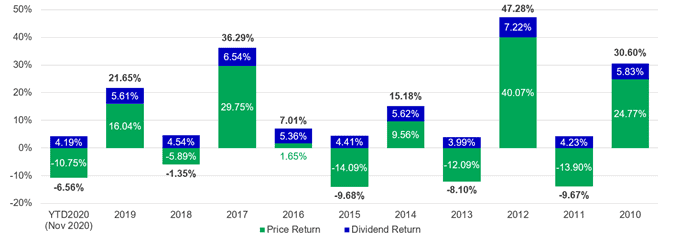
    Despite a volatile and unpredictable 2020, it is always important to remember why investors choose to invest in REITs. While they certainly can offer the possibility for price appreciation (or depreciation), stable and predictable income payouts through dividends has been the main historical source of return.

    Chart 1: AP REITs historical payout

    reits asia pacific manulife
    Annual total returns of Asia ex-Japan REITs (2010 –2020 YTD)

    Indeed, over the past 10 years, AP REITs have provided, on average, a 6.8% annualised return; roughly 5% of the total return came from dividend payouts. To put this dividend yield in perspective, Asia (ex-Japan) equity markets offered, on average, a 5.4% total return, with only 2.4% coming from dividends over the same time period.

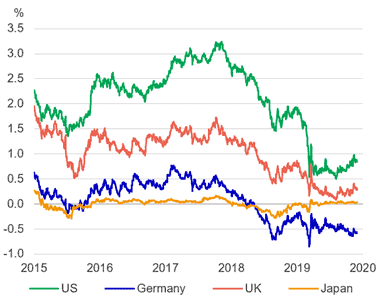
    Despite the notable challenges of the past year, from another perspective, AP REITs historical yield is also attractive in the current “lower for longer” interest rate environment. As Chart 2 shows, developed markets’ sovereign bond yields have steadily declined since December 2015.

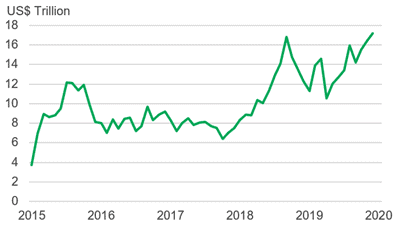
    In some developed markets, bond yields have even turned negative, with the current level of negative-yielding debt instruments near US$18 trillion and expected to climb even further in the near-term.

    Chart 2: Negative yielding bonds

    reits asia pacific manulife
    Developed market 10-year government bonds yields

    reits asia pacific manulife
    Negative-yielding debts size mounted

    While the lower for longer interest rate environment is a headwind for many fixed income segments, it is supportive for REITs due to lower borrowing costs.

    Despite these traditional strengths, 2020 was indeed a challenging year for REITs globally as well as Asia, as the economic impact of the COVID-19 pandemic called into the question the asset class’s predictable history of dividend payout.

    The Past: Early 2020

    The global outbreak of COVID-19 had a varying impact across the sub-sectors of real estate, but initially led many to question the viability of dividend pay-outs in a worsening environment. The worst hit sector globally was retail as a result of national lockdowns and social distancing requirements.

    In contrast, industrial/specialised real estate assets continued to generate stable cashflows and high-income visibility, as the acceleration in e-commerce trends led to stronger demand in warehousing and logistics facilities.

    Many segments of AP REITs have gradually recovered from the economic shock due to unprecedented monetary and fiscal policy measures. Policy responses from governments such as Singapore and Australia have helped save jobs and companies, with some packages totalling up to 20% of GDP.

    At the same time, central banks across the region have slashed rates, with the Reserve Bank of Australia starting quantitative easing for the first time in 2020.

    The Present: End of 2020

    The top priority across all landlords and REITs managers has been to ensure high cleaning/maintenance standards, temperature checks to ensure safety for all their tenants and instil confidence for people to visit their facilities. The pandemic has brought about unprecedented economic impact and all stakeholders in one form or another must bear some pain from it.

    Landlords for commercial assets in Singapore and Australia are mandated to provide rental holidays for tenants who were badly affected by the loss of sales/income. landlords have also offered help in terms of rental commissions, waiver of management fees, lease restructuring to tide tenants through the difficult period.

    We saw suburban retail landlords have also accelerated their digital marketing plans to help their tenants to sell their products online or food delivery services for their food and beverage tenants, with more people working from home, these suburban malls have ramped out digital offering to capture the sales in their neighbourhood.

    The Future: 2021

    Moving into 2021, we envisage the macroeconomic backdrop should gradually improve across the region, with significant dispersion in economic growth across the region.  Despite the economic rebound, we expect that the low interest rate environment should remain a strong tailwind for the asset class. The low cost of borrowing continues to underpin healthy demand in trophy assets across Asia.

    Our base case scenario is that key markets like Singapore, Hong Kong, and Australia should not enter into national lockdowns given policy learnings and experiences. The positive newsbytes on vaccines successes could restore confidence in consumer and corporate spending in 2021.

    Retail landlords should enjoy recovery in cashflows given the low base in 2020 (high rental reliefs) and industrial REITs remain stable with growth boosted from accretive acquisitions.

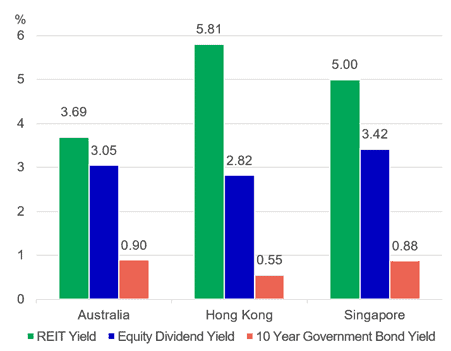
    Based on this base case and favourable macro backdrop, the outlook for yields of AP REITs should remain attractive next year (see Chart 3). Forecasted yield for AP REITs is approximately 5.1% compared to a 2.1% yield for Asian equities. In our view, this payout is expected to remain stable over the long-term, largely due to the strength of the asset class and improved economic conditions.

    Chart 3: AP REITs offer attractive forward yield

    reits asia pacific manulife


    Conclusion

    In our view, the main attraction of AP REITs as an asset class is the stable, sustainable payout of dividends to investors. While this assumption was challenged in early 2020, the response by governments and central banks helped to stabilise the real estate sector. Moving into 2021, we believe an improving economic outlook and continued low interest rates should be beneficial for the asset class.

  • Morningstar: Setting the Stage for Investment Opportunities

    Morningstar: Setting the Stage for Investment Opportunities

    It’s certainly difficult to imagine a more dramatic year for investors than the year 2020, with the Covid-19 pandemic sending markets worldwide on the wildest of rollercoaster rides.

    In fact, what has become clear in the past few months is that even if investors had known a year ago that the world would be in the grips of one of the most severe pandemics of the century, very few would have accurately predicted where the market would end up.

    Key Drivers to Stock Market Recovery

    For much of 2020, Morningstar’s Asian coverage universe reflected a discount to their fair value estimate, and despite the fact that this discount had been narrowing since the March market bottom, it reflected a fairly wide gap between the Technology, Healthcare and Consumer sectors and the rest of the market.

    According to Lorraine Tan, Director of Equity Research, Asia at Morningstar, that discount has narrowed in the equity markets with the rotation into the cyclical sectors since November, but the sectors that are still showing the largest discounts remain Energy and Real Estate.

    “I think what this implies is that investors have already factored in an economy recovery from the pandemic but it’s still far from reflecting any market top. We think the rotation out of Tech and Consumer discretionary stocks that have outperformed will continue,” she tells Smart Investor.

    “The pandemic recovery remains the key driver – we continue to have a base case view that the vaccine will be available by mid-2021 and activity to start normalising in the second half of 2021. Our valuations reflect this view. So, the main risk is obviously any delay because it could raise prolonged debt problems,” she continues.

    “For the first half of 2021, we think holding onto some industrial automation companies for exposure to a manufacturing recovery makes sense,” says Tan.

    She opines that the recovery in capital expenditure by companies is likely to take place only in late 2021 and into 2022, given the pandemic disruptions, so the positive news flow to drive the rotation should continue in 2022.

    Being in Asia, another key driver to look out for is the Sino-US relations. According to Tan, outgoing US President Donald Trump’s penchant for executive orders has added uncertainty to the region, “but getting rid of him only solves half the equation” and “the question becomes how pragmatic President Xi Jinping is.”

    “I would imagine that Biden would be keen to establish his China policy but with a greater multilateral approach and to be within the World Trade Organisation (WTO) and other global platform frameworks.

    “We suspect that a clearer and consistent policy will help reduce market swings but the relationship, regardless, is
    going to remain challenging. Policy clarity will undoubtedly help those companies impeded by the trade tariffs and exclusions,” she comments.

    In any case, Tan’s long-term view on China’s economy is that growth will be on a slowing downtrend as much of the development is done, and with ageing demographics, the only growth driver in the country is likely to be consumption from wealth effect.

    “Regardless of Sino-US relations, fixed asset investment growth is likely to be quite flat which implies slow growth for the infrastructure-related segments. In this regard, the longer-term view continues to favour companies dialled into domestic China consumption,” explains Tan, citing that companies like Alibaba and Tencent will be in their buying recommendation if they reach more attractive price levels.

    On the broader investment themes, Morningstar’s Director of Manager Research Practice, EMEA & Asia, Wing Chan, favours China onshore markets and sustainable investing.

    China Onshore Markets Opportunities

    China currently ranks as the world’s second-largest equity market and second largest fixed income market.

    Highlighting the immense opportunities for investors in the China onshore markets, Chan says, “The gradual opening of China’s financial markets means that its weighting in global equity and fixed income indices are rising, and this is likely to lead to continual and structural inflows into China onshore assets.

    “Many asset managers have spent the last several years building their onshore investment capabilities and we are beginning to see compelling investment propositions that are well-equipped to take advantage of these mispricing opportunities,” Chan explains.

    However, fund selection is critical, as the best fund managers can outperform mediocre ones by a meaningful margin, he reminds.

    Sustainable Investing Turns Mainstream

    Against the backdrop of what has been described as the worst recession since the Great Depression, interest in sustainable investing strategies and instruments continues to grow.

    “We consider sustainable investing a structural theme that is turning mainstream as investors become increasingly aware of Environmental, Social and Governance (ESG) issues,” comments Chan.

    Assets in sustainable funds globally hit a record high of US$1.3 trillion in the third quarter of 2020, up 23% from 2019-end, according to Morningstar data.

    Asset managers, he adds, are ramping up their efforts in rolling out sustainable investment products, which are supported by continually positive and growing flows despite the pandemic’s impact on the broader fund market.

    Meanwhile, regulatory developments are also gathering pace to support this structural shift. For perspective, over 170 ESG-related regulatory measures were proposed globally in 2018 – more than the last six years combined.

    “In Europe, the wide-ranging Sustainable Finance Action Plan is actively seeking to change investing behaviour and direct more investments to long-term sustainable investment products – many of which are Undertakings for the Collective Investment in Transferable Securities (UCITS) that are widely distributed across Asia,” informs Chan.

    “Locally in Asia, the Securities and Futures Commission in Hong Kong launched a website showing ESG-related funds that meet the necessary requirements,” Chan reveals.

    Quest for Income to Continue

    Meanwhile, global central banks’ commitment to keep interest rates low along with the return of quantitative easing implies that investors’ demand for income is set to continue despite unattractive yields from developed fixed-income markets.

    “In comparison, Asian and emerging market bonds continue to offer a reasonable yield for income-seeking investors who are comfortable with taking slightly more risk,” he concludes.

    By Bernie Yeo

  • Charting the Path to a Synchronised Global Recovery

    Charting the Path to a Synchronised Global Recovery

    If all goes according to plan, the new year is expected to usher in the distribution of a Covid-19 vaccine, along with the great promise of a return to normalcy and a global economy that is on the mend. Cautious optimism seems to be the way forward, and things are finally looking up for investors.

    This follows a grim year rife with tragedy and heartbreak over the Covid-19 pandemic, which spread with alarming speed, infecting millions and bringing economic activities around the world to a near stand-still.

    “There is a synchronised global recovery in the horizon, with all regions bouncing back from the pandemic-induced recession in 2020 and heading onto a path of recovery. What’s more, global GDP is expected to rebound from -3.9% in 2020 to +5.2% in 2021 based on a survey of forecasters on Bloomberg,” says Kenanga Investors Berhad Chief Investment Officer Lee Sook Yee.

    The deployment of a vaccine is expected to help global recovery of economic activity, while extensive support from both fiscal and monetary policy provides a further boost.

    “Interest rates remain at decade lows worldwide, while the Federal Reserve (FED) and European Central Bank (ECB) continue to expand their balance sheet with various asset purchase programmes. Hence, we should see a positive environment for risk assets in the first half of 2021 at least,” she tells Smart Investor.

    Opportunities Ahead for Global Recovery

    On investments bright spots going forward, Lee says that 2021 is expected to be the year where risk assets will outperform defensive assets, with “equities likely to outperform fixed income and gold”. She adds that “Within equities, higher beta sectors and countries such as commodities and emerging markets are expected to outperform defensive and developed markets.”

    Lee highlights that monetary and fiscal policies are expected to remain supportive in 2021 as global recovery remains slow and uneven, and is highly dependent on the successful roll-out of the Covid-19 vaccine.

    As such, interest rates are expected to remain low and accommodative, although a bottom is likely to have been reached, reckons Lee, adding that “against this backdrop, risky assets can largely be expected to outperform.”

    On the sectors that will do well, Lee remains overweight in sectors that offer secular growth such as technology. “The tech sector will see various drivers such as the rising adoption of 5G technology, electric vehicles and artificial intelligence in 2021. This will boost the demand for semiconductors and related components and services across the value chain.”

    “On the other hand, we are also overweight on the cyclical/value sectors that might have suffered in the past, but will benefit from the global recovery. This includes sectors such as commodities, industrials, financials and consumer discretionary,” adds Lee.

    Indeed, we will come out of 2020 stronger and the market is looking forward to a better year with earnings anticipated to bull-doze ahead.

    “In line with the synchronised rebound in global economies, corporate earnings are expected to recover strongly in 2021. Sectors that are hit the hardest by Covid-19 such as consumer discretionary, industrials, retailing, gaming and construction are expected to enjoy the base effect of above-average rebounds in earnings.

    “Consensus expects 2020 KLCI earnings to contract 18.8% on the back of Covid-19 virus outbreak in 2020, before rebounding 32% in 2021,” Lee informs.

    Where to Put Your Money

    On the strategy that investors can adopt to stay on top of their investment performance, Lee offers this advice: “In our assessment, the ‘mobile barbell strategy’ is the most suited investment option under the current economic climate.

    “The barbell strategy is an investment concept that suggests that the best way to strike a balance between reward and risk is to invest in the two extremes of high risk and no risk assets while avoiding middle-of-the-road choices.

    “Although the growth sector is expected to continue performing well, investors should also consider shifting their weight to value and cyclical stocks as a balancing act.

    “Above all, stay diversified and focused on your personal financial goals. It would also be beneficial to have a side of supplementary savings such as Private Retirement Schemes (PRS) which can help cushion inflation or unexpected emergencies such as today’s situation,” Lee advises.

    By Bernie Yeo