Category: Behavioural Finance

  • Financial Literacy & Financial Accountability Are Life Changing

    Financial Literacy & Financial Accountability Are Life Changing

    For us to pursue our multiple life goals, we will need to have financial resources, which is like our ‘financial muscle’. We will need to have muscles to do the weight-lifting, which is to turn our life goals into reality. Therefore, we need to have the know how.

    This, essentially, is financial literacy.

    The Organization of Economic Co-operation and Development has defined financial literacy as a combination of awareness, knowledge, skill, attitude and behaviour necessary to make sound financial decisions and ultimately achieve individual financial wellbeing.

    Why Is Financial Literacy Important?

    financial literacy

    Obviously, the decision we make today has a long-term impact on our financial wellness in the future. Hence, a poorly made decision may have a very detrimental impact on our future.

    If a person is not financially literate, then this person may face multiple challenges in respect to managing his or her own wealth. Potential consequences can be:

    • Not protecting savings and assets adequately;
    • Not prudent in borrowings and ending up with too much debt;
    • Not investing to inflation-proof your purchasing power;
    • Not having a will; and
    • Not having financial safety net like an emergency fund and health insurance.

    The list can go on and on.

    When a person is in a situation as above, it’ll be rather difficult person to attain financial independence as well as pursue his or her life goals.

    How Financially Literate Are We?

    The following statistics from the National Strategy for Financial Literacy 2019-2023 Report gives us a picture of where we stand as a nation in terms of financial literacy.

    • 43% of Malaysians understand that growth of money is compounded over time, while 22% believe money grows on linear basis;
    • 75% of Malaysians understand that inflation means cost of living is rising, only 38% can relate the effect of inflation on their own purchasing power;
    • 84% of Malaysians who claim to save regularly typically withdraw it at month-end to cover daily subsistence expenses;
    • Three in 10 of working adults need to borrow money to buy essential goods;
    • 52% have difficulty raising RM1,000 as an emergency fund;
    • Only 24% are able to sustain their living expenses for at least three months if they lose their main source of income, and only 10% can sustain for more than six months;
    • Six in 10 adults are self-employed and hence not covered by a social security system or any formal retirement fund; and
    • About 60% of investors were found to have unrealistic expectations on potential annual return from investment in capital market products.

    A Financially Responsible Person

    financial literacy & financial accountability

    When a person is financially literate, he or she will be more capable in understanding how his or her decision can impact their financial future, hence becoming a responsible person financially.

    When we are financially responsible, we will be careful about adding financial responsibility to our finances. We will ensure that we do not spend all we make but make provision for our future, and for emergencies.

    In fact, most people are aware of this but somehow, fail to take action.

    What Is Missing?

    Since most of us who are working adults have not been taught about financial literacy in school, we need to learn it from somewhere.

    Learning is a passive thing – you can continue to read, learn, listen to podcasts or attend workshops for years. However, it is not the learning that matters but the doing that makes a difference.

    To ensure that we do what is in our best interests, not only do we need financial education, we also need financial accountability. I truly think this is the key missing piece of the puzzle.

    Perhaps you can read Unit Trusts, The ‘Safest’ Investments For Beginners In Malaysia?

    That is why we are unable to behave rationally and stick to our plans, fail to save what we plan to save every month, all because of a lack of accountability.

    I will define accountability as having a sense of ownership over your work and accepting consequences for your actions and behaviours.

    Many times, we are aware that if we don’t save, it will leave us in a worse shape compared to when we save. But we spend anyway.

    So to increase your financial accountability, it’s best if you work with someone interested to help you stay true to your own words, and be accountable for your own actions.

    Financial Accountability Partner

    An accountability partner is someone who coaches another person to keep a commitment. Getting a right accountability partner is known to be a highly effective strategy for goal-setting and achievement.

    The good news is that If we want to stick with our action plan, we just need an accountability partner. The bad news is that we cannot be our own accountability partner.

    And if you have selected a candidate who is not so suitable, your accountability partner may well turn into your partner in crime.

    What To Look For In Your Accountability Partner?

    Ideally, this person should be able to complement you in terms of knowledge, skills, expertise. Since this is a financial accountability need, your candidate should possess extensive knowledge on this subject matter. Otherwise, coaching you to do the wrong thing will eventually send you down a path that is cursed as well.

    However, you should look beyond things that are measurable such as knowledge. Will this person be willing to challenge you to out-grow your limit?

    Your main objective of getting an accountability partner is to outperform your own set objectives. Therefore, you need someone who has the courage and discipline to tell you what you need to hear, not what you want to hear.

    Your accountability partner should also be able to make sure you follow through on your commitments, monitor and review your action plans with you so that you can find ways to improve on it.

    When you are in doubt, he should also be able to provide you with independent feedback and show you the next step so that you will not be stuck at status quo.

    Who Can Be Your Ideal Financial Accountability Partner?

    financial literacy

    Most of us have friends, and family members who we care a lot for. Are we their financial accountability partner?

    Did any of our friends or family members volunteer to talk to us about our financial successes and planning? Has anyone have taken the time or initiative to tell us the importance of save-first, spend later, or the importance of having an emergency fund?

    I guess the common answer to these questions will be a string of “no’s”.

    That is also why I volunteer myself to be your financial accountability partner by devoting my lifework to be a licensed financial planner. I have a strong sense of fulfilment whenever people feedback to me that they are seeing progress and happy because they are sticking to their own plans and are seeing results.

    That sense of fulfilment is even stronger when I get credit for the success my client is having.

    Personally, I believe that it is important for us to work at something we love to do and are passionate about. I’m just glad I’m under this category.

    I think someone who is doing what they are doing when not motivated by monetary reward alone, will be the right person to do the best work.

    So, get an accountability partner to make sure you are accountable for your financial independence.

    About the author 

    kevin neohKevin Neoh is a NextGen Money Coach who works with people to help them transform their relationship with money to improve their lives with the money they have. Kevin can be contacted at kevin@nextgenadvisors.my and www.kevinneoh.my

  • Retiring Early Thanks to Financial Independence, Have You Heard Of The FIRE Movement?

    Retiring Early Thanks to Financial Independence, Have You Heard Of The FIRE Movement?

    If you were to ask the average millennial about how early they would be able to retire, chances are you would get varied responses. However, it is unlikely that any of them would be aiming to retire before the age of 50.

    That is where the concept of FIRE comes in.

    What Is FIRE Movement?

    It stands for “financial independence, retire early” and is a growing movement worldwide. In short, proponents of the movement aim to save a large portion of their income (up to 70% or even more!) and aggressively invest in order to hit a set number they feel comfortable with for retirement.

    The aim is to hit this number far earlier than traditional work structures after which they become financially independent and can “retire” or pursue work or projects they are passionate about.

    Proponents of this movement suggest the “4% rule” as a guideline – the goal is to accumulate 25 years’ worth of annual living expenses through various investments, and withdrawing 4% per annum, assuming it generates at least that much in passive income.

    This is unlikely to diminish the portfolio, and individuals that have reached this level can be considered financially independent, with any form of employment or work now optional instead of necessary.

    4 Varieties Of FIRE Movement

    Fat FIRE: This allows individuals to live a more traditional or typical lifestyle, but also requires saving more than the average retirement investor. It usually allows for luxuries like fancy meals, holidays and gadgets depending on the amount saved up.

    Lean FIRE: This model requires a strict commitment to follow a minimalist lifestyle with little expenditure and extreme savings. An individual can achieve this when they have saved and invested 25 times their annual expenses while also spending less than the average person.

    Barista FIRE: This form refers to devotees that do not follow a set 9-to-5 job, but do work in some capacity on a part-time basis to cover necessary expenses that would otherwise have them tap into their retirement nest egg.

    Coast FIRE: This can also apply to followers that have a part-time job, but who have already saved up enough to fund their retirement and living expenses (thanks to compounding investments), allowing them to “coast” towards retirement.

    Julian Ng, co-founder and CEO of robo-advisor Akru, believes that the FIRE movement is intriguing and helps people think beyond the realm of what is considered financial normalcy.

    “I thought it not only had interesting financial planning principles but also life angles,” he remarks, adding that FIRE devotees did not have to stick to the concept of only being able to retire when they are older.

    Ng believes followers of this movement are tired of being stuck in the rat race and want to work towards other goals that offer fulfilment. Corporate highs to be replaced by personal pursuits and leisure. The latest gadgets and cars substituted with experiences and time with their loved ones.

    “I think they plainly want a life. They want to spend time on things that matter like family, friends and their passions. They also value health and emotional wellbeing. In terms of bigger life philosophies, they figured out that they do not need to have caviar and business class all the way. They are a bit minimalist in that sense, although they are also financially very comfortable.” 

    Early Retirement?

    According to Malaysian law, the minimum age of retirement of an employee in the private sector is 60 years of age. There have been calls to raise this number to 65, meaning that the average person could potentially work for over 40 years before calling it quits – hardly a tantalising prospect to most people.

    Although following the FIRE movement potentially offers a way out for weary millennials, not everyone is specifically aiming for an early retirement.

    “Personally, I’m aiming for the FI part of FIRE as I don’t plan to retire early,” says Leigh, the founder of popular investing blog Dividend Magic, who aims to have a passive income of RM36,000 a year, most of which is derived from various investment dividends.

    “I lived a pretty frugal lifestyle even before learning of FIRE. These habits have been instilled in me since a young age and I have actually been telling myself to spend more often, but on things that genuinely bring me joy. And it will have to be happiness that lasts,” he adds.

    This is a notion shared by Lee Sheung Un, communications officer of Affin Hwang Asset Management, who describes himself as a subscriber to a milder version of FIRE.

    “Early retirement is not the end goal for me, but rather achieving financial independence,” he says.

    “Personally, I aim to save at least 40% of my monthly income which is not quite close to the FIRE benchmark to save at least 70%. I am sure it is possible if I really tried, but I also like spending on my own comfort to save time and avoid stressing about the small things.”

    To the average person, the idea of retiring early may sound good on paper, but it is not surprising that many FIRE devotees are not just looking to coast through the rest of their life. Rather, they are aiming for the freedom and time that financial independence unlocks to be able to pursue what fulfils them.

    Achieving FIRE In Malaysia?

    As a concept originating in the West, the burning question for many will be whether it is possible to achieve financial independence in Malaysia.

    Suraya Zainuddin Ringgit Oh Ringgit personal insurance

    “FIRE is not realistic for people living in countries with a wide wealth gap,” sighs Suraya Zainudin, the founder of personal finance website RinggitOhRinggit.com.

    “Mathematically and statistically speaking, the structure simply does not allow the majority of people to reach their financial goals, even modest ones. Unfortunately, Malaysia is one of those countries.”

    However, Leigh believes that FIRE is definitely possible but that it is not for everyone as it can be hard or too intensive to keep up with.

    “We live in a world of spending and instant gratification. Getting a new phone, signing up for gym memberships all costs money. Not everyone is willing to grind all day and put a hold on spending. And a huge problem in Malaysia is that people are not investing,” he observes.

    And while not everyone may be cut out for the FIRE movement, the philosophies and beliefs around it can help to cultivate a healthier understanding and relationship with money, as well as a way to escape traditional ways of thinking.

    FIRE Movement: Theory And Reality

    The points highlighted above shows how investment formulas are great in theory – but we know real life works out differently. Things start to fall apart when you are faced with unexpected expenses, for example.

    What happens if you are suddenly responsible for another dependent – a child, or parent? Or if you lose your job or become incapacitated?

    On the positive side, the financial dynamics might change because you inherit a windfall or enjoy a rapid increase in earnings. Any of these instances will alter the time it takes you to reach your desired retirement age.

    Neil Walton, Head of Investment Solutions says: “We know the concept of FIRE has spurred some to consider downsizing, retiring, investing and changing their lives. But even for those who do not intend to do anything so radical, FIRE provides a useful blueprint for planning. Good investment will sit on a good financial plan, and that is inevitably about building investments over time to provide an income in the future.”

  • 10 Common Financial Traps Millennials Fall Into

    10 Common Financial Traps Millennials Fall Into

    Money doesn’t disappear overnight but often it’s the case of losing one dollar at a time. It may not seem like a big deal when you order a Mocha Frappuccino, have a dessert in a nice cafe or subscribing for a long-waited movie, but every little item adds up in the long run.

    Being a millennial as well as a licensed financial planner, there are many financial traps I’ve also succumbed to, and now would like to remind myself (and you too) to stay away from.

    1. Instagrammable Lifestyle

    A cup of RM20 Coffee, a plate of RM30 Big Breakfast, a slice of RM20 cake, these are perfect elements to form a likeable photo, but these are also killing our bank accounts. When we chase a materialistic lifestyle, we might lose control of our finances.

    2. Crazy Shopping When There Is A Sale

    Looking for SALE is an easy job in this e-commerce era. You might wonder why buying things on sale is an issue? This is because no matter how great the bargain, if you purchased something you aren’t going to use, you’re just throwing away your money!

    Ask yourself, “Do I really need this and will be using this frequently?” or “I’m just buying it because it’s on sale?”

    3. Subscription Trap

    The most common marketing strategy nowadays is to encourage consumers to sign up for a “free” trial. You only need to activate the trial by putting in your credit card details to enjoy the service.

    The companies are hoping that people will forget to cancel, and then the monthly payments will just get charged to our account. And way too often, that’s exactly what happens. This happened to me before, and probably has to you as well.

    The effective way to avoid this is to ask ourselves: do we truly need things like movie subscription, music services or fancy gym memberships that keep us paying for months? Reconsider to see if there are cheaper ways of doing the same thing and if the subscriptions are necessary for you.

    4. Full Allocation Of Salary While Planning To ‘Save Later’

    RM300 for the latest flagship handphone, RM100 for a mobile plan, RM200 for a gym membership, RM1,000 for the dream car…  who says millennials don’t plan for their finances? We have our monthly salary “100% well-allocated” into different expenses. However, we might just be forgetful about one thing: Savings.

    The more we earn, the more we save? Unfortunately, it’s usually not the case. The first time I received my salary, I told myself to save up at least 10% every month. One year passed, I was still saving the same amount even though my salary was up more than 10%. I thought it’s due to the market inflation, so I couldn’t save more.

    In the end, I realised it’s due to my own “Lifestyle Inflation”.

    5. Using Credit Cards For Daily Expenses

    Don’t you feel it’s cool to just swipe a card/scan a code and get what you want? While we are living in an era where cashless payments are unavoidable, but the credit card is not our only choice.

    When you use your credit cards to cover the shortfalls in your spending, you can eventually run up a huge amount of debt. Besides, people tend to spend more when they are paying with credit cards. Don’t forget, you still have your debit card!

    6. Making Financial Choices Out Of FOMO

    Another common trap I face is to make a financial decision out of the fear of missing out (FOMO). When we are afraid, we might not consider all of the options available, and might end up making a costly mistake. Besides, millennials tend to have peer pressure to take a big financial step, from buying a new car to purchasing a home to getting married or having a child.

    Just stop! Take a deep breath and think whether you are ready for these moves. Rushing to accomplish these might not benefit you financially.

    7. Simply Investing And Chasing Quick Gains

    We are lucky as we have easy access to investment information compared to our parents. However, simply investing without knowledge, time and discipline can be a financial killer of our hard-earned money. I have seen some of my friends chase after quick huge gains from investments without paying attention to the risks involved.

    It would be folly for us to buy a stock or a property and just pray that it would “go up” without careful analysis. If you have no time to do this, it’s advisable to engage experts to help you instead.

    8. Thinking We Will Be Forever Young

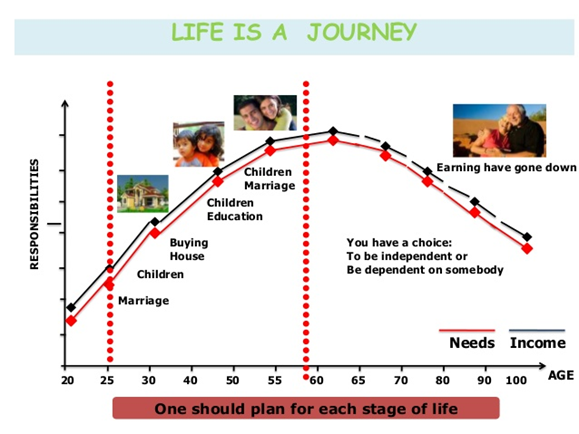
    Many young Malaysians don’t even think about retirement:

    • In our 20s, we think retirement is far away, YOLO!
    • In our 30s, we enter a different life stage, buying a house, getting married, etc, and often we lack funds to save for the future.
    • In our 40s, we need to provide more for the family, e.g. children’s education fund.

    Commonly but sadly, people only recognise their retirement needs in their 50s, which is probably already too late. A warm reminder: the youngest millennials are already 24 years old now, and the eldest are already 39 years old.

    Another major misconception many of us have is that we choose not to buy insurance in order to save money. But this isn’t a wise financial decision. What makes a millennial so confident to think we are risk-proof from medical conditions or personal accidents?

    9. Travel Plans Are Done! How About Your Financial Plan?

    financial planning getting it right
    Image from icharts.net

    Planning for travel is always in our top bucket list, but how about our own financial plan? We spend countless hours scrolling through social media feeds, spend thousands of ringgit on getting the latest gadgets, but setting aside two hours to engage with a professional on planning our finances is rarely in the plan.

    We need this “financial waze” to lead us towards our financial goals in life. Without a financial plan, our financial future is unsecured as we are uncertain what is going on right now and where are we heading to.

    10. We Don’t Ask For Help And Choose To Ignore

    I don’t mean you should borrow money from your friends or relatives. However, most of us will be facing financial problems that we can’t handle well, for example budgeting problems or major financial decisions to make. Don’t try to adopt an “ostrich policy” and pray the problems would resolved by itself.

    Many of us get trapped because we don’t pay much attention to our finances. Every month we receive our pay cheque, pay the bills, and then spend what’s left over (if there’s anything). I understand that money is a taboo subject and we feel ashamed when we’re struggling. But there is so much help out there! Tell someone you trust or talk to a licensed financial planner to let them guide you.

    It is important to have an informed financial plan that can help us millennials achieve financial success. Remember, managing your finance is managing your life.

    Starting by monitoring all the seemingly small expenses. Think carefully before adding new debt, keep in mind that being able to make a payment (swiping your credit card) isn’t the same as being able to afford the purchase. Don’t fulfill your current desire by sacrificing your future funds.

    If you make saving a monthly priority and get the help from a licensed financial planner to work out your plan, you are more likely to enjoy life more abundantly.

    If you’ve spent time to finish reading this, take charge of your life by taking charge of your finances now. Have your personalised financial plan today!

    About the Author

    Ocean Pon is a Licensed Financial Planner with Finwealth Management Sdn Bhd.

    We at Smart Investor and Finwealth is committed to help you better manage your financials. Get a free consultation from an expert by filling in your details here: https://www.smartinvestor.com.my/SIxFinwealth

  • 3 Values Of Financial Planning: Here’s Why You Need To Start Early

    3 Values Of Financial Planning: Here’s Why You Need To Start Early

    Anwar reached out to me in 2018 as he needed help with his personal finances. As the only son in his family, he was the executor of his late father’s inheritance. His father passed away many years ago due to cancer, and he remembered clearly the financial drain from cancer treatment.

    34-year-old Anwar is a lecturer at one of Malaysia’s largest universities. His wife is a housewife taking care of their two children, aged 7 and 4.

    “Although my father’s death hit us badly, we were thankful that he did not leave us with massive medical bills. This is because our prudent father had a healthy emergency fund,” shared Anwar.

    Being the main breadwinner of his own growing family, he needed to prepare for such emergencies. Just like his father, he wanted to ensure that his wife and children are well-provided for in case anything happened to him.

    Anwar’s father was a banker and had taught his children about saving money. Anwar also has a keen interest in personal finance and investment, and had read books and attended a Do-It-Yourself (DIY) course from a financial guru.

    However, he found that the information was too overwhelming and didn’t know where to start with regards to his own personal finances. Having been approached by unit trust and insurance agents, he was wary as he recalled, “They were more interested in pushing their products for commission rather than to put a roadmap and direction for me to achieve my financial goals”.

    Here are the 3 values of a full financial planning.

    1. An Expression Of Love

    Anwar and his wife know how dire their financial situation will be if Anwar passes away prematurely. People tend to forget verbal reminders easily. But if it is written in the form of a will, wishes, hopes and dreams; it helps tremendously.

    Furthermore, the engagement allows him to translate his expression of love, his long-term and short-term goals into actions, and not just a wish. During our discussion, one of Anwar’s goals is to support his wife’s pastry business once his financial situation has improved.

    After the third year of our advisory engagement, Anwar manages to make his wife’s goal into a reality. (You can check it out on Instagram Pastreen; it’s really delicious)

    2. Aligning Strategy With Financial Goals

    We provided insights to help him map out the strategies to reduce the Debt-to-Service Ratio (DSR), ideal asset allocations for his financial resources and guidance on financial products he should consider getting with the time horizon he needed in order to achieve his financial goals.

    Since he was willing to start early, he will have more options and opportunities to optimise his wealth. As his financial planner, my role is to guide him with the options available so that he can take ownership in his financial planning by making an informed decision.

    Anwar now understands the importance of building a healthy cashflow, and how to lead his ideal life within his means.

    3. Financial Needs And Wants

    A common situation is the relationship between savings for building cash reserves and other goals in life such as buying an asset. Many are unsure if they are over-committing one financial goal at the expense of another.

    With a holistic financial plan, we can see how extra commitments will affect other financial goals. It helps to adjust our actions, weighing the pros and cons before deciding. Most importantly, it is a tool to effectively communicate your financial situations and life goals.

    Conclusion

    Anwar is a real-life story of “It is not about how much income you make, but how well you manage your income”. Without a roadmap and direction, we might spend unnecessarily and make poor financial decisions. Financial mistakes are painful.

    Similar to inflation, financial goals and financial freedom are a challenge to understand and to manage, because it is intangible. Only after acknowledging what an ideal life is, you can move on to support your goals in life.

    About the Author

    Saidah Asilah started her career as a graduate trainee with Securities Commission Malaysia. Then, with a deep interest in investments, she furthered her studies in MSc in International Business and Emerging Markets, graduating in 2013 from The University of Edinburgh, UK. She is a Licensed Financial Planner, CFP Professional & IFP Certificant and describes herself as a multi-talented adventurer with a positive impact to whomever she meets. She can be contacted at saidah@wealthvantage.com.my.

    We at Smart Investor and Wealth Vantage is committed to help you better manage your financials. Get a free consultation from an expert by filling in your details here: https://www.smartinvestor.com.my/SIxWealthVantage

  • 3 Mistakes To Avoid In Your Financial Planning Journey

    3 Mistakes To Avoid In Your Financial Planning Journey

    Based on the OECD/INFE 2020 International Survey of Adult Financial Literacy that included 26 countries, Malaysia was ranked third highest behaviour score after Slovenia and Indonesia. This ranking was achieved thanks to three common, prudent financial planning behaviours that emerged in the survey answers, including saving and long-term planning, making considered purchases and keeping track of cash flow.

    However, Malaysia was also placed in the bottom tier in the section of financial knowledge. The report also highlighted that globally, youths (defined as those aged 18-29) have a lower financial literacy score compared to middle-aged individuals (30-59 years old), of which a similar trend was seen in Malaysia as well.

    Thus, I would like to take some time to share about costly mistakes that you should avoid in your financial planning journey, especially for the younger generation to take note of!

    1. Ignorance

    Ignoring the basic knowledge about invest and power of compounding is like ignoring the blinking fuel light on your dashboard while driving! In the worst scenario, ignoring this indicator may result in your car inadvertently stopping in the middle of nowhere after running out of fuel. Not a pleasant situation to be in!

    In financial planning, you may end up paying a huge price in the future because you will not be able to get back time which is essential to growing your personal financial assets through your active income period, either via employment, business or investments.

    The first step you must take is to accept your current financial situation, no matter what level you are currently at. This is just like the example above, where you can drive your car to the nearest petrol station to refuel before continuing your journey. Just do not run out of fuel!

    Once your financial situation is assessed either by doing it yourself or getting professional assistance, identify several steps you can take towards your goal such as starting to put aside savings regularly, monitoring your cashflows, and identifying investment assets that are suitable for your risk appetite in order to build and grow your wealth.

    2. Procrastination

    yo

    Procrastination tends to occur when we would rather do other things instead of what we actually need to do. Thinking that reviewing and planning your finances is something that can be delayed or put off to a later date is actually a very common problem.

    In investing, this will translate to you needing to save a higher amount each month due to the shorter investment horizon, compared to another individual who started earlier than you. The cost of procrastination may not bite you early on, but its effects can be far reaching in the future!

    This can also apply to insurance planning – some individuals may have certain conditions excluded or charged more on their premiums should they want to apply for and purchase health insurance at a later stage. As their health is not in as good a condition as it was when they were much younger, naturally the price will increase.

    Therefore, it is advisable to get insurance early on with appropriate coverage when you are young. Review your insurance needs annually or whenever there are changes to your lifestyle. After all, any medical emergency can wipe out your savings in an instant so always be prepared!

    3. Fear

    Some individuals may have adopted the wrong beliefs or have misconceptions about investing, creating their own meaning out of their own experiences or that of others. That may also be the reason why some of them tend to keep most of their wealth in their bank accounts, or at best, fixed deposits. Although they would rather opt for certainty in life, the only thing that is certain is change.

    What is more important for you is to implement proper diversification in your portfolio, being disciplined and focused on consistent savings, and growing your wealth in order to reach your long-term financial goals.

    Do you worry that you might not have enough financial resources to fund your retirement in 320 years’ time? Or would you rather worry about the short-term fluctuations in your investment portfolio during periods of market volatility?

    You cannot turn back the clock if you do not have enough savings in your retirement age, so it is wise to maintain a long-term perspective when looking at investing.

    Give yourself a head start. Learn how to gain the right knowledge through reading, attending seminars or seeking out financial professionals such as licensed financial planner to guide you. These avenues will greatly help you with overcoming fear of volatility and taking advantage of it to grow your retirement nest egg or reaching other financial goals you may have.

    In conclusion, the three mistakes to avoid in your financial planning journey (especially among the younger generation) is to get rid of your ignorance, overcome procrastination and conquer your fears.

    It is important to start taking smaller steps as early as possible to improve your financial literacy, and start to save and invest regularly to enjoy your financial planning journey with more confidence. Your future self will be very grateful!

    About the Author

    Goh Chee Yong is a licensed financial planner under Capital Markets Services Representative License (CMSRL) and Bank Negara approved Financial Advisor Representative (FAR). Prior to becoming a financial advisor, he spent eight years working in Big 4 audit firms and multinational corporations. He can be contacted at cygoh@imaxfinancial.com.my

  • Changing Habits in a Cashless Society

    Changing Habits in a Cashless Society

    Are you psychosocially fit to harness fintech solutions for your financial well-being?

    The outbreak of the Covid-19 pandemic has accelerated the use of cashless payments in Malaysia. There is a surge in the usage of cashless payment as consumers start to adopt e-wallets like Touch ‘n Go, GrabPay, and MAE, besides the use of electronic payment through cards, mobile banking and internet banking during the Movement Control Order (MCO).

    A cashless society does not necessitate that cash transactions do not exist in the economy but rather, financial transactions are facilitated by electronic means in an attempt to minimise the volume of cash transactions.

    As the buzzword “fintech” is rapidly becoming a household name, early adopters may have already benefited from their early adoption of fintech solutions. There were many lengthy articles written on the benefits and risks of moving towards a cashless society as well as highlighting the risks associated with the adoption of fintech platforms such the potential compromise of client privacy, security and operational risks. In their quest for higher customer acquisition, fintech platforms provider may have overstated their claims with regards to their services.

    Not surprisingly, certain segments of the society, which are either unconvinced of the benefits or lack the ability to reconcile with the technology, are still rejecting the use of tech-based solutions despite rapid adoption by the tech-savvy generation.


    So, are we getting or feeling smarter as technology users? Is our digital financial literacy moving in parallel with the availability of fintech solutions to manage our finances?

    As reported by EPF, our savings are not sufficient and some EPF members are opting for early special withdrawal under i-Lestari, i-Citra and i-Sinar due to the pandemic.

    So, are cashless and fintech solutions the panacea to help us save, spend or invest better?

    The main issue does not lie with using technologies per se for financial planning but rather, a lack of awareness in understanding savings and spending behaviour. This is because, if we cannot or do not have the self-disciple to save, knowledge and skills alone will not enable us to fully capitalise on investment opportunities provided by fintech solutions.

    Let us try to understand ourselves. In this age of consumerism, by nature, it is our inherent behaviour to prefer current consumption over future consumption. The additional satisfaction known as marginal utility in Utility theory expounded that the marginal utility of current consumption is always higher compared to the marginal utility of future consumption.

    In other words, it may be difficult for some of us to save for tomorrow unless we are incentivised to do so. As most people are not self-motivated creatures, we need external push and interventions from time to time to help shape our savings behaviour. In addition to this, psychologically, we dislike waiting.

    But unfortunately, the incentive to compensate us for waiting and delaying our current consumption in the form of interest rate is negative. In this low or negative interest environment coupled with the availability of easy credit, plastic cards such as debit cards or credit cards, e-wallets or other alternative payment systems, the motivation to save becomes even lower, and spurs us to spend recklessly.


    While we love the constant innovations or fintech solutions by companies in their attempt to provide a seamless experience for customers, we are becoming somewhat less patient. Spoilt for choices with a button or click-away conveniences provided by companies, our impulse to spend for instant gratification is magnified.

    In addition, the theory also explicates that we tend to value current consumption even more over future  consumption during period of scarcity. Thus, it is no surprise that due to the Covid-19 pandemic, we may have the urge to spend and consume even more like there is no tomorrow.

    Some of us are being lured into adopting exuberant lifestyles that are beyond our means as we are besieged daily by spam, scam calls, marketing gimmicks or repetitive unwanted advertisements.

    While some of us are plunging deeper into the abyss of maintaining exuberant lifestyles that we find hard to extricate ourselves from, companies are getting unrelentingly creative in helping us to reduce our pain of losing money via innovations in electronic payment means. Accordingly, we do not just experience as much pain as our predecessor because we are just literally transferring the numbers or data via the electronic systems when we make our purchases. In consequence, we are inclined to spend lavishly on unnecessary items.

    Things were markedly different back then when cash was used extensively. Our grandparents or parents may have better spending habits because they get to feel, touch, smell and count the hard cash of their money in their hands before parting with their money. The painful experience associated with seeing with their own eyes that the money is actually leaving their hands or pockets may have deterred them from spending on unnecessary items. This explains why they spend more on necessities that benefit themselves to equalise the pain inflicted upon parting with their money.

    To put it in another way, if we could not be cognizant of our own innate behaviour by getting psychosocially ready, in harnessing the so called “smart” fintech solutions, we are not going to get smarter. On the contrary, we may become more mentally depressed.

    Cultivating good spending habits and resisting temptations to splurge often require self-discipline, practice and planning. To be more unsusceptible to act impulsively when our brains process words frequently used by marketers such as easy, convenient, fast, instant, and limited, we should stop being hyperconnected all the time.

    By not subscribing to this new religion of “irrational exuberance” (a popular term used by Professor Robert Shiller) in our daily spending habits, hopefully, then, perhaps, our life would be psychosocially and financially happier.

    About the author

    Dr Audrey Lim Li Chin is a lecturer and a researcher at Multimedia University (MMU) Melaka. She teaches International Finance and Derivatives. She is particularly interested in retirement planning, mental health, fintech especially in blockchain and data analytics. She is also a Certified Financial Planner, (CFP) and is currently pursuing Chartered Financial Analyst (CFA) certification. She is also the external educational advisor to Max Wealth Education Sdn Bhd.

    Upgrade Yourself To Become A Certified Financial Planner And Islamic Financial Planner

    The Certified Financial Planner (CFP) qualification is for those wishing to practice the profession of financial planning and who wish to master a certain level of theoretical knowledge and practical application of financial planning in such areas as:

    • General principles of financial planning
    • Insurance planning
    • Taxation planning
    • Investment planning
    • Retirement planning
    • Estate planning
    • Financial plan construction and professional responsibilities

    Islamic Financial Planner (IFP) is designed especially for professionals and personnel serving the retail segment of the Islamic financial products and growing demands of discerning Muslim retail clientele call for higher standards of competency and ethical practice of financial planning professionals. Equip yourself with enhanced knowledge in the personal financial advisory space.

    Exclusively for Smart Investor followers, click https://www.smartinvestor.com.my/SIxMaxWealth to find out more about the Special Promotion Package and get up to 20% special discount.

    *This promotion is valid until 31st December 2022 only

  • What Is Your Money Mindset?

    What Is Your Money Mindset?

    This is the first part of this six-part series, where these topics will guide those who have just started to work or have just started their journey to build a strong financial foundation. Before we set out to achieve anything, it always starts with our mindset. 

    How do you know what your money mindset is? It’s how you feel about and view money. It helps to form your decisions on how you manage money by saving or spending it. How you believe money can work for or with you, will decide how you live your life in the future. Every single day, you’ll make many small decisions that will push you forward financially or set you on a reverse course; it’s entirely up to you! 

    Some of the great money mindsets are listed below:

    • I have the ability to spend but I also empower myself to say “No”
    • Everyone has their own path and I have mine
    • Achieving financial goals are possible when I work towards them

    As Henry Ford said, “Whether you think you can, or think you can’t – you’re right.”

    Here are three ways to improve your money mindset:

    1. Money is a tool, not a goal

    Think of money as the fuel to your car. Is fuel considered the destination or is it one of the raw materials needed by your car to bring you to your destination? 

    If your answer is the latter, that’s correct! We exchange our time, energy and skills to earn money to buy us the things we need or want. Through your various life experiences, you may think that money is the answer to everything, but this isn’t true if you don’t know how you would like money to help you in life.  

    When you start seeing money as a tool, it’ll help you think about what your actual goal is. A simple goal could be living a life filled with fun and joy, where you enjoy travelling and eating – this will require money in order for you to fulfil this goal. 

    As you start setting goals for yourself to aim for, they also provide a purpose for your money to work on and naturally, you will start allocating your money to where it should belong. 

    2. Money needs to be managed

    Did you know that most winners of the lottery actually end up losing all the money they won and go bankrupt in a few years? This is hardly surprising because if a person doesn’t know how to manage RM1,000, then they will definitely not know how to manage RM10,000. The same logic also applies to you. If you work smart and hard to earn the money you have, why not take the initiative to learn how to manage, allocate and save your money

    You can set up a few accounts to save and segregate your money. For starters, these could be a savings account, fixed deposit and money market. Although these accounts may not serve as long-term wealth builders, you can use them to practice saving what you earn. When you continue practicing this, it then develops to become a habit. 

    Assume your total take home pay for the next five years of working is RM200,000. How much do you think you would like to keep from this amount? Would you like to save RM20,000 or RM40,000 or even more? What you want to save entirely depends on you. 

    3. Using money is like two sides of the same coin

    The “opportunity cost” or “trade-off” is defined as the loss of alternative choices when you make a decision on how to use your money. This is the same thing that happens if you flip a coin – it either lands on heads or the tails, and never on both sides.

    For example, let’s say you decide to save RM10,000 every year from your take home income of RM50,000. By saving this RM10,000, you gain additional money in your savings account. However, you may miss out on having more fun by travelling, purchasing new gadgets, or buying new furniture that you might want to have. 

    Before making any decisions regarding money, learn to think about the potential opportunity cost or trade-off that you have to make. Will it be something you’re willing to miss out on? Would the trade-off matter in the years to come? Would your decision help to build the life that you want in the future? 

    If the decision isn’t urgent and involves an amount of money that’s a lot to you, and you’re not comfortable making it, then don’t. There is no harm in pausing and thinking through or seeking opinions from the financial planners that you know. For all you know, you may have just saved yourself from future troubles if the initial decision goes against you. 

    Finally, improving your mindset isn’t a “been there, done that” type of destination. It’s a continuous effort to enhance and practice, just like how we build our body muscle, otherwise our body muscle will slowly turn into…body fat. 

    Stay tuned for my next topic in this series!

    About the author 

    Fong Woon Bing is a licensed financial planner who has coached, improved and broadened the mindsets of many people whom he works with, bringing them closer towards achieving their life and financial goals. He can be contacted at fongwoonbing@vka.com.my

  • How to Make a Financial Plan for Myself As a Beginner?

    How to Make a Financial Plan for Myself As a Beginner?

    A good financial plan creates a roadmap or a guiding light for your financial life journey. It’s more than money and gives you an overall picture of where you stand financially and where you’re heading to. It should include financial details about your cash flow, savings, debts, investments, insurance, and any other aspects of your finances. Financial planning is an ongoing process that allows you to get your money and life under control so that you can reduce stress, fear, and worries about your future life. I think everyone should have one, and it can be done in your own style or with a financial planner. Remember, financial planning is not only for the wealthy or people earning a high income. You don’t need sophisticated software or tools to draw up your own financial plan; instead a blank piece of paper will help you to kick start the process. Start by listing down what you have (assets eg. savings account, EPF, investment account, investment property, business, etc.) and what you owe (liabilities eg. mortgage loan, car loan, personal loan, credit card, study loan, etc.), income (cash inflow) and expenses (cash outflow). This will give you a snapshot of whether you’re at a financial surplus or deficit, making it easier to work out a financial plan – covered in the next step.

    Setting goals for your financial plan

    This is where you decide how to design your own life. When crafting your own financial plan from the viewpoint of what your money can do for you, you’ll make saving and investing feel more intentional than overspending it. Your goals should be inspirational, measurable, and realistic – ask yourself where do you see yourself in five years’, 10 years’ or even 20 years’ time? It’s important because it gives you direction to achieve your financial goals at different life stages and it also influences how you plan your career as well. For example, there will be different needs when doing financial planning in your 20s, 30s, 40s and 50s. In your 20s, you might want to make sure you have sufficient emergency savings that lasts for at least three to six months so that in emergencies you won’t  be running on credit. Don’t forget to factor in insurance and ensure you get adequate coverage for personal accidents and a medical plan. In your 30s to 50s, you’ll likely be experiencing high commitments due to getting married, raising kids, preparing university tuition fees, and funding your retirement fund. As you progress from different life stages, you’ll need to regularly keep an eye on your allocations for investing and spending. If you know that these things will happen in your 30s to 50s, you may save and invest more in your 20s or prolong the retirement age from 55 to 60.

    Monthly budgeting for your financial plan

    The next step is to allocate your monthly budgeting – what is coming in and what is going out to understand your spending habits and only able to take a balance between spending and savings. It depends on where you live and how you spend – living in an urban area may result in spending more due to higher rent, eating out more etc. If you don’t spend more than half of your income, then you can start saving enough to fund your goals. Of course, you can’t own the whole world, but you can own the things that you value the most!

    Executing your financial plan

    This is all about allocating your resources or cash surplus to fund your goals. Saving and investing must come into play and you should consider the types of financial products, the risks, returns and liquidity, as well as understanding your risk tolerance. For example, if you set aside 15% of your gross income for long-term goals like retirement, you may consider investing in stocks or equity funds that aim for capital appreciation. For shorter goals like saving for an emergency fund, you wouldn’t put your money in a high-risk fund because you might need it quickly in an emergency. It’s best to have separate accounts for different funding purposes.

    Review your financial plan

    Lastly, review and monitor your financial plan regularly to ensure you exercise strict discipline with the flexibility to adjust accordingly in the future, especially when entering different life stages. It’s easy to talk and plan, but execution remains the most challenging task as we may not have the discipline to stay on track. So, reviewing, monitoring and fine-tuning acts as reminders of your goals all the time. It’s best if you can make it measurable so that you can reward yourself with small gift when you are on track!
      A good financial plan is not a beautifully written document that is presented nicely to you. It’s a tool to track your progress and help you reevaluate plans after a life milestone such as getting married, raising a kid, buying your first property, upgrading to a new car, preparing for a kid’s college fee, or building your retirement fund. When everything is handled, you can enjoy living your life. The small steps you are taking now will definitely have a huge, positive impact on your future.

    About the author 

    Eewen is a licensed financial planner and strongly upholds the belief that financial wellness is all about money bringing a positive impact into your life. She can be contacted at keaheewen@vka.com.my
  • What I Learned From a Free Financial Health Check

    What I Learned From a Free Financial Health Check

    Nowadays, the words “health” and “healthy” are very important. While the pandemic has taught many people different lessons, one of the most central ones is that it’s important for us to be healthy. Without good health, all other things may not take place, or be sustainable. The concept of being healthy isn’t just limited to medicines or the fitness industry – it’s also widely used in the financial industry. These days, there are plenty of marketing messages that have the phrase “Financial Health” or “Financial Health Check” in a big, hard-to-miss font! At a glance, it seems that we can get free financial health checks from different companies that offer different kinds of products. Life insurance companies offer this, banks may also offer this service, and in social media, we can see many different individuals, or product companies offering this, for free! As a curious person, I tend to try out new things. And the most memorable one, I’d say, is one by a reputable insurance company offering a financial health check. I logged in to the portal to do mine; a few questions were asked about my age, marital status and whether I have children. It then asked me to rate a few scenarios that “concerns me”:
    • Hospitalisation
    • In the event I’m diagnosed with critical illness
    • In the event I’m disabled
    • In the event I meet with an accident
    • If I’m concern about money for my children’s education
    After these questions, the next segment asked me to indicate how much insurance I have in respect to the areas mentioned above, followed by a question of how much of my current income goes to insurance premiums. Boom, the results came out and I was eager to see if I’m considered financially healthy! The results show me, based on the coverage amount I keyed earlier, compared to people like me at this insurance company, whether I had higher or lower coverage for the respective areas. It even comes with a recommendation of what I “need”. You get it – according to this financial health check, I need more insurance products! Just like this, am I supposed to say I’m financially healthier than most just because I have higher coverage on death and total permanent disability? Am I supposed to feel concerned just because “people like me” at this insurance company have a RM20,000 paid savings plan, but I have RM0; does that make me a bad father? Comparing our situation to “people like me” as defined by a company, isn’t a good way to assess if we’re financially healthy. If this is a good approach, we should start comparing our situation to people in other countries, societies, and at other offices. But what is a fitting benchmark for this? If this is considered a good approach, then if “people like me” in this country have a high amount of debt, should I start going all out and accumulating debt? I’m not sure how this makes any sense. It may make sense to some, but I’m still looking for a good explanation! Comparison is the root of all evil and how we lose the clarity we need to live our own life. It also helps in feeding insecurity, jealousy, greed and other emotions that don’t empower us to be a better version of ourselves. I think that if we want to understand if we’re financially healthy, it’s because we want to know if we have a good financial foundation. It’s like a table with four legs; we want to know if these four legs are strong enough, or whether it’s unstable and at risk of collapsing. We need this information because we care about maintaining the table and want it to continue being stable so that what’s on the table will be sustained and maintained. In life, what’s on my table will be what’s important to me. For me, this includes my family, what kind of difference I can bring to the society, whether I’m making a difference, and helping people be better than they were the day before. But, without those four legs supporting my table top, these three items may not be around for long. In the context of money and life, we can start from these four legs to find out if we’re financially healthy.

    What are these four legs?

    Emergency savings

    For a start, I’d suggest looking at your emergency savings. If your savings can support you during sudden spikes in unexpected expenses, or ensure you go through challenging times when you lose your main income without having to lose sleep, your leg is quite stable and strong.

    Are you saving enough?

    Assess if you’re saving part of your income. A person spending all their income today will probably have to always look for money. The day their income stops, they’ll have issues maintaining the lifestyle they lead. On the contrary, a person who saves too much of their income today may not be able to enjoy life at all. Striking a balance seems to be important since none of us know if we’ll get the chance to enjoy our savings 20 years later.

    Debt and commitments

    Take a look at your debt situation. Do you have a habit of carrying outstanding debts forward month to month? How much of your take-home pay are you using to pay off loan instalments? If this amount takes up most of your income, it means you probably have less freedom and flexibility to try something new, since there are weights dragging this leg down. This means you may not be able to put on more weight to your table top.

    Life goals

    Finally, how well have you been preparing to achieve your life goals? For instance, my family is important to me, and if I were to leave them too soon, how long can they continue with minimal disruption? Have I done anything to ensure my frozen estate can reach them as quickly as possible with minimal costs? Am I on-track to provide my child with the kind of education I want? By looking at your financial progress from this perspective, the benchmark you’ll use isn’t public, but rather what you want, and compared to where you are now. This allows you to fairly review the legs of your table. It’ll help you stay on-track and compare your current situation to your ideal goals instead of other people’s. The points above are the four basic areas I think we should review if we want to understand our financial health. Of course, there are more areas such as if assets are optimised or liquid enough, ways to legally reduce taxes, or reducing the fees and cost we pay when we grow our wealth, etc. But this is a good starting point. When was the last time you did a financial health check? By being part of the Money Warriors Community, you can learn how to make improvements to the four basic areas – save more, spend with peace of mind, reduce your debt, and be brave when you think of money.

    About the author

    Kevin Neoh is a NextGen Money Coach who works with people to help them transform their relationship with money to improve their lives with the money they have. Kevin can be contacted at kevin@nextgenadvisors.my and www.kevinneoh.my
  • What is Financial Wellness – It’s Not Just About The Money

    What is Financial Wellness – It’s Not Just About The Money

    Taking personal finance to another level by looking at it from a more holistic view.  How has the past year been for you? I’ve done a lot of reflection on myself and how I want to further evolve when things get a little more normal for the coming year (fingers crossed)! One thing I personally learned is about life and recognising that money is just a tool. We must make sure we use it correctly in order to work towards financial wellness.
    “People first, then money, then things.” – Suze Orman

    Reflection on the path to financial wellness

    The stoic path to wealth mentions that the fear of losing all our wealth is creating a monster inside us and therefore turning the chase for wealth into fear of losing it. This eventually turns money into our master and we’re enslaved by fear until we almost lose touch with ourselves. There is a saying “Money is the root of all evil”. But in actual fact, the full quote is “the love of money is the root of all evil.” It’s the greed for wealth that is bad as it can corrupt minds, and the need to keep accumulating more and more is the real issue.

    Money is not the end goal

    Personal finance is not about the money we have or about creating more wealth. Its main purpose should be more holistic, ie. leading the life you were born to lead, no matter what your financial status is. You’ll see money in a different light if you began your career with a student loan. Even before starting your career, you’ve already created a load of fear by accumulating a large amount of debt. This results in your mind becoming clouded with thoughts of the repayment of loans first and pushing aside all other goals or dreams. I personally experienced it as a child; teachers kept telling me to finish school, get good grades, go to university, get a degree and get a good paying job. As a child I thought that was the dream, but it didn’t turn out the way I imagined it would as a child. We were repeatedly told this fairytale, and subconsciously I believed it. But now that’s not the case. How can we take a holistic approach around our personal finances and take back control of our life? Believe me, we’re not meant to suffer through life constantly worrying about paying bills.

    Reflecting on your childhood dreams 

    Have a goal in mind. You already knew what you wanted when you were a child. In fact, there’s a good chance you were so good at it. Try asking your parents or other close family members what you were like when you were around the age of 9 to 12. It’ll give you some insights about your strengths and your childhood dreams. I grew up observing how passionate my parents were and how they were willing to give their all to their career. At the end of the day, my parents still had time to spend with us and go on a little vacation once in a while. It was a nice balance. That’s currently what I want to strive for – a balanced life between my career and family. I’m not saying I don’t want to be rich (who doesn’t), but it’s not my main focus right now. Between juggling two young kids, my husband works long hours because he enjoys the work he does. Even though in my opinion, he deserves to be paid better, it matters less. There’s been a string of financial decisions we made that may be a sin in the personal finance community focused on accumulating wealth. But we needed to make those decisions to get to where we need to be in life. Our goals were bigger than wealth accumulation.

    Using my finances to find peace 

    We can never be free. I believe there’s no such thing as financial freedom. This is because I realised just when I thought we were “free”, something would suddenly hit us like a bomb and I would think “Here we go scrambling again”. Getting married is expensive. Staying married is expensive. Having kids is expensive. I remind myself of my battles daily. If my needs are covered, I am willing to forgo some of my wants. How precious and priceless is the laughter of a child?

    Just do you 

    It‘s terribly hard to maintain a balance and I personally struggle with this on a regular basis. Turning off the work switch and being present was a difficult process. Being frugal and being disciplined in managing our budgets has a big impact on our long term finances. But this just makes me exhausted. There’s no point stressing about maximising my savings or the future so much that I forget to be present. The goal is not the money – it’s my life. I’m not going to kill myself just to keep striving towards this illusion that my future will be far brighter if I continue maximising my savings and investments. I choose to enjoy every step of the journey instead, without mentally burdening myself. Use your wealth-building experience to create happiness for yourself and inspire others to do the same. Remember it’s not about the numbers and figures in your portfolios, but what you do with the money.
    “Wealth consists not in having great possessions but in having few wants.” – Epictetus 
    Move from survival mode to thriving mode. Choose not to be trapped in the illusion of not having enough. You’re enough! If you’re in survival mode, you’ll trap yourself in the rat race. Therefore, there’s no room for helping others and all you’ll think about is how to make yourself better instead of the community around you.

    About the author

    Nurul Yahi has a background in Business Administration majoring in Islamic Financial Planning. She’s a financial enthusiast and you can find her at dearduit.com. You can also find Nurul on TwitterInstagram and Facebook.