Category: Business Planning

  • 5 Legal Tips That Every Start-Ups Should Know

    5 Legal Tips That Every Start-Ups Should Know

    I have over the last couple of years worked with entrepreneurs in start-up businesses. The one thing that continually stands out is that most of my clients do not consider the “legal aspects” as an important facet to their business. If they do seek advice, it may sometimes appear as if the advice expected is a quick solution to a long-term problem, which is never good for any type of business. That’s why it is important to know some of the legal tips, especially for start-ups.

    Most start-up entrepreneurs use the reason that legal advice is costly and as such, it is an expenditure they do not want to invest in. I can assure you that once legal proceedings are initiated against you either personally or against your company, the cost you would incur in getting good legal counsel would be a lot more than what you may be incurring now.

    In the long run, the fees will be higher, and the process a lot more time-consuming and protracted. It will be a detrimental lesson to learn. My advice is to always be aware of your legal rights and duties under the Companies Act 2016 if you wish to be in business. 

    I have always said that laying the foundation right from the beginning is key to any successful business. Here are legal tips, where you have to yourself these questions if you are in the start-up business or wish to start one:

    1. Do I Have Partnership And/Or Founder Agreement In Place?

    Oftentimes, people get so excited about a business plan that they forget to discuss the nitty-gritty. It is important to have regular meetings with your co-founders or investors about the terms of your partnership.

    Some questions you may wish to ask and set out clearly in your partnership and/or founder agreement are:

    • What are your specific roles and responsibilities as founders?
    • What if one founder wishes to exit? What happens to his shares?
    • What is the agreed percentage that each founder will get?
    • What are the overall goals and expectations for the business?
    • What are the consequences if the founders do not hit their specific KPIs?
    • What are the pay-outs for allowances, dividends or salaries for co-founders?

    2. Will The Start-up Be Registered As A Private Limited Company, Enterprise Or A Limited Liability Partnership?

    This question is pivotal as there are tax implications as well as other accounting and auditing requirements that the start-up will need to comply with. Over and above that, personal liabilities of the partners and founders will also need to be considered.

    For example, if an enterprise is set up, then there will be personal liability involved as opposed to a private limited company, where the company will take on that liability as a legal entity.

    Do speak to your lawyer and accountant on a structure that would best suit you and your business.

    3. Employment Issues

    Image of business documents, pen and glasses on workplace during meeting of partners

    Having employment contracts in place for the people you hire whether they are freelancers or full-time employees is vital. This will reduce the risk of having a labour court dispute arise in the event you wish to terminate a particular employee who is not performing as expected.

    Do ensure that your employment contracts have a confidentiality clause that binds your employees so as to ensure that your client and your confidential information are not divulged or disseminated to any third party.

    4. Data Protection Matters

    When your start-up business involves managing someone else’s personal data, there are legal standards that you must comply with in managing and handling such personal data. For example, obtaining the consent of the Data Subjects before you obtain their personal data, storing of the said personal data, giving access of the personal data you have in your possession to the Data Subjects when they ask for it.

    Recently, the Personal Data Protection Commissioner has indicated her intention to carry out inspection on data users that are not registered or not required to be registered under the Personal Data Protection Act in order to ensure compliance with the general provisions of the Act as well as the minimum security, retention and data integrity standards set out under the Personal Data Protection Standards 2015.

    5. Intellectual Property Matters

    It is important to check with the Intellectual Property Corporation of Malaysia (“MyIPO”) whether some other company or person has already trademarked your startup business name. Please do the necessary searches to ensure that you are not using someone else’s business name or logo. This will ultimately relieve you of any hassle of being sued for trademark infringement.

    And what a pity that would be if you have already gained traction in your startup business and people are starting to recognise your brand name not to mention the unnecessary legal cost of having to defend a suit for trademark infringement.

    What I have set out here are just a few of the areas you may wish to consider in your own startup business. However, each and every business will have different needs or requirements so it would be best to speak to a legal advisor on setting your foundation right.

    Even if you are already a successful start-up, I believe it is never too late to do a legal audit to check if everything has been set right, to avoid any unnecessary legal repercussions.

    About the author

    SHARMILA RAVENDRAN is the founder of the law firm, Messrs Ravindran located in Mont Kiara, Kuala Lumpur. She has more than 14 years of experience in the legal industry servicing clients that include local and foreign companies. She is now actively involved in corporate advisory work and commercial litigation and is a Panel Adjudicator with the Kuala Lumpur Regional Centre for Arbitration. She also sits on the Bar Council Child Rights Committee and is the Legal Director for Lean in Malaysia. She can be contacted at sharm@ravindran.com.my.
  • Fuller Academy Targets To Upskill 30,000 ASEAN Talents, Bridging The Knowledge Gap In Sustainability

    Fuller Academy Targets To Upskill 30,000 ASEAN Talents, Bridging The Knowledge Gap In Sustainability

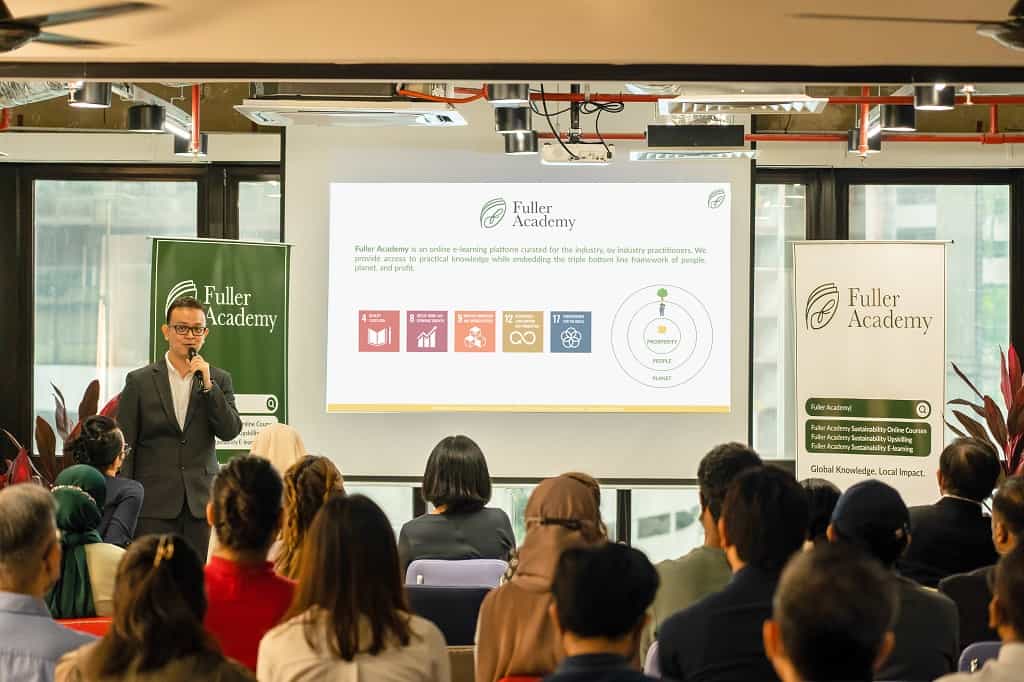
    Kuala Lumpur-based Fuller Academy is poised to enrol to 30,000 learners across ASEAN through its 12 sustainability short courses, designed and curated by the industry, for the industry, to enhance talents’ knowledge and skills in sustainability.

    Chief Executive Officer Wan Imran said all programmes certified by Human Resource Development Corporation (HRDCorp) are part of micro-credential short courses, which aim to provide knowledge solutions for talents, in line with the global demand for talent upskilling in sustainability.

    “Based on a recent analysis by Bloomberg, global ESG assets are on track to exceed $53 trillion by 2025, representing more than a third of the $140.5 trillion in projected total assets under management. This is a strong driving force encouraging the industry to shift towards a more sustainable approach. Hence, now is a critical time for organisations to start enabling their talents with knowledge and purpose in the areas of sustainability. This is also aligned with our national agenda of creating 200,000 green jobs by 2030.he said during the launch of Fuller Academy.

    Wan Imran, Co Founder and CEO of Fuller Academy & Michelle, Co Founder and COO of Fuller Academy

    To date, more than 1,600 participants from various industries have signed up across various of our programs from within the country and abroad.

    “Our learners come from different industries and backgrounds, as we offer a range of courses targeting different skill sets from sustainability communications to the introduction of carbon emissions. We have been getting a lot of learners from ASEAN and other regions, with many learners hailing from Europe. The courses which were curated with our global instructors have set a new standard in sustainability learning, which is effective, practical and engaging.” he added.

    Breaking it down further, Imran said the courses are all designed and created by industry experts and practitioners thus providing insights into the practical industry knowledge.

    “We have made it accessible geographically and financially. Being an online platform, anyone from across the region and beyond can sign up as a learner. For Malaysia-based companies, they can benefit from the financial support HRDCorp can provide, and for outside of Malaysia, they can also take advantage of our entry-level pricing.”

    “The courses are designed to be short and bite-sized, with the flexibility for the learners to complete the course in their own time within the monthly cohorts. This on-demand format is

    ideal for busy professionals, allowing them to learn around their working schedule through a structured yet flexible course.”

    In conjunction with the launch, Fuller Academy also hosted a series of dialogue sessions on sustainability, attended by experts in the field such as Elina Jani from Malaysian Green Technology And Climate Change Corporation (MGTC), Wan Dazriq from Ethis Malaysia, Karina Cady from Nandina Partners, Yasmin Rasyid from EcoKnights, and Yasir Qureshi from Kantar Malaysia.

    About Fuller Academy:

    Fuller Academy is the trusted strategic partner in the business sustainability journey, providing industry-driven sustainability education through online courses. Current open enrollment includes Fundamentals of Business Sustainability, Introduction to Carbon Emissions, Internal Communications for Sustainability, and Shaping Consumer-Centric Sustainable Strategy.

  • Review Your Business Legal Health Yearly

    Review Your Business Legal Health Yearly

    Whether we are business owners or in employment oftentimes we neglect our legal well-being. The general notion is ‘what isn’t broken need not be fixed’.

    What we fail to recognise is that most of the time, a lot of our legal problems, which may at the material time appear small or insignificant, can with time and neglect, multiply and become costly to rectify.

    Most times these legal crises and complications can be averted or reduced if the right steps are taken at the appropriate time.

    Why is a Legal Health Check Important?

    It is important to remember that if your financial and legal matters are badly managed, you are directly exposing yourself personally as well as your company and clients to various legal implications.

    These risks can cause unnecessary cost, loss of business relationships, knowledge and possible statutory or regulatory breaches. The effect of a badly managed business is far- reaching and can in some situations take years to rectify/remedy.

    The advice here is to be constantly aware and apply your mind to a couple of key areas when you are performing your own legal health check. Here are some of them:

    1. Have You Complied with the Relevant Statutory Regulations & Laws?

    legal compliance

    Often, as business owners, you may not be aware of the changes in law that may have taken place, and as such need to be advised by your legal advisers on the latest legislation or amendments to any current legislation that concerns the industry you are in and the services you render.

    There are currently more than 20 new Acts that have been made and countless new regulations and amendments to the current laws.

    If you are not keeping abreast with the changes, you will be exposing yourself and your business to risk. What you do not can hurt you!

    2. Partnerships and Shareholding

    legal partnership and shareholding

    Make it a yearly affair where you have a formal discussion with your partners/directors on their roles, scope of work, performance and entitlements.

    Have these discussions minuted and served on them officially. This makes it easier to address partnership or business issues and enables you to make any necessary changes to your business structure, revising targets, scope of work etc.

    It is also of utmost importance to have written partnership and/or shareholders agreement to cover all terms of your partnerships and shareholding.

    Ensure that your agreements adequately deal with matters such as buyouts, raising capitals, succession, put & call options and exit clauses. Your partners/directors must also be fully aware of their duties and obligations under the new Companies Act 2016.

    3. Trade Creditors and Debtors

    By this time of the year, you must know who owes your company money and how you intend to recover those unpaid debts. Have a list of creditors prepared and send out the necessary reminders and letters of demand.

    Start the process of recovering monies before the New Year. The longer you wait, the harder it will be to collect these debts.

    For those creditors who, for whatever reason cannot pay you in full, it would be advisable to speak to them about an instalment plan and get a settlement agreement drafted to confirm the instalment terms. If possible collect post-dated cheques.

    4. Employment Contracts

    legal contract

    It is pivotal for you to know what your exposure as a company or business in an employment dispute. It is also important for you to know the processes and procedures that you need to carry out before you terminate a belligerent employee.

    It is prudent that you have an Employment Handbook prepared and served on all your employees.

    This year alone there have been a lot of discussion on the need for change to our employment laws in particular, to laws covering sexual harassment at work, maternity and paternity leave, data protection and personal information.

    5. Intellectual Property

    Whatever industry you’re in, it is prudent to consider registering your trademark and tradename. As your business gains popularity and people start recognising your brand and name, it is inevitable that a competitor may want to benefit from your goodwill to gain some traction.

    You do not want a competitor to proceed to use your name and logo in a similar industry and reap the benefits and goodwill off your hard work.

    Please do consider securing your intellectual property rights. It makes it easier for you to enforce your rights when you have the requisite trademarks being registered.

    6. Written Contracts and Agreements

    Always have your written contracts and agreements revised and up to date. Review the terms of your Purchase Orders, Invoices, Supplier Contracts, Equipment/ Machinery Leases, Rental Agreements.

    It is important that at all material times, you are aware of your key suppliers and key customers. Review these contracts and agreement as there may be renewal clauses in those contracts that may have slipped your mind, which could cause you undue losses.

    7. Train Your Staff

    legal staff training

    Always train your staff to be aware of what type of legal documents to look out for. For example, a Winding up Notice that is served on your registered address needs to be brought to the immediate attention of the Board of Directors, as there are dire repercussions of not responding to the said Notice within the statutory imposed period of time.

    Conclusion

    There is no such thing as a ‘one size fits all’ when it comes to legal matters. You will need to design your own Legal Health Check which is suitable for your own business or company.

    Like a well-tended garden, you will need to constantly prune, remove and regrow your legal structures to ensure that it is in perfect order.

    Always remember that a detailed examination of these key areas will help you identify any danger or grey areas which will then enable you to circumvent or reduce any potential risks and liabilities to your business.

    About the author

    SHARMILA RAVENDRAN is the founder of the law firm, Messrs Ravindran located in Mont Kiara, Kuala Lumpur. She has more than 14 years of experience in the legal industry servicing clients that include local and foreign companies. She is now actively involved in corporate advisory work and commercial litigation and is a Panel Adjudicator with the Kuala Lumpur Regional Centre for Arbitration. She also sits on the Bar Council Child Rights Committee and is the Legal Director for Lean in Malaysia. She can be contacted at sharm@ravindran.com.my.                                                                                                                                            

  • No Such Thing As A Standard Contract

    No Such Thing As A Standard Contract

    As a lawyer who has had the opportunity to represent and defend different types of clientele; from medium to large scale businesses, corporations and high net worth individuals, I am occasionally confronted with the odd client who would retort, “This is a pretty standard contract, right? So why do we need to review it? Just sign!” or “Why do we need to take so long to look into this joint venture agreement? Isn’t this pretty much a standard contract?” or worst still “Can you give me a discount since it’s a standard contract!”

    In my 15 years of legal experience, I have never come across two contracts that are exactly the same. I have never given any of my clients “standard” contracts because no such thing exists in my books.

    Contracts should be crafted according to the particular and specific requirements, needs and requests of the parties involved.

    It is always good to remember that contracts once entered into and signed are binding on the signatories. You can’t plead ignorance nor can you say that you did not understand the terms of the contract or that you did not foresee the consequences of breach or non-compliance.

    Unless of course you were coerced, forced or unduly influenced into signing the said contract. However, do take note that the threshold of proof for coercion and undue influence is one that is high and onerous.

    contract

    Oftentimes clients, in a bid to save on legal cost, use “standard” contract templates that they obtain from the Internet. You are forewarned here that doing so and not reviewing the specific terms can lead to devastating legal repercussions.

    Let me give you some examples of matters that are not covered in these template contracts that you find on the Internet.

    “Jurisdiction” Clauses

    The laws applicable in any other country will not be applicable here in Malaysia. This clause is extremely important if you are contracting with a foreign party.

    For example, if you are entering into a contract with a party from Singapore but the subject matter of the contract, for example the sale of a factory in Malaysia and the governing laws are Singapore, you will be faced with difficulty in the event litigation arises.

    If you have an incompatible or inconsistent clause in your agreement, it will make the litigation process rather cumbersome and costly for you. The issue of jurisdiction will have to be dealt with before the substantive issues of fact and law can be addressed.

    This is an unduly protracted and costly affair.

    The Appropriate “Governing Laws”

    contract law

    Oftentimes when you use a standard contract, no one looks at the ‘Governing Laws’ clause.

    There is a huge difference between the arbitration process and laws as compared to the Court process. Arbitration is an excellent alternative to litigation but if the value of your contract is small and the subject matter of the dispute is straightforward, then the cost of the arbitration process may exceed the value of your claim in itself. 

    Do not attempt to deal with governing laws and jurisdiction in the same wording. The two concepts are different and the contract should address them separately.

    Conflicting Clauses

    contract

    Let’s assume two people enter into a contract which contains Clause (1) and Clause (2). Further let’s suppose that the two clauses do not contradict one another yet come into conflict with each other. For example:

    This contract shall only be terminated upon mutual agreement by both parties

    Clause (1)

    This contract may be terminated at any time upon written notice to the other party

    Clause (2)

    Clearly both these clauses can be in conflict with one another. Conflicting clauses are one of the most commonly litigated contractual disputes in Malaysia. 

    Once there are conflicting clauses, the Courts will then have to resolve the conflict by interpreting and “making sense” of the contract by reading all of the contractual documents in context and also consider parties’ commercial intentions by way of oral evidence in Court.

    It is worthy to remember that not all standard contracts are advantageous. A standard contract may not capture the specific needs and circumstances of your business, and therefore not protect you from risks. On the contrary a badly drafted standard contract that you glean off the internet can cause more damage than benefit to you.

    Always remember that there is no such thing as a standard contract. You are entitled to negotiate the terms of a contract you wish to enter into based on your own circumstances and facts. Investing in good legal and professional advice will reduce risk and save you a lot of legal cost in the long run.

    Lawyer’s fees may seem expensive when you voluntarily decide to hire them initially but it is wise to remember that lawyers become more expensive when you have no choice but to hire them just because you decided not to in the first place.

    This article was written by Sharmila Ravindran

  • Establishing Diversity, Equity and Inclusion As The Norm In All Workplaces

    Establishing Diversity, Equity and Inclusion As The Norm In All Workplaces

    A well-coordinated team is a true asset to any organisation. According to research on team dynamics and performance, diverse and inclusive teams tend to make better decisions and are more innovative.

    Striving to increase workplace diversity is not an empty slogan — it is a good business decision.

    Diversification and equity initiatives are critical to a company’s success. However, these aspects don’t mean anything in the absence of an inclusive workplace. So the question becomes – how do employers establish a workplace that prioritises all three elements?

    Diversity, Equity & Inclusion In the workplace

    Diversity in the workplace usually involves people from different backgrounds, ethnicities, genders, ages working together without any disparagement. It usually refers to a gender ratio that is balanced, but it can also refer to people of non-binary genders. As a result, it can be defined as a balanced representation of all genders in any workplace.

    On the other hand, equity is the value of being fair and equal based on individual contributions. There may be some confusion as to the difference between equity and equality. While equality means being equal to everyone by providing the same benefits to all, equity is an organisation’s ability to offer flexi-benefits according to individual needs so that they are able to reach their full potential.

    Workplace equity is all about empowering employees and ensuring that everyone is on an equal footing. When organisations promote equity in the workplace, they gain a competitive advantage by employing a diverse workforce. There is equal opportunity when there is equity.

    Inclusion is the state that provides each and every employee with a sense of belonging despite gender racial and age differences. Workplace inclusion efforts help to give traditionally marginalised groups, even those with physical or mental disabilities, a way to feel equal in the workplace.

    However, because we are human beings driven by emotions as much as objectivity, it is easy to fall short of what constitutes a best practice and mistakes happen. To safeguard all employees and to ensure the highest standards of diversity, equity, and inclusivity, nonetheless, I would recommend using an automated system like WorkSmartly.

    With a trusted tool that is unbiased, employers can be more assured of employees having access to equal opportunity. 

    How Organisations Can Develop Diversity, Equity & Inclusion

    Human resources, Talent management and recruitment business concept and empty copy space for your text

    Developing equitable workplaces will require sustained and prolonged efforts on the part of management and Human Resource (HR)  teams as the most effective way to implement major changes effectively is through the top-down approach. Understanding internalised biases and their effects are the first steps in building equitable work environments as everyone was brought up differently and coming from various walks of life. This leads to different work experiences.

    Everything should be colourless and generous to every employee, with a focus on matters or incidents rather than individuals. For example, companies should look to have a neutral time (example: company fiscal year) to hand out bonuses during “neutral” time periods, rather than during festive periods like Chinese New Year, Hari Raya, Deepavali as this may show bias toward a particular race.

    Additionally, recruiters should demonstrate neutrality when selecting candidates. They should hire new employees based on their performance, skills, and capabilities, not on their own culture or other factors.  Robust HR platforms like WorkSmartly filter candidate profiles and resumes according to their achievements, skills, and suitability.  This would be particularly useful here as automated systems do not run the risk of being swayed by non-work-related differences. Ultimately, this ensures transparency in an environment that prioritises growth.

    Another aspect to look forwards to is increasing digitisation which will create more opportunities for diversification. From remote work options to the rise in the gig economy, employers are no longer forced to default to traditional work practices. New generations are becoming more open and their cultural acceptance has increased due to greater exposure via  technology. For example, the way the current workforce thinks and acts is getting more unified based on the influence of social media.

    Challenges that Malaysian Employees Face in the Workplace

    Skyscrapers in Kuala Lumpur, Malaysia City Center skyline.

    More than ensuring the diversity, equity and inclusion of a workplace, I think that it is important for employers to be aware of the external challenges frequently faced by the workforce. One of them is gender inequality. To date, it has been reported that only 38% of women occupy managerial roles as compared to 62% of men in managerial positions.

    In Malaysia, 56% of women have experienced at least one form of gender discrimination in the workplace, according to the “Voices of Malaysian Women On Discrimination & Harassment in the Workplace” survey. Women’s low participation in the workforce could be due to a variety of factors, including discrimination, harassment, and a greater unpaid care burden, which affects both employees and job seekers.

    Besides that, people who have been out of work for a while have typically found it much harder to get a job. If being unemployed and finding a job weren’t hard enough already, research shows that large work history gaps are the main reasons that unemployed people aren’t getting hired. Prejudice against the unemployed isn’t limited to those who have been out of work for a long time, it can also apply to those who have recently quit or lost their jobs.

    While this has been an ongoing problem for many during the pre-pandemic period, those who faced retrenchment due to pandemic-related business closures have been particularly hard hit.

    It is also important to note that diversity, equity and inclusion can’t be achieved when there is bias in the hiring process-the number one step for organisations to build strong, long-lasting foundations. Most companies typically lean towards hiring more experienced employees rather than fresh graduates. Many employers believe that this hiring strategy makes the transition easier as they already have background experience.

    The downside to this practice, however, is that it limits the opportunities and options for fresh graduates to learn new skills and demonstrate their talents to a company, eventually resulting in an out-dated talent pool. Therefore, I urge organisations to keep their windows as open and inclusive as possible to provide younger talents with opportunities to grow, thereby making way for fresh, new ideas that could result in a breakthrough.

    It’s important to value diversity, equity, and inclusion. They make organisations stronger and more agile, and they are more important than ever in today’s rapidly changing business environment. Leaders who want to make significant progress should apply universal principles with care to their unique cultural and strategic circumstances. It’s important to consider the context.

    This article is written by Victor Phang, CEO and Founder of WorkSmartly

    About WorkSmartly

    WorkSmartly is an end-to-end HR solution that is designed specifically for HR processes throughout the employees’ work life cycle. It began as iTalent in 2008 before being rebranded to WorkSmartly in 2018. With 8 offices globally and more than 200 clients including several Fortune 500 companies, WorkSmartly is aspiring to be the leading enterprise HR-tech provider globally. Among WorkSmartly’s clients are EasyParcel, Emart, Exabytes, MDEC, PETRA Mobilia, Pgeon, Roche, See Hup and Sony.

  • Higher Minimum Wages Causes Unemployment And Steep Inflation? Not Necessarily

    Higher Minimum Wages Causes Unemployment And Steep Inflation? Not Necessarily

    The Malaysian experience seems to suggest that raising the minimum wage has been good for us.

    The need to implement minimum wages is based on the protection it offers to workers at the lowest income strata. These often tend to be workers from groups often marginalised in society such as youth workers and women. They may not have the bargaining power to demand higher wages without direct government intervention.

    For several decades there was a near-consensus among economists that raising minimum wages just like any other floor would substantially reduce employment. Some persist on the potential employment costs argument. However, that view has changed where a majority now view a significant rise to be a good idea.

    To understand the shift, it is important to appreciate the natural experiments conducted by Nobel Laurette David Card, who found that increasing minimum wages did not lead to increased unemployment[1]. In fact, it was found to lift many out of poverty and benefit those in the bottom half, including those making more than the minimum wage[2].

    There are those who view the implementation of a higher minimum wage as harming low-wage workers as it is an artificial value imposed by the government rather than determined via market forces. This is because those with lower skills or experience tend to have lower productivity levels. Hence, a higher cost structure would put-off hiring of these workers rather than employing them at lower wages until they become more experienced.

    However, my opinion is that the wage policy in Malaysia should be based on the domestic context. In 2013, the minimum wage was first set to be at RM 900 per month for West Malaysia and RM 800 for East Malaysia. The rate has since gone up in stages over the years. About a decade later, it is set to reach RM 1,500 per month effective 1st May 2022.

    This seems to be a fair rate given that the International Labour Organisation reported that the average minimum wage around the world for developing and emerging nations to be about 67% of the median wage[3].  At the end of 2019 before the pandemic, according to the Department of Statistics Malaysia (DOSM), the median income in Malaysia was at RM 2,442 where the minimum wage was set at RM 1,200 (about 49%). However, according to data from DOSM, the pandemic has lowered the median income to RM 2,206, a minimum wage of RM 1,500 represents about 68% which is in-line with the global average. Given that the economy is expected to see a strong rebound of more than 5.5% in 2022, the median wage can be expected to surpass 2019 levels by 2024. This would eventually represent a minimum wage representing 60% of the median wage.

    Research on the implementation of previous minimum wage levels in Malaysia shows that it tends to increase labour productivity, act as a motivator, and reduce employee turnover[4]. In fact, longer terms studies have shown that it reduces unemployment and increases labour participation rates[5]. Research also documents that the previous increase in 2016 also did not result in any significant reduction in labour demand[6].

    There have been views that increase of minimum wages may lead to inflationary pressures. For example, if a restaurant owner is suddenly forced to pay his workers RM 1,500 instead of RM 1,200, he needs to raise the price of his product to account for this increase in costs.

    malaysia people holding flag celebrating independence day together

    But in the Malaysian context, it is likely that most employees in urban areas are already being paid close to the proposed rate of RM 1,500. Thus, there might be very little additional price pressure in these areas.  It is likely that the new rate would account for the difference in wages and costs in urban versus rural areas, in-line with the current approach.

    In addition, inflation tends to be insignificant as a determinant of employment in Malaysia[7]. In fact, research in Malaysia shows that labour markets in Malaysia tend to follow the efficiency-wage theory where the increase of costs (of higher wages) would be recouped through greater productivity as well as increased employee retention[8]. Thus, inflationary pressures are unlikely to be severe, given that increased productivity would then counter the potential increase in price levels. Thus, it seems that the new higher rate may point towards a positive picture overall.

    However, given the potential that it may harm SMEs which are unable to offer higher wages, there is a need to explore a mechanism beyond minimum wages going forward. Imposing minimum wage laws puts the role of reducing poverty on the business owner. But a different approach via social welfare programmes for low-wage workers would allow all taxpayers to share the financial burden.  Among areas that would be beneficial to B40 households would include part cover for housing costs, healthcare as well as childcare costs.

    About the Author

     Professor Dr Hafezali bin Iqbal Hussain is the Head of Research at the Faculty of Business and Law, Taylor’s University and a member of the Centre for Industrial Revolution and Innovation (CIR4I). Taylor’s Business School is the leading private business school in Malaysia for Business and Management Studies based on the QS World University Rankings by Subject 2021 edition.


    [1] Microsoft Word – aea3.docx (nber.org)

    [2] Minimum Wages and the Distribution of Family Incomes – American Economic Association (aeaweb.org)

    [3] Global Wage Report, 2020-21.

    [4] Minimum Wage Policy: Is There Any Impact on Low Skilled Workers in Electrical and Electronics Companies in Malaysia? | International Journal of Business and Society (unimas.my)

    [5] http://myscholar.umk.edu.my/bitstream/123456789/2586/2/ICBT2020_039_MW.pdf

    [6] Minimum Wages: Helping or Hurting Producers? | SpringerLink

    [7] ICBT2020_039_MW.pdf (umk.edu.my)

    [8] The effect of real wages and inflation on labour productivity in Malaysia: International Review of Applied Economics: Vol 28, No 3 (tandfonline.com)

  • Coworking Spaces: Evolving Culture and Trends in the Wake of Covid-19 in Malaysia

    Coworking Spaces: Evolving Culture and Trends in the Wake of Covid-19 in Malaysia

    Are the days of the centralised office numbered?

    The new normal of workplaces today is more than just our homes and offices. In Malaysia and across multiple regions, the demand for flexible work practices emerged, with interest in coworking spaces and solutions booming in 2016.

    A 2020 global coworking study conducted by CoworkingResources projected that the number of coworking spaces available worldwide would reach over 40,000 by 2024, compared to the almost 20,000 in 2020.

    worq coworking spaces

    It was not until the pandemic occurred that many businesses collapsed. Most shuttered completely or temporarily as the nation went into lockdown, resulting in the dampening of the emerging market. Many of the companies that stopped operating for a tricky period of time were left behind in the dust, not having the chance to grow or expand their horizons.

    Those who managed to continue their operations had to adapt to the regulatory changes and social restrictions. Some operators chose to delay opening new spaces while others were offering discounts to secure tenants and members.

    Overall, despite an initial decline in 2020 compared to the year prior, the global coworking industry is still estimated to be on an upward course, set to surpass US$13.03 billion by 2025, with a compounded growth rate of 12%.

    While many have settled into working from home, others have opted for coworking spaces as the ideal option, spurring the growth for such operators.

    Coworking behind the mask of coronavirus

    When people visualise coworking spaces, the notion of a casual high-density community from various organisations has been dispelled. Social distancing has become the key consideration for those utilising the facility – people are required to sit away from one another, socialising frivolously is frowned upon, and people remain behind their masks, working over their devices or taking Zoom calls.

    However, the draw behind the coworking movement lies in its flexibility. For individuals with a more flexible schedule, coworking spaces help cultivate a better work-life balance as employees are better able to separate and juggle work and home.

    worq coworking spaces

    Additionally, more organisations are deciding to take the opportunity to evaluate their office space options, with some foreseeing scaling down their offices as they roll out work from home and hybrid practices.

    Before the Covid-19 pandemic hit, some companies were already incorporating coworking spaces into their workplace strategy. By utilising such areas efficiently and effectively to spark teamwork and collaboration, employees can better produce results for business growth as they get immersed in the hybrid culture.

    Even as we see large enterprises terminating their office leases favouring flexible work locations, it is important to note that it is the office concept that is changing and evolving – likely in part due to increased flexibility and agility.

    What is in store for the upcoming year?

    Small to large corporations are always on the lookout for coworking spaces. As Malaysia (and the rest of the world) is starting to open up again, membership rates have picked up as tenants are keen to get back into the swing of things.

    Coworking and event spaces have become conventional, offering a viable solution for those unable to work from home. A coworking space provides them with the perfect alternative to signing a traditional office lease for increasing freelancers and remote workers.

    In efforts to de-densify and decentralise their office spaces and real estate portfolio, companies are also exploring corporate coworking solutions as they adopt hybrid work models.

    worq coworking spaces

    In order to stand out, coworking operators are honing in on their key differentiators to bring in and serve as many tenants as possible. For example, as technology continues to evolve, solutions and their integration into the coworking experience become a unique selling point that draws members looking to incorporate automation to boost experiences and productivity. At WORQ, we differentiate ourselves as a community-centric coworking space focusing on community building, not just among members, but also including the wider community.

    Assuming the industry continues to remain on track to reach 40,000 spaces available globally, the desire to differentiate from competitors will lead to more purpose-filled options, catering to particular groups of individuals. This could materialise in specialised communities being formed, such as female-only spaces and hacker spaces.

    All in all, while addressing social distancing rules and adhering to extra health and safety, the coworking movement is here to stay for the foreseeable future, even post-pandemic. Employers, managers and employees have gotten exposed to the benefits of remote working. They are unlikely to go back to how things used to be pre-pandemic, as coworking spaces are regarded highly for encouraging a more collaborative environment and improved workflow.

  • Gen X VS Millennials In The Workplace

    Gen X VS Millennials In The Workplace

    There have been countless studies about the generational gap between Gen X and millennial workers, with the topic stirring up much debate to this day. Broadly speaking, Gen X are born between 1965 and 1980 and are currently 41 to 56 years of age. Millennials are born between 1981 and 1996, ranging between 25 to 40 years of age.

    With the Movement Control Order (MCO) forcing many businesses to operate remotely, many millennials took to the situation like a duck to water thanks to their digital savviness and familiarity with
    remote working tools. However, with offices reopening after the MCO was lifted, many now find themselves at a crossroads and are often reluctant to return to a centralised workspace.

    “The reality of the matter is that employees were forced to adapt to the culture of working from home, and just as they got accustomed, it is now time to revert to the old ways of working with added restrictions – the SOPS,” says Rita Krishnan, the managing director and training consultant of Impian Helang.

    To her, CEOs and management of any company will return to the office and face new challenges, some of which they have never dealt with in the past thanks to the unprecedented effects of the Covid-19 pandemic.

    “In the past, it was performance and productivity that mattered most for organisational growth,” she recalls. “But today, compassion with high
    emotional intelligence is crucial, being the way forward in managing the workforce, especially in retaining the talents.”

    In Deloitte’s 2021 Millennial and Gen Z survey, it was found that only 38% of millennials felt comfortable voicing concerns to supervisors about work stress.

    This suggests that many are unable to trust or anticipate a clash with higher ups about the rigours of work. A correlation can be drawn to 31% of millennials taking time off work due to pandemic-related stress and anxiety. According to the survey, almost half of them gave a different reason to their employers, likely due to a stigma around mental health at work.

    It is no surprise that CEOs and senior management figures today must be more well-rounded figures – able to lead and dissect numerical patterns as well as business strategy, but being able to relate to their subordinates on a more personal level rather than simply boss and employee. However, the difference in age can often mean that there is a clash in culture and expectations.

    The topic is widely documented and debated, with both sides often convinced that they are not compatible with the other. This often boils down to a mismatch in terms of ideology, with Gen X workers likely to espouse more traditional work values, while Gen Y or millennials subscribe to more flexible or unconventional working mantras.

    “Generally, Gen X are hard workers while Gen Y are smart workers,” she postures. “Gen X do not jump jobs and are comfortable with where they are. This may seem like the safer option but can also be dangerous as career progression is not usually an option.”

    What about the retirees?
    For all the talk of Gen X v s millennials, the pandemic has also depleted the savings of many retirees. This has resulted in an influx of retirees in their fifties and sixties re-entering the job market, but who may be under the impression that time has left them behind. However, Krishnan believes retirees have much to offer in terms of their knowledge and experience, and suggests that there are many job opportunities for such individuals.

    “Training and consultancy in sharing a wealth of knowledge, experience and skills that were useful then and useful now,” she shares.

    The experience accumulated by such individuals suggests that within them is a treasure trove brimming with a wealth of knowledge; they simply need to leverage this into potential job opportunities.

    “I believe in reinventing and recycling talents that upholds the reputation of recreating past performance. This is where retirees can attend the HRD Corp Certified Train-The- Trainer programme, for a new career altogether whilst recreating and reliving the successes of their past,” adds Krishnan.

    Job hopping a competitive disadvantage?

    Krishnan also suggests that the typical Gen Y employee prefers to job hop often in order to gain experience quicker as well as to be exposed to various industries. While she does not dismiss this career strategy, she highlights that it also has its pros and cons.

    “Employers are reluctant to invest in and develop employees who show no promise of ‘stayability’,” Krishnan explains.

    “The working style of Gen Y comes with the mindset of expectations – less work, more pay, with flexi hours.”

    This shift in mindset is evidenced by concrete data. The Deloitte survey indicated that job loyalty is slipping among millennials, with 36% of respondents open to leaving their current employer within two years if the opportunity arose, a drop from 31% in last year’s survey. However, 34% of millennials say they would only consider leaving after five years, which suggests it is not prudent for senior managers to paint the entire generation with the same brush.

    She believes that, although difficult, this difference in culture and expectations can be bridged with programmes that facilitate interaction between Gen X and millennials.

    “It is important to allow employees to explore their skills and abilities with the intervention through team bonding programmes where Gen X and Gen Y can interact and learn from each other,” says Krishnan.

    These types of considerations should be taken into account by HR departments, especially when it comes to upskilling the workforce, an area in which Krishnan is well-versed.

    “The pandemic has altered traditional training styles, and the responsibility of the HR department would be to select relevant training programmes related to industry needs,” she says.

    “At the same, employees’ morale and productivity levels can be elevated using positive reinforcement.”

    She is also a keen advocate for companies to develop a psychological connection with their employees, resulting in a relationship that presents “a sense of belonging”. This demonstrates the company caring about their employees’ personal development and workforce growth. Such a result would inevitably translate into a win-win situation for both company and employees.

  • Tax Obligations For Self-Employed Entrepreneurs

    Tax Obligations For Self-Employed Entrepreneurs

    With the rise of self-employed entrepreneurs, here are some tax compliance obligations and common oversights.

    There has been a dramatic growth in recent years on the number of self-employed entrepreneurs in Malaysia. From 2017 to 2018 alone, this number increased from 2.57 million to 2.86 million, an increase of 11.3% (source: Department of Statistics, Malaysia). In 2018, the self-employed are the second largest category (19.3%) in the Malaysian workforce out of a total of 14.8 million working adults.

    Malaysia adopts a self-assessment system where taxpayers are responsible to determine their own tax liability and to submit their tax returns accordingly. As the number of self-employed entrepreneurs continues to grow in the Covid-19 economy, it is important for the self-employed to be aware of one’s tax obligations especially in the area of tax compliance. Failure to do so could result in penalties and additional tax payable.

    A self-employed person is an independent contractor or a sole proprietor. The self-employed consists of sub-contractors working in the trades or construction sectors to professionals such as doctors, lawyers, accountants, engineers, and management consultants. Recent iterations include freelancers working in the commonly named “gig economy” (such as e-hailing drivers).

    Here are some tax compliance obligations a self-employed individual should take note of:

    1. Registration of Tax Identification Number (TIN) and submission of tax return

    A self-employed individual should register for a TIN when the person has taxable income which exceeds a threshold of approximately RM28,000 per annum. A TIN can be registered at the nearest Inland Revenue Branch (IRB) branch or via e-Daftar at the IRB website.

    For entrepreneurs running a business, the income tax return (Form B) will need to be submitted by 30 June the following year (eg. Form B for the year of assessment 2020 is due by 30 June 2021*extended to 30 September 2021 due to Government movement control, IRB website)

    2. Estimate of Tax Payable

    Under the Malaysian tax regime, a taxpayer pays income taxes on a “Pay-As-You-Earn” basis. Where an individual taxpayer receives other than employment income, the IRB may issue a Form CP500 setting out the estimate of tax payable under an instalment scheme. The Form CP500 is determined based on the tax liability of the previous year. What should you take note of:

    • The tax estimate is six (6) bi-monthly instalments commencing from the month of March every year.
    • Each tax instalment payment needs to be made within 30 days from the due date.
    • The remittance slip (Form CP501) should be submitted together with the instalment payment.
    • Should there be a need to revise the tax estimate which affects the instalment amount, you must submit Form CP502 to the IRB not later than 30 June each year on the revision payments. The IRB will issue a Form CP503 if the application is successful.
    • The penalty for late payment of 10% shall be imposed on the unpaid amount if the tax instalment payment has not been paid within 30 days from the due date.
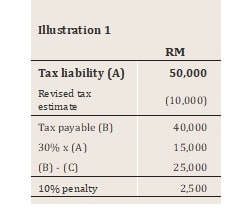
    • Where there is a difference between the revised tax estimate submitted and the final tax liability which exceeds 30% of the tax payable, the difference will be subject to a penalty of 10%.

    The following illustration shows the impact when an estimate of tax payable is inaccurate.

    3.Employer’s Responsibilities

    As an entrepreneur, you might hire employees to expand your business. In this case, you will be considered as an Employer for tax purposes. The responsibilities of an Employer are as follows:

    • The Employer is to inform IRB of any new employees within one month from the date of commencement of employment.
    • Submission of Return of Remuneration by an Employer (Form E) to the IRB on or before 31 March each year. <continues…>

    [ You may read the full article HERE ]


  • Turning A New Page For SMEs

    Turning A New Page For SMEs

    Low technology literacy has created a digital divide amongst businesses in Malaysia, with the common assumption that SMEs are less likely to access and use the internet when it is massively beneficial for them to do so. According to a report by World Bank Group in 2018, only one in three SMEs in Malaysia have implemented digital transformation strategies, while less than a quarter have a dedicated digital strategy team. Despite being the backbone of the country’s economy, SMEs in Malaysia performed rather poorly in adopting digital changes.

    SMEs are also susceptible to the practice of only adopting fundamental technologies for their operation—missing out on the more extensive digital solutions that could ensure their operation to remain robust in the long run. As one of the leaders spearheading digital transformation in various industries, the experts at JurisTech notice that there is an uninformed fear of the change brought on by digitalisation. This is not only specific to SMEs, but also applicable to almost every industry; with most citing ill-suited employees, lack of funding and technology experts for guidance as the reasons they lack the initiatives to start the transformation.

    Accelerating The Digital Transformation of SMEs

    Prior to the global pandemic in 2020, there has been a lag in digital adoption in Malaysia behind the global average. The struggle is not only felt by SMEs, but also technology providers, as there is a gap of knowledge differences between both parties. SMEs are afraid to reach out for help due to the perception that the cost will eventually be too taxing for them to run their operation and digital transformation simultaneously, while technology providers find it difficult to penetrate the market with low technology literacy amongst SMEs decision-makers.

    However, with the current economic climate and new regulation implemented by the government, SMEs in Malaysia are slowly acknowledging the importance of upgrading their current hardware and software infrastructure—where previously wondering how much would the transformation cost them, it is now a question of “how soon can we digitalise our existing processes?” SMEs now recognise digital adoption would enable them to continuously push through the periods of respective lockdown and semi lockdown, allowing them to remain operational and to create further stability in 2021.

    The demand is also spurred on by the need to be paperless and cashless. Besides that, 2020 taught many of us the importance of interpersonal interaction. While the face-to-face interaction was greatly reduced to lessen the effect of the pandemic, it has also speared the movement to innovate existing customer service technologies. An interactive, personalised chatbot is no longer sufficient; SMEs now have to find a way to not only attract and retain customers, but also to create a seamless customer onboarding process. This will help SMEs avoid drop-offs, increase customer acquisitions, and adhere to the lockdown regulations that are in place.

    The new digital transformation program rolled out by MDEC along with encouragement from our government drives the awareness for digitalisation and creates a bridge for many tech companies to offer their expertise to these businesses. SMEs now have a clearer idea of which areas of their operations are direly in need of digitalisation and can create a rising demand for it. This in turn allows technology providers to further enhance the existing features of their products to adapt to SMEs needs, just like JurisTech’s CollectXpress, an invoice-based collection recovery system and Juris Access, a digital customer onboarding platform developed with SMEs in mind.

    Acknowledging The Need For Digital Transformation

    Although the lockdown restrictions have been gradually lifted to encourage the recovery of the nation’s economy, many SMEs continue to operate remotely, cutting back on physical operation cost and manual processes implementation, allowing them to redirect their resources into upskilling their talents. This signifies a good start in many industries as it accelerates the digital adoption that has not seen satisfying progress in the last few years, as previously Malaysia was behind many of its neighbours in terms of technology utilisation.

    Most importantly, this indicates an increase in technology literacy amongst SMEs in Malaysia; as this shows a willingness to explore more extensive digital platforms to be included in their operation to remain relevant in whichever industry they are in. In the upcoming future, we can expect more SMEs will continue to grow alongside the ever-changing technology of today and forming active collaborations with technology providers that allow the development of more digital platforms aligned to their needs without the fear of disrupting ongoing business.

    About the author

    Nuralia Mazlan is part of the marketing and communications team at JurisTech, a leading Malaysian-based Fintech company, specialising in enterprise-class software solutions for banks, financial institutions, and telecommunications companies in Malaysia, Southeast Asia, and beyond. You can reach out to them at contact@juristech.net