Category: Cash Management

  • Pre-Budget 2023: Expectations For A More Sustainable Tax

    Pre-Budget 2023: Expectations For A More Sustainable Tax

    The 2022 Budget was short on outlining any initiatives to enable Malaysia to build a more sustainable tax revenue base. The review of the tax incentives
    regime has yet to be finalised and hopefully, some progress will be announced in the coming Budget.

    We expect the 2023 Budget to outline a more structured mid to long term reform of the tax system, so that we can have a more sustainable tax system. Malaysia needs to, in the medium term, broaden the scope of the existing Sales and Service Tax (SST), and ultimately make it a broad-based
    consumption tax with added features such as tax invoicing similar to a Value-Added Tax.

    We should also have a more inclusive capital gains tax and move quickly on an efficient integrated national tax agency, in order to have a more sustainable tax.

    Tax Treatments To Review

    Currently, fees paid to tax advisers and company secretaries for the various services rendered on tax and corporate compliance matters are subject to restriction. Furthermore, the Inland Revenue Board of Malaysia (IRBM) recently issued the Corporate Tax Governance Framework (Framework) to enhance companies’ processes and governance on income tax matters.

    The Framework expects the involvement from the board of directors, audit committee and senior management to set up appropriate checks and balances on tax reporting.

    However, the IRBM states that costs incurred for advice and assistance to develop the Framework are considered to be capital in nature and therefore not tax deductible. This further irks businesses as such expenses are incurred to encourage corporate governance.

    For a more sustainable tax, another area to review is the exclusion of Intangible Assets from the definition of the term “Plant” in the 2021 Budget. This has resulted in cost incurred such as computer software, licences, trademarks, patents, films, copyrights etc are no longer eligible for capital allowances or tax depreciation, despite these being assets utilised in the production of taxable income.

    This is truly surprising, given the Government is leading the push from brick-and-mortar businesses to a digitalised and knowledge-intensive
    economy. Engagements have been held among various parties and it is hoped that in the upcoming Budget, the IRBM would review those tax treatments.

    A More Sustainable Tax Structure

    As a country, we cannot keep on borrowing and servicing debt. We should remove unnecessary exemptions and deductions, and simplify things
    to enable all to be part of the tax net. There is a need to push on towards a reliance on consumption taxes, in order to achieve a more sustainable tax.

    The Ministry of Finance (MOF) has stated in the Pre-Budget Statement in June that tax reform initiatives with the objective of broadening the
    tax base, as proposed by Tax Reform Committee, will continue to be implemented.

    The initiatives include:

    • a) Undertaking a review of broad-based incentives, reliefs and deductions
    • b) Improving tax administration through comprehensive registration of taxpayers
    • c) Better training of tax personnel
    • d) Improved registration of cross-border trade
    • e) Strengthening the tax audit and investigation
    • f) Enhancing legal certainty for taxpayers

    Necessary details on the aforementioned will need to be spelt out in the 2023 Budget.

    On the international front, Malaysia has committed to implement several agreed upon tax standards to create a competitive business environment for investors and to counteract cross-border tax evasion activities. To date, we have implemented four minimum standards of the Base Erosion and Profit Shifting (BEPS) Action Plans, while continuing to review the rest of the Action Plans under our domestic tax law.

    Domestically, the tax net can be widened by tracking down those who should be within the tax net. That means curtailing tax evasion, curtailing smuggling, registering those who should be registered as taxpayers, and devising strategies using the tonnes of data that various agencies
    accumulate to ensure that all who should be taxable are indeed taxed.

    In the Budget 2022, several initiatives were introduced to manage revenue leakages, including:

    • a) Removal of tax exemption on foreign-sourced income received in Malaysia by a Malaysian tax resident
    • b) Introduction of the Tax Compliance Certificate as a precondition for tenderers to participate in Government procurement
    • c) Implementation of a Tax Identification Number (TIN)

    It was a surprise when a five-year exemption of the tax on foreign income was announced subsequently. Even Singapore and Hong Kong, which have similar tax systems to Malaysia do not have such a time-based exemption period.

    However, the implementation of Tax Compliance Certificate and the TIN are very good compliance initiatives to reduce leakages, but more details are needed.

    In line with the 12th Malaysia Plan to strengthen digital services infrastructure, the digitalisation of the tax function will be implemented with e-Invoicing to be done in stages. This will enhance the efficiency of the country’s tax administration, reduce compliance costs to taxpayers, and
    increase the efficiency of business operations. E-Invoicing will also support the use of TIN as a measure to expand the income tax net.

    The Auditor General’s report has stated time and time again about losses and waste in the public sector. Greater accountability on where our tax ringgit goes and how it is utilised is essential to further narrow the trust deficit that exists, which is a factor why some are reluctant to pay their taxes.

    A more sustainable tax structure for the future is probably in the pipeline. But such matters can be excruciatingly slow in coming into fruition, due to the lack of political will and vested interests.

    All said, the 2023 Budget may turn out to be an election budget, with a slew of populist measures to score brownie points that may damage the country’s rather fragile fiscal momentum. Against this backdrop, debt and inevitably debt service charges, will rise.

    Given that Malaysia’s narrow tax base means high concentration revenue risk to the overall economy, its fiscal vulnerability could increasingly become a trigger factor for sovereign rating downgrades by international credit rating agencies. Here’s to a more sustainable tax structure for a better Malaysia.

    About the Author

    Dr Veerinderjeet Singh is a tax observer who is the Non-Executive Chairman of Tricor Malaysia. He is the Immediate Past President of the MIA and MICPA, and a Past President of CTIM. He is a strong advocate of tax reforms and sits on the boards of a few public entities. He is also an Adjunct Professor at Monash University Malaysia, as well as a Vice Chair of the Global Tax Commission at the International Chamber of Commerce based in Paris.
  • Financial Planning In The Crypto Age

    Financial Planning In The Crypto Age

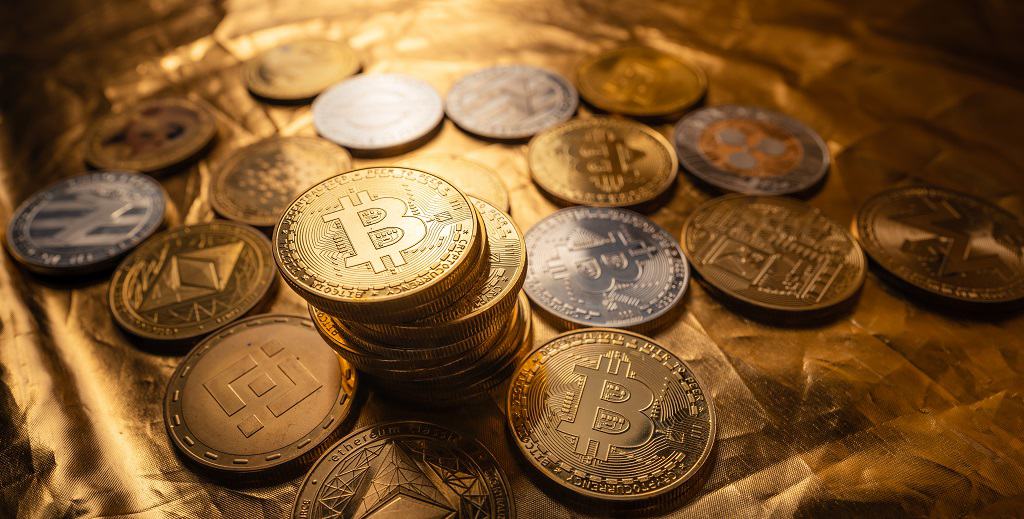
    A very simple definition of Financial Planning is the process of managing our resources to help us achieve our life goals. Now that we are in the cryptocurrency age, how do embrace crypto in our financial planning?

    It is a process which we proactively look at our financial situation and determine the better routes which can allow us to use these resources to help us accomplish what we hope to have to call it a good life.

    Many people seem to think that when we have got a financial plan done, we have done financial planning, and hence we can then on our way to become richer, and retire early, or sending our children to study abroad.

    The truth is that financial planning is a process but not a touch-and-go activity that produces a document called financial plan. Life is full of changes, so any plan we make today will always be challenged or need to change in response to the actual situation in life.

    Financial Wreck Caused By The Pandemic

    For instance, no financial plan will have predicted COVID-19 and prepare everyone for the Movement Control Order (MCO) and all the consequences from having these shutdowns in the past two years.

    Our money is one of the resources we have that can be used to help us accomplish our goals, and money itself is not the goal.

    If our reason to invest in good deals or engage in financial planning conversation is to have more money, this reason itself invites more questions than being an answer.

    “More money for what?”

    “More money to do what?”

    “Why do you need to have more?”

    To have more, there’s a trade-off that we must accept.

    More Work = More Money = Less Rest

    For example, to earn more, one must work more, to work more, it could mean one has to let go of time for rest, or to not spend more time with loved ones, or not able to enjoy activities that they like.

    It could also means taking more risk so that we have a potential higher return from our investing activity.

    So, in our pursuit for more money, we may fare better if we adopt a big-picture view but not only focus on having more money.

    Sometimes, we decide to delay, or postpone doing things we really want or hope to because we are afraid to do it. And often, it is due to our feeling of afraid we don’ that enough to ‘just do it’, or the fear of “cannot afford to”.

    This is not abnormal, and I can totally understand this emotion. When we do not know how much we need for the rest of our life, how are we able to feel we have got enough, right?

    A good financial planning process is one where we spend more time to understand the person, identify the values (what’s important for this person), then take a look at their money management habit and their net worth (what they have left after minus what they owe), then we can have an idea if this person will have enough money for the rest of their life.

    What Are Your Life’s Goals?

    This process helps us understand a few important answers, such as:

    • Do I have to reduce my spending today?
    • Should I get a side hustle to boost up my income today?
    • Do I have to take more risk on my investment?
    • Can I change my car or house without affecting my future?
    • Can I quit the job I hate and accept a new job with lower pay?
    • At what age may have a huge cashflow deficit?
    • At what point (or age) will I run out of money in the future?
    • If I lose all my investment money today, how bad will my future looks like?

    Establishing a good financial planning process can help us to bring our future to the present, and by looking at this future we can assess what are the thing we do not like so that we can make the change to it today.

    Imagine having to wait for 20 years only to find out that we will still run out of money at a certain age, versus knowing this scenario is likely to happen 20 years earlier and we have 20 years of time to change something, which route would you prefer to take?

    Through proper financial planning, we get a ‘preview’ of our future today, but at the same time, we make some assumptions of what might happen, such as inflation, potential investment return, our spending and potential future income, taxes, etc.

    Hence, one of the things we will be thinking about is where or how should we allocate our money, to what kind of asset classes. And nowadays, it is likely most people have heard of and are quite keen to understand where cryptocurrency or crypto assets can fit into their plan.

    Dawn Of The Crypto Age

    Before the emergence of crypto assets, people have allocated their savings to various types of asset classes like stocks, debts, some keep most of their savings in cash or cash equivalent, businesses, real estates, arts, collectibles, gold or silver, to name a few.

    Some of the assets have a low risk and value tend to not fluctuate too much and are ‘predictable’, while some the value may deviate quite a lot, and are considered ‘risky’.

    One of the key considerations in determining our asset allocation, is to understand if we need the investment to generate additional income, or to have the value increase in future for us to have ‘gain’.

    Essentially, crypto assets are assets that are non-income generating but more for the investment objective for capital gain.

    While it is undeniable that crypto currency has helped make many new millionaires, for this wealth to be sustained into the future, one may want to explore how this new wealth can be protected or kept, so that even if the value of the asset class reverses its course, this person will not be knocked back to the ‘pre-crypto’ life.

    Of course, it is perfectly fine if we remain having our 100% of our wealth be invested in crypto assets. However, that will also mean we tie our future financial health and possibility in life to a single asset class.

    Imagine a person putting all their savings for old age to the stock of the single company they work at, and over the course of years for whatever reason, this company went out of business, or the company’s business dropped a lot due to new competition, or innovation.

    The above example is not just pure imagination, we have seen a few big company’s gone through such trajectory before. Will this person be better off ‘putting all the eggs in different basket’ instead of ‘in the only basket’?

    It does not matter what asset classes we are thinking about, it seems that it is not a bad idea to limit our downside risk and avoid over-concentration.

    What about people who have not experienced the explosive growth or have not invested in crypto assets before?

    Diversification Is Key

    Generally, crypto assets or digital assets are one new asset class for us to incorporate to our personal investment portfolio to achieve diversification beyond the common asset classes mentioned above.

    Depending on your tolerance for risk, and your investment objective, you will then understand how expose you can be, just like on every other asset classes. A person who is conservative or cannot sleep well even with a small up and down may want to limit exposure to volatile asset class, regarding the potential upside, and vice versa.

    For asset class that can have a large swing in value, non-income-generating, it is advisable that we limit our exposure and do not over commit our wealth to it.

    However, if one decides to do so, it will be prudent to ensure that we have prepare sufficient savings that can offer us liquidity and peace of mind during challenging time in life, or when the asset value is not at a good level for us to make withdrawal.

    It is also very important that people only invest into cryptocurrency via digital assets exchanges that are operated by operators approved by Securities Commission Malaysia [1]. This ensures your investment will not fall into schemes that are unregulated or hands of scammer.

    Regardless of what we do with our money, it is important that we understand why we want to do certain thing, and how this fit into the overall big picture of our life. By having a proper asset allocation that can support our future and lifestyle, we can avoid overexpose to certain asset classes, or certain asset.

    A good financial planning process is about setting a good foundation, and manage our risk, so that we can increase our chance of living a life we consider well lived.

    [1] https://www.sc.com.my/regulation/guidelines/recognizedmarkets/list-of-registered-digital-asset-exchanges

    About the Author

    kevin neoh

    Kevin works with people to transform their relationship with money and support them to use their money to live a meaningful life.

    He is a CFP professional, a certified member of Financial Planning Association Malaysia (FPAM). Kevin can be contacted at www.kevinneoh.my

  • 3 Most Popular E-Wallet in Malaysia

    3 Most Popular E-Wallet in Malaysia

    An e-wallet or also known as digital wallet, is an electronic device, online service, or software program that allows one party to make electronic transactions with another party for buying goods and services. With the rise of smartphone usage, so does the popularity of e-wallet in Malaysia.

    Let’s check out the 3 most popular 3 e-wallet in Malaysia.

    Boost

    • Backed by Axiata Group
    • One of the pioneers in the Malaysian e-wallet market
    • Accepted at any UnionPay QR merchants
    • BoostUp Reward Programme and CashUp Cashback Programme

    GrabPay

    • Backed by Grab
    • Leverages the Grab Ecosystem for GrabFood, GrabRide and other provided services
    • Partnership with Maybank for cross platform use
    • Earn GrabRewards Points from every transaction

    Touch ‘n Go e-Wallet

    • Backed by Alipay and Touch ‘n Go
    • Taps into the large existing user base of Touch ‘n Go cards
    • PayDirect: link your Touch ‘n Go Card and pay toll fare directly with your e-wallet balance at participating highways
    • Money-back guarantee: full refund within five working days if your e-wallet is charged erroneously

    Each e-wallet in Malaysia comes with its own uniqueness. You should look at which is more convenient and brings the most benefits to you as a user.

    In terms of benefits, here’s what you can expect from the 3 e-wallet in Malaysia as per below:

    1. Convenience And Safety

    What is the first thing you take when you head out? Your wallet or phone? Frankly speaking, I will often forget my wallet, but never my phone. We heavily rely on smartphones today and with the high adoption of e-wallets among merchants, we can easily make payments without cash on hand. Besides, I think everyone has faced the awkward situation of having to squeeze the notes and “syiling” back into your wallet after receiving your change. With an e-wallet, problem solved!

    The safety of digital payments is also a concern for some, but data in the e-wallets are encrypted and some providers even provide money back guarantee features to ensure the safety of using their services. It can be also argued that e-wallets have helped to reduce theft cases, which usually occurs with physical cash!

    2. Spending Tracker

    Do you always get shocked when checking your bank balance? Clueless on where the money has gone? You can easily check your e-wallet where all transactions made are recorded. Gone are the days of forgetting where you spent your money. Keeping track of your daily spending is crucial to cultivating good financial habits. This provides an overview of your spending patterns and insight as to where you could improve.

    3. Promotions And Rewards

    While having many e-wallets has been confusing for some, the war to acquire users has been beneficial for us consumers. All e-wallets offer their own rewards, and it’s up to you to make the most of it:

    • Boost allows you to earn BoostUp coins with every transaction and exchange for gifts
    • GrabRewards Points comes with an extendable validity feature which technically makes it technically a “never expiring” points system (every point-earning transaction will extend the expiry date of your GrabRewards points till the last day of the 3rd month)
    • Touch n’ Go e-wallet rewards frequent user with cashback vouchers for selected merchants 

    All the e-wallet players partner with various merchants to provide attractive promotions to users in a bid to increase their market share. So look out for where you can save and earn through regular activities like refueling your car, buying groceries or even reloading your mobile credit. But please don’t use these promotions as an excuse to spend more than you need to!

    4. Private Assistant

    Paying your utility bills? Use e-wallet!

    Topping up your mobile credit? Use e-wallet!

    Sending money to your spouse? Use e-wallet!

    The utility of e-wallets is increasing by the day, and are no longer just avenues for sending or receiving money. Many can be used to pay for your parking, buy insurance, settling utility bills and more! There will be definitely more that an e-wallet can do in the near future.

    About the Author

    Ocean Pon is a Licensed Financial Planner and likes to help millennials make wiser financial decisions to achieve financial independence. He can be contacted at oceanpon@finwealth.com.my

    We at Smart Investor and Finwealth is committed to help you better manage your financials. Get a free consultation from an expert by filling in your details here: https://www.smartinvestor.com.my/SIxFinwealth

  • Banking For Expats In Malaysia, 6 Things You Should Know

    Banking For Expats In Malaysia, 6 Things You Should Know

    It has become increasingly difficult to move money anywhere around the world, and it is set to get tougher. Fraud, cyber security, tax and compliance procedures, amongst other rising trends, are creating obstacles. Traditional banks are being marginalised by digital transformation in banking and non-banking sectors, with the ease of moving money around with crypto wallets, in Malaysia, and worldwide being a prime example.

    So, if you are an expatriate in Malaysia, or thinking of moving to Malaysia, you may be left wondering what’s the best option for banking.

    Let’s check out banking for expats in Malaysia.

    1. Setting Up A Bank Account

    Abstract blur and defocused hotel lobby interior for background

    Opening a bank account as an expatriate in Malaysia is straightforward and fast, if you have the relevant paperwork. If you do not then it is not possible. If you are employed in Malaysia, then you will be able to open a bank account at a local Malaysian, or international, bank.

    If you are not employed in Malaysia but own a residential property, then you should also be able to open a bank account. If you are considering starting up your own company in Malaysia then it is best to check that it will be possible to open a corporate bank account in Malaysia before you take the time and expense to establish a legal identity.

    Due diligence on several aspects of opening a company should be done in Malaysia, and in any other Asian countries, before you decide to proceed. You may find that it is possible to open a company but not possible to open a corporate bank account in Malaysia, or elsewhere. Check before you get started on the incorporation to avoid wasted effort and expenses.

    2. Banking For Expats: Multi-Currencies

    Caution should be exercised when you open a multi-currency account in Malaysia, or anywhere in the world. You may find that, despite having a choice of accounts to keep your hard-earned currencies in, when you transfer foreign currency from abroad your bank in Malaysia will convert all currencies into Malaysian Ringgit initially.

    This is fine if you intend to spend most of your money in Malaysia, but if you want to hedge against currency volatility then you may lose out on any initial transfer on the exchange rate and on currency risk.

    3. Digital Wallets

    ebelia rm300 million e-wallet credit

    Digital wallets are hot. They are useful too. If you have not already tried using one, or more, digital wallets, then what is stopping you exploring? There are currently over 40 similar providers but this space is likely to reduce to a few niche players in the future.

    The Covid-19 pandemic has accelerated the adoption of e-money payments in Malaysia, and globally, with transaction value crossing RM30 billion (between January and September so far in 2021, according to data from Bank Negara Malaysia.*

    Points earned from spending through your e-wallet may be going to waste and if you look at the amount of money you, and your family, will save in a whole year using e-wallets then this may be a good motivator. E-wallets also mean you do not have to handle cash for shopping and small purchases.

    Read: What are The Many Benefits of E-Wallets in Malaysia?

    4. Fraud And Cyber Attacks

    The two major security issues a local or an expatriate faces with their bank account in Malaysia, or anywhere in the world, are fraud and cyber risks. Malaysia is reportedly a leader in cyber security amongst Asian countries. Does this really mean your bank account is safer in Malaysia than somewhere else?

    Reportedly, Malaysia leverages policy capacity with a broad network of international intelligence alliances to rate highly in the cyber-power rankings. Malaysia came in fifth out of 194 states in the 2020 Global Cybersecurity Index constructed by the International Telecoms Union, a United Nations agency.

    With 98.06 out of a possible 100 points, Malaysia was only fractionally behind Singapore and South Korea, and equal with Russia and the United Arab Emirates. It has been in the top 10 since the first report was released in 2014. However, the best way for you, and your family to prevent losses through cyber attacks is to be vigilant when banking online.

    5. Benefits Of Domestic And Overseas Credit Cards

    credit card 101 rules

    Cashback is one benefit of shopping with a local Malaysian credit card. If you are an expatriate and want to make the most of your earnings in Malaysian Ringgit then it is probably a good idea to spend most of what you earn in Malaysia. From time to time, a few countries may not allow you to exchange your hard-earned Malaysian Ringgit for foreign currency when you travel overseas, or the exchange rate may be unfavourable.

    If you are sending Malaysian Ringgit savings back home, or to an overseas investment, then you may also be caught by a dip in the value of the Malaysian Ringgit. Remember, it is usually best to have more than one credit card just in case there are simultaneous cyber and fraud attacks on both your credit cards at the same time, leaving you stranded overseas without means to pay for a night out or accommodation.

    Some international credit cards offer no international currency charges, as well as favourable exchange rates, so take a look around at what is on offer. You may find that using an overseas credit card in Malaysia is low on cost and favourable on exchange rates.

    Read: How Credit Card Works in Malaysia: Credit Card 101-Know the Rules Before Playing The Game

    6. Money Transfers

    Most banks around the world now require that you give a reason for any money transfer from your own bank account to a third party. Any bank transfers of a substantial sum must be investigated by the bank and a report made to the central bank, Bank Negara.

    You can save yourself time, money and stress by making money transfers of small amounts, less than US$10,000 or foreign currency equivalent, if you want to avoid unnecessary hassle. Some crypto currency wallets do not require you to state a reason for your money transfer and, if you have not already tried, you may be interested to transfer funds around the world using cryptocurrencies.

    It is not as difficult as you may think with many transfers simply requiring you to cut and paste an ‘address’ into their portal, then press send.

    A lot of wasted time and money is not down to banks, it is down to you. Becoming more aware of the benefits of non-bank and digital banking options, and their associated risks, could save you pennies or earn you pounds.

    So there you have it, the available options on banking for expats in Malaysia.

    About the Author

    Dr. Jonathan Di Rollo (PhD Econ) has been actively and passively investing in Asian markets for more than 20 years.

  • Overcoming A RM1,700 Monthly Deficit To Buying Three Properties Worth RM1.1 Million

    Overcoming A RM1,700 Monthly Deficit To Buying Three Properties Worth RM1.1 Million

    A story of a typical Malaysian walking a path less travelled. Ian approach me to help resolve his debt problem.

    “Where do I go? Who can I turn to?”

    I met Ian (not his real name) when I went back to serve as a coach in one of the property investment courses I previously attended in 2013. He was introduced to me by a friend, who said that I needed to help him.

    During our first meeting at Old Town Coffee at Kuchai Lama over lunch, Ian shared with me that he was working as a Graphic Designer and has been working for more than 10 years but finds it very hard to have any savings. I see him as someone who has a dream, and ambition because he told me “People around me, my colleagues, friends and even relatives have already had their own families and even owned a few properties”.

    Yet he is still single and haven’t bought his first property nor started any investment.

    This was his situation:

    • Credit card debts, personal loans & Car Loan close to RM66,000
    • Negative cash flow of RM 1,767 (Outflow more than monthly salary)
    • Earns RM5000/month salary
    • His CCRIS has been badly affected, as he wasn’t prompt in paying his debts
    • Total commitments and loans of RM4,870/month (97% of his salary)

    To be honest, I thought he was in a worse-off situation. But after reviewing his situation, I share with him two strategies to resolve his situation. The first strategy is called Debt Consolidation Strategy, as he had multiple loans which needed to manage.

    The second strategy was to use the World’s Simplest Money Management System, which help him not to fall back into the same situation moving forward.

    Here is his situation before and after:

    Ian’s situation before applying the Debt Consolidation Strategy

    Ian’s situation after applying the Debt Consolidation Strategy

    ” If there’s the slightest chance for you to make a change in your life, don’t let go of it. Keep moving and going and you will find a way.”

    After applying the strategy, he managed to:

    • Reduce RM3,152/month after restructuring his debts from RM 4,870 to RM 1,718 per month
    • Ian could now save RM1,650/month as a result (Monthly salary having surplus)
    • Save on interest of 7-9% on average for his credit card debts & personal loans
    • Bought his first property for RM200K & subsequently another RM900K with his property investor team
    • Avoid being ‘EARMARKED’ by not going to AKPK else he wouldn’t be able to buy property. (I don’t have anything against AKPK, as they genuinely help people restructure their debts, but they need you to pay off your debts fully before taking on new debts)

    Ian Was A Mr Nice Guy To Others, But Is He Nice To Himself?

    So with these two financial strategies, Ian can free himself from his debt problem and pursue his dream of owning his own property. What I notice about Ian was, that he was an easy-going and easy to ‘trust people kind of guy’ which led him to this problematic situation.

    This same trait led him to trust his friend, his friend’s MLM products because he didn’t know how to say NO. And as a result, he doesn’t know how much he has spent over the years. After this experience, he is much more aware of his financial situation.

    How Do You Restructure Your Loans When Your CCRIS Is Not Great?

    “How do you qualify for more loans since Ian’s CCRIS is koyak?” If this is the same question you are wondering about, congratulations!

    It means two things. Firstly you are very aware of what you are reading and you probably have a high Financial IQ. Secondly, you could be in the same situation and you need help. Regardless, the solution to your problem is simple but not easy if you are not equipped with proper financial education.

    Learn how to overcome your debt situation by enrolling to Debt-Free Code here.

    *DISCLAIMER – All strategies listed here are not a recommendation or advice. The article is written purely for the purpose of education and journaling only. The content of this article is an expression of my opinion and should not be taken as professional advice. If you are seeking professional advice, please consult me personally. You should do your own research and/or seek expert advice when overcoming your debt circumstances.

    Source: J Advisory

  • Clear Signs You Need To Refinance Your Home Mortgage Loan

    Clear Signs You Need To Refinance Your Home Mortgage Loan

    Home loans and home loan applications may be complicated, with changing interest rates, bank policies, and government regulations. These and other factors lead to constant movement in what a lender can and can’t accept. As a result, countless Australians reach a point where they must shift lenders to take advantage of a better mortgage available elsewhere.

    “Refinancing is tricky and time-consuming. Thus, it’s important to determine whether or not this choice is viable for you. Refinancing your mortgage is a big financial choice you’ll have to make. If done correctly, it can save you a fortune in the long haul.” says Shane Perry of Max funding—Australia’s leading second mortgage loan provider.

    If you’re trapped in the same situation, take a closer look at these five tell-tale indicators that you need to refinance your home mortgage loan:

    1.  Low Rates On Offer

    People refinance their mortgages for various factors, one of which is the availability of low-interest rates. Interest rates fluctuate a lot, so don’t pay too much attention to everyday fluctuations. When considering refinancing, it’s a good idea to keep an eye on the trends. Similarly, it’s critical to compare your current mortgage interest rate to the rates offered by mortgage lenders.

    2. Your House Is Now Worth More Money

    Secondly, you may choose to refinance if you’ve made significant renovations or improvements or the value of the homes in your neighbourhood has increased. Also, you may consider refinancing, particularly when you have a massive personal debt such as credit card, personal loans, etc., that you’d want to combine to payout or consolidate.

    However, note that if your house’s assessed value improves, your home equity will likely rise, giving you greater borrowing capacity.

    3. Your Income Or Credit Has Improved

    Your income and credit score mainly determine the interest rate on your mortgage.  Refinancing can help you get a better rate if you’ve earned additional income or your credit score increased after closing your mortgage.

    4. Your Arm (Adjustable Rate Mortgage) And Mortgage Interest Rates Are Increasing

    The combination of an ARM with rising mortgage interest rates is not a desirable match since it may substantially raise the total cost of your house when rates increase. If you find yourself in this situation, you should consider refinancing and switching to a fixed-rate mortgage.

    5. You Want To Remodel Your Home

    People who consider refinancing and get cash out often do so for various reasons. Home equity loans let homeowners borrow money against the value of their houses. You can spend the money to remodel your property and make changes to enhance its long-term worth.

    Is Home Mortgage Refinancing Right For You?

    Mortgage refinancing, along with many other financial transactions, is complicated and needs careful analysis by homeowners seriously considering it. Consider the signs listed above and connect with a trustworthy lender to get immediate answers to your questions. This will assist you in deciding whether or not refinancing is suitable for you.

  • Debt-Free vs Retirement Savings: Which to Prioritise?

    Debt-Free vs Retirement Savings: Which to Prioritise?

    One aspect of wealth planning is managing debts. Asians, particularly Malaysians, often have the mindset of prioritising debt payment over savings for retirement. Any extra cash at the end of the day is used to pay off existing debts rather than investing into a retirement plan.

    Smart Investor spoke to a few prominent financial experts to gage which should prioritised – being debt-free or saving for retirement.

    Retirement Savings More Important

    retirement

    Kenney Khew, Licensed Financial Planner
    Phillip Wealth Planners Sdn Bhd

    Managing both our debts and savings is important because it increases our net worth eventually.

    However, I personally would give more importance to retirement savings than reducing mortgage debt, especially now when inflation rate is pretty high. Furthermore, planning for the next 25 to 30 years is more important than focusing on debts that have already incurred.

    One way to manage mortgage debt is by purchasing the Mortgage Reducing Term Assurance (MRTA) from banks. The MRTA is usually incorporated in the mortgage debt or monthly housing instalment to mitigate anything untoward happening to the primary borrower, namely accidents, death, total permanent disability and critical illness.

    If this happens, the insurance company will pay a compensation to the bank to fully settle the mortgage loan.

    However, if your Debt to Service Ratio (annual loan payment/annual take home pay) is greater than 35% and Debt to Asset Ratio (total liability/total assets) is greater than 50%, you might want to consider settling your debts first.

    Debt is Cheap

    retirement

    Steve Lim, Chief Learning Officer
    Affin Hwang Asset Management

    I think it depends a lot on an individual’s cost of debt verses investment returns. If I make say 12% returns from my investment in the long run, I would rather put more attention to retirement savings than paying off my debts that’s costing me 4% per annum.

    Of course, you can quickly pay off your debts if you decide otherwise, but you’re only going to save 4%, and give away differential returns of about 6-8% on retirement savings.

    As Asians, we have a debt-free mentality. But debt is very cheap in this environment right now. Everyone is getting very low interest rates, thus, if you can accumulate a return of 10% on your investment, better focus on that than settling a debt that is very cheap.

    The only time an individual needs to focus on debt is if he is a conservative investor, investing predominantly in fixed income instruments that gives him a return of 5-6% per annum. With a 4% cost of debt, he would be quite indifferent as to whether he should pay off his debts or invest for retirement.

    Understand your debts first before managing them. For instance, concentrate on settling short-term debts like credit card and car loans rather than mortgage loan. It’s wise to keep your short-term debt low as the repercussions of non-payment can be quite damaging.

    Housing loans, on the other hand, are long term, and if you have a savings buffer of 6 months to a year, you should be able to pay off the instalment if you lose your job.

    In fact, a home loan can only become a non-performing loan (NPL) after a year, so you shouldn’t be too worked up over a long-term debt, as you still have time. Therefore, my advice is to put things into perspective rather than doing intuitive.

    Balance the Scale

    retirement balanced scale

    Yong Chu Eu, Licensed Financial Advisor
    Fin Freedom Sdn Bhd

    In my opinion, both are equally important, so instead of choosing to prioritise one over the other, we should try balancing the scale – meaning settle our debts and have adequate retirement savings.

    If you’re debt-free upon retirement, which is highly recommended, but lack savings, you will be having a tough time managing even your daily expenses.

    Likewise, if you have adequate savings, and still have a high level of debt upon retirement, most of your wealth will be used to settle those debts. This is why I always stress on simultaneous management of debt and savings.

    Most Malaysians are conservative. They prefer to utilise their free cash flow to clear off debts, only then think of investing for retirement. But this is not a good idea as they will have lesser time in compounding their wealth.

    The best way is to service your debts on a monthly basis according to the loan requirements. Take note that your total debts should not be more than 40% of your monthly salary.

    Invest extra cash into an investment vehicle that you’re familiar with, but make sure that the returns are higher than the loan interest rate.

    50/30/20 Budgeting Rule

    Gor Sheau Shuenn, Licensed Financial Planner
    Blueprint Planning Sdn Bhd

    Reducing mortgage debt is recommended if it’s for self-occupancy because we want to have a debt-free home to live in upon retirement.

    However, if it’s investment property, just follow the loan repayment schedule and cover the commitment with rental income. Furthermore, the interest on loan are allowable tax expenses, which could be used to reduce chargeable income.

    Nevertheless, saving for retirement is equally important. Retirement cashflow should focus on living necessities instead of loan repayment.

    If you put all your money into paying off mortgage loan, eventually, you would have a house to stay, but not money to fund for basic living needs. What would you do then?

    Of course, investment property can be disposed off anytime for capital gains and parked under retirement fund. But the question is whether you would be able to liquidate the property immediately.

    Therefore, I would like to introduce to you the 50/30/20 budgeting thumb rule:

    • 50% of your take-home pay should be used to pay for mortgage, home insurance and maintenance, hire-purchase loan, car insurance and maintenance, and other bigger commitment.
    • 30% of your take-home pay should be used to pay for groceries, dining out, entertainment, and other family and personal expenses.
    • 20% of your take-home pay should be used for savings, out of which 50% should be kept for retirement and the balance 50% for other financial goals and emergency purpose. This is on top of your EPF savings.

    For instance, assuming you are 25 years old today, with the ability to invest RM500 every month into an investment instrument which gives you a return of 7%.

    In 10 years’ time, or by the time you’re 35, you will be able to save RM86,500, and RM260,500 by 45.

    Apply the Rule of 72 every 10 years, and you would be able to double up your capital by 7% per annum. By the time you reach 65, you would already have RM1 million, even if you have stopped investing at 45 years old.

    Financial Discipline is Key

    retirement

    Tan Kim Book, Licensed Financial Planner
    Philip Wealth Planners Sdn Bhd

    For an individual who would like to plan for effective wealth accumulations for retirement and distributions, we would first have to take a look at his personal financial statement.

    If the cost of mortgage is higher than the rate of return on your investment, then I would advise you reduce your mortgage debt, which is logically and mathematically very effective as this can reduce the instalment tenure and save the mortgage cost.

    However, you need to have the discipline to save more for your retirement after reducing your mortgage debts. Sometimes, you might have the discipline, but alas, time and compound interest may not be on your side.

    Liquidity for day-to-day cash flow and accumulating for future retirement income is equally important. Unless you have a very high annual savings ratio of 20-30%, you may want to consider reducing your mortgage debts. Otherwise you have no choice but to increase your savings through your earning capacity.

    On the other hand, if the rate of return on your investment is higher than the cost of mortgage, the problem is solved.

    For instance, let’s assume that the cost of your mortgage is 4.5%, and the rate of return on your investment is 8%. In this case, there is no hurry to reduce your mortgage debts.

    Instead, you should channel your surplus into the Employment Provident Fund (EPF) or a Private Retirement Scheme (PRS), and allow time and compound interest to work for you.

    An important fact that many of us aren’t aware of is that we shouldn’t withdraw the savings in our EPF Account 2 facility, either monthly or lump sum, for paying mortgage instalments or early settlement, if the EPF return is higher than the mortgage cost.

    It’s an Ongoing Process

    retirement

    Kevin Neoh, Licensed Financial Planner
    VKA Wealth Planners Sdn Bhd

    I would say both are equally important. Debt management is also part of the key component towards a sound retirement planning, for if we have debts on our shoulders, we can never truly retire as we still have to service the loan when we stop working.

    But if one has to take precedence over the other, then it is important to note that usually, our mortgage has a tenure that is as long as our time horizon towards retirement.

    If one repays more to reduce the mortgage and to redeem the property from the financier earlier than the tenure stated in the loan agreement, no doubt there will be extra cash in hand and also a property that is free from incumbencies.  

    However, what happens when the person runs out of retirement fund? Does he have to sell his property then? If yes, where will this person stay after that?

    Hence, it is important to prepare for a retirement fund while we are still working, as there is still ample of time before reaching retirement age. In short, just follow your mortgage repayment schedule and save the extra cashflow towards building a retirement fund!

  • Rich Debt, Poor Debt

    Rich Debt, Poor Debt

    Debt seems to give a negative impression. Sometimes it even gives people the chills just by hearing the word. But what is debt? Both layman and business dictionaries define debt as something that someone has given permission to borrow but with conditions to repay.

    Now when it comes to organisations around the world, debt is used as an engine that creates financial leverage and multiplies yield on investment; provided returns generated by debt exceed its cost because the interest paid on debt can be written off as expenses.

    Looking at this, is debt a good thing? Does debt put you in a better position or worse? Does debt make you RICHER or POORER? The answer is: “It depends!”

    Poor Debt

    We have seen tremendous growth in lifestyle expenditure. The unfortunate part of this culture is the increase of debts which makes people poorer. Let’s take the credit card as an example; 40% of credit card holders’ debt revolve around their credit, which means they only pay the minimum or part of the due amount after spending in full every month.

    This trend has been rising for some time now. When you spend beyond your means and revolve unnecessarily, especially on lifestyle lavishness, you are paying a high price for your indulgences as the payback for your expenditure is compounded by a whopping 18% per annum.  

    To make matters worse, most of these lifestyle extravagances depreciate in value.

    Responding to this trend, the personal loan product emerged as another form of new age credit. It gives easy cash access as it requires no asset pledged or charged as security. Many people are attracted to this sudden access to large volumes of cash that can be used for anything desired.

    What’s more, its fixed low monthly payback instalment makes borrowers believe they have more control of their finances this way. The personal loan is another lending facility that gives the after effect of one week of pure enjoyment and five to seven years of dreadful commitment.

    Running a debt on a credit card and personal loan is EXPENSIVE. It will cost you three to four times MORE than a home loan / mortgage.

    In a nutshell, a poor debt is basically spending your future money for current or past expenditure and it does not generate anything for your future.

    Rich Debt

    Please see the situation below on how a debt that can make you richer.

    John buys the same asset worth RM1M, and after three years, he also sold it at RM1.2M and made a handsome profit of 20%. He paid the entire asset of RM1M in cash. This was his capital outlay.

    Amanda buys an asset worth RM1M, and after three years, she sells it for RM1.2M, making a handsome profit of 20%. She had the cash to buy the asset but she took a loan to finance 90% of the asset. Her capital outlay was only RM100,000.   

    Who is a smarter investor? Who made more money? Who is financially more resilient?

    1. Amanda only used RM100,000 to make RM200,000 in three years.
    2. While on the other hand John used RM1,000,000 to make RM200,000 over three years.

    Amanda applied the power of SMART Leveraging. Amanda leveraged using debt, which she intentionally created, and a debt that is clearly controllable both in paying down and its desired outcome to increase her ROI (return of investment) percentage from 20% to 200%.

    On top of that, she had funds for emergencies and additional money to invest on other opportunities that give better ROI than a savings plan. Doesn’t that make more financial sense? Amanda successfully leveraged her way for higher gains.

    So, What is the Power of SMART Leveraging?

    To simplify it, let’s say you have an objective to achieve, you know how to achieve it but all you need is something to leverage on to make it happen. A mortgage is a cost-effective way of borrowing. Interest rates on mortgage is no doubt the cheapest form of borrowing available in the market because it is secured with property.

    What this is creating is that you are now boosting your wealth with effective returns. Just like the example of Amanda and John − Amanda has successfully increased her wealth by using only 10% of the asset value to give her a return of 200% after three years.

    Worth a read : 3 Important Steps For Your Mortgage Application

    Borrowing is Not New

    We borrow to buy our homes. We borrow to buy cars, which is a depreciating asset but at times, a necessity. We also borrow to buy lifestyle indulgence goods.

    Most of the time we borrow to do things that are not financially productive.  SMART Leveraging can be incredibly productive when it is understood and used properly.

    Therefore, equip yourself with the right financial knowledge and start using mortgages as a wealth creation tool. It can be used as arbitrage to leverage what you don’t have and yet benefit based on the total current value of the property when it appreciates over time.

    The key here is;

    A mortgage allows us to leverage and leverage allows us to do more with less.

    About the Author

    Gary Chua is the Chief Executive Officer of Smart Financing Co.

  • Is Malaysia Going To Go Bankrupt?

    Is Malaysia Going To Go Bankrupt?

    Lately, after Sri Lanka became bankrupt, numerous messages have been circulating on social media claiming that Malaysia will go bankrupt next.

    You might have seen them on FB, Insta, and Tik Tok or forwarded WhatsApp messages that we are doomed next.

    But do these claims hold? Let’s examine the numbers.

    How Does A Country Go Bankrupt?

    A country’s economy collapses when it has no or zero cash reserve, exports and economic activities.

    In Sri Lanka’s case, rampant corruption, economic mismanagement and meddling with the constitution by the ruling elite have led Sri Lanka to bankruptcy, affecting millions of citizens in the island nation.

    They are now facing fuel and food shortages, high inflation and endless political turmoil. Sri Lanka is now drowning in its worst-ever economic crisis and pleading for other nations’ help to keep its economy afloat.

    Following a 70% drop in foreign exchange reserves since January 2020, Sri Lanka has struggled to pay for essential imports such as food and fuel. Its foreign currency reserves fell to US$2.31 billion in February, a fall of US$779 million from December 2021 through January 2022.

    What led to these dire situations was a series of unfortunate events.

    Here Are Some YouTube Videos Which Explain The Crisis In Detail:

    Why Sri Lanka is Collapsing: the Coming Global Food Crisis

    Gravitas Plus | Explained: Sri Lankan economic crisis

    How One Powerful Family Destroyed A Country

    To summarise the videos, some key factors diagnose the health of a nation’s economy. Let’s have a look.

    Foreign Exchange Reserve

    Sri Lanka’s Foreign Exchange Reserve

    Malaysia’s Foreign Exchange Reserve

    Foreign reserves are the foreign currencies a country’s central bank holds as backup funds in an emergency, such as a rapid devaluation of its currency.

    It is good practice to hold foreign exchange reserves in a currency that is not directly connected to the country’s currency. Therefore, most reserves are held in U.S. dollars, the most traded currency in the world.

    Countries use foreign currency reserves to keep a fixed rate value of their currency, maintain competitively priced exports, remain liquid in case of crisis, pay external debts and provide confidence for investors. Therefore, an increasing foreign exchange reserve is ideal. Malaysia, in comparison to Sri Lanka, has a strong foreign reserve which has been increasing while Sri Lanka’s foreign reserve has been declining.

    Balance Of Trade

    Sri Lanka’s Balance of Trade

    Malaysia’s Balance of Trade

    Balance of trade (BOT) is measured as the difference between the value of a country’s exports and the value of a country’s imports for a given period.

    A positive trade balance (surplus) is when exports exceed imports, while a negative trade balance (deficit) is when exports are less than imports. A trade surplus does not necessarily indicate a healthy economy, nor does a trade deficit necessarily indicate a weak economy.

    While a trade surplus helps in creating employment and economic growth, it may also lead to higher prices and interest rates within an economy. When based solely on trade effects, a trade surplus means high demand for a country’s goods in the global market, which pushes the price of those goods higher and leads to a direct strengthening of the domestic currency. On the other hand, a trade deficit can be beneficial to countries that import heavily and simultaneously invest in economic development.

    Malaysia, an export nation, has a consistent trade surplus, while Sri Lanka has had a trade deficit for the past years. Unfortunately, Sri Lanka did not invest heavily in economic development activities.

    Malaysia’s Export Category

    Sri Lanka’s Export Category

    Moreover, Malaysia’s exports are varied, well diversified and highly valued, mainly contributed by the Electric and Electronics industry, Oil and Gas and palm oil. Sri Lanka’s exports, on the other hand, are highly dependent on the low-value clothing and agriculture industry, and their GDP heavily relies on tourism.

    Government Debt To GDP

    Sri Lanka’s Government Debt to GDP in Percentage

    Malaysia’s Government Debt to GDP in Percentage

    The debt-to-GDP ratio compares a country’s debt to its gross domestic product (GDP). The ratio indicates a country’s ability to pay back its debts by comparing what it owes with its production.

    The higher the debt-to-GDP ratio, the higher its risk of default and the less likely the country will pay back its debt.

    Even though Malaysia has gone through a series of economic and financial recession crises before, it has never failed to pay interest and mature debts, proving Malaysia’s reputation and capability as a debtor with a good repayment record.

    Article 98 (1) (b) of the Federal Constitution stipulates that the Government must prioritise debt charges over other operating expenses. The External Borrowing Act 1963 provides that offshore borrowings cannot exceed RM35 billion. As of the end -of June 2022, this debt amounted to RM29.4 billion.

    The Provisional Measures for Government Financing (Coronavirus Disease 2019 (COVID-19)) (Amendment) Act 2021 stipulates that the statutory limit of Government debt cannot exceed 65% of GDP. At the end of June 2022, statutory debt accounted for 60.4% of GDP.

    In addition, 97% of the Federal Government’s total debt is in the Ringgit denomination. This reflects prudent debt management as exposure to foreign exchange risk is minimal.

    Is Malaysia Going To Go Bankrupt?

    Based on Malaysia’s economy, the big answer is NO.

    However, as I explored more about the circumstance which led to the Sri Lanka crisis, I couldn’t help noticing parallels between the political and economic situation in Sri Lanka and Malaysia. The situation in Sri Lanka warns us about where we could be headed if we don’t address similar structural problems in Malaysia.

    We can avert the crisis Sri Lanka faces if we are willing to learn the lessons the island nation offers.

    The problem in Malaysia is social economics, which is stagnant. To elaborate more on social economics problems, here is the list:

    • Lack of proper economic policy and implementation of the policy
    • Lack of policies to control fake demand induced inflation, especially in the property market
    • Lack of technological innovation and skills appreciation in STEM
    • Lack of policies to ensure proper business ethics and transparencies in the business industry
    • Lack of law enforcement leading to rampant corruption
    • Lack of political stability

    Therefore, we, the Rakyat should exercise our rights by electing competent leaders at the next general elections to ensure Malaysia does not go down the path taken by Sri Lanka.

    Source: J Advisory

  • Spend Only on the Things that are Important to You

    Spend Only on the Things that are Important to You

    In today`s challenging economic environment, people from all walks of life are suffering from financial predicaments that also affect their spending.

    Rising Inflation, decrease in value of the Ringgit, increase in prices of goods & services, petrol and cost of living in general, is drastically reducing purchasing power and adding on to the woes.

    According to the statistics from the National Health and Morbidity Survey 2015, one in three adults in Malaysia, either consciously or unconsciously, suffer from mental health problems.

    Financial constraints and stress, as well as family and career problems, are among the key factors which contribute to the rise in mental health problems.

    So, what is the solution for this predicament? It’s none other than financial wellness

    Financial wellness focusses on knowing how to plan, save and invest your money so that you can successfully work toward achieving your financial goals. It’s not about how big is the pay check; rather, it`s very much dependent on one`s right financial habits or behaviour.

    Achieving true financial wellness is more than outward prosperity and has less to do with dollar signs than it does with how money affects your life and your relationships.

    Therefore, to achieve financial wellness, individuals must equip themselves with the right financial habits and knowledge.

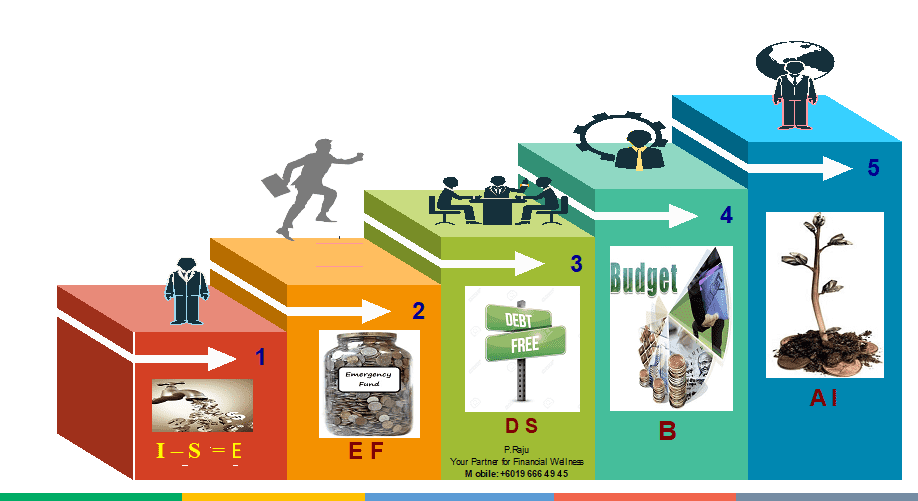
    5 steps to achieve financial wellness

    So, the 5 important steps to achieve financial wellness as described in Figure 1 are as follows:

    Step 1: Be a Conscious Spender to Save Money

    Step 2: Be prepared for Rainy Days

    Step 3: Minimise your leakages by Managing Debts

    Step 4: Be Control of Your Money via a Budget

    Step 5: Consistent Accumulation & Investing of Money

    In the first instalment of this financial wellness article, we will focus on the first step, which is Be a Conscious Spender.

    Conscious Spending

    spend

    Step 1 pretty much implies that you decide exactly where you’re going to spend your money, after you have paid yourself of course. At this stage, you’re also actively choosing to spend on some things and not on others.

    According to American personal finance advisor and entrepreneur, Ramit Sethi, who is also the author of the 2009 New York Times Bestseller on personal finance, I Will Teach You To Be Rich, “The heart of frugality is choosing to spend on the things that are important to you while cutting back ruthlessly on the things that aren’t.”

    So, conscious spending is very important since it fosters every virtue, teaches self-denial, cultivates the sense of order, trains to forethought, and so broadens the mind.

    In a nutshell, it depends on the ability to control one`s money by becoming a conscious spender and focus on needs, then wants, and subsequently cultivate consistent saving habits.

    As you start to practice conscious spending, your financial behaviours or habits improves, which is really the key to achieve financial wellness.

    To put conscious spending in action, you have to learn to ask yourself the questions below before you make a purchase:

    • Will I use this?
    • Can I get this cheaper?
    • Can I wait to buy this?
    • Why am I buying this?
    • Is there something else I’d rather spend the money on?

    Conclusion

    Financial behaviours or habits are formed in individuals over time; it cannot happen overnight. However, once you get it going, it would become very difficult to shrug it off.

    About the author

    Raju Periasamy is a Certified Member of the Financial Planning Association of Malaysia (FPAM) and a Licensed Financial Planner with Phillip Wealth Planners Sdn. Bhd.  He can be contacted at rajuperi@gmail.com