Category: Decisions

  • The ongoing legacy of Tan Sri Dato’ Seri (Dr.) Haji Mohd Yussof Latiff

    The ongoing legacy of Tan Sri Dato’ Seri (Dr.) Haji Mohd Yussof Latiff

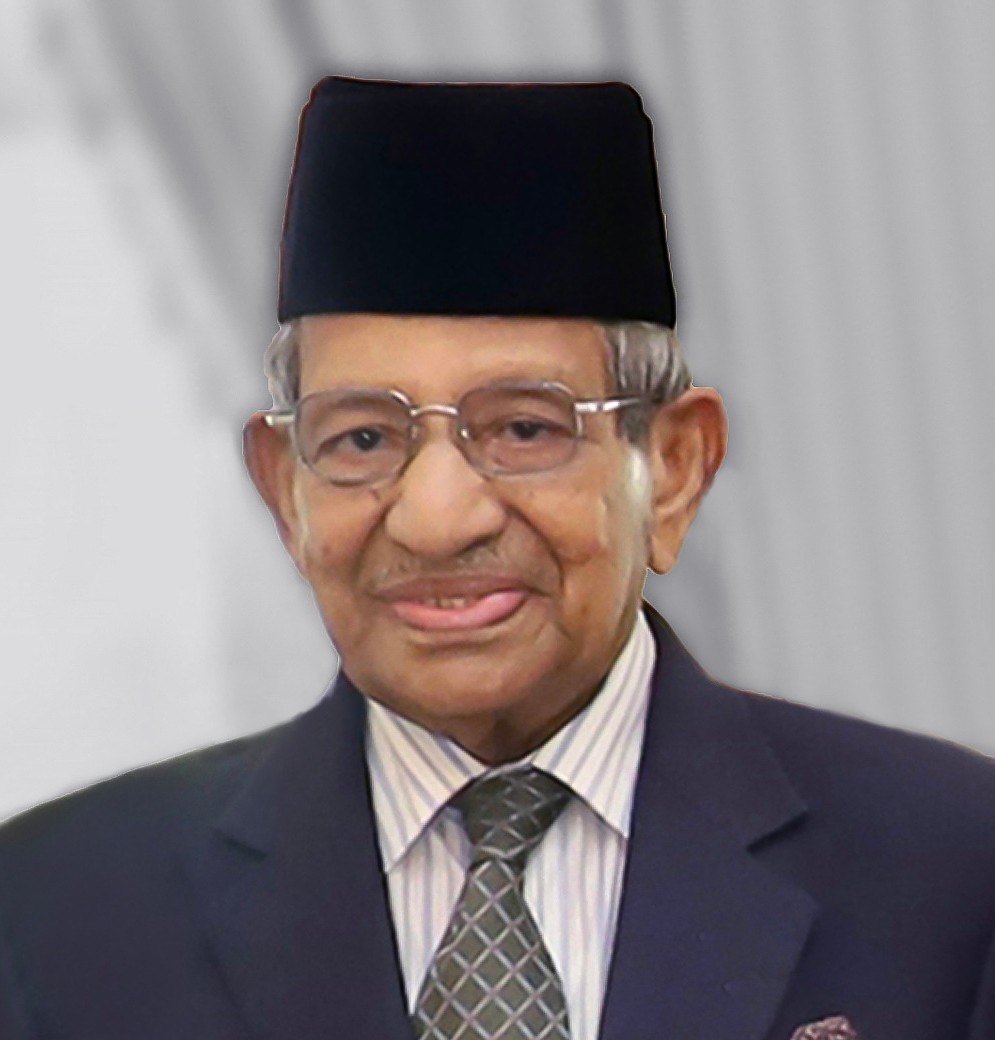
    In Penang’s long and storied history, a few names stand out for their enduring influence on the island’s civic and social fabric. One such figure is Tan Sri Dato’ Seri (Dr.) Haji Mohd Yussof Latiff, a man whose legacy transcends titles and accolades. After more than half a century weaving business, community and compassion into Penang’s story, he reflects with TSI on a purposeful life of service and Malaysia’s path forward.

    Known to many as the President of Persatuan Melayu Pulau Pinang (PEMENANG), Mohd Yussof was once the Political Secretary to the Chief Minister of Penang from 1964 to 1969, and State Secretary of the Alliance Party of Penang during the post-Gerakan–Alliance era in 1971.

    He was born in 1930 in the heart of George Town. His early education began at Sekolah Melayu Chowrasta, followed by English-medium studies that exposed him to Penang’s pluralistic character.

    “Penang has always been a crossroad,” he recalls. “When you grow up here, you learn early that success depends on cooperation—not confrontation. Our diversity is not a weakness; it is our strength.”

    That conviction would become a guiding principle throughout his life. As a young man, he joined several youth and cultural associations, quickly rising to leadership positions. When Malaysia achieved independence in 1957, he had already established himself as an emerging community leader.

    Entrepreneurial Discipline and the Business Mind
    Before he became synonymous with PEMENANG, he was already making waves in the corporate world. As Penang transitioned into an industrial hub under the Free Trade Zone model from the 1960s, he recognised the early importance of local participation in the State’s economic rise.

    “Industrialisation wasn’t just about factories and exports. It was about ensuring that Malaysians—especially youths—could participate in the new economy. That required education, discipline, and vision,” he explains.

    His ventures in the private sector reflected precisely those values: measured risk-taking, steady expansion, and a preference for sustainable growth over speculative gain. Though not one to publicise his business interests, associates describe him as a prudent investor, deeply respectful of governance and ethical conduct—a businessman who viewed enterprise as an instrument for empowerment.
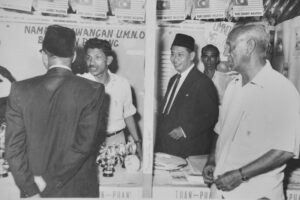
    Tan Sri Haji Mohd Yussof Latiff (second from left): an active career in shaping Malaysia

    At the Helm of PEMENANG
    Mohd Yussof’s long stewardship of PEMENANG cemented his public legacy. As President of PEMENANG in 1984, he transformed the organisation into one of Penang’s most respected Malay cultural and civic institutions.

    Under his leadership, PEMENANG evolved from a traditional social club into a platform for advocacy, education, and unity. Among his hallmark initiatives was the creation of the Tabung Biasiswa Kenangan PEMENANG, a scholarship fund that has enabled countless Malay students from Penang to pursue higher education.

    Until today, the organisation continues to be instrumental in promoting dialogue between Penang’s communities. Through forums, cultural events, and consultative engagements with the state government, he positioned PEMENANG as a voice of moderation that bridges heritage and modernity.

    He is also a founding chairman of the Majlis Perundingan Muhibbah Negeri Pulau Pinang (MPMNPP), a state goodwill council established to promote inter-racial understanding and communal harmony.
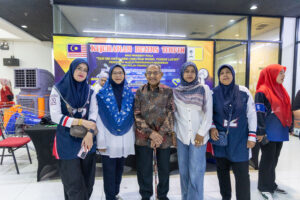
    Age is just a number – at 96, Tan Sri continues to engage the public.

    Investing in People

    Beyond leadership titles, his most enduring legacy lies in his charitable work and lifelong commitment to community welfare. Since the 1960s, he has been with Persekutuan Kebajikan Anak-Anak Yatim Islam Pulau Pinang (PKAYIPP), eventually serving as its President and dedicating decades to supporting orphans and disadvantaged youth.

    Often described as “macro in vision, micro in execution,” he pairs a broad view of societal progress with attention to the smallest details, believing that meaningful gestures of care and respect ultimately cultivating loyalty.

    Penang – A Model of Smart Investment

    Bridging the public and private sectors, Mohd Yussof has often served as a moral compass in conversations. His message is consistent: growth must never come at the expense of community cohesion.

    Such has place him firmly in the tradition of socially responsible leadership, a concept increasingly resonant among modern investors and corporations. In today’s vocabulary, one might call it “ESG” — environmental, social, and governance responsibility. But for him, these principles are not trends; they are timeless truths.

    A Legacy Beyond Numbers
    In evaluating his life, one finds a rare synthesis of pragmatism and idealism. His contributions are not confined to financial balance sheets or institutional titles. Rather, they live in the enduring structures of goodwill he has built — the scholarships that open doors for underprivileged students, the community councils that keep dialogue alive, and the charitable networks that extend help to those in need.

    His legacy serves as a reminder that sustainable development requires more than capital investment; it requires character investment. It requires leaders who understand that prosperity must be shared, that unity must be nurtured, and that compassion must be institutionalised.
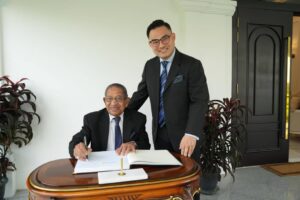
    Tan Sri Haji Mohd Yussof Latiff and Cheah Chay Tiong, Managing Editor of TSI

    Final Reflections
    As Malaysia navigates its next chapter of economic transformation, figures like him remind us that leadership is not merely about administration, but about stewardship—of values, culture, and collective destiny.

    He represents a generation that believed in building, not branding, in mentoring, not marketing. Every scholarship awarded, every orphan cared for, every elder empowered, and every bridge of understanding built between communities is an investment—one that continues to yield dividends of peace, progress, and pride for Penang and Malaysia alike.

    His career illustrates what it means to be a smart investor in the truest sense: one who allocates resources to produce long-term, meaningful returns for society.

    And if leadership is indeed the ultimate legacy, then his has been one marked by foresight, humility, and enduring impact.

    Full story available at The SmartInvestor’s May/June 26 issue. 
  • Beyond Insights is built on turning knowledge into results

    Beyond Insights is built on turning knowledge into results

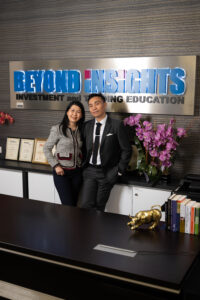
    In 2007, Kathlyn Toh took the bold step of leaving a promising career at a global multinational organisation to pursue trading, full-time on her own. A year later, she went on to embrace her entrepreneurial calling by launching Beyond Insights, an investment and training education academy. Joined by her supportive spouse, Terence Teoh, the formidable couple has built an academy of 30 trainers and coaches, seeing more than 7,000 students through their doors. TSI speaks to Kathlyn, Founder and Terence, Co-Founder of their journey in this competitive industry.

    What are your respective roles in growing the business?
    Terence: On top of her position as Founder, Kathlyn is the Chief Trainer, Chief Analyst, Chief Product Officer and Chief Financial Officer. A master in the field of investing and trading, she’s naturally, the content expert for creating and designing most of the education programmes.

    I, on the other hand, is the CEO and undertakes marketing, sales, student affairs, technology and human capital. This comes from my experience in working with the founders of one of Malaysia’s most successful online companies, as well as managing two startups prior to Beyond Insights.

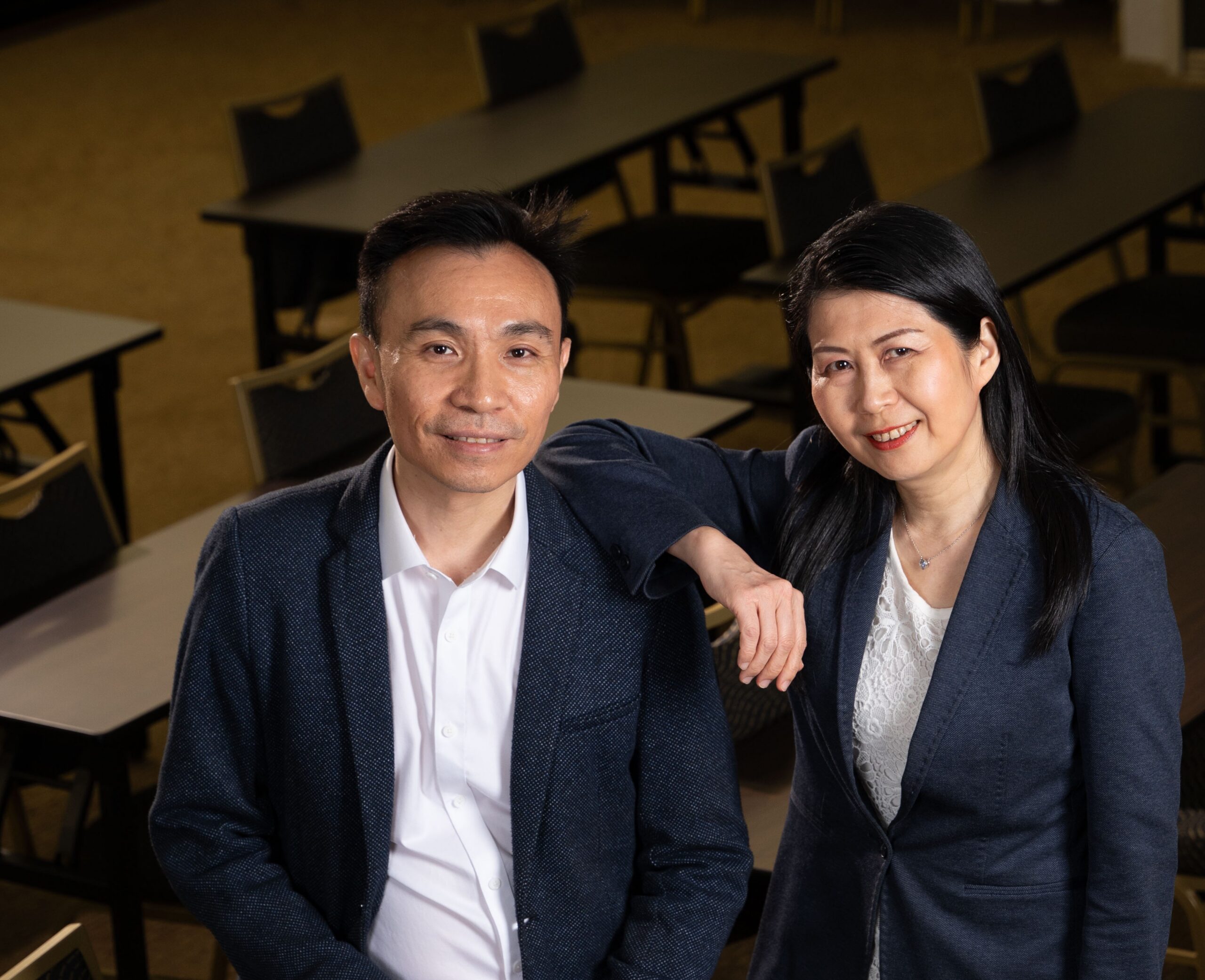
    Kathlyn and Terence, helming one of the country’s prominent investment and training education academy.

    It’s been quite a journey for Beyond Insights, what do you think is the academy’s measurable impact in shaping Malaysia’s financial literacy landscape?

    Kathlyn: Beyond Insights has played a meaningful role by addressing the widest gap: practical investing and trading capability. Over the past decade, we’ve trained retail investors and professionals with a structured curriculum that covers the full spectrum of investing—from long-term portfolio building to trend trading, intraday trading, options and even trading psychology. What we’ve done is shift people from “awareness” to actual competence.

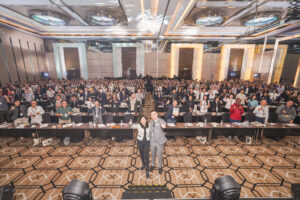
    We empower Malaysians to make smarter, more disciplined market decisions while managing risk effectively. By building a team of real practitioners and introducing Asia’s first Trading Psychology Bootcamp, the brand has reshaped trading behaviour and emotional management. Through initiatives like the annual Beyond Insights Symposium, we have brought megatrends, macro cycles and market analysis into mainstream conversations, fostering a more informed, resilient and opportunity-ready investing community.

    In a competitive industry, there’s a thin line between empowerment and hype. Your thoughts?
    Kathlyn: Skepticism toward trading academies is valid—too many players have overpromised and underdelivered. The best way to counter this is through transparency, track record and professionalism. At Beyond Insights, we make no guarantees, we teach no shortcuts and we publish exactly what students can expect: a structured curriculum, real practitioners as coaches, multi-year support and a heavy focus on psychology and risk management.

    We draw a very clear line: we empower through competence, not promises. In financial education, hype sells fast but harms long-term trust—and trust is the foundation of our business. So, we’ve built our commercial strategy around authenticity and integrity, not sensationalism. We tell students upfront that trading is a skill, not a shortcut; that risk is real; and that consistency comes from discipline, not magic formulas. When people see our longevity and the depth of our ecosystem, the difference becomes obvious: we’re not about hype, we’re in the skill-building and character-building business.

    Our coaches are real practitioners, which means they teach the realities of losses, drawdowns, and psychological pressure—not just the upside. We structure our programmes with prerequisites and multi-year support to help people progress patiently, not speed them up prematurely. Internally, we reject any marketing that hints at guaranteed outcomes. We grow commercially by sticking to principles—not by inflating expectations.

    Let’s cover something bigger, the country’s financial literacy landscape. How in touch are our policymakers?
    Terence: Malaysia’s policymakers understand the importance of financial education, but the ecosystem isn’t yet designed for agile, skills-based programmes that change investor behaviour. Much of the current structure is built around compliance, certification and formal financial planning—important, but not sufficient.

    Kathlyn: The demand for practical, market-ready skills is rising much faster than the pace of policy evolution. The challenge isn’t a lack of intention; but the frameworks were built for a different era—one where financial education meant avoiding scams and understanding basic products. Today, Malaysians are trading U.S. equities, tech megatrends, options and leveraged instruments at scale. They need agility, not bureaucracy.

    Being successful comes with a price, Beyond Insights was a target for impersonation earlier this year.
    Terence: The impersonation was widespread on social media, riding on Kathlyn’s credibility and our programmes. While our reputation stands firm, it has affected our ability to reach our audiences, and we’ve suffered loss of business. For immediate damage control, we distributed circulars to alert stakeholders.

    Our key takeaway from this ordeal was three points: radical transparency because people can sense exaggeration instantly, so we are glad that our integrity paid off. Secondly, consistency at every touchpoint—ads, content, customer service and product delivery must tell the same story. Finally, our community has been the best support as they vastly carry our credibility. In this digital age, nothing beats real people sharing real experiences.

    Thousands of investors and traders empowered by Beyond Insights.

    Continuing the digital conversation, do you think that AI will one day replace human trainers?
    Kathlyn: AI will transform learning experiences, but it won’t replace human trainers. As a matter of fact, it will expose the replaceable. If a “trainer” is just reading slides, repeating generic content, or teaching tactics they don’t apply… yes, AI will do that better, faster and cheaper.

    But the kind of training we do—personalised coaching, behavioural rewiring, decision-making under pressure, emotional management, personalised feedback, that’s fundamentally human. Markets are uncertain, emotions are messy and people need guidance from someone who has lived through wins, losses, crises and recoveries.

    We see AI as an amplifier, not a substitute. It can handle the heavy lifting: content delivery, personalised drills, data analysis, simulations and real-time market explanations. That frees our trainers to do the one thing AI can’t: build conviction, challenge limiting beliefs and coach transformation.

    The next phase for Beyond Insights?
    Terence: In the immediate horizon, we are launching our first version of mobile application in 2026 to enrich its students’ experience. As for maintaining programme quality, we have designed a long-term tech roadmap to help learners make clearer, faster and more confident investing decisions.

    Final words, what would Beyond Insights be always known for?
    Kathlyn: A brand that holds onto our values and beliefs because we know that it is the only sustainable way to earn and retain the trust of our stakeholders. Today, our students trust us in delivering education that enables them to invest in a systematic, versatile and safe manner. This ultimately empowers them to grow their wealth with peace of mind.

    Full interview available at The SmartInvestor’s Jan/Feb 2026 issue.

  • Dato’ Ch’ng Huck Theng upholds Penang’s living heritage

    Dato’ Ch’ng Huck Theng upholds Penang’s living heritage

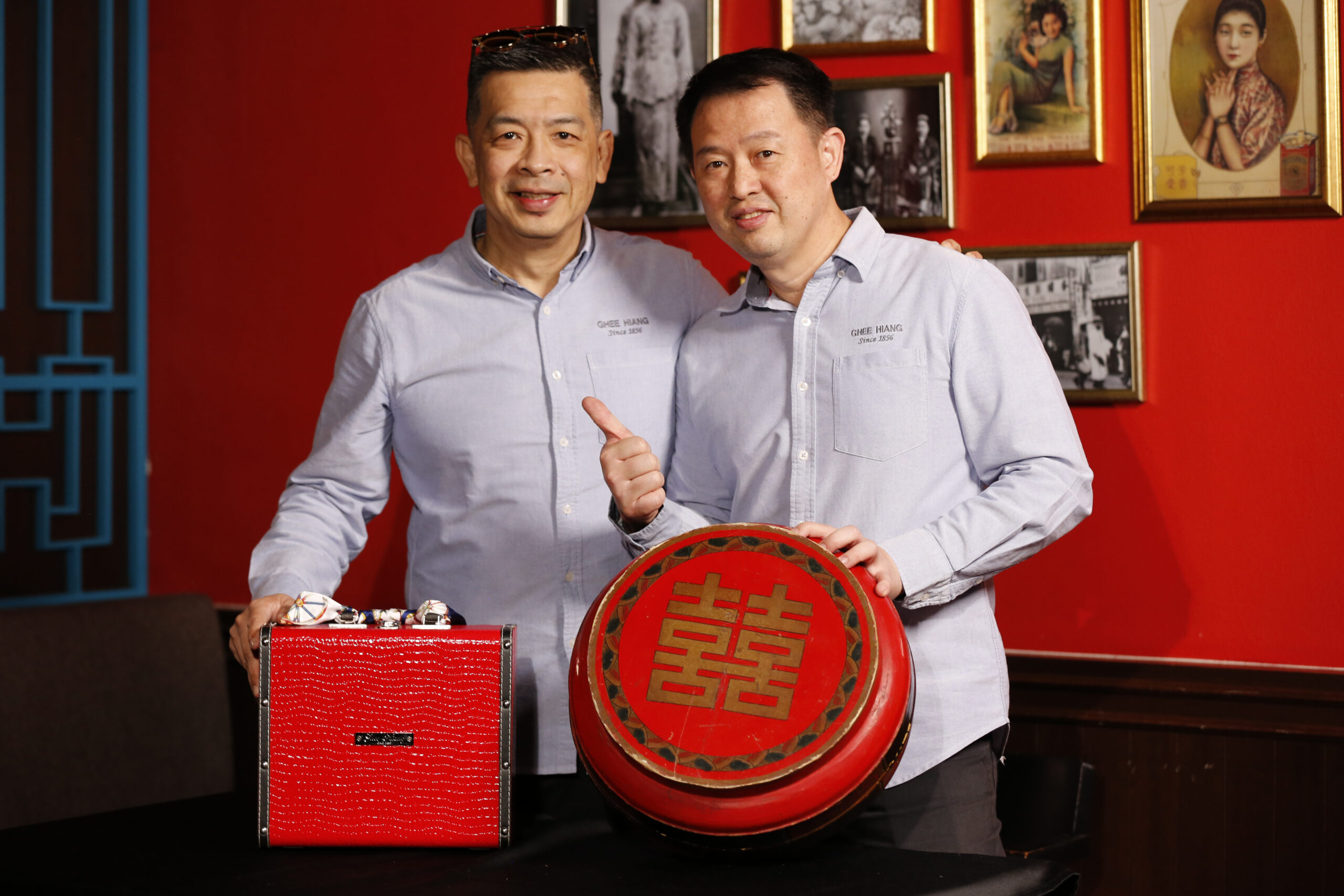
    If the brand Ghee Hiang doesn’t ring a bell in a flash, its pure fragrant sesame oil product that reminds you of home as well as time-honoured treats that are rooted in Penang’s culinary heritage. In the spirit of its 170th anniversary, TSI uncovers a different side of Ghee Hiang with Dato’ Ch’ng Huck Theng, Executive Director of Ghee Hiang Manufacturing Co. Sdn. Bhd., on surviving changing times, keeping the business alive and anchored by age-old traditions.

    Ghee Hiang’s humble beginnings at Beach Street.

    Ghee Hiang is Penang’s pride and vice versa, what does that really mean?

    It has always been closely tied to Penang’s identity because we’re not just a brand, we’re part of Penang’s story. For many families, our biscuits and sesame oil are tied to their personal memories of home. This special bond we have with our customers keeps us grounded and continues to shape our identity, especially in today’s fast-moving and competitive world.

    On top of heritage, we are proud to be a contributor to the local economy and take additional pride in preserving traditional skills. It’s our way of putting Penang and Malaysia on the global map as our sesame oil and biscuits are often brought overseas as gifts so this is where our role in tourism come into play.

    Today, our products are present in Indonesia, Singapore, Hong Kong, Thailand and Australia, each step helping to carry a piece of Malaysia to the world. Many have asked why we are still in Penang? It’s simple, because Penang remains our home—it’s where we are rooted and our stories continue to unfold.

    Ghee Hiang is a union of two families, and we often hear of family businesses struggling when values clash. How has Ghee Hiang managed to turn this into a success story?

    The two families share the same core belief—this brand is bigger than us. It’s about respect, integrity, and continuity. As a team, we protect the legacy and the community who has grown with Ghee Hiang. This shared sense of responsibility is one that drives us to make strategic decisions for the long run as opposed to short-term wins. Both the Ch’ngs and the Ooi’s believe that as a partnership-run entity, it’s equally important to lead by example and we expect the same commitment by the younger generation.

    Ch’ng Pok Lye and family.

    Are there some values to discard by the next generation?

    Being outdated and confined to rigidity. The next generation of leaders must adopt the mindset of thinking differently—they should feel confident enough to experiment while protecting the brand’s soul.

    This is the biggest challenge for the brand, preserving it while staying relevant and without losing our soul. Shopping habits continues to evolve, additionally, we face the constant task of maintaining customer expectations, harmony within the families and management.

    We’ve been speaking about heritage and traditions, what about innovation, where does it sit in Ghee Hiang’s equation?
    Tradition is staying true to our recipes and methods that made the brand and its products what it is today. We must evolve with the times, so instead of short-cuts to cater demands, we have increased our product lines by introducing new creations. Our chocolate cookies, pineapple shortcakes and matcha crisps are appealing to our younger target audience.

    As health awareness too increase over the years, we play our part by highlighting the health benefits of our product. For example, we run our sesame oil through research on its antibacterial, anti-inflammatory and antioxidant properties.

    Innovation doesn’t stop at products; we’re also looking at marketing innovation. One of our most recognisable brand initiatives would be our Legendary Babies that was created in the early 2000s to represent our line of products, appeal to the younger target audiences and attract tourists. If you were to go to any of our outlets, you’d see tourists taking pictures with these adorable characters which we strategically placed at the front of the stores.

    Let’s drill down to what’s performing well for the business, product wise and sale platforms as well as rising costs.

    Our original pastries still carry the biggest weight, making most sales. New products have been steadily growing, especially among younger consumers, but the classics remain our foundation. With younger customers who are discovering us through new products and digital platforms, we’ve seen encouraging double-digit growth in that segment, which tells us our innovation strategy is working.

    Meanwhile, our brick-and-mortar still leads because visiting our store is an experience itself—the liveliness of the atmosphere, the engaging service and the variety of products all in one place. But we are glad to see that online sales have soared too, especially after the pandemic. It has opened doors for us in reaching out to overseas customers. Both channels are important and serve different needs.

    A common concern for many is that rising costs are heavily weighing down on business so for us, the key is for production as well as retail is smart management. We focus on sourcing efficiently and reducing wastage, without sacrificing our product quality. Most importantly, we keep our growth steady and sustainable, making sure every decision strengthens the brand in the long run.

    There are other long-standing brands that offer the same products and experience as Ghee Hiang, what is your take on competition?

    Competition keeps us sharp. Anyone can make similar products, but our competitive advantage lies in heritage and authenticity. We are laser focus on what we do best and trust that this is wholeheartedly felt by customers through our products. We take product consistency very seriously; it’s what customers expect from us.

    Staying ahead of the game, we have invested in scientific research and technology. This is to ensure that the narratives behind our products are backed by proper research papers. While technology plays a growing role, from production to packaging, but we balance it with craftsmanship, just like the final steps of crafting our pastries, some things simply can’t be automated.

    Let’s wrap this conversation with the next 100 years.

    For future leaders, we believe they need to understand both the heart and the mechanics of the business. With that, comes early exposure to day-to-day operations, from production to retail, not just the boardroom.

    Doing justice to the brand, Ghee Hiang must always be remembered as a brand of trust, authenticity, and tradition. For Malaysia, we hope to serve as an ambassador of Malaysian heritage, so that when people think of Penang or Malaysia, they’ll also think of Ghee Hiang.


  • Grace Low on defying gravity and keeping brands afloat

    Grace Low on defying gravity and keeping brands afloat

    Accomplished marketing specialist and digital content creator, Grace Low has built her career at the intersection of strategy, innovation and brand growth. As Malaysia’s first to secure a verified blue badge for a RedNote business account, she later went to launch Malaysia’s first RedNote influencer marketing strategy. Today, her role in the hospitality industry further sharpens her expertise, as she shares on how to survive management change and defy gravity with sound turnaround strategies.

    Grace’s journey into branding and marketing was shaped by her exposure to media, storytelling, and audience behaviour across multiple platforms. “I come from a commercial production background where storytelling was never just about aesthetics—it had to move audiences and deliver results,” reminiscing of her early days in television production.

    As the media landscape changed, Grace was one of the early movers that understood the forthcoming digital wave. Observing China’s rapid consumption of digital storytelling and how brands can gain maximum exposure, Grace made the leap and never looked back.

    Years spent in creating tourism and hospitality content for clients paid off—she found niche in the industry itself and in 2023, started serving reputable hotel establishments. She also moved beyond her capacity as a digital content creator, a growth phase that saw her portfolio moving into integrated marketing and communication strategies.

    Grace strongly feels that during a change in management, even small shifts can feel destabilising, so a good leader is crucial. She narrates her way of dealing with the situation, “My first step is to align expectations and simplify systems during the thick of things—it’s focusing on clarifying roles, defining the decision-making authority and setting pragmatic goals for the team. Stability follows with transparency and realism, rather than blindly following outdated habits.”

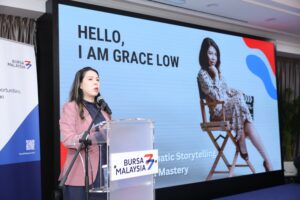
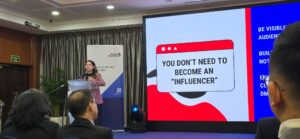
    Low, presenting digital insights at Bursa Malaysia.

    For her recent case study at an international hotel chain located in Malaysia, Grace points out that whether it is a management change or a turnaround strategy needed, she resets three things immediately to ensure continuity in the hotel’s marketing:

    1. Brand narrative
    2. Channels to focus on
    3. Performance benchmarks

    “When you need to quickly turnaround, pull out data and digest the patterns. An example—if engagement is strong but conversion is weak, it’s often execution. If awareness is low despite investment in ads, it’s positioning. If traffic is high but sentiment is poor, then messaging and experience is misaligned. Data is your north; it tells the truth faster than opinions!”
    From a digital perspective, she focused on addressing digital noise by inviting a wider range of content creators to visit, share reviews, and generate fresh conversations across social media platforms, helping to sustain visibility and public interest.

    “During one leadership transition, I proactively invited major media to visit and review the hotel, especially during the hotel’s anniversary promotion, creating visibility and excitement. I also led initiatives that secured various prestigious awards, strengthening the hotel’s reputation and digital presence among competitors. By taking decisive action and maintaining marketing momentum, even amidst organisational change, I ensured that both the brand and the business continue to thrive, supporting teams across sales, operations and communications.

    Missteps are common and Grace notes that overacting too quickly is a downfall, especially changing the narratives too rapidly, without a clear and strategic rationale.

    On contrary to popular belief, chasing trends or surface-level credibility without understanding if it supports the brand’s long-term positioning or business immediate priorities can be detrimental.

    Sparking insightful conversations on air, Low often shares her thoughts
    with the public.

    “I also see organisations undervaluing the marketing department during critical times. Although it may be only a minor brand enhancement exercise, other departments are consulted instead of the marketing personnel who are responsible for shaping demand, guiding customers decisions and protecting brand equity. Marketing is not about revenue conversion only; we contribute meaningfully to business outcomes and long-term value”

    Shifting the conversation to women’s empowerment at the workplace, Grace says that while her leadership is decisive and structured which are critical traits in high-pressure, result-driven environments, being a mother of two also taught her to balance assertiveness and empathy. “

    She concluded by giving her advice to emerging women leaders—cultivate a mindset of ownership, confidence, curiosity and humility. “Put your ego away, true leadership is about serving the team, the business and stakeholders, it’s not about proving yourself. Be confident in your expertise but listen actively, learn quickly and most importantly, be willing to admit what you don’t know.”