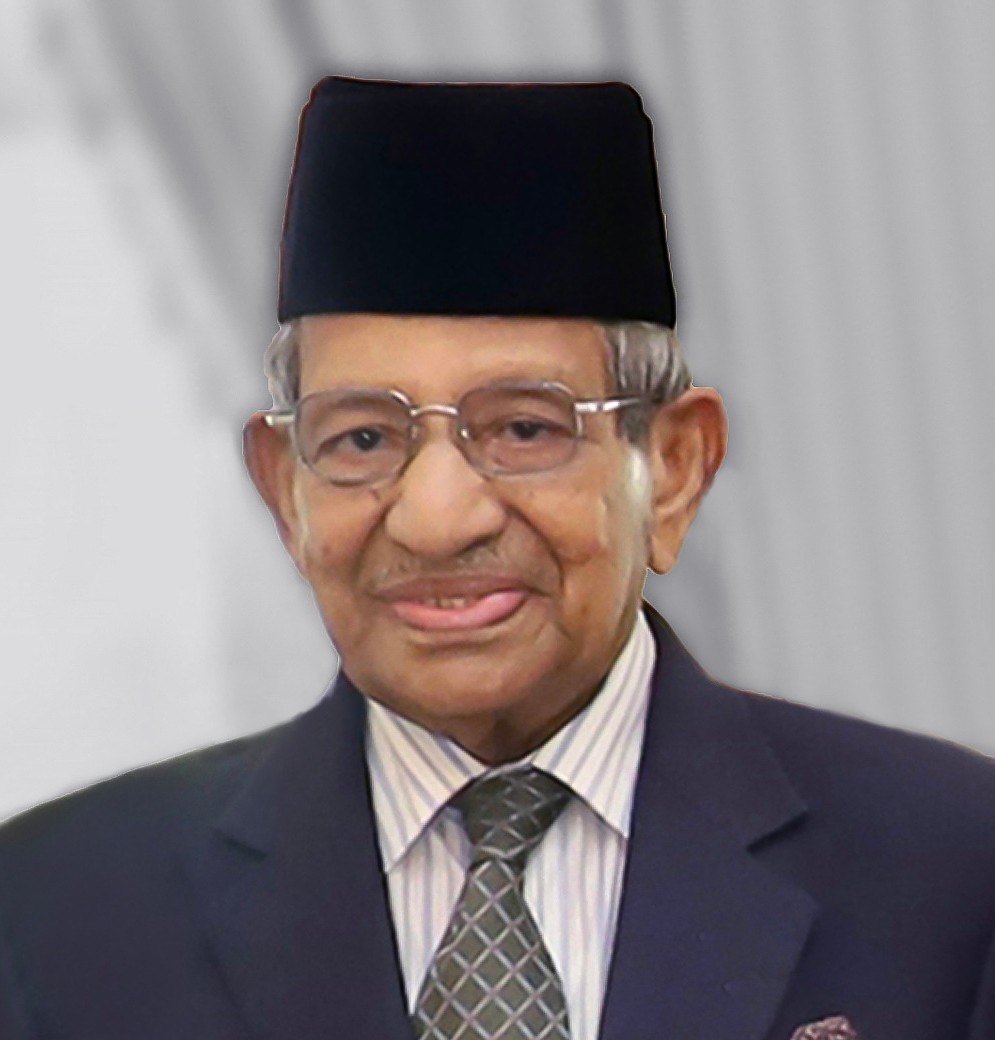
In Penang’s long and storied history, a few names stand out for their enduring influence on the island’s civic and social fabric. One such figure is Tan Sri Dato’ Seri (Dr.) Haji Mohd Yussof Latiff, a man whose legacy transcends titles and accolades. After more than half a century weaving business, community and compassion into Penang’s story, he reflects with TSI on a purposeful life of service and Malaysia’s path forward.
Known to many as the President of Persatuan Melayu Pulau Pinang (PEMENANG), Mohd Yussof was once the Political Secretary to the Chief Minister of Penang from 1964 to 1969, and State Secretary of the Alliance Party of Penang during the post-Gerakan–Alliance era in 1971.
He was born in 1930 in the heart of George Town. His early education began at Sekolah Melayu Chowrasta, followed by English-medium studies that exposed him to Penang’s pluralistic character.
“Penang has always been a crossroad,” he recalls. “When you grow up here, you learn early that success depends on cooperation—not confrontation. Our diversity is not a weakness; it is our strength.”
That conviction would become a guiding principle throughout his life. As a young man, he joined several youth and cultural associations, quickly rising to leadership positions. When Malaysia achieved independence in 1957, he had already established himself as an emerging community leader.
Entrepreneurial Discipline and the Business Mind
Before he became synonymous with PEMENANG, he was already making waves in the corporate world. As Penang transitioned into an industrial hub under the Free Trade Zone model from the 1960s, he recognised the early importance of local participation in the State’s economic rise.
“Industrialisation wasn’t just about factories and exports. It was about ensuring that Malaysians—especially youths—could participate in the new economy. That required education, discipline, and vision,” he explains.
His ventures in the private sector reflected precisely those values: measured risk-taking, steady expansion, and a preference for sustainable growth over speculative gain. Though not one to publicise his business interests, associates describe him as a prudent investor, deeply respectful of governance and ethical conduct—a businessman who viewed enterprise as an instrument for empowerment.
At the Helm of PEMENANG
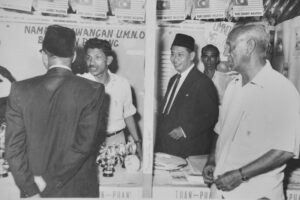
Mohd Yussof’s long stewardship of PEMENANG cemented his public legacy. As President of PEMENANG in 1984, he transformed the organisation into one of Penang’s most respected Malay cultural and civic institutions.
Under his leadership, PEMENANG evolved from a traditional social club into a platform for advocacy, education, and unity. Among his hallmark initiatives was the creation of the Tabung Biasiswa Kenangan PEMENANG, a scholarship fund that has enabled countless Malay students from Penang to pursue higher education.
Until today, the organisation continues to be instrumental in promoting dialogue between Penang’s communities. Through forums, cultural events, and consultative engagements with the state government, he positioned PEMENANG as a voice of moderation that bridges heritage and modernity.
He is also a founding chairman of the Majlis Perundingan Muhibbah Negeri Pulau Pinang (MPMNPP), a state goodwill council established to promote inter-racial understanding and communal harmony.
Investing in People
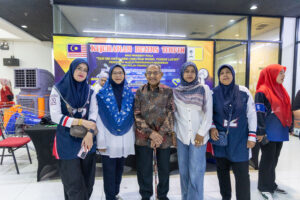
Beyond leadership titles, his most enduring legacy lies in his charitable work and lifelong commitment to community welfare. Since the 1960s, he has been with Persekutuan Kebajikan Anak-Anak Yatim Islam Pulau Pinang (PKAYIPP), eventually serving as its President and dedicating decades to supporting orphans and disadvantaged youth.
Often described as “macro in vision, micro in execution,” he pairs a broad view of societal progress with attention to the smallest details, believing that meaningful gestures of care and respect ultimately cultivating loyalty.
Penang – A Model of Smart Investment
Bridging the public and private sectors, Mohd Yussof has often served as a moral compass in conversations. His message is consistent: growth must never come at the expense of community cohesion.
Such has place him firmly in the tradition of socially responsible leadership, a concept increasingly resonant among modern investors and corporations. In today’s vocabulary, one might call it “ESG” — environmental, social, and governance responsibility. But for him, these principles are not trends; they are timeless truths.
A Legacy Beyond Numbers
In evaluating his life, one finds a rare synthesis of pragmatism and idealism. His contributions are not confined to financial balance sheets or institutional titles. Rather, they live in the enduring structures of goodwill he has built — the scholarships that open doors for underprivileged students, the community councils that keep dialogue alive, and the charitable networks that extend help to those in need.
His legacy serves as a reminder that sustainable development requires more than capital investment; it requires character investment. It requires leaders who understand that prosperity must be shared, that unity must be nurtured, and that compassion must be institutionalised.
Final Reflections
As Malaysia navigates its next chapter of economic transformation, figures like him remind us that leadership is not merely about administration, but about stewardship—of values, culture, and collective destiny.
He represents a generation that believed in building, not branding, in mentoring, not marketing. Every scholarship awarded, every orphan cared for, every elder empowered, and every bridge of understanding built between communities is an investment—one that continues to yield dividends of peace, progress, and pride for Penang and Malaysia alike.
His career illustrates what it means to be a smart investor in the truest sense: one who allocates resources to produce long-term, meaningful returns for society.
And if leadership is indeed the ultimate legacy, then his has been one marked by foresight, humility, and enduring impact.
Full story available at The SmartInvestor’s May/June 26 issue.
Leave a Reply