Category: Enterprise

  • Gen X VS Millennials In The Workplace

    Gen X VS Millennials In The Workplace

    There have been countless studies about the generational gap between Gen X and millennial workers, with the topic stirring up much debate to this day. Broadly speaking, Gen X are born between 1965 and 1980 and are currently 41 to 56 years of age. Millennials are born between 1981 and 1996, ranging between 25 to 40 years of age.

    With the Movement Control Order (MCO) forcing many businesses to operate remotely, many millennials took to the situation like a duck to water thanks to their digital savviness and familiarity with
    remote working tools. However, with offices reopening after the MCO was lifted, many now find themselves at a crossroads and are often reluctant to return to a centralised workspace.

    “The reality of the matter is that employees were forced to adapt to the culture of working from home, and just as they got accustomed, it is now time to revert to the old ways of working with added restrictions – the SOPS,” says Rita Krishnan, the managing director and training consultant of Impian Helang.

    To her, CEOs and management of any company will return to the office and face new challenges, some of which they have never dealt with in the past thanks to the unprecedented effects of the Covid-19 pandemic.

    “In the past, it was performance and productivity that mattered most for organisational growth,” she recalls. “But today, compassion with high
    emotional intelligence is crucial, being the way forward in managing the workforce, especially in retaining the talents.”

    In Deloitte’s 2021 Millennial and Gen Z survey, it was found that only 38% of millennials felt comfortable voicing concerns to supervisors about work stress.

    This suggests that many are unable to trust or anticipate a clash with higher ups about the rigours of work. A correlation can be drawn to 31% of millennials taking time off work due to pandemic-related stress and anxiety. According to the survey, almost half of them gave a different reason to their employers, likely due to a stigma around mental health at work.

    It is no surprise that CEOs and senior management figures today must be more well-rounded figures – able to lead and dissect numerical patterns as well as business strategy, but being able to relate to their subordinates on a more personal level rather than simply boss and employee. However, the difference in age can often mean that there is a clash in culture and expectations.

    The topic is widely documented and debated, with both sides often convinced that they are not compatible with the other. This often boils down to a mismatch in terms of ideology, with Gen X workers likely to espouse more traditional work values, while Gen Y or millennials subscribe to more flexible or unconventional working mantras.

    “Generally, Gen X are hard workers while Gen Y are smart workers,” she postures. “Gen X do not jump jobs and are comfortable with where they are. This may seem like the safer option but can also be dangerous as career progression is not usually an option.”

    What about the retirees?
    For all the talk of Gen X v s millennials, the pandemic has also depleted the savings of many retirees. This has resulted in an influx of retirees in their fifties and sixties re-entering the job market, but who may be under the impression that time has left them behind. However, Krishnan believes retirees have much to offer in terms of their knowledge and experience, and suggests that there are many job opportunities for such individuals.

    “Training and consultancy in sharing a wealth of knowledge, experience and skills that were useful then and useful now,” she shares.

    The experience accumulated by such individuals suggests that within them is a treasure trove brimming with a wealth of knowledge; they simply need to leverage this into potential job opportunities.

    “I believe in reinventing and recycling talents that upholds the reputation of recreating past performance. This is where retirees can attend the HRD Corp Certified Train-The- Trainer programme, for a new career altogether whilst recreating and reliving the successes of their past,” adds Krishnan.

    Job hopping a competitive disadvantage?

    Krishnan also suggests that the typical Gen Y employee prefers to job hop often in order to gain experience quicker as well as to be exposed to various industries. While she does not dismiss this career strategy, she highlights that it also has its pros and cons.

    “Employers are reluctant to invest in and develop employees who show no promise of ‘stayability’,” Krishnan explains.

    “The working style of Gen Y comes with the mindset of expectations – less work, more pay, with flexi hours.”

    This shift in mindset is evidenced by concrete data. The Deloitte survey indicated that job loyalty is slipping among millennials, with 36% of respondents open to leaving their current employer within two years if the opportunity arose, a drop from 31% in last year’s survey. However, 34% of millennials say they would only consider leaving after five years, which suggests it is not prudent for senior managers to paint the entire generation with the same brush.

    She believes that, although difficult, this difference in culture and expectations can be bridged with programmes that facilitate interaction between Gen X and millennials.

    “It is important to allow employees to explore their skills and abilities with the intervention through team bonding programmes where Gen X and Gen Y can interact and learn from each other,” says Krishnan.

    These types of considerations should be taken into account by HR departments, especially when it comes to upskilling the workforce, an area in which Krishnan is well-versed.

    “The pandemic has altered traditional training styles, and the responsibility of the HR department would be to select relevant training programmes related to industry needs,” she says.

    “At the same, employees’ morale and productivity levels can be elevated using positive reinforcement.”

    She is also a keen advocate for companies to develop a psychological connection with their employees, resulting in a relationship that presents “a sense of belonging”. This demonstrates the company caring about their employees’ personal development and workforce growth. Such a result would inevitably translate into a win-win situation for both company and employees.


  • Learning More about Kidney Cancer

    Learning More about Kidney Cancer

    Dr J.R Sathiyananthan, a Consultant Urologist at ParkCity Medical Centre, explains about kidney cancer and the measures that can be taken to minimise the risks of getting it.

    Kidney cancer is a disease in which malignant tumour is found in one  or both kidneys.

    Kidney cancers account for a small proportion of all cancers, and the insidious nature of it makes early detection difficult.

    In 2010, kidney cancer was reported to affect 1.9 in every 100,000 Malaysians, while 2020 data from World Health Organisation showing 2.1 per cent of all cancers in Malaysia to be kidney cancer.

    Types of kidney cancer

    “Kidney cancer is generally divided into two—primary and secondary kidney cancer.

    “Primary kidney cancer comprises renal cell carcinoma, which accounts for 90 per cent of all kidney cancers, and other rare cancers such as lymphoma or medullary and collecting duct cancers.

    Dr J.R. Sathiyananthan ParkCity Medical Centre kidney cancer
    Dr J.R. Sathiyananthan

    “Secondary kidney cancer originates from cancers in other organs such as breast and colon. This in turn spreads to distant organs such as liver, lungs, and the kidney. This is not considered kidney cancer per se.,” says Dr Sathiya.

    Although there are instances when kidney cancers are caught early, most are diagnosed at a more advanced stage. This is due to a variety of reasons, including the cancer being localised and growing without causing any pain or symptoms. Besides that, the nature of the kidneys lying deep within the body, small kidney tumours cannot be felt during a physical exam.

    “At times when we examine patients for kidney cancer, it may have progressed to be locally advanced. Patients may have come in with flank pain, blood in urine, and sometimes the cancer is large enough to be palpable. The definite test which can confirm this is a contrasted multiphase CT scan, an imaging tool that provides accurate diagnosis. Besides that, percutaneous biopsies are also used in some circumstances to confirm the diagnosis and exclude metastasis from other cancers, bilateral cancers affecting both kidneys, or possibly benign tumours,” explains Dr Sathiya.

    How the disease progresses

    Currently there are no recommended screening protocols for kidney cancer in people who are not at increased risk. As of now, no screening test has shown to lower the overall risk of dying from kidney cancer.

    Kidney cancer is known in some instances to grow aggressively and invade the surrounding bowel and solid organs, which is called local extension.

    Other methods of progression could be blood borne, and spread to the lungs, liver, pancreas, lymph nodes, and bone. This is referred to as metastasis. When metastasis occurs, the outcome is expected to be poor as patient may not benefit from surgery.

    The spread could occur anywhere between six months to years depending on the type of kidney cancer. Clinical data suggests that cancers larger than 3cm have higher tendency to spread compared to smaller ones. Nonetheless, the more common renal cell carcinoma has a slow progression rate compared to the rarer varieties, leading to the possibility of better outcome.

    Treatment options

    “Localised kidney cancer can be treated by surgery. This can be done by removing the entire kidney, also known as radical nephrectomy, or removing only the tumour, with multiple factors taken into consideration prior to this decision. For metastatic kidney cancer, there is evidence that removing the kidney may benefit the long-term systemic treatment, and it is still an evolving area. For those with advanced cancer where surgical options are not available, arterial embolisation to block blood supply to the tumour can treat some symptoms,” describes Dr Sathiya.

    Although radical nephrectomy has been the mainstay of treatment for kidney cancer, the last 20 years has seen partial nephrectomy being the treatment of choice for most patients. This can be performed by open surgery, keyhole (laparoscopic) surgery, or robotically with the Da Vinci robot. The newer treatments include cryoablation and radio-frequency ablation, which can be used for tumours smaller than 4cm. Larger tumours may require multiple treatments.

    “However, the evidence for the newer treatments is not strong and only supported by inferior clinical trials. Nevertheless, they are a viable option for weak patients who are unfit for surgeries or could be used in combination with surgery in familial kidney cancers where multiple tumours are found within the kidney,” Dr Sathiya elucidates.

    Since it’s difficult to catch kidney cancer early, what can people do?

    “The known risk factors associated with kidney cancer are smoking, obesity, and hypertension. If you can avoid those or keep them in check, you could reduce the chances of getting kidney cancer.

    “Those who are at risk, for instance known family history of kidney cancer, should be aware of the symptoms and perform regular screening by ultrasound, blood, and urine test as prescribed by your Urologist,” highlights Dr Sathiya.

  • Tax Obligations For Self-Employed Entrepreneurs

    Tax Obligations For Self-Employed Entrepreneurs

    With the rise of self-employed entrepreneurs, here are some tax compliance obligations and common oversights.

    There has been a dramatic growth in recent years on the number of self-employed entrepreneurs in Malaysia. From 2017 to 2018 alone, this number increased from 2.57 million to 2.86 million, an increase of 11.3% (source: Department of Statistics, Malaysia). In 2018, the self-employed are the second largest category (19.3%) in the Malaysian workforce out of a total of 14.8 million working adults.

    Malaysia adopts a self-assessment system where taxpayers are responsible to determine their own tax liability and to submit their tax returns accordingly. As the number of self-employed entrepreneurs continues to grow in the Covid-19 economy, it is important for the self-employed to be aware of one’s tax obligations especially in the area of tax compliance. Failure to do so could result in penalties and additional tax payable.

    A self-employed person is an independent contractor or a sole proprietor. The self-employed consists of sub-contractors working in the trades or construction sectors to professionals such as doctors, lawyers, accountants, engineers, and management consultants. Recent iterations include freelancers working in the commonly named “gig economy” (such as e-hailing drivers).

    Here are some tax compliance obligations a self-employed individual should take note of:

    1. Registration of Tax Identification Number (TIN) and submission of tax return

    A self-employed individual should register for a TIN when the person has taxable income which exceeds a threshold of approximately RM28,000 per annum. A TIN can be registered at the nearest Inland Revenue Branch (IRB) branch or via e-Daftar at the IRB website.

    For entrepreneurs running a business, the income tax return (Form B) will need to be submitted by 30 June the following year (eg. Form B for the year of assessment 2020 is due by 30 June 2021*extended to 30 September 2021 due to Government movement control, IRB website)

    2. Estimate of Tax Payable

    Under the Malaysian tax regime, a taxpayer pays income taxes on a “Pay-As-You-Earn” basis. Where an individual taxpayer receives other than employment income, the IRB may issue a Form CP500 setting out the estimate of tax payable under an instalment scheme. The Form CP500 is determined based on the tax liability of the previous year. What should you take note of:

    • The tax estimate is six (6) bi-monthly instalments commencing from the month of March every year.
    • Each tax instalment payment needs to be made within 30 days from the due date.
    • The remittance slip (Form CP501) should be submitted together with the instalment payment.
    • Should there be a need to revise the tax estimate which affects the instalment amount, you must submit Form CP502 to the IRB not later than 30 June each year on the revision payments. The IRB will issue a Form CP503 if the application is successful.
    • The penalty for late payment of 10% shall be imposed on the unpaid amount if the tax instalment payment has not been paid within 30 days from the due date.
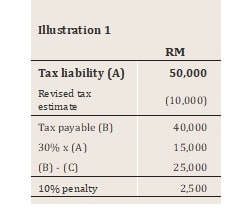
    • Where there is a difference between the revised tax estimate submitted and the final tax liability which exceeds 30% of the tax payable, the difference will be subject to a penalty of 10%.

    The following illustration shows the impact when an estimate of tax payable is inaccurate.

    3.Employer’s Responsibilities

    As an entrepreneur, you might hire employees to expand your business. In this case, you will be considered as an Employer for tax purposes. The responsibilities of an Employer are as follows:

    • The Employer is to inform IRB of any new employees within one month from the date of commencement of employment.
    • Submission of Return of Remuneration by an Employer (Form E) to the IRB on or before 31 March each year. <continues…>

    [ You may read the full article HERE ]


  • Cover Story:Bringing Malaysia E-Commerce To The Fore

    Cover Story:Bringing Malaysia E-Commerce To The Fore

    Homegrown e-commerce platform PGMall aims to compete with the big boys with its long-term growth strategy.

    Being part of the booming e-commerce industry, PGMall is the fastest growing e-commerce platform in Malaysia.
    However, this entirely homegrown operation has quickly established itself as one of Malaysia’s leading marketplaces and has big plans for expansion.
    We sat down with Jerry Ng, the chief operating officer of PGMall as he outlines his vision.
    Smart Investor: You studied physics for your degree and scientific computing for your Master’s,  both  in the UK. How did you find the transition from such contrasting industries to e-commerce?

    Jerry Ng: Yes, I had a passion for physics and computing while I was pursuing my studies. After completing my studies, I secured a job in the UK as a software developer. This was definitely an extension of my passion in computing and I really enjoyed the experience.

    And to be honest, I found that this transition over to e-commerce was not that big a jump. This is because whatever you need to do in the e-commerce industry, you need that technological understanding. This includes the operational side on the backend, as well as how to scale a marketplace platform from small volume of consumers, sellers and transactions to a much higher volume.

    For me, my experience working as a software developer meant that I gained valuable technical knowledge while working on similar websites and companies. I believe this knowledge will help me guide PGMall in the coming years to the next level as we aim to transform into a highly scalable and cross-national entity.

    SI: When talking about e-commerce, there are many other companies in the market. So what sets PGMall apart from these other marketplaces in Malaysia?

    JN: The biggest thing that sets us apart is that PGMall is a fully, locally owned and operated company in contrast with the other two companies which have ties to China and Singapore. We are very proud to say that right now we are the number one local e-commerce player in Malaysia.

    All things considered, we are doing well against our competitors considering that we are the third largest platform in Malaysia. We are delighted that we have managed to achieve significant growth over the past few years, alongside the explosive growth of the e-commerce market. We are also confident about our business model as our customer base is stickier than that of other platforms. This is because we reward our customers based on their behaviour; anytime they buy or spend on our platform, we will reward them accordingly.

    <You May Read The Full Article HERE>


  • 6 Tips on Financial Risk Management in the New Normal

    It’s been a tough year for the world, and Malaysia is no different with Covid-19 cases rising to a new high from 2,000+ cases to 6,000+ cases daily despite several Movement Control Orders (MCO).

    It doesn’t seem that the pandemic is going to end anytime soon, so what’s the best way to manage personal risks in this new normal?

    Managing personal risks means being prepared for the worst possibilities that may occur.

    It also means that you should ensure that if something unprecedented does happen, it would leave little to no impact on your family finances and well-being. 

    Here are six tips on how to manage your financial risks in this new normal:

    1. Prepare a buffer of emergency funds

    Thanks to the Covid-19 pandemic, the economy has been severely impacted and the unemployment rate is rising. Due to the restrictions set by the government, many businesses couldn’t survive, leaving them with no choice but to enforce pay cuts, retrench staff, or in the worst case scenario, shut down their businesses.

    In addition, there are also businesses that are quick to adapt and move towards digitalisation which can often mean that human capital is then regarded as redundant, leading to further retrenchments.

    This turbulent time has taught us that anyone can be at stake, which is one of the main reasons why it’s absolutely crucial for us to build up an emergency fund that can last at least 6-12 months.

    Having this fund will provide a buffer of cash reserves to help us weather tough times if we are no longer able to rely on our active income or even when we experience pay cuts. It’ll also help us avoid relying on a credit card for essential expenses as a go-to fund will be in place to help us stay afloat.

    2. Upskill or reskill to stay relevant

    With the increasing unemployment rate, the job market is becoming more uncertain and tough. The supply of labour is now greater since more people are actively seeking jobs.

    Thus, it’s essential to always ensure your skills aren’t obsolete and are still relevant. That way, if you’re still employed, your company will see you as valuable and thus increases the chance of job security. 

    On the other hand, jobseekers will benefit from upskilling and reskilling as you’ll remain employable and at the same time stand out in the job market. There are tons of free and paid courses to explore online.

    You can check out Linkedin Learning, Skillshare, Udemy, and Coursera to name a few, and you’ll be able to upskill and reskill whenever and wherever you are. 

    The Employment Insurance Scheme (EIS) under the Social Security Organisation (SOCSO) also provides vocational training to eligible participants who have been retrenched. The training cost will be covered by them and you may also be eligible to receive a training allowance.

    In addition to all these, do consider being flexible and open to any job even though it’s not paying as much, as this will not only help you with learning and using relevant skills but will also help to stretch your emergency fund before you land yourself a suitable role. 

    3. Reduce the risk of getting infected

    The number of cases has shown that the virus doesn’t discriminate or choose its victims. We also know that people who fall under vulnerable categories have a higher risk of getting infected, and it can even be fatal for them.

    Regardless of which category we’re in, it’s important to follow the standard operating procedure to reduce the chances of getting Covid-19 and to ensure that we won’t become a carrier to those who are more prone to be infected.

    Try to lead a healthy lifestyle; be it in terms of adopting a balanced diet or engaging in physical activity to boost our immune system. It’s easy to opt for a sedentary lifestyle these days, especially now that some of us can work in the comfort of our home without having to travel back and forth to the workplace.

    In addition to that, it’s crucial to get vaccinated to prevent you from getting infected with Covid-19, and by doing so, we can also help reduce the spread of the virus. You can register on the MySejahtera app if you’re yet to do so.

    4. Be prepared for unfortunate events

    As much as we try our best to maintain a healthy lifestyle, we’re all exposed to risks other than Covid-19. Death is inevitable, while total permanent disabilities and illnesses are potential risks in life.

    If we’re not prepared for such events, it may leave our family finances vulnerable and possibly break the bank or worse yet, spiral into debt.

    These are scary events to think of, but we have to face the fact that not preparing for them is more detrimental. So how can we start? Think about how you would want your money to be managed in these events.

    For instance, if you were to pass away, how would you settle your debts and ensure the continued survival of your dependents? This is imperative for parents with minors and those with special-needs dependents.

    As for disabilities and illnesses, are your funds enough to take care of this, or is it cheaper to opt to be insured in the first place?

    5. Take up financial initiatives by the government 

    Since the first MCO, there has been much financial assistance offered by the government to safeguard the people’s welfare as well as to continue stimulating the economy.

    While some financial initiatives announced aim to help vulnerable groups and daily wage workers, there are also optional initiatives like the EPF i-Sinar advance facility and loan moratorium where you can defer your loan repayment.

    So who should take up this financial initiative? Those with little or no emergency funds, high-interest debts like credit cards and personal loans, at risk of getting retrenched, experiencing pay cuts or retrenchment, or a monthly cash flow deficit should consider taking these up.

    Take this period of assistance as an opportunity to reset and improve your financial situation so it’ll be more resilient to withstand any shocks. Having said that, it’s also important to understand the impact of utilising these facilities.

    The EIS by SOCSO also offers a job search allowance (JSA) for those who are eligible, and if you do, you can claim this allowance for up to six months. It will be reduced over the period so you won’t be able to fully rely on this, but it’ll certainly help your emergency fund last longer. 

    6. Review your investments 

    ‘Should I redeem my investments?’, is one of the questions I received a lot during this hard time as people are uncertain about the market. If this is what you are thinking of, review your investments and ask yourself:

    What is my investment objective for that particular investment?

    The objective of investments will determine how long you should stay in the market. A longer time horizon should be able to withstand the turbulence as you’re not going to need the money in the short term.

    This is also where the emergency fund plays a role to increase the holding power of your investment and you won’t need to cash out in times of emergency.

    Am I able to withstand the ‘roller coaster’ movement of the investment?

    If your answer to this is no, you may want to switch to a lower risk profile. This doesn’t mean that you’re exiting the market; it just means that you’re lowering your exposure to high-risk investments and increasing exposure to low-risk investments so you’ll not have to experience as much volatility.

    Are my emergency funds enough?

    It’s essential to have a buffer of funds prior to any investment. However, different people have different circumstances these days.

    If you’ve suffered a job loss, and are currently living on your emergency funds, you may want to have the a final backup plan ie. selling your investment, should you exhaust your funds before you can secure a job. It’s a better option compared to relying on credit cards.

    With the current work arrangements, you may also find that you have extra money to invest. If this is the case, regularly saving will help you get into the market at different times and you will benefit from the market dip where investments are on sale!

    Conclusion

    Being prepared with risks will give us peace of mind that things will be taken care of. A resilient financial situation will certainly help us weather this crisis. If you’re unsure about how to go about your finances and stuck, do seek unbiased professional help. It may be a daunting period but there are also lots of opportunities.

    ‘Tough times never last, tough people do.’ – Robert H. Schuller

    About the author

    Nursyahirah Mohd Ghazali (CFP, IFP) is a Licensed Financial Planner. She strongly believes that financial education starts from home and that parents play a huge role in raising financially savvy kids, and that a collective effort from parents in this matter will result in a more financially literate generation, helping to transform Malaysia for the better. She can be contacted at nursyahirah@wealthvantage.com.my

  • Turning A New Page For SMEs

    Turning A New Page For SMEs

    Low technology literacy has created a digital divide amongst businesses in Malaysia, with the common assumption that SMEs are less likely to access and use the internet when it is massively beneficial for them to do so. According to a report by World Bank Group in 2018, only one in three SMEs in Malaysia have implemented digital transformation strategies, while less than a quarter have a dedicated digital strategy team. Despite being the backbone of the country’s economy, SMEs in Malaysia performed rather poorly in adopting digital changes.

    SMEs are also susceptible to the practice of only adopting fundamental technologies for their operation—missing out on the more extensive digital solutions that could ensure their operation to remain robust in the long run. As one of the leaders spearheading digital transformation in various industries, the experts at JurisTech notice that there is an uninformed fear of the change brought on by digitalisation. This is not only specific to SMEs, but also applicable to almost every industry; with most citing ill-suited employees, lack of funding and technology experts for guidance as the reasons they lack the initiatives to start the transformation.

    Accelerating The Digital Transformation of SMEs

    Prior to the global pandemic in 2020, there has been a lag in digital adoption in Malaysia behind the global average. The struggle is not only felt by SMEs, but also technology providers, as there is a gap of knowledge differences between both parties. SMEs are afraid to reach out for help due to the perception that the cost will eventually be too taxing for them to run their operation and digital transformation simultaneously, while technology providers find it difficult to penetrate the market with low technology literacy amongst SMEs decision-makers.

    However, with the current economic climate and new regulation implemented by the government, SMEs in Malaysia are slowly acknowledging the importance of upgrading their current hardware and software infrastructure—where previously wondering how much would the transformation cost them, it is now a question of “how soon can we digitalise our existing processes?” SMEs now recognise digital adoption would enable them to continuously push through the periods of respective lockdown and semi lockdown, allowing them to remain operational and to create further stability in 2021.

    The demand is also spurred on by the need to be paperless and cashless. Besides that, 2020 taught many of us the importance of interpersonal interaction. While the face-to-face interaction was greatly reduced to lessen the effect of the pandemic, it has also speared the movement to innovate existing customer service technologies. An interactive, personalised chatbot is no longer sufficient; SMEs now have to find a way to not only attract and retain customers, but also to create a seamless customer onboarding process. This will help SMEs avoid drop-offs, increase customer acquisitions, and adhere to the lockdown regulations that are in place.

    The new digital transformation program rolled out by MDEC along with encouragement from our government drives the awareness for digitalisation and creates a bridge for many tech companies to offer their expertise to these businesses. SMEs now have a clearer idea of which areas of their operations are direly in need of digitalisation and can create a rising demand for it. This in turn allows technology providers to further enhance the existing features of their products to adapt to SMEs needs, just like JurisTech’s CollectXpress, an invoice-based collection recovery system and Juris Access, a digital customer onboarding platform developed with SMEs in mind.

    Acknowledging The Need For Digital Transformation

    Although the lockdown restrictions have been gradually lifted to encourage the recovery of the nation’s economy, many SMEs continue to operate remotely, cutting back on physical operation cost and manual processes implementation, allowing them to redirect their resources into upskilling their talents. This signifies a good start in many industries as it accelerates the digital adoption that has not seen satisfying progress in the last few years, as previously Malaysia was behind many of its neighbours in terms of technology utilisation.

    Most importantly, this indicates an increase in technology literacy amongst SMEs in Malaysia; as this shows a willingness to explore more extensive digital platforms to be included in their operation to remain relevant in whichever industry they are in. In the upcoming future, we can expect more SMEs will continue to grow alongside the ever-changing technology of today and forming active collaborations with technology providers that allow the development of more digital platforms aligned to their needs without the fear of disrupting ongoing business.

    About the author

    Nuralia Mazlan is part of the marketing and communications team at JurisTech, a leading Malaysian-based Fintech company, specialising in enterprise-class software solutions for banks, financial institutions, and telecommunications companies in Malaysia, Southeast Asia, and beyond. You can reach out to them at contact@juristech.net  

  • The Importance of Financial Planning for Small Businesses in Malaysia

    The Importance of Financial Planning for Small Businesses in Malaysia

    Are you concerned about whether you need to close your business during this MCO period? Most small businesses have been dealing with this concern.

    For small business owners running SMEs, it’s arguably more important to be involved in financial planning as you must consider not only how it affects your personal finances, but also the financial health of your business and your employees in general.

    That’s a lot of responsibility. 

    Based on SSM statistics, a total of 9,675 companies and businesses shut up shop during the first phase of the MCO from 18 March to 9 June 2020, while another 22,794 closed down during the recovery MCO (RMCO) phase from June to September 2020.

    What are the reasons for small business owners to make such a tough decision? Here are some possible reasons why:

    Lack of Crisis Awareness

    Many business owners may overestimate their business operating model. They tend to feel that a higher degree of effort put into their business leads to a higher degree of success.

    While this may be true, it doesn’t take into account emergencies and unforeseen circumstances like the Covid-19 pandemic. Without any backup or emergency funds in place, there’s only one possible outcome.

    Misjudgment

    There’s a common tendency for people to inaccurately assess the degree of risk in a risky situation. This happens mainly due to irrational behaviour and overconfidence in their personal judgement.

    Therefore, losses may occur due to ignoring the possibility of wrong information and hastily acting without performing their due diligence.

    Lack of Financial Planning

    During the MCO, many small business owners applied for loans to sustain their SMEs. Many may have used all their resources in order to start the business at the beginning.

    Thus, when business is not going well, they will need to find a way to raise funds to avoid going bankrupt.

    Transformation of Small Business Model

    Across industries, both small and large businesses are accelerating digital transformation processes for long-term growth and profitability. Yet, there are businesses that remain untested in the face of digital challenges, with their digital transformation readiness remaining uncertain.

    As a result, these companies that cannot adapt to change will be knocked out of the business cycle.

    So, what steps can small business owners take to prevent this?

    Planning ahead is key to ensure businesses can survive periods of uncertainty, with preparations made before it occurs. Regardless of economic conditions, business owners can take several precautions to mitigate risk:

    Plan Well for Financial Health

    In football, strikers spearhead the attack but often have nothing to do with defending. Similarly, small business owners may be too focused on earning money and neglect other financial needs of the business.

    Financial planning is key to ensure good financial health, which allows you to focus on your core business without any concern since a strong financial base has already been built.

    Separate Legal Entity

    All transactions associated with a business must be recorded separately from other business or personal transactions. If records are mixed up with that of its owners or other businesses, the accounting information loses its usability – this is an issue that still plagues many family-owned SMEs today due to a lack of management.

    Many owners will feel that no matter how much they earn, it’s not enough for them to retire. By not recording business cash flow separately, they’ll never truly know how much their business can earn in comparison to their personal expenses.

    Build Up an Emergency Fund

    Strong cash flow allows a company to have more flexibility in regards to business decisions and potential investments. Therefore, it’s very important to have an emergency fund in place to survive tough phases like the current MCO period.

    During this time, many SMEs have been forced to stop operations or close completely due to insufficient funds. However, businesses that were well-prepared have been able to sustain themselves and weather the storm accordingly. After all, “cash is king”!

    Refinancing

    Most people would like to settle their mortgages as soon as possible, and small business owners are no different. The feeling of being in debt is one that no one likes. In times of crisis, they may prefer to rely on overdrafts, credit cards, or term loans and personal loans that don’t require collateral.

    These liabilities may have a higher interest rate and a shorter payment term. For small business owners looking to tough it out, refinancing a home loan is an option as a longer payment term and lower interest rate can be negotiated compared to the loan facilities mentioned. Plus, you’ll end up with a lower monthly commitment!

    Asset Diversification

    As mentioned earlier, “Don’t put all your eggs in one basket”. While properties and other physical assets may be tangible, it doesn’t provide liquidity during periods of low revenue. Therefore, it’s important to diversify assets accordingly.

    Businessmen may select other investment vehicles such as REITs, shares, commodities, bonds, collective investment vehicles such as ETF and unit trust, and also other regulated investment tools that have high liquidity and can be easily converted into cash.

    In conclusion, it’s very important for small business owners to have a sense of urgency about their personal finances. With proper financial planning, you’ll be well-placed to face any uncertainty ahead and can survive black swan events without panicking.

    About the author

    Alex Teoh Teik Shiang (FAR CMSRL) is a FA Director, Licensed Financial Planner and Bank Negara Approved Financial Adviser Representative. He can be contacted at alex.teoh@yesfinancial.co.

  • FA Advisory: A Journey in Progress

    FA Advisory: A Journey in Progress

    If there’s a word to define FA Advisory, it would be ‘progress’.

    This takes precedence over terms like ‘success’ or ‘achievement’, FA Advisory Sdn Bhd general manager Bryan Zeng muses. This is simply because the financial advisory firm adopts a progressive culture that allows its practitioners to be forward-looking in their unwavering purpose of helping their clients navigate their financial journey.

    “We don’t believe in the status quo. As an organisation, we must continue to progress, and because of that we move the organisation towards innovation. We continue to innovate our processes, and build robust infrastructure so we are able to support our financial practitioners to carry out their duties to the highest standards of professional advice,” he tells Smart Investor.

    But first, a quick history of FA Advisory.

    Established in 2009 under the name Uniplan Advisory Sdn Bhd, the Kuala Lumpur-based firm changed its name to FA Advisory in 2013 when it became a member of the Financial Alliance Group based in Singapore which is, today, the largest independent financial advisory firm in Singapore.

    Home to 67 licensed financial planners across Malaysia, FA Advisory is a one-stop centre for wealth management and financial planning solutions. It offers professional and unbiased advisory services based on detailed analyses of their clients’ financial situations and goals.

    This is followed up with the firm’s capability to implement financial solutions – drawn from their comprehensive range of wealth management services – that best suit their clients’ needs, thus allowing them to enjoy flexibility in mixing and matching the financial benefits they seek.

    Navigating Turbulent Times

    The COVID-19 pandemic has forced businesses of all kinds to rethink how they work and interact with customers. While this is very much the case, it is business as usual for FA Advisory.

    “What we do is regularly engage and communicate with our clients. We do this through various means, including holding talks where we invite our clients to either educate or inform them of the happenings in the markets, and this has been done since day one,” Zeng reveals.

    And so, when the pandemic hit, FA Advisory diversified their touchpoints and increased the frequency of their outreach. This is done by making full use of online meetings/webinar facilities, as well as social media platforms such as Facebook and YouTube.

    Despite the convenience offered by technology, Zeng is quick to point out that the significance of personal engagements is still very much emphasised in their daily operations.

    “During the first month of the Movement Control Order (MCO), we held daily Zoom meetings with our financial planners to communicate, empower, share, and learn from each other,” he recalls, adding their financial planners in turn reached out to their clients with personal telephone calls and messages to show care and encouragement.

    As FA Advisory is about the client, and providing the client with the best possible financial advice, Zeng reveals that when the pandemic led to a nationwide MCO, there were a myriad of issues impacting their clients’ lives.

    “We acted swiftly to provide relevant information to enable our clients to make the right decisions. We have created over 15 YouTube videos to address the concerns related to the stock market volatility. In addition, we have been hosting a bi-weekly webinar on market updates for our clients since March,” he says.

    In fact, the team at FA Advisory had rallied together to create infographics, slides and webinars to guide their clients on the deferment of life insurance premium payments and loan moratorium, alongside other Covid-19 relief initiatives by government agencies and private sectors.

    “It warms our hearts when we receive acknowledgement and messages of appreciation from our clients. If anything, the pandemic has strengthened our resolve and conviction in our mission to champion purposeful financial advice for our clients and elevate life quality for all,” says Zeng.

    The Road Ahead

    Financial planning as an industry has witnessed impressive growth over the past few years, and the pandemic has all but accelerated it as the awareness about financial planning continues to grow and consumers become more informed.

    So, what does this mean for the industry?

    “One of the things that the Covid-19 pandemic has taught us is the importance of being financially prudent. Even as Malaysia progresses towards becoming a high-income and developed nation, the demand for quality advice will continue to grow, and the industry will offer a great career path for young people,” Zeng opines.

    Positive growth notwithstanding, he cautions there are various challenges ahead. Among these is that we live in an age of information overload, with misinformation, fake news and outright scams threatening the financial well-being of individuals and households at unprecedented speed and reach.

    “We must play our part to continue promoting financial literacy and dispensing sound financial advice to members of the public. The advent of fintech has disrupted the financial services industry by empowering consumers with innovative products and myriad choices with great efficiency.

    “Thus, the job of a financial planner is increasingly demanding, and as a firm, we are constantly building our advisory capabilities to address the increasingly complex needs of tomorrow’s consumers.”

    As such, continues Zeng, the future of financial planning will definitely be client-driven.

    “We believe we are in a good position to capitalise on this as our business model has always been client-centric with a personal touch. We are delighted to be in this rewarding profession that enables us to make a meaningful contribution to improve people’s lives,” he concludes.

    By Bernie Yeo

  • Business Confidence of Asian CEOs Shaken by Pandemic

    Business Confidence of Asian CEOs Shaken by Pandemic

    A study by Big 4 global accountancy firm KPMG revealed how drastically priorities and concerns of Asian CEOs have changed in the wake of the Covid-19 pandemic.

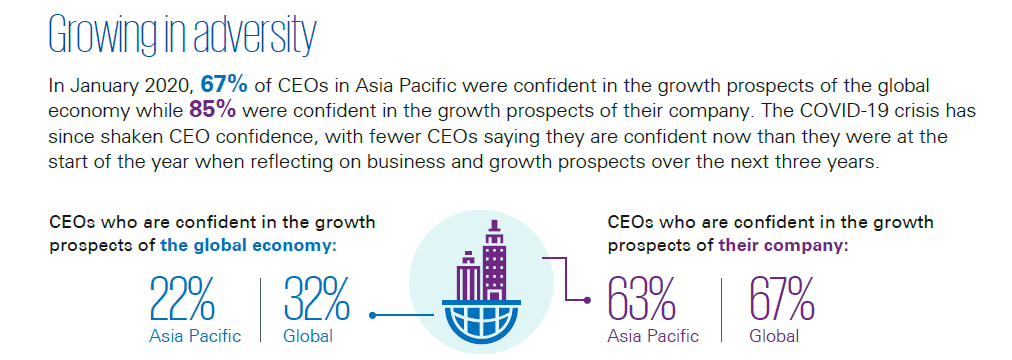
    The crisis has shaken CEO confidence, with fewer chief executives saying they are confident now than they were at the start of the year when reflecting on business and growth prospects over the next three years.

    In the first study of its kind, KPMG conducted two surveys – one at the onset of the pandemic in January and a second in July/August to measure changes in CEOs’ priorities and concerns during the global pandemic.

    The 2020 KPMG Global CEO Outlook revealed only 22% of CEOs in Asia Pacific remain confident about the growth prospects of the global economy over the next three years, a significant drop from 67% in January 2020.

    A clear result from the study reveals business leaders have “radically shifted” their perspectives as businesses and governments around the world continue assessing the long-term impact of Covid-19.

    It found during this period of unprecedented uncertainty, CEOs are prioritising digital transformation, talent and ESG (Environmental, Social and Governance) factors at the top of their agendas.

    On a more positive note, CEOs are much more assured in the resilience of their own business as 63% expressed confidence in their company’s growth for the same time period.

    Source: 2020 Global CEO Outlook, KPMG International

    Critical Measures to Bolster Resilience

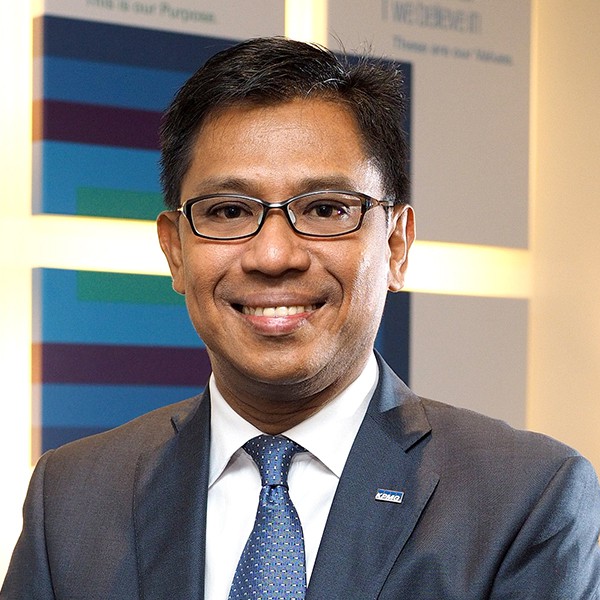
    Datuk Johan Idris, managing partner of KPMG in Malaysia commented: “A majority of CEOs have undertaken critical measures to bolster their company’s medium-term resilience.

    “This is particularly evident at the height of the crisis when business leaders worldwide took steps to maintain business-as-usual activities in answer to restricted movements. With the extension of the Recovery Movement Control Order (RMCO) until 31 December 2020, business leaders are forced to relook at their operational strategies,” says Johan (pic).

    And key to this is the ability to move away from short-term measures and prepare for mid and long-term growth.”

    One way CEOs are collectively doing to secure long-term growth is channeling resources towards digital transformation initiatives.

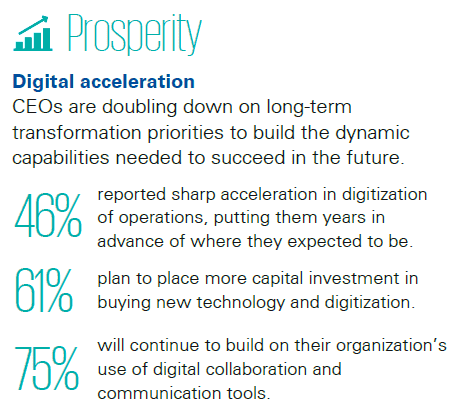
    Before the pandemic, 64% of CEOs felt overwhelmed by the lead times required to achieve significant progress on digital transformation.

    However, following worldwide lockdowns and the need for physical distancing, 46% of CEOs have reported that progress for their digitisation of operations has sharply accelerated, putting them years in advance of where they expected to be.

    Almost two out of 3 (61%) plan to prioritise more capital investment in buying new technology and digitisation.

    “Clearly, there has been a momentous change in mindset in that CEOs are now more confident and willing to invest in technology to make their companies more operationally resilient, agile and customer-focused to achieve growth during this tumultuous time,” says Johan, adding he expects digital acceleration to increase in speed and scope even after the pandemic subsides.

    New Risk Paradigm

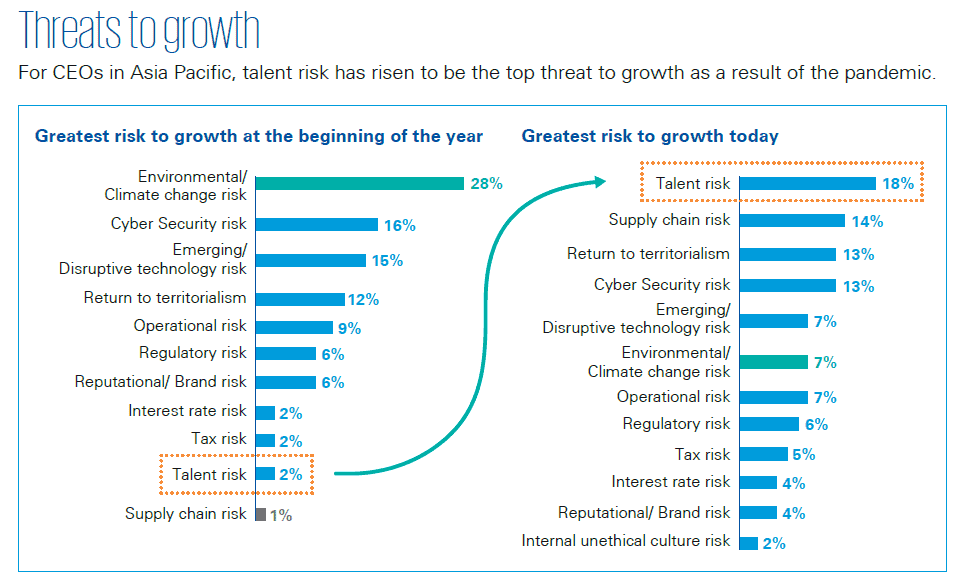
    CEOs have also identified talent risk as the main threat, a category which encompasses recruitment/retention, overall well-being and health of staff.

    This was the threat that CEOs were least concerned about at the beginning of the year. As a result of this pandemic, it has now risen to be the highest perceived threat to long-term growth.

    This could reflect the challenges CEOs face with recruiting and retaining personnel while motivating the workforce despite disruption to the usual ways of working.

    Most CEOs (72%) have said that remote working caused them to make significant changes to their policies to nurture culture, while 69% reported how remote working has widened their potential talent pool for future hires.

    Regardless of the barrier caused by physical distancing measures, CEOs recognise that losing key employees, attracting specialised talent, keeping workforces productive and the health and wellbeing of their staff can have a critical impact on their future business performance.

    Supply chain risk (just 1%) was at the bottom of the list for CEOs in January but catapulted to second place (14%) by July-August, the surveys revealed.

    The rise in supply chain concerns could be attributed to the fact over two-thirds of organisations (72%) have had to rethink their global supply chain approach given the disruptive impact of the pandemic.

    This could potentially lead to a redesign of global supply chains to become more agile in response to changing customer needs, and more robust to reduce risks and disruptions over the long term.

    Renewed Sense of Purpose

    Recent developments have driven 78% of CEOs in Asia Pacific to develop a stronger emotional connection to their organisation’s purpose, with 66% stating how they responded to the pandemic by shifting focus towards the ‘Social’ component of their ESG programme.

    KPMG’s survey also found that 76% have had to re-evaluate their organisation’s purpose as a result of the Covid-19 crisis.

    Johan concluded, “Recovery from the pandemic does not mean a return to normal, but instead an opportunity to define our post-pandemic reality.

    “As the crisis continues to change what good corporate leadership looks like, the role of the CEO is more important than ever in steering the business towards growth in the new reality and beyond.”

  • Growth of the Malaysian Gig Economy Among Gen-Zers

    Growth of the Malaysian Gig Economy Among Gen-Zers

    Social media has been the main source in forming a new culture among the younger generation, creating a new norm that challenges Gen Z to come out of their comfort zone. With technology constantly progressing and simplifying the way we execute our tasks, the gig economy is now high in demand, especially during a time like COVID-19.

    While many among us are afraid of salary cuts and retrenchments, Malaysians are leveraging the resourcefulness and popularity of freelancing to make ends meet.

    Glenn Tay

    According to Glenn Tay, CEO and Founder of Gigworks, the freelancing landscape will not be diminishing anytime soon but will in fact continue to grow at a rapid pace as majority of the workforce are currently conquered by millennials and their priorities are more focused on work-life balance.

    “Malaysian youths, similar to those around the world, are always craving for that opportunity to do the things that they are passionate about, be it traveling, exploring, experiencing etc. and while doing so, they want to have the flexibility to earn sufficient income from wherever they are residing at that time.

    “We cannot deny that this is a new way of working now where jobs are no longer restricted by geographical boundaries. The idea of being fully employed by one firm is not desirable for those looking to have ‘freedom’ in their work management,” said Tay.

    With jobs experiencing drastic change and with the labour force shrinking, competition for talent is getting increasingly intense. Organisations need to think out-of-the-box to attract the talent market such as redesigning the job scopes in a way that can both draw in and connect with the Gen Z and, at the same time guarantee that these jobs continue to create a path for future talents.

    The Gen Z in Comparison to X and Y

    A study by the Zurich Insurance Group (Zurich) and the Smith School of Enterprise and the Environment at the University of Oxford on agile workforce has found that 38% of the respondents in Malaysia who are currently in full-time employment, are looking to enter the gig economy in the next 12 months. This percentage is significantly higher than the global average of 20% recorded in the study.

    While individuals involved in the gig economy come from a diverse range of backgrounds, identifying the main target is essential for the gig economy to develop in years to come. An ever-increasing number of individuals from Generation Z appear to shun ordinary 9-to-5 jobs. Instead, they would prefer working for themselves by freelancing their way in order to obtain their dream jobs.

    The impact of their entry into the working environment will be quick and significant. However, Gen Z has an entirely different point of view compared to the rest when it comes to careers and how to define success.

    Gen Z More Inclined towards Autonomy 

    One of the factors contributing to more people opting for freelance work over permanent 9-to-5 professions is self-directed motivation. It is much simpler to be driven when you are in control of the flow of your work.

    It gives Gen Z a sense of autonomy which they desire for themselves – generating a sense of individuality, determination and providing the ability to achieve what they have been dreaming of. Having control over how they work and the type of job to work on is something that appeals to this young crowd.

    The appeal in this type of working lifestyle is that it also allows for work to be centred around creative passions based on portfolios and skills, as opposed to a full-time job that provides steady income but is more monotonous and rigid in structure.

    For example, university students juggling between college and work-life can find it challenging, therefore they are looking for easier alternatives to fund their tuition fees. Joining the gig economy as a freelancer allows them to have this much-desired flexibility. Although they may not always be able to earn as much as a full-timer, the option of being able to pay off their debts bit by bit while still having the capacity to manage their work-life-balance is satisfactory enough for these undergrads.

    Desire for Flexibility

    According to Workforce Institute, 55% of Gen Z-ers are attracted to the ability to work on their terms in gig employments as the flexibility allows you to go at your own pace and avoid breakdowns. Approximately 26% of Gen Z-ers would work harder and remain longer at an organisation that supports flexible working hours.

    Millennials and Gen Z currently account for slightly over a third of the global workforce. In the next decade, that figure is set to shoot up to 58%, making the youthful generations the most dominant drivers of the workforce.

    To meet the demands of this up-and-coming generation, we, as a society, have to respond to these differences in a mutually beneficial way that would increase trust and generate positive societal impact.

    Thus, it is important that a proper transition and greater overall acceptance of freelance careers is in place to welcome this new way of work.

    Digital Natives 

    Being moulded by technology, Gen Z was exposed to the Internet at a young age, making them the youngest influencers to appear on the scene. They are generally more tech-savvy than the older generations as they have never known a world without smartphones and the Internet.

    Non-traditional ways of working appeal to this group as they are more familiar and accustomed to a technology-driven society.

    We see a rising consensus that digital readiness is no longer optional, but mandatory. When MCO was enforced, the few months of this nation-wide exercise have shown that Malaysians have become more comfortable with utilising technology to collaborate and deliver work on time, replacing the need for physical travel.

    However, this period also brought to light certain difficulties and challenges encountered when working from home such as network issues, communication barriers, and lack of technology readiness.

    Nonetheless, Malaysia is well equipped and ready to adapt to this new normal, with Tun Dr. Mahathir Mohamad looking to implement the gig economy as part of the upcoming 12th Malaysia Plan, and most organisations already alerted and prepared following the MCO period.

    It is only a matter of time before we start to enjoy improved network connectivity and speed, better IT infrastructure, and clear work procedure and discipline to be implemented for the majority of Malaysian freelancers.

    Is Gig Work Appealing Enough?

    Numerous permanent jobs today do not provide a similar degree of job security compared to the past as employers often look at optimising cost efficiencies. Organisations often choose to reduce operation size as a way to find more resources to invest in other parts of the business.

    Instead of simply keeping full-time employees, a coordinated workforce permits organisations to better manage expenses and investments to coordinate business and market demands. Gen Z wants both stability and flexibility at the same time to stay in business.

    Due to this sentiment and in realising the limited options for individuals to find valid yet justifiable freelance work, Gigworks, a mobile application providing online professional service engagement is opening doors for all groups including the younger generation to ensure their talents are being recognised by businesses while catering to the needs of Gen Z.

    “We want to introduce a culture that builds the interest of Gen Z to have a work-balance and offer stability to foster them financially especially during a time like this. Encouraging them to pursue their passion will only make them more confident, allowing them to venture into new projects,” said Tay.

    In a nutshell, now that technology finally exists and caters to these demands, this will be something everyone can benefit from in the gig industry.

    This article is contributed by Gigworks, a mobile application inspired by the impact and advancement of technology in people’s lives. For more information on the company and its services, visit www.gigworks.co/sg.