Category: Enterprise

  • Encouraging Property Trends Among M’sians Despite COVID-19

    Encouraging Property Trends Among M’sians Despite COVID-19

    iProperty.com.my has revealed encouraging property-seeking trends among Malaysians despite pandemic.

    iProperty.com.my has recently announced the results of its latest consumer survey. The survey aims to understand Malaysians in their property seeking journey during the Movement Control Order (MCO) period and how it has affected them.

    The survey also analyses the purchasing desire of homebuyers before, during and after MCO. The survey was conducted between 11 May – 1 June 2020.

    44% of survey respondents were looking to purchase a property before the announcement of MCO

    The property portal reveals that 44% of the survey respondents are looking to purchase a property before the announcement of the Movement Control Order (MCO).

    Out of these property seekers, 28% stopped actively looking after the MCO was announced on 16 March 2020. However, more than one third of the property seekers who stopped actively searching (38%) stated that they are either waiting for prices to drop or are still open to good property deals.

    The top two factors which influence a property seeker when evaluating an online listing is validation of a property’s valuation (pricing trends for similar properties) and listing content which gives a very clear understanding of the property’s space and layout.

    Property seeking interest unaffected by MCO

    According to the survey results, in spite of the unprecedented situation caused by COVID-19, property seeking trends among Malaysians remained encouraging.

    Interestingly, the survey results reveal that 24% of the respondents who were not looking to buy a property before the MCO are now looking to purchase after the MCO announcement.

    A majority of these new entrants are either looking at current market conditions as an opportunity to purchase their first homes, to upgrade their existing homes or to invest in property, while the minority mentioned that they are downsizing or moving to more convenient locations.

    With these new entrants the percentage of respondents who are actively looking for a property increased to 45% post MCO announcement. On top of this, another 10% of respondents, who are not actively looking for a property post MCO, are open to the right property deals.

    Taking into account this group, the percentage of respondents who are interested to purchase a property after the MCO announcement tops 55%.

    Nevertheless, 92% of the people who are actively seeking for a property state that they have a lower readiness to transact (49% are waiting for prices to drop while 43% are still looking but more cautious about making any financial commitments).

    90% of property seeking respondents named easy entry options as the top factor

    The survey further reveals that 90% respondents answered that the factors which will help ease their transaction decisions are easy entry options such as zero down payment, developer discounts and subsidised legal costs.

    In addition to easy entry points, the survey also reveals that 81% of respondents are looking for trustworthy and reliable developers/ agents.

    Also, 89% of property seekers are receptive to the idea of virtual viewings. 75% state that it will help them decide whether or not to view a property in person while the remaining 14% says it is enough for them to decide whether to buy/rent a property.

    On the same note, 83% of all respondents want to get updates on good property deals (new properties on promotion, or sub sale properties at good prices), while 54% of respondents are interested in market insights and data, to help them better understand the current state of the property market.

    This positive consumer survey highlights the timeliness of the re-introduction of the Home Ownership Campaign (HOC) under the government’s recent Economic Recovery Plan (PENJANA) package.

    The HOC initiative which features significant stamp duty holidays would help alleviate the financial burden of aspiring home buyers.

    Commenting on the consumer survey, iProperty.com.my General Manager of Marketing and Communications Wong Siew Lai said, “The findings from this consumer survey revealed something very encouraging on Malaysian property seekers purchasing desires despite the unprecedented situation caused by the COVID-19 pandemic.

    “Overall, volume of demand did not change significantly and people are still looking for properties. Property seekers are spending more time researching and evaluating their property options online.

    “The market may be much more receptive to property deals and solutions that help them discover those deals, as well as online content that helps them better understand the current market conditions.

    “If they discover the right deal, many opportunistic property seekers are willing to invest even beyond their original budgets.”

  • Investing Quandary for Gig Economy Millennials

    Investing Quandary for Gig Economy Millennials

    In Malaysia, the rising number of gig workers face various challenges to investing for their future.

    The rapid advancement of technology over the past decade have more than changed the way people live, work and spend their money. The employment landscape, too, has undergone an evolution, with hyper-connectivity and social media paving the way for the rise of the ‘gig economy’.

    The gig economy is a labour market characterised by the prevalence of short-term contracts or freelance work done by individuals. Driven by the digital environment and popularity of apps that instantly communicate information and opportunities for work, the gig economy sees companies engaging contract workers for a temporary period rather than hiring them for permanent positions.

    Simply put, the gig economy is a free market system in which companies – from small businesses to larger organisations – collaborate with independent contractors, project-based workers, part-time employees and freelancers.

    This segment of the economy is gaining popularity among the younger generation, especially millennials and Gen Z, simply for the fact that it provides them with dynamic flexibility towards their time management and encourages specialisation to provide specific services in accordance to their interests or talents.

    The gig economy has experienced a growth trend in recent years whereby about 25.3% of the Malaysian workforce in 2018 comprised freelancers, according to World Bank data.

    “This number is growing, thanks to the rapidly available platforms which act as intermediaries between independent workers and consumers,” Wealth Vantage Advisory certified Islamic financial planner Nuraishah Hanani Abdul Ghani.

    Nuraishah Hanani

    Not just about flexibility and freedom

    While being a gig employee offers great flexibility and freedom in terms of working hours and the people that you work with, the downside is that gig employment does not promise a fixed salary, says Blueprint Planning licensed financial adviser Gunaseelan Kannan.

    The other important implication is that the high instability of income will have a direct impact on their investment engagements, he adds.

    “Gig employees should understand the investment risks, investment time horizon, and the terms and conditions on the withdrawal of investments. In general, high liquid investments should be adaptive to an individual who is active in the gig economy,” he explains.

    According to Gunaseelan, the fact that gig employment does not provide Employees Provident Fund (EPF) contributions will also have severe implications on one’s retirement funds.

    Gunaseelan Kannan

    “Taking the initiative to make personal contributions to EPF is a good idea for gig workers as EPF currently allows investments of up to RM60,000 annually for this group of individuals.”

    Moreover, gig workers are also at the mercy of market risks and fluctuating economic conditions, licensed financial adviser Gor Sheau Shuenn chimes in.

    Gor further points out that the irregularity of income presents gig workers with a limited opportunity for investments as they are more likely to put their income aside for when they are in between projects.

    “In addition to EPF, the lack of Socso contributions and possibly, retirement savings and medical insurance as well may leave gig employees in a tight spot during rainy days or when they retire,” he adds.

    A right mindset is needed

    As to how gig workers can overcome these problems, Gor reveals that having a personal cashflow budget is important. “You should be clear how much money you need to put aside for investment, how much money you can spend, and what you spend your money on each month.

    “Next is an investment objective: will you be investing your money for retirement, for a property down payment, or for a college fund for your children?

    “Knowing how much money is needed in the long term and breaking it down to monthly, quarterly or yearly saving targets is a good practice. Once your priorities are clear, you can then work towards that goal,” he advises.

    Gor Sheau Shuenn

    Wealth Vantage Advisory’s Nuraishah concurs. “Because gig workers do not receive a regular salary, millennials who are engaging in the gig economy might face problems with their instalments which can affect their credit rating if the matter goes unattended in the long run,” she adds.

    Therefore, a detailed approach with the right mindset must be adopted to prevent the issue from ballooning up, which may eventually disrupt one’s financial stability.

    “The very first step to achieve this is by determining and strategically splitting your finances into different categories, namely basic needs, expenses, forced savings and investment allocations.

    “That way, you will always have extra money to carry forward into the next month in the event of low gig demands,” explains Nuraishah.

    Diversify your income

    With the immense freedom and flexibility of the gig economy comes the great responsibility of taking charge of your own financial future. And no doubt investment is probably a stressful topic for anyone involved in this segment of the economy.

    Nuraishah says a good first step is to start building an emergency saving fund immediately.

    “As a gig worker, millennials are more susceptible to financial hardship as compared to those who have to miss work due to an emergency.

    “In contrast to salaried workers, they do not have health coverage or other forms of protection at work, and it is critical they have enough money saved up in case of an emergency, in addition to having excellent coverage of term life and health insurance,” she explains.

    While it might seem like an obvious suggestion, Nuraishah suggests one of the keys to achieving financial success in the gig economy is for millennials to think like a business person and plan accordingly – and this means getting into the habit of keeping themselves accountable for their expenses.

    “Diversifying their income, meanwhile, may come naturally as they delve further into the gig economy, and for freelancers, this move becomes essential to achieving financial success.

    “As the nature of work in the gig economy is temporary, diversifying your income as much as possible is important to keep their financial and business plan on track.”

    Despite the lack of a fixed salary, Nuraishah believes it is not impossible for gig workers to have the upper hand in terms of investment.

    “In comparison to the regular working concept, millennials who have opted to join the gig economy are not restricted to the 9-6 routine which is rigid and repetitive with little to no opportunity of generating additional cashflow beyond what had already been agreed upon.

    “Thanks to the dynamic concept practised in the gig economy, gig workers are their own managers, and they alone can decide where their money ought to go to. For this matter, it is very crucial that they have a clear financial goal, which needs to be practical and yet, feasible to achieve.

  • Building a Thriving Online Business

    Building a Thriving Online Business

    Malaysia’s e-commerce industry is expected to continue its upward trajectory and rapid growth in 2020 and for many years to come.

    As an aspiring entrepreneur, the opportunity to ride on the sector’s coat tail is an intriguing and exciting one. Whether you have already launched an online business on one of the e-commerce platforms or are looking to get involved in your very first venture, now is the time to get your foot in the door.

    Indeed, data from German online statistics portal Statista reveals that Malaysia’s e-commerce market for 2019 generated a whopping revenue of US$3.68 bil (RM15.2 bil), with a prediction for annual market growth to reach 11.8% by 2023.

    DataReportal, meanwhile, revealed there were 26.69 million internet users in Malaysia as at January 2020. The number of internet users in the country increased by 919,000 (+3.6%) between 2019 and 2020, while internet penetration in Malaysia stood at 83% as at January this year.

    Source: Datareportal 

    Mapping E-commerce Growth

    For perspective, Shopee led the industry with the highest consumer downloads of its mobile application, according to iPrice Group Sdn Bhd’s Map of E-commerce report for the third quarter of 2019 (3Q19). The e-commerce platform also tops the list of the most visits to its websites at 25,789,300 monthly web visits.

    As for Lazada, the e-commerce platform had the highest number of monthly active users of mobile application in 3Q19, while breaking into the top five list of most visited websites is PG Mall, a homegrown online shopping mall.

    With technological advances and not to mention the growth of the internet economy, the e-commerce industry is set for an exciting ride in the next few years.

    E-commerce Malaysia chairman Ganesh Kumar concurs, saying the local e-commerce industry is expected to grow up to 30% in 2020, supported by advancement in technology and wider access to virtual buying platforms.

    “Currently, we are seeing more people buying online and trusting e-commerce sites. More merchants are also starting to sell their products online,” he said recently.

    Fast-changing E-commerce Landscape

    In the era of Industry 4.0, technological advances have had a massive impact on the e-commerce industry, transforming the way consumers connect with brands and empowering them to shop more cost-effectively.

    Driven by the convenience of making purchases without the need to visit a physical store, e-commerce has now become an integral part of everyday life. But while the shift in consumer behaviour is a given, businesses, too, are adopting a changing mindset when it comes to e-commerce.

    “Rather than seeing e-commerce as a competition, businesses have now come to see it as another stream of revenue which will complement their brick-and-mortar business,” Shopee regional managing director Ian Ho (pic) tells Smart Investor.

    These businesses, to cater to the increasing demands of today’s e-commerce landscape, have set up dedicated e-commerce teams to manage various facets of their operations.

    This includes manning the online store, pricing, handling orders, fulfilment, and customer service, as well as investing in warehouses that come equipped with advanced systems to organise warehouse operations.

    Evolving mindset aside, many businesses however find it difficult to grow their sales effectively after opening a store.

    “This is because of operational and marketing challenges. These businesses lack the know-how to nurture the business and run marketing efforts to increase exposure for their online stores and product offerings,” Ho reveals.

    Helping Hand from Shopee

    In Shopee’s case, the e-commerce platform has empowered many brands and sellers to succeed online because they understand the challenges that businesses face, and offer various forms of support to help them succeed.

    For example, Shopee University, a free seller’s workshop to provide sellers with the knowledge and skills to grow their businesses on the Shopee platform, was launched in 2016.

    From the workshop, participants will learn multiple ways to boost sales; tips and marketing techniques to promote their store on Shopee; the right way to list products; and how to fully utilise all of Shopee’s features to help promote sales.

    “What has made these workshops even more resourceful is that they are also available through web seminars, which means that participants anywhere with an internet connection can join in,” shares Ho.

    To date, around 10,000 sellers have benefited from the Shopee University modules.

    In addition to Shopee University, the e-commerce platform further launched Shopee Live in 2019 in an effort to bring users closer to their favourite sellers and brands.

    This allows brands/sellers to engage their users throughout the shopping journey via a wide array of live content such as product reviews, guides and demonstrations hosted by popular local influencers.

    And the results are pretty impressive, to say the least. Tyra Kamaruzzaman’s Beautyra lipsticks, for instance, sold out in minutes on Shopee Live, recording over 2,000 orders, while Photobook’s store traffic and visibility increased by 18x after running a 45-minute live stream on Shopee Live.

    “In addition to driving orders, Shopee Live is also effective in driving traffic and followers to the retailers’ stores, as indicated by Shopee seller wanjojo of JJ70 Store who gained more than 800 store followers after a single live stream.

    “Another seller also shared that by doing daily live streams, he was able to rapidly gain followers and double his sales in less than three months, with 2019 being the first time he had managed to break the RM1 mil mark in annual sales,” Ho shares, adding the results are testament to Shopee Live’s success.

    Success: an effort of both parties

    Over the years, many businesses have achieved success on e-commerce platforms, but many others have also not done well. So how does a business guarantee its success online?

    PG Mall managing director Datuk Wira Louis Ng believes that success on e-commerce platforms stems from the effort of both parties, namely the platform operator and the merchant.

    “Successful merchants on the PG Mall platform put in a lot of effort from their end to build store awareness and visibility by participating in all PG Mall-related activities and campaigns.

    “In addition to providing attractive prices, these merchants are very committed, have zero cancellations rate, are very responsive to shoppers’ enquiries, and are efficient in processing orders to ensure a positive shopping experience.”

    On the flipside, there are merchants who – after setting up their online store – solely rely on the platform to drive sales without going all out and taking the initiative to do more, he adds.

    Merchants on the PG Mall platform are supported with regular creative campaigns that partner with different e-wallets and banks to drive both sales and traffic to the stores.

    PG Mall is also the only platform to partner with all major e-wallets in the country. The vast check-out options available will in turn gives merchants a boost in capturing more shoppers.

    On how merchants can conduct a successful business on PG Mall, Ng points out that PG Mall’s mission is to be the number one choice when it comes to online shopping, and therefore, it is always best for merchants to feature all products on hand to be available on the PG Mall platform.

    “Providing a fair price for shoppers is essential, as is the effort put into managing the store by putting up clear and attractive images as well as the right product descriptions.

    “While Success on e-commerce platforms stems from the effort of both parties, namely the platform operator and the merchant. these may sound trivial, these are factors that will influence a shopper’s final decision.”

    The homegrown e-commerce platform, which cites gold jewelleries, groceries and pets, as well as home appliances as its current best-performing categories, are in the midst of bringing in more brands to join the PG Mall family.

    Trusted Delivery Service

    Delivery service is a crucial aspect of online businesses, as it allows for the efficient and timely transportation of goods to customers.

    In today’s world, customers expect fast and reliable delivery, and the ability to track their orders in real-time. This is especially true for e-commerce businesses.

    Use Delyva as your main delivery platform that allows you to choose the best delivery service in Malaysia by price, speed, area coverage and reliability.

    By Bernie Yeo

    Find out more about Delyva here: https://delyva.com/my/delivery-service-in-malaysia/

  • Under the Influence of Social Media Influencers

    Under the Influence of Social Media Influencers

    Do you know of a life without social media? Better still, do you remember a life when there was no Facebook, Instagram, Twitter, WhatsApp, Snapchat and TikTok? Or influencers?

    Social media has grown to become one of the most dynamic developments in digital media over the past two decades. With billions of users worldwide, social media is now a huge aspect of modern society and has a tremendous impact on our culture, on business, and the world at large.

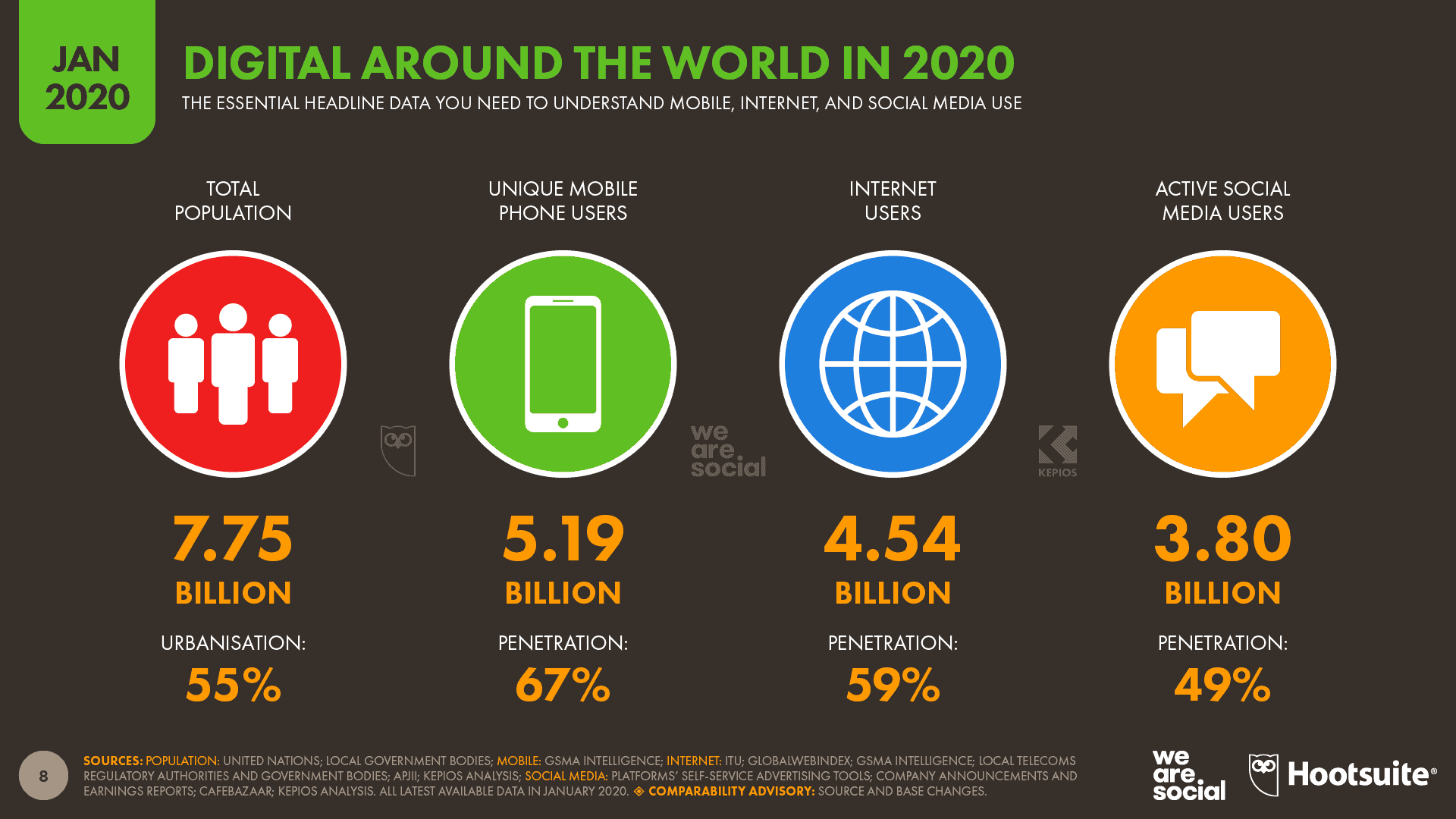
    Digital 2020, a collection of reports on digital trends and social media uses, reveals that as at January 2020, there are 3.80 billion active social media users in the world against a total population of 7.75 billion.
    Source: We Are Social Inc.

    Understanding the modern consumer

    There was a time when it was not possible to share your opinions about a specific product with others because there simply was no available outlet, and there was no way of reviewing a product or service except with a few family members, close friends and coworkers.

    Consumers today enjoy a very different situation, all thanks to social media. Through platforms like Facebook, Instagram and Twitter, consumers have been able to easily convey their opinions about various brands.

    In other words, there is now an opportunity for consumers and brands to build a working relationship in which opinions can be voiced and views exchanged.

    “The modern consumers want to interact and engage more with brands. Consumers want to speak with brands, and not be spoken to,” opines Karen Ong, Luxasia Group regional managing director (Singapore, Malaysia, Thailand and Vietnam) & country manager (Singapore).

    So for brands to be successful, it has to be a two-way communication between them and their consumers as this is how the latter prefers to communicate – they go directly to the brands to express their preference.

    Luxasia is the leading omnichannel partner for more than 140 luxury beauty and lifestyle brands including Bvlgari, Hermès and Prada.

    The growth of influencer marketing

    The use of influencer marketing has grown rapidly as consumers are already using social media platforms to follow influencers who create content according to a certain category or theme.

    What is interesting to note is that global ad spend on influencers, according to Business Insider Intelligence, is predicted to reach between US$5 bil and US$10 bil by 2022. But why is this so?

    The reason is simple, say Ong and Luxasia Group country manager (Malaysia) Cindy Poh. “Brands leverage on the trust and relationship these influencers have built with their follower base, who are very likely to be captive audiences and are interested in reading and hearing what these ‘key opinion leaders’ (KOLs) have to say about a brand.”

    They note that influencers create content that adds personalised touches in a way that mass media is unable to replicate. And it is through these personalised contents that the influencer is deemed a credible and authentic source as the content that he/she creates for the brand is aligned to the influencer’s personal brand.

    “A PwC Study in 2018 found that today’s consumers are more responsive to credible, authentic content and opinions from someone they know or trust on social networks, suggesting that opinions and suggestions on social media – posted by friends and strangers alike – have more influence on specific purchase decisions than factors that retailers can control, such as advertising, promotions, and pricing,” they explain.

    One good example of influencer marketing is YouTube celebrity PewDiePie’s collaboration with the makers of a horror movie set in the French catacombs under Paris in conjunction with the upcoming movie As Above, So Below in 2014.

    Renowned for his histrionic reactions to horror movie games, the Swedish YouTube celebrity agreed to undertake the ‘Catacomb Challenges’ where he would give his reactions to a recreated version of the movie’s setting.

    The resulting two-part video series was the perfect content for PewDiePie’s millions of subscribers, and received almost double the views of the movie’s trailer. It was, suffice to say, a win-win situation for everybody.

    An influencer’s perspective

    An influencer can be anybody from a popular fashion icon on Instagram to an indie wedding singer who blogs to a well-respected political figure who tweets. What makes them influential is their large followings on the web and social media.

    The shift to influencer marketing started about six to eight years ago first on banner ads on a digital medium to blogs (seen as a form of online media) before reaching social media platforms like Facebook, Instagram and Twitter, says local blogger, speaker, columnist and TV host Dr Choo Mei Sze.

    Choo, who holds a PhD in Development Psychology from the University of Hawaii at Manoa, is the Youth Ambassador for the National Cancer Society of Malaysia (NCSM).

    She advocates cancer awareness especially among youths through talks and youth support groups in collaboration with NCSM and has hosted a show called ‘An Awakening’ in collaboration with insurance company Axa Affin Life Bhd which showcases amazing stories of cancer patients, survivors and caretakers. Today, she blogs about her journey with the Big-C, in addition to topics on fashion, beauty and travel.

    “When I first came back from the States about eight years ago, I was surprised that many brands asked to advertise on my blog. At that point of time I was blogging as a way to connect with my friends and family and I didn’t imagine it being a form of advertising,” Choo tells Smart Investor.

    “These days, influencers are the new ‘word of mouth’ and brands prefer this form of advertisement as it allows them to see exact figures rather than made-up ones like on billboards.”

    Getting into the business

    But how does a person get into the business of becoming an influencer?

    “With the market being so saturated these days, anyone can be an influencer. Nowadays, an influencer is all about being able to influence enough people through the posts you put up on social media be it in the form of pictures or captions.

    However, I believe that a true influencer is someone who is able to encourage their target audience to purchase a product or share a posting though a shout-out,” Choo opines.

    As for who to collaborate with and the products she recommends on her social media platform, Choo admits she is rather picky.

    “My followers are urban and quite a few of them know their stuff and so, I refrain from endorsing brands that do not suit me and my personality.

    “As the Youth Ambassador of NCSM, a lot of people ‘follow’ me for health and cancer advice as well as for inspiration, and therefore, I will not promote things like cigarettes or alcohol.

    “I am careful when I choose the brands I collaborate with, and I collaborate with companies promoting organic skincare or healthy eats as these are the things that I actually use and practise on a daily basis.”

    This brings us to the next question: how much are influencers paid to post photos of a specific brand’s clothes, watches, jewellery and make-up on their platforms?

    According to SLPR Worldwide Group chief operating officer (Southeast Asia) Leon Tang (pic), remuneration usually comes in the form of an in-kind or a monetary token as a form of appreciation towards the influencer’s efforts.

    “Influencer marketing does not necessarily always involve monetary contributions or sponsored contents. It depends on the brand affinity the influencer has for the brand and whether the promoted products/services bring values to the audience of the particular influencer,” he says.

    As such, he adds, there are numerous cases whereby the influencer finds the brand to be of great value to their audience and are therefore more than happy to share the brand’s products/services at no cost whatsoever.

    In instances like these, the influencer will be offered a product sponsorship as a token of appreciation.

    “The exact value is not fixed and differs from influencer to influencer, although this is usually decided by both the brand and the influencer.

    “There are, however, some influencers who are employed under a specific talent agency and as such, already have a company-set rate card in place. The rates are usually determined based on the number of followers or the engagement rates per post,” explains Tang.

    No one-size-fits-all

    ‘Matching’ a brand to an influencer – and vice versa – is also an important element to be considered when it comes to getting influencers involved in a brand’s campaign.

    Among the factors to be considered include the number of authentic followers, the number of legitimate engagements in a post, demographics of followers, the track record of the influencer, his/her connections to other influencers, budget and the fit between the influencer and the brand in terms of the look, the styling, the ‘feel’ and even the use of linguistics.

    In Luxasia’s case, the process involves getting the right influencer whose profile fits the brand it carries. As simple as this may sound, however, the details involved in the selection of influencers is a complex one.

    “The challenge of a regional beauty business is in local marketing knowledge, effectiveness, and execution. Different markets have different platforms of choice, and hence different ways of doing influencer marketing.

    “This is also the very reason why Luxasia has so many local offices – we need to know the market locally and intimately to be effective,” explain Ong and Poh.

    “Before we address influencer selection, we need to be clear about social media platform selection. Instagram is the go-to social media platform for all things that are beauty-related.”

    Weighing in on the onboarding process, SLPR’s Tang adds: “A detailed background check on the influencer will be conducted before initiating a conversation with the influencer. The screening and selection process usually take around seven to 14 working days.”

    This will be followed by a meetup and if they are interested to be part of the campaign, remuneration and collaboration tokens will be discussed, he points out.

    In some Southeast Asian markets like Vietnam, Facebook still reigns, while in Thailand, apps such as LINE can be an effective channel for social-commerce as well.

    Luxasia’s local office in China engages influencers on platforms such as WeChat, Weibo, Douyin, and the beautycentric social shopping platform Little Red Book (Xiaohongshu).

    “As such, there is really no one-size-fits-all. We need to identify the effective platform for the local market, followed by the influencers to engage. Furthermore, we need to determine the nature of the campaign – image-centric or video posts of ‘live’ KOLstreaming.

    “For some brands, it may also be more relevant to engage 30 micro-influencers as opposed to five macro influencers,” say Ong and Poh.

    By Bernie Yeo