Category: Enterprise

  • TikTok Shop’s continues to invest in security for a safe e-commerce ecosystem

    TikTok Shop’s continues to invest in security for a safe e-commerce ecosystem

    Malaysia’s digital economy continues to gain momentum, with an expanding community of over 1.8 million local sellers and 3.8 million affiliate creators leveraging TikTok Shop as the trusted full-funnel e-commerce ecosystem to create sustainable livelihoods.

    With TikTok Shop recording more than 100 million daily product searches in Malaysia, it is uniquely positioned to accelerate the digital transformation of these homegrown entrepreneurs, as proven by its recent milestone of over 130% year-on-year sales uplift for Malaysian-made products under the #JomLokal initiative.

    At the heart of this progress is TikTok Shop’s continuous efforts to build and maintain a safe e-commerce ecosystem that facilitates secure shopping experiences for a nationwide community, from discovery to purchase.

    “Safety is the top priority for TikTok Shop. This commitment is underpinned by our continuous investment, robust end-to-end policies, and compliance with local laws,” said Nur Azre Abdul Aziz, Director of Strategic Partnerships, TikTok Shop Malaysia.

    “As of December 2024, we have invested nearly USD1 billion globally in tools, technologies, and people to protect our community of shoppers, sellers, and affiliate creators from fraudulent, dangerous, illegal, and violative activities,” she emphasised.

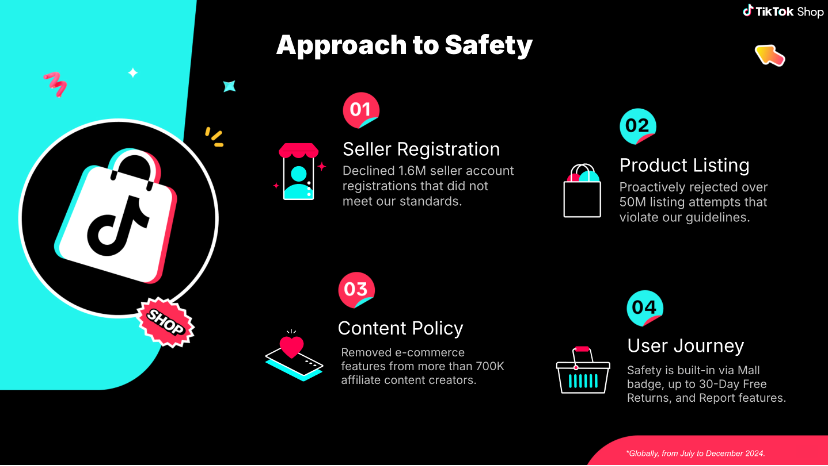
    According to Azre, TikTok Shop adopts a four-pronged approach to safety, which includes Proactive Seller Screening, Proactive Product Listing Governance, Reactive Platform Policy Enforcement, and Safety by Design.

    “We believe creating a trustworthy and secure environment for our community starts with prevention. To this end, TikTok Shop implements extensive proactive measures to screen sellers upon account registration and before products are listed,” she added.

    Diving deeper, Azre mentioned that all businesses must submit official documentation when applying to register for a TikTok Shop Seller Account.

    These applications are said to be scrutinised closely to comply with applicable local regulations and TikTok Shop’s extensive policies, including ensuring that the Identity Card (IC) or relevant business certificates submitted match the corresponding TikTok Shop account and bank account details.

    Even the store names of all sellers must strictly adhere to a comprehensive set of guidelines to ensure accurate business representation, such as restrictions on terms like “Official”, “Flagship”, or “Authorised”.

    “With these preventive processes, from July to December 2024, TikTok Shop has proactively declined 1.6 million seller account registrations globally that did not meet our rigorous standards,” said Azre.

    Once successfully registered, new sellers are then placed on a temporary probation period, with limited daily orders and product listings, to help familiarise themselves with TikTok Shop’s policies and stabilise their operations.

    These policies include TikTok Shop’s Product Listing Guidelines, which explicitly outline prohibited products, including counterfeits and knockoffs.

    “From July to December 2024, TikTok Shop has proactively rejected over 50 million product listing attempts worldwide that violate our guidelines,” explained Azre.

    Affiliate creators are similarly held to high standards under TikTok Shop’s Content Policy, which ensures responsible product promotions by prohibiting illegal activities, intellectual property (IP) rights infringement, misleading or false content, Artificial Intelligence Generated Content (AIGC), and more.

    “However, there is no finish line when it comes to safety. Users are encouraged to directly report violative products, content, and sellers on TikTok Shop via the in-app reporting channel,” Azre reminded.

    Strict enforcement actions are then taken against any sellers or creators who breached its policies, based on TikTok Shop’s Seller Performance Evaluation Policy and Creator Performance Evaluation Guidelines.

    Azre highlighted that, worldwide between July 2024 and December 2024, TikTok Shop removed more than 90,000 listed products, disabled e-commerce features for more than 700,000 creators, and removed more than 450,000 sellers as a result of shop-level violations.

    “In addition to our platform’s proactive and reactive governance, security is also embedded into users’ in-app shopping experience, through our Safety by Design approach,” she underscored.

    All orders on TikTok Shop are protected by its robust Free Returns and Refunds Policy, which facilitates simplified and fair after-sales requests for customers.

    “TikTok Shop will continue collaborating with our community, regulators, and industry stakeholders to share insights, refine best practices, and shape forward-looking policies that promote a safe and vibrant e-commerce ecosystem for all, such as through our #ShopSafe scam prevention initiative,” Azre concluded.
  • RHB’s net profit up 7.0% to RM1.6 billion in 1H FY2025

    RHB’s net profit up 7.0% to RM1.6 billion in 1H FY2025

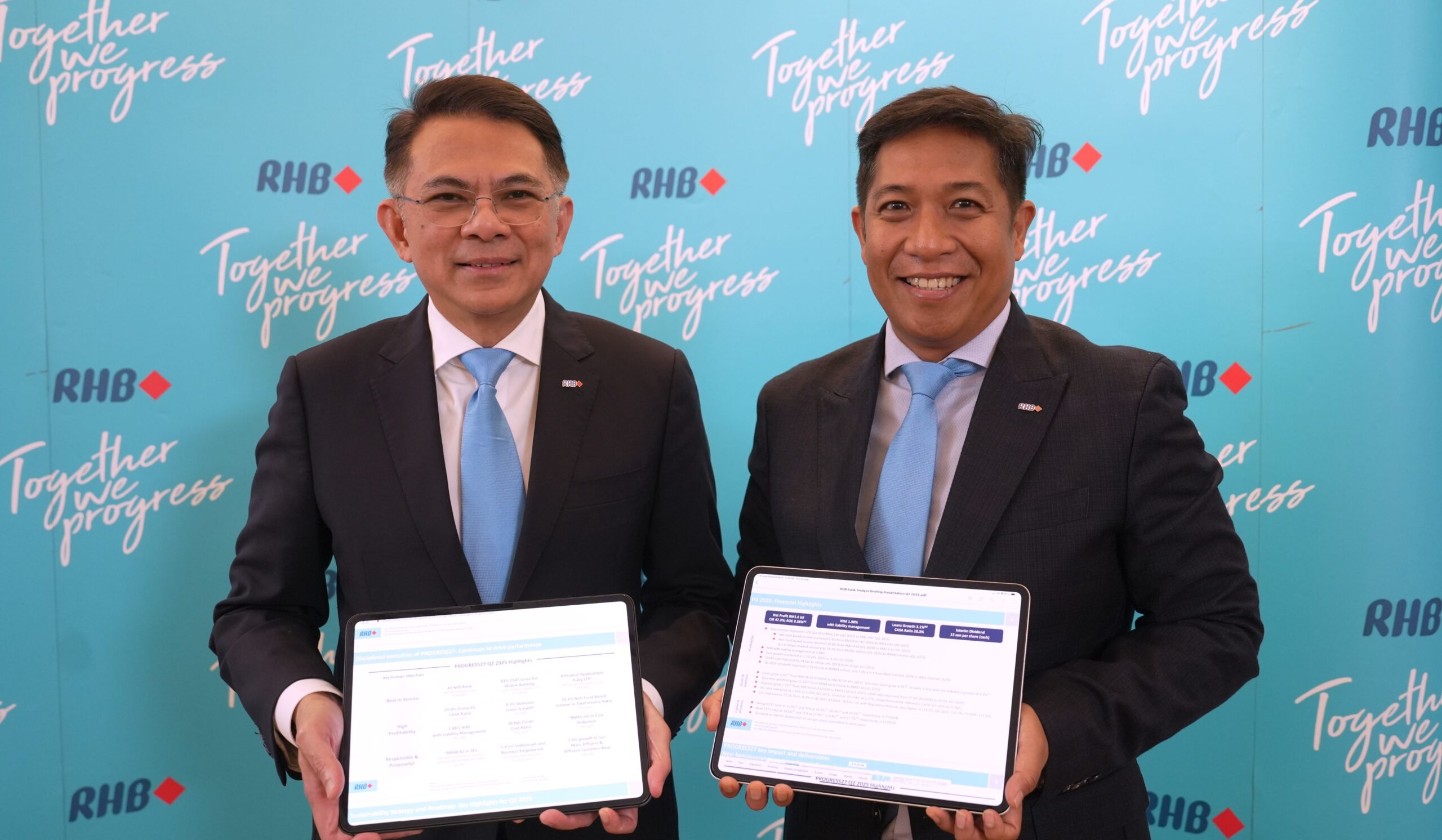
    RHB Bank Berhad (RHB or the Group) registered a net profit of RM1.6 billion in the first half of its financial year ending 31 December 2025 (1H FY2025), a 7.0% Y-o-Y increase, primarily driven by higher net fund-based income, disciplined credit cost management and improved credit quality, reflecting the Group’s strong fundamentals and prudent risk discipline.

    Total income expanded marginally at RM4.2 billion, mainly from higher net fund-based income but partially offset with contraction in non-fund based income. The Group maintained operational stability, supported by prudent cost management, continued strength in capital and liquidity positions. Cost growth was contained at 2.1% with CIR at 47.3%.

    Dato’ Mohd Rashid Mohamad, Group Managing Director/Group Chief Executive Officer of RHB Banking Group said, “The first half of 2025 was marked by global uncertainties and industry headwinds. Despite this, RHB remained resilient in delivering performance with sustained growth, lower ECL, and disciplined cost management. Our domestic loan growth tracked well with the industry, supported by sound asset quality. These results underscore our strength and position us well to capture new growth avenues in the months ahead.”

    “We remain focused on sharpening the execution of PROGRESS27, our three-year strategic roadmap. The recently concluded strategic bancassurance and bancatakaful partnerships reinforce our commitment to staying relevant to customers, diversifying income streams, and driving sustainable long-term growth. This is aligned to our strategic priorities, enabling us to deliver broader value for stakeholders, strengthen our non-interest income base, and unlock greater opportunities ahead,” added Dato’ Mohd Rashid.

    Strong Capital and Liquidity Position
    The Group’s total assets rose to RM354 billion, supported by healthy balance sheet growth and prudent capital management. Group shareholders’ equity stood at RM33 billion, with the Common Equity Tier-1 (CET-1) ratio of 15.9% and Total Capital Ratio (TCR) at 18.3%, reinforcing a strong capital position to support future growth ambitions while providing ample buffers against macroeconomic uncertainties. Whereas the Bank’s CET-1 and TCR stood at 14.6% and 17.4%, respectively. Loan loss coverage ratio including regulatory reserves, improved to 116.5%, reflecting sound provisioning practices.

    Domestic loan growth of 4.2% (annualised) tracking well against the industry’s 4.3%, while the Group’s GIL ratio contained at 1.51%, and the domestic GIL ratio was below the industry average, demonstrating sound credit quality.

    The Group has delivered RM48 billion in sustainable financial services, achieving more than half of its RM90 billion target for 2027. This underscores its commitment to sustainable financing and supporting the nation’s low-carbon transition agenda. Most recently, the Group partnered with Malaysia Rail Link Sdn Bhd (MRL) to activate the RHB-MRL 360⁰ ESG Finance Ecosystem, a first-of-its-kind sustainable financial value chain transition roadmap. Through this partnership, MRL has placed funds in RHB ESG Deposits to finance green and social projects, embedding sustainability into the core of banking while reinforcing the role of financial flows in driving climate resilience and inclusive economic growth.

    Outlook: Building on Momentum
    Looking ahead, Malaysia’s economy is projected to remain resilient, with strong domestic demand, growth in tourism activity, job creation, and sustained investment activity from both private and public sectors. The Government’s Ekonomi MADANI framework is key to guiding sustainable and inclusive growth, emphasising high value activities, fiscal consolidation, and social equity. Initiatives such as the Energy Transition Roadmap and the New Industrial Master Plan 2030, alongside the steady rollout of structural reforms, are expected to further stimulate investment and economic growth. In this environment, the operating landscape remains conducive for the Group to pursue its growth ambitions under PROGRESS27.

  • foodpanda Malaysia launches nationwide rider safety programme

    foodpanda Malaysia launches nationwide rider safety programme

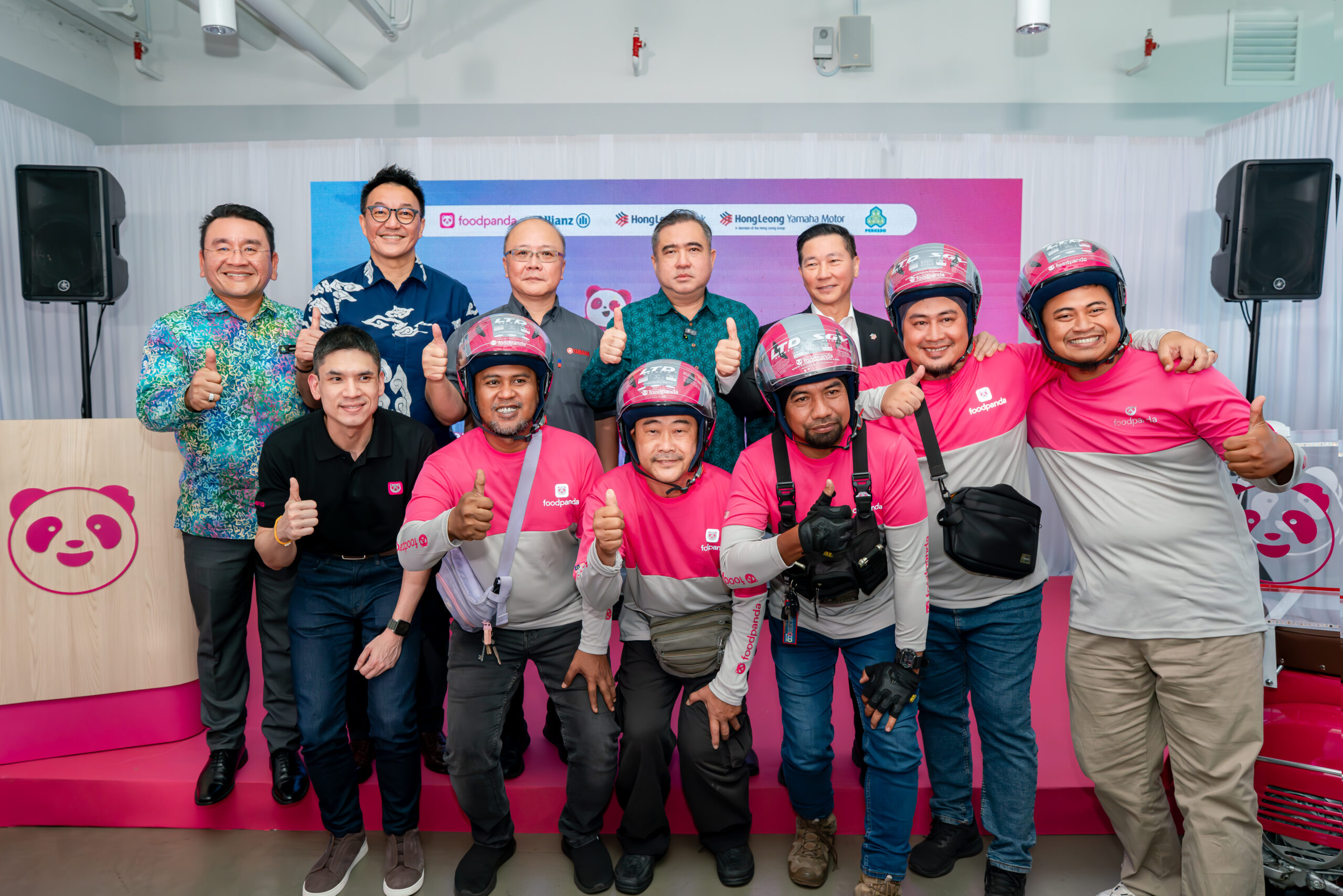
    foodpanda Malaysia launches pandasafe, a comprehensive and long-term safety initiative designed to protect and empower delivery partners through a comprehensive, long-term safety ecosystem across the country. This pioneering programme is the result of a strategic coalition with key public and private sector partners including Allianz Malaysia Berhad (Allianz Malaysia), Hong Leong Bank, PERKESO, and Hong Leong Yamaha Motor.

    The launch ceremony held at foodpanda’s headquarters, was officiated by YB Anthony Loke, Minister of Transport Malaysia. In his keynote, YB Anthony Loke lauded the programme as a proactive step forward in supporting Malaysia’s growing gig economy workforce.

    “The safety of our delivery partners must be treated as a national priority,” said YB Anthony Loke. “I applaud foodpanda and its partners for stepping up with a long-term, structured programme that goes beyond awareness. pandasafe sets a new benchmark for how companies can take responsibility in making our roads safer for gig workers.”

    More than just a campaign, pandasafe is a data-driven, multi-touchpoint safety ecosystem — combining education, technology, behavioural science, and financial literacy to build a long-term culture of road safety for delivery partners.

    According to Tan Ming Luk, Managing Director of foodpanda Malaysia, pandasafe is a permanent commitment to rider wellbeing, it is not a one-off initiative.

    “Our delivery partners are the heart of foodpanda,” said Tan Ming Luk. “Every safely completed order and every rider who gets home safely is a success. With pandasafe, we’re embedding safety into every aspect of our operations, every day. It’s not a seasonal campaign; it’s a permanent shift in how we operate. This is our commitment to our riders, their families, and the communities we serve.”

    Under the pandasafe initiative, foodpanda will roll out a range of integrated safety measures, including:

    • Structured rider training programmes focused on safe riding techniques
    • Telematics tools to help riders monitor and improve their riding habits
    • Road safety modules and first aid training, with Allianz Malaysia providing First Response and CPR training, equipping riders with the knowledge to act swiftly in emergencies
    • Social protection education and P-Hailing Safety Induction training, conducted in collaboration with PERKESO, ensuring riders are protected and informed under Malaysia’s safety net framework
    • Defensive riding techniques and braking skills training, supported by Hong Leong Yamaha Motor, enhancing rider control and road awareness
    • Financial literacy and financial safety programmes, led by Hong Leong Bank, to help riders manage their income, plan for the future, and achieve greater financial wellbeing

    These components are designed to work in tandem, creating a holistic framework that not only reduces risk but also builds long-term wellbeing for riders across the country.

    “Safety is not just a policy — it’s a culture,” added Tan. “And building that culture takes the right partnerships and the willingness to do things differently if it means ensuring our riders get home safely. That’s why this coalition matters.”

    With pandasafe, foodpanda Malaysia is setting a bold new precedent moving beyond awareness campaigns to a lasting culture of protection, empowerment, and accountability in the gig economy.

  • Singapore Tourism Board and Grab join forces to elevate visitor experiences

    Singapore Tourism Board and Grab join forces to elevate visitor experiences

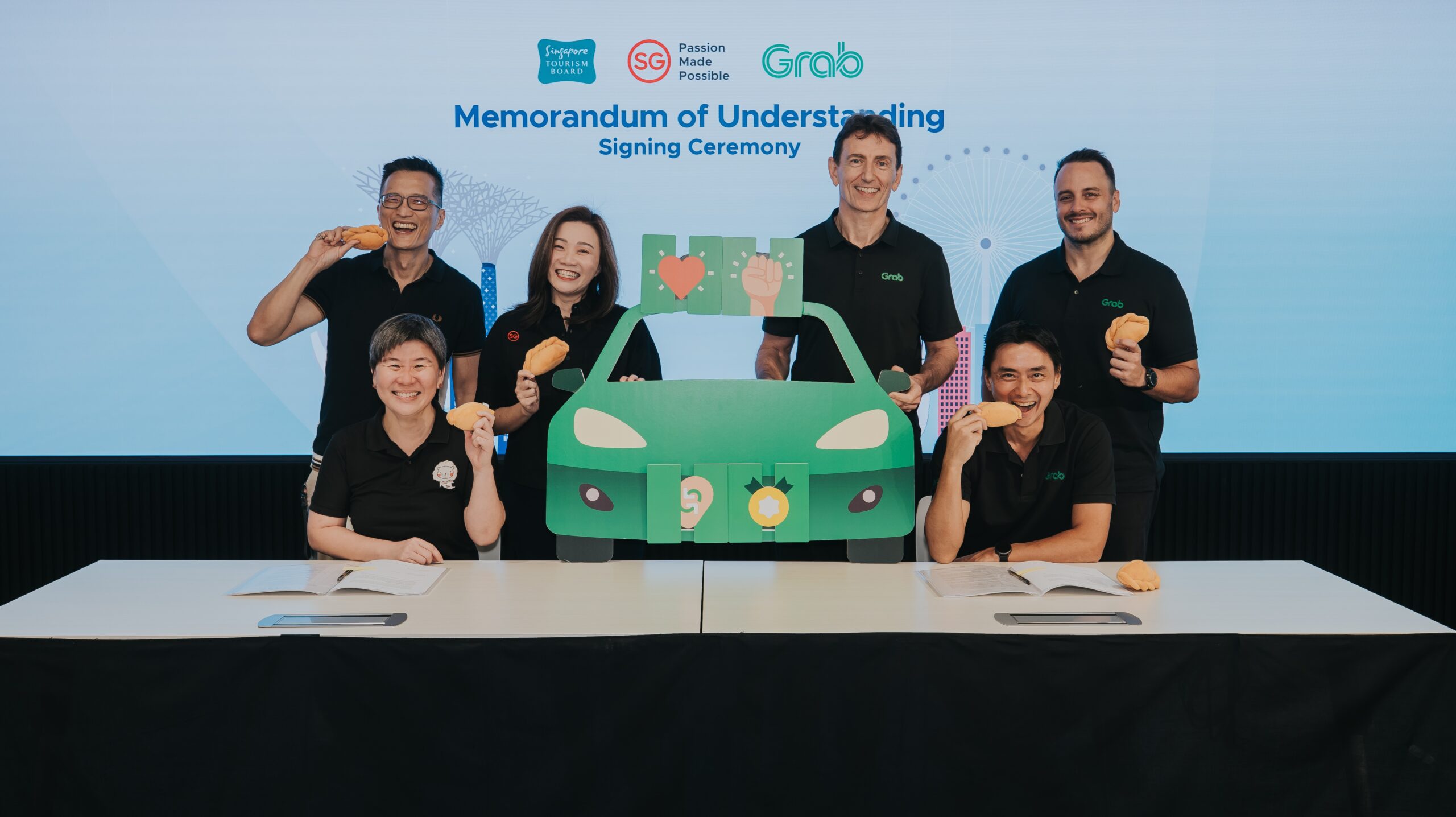
    The Singapore Tourism Board (STB) and Grab, Southeast Asia’s leading superapp, have announced a partnership to enhance visitor experiences and strengthen Singapore’s position as a top travel destination. Through a newly signed Memorandum of Understanding (MOU), both organisations aim to attract more international visitors and drive tourism spend, while delivering seamless and authentic travel experiences across the city.

    At the heart of the partnership is a shared ambition to strengthen Singapore’s position as a destination that consistently delivers value, discovery and seamless experiences at every step of the traveller journey. By combining STB’s expertise in destination marketing and partnerships with Grab’s technology and insights into dining and commuting trends, the collaboration seeks to empower travellers of all profiles to explore Singapore’s diverse precincts with greater ease and relevance, ensuring they get the most value from their trips.

    The mutual sharing of data insights plays a key role in helping both organisations better understand evolving traveller behaviours and uncover more meaningful experiences for visitors. This aligns with STB’s Tourism 2040 roadmap by cultivating visitor demand, enhancing Singapore’s attractiveness as a destination and driving quality tourism growth.

    “Visitors today seek good value and unforgettable experiences when they travel – and Singapore is a compact, yet exciting destination that delivers on both. Together with Grab, we hope to inspire more travellers to consider Singapore, and when they are here, to make every ride an adventure. Grab’s extensive reach and capabilities, coupled with STB’s destination know-how, will help us understand our customers better, while making it easier for them to discover more, and get the most out of every moment in Singapore,” said Mr Terrence Voon, Executive Director for Southeast Asia at STB.

    Enhancing Value for Travellers

    As part of the collaboration, STB will act as the gateway connecting Grab with tourism partners across Singapore to enable closer collaboration. Deeper insights gained from these partners, combined with Grab’s demand generation tools and marketing capabilities, will help drive greater footfall and tourism spending throughout the island — benefiting a wide array of local businesses and experiences.

    One key initiative is the enhancement of the Grab Travel Pass, a convenient bundle offering discounts on Grab transport and services in-country. Available to all international travellers visiting Singapore, the Travel Pass simplifies travel planning and improves on-ground mobility, delivering greater value to travellers while driving growth for tourism partners.

    Leveraging Singapore’s strength as a hub for global and regional events, the partnership will also see Grab collaborating with STB and event organisers to elevate the overall event experience through its mobility, food and financial services which are widely used by both leisure and business travellers.

    Spotlighting Singapore’s Culinary Scene and Supporting Local Businesses

    Food has long been one of Singapore’s strongest tourism draws — not just because of its global acclaim, but also the accessibility and authenticity of its everyday dining experiences. From MICHELIN-starred restaurants to local hawker stalls, Singapore offers travellers a diverse and dynamic culinary landscape that reflects its cultural richness.

    In recent years, the appetite for these experiences has only grown. In 2024, Food and Beverage (F&B) contributed 14% to Singapore’s tourism receipts, marking a 6.3% increase compared to the same period in 2023 and a significant 73% increase compared to pre-pandemic levels. This growth outpaced other spend categories, highlighting the importance of culinary experiences in Singapore’s tourism landscape.

    “One of Singapore’s greatest charms lies in the richness of its everyday experiences — from its distinctive neighbourhoods to the hawker centres and small eateries that define its culinary identity. Through our partnership with STB, we hope to help travellers uncover these authentic moments, showcasing Singapore’s heritage and encouraging deeper exploration of its diverse precincts. In doing so, we not only enrich the visitor experience but also support local businesses by connecting them with a broader international audience,” Alejandro Osorio, Managing Director of Grab Singapore.

    To make it easier for visitors to discover and enjoy the city’s culinary offerings, features like Grab’s Dine-Out Discovery — which leverages mapping technology and food reviews to surface highly rated eateries nearby — can guide travellers to explore beyond the usual dining spots, uncovering options in both central districts and neighbourhood enclaves.

    In doing so, the partnership plays a key role in supporting local businesses by making them more discoverable to international visitors. Whether it’s a heritage hawker stall, a family-run eatery, or a hidden gem in the heartlands, Grab’s platform helps surface these options through curated recommendations and geo-location tools. This visibility drives footfall not only to neighbourhood F&B outlets, but also to nearby retail shops — connecting travellers with everyday dining and retail experiences across Singapore’s precincts and channeling tourism dollars beyond the city centre.

    Sustaining Tourism Momentum

    This partnership builds on Singapore’s strong tourism momentum in 2025, with 8.33 million international visitor arrivals recorded in the first six months of this year, and S$8.07 billion in tourism spend in the first quarter of 2025. As competition for global travellers intensifies, collaborations like this are essential for sustainable growth by offering richer experiences and extending the economic benefits of tourism deeper into local communities.

  • AEON Bank and foodpanda embark on strategic partnership

    AEON Bank and foodpanda embark on strategic partnership

    AEON Bank (M) Berhad, Malaysia’s first Islamic digital bank has officially entered into a strategic partnership with foodpanda Malaysia, the country’s leading online food and grocery delivery platform. This business-to-business (B2B) collaboration aims to increase digital banking adoption among their combined stakeholders and empower Malaysia’s gig economy through innovative fintech solutions, while simultaneously promoting financial inclusion.

    The Memorandum of Understanding (MoU) between AEON Bank and foodpanda Malaysia outlines a broad scope of collaboration, including customer acquisition, digital financing, joint campaigns and value-added services for their wider ecosystem of customers, riders, merchants and business partners.

    YM Raja Datin Paduka Teh Maimunah Raja Abdul Aziz, Chief Executive Officer of AEON Bank stated, “This strategic partnership with foodpanda marks the beginning of an exciting chapter for AEON Bank. We look forward to providing value to foodpanda riders and merchants by enabling access to digital banking, rewards programmes and services that elevate their experience. By optimising foodpanda’s expansive network and connecting it with AEON Bank’s Shariah-compliant products and AEON Points loyalty programme, we aim to deliver meaningful impacts to the target segments — particularly gig workers and MSMEs — while driving growth and engagement.”

    This partnership is strategically positioned to contribute to Malaysia’s rapidly growing food delivery and online grocery sector, where user penetration is expected to reach 34.2% in 2025 and over 14.5 million users by 2030 .

    “We are thrilled to join forces with AEON Bank to create real, tangible benefits for everyone in the foodpanda community. For our riders, this partnership goes beyond deliveries — it enables access to tech-driven financial support, microfinancing and financial literacy programmes that can improve their livelihoods. Meanwhile, our merchant partners will have greater opportunities to grow their businesses faster with targeted campaigns and financing solutions to scale their operations. And for our customers, they can expect more value and convenience with exclusive rewards and easier access to AEON’s retail ecosystem. This partnership is more than just a commercial collaboration — it’s about empowering riders, accelerating merchant growth and making every customer experience even more rewarding,” said Tan Ming Luk, Managing Director of foodpanda Malaysia.

    Various key programmes will be introduced as part of this collaboration, including co-branding engagement featuring the two mascots; AEON Bank’s Neko and foodpanda’s Pau-Pau. Several initiatives currently in the pipeline are:

    For Riders

    • A joint programme to support delivery riders in enhancing their mobility and livelihood, including access to AEON Bank’s digital banking offering, financial tools and essential work resources, such as microfinancing for devices and motorcycle purchases
    • Financial literacy initiative to expand outreach and financial empowerment among the rider

    For Merchant Partners

    • Targeted campaigns with AEON Bank for foodpanda’s merchants
    • Financial solutions for merchants through the AEON Bank to Business (AB2B) Programme and financing for wholesale purchases, enabling inventory expansion and business growth

    For Customers

    • Special rewards and promotions for customers, while adding value to their foodpanda orders
    • Expanded access across the AEON retail ecosystem, hence allowing customers to purchase groceries online beyond just AEON MaxValu Prime, thereby increasing convenience.

    This alliance between AEON Bank and foodpanda Malaysia highlights a shared commitment towards improving the financial well being of the thriving community, driving innovation and supporting Malaysia’s socioeconomic development through digital inclusion. Both brands will leverage each other’s strength, aligned with a strategic mission to provide value based, customer-centric digital financial solutions that will deliver dynamic growth.

    Visit the website of AEON Bank and foodpanda for further details and stay updated on exclusive offers on social media.

  • Execution remains key for 13th Malaysia Plan

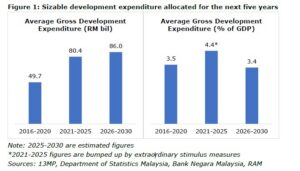
    The recently tabled 13th Malaysia Plan (13MP) continues the government’s dual-focus approach of fiscal consolidation alongside sustained support for growth. The headline development expenditure (DevEx) allocation of RM430 bil over five years represents a marked step-up in investment. This translates to an average allocation of RM86 bil per annum from 2026 to 2030, well above the RM79 bil annual average recorded from 2021 to 2024 and nearly double the pre-pandemic average of RM48 bil between 2015 and 2019. Spread evenly, this roughly works out to the government spending at least 3% of GDP on DevEx each year, with more than half of the total allocation (52.8%) directed to the economic sector. This should underpin the much needed infrastructure build-out, human-capital development and innovation-driven projects under the 13MP.

    Realistic Growth Ambition
    The plan targets an average annual GDP growth of 4.5%–5.5% over 2026–2030, a range close to the 5.2% average growth recorded between 2021–2024. We believe that this target is both realistic and achievable, and is also similar to our baseline medium-term GDP growth expectation of circa 5.0%, provided global headwinds remain manageable and domestic policy support continues.

    Fiscal Consolidation Remains on Track
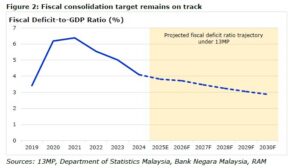
    The 13MP reiterated its commitment to narrow the fiscal deficit to below 3% of GDP by 2030, from the 4.1% recorded in 2024. Assuming the total development expenditure is somewhat evenly spread across 2026–2030 and real GDP grows within the targeted range of 4.5%–5.5%, the deficit ratio should be on track to decline toward the sub-3% objective.

    This fiscal consolidation is important to help lower the government’s debt load, which climbed to 64.6% of GDP as at end-2024 from 52.4% in 2019, and in turn ease its debt-servicing burden. Interest payments reached 15.6% of government revenue as of end-2024, up from 12.5% in 2019, which suggests that for every RM100 in government revenue earned, about RM16 is used to pay interest on borrowing. Sustained deficit reduction, therefore, helps avoid the crowding out of productive spending and frees up resources for development priorities over the long run.

    Human-Capital and Income Targets
    The 13MP aspires to raise compensation of employees (CE) to 40% of GDP by 2030, a commendable target in order to resolve Malaysia’s widely talked about issue of ‘stagnant’ wages. However, this would require an average annual CE growth of 11.1% between 2026 and 2030, more than double the 5.3% pace under the 12MP and higher than the pre-pandemic (2016-2019) average of 7.1%. With CE share at only 33.6% in 2024, achieving this will demand effective wage policies, including continued minimum-wage adjustments, stronger graduate and TVET wage progression, and broad-based productivity enhancements.

    The Plan also addresses investments in human capital and preparation as the nation transitions into an aged nation. Latest projections by the Department of Statistics Malaysia indicate that the country will transition into an “aged society” by around 2050, with the working-age population share expected to fall from 70% in 2025 to 68%. Coupled with declining birth rates (total fertility rate of 1.7 in 2023 versus 2.0 in 2013), Malaysia faces a shrinking labour force. The review of the mandatory retirement age, alongside a comprehensive strategy for workforce upskilling and an emphasis on Technical and Vocational Education and Training (TVET) to address skill mismatch issues under 13MP, should help mitigate some of the labour market challenges ahead.

    Execution Remains Key
    As with previous plans, execution remains the linchpin. The enhanced Policy Implementation Plan and monitoring system known as MyRMK will oversee integrated implementation across ministries. The enhanced transparency, which enables timely course corrections, provides the necessary tools for success. Whether the 13MP targets can be met will depend heavily on the effectiveness of execution and the discipline to follow through with the plans.

    The 13MP strikes a prudent balance between fiscal consolidation and growth support, with a sizeable and well-targeted DE envelope and a realistic growth target. While sectoral allocations and digital-innovation drivers are well calibrated, execution capacity and human-capital challenges, particularly the ambitious income share goal, will be decisive. Strong implementation governance, more effective measures to minimise leakages and ensure efficient use of public funds, coupled with supportive policies for wages and innovation, will be critical to realising the 13MP’s 2030 vision.

  • MyCIF reaches out to MSMEs and entrepreneurs in Sabah

    Malaysia Co-Investment Fund (MyCIF) has reached out to micro, small and medium enterprises (MSMEs) in Sabah, for opportunities in funding business expansion and their working capital needs through equity crowdfunding (ECF) and peer-to-peer (P2P) financing.

    Sabah Minister of Industrial Development & Entrepreneurship YB Datuk Phoong Jin Zhe officiated the one-day roadshow themed “Empowering Financing, Advancing Growth” in Kota Kinabalu. Around 300 representatives from business associations, government agencies, venture capital, private equity and MSMEs attended the event.

    Organised by the Securities Commission Malaysia (SC), the event was supported by Invest Sabah Bhd, a key development partner with deep local networks and strong links to state and federal MSME initiatives.

    It featured networking sessions, breakout discussions, and exhibitor booths where participants engaged with SC-registered ECF and P2P platform operators and heard first-hand success stories from companies funded through MyCIF.

    MyCIF, Malaysia’s first public-private co-investment model, was set up by the Ministry of Finance under the 2019 Federal Budget. Administered by the SC, MyCIF has since co-invested in over 70,000 campaigns, benefiting more than 9,500 MSMEs nationwide. In 2024, the fund exceeded RM1 billion in total co-investments. It employs a 1:4 co-investment ratio under its General Scheme and a 1:2 ratio for targeted initiatives such as the Food Security and Environmental & Social Impact Schemes.

    SC Chairman Dato’ Mohammad Faiz Azmi said that MyCIF has been a game-changer for MSME growth, providing much-needed capital that is often a challenge to access through traditional channels. “The Sabah roadshow is integral to MyCIF’s national outreach, designed to expand awareness of alternative financing among businesses across Malaysia,” he said.

    “It provides entrepreneurs a direct insight into how ECF, P2P and MyCIF can fuel their growth at every stage.”

    “The government, through MyCIF, continues to support MSMEs as key engines of growth, innovation and job creation. This is evident in the RM40 million allocation under Budget 2025 to further expand access to ECF and P2P financing nationwide,” he said. Invest Sabah Chief Executive Officer Dr. Firdausi Suffian welcomed the collaboration with the SC.

    “Partnering with the SC in this event has enabled Invest Sabah to amplify its efforts in empowering local entrepreneurs. This roadshow is a vital platform for MSMEs in Sabah to gain insights and forge connections that can help propel their businesses forward,” he said.

    As of 2024, total funds raised through MyCIF co-investments alongside private investments have surpassed RM6 billion, enabling businesses to access funding via ECF and P2P financing platforms. MyCIF has attracted 4.1 times private investments for every ringgit co-invested, demonstrating a strong crowding-in effect.

    Over the past six years, MyCIF has played a pivotal role in improving access to alternative financing, fostering the growth of over 9,500 MSMEs in the local entrepreneurial ecosystem.
    This reflects the continued confidence and growing interest from both investors and MSMEs in alternative financing avenues. For more information on MyCIF, visit https://www.sc.com.my/mycif.

  • MyCIF surpasses RM1 Billion co-investment mark

    The Malaysia Co-Investment Fund (MyCIF) has exceeded RM1 billion in total co-investments since its inception, a major a milestone in supporting the growth of micro, small, and medium enterprises (MSMEs) in the country.

    MyCIF, set up by the Ministry of Finance under Budget 2019, has been a pivotal force in the financing landscape, utilising equity crowdfunding (ECF) and peer-to-peer (P2P) financing platforms to channel funds into MSMEs.

    Since its inception, more than 9,500 MSMEs have benefited from MyCIF’s co-investments.
    In its Annual Performance Report 2024 released today, MyCIF said total co-investments reached RM1.19 billion as of end-2024, with RM264 million invested in 2024 alone.

    MyCIF has attracted 4.1 times in private sector funding for every ringgit invested, demonstrating a strong crowding-in effect. This saw a 21.4% increase in total private investment.

    The RM1.19 billion total co-investments by MyCIF represents 4.6 times of RM260 million total funds disbursed from the Government to date into the program, demonstrating efficient use of public funds.

    In addition to the General Scheme 1:4 co-investment, MyCIF continues to bolster strategic and underserved segments of the economy through targeted schemes. These include Food Security and Environmental & Social Enterprise Schemes with preferential 1:2 co-investment ratio.
    Co-investments in these segments rose to RM7 million in 2024 from RM3.4 million in 2023, reflecting MyCIF’s strengthened commitment to targeted investment areas.

    Under Budget 2025, MyCIF has earmarked up to RM40 million for promoting innovative Islamic risk-sharing financing through ECF and P2P platforms.

    This allocation complements existing MyCIF schemes and aims to encourage greater adoption of Islamic financing structures (Musharakah and Mudharabah concepts) by offering the following incentives:

    • MyCIF will invest on a first-loss basis in ECF and P2P campaigns based on Islamic risk-sharing models; and
    • For P2P campaigns, MyCIF will additionally invest at 0% financing rate.

    In July 2024, MyCIF introduced the Environmental & Social Impact Scheme to support impact-driven businesses in environment, community, food security, education, and healthcare sectors. The scheme also extends to MSMEs financing Waqf asset development projects within these focus areas.

    To enhance awareness and access to financing, MyCIF hosted its inaugural Nationwide Roadshow in Penang in February 2025, themed “Empowering Financing, Advancing Growth.” The event, supported by the Northern Corridor Implementation Authority (NCIA), aimed to raise MyCIF’s profile and benefits among MSMEs in the northern states of Malaysia.

  • SMCCI and Maybank partner to boost SME growth in the halal economy across JS-SEZ and ASEAN

    SMCCI and Maybank partner to boost SME growth in the halal economy across JS-SEZ and ASEAN

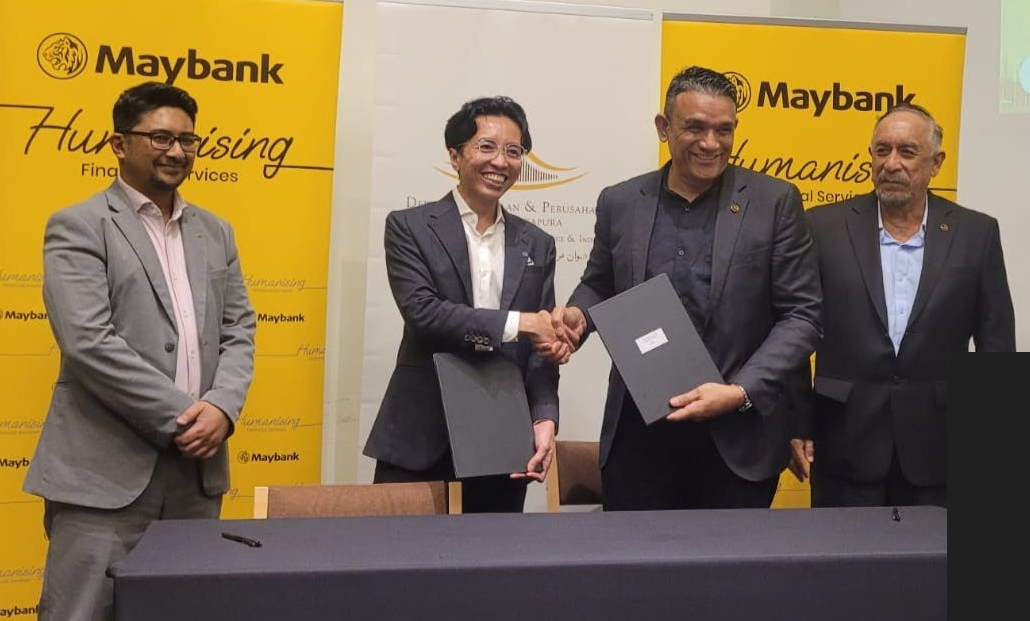
    The Singapore Malay Chamber of Commerce and Industry (SMCCI) and Maybank Singapore Limited (Maybank) have signed a Memorandum of Understanding (MoU) to advance Halal-focused initiatives and support the growth of SMEs (Small and Medium Enterprises) and Malay/Muslim-owned enterprises in Singapore and Malaysia. This partnership will focus particularly on the Johor-Singapore Special Economic Zone (JS-SEZ), and extend across the wider ASEAN region.

    Under this strategic partnership, SMCCI and Maybank will jointly organise events, conferences and trade visits to facilitate market access, knowledge-sharing, and Halal capability development. Leveraging its regional insights and community ties in Johor, SMCCI will provide guidance to its members on business setup, market entry, workspace solutions, policy updates and market intelligence. Through this partnership, around 300 SMCCI members stand to benefit from enhanced support and expanded regional opportunities.

    Maybank will complement SMCCI’s efforts with its full suite of banking solutions, while continuing its successful collaboration through the Bank’s myimpact Microbusiness Programme, which empowers underserved entrepreneurs through business training, mentorship, and seed funding.

    “We see rising demand from our members to explore opportunities in the JS-SEZ and the region especially in the Halal sector,” said Dr Abdul Malik Hassan, President of SMCCI. “By partnering with Maybank, we are strengthening the support ecosystem for entrepreneurs that are ready to take that step. Together, we aim to make cross-border growth more accessible, and assist Malay/Muslim-owned enterprises in Singapore navigate the regional landscape.”

    Sazzali Sabandi, Head of Islamic Banking at Maybank in Singapore said, “The Halal economy is a fast-growing sector with enormous potential across ASEAN. Beyond Malaysia and Indonesia, we are seeing emerging interests from Thailand, Vietnam and Cambodia in gaining a slice of the global Halal market that is estimated to reach USD5 trillion by 2030. With Maybank’s presence in all 10 ASEAN countries, we are able to support SMEs with the right tools and financial solutions to seize cross-border opportunities. We are proud of this collaboration with SMCCI as it is centred on Maybank’s purpose of humanising financial services, supported by our values-driven platform.”

  • RAM BCI: Businesses still pessimistic about their three-month outlook in 2Q 2025

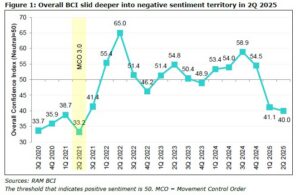
    The RAM Business Confidence Index (BCI) dropped further to 40.0 in 2Q 2025 (1Q 2025: 41.1). This marks the second consecutive quarter of negative sentiment on business prospects, which aligns with the rapidly escalating risks in global trade stemming from rising US protectionism policy. Three out of five sub-indices declined Q-o-Q, namely sales, capital investment and capacity utilisation.


    Consistent with the overall cautious and subdued business outlook, rising cost of doing business remains the most pressing issue, with 80% of firms citing it as top concern. More competition and weak economic conditions also pose significant hurdles, with 63% of firms identifying them as key challenges. The share of firms citing supply chain issues also jumped 11 percentage-points to 40% in this survey.

    Impact of US tariffs under spotlight

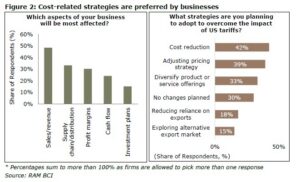
    A special focus for this quarter’s survey, which was conducted from 29 May 2025 to 28 June 2025 polling 33 firms, was the impact of the US tariffs on Malaysian goods. Around two-thirds of firms surveyed anticipate a negative impact from these tariffs, of which a significant 27% of firms expect a major negative impact, with firms anticipating moderate and minor impact each at 18%. Sales and revenue topped the list of business aspects likely to be hit, followed by profit margins, supply chains and cash flow.

    In response, firms are mainly adopting cost-related strategies to mitigate tariff impacts. About 42% are focusing on cutting operational expenses, while 39% are adjusting pricing strategies to remain competitive.

    Demand for government support
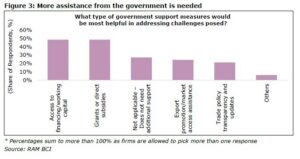
    Businesses are calling for more assistance from the government, especially in terms of better access to financing and working capital. Grants and direct subsidies are equally in demand to help offset the challenges posed by trade tensions.

    The latest RAM BCI survey highlights the growing pressures Malaysian businesses face from rising costs, intensified competition and external trade disruptions such as US tariffs. Chris W.K. Lee, RAM Holdings Berhad Group CEO and Executive Director said, “While businesses remain cautious, it is encouraging to see that companies are still investing and hiring. It is crucial that government and industry stakeholders work together to respond to the new challenges for businesses to survive and thrive.”