Category: Guides

  • What You Need To Know About The Insurance Industry In Malaysia

    What You Need To Know About The Insurance Industry In Malaysia

    Insurance is a means of protection from financial loss where a party agrees to compensate another party in the event of loss, damage, or injury; in exchange for a fee. In other words, insurance is a risk transfer mechanism where you transfer your risk to the insurance company to get coverage for any financial loss you may face due to unforeseen events. The emotional and psychological loss can never be compensated, but at least the financial loss can be compensated with insurance.

    Smart Investor spoke to Fabrice Benard, CEO of Generali Insurance Malaysia Berhad and Country Head of Generali Entities in Malaysia to learn more about the current insurance landscape in Malaysia.

    Fabrice Benard, CEO of Generali Insurance Malaysia Berhad and Country Head of Generali Entities in Malaysia

    Smart Investor: Has the pandemic impacted the insurance industry? What’s the penetration rate for Malaysians?

    Fabrice Benard: Definitely, the pandemic has impacted most economic sectors, with very few exceptions. But I would say there is an advantage in such adversity. It has presented new, emerging protection needs, and accelerated innovation, transformation and sustainability practices within the industry.

    We also noticed a shifting landscape of insurance awareness during and post pandemic – where many Malaysians are becoming more informed, health conscious and aware of the importance of insurance protection. This has given us an opportunity to protect what matters, address the protection gap and actively reach out to a wider range of customers and communities.

    SI: With high inflation, people have less disposable income and might have less to spend on insurance. How can they cope? And is there any help coming from the insurance industry?

    FB: As a lifetime partner to our customers, part of our commitment is to bridge the protection gap and extend our protection far beyond our existing customer base. Financial inclusion is important to us, and we want to engage and educate the communities as much as possible and ensure that everyone can receive the protection they need. For example, providing instalment payment plans via our partner banks for selected products to ensure that our products remain affordable.

    Besides that, it is also essential to create a value-added service ecosystem to address customer needs. This is deployed via our strong distribution network, strategic partnerships and other type of services: information, prevention, protection, assistance. We also continuously find ways to be more inclusive, yet innovative and personalised in our product offerings to target different customer segments.

    For example:

    • We launched SmartTraveller Enhanced the first-in-market travel insurance in Malaysia with pandemic illness coverage up to RM350,000 in view of increasing travel protection needs due to reopening of borders.
    • Launched SmartMedi Outpatientthe 1st standalone outpatient medical insurance in Malaysia that offers standalone outpatient coverage for General Practitioner / Simulated Patient clinic visits which does not require hospitalization.  It is a complementary product to the In-patient coverage. 
    • Launched Multi Medic – the 1st modular Individual Medical insurance that allows consumers to build the coverage to suit their life stages and financial needs.
    • The Multi Biz Protector Enhanced – a customisable and comprehensive insurance plan designed for owners of small and medium-sized businesses (SMEs) to cover their key business risks. It is a comprehensive product where most of the risk exposures are covered in this ‘one stop’ package. Customised to their needs, business owners can select their preferred protection needs.

    SI: Post-Covid or Long Covid symptoms are considered chronic diseases that insurance might not cover; why is that so?

    FB: Post-Covid or long Covid symptoms are common exclusions in the insurance industry. Usually, when it comes to health or medical claims, there needs to be objective medical proof to support the claim. It goes without saying that health insurance only covers conditions where medical attention is absolutely necessary. Long Covid symptoms usually develop after the original Covid infection has cleared, and they can be tricky to measure or assess, especially when it comes to the treatment duration and standards of care.

    But beyond claim coverage, we are committed to extend our best support to our customers struggling with long-term Covid symptoms. It is important for us to provide our customers with the care they need, while ensuring our panel medical partners implement appropriate clinical guidelines and practices.

    SI: Company insurance only covers you until the age of 60. Is there any insurance for those approaching retirement age and those with disease

    FB: While company insurance typically covers up to 60, it is recommended to have a complementary individual comprehensive insurance plan that can keep you protected up to a higher age limit. For example, our comprehensive critical illness plan – CritiCover, do cover up to age 100 with protection against 194 critical illnesses and any future unknown illnesses. This plan will help to ease your financial burden while allowing you to focus on your recovery. Besides that, we also have various other products such as the SmartPA Enhanced and other Individual Health Plans such as SmartCare Optimum Plus that provides coverage up to age 100.

    For individuals with health conditions, insurance companies may still offer insurance plans that have additional restrictions or exclusions for certain pre-existing conditions. The type of plans, coverage and premium offering may differs depending on the person’s health status.

    SI: Any medical insurance for pregnant ladies and babies? Is it necessary to take such a policy?

    FB: Complications such as cardiovascular disease, hypertension etc. may be contracted by pregnant or postpartum ladies, and such diseases may lead to unexpected medical expenses. Having an insurance plan is recommended to ensure you receive the necessary care and support on your recovery.

    Though most individual insurance plan do not cover the cost of delivery or normal hospitalisation bill, there are several critical illness insurance plans that cover pregnancy complications.

    Aside from the importance of a pregnant lady being insurance protected, having medical insurance for your child is equally important too. Children, especially infants, are susceptible to illnesses and accidents. Medical Insurance can provide peace of mind and security to the parent, knowing that their child will have access to the necessary medical attention when they need it most. For as young as 15 days old, your child can be covered under our comprehensive medical insurance plan – OneMedic Elite, which covers hospitalisation bills incurred should your child requires medical treatment.

    SI: Education is getting more expensive. Is education insurance important?

    FB: An education savings insurance plan is a type of insurance policy that provides a combination of insurance protection and savings elements, specially designed to help families to save aside for the future cost of education. Such plans allow you to save aside over a period of time, and such savings will be further invested to grow over time and, at the same time, provide regular bonuses to your insurance savings fund. You can access your savings fund to pay for your children’s education expenses. The amount required to set aside for such an insurance plan depends on your target education fund.

    Such insurance plan also provide a lump sum payment to the beneficiaries in the event the insured person’s death, disability or diagnosed with critical illness, where such event may prevent your children from completing or paying for your children’s education. This will allow you to focus on their education goals without having to worry about the financial consequences of life’s unexpected events.

    To help you to achieve your desired education for your child, our insurance savings plan – Wealth Saver, is designed to help you diversify your savings and achieve your financial goals. With just a short-term commitment of only 4 years, you can enjoy a guaranteed annual income of up to 18% of the sum insured. You will continue to be payable to you or your loved ones in the event of death or Total and Permanent Disability (TPD).

    SI: What’s the reason people are not buying insurance? And what can be done to increase awareness of the importance of having insurance?

    FB: Many think that insurance is expensive and an unnecessary expense. There are also some who merely see insurance as an investment rather than a form of protection. But insurance works on the principle of risk transfer and pooling – the whole intrinsic idea of insurance is to protect against uncertainties and unexpected risks.

    Increasing awareness of this takes a collective effort from all insurers. While continuous educational campaigns are important, we are also looking at providing better insurance experiences as a whole by transforming our role beyond just selling products to providing more value-added, personalised services. Our guiding principle is to make the entire purchase, service, claims, assistance, and renewal effortless and care while ensuring that our customers receive personalised, phygital advice with a human touch for complex matters. We believe this will help bring a better experience and create more avenues for new protection.

  • MRTT VS MRTA, What’s The Difference?

    MRTT VS MRTA, What’s The Difference?

    A mortgage is one of a person’s largest debts or loans. Therefore, it is unsurprising that several types of takaful can help settle the loan if something undesirable happens to the borrower.

    For example, the borrower’s death or permanent disability prevents them from working or generating further income to settle the remaining loan balance. Thus, takaful or insurance is the best protection for protecting you and your loved ones. How can it protect you and your loved ones?

    Before we start comparing MRTT vs MRTA, you should know that there are 4 types of protection for your mortgage:

    a. MRTT: Mortgage Reducing Term Takaful

    b. MRTA: Mortgage Reducing Term Assurance

    c. MLTT: Mortgage Level Term Takaful Assurance

    d. MLTA: Mortgage Level Term

    In this article, we will explore more on MRTT vs MRTA. To simplify understanding, MRTT and MRTA are a package that seems the same. The only difference is that MRTA is a form of conventional insurance while MRTT is takaful or Islamic.

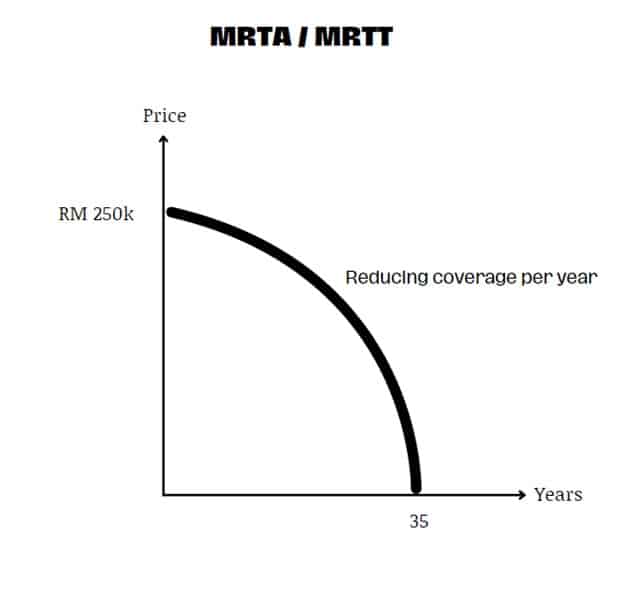
    The key phrase for MRTT and MRTA is R – Reducing. If your housing loan amount decreases, the protection MRTT and MRTA provide will also decrease.

    Read: 7 Tips For First-Time Home Buyers

    MRTT VS MRTA

    MRTT VS MRTA: What Is MRTT?

    MRTT, or Mortgage Reducing Term Takaful, is insurance based on Islamic finance principles. MRTT is a takaful (Islamic insurance) product that provides coverage for mortgage payments in the event of death or TPD of the policyholder.

    This type of insurance operates on the principle of shared risk, where policyholders collectively pool their resources to protect one another. In the event of a claim, the takaful fund covers the mortgage payments of the policyholder’s family.

    MRTT VS MRTA: What Is MRTA?

    Conversely, MRTA is a type of insurance that operates on the principle of individual risk. MRTA provides coverage for mortgage payments in the event of the death or TPD of the policyholder.

    Unlike MRTT, MRTA is not based on the principles of Islamic finance and operates as a traditional insurance product. In the event of a claim, the insurance company pays the mortgage payments to the policyholder’s family.

    Read: High-Rise Properties Near Lush Greenery Achieve High Capital Growth in H1 2022

    MRTT VS MRTA: The Differences

    Categories/Coverage TypeMRTTMRTA
    Pool of fundsOperates on shared risk principle, coverage from takaful fundOperates on the principle risk, coverage from the insurance company fund
    Cost of coverageCheapMore expensive
    Amount of coverageLowHigh

    One of the key differences between MRTT and MRTA is how they are structured. MRTT operates on the principles of shared risk, while MRTA operates on the principle of individual risk.

    This means that the cost of coverage is determined differently in each case. In MRTT, the cost of coverage is determined based on the collective pool of resources provided by policyholders.

    In MRTA, the cost of coverage is determined based on the individual risk of the policyholder.

    Another key difference between MRTT and MRTA is the way claims are handled. In MRTT, claims are handled by the takaful operator and are paid from the takaful fund. In MRTA, claims are handled by the insurance company and are paid from the insurance company’s funds.

    It all looks the same, but structurally, MRTT is shariah-compliant.

    Pros And Cons Of MRTT

    One of the main benefits of MRTT is that it operates on the principles of shared risk, which helps to reduce the cost of coverage. Because policyholders collectively pool their resources, the coverage cost is lower than MRTA.

    Additionally, MRTT is a takaful product, which means that it is based on the principles of Islamic finance and is therefore considered a more ethical and socially responsible option than MRTA.

    However, one of the potential drawbacks of MRTT is that it may not provide as much coverage as MRTA. MRTT operates on the principles of shared risk, which means that the cost of coverage is lower. However, this also means that the coverage is typically lower than MRTA.

    Pros And Cons of MRTA

    One of the main benefits of MRTA is that it provides more coverage than MRTT. Because MRTA operates on the principle of individual risk, the coverage provided is typically higher than MRTT. Additionally, MRTA is a traditional insurance product that provides higher financial protection than MRTT.

    However, one of the potential drawbacks of MRTA is that it is generally more expensive than MRTT. Because MRTA operates on the principle of individual risk, the cost of coverage is determined based on the individual risk of the policyholder, which can result in higher costs compared to MRTT.

    Additionally, MRTA is not based on the principles of Islamic finance and may not be considered a socially responsible option for some Muslim consumers.

    In conclusion, MRTT and MRTA are two popular insurance products in Malaysia that provide financial coverage for mortgage payments in the event of death or TPD of the policyholder.

    Both MRTT and MRTA have their pros and cons. Consumers must consider their needs and circumstances before choosing between these two options.

    Hope that you now have a better understanding of MRTT vs MRTA. You should also consider the level of coverage they require, the cost, and the level of financial protection they need before deciding.

    Read: How To Save 50% Of Your Housing Loan Interest In Half The Time, And Get Your Dream Car For Free

  • The Smart Investor’s Guide to Insurance

    Insurance is an essential aspect of financial planning. Think of insurance as a cushion. If tragedies or accidents occur, insurance acts as a financial cushion to protect what matters most to you – be it your loved ones, your assets, or your business.

    Before the Covid-19 pandemic, insurance was considered a ‘nice-to-have’ instead of ‘must-have’. However, the pandemic shook up the general perception of insurance as people started to realise the importance of having a financial safety net to shoulder against life’s uncertainties.

    Even so, many do not understand what insurance is, how it works and the types of insurance available.

    protect family
    Insurance is usually a financial cushion to protect you and your family. | Credit: fernandozhiminaicela

    What is insurance and how does it work?

    In a nutshell, insurance is a contract (deemed as a policy), whereby policyholders receive financial protection against losses resulting from an unforeseen event.

    Policyholders pay a fixed premium on a monthly, quarterly, semi-annually or annual basis to an insurance company which pools risks to hedge against potential losses. Financial planners recommend setting aside 6% of your monthly income for insurance.

    How do I know which insurance to purchase?

    Some simple calculations like what you can afford and how much coverage you’d need would be what you would consider before buying a policy. | Credit: stevepb via Pixabay

    Before you purchase an insurance policy, it is important to ask yourself:

    1. Your financial commitments: What is your debt situation? How would you manage your financial risks if you were to lose your job, or for your family manage if you were to pass on?
    2. Your dependents: If you were to lose your job or pass on, would your dependents be able to manage financially? How much would your dependents need to cover living costs?
    3. Your medical history: Is there a history of critical illness such as cancer or stroke in your family? Do you smoke?
    4. The nature of your job: Do you have a high-risk job, a physically demanding job or a job that requires frequent travelling?
    5. Your assets: Is your property insured against potential theft, fire, flooding, burst pipes or earthquake risks? Are you able to sustain losses or damages to your vehicle in the event of accidents, theft or fire?

    Based on your answers above, you would have a clearer idea as to the types of insurance as well as the policy limit (sum insured) that you would require.

    What are the types of insurance?

    1. Life Insurance or Takaful

    People often confuse life insurance and health insurance. Life insurance is essential primarily if you have debt or a spouse/dependents relying on your income. Your life insurance company pays a lump sum benefit to your next of kin to serve as a financial relief in the event of your demise or total permanent disability.

    Takaful is an Islamic financial product that is regulated through the Islamic Financial Services Act 2013 and is Shariah-compliant. Do note that it is not considered ‘Islamic insurance’, even though that’s what many seem to regard it as such. Unlike conventional life insurance, Takaful participants contribute or donate an amount to a tabarru fund, from which the mutual risk of losses is borne based on the Islamic principles of brotherhood.

    • Health or Medical Insurance

    If you are diagnosed with an illness, there are both direct and indirect costs involved. On top of direct costs such as your medical expenses, your illness may affect your ability to work, pay off debts or afford living expenses.

    According to Aon’s 2023 Global Medical Trend Rates Report, medical inflation in Malaysia stands at 12% and is expected to rise. Medical insurance or commonly known as a medical card is a policy that reimburses your medical expenses in the event of illness, hospitalisation or surgery.

    There are many medical cards in the market, with some starting from as low as RM5-10 per month. It is not mandatory but some employers include medical insurance as a fringe benefit which only covers up to a certain limit.

    health illness disease
    Illness can strike at anytime changing the course of your life; so it’s better to always be prepared. | Credit: geralt via Pixabay
    • Critical Illness Insurance

    Based on your family and medical history, consider purchasing critical illness insurance on top of a medical card. A critical illness policy offers a lump sum payout as an income replacement if you are diagnosed with cancer, stroke, heart attack and so forth.

    • Personal Accident Protection

    If you are a frequent traveller or involved in a physically demanding job, personal accident insurance is ideal for you as it covers medical expenses incurred from an accident, travel inconveniences or sickness resulting from travelling.

    • Property Insurance

    After spending your hard-earned money on your home or property, the last thing you would want is to leave it unprotected from potential risks such as fire, theft, flood and natural disasters. Though property insurance is not compulsory in Malaysia, it is worth purchasing as it is not too costly.

    • Motor Insurance

    Car or motor insurance is mandated by the Road Transport Department (JPJ) Malaysia, as you will not be able to apply for road tax without having a policy. In case of an accident, fire or vehicle theft, a comprehensive motor insurance covers damages and losses associated with the third-party injury as well as you or your authorised drivers who are driving the vehicle.

    Getting started with insurance may be an overwhelming process. Rest assured, it is not necessary to purchase all types of policies, only the ones you truly need.

    A great way to start is with the essentials such as medical and life policies. Afterwards, you can schedule a regular policy review to assess your evolving protection needs.

    By Mabel Yan

    If you enjoyed this article, you might also want to check this out:
  • 4 Reasons Why You Need To Invest In ETF

    4 Reasons Why You Need To Invest In ETF

    Exchange-traded funds (ETFs) are a popular investment vehicle that has recently gained popularity due to their simplicity, flexibility, and low cost. An ETF is a type of investment fund traded on a stock exchange, similar to a stock. It is designed to track the performance of a specific market index, such as the FTSE Bursa Malaysia KLCI or the MSCI Malaysia Index.

    ETFs, offer several advantages over other investment vehicles, such as mutual funds and individual stocks. They provide investors with a low-cost way to invest in a diversified portfolio of assets that can be bought and sold throughout the trading day. This article will look at some of the reasons why you need to invest in ETF.

    Why You Need To Invest In ETF#1 Diversification In Portfolio

    One of the main advantages of investing in Malaysia’s ETFs is that it allows investors to gain exposure to a diversified portfolio of assets that would be difficult or expensive to acquire individually.

    For example, MyETF MSCI Malaysia Islamic Dividend or MyETF-MMID aims to provide investment results that closely correspond to the performance of the Benchmark Index, which is a price return index comprising 16 to 30 Shariah-compliant securities listed on Bursa Securities, with higher than average dividend yield that is deemed both sustainable and persistent by MSCI.

    With an ETF, you will own multiple shares with only one purchase!

    Read: Is It Relevant To Be Investing In Uncertain Times?

    Why You Need To Invest In ETF#2 Exposure to Malaysia’s Fast-Growing Economy

    Another advantage of investing in Malaysia’s ETFs is that it allows investors to gain exposure to a fast-growing emerging market. The Malaysian economy has been growing consistently over the years, and the country is known for its export-oriented industries, such as electronics, palm oil, and petroleum.

    The Malaysian government has also been implementing various initiatives to attract foreign investors, such as providing tax incentives and streamlining regulations.

    Source: Bursa Malaysia

    To encourage investors to invest in the ETF, the Malaysian government has exempted Stamp Duty of 0.1% until 31 December 2025.

    Read: Investing VS Trading, Which One Is Suitable For Me?

    Why You Need To Invest In ETF#3 Cost-Efficient

    investment

    Investing in Malaysia’s ETFs is also a cost-effective way to invest in the Malaysian stock market. ETFs are passively managed, which means that they track a particular market index rather than being actively managed by a fund manager.

    As a result, ETFs typically have lower management fees than actively managed funds, making them an attractive investment option for cost-conscious investors. For example, the MYETF Dow Jones U.S 50 (METFUS50) has a total expense ratio of 0.62%, which is relatively low compared to other actively managed funds.

    In other actively managed funds, the minimum cost usually involves around 2% to 5% annually for management fees. Some mutual funds also will charge you a performance fee when your investment outperforms the market or the benchmark.

    Read: Picking the Best Time to Invest

    Why You Need To Invest In ETF#4 High Liquidity

    ETFs are also highly liquid, meaning they can be bought and sold on a stock exchange throughout trading. This gives investors great flexibility and control over their investments, as they can buy and sell their ETF holdings anytime.

    Additionally, because ETFs are traded on a stock exchange, investors can buy and sell them at market prices, which means they can take advantage of price movements throughout the trading day.

    Investors can consider several ETFs on the Bursa Malaysia stock exchange. In addition to the two ETFs mentioned above, other ETFs provide exposure to specific sectors of the Malaysian economy.

    For example, the TradePlus Shariah Gold Tracker (0828EA) tracks the London Gold Fixing PM price performance. The MyETF MSCI South East Asia Islamic Dividend (0825EA) or MyETF-MSEAD is an ETF that tracks the performance of the MSCI South East Asia IMI Islamic High Dividend Yield 10/40 Index, which objectively and passively represents the dividend yield opportunity within South East Asia’s Shariah equity markets.

    Read: What Is Halal Investing And Why Is It Important?

    Now You Know Why You Need To Invest In ETF?

    choose the right investment

    Investing in Malaysia’s ETFs can expose investors to a fast-growing emerging market and a diversified portfolio of assets. ETFs are also cost-effective, highly liquid, and easy to invest in. However, as with any investment, it is important to conduct thorough research and seek professional advice before investing in Malaysia’s ETFs or any other investment vehicle.

    Read: SPY vs SPUS: A 2023 Comparison of S&P 500 ETFs

  • SPY vs SPUS: A 2023 Comparison of S&P 500 ETFs

    SPY vs SPUS: A 2023 Comparison of S&P 500 ETFs

    The SPY (SPDR S&P 500 ETF) and the SPUS (SP Funds S&P 500 Sharia Industry Exclusions ETF) are exchange-traded funds that track the performance of the S&P 500 index, but they have different approaches to selecting the stocks that make up the index.

    The SPY tracks the performance of the S&P 500 index, which includes the 500 largest publicly traded companies in the US. The SPUS also tracks the S&P 500 index but excludes companies that generate revenue from activities deemed non-compliant with Islamic principles, such as alcohol, tobacco, and gambling.

    Read: What Is Halal Investing And Why Is It Important?

    The Fund Performance

    Over the past few years, both funds have performed well, with the SPY showing slightly better performance overall. However, there have been periods where the SPUS has outperformed the SPY. For example, in 2020, the SPUS had a slightly better performance than the SPY, with a return of 18.8% compared to 18.4% for the SPY.

    It is important to note that the SPUS may have a more limited selection of stocks than the SPY, potentially impacting its performance. Additionally, the criteria used to exclude certain companies from the index may result in excluding companies that may perform well in the future.

    The SPY and the SPUS have shown positive performance over the past few years. The choice between the two depends on an investor’s preference for investing in socially responsible companies that adhere to Islamic principles.

    The SPY (SPDR S&P 500 ETF) and the SPUS (SP Funds S&P 500 Sharia Industry Exclusions ETF) both track the performance of the S&P 500 index. Still, the SPUS excludes companies that generate revenue from activities deemed non-compliant with Islamic principles, such as alcohol, tobacco, and gambling.

    Read: What Is ESG Investing?

    Top 10 Constituents of SPY & SPUS

    As of February 18, 2023, the top 10 constituents of the SPY are:

    1. Apple Inc. (AAPL)
    2. Microsoft Corporation (MSFT)
    3. Alphabet Inc. (GOOGL)
    4. Amazon.com Inc. (AMZN)
    5. Facebook Inc. (FB)
    6. Berkshire Hathaway Inc. Class B (BRK.B)
    7. Tesla Inc. (TSLA)
    8. JPMorgan Chase & Co. (JPM)
    9. Johnson & Johnson (JNJ)
    10. Visa Inc. (V)

    As for the SPUS, the top 10 constituents as of February 18, 2023, are:

    1. Apple Inc. (AAPL)
    2. Microsoft Corporation (MSFT)
    3. Alphabet Inc. (GOOGL)
    4. Visa Inc. (V)
    5. Procter & Gamble Co. (PG)
    6. PepsiCo Inc. (PEP)
    7. Cisco Systems Inc. (CSCO)
    8. Coca-Cola Co. (KO)
    9. McDonald’s Corporation (MCD)
    10. Verizon Communications Inc. (VZ)

    Dividends Payout

    The SPY (SPDR S&P 500 ETF) and the SPUS (SP Funds S&P 500 Sharia Industry Exclusions ETF) are exchange-traded funds that track the performance of the S&P 500 index. As such, the dividends paid by these ETFs are based on the dividends paid by the individual companies in the index.

    The SPY has a current dividend yield of approximately 1.24%, which means that for every share held, an investor would receive an annual dividend payout of US$1.24. The SPY pays dividends every quarter, and the dividend amount can fluctuate depending on the performance of the companies in the index.

    The SPUS, which excludes companies that generate revenue from activities deemed non-compliant with Islamic principles, may have a different dividend yield than the SPY. As of February 18, 2023, the dividend yield for the SPUS is approximately 0.66%.

    This means that for every share held, an investor would receive an annual dividend payout of US$0.66.

    It is important to note that the dividend yield for both the SPY and the SPUS can vary over time based on several factors, including changes in the underlying companies’ dividend policies, overall market conditions, and other economic factors.

    How Much?

    As of the market close on February 18, 2023, the prices for the SPY (SPDR S&P 500 ETF) and the SPUS (SP Funds S&P 500 Sharia Industry Exclusions ETF) were:

    • SPY: US$499.55 per share
    • SPUS: US$50.53 per share

    With US$1,000, You Can…

    As of the market close on February 18, 2023, the price for one share of the SPY was US$499.55, and the price for one share of the SPUS was US$50.53. Based on these prices, $1000 could buy approximately:

    • 2 shares of the SPY (US$1,000 / US$499.55 = 2.00)
    • 19 shares of the SPUS (US$1,000 / US$50.53 = 19.77)

    Over the past year (as of February 18, 2023), the SPY (SPDR S&P 500 ETF) has had a total return of approximately 31.7%. Assuming that you invested US$1000 in the SPY at the start of the year, your investment would have grown to approximately US$1,317 by the end of the year (not accounting for any fees or expenses).

    Meanwhile, the SPUS (SP Funds S&P 500 Sharia Industry Exclusions ETF) has had a total return of approximately 28.5% over the past year (as of February 18, 2023). Assuming that you invested US$1000 in the SPUS at the start of the year, your investment would have grown to approximately US$1285 by the end of the year (not accounting for any fees or expenses).

    Assuming that you invested US$1,000 in each S&P 500 ETF and held them for a year, the projected dividend income would be approximately:

    • SPY: US$13.70 (1.37% of US$1000)
    • SPUS: US$6.80 (0.68% of US$1000)

    Important Notes

    It is important to note that past performance does not guarantee future results and that investing in the stock market always carries some risk. It is also important to consider various factors, including expense ratios, historical performance, and overall investment strategy, before making investment decisions.

    Additionally, it is important to note that the prices of the S&P 500 ETFs can fluctuate daily based on many factors, including changes in the underlying companies’ stock prices, overall market conditions, and other economic factors. Additionally, investors need to consider factors beyond just the price of the S&P 500 ETF, such as its performance history, expense ratio, and other factors, when making investment decisions.

    Read: Investing With Recession Fears Looming, Are We Nearing Market Bottom?

    About the Author

    Mukhriz Mangsor is currently the Head Global Market Strategist at Quantdynamic Research Company. His expertise includes financial education, financial institutions, and property trading with clients, including Brunei, Canada, Malaysia, Singapore, and the United States firms.

  • The Smart Investor’s Guide to ESG

    With trends, some have their 15 minutes of fame, and others are here to stay. Environment, Social, and (corporate) Governance (ESG) seem to be the latter, in that it encompasses many vital points in your daily living, down to the finest detail.

    Before the pandemic, the three letters ‘ESG’ were not as widely known and used by businesses, even more by investors in the local space. It was only when the world as we knew it was upturned by forced closures, bankruptcy, and unsustainable businesses that companies began to look at these three key points, and so did investors in return. 

    Gone are the days when keeping tabs on the performance of stocks in the market was enough for the average investor. More investors are taking into account the part they play in socially responsible investing, or sustainable investing. ESG issues are real-world problems, and investors want to put their money where their mouth is – by seeing their hard-earned money go into places that bring good impact, and not contribute to the problem. 

    With that, what is the importance of ESG when it comes to influencing one’s choices in investing, and how important is ESG investing in the bigger picture?

    Money growth investing
    Putting your money where your principles are – ensuring the companies you invest in are ESG-compliant. | Credit: nattanan23 via Pixabay

    ESG is present in our everyday life 

    One of the barriers to decision-making is usually a lack of understanding. Asking the man on the street about their knowledge of ESG may result in confused responses along the lines of “something that only bigger corporations need to be concerned about”. 

    If ESG investing comes off as a concept that is too ‘big corporate’ to grasp – breaking it down into its three elements (environment, social, and governance) in everyday terms is a good start. Would you invest in a company that is known to pollute the waters or atmosphere with toxic gases at the expense of profit? Can you turn a blind eye to corporations that run sweatshops manufacturing t-shirts retailing at $500? How about buying stocks at an investment bank infamous for helping others launder money in offshore accounts?

    Whether or not we are aware of these issues, or choose to advocate against them – these three elements are key points that every business needs to consider to not just survive but also thrive. As more investors are standing up and paying attention – silence about such issues is almost regarded as compliance.

    Investing in ESG-compliant companies empowers us to keep them accountable 

    It is one thing to talk about current issues plaguing the planet, but can businesses walk the talk? Major corporations with sustainability arms pledge their commitment to the environment, their support for a community, or merely just promise their transparency – and investing in these companies allows us to hold them to their word. 

    Even if these pledges are a corporate stance for good publicity – shareholders and investors can pressure them into taking action and making better decisions. Consumers, too, are now making conscious decisions to support brands or companies whose values align with theirs. These campaigns are a message from the companies to consumers that they are walking the walk. In turn, it gives consumers a vested interest in where they are putting their hard-earned money. 

    Environment protection
    Climate change and the environment is one of the bigger factors for big corporations to invest in when it comes to their business practices. | Credit: AndreasAux via Pixabay

    ESG investing helps us to look at the bigger picture

    In today’s rapidly evolving and volatile economy, it can be difficult to determine where our investments will end up in the next month, and what more in the next 5-10 years. However, with an ESG compliance or framework in place, companies can manage and future-proof their organisations against risks that could crop up in the future. This includes risks such as climate change (E), social welfare (S) and loss of shareholder confidence (G) in business practices – all of which could jeopardise financial standings. 

    As a result, these companies will be able to see fewer disruptions, downtime and see better financial results in the long run. ESG on its own is a long-term goal, where the benefits and rewards are reaped by putting in the hard work now, thus giving us the opportunity to take a step back and evaluate how our choices today will bring about a changed tomorrow. 

    ESG reporting is still evolving 

    Just last year, PwC together with MICPA (The Malaysian Institute of Certified Public Accountants Malaysia) ran a survey on investors’ impressions and expectations of ESG in Malaysia. One of their key findings was that only 3% of respondents agree that the current reporting of ESG in Malaysia is good – demonstrating the need for bigger-picture reporting and the call for consistency. 

    For now, one of the more well-known points of reference is the Bursa Malaysia FTSE4Good Index, which lists and ranks Public Listed Companies (PLCs) according to their compliance with ESG-related principles. Done in accordance with FTSE Russell ESG Ratings Methodology, it aims to support investors in making ESG investments in Malaysian-listed companies, encourage best practice disclosure and support the transition to a lower carbon and more sustainable economy. 

    The list of these companies in the index is also available to the public, so you can view each company’s current status (at the time of writing, the website is updated as of December 2022) as a reference. Some corporations have also pledged their commitment to the Task Force on Climate-related Disclosures (TFCD) – with Bursa Malaysia also providing instructions to assist corporations who attend to join.   

    While this may mean that how companies adopt ESG-compliant initiatives and reporting can differ from case to case, there is still a need for uniform standards and reporting – or else it could leave investors with more questions than they can find answers to in the long run.

    By Grace Lim

    Liked this article? You may be interested in these other articles:

  • Who Are Unit Trust Consultants?

    Who Are Unit Trust Consultants?

    When it comes to investing, you can either do it yourself (DIY) or you can rely on a professional.

    The DIY approach requires you to take the time to study each investment asset and search for a brokerage firm or platform that will allow you to build your own portfolio.

    However, the DIY approach can be very time-consuming. It also comes with increased responsibilities and worries. On your own, you will be more sensitive to shifts in the market and you may feel pressured into buying or selling the wrong asset at the wrong time, which can lead to heavy investment losses.

    Additionally, certain investment products may be out of your reach. You may also be required to put up more capital than you are comfortable with.

    The second option, relying on a professional, offers a safer investment experience. For investing in Unit Trusts, this means engaging the services of a Unit Trust Consultant, or a professional fund manager at a Unit Trust Management Company (UTMC) or at a funds distributor, such as at an Institutional Unit Trust Adviser (IUTA) or Corporate Unit Trust Adviser (CUTA).

    What Can A Consultant Do For You?

    Generally, Unit Trust Consultants are there to assist investor/client in establishing his/her investment objectives and to propose Unit Trusts products that are suitable to the investor/client based on his/her risk appetite. Additionally, Consultants are expected to provide prompt, efficient and continuous service to their investors/clients.

    In short, Consultants have the necessary skills, relevant experience and dedicated resources to help you with your Unit Trust investments. They can help guide you towards your financial goals by helping you choose the right funds that suit your needs.

    In addition, they can introduce investors to Unit Trusts that invests in assets/options that would otherwise not be accessible to an average DIY investor, vastly increasing your investment opportunities.

    If you feel any hesitation about placing your trust – and your money – in the hands of another person, you can rest assured that legitimate Consultants are bound by FIMM’s Code of Ethics.

    A good Consultant should have the following characteristics: honesty and integrity, professionalism, acting in the best interest of investors, deal with investors in good faith, comply with all requirements, avoid any conflicts of interest, provide accurate, timely and adequate information, and maintain investor confidentiality.

    All these are meant to ensure that the Consultants’ ultimate duty is to help you reach your financial goals in the best way possible. Similar requirements are also applicable to the Private Retirement Scheme (PRS) Consultants.

    The Benefits Of Choosing A Consultant

    First-time investors, or those who have a particular financial goal in mind, would especially benefit from the advice that a Consultant can provide. The Consultant’s job is to educate you and help guide you along your investment journey.

    A Consultant can also deliver a more personal touch, especially for investors that are new to or less familiar with Unit Trusts and Private Retirement Scheme (PRS).

    Investors can engage a Consultant via the UTMC, IUTA, CUTA or even search for one themselves on the internet or through social media.

    However, it is important to keep in mind that all Unit Trust and PRS Consultants are required to be registered with FIMM prior to them being able to market and distribute Unit Trusts and PRS. And it is easy to find out if your Consultant is legitimate.

    By visiting FIMM’s website, anyone can check if a Consultant is authorised by FIMM or not. All he/she has to do is search the Consultant’s name or registration number. Additionally, anyone can reach out to FIMM – just send an email to info@fimm.com.my to make enquiries or to complaints@fimm.com.my to lodge a complaint.

    This allows you to have a safety net while you embark on your investment journey. It also assures you that all your interests are safeguarded.

    Bring Confidence To Investors

    There are various channels to buy Unit Trusts, and investors who feel that they do not need advice may choose the DIY option without having to pay a sales charge or advisory fee.

    One of the most common reasons for people not wanting to engage a Consultant has to do with the increasing amount of freely-available investment information over the internet.

    Nonetheless, Consultants can provide a wealth of resources that investors doing DIY may lack. As investors become more aware of personal wealth management, continuous efforts in upskilling Consultants in advisory (goal-based investing) and client servicing (after-sales service) will add value and bring confidence to investors.

    Regarding the issue of costs, in the form of consultant fees, it should be noted that all fees are clearly disclosed in the funds’ offering documents (i.e. prospectus), which is lodged with the Securities Commission Malaysia. Consultants cannot simply charge any fee that is not disclosed in the offering documents.

    Furthermore, ongoing after-sales services from Consultants can also help investors achieve their financial goals by monitoring and keeping the investor informed of their progress, and reviewing the investment portfolio regularly and recommending changes where necessary.

    The Final Word

    Ultimately, the decision on how you wish to proceed with your investment is in your hands. Nonetheless, you must understand your investment objective and equip yourself with basic investment knowledge before you start investing.

    Visit www.fimm.com.my for more information on Unit Trusts and Unit Trust Consultants.

  • What Will Happen if You Don’t Pay Your Maintenance Bills?

    What Will Happen if You Don’t Pay Your Maintenance Bills?

    With prices of landed properties being way beyond what an average home buyer can afford in city areas like Kuala Lumpur and Penang, living in apartments or strata homes will be the norm for the future generation of urban homeowners.

    ‘Pay thy maintenance bills’. This is mentioned in one of the ‘sacred text’ better known as “Strata Management Act”, where it decrees that all strata home owners have to pay their maintenance fee.

    So, what’s a maintenance fee, you ask? It is the fee that would be collected from the owners within the strata development to be used for repair, maintenances, security and upkeep work of the common property.

    Consider this scenario: You have not paid your maintenance fees for the past six months and the management has been calling you day and night but they have not taken any action against you. You would think that you are invincible since all they can do is to annoy you with phone calls or email reminders. 

    You thought that the Joint Management Body (JMB) or Management Corporation (MC) (collectively known as the Management) is toothless and unable to do anything to you or your property.

    Think again! Let me shed some lights on what can happen to you if you continue to ignore the payment of your maintenance bills.

    1. Block Your Access to Shared Facilities

    The Management is legally able to restrict your rights to using the shared facilities such as gyms, swimming pools and clubhouses. Not only that, they are also allowed to evict you from said facilities if you’re ever caught using them.

    But for some, this may not be a problem as you don’t use these facilities anyway. So what else can they do to you?

    2. Send You Legal Letter of Demand

    maintenance bills

    There is no minimum amount of outstanding fees needed to send a lawyer’s letter of demand. As long as the legal notice remains unpaid after 14 days, the Management can proceed to bring the matter to court which may cost you even more money or may even land you in jail.

    3. Disable Your Access Pass Card

    While they may not be able to chase you out of your dwelling in the interim of any court order, they do however have the right to disable your access pass. This may compel you to enter the compound as a visitor and the inconvenience of registering as a visitor each time you come home.

    4. Blacklist Your Name on the CCRIS and CTOS

    maintenance blacklist

    Although you can bear some of the inconveniences, it may hurt you financially when your name appeared as a defaulter in your CCRIS and CTOS credit reports.

    Both CCRIS and CTOS show your credit payment ability and all of your financial commitments, which are used by financial institutions to determine your credit worthiness. This would affect your opportunity of getting better financial deals in terms of the quantum and interest rates when applying for a loan or a credit card.

    5. Having Guards Following You to Your Doorstep

    Still not convinced? If you still have not paid for your maintenance fee, the Management has the right to have a security guard follow you around, that is, to your doorstep when you arrive and to your designated car park when you leave the place. This is to prevent you from using any of the shared facilities when you are in the compound.

    6. Auction Your Personal Belongings

    maintenance furniture

    I bet you weren’t expecting this. You haven’t paid your maintenance fee in the past 10 months, and they cannot force you out of your house, and despite making matters difficult for you, you were able to live with the hassle.

    Now what if I tell you that by law, they are able to get a warrant to go into your house to take your personal belongings such as your laptop, computer, furniture and even clothes to be auctioned off to pay off your maintenance debt!

    In a bid to get defaulters to pay their maintenance fees, the Management can get a warrant to raid and seize the moveable items from their properties with the help from the Commissioner of Building (COB) and the government.

    The message is clear – pay your maintenance bills. While some JMB/MC may be quite forgiving and take a more passive approach on delinquent tenants, there are the more aggressive ones who would not hesitate to take such actions.

    Living in a community requires each one to play their role to ensure that the whole community benefits. Remember, maintenance fee will always be part of the deal when buying into a stratified development to take care of the development’s common property and services.

    Delays in paying your maintenance bills in timely manner will cost you more with interest charges and late payment fee. Therefore, as part of your financial plan, take into consideration this monthly obligation once you have committed to purchasing a strata title home.

    About the Author

    Chan Ai Cheng is the General Manager of S.K Brothers Realty (M) Sdn. Bhd.


  • Making Sense of Alternative Assets in Your Investment Portfolio

    Making Sense of Alternative Assets in Your Investment Portfolio

    “Given the nature of these alternative investments at this juncture – where price discovery remains a challenge, volatility is high, and long-term values remain uncertain – it would be more appropriate to classify them as part of your high-risk investment bucket.”

    It is almost impossible to miss the headlines these days about the next new investment idea. Chances are those new ideas are likely related to digital assets (e.g. cryptocurrencies) or online funding intermediation (e.g. peer-to-peer lending or equity crowd funding) and the like.

    These options seem to be the most attention-grabbing ones, attracting both seasoned and novice investors alike. This begs the all-important question – are these investments suitable for you?

    To help us get a grip on this question, let us briefly take a look at what each of these alternative investments are, how it works and how can you benefit from it.

    1. Digital Currencies (a.k.a. Crypto Currencies)

    Digital currencies as the name suggests are an alternative means of a financial exchange in a non-physical format. This is unlike fiat currencies that are government issued and regulated such as the US dollar, British pounds or our own local currency – the Malaysian ringgit. Among digital currencies, bitcoin remains the most well-known and sought after.

    The rise (and fall) in value of digital currencies has been nothing short of phenomenal. However, apart from scarcity, it would seem that speculation (partly fueled by celebrity tweets) and regulatory risks seem to be main drivers of price movements for now. This could change as digital currencies start to gain a foothold as a medium of exchange, potentially replacing fiat money in the future.

    For now, an investor will monetise any returns by selling the investment, hopefully at a profit.  

    2. Peer-to-Peer (P2P) Lending

    As the term suggests, this involved the lending of funds between individuals, supported by a platform as an intermediary to facilitate the process. It is effectively a way of cutting off the middleman’s role which has long been played by financial institutions.

    In P2P lending, also known as “social lending”, investors are offered a socially attractive value proposition by borrowers who might otherwise find it challenging to fund their enterprise via traditional channels. Investors receive returns in the form of interest payments at the end of the loan period.

    Given that these often represent higher risk lending, the interest payment will likely be higher than bank fixed deposit rates.   

    3. Equity Crowdfunding (ECF)

    ECF works similarly to P2P lending in that it provides an alternative source of funding for budding companies. However, the main difference is that ECF investors will receive a stake in the business instead of an interest payment. This might be an attractive proposition for those looking to discover the next unicorn investment.

    However, investors should also be aware of their exit strategy before committing their hard-earned money.

    What’s Your Risk Profile?

    Now that we have some high-level idea about these alternative investments – are they right for you? Instead of limiting your analysis to the investment idea itself, I would suggest that the question is better answered by firstly determining your investment risk profile, followed by your ideal strategic asset allocation. Only then should one take the plunge to invest.

    Investopedia defines risk profile as “an evaluation of an individual’s willingness and ability to take risks”. Are you a risk taker by nature, fully aware of how investment values fluctuate depending on market condition and are ready to ride out any storm that come your way?

    Or are you the more conservative type – preferring to err on the side of caution by placing your hard-earned money in risk-free assets?

    Secondly, how long can you remain invested? If you need to use the fund in the next one to two years, then investments should not be on your mind. However, if your investment duration is between three to five years, perhaps you can consider moderate risk rated investments.

    If your funds can remain invested for over five years, then you are in a better position to weather the ups and downs associated with higher risk assets.

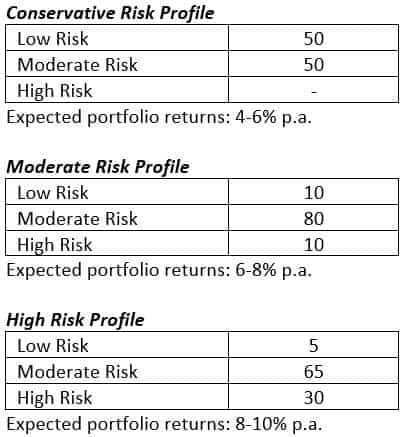
    Answering these two questions will give you an idea of your risk profile – conservative, balanced or aggressive. Next, you should determine your ideal asset allocation. The strategic asset allocation is a breakdown of your investment allocation into three simple investment asset classes – low risk, moderate risk and high risk.

    Low risk assets would comprise of risk-free assets that hold their values and likely have a pre-determined rate of return. Examples would include deposits place in financial institutions and government issued bonds like Malaysian government securities (MGS).

    Other fixed value assets with variable expected returns or those with minimal price fluctuations that fit this category include our Employees Provident Fund (EPF) savings, certain fixed priced Amanah Saham funds and low risk fixed income securities like money market funds or capital protected products.

    Moderate risk assets on the other hand have the potential of generating a higher variable return (e.g. between 4-6% p.a. above the risk free rate) and could comprise of assets such as blue chip dividend stocks or a balanced diversified portfolio consisting of shares and bonds. Property assets and REITs that offer both regular income and potential long-term capital appreciation can be categorised here as well.

    Lastly, we have growth or high-risk assets that are made up of stocks in a diversified portfolio of expansion-focused companies, small to mid-sized businesses in developing countries, commodities and perhaps alternative assets such as private equity investments or collectibles like wine, luxury watches and paintings.

    These may fluctuate a lot more in value but offer potentially better long-term returns.  

    Let us look at a simple approach to asset allocation for one’s investable assets:

    A moderate risk investor would probably place the bulk of his investable assets in moderate risk assets and only around 10% in the high-risk space. From this allocation, he should expect a blended overall return of around 6-8% p.a. As such, the strategic asset allocation gives you an idea on how you can select a combination of different assets classes and the corresponding expected returns on your overall portfolio.  

    Given the nature of these alternative investments at this juncture – where price discovery remains a challenge, volatility is high, and long-term values remain uncertain – it would be more appropriate to classify them as part of your high-risk investment bucket.

    Back to the question of whether investing in those alternative assets in the examples given are suitable for you, firstly consider where it fits in based on the suggested strategic asset allocation.

    Perhaps a 10% allocation in each of these strategies would be sufficient for most. In simple terms, this means roughly 1-3% allocation of one’s investable assets would be about right for the balanced to aggressive profile investor.

    In conclusion, the next time you encounter an innovative investment option that comes across as the best invention since sliced bread, the first thing you need to do is to increase your knowledge and understanding of that product instead of signing the dotted line simply based on a herd mentality or the fear of missing out.

    Should you decide to proceed thereafter, then invest based on your ideal strategic asset allocation in line with your risk profile. This golden rule should keep you in good stead for a long time to come.

    About the Author:

    Felix Neoh CFP CERT TM is the Director of Financial Planning at Finwealth Management Sdn Bhd and is a certified member of FPAM. He can be contacted at enquiry@finwealth.com.my

    We at Smart Investor and Finwealth is committed to help you better manage your financials. Get a free consultation from an expert by filling in your details here: https://www.smartinvestor.com.my/SIxFinwealth

  • What is Financial Wellness – It’s Not Just About The Money

    What is Financial Wellness – It’s Not Just About The Money

    Taking personal finance to another level by looking at it from a more holistic view.  How has the past year been for you? I’ve done a lot of reflection on myself and how I want to further evolve when things get a little more normal for the coming year (fingers crossed)! One thing I personally learned is about life and recognising that money is just a tool. We must make sure we use it correctly in order to work towards financial wellness.
    “People first, then money, then things.” – Suze Orman

    Reflection on the path to financial wellness

    The stoic path to wealth mentions that the fear of losing all our wealth is creating a monster inside us and therefore turning the chase for wealth into fear of losing it. This eventually turns money into our master and we’re enslaved by fear until we almost lose touch with ourselves. There is a saying “Money is the root of all evil”. But in actual fact, the full quote is “the love of money is the root of all evil.” It’s the greed for wealth that is bad as it can corrupt minds, and the need to keep accumulating more and more is the real issue.

    Money is not the end goal

    Personal finance is not about the money we have or about creating more wealth. Its main purpose should be more holistic, ie. leading the life you were born to lead, no matter what your financial status is. You’ll see money in a different light if you began your career with a student loan. Even before starting your career, you’ve already created a load of fear by accumulating a large amount of debt. This results in your mind becoming clouded with thoughts of the repayment of loans first and pushing aside all other goals or dreams. I personally experienced it as a child; teachers kept telling me to finish school, get good grades, go to university, get a degree and get a good paying job. As a child I thought that was the dream, but it didn’t turn out the way I imagined it would as a child. We were repeatedly told this fairytale, and subconsciously I believed it. But now that’s not the case. How can we take a holistic approach around our personal finances and take back control of our life? Believe me, we’re not meant to suffer through life constantly worrying about paying bills.

    Reflecting on your childhood dreams 

    Have a goal in mind. You already knew what you wanted when you were a child. In fact, there’s a good chance you were so good at it. Try asking your parents or other close family members what you were like when you were around the age of 9 to 12. It’ll give you some insights about your strengths and your childhood dreams. I grew up observing how passionate my parents were and how they were willing to give their all to their career. At the end of the day, my parents still had time to spend with us and go on a little vacation once in a while. It was a nice balance. That’s currently what I want to strive for – a balanced life between my career and family. I’m not saying I don’t want to be rich (who doesn’t), but it’s not my main focus right now. Between juggling two young kids, my husband works long hours because he enjoys the work he does. Even though in my opinion, he deserves to be paid better, it matters less. There’s been a string of financial decisions we made that may be a sin in the personal finance community focused on accumulating wealth. But we needed to make those decisions to get to where we need to be in life. Our goals were bigger than wealth accumulation.

    Using my finances to find peace 

    We can never be free. I believe there’s no such thing as financial freedom. This is because I realised just when I thought we were “free”, something would suddenly hit us like a bomb and I would think “Here we go scrambling again”. Getting married is expensive. Staying married is expensive. Having kids is expensive. I remind myself of my battles daily. If my needs are covered, I am willing to forgo some of my wants. How precious and priceless is the laughter of a child?

    Just do you 

    It‘s terribly hard to maintain a balance and I personally struggle with this on a regular basis. Turning off the work switch and being present was a difficult process. Being frugal and being disciplined in managing our budgets has a big impact on our long term finances. But this just makes me exhausted. There’s no point stressing about maximising my savings or the future so much that I forget to be present. The goal is not the money – it’s my life. I’m not going to kill myself just to keep striving towards this illusion that my future will be far brighter if I continue maximising my savings and investments. I choose to enjoy every step of the journey instead, without mentally burdening myself. Use your wealth-building experience to create happiness for yourself and inspire others to do the same. Remember it’s not about the numbers and figures in your portfolios, but what you do with the money.
    “Wealth consists not in having great possessions but in having few wants.” – Epictetus 
    Move from survival mode to thriving mode. Choose not to be trapped in the illusion of not having enough. You’re enough! If you’re in survival mode, you’ll trap yourself in the rat race. Therefore, there’s no room for helping others and all you’ll think about is how to make yourself better instead of the community around you.

    About the author

    Nurul Yahi has a background in Business Administration majoring in Islamic Financial Planning. She’s a financial enthusiast and you can find her at dearduit.com. You can also find Nurul on TwitterInstagram and Facebook.