Category: Guides

  • A Guide to Property Investment in Malaysia

    This article is written to share some steps for you to consider when evaluating properties as an investment vehicle in Malaysia.

    Think of it as a methodology for you to apply during your first round of scouting properties before going into more detailed research.

    This selection process can be applied to property investment opportunities in both the primary market (properties under construction) and the secondary market, including auction properties.

    The goal is to identify a suitable area and then select property that will represent a logical, financially-suited and tax-effective investment vehicle.

    1. Look for established and planned infrastructure

    One of the specific elements that influences demand within an area is the degree to which established and planned infrastructure is readily accessible to tenants.

    Thus, it’s crucial that the existing and planned infrastructure surrounding property is critically identified and assessed.  

    Ask yourself why property in areas like Taman Tun Dr Ismail (TTDI), Mont Kiara, Bangsar and Desa Park City are very sought after?

    One factor is that these neighbourhoods are matured, secure and self-sufficient townships that offer many modern conveniences — from good schools, access to banks, retail and F&B outlets, and many popular public parks.

    Using TTDI as an example, it’s close to popular commercial developments such as 1Utama Shopping Centre, the Bandar Utama City Centre, and the Curve, as well as a number of multinational companies that base their offices nearby like Tesco and IKEA in Bandar Utama.

    It also has a green lung of Lembah Kiara as a public park.

    Infrastructure can be divided into two broad categories:

    i) Accessibility – Local transportation links like access to local bus routes, MRT/LRT feeder buses, train stations, access to highways and also major arterial roads

    ii) Local amenities – schools (including international/private schools), shopping centres, parks, hospitals, recreational areas, jogging/cycling paths, public parks etc

    An attractive area for property investment is an area with amenities and rich infrastructure, of which there are several in Malaysia.

    Alternatively, you could also look at areas that have some upcoming planned infrastructures like new highways (DASH, SUKE), highway access (MEX extension or interchange add ons), new MRT lines, LRT lines, and convenient access to commercial areas with eateries, banks and offices.

    Other key indicators include sustainable malls (not just any mall, but those with established management with experience running malls that are well occupied/tenanted and well patronised), government or private/international schools, universities, public transportation, green lungs like parks and recreational areas, and working populations with a heavy focus on professionals in the middle to high-income group.

    However, the time it would take for these infrastructures to be resident-accessible is a factor that shouldn’t be ignored.

    Remember that you have to take into account the duration for your own target property to be built as well as the maturity of new infrastructures (highway, MRT, LRT, new central business district, malls etc) to be ready. 

    The faster one expects infrastructure to materialise, the quicker and better the chance of a property investment yielding capital appreciation while simultaneously lowering the risk of the infrastructure project being postponed or worse still, called off entirely.

    Many will testify that this is not an uncommon occurrence in Malaysia!

    2. Observe the residential vacancy rate and supply of similar properties

    The same fundamental economic forces that affect the share market or even the price of coffee in your neighbourhood cafe are the exact same forces that affect the price and rental of the property market: supply and demand.

    Naturally, an area with high demand but limited supply will inevitably experience above-average capital growth. An area that is “oversupplied” in contrast to demand will result in lower average capital growth.

    A property investor in an oversupplied market may be forced to: 

    i) experience an extended vacancy period; 

    ii) be forced to revise the rental rate downwards to attract a potential tenant in a competitive market environment; or

    iii) incur a greater than anticipated cash outflow/expense as a result of lower rental yield and/or extended vacancy rate

    An area with strong property demand is also more likely to attract tenants and own-stay occupiers to the same area.

    One perspective to consider is to think about an area with a lot of units, it’ll be sensible to analyse and identify the vacancy rates in the development and also the surrounding area of the neighbourhood.

    If the vacancy rate is high (for example, over 10%), be wary about the competition you may have, not just within the development you have invested in but also neighbouring developments.

    In the instance of high vacancy, it is a tenant’s market to pick and choose.

    In a competitive tenant-oriented market, you will need to consider ways to manage the vacancy or to attract tenants to pick your unit over others.

    Before buying any property for investment, plan ahead for sufficient reserves to act as a buffer to sustain a higher vacancy period and/or putting in more capital to furnish the place or make your unit stand out among the competition.

    3. Focus on mass market property and homes with a unique selling proposition

    For property investment, consider buying mass-market product homes in the target area, but ensure that your entry price isn’t above similar transacted prices.

    In the worst case scenario, purchasing a poorly selected property that has little valuation upside below the average transacted cost of similar properties in the area, at the very least, an investor would not be the first to lose money.

    You should also look at the median property price of any one area.

    You’ll often hear the saying “location location location”, however, the relevance to that mantra is not quite the same in this day and age.

    More importantly, consider whether the price you are paying is around the average of the property market, whether or not the average Malaysian can afford to buy/or rent in the area that you’re targeting.

    A typical rule of thumb we recommend is that a property investor invests at a price point within a 15% range of the median property for that particular area or development. 

    Our observation is that by limiting one’s scope to properties within this 15% price range, an investor is able to obtain an “above average” property that is more likely to represent good value for a future purchaser and prospective tenants.

    To put it simply, a property within this price range maximizes represents a home the majority in that area is likely to afford to either rent or buy. 

    4. Be open to multiple rental strategies 

    Have an open mind and consider having multiple rental strategies for your property investment to target different rental prospect segments such as students, middle to high income locals, or expats so that you don’t just depend solely on one type of tenant.

    For example, a “mass market property” in Bangsar, Mont Kiara, or TTDI isn’t within the same price bracket of a “mass market property” in Puchong, Selayang, Rawang or Sungai Buloh. This also applies to other hot areas within Malaysia.

    A mass market development refers to properties that are priced and rented at affordable levels to the locals in that area. There are two parts to this equation:

    Firstly, you must find out what the prices are for the various types of properties within an area. For example, segments condominiums landed bungalows and terrace houses to use as examples.

    The second component is to roughly estimate who the locals in the area are and how much they’re likely to earn.

    Typically, as a rule of thumb, a tenant or own stay would spend a maximum of one-third of their disposable income for housing expenses each month.

    So if the usual rental price of a property is RM2,000 per month, the disposable income for that household should be around RM6,000 to RM8,000.

    Do plan out multiple rental strategies like having a master tenant, rental on a per room basis, or even platforms like Airbnb, so that if one doesn’t work, you can try another approach.

    If you buy a property relying on one stream of marketing, eg. only Airbnb, you run the risk of property management deciding to ban it.

    And if your Airbnb unit isn’t profitable or requires too much time to manage or a black swan event like the Covid-19 pandemic leading to a lack of travellers, you’ll struggle with tenancy options.

    5. Pay attention to the cash flow rule

    Ideally, you’ll want a property investment where the minimum expected rent can cover 80% of your monthly mortgage instalment so that it wouldn’t deplete your cash flow to the point where you need to sacrifice your vacations, luxuries, cars and other basic necessities.

    This also implies that with better cash flow, you could be eligible to obtain more loans in the future and therefore can invest in more properties or other assets of your choice.

    Let’s use a subsale property that costs RM560,000 as a case study.

    • Purchase Price = RM 560,000
    • Loan Amount = RM 504,000
    • 35 years tenure, 4.6% rate, Installment = RM2,416

    Assumptions:

    1. There are no new major catalysts (e.g. transport infrastructure, central business district) that affect rental appreciation)
    2. There are similar developments that we can take as a comparison. Rental benchmarks are taken based on the transacted rental of units with a similar layout that’s less than 10 years old

    Case A: If your rental = RM1,900

    Rental-Installment Ratio = Rental / Installment = 1900 / 2416 = 78.6% → not qualify

    Case B: If your rental = RM2,200

    Rental-Installment Ratio = Rental / Installment = 2200 / 2416 = 91.1% → qualify 

    We can say that Case A is not good enough to be considered because the Rental Installment Ratio is below 80%.

    Does this mean we disqualify Case A straight away? It depends.

    We did the comparison based on assumptions that the area does not have any other major infrastructure to induce a more significant increase in the rental. Secondly, there are similar units in the area that aren’t much older than the subject. 

    Let’s look at another point of view, in which the scenario is that there are major infrastructure developments and amenities where the rental could possibly increase to RM2,000 for example:

    Rental installment ratio = 2,000/ 2,416 = 82.7% 

    Therefore the property now should be taken into serious consideration.

    OR 

    If there is no newer supply of similar units. Most existing developments are already more than 10 years old, and the rental benchmark against these developments aren’t apple-to-apple comparisons, and rent of RM1,900 would be an underestimation of rent potential.

    New development with a modern facade and newer facilities has strong property investment potential and is in a strong position to command a higher rent.

    Prospective tenants would likely be willing to pay a 10-20% premium to live in a more posh and modern residence, especially if they are expats in Malaysia.

    These are just two examples of how one development becomes a “good” or “bad” development based on different factors. 

    6. Prioritise and achieve balance of rental yield and capital growth 

    Capital growth isn’t the only factor that makes property investment exciting; it’s also the fact that regular and constant income can be derived from real estate that makes it a sound investment choice for many investors.

    Rental income is also a source of cash flow that can be used to pay down debt on the property. Rental yield, therefore, is simply the annualised rental income expressed as a percentage of the value of the property. 

    For example:

    • Property value = RM400,000
    • Monthly rental = RM2,000
    • The annualised rental income = RM2,000 x 12 = RM24,000 
    • Rental yield calculated as a percentage =  24,000 / 400,000 =  6% 

    This is not only an important percentage as it helps to determine the return on investment so that the cash flow requirement of servicing and maintaining the property can be calculated, it also provides important information about the rate of capital growth. 

    A natural response would be to obtain as high a rental yield as possible. However, this may not always be the best route for the investor.

    More often than not, an area experiencing high rental yield is more likely to have a lower capital growth, and vice versa.

    Usually, when rental returns are high, investors are willing to accept a less than average capital growth rate. When rental yields are lower, investors must be compensated by achieving a higher than average capital growth rate.

    Most people will strive to achieve a balance between making a bit more money now (higher rental yield, cash flow and lower capital growth rate) or more money later (lower rental yield, higher capital growth rate).

    7. Calculate potential cash on cash return(COCR)

    COCR can be used as a metric to quickly evaluate if you should pump in more capital for the investment property.

    However, we urge caution when looking solely at this number as this figure may not necessarily be the most useful and accurate way to evaluate the rate of return beyond one year.

    Cash on Cash Return = Income / Capital Outlay

    Income = Rental income – (installments + maintenance + sinking + quit rent + fire insurance)

    Capital outlay = Remodel/Reno + acquisition cost + progressive interest (if undercon)

    Example :

    To compare buying an undercon and subsale at nett price of RM550,000

    a) Buying an undercon

    • Price: RM611,000
    • Loan amount : RM550,000
    • Monthly installment = RM2,637
    • Progressive interest costs: RM20,000
    • Downpayment: ZERO
    • Legal fee, stamp duty = Waived
    • Renovation = RM25,000
    • Capital outlay : RM 1,000 + RM 25,000 = RM 26,000

    Assuming a first year rental of RM1,900 per month:

    Income = (1,900×12) – (2,637+300) x 12 – 1,000 (assessment) = – RM13,444. In the first year, cash flow is negative for over RM13,000 and I spent RM26,000 to acquire the property

    A quick calculation of COCR = -13,444 / 26,000 = -51.6%. This shows a negative COCR.

    Consider the next investment option:

    b) Buying a subsale

    • Price: RM550,000
    • Loan amount: RM495,000
    • Monthly installment = RM2,373
    • Progressive interest costs: ZERO
    • Downpayment: RM55,000
    • Legal fee, stamp duty, valuation = RM22,500
    • Remodeling / Refurbishments = RM30,000
    • Capital outlay: RM55,000 + RM22,500 + RM30,000 = RM107,500

     Assuming a first year rental of RM2,200

    Income = (2,200×12) – (2,373+300) x 12 – 1000 (assessment) = – RM6,676 

    In the first year, cash flow is at negative RM6,000 but I spent over RM100,000 to acquire the property

    A quick calculation of COCR = -6,676 / 107,500 = -6.21%. This shows a negative COCR.

    As COCR is only good in the short term, you need a better way to analyse your target property otherwise this number, which happens to be negative, will not tell you much. What can be deduced from this figure? Does a negative COCR tell you that you’re going to lose money? 

    Both options have negative COCR, but scenario (b) is less negative. 

    Scenario (a) capital outlay is RM26,000 with COCR -51.6% while scenario (b) capital outlay RM107,500, COCR -6.21%. How can you tell which one gives a better return? Can there be another way to evaluate these two options?

    8. Meaningfully analyse your potential return on investment via internal rate of return (IRR)

    As investors, it’s important to know the returns you make on your investment because you want to be able to know which are winning plays or losing plays.

    For financial instruments like shares, bonds or unit trusts, keeping tabs on how well these investments are doing is quite easy because these investments have to produce some sort of “report card” each year; some may even produce it monthly. 

    If you don’t know how to check on the status of these investments, it’s probably best you engage a financial advisor to help you out.

    However, it’s not that simple for property investments.

    Using the internal rate of return (IRR) takes into consideration the cash outflows (your cost) of owning the property over any given investment horizon.

    Cash on cash return (COCR) doesn’t give you an accurate picture of how good or bad your investments are, as you wouldn’t be able to make comparisons using COCR with the returns you get from other investments like entering into a business venture, Amanah Saham Bumiputera (ASB) funds, unit trusts, shares, or any other options available to you.

    COCR = Annual cash flow / Total investment

    Annual cash flow = all income – all expenses. It captures the snapshot year by year. If the COCR is positive, this suggests you’re getting some returns from the money put into this investment.

    But what if the COCR is a negative number?

    How would you benchmark against other asset classes? Property investment is a long term investment vehicle. Taking a snapshot return of any one particular year does not convey the full picture about whether you stand to make good or bad returns or lose money.

    Rental yield = Annual rental  / purchase price

    This metric gives a quick indicator as to how the property is performing but it does not tell you anything about the expenses incurred to get the property rented out at a certain rental rate.

    For example, let’s say owner A has two properties worth RM560,000 each of the same layout and size in the same development.

    For one unit, the owner spends RM40,000 and he gets a rental of RM2,800 and for the other, he spends RM25,000 to get a rental of RM2,500. 

    Rental yield for unit #1 = 2800 x 12 / 560k = 6%

    Rental yield for unit #2 = 2500 x 12 / 560k = 5.36%

    The rental yield for unit #1 is 6% while unit #2 is 5.36%, but can we conclude that unit #1 is better than unit #2? It isn’t very accurate to make such an assumption just by looking at this equation.

    If we restrict ourselves by analysing based just on rental yield, we will ignore the other extra cost of RM15,000 that it takes to be able to charge a RM300 premium on the rental yield of unit #1 compared to unit #2. 

    One way to address this cash flow is to use the internal rate of return as mentioned earlier. This is the third complimentary benchmarking tool to look at to help you make more informed decisions when evaluating a property, and is also useful for considering other asset investment classes.

    IRR is simply the internal rate of return of the investment in which the net present value of all cash flow equals to zero.

    When investing in property, it’s important for you to have a plan.

    A plan is not the same as being told “let someone else pay your loan”; or “this property is yielding 20%” when you don’t know what those two sentences mean! Like all investments, there is a tried and tested method called IRR or internal rate of return.

    Click here to learn more about internal rate of return and how to calculate it.

    9. Evaluate based on transacted data

    One of the worst methods of getting information to validate an investment is through forums or a non-expert.

    While we recognise the advantage of getting tips or rumours if you’re going to be spending a lot of money on your investment, why take the risk at all? 

    To evaluate transacted data, begin by benchmarking the selling price of the target property against the transacted price of similar products in the area for the last 12 to 24 months.

    Step 1: Go to https://www.brickz.my/ 

    Step 2: Search for area or development name 

    Step 3: Search for area name 
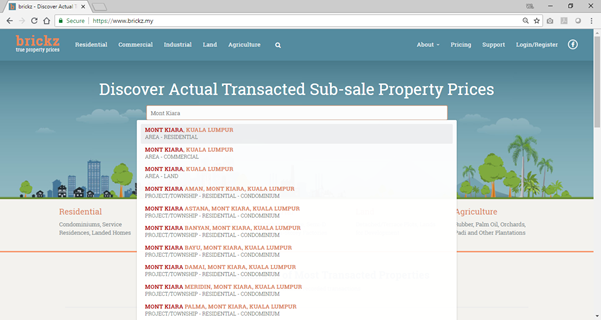
    how to search for the name of an area - development name search, property investment in malaysia, there are 10 ways

    Step 4: Search for development name

    development name search, property investment in malaysia, there are 10 ways

    10. Don’t forget your game plan 

    Building a portfolio is just like building up a football team – your team will require good cash flow properties (defensive) and good capital gains (offensive). 

    You can maintain your portfolio through defensive plays alone, but this strategy wouldn’t give you much cash to grow your portfolio.

    The ability to consistently buy successful undercon properties involve many uncertainties that include the workmanship, delays or abandonment of the project, cancellation of nearby infrastructure and so on.

    On the other hand, one can get more reliable data about transacted price and rental from subsales properties.

    You can also visit the development and check out crucial factors like the profile of the residents and the upkeep of the development to entirely avoid the risk of construction delays or abandonment. 

    Cash from capital gain plays can be used for several purposes: loan reduction for defensive play properties, portfolio expansion, or used as self-rewards such as travelling, a dream car, or starting up a business.

    Others may also use capital gains to fund children’s education or to keep for health emergencies.

    You should also consider the time and effort of managing four units of low cost flats vs managing two residential properties for middle-upper income groups.

    A low-cost only portfolio strategy does have its drawbacks. 

    Firstly, it’s more likely that you’ll encounter more issues managing lower income bracket tenants like late payments or even defaults.

    Secondly, management spends on amenities improvements is limited. Most of these developments are run down and will not look appealing to future buyers or renters.

    On the other hand, low-cost apartments provide better rental yields with limited capital appreciation. 

    Some people believe that buying landed properties gives better capital gain, sacrificing cash flow. Investing in too many landed developments will significantly affect short term cash flows compared to highrises.

    In addition, to aim for better capital gains, people believe in investing in new areas or untested products (small units, new/low occupancy offices towers, landed play, negative cash flow) to hopefully enter at a lower price and exit the market after the boom, (for example, Setia Alam). 

    New areas and new mega developments involve huge resources and take time to build and there are a lot of dependencies and uncertainties involved.

    Developers usually take a minimum of 10 years to build a self-sustaining township. Holding power and cash reserves are the most important considerations in deploying this strategy.

    Your ability to maximise your property value depends on your holding power, your own patience, and cash reserves. 

    There are people who prefer the hybrid investment model (capital gain + cash flow), who would choose investments in high rises below market value while still offering decent cash flow.

    And then there are others who use properties as a vehicle for wealth preservation or to provide a steady stream of income and tend to prioritise strong cash flow properties.

    It all depends on your own resources in deploying proper investment planning, risk appetite, holding power, cashflow priorities and many factors.

    The winning formula is about creating a balanced mix that suits your game plan to meet your financial goals. There are no free lunches out there so keep learning, and apply the knowledge learnt.

    The more enlightened you get, you’ll make better, rational choices when building your nest egg for the future. All the best in your investment journey!

    About the authors

    Rozanna Rashid is a Licensed Financial Planner (CFP, IFP) and has an MSc in Real Estate Economics & Finance from the London School of Economics & Political Science. She can be contacted at rozanna@alpine-advisory.com

    William Wong is an avid property investor and has an MBA (Finance) from Universiti Putra Malaysia. He is also the co-founder of Property Buddy PLT, a company that helps property investors strategise to achieve optimised rental returns via refurbishment for their investment properties


  • How A Credit Card Works in Malaysia

    How A Credit Card Works in Malaysia

    2020 was a challenging year for many, but undoubtedly, it also sped up the transformation of people’s spending habits, pushing all of us towards online channels. Try to recall your last online shopping experience. How did you pay? It most likely would’ve been through online banking, e-wallet or credit card. Many of us choose to pay using credit cards because of a particular bank’s promotion or to collect points.

    In the mid-1970s, credit cards were first introduced in Malaysia. Since then, it has become one of the most common payment methods and the main source of short-term borrowing. With credit cards, we can buy the item now but pay for it later when it’s due. Today, with the government’s cashless society initiatives, credit cards are playing their role everywhere, and aren’t limited to just physical payments. It can be used for monthly auto-recurring bills, reloading e-wallets, signing up for an easy payment plan (EPP) and more.

    It’s a reality that credit cards are a major payment method in our daily lives. However, to play well in the “game of credit cards”, we need to know the rules to abide by first.

    1. What’s The Entry Fee?

    There are two kinds of fees involved here.

    a) Service Tax

    Effective from 1 September 2018, all cardholders are required to pay an annual service tax of RM25 for each active credit card (principal card and a supplementary card will be charged separately). This fee is unavoidable but some banks do offer rebates for this.

    b) Annual Fee

    From a personal finance perspective, you should only opt for a zero annual fee card! Unless you have strong and valid reasons, you should avoid a card that charges you hundreds or thousands of ringgit in annual fees.

    2. What You Need to Know?

    To avoid falling into traps, it’s better to know some jargon first.

    a) Credit Limit

    Treat it like a pre-agreed loan amount. This is the maximum amount that the bank grants to us for our spending. To determine the credit limit, banks usually look at two factors – our income and credit history. If we spend more than our limit (ie. breaking the rules of the game), be prepared to get a fine!

    b) Minimum Payment

    Ideally, you should endeavour to pay your outstanding balance in full. However, at the very least, you’re required to pay the minimum amount, which is 5% of the outstanding balance subject to a minimum of RM50. However, please take note for instalment payments like easy payment plans (EPP), the full instalment amount must be paid. If you can’t pay the minimum payment before the due date, be prepared to get a fine as well.

    c) Interest-Free Period

    This is the tricky part. We do enjoy an interest-free period of 20 days from the statement date provided all outstanding balance is fully paid. The last day of this interest-free period is usually referred to as the due date. Many people will have a wrong perception that they will always enjoy the interest-free feature for all new purchases, even when there’s an outstanding balance on their cards. However, this isn’t the case. If you have any outstanding balance on your credit card, the interest-free period won’t apply to the outstanding balance as well as any new purchase.

    For example, if someone has an outstanding due balance of RM1,000, and he/she makes another new purchase of RM1,000 with the same credit card, the finance charge will be calculated based on the RM2,000 balance (outstanding and new purchase) instead of the previous balance due of RM1,000.

    3. Are There Penalties?

    If you can’t play the game well, you might need to pay a penalty.

    Most people know that credit cards charge high-interest rates. However, between interest rate and convenience, people tend to opt for convenience first. A swipe of a card will always be the top choice compared to a loan application, which can take a few weeks to be approved!

    a) Late Charges

    Everyone knows credit cards work under the buy-now-pay-later mechanism. However, if we don’t make the minimum payment before the bill’s due date, a late payment will be charged. Usually, the amount will be 1% of your outstanding balance (subject to a minimum of RM10, or up to a maximum of RM100).

    b) Finance Charge

    If there is an outstanding balance that remains unpaid on the due date, a finance charge will be applied (usually people refer to it as interest). Bank Negara Malaysia implements a tiered interest rate system for credit cards, ranging between 15% to 18% depending on your repayment track record.

    c) Overlimit Fee

    If you spend more than your approved limit, an over limit fee will be charged. It varies across different banks, from RM25 to RM50 per month.

    These are some of the important things you must know before you apply for or start using a credit card. It’s important to take note because misusing credit cards can lead to financial ruin. Shifting your payment pattern to cashless can be rewarding. However, it can easily lead to overspending as well. According to the Department of Insolvency, Malaysia recorded 84,805 cases of bankruptcy between 2015 and 2019, with around 10% attributed to credit card debt!

    For credit card newbies, I have five important suggestions for you:

    1. Apply for only one card and get used to the full credit card payment cycle before applying for a second (if required).
    2. Limit your monthly credit card usage initially, then you can consider increasing later once you have proven to yourself that you can manage this well.
    3. If you can’t pay the full amount in cash now, don’t even think of making another purchase with your credit card.
    4. Check your credit card statement every month to review your “swiping pattern” and ensure there are no fraud / unauthorised transactions.
    5. Never pay the minimum amount for the month; full payment is a must by each due date.

    Financial literacy is not just about knowing about financial matters. Acquiring and consuming knowledge is easy in the internet era, but behaviour and habits are what counts. A credit card is a good financial tool if you use it wisely. Be responsible for your personal finance today as financial planning starts from small baby steps. If you need a professional to assist you along the journey, consider engaging a licensed financial planner to keep you on the straight and narrow path towards financial freedom.

    About the author

    Ocean Pon is a Licensed Financial Planner and can be contacted at oceanpon@finwealth.com.my

  • Does Value Investing Work?

    Does Value Investing Work?

    For decades, value investing has been popular with financial luminaries like Ben Graham and Warren Buffett, who is arguably the most famous investor in the world. Buffett is renowned for his investing style which is “value investing”. Many are curious about what value investing is and whether the concept still works in an environment where the Covid-19 pandemic is plaguing the whole world.

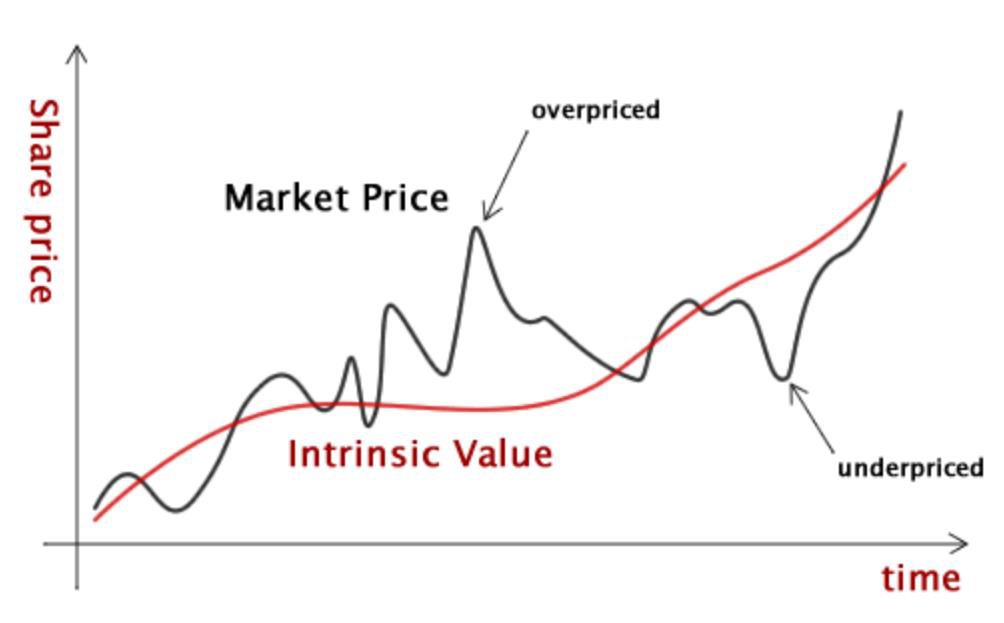
    Firstly, investors must understand how value investing works. In layman terms, value investing is a strategy for taking advantage of the market at the right moment. It’s based on the idea of “appraising” stocks, with value investing advocating hunting for stocks that are undervalued based on their “intrinsic value”, before buying them, holding them and weathering the volatility of the market. In theory, a company’s stock value should be the same as its market price but in many cases, this doesn’t hold true. It’s possible that stocks could be overvalued and at other times, it’s undervalued.

    To carry out this strategy, the investor will be required to analyse the company’s fundamentals and project the future profits that the business is going to generate in its lifetime and with that the investor is able to assess whether the company is underestimated in the market or not. If so, you get to buy its stocks at a bargain in the hopes that the market will turn in their favour over the long run. These value stocks are being sold below their intrinsic value and have huge potential to grow in the future when the price is adjusted accordingly.

    Although the concept seems simple, value investing is extremely difficult to implement properly and requires rigorous analysis to determine what the “underlying value” of a stock is. In today’s environment, investors must consider geopolitical factors, fiscal or monetary policies, currency, business model, supply and demand of the company’s services or products, and other underlying factors.

    stock analytic chart

    Understanding Value Investing is Vital before Making any Investments

    If you look at the chart above, the red line indicates the company’s potential or intrinsic value. In the beginning, due to its low value, the market misinterpreted the situation and quickly undervalued its stock. Value investors wait for this golden opportunity to buy the shares at a discounted price. They know the company has future growth potential. Then, they sell their stock when the market price is overvalued, earning them a nice, big profit. 

    For example, let’s take Microsoft whose product is widely used and accounts for 76.56% share of its industry as of December 2020 according to Statista.com and has about 1.5 billion active users worldwide. On average, its net income margin is about 25% per year and it consistently manages to turn over healthy profits. Despite the Covid-19 outbreak, its products were still massively used but during the pandemic selloff in March 2020, it lost about 25% of its share value. 

    Putting the factor of the COVID-19 outbreak aside, this company maintained good, continuous growth, and its share value grew about 23,000% in the last 30 years. Using the value investing strategy, one will see a huge opportunity in this company due to its nature of business, as well as the demand for its service and product continuing even during a pandemic. 

    (*Note: This should not be taken as financial advice or a buy recommendation.)

    Like all investment strategies, patience and diligence to stick to the investment philosophy is a requirement. There will be days when an investor may want to purchase some stocks because the fundamentals are sound, but he or she may have to wait if it’s overpriced at that time.

    If investors are unable to properly carry out this strategy themselves or commit to the time needed to invest themselves, it’s always advisable for them to seek for professional advice or seek a proper licensed financial planner or financial advisor to assist them. These professionals will be able to offer advice according to the investors’ risk appetite, goals and objectives. Other factors will also be used to evaluate the investors’ current financial condition before such advice is given.

    Conclusion

    Therefore, do buy the stock that is most attractively priced at that moment, and if there is none that meets the criteria, just sit and wait and let the cash sit idle until an opportunity arises. The bottom line is, value investing is a long-term strategy, it requires hard, there is no short cut and it works as Warren Buffett is still a devoted advocate of this strategy.

    About the author 

    Alex Ng Wern Ping is a licensed financial planner, and can be contacted at alexng.alpineadvisory@gmail.com.

  • How To Check And Claim Unclaimed Money in Malaysia Online

    How To Check And Claim Unclaimed Money in Malaysia Online

    In 2019, the sum of money NOT being claimed by Malaysians was reportedly over RM10 billion, which is quite a sizeable amount! According to the news article, the Accountant-General’s Department (AGD) wanted to help Malaysians check the status of their unclaimed monies, leading to the development of an online system for this purpose.

    Previously, to check whether you have any unclaimed monies (eg. from tax relief), you’ll need to queue up without knowing if you even have any unclaimed money! However, earlier in 2020, the AGD’s eGUMIS portal went live and it was a significant improvement for people wanting to check whether they had any unclaimed monies.

    Despite this breakthrough, if you wanted to claim the money, you were still required to pay a visit to the AGD’s office to submit a physical form (Borang Permohonan Bayaran Balik WTD “UMA-7”).

    I remembered I had a small sum of money unclaimed, but due to the trouble and since the amount was not significant, I procrastinated and left the money unclaimed, on purpose. Towards the end of 2020, I read an article on The Star that stated the government could consider using unclaimed monies as a “source of revenue” – this triggered me to check my unclaimed money again.

    I was asked to create an account again as my account had expired after six months of inactivity. As I registered for another account, I realised that the user interface had changed and the more I explored, the more I realised that eGUMIS now allowed us to submit forms online.

    My step-by step experience of claiming my unclaimed monies is outlined below, and be sure to read till the end as I will also explain how to overcome a certain bug (as of 28 November 2020) in the system:

    Step 1: Register For a New Account

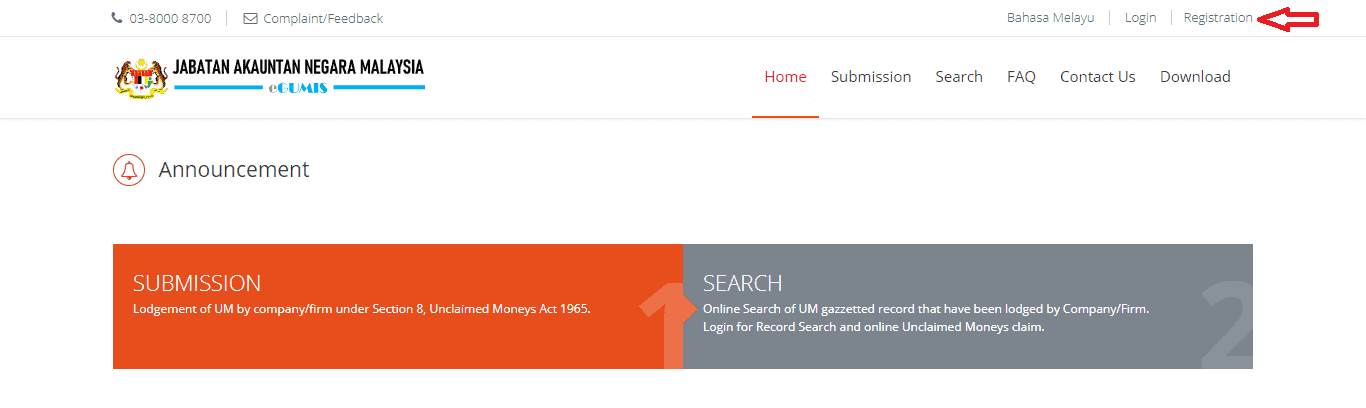
    First, head over to this link to register for a new account. Then click on ‘Registration’ in the top right corner as per the screenshot below to get started.

    Note: You may first need to change the default language to English, or you may proceed in Bahasa Melayu.

    egumis home

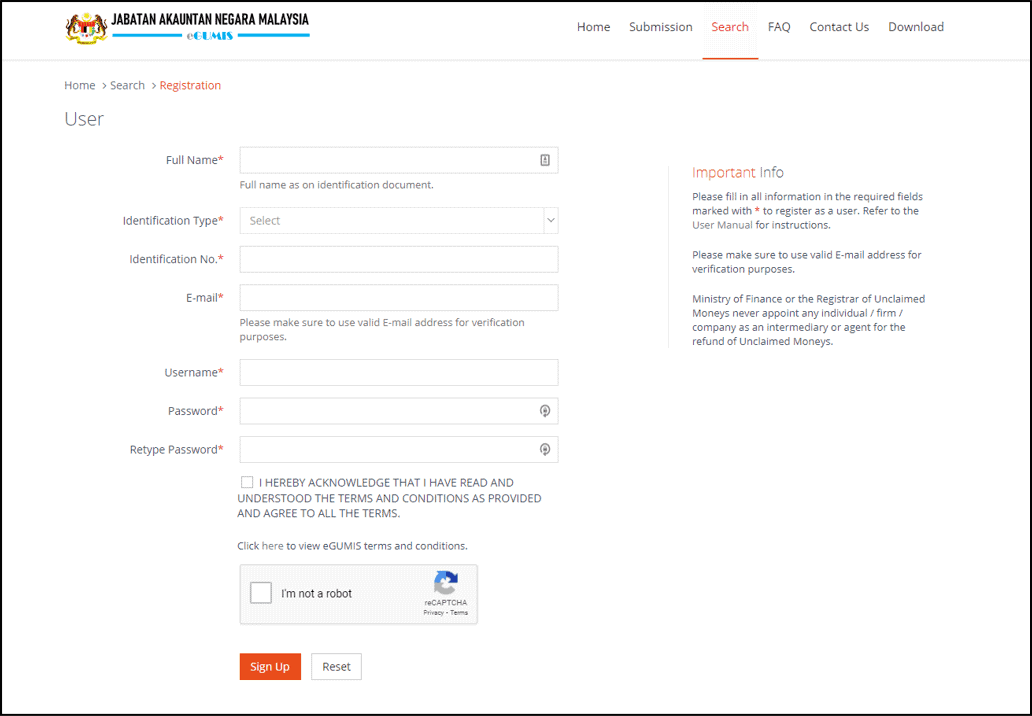
    You may then fill in the form to register your new account.

    Account Registration Form

    Your account will be deactivated after six months of inactivity, so if you have previously registered and have not logged in for the past six months, you’ll need to register for a new account.

    Step 2: Update your Profile

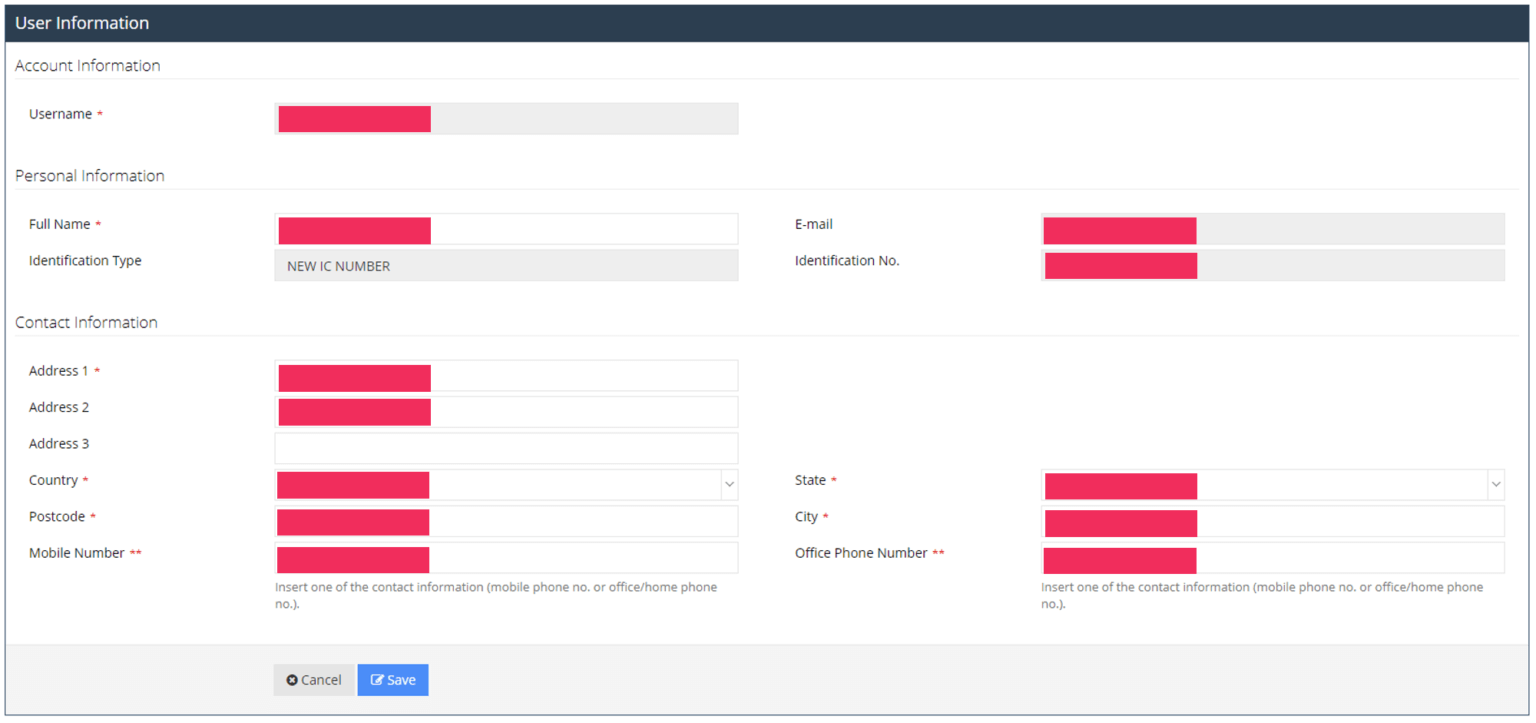
    Next, update your profile. Make sure to fill up all the boxes that is marked as compulsory (*).

    User Profile Information Form

    Step 3: Check for Unclaimed Monies

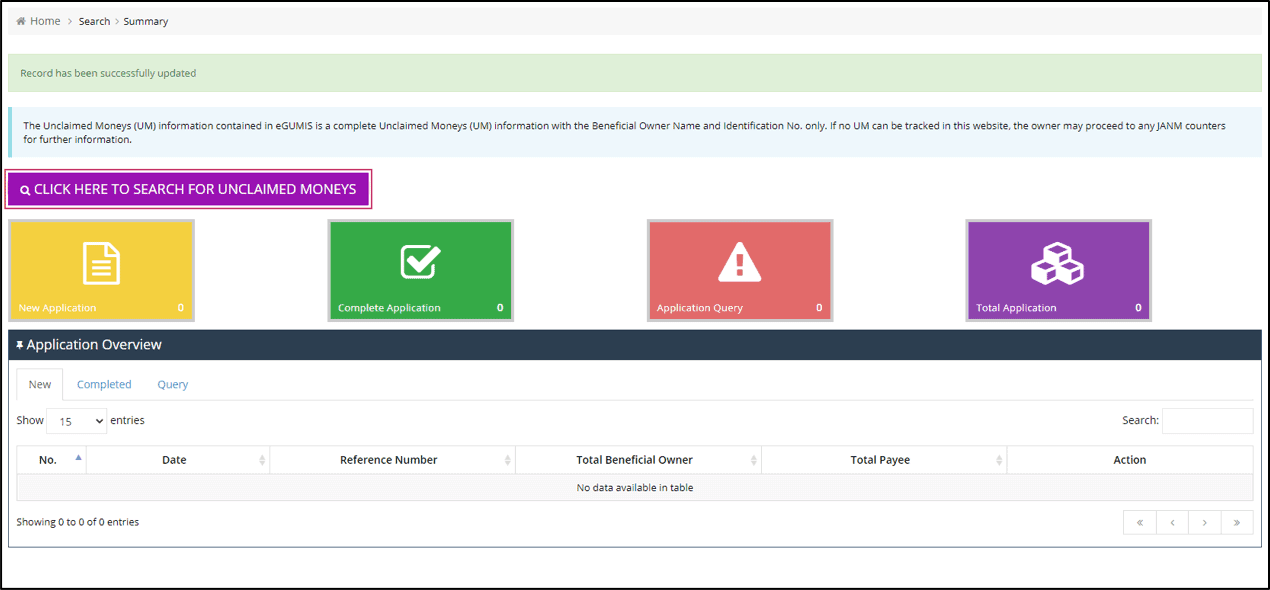
    Click on “Search for Unclaimed Moneys” and enter your Identification Number into the provided space. If you have any unclaimed money, it will show up in the search result.

    Unclaimed Monies Summary Search Result For Unclaimed Monies

    I also helped my parents check their unclaimed money through my account. However, I’m not sure if I can actually process the claims using my account, so to be on the safe side, I registered new accounts for them to help them claim their money.

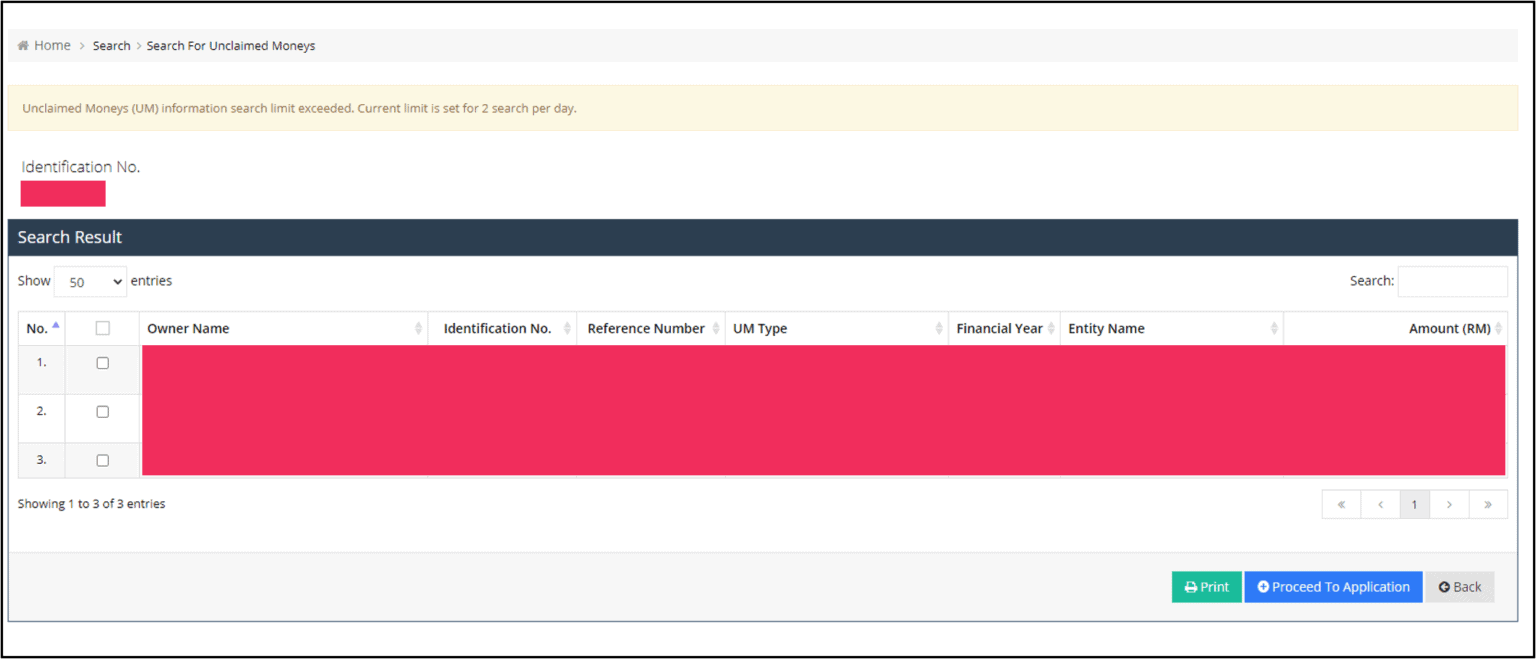
    Do note that you can only check a maximum of two IDs per day.

    Step 4: Application Form

    If you have any unclaimed money, here is what you need to do to claim it:

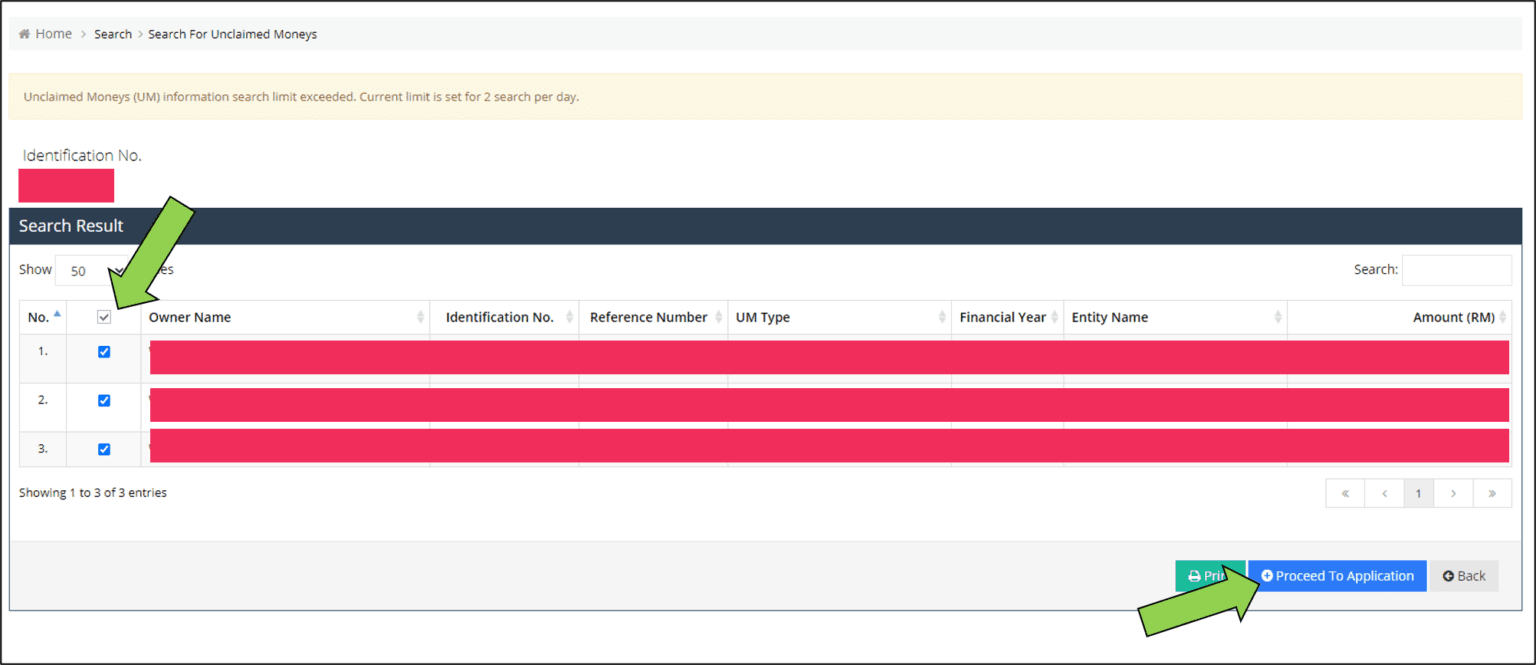
    Don’t click anything other than the following two steps. As the system doesn’t save your search results, if you use up your quota of two searches per day, you have to wait for the next day to proceed to the next step.

    Search Result For Unclaimed Monies

    Select the “check all” box, as I assume everyone wants to claim all their unclaimed monies.

    Select the “Proceed to Application” box.

    Step 4.5: (Workaround) Bug in the System

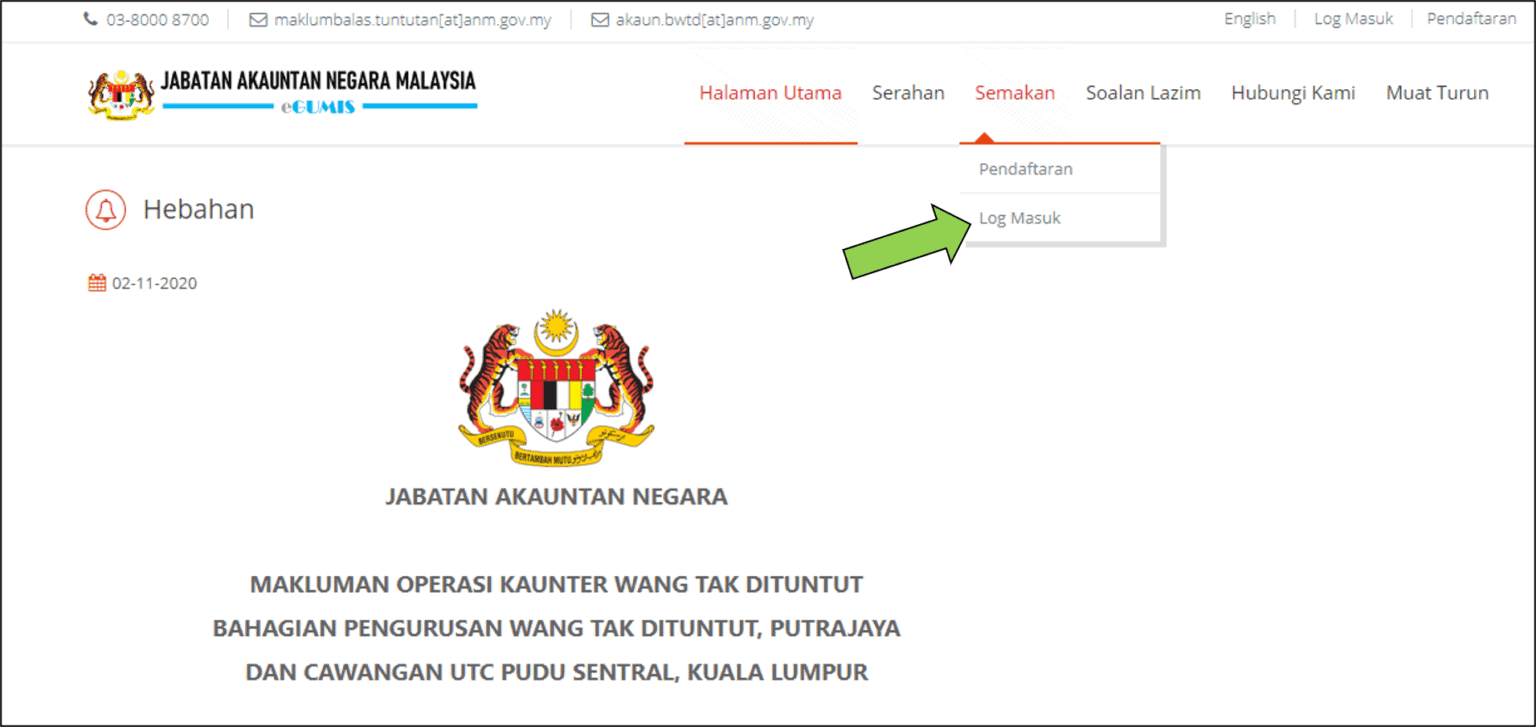
    In my experience, for some reason, there is a bug in the English version of eGUMIS which prevented me from proceeding to the next step. I’ll save your time without boring you with the details; here’s the work around:

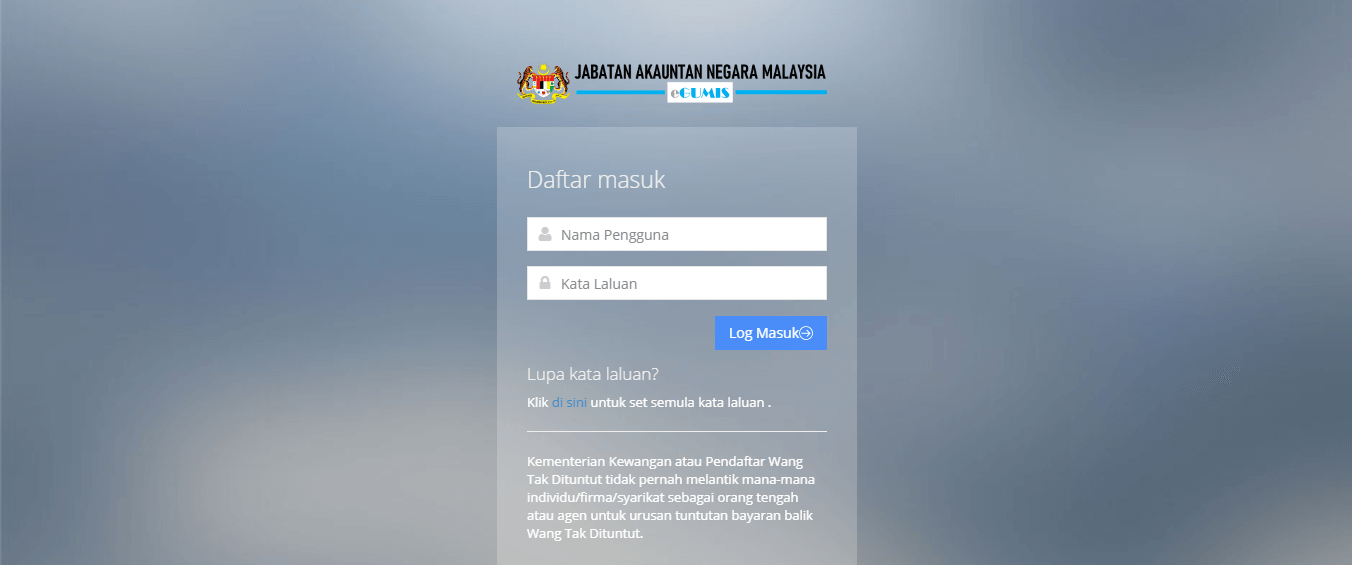
    English eGUMIS login JANM Login Page

    Visit this link and under “Semakan” click “Log Masuk”. This is the Bahasa Malaysia version of eGUMIS.

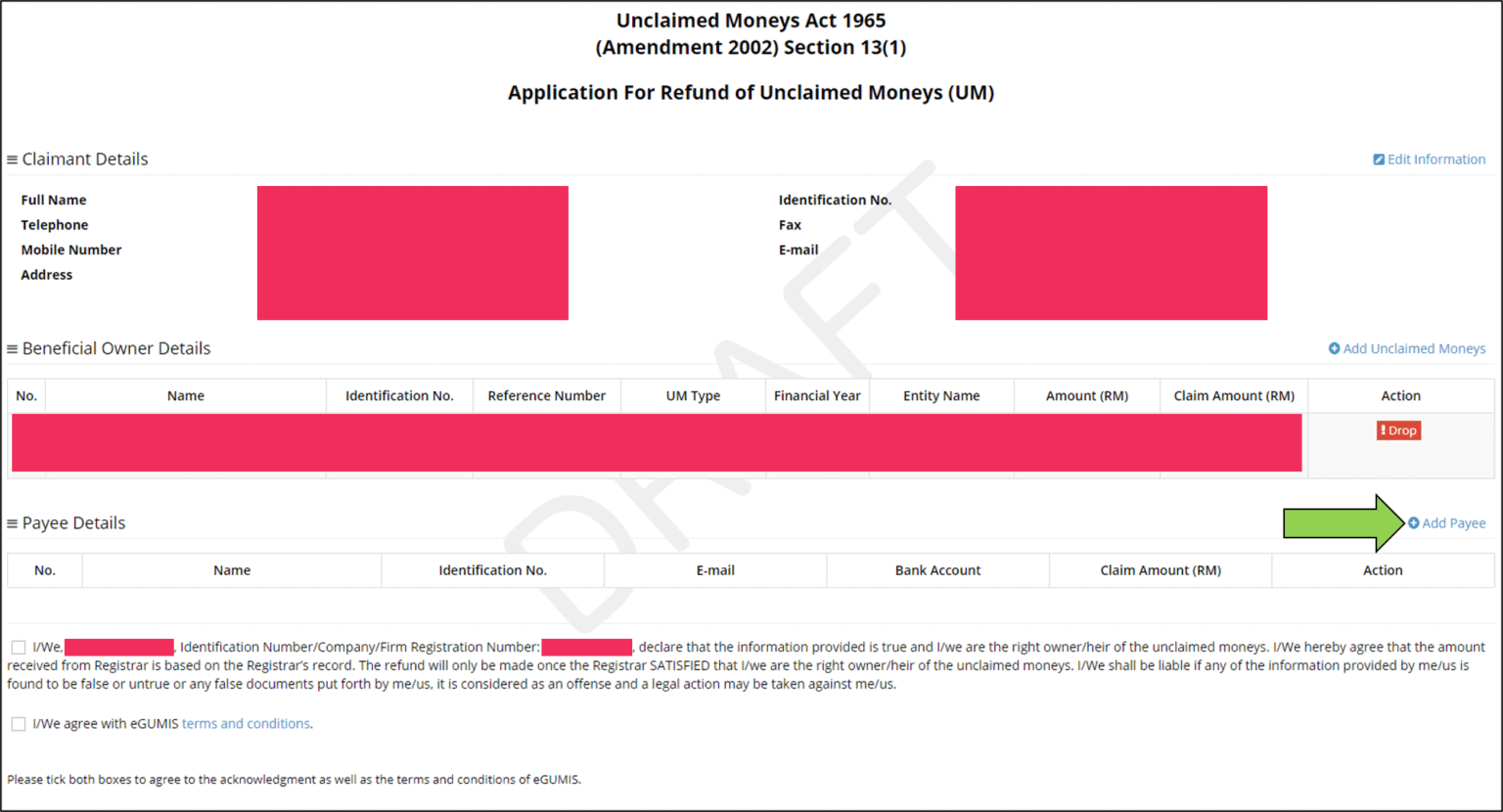
    Step 5: Enter Payee Information

    This screenshot was taken in the English version. In the Bahasa Malaysia version, “Tambah Penerima” is also located in the same position.Enter Payee Information Screenshot

    Once you click on “Tambah Penerima” (Payee), a pop-up will appear and you’ll need to fill in your particulars and bank account number accordingly.

    After you’ve saved the Payee details, check the two boxes below and click on the “Hantar” button.

    Step 6: Almost there

    Once you’ve completed your application, you should receive an email by the AGD. To complete the claim, you are required to submit:

    • A copy of your ID (IC / passport / company certificate)
    • Bank statement (from the same bank that you entered in the Payee column).

    Submit the above document to permohonan_wtd@anm.gov.my with the application number as the email subject.

    (Please be reminded that each email cannot exceed 15MB.)

    Final Thoughts

    Even though there’s no time limit as to when you can claim your money, it’s better to claim it as soon as possible. This is because the Registrar of Unclaimed Money doesn’t pay any interest on the money claimed while your money can be invested elsewhere to generate a return.

    One common reason why money remains unclaimed is because the legal beneficiaries don’t know about the money after the owner passes away. This is especially true if the owner dies unexpectedly. Therefore, it’s good to have a simple will (at the very least) to avoid this scenario.

    Don’t stop at checking your own account; if you have elderly parents or family members, do help them to check as well.

    However, please be reminded that the Ministry of Finance or the Registrar of Unclaimed Money doesn’t appoint any individual/firm/company as agents for the refund of unclaimed monies. Be extra careful if anyone claims that they can help you claim the money.

    This article was originally published at planNERD.

    About the Author 

    Marshall Wong is a licensed financial planner and can be contacted through his website or marshallwong@fa.my.


  • The Smart Investor’s Guide to Islamic Social Finance

    The Smart Investor’s Guide to Islamic Social Finance

    What are the main tenets of Islamic social finance?

    Sustainable Development Goals 2030

    Sustainable Development Goals 2030

    In 2015, countries around the world adopted a set of goals to end poverty, protect the planet, and ensure prosperity for all as part of a new sustainable development agenda. Formulated on the principle that no one gets left behind, the Sustainable Development Goals (SDGs) have defined the world’s priorities and aspirations for 2030.

    In 2016, a high-level panel commissioned by then-UN Secretary-General Ban Ki-Moon estimated a humanitarian financing deficit of $15 billion – and the gap is widening each year.

    Last year, only 58.5% of requested humanitarian funding needs were met.

    There’s an overwhelming need for capital to help fragile nations battle everything from widespread food and water insecurity to the fallout from natural disasters.

    Uplifting Poverty Levels

    To mobilise these efforts, we need to effectively uplift groups living below the line of poverty.

    Although poverty levels have fallen dramatically since 2000, there are still 783 million people living below the international poverty line of $1.90 a day. Obviously, it calls for more creative and effective solutions to end poverty.

    With technology playing a key role in implementation, this makes it more targeted and effective – an important move that we must take to lift people at the bottom of society from poverty and end world hunger to ensure that no one gets left behind.

    An Important Role in Achieving SDGs

    Islamic social finance was developed in adherence to the Sharia principles of socioeconomic justice, equality and collective prosperity.

    Islamic social finance tools have been instrumental in the alleviation of poverty and socio-economic development for over 1,400 years. Among the instruments available in Islamic social finance to achieve this are zakat, waqf and sadaqah (charity) which have been adopted and applied even outside the Islamic world.

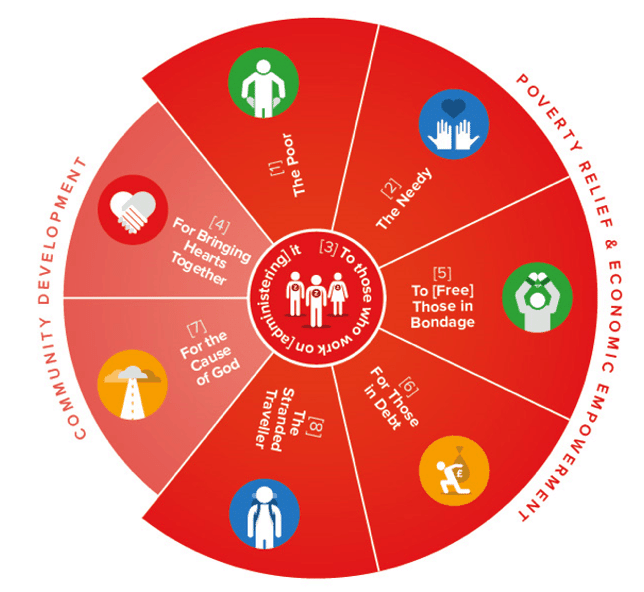
    Zakat – wealth tax and a means of wealth distribution – is thought of as harmonising the relationship between the individual and public interest (maslaha). Each year, Muslims are required to donate 2.5% of one year’s total cumulative wealth to the poor in the form of zakat.

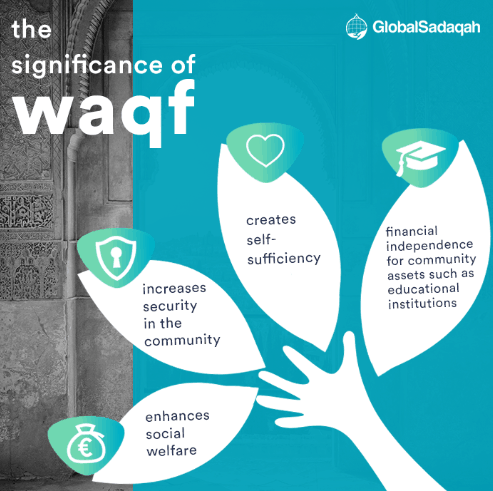
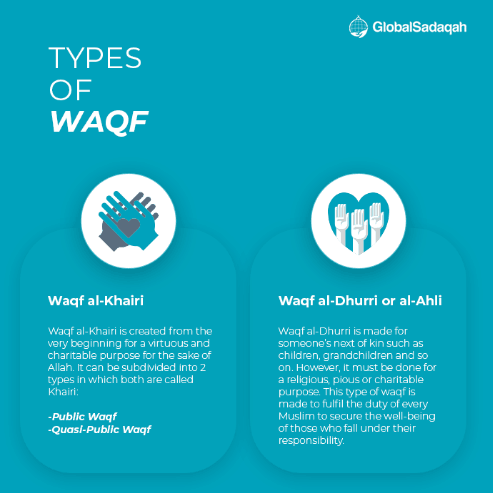
    Waqf is an endowment to a religious, educational or charitable cause, most frequently used to build schools, hospitals or religious institutions. Given its communitarian nature, waqf is often used to fund social projects and services.

    Sadaqah is a voluntary charity given on an ad-hoc basis; a concept similar to putting coins into a charity donation box.

    These instruments are used to provide education and healthcare, to develop infrastructure and maintain social welfare provisions for the poor and destitute.

    waqf-sadaqah-zakat-social-islamic-financewaqf-sadaqah-zakat-social-islamic-financewaqf-sadaqah-zakat-social-islamic-finance

    Charity through Islamic Crowdfunding

    With the huge gap in humanitarian funding, coupled with the immense need, innovative financing models are starting to play a critical role as it becomes clear that no single factor can plug the deficit.

    In the humanitarian sector, international aid organizations are looking to new sources of capital and utilizing Islamic social finance for humanitarian projects. Innovation in the financial industry happened at a very fast pace, and Islamic Social Finance is one of the industries undergoing rapid disruption by digital platforms.

    GlobalSadaqah was a recipient of the Best Social Impact Islamic Fintech Firm Award at the World Islamic Fintech Awards 2018, during the Global Islamic Fintech Huddle in Bahrain. The Islamic crowdfunding platform helps channel donated funds to some of the neediest individuals in society. It connects individual donors to a diverse range of social causes that require financing around the globe.

    For donors, digital technology makes it easier to identify, evaluate, and fund causes. For organizations collecting social finance, technology provides greater access to donors, lowers costs, and allows for greater reporting and communication. For institutions implementing projects, technology enhances project management, workflows, and monitoring. Perhaps most importantly, digital technology can help recipients of social finance and their communities by making resources more accessible and distribution more efficient.

    waqf-sadaqah-zakat-social-islamic-financewaqf-sadaqah-zakat-social-islamic-financewaqf-sadaqah-zakat-social-islamic-finance