SHENZHEN, CHINA – Media OutReach Newswire – 3 July 2026 – Huawei today announced that its patent licensing royalty rate for Wi‑Fi 7 technologies would be set at US$0.5 per unit for Wi Fi 7 compliant devices.
This announcement underscores Huawei’s dedication to fostering a healthy innovation ecosystem through fair, transparent, and predictable licensing practices.
As the latest generation of Wi-Fi technologies, Wi-Fi 7 delivers dramatically higher throughput, lower latency, and greater reliability. Serving as much more than just a connectivity upgrade, it lays the groundwork for the next wave of digital transformation and opens up new possibilities for interactions between people and intelligent systems.
As a leading contributor to the IEEE 802.11 standards family, Huawei has played a pivotal role in shaping Wi‑Fi 7 (802.11be) technologies and holds one of the largest portfolios of declared essential patents for Wi‑Fi 7. The company has invested a decade of research and substantial resources into developing the core technologies that make Wi-Fi 7 truly next generation.
Huawei has thus emerged as a leader in the global Wi-Fi licensing landscape, and its patent license agreements had covered over 1.2 billion consumer electronic devices worldwide by the end of 2024.
With today’s announcement, Huawei provides clear advance notice of its Wi‑Fi 7 royalty rate, which is US$0.5 per unit for consumer‑grade Wi‑Fi 7 devices. Implementers may obtain licenses either through bilateral agreements or via patent pools, on FRAND (Fair, Reasonable, and Non-Discriminatory) terms.
In July 2022, Huawei joined the Sisvel Wi‑Fi 6 patent pool as a founding member, concurrently becoming both a licensor and a licensee of the pool. The patent pool is a valuable option for the industry which in large provides a “one-stop” licensing solution under a transparent and fair framework with lower transactions costs.
Huawei also maintains a strong and proven Wi-Fi 6 patent portfolio, which has been widely recognized and licensed across the industry. This legacy of innovation across successive generations further demonstrates Huawei’s long-term commitment to advancing wireless connectivity.
Building on this success, Huawei has extended its participation to the Sisvel Wi‑Fi Multimode pool as a founding member, offering licensees a single, streamlined platform for accessing essential patents across both Wi‑Fi 6 and Wi‑Fi 7 generations.
Alan Fan, Huawei’s Chief Intellectual Property Officer, said: “Through these initiatives, Huawei continues to facilitate collaborative licensing models that balance the interests of innovators and implementers, further reinforcing its leadership in shaping a transparent and efficient global Wi-Fi licensing environment.”
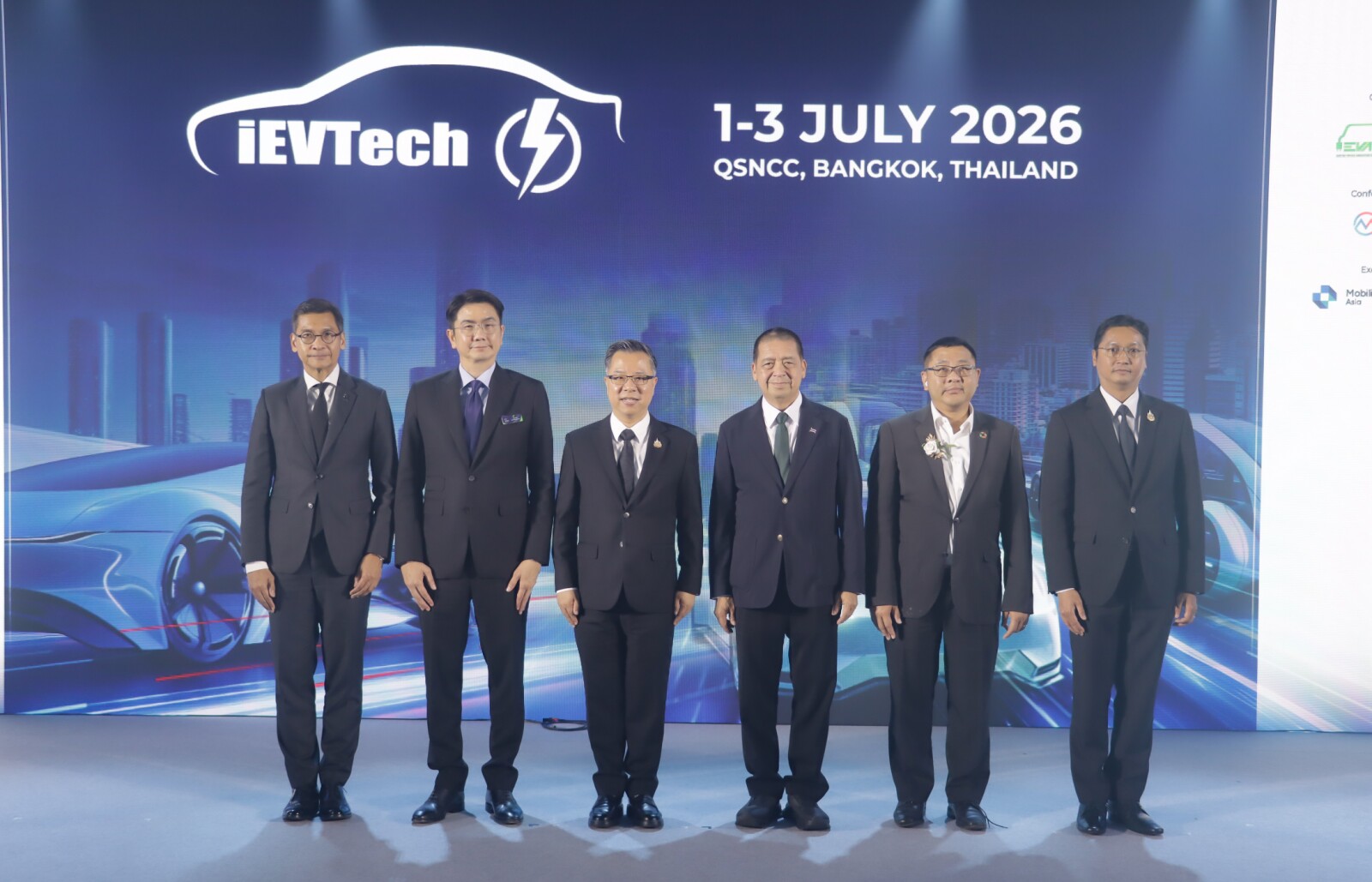
BANGKOK, THAILAND – Media OutReach Newswire – 3 July 2026 – Thailand has secured over $4.1 billion (approx. 137 billion baht) in investment pledges across its electric vehicle (EV) supply chain, solidifying its position as Southeast Asia’s primary automotive manufacturing hub as global carmakers realign their production networks toward clean energy.
Mr. Narit Therdsteerasukdi, Secretary General of the Thailand Board of Investment (BOI)
According to newly released data from the Thailand Board of Investment (BOI), the capital injection spans 198 projects, covering the entire ecosystem, including battery electric vehicles (BEVs), hybrid systems, battery manufacturing, critical components, and charging infrastructure.
The investment surge comes as global automakers diversify supply chains away from geopolitical hotspots and establish regional hubs in Southeast Asia.
Unlike regional competitors focusing solely on pure electric vehicles, Thailand’s policy framework supports a transition across all major propulsion technologies, including Hybrid Electric Vehicles (HEVs), Plug-in Hybrid Electric Vehicles (PHEVs), and BEVs.
“The transition to electric vehicles is both a global challenge and a massive opportunity,” said Mr. Narit Therdsteerasukdi, Secretary General of the Thailand Board of Investment (BOI) and Secretary of the National EV Policy Board, speaking at the International Electric Vehicle Technology Conference (iEVTech) in Bangkok. “We must choose to be builders, not just consumers. By supporting all technologies—hybrid, plug-in hybrid, and battery electric—we allow legacy players and new entrants to invest and grow together, elevating Thai suppliers into the global value chain.”
This strategy is already paying off in the market. In 2025, electrified vehicles accounted for over 40% of all new vehicle registrations in Thailand, with HEVs leading at 21.8%, closely followed by BEVs at 19.6%.
The $4.1 billion investment pipeline is highly distributed, showing deep integration across the supply chain rather than top-level vehicle assembly alone:
Battery EVs (BEVs): $1.18 billion (approx. 39.5 billion baht) across 18 projects, establishing an annual domestic production capacity of over 370,000 units.
Hybrids (HEV & PHEV): Combined investments of $1.18 billion (approx. 39.3 billion baht) across 14 projects, capitalizing on Japanese automakers’ legacy hybrid technologies.
Batteries & Energy Storage Systems (ESS): $1.00 billion (approx. 33.5 billion baht) across 57 projects, securing localized battery cell and pack manufacturing.
Critical Components: $373 million (approx. 12.5 billion baht) across 49 projects, targeting high-value parts such as drive motors, battery management systems (BMS), and power control units.
Charging Infrastructure: $292 million (approx. 9.8 billion baht) across 42 projects, funding over 22,900 charging stations nationwide, including more than 10,000 high-speed DC fast chargers.
This regulatory framework has pushed several major global automakers to localize production in Thailand. Mercedes-Benz Manufacturing pioneered local luxury BEV production in Thailand starting in 2022, followed by a major wave of Chinese EV manufacturers—including BYD, Great Wall Motor, SAIC Motor, and Aion—which established domestic assembly lines in 2024. The momentum continued into 2025 as Changan Auto and EV Primus launched their respective manufacturing operations, culminating in the 2026 production rollouts by South Korea’s Hyundai Mobility and China’s Omoda & Jaecoo. These manufacturing investments have culminated in the creation of more than 16,000 local jobs.
The BOI has also facilitated joint ventures and matchmaking through 18 “Sourcing Day” events. These sessions have paired more than 800 qualified Thai parts manufacturers with multinational automakers, resulting in over 1,200 business matches. The BOI estimates these sourcing links will generate over $1.79 billion (approx. 60 billion baht) in domestic procurement value, transitioning traditional tier-1 and tier-2 suppliers into the high-tech EV supply chain.
“Ultimately, we are leveraging sixty years of automotive expertise to position Thailand at the forefront of global mobility,” Mr. Narit said. “Our goal is to ensure that local industry and local workforce are the ones driving this next chapter of growth.”
Note: Currency conversions are based on the Bank of Thailand’s average selling rate of approximately 1 USD = 33.5 THB.
The issuer is solely responsible for the content of this announcement.
The Office of the Board of Investment (BOI)
Established in 1966, the Office of the Board of Investment (BOI) has continuously played an essential role for over 60 years in promoting value-adding investment for the country, from both foreign and Thai investors, to enhance national competitiveness and drive towards a new era of sustainable and balanced growth.
Investment Services Center- PR Section, The Office of the Board of Investment (BOI)
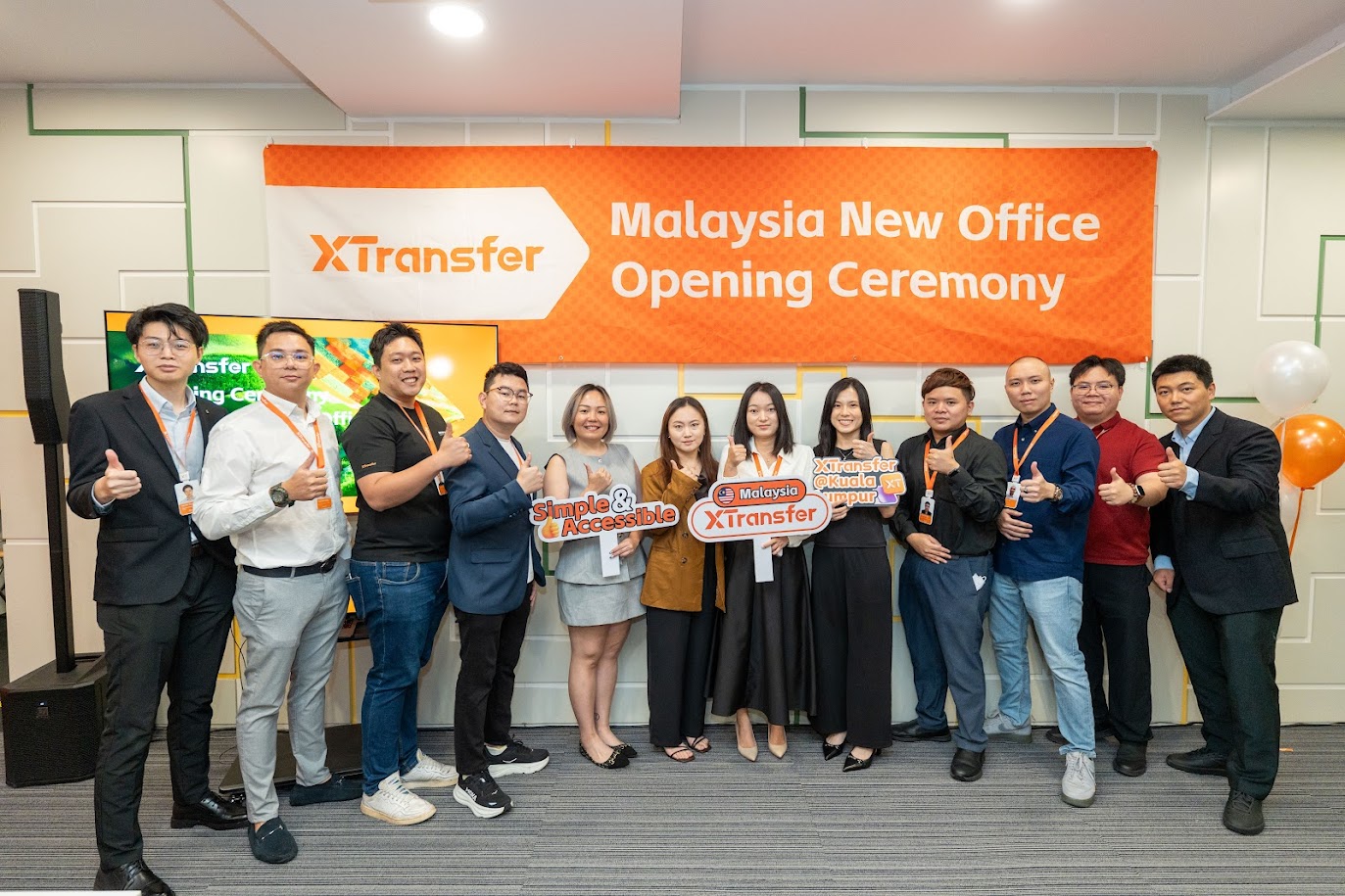
KUALA LUMPUR, MALAYSIA – Media OutReach Newswire – 3 July 2026 – Recently, XTransfer, the world’s leading B2B cross-border trade payment platform, officially inaugurated its new office in Malaysia. This marks XTransfer’s continued investment in localised operations across Southeast Asia and lays a solid foundation for further strengthening its regional trade finance services.
XTransfer Unveils New Malaysia Office
Leaders and partners from several major local Malaysian banks and financial institutions attended the event to witness this important milestone. The opening ceremony began with a lively lion dance performance, followed by a ribbon-cutting session led by distinguished guests in a festive atmosphere. Ribbon-cutting guests included Ms Winnie Wong, Director of Financial Institutions Group at Maybank; Ms Sylvia Wong, Regional Head at CIMB; Ms Daphne Yoo, Director at OCBC; along with representatives from various institutions and associations, and the head of XTransfer’s Malaysia team.
Guests warmly congratulated XTransfer on the opening of its new office and expressed their expectation that XTransfer will continue to support the development of local trade by providing Malaysian SMEs with more efficient and secure cross-border payment solutions. Representatives from multiple banks also noted that they look forward to deepening collaboration with XTransfer, further improving localised settlement networks, and jointly promoting the development of the cross-border payments ecosystem.
As a fintech company deeply focused on global trade finance, XTransfer has consistently adhered to a technology-driven and compliance-first approach. It is committed to providing global trade enterprises with secure, convenient, and cost-effective cross-border payment and collection solutions. With the launch of its new Malaysia office, XTransfer will position Malaysia as a strategic hub for its Southeast Asia operations, extending its reach across the Asia-Pacific market and further accelerating regional business expansion. Going forward, XTransfer will continue to advance its internationalisation strategy to better serve global trade companies.
It is also worth noting that in February this year, XTransfer received conditional approval from Bank Negara Malaysia (BNM) for key payment licenses. Upon completing the pre-issuance conditions and being permitted to launch, XTransfer will introduce digital payment services to support businesses, particularly SMEs engaged in international trade. With the official opening of the new office, XTransfer will leverage stronger local service capabilities together with its global network resources to continue helping regional trade businesses seize global opportunities and expand into broader international markets.
值得一提的是,今年2月,XTransfer已獲馬來西亞國家銀行(Bank Negara Malaysia,BNM)原則性批准關鍵支付牌照,並在取得正式牌照後,計畫在馬來西亞推出電子支付服務,以支持從事國際貿易的中小型企業。隨著馬來西亞新辦公室的正式啓用,XTransfer將以本地化的服務能力和全球化的網絡資源,持續助力區域貿易企業把握全球商機,邁向更廣闊的國際市場。
The HKPC workshop showcased how GPTBots.ai and EngageLab combine enterprise AI Agents, secure workflow orchestration, and omni-channel engagement to turn customer interactions into real business actions.
HONG KONG SAR – Media OutReach Newswire – 3 July 2026 – Aurora Mobile, in collaboration with the Hong Kong Productivity Council (HKPC), recently hosted a hands-on workshop dedicated to the deployment of AI Agents, which successfully concluded on June 23. The event brought together decision-makers and digital transformation leaders from government agencies, public service organizations, retail, and NGOs to tackle a pivotal question: How can AI Agents evolve from simply answering questions to actually executing business tasks?
Jointly organized by HKPC and Aurora Mobile’s flagship platform GPTBots.ai, the workshop was themed “AI Agents Driving Hong Kong’s Public and Enterprise Services: Deployment Practices, Key Technologies, and Real-World Cases.” Hong Kong Accelerates AI Development
Tommy Lui, Chief Business Officer of GPTBots.ai, shared insights into Hong Kong’s latest AI policy roadmap, including:
HK$100 Million AI Efficiency Fund (AIEEI): Allocated in the 2026-2027 Budget, to be distributed over three years to drive AI adoption across government and public institutions.
100 Administrative Processes to Be AI-Enabled by 2026: A concrete target documented in Legislative Council papers.
HK$3 Billion AI Subsidy Program: Focused on computing infrastructure and research capabilities.
HK$50 Million Public AI Training Initiative: Jointly executed by Cyberport, Science Park, and HKPC, targeting 200+ events and reaching 50,000 participants.
HK$1 Billion AI Research Institute: Expected to commence operations in the second half of 2026.
(Sources: 2026-2027 Budget, Legislative Council documents, and official announcements)
While the policy direction is clear, Tommy also highlighted a key challenge for enterprises: many organizations are still stuck at the “Q&A tool” stage—limited to answering FAQs and unable to integrate with business workflows or execute real tasks. Bridging the gap from “conversation” to “execution” requires more than just powerful models; it demands a robust, enterprise-grade technology foundation. Security and Governance: Addressing Enterprise Concerns
As AI begins to access internal data, invoke system tools, and drive approval workflows, security and data governance become top priorities for management.
Rim Wang, AI Agent Engineering Lead at GPTBots.ai, outlined the enterprise-grade AI security framework, covering content moderation, data anonymization, role-based access control, human-in-the-loop mechanisms, and audit logging. These safeguards aren’t afterthoughts—they must be built into every stage, from data input to output.
“Without robust security controls, enterprises are naturally hesitant to deploy AI,” Rim explained. GPTBots.ai embeds a comprehensive security and governance framework at its core, transforming AI from a ‘black box’ into a highly controllable, auditable business tool. Deployment Methodology: Diagnosis, Targeted Solutions, Continuous Validation
Jacky Li, another AI Agent Engineering Lead at GPTBots.ai, introduced the “Three-Stage Mapping Methodology”:
Process Diagnosis: Identify high-frequency, rule-based, and value-quantifiable processes (such as customer service ticket classification, order review, data integration) as AI entry points.
Capability Matching: Configure tool-based, knowledge-based, or multi-modal Agents according to task complexity.
Validation and Iteration: Pilot with a single pain point, scale gradually after successful end-to-end execution, and evolve into a scalable “digital workforce” platform.
Jacky has validated this approach across manufacturing, cross-border commerce, and service sectors. He emphasized that the greatest challenge in AI deployment is not technology selection, but precisely identifying which business processes deserve AI automation. Real-World Cases: Cross-Industry Implementation Logic
The most compelling segment featured real-world scenarios from four distinct industries:
Financial Services — Automated Complex Customer Service Tickets: A major bank deployed an AI Agent that accurately identifies customer intent and automatically invokes core banking systems, completing the full cycle of “intent recognition → data retrieval → rule matching → execution → feedback.” Human intervention is triggered only for exceptions, freeing frontline staff from repetitive queries and significantly reducing customer wait times.
Real Estate — Omni-Channel Customer Data Integration: A large real estate group built a unified customer data platform integrating WhatsApp, App Push, Email, and SMS. When a customer inquires about management fees via WhatsApp, the AI not only provides the amount but also proactively shares updates like “Your air conditioner repair from last month—has it been completed?” Service evolved from “answering on demand” to “proactive care.”
Retail — Automated After-Sales Service Tickets: A retail brand implemented an AI Agent that automatically generates service tickets, classifies issues, and triggers corresponding workflows. Result: after-sales processing time reduced by over 60%, with staff focusing exclusively on genuine exceptions.
Social Services — Precision Resource Distribution: A social service organization uses an AI Agent to identify requests, assess priority levels, and leverage omni-channel delivery to send notifications via the most appropriate channel—WhatsApp for social workers, SMS for service recipients, email for management—while automatically tracking progress. The organization transformed from “passive request handling” to “proactive precision delivery.”
The logic across all four scenarios is consistent: AI Agents handle “understanding and decision-making,” while omni-channel platforms manage “reach and execution.” This is Aurora Mobile’s core value proposition—connecting customer engagement, business processes, and AI execution to help enterprises transition from customer connection to AI-driven business action. EngageLab, as an AI-native customer engagement platform, provides unified customer data, reliable omni-channel delivery, and customer verification capabilities. GPTBots.ai, as an enterprise-grade AI Agent platform, delivers end-to-end AI capabilities from Agent building and knowledge management to security governance. Together, they complete the full cycle from “need identification” to “service delivery.”
Policy Support: Enabling SME Digital Transformation
Representatives from the Hong Kong Productivity Council also introduced government subsidy programs for enterprises. The “SME ReachOut” team helps small and medium-sized enterprises identify suitable government funding schemes, answer application questions, and provide free one-on-one consultations and form review services, encouraging SMEs to leverage government support for digital upgrades.
For SMEs, the technology roadmap is becoming clearer, and policy support is falling into place. The critical question is: Who can fastest transform AI from “experimental” to “truly operational”?
Aurora Mobile (NASDAQ: JG) is a platform technology company connecting customer engagement, business processes, and AI execution, dedicated to helping enterprises transition from customer connection to AI-driven business action. The company operates two core product lines: EngageLab, an AI-native customer engagement platform, and GPTBots.ai, an enterprise-grade AI Agent building platform.
EngageLab centers on AI Agents, unified customer data, and reliable omni-channel delivery to strengthen customer relationships. GPTBots.ai provides end-to-end AI capabilities spanning Agent building, knowledge management, workflow orchestration, and security governance. Together, they construct a complete value chain from “understanding needs” to “delivering services.”
In Hong Kong’s concentrated markets of finance, real estate, retail, and public services, Aurora Mobile is closely collaborating with industry clients to translate AI Agents from technical concepts into practical business process applications.
When AI transcends “answering questions” and truly begins “executing tasks,” the era of enterprise-grade AI officially begins.
The issuer is solely responsible for the content of this announcement.
Aurora Mobile
Aurora Mobile (NASDAQ: JG) is a global leader in customer engagement and marketing technology services. The company operates core products including EngageLab, an AI-native customer engagement platform, and GPTBots.ai, an enterprise-grade AI Agent building platform, helping enterprises reach users globally, enhance engagement, and drive business outcomes.
GPTBots.ai is an enterprise-grade AI Agent building platform under Aurora Mobile, delivering end-to-end AI solutions covering Agent building, knowledge management, workflow orchestration, and security governance. It empowers enterprises to deploy AI Agents across customer service, knowledge retrieval, data analysis, and beyond.
For more information, please contact marketing@gptbots.ai.
About EngageLab
EngageLab is an AI-native customer engagement platform under Aurora Mobile, built on AI Agents, unified customer data, and reliable omni-channel delivery. It integrates omni-channel communication, customer verification, marketing automation, and AI Agent capabilities to strengthen customer relationships. LiveDesk, its AI-driven omni-channel customer service platform, is powered by GPTBots.ai’s advanced AI capabilities.
For more information, please contact marketing@engagelab.com.
From over 10,000 free ready-to-eat meals to exclusive yuu perks and Singapore’s first Build-Your-Own 7‑Eleven Store blind boxes, every visit to 7‑Eleven promises something worth discovering
SINGAPORE – Media OutReach Newswire – 3 July 2026 – For decades, 7-Eleven has been the place Singaporeans turn to for life’s everyday essentials. Today, with the launch of its ‘Find The Good Stuff’ campaign, the brand is inviting customers to discover a new side of 7-Eleven. Whether it’s discovering a surprisingly satisfying lunch, spotting an exclusive collectible, or finding something unexpected during a quick store run, every visit now holds the promise of discovering something good.
As part of the launch, customers can look forward to more than 10,000 ready-to-eat meal giveaways, exclusive yuu promotions and the debut of limited-edition Build-Your-Own 7-Eleven store blind box collectibles inspired by some of Singapore’s favourite 7-Eleven moments.
“Find The Good Stuff is a campaign that reflects how we are evolving the 7‑Eleven experience for today’s consumers,” said Anushree Khosla, Managing Director, 7‑Eleven Singapore. “We want every visit to be more than just a last-mile pit stop. By curating discovery through strong supplier partnerships and strategic sourcing, we bring together delicious food, unexpected finds, and little moments of happiness that brighten the day. With Find The Good Stuff, we’re inviting customers to rediscover what 7‑Eleven has to offer in fresh and exciting ways.”
Discover The Good Stuff in Every Bite
At the heart of this campaign is a simple challenge to all: Don’t Judge Till You Try. Designed to change perceptions of convenience store food, this challenge encourages customers to experience 7-Eleven’s growing range of ready-to-eat offerings with an open mind. From sandwiches and wraps to onigiri and packed meals, customers may discover that the food they’ve been walking past could become their next favourite meal.
To bring the challenge to life, 7-Eleven will give away 10,000 ready-to-eat items across selected stores islandwide throughout July. Each week spotlights a different ready-to-eat bestseller from 7-Eleven, inviting customers to experience the quality, taste and convenience that have made these favourites increasingly popular among Singaporeans.
Giveaway Schedule
Date
Item
8 July, Wednesday
7-Eleven Sandwiches*
15 July, Wednesday
7-Eleven Packed Meals*
22 July, Wednesday
7-Eleven Onigiri*
29 July, Wednesday
7-Eleven Wrap*
*selected SKUs only
Customers can also keep the joy going with $2 off all ready-to-eat items,available exclusively via the yuu app (for both existing and new users), while stocks last.
The full list of participating 7-Eleven stores is provided in the Appendix below. Customers can also view the store list on 7-Eleven Singapore’s Facebook and Instagram pages.
Turning 7-Eleven Into a Place of Discovery with Every Visit
Beyond good food, ‘Find the Good Stuff’ is about the thrill of unexpected discovery. Bringing this experience to life, 7-Eleven Singapore is launching its first-ever Build-Your-Own 7-Eleven store blind box[1] collection. Score a surprise by redeeming[2] one blind box with a minimum spend of $28, or purchasing it at $7.90 each – this limited-edition series allows fans to assemble their own miniature 7-Eleven store at home.
Build-Your-Own 7-Eleven Store Blind Box Designs
Happy Checkout
For those who can’t resist a good onigiri, this miniature store design is a cute tribute to a true 7-Eleven favourite. Surrounded by neatly stocked shelves of convenience store finds and a cute checkout counter on a bright pink base, this miniature store design captures the familiar rhythm of your onigiri snack run.
Frosty Treats
Frosty Treats features 7-Eleven’s ice cream chillers, stocked with a tempting range of frozen favourites. Highlighting the indulgence of a quick cold treat in warm, sunny Singapore, this collectible also is home to a playful white store cat, which adds a hint of charm to the scene.
Snack Stop
This design shines the spotlight on the familiar, comforting experience of 7Café moments, surrounded by chillers stocked with perfect snack pairings. This collectible captures the simple pleasures of everyday 7-Eleven store runs.
Cozy Sips
The iconic Slurpee character takes centre stage in this vibrant tribute to one of 7-Eleven’s most legendary offerings. Bold, colourful, and nostalgic, it brings back memories of ice-cold sips and refreshing after-school treats on a warm day.
Secret Edition
A tribute to one of 7-Eleven’s most memorable in-store experiences, this secret edition design features two warm, comforting snacks that once defined after-school and late-night snack runs. From golden, crispy bites served in a small tub to a savoury, indulgent snack that’s topped with rich brown gravy, a nostalgic throwback awaits those in the know.
Campaign images are available for download here. [Photo Credits: 7-Eleven Singapore]
Appendix – List of participating 7-Eleven stores for ready-to-eat meal giveaway
Central
Store
Unit
ICON VILLAGE
#01-17/18/19
252 SOUTH BRIDGE ROAD
#01-01
REDHILL MRT STATION
#01-01/03
ORCHARD PLAZA
#01-53/54/55
313@SOMERSET
#01-35/36
UE SQUARE
#01-24
PARAGON
#02-08B
LUCKY PLAZA
#B1-02/03
NEWTON MRT STATION
#B1-01
PENINSULA PLAZA
#01-36/37
IBIS HOTEL
#01-03
3 MCCALLUM STREET
INCOME AT RAFFLES
#01-09
THE HOUSE OF EDEN
#01-01
CAPITASPRING
#01-06
LUBRITRADE BUILDING
#01-01
BUGIS MRT DTL
#B2-09
NAM PENG BUILDING
#01-00
DUO GALLERIA
#B3-03/04
NOVENA MRT STATION
#B1-01
101 TOWNER ROAD
#01-234
East
Store
Unit
1 CHANGI BUSINESS PARK CRESCENT
#01-20
ELIAS MALL
#01-308
201E TAMPINES STREET 23
#01-100
25 NEW UPPER CHANGI ROAD
#01-626
1A EUNOS CRESCENT
#01-2469/2471
SINGAPORE POST CENTRE
#01-105
76 CIRCUIT ROAD
#01-14
57 MARINE TERRACE
#01-125
CYCLIST PARK @ EAST COAST
#01-01/02
North/North-East
Store
Unit
VISTA POINT
#01-09
MARSILING MRT STATION
#01-04
ADMIRALTY MRT STATION
#01-03
SUN PLAZA
#01-01
YIO CHU KANG MRT STATION
#01-01
NEX
#B2-16
PUNGGOL PLAZA
#01-05
COMPASS ONE
#01-29
PUNGGOL MRT
#01-07
403A FERNVALE LANE
#01-177
West
Store
Unit
THE METROPOLIS
#01-11
40 MARGARET DRIVE
#01-04
WEST COAST PARKVIEW
#01-02
PLANTATION VILLAGE RETAIL STREET
#01-337
104 JURONG EAST STREET 13
#01-110
668A JURONG WEST STREET 64
#01-120
501 JURONG WEST STREET 51
#01-255
BOON LAY SHOPPING CENTRE
#01-140/144
623 CHOA CHU KANG STREET 62
#01-216
GREENRIDGE SHOPPING CENTRE
#02-16/17
[1] Items are randomly packed and designs cannot be chosen. Exchanges are also randomly packed and are entertained only in cases of manufacturing defects, depending on availability or while stocks last.
[2] Redemption from 1 July to 28 July or while stocks last. Qualified spending excludes redemption of Pokemon TCG, tobacco products, parking coupons, bill payment sales, electronic gift cards, online purchases, 7-Eleven app purchases, foodpanda and other delivery service purchases. 7-Eleven reserves the right to amend the terms and conditions without prior notice, and to all final decisions.
Hashtag: #7-Eleven
The issuer is solely responsible for the content of this announcement.
About 7-Eleven
Established in Singapore in 1983, 7-Eleven has since expanded to more than 450 stores island-wide to become the leading 24-hour convenience chain store. We take pride in serving the Singapore community 24 hours a day, 365 days a year. 7-Eleven emphasises convenience and value by offering a wide array of quality products, food and services to satisfy the needs of its customers. Think 7-Eleven and what comes to mind are the refreshing Slurpee, 7CAFÉ as well as a wide range of quality ready meals and sandwiches under 7-SELECT. 7-Eleven is also a 24/7 one-stop destination for customers who need to access bill payment services in their own time. Our services cover payment of utilities, courier services, and even cash withdrawal. For more information, visit www.7-eleven.com.sg
Tenant-favorable markets in APAC expected to moderate as conditions tighten
Supply-constrained markets – Australia, Japan and Singapore are seeing rising competition
54% of global markets and 60% of APAC markets expect rental growth, reinforcing upward pricing pressure
HONG KONG SAR – Media OutReach Newswire – 3 July 2026 – Asia Pacific’s logistics markets are entering a more complex phase, with divergence across the region increasingly shaping both occupier strategy and investor positioning. According to Cushman & Wakefield’s Waypoint 2026 report, APAC remains the most tenant‑favorable region globally, with 47% of markets favoring occupiers, up from 33% in 2025, although conditions vary significantly as supply and demand dynamics continue to diverge across markets.
The report reveals that the Chinese mainland industrial and logistics market is currently characterized by tenant-favorable conditions driven by abundant supply and softer occupier demand. Significant levels of vacant stock across China’s regional markets have reduced landlord pricing power, resulting in downward pressure on rents and heightened tenant leverage. On the other hand, China remains cost-competitive globally — with relatively low rental and labor costs supporting its position as a major manufacturing hub.
Looking ahead, the Chinese mainland market is expected to remain under supply pressure in the near term, with vacancy rates likely to rise further as new supply continues to outpace occupier demand growth. Nevertheless, despite near-term challenges, both landlords and tenants remain optimistic about the long-term fundamentals of the mainland China logistics market in lease negotiations.
Tony Su, Managing Director and Head of Industrial & Logistics Services, China, Cushman & Wakefield, noted:” The overall premium logistics warehouse market in the Chinese mainland maintained a stable trajectory. On the supply-demand side, landlords prioritized renewal quality and long-term asset value, favoring stable tenants such as manufacturers, while remaining cautious toward long-term leases at low rates. Tenants, in contrast, remained highly price-sensitive and valued expansion flexibility. Despite certain divergences in leasing strategies, both sides are negotiating based on an optimistic outlook for the market, reflecting a gradual recovery of confidence in the premium logistics warehouse sector.”
APAC: Markets diverse, SEA emerging as a key growth hub
Supply‑constrained markets such as Australia, Japan and Singapore are experiencing increasing competition for space, with vacancy expected to decline as development pipelines remain limited. This is reflected in wider regional trends, where 43% of APAC markets are expected to see vacancy decline over the next three years, reflecting a gradual tightening of market conditions. In contrast, more tenant‑friendly conditions persist in parts of India and on the Chinese mainland, where higher levels of new supply continue to provide occupiers with greater flexibility. Across APAC, around a third of markets are expected to see vacancy rise amid ongoing development activity.
This divergence is reinforcing a market‑by‑market approach across the region. For landlords, aligning assets with high‑growth sectors such as e‑commerce, manufacturing, high‑tech and automotive, while ensuring buildings can support power demand and automation, is becoming increasingly important.
Dennis Yeo, Head of Investor Services and Logistics & Industrial, Asia Pacific, Cushman & Wakefield, said: “Different markets across APAC are experiencing different stages of growth, fueled by resilient occupier demand led by e-commerce and manufacturing. Supply constraints in markets such as Japan and Australia are driving competition, meanwhile continued availability in China and India is creating opportunity.”
Demand across APAC continues to be anchored by e‑commerce and manufacturing, alongside ongoing supply chain diversification, with Southeast Asia emerging as a key growth hub. Markets such as Vietnam, Indonesia and Thailand are seeing strengthening occupier activity driven by production shifts and regionalization strategies, while high‑tech and automotive sectors remain important sources of demand across North Asia. This is reinforcing the importance of modern, well‑located and future‑ready logistics facilities that can support evolving operational and technological requirements.
Global outlook: tightening conditions and rising costs
Globally, the report shows tenant‑favorable conditions declining from 52% in 2026 to 33% by 2029 as vacancy tightens and supply remains constrained, while landlord‑favorable markets are projected to rise from 26% to 39%, signalling a broader shift in market balance. At the same time, demand for high‑quality, strategically located assets continues to strengthen as businesses redesign supply chains to mitigate geopolitical, trade and climate risks, with global logistics rents now 36% above 2020 levels and 54% of markets expected to see rental growth over the next three years.
In the Americas, logistics markets are expected to see the most pronounced shift towards landlord‑favorable conditions as supply and demand rebalance across key U.S. hubs, while nearshoring continues to support demand in Mexico.
In EMEA, tightening vacancy alongside constrained development pipelines is narrowing occupier flexibility, while elevated energy costs are increasingly shaping location decisions and driving demand for energy‑efficient logistics assets.
Dr. Dominic Brown, Head of International Research, Cushman & Wakefield, said:“The next phase of the logistics cycle will be defined by preparedness. Businesses that embed resilience into their real estate strategies, through smarter use of technology, automation and energy‑secure assets, will be far better placed to navigate disruption and capture long‑term growth.”
Hashtag: #Cushman&Wakefield
The issuer is solely responsible for the content of this announcement.
About Cushman & Wakefield
Cushman & Wakefield (NYSE: CWK) is a leading global commercial real estate services firm for property owners and occupiers with approximately 53,000 employees in nearly 350 offices and 60 countries. In Greater China, a network of 23 offices serves local markets across the region. In 2025, the firm reported revenue of $10.3 billion across its core services of Valuation, Consulting, Project & Development Services, Capital Markets, Project & Occupier Services, Industrial & Logistics, Retail, and others. Built around the belief that Better never settles, the firm receives numerous industry and business accolades for its award-winning culture. For additional information, visit www.cushmanwakefield.com.hk or follow us on LinkedIn (https://www.linkedin.com/company/cushman-&-wakefield-greater-china).
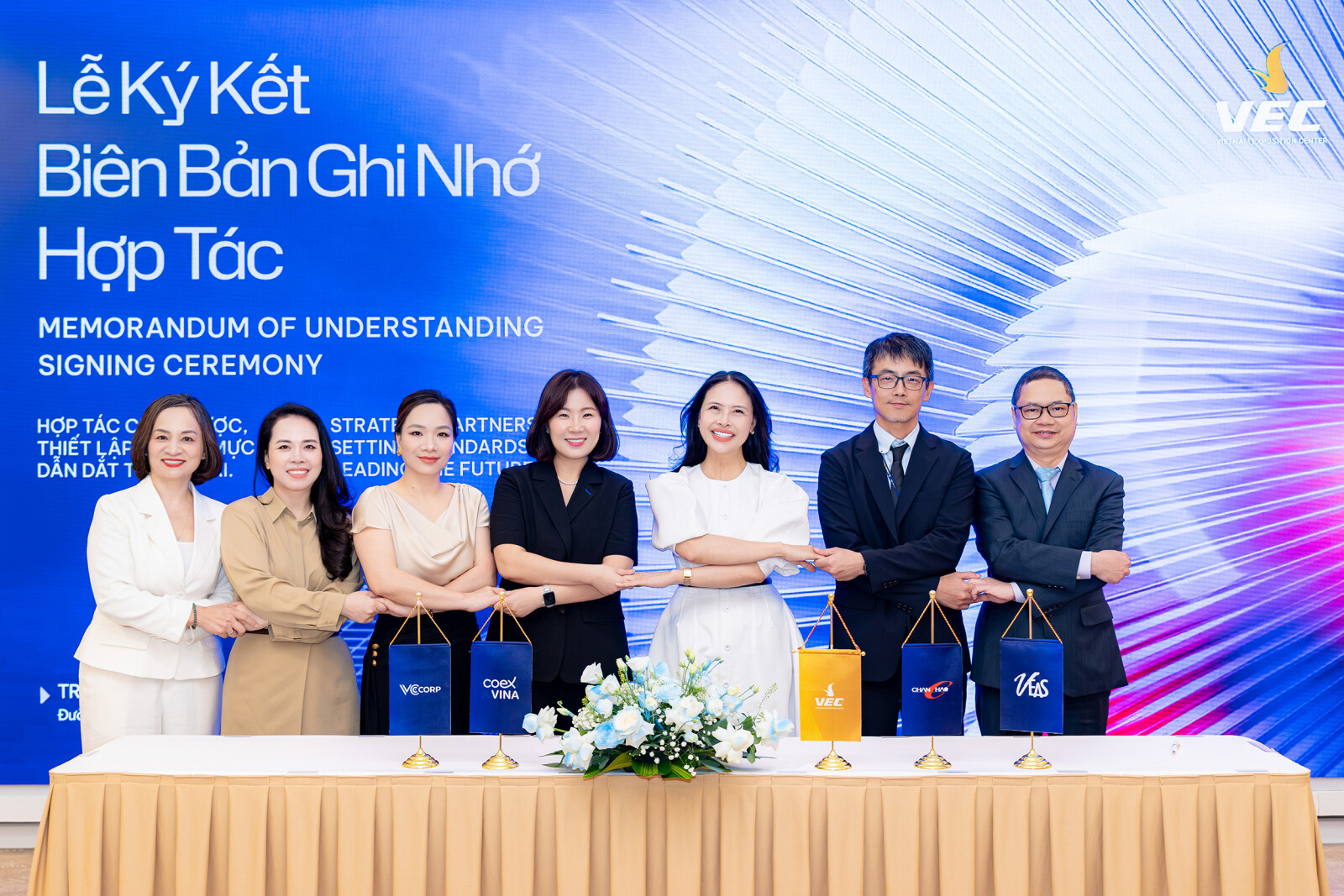
Vietnam Exposition Center (VEC) has signed strategic partnership agreements with leading organizations in the exhibition, trade promotion, and media sectors, including COEX, Chan Chao International, VEAS (Minh Vi), and VCCorp. The milestone marks another significant step in VEC’s efforts to build a comprehensive partner ecosystem, supporting its vision of positioning Vietnam as a regional hub for exhibitions, trade, and international business connectivity.
HANOI, VIETNAM – Media OutReach Newswire – 3 July 2026 – Under the partnerships, VEC and its partners will jointly organize a wide range of trade promotion programs, conferences, seminars, industry exhibitions, and business networking activities. They will also explore new collaboration models to maximize the value of exhibition infrastructure, expand international customer networks, and strengthen the competitiveness of Vietnam’s exhibition industry amid deeper global integration.
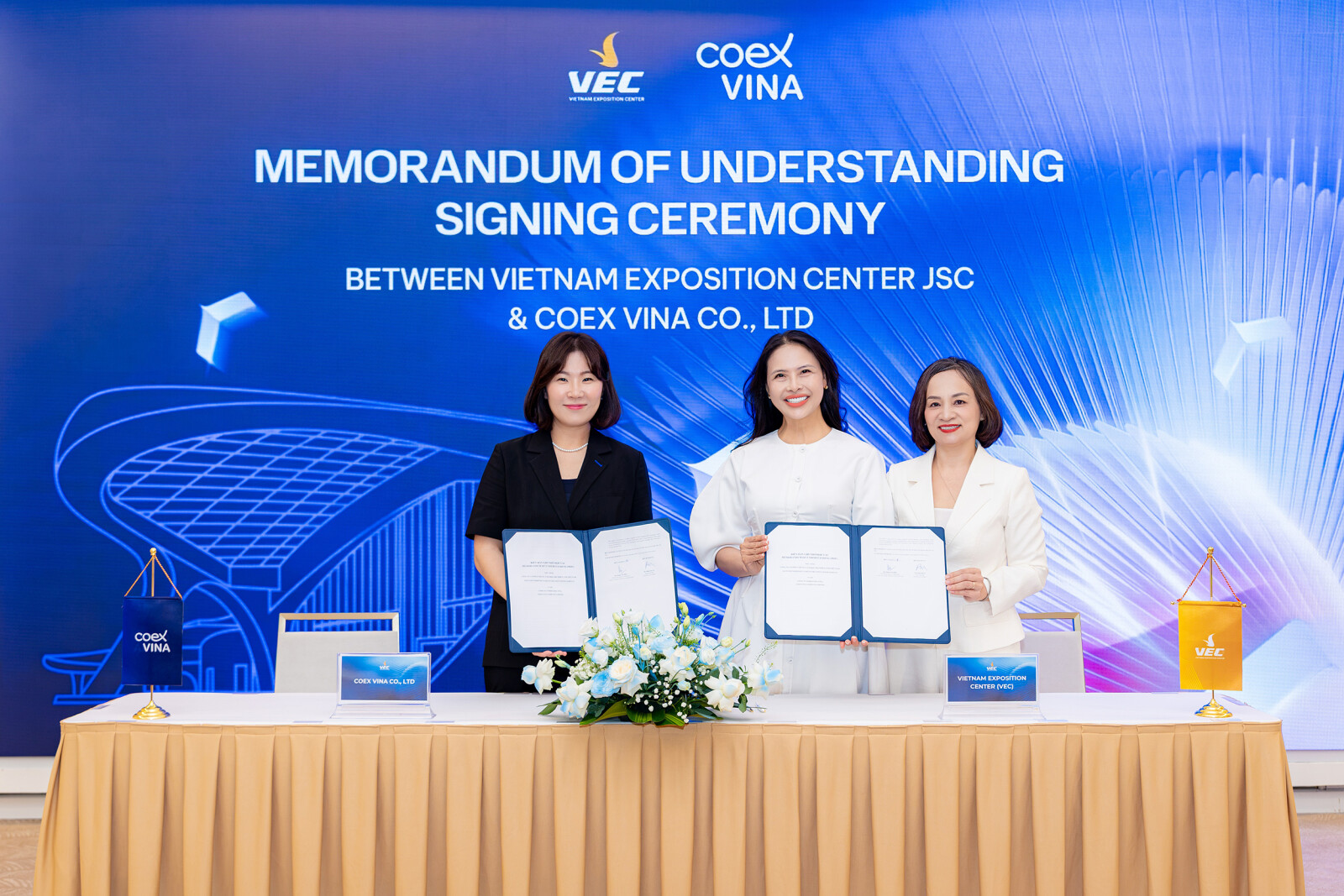
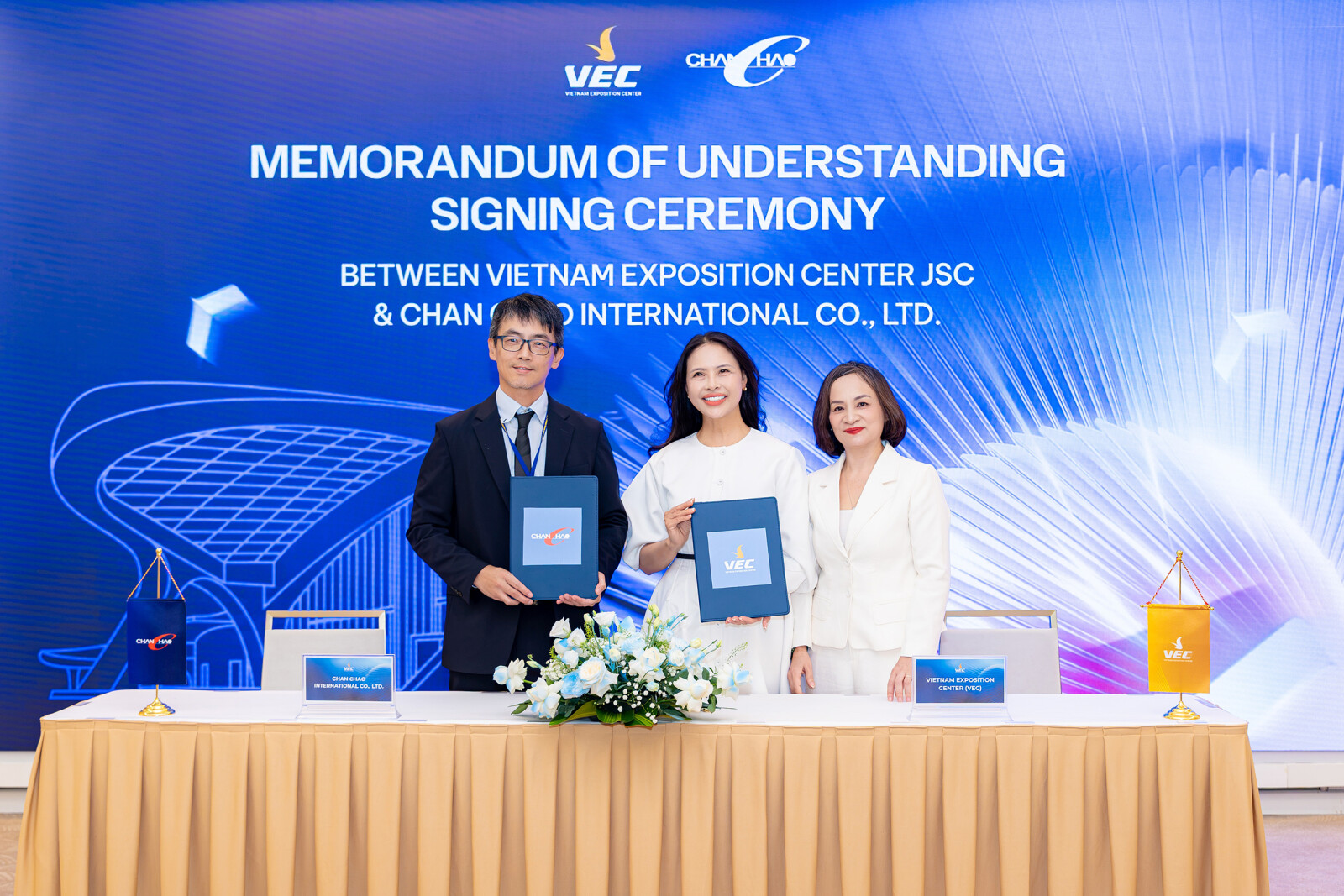
The strategic partnership signing ceremony between Vietnam Exposition Center (VEC) and COEX, Chan Chao International, VEAS (Minh Vi), and VCCorp on July 1, 2026 marks a new chapter in the development of international exhibitions and events, fostering global trade and business connections.
In the event sector, VEC’s partnerships with established organizations such as COEX, Chan Chao International, and Minh Vi will enhance service quality, optimize the customer experience, and strengthen VEC’s appeal as a destination for national, regional, and global events.
VEC and COEX, South Korea’s leading MICE company, have officially established a strategic partnership to expand the network of international exhibitions and conferences in Vietnam.
In the media sector, VEC has partnered with VCCorp to develop digital communications solutions, promote events, and build platforms that connect with business communities in Vietnam and around the world.
VEC and Chan Chao International have also entered into a strategic partnership, combining the expertise of one of Asia’s leading exhibition organizers with VEC’s world class exhibition infrastructure to develop large scale international exhibitions in Vietnam.
Speaking at the ceremony, Ms. Pham Thi Hien, Deputy Chief Executive Officer for Sales and Marketing of Vietnam Exposition Center, said: “Today’s signing ceremony not only expands VEC’s partner ecosystem but also creates a stronger platform connecting Vietnamese and international businesses. We believe the combination of world-class infrastructure, event management expertise, and our partners’ extensive networks will deliver exhibitions and events with regional and global impact, helping position Vietnam as a new destination for the international exhibition, events, and trade industry.”
Earlier, on June 18, 2026, Vietnam Exposition Center signed strategic partnership agreements with leading organizations in the exhibition, events, and trade promotion sectors, including Informa Markets, NC Network, Exporum, Vinexad, and the Vietnam Exhibition & Convention Association (VECA). These partnerships opened new opportunities to develop a portfolio of international scale exhibitions and events in Vietnam.
Guided by the vision of “Strategic Partnerships – Setting Standards – Leading the Future,” VEC’s continued expansion of its strategic partner network is steadily realizing its ambition of building a comprehensive exhibition and events ecosystem. This ecosystem is expected to attract leading international exhibition brands, create greater business opportunities for enterprises, and elevate Vietnam’s position on the global exhibition map. Through these efforts, VEC continues to strengthen its role as a hub for trade, investment, and innovation, contributing to Vietnam’s emergence as one of Asia’s premier destinations for exhibitions and international events.
Hashtag: #VEC
The issuer is solely responsible for the content of this announcement.
About Vietnam Exposition Center (VEC)
Spanning more than 90 hectares, Vietnam Exposition Center (VEC) is Southeast Asia’s largest exhibition complex and a venue for major national and international events. Guided by its mission of “Bringing Vietnam to the World and Bringing the World to Vietnam,” VEC aims to become a gateway where global excellence converges and Vietnamese identity reaches international audiences. By supporting key economic sectors, VEC contributes to strengthening Vietnam’s position on the global stage.
Founded in 1986, COEX is South Korea’s leading MICE company, specializing in meetings, incentives, conventions, exhibitions, and events. It operates the COEX Convention & Exhibition Center in Seoul, one of Asia’s largest exhibition venues. With extensive experience in organizing large scale events and a global partner network, COEX plays a vital role in connecting businesses, promoting trade, and facilitating technology exchange between South Korea and international markets. Through its partnership with VEC, COEX will organize Automation World Vietnam (September 9 to 11) and Vietbaby Fair & VietEdu Fair (October 15 to 18) in 2026, launching a series of international exhibitions at Vietnam Exposition Center.
Headquartered in Taiwan, Chan Chao International is a leading international exhibition group with operations across Asia. The company specializes in organizing trade fairs and industry exhibitions covering manufacturing, electronics, machinery, textiles, furniture, and technology. With more than three decades of experience, Chan Chao has built a multi platform trade promotion ecosystem that effectively connects manufacturers, suppliers, and international buyers while facilitating cross border business cooperation. As part of its strategic partnership with VEC, Chan Chao International will organize Hanoi Print Pack 2026, HanoiPlas 2026, and Intelligent Asia Hanoi 2026 at VEC from July 1 to 4, 2026.
Established in 2007, Minh Vi Advertising & Exhibition Services Co., Ltd. (VEAS) is one of Vietnam’s and Southeast Asia’s leading exhibition organizers and international trade promotion companies. VEAS manages numerous industry exhibitions covering manufacturing, engineering, agriculture, food, healthcare, and technology. Having organized hundreds of international events, the company serves as an effective bridge connecting Vietnamese businesses with global markets. In 2026, VEAS will further expand its exhibition portfolio at Vietnam Exposition Center with PetFair Vietnam 2026, together with eight co-located specialized exhibitions, reinforcing VEC’s position as a destination for international exhibitions while creating greater business networking and partnership opportunities for domestic and international enterprises.
Founded in 2006, VCCorp is one of Vietnam’s largest technology and digital media companies. Its influential digital media ecosystem includes leading platforms such as CafeF, CafeBiz, Soha, Kenh14, and Afamily. In addition to digital content, VCCorp provides online advertising, data, marketing technology, and digital transformation solutions for businesses. The company serves as a strategic media partner for many of Vietnam’s leading events, organizations, and enterprises.


 https://www.boi.go.th/en/index/
 https://www.xtransfer.com
 https://www.linkedin.com/company/xtransfer.cn
 https://www.linkedin.com/company/xtransfer.cn

 https://www.linkedin.com/company/aurora-mobile-ltd/?viewAsMember=true
 https://www.facebook.com/AuroraMobileLtd/

 https://www.linkedin.com/company/aurora-mobile-ltd/?viewAsMember=true
 https://www.facebook.com/AuroraMobileLtd/
 marketing@aurora-mobile.com

 www.7-eleven.com.sg

 www.linkedin.com/company/cushman-&-wakefield-greater-china


 https://vec.global