Category: Investments

  • A Multi-Generational Wealth Manager for HNWIs

    A Multi-Generational Wealth Manager for HNWIs

    For many high-net-worth individuals (HNWIs) in the region, managing and growing their wealth has become ever more complex with the heightened uncertainties and volatility of recent times.

    This is especially so given the Covid-19-induced global economic shock, US-China trade tensions, rising geo-political risks and prospect of Black Swan events. This is where the value of family offices and private wealth managers come to the fore in helping these HNWIs strengthen the pillars of their wealth.

    And this is a business segment that Affin Hwang Asset Management has seen growth in recent years. In fact, the wealth segment will be a key business focus over the next five years for the asset management firm, which has total assets under administration of RM60 billion as of 30 June 2020.

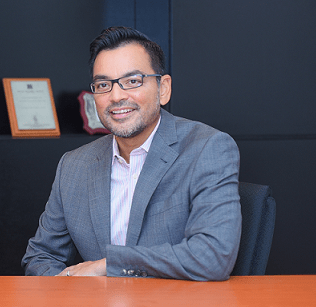
    “With more focus and resources, we can continue to grow this segment in line with Affin Hwang AM’s aspirations to be a distinguished wealth manager in Malaysia and the region,” says Shawn Kong, senior director, Institution, Corporate & High-net-worth individuals (HNWI) Business.

    It also sees a transfer of wealth across generations with more millennials becoming high-net-worth individuals in the coming years. In reaching out to this group, Kong says Affin Hwang AM will continue adapting to become “a multi-generational wealth manager” by listening to their needs and growing together with its clients. Here are excerpts of our interview with Kong on the company’s fast-growing private wealth business.

    Smart Investor: Wealth structuring whether it’s wealth creation, capital preservation or intergenerational planning has become more complex in light of heightened volatility and black swan events like Covid-19. What is your take on this and how do you think the private wealth landscape has evolved in the new normal?

    Shawn Kong: Investments and markets today have evolved. Market cycles are a lot shorter and more volatile, as we saw this year with the pandemic. Interest rates are low and overall economic growth is slow. As such, investment and wealth management has become more complex and challenging.

    In a world of complexity, the team at Affin Hwang AM is all for simplifying wealth management to our clients. It is crucial to first understand the objective of the wealth structuring for a person or a family before putting in wealth planning tools or products. Upon understanding the investment objective and risk tolerance, we can then craft a suitable diversified portfolio for our clients.

    With heightened volatility, it is essential for clients to first understand the risks of their investment to ensure they are comfortable with the risk they are taking. A litmus test question that I always find helpful would be to ask clients if they are able to sleep at night with the level of risk or volatility that they are taking.

    SI: What have your conversations been with private wealth clients and their main concerns today?

    SK: As we enter a historically low interest rate environment, our recent conversations with clients have centred around the search for yield. There is renewed interest in fixed income and dividend yielders as investors seek to enhance portfolio yields to beat long-term inflation.

    On the other end of the risk spectrum, another common conversation would revolve around the sharp equity recovery since the rout in March due to Covid-19. Many would have felt that they might have missed out on the strong rebound in markets.

    A divergence between how well global and regional equity markets have performed due to ample liquidity versus poor economic fundamentals on the ground presents a dilemma for equity investors. Is it too late? Is the rally sustainable? Those are the questions that keep cropping up.

    Eventually, our client engagements would lead to crafting a well-diversified core portfolio that would provide long-term exposure to a broad range of asset classes, investment strategies and regions. We would overlay that portfolio with some tactical ideas or strategies to capture shorter-term opportunities. It is also crucial to have an on-going portfolio monitoring and review with clients regularly.

    SI: Is there strong appetite for risk including alternative asset classes? How are you guiding asset allocation for your private wealth clients?

    SK: Alternative asset classes like private equity, private debt/ mezzanine funding or private real estate can be very attractive diversification opportunities aside from public equity and fixed income.

    Private equity will provide clients with the opportunity to participate in the growth of a business in the earlier stage before it goes public, thus enhancing the long-term returns.

    On the other hand, private debt or mezzanine funding, which behaves more debt-like instruments, will give recurring income via coupons (typically higher than tradable bonds in the market). The trade-off for these asset classes would be liquidity and usually a longer investment horizon, compared to the public markets.

    We would guide our clients to invest into these asset class according to their risk profile and investment horizon. A more aggressive client may have a higher allocation to private equity while a more conservative client would be more suitable to private debt.

    It is key to know what t he underlying investment is and to understand the risks as well as how the returns are generated. In the case of investing into private funds, it is also important to understand the style of the manager and their track record.

    We have recently provided clients with access to private real estate related deals, from asset-backed securities (ABS) to private REITs; whereby the listing of the asset 3-5 years down the road would give investors a decent total return. All these alternative options provide ways for investors to gain further diversification especially from traditionally listed equities or fixed income that are publicly traded.

    SI: We are seeing a massive transfer of wealth across generations with a larger number of millennials becoming high-net-worth individuals. How is Affin Hwang AM adapting to this demographic shift and catering to the needs of a new generation of wealthy investors?

    SK: The millennial generation has access to infinite amount of information via technology. How Affin Hwang AM can add value is to make sense of all that information or data to help clients translate them into investment decisions. Digitalisation is also important to enhance their investing experience whether it is portfolio monitoring or smoother execution of transactions.

    We have also been running various “future leaders” programmes which include seminars, workshops, study visits and networking sessions to create value for the younger generation of our investor base. Seminar topics range from investment and market updates, wealth preservation concerns as well as leadership and business innovation.

    We are mindful of the large transfer of wealth that is going to take place across Asia (Malaysia included) over the next 20 years. Thus, it is imperative that Affin Hwang AM continues to adapt to be a multi-generational wealth manager over time by listening to their needs and growing together with our clients.

    SI: What further plans does Affin Hwang AM have to grow its private wealth segment?

    SK: This wealth segment is one of our key business focus over the next five years. We have made some encouraging initial progress and growth over the past five years. With more focus and resources, we can continue to grow this segment in line with Affin Hwang AM’s aspirations to be a distinguished wealth manager in Malaysia and the region.

    Among our plans is to continually expand our investment offerings and solutions (e.g. asset classes, strategies, regions and currencies) to help our clients achieve optimal diversification in their portfolios.

    Within the wider wealth management ecosystem, we can then also build other pillars of our client’s wealth including wealth preservation and distribution. We are also continuously upskilling our people and talents as we grow the team.

    Our key proposition as a wealth manager is that we are investment-led, given our roots in asset management as well as client-focus, where we strive to live up to our mantra to always put our client’s interests first.

    Our long-term growth and success has been anchored by this singular trust that we have built with our clients over the years.

    This article was originally published in the September-October 2020 issue of Smart Investor.

  • Asia-Pacific REITs: Past, Present and Future

    Asia-Pacific REITs: Past, Present and Future

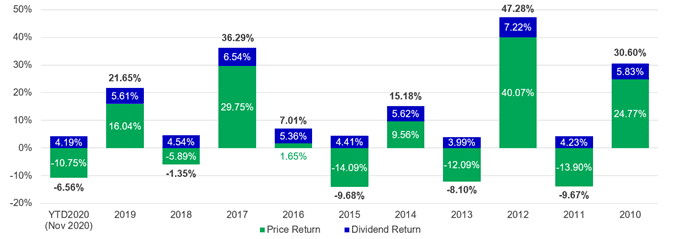
    Despite a volatile and unpredictable 2020, it is always important to remember why investors choose to invest in REITs. While they certainly can offer the possibility for price appreciation (or depreciation), stable and predictable income payouts through dividends has been the main historical source of return.

    Chart 1: AP REITs historical payout

    reits asia pacific manulife
    Annual total returns of Asia ex-Japan REITs (2010 –2020 YTD)

    Indeed, over the past 10 years, AP REITs have provided, on average, a 6.8% annualised return; roughly 5% of the total return came from dividend payouts. To put this dividend yield in perspective, Asia (ex-Japan) equity markets offered, on average, a 5.4% total return, with only 2.4% coming from dividends over the same time period.

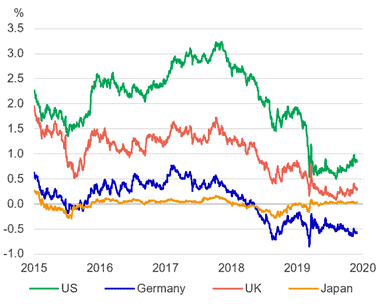
    Despite the notable challenges of the past year, from another perspective, AP REITs historical yield is also attractive in the current “lower for longer” interest rate environment. As Chart 2 shows, developed markets’ sovereign bond yields have steadily declined since December 2015.

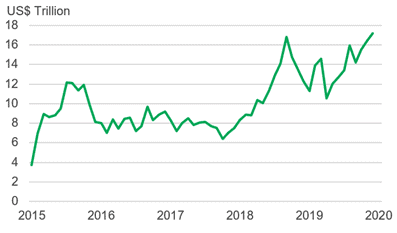
    In some developed markets, bond yields have even turned negative, with the current level of negative-yielding debt instruments near US$18 trillion and expected to climb even further in the near-term.

    Chart 2: Negative yielding bonds

    reits asia pacific manulife
    Developed market 10-year government bonds yields
    reits asia pacific manulife
    Negative-yielding debts size mounted

    While the lower for longer interest rate environment is a headwind for many fixed income segments, it is supportive for REITs due to lower borrowing costs.

    Despite these traditional strengths, 2020 was indeed a challenging year for REITs globally as well as Asia, as the economic impact of the COVID-19 pandemic called into the question the asset class’s predictable history of dividend payout.

    The Past: Early 2020

    The global outbreak of COVID-19 had a varying impact across the sub-sectors of real estate, but initially led many to question the viability of dividend pay-outs in a worsening environment. The worst hit sector globally was retail as a result of national lockdowns and social distancing requirements.

    In contrast, industrial/specialised real estate assets continued to generate stable cashflows and high-income visibility, as the acceleration in e-commerce trends led to stronger demand in warehousing and logistics facilities.

    Many segments of AP REITs have gradually recovered from the economic shock due to unprecedented monetary and fiscal policy measures. Policy responses from governments such as Singapore and Australia have helped save jobs and companies, with some packages totalling up to 20% of GDP.

    At the same time, central banks across the region have slashed rates, with the Reserve Bank of Australia starting quantitative easing for the first time in 2020.

    The Present: End of 2020

    The top priority across all landlords and REITs managers has been to ensure high cleaning/maintenance standards, temperature checks to ensure safety for all their tenants and instil confidence for people to visit their facilities. The pandemic has brought about unprecedented economic impact and all stakeholders in one form or another must bear some pain from it.

    Landlords for commercial assets in Singapore and Australia are mandated to provide rental holidays for tenants who were badly affected by the loss of sales/income. landlords have also offered help in terms of rental commissions, waiver of management fees, lease restructuring to tide tenants through the difficult period.

    We saw suburban retail landlords have also accelerated their digital marketing plans to help their tenants to sell their products online or food delivery services for their food and beverage tenants, with more people working from home, these suburban malls have ramped out digital offering to capture the sales in their neighbourhood.

    The Future: 2021

    Moving into 2021, we envisage the macroeconomic backdrop should gradually improve across the region, with significant dispersion in economic growth across the region.  Despite the economic rebound, we expect that the low interest rate environment should remain a strong tailwind for the asset class. The low cost of borrowing continues to underpin healthy demand in trophy assets across Asia.

    Our base case scenario is that key markets like Singapore, Hong Kong, and Australia should not enter into national lockdowns given policy learnings and experiences. The positive newsbytes on vaccines successes could restore confidence in consumer and corporate spending in 2021.

    Retail landlords should enjoy recovery in cashflows given the low base in 2020 (high rental reliefs) and industrial REITs remain stable with growth boosted from accretive acquisitions.

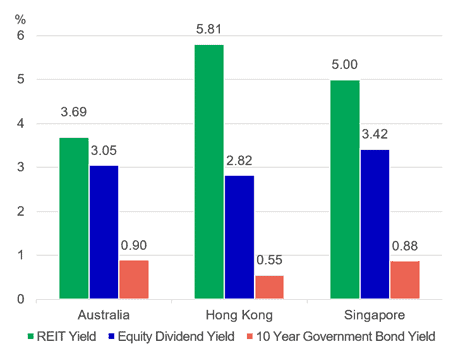
    Based on this base case and favourable macro backdrop, the outlook for yields of AP REITs should remain attractive next year (see Chart 3). Forecasted yield for AP REITs is approximately 5.1% compared to a 2.1% yield for Asian equities. In our view, this payout is expected to remain stable over the long-term, largely due to the strength of the asset class and improved economic conditions.

    Chart 3: AP REITs offer attractive forward yield

    reits asia pacific manulife


    Conclusion

    In our view, the main attraction of AP REITs as an asset class is the stable, sustainable payout of dividends to investors. While this assumption was challenged in early 2020, the response by governments and central banks helped to stabilise the real estate sector. Moving into 2021, we believe an improving economic outlook and continued low interest rates should be beneficial for the asset class.

  • P2P Financing: The Next Frontier of Retail Investment?

    P2P Financing: The Next Frontier of Retail Investment?

    The new year always brings with it hope and a positive outlook for a fresh start. This is especially true for those with investments and other financial goals that they want to achieve. With the Covid-19 pandemic showing no signs of letting up, many retail investors dove into the stock market headfirst, snapping up trending stocks like hotcakes and selling them equally fast when the tides began turning.

    Alternative investments like robo-advisors, cryptocurrency and peer-to-peer (P2P) financing have also proved popular, with many attracted by the higher risk, higher reward model offered by these financial products. This is a point not lost on Wong Kah Meng, the co-founder and CEO of Funding Societies, a P2P financing platform that connects retail investors to SMEs.

    “The top concerns facing investors when it comes to making investment decisions include low returns, long investment tenure, and being a research-intensive process,” he says.

    “P2P financing platforms such as Funding Societies mitigate these concerns. For instance, investors on our platform can easily invest in local SMEs across various sizes and industries and earn higher risk-adjusted returns through SMEs.”

    The low barrier to entry means that such platforms are easily accessible to retail investors, where investors as young as 21 years old can get started on their investment journey from as low as RM100. Users are also urged to diversify their investment portfolios in order to spread the risk across multiple small-medium enterprises (SMEs); it is for this reason that Funding Societies adopted a low minimum investment, so investors can diversify across multiple notes.

    This follows the age-old rule of not putting all your eggs into one basket. Although default rates are currently low, the chance of an SME failing to fulfil obligations to investors remains due to market risks such as unemployment rates, interest rates and economic recession.

    The company helps to facilitate this diversification by offering a range of investment products. These include business term financing, accounts payable financing, accounts receivable financing, and dealer financing.

    P2P Financing Performance to Date

    Having first launched in 2017, the P2P financier has come a long way in a relatively short time. To date, it has disbursed over RM500 mil in Malaysia and over RM5 bil regionally while maintaining a low default rate of just 1.4% to date. Although default rates were below 1% prior to the Covid-19 outbreak, the current number is lower than the 2.3% default rate back in 2017.

    Such numbers bode well for the future, especially with retail investors turning to alternative investments in greater numbers. However, Wong believes that education remains the foremost priority to establish P2P financing as not just an alternative investment, but a legitimate financing and investing platform.

    “To this end, we are still pushing for public education through participations in financial literacy seminars and industry conferences with the aim to drive thought leadership, not only in Malaysia, but also across the Southeast Asia region that we operate in,” he says.

    Business Enablers, Economic Catalysts

    While the barrier to entry is low for retail investors, Funding Societies holds the SMEs seeking to raise funding on their platform to a higher standard. Businesses come in all shapes and sizes from all segments, but the one thing they all have in common is strong credit history.

    “80% of financing deals agreed are for a tenure of under six months as we focus on transaction-based financing, which is less risky,” says Wong.

    The shorter turnaround time allows investors to get returns quicker while also balancing the amount of risk in the disbursement of funds. This is reflected in the breakdown of SMEs, where businesses specialising in wholesale and retail trading make up the majority of funding seekers on the platform, which also highlights the make-up of the overall Malaysian economy.

    The Keys to Success

    While every investment carries some form of risk, Funding Societies aims to help mitigate the risk posed to investors as much as possible. Its market-leading auto-investment algorithm was introduced as far back as 2017,
    sharing similarities with robo-advisors in that users can easily spread their investments across multiple SMEs that fit their risk profile.

    “Over 70% of investors have autobot set up for their account. It helps to queue on your behalf to execute investment opportunities based on parameters you set,” says Wong.

    This comes in handy for investors that are busy with day-to-day activities and have no time to monitor all aspects of cash deployment, making it much more than just another fancy feature.

    However, he is keen to stress that the platform also wants to ensure that investor awareness is at the highest level possible, with a detailed fact sheet provided for all SMEs seeking funding that includes a history of financial statements, write-up on the company, and risk assessment of the investment opportunity presented to investors.

    “The fact sheet is available to all investors before the start of any crowdfunding. This is to ensure investors have sufficient time to study each investment opportunity and make an informed decision,” he added.

    Alternative investments have long been championed as financial products of the future, but the Covid-19 pandemic is bringing them into sharp focus ahead of schedule. In the case of Funding Societies, the rate of user adoption was not stunted during this time and continued to grow, albeit at a slower pace.

    “This shows how investors are now skewing towards online or digital investment platforms, such as P2P financing,” says Wong.

    An impressive track record only serves to back up his claims, and being registered with the Securities Commission Malaysia also gives the platform credence among its users which include retail, high net worth, and institutional investors. It also helps that the majority of its users are on the younger side, with 80% under the age of 40. With all the progress made so far, it is not far-fetched to say that Funding Societies has arrived and is very much here to stay!

    By Caleb Khew

  • Morningstar: Setting the Stage for Investment Opportunities

    Morningstar: Setting the Stage for Investment Opportunities

    It’s certainly difficult to imagine a more dramatic year for investors than the year 2020, with the Covid-19 pandemic sending markets worldwide on the wildest of rollercoaster rides.

    In fact, what has become clear in the past few months is that even if investors had known a year ago that the world would be in the grips of one of the most severe pandemics of the century, very few would have accurately predicted where the market would end up.

    Key Drivers to Stock Market Recovery

    For much of 2020, Morningstar’s Asian coverage universe reflected a discount to their fair value estimate, and despite the fact that this discount had been narrowing since the March market bottom, it reflected a fairly wide gap between the Technology, Healthcare and Consumer sectors and the rest of the market.

    According to Lorraine Tan, Director of Equity Research, Asia at Morningstar, that discount has narrowed in the equity markets with the rotation into the cyclical sectors since November, but the sectors that are still showing the largest discounts remain Energy and Real Estate.

    “I think what this implies is that investors have already factored in an economy recovery from the pandemic but it’s still far from reflecting any market top. We think the rotation out of Tech and Consumer discretionary stocks that have outperformed will continue,” she tells Smart Investor.

    “The pandemic recovery remains the key driver – we continue to have a base case view that the vaccine will be available by mid-2021 and activity to start normalising in the second half of 2021. Our valuations reflect this view. So, the main risk is obviously any delay because it could raise prolonged debt problems,” she continues.

    “For the first half of 2021, we think holding onto some industrial automation companies for exposure to a manufacturing recovery makes sense,” says Tan.

    She opines that the recovery in capital expenditure by companies is likely to take place only in late 2021 and into 2022, given the pandemic disruptions, so the positive news flow to drive the rotation should continue in 2022.

    Being in Asia, another key driver to look out for is the Sino-US relations. According to Tan, outgoing US President Donald Trump’s penchant for executive orders has added uncertainty to the region, “but getting rid of him only solves half the equation” and “the question becomes how pragmatic President Xi Jinping is.”

    “I would imagine that Biden would be keen to establish his China policy but with a greater multilateral approach and to be within the World Trade Organisation (WTO) and other global platform frameworks.

    “We suspect that a clearer and consistent policy will help reduce market swings but the relationship, regardless, is
    going to remain challenging. Policy clarity will undoubtedly help those companies impeded by the trade tariffs and exclusions,” she comments.

    In any case, Tan’s long-term view on China’s economy is that growth will be on a slowing downtrend as much of the development is done, and with ageing demographics, the only growth driver in the country is likely to be consumption from wealth effect.

    “Regardless of Sino-US relations, fixed asset investment growth is likely to be quite flat which implies slow growth for the infrastructure-related segments. In this regard, the longer-term view continues to favour companies dialled into domestic China consumption,” explains Tan, citing that companies like Alibaba and Tencent will be in their buying recommendation if they reach more attractive price levels.

    On the broader investment themes, Morningstar’s Director of Manager Research Practice, EMEA & Asia, Wing Chan, favours China onshore markets and sustainable investing.

    China Onshore Markets Opportunities

    China currently ranks as the world’s second-largest equity market and second largest fixed income market.

    Highlighting the immense opportunities for investors in the China onshore markets, Chan says, “The gradual opening of China’s financial markets means that its weighting in global equity and fixed income indices are rising, and this is likely to lead to continual and structural inflows into China onshore assets.

    “Many asset managers have spent the last several years building their onshore investment capabilities and we are beginning to see compelling investment propositions that are well-equipped to take advantage of these mispricing opportunities,” Chan explains.

    However, fund selection is critical, as the best fund managers can outperform mediocre ones by a meaningful margin, he reminds.

    Sustainable Investing Turns Mainstream

    Against the backdrop of what has been described as the worst recession since the Great Depression, interest in sustainable investing strategies and instruments continues to grow.

    “We consider sustainable investing a structural theme that is turning mainstream as investors become increasingly aware of Environmental, Social and Governance (ESG) issues,” comments Chan.

    Assets in sustainable funds globally hit a record high of US$1.3 trillion in the third quarter of 2020, up 23% from 2019-end, according to Morningstar data.

    Asset managers, he adds, are ramping up their efforts in rolling out sustainable investment products, which are supported by continually positive and growing flows despite the pandemic’s impact on the broader fund market.

    Meanwhile, regulatory developments are also gathering pace to support this structural shift. For perspective, over 170 ESG-related regulatory measures were proposed globally in 2018 – more than the last six years combined.

    “In Europe, the wide-ranging Sustainable Finance Action Plan is actively seeking to change investing behaviour and direct more investments to long-term sustainable investment products – many of which are Undertakings for the Collective Investment in Transferable Securities (UCITS) that are widely distributed across Asia,” informs Chan.

    “Locally in Asia, the Securities and Futures Commission in Hong Kong launched a website showing ESG-related funds that meet the necessary requirements,” Chan reveals.

    Quest for Income to Continue

    Meanwhile, global central banks’ commitment to keep interest rates low along with the return of quantitative easing implies that investors’ demand for income is set to continue despite unattractive yields from developed fixed-income markets.

    “In comparison, Asian and emerging market bonds continue to offer a reasonable yield for income-seeking investors who are comfortable with taking slightly more risk,” he concludes.

    By Bernie Yeo

  • Charting the Path to a Synchronised Global Recovery

    Charting the Path to a Synchronised Global Recovery

    If all goes according to plan, the new year is expected to usher in the distribution of a Covid-19 vaccine, along with the great promise of a return to normalcy and a global economy that is on the mend. Cautious optimism seems to be the way forward, and things are finally looking up for investors.

    This follows a grim year rife with tragedy and heartbreak over the Covid-19 pandemic, which spread with alarming speed, infecting millions and bringing economic activities around the world to a near stand-still.

    “There is a synchronised global recovery in the horizon, with all regions bouncing back from the pandemic-induced recession in 2020 and heading onto a path of recovery. What’s more, global GDP is expected to rebound from -3.9% in 2020 to +5.2% in 2021 based on a survey of forecasters on Bloomberg,” says Kenanga Investors Berhad Chief Investment Officer Lee Sook Yee.

    The deployment of a vaccine is expected to help global recovery of economic activity, while extensive support from both fiscal and monetary policy provides a further boost.

    “Interest rates remain at decade lows worldwide, while the Federal Reserve (FED) and European Central Bank (ECB) continue to expand their balance sheet with various asset purchase programmes. Hence, we should see a positive environment for risk assets in the first half of 2021 at least,” she tells Smart Investor.

    Opportunities Ahead for Global Recovery

    On investments bright spots going forward, Lee says that 2021 is expected to be the year where risk assets will outperform defensive assets, with “equities likely to outperform fixed income and gold”. She adds that “Within equities, higher beta sectors and countries such as commodities and emerging markets are expected to outperform defensive and developed markets.”

    Lee highlights that monetary and fiscal policies are expected to remain supportive in 2021 as global recovery remains slow and uneven, and is highly dependent on the successful roll-out of the Covid-19 vaccine.

    As such, interest rates are expected to remain low and accommodative, although a bottom is likely to have been reached, reckons Lee, adding that “against this backdrop, risky assets can largely be expected to outperform.”

    On the sectors that will do well, Lee remains overweight in sectors that offer secular growth such as technology. “The tech sector will see various drivers such as the rising adoption of 5G technology, electric vehicles and artificial intelligence in 2021. This will boost the demand for semiconductors and related components and services across the value chain.”

    “On the other hand, we are also overweight on the cyclical/value sectors that might have suffered in the past, but will benefit from the global recovery. This includes sectors such as commodities, industrials, financials and consumer discretionary,” adds Lee.

    Indeed, we will come out of 2020 stronger and the market is looking forward to a better year with earnings anticipated to bull-doze ahead.

    “In line with the synchronised rebound in global economies, corporate earnings are expected to recover strongly in 2021. Sectors that are hit the hardest by Covid-19 such as consumer discretionary, industrials, retailing, gaming and construction are expected to enjoy the base effect of above-average rebounds in earnings.

    “Consensus expects 2020 KLCI earnings to contract 18.8% on the back of Covid-19 virus outbreak in 2020, before rebounding 32% in 2021,” Lee informs.

    Where to Put Your Money

    On the strategy that investors can adopt to stay on top of their investment performance, Lee offers this advice: “In our assessment, the ‘mobile barbell strategy’ is the most suited investment option under the current economic climate.

    “The barbell strategy is an investment concept that suggests that the best way to strike a balance between reward and risk is to invest in the two extremes of high risk and no risk assets while avoiding middle-of-the-road choices.

    “Although the growth sector is expected to continue performing well, investors should also consider shifting their weight to value and cyclical stocks as a balancing act.

    “Above all, stay diversified and focused on your personal financial goals. It would also be beneficial to have a side of supplementary savings such as Private Retirement Schemes (PRS) which can help cushion inflation or unexpected emergencies such as today’s situation,” Lee advises.

    By Bernie Yeo

  • Asian Market Recovery: Light at the End of the Tunnel

    There has not been a more dramatic rollercoaster ride for investors than the year 2020. From the global outbreak of the Covid-19 pandemic to subsequent economic lockdowns and geopolitical tensions, it has been a year that many investors would probably like to forget. With that 2021 is expected to be a year for Asian market recovery.

    A highly volatile year for financial markets, the year started off with cautious optimism as the global trade war between the United States and China began to thaw. Come February, global markets were hitting new highs.

    And then came the Covid-19 pandemic, which caused markets to sell-off by 34% (as measured by the MSCI World Index) within a short span of just six weeks.

    “However, as quickly as the market sold down, the recovery was swift. In early April, we saw benchmark gauges retracing back their losses induced by the pandemic as stimulus optimism buoyed market gains,” Affin Hwang Asset Management deputy managing director and chief investment officer David Ng tells Smart Investor.

    Policymakers were seen doing whatever it takes to shelter the economy through a swathe of stimulus measures ranging from relief packages to loan facilities and asset purchases.

    “All the losses were finally recovered at the beginning of November, which coincided with the initial release of Phase III clinical trial data for the vaccines. So, there is light at the end of the tunnel in every cycle,” he adds.

    Opportunities for Asian Markets

    There is an emerging bullish consensus that 2021 will be a recovery year. While current estimates suggest that global gross domestic product (GDP) is expected to fall by around 5% in 2020, this is expected to rebound by 5.4% in 2021 as growth returns and more economies open up.

    “So far, economic growth has surprised on the upside and there are positive revisions to corporate earnings. These will be supportive of risk assets. Effective vaccines will be key in providing a boost for markets,” Ng remarks.

    However, as the vaccines will take time to produce, the recovery will be prolonged into 2022 and 2023, thus making this a multi-year theme.

    Being a recovery year, the expected key investment themes are normalisation/rebound plays that include banks, insurers, materials, consumer discretionary and tourism and hospitality.

    “Stocks that were trading at low multiples are now coming back in flavour as we see a rotation to value,” says Ng.

    However, he stresses that the shift in value does not signal the end of the upside for technology and growth stocks. After all, while valuations are expensive, it is also one of the sectors that has the ability to grow profits consistently and exhibit secular growth, and not many sectors can claim as much.

    According to Ng, Affin Hwang Asset Management is adopting a barbell approach for their portfolio positioning.

    “On one end, we are tilted towards a basket of secular growth names with multi-year prospects that would continue to grow beyond the development of the vaccine. On the other end, we are also weighted towards cyclical and value-plays that would benefit from a re-opening of the economy,” he says.

    On the flipside, there are also risks that could derail this recovery theme.

    “Firstly, we would be closely monitoring president-elect Joe Biden’s approach to dealing with China. Asian markets and Asian foreign exchanges have reacted positively to the recent election results. An antagonistic approach would certainly bring downside risks,” Ng explains.

    Another key risk the team is monitoring is whether corporate earnings can recover as strongly as expected given the rising Covid-19 cases globally. Market valuations are high and good earnings are thus required to anchor them.

    As it will take time to produce enough vaccines on a global scale, Ng also expects the economic conditions in the near term to stay muted. “Growth may stay tepid until various countries and/or sectors can fully reboot,” he says.

    Investing in the New Normal

    But while 2020 may be a year that investors would like to forget, it was also one filled with important lessons.

    “If anything, the year has emphasised yet again the importance of diversification. Staying diversified across different asset classes is crucial; geographical and sector exposure can help minimise volatility and smoothen returns. In turn, this will induce investors to remain invested and help them stay the course,” Ng opines.

    2020 has also underscored the perils of market timing and investing according to one’s emotions. When the markets plunged in March, for instance, many investors may have panicked and resorted to shifting all their allocations to cash.

    According to Ng, the market began to recover and recouped back its losses a few weeks after the drop, and not wanting to miss out on the surge, many investors have shifted back their exposure into equities.

    “Timing the markets can prove to be more costly than the actual correction itself. That being said, investors should periodically reassess their risk capacity to see if they are comfortable with the level of risk in their portfolio.

    “If investors are taking on more risk than they can handle, this might cause jitters and lead to making impulsive decisions that do not benefit them,” concludes Ng.

    By Bernie Yeo

  • Global Economy Set for Recovery Phase

    Global Economy Set for Recovery Phase

    If anything, 2020 has taught us that opportunities for investors can arise in the midst of uncertainty, and that market sentiments can change within a short span of time.

    The pessimism during the first quarter, according to FSMOne research analyst Shawn Low Tian How, has been  quickly replaced with a bullish rally up to the point of writing as demonstrated by the benchmark for global equities, which is represented by the MSCI All Country World Index.

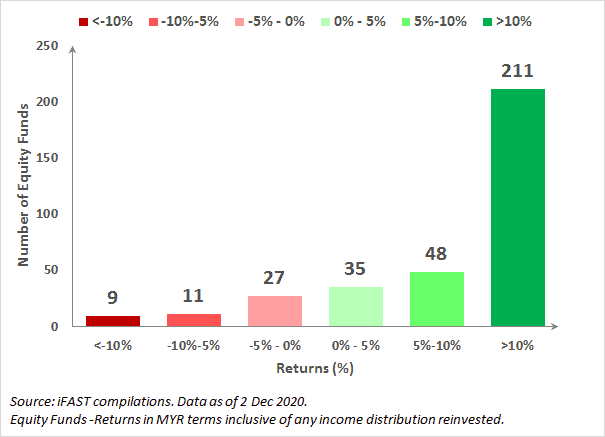
    Performance-wise, Low reveals that most unit trust funds have come out of 2020 in the green despite the difficulties during the first quarter of the year.

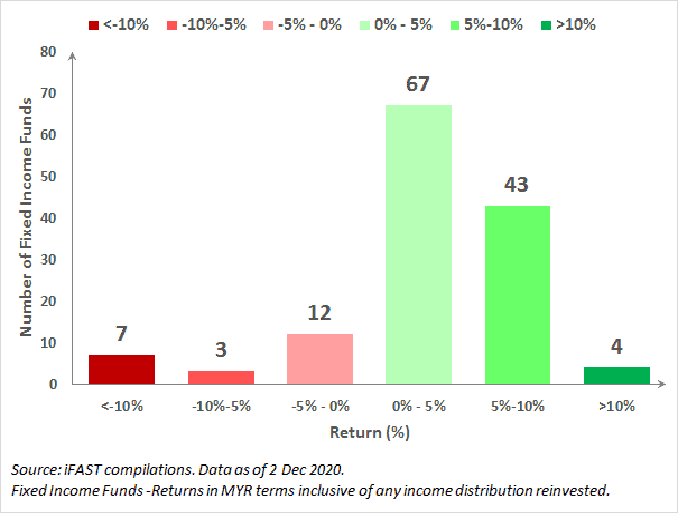
    “86% of the 341 equity and 84% of the 136 fixed income funds on the FSMOne platform have clocked in positive gains on a year-to-date basis (see Figures 1 and 2). These two asset classes have had stellar performances largely due to the immense liquidity injected by major policymakers of the world,” he tells Smart Investor.

    global economy recovery growth markets equity funds

    Figure 1: Equity funds have performed decently over the year.

    global economy recovery growth markets fixed income funds

    Figure 2: Similar occurrences can be seen in fixed income funds.

    “This event has once again reinforced a timeless quote by Warren Buffett — ‘Be fearful when others are greedy, be greedy when others are fearful’.

    “Investors who had invested during the Covid-19-induced March sell-off would have benefitted greatly on the following run up in asset prices. On the other hand, investors who exited the market in the midst of the selloff in fear of further drawbacks have lost out on potential returns during the subsequent recovery.

    “This also strengthens our belief that investors should not be shrouded by short term noises and should stay invested at all times with a long-term view,” he reveals.

    Investment Outlook for 2021

    The conditions going ahead is likely to be constructive for equities, according to Low.

    “Looking at the business cycle, we may have just witnessed a trough in 2020. Given that most leading indicators such as Purchasing Managers’ Index (PMI) or exports have begun bottoming out, the global economy could be positioned for a recovery/expansionary phase in 2021,” he explains.

    “However, a resurgence in Covid-19 cases could force many economies to reimplement lockdown measures, much like how European countries are doing. Should this threat be prolonged, it will overshadow any chances for a global recovery,” warns Low.

    That said, positive progress surrounding the vaccine such as the slew of efficacy test of around 90% in recent weeks have shed some light on the pandemic.

    “We expect more positive news to follow suit as other vaccine developers catch up to the final phases of testing, providing more options for countries to combat the coronavirus,” he points out.

    Meanwhile, the United States presidential election – which was the key risk event in 2020 – has mostly come to an end. The world will see a Biden presidency, alongside a bipartisan Congress in 2021, which is ideal for the market, reckons Low.

    Foreign policies firstly are likely to be more predictable, to which actions taken could be more bilateral instead of unilateral.

    “In terms of the bipartisan congress, some of the more extreme bills such as raising taxes could face some challenges in being passed, or at least being downsized. Given that extreme changes are unlikely, the probability of increased volatility coming from new legislations are likely to be low.”

    While the tensions between US-China may be a recurring theme going ahead, that president-elect Biden’s stance towards China is less aggressive compared to President Trump, he adds.

    Bright Spots Aplenty

    Given that most markets have experienced depressed earnings in 2020, many markets should register decent earnings growth in 2021 due to the low base effect.

    “Amongst the many markets we cover, emerging markets such as China and Asia Ex-Japan will lead their global counterparts. China, being one of the first countries to successfully curb the pandemic, is expected to clock positive GDP growth.

    “Coupled with tailwinds such as growing middle income and high population, the country is one of the more fundamentally sound markets and could remain so for many years to come. In extension, given that most Asia Ex-Japan countries export mainly to China, the recovery of China could also serve to boost its neighbours’ growth,” opines Low.

    Closer to home, Malaysia’s recent announcement of the 2021 Budget sets the tone for the year ahead. Budget beneficiaries include the property and construction sectors as the government focuses on providing support to low-income housing and the continuation of infrastructure projects.

    The local technology sector, mainly the semiconductor players, are also expected to do well, benefitting from secular trends such as Internet of Things (IoT) and 5G technologies.

    “In addition to the key risk posed by the Covid-19 pandemic, other risks are likely to be implementation risks as infrastructure projects historically have faced pause orders.

    “However, we deem this risk to be relatively low given the high multiplier effect of the sector which is used to support the economic growth of the country. In terms of the technology sector, while high valuations could be a concern for many, the decent growth potential of the sector is likely to bring valuations to more palatable levels,” says Low.

    Strategies to Ride through Market Uncertainties

    Due to volatility being part and parcel of investing, the strategy of investing through a diversified portfolio (incorporating different asset classes, geographies and sectors, among others) has been proven to help lower overall portfolio volatility and give investors better peace of mind in times of market distress.

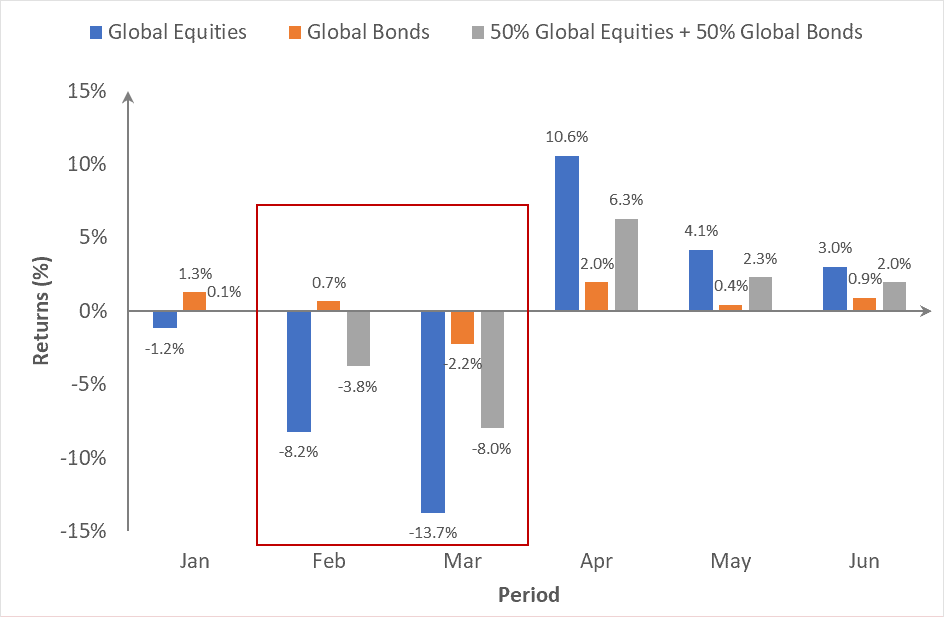
    To illustrate his point, Low draws attention to the start of 2020 where global equities (represented by MSCI AC World Index) suffered sell-offs of -8.2% and -13.7% in February and March respectively due to Covid-19 induced fears.

    Global bonds (represented by Bloomberg Barclays Global Aggregate Bond Index), on the other hand, were up 0.7% in February and only down -2.2% in March (see Figure 3).

    global economy recovery growth markets global equities bonds

    Figure 3: Global equities and bonds monthly returns in 2020.

    The deviation in price movements is because equities and bonds are different asset classes and have a low correlation with one another, he explains.

    “A mixed asset portfolio with 50% allocation in global equities and 50% in global bonds would evidently have much lower volatility than global equities over the same period.

    “For example, during the Covid-19 induced sell-off, the portfolio was down -3.8% and -8.0% in February and in March respectively. The annualised volatility of the portfolio is 17.4%, significantly lower than the 30.6% that of global equities.

    “As such, investors should adopt the strategy of investing through a diversified portfolio to help them ride through any market uncertainties in the future as just as it would have in 2020,” he explains.

    By Bernie Yeo

  • Review: 5 Things We Learned about Luno Malaysia

    Review: 5 Things We Learned about Luno Malaysia

    Recently, Luno Malaysia held a virtual media conference to reflect on a year of operations since its relaunch in Malaysia, sharing its achievements to date and plans for 2021.

    Having originally entered the market back in 2015, it quickly became the platform of choice for Malaysians to purchase and trade bitcoin, before being forced to suspend operations while being audited by the Securities Commission Malaysia (SC). After securing approval, it relaunched in October 2019 and has gone from strength to strength.

    Here’s five things we learnt about the digital asset exchange (DAX) during the presentation:

    2020 Was a Stellar Year for Luno Malaysia

    According to Luno Malaysia Country Manager Aaron Tang, the DAX has processed a cumulative total of RM827 million since its relaunch.

    It also claims to hold approximately RM165 million worth of digital assets on behalf of their customers, spread across Bitcoin (BTC), Ethereum (ETH), Ripple (XRP) and Litecoin (LTC).

    LUNO relaunch in Malaysia
    Luno relaunched in Malaysia back in October 2019.

    These figures clearly show that there is a healthy demand for cryptocurrencies in Malaysia. According to Luno, 68% of its users buy cryptocurrencies for investment purposes, while 10% conduct trades on the platform, and a further 8% use it for sending and receiving cryptocurrencies.

    Luno is the Runaway Market Leader in Malaysia

    Claiming to hold over 90% of the market share among the regulated DAXs in Malaysia, Luno has certainly made the most of its past year!

    The platform currently boasts more than 180,000 registered users, and given that Luno was the first Securities Commission-approved DAX in Malaysia, it not surprising that they have leveraged their first-mover advantage to great effect.

    With the recent surge in the price of bitcoin and other cryptocurrencies, we think it is a pretty safe bet that this number will continue growing exponentially in the near future.

    Bitcoin Isn’t Just for Risk-Taking Youngsters

    More seasoned investors may have the idea that the volatile, high-risk nature nature of investing in cryptocurrencies is only suitable for younger people that are looking to make a quick buck off the huge swings.

    However, for Luno this is far from the case.

    According to Tang, the majority of Luno’s customers are aged between 30-49 years old. These are people in their prime working age, with the demographic mostly made up of accountants, engineers, educators and entrepreneurs.

    This trend is also reflected globally, with institutional interest from the likes of Grayscale and PayPal credited with driving up the price of bitcoin in recent times.

    Who says cryptocurrency is just for millennial and Gen Z investors?

    2021 Promises to be an Exciting Year for Luno

    On plans for 2021, Tang shared that Luno aims to launch a Savings Wallet for customers, where they will be able to allocate bitcoin to an interest-bearing account which allows them to earn 3-4% interest per annum on their holdings.

    While this feature is already available for Luno users worldwide, it is currently under review by the Securities Commission Malaysia (SC).

    luno malaysia new features - luno relaunch
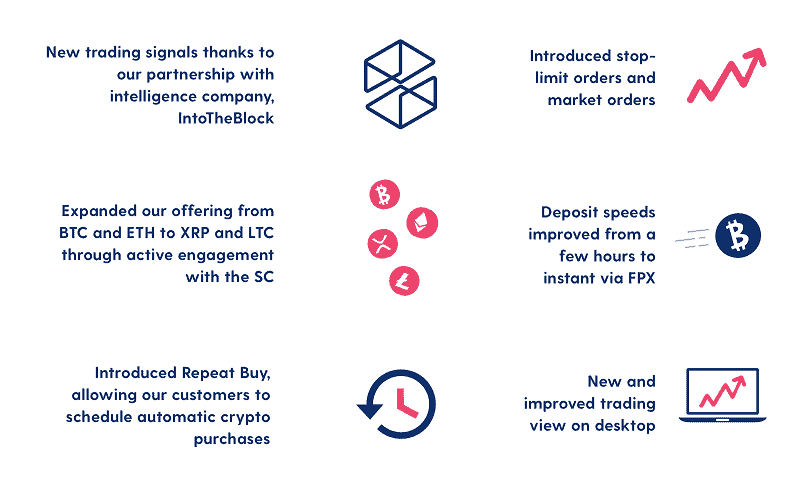
    Some of the features Luno Malaysia introduced in 2020.

    The company also plans to introduce new cryptocurrencies to the platform in 2021, subject to regulatory approval. Tang would not divulge which coins were under consideration, but the pending introduction of more assets to invest and trade in should help to bolster Luno’s position as the clear market leader in Malaysia.

    Luno is About as Safe as it Gets

    The issue of safety is one that retail investors often have when purchasing cryptocurrencies on a particular platform, with more seasoned cryptocurrency owners often championing the practice of storing digital assets on a privately-owned wallet instead of a platform.

    However, Tang was quick to elaborate on the extensive security measures that Luno has in place to safeguard customer assets.

    luno malaysia country manager aaron tang - luno malaysia relaunch“Any regulated platform in Malaysia must have their security systems audited and vetted by the Securities Commission,” he said.


    “This is the first point of confidence that consumers can have, in that you are dealing with a regulated platform that must prove that its systems are safe and secure.”

    In terms of asset storage, Luno works with the digital asset custodian BitGo to secure its “hot wallet” which is directly linked to its platform and facilitates all transactions.

    The majority of its customer assets are stored in “cold storage” (not connected to the internet), rendering it impossible for hackers to gain access to it.

    A portion of assets are also stored in “deep freeze”, which means they are spread out across several vaults in separate locations, spanning multiple continents around the world.

  • Silver Lining for Alternative Investments Despite Pandemic

    Silver Lining for Alternative Investments Despite Pandemic

    Since the first peer-to-peer (P2P) financing platform was launched in 2016, the alternative investments industry has witnessed healthy growth under the watch of the Securities Commission Malaysia (SC). The COVID-19 pandemic has, suffice to say, thrown the industry off course.

    “The Covid-19 pandemic has negatively impacted businesses across most industries, especially businesses that operate predominantly offline or rely on physical touch,” Funding Societies Malaysia co-founder and CEO Wong Kah Meng tells Smart Investor.

    In this case, P2P financing platforms play an important role in balancing the needs of both SMEs and investors, and this remains true, especially during the current unprecedented economic situation.

    On the outlook for the P2P financing sector, Wong foresees the sector will become more appealing to the investment community given the low-interest rate environment, coupled with the volatile capital markets globally.

    “Over the medium and longer term, we are hopeful the pandemic could even serve as a catalyst to spur the next wave of digitalisation of businesses across the economy as well as the emergence of new digital business models, which will benefit the P2P financing industry given its digital focus,” he opines.

    Wong Kah Meng

    However, equity crowdfunding (ECF) platform Ata Plus co-founders Elain Lockman and Kyri Andreou say it would be naïve to assume it is business as usual for the economy.

    Elain Lockman (left) and Kyri Andreou (right)

    “People’s behaviour, spending, and investment patterns have changed and the medium- and long-term impact on businesses have yet to be ascertained with any level of accuracy,” they say.

    For players in the ECF and P2P financing space, they observe there has been a considerable increase in interest for raising funds by SMEs via these two methods.

    “The improved terms for the Malaysian Co-Investment Fund (MyCIF) introduced at the onset of the pandemic can then be said to have succeeded to an extent, though in the end it still requires the participation of the wider investor market,” they explain.

    Challenges to Meet Loan Obligations

    As cash flow becomes tight and businesses see substantial declines in revenue during the coronavirus outbreak, it is inevitable many MSMEs find it a challenge to meet their loan obligations to P2P lenders.

    “Throughout the MCO, Fundaztic has never stopped MSMEs from having a chance to apply for funding with us. From a credit standpoint, however, we did take a more prudent and careful approach to ensure that all approved applicants are viable and creditworthy businesses,” explains Calvin Foo, acting CEO of Peoplender Sdn Bhd (which operates P2P platform Fundaztic).

    Bearing in mind that most businesses were not able to operate during the MCO and CMCO period, Fundaztic has also taken a proactive approach to offering restructuring and rescheduling (R&R) to their issuers as a solution to get them through these tough times.

    “This approach has eased our issuers’ financial burden over this short-term period and therefore, we are not seeing any huge spikes in our default rate,” adds Foo.

    Calvin Foo

    The situation, he continues, did improve mid-June onwards, and the number of notes and investments have started to gradually increase since then. This indicates a majority of businesses are starting to become operational once more.

    “As more businesses are adapting to the ‘new normal’, I foresee the P2P financing sector will continue to grow and assist more MSMEs in the country. In fact, I believe there will be more opportunities for the sector as businesses are starting to shift their businesses online.”

    microLEAP founder and CEO Tunku Danny Nasaifuddin Mudzaffar concurs, adding that the ability to restructure their loans allow issuers to extend the tenor of their financing so that they can pay less than what they usually pay in a month.

    “Doing so will also give P2P investors higher interest/profit at maturity. It’s a win-win situation for all parties rather than allowing the Investment Note to default.”

    On Funding Societies Malaysia’s part, Wong shares that with the slower economic activity during MCO, they anticipated deferment and restructuring requests from their SMEs.

    “Deferment and restructuring options can help SMEs alleviate their immediate repayment obligations of up to three months so that they were able to meet other financial commitments such as salary payments to their employees, thereby helping to save jobs. “In return, investors are able to earn additional interests during the deferment period as compensation,” Wong reveals.

    Growth Opportunities Abound

    Despite the predicament brought about by the pandemic, growth opportunities for the P2P industry are still available.

    Wong says one of their active efforts during the MCO was identifying SMEs with growth opportunities, particularly those within the defensive and counter-cyclical industries.

    These industries include healthcare, e-commerce, wholesale and retail of perishable goods, FMCG (fast-moving consumer goods), telecommunications and utilities, and transportation and logistics, among others, which they believe will remain strong or thrive during the current macroeconomic situation.

    “As traditional financing avenues are tightening up their credit lines, this gives the opportunity for digital financing platforms such as P2P financing to reach out to more unserved and underserved SMEs in Malaysia that would benefit from the additional financing assistance,” he adds.

    After all, over 98% of businesses in the country are MSMEs and as the whole industry has only served over 2,200 MSMEs as of June 2020, P2P financing is barely scratching the surface of the funding gap.

    Mitigating Risks for Investors

    The P2P financing industry is far from matured and although the COVID-19 pandemic may have slowed down the growth of the industry, this is believed to be just temporary.

    There will be many businesses still being underserved by financial institutions, and these are the target segments P2P financing platforms are working hard on closing the financing gap for.

    Tunku Danny

    At the end of the day, says microLEAP’s Tunku Danny, MSMEs still need financing and P2P investors still have funds to deploy. However, the question is this: how do P2P investors know that their investment comes with the least risks possible?

    “P2P investors need to look at which type of businesses will survive and which won’t. Businesses that have pivoted or have an online presence are doing well, while those that are only brick-and-mortar will find it hard to make money due to lower footfall.

    “P2P financing operators, on the other hand, need to encourage diversification of investments on their platform while being more selective in terms of the issuers they host on their platforms.”

    Interest in Early Technology Investments

    The pandemic, according to Ata Plus’s Lockman and Andreou, has clearly shown technology played a crucial role in keeping our society functional during periods of lockdown and quarantines.

    “These technologies coupled with the application of ‘new’ business concepts and/or models may prove to have a long-lasting impact beyond this pandemic. In terms of how we do business, how we trade, how we work, how we produce goods, how we buy goods, how we learn, how we seek medical services and how we entertain ourselves.

    “Business concepts/models such as the sharing economy, co-creation, crowdsourcing, customer to customer (C2C), freemiums, gamification, Big Data, software as a service (SAAS), community-driven, democratisation and Open Source are now more readily accepted and relevant than ever before.

    “It is not a surprise there is a renewed interest in technology investments due to the pandemic. Technology or tech-driven businesses that are agile, scalable and have high degree of automation or digitalisation capabilities with new business concepts/models will be the ones that will be on the watch list,” they say.

    As an ECF platform, Lockman and Andreou believe that Ata Plus, like other platforms, want to give investors access to new investment opportunities that would previously only have been available to angel investors, venture capitalists, or private equity firms.

    “We are here to connect investors who have the funds and businesses that need growth capital. Through ECF, sophisticated and retail investors can now access these investment opportunities with a much lower investment entry point into these exciting businesses. In Malaysia, the smallest investment that has been accepted by an issuer was RM10.

    “While this is a medium-longer term investment asset class with potential high returns, investors need to be aware of the risks and limits of their total crowdfunding investments. The investors may lose all their money and most start-ups will fail. The trick is to always diversify your investment and not to put all your eggs in one basket,” they conclude.

    By Bernie Yeo

  • Millennials Driving Stock Market Frenzy

    Millennials Driving Stock Market Frenzy

    The COVID-19 pandemic has had a devastating impact on global economies, sparking huge volatility in stock markets worldwide. However, the lockdowns imposed by many countries seemed to have sparked a strange phenomenon where millennials have piled into stock markets around the world including in Malaysia.

    In the past few years, millennial investor participation has been recording steady growth, with participation by this cohort in the local stock market being consistently above 20%. In their 20s to mid-30s, millennials are born between the early 1980s and mid-1990s.

    Statistics from Bursa Malaysia show retail investors in the local equity market have witnessed substantial growth in the last few months, coinciding with the imposition of the Movement Control Order (MCO).

    The exchange operator revealed year-to-date May 2020 the total retail registered an increase of 30% in new accounts opened while trading activity among retailers registered an 82% increase in average daily value.

    The retailers were also net buyers at RM5.1 bil, a whopping 607% increase compared to the same period last year.

    Similarly, online brokerage Rakuten Trade has reported a surge in account openings during the MCO period with almost 50,000 new accounts being activated between 18 March and 30 June 2020.

    “If one compares this to the more than 100,000 accounts activated since our start in May 2017, about half of the total accounts were opened in just four months,” acting CEO and chief marketing officer Kazumasa Mise tells Smart Investor.

    “The surge in retail participation can be attributed to the availability of good-value stocks due to the state of the capital market at the time. Many shares were below their historical prices, so it was a good time for new investors to enter the market and weigh their options,” he adds.

    Kazumasa Mise

    Equity Investment Trending among Millennials

    Investing in equities is fast becoming a trend among millennials, and the fact that approximately 80% of Rakuten Trade’s accounts are held by millennials is testament to this.

    For context, Rakuten Trade contributed almost RM20 bil in total trading value on Bursa Malaysia since its inception in May 2017. As of 30 June 2020, their retail market share stood at almost 7% while the clients’ assets under trust stood at more than RM1.5 bil.

    “From the onset, our fully-digital equity trading platform has appealed to those below the age of 40. This essentially means we are attracting a new segment of investors and thereby, enabling greater retail market participation, and this includes traders with no prior investment experience,” says Mise.

    He adds from the company’s perspective, their millennial traders generally find it easy and convenient to use a ‘zero contact’ and ‘low fees’ trading platform.

    As to what sectors or industries its millennial account holders are focusing their equity investments in, he says, “Our clients typically trade stocks that are in the news, trending or based on thematic investment such as healthcare-related or oil-related stocks while also generally favouring small- and mid-cap stocks.”

    Lok Eng Hong

    Maybank Investment Bank regional head of Retail Brokerage Lok Eng Hong says low interest rates globally is what’s pushing savers and investors into equity investment.

    “With better access to information and technology, millennials are most prepared to participate in online share trading and investment.

    “Investment gains and validation of good analysis attract young investors to develop money-managing skills and later, to begin their own investing journey.

    “Millennials are also deeply passionate about global issues that are important to them, and these include Environmental, Social and Governance (ESG), green technology and clean technology. Ultimately, investing in companies that champion good causes makes millennials happy,” says Lok.

    Investing in the Era of Technology

    Millennials have come of age during a time of technological change, globalisation and economic disruption. Being more diverse, better educated and more investment- and technology-savvy than the generations before them, millennials are fast changing the face of investing and wealth management.

    “Social media, private chat groups and easy access to research reports have provided trading insights and ideas to tech-savvy millennial investors during the MCO period,” says Lok.

    However, being able to gain access to information quickly with the use of social media and various available platforms does not always positively impact one’s portfolio, Lok reveals.

    “Millennials, usually the younger ones, can be influenced by various sources and influences, and we are not just talking about mainstream financial news or analysts’ recommendations – some may also be exposed to ‘expert’ commentaries and ideas, which may or may not be accurate.

    “Text messages, views and comments without proper support can easily spread through networks of friends and contacts. Sometimes, great ideas are shared, but more often than not, some high-risk speculative trade ideas are being shared as well,” he continues.

    As such, it is important for millennials to remain cautious and to rely on strong technical and fundamental aspects of a professional company and not being drawn into quick gains and rumours, especially during periods of market volatility.

    Risk Mitigation is Essential 

    All investments carry with them some degree of risk, and these risks can range from inflation and interest rate changes to political uncertainties and economic trends. Investing in equities can often be risky especially in times of market volatility such as that caused by the Covid-19 pandemic and resulting economic downturn.

    As such, risk mitigation – the process of determining what risks exist in an investment and then handling those risks in the best-suited way – is essential for any investment strategy and can help investors reduce losses and achieve their investment goals.

    “With investment of any kind, one must weigh the risks and benefits, and buying and selling shares are no different and must be done with caution,” Rakuten Trade’s Mise opines, adding when it comes to investing, time and effort are very much required.

    “An investor must know his own risk tolerance, investment time horizon, and most importantly, his own financial goals. Holding investments for the long term, too, is advisable.”

    Mise also goes on to emphasise the importance of financial literacy to make informed decisions when it comes to one’s investments.

    “Plan ahead on the possible circumstances that would justify selling. Investors should also avoid getting caught up with emotions that lead to making hasty decisions when their stocks are not performing well,” he advises.

    In terms of investment risks, Maybank Investment Bank’s Lok believes new investors should be aware of the risk of them losing all their investment funds, and potentially going into debt from over-trading and the wrong use of high leveraged derivative products.

    “Trading on stocks that have no fundamental earnings, poor cash flow and poor business model is a dangerous start. Penny stocks and cheaply priced warrants, too, can also turn into potential big losses as their price drops can be very sharp too,” he cautions.

    In addition, new investors should also be aware of the risk of stock price gap down and low trading volume, which will make some stop-loss strategy impossible to execute, says Lok.

    As such, investors should consider only value stocks and business models that are sustainable and should always make a practice of verifying if the information received is accurate. “It’s also always good to diversify. Track the market, and keep some cash ready for new opportunities that might arise,” he concludes.

    By Bernie Yeo