Category: Investments
-

Should You Invest Your i-Sinar EPF Account 1 Withdrawal?
Back in December 2019, the Covid-19 outbreak was triggered in Wuhan, a city located in the Hubei province of China.
The virus continued to spread and eventually escalated into a global pandemic which devastated every single corner of the world, causing radical changes in the way we live as well as social, economic, technological, and political policies.
Amidst the economic doldrum in China, there have been interruptions in exports and imports, while global supply chains have been disrupted significantly.
With a strongly connected and integrated worldwide trading relationship, the contraction in the global supply chain led to a big drop in global economic activities.
Furthermore, governments around the world have been forced to implement harsh restrictions on human activity to curb the spread of the virus.
These travel restrictions further burdened the financial markets and led to dramatic falls in global economies.
It’s been a similar situation in Malaysia, with the implementation of various Movement Control Orders (MCO) costing millions of people their jobs across varied industries, leaving many Malaysians suffering from salary reduction, furlough, or unemployment and retrenchment.
This impact has become apparent since the outbreak and many of them have turned to alternative jobs like driving Grab cars, venturing into the food and beverage industry, online vocations, or direct selling to make ends meet.
In December 2020, the Employees Provident Fund (EPF) launched a new scheme which allowed members to prematurely withdraw their EPF savings in order to aid their cash flow during the difficult economic times posed by the Covid-19 pandemic.
What are i-Sinar withdrawals?
The EPF i-Sinar initiative enables EPF members to make a partial withdrawal from their savings in EPF Account 1.
This initiative was launched by the EPF for the purpose of easing the financial burden of members who’ve been affected by the Covid-19 pandemic, helping them sustain their livelihood. The withdrawal amount will vary, depending on each member’s needs and of course their available balance.
Unfortunately, Malaysians are taking advantage of this opportunity to maximise their withdrawals and spending it on non-necessities.
In fact, without realising it, they’re withdrawing and spending their retirement savings nested in the provident fund!
According to a survey conducted by UCSI, among 809 people in Malaysia who have withdrawn from or planned to participate in the i-Sinar scheme, 47.2% of the respondents realised that the withdrawal will affect their retirement funds, 22.6% of the respondents were uncertain, while the remaining 30.2% of respondents didn’t realise the huge impact it would have on their retirement funds!
Returning to fundamentals, EPF serves as a social security organisation that primarily provides retirement benefits for the private sector and pensionable employees in Malaysia. Since 1951, it has proven to be a responsible and efficient custodian of its members’ retirement savings.
With the introduction of i-Sinar, this can potentially lead to a significant reduction in our retirement savings. The reason for this is that it leads to fewer dividends earned, missing out on the compounding interest in future.
If our savings are insufficient to sustain our retirement years, we may be compelled to delay our retirement further and continue to work, or may even be forced to downgrade our retirement lifestyle to one that is humbler or minimalist.
For individuals who’ve withdrawn their i-Sinar, what else they can do to manage the money beside spending it?
Well, upon fulfilling current needs, you’re highly encouraged to utilise the balance for better purposes such as investing. This is one of the instruments that’s able to grow our wealth through capital gain and appreciation in the value of an asset over time.
As with any savings fund, the benefit of putting money in EPF is the dividends and the compounding interest that you could accumulate over the years.
However, many EPF members have also opted to withdraw their i-Sinar and invest it into different investment vehicles which could offer potentially higher returns compared to EPF dividends.
Let’s use an example to illustrate this: Ms. Maria, aged 35 has withdrawn RM10,000 via the i-Sinar withdrawal facility and invested this into an investment vehicle that has the potential to generate 15% returns annually.
EPF DIVIDEND ALTERNATIVE INVESTMENTS PRINCIPAL RM10,000 RM10,000 ESTIMATED ANNUAL RETURN 5% 15% AGE 40 12,763 20,114 AGE 45 16,289 40,456 AGE 50 20,789 81,371 AGE 55 26,533 163,666 AGE 60 33,864 329,190 The table above explains how her i-Sinar withdrawal may grow from RM10,000 in the subsequent 25 years to RM329,190 thanks to higher returns and compound interest. If she doesn’t withdraw her i-Sinar and let it nest in EPF, she will only receive RM33,864 in the 25th year!
According to the aforementioned survey conducted by the UCSI Poll Research Centre, it shows that almost half (47.7%) of T20 income group earners who were polled said they used or would use their i-Sinar withdrawal for investment purposes.
Although the hardship faced during Covid-19 pandemic didn’t affect the T20 respondents as much as the others, they still saw this as an opportunity to invest and plan better for their retirement funds!
In a nutshell, the i-Sinar withdrawal is a good initiative to ease the financial burden of Malaysians who have been affected by the Covid-19 pandemic, helping them sustain their livelihood.
Despite part of the population not being affected much by the pandemic, they still continue to think about withdrawing their i-Sinar for investment purposes so that it can potentially generate better returns for their retirement funds. So instead of spending it on unnecessary items, invest it if possible!
Click here to learn more about i-Sinar.
About the author
Edmond Tang Zhen Han is a certified financial planner that is passionate about helping people achieve financial literacy in order for them to reach financial freedom. He can be contacted at edmondtangzh@genexus.com.my
-
Leveraging On Collective Investment Vehicles For Wealth Optimisation
“What if I lose money?”
“The stock market is DANGEROUS!”
“I do not know how to invest.”
Do these statements sound familiar? This mindset is typical for many Malaysians, and their very conservative nature and trust in fiat currency often leads to them keeping most of their savings in fixed deposits (FD). Although many understand that collective investment vehicles are essential to any comprehensive financial plan, there are also many hurdles that prevent people from doing so. Here are some common problems that contribute to this mental block:
Poor investment literacy
On average, investment literacy among Malaysians is relatively low compared to other countries with a more advanced and robust economy. Many people lack basic knowledge about capital markets, as well as banking products and services. Thus, this leads to a heavy reliance on FDs, while others unfortunately get caught up in investment scams. This knowledge gap can often be the main reason for many Malaysians being reluctant to invest.
Information overload
Many often look to get involved with the stock market just by doing basic research on Google or attending stock trading courses to discover the fundamentals. However, they can quickly find themselves being overwhelmed by the large amount of complex information and contradictory advice available on the internet. Worse still, some even hire unlicensed “gurus” or end up using suspicious investment platforms.
Lack of time
Investment isn’t a random game of chance – it requires deep homework and monitoring. As most people are busy with their daily life activities, it’ll be difficult for everyone to be able to do research and monitor their investment portfolio regularly, especially if it contains exposure to equities and derivatives which can be highly volatile.
Without enough time, they may not be responsive enough to respond immediately to drastic change in financial markets, which may cause them to lose opportunities or suffer losses during market corrections. This can be compounded if investors are trading in overseas exchanges that operate in different time zones.
Limited capital
One of the biggest challenges most investors face is having limited capital available to invest, making certain financial instruments too expensive and beyond their reach. For example, the share prices of gigantic companies like Facebook, Apple, or Tesla are often much too expensive for a new investor to buy and own.
Leveraging investment through collective investment vehicles
The lack of capital can often be resolved by leveraging collective investment vehicles coupled with proper advice from financial professionals. Collective investment vehicles provide facilities for investors to participate and invest in a wide variety of investment asset classes with the help of fund management institutions.
Examples include unit trusts, private retirement schemes, and even funds available via government agencies and statutory bodies such as EPF and Tabung Haji. It also includes exchange traded real estate investment trusts (REITs) and passive management vehicles such as exchange traded funds (ETF). Collective investment vehicles can be either actively or passively managed.
Benefits of investing through collective investments
There are many advantages when investing in collective investments, namely:
Diversification
For example, an equity based unit trust fund can easily invest into 30 to hundreds of quality companies depending on the mandate. It’d be better still if investors hold a basket of different kinds of funds with a combination of various asset classes and regions. The diversified nature of collective investment vehicles actually reduces the risk and volatility of the portfolio significantly, yet benefits from the return potential of the underlying assets.
Professional management
Investing through collective investments allow you to tap into the expertise of experienced licensed fund managers where they have a wide range of resources to access crucial market information. Professional teamwork between fund managers, investment analysts and their research team ensures that the best efforts are made to safeguard investors’ interest in benefiting from market movements. Fund managers are also able to utilise sophisticated financial tools effectively, which aren’t able to be executed correctly by the average retail investor.
Low entry costs
Investors can begin buying shares or units with a relatively small amount of money. This is because investment funds can be highly cost-efficient as they make “bulk-purchases” through a huge pool of investor funds. Some funds even allow investors to invest on a regular basis with contributions as low as RM100, which means the investor is actually buying into fragments of quality companies using that small amount of money.
Flexibility
Many fund management companies administer several different funds, such as money market, fixed-income, dividend, balanced and growth funds. They allow investors to switch between funds within their fund with little or no charge. This enables investors to allocate and rebalance their portfolios as per personal needs or changes in market conditions.
Choice of sectors and regions
Investing into collective investments allows you to take advantage of a wide variety of investment sectors and geographical regions. You could invest in a fund that invests in several global regions, which can reduce your exposure against big market swings in any one area. Or you could target specific countries and regions, to take advantage of the growth of their markets and gain more lucrative profits.
Investing through institutions
Would a retail investor or an investment institution have the upper hand in investing? The answer is obvious. When you leverage your investment through collective investments, you’re participating in the market through institutional investors. The level of detail and analysis that an institution does is far superior to anything a retail investor can access.
Though there are a relatively low number of investment institutions compared to hundreds of thousands (if not millions!) of retail investors in the market, the decisions made by the institutions often create a greater impact and opportunities compared to the retail as institutional funds are huge and professionally managed.
Summary
Investing through collective investments is meant to seek leverage on the expertise, time and convenience, minimise risk and optimise investment returns through professional and sizeable fund management. And while there are plenty of collective investment vehicles and fund managers, if you remain unsure which ones you should opt for, consider consulting a licensed financial adviser or planner to work out a tailor made solution for you!
About the author
Lee Yee Xiong, (FAR AfRFP BAAcc) is a licensed financial advisor with an accounting background and is well-versed in a holistic, independent and unbiased advisory approach. He is among the very first batch of MDRT International Benchmark Awardee in the FA Channel. He can be contacted at YeeXiong.Lee@yesfinancial.co
-
A Guide to Property Investment in Malaysia
This article is written to share some steps for you to consider when evaluating properties as an investment vehicle in Malaysia.
Think of it as a methodology for you to apply during your first round of scouting properties before going into more detailed research.
This selection process can be applied to property investment opportunities in both the primary market (properties under construction) and the secondary market, including auction properties.
The goal is to identify a suitable area and then select property that will represent a logical, financially-suited and tax-effective investment vehicle.
1. Look for established and planned infrastructure
One of the specific elements that influences demand within an area is the degree to which established and planned infrastructure is readily accessible to tenants.
Thus, it’s crucial that the existing and planned infrastructure surrounding property is critically identified and assessed.
Ask yourself why property in areas like Taman Tun Dr Ismail (TTDI), Mont Kiara, Bangsar and Desa Park City are very sought after?
One factor is that these neighbourhoods are matured, secure and self-sufficient townships that offer many modern conveniences — from good schools, access to banks, retail and F&B outlets, and many popular public parks.
Using TTDI as an example, it’s close to popular commercial developments such as 1Utama Shopping Centre, the Bandar Utama City Centre, and the Curve, as well as a number of multinational companies that base their offices nearby like Tesco and IKEA in Bandar Utama.
It also has a green lung of Lembah Kiara as a public park.
Infrastructure can be divided into two broad categories:
i) Accessibility – Local transportation links like access to local bus routes, MRT/LRT feeder buses, train stations, access to highways and also major arterial roads
ii) Local amenities – schools (including international/private schools), shopping centres, parks, hospitals, recreational areas, jogging/cycling paths, public parks etc
An attractive area for property investment is an area with amenities and rich infrastructure, of which there are several in Malaysia.
Alternatively, you could also look at areas that have some upcoming planned infrastructures like new highways (DASH, SUKE), highway access (MEX extension or interchange add ons), new MRT lines, LRT lines, and convenient access to commercial areas with eateries, banks and offices.
Other key indicators include sustainable malls (not just any mall, but those with established management with experience running malls that are well occupied/tenanted and well patronised), government or private/international schools, universities, public transportation, green lungs like parks and recreational areas, and working populations with a heavy focus on professionals in the middle to high-income group.
However, the time it would take for these infrastructures to be resident-accessible is a factor that shouldn’t be ignored.
Remember that you have to take into account the duration for your own target property to be built as well as the maturity of new infrastructures (highway, MRT, LRT, new central business district, malls etc) to be ready.
The faster one expects infrastructure to materialise, the quicker and better the chance of a property investment yielding capital appreciation while simultaneously lowering the risk of the infrastructure project being postponed or worse still, called off entirely.
Many will testify that this is not an uncommon occurrence in Malaysia!
2. Observe the residential vacancy rate and supply of similar properties
The same fundamental economic forces that affect the share market or even the price of coffee in your neighbourhood cafe are the exact same forces that affect the price and rental of the property market: supply and demand.
Naturally, an area with high demand but limited supply will inevitably experience above-average capital growth. An area that is “oversupplied” in contrast to demand will result in lower average capital growth.
A property investor in an oversupplied market may be forced to:
i) experience an extended vacancy period;
ii) be forced to revise the rental rate downwards to attract a potential tenant in a competitive market environment; or
iii) incur a greater than anticipated cash outflow/expense as a result of lower rental yield and/or extended vacancy rate
An area with strong property demand is also more likely to attract tenants and own-stay occupiers to the same area.
One perspective to consider is to think about an area with a lot of units, it’ll be sensible to analyse and identify the vacancy rates in the development and also the surrounding area of the neighbourhood.
If the vacancy rate is high (for example, over 10%), be wary about the competition you may have, not just within the development you have invested in but also neighbouring developments.
In the instance of high vacancy, it is a tenant’s market to pick and choose.
In a competitive tenant-oriented market, you will need to consider ways to manage the vacancy or to attract tenants to pick your unit over others.
Before buying any property for investment, plan ahead for sufficient reserves to act as a buffer to sustain a higher vacancy period and/or putting in more capital to furnish the place or make your unit stand out among the competition.
3. Focus on mass market property and homes with a unique selling proposition
For property investment, consider buying mass-market product homes in the target area, but ensure that your entry price isn’t above similar transacted prices.
In the worst case scenario, purchasing a poorly selected property that has little valuation upside below the average transacted cost of similar properties in the area, at the very least, an investor would not be the first to lose money.
You should also look at the median property price of any one area.
You’ll often hear the saying “location location location”, however, the relevance to that mantra is not quite the same in this day and age.
More importantly, consider whether the price you are paying is around the average of the property market, whether or not the average Malaysian can afford to buy/or rent in the area that you’re targeting.
A typical rule of thumb we recommend is that a property investor invests at a price point within a 15% range of the median property for that particular area or development.
Our observation is that by limiting one’s scope to properties within this 15% price range, an investor is able to obtain an “above average” property that is more likely to represent good value for a future purchaser and prospective tenants.
To put it simply, a property within this price range maximizes represents a home the majority in that area is likely to afford to either rent or buy.
4. Be open to multiple rental strategies
Have an open mind and consider having multiple rental strategies for your property investment to target different rental prospect segments such as students, middle to high income locals, or expats so that you don’t just depend solely on one type of tenant.
For example, a “mass market property” in Bangsar, Mont Kiara, or TTDI isn’t within the same price bracket of a “mass market property” in Puchong, Selayang, Rawang or Sungai Buloh. This also applies to other hot areas within Malaysia.
A mass market development refers to properties that are priced and rented at affordable levels to the locals in that area. There are two parts to this equation:
Firstly, you must find out what the prices are for the various types of properties within an area. For example, segments condominiums landed bungalows and terrace houses to use as examples.
The second component is to roughly estimate who the locals in the area are and how much they’re likely to earn.
Typically, as a rule of thumb, a tenant or own stay would spend a maximum of one-third of their disposable income for housing expenses each month.
So if the usual rental price of a property is RM2,000 per month, the disposable income for that household should be around RM6,000 to RM8,000.
Do plan out multiple rental strategies like having a master tenant, rental on a per room basis, or even platforms like Airbnb, so that if one doesn’t work, you can try another approach.
If you buy a property relying on one stream of marketing, eg. only Airbnb, you run the risk of property management deciding to ban it.
And if your Airbnb unit isn’t profitable or requires too much time to manage or a black swan event like the Covid-19 pandemic leading to a lack of travellers, you’ll struggle with tenancy options.
5. Pay attention to the cash flow rule
Ideally, you’ll want a property investment where the minimum expected rent can cover 80% of your monthly mortgage instalment so that it wouldn’t deplete your cash flow to the point where you need to sacrifice your vacations, luxuries, cars and other basic necessities.
This also implies that with better cash flow, you could be eligible to obtain more loans in the future and therefore can invest in more properties or other assets of your choice.
Let’s use a subsale property that costs RM560,000 as a case study.
- Purchase Price = RM 560,000
- Loan Amount = RM 504,000
- 35 years tenure, 4.6% rate, Installment = RM2,416
Assumptions:
- There are no new major catalysts (e.g. transport infrastructure, central business district) that affect rental appreciation)
- There are similar developments that we can take as a comparison. Rental benchmarks are taken based on the transacted rental of units with a similar layout that’s less than 10 years old
Case A: If your rental = RM1,900
Rental-Installment Ratio = Rental / Installment = 1900 / 2416 = 78.6% → not qualify
Case B: If your rental = RM2,200
Rental-Installment Ratio = Rental / Installment = 2200 / 2416 = 91.1% → qualify
We can say that Case A is not good enough to be considered because the Rental Installment Ratio is below 80%.
Does this mean we disqualify Case A straight away? It depends.
We did the comparison based on assumptions that the area does not have any other major infrastructure to induce a more significant increase in the rental. Secondly, there are similar units in the area that aren’t much older than the subject.
Let’s look at another point of view, in which the scenario is that there are major infrastructure developments and amenities where the rental could possibly increase to RM2,000 for example:
Rental installment ratio = 2,000/ 2,416 = 82.7%
Therefore the property now should be taken into serious consideration.
OR
If there is no newer supply of similar units. Most existing developments are already more than 10 years old, and the rental benchmark against these developments aren’t apple-to-apple comparisons, and rent of RM1,900 would be an underestimation of rent potential.
New development with a modern facade and newer facilities has strong property investment potential and is in a strong position to command a higher rent.
Prospective tenants would likely be willing to pay a 10-20% premium to live in a more posh and modern residence, especially if they are expats in Malaysia.
These are just two examples of how one development becomes a “good” or “bad” development based on different factors.
6. Prioritise and achieve balance of rental yield and capital growth
Capital growth isn’t the only factor that makes property investment exciting; it’s also the fact that regular and constant income can be derived from real estate that makes it a sound investment choice for many investors.
Rental income is also a source of cash flow that can be used to pay down debt on the property. Rental yield, therefore, is simply the annualised rental income expressed as a percentage of the value of the property.
For example:
- Property value = RM400,000
- Monthly rental = RM2,000
- The annualised rental income = RM2,000 x 12 = RM24,000
- Rental yield calculated as a percentage = 24,000 / 400,000 = 6%
This is not only an important percentage as it helps to determine the return on investment so that the cash flow requirement of servicing and maintaining the property can be calculated, it also provides important information about the rate of capital growth.
A natural response would be to obtain as high a rental yield as possible. However, this may not always be the best route for the investor.
More often than not, an area experiencing high rental yield is more likely to have a lower capital growth, and vice versa.
Usually, when rental returns are high, investors are willing to accept a less than average capital growth rate. When rental yields are lower, investors must be compensated by achieving a higher than average capital growth rate.
Most people will strive to achieve a balance between making a bit more money now (higher rental yield, cash flow and lower capital growth rate) or more money later (lower rental yield, higher capital growth rate).
7. Calculate potential cash on cash return(COCR)
COCR can be used as a metric to quickly evaluate if you should pump in more capital for the investment property.
However, we urge caution when looking solely at this number as this figure may not necessarily be the most useful and accurate way to evaluate the rate of return beyond one year.
Cash on Cash Return = Income / Capital Outlay
Income = Rental income – (installments + maintenance + sinking + quit rent + fire insurance)
Capital outlay = Remodel/Reno + acquisition cost + progressive interest (if undercon)
Example :
To compare buying an undercon and subsale at nett price of RM550,000
a) Buying an undercon
- Price: RM611,000
- Loan amount : RM550,000
- Monthly installment = RM2,637
- Progressive interest costs: RM20,000
- Downpayment: ZERO
- Legal fee, stamp duty = Waived
- Renovation = RM25,000
- Capital outlay : RM 1,000 + RM 25,000 = RM 26,000
Assuming a first year rental of RM1,900 per month:
Income = (1,900×12) – (2,637+300) x 12 – 1,000 (assessment) = – RM13,444. In the first year, cash flow is negative for over RM13,000 and I spent RM26,000 to acquire the property
A quick calculation of COCR = -13,444 / 26,000 = -51.6%. This shows a negative COCR.
Consider the next investment option:
b) Buying a subsale
- Price: RM550,000
- Loan amount: RM495,000
- Monthly installment = RM2,373
- Progressive interest costs: ZERO
- Downpayment: RM55,000
- Legal fee, stamp duty, valuation = RM22,500
- Remodeling / Refurbishments = RM30,000
- Capital outlay: RM55,000 + RM22,500 + RM30,000 = RM107,500
Assuming a first year rental of RM2,200
Income = (2,200×12) – (2,373+300) x 12 – 1000 (assessment) = – RM6,676
In the first year, cash flow is at negative RM6,000 but I spent over RM100,000 to acquire the property
A quick calculation of COCR = -6,676 / 107,500 = -6.21%. This shows a negative COCR.
As COCR is only good in the short term, you need a better way to analyse your target property otherwise this number, which happens to be negative, will not tell you much. What can be deduced from this figure? Does a negative COCR tell you that you’re going to lose money?
Both options have negative COCR, but scenario (b) is less negative.
Scenario (a) capital outlay is RM26,000 with COCR -51.6% while scenario (b) capital outlay RM107,500, COCR -6.21%. How can you tell which one gives a better return? Can there be another way to evaluate these two options?
8. Meaningfully analyse your potential return on investment via internal rate of return (IRR)
As investors, it’s important to know the returns you make on your investment because you want to be able to know which are winning plays or losing plays.
For financial instruments like shares, bonds or unit trusts, keeping tabs on how well these investments are doing is quite easy because these investments have to produce some sort of “report card” each year; some may even produce it monthly.
If you don’t know how to check on the status of these investments, it’s probably best you engage a financial advisor to help you out.
However, it’s not that simple for property investments.
Using the internal rate of return (IRR) takes into consideration the cash outflows (your cost) of owning the property over any given investment horizon.
Cash on cash return (COCR) doesn’t give you an accurate picture of how good or bad your investments are, as you wouldn’t be able to make comparisons using COCR with the returns you get from other investments like entering into a business venture, Amanah Saham Bumiputera (ASB) funds, unit trusts, shares, or any other options available to you.
COCR = Annual cash flow / Total investment
Annual cash flow = all income – all expenses. It captures the snapshot year by year. If the COCR is positive, this suggests you’re getting some returns from the money put into this investment.
But what if the COCR is a negative number?
How would you benchmark against other asset classes? Property investment is a long term investment vehicle. Taking a snapshot return of any one particular year does not convey the full picture about whether you stand to make good or bad returns or lose money.
Rental yield = Annual rental / purchase price
This metric gives a quick indicator as to how the property is performing but it does not tell you anything about the expenses incurred to get the property rented out at a certain rental rate.
For example, let’s say owner A has two properties worth RM560,000 each of the same layout and size in the same development.
For one unit, the owner spends RM40,000 and he gets a rental of RM2,800 and for the other, he spends RM25,000 to get a rental of RM2,500.
Rental yield for unit #1 = 2800 x 12 / 560k = 6%
Rental yield for unit #2 = 2500 x 12 / 560k = 5.36%
The rental yield for unit #1 is 6% while unit #2 is 5.36%, but can we conclude that unit #1 is better than unit #2? It isn’t very accurate to make such an assumption just by looking at this equation.
If we restrict ourselves by analysing based just on rental yield, we will ignore the other extra cost of RM15,000 that it takes to be able to charge a RM300 premium on the rental yield of unit #1 compared to unit #2.
One way to address this cash flow is to use the internal rate of return as mentioned earlier. This is the third complimentary benchmarking tool to look at to help you make more informed decisions when evaluating a property, and is also useful for considering other asset investment classes.
IRR is simply the internal rate of return of the investment in which the net present value of all cash flow equals to zero.
When investing in property, it’s important for you to have a plan.
A plan is not the same as being told “let someone else pay your loan”; or “this property is yielding 20%” when you don’t know what those two sentences mean! Like all investments, there is a tried and tested method called IRR or internal rate of return.
Click here to learn more about internal rate of return and how to calculate it.
9. Evaluate based on transacted data
One of the worst methods of getting information to validate an investment is through forums or a non-expert.
While we recognise the advantage of getting tips or rumours if you’re going to be spending a lot of money on your investment, why take the risk at all?
To evaluate transacted data, begin by benchmarking the selling price of the target property against the transacted price of similar products in the area for the last 12 to 24 months.
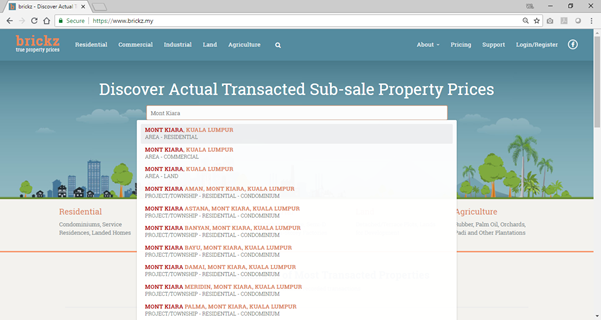
Step 1: Go to https://www.brickz.my/
Step 2: Search for area or development name
Step 3: Search for area name
Step 4: Search for development name
10. Don’t forget your game plan
Building a portfolio is just like building up a football team – your team will require good cash flow properties (defensive) and good capital gains (offensive).
You can maintain your portfolio through defensive plays alone, but this strategy wouldn’t give you much cash to grow your portfolio.
The ability to consistently buy successful undercon properties involve many uncertainties that include the workmanship, delays or abandonment of the project, cancellation of nearby infrastructure and so on.
On the other hand, one can get more reliable data about transacted price and rental from subsales properties.
You can also visit the development and check out crucial factors like the profile of the residents and the upkeep of the development to entirely avoid the risk of construction delays or abandonment.
Cash from capital gain plays can be used for several purposes: loan reduction for defensive play properties, portfolio expansion, or used as self-rewards such as travelling, a dream car, or starting up a business.
Others may also use capital gains to fund children’s education or to keep for health emergencies.
You should also consider the time and effort of managing four units of low cost flats vs managing two residential properties for middle-upper income groups.
A low-cost only portfolio strategy does have its drawbacks.
Firstly, it’s more likely that you’ll encounter more issues managing lower income bracket tenants like late payments or even defaults.
Secondly, management spends on amenities improvements is limited. Most of these developments are run down and will not look appealing to future buyers or renters.
On the other hand, low-cost apartments provide better rental yields with limited capital appreciation.
Some people believe that buying landed properties gives better capital gain, sacrificing cash flow. Investing in too many landed developments will significantly affect short term cash flows compared to highrises.
In addition, to aim for better capital gains, people believe in investing in new areas or untested products (small units, new/low occupancy offices towers, landed play, negative cash flow) to hopefully enter at a lower price and exit the market after the boom, (for example, Setia Alam).
New areas and new mega developments involve huge resources and take time to build and there are a lot of dependencies and uncertainties involved.
Developers usually take a minimum of 10 years to build a self-sustaining township. Holding power and cash reserves are the most important considerations in deploying this strategy.
Your ability to maximise your property value depends on your holding power, your own patience, and cash reserves.
There are people who prefer the hybrid investment model (capital gain + cash flow), who would choose investments in high rises below market value while still offering decent cash flow.
And then there are others who use properties as a vehicle for wealth preservation or to provide a steady stream of income and tend to prioritise strong cash flow properties.
It all depends on your own resources in deploying proper investment planning, risk appetite, holding power, cashflow priorities and many factors.
The winning formula is about creating a balanced mix that suits your game plan to meet your financial goals. There are no free lunches out there so keep learning, and apply the knowledge learnt.
The more enlightened you get, you’ll make better, rational choices when building your nest egg for the future. All the best in your investment journey!
About the authors
Rozanna Rashid is a Licensed Financial Planner (CFP, IFP) and has an MSc in Real Estate Economics & Finance from the London School of Economics & Political Science. She can be contacted at rozanna@alpine-advisory.com
William Wong is an avid property investor and has an MBA (Finance) from Universiti Putra Malaysia. He is also the co-founder of Property Buddy PLT, a company that helps property investors strategise to achieve optimised rental returns via refurbishment for their investment properties
-

2021 Morningstar Fund Awards Malaysia Winners
Morningstar Asia Limited, a subsidiary of Morningstar, Inc., a leading provider of independent investment research, has announced the winning funds for its 2021 Morningstar Fund Awards Malaysia. The annual Morningstar Malaysia Fund Awards recognise retail funds that have added the most value for investors within the context of their relevant peer group in 2020 and over longer time periods. Morningstar selects the winners using a quantitative methodology, along with a qualitative overlay. Weightings to one-, three-, and five-year risk-adjusted performance are factored into the methodology.
“The market volatility resulting from the pandemic in 2020 highlighted the importance of investors staying the course and maintaining perspective. The 2021 Morningstar Fund Awards winners stand out for their ability to serve the best interests of investors and deliver excellent returns over the longer term. We applaud all winners for their outstanding achievements,” said Nick Cheung, chief executive officer for Morningstar Asia Limited.
Wing Chan, Morningstar’s director of manager research practice, EMEA & Asia, remarked, “After a year of exceptional market performance, global financial markets are increasingly pricing in a strong economic rebound this year. Combined with an elevated risk appetite, investors are advised to be mindful of stretched asset valuations and risk of a market pullback. This year’s winners demonstrated their abilities to navigate through turbulent times and delivered competitive long-term results for investors.” The winners of the 2021 Morningstar Fund Awards Malaysia are:
FUND CATEGORY AWARDS WINNERS Best Asia-Pacific Equity Affin Hwang Select Asia Pacific (ex Japan) Dividend Fund Best Malaysia Bond Fund AMANAHRAYA UNIT TRUST FUND (BOND FUND) Best Malaysia Bond (Shariah) Fund AMANAHRAYA SYARIAH TRUST FUND (SYARIAH BOND FUND) Best Malaysia Large-Cap Equity Fund Public Industry Growth Fund Best Malaysia Large-Cap Equity (Shariah) Fund Public Islamic Alpha-40 Growth Fund The Morningstar fund category awards are based on Morningstar fund data as of 31 December 2020. The awards methodology emphasises the one-year period, but funds must also have delivered strong three- and five-year returns after adjusting for risk within the awards peer groups in order to obtain an award. In selecting winners, fund returns are adjusted for risk using the Morningstar Risk, a measure which imposes a higher penalty for downside variation in a fund’s return than it does for upside volatility.
-

Should I Make A Voluntary EPF Contribution Today?
In February 2021, the Employer’s Provident Fund (EPF) announced dividends of 5.2% for conventional savings and 4.9% for shariah accounts for 2020. Overall, I believe contributors were satisfied in view of the effects of the pandemic caused by Covid-19 which greatly affected both the local and global economy. At least their retirement fund continued to grow!
In Malaysia, EPF contribution is mandatory for both employers and employees as long as they are under full-time employment. This scheme allows workers to automatically save for their retirement from the day they start working. However, there is another category of people consisting of self-employed or business owners that might not contribute to EPF as it isn’t mandatory under business entities such as sole proprietors, partnerships or private companies (Sdn. Bhd.) and do not draw a salary from their company. Instead of drawing a salary, they get paid through director fees or dividends.
So should such income earners opt for voluntary contributions to EPF? Let’s look at this from various perspectives:
Compounding Interest Effect through Long-term Savings
In order to have a comfortable life after retirement, we have to set aside money to create a pool of funds which must adequately cater for 20 years of retirement costs. Therefore it’ll be much easier to hit this target if you start saving immediately when you begin earning an income. If you understand the power of compounding interest, you’ll know that by starting to save early, your money will be put to work for you. Therefore a self-employed person should set aside a certain percentage of income or business profits for the purpose of retirement as early as possible.
The next question is why EPF? Why can’t I save the money in the bank? Firstly, we’re currently in the low interest era and it’s likely to remain that way for the foreseeable future. EPF dividends are much higher than what banks are offering for fixed deposits, currently between 1.8% and 2.2% depending on the amount and period.
One might argue that contributors can’t withdraw the money as they wish except under certain criteria from time to time, such as the i-Sinar scheme due to the Covid-19 pandemic. The restriction on withdrawal serves its purpose to secure your future; otherwise, there’s a good chance that it will be withdrawn and spent for a variety of reasons along the years.
Discipline in regular savings is one of the key success factors in achieving your desired retirement goal. Another will be the determination of keeping those funds for your later years and not simply withdrawing it for unimportant matters. This should be your last resort of getting financial assistance, as naturally it’s much easier to spend money than save it. Furthermore, early withdrawal of the funds has a long-term impact on the accumulated funds due to the effect of compounding interest.
Tax planning
Apart from the benefits of compounding interest, as business owner should draw monthly salary from the business and contribute to EPF according to the mandatory contribution rate. In such a scenario, there’s an advantage in terms of tax savings as the amount contributed by the company is tax deductible against company profits up to 19% of the salary drawn from the company. As the business is self-owned, it’s just a matter of transferring one side of the pocket to another while enjoying tax savings simultaneously! Of course the criteria is that the company is profitable and has sufficient cash flow to do so.
Fixed Income in Your Investment Portfolio
Some might argue that instead of comparing to bank savings, why not invest in other investment tools like shares or unit trusts which can generate better returns. Provided the risk is well-managed, it could indeed be a better option than to keep savings in the bank.
To structure an investment portfolio for retirement purposes, it’s advisable to split into different asset classes for risk diversification and liquidity. Normally a conservative asset class will form part of the portfolio to provide security. In this case, you can treat EPF savings as the more secure tool that generates a fixed income of 5.5% returns on average. Other resources in the form of cash will be allocated to more aggressive tools such as unit trusts that aim for higher returns of 8%-12% for example, to enhance the overall returns of your retirement portfolio.
After much discussion on the importance and benefits of long term savings through EPF contribution, it’s advisable for the majority of people to do so. The exception will be an individual that has the capability and time to manage all their direct investments and is very disciplined in setting aside money for retirement funds, in addition to managing risk and return very well.
Otherwise do start your retirement planning as early as possible and leverage on the expertise of our country’s established retirement scheme to ensure you have a comfortable retirement. Last but not least, it’s also recommended that non-income earners such as housewives also contribute voluntarily to EPF for their future security with support from their spouse.
About the author
Dennis Chin is a financial advisor, approved and licensed by Bank Negara Malaysia and the Securities Commission Malaysia. He can be contacted at dennischin@harveston.com.my
-

Value Investing in the Pandemic Economy
Most investors use either one of two primary strategies when it comes to investing – value investing or growth investing. Interestingly, the term ‘value investing’ is often used but not all investors understand the meaning of ‘value investing’.
What is value investing all about, and what are value funds and the benefits of investing in a ‘value fund’? When the Covid-19 pandemic spread globally and became the world’s largest health crisis, it stirred things up completely and left us with the question “Do value investing strategies remain relevant in these times?”
What Is Value Investing?
Value investing is a strategy that focuses on trading at a share price that’s considered to be a bargain for businesses with good fundamentals. The strategy involves selecting stocks that are undervalued compared to the industry average or their peers. The theory behind this approach is that the stocks of good companies will bounce back in time, if or when their true value is recognised by other investors.
A stock price may be undervalued because of an overreaction to market news, such as disappointing earnings, negative publicity or legal problems, all of which may raise doubts about the company’s long-term prospects. To determine the real value, value investors usually ignore the stock price and look at the entire company. They focus on the company’s fundamentals such as sales data, financial reports, holdings, real estate, patents, intellectual property, research and development, and many other factors. Value investing aims to exploit the irrational short-term behaviour of emotional investors.
What Is a Value Fund?
A value fund primarily invests in value stocks. Value fund managers will research and analyse a company’s fundamentals to determine if its stock is “good value” and should be purchased. However, it’s commonly believed that investors decide to buy into a fund based on the fund’s net asset value (NAV), which is incorrect. Investors should focus on macro-trends for the sectors in which the fund has invested.
Value investing is a long-term strategy, as it invests in companies with a high likelihood of generating a higher income to produce a sustainable cash flow. Thus, in a value fund, even if the stocks do not appreciate in value, the investor can benefit from dividends, if there’s high upside potential.
Market Review
The COVID-19 pandemic, followed by the movement control order (MCO) and a series of conditional movement control orders (CMCOs), disrupted many industries. A significant number of companies suffered as both their top line and their bottom line were affected. As people were unable to travel and were quarantined at home, business revenues dropped precipitously.
A lack of cash flow impacted the growth and performance of many firms, which was reflected in stock prices. Many investors, especially retail investors, resorted to panic selling which led to the market plummeting much faster compared to previous crises.
Sectors like energy and banking, plus cyclical, such as automakers, aerospace and defence firms, insurance companies and building material suppliers, all suffered, as they’re sensitive to economic cycles. Investors are currently weighed down by concerns that COVID-19 would persist, unemployment would remain high, interest rates and inflation would stay low, and dividends would not recover.
As a result, they shortened their time horizons. They piled into secular winners and avoided cyclicals. Fear and uncertainty also meant that investors favoured well‑understood growth stories during the recovery rally without considering valuations. Growth stocks, supercharged by low interest rates, digitisation, working from home and other pandemic-related trends, were continuously bought up which drove the market higher.
However, while the circumstances clouding the market were dark, falling prices created opportunities for fund managers to buy undervalued stocks. As mentioned earlier, a value investing strategy aims to benefit from the irrational behaviour of emotional investors. This is because fear and greed remain ever present and frequently lead to poor investment decisions based on perception and emotion rather than reality. For example, on March 15, 2020, the FBM KLCI slumped to its lowest level since December 2011, due to the second wave of Covid-19.
2021 Economic Recovery – The Benefits of a Value Investing Strategy
Growth should accelerate as the vaccine becomes widely available, allowing consumer, work, leisure and travel habits to return towards more sustainable levels. If the vaccination programme is effective, it will help drive economic recovery, which should favour the cyclical parts of the market. Furthermore, the expansionary government policy may see unemployment drop sharply and the bull market may keep running, with the COVID-19 losers likely to be the first to benefit.
China is a great example of how a recovery scenario could potentially play out globally. Their aggressive efforts to control the Covid-19 pandemic in the early days of the crisis were widely scrutinised, but the country’s heavy-handed approach paved the way for it to be largely Covid-free by the second half of last year. Consumer spending, car sales, and economic growth have all bounced back strongly from the depths of the pandemic back in March.
Certain sectors, such as airlines, energy, banking and other value sectors, may not recover in 2021, as the demand for their goods and services may not pick up until 2022. However, the stock market is forward looking and pricing in an anticipated recovery. These sectors may do better in 2021 than the economies in their respective states. Moreover, comparisons of corporate earnings could become more important in 2021. Many value cyclicals will have an easier time beating their dismal 2020 figures, unlike growth companies, which have a much higher bar for impressing investors.
The Bottom Line
The road to a post-COVID-19 ‘new normal’ will not be smooth. Investing during uncertain times can make an investor anxious and fearful, but even in good times, it can also be challenging. Investing successfully depends on being able to control and manage the risks without skipping the possible returns. This pandemic is having a significant impact on both value and growth stocks in the short term and long term. The most popular value investing strategy is diversification, which is designed to create a high safety margin.
About the author
Joe Tiong is a certified financial planner and she can be contacted at joe.tiong@uobkayhian.com.
-

Alternative Investments for Individual Investors
Alternative investments for individual investors are financial assets that do not fall into conventional asset classes and often tend to attract younger investors. Firstly, what are alternative investments? They are labelled as such because these financial assets do not fall into the more conventional asset classes of equity, bonds, properties, or cash investments. Alternate investments can be further divided into subcategories such as commodities, private equity, collectibles, and cryptocurrencies. Typically, alternate investments do not form the core of your investment portfolio but instead form less than 10% of your overall portfolio.
No matter what you call alternative investments, this asset class has been grabbing headlines. At the forefront is cryptocurrency with bitcoin having skyrocketed to new highs above US$40,000 (RM160,000). Another increasingly popular alternative investment is gold which has gained some new followers with fintech now allowing you to buy fractional gold via an app. Lastly, we have P2P financing which allows investors to legally lend money to small businesses and entrepreneurs via an online P2P platform.
Why Do Alternative Investments Appeal to Young Investors?
Alternative investments are generally viewed as high risk and highly volatile. These investments are also more often embraced by younger (and young at heart) investors who are comfortable with technology, while older (or more risk averse) investors may shun away from investing online or via an app into an investment that talks about blockchain or fractional investing. Older investors may also have a preference towards more traditional investments such as stocks and property.
Younger investors tend to find investing in alternative investments, especially those powered by fintech, as more transparent and are often attracted by the lower fees. Alternative investments also provide higher potential returns while allowing investors to diversify and own assets that aren’t correlated to the stock market. As it’s more volatile, alternative investments also provide an avenue for trading which allows investors who like trading to scratch an itch!
How Do Alternative Investments Perform?
Along with the higher risk and volatility, alternative investments also enjoy potentially higher returns. For example, bitcoin’s price rise in 2020 was over 300%, towering above most if not all other asset classes, while the YTD rise for gold is around 23%. For P2P financing, returns can range from 10% to 18% according to data provided by P2P financing operators in Malaysia.
While alternative investments appear to be doing well, it’s a double-edged sword as investments could potentially go downwards significantly as well. For example, the Great Crypto Crash of 2018 saw the price of bitcoin drop 80% from its peak which is an even bigger magnitude of loss than the dot-com crash.
Gold is also often falsely perceived as a low risk asset and a safe investment during times of crisis. In fact, gold is highly volatile with an average volatility moving upwards (or downwards) of 16% a year! P2P financing investors on the other hand face risks in the face of rising default rates whereby borrowers are unable to pay and the losses affect investor returns.
What You Need to Know about Investing in Alternative Investments
This comes with its fair share of risks and know-how. For example, a common question when investing in alternative investments is whether you will be taxed in Malaysia. Cryptocurrency is not taxed if you are not trading crypto as your primary source of income.
However, for P2P financing, investors are required to declare gains and will be taxed. For gold investing if you are a Muslim, you will need to pay zakat, a mandatory form of Islamic obligation tax, if you hold gold above 85 grams. This applies even if you cannot see or touch the gold physically as halal gold must be backed up by actual physical gold to be Syariah compliant.
Let us narrow down good rules of thumb for investing in these alternate investments. Bitcoin is a highly speculative investment with massive gains and drops thus you may want to hold no more than 5% of your investment portfolio in cryptocurrency. It’s also important to note that cryptocurrency is not viewed as legal tender in Malaysia but there are three digital asset exchanges (cryptocurrency exchanges) recognised by the Securities Commission.
P2P financing also faces the risk of defaults, so you may want to ensure you spread your risk across different borrowers (or even different P2P financing platforms). Do read up on the borrower’s financial information before investing in any P2P financing notes. Gold has its fair share of criticism as well as it does not generate any returns but is a good hedge against times of crisis. Do be aware of the gold spread, which is the difference between the buying and selling price of gold, and any fees charged which will reduce your returns.
What Lies Ahead for Alternative Investments
Cryptocurrency especially is an interesting alternative asset to watch. It’s increasingly being viewed as a store of value, thus earning the nickname of digital gold. Digital payment platforms PayPal and Venmo announced that they will support transactions in bitcoin and other cryptocurrencies driving an increase in usage and liquidity. There is also a growing number of institutional investors in bitcoin as a reserve asset and an alternative to fiat currency such as the US dollar which is showing a decline in value.
Overall, alternative investments are becoming increasingly popular with financial technology and slick, shiny apps appealing to young and young at heart investors. Increased competition, lowered costs with fintech, and an increasingly global investment market will further spur growth in these risky but promising investments.
About the author
Stephen Yong (MBA, CFP cert ™) is a licensed financial planner and can be contacted at stev.yong@wealthvantage.com.my.
-

A Multi-Generational Wealth Manager for HNWIs
For many high-net-worth individuals (HNWIs) in the region, managing and growing their wealth has become ever more complex with the heightened uncertainties and volatility of recent times.
This is especially so given the Covid-19-induced global economic shock, US-China trade tensions, rising geo-political risks and prospect of Black Swan events. This is where the value of family offices and private wealth managers come to the fore in helping these HNWIs strengthen the pillars of their wealth.
And this is a business segment that Affin Hwang Asset Management has seen growth in recent years. In fact, the wealth segment will be a key business focus over the next five years for the asset management firm, which has total assets under administration of RM60 billion as of 30 June 2020.
“With more focus and resources, we can continue to grow this segment in line with Affin Hwang AM’s aspirations to be a distinguished wealth manager in Malaysia and the region,” says Shawn Kong, senior director, Institution, Corporate & High-net-worth individuals (HNWI) Business.
It also sees a transfer of wealth across generations with more millennials becoming high-net-worth individuals in the coming years. In reaching out to this group, Kong says Affin Hwang AM will continue adapting to become “a multi-generational wealth manager” by listening to their needs and growing together with its clients. Here are excerpts of our interview with Kong on the company’s fast-growing private wealth business.
Smart Investor: Wealth structuring whether it’s wealth creation, capital preservation or intergenerational planning has become more complex in light of heightened volatility and black swan events like Covid-19. What is your take on this and how do you think the private wealth landscape has evolved in the new normal?
Shawn Kong: Investments and markets today have evolved. Market cycles are a lot shorter and more volatile, as we saw this year with the pandemic. Interest rates are low and overall economic growth is slow. As such, investment and wealth management has become more complex and challenging.
In a world of complexity, the team at Affin Hwang AM is all for simplifying wealth management to our clients. It is crucial to first understand the objective of the wealth structuring for a person or a family before putting in wealth planning tools or products. Upon understanding the investment objective and risk tolerance, we can then craft a suitable diversified portfolio for our clients.
With heightened volatility, it is essential for clients to first understand the risks of their investment to ensure they are comfortable with the risk they are taking. A litmus test question that I always find helpful would be to ask clients if they are able to sleep at night with the level of risk or volatility that they are taking.
SI: What have your conversations been with private wealth clients and their main concerns today?
SK: As we enter a historically low interest rate environment, our recent conversations with clients have centred around the search for yield. There is renewed interest in fixed income and dividend yielders as investors seek to enhance portfolio yields to beat long-term inflation.
On the other end of the risk spectrum, another common conversation would revolve around the sharp equity recovery since the rout in March due to Covid-19. Many would have felt that they might have missed out on the strong rebound in markets.
A divergence between how well global and regional equity markets have performed due to ample liquidity versus poor economic fundamentals on the ground presents a dilemma for equity investors. Is it too late? Is the rally sustainable? Those are the questions that keep cropping up.
Eventually, our client engagements would lead to crafting a well-diversified core portfolio that would provide long-term exposure to a broad range of asset classes, investment strategies and regions. We would overlay that portfolio with some tactical ideas or strategies to capture shorter-term opportunities. It is also crucial to have an on-going portfolio monitoring and review with clients regularly.
SI: Is there strong appetite for risk including alternative asset classes? How are you guiding asset allocation for your private wealth clients?
SK: Alternative asset classes like private equity, private debt/ mezzanine funding or private real estate can be very attractive diversification opportunities aside from public equity and fixed income.
Private equity will provide clients with the opportunity to participate in the growth of a business in the earlier stage before it goes public, thus enhancing the long-term returns.
On the other hand, private debt or mezzanine funding, which behaves more debt-like instruments, will give recurring income via coupons (typically higher than tradable bonds in the market). The trade-off for these asset classes would be liquidity and usually a longer investment horizon, compared to the public markets.
We would guide our clients to invest into these asset class according to their risk profile and investment horizon. A more aggressive client may have a higher allocation to private equity while a more conservative client would be more suitable to private debt.
It is key to know what t he underlying investment is and to understand the risks as well as how the returns are generated. In the case of investing into private funds, it is also important to understand the style of the manager and their track record.
We have recently provided clients with access to private real estate related deals, from asset-backed securities (ABS) to private REITs; whereby the listing of the asset 3-5 years down the road would give investors a decent total return. All these alternative options provide ways for investors to gain further diversification especially from traditionally listed equities or fixed income that are publicly traded.
SI: We are seeing a massive transfer of wealth across generations with a larger number of millennials becoming high-net-worth individuals. How is Affin Hwang AM adapting to this demographic shift and catering to the needs of a new generation of wealthy investors?
SK: The millennial generation has access to infinite amount of information via technology. How Affin Hwang AM can add value is to make sense of all that information or data to help clients translate them into investment decisions. Digitalisation is also important to enhance their investing experience whether it is portfolio monitoring or smoother execution of transactions.
We have also been running various “future leaders” programmes which include seminars, workshops, study visits and networking sessions to create value for the younger generation of our investor base. Seminar topics range from investment and market updates, wealth preservation concerns as well as leadership and business innovation.
We are mindful of the large transfer of wealth that is going to take place across Asia (Malaysia included) over the next 20 years. Thus, it is imperative that Affin Hwang AM continues to adapt to be a multi-generational wealth manager over time by listening to their needs and growing together with our clients.
SI: What further plans does Affin Hwang AM have to grow its private wealth segment?
SK: This wealth segment is one of our key business focus over the next five years. We have made some encouraging initial progress and growth over the past five years. With more focus and resources, we can continue to grow this segment in line with Affin Hwang AM’s aspirations to be a distinguished wealth manager in Malaysia and the region.
Among our plans is to continually expand our investment offerings and solutions (e.g. asset classes, strategies, regions and currencies) to help our clients achieve optimal diversification in their portfolios.
Within the wider wealth management ecosystem, we can then also build other pillars of our client’s wealth including wealth preservation and distribution. We are also continuously upskilling our people and talents as we grow the team.
Our key proposition as a wealth manager is that we are investment-led, given our roots in asset management as well as client-focus, where we strive to live up to our mantra to always put our client’s interests first.
Our long-term growth and success has been anchored by this singular trust that we have built with our clients over the years.
This article was originally published in the September-October 2020 issue of Smart Investor.
-

Asia-Pacific REITs: Past, Present and Future
Despite a volatile and unpredictable 2020, it is always important to remember why investors choose to invest in REITs. While they certainly can offer the possibility for price appreciation (or depreciation), stable and predictable income payouts through dividends has been the main historical source of return.
Chart 1: AP REITs historical payout
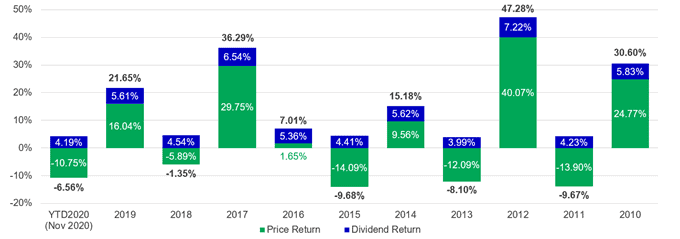
Annual total returns of Asia ex-Japan REITs (2010 –2020 YTD) Indeed, over the past 10 years, AP REITs have provided, on average, a 6.8% annualised return; roughly 5% of the total return came from dividend payouts. To put this dividend yield in perspective, Asia (ex-Japan) equity markets offered, on average, a 5.4% total return, with only 2.4% coming from dividends over the same time period.
Despite the notable challenges of the past year, from another perspective, AP REITs historical yield is also attractive in the current “lower for longer” interest rate environment. As Chart 2 shows, developed markets’ sovereign bond yields have steadily declined since December 2015.
In some developed markets, bond yields have even turned negative, with the current level of negative-yielding debt instruments near US$18 trillion and expected to climb even further in the near-term.
Chart 2: Negative yielding bonds
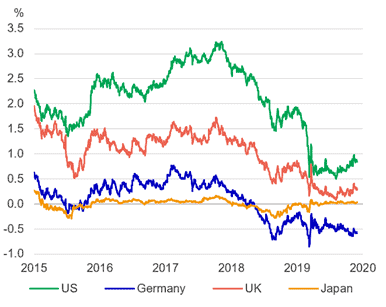
Developed market 10-year government bonds yields 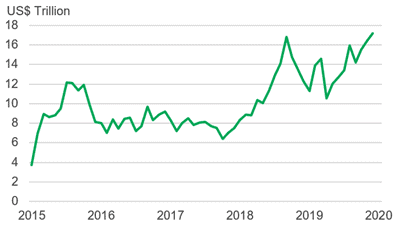
Negative-yielding debts size mounted While the lower for longer interest rate environment is a headwind for many fixed income segments, it is supportive for REITs due to lower borrowing costs.
Despite these traditional strengths, 2020 was indeed a challenging year for REITs globally as well as Asia, as the economic impact of the COVID-19 pandemic called into the question the asset class’s predictable history of dividend payout.
The Past: Early 2020
The global outbreak of COVID-19 had a varying impact across the sub-sectors of real estate, but initially led many to question the viability of dividend pay-outs in a worsening environment. The worst hit sector globally was retail as a result of national lockdowns and social distancing requirements.
In contrast, industrial/specialised real estate assets continued to generate stable cashflows and high-income visibility, as the acceleration in e-commerce trends led to stronger demand in warehousing and logistics facilities.
Many segments of AP REITs have gradually recovered from the economic shock due to unprecedented monetary and fiscal policy measures. Policy responses from governments such as Singapore and Australia have helped save jobs and companies, with some packages totalling up to 20% of GDP.
At the same time, central banks across the region have slashed rates, with the Reserve Bank of Australia starting quantitative easing for the first time in 2020.
The Present: End of 2020
The top priority across all landlords and REITs managers has been to ensure high cleaning/maintenance standards, temperature checks to ensure safety for all their tenants and instil confidence for people to visit their facilities. The pandemic has brought about unprecedented economic impact and all stakeholders in one form or another must bear some pain from it.
Landlords for commercial assets in Singapore and Australia are mandated to provide rental holidays for tenants who were badly affected by the loss of sales/income. landlords have also offered help in terms of rental commissions, waiver of management fees, lease restructuring to tide tenants through the difficult period.
We saw suburban retail landlords have also accelerated their digital marketing plans to help their tenants to sell their products online or food delivery services for their food and beverage tenants, with more people working from home, these suburban malls have ramped out digital offering to capture the sales in their neighbourhood.
The Future: 2021
Moving into 2021, we envisage the macroeconomic backdrop should gradually improve across the region, with significant dispersion in economic growth across the region. Despite the economic rebound, we expect that the low interest rate environment should remain a strong tailwind for the asset class. The low cost of borrowing continues to underpin healthy demand in trophy assets across Asia.
Our base case scenario is that key markets like Singapore, Hong Kong, and Australia should not enter into national lockdowns given policy learnings and experiences. The positive newsbytes on vaccines successes could restore confidence in consumer and corporate spending in 2021.
Retail landlords should enjoy recovery in cashflows given the low base in 2020 (high rental reliefs) and industrial REITs remain stable with growth boosted from accretive acquisitions.
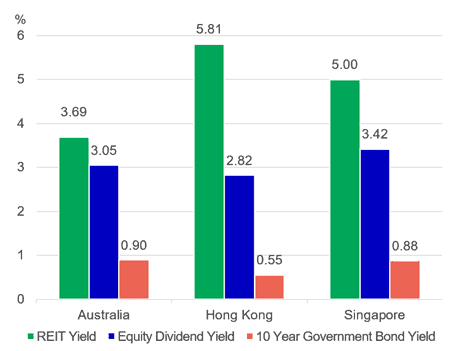
Based on this base case and favourable macro backdrop, the outlook for yields of AP REITs should remain attractive next year (see Chart 3). Forecasted yield for AP REITs is approximately 5.1% compared to a 2.1% yield for Asian equities. In our view, this payout is expected to remain stable over the long-term, largely due to the strength of the asset class and improved economic conditions.
Chart 3: AP REITs offer attractive forward yield
Conclusion
In our view, the main attraction of AP REITs as an asset class is the stable, sustainable payout of dividends to investors. While this assumption was challenged in early 2020, the response by governments and central banks helped to stabilise the real estate sector. Moving into 2021, we believe an improving economic outlook and continued low interest rates should be beneficial for the asset class.