Financial Industry Profession Challenge 2023 (FIPC 2023) is an annual flagship event organized by the University of Malaya Finance Association (UMFA). This challenge comprises training and different levels of assessments that are in line with the real-world financial industry. The highest achieving group will be able to have a chance to secure an internship placement in our strategic partner’s company.
FIPC 2023 is back this year with new highlights:
📌Digital Economy Webinar
📌Blockchain and Digital Banking Forum
📌Networking Lunch
📌Career Booth
Are you an undergraduate student in Finance, Accounting or Economics?
If so, you are the potential ACE we are looking for! Slots are limited! What are you waiting for?
This is the time for you to shine!
To join, simply scan the QR code or click the registration link in our bio!
Are you wondering a lot of things about FIPC 2023? Wanted to enhance more in the financial industry?
Don’t worry! You can fulfill your hunger mind by simply put your queries in the link padlet below 👇
As the world braces itself for a recession and continued inflation in 2023, Malaysians are in their worst-ever financial position to prepare for it. Data from the RinggitPlus Malaysian Financial Literacy Survey (RMFLS) 2022 revealed various painful truths about the current financial state of the rakyat, including depleted savings, cash flow issues, and other worrying trends.
Malaysians are still struggling from the financial impacts of the pandemic
Malaysians from all walks of life are now facing severe financial challenges that leave them vulnerable to financial shocks, as various financial aids reduced the impact in 2020 and 2021. 70% of respondents indicated that they save less than RM500/month or do not manage to save at all. This is the worst-ever result tracked by the RMFLS in 5 years.
At the other end of the spectrum, the amount of Malaysians who manage to save more than RM1,500 per month has also dropped significantly. From 20% in 2020, the figure has dropped four times lower to just 5% in 2022.
The RMFLS 2022 results also indicate that more Malaysians are struggling with less savings in hand, as 63% of respondents stated that they can survive for 3 months or less with only their savings (52% last year). A similar pattern is also seen where 55% of Malaysians spent exactly or more than what they earned each month (44% last year), essentially living paycheck-to-paycheck.
With depleted savings and higher cost of goods, the survey also highlighted a worrying trend where more credit cardholders are not paying off their bills in full – just 55% in 2022 compared to 70% last year.
Forgoing long-term security and wealth generation for short-term relief
With the challenges in cash flow and savings, the survey results show that Malaysians are choosing short-term monetary relief over long-term financial stability. A staggering 66% of respondents above 21 stated that they will consider applying for more Employees’ Provident Fund (EPF) withdrawals if the government allows it.
In addition, the survey also found that 52% of Malaysians above the age of 18 have not started investing. Meanwhile, a majority of those who are investing have low-risk appetites but medium-term investment horizons which is not optimal – though these may be influenced by current financial challenges and global economic outlooks.
Current trends are a wake-up call to all parties to take action
“The financial effects of the pandemic have been devastating and our survey findings this year reaffirm that Malaysians have real financial challenges to address. It is a harsh reality not only for the rakyat, but also for policymakers and industry players – this is a generational issue that requires long-term solutions with sustained and concerted support from all parties. We cannot leave anyone behind,” said Hann Liew, co-founder and director of RinggitPlus.
In line with this, RinggitPlus recently introduced a new section to its Savings vertical on RinggitPlus.com that highlights the various cash management solutions in the market as it aims to encourage Malaysians to save and earn best-in-class returns.
“The new section on the Savings vertical at RinggitPlus.com is timely as it highlights a relatively new product line in the industry, and will help those looking to research and compare for the best savings products in the market. Meanwhile, offering our content in Bahasa Malaysia is part of our mission to extend our range of services to other languages and thus reach out to more Malaysians,” said Liew.
Financial literacy continues to be a major step towards helping Malaysians overcome financial challenges and take control of their financial health. As RMFLS celebrated its 5th anniversary, the annual survey continues to highlight the importance of financial literacy among Malaysians and provides data points that have been used by various organizations, education bodies, and governmental sectors towards guiding Malaysians to take control of their financial health.
If you enjoyed this article, you might also want to check this out:
In September 2022, the National Property Information Centre (NAPIC) revealed that the Malaysian House Price Index (MHPI)* increased marginally by 0.5% on a year-on-year (y-o-y) basis in Q2 2022. This announcement is not surprising given the ongoing economic challenges such as high inflation, rising interest rates and political uncertainty. Nevertheless, the prices of select high-rise properties in prime locations in Malaysia with upscale features have continued to appreciate.
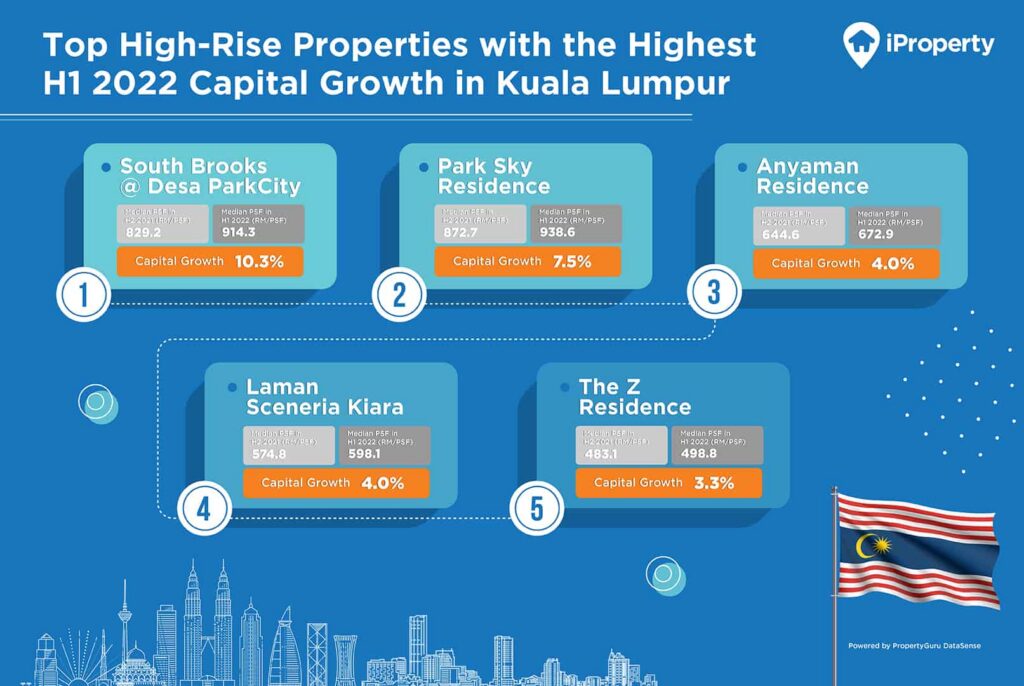
Therefore, as part of its efforts to provide potential investment opportunities, iProperty.com.my has identified the top high-rise residential properties in Kuala Lumpur, Selangor, and Penang with the highest H1 2022 capital gains.
Sheldon Fernandez, Country Manager, PropertyGuru Malaysia (PropertyGuru.com.my and iProperty.com.my), said, ” According to NAPIC, high-end residential property transactions in the RM500,000 to RM1 million and the RM1 million and above price category had a substantial 36.3% growth in H1 2022. Interestingly, most of the high-rise properties on our list fall within these price categories, which shows that properties with the right variable are untouched by the post-pandemic effects. The majority of the properties focus on luxurious living with excellent architectural design, lush landscaping, and strategic location near green spaces. Together with winning factors such as good connectivity and proximity to reputable hospitals and education institutions, these high-rise properties are ideal for long-term investments.”
Below is a rundown of the top high-rise residential properties in Kuala Lumpur, Selangor, and Penang with good capital gains in H1 2022:
Top High-Rise Properties with the Highest H1 2022 Capital Growth in Kuala Lumpur
In Kuala Lumpur, South Brooks in Desa ParkCity tops the list with the highest capital growth at 10.3%. In addition to providing club-level gymnasium facilities, the condominium boasts a landscape with tropical pocket gardens. As South Brooks is within the affluent Desa ParkCity enclave, it has the advantage of being connected by various highways. A renowned international school and private hospital are also a short distance away from South Brooks.
Select high-rise properties in Bukit Jalil also emerged as winners, registering between 3.3% (The Z Residence) and 7.5% (Park Sky Residence) in capital growth. The price growth is spurred by each property’s emphasis on green living and proximity to Bukit Jalil Recreational Park. Meanwhile, Anyaman Residence in Sungai Besi and Laman Sceneria Kiara in Segambut achieved capital growth of 4.0%. Both housing developments provide luxurious living spaces and calm surroundings for residents.
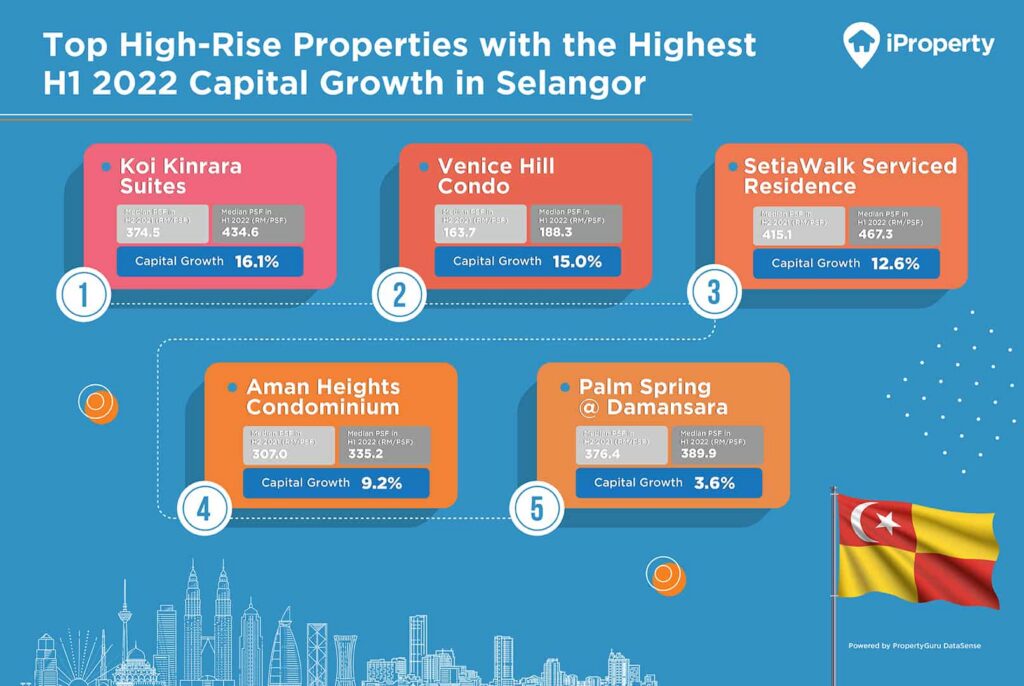
Top High-Rise Properties with the Highest H1 2022 Capital Growth in Selangor
Two hillside properties, Koi Kinrara Suites in Puchong (16.1%) and Venice Hill Condominium in Cheras (15.0%), gained the highest capital growth in Selangor. These high-rise developments appeal to urbanites who prefer green living environments and modern condominium amenities. Regarding accessibility, Koi Kinrara Suites is well connected to major highways and is located nearby reputable tertiary educational institutes. Meanwhile, Venice Hill Condominium which is located on a hill, enjoys huge demand from expatriates for its scenic view of Kuala Lumpur City Center.
Setiawalk Residence is another property in Puchong with a double-digit capital growth figure of 12.6%. The service residence is popular among small families and young professionals as it is in a mixed development consisting of retail lots, offices, restaurants, and entertainment outlets. Apart from offering facilities along green landscapes, the property is strategically situated in the heart of Puchong. In Seri Kembangan, Aman Heights Condominium reaped a capital growth of 9.2% due to its peaceful surroundings, verdancy and tropical resort architecture. The condominium has attracted residents who prefer to live in a less hectic suburban area without sacrificing connectivity and access to commercial sites, educational institutions and medical centres.
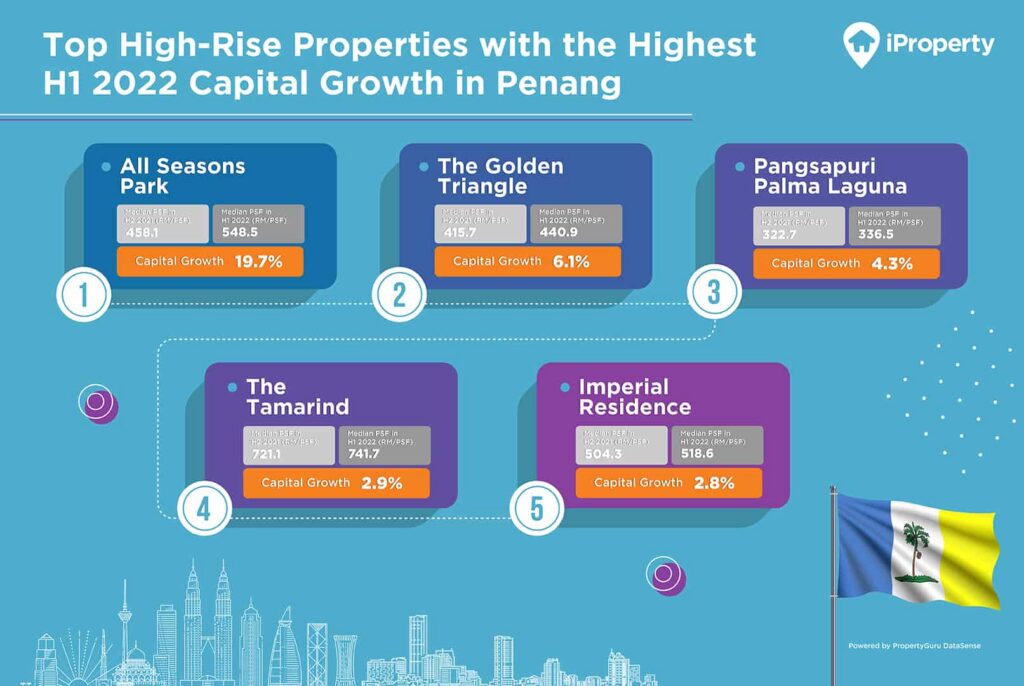
Top High-Rise Properties with the Highest H1 2022 Capital Growth in Penang
All Seasons Park in Ayer Itam achieved the highest growth with 19.7% because of its clubhouse facilities and an exclusive park with different landscaping themes, water features and hues of greens in keeping with the four seasons theme. Situated along Lebuhraya Thean Teik, residents can easily travel to other parts of the city. Another development, Golden Triangle, gained 6.1% in capital growth and is located in the middle of three prime locations — Relau, Sungai Ara and Bayan Lepas. A highlight of this condominium is that residents can enjoy the view of 1.9 acres of green open space. The development is also accessible via the Tun Dr Lim Chong Eu Expressway and is close to the Penang Bridge and Penang Bayan Lepas International Airport.
Other projects on the island round up the list — The Tamarind in Tanjung Tokong (2.9%) and Imperial Residence in Sungai Ara (2.8%). The resort-like design of The Tamarind is ideal for young professionals and families looking to live a seaside lifestyle while being close to The Gurney Drive area. Meanwhile, the main attraction of the Imperial Residence is its spacious layouts, inspired by bungalow and semi-detached homes. Similar to the Golden Triangle, it is near the airport and the Penang Bridge.
* * *
Footnotes
*The Malaysian House Price Index (MHPI) measures the price changes of residential housing in Malaysia as a percentage change from a specific start date
Capital growth is calculated as = Median PSF in H1 2022 – Median PSF in H2 2021 / Median PSF in H2 2021. Median Per Square Foot (PSF) is used to calculate capital growth due to various built-up sizes being transacted.
Only properties that have more than 5 transactions in H2 2021 and H1 2022 were selected to negate the effect of any spikes.
The data system from JPPH officially records a property transaction in Malaysia once the stamp duty for the Sales and Purchase Agreement is paid. Analytics is based on the data available at the date of publication and may be subject to revision as and when more data becomes available.
The opinions stated in the press release are not in any form an endorsement or recommendation by iProperty.com.my. Individuals are encouraged to perform their due diligence and seek independent advice prior to making any investment.
About iProperty.com.my iProperty.com.my is the market-leading property marketplace in Malaysia and offering a complete property picture for seekers in their property buying, renting, selling or investing journey. The company offers a search experience in both English and Bahasa Malaysia and provides in-depth consumer solutions such as Transaction Section – which offers the latest and most accurate sub-sale transaction data and LoanCare – a home loan eligibility indicator. The company has also been committed to developing innovative Proptech tools and data-driven insights such as iProperty PRO, Customer Hub and Marketing Services to support our partners, property developers and agents, in growing their business. The company is part of PropertyGuru Group (NYSE: PGRU), Southeast Asia’s leading property technology company.
Affin Hwang Asset Management Berhad (“Affin Hwang AM” or “the company”) announced today the successful completion of its rebranding which would strategically position the company for its next growth phase after over 20 years in operations. The rebranding exercise would engender a new corporate name and logo that is reflective of the company’s new growth ambitions, while also affirming its commitment to clients in building trust.
Starting today, the company will now operate as AHAM Asset Management Berhad (“AHAM Capital”). As a name that is already widely used and familiar amongst clients and business partners, the simplified brand name builds upon the positive brand equity of the company’s asset management capabilities as well as its people that has distinguished it over the years.
The rebranding is also infused with bold visual elements and a newly-designed logo that pays homage to the company’s brand heritage, while signifying its evolution into a modern and future-focused asset manager.
Dato’ Teng Chee Wai, Managing Director, AHAM Capital
Dato’ Teng Chee Wai, Managing Director of AHAM Capital said, “Our new brand identity AHAM Capital marks the start of a new and exciting journey for us and our clients. Anchored by the same core values and entrepreneurial spirit since our founding in 2001, we have continuously grown from strength to strength over the years alongside our clients who have placed their hard-earned trust with us. Today, we are taking our business to greater heights by embarking on three strategic growth pillars – i.e. wealth management, innovation and regionalisation that will transform AHAM Capital into a leading independent wealth and asset management company in Southeast Asia.”
“Looking ahead, we are confident of achieving our assets under administration (AUA) target of RM100 billion in the next 3 years as we strengthen our wealth management capabilities including alternatives and private market offerings. We will also harness innovation to support the development of digital-focused solutions that will democratise access to investment products for all client segments.
“Led by the same team, we remain committed to helping our clients achieve their financial goals and forging a stronger, more resilient financial future. Alongside our new shareholder CVC Capital Partners who came on board in July 2022 as well as Nikko Asset Management who have stood by us, we will continue to chart new frontiers in wealth to empower investors in a changing financial landscape,” Dato’ Teng said.
AHAM Capital’s Journey So Far…
Since the company began operations in 2001, AHAM Capital has delivered exponential growth by growing its total assets under administration (“AUA”) from just RM20 million to over RM75 billion (as at 31 July 2022).
At the same time, the company has also grown from a small investment firm into an established asset management house generating RM105 million in Profit After Tax (“PAT”) for the financial year ended 31 December 2021. Last year, the company also declared a total income distribution of RM1.13 billion across its retail and wholesale funds.
On 28 January 2022, Affin Bank announced that funds advised by CVC Capital Partners (CVC), a leading global private equity and investment advisory firm with approximately US$125 billion of assets under management, has agreed to acquire approximately 68% of the equity interest in AHAM Capital.
The acquisition was approved by the Securities Commissions Malaysia (“SC) on 1 July 2022, and upon successful completion of the acquisition on the 29 July 2022, AHAM Capital has ceased to be a subsidiary of Affin Hwang Investment Bank.
The acquisition by CVC which is a leading global private equity and investment advisory firm will provide AHAM Capital a strong platform to grow and scale its business to the next level. AHAM Capital will work closely with CVC to continue driving the growth of its wealth management business and spearhead digitalisation, as well as to devise a plan for expansion into key markets across Southeast Asia.
The company’s Shariah investment solutions will continue to be managed and made available through its wholly owned subsidiary and Islamic investment arm, AIIMAN Asset Management Sdn. Bhd. (“AIIMAN”).
About AHAM Asset Management Berhad
AHAM Asset Management Berhad (“AHAM Capital”) (formerly known as Affin Hwang Asset Management Berhad) is an institutionally-owned, independently managed asset and wealth management firm. Our purpose is clear. We are here to help our clients build wealth and achieve their financial goals through their trust.
Over the years, we have served the needs of corporates, institutions, pension funds, high net worth individuals and the mass affluent in building a stronger, more resilient financial future by delivering better investment outcomes and creating a positive impact.
Drawing upon years of expertise and experience, we invest into an array of asset classes including equities, fixed income, money market instruments, structured products, and other alternative assets to generate long-term sustainable returns. By adopting a holistic and client-centric approach, our wealth platform allows investors to gain access to regional and global solutions across multiple strategies in various asset classes.
Through a stable of unit trust funds, exchange-traded funds, Shariah-compliant and cash management solutions, we provide comprehensive solutions that help investors realise their financial goals. For private wealth & family offices, we also offer bespoke wealth management solutions including portfolio management and advisory which are tailored to achieve specific outcomes.
Embracing the same entrepreneurial ethos of the company since its founding, we are charting new frontiers in wealth through innovative and progressive solutions that empower investors in a changing world. These include spearheading digitalisation initiatives that would enhance client experience as well as make investing simpler and more accessible to everyone.
As a corporate citizen, we are committed to growing together sustainably with the communities we operate in by fostering greater financial inclusion as well as championing financial literacy.
Incorporated in Malaysia on 2 May 1997, AHAM Capital first began operations under the name Hwang–DBS Capital Berhad in 2001. On 29 July 2022, CVC Capital Partners (“CVC”) a global private equity and investment advisory firm acquired an approximate 68.35% controlling interest in AHAM Capital via a private equity fund, i.e. CVC Capital Partners Asia V managed by CVC. AHAM Capital is also 27.0% owned by Nikko Asset Management International Limited, a wholly-owned subsidiary of Tokyo-based Nikko Asset Management Co. Ltd., an Asian investment management franchise. The remaining 4.65% are held by the key management personnel of AHAM Capital.
AHAM Capital’s Shariah investment solutions are made available through its wholly owned subsidiary and Islamic investment arm, AIIMAN Asset Management Sdn. Bhd. (“AIIMAN”).
Since its inception in 2001, AHAM Capital has achieved an exponential growth in its total assets under administration (“AUA”). As at dd/mm/yyyy, the total AUA, comprising in-house unit trust funds as well as corporate and discretionary portfolios stood at approximately RMxx billion (combined AUA of AHAM Capital and AIIMAN).
Malaysians still have a low level of scam awareness, particularly when it comes to knowledge of investment and capital market products. This can be seen from the significant rise in online scams over the last two years – almost 72,000 scams and RM5.2 billion in losses was reported from 2020 to May 2022, according to the the Royal Malaysia Police’s (Polis Diraja Malaysia; PDRM) commercial crimes investigation department (CCID).
The pandemic, rise of social media and rapid technological developments have all led to more retail participation in the capital market. The popularity of the Internet and social media has also provided fertile ground for fraud and scam activities by entities that are illegal or do not comply with the laws. There is also a low level of digital financial literacy in the country.
A survey commission by Bank Negara Malaysia in 2021 revealed that one in three individuals stated they would be willing to share their bank account passwords or PINs with close friends. This increases the risk of online fraud and being used knowingly or unknowingly as ‘mule accounts’ to perpetrate fraud.
Almost two-thirds of individuals surveyed do not pay attention to the security features of a website before they perform online transactions. As a result, individuals are far more likely to be deceived into providing their banking credentials through a fake website that enables scammers to use their information to commit fraud.
Thus financial education is critical to the safe and effective use of digital financial services. Of the 72,000 scams reported over the last two years, 68% (or 48,850) were related to online scams, while loan and investment scams accounted for almost 12,000 of the overall scam cases.
In the first nine months this year, the Securities Commission of Malaysia (SC) received 1,800 complaints and enquiries related to investment scams and unlicensed activities. Last year, 275 names were added to the SC’s Investor Alert List, 143 websites were blocked and 35 social media pages were geo-restricted.
So far, this year, 194 new names were added to the Alert List, with 143 websites and 26 Facebook pages blocked. The significant increase in scams and retail investor losses reported highlights the continued investor vulnerability and very low scam awareness.
As long as our scam awareness is low, scammers will always find a way to trick us.
Dato’ Seri Dr. Awang Adek Hussin, Executive Chairman, Securities Commission Malaysia
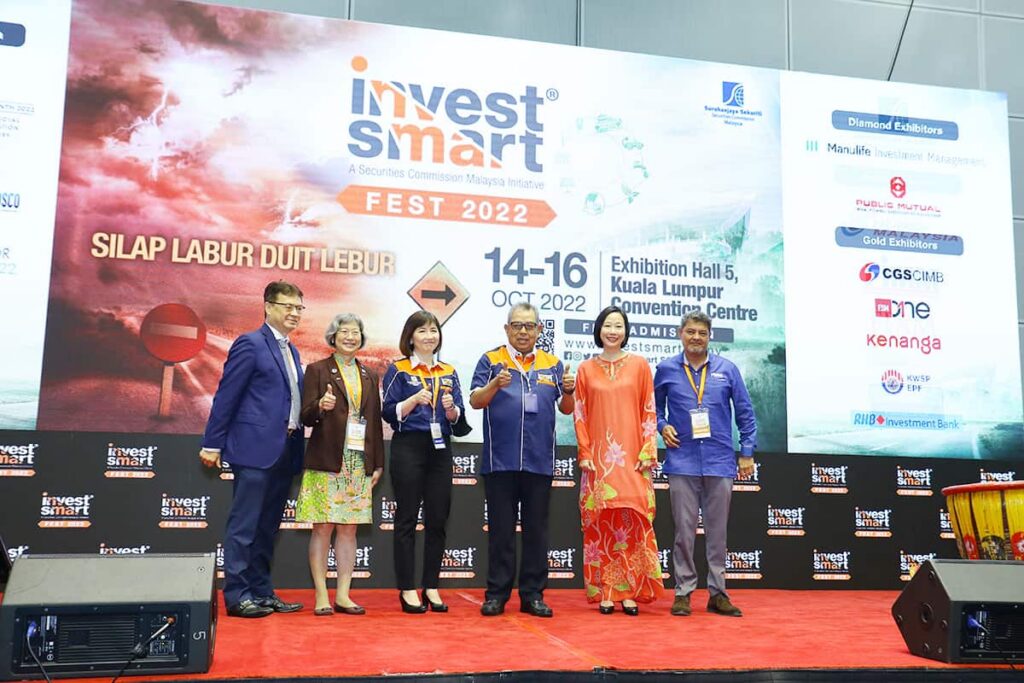
“Most scams are spread through messaging apps and platforms like WhatsApp and Facebook. And we have recently noticed that they have started using Telegram as well. Many of these scams also claimed to be ‘syariah-compliant’ informed SC’s Chairman Dato’ Seri Dr. Awang during the SC’s flagship investor education fair InvestSmart® Fest (ISF 2022) held recently in conjunction with Financial Literacy Month 2022 and World Investor Week 2022.
“Therefore, the best course of action investors can take to avoid falling prey to investment scams and unlicensed activities is to equip themselves with better financial knowledge,” he said in advising investors to safeguard themselves from the porous nature of the Internet.
Surveys undertaken by the SC also found that Malaysian investors have unrealistic expectations about investment returns due to the misconception about risk and returns. Low financial literacy and low scam awareness makes investors vulnerable to unlicensed activities and scams.
Scam Awareness: Unlicensed Activities And Scams
Scammers are finding increasingly sophisticated ways to target investors, who range from the vulnerable at one end to those who invest primarily by the desire – or hope – to gain lots of money irrespective of the risks involved. Some would call this the ‘gambling instinct’.
Under Malaysian law, any company or individual who wants to provide capital market products and services to Malaysian investors, such as unit trusts, stocks, digital investments, bonds, must be licensed or registered with the SC. This also applies to those who are or claim to be licensed overseas. As such, investors are putting themselves at risk when dealing with unlicensed or unregistered parties as the SC’s regulatory reach over these illegal entities is limited.
“This is important because entities licensed or registered with the SC, must fulfil stringent regulatory requirements that are designed to protect investors. Investors who choose to trade on unlicensed platforms risk not being protected in the event of any dispute arising,” said the SC Chairman.
In short, the SC cannot protect you if you choose to invest with unlicensed people. The SC Chairman also disclosed that there has been an increased use of celebrities or influencers on social media to endorse or promote investment advice and investment offerings.
The public should also be wary of self-proclaimed investment gurus who offer questionable advice or use social media to spread false or misleading information, he said.
While pushing for greater adoption of digital innovation in the capital market to better serve the needs of investors, safeguarding investors’ trust and confidence is also important. Indeed, these digital services have widened access to the capital market for underserved investors at a lower cost. The availability of these platforms has made it possible to invest little amounts of money or spare change, some from as low as RM5.
As the Malay proverb goes: “Sikit sikit, lama lama jadi bukit”.
However, investors need to exercise vigilance against potential risk. “An informed investor is a protected investor. We need to cultivate a culture of enthusiastic, yet informed investor participation. One where the public is educated on the numerous investment options available, as well as their rights and responsibilities as investors.
Armed with the right knowledge, investors are better positioned to safeguard their interests, and they can also become the SC’s ‘eyes and ears’ in detecting potential fraud or misconduct,” said Dato’ Seri Dr. Awang Adek Hussin, Executive Chairman, Securities Commission Malaysia.
When it comes to investing, always remember this
Never deposit your money into someone else’s bank account; and
Deal only with licensed persons.
Armed with the right tools and knowledge, investors will be able to capitalise on opportunities offered by our capital market. But first, let’s begin by raising the scam awareness campaign.
It has been reported that RM5.2 billion were lost to frauds in just two years. The amount is just staggering, and the rise of internet and social media have somehow made the problem even bigger.
Smart Investor spoke with Maheswari G Kanniah, Group Chief Regulatory and Compliance Officer at Kenanga Group answer to find out more about fraud, its impact on investment and the upcoming Kenanga Fraud Awareness Week 2022.
Maheswari G Kanniah, Group Chief Regulatory and Compliance Officer at Kenanga Group
Smart Investor: In comparison to last year’s Fraud Awareness Week, what is Kenanga doing this time around? Anything different for Fraud Awareness Week 2022?
Maheswari G Kanniah: Since its inception in 2017, Kenanga’s FAW has always been about raising fraud awareness and highlighting the importance of fraud detection and prevention.
This year’s 6th FAW continues with the same objectives and in light of the current situation that we are in and noting the risks for fraud increases, the 6th FAW’s theme is Reaffirming Ethical and Moral Resilience for Good Governance. With this, Kenanga seeks to reaffirms our belief that high ethics and moral are the cornerstone for good governance, which is undoubtedly an important factor in the anti-fraud agenda. It is our aim that, by gathering a larger audience from various different industries and sectors, we could further amplify the message on fraud prevention and detection to the general public.
Similar to the last 2 years, all programs for the FAW, including the Opening Ceremony, FAW Games and Talk Series, are undertaken virtually or online. While we have a whistleblower speaking at our Opening Ceremony and Talk Series in 2021, this year, we not only have a whistleblower but also an investigative reporter who will share his experience in exposing a major fraud case. This will further shed some lights on the importance of speaking up culture as a mean to protect interest of all, an organisation and people alike.
Additionally, for the FAW Games, we have also introduced new format of games with educational elements remaining as the key factor. We hope to challenge minds of the participants and further broader their thinking into various different areas of fraud and anti-fraud.
SI: Post-pandemic, multi-level fraud cases have been on the rise. Could you render some opinions/thoughts on this current situation?
MGK: As the pandemic unfolded in 2020, many Malaysians saw their lives swiftly reshaped by stay-at-home orders, school closures and the onset of remote work. Amidst slowing economic activities, pandemic has led to a surge in e-commerce and accelerated digital transformation. As lockdowns became the new normal, businesses and consumers increasingly “went digital”, providing and purchasing more goods and services online.
Post pandemic, this is no longer a new normal but many people are already accustomed to the changes by relying on technology to carry out their day to daily activities, from banking to even groceries shopping. This has unfortunately led to the rise of fraud cases, notably involving online and digital fraud.
Although the benefits of technology are many, I strongly feel that there is a need to create awareness and educate people on the danger that also comes with it. In this respect, not only the regulators have a role to play, the financial institutions (FIs) should also play their part to reach out to their clients and public on the importance of fraud prevention and detection.
At the same time, while the regulators and FIs continue to do their part, the public should also take responsibility to exercise good judgment and extra caution when going online or digital. This includes being vigilant of signs of scams and unlicensed activities so as to avoid falling victim to such unscrupulous parties.
SI: How is fraud affecting the way people invest today? Has it caused an increase in hesitance to invest?
MGK: The increase in fraud cases has to a certain degree affect investors’ decision. Investors are seen more careful to place trust on FIs to manage their monies. Before attempting or indulging themselves into any financial investment(s), investors are more cautious and some even carry out thorough research to verify the authenticity of the investment opportunity. This is, to a certain extent, a good sign as it provides a layer of protection to the investors.
From the FIs perspective, this could mean less opportunities for business due to overly careful considerations by the investors. Some hesitant investors would think twice about the value of the investment and may want to experience the opportunity loss to convince themselves of the authenticity of the investment.
We also see that the with the efforts taken by the regulators and FIs to educate and raise awareness, investors are also being more cautious and warier of any scams. However, fraudsters are also continuously adapting their modus operandi and using new technological tools in their attempts to perpetrate fraud.
SI: What are the most prevalent types of fraud that Malaysians should be cognizant of?
MGK: Online or digital fraud which involved scams, phishing and identity theft are on the rise. This increase was in fact driven by COVID-19 pandemic where more transactions have since moved online.
As more people embrace digital transactions, more opportunities are created for fraudsters and this has further increased the risk of digital fraud. Fraudsters have made use of technology to scale up the complexities and scope of their operations. Through technology, fraudsters are able to undertake globally universal scams with shocking ease and constantly shift their approach to find new vulnerabilities.
In this regard, although FIs are expected to update and upgrade their security measures, this is simply not enough to prevent all financial fraud. There is also a paramount need to educate public on new and emerging threats of fraud. Reminders and greater awareness will not only reinforce the need for constant vigilance from all parties, but also create an environment where everyone is risk conscious and responsible in protecting the interests of each other.
SI: It is reported that RM5.2 billion were lost to frauds in just two years, why do you think people still fall for fraudsters? And what can be done to reduce the number of victims?
MGK: Fraud risk is constantly evolving as scammers continue to devise more sophisticated means of defrauding the public. Nowadays, we could hear new different approaches of tricking the public into revealing their confidential details or installing malware on their devices. Fraudsters are also taking advantage of fear and anxiety of the people, which lead them to make poor decisions and hand over security information to malicious actors.
Further, as I have stated before, as more people embrace digital transactions, more opportunities are created for fraudsters and this has further increased the risk of digital fraud. In this respect, we all have a role to play by being vigilant of emerging scam typologies and ensuring that response measures remain effective against new threats.
As mentioned earlier, regulators such as Bank Negara Malaysia and Securities Commission Malaysia have undertaken numerous on-going campaigns highlighting the matters that investors should look out for when investing and also publishes the Financial Fraud Alert List or the Investor Alert List as a guide to enhance the awareness on entities or schemes which may have been wrongly perceived or represented as being licensed or regulated by the regulators.
In the end, I strongly believe that the public should take charge to educate and keep themselves updated of new and emerging threats of fraud. The FIs can only do as much to carry out their responsibilities and the key responsibility to protecting public from falling into any fraudulent scheme is the public themselves.
SI: What does Kenanga hope to achieve in this year’s FAW campaign?
MGK: In line with our theme this year, we aim to continue spreading the message of anti-fraud and to highlight the grave impact that comes from failure to protect oneself from fraud and scams. From within, we will continue to strengthen Kenanga’s core by equipping our employees with the necessary knowledge and realisation of the importance of anti-fraud. The employees are our first line of defence and main safeguards against the threat of fraud.
As far as for educating our clients, we have various targeted campaigns to highlight the steps they should take to protect themselves from fraud when investing with Kenanga. For example, we have from time-to-time issued explainer videos through Kenanga’s website which highlights important dos-and-don’t that clients should practice when depositing money for investments. Kenanga also constantly reminds the clients to be alert on fraudulent schemes through emails and online trading portals.
As for the larger public audience, through social media pages, Kenanga issue out immediate alert if there is any attempt to defraud using Kenanga’s name and reminds the public to prevent being victims and only contact the authorised personnel in Kenanga for correct information. We are pleased that the adoption rate or success of these campaigns are best measured by the fact that we have successfully thwarted a few frauds attempt and prevented losses to both the clients and Kenanga.
SI: Are there any prominent partners that Kenanga is working with for this year’s FAW? Does Kenanga have any future partnership in plans? If yes, what/who are they?
MGK: For clarity, Kenanga does not partner with any specific organisation for FAW. It is only that the FAW is organised in conjunction with the International Fraud Awareness Week of the Association of Certified Fraud Examiners based in Austin, Texas.
As per previous years, Kenanga’s Fraud Awareness Week 2022 welcomes participation from any industries and sectors in the different programmes we organise. This includes Securities Commission Malaysia, Bursa Malaysia Berhad, Malaysian Anti-Corruption Commission, Kumpulan Wang Simpanan Pekerja, Nestlé Malaysia, Lembaga Tabung Haji, Petronas, Sime Darby Plantation Berhad and many more.
It is our aim that, by gathering a larger audience from various different industries and sectors, we could further amplify the message on fraud prevention and detection to the general public.
SI: Any events that you hope for the public to participate in during the FAW?
MGK: We have always welcomed the public to participate in our programmes. For your information, each year, apart from inviting the various organisations to participate in our FAW Games, we have also advertised the same through social media. In addition to that, since we started organising the Opening Ceremony online three (3) year ago, anyone can access the live broadcast or reply of the programme.
And each year, it is our hope that we are able to reach out to a bigger audience so that all take cognisant of the fight against fraud that is happening globally and continue to be vigilant of such threat. The awareness of the public is the ultimate yardstick of success to our Fraud Awareness Week 2022 initiative.
About Fraud Awareness Week 2022
Theme: Reaffirming Ethical and Morale Resilience For Good Governance
The FAW Games are part of the activities of Kenanga’s 6th FAW, which will be organised from 14 November 2022 to 18 November 2022 in conjunction with the International FAW of the Association of Certified Fraud Examiners (ACFE). As part of Kenanga’s efforts to engage with parties in the network of persons and entities it works with, the FAW Games is an opportunity for parties to raise awareness on fraud detection and prevention. Participation in the FAW Games also reflects Kenanga’s vendors commitment to the anti-fraud agenda.
The FAW Games, will also be held virtually by leveraging on technology. Nevertheless, be assured that the FAW Games will still feature fun filled activities containing educational elements, which emphasises on the importance of anti-fraud, compliance, ethics and integrity.
To know more about Fraud as part of Kenanga’s involvement with the International Fraud Awareness Week 2022: https://www.fraudweek.com/resources
We read about individuals losing money to scams in Malaysia almost on a daily basis. The losses are staggering, and even though the warning signs are all around us, the number of victims keep piling up. According to the Inspector-General of Police, Tan Sri Acryl Sani Abdullah Sani, there were 71,833 fraud cases recorded since 2020 until May 2022, with a loss amounting to RM5.2 billion.
The most prevalent financial scams in Malaysia as revealed by the Royal Malaysia Police (RMP) are:
Bank / Government Impersonation
Illegal Loans
Money Mules / Account / ATM
Card Rental
Investment Scams
E-Commerce Scams
Romance Scams
Since we want to become a smart investor, we will be taking a closer look at investment scams, with the hope that we are able to identify them and take the necessary actions to avoid becoming a victim.
Common Types Of Investment Scams In Malaysia
1. Get Rich Quick on Social Media Platforms
Usually, the scammer will ask for a small investment with a promise of very hight returns. For example, 100% return in three hours or RM1,000 in 30 minutes. Since the initial ‘investment’ is small, investors would have no problem giving away the money to start.
Once we see the gains in our account, we will be tempted to put in more money. And when the time to cash out the gains or to take out the capital, normally the scammer will ask us to pay certain fees. By the time we realise that we have been scammed, the damage had already been done.
2. Clone Firm Scams
Another famous scam that is going around is done where scammers use legitimate investment firms, but misuse their name and logo to dupe victims. It looks so real that you can’t easily tell them apart.
For example, the real business is Smart Investor, but the clone uses the name Smart Investment. It even uses the same logo, so you will genuinely mistake it for the real deal.
The Modus Operandi Of Scams In Malaysia
Operators of illegal internet investment schemes lure unsuspecting victims to make online investments or receive investment advice online, by offering investment opportunities with unusually high returns with zero or very low risk.
When questioned about their legitimacy, most scammers operators will claim to be foreign operators that do not require licensing from Malaysian regulators to operate their business.
In truth, these operators have no legitimacy whatsoever; they are not licensed to receive deposits by Bank Negara Malaysia or licensed to offer investment advice from the Securities Commission (SC) related to fund management, securities and futures.
Unsuspecting victims would then be enticed as scammers will pay them the high returns during the initial stage, and this is used as a tactic to lure and recruit new investors. The survival of this scheme actually depends on new depositors.
The funds obtained from new depositors will be used to pay dividends to the existing depositors. Therefore, the scheme will fail when there is no contribution of funds from new depositors.
However, the scam operator will eventually abscond deposits collected when they feel that the scheme is about to fail, thus leaving the depositors at the losing end.
With So Many Legitimate Investment Schemes, Why Do People Still Fall For Scams In Malaysia?
“Scammers employ various means to manipulate their victims including promising high-returns, illusion of safety and inducing fear-of-missing-out (FOMO),” said Bryan Zeng, CEO of FA Advisory, a financial planning service provider.
Bryan Zeng, CEO of FA Advisory
On the other hand, legitimate investment schemes are highly regulated with clear guidelines on what is permissible or not. These guidelines are designed to protect the investors but may make the legitimate investment appear as less attractive.
But then again, the promise of getting rich quick in these situations is hard to resist. Scammers will promise crazily high returns in a very short time, which makes no sense once you think about it. But at the spur of the moment, we feel that it is too good to pass on such an opportunity – and we tend to make decisions based on our emotions.
As emotional beings, we are often easily manipulated when we are at our most vulnerable, which makes us easy prey for scammers. When we are not able to think clearly, that is when we make ill-informed decisions that will come back to haunt us.
Always remember the old adage: “If something is too good to be true, it is most likely a lie.”
Hence, a healthy dose of scepticism, emotional restrain, and critical thinking can go a long way. You can also check with the relevant authorities before investing or depositing money into someone else’s bank account.
The renminbi has depreciated by about 8% against the US dollar so far this year and, at RMB6.96 per US dollar, is already homing in on our year-end target of RMB7 per US dollar.
China’s central bank, the People’s Bank of China (PBoC), has begun to resist further depreciation, cutting its reserve requirement by two percentage points to 6% last week and setting the daily fix for the official exchange rate at stronger-than-expected rates in recent days. But with the US dollar still surging and probable recessions in most developed markets set to weigh heavily on external demand, there is a clear risk that the exchange will overshoot to somewhere in the region of RMB 7.10-7.20 per US dollar.
A weaker renminbi is often associated with delivering a deflationary impulse to the rest of the world. After all, as the currency depreciates, imports of Chinese goods become cheaper for the rest of the world. So has the recent depreciation of the renminbi relieved pressure on global central banks in their quest to tame inflation?
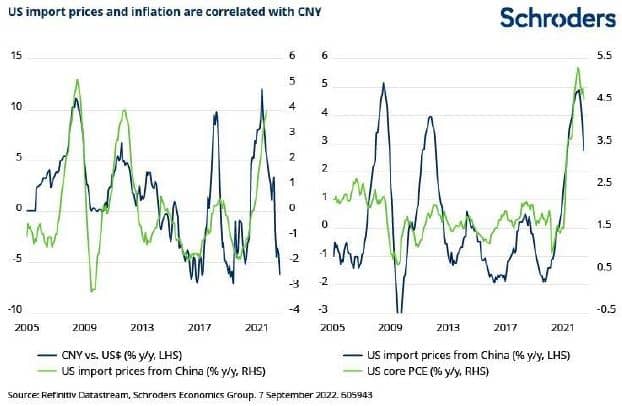
There certainly does appear to be a link between movements in the renminbi and rates of inflation experienced by its trading partners. For example, as the charts below show, US import prices from China fluctuate with the exchange rate. And these import prices are closely correlated with core goods inflation in the US. This makes intuitive sense, and similar relationships are observed in other economies, such as the eurozone.
However, there are a couple of reasons to doubt that renminbi depreciation has solved the global inflation crisis.
For a start, the correlation between currency movements and prices only applies to the core goods portion of inflation in other countries.
The renminbi has no major impact on other key drivers such as owners equivalent rent, local services or indeed international commodity prices, all of which account for the bulk of inflation in markets such as the US.
As such, the relationship between the renminbi and headline inflation, in this instance in the US, is relatively weak, with several periods of currency volatility failing to follow through into headline inflation.
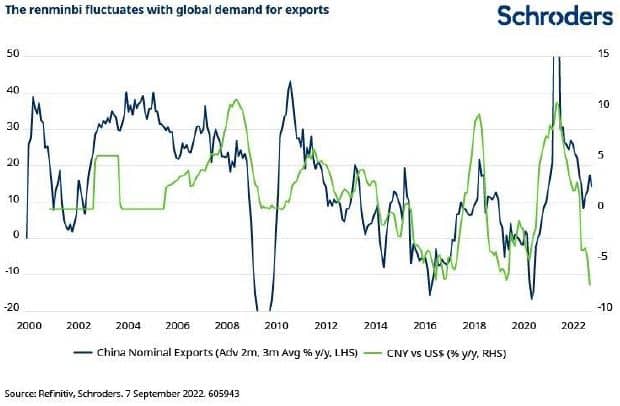
More generally, we need to be careful about assuming that correlation means causation. After all, the renminbi tends to be very cyclical. When exports are growing strongly, the currency tends to appreciate, and when exports are coming off – as is the case now – the currency tends to depreciate. And, of course, when global demand is strong, China’s exports are performing well, and the renminbi appreciates, firms can pass on higher costs to consumers and fuel inflation.
On this basis, global inflation dynamics are still a function of the strength of demand and movements in the renminbi are largely a by-product of its impact on trade. Indeed, an expected slowdown in exports as demand for manufactured goods softened has been a key reason for our bearish view of the renminbi since the start of the year.
The upshot is that, barring an unlikely large one-off depreciation, the weaker renminbi neither significantly changes global inflation dynamics nor needs developed market central banks to keep raising interest rates.
About the Author
David Rees, Senior Emerging Markets Economist, Schroders
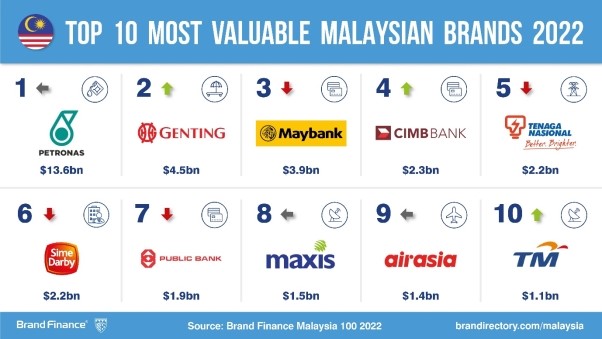
Petronas has retained its position as Malaysia’s most valuable brand for the 12th consecutive year, with its brand value rising strongly by 13% to US$13.6 billion, according to a new report from leading brand valuation consultancy, Brand Finance. The brand value of Petronas is worth just over three times as much as the second-ranked Malaysian brand, Genting (brand value up 44% to US$4.5 billion).
The brand values of many big Malaysian brands have returned to growth as the nation looks beyond the pandemic, with Malaysia’s 100 most valuable brands worth 21% (US$ 9.3 billion) more in 2022 (US$53.7 billion) than they were worth in 2021 (US$44.4 billion).
Every year, leading brand valuation consultancy Brand Finance puts 5,000 of the world’s biggest brands to the test, and publishes around 100 reports, ranking brands across all sectors and countries. Indonesia’s top 100 most valuable and strongest brands are included in the annual Brand Finance Malaysia 100 2022 ranking.
Alex Haigh, Managing Director, Asia Pacific commented: “Top performing brands in the oil and gas, banking and telecommunications sector including Petronas, Maybank, and Affin Bank continue to innovate using digital transformation and are making up for losses incurred during the COVID-19 pandemic, gearing up and enhancing customer acquisition and engagement.”
Petronas brand value growth is correlated with their sustainability agenda and increased demand for their core products. The brand is fully committed to remain disciplined in its delivery of its Three-Pronged Growth Strategy, strengthening its core and growth portfolio while investing for the future and resolute in its efforts to achieve the goal of net zero carbon emissions by 2050. As the energy transition unfolds, Petronas continues to seize the attractive opportunities and recently introduced a new entity, Gentari Sdn Bhd which aims to accelerate the adoption and commercialisation of clean energy, by offering a suite of renewable energy, hydrogen and green mobility solutions that are safe, responsible, cost-optimised and emissions-abated via an integrated approach across the clean energy value chain for customers globally.
Genting rises to second place, overtaking Maybank.
The Genting brand (brand value 44% up to US$4.5 billion) has achieved strong growth following the removal of pandemic-related constraints. The brand is placing greater emphasis on maximising its overall operational efficiency by intensifying performance, optimising its databases, the quality of its services and its marketing strategy with the ultimate goal to elevate customer experience. Looking ahead, Genting has further opportunities for growth as its major operations in Singapore and Malaysia become more accessible to more tourists, especially from mainland Asia.
Airlines are bouncing back
AirAsia (brand value up 18% to US$1.4 billion) retains the 9th position in the 100 most valuable brands 2022 far away from the second and last airline company included in the ranking, Malaysia Airlines (brand value up 15% to US$200 million) which rank 44 this year, one position higher.
Revenues was significantly increased for AirAsia Aviation Group (AAAGL), a subsidiary of Capital A (formerly known as AirAsia Group), in Q1 attributed to improved demand and further easing travel restrictions across the key markets in the region. The brand has had a shake-up with new management and plans to diversify its business during 2022 especially since the recent launch of the AirAsia Super App.
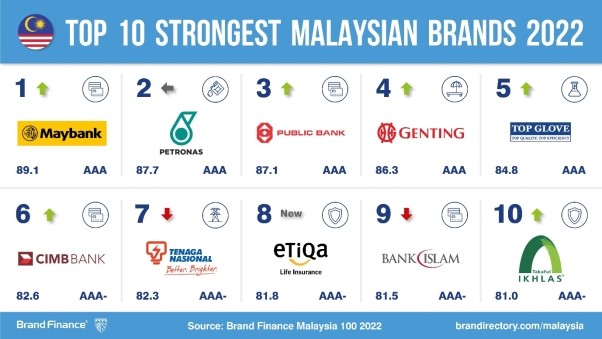
Maybank is Malaysia’s strongest brand with AAA ranking.
In addition to calculating brand value, Brand Finance also determines the relative strength of brands through a balanced scorecard of metrics evaluating marketing investment, stakeholder equity, and business performance. Compliant with ISO 20671, Brand Finance’s assessment of stakeholder equity incorporates original market research data from over 100,000 respondents in more than 35 countries and across nearly 30 sectors.
According to these criteria, Maybank (brand value up 7% to US$3.9 billion) is Malaysia’s strongest brand, with a Brand Strength Index (BSI) of 89.1 out of 100 (up by 2.3 points) and a corresponding AAA brand strength rating. Maybank overtakes Petronas (87.7 out of 100) in the strength ranking in 2021 and DiGi (79.2 out of 100).
Maybank, aims to accelerate its growth post COVID-19 and entrench its position among the leading financial services groups in the region with specific focus on enhancing digital capabilities, discovering new value drivers for business growth besides championing sustainable practices.
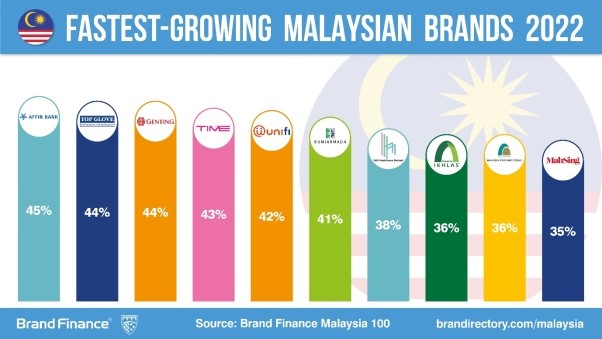
Affin Bank, Top Glove and Genting are the fastest growing brands in Malaysia
Affin Bank is the fastest growing brand in Malaysia (brand value up 45% to US$232 million) followed closely by Top Glove (brand value up 44% to US$499 million) and Genting (brand value up 44% to US$4.5 billion).
Affin Bank doubled their net profit this year, the bank has achieved growth as it increased its issuance of loans because of consumer spending in the region. The brand’s Brand Strength Index (BSI) also jumped 7.8 points this year, owing to an improvement in consumer perceptions such as ‘value for money’ according to research conducted by Brand Finance coupled with the company’s commitment to ESG resulting in an improvement in BSI scores.
The bank has also invested in technological innovation to grow and has therefore won two awards under the Cloud and Mobile-Banking categories in the Malaysia Technology Excellence Awards 2022, a strong reflection that customers and industry stakeholders are aware of their ongoing strategic focus.
The brand value of Top Glove has grown strongly in connection with the very obvious increase in demand for gloves globally. Top Glove has developed a strong reputation amongst stakeholders for their glove products and is now producing up to a quarter of gloves in the world.
Mah Sing and IHH jump 10 places in rankings
Mah Sing (brand value up 35% to US$130 million)and IHH (brand value up 38% to US$87 million) both jumped ten places in the ranking, to 56th and 67th place respectively. Mah Sing’s projects continued to record a rebound in sales momentum as the reopening of the country’s borders and the transition to the COVID-19 endemic phase spurred a recovery in economic activities. The group plans to hive off its rubber glove business which contributed to accelerate its growth, after venturing into the segment only 19 months ago under the Mah Sing Healthcare Sdn Bhd banner as the demand for rubber gloves has decelerated sharply.
On its part, IHH is working to align itself with three major trends that have begun to shape the healthcare industry: healthcare being delivered digitally, growing consumer demand for greater transparency and improved public-private collaboration. The hospital operator said that Covid-19 accelerated the group’s efforts to innovate, leverage synergies and build platforms for growth.
Overcoming the rising interest rates and weakening credit profile
Smart Investor: Congratulations! Can you tell us more about your winning fund in the FSMOne Recommended Unit Trusts Awards 2022/2023?
Syhiful Zamri: Thank you for honouring MAMG Global Income-I Fund as one of the selected award-winning funds. We are humbled by this achievement as a reflection of recognition from industry peers. The Fund is a unique feeder fund, where it feeds into a target fund AZ Islamic – MAMG Global Sukuk, which is co-managed by Azimut Investments S.A. and our Maybank Asset Management Group’s investment teams.
It combines the best of each team’s experience and geographical expertise when it comes to credit selection for the target fund. Thus, MAMG’s team focus was on Asia sukuks while Azimut’s team focused on global sukuk outside Asia, mainly the MENA (Middle East North Africa) region.
Though we are committed to a semi-annual distribution to reflect the regular income distribution strategy as per the fund name suggests, currently the fund is distributed on a quarterly basis to match the consistent quarterly distribution by the target fund.
SI: What are the challenges you faced in the past 12 months?
SZ: The main challenges over the past year would be the rising interest rates environment and weakening credit profile of some of the high-yield sukuks due to the prolonged COVID-19 pandemic and economic recovery.
Aggressive upward interest rate adjustments by the central bankers reduced the price of sukuks massively, while credit downgrades or default on certain weaker credits will have a more permanent devaluation of the sukuks.
SI: What are the market trends that an investor should look out for in the near future?
SZ: For fixed income or sukuk investors, they should be mindful that the current high volatility may not last long as the central banks have already started their aggressive interest rate hiking action. Therefore, we think that most of the hawkish posturing by the central banks have been priced in, especially when some of the treasury yields are already above recent year’s pre- pandemic highs.
Hence, we should be on the lookout for potential recovery options in the fixed income or sukuk market when the central banks start to become less hawkish due to the potential economic slowdown in the coming months.
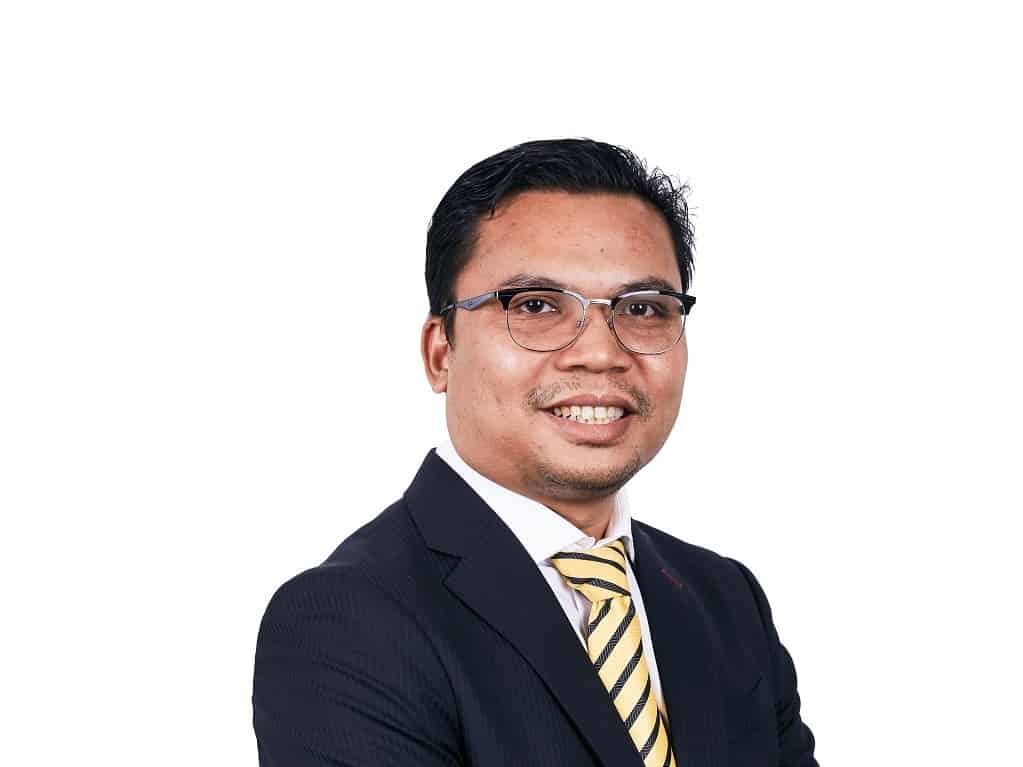
Syhiful Zamri, chief investment officer, Maybank Asset Management Sdn Bhd