Category: Uncategorized

  • Tune Talk makes staff co-owners ahead of IPO

    Tune Talk announces the establishment of an Employee Share Trust Scheme (ESTS), a strategic initiative designed not only to recognize employee contributions and position staff as equity participants, but also to strengthen long-term financial security for its workforce as the company accelerates its path toward an Initial Public Offering (IPO).

    With employees contributing significantly to Tune Talk’s growth, the establishment of the ESTS reflects the company’s commitment to recognizing their hard work and ensuring they benefit directly from the value they help create.

    The ESTS empowers employees to directly share in the company’s momentum, giving them a real stake in the value they help build as Tune Talk accelerates toward its next phase of growth.

    The scheme reflects Tune Talk’s belief that modern, high-growth companies have a responsibility to look beyond short-term incentives and play a role in improving the economic resilience of their people. It also aligns with the Malaysian government’s broader efforts to address immediate financial wellbeing and encourage sustainable wealth accumulation among the workforce.

    As part of the ESTS, Co-founder and Chief Executive Officer Gurtaj Singh Padda have voluntarily transferred 4.15% of the total issued share capital of Tune Talk Sdn Bhd into a dedicated Trust Fund for the benefit of Tune Talk employees (Beneficiaries), executed pursuant to a formal Trust Deed.

    The shares placed into the Trust will be held and managed by appointed Trustees, reinforcing Tune Talk’s commitment to long-term stewardship and responsible value sharing.

    The ESTS has been established to create a flexible structure that enables employees to participate meaningfully in the value they help generate, including the distribution of dividends or performance-based rewards ahead of the IPO, and to provide financial support to employee’s welfare where necessary. Upon IPO, the Trust will act as a vehicle to distribute the shares and subsidize Beneficiaries in acquiring shares pursuant to the ESOS framework.

    As the first telco in Malaysia to introduce an ESTS of this nature, Tune Talk is establishing a new standard for employee value participation by offering immediate, tangible financial benefits alongside a clear pathway to equity ownership. The initiative ensures that employees share directly in the company’s momentum in real time, reinforcing Tune Talk’s commitment to recognizing their contributions with meaningful rewards as the organization moves toward its IPO.

  • Indonesia’s 90-Day trial work visa signals shift in short-term talent regulation

    Indonesia’s 90-Day trial work visa signals shift in short-term talent regulation

    Indonesia’s immigration framework has been quietly recalibrating how foreign professionals can legally engage in short-term work. In 2025, one visa category has emerged as a focal point of that shift: the Trial Work Visa, officially indexed as C18. Designed for probationary assignments and skills evaluations, the C18 reflects a broader policy move toward clearer boundaries between business visits, trial engagements, and full employment.

    For international companies exploring the Indonesian market—or testing candidates before committing to long-term hires—the C18 has become a practical, but tightly defined, option. Its structure highlights how Indonesian regulators are balancing openness to foreign expertise with stricter controls on work authorisation.

    The Trial Work Visa (C18) is classified as a visit visa, but unlike standard business visas, it explicitly permits limited, supervised work activities. Its purpose is narrow: allowing an Indonesian sponsor to assess a foreign professional’s skills, cultural fit, or project contribution over a short, fixed period.

    Under the rules confirmed by the Directorate General of Immigration in mid-2025, the C18 grants a maximum stay of 90 days. It is non-extendable, and it can only be used once per sponsoring company. These two features are intentional. Authorities have made clear that the C18 is not a workaround for long-term employment or repeated short stays, but a one-off trial window.

    This clarity marks a departure from earlier practices, when companies sometimes relied on business visas for activities that blurred into hands-on work.

    The growing relevance of the Trial Work Visa is tied to changing expectations around compliance. Indonesian immigration policy has become more explicit about what different visa categories allow—and what they do not. In that context, the C18 offers something that businesses value: legal certainty.

    For employers, the visa provides a compliant way to bring in specialists, consultants, or prospective hires for defined trial periods without immediately committing to a full work permit. For professionals, it offers a legitimate route to demonstrate capability on the ground, rather than through remote interviews alone.

    At the same time, the restrictions are clear. The visa does not permit salary payments or commercial remuneration in Indonesia. Any continuation beyond the trial period requires a transition to a proper work authorization, such as a KITAS.

    A key reason the C18 has attracted attention is the tightening of its rules. Applications lodged on or after mid-June 2025 fall under a new operational framework. Extensions are no longer available, and repeat use with the same sponsor is prohibited.

    Earlier applications submitted before that cutoff followed a more flexible regime, allowing shorter stays with extensions. The updated approach reflects a policy preference for decisiveness: trial periods should be clearly time-bound, with no ambiguity about next steps.

    This change also aligns with updates under Permenkumham No. 11/2024, which modernized Indonesia’s visa and stay-permit structure more broadly.

    In practice, the C18 is used across a range of industries. Technology firms deploy it to assess senior engineers or project leads. Manufacturing and industrial companies use it for technical specialists involved in commissioning or process trials. Professional services firms rely on it for short-term consulting or evaluation roles tied to potential employment.

    What these use cases have in common is structure. Immigration authorities expect the trial to be clearly defined in scope, duration, and purpose. Invitation letters typically outline the evaluation objectives, location, and timeline, reinforcing that the engagement is temporary and supervised.

    One of the most important aspects of the C18 is what it does not allow. Receiving salary, invoicing locally, or engaging in revenue-generating activities is prohibited. These limitations distinguish the visa from a work permit and reduce the risk of misuse.

    This distinction matters because Indonesia has increased coordination between immigration, manpower, and tax authorities. Activities that appear inconsistent with visa status are more likely to be questioned than in the past. For companies, using the correct visa category is no longer just a formality—it is part of broader regulatory risk management.

    The C18 is best viewed as a gateway rather than a destination. If both parties decide to proceed after the trial period, planning the transition to a KITAS must begin early. Because the trial visa cannot be extended, timing is critical to avoid gaps in legal status.

    This sequencing has become a common discussion point among foreign companies entering Indonesia. Immigration advisors often stress that the success of a trial engagement depends not only on performance, but on preparation for what comes next.

    Firms such as CPT Corporate are frequently referenced by employers navigating this transition, particularly for visa immigration strategy that aligns trial periods with longer-term workforce planning.

    The evolution of the Trial Work Visa offers insight into Indonesia’s broader immigration philosophy. The country remains open to foreign expertise, but expects activities to be properly categorized, time-limited, and transparent. Short-term flexibility is available—but within clearly defined boundaries.

    For foreign media observers, the C18 illustrates how Indonesia is refining, rather than restricting, access to its labor market. By formalising trial work arrangements, regulators reduce grey areas while giving businesses a clearer compliance pathway.

    As Indonesia continues to modernize its immigration systems, short-term work visas like the C18 are likely to play an increasingly visible role. Their appeal lies in precision: they allow companies to test, evaluate, and decide—without committing prematurely or operating in regulatory uncertainty.

    For professionals and employers alike, the message is straightforward. The opportunity exists, but it comes with firm rules. Understanding those rules—and planning beyond the 90-day window—is now an essential part of engaging talent in Indonesia’s evolving economy.

  • 社聯首次公布香港善行營商實踐數據 3500間善行企業獲嘉許 在職照顧者支援成友善職場新指標

    社聯首次公布香港善行營商實踐數據 3500間善行企業獲嘉許 在職照顧者支援成友善職場新指標

    香港社會服務聯會(社聯)今日假香港會議展覽中心舉行2024/25「商界展關懷」計劃嘉許禮,邀得香港特別行政區政府勞工及褔利局局長孫玉菡先生,JP擔任主禮嘉賓,今年共有3,500間善行企業及機構獲得嘉許。

    社聯首度發布《善行營商實踐數據》,透過伙伴合作、社會、經濟及環境可持續發展四大範疇,深入分析本港企業在應對人口高齡化、勞動力挑戰及氣候變化等社會議題上的實踐趨勢。

    勞工及褔利局局長孫玉菡先生,JP恭賀獲「商界展關懷」計劃嘉許的企業和機構。他表示,要建構關懷社會,政府和非政府組織難以獨力完成,商界亦是很重要的力量和夥伴。作為僱主,照顧好自己的員工,除了能夠幫助員工家庭,也有利於企業發展,吸引優秀人才,互惠共贏。他期待商界能夠更積極參與計劃,建構一個更關愛的社會。

    二十四年深耕商社合作:28%夥伴關係長達10年或以上

    「商界展關懷」計劃至今已推行 24 年。社聯主席管浩鳴法政牧師,SBS,JP致辭時表示:「今年計劃進行了重大革新,將國際可持續發展框架本地化。透過首份實踐數據分析,我們得以觀察商界在應對人口高齡化、勞動力挑戰及氣候變化等挑戰時的整體表現,期望未來能透過這些實踐趨勢,引領企業將關懷文化轉化為具體的商業決策。」

    數據顯示,商社合作已建立深厚根基,超過七成企業與社區伙伴的合作關係達 3 年或以上,更有 28% 合作長達 10 年或以上,反映出跨界別協作追求長遠穩定的夥伴關係。

    職場新戰場:在職照顧者支援成關鍵 「添孫假」成創意亮點

    企業在照顧者支援上的表現成為焦點。數據顯示,超過八成企業已普及彈性工作安排;而今年有 104 間企業因其出色的支援措施而獲得「照顧者友善」特別嘉許。社聯行政總裁陳文宜議員觀察到不少創新案例:「已經有企業推行 8 星期全薪領養假、5 日獨生子女照顧假,甚至『添孫假』。此外,也有企業提供長者陪診支援。支援照顧者不一定要大灑金錢,只要從員工需要出發,善行營商有無限可能。」

    社聯五大善行營商建議:轉化「隨手做」為「政策化」

    企業在慈善捐贈與行動力上表現出色,但在環境數據追蹤(僅約30%)及職場多元化方面仍有進步空間。為此,社聯提出五大重點建議:

    • 深化善行標準:將「商界展關懷」計劃指標視為營運基準,建立系統化的善行營商模式。
    • 推動專業共享與責任採購:鼓勵企業管理層義務加入社會服務機構董事會,提供專業支援,並將社會服務機構產品納入採購供應鏈。
    • 構建多元共融職場:積極聘用弱勢社群以開拓新人才庫,並落實彈性工作支援在職照顧者。
    • 持續投入人才培育:視人才為經濟增長動力,加強員工培訓,特別是精神健康支援。
    • 啟動數據化管理:建議企業即時開展與可持續發展相關表現的數據追蹤,確保各項善行具備可衡量性與持續性。

    「商界展關懷」計劃於2024/25年度共收到逾 4,300 份的標誌申請,最終 3,500 間企業及機構分別獲得「商界展關懷」標誌及「同心展關懷」標誌嘉許,當中包括大企業(42%)及中小企(51%)及機構(7%)。社聯強調,數據發布旨在建立長效機制,引領商界尋找「做得更好」的空間,透過協作應對未來社會挑戰。

  • HKCSS Releases Inaugural Data on Caring Business Practices in Hong Kong

    HKCSS Releases Inaugural Data on Caring Business Practices in Hong Kong

    The Hong Kong Council of Social Service (HKCSS) held the 2024/25 Caring Company Scheme Recognition Ceremony today at the Hong Kong Convention and Exhibition Centre. Mr. Chris SUN Yuk-han, JP, Secretary for Labour and Welfare of the Hong Kong Special Administrative Region, attended as the Guest of Honour. This year, a total of 3,500 caring companies and organisations were recognised.

    For the first time, HKCSS released the major findings from the Caring Business Achievements Overview, providing an in-depth look at corporate trends in addressing social issues such as population ageing, workforce challenges, and climate change across four key pillars: Partnership, Social, Economic, and Environmental Sustainability.

    Mr. Chris SUN Yuk-han, JP, Secretary for Labour and Welfare of the Hong Kong Special Administrative Region, congratulated the businesses and organizations recognized by the Caring Company Scheme. He emphasized that building a compassionate society requires collaboration with the business community, which plays a vital role alongside government and non-governmental efforts. By prioritizing employee welfare, employers not only uplift families but also drive growth, attract talent, and foster mutual benefits. Mr. SUN called upon the business sector to engage more proactively in this initiative, fostering a collective commitment to building a more caring society for all.

    24 Years of Deep-Rooted Partnership: 28% of Collaborations Last 10 Years or More

    The Caring Company Scheme has been running for 24 years. The Revd Canon the Hon. Peter Douglas KOON, SBS, JP, Chairman of HKCSS, stated in his speech: “The Scheme underwent a significant revamp recently to localise international sustainability frameworks. Through our inaugural data analysis, we can observe the business sector’s overall performance in tackling challenges like population ageing and climate change. We hope these trends will guide companies to transform a culture of care into concrete business decisions.”

    Data indicates that business-social partnerships have built a solid foundation. Over 70% of companies have maintained partnerships with community partners for three years or more, while 28% have sustained collaborations for over a decade, reflecting a commitment to long-term stability in cross-sectoral collaboration.

    New Frontier in the Workplace: Support for Working Caregivers Emerges as a Key Focus

    Corporate performance in supporting caregivers has become a focal point. Data reveals that over 80% of companiess have popularised flexible work arrangements, and 104 companies received special “Caregiver-Friendly” commendations for their outstanding support measures this year.

    Hon Grace CHAN Man-yee, Chief Executive of HKCSS, observed several innovative cases: “Some companies have implemented eight weeks of fully paid adoption leave, five days of leave for only-child caregivers, and even ‘Grandchild Leave’. Others provide patient companion service. Supporting caregivers does not necessarily require massive financial investment; as long as it starts from the employees’ needs, the possibilities for caring business are endless.”

    Five Key Recommendations: From “Ad Hoc Actions” to “Policy Integration”

    While companies excel in charitable donations and active participation, there is room for improvement in environmental data tracking (currently at approximately 30%) and workplace diversity. Consequently, HKCSS proposes five key recommendations:

    1. Deepen Caring Standards: Treat the Caring Company Scheme indicators as operational benchmarks to establish a systematic socially responsible business model.
    2. Promote Professional Sharing and Responsible Procurement: Encourage management to join NGO boards as volunteers to provide professional support and integrate NGO products into corporate procurement supply chains.
    3. Build Diverse and Inclusive Workplaces: Actively employ disadvantaged groups to tap into new talent pools and implement flexible work to support working caregivers.
    4. Sustain Investment in Talent Development: Recognize talent as a driver of economic growth, enhance staff training, and strengthen mental health support.
    5. Initiate Data-Driven Management: We recommend that companies immediately start tracking data related to sustainability performance to ensure that social initiatives are measurable and sustainable.

    In 2024/25, the Caring Company Scheme received over 4,300 applications. Ultimately, 3,500 companies and organisations were recognised the Caring Company and Caring Organisation logos, comprising large corporations (42%), SMEs (51%), and organisations (7%). HKCSS emphasised that the data release aims to establish a long-term mechanism to guide the business sector in finding room for improvement and addressing future social challenges through collaboration.


  • Airwallex acquires Paynuri to unlock global opportunities for Korean businesses

    Airwallex, a leading global financial platform for modern businesses, has acquired Paynuri Co. Ltd., an entity holding Payment Gateway and Prepaid Electronic Payment Instrument licenses as well as a Foreign Exchange Business registration, in South Korea. With these licenses, Airwallex can empower companies in Korea to expand and thrive across borders, while also helping businesses around the world to operate more seamlessly in this dynamic economic market.

    With Airwallex, Korean businesses will gain access to a comprehensive platform for managing financial operations in multiple markets and currencies, including:

    • Global Business Accounts: A multi-currency account to manage global banking, FX conversion, and international transfers.
    • Payments: Help businesses accept online and in-store payments from their customers around the world with cards and 160+ local payment methods, all with a localised, multi-currency shopping experience.
    • Spend: Giving customers a single platform to efficiently manage all types of company spend across their global business, including multicurrency corporate and employee cards, expense management, and bill payments – all powered by AI.

    Global business accounts and payment acquiring will be the first planned product launches in Korea following the acquisition, with successive releases planned in 2026.

    The acquisition follows Airwallex’s recent Series G fundraise, which valued the company at US$8 billion, a ~30% increase from its previous round. Backed by top-tier global investors, Airwallex is using this capital to accelerate the build-out of secure, licensed financial infrastructure in key markets like Korea.

    Arnold Chan, General Manager, APAC at Airwallex, said, “This acquisition marks a pivotal milestone for Airwallex as we expand the global reach of our financial platform. Korea’s fast-growing ecommerce, creative and entertainment sectors present immense opportunities for Korean businesses on the global stage. Our goal is to support these businesses with a more efficient solution to expand beyond borders.”

    With the global ‘K-wave’ driving global demand for Korean entertainment and consumer goods – a market projected to reach USD198 billion by 2030 – Airwallex is ensuring Korean businesses have the financial tools to navigate this global growth opportunity with greater ease and efficiency.

    Lee, Jihyung, President & CEO of Invest Seoul, said, “We are excited by this significant investment by Airwallex into the Korean market. We believe Airwallex’s entry will strengthen the financial operating environment for both Korean and global companies in the market. Invest Seoul will continue to collaborate closely with Airwallex to accelerate the digital transformation journey for Korean businesses, and to support more global companies in entering Seoul and operating their businesses successfully.”

    The acquisition expands Airwallex’s existing presence across major Asia markets, including Japan, Hong Kong, Singapore, Malaysia, Indonesia and Vietnam. In the APAC region, the company reported an 85% year-on-year increase in revenue and a 71% year-on-year growth in transaction volume in 2025. Globally, Airwallex achieved US$1.2 billion in annualised revenue and US$260 billion in annualised transaction volume in 2025 – a testament to the growing demand for its trusted solutions and global financial infrastructure.
    Airwallex plans to expand its local operations by hiring professionals across multiple functions in 2026, targeting a headcount of 20 employees in Korea by the end of the year.

  • RHB expands access to higher education with Shariah-compliant financing

    RHB Banking Group (RHB or the Group) has introduced Commodity Murabahah Term Financing-i (CMTF-i) Education Financing (RHB Education Financing-i), a Shariah-compliant solution designed to help Malaysian families manage the rising cost of higher education.

    With many students delaying or forgoing tertiary studies due to financial constraints, RHB Education Financing-i offers a flexible and affordable financing option that enables families to invest in education without undue financial pressure.

    Key features of RHB Education Financing-i:

    • Joint Applicant Flexibility: The solution allows up to three joint applicants, excluding the main applicant. This enables families to combine income eligibility, thus reducing individual financial burden. This option is limited to immediate family members (parents, spouse, siblings, or children).
    • Extended Tenure & Grace Period: Financing terms of up to 20 years or age 70 (whichever earlier), with a grace period of up to four (4) years during the course of study. This enables students to focus entirely on their academic performance, without the pressure of principal payment during their studies.
    • Generous Financing Range: From RM10,000 up to RM500,000, covering tuition and related expenses.
    • Inclusive Coverage: Supports undergraduate, postgraduate, and professional programmes, catering to both students and working adults.

    Jeffrey Ng Eow Oo, Managing Director, Group Community Banking of RHB Banking Group said, “Access to higher education should never be limited by financial constraints. We are committed to playing our part in addressing this national challenge by providing families with practical and ethical financing options. This is in line with RHB’s objective of being a Responsible and Purposeful Bank – one that empowers Malaysians to pursue their academic ambitions and contribute to the country’s long-term growth.”

    Dato’ Adissadikin Ali, Managing Director of RHB Islamic Bank Berhad added, “RHB Education Financing-i is based on the Shariah concept of Commodity Murabahah, ensuring ethical and transparent financing. Phase 1 of the rollout focuses on financing for studies at domestic institutions to support the local education ecosystem, with plans to expand to overseas education financing in the next phase.”

  • Regional study reveals spending patterns across key SEA markets in 2025

    Regional study reveals spending patterns across key SEA markets in 2025

    Southeast Asia (SEA) remains one of the fastest-growing regions globally, with household consumption as the major driver. While often viewed as a single economic bloc, a new study by Milieu Insight indicates that the region has diverged into three distinct consumer economies, shaped by differences in outlook, financial pressure, digital adoption, and spending priorities.

    The study draws on responses from 3,054 consumers across six key SEA markets – Singapore, Malaysia, Thailand, the Philippines, Indonesia, and Vietnam. It examines current spending sentiment compared to three months prior, trade-offs prompted by grocery inflation, the role of digital payments, and expectations for purchasing behaviour into 2026.

    “Consumers in SEA are no longer behaving as a unified market,” said Juda Kanaprach, Co-Founder and Chief Commercial Officer at Milieu Insight. “Different levels of financial pressure and sentiment are shaping three distinct consumer economies. A single regional playbook is ineffective, businesses must understand the specific financial and emotional contexts driving decision-making in each market.”

    The Stressed Digital Economy: Philippines, Indonesia, Vietnam
    Consumers in the Stressed Digital Economy, the Philippines, Indonesia, and Vietnam, are increasing spending despite financial constraints, supported by strong digital payment adoption and resilient sentiment. Across these markets, 59% of consumers report spending more than three months ago, the highest in the region. Grocery inflation remains a core pressure point, with 77% in the Philippines and 83% in Indonesia identifying groceries as unavoidable expenditure, prompting substitution towards more affordable proteins and brands. E-wallet usage is deeply embedded: 64% of Filipinos and 57% of Indonesians prefer digital wallets for routine transactions.

    These markets are likely to further entrench digital-first purchasing, with e-wallet adoption expected to continue rising. However, the sustainability of spending will depend on whether inflation stabilizes. Optimism currently sustains consumption, but prolonged price pressures may test that resilience.

    The Strategic Comfort Economy: Singapore, Malaysia
    Consumers in Singapore and Malaysia demonstrate financial stability but pair it with disciplined, value-oriented decision-making. Singapore records the lowest spending increase in the region, with 40% reporting higher expenditure compared to the Southeast Asia average of 51%. This does not indicate weakened purchasing power, but rather deliberate control of discretionary spending. Value maximization is prominent: 83% of Singaporeans wait for promotions, and 58% prefer credit cards for rewards and cashback.

    Malaysia shows the lowest caution sentiment in the region at 20% and the highest current optimism at 28%, alongside comparatively lower grocery pressure. Consumers in this economy are selective rather than constrained, willing to spend where value, convenience, or quality is clearly justified.
    This value-optimization mindset is expected to persist. Price comparison, loyalty benefits, and clarity of value proposition will continue to influence brand and channel choice, particularly in premium lifestyle and convenience categories.

    The Transition Economy: Thailand
    Thailand remains the region’s most sentiment-responsive market. While 56% of consumers describe themselves as cautious, the highest in Southeast Asia, 54% still report increased spending, indicating prioritization rather than broad reduction. Thailand also shows the strongest expected improvement, with 53% anticipating greater optimism in the coming quarter.

    Payment habits reflect a market in transition, with cash and e-wallet usage at equal levels (39% each).
    Over the next year, Thailand’s consumer economy will hinge on the direction of sentiment. If confidence strengthens, spending growth will follow; if it weakens, caution is likely to deepen. Digital adoption will continue regardless, making Thailand a key market to watch for shifts in regional consumer mood.

    Future Outlook: Divergence Will Widen
    The differences between Southeast Asia’s consumer economies are expected to deepen over the coming years. Digital maturity, inflation exposure, and value sensitivity will continue to shape spending behaviours in distinct ways. As a result, market success will increasingly depend on understanding economic mindset rather than geography alone. Businesses entering or expanding in Southeast Asia will need market-specific value propositions and communication strategies that reflect the distinct financial behaviours and confidence levels across these three consumer economies.

    “A uniform brand narrative will not yield consistent results across Southeast Asia,” Juda added. “Pricing strategies, promotions, channel plays, and loyalty programs must now align with the economic mindset of each market, not just its geography.”

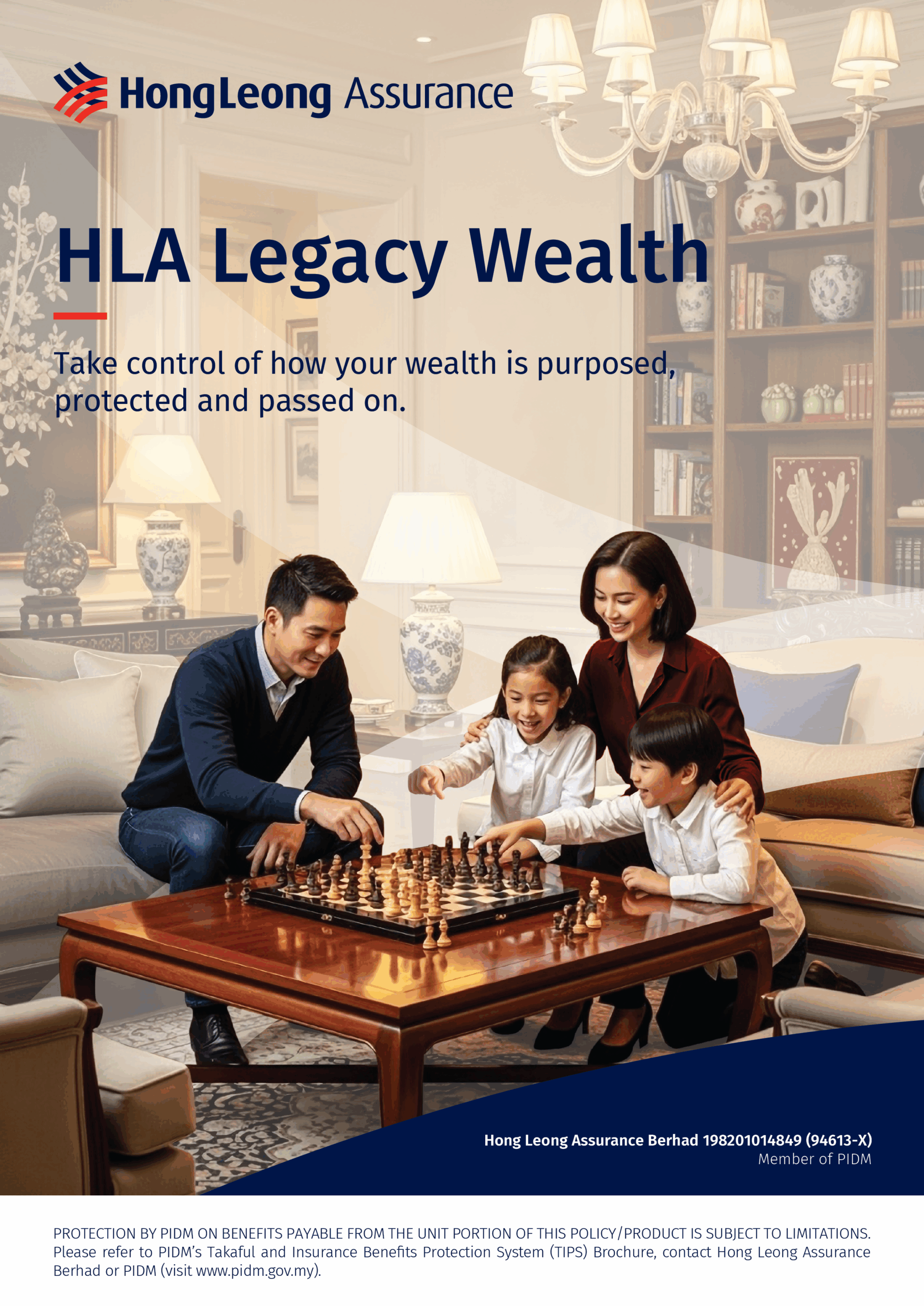
  • Hong Leong Assurance launches HLA Legacy Wealth

    Hong Leong Assurance launches HLA Legacy Wealth

    Hong Leong Assurance (HLA) introduces HLA Legacy Wealth, a next-generation insurance solution designed to help individuals build, preserve, and pass on their wealth with clarity and care. The policy includes Loyalty Bonuses of up to 25% of the Basic Sum Assured, credited directly into the policy and compounded over time; the Lapse-Free Zone, a first-of-its-kind feature in Malaysia that ensures policy continuity beyond age 95 even in adverse market conditions; and the Death Benefit Settlement Options (DBSO), which allow policyholders to customise how and when their wealth is distributed.

    While wills, trusts and family offices remain essential components of estate planning, insurance continues to be one of the most widely adopted tools — offering both accessibility and structure. HLA Legacy Wealth complements these traditional instruments by providing a practical starting point for legacy planning.

    To enhance its investment potential, HLA Legacy Wealth offers access to a curated selection of funds, including the newly introduced HLA Strategic Global Equity Fund, managed by Hong Leong Asset Management in partnership with Amundi Singapore Limited — part of Amundi, Europe’s largest asset manager with over USD 2.7 trillion in assets under management (as at 30 June 2025). This global equity portfolio is designed to deliver medium to long-term capital growth.

    What truly sets HLA Legacy Wealth apart is its thoughtful approach to long-term financial security and legacy distribution. The Lapse-Free Zone offers true peace of mind in the later years of life, ensuring that the policy remains in force even when market conditions are unfavourable — a reassurance for those who want their legacy to endure without interruption. This feature reflects HLA’s commitment to protecting wealth not just during accumulation, but throughout the final stages of life.

  • Lazada partners with POP MART for faster access to collectibles

    Lazada has partnered with POP MART once again to expedite collector’s journey, delivering a more seamless and enjoyable experience with faster access to sought-after IP collectibles. With Lazada’s new logistics enhancements, fans will enjoy faster deliveries, lower shipping costs and smoother return process.

    Starting today, shoppers across Malaysia will enjoy enhanced collector experience with orders dispatched within 48 hours and arriving in as fast as 2 days. Fans can now shop their favourite POP MART collectibles on LazMall with full confidence, knowing they’re buying through a trusted and authentic channel for total peace of mind. The same enhanced experience will also be extended to POP MART fans in Singapore and Indonesia, bringing even more joy to collectors across the region.

    Reinforcing the eCommerce Foundation for a More Effortless Collector Journey

    The new logistics upgrades are part of Lazada’s broader mission to make shopping not just fast, but also frictionless and reliable. Fans can expect:

    • Faster dispatch and deliveries: Orders will be shipped within 48 hours, and will arrive in as fast as two days
    • Lower shipping fees: Optimised logistics help reduce costs borne by shoppers and make premium art toys more accessible than ever.
    • Hassle-free returns: Shoppers will enjoy LazMall 30-day free return policy, with more localised processes to ensure that refunds are easy and fuss-free.

    “As the toy collector community in Southeast Asia continues to grow, we want to make every moment of the shopping journey on Lazada, from discovery to delivery, to feel effortless, seamless and exciting,” said Kaya Qin, Chief Executive Officer, Lazada Malaysia. “These enhancements are about more than speed; they’re about elevating the experience of collecting something you truly love.”

    Improving Accessibility for Collectors across Southeast Asia

    Lazada’s ongoing partnership with POP MART showcases the blending of commerce and culture, transforming the art of collecting into a multi-faceted experience. The collaboration has enabled Lazada to bring the brand to life through vibrant community experiences and exclusive drops – from the Lazada x POP MART 5 KM Run in Southeast Asia – including Malaysia’s energetic edition on Sunday, 12 October 2025 – to the POP TOY SHOW event in Singapore this August, where Lazada also hosted the brand’s first Regional Super Brand Day (RSBD) concurrently to share the excitement with all its regional fans online.

    These touchpoints reflect Lazada’s growing commitment to nurturing Southeast Asia’s art toy movement by improving access and convenience online as well as creating opportunities to connect offline for all fans.

  • Malaysians won’t pay for sustainability: 91% desire clashes with budget reality

    Malaysians won’t pay for sustainability: 91% desire clashes with budget reality

    According to the Malaysia Consumer Trend Report 2025, a nationwide survey of 500 Malaysians has found that 91% of consumers are open to the idea of purchasing sustainable products. However, this intention is heavily tempered by price sensitivity, with the majority only willing to pay less than 10% more, revealing a significant gap between eco-conscious desires and purchasing reality.

    This brings us to the pivotal question: while people may care about the planet, are they willing to pay more to protect it? The data reveals a clear answer: only if the price is right.

    Widespread adoption is blocked by three major barriers:

    • cost (most will only pay <10% more),
    • credibility (32.4% are not sure if eco-friendly claims are real), and
    • convenience (18.2% find sustainable products hard to find).

    In short, consumers want to buy green, but to do so confidently, they need clarity, price confidence, and better accessibility to actually follow through.

    Growing Awareness Doesn’t Always Translate into Action
    This intention-action gap is further highlighted in daily habits. While many Malaysians are familiar with the core pillars of sustainability, Reduce, Reuse, Recycle, full adoption is still a work in progress.
    “Malaysians are trying, but their sustainability behaviour is still fragmented,” said See Toh Wai Yu, Chief Executive Officer of Central Force International. “While the intention exists, execution is often uneven due to habit, lack of infrastructure, or simple inconvenience. This is where businesses can step in to make sustainable choices.”

    According to the report, only 48.8% of Malaysians consistently practice the 3Rs, meaning that vast amounts of valuable resources still end up in landfills. In Selangor alone, 10,000 tons of waste are generated daily, making it the nation’s largest contributor and a significant source of emissions. The urgency is clear, businesses must step up with practical, low-friction solutions such as refill programs, recycling partnerships, and in-store prompts to help turn consumer awareness into consistent green action.

    Furthermore, action-reward steps are a powerful way to encourage change. Motivation is key: the study found that 26.2% of Malaysians would practice 3R habits more often with rewards.

    “Consumers are open to adopting greener habits, but they want it to feel worthwhile, not burdensome. Therefore, simple reward systems can build lasting habits,” added See Toh.

    The survey indicates that while a willingness to adopt sustainable habits exists, consumers remain practical in their approach. To align with this value-driven mindset, businesses must tailor their products to offer clear and compelling value. This behavior suggests that purchasing decisions are influenced more by conscious prioritisation than by a lack of interest or weak habits regarding sustainability.

    Festive Spending: A Resilient Economic Engine
    Per the survey, consumers’ selective spending behaviour, and purchase priorities are shown to extend to other areas as well. Examining spending patterns during culturally meaningful occasions like festivals, for example, highlights a continued willingness to spend as they prioritise on sectors that prioritise celebrations, gifting, and presentation. Supporting this trend, the report also uncovered that festive spending remains a non-negotiable priority for Malaysians, defying broader cost-of-living pressures. This cultural spending is a powerful economic driver, evidenced by a 5.7% year-on-year jump in wholesale and retail trade to RM154 billion during the festive period.

    How to Win the Sustainable Shopper
    To succeed in this space, a strategy must reflect both the emotional support for eco-consciousness and the financial realities of daily life. The report advises businesses to make their products: Affordable, Transparent, Accessible and Motivating

    Sustainability is not just a trend; it’s an evolving consumer expectation.