 Sunway REIT Management Sdn. Bhd., the Manager of Sunway Real Estate Investment Trust (“Sunway REIT”), is pleased to announce that Sunway REIT has, on 30 December 2024, successfully completed the acquisition of Sunway Kluang Mall (formerly known as Kluang Mall).
Sunway Kluang Mall is located in the heart of Johor, making it a strategic town connecting to major towns such as Johor Bahru, Muar, and Batu Pahat. It provides excellent connectivity to other parts of Peninsular Malaysia through major highways and railways. With a population of more than 320,000 and a potential of approximately 1 million additional population in central Johor, the Kluang district serves as a preferred retail and lifestyle destination in the region.
Sunway Kluang Mall is presently 99% occupied, with over 130 tenants. The retail mall offers a diverse array of retail offerings, including international and homegrown brands, food and beverage (F&B) outlets, as well as entertainment and lifestyle services. Anchored by Pacific Hypermarket & Department Store, the mall’s extensive offerings such as health and beauty services, cinema and bowling centre enhance the overall retail experience.
Sunway Kluang Mall is expected to be yield-accretive to Sunway REIT’s portfolio with an estimated initial Net Property Income (“NPI”) yield of 7%.
Clement Chen, the Chief Executive Officer of Sunway REIT Management Sdn. Bhd., commented, “We are pleased to end the year with the completion of another acquisition. This fortifies Sunway REIT’s portfolio as one of the leading REIT in Malaysia. We strategically expanded our presence in Johor, which is a high-growth state and magnet for investment.”
He added, “Building on Sunway’s strong brand and proven track record in retail management, we see opportunities to further enhance the mall through tenancy optimisation, proactive management, and asset enhancement initiatives (AEI) that greatly increases the property’s growth potential.”
Category: Uncategorized
-
SUNWAY REIT COMPLETES THE ACQUISITION OF SUNWAY KLUANG MALL IN JOHOR
-
Smartphone users should be aware of the threats posed by malicious NFC tags
The festive shopping season is well underway. Whereas once cash was king, now more shoppers than ever use their mobile phone’s electronic wallet as a contactless payment system when buying items, replacing credit cards or electronic ticket smart cards.
Smartphones increasingly rely on Near Field Communication (NFC) technology for convenience and connectivity, but cybersecurity experts warn about a rising threat: NFC tag tampering. This tactic, often overlooked, can expose users to phishing attacks, malware, and data theft with a simple tap of their phone.
“NFC technology is incredibly convenient, but it’s also a vector for malicious activity if users aren’t cautious,” warns Marc Rivero, Lead Security Researcher at Kaspersky. “Innocent-looking tags in public spaces can be reprogrammed or replaced to carry out harmful actions. As the adoption of NFC continues to grow in areas like payments, public transport, and marketing, we anticipate that malicious actors will become increasingly sophisticated in their tactics. In the next few years, NFC-related attacks could potentially target thousands of users globally, particularly in urban areas where NFC usage is widespread. Awareness and proactive measures are key to mitigating these risks.”
How NFC tag tampering works
NFC tags are widely used in marketing campaigns, public transport systems, and smart home setups to enable quick, touch-free interactions. However, this same convenience makes them susceptible to tampering by malicious actors.
One method involves reprogramming legitimate NFC tags. These tags, when left unlocked, can be altered to redirect users to phishing sites, initiate unintended actions on their devices, or even deliver harmful software payloads. Another method is the physical replacement of original NFC tags. For example, attackers might swap out a genuine tag on a public poster or kiosk, in high-traffic areas like transportation hubs, cafes, or retail stores, with one that triggers harmful behaviors.
The dangers of malicious NFC tags
The consequences of interacting with a malicious NFC tag can be severe. Phishing attacks are among the most common outcomes, where users are redirected to fraudulent websites designed to steal personal information or login credentials. It’s possible that vulnerabilities in a smartphone’s NFC reader can be exploited to execute harmful code, compromising the device’s security. Malicious NFC tags can also prompt users to download apps or files containing malware, which may steal data, track activity, or damage the device. The seemingly small act of scanning a tampered NFC tag can thus lead to significant financial and privacy repercussions.
Protect yourself against NFC tag tampering
To stay safe, users are encouraged to adopt these simple but effective measures:
1. Inspect NFC tags. Avoid scanning tags in untrusted or suspicious locations and look for signs of tampering.
2. Verify actions. Always carefully explore the URL or action triggered by a tag before proceeding.
3. Disable automatic actions. Configure your smartphone to require confirmation before executing NFC-related commands. Install a reliable security solution on the device to reduce the risks.
4. Stay updated. Ensure your smartphone’s software is up to date to protect against known vulnerabilities.
Advice for businesses
Organizations using NFC technology should take proactive steps to secure their systems and protect their users:
• Use locked or “read-only” NFC tags to prevent tampering.
• Regularly inspect their tags in public spaces for alterations.
• Educate customers and employees about safe NFC practices. -

Global Survey Reveals Trust Deficit in Tax Systems, Including in Malaysia
A groundbreaking global survey, Public Trust in Tax 2024, revealed that while most taxpayers believe in the principle of paying taxes as a contribution to society, trust in how governments utilise tax revenues remains low. Conducted by the Association of Chartered Certified Accountants (ACCA), the International Federation of Accountants (IFAC), and the Organisation for Economic Co-operation and Development (OECD), the survey gathered responses from over 10,000 individuals in 26 countries, including Malaysia.
The survey underscores a significant gap between the theory and practice of tax systems worldwide:
- Taxes as a Contribution: 52% see taxes as a contribution to the community, while 25% disagree.
- Public Good: Only 33% of global respondents feel tax revenues are spent for the public good, while 46% disagree.
- Fair Return on Taxes Paid: Just 32% believe public services and infrastructure provide a fair return for their taxes, while 50% disagree.
Helen Brand OBE, chief executive of ACCA, said: “Trust in tax systems is crucial for sustainable development and prosperity, and the findings of this survey highlight the challenges that many governments across the world face in building it. We look forward to using this important work to engage with policymakers, tax authorities and civil society to drive evidence-based policy initiatives to build effective and trusted tax systems.”
Commenting on the finding that tax accountants are the most trusted source of information on tax, and politicians the least, Lee White, CEO of IFAC, said: “Consumer and investor protection is the foundation for economic prosperity, which aligns with building trust in the tax ecosystem. As the survey confirms, and in line with previous editions, professional tax accountants are the most trusted source of tax information globally. This trust places an enormous responsibility on our profession to act with integrity, to bridge the gap between governments and taxpayers, and to uphold the highest standards of ethics.”
Manal Corwin, Director of the OECD Centre for Tax Policy and Administration, said: “We are pleased to join with ACCA and IFAC on this key research. The findings in this report highlight that support for the fiscal contract remains strong in theory, but it’s not being delivered in practice for many. We can use these findings to identify how to rebuild trust in both the theory and practice of tax across the globe.”
Malaysia’s results revealed more optimism than many other countries in the survey, though challenges persist:
- A Positive Contribution: 56% of Malaysians believe taxes are a contribution to the community, above the global average.
- Spending for Public Good: 43% of Malaysian respondents agree tax revenues are spent for the public good, outperforming the global average but leaving room for improvement.
- Fair Return: 40% of Malaysians feel they receive a fair return in public services and infrastructure for the taxes they pay, compared to the global average of 32%.
- Ease of Compliance: Malaysians rank tax processes as relatively efficient, with 60% saying it is easy to file returns and make payments, surpassing the global average of 52%.
- Trust in Accountants: Malaysian tax accountants are the most trusted globally, with an 80% trust rating, reflecting a high level of confidence in the profession.
Andrew Lim, Portfolio Head of ACCA Maritime SEA, remarked, “Malaysia’s stronger-than-average results highlight the potential for further trust-building measures. Transparency, fairness, and engagement remain vital to strengthening the fiscal contract.”
Despite relatively positive perceptions, concerns about corruption and the equitable distribution of tax burdens persist in Malaysia, mirroring broader regional and global trends. Addressing these issues will be key to fostering greater public trust in tax systems.
The full report, Public Trust in Tax 2024, is available at ACCA’s website: https://www.accaglobal.com/gb/en/professional-insights/global-economics/public-trust-tax-2024.html
-
Kaspersky contributes to joint INTERPOL-AFRIPOL operation
Kaspersky has assisted its partner law enforcement agencies INTERPOL and AFRIPOL in a joint effort to disrupt cybercrime across the African region. Dubbed “Serengeti,” the operation has led to the arrest of more than 1,000 individuals suspected of links to cybercrimes such as ransomware operation and business email compromise (BEC) attacks, resulting in nearly US $193 million in financial losses worldwide.
As Africa is going through a rapid digitisation, the threat of cybercrime on the continent is also escalating. In the African region in particular, ransomware has emerged as a prominent attack vector, targeting critical infrastructure, financial institutions, and manufacturing facilities, among others. During the first 10 months of 2024, there were over 165,000 ransomware attack detections in Africa, according to Kaspersky data. Other noticeable cyberthreats targeting users and organizations in the region include spyware and password stealers.
Conducted from September 2 to October 31, operation Serengeti dismantled 134,089 malicious infrastructures and networks linked to cybercrimes including ransomware operations, BEC attacks, digital extortion and online scams — all identified as prominent threats in INTERPOL’s 2024 Africa Cyber Threat Assessment Report.
Kaspersky has contributed to the operation by sharing information on threat actors, data on ransomware attacks and malware targeting the region, as well as up-to-date indicators of compromise (IoCs) for malicious infrastructure across Africa. Among the malware targeting African countries was also a well-known Brazilian banking trojan Grandoreiro – Kaspersky recently released new findings on this trojan at its Security Analyst Summit. Additionally, ransomware families detected in attacks on African organizations among others included LockBit, Rhysida, and Medusa.
The operation has also resulted in the identification of more than 35,000 victims of cyber offenses investigated.
Valdecy Urquiza, Secretary General of INTERPOL, said: “From multi-level marketing scams to credit card fraud on an industrial scale, the increasing volume and sophistication of cybercrime attacks is of serious concern. Operation Serengeti shows what we can achieve by working together, and these arrests alone will save countless potential future victims from real personal and financial pain. We know that this is just the tip of the iceberg, which is why we will continue targeting these criminal groups worldwide.”
“As an advocator of global cyberspace safety, it is meaningful for us to play a part in this joint operation. This is a testament of the importance of cooperation between governments, international law enforcement agencies, and cybersecurity companies like us to battle cybercrimes and threats. As cybercrimes are borderless, collective efforts are crucial to mitigate the risks and enhance cyber resiliency, thus helping to make the digital world safer for governments, businesses and individuals alike,” says Adrian Hia, Managing Director for Asia Pacific at Kaspersky.
-

Kaspersky: Businesses in Southeast Asia faced over 140K web cyberthreats daily
In Southeast Asia, businesses face a growing spectrum of web, or internet-born threats as they navigate an increasingly digital economy. The region’s rapid digitalisation has made it both a hub for growth and a target for cybercriminals.
In the first half of 2024, Kaspersky has detected and blocked over 26 million web threats from its security solutions for businesses in the region, averaging 146,944 web attacks every day.
Companies and organisations in Malaysia faced 19,615,255 web-based threats in the first six months of the year, placing the nation at the top of the rank among SEA countries. Indonesia trailed behind in second spot with 3,204,294.
Web-based threats, or online threats, are a category of cybersecurity risks that may cause an undesirable event or action via the internet. Web threats are made possible by end-user vulnerabilities, web service developers/operators, or web services themselves. Regardless of intent or cause, the consequences of a web threat may damage both individuals and organisations.
Vietnam and Thailand are sitting lower in the regional rank, with total web attacks of 1,445,452 and 1,057,732, while 846,837 threats were recorded in the Philippines and 574,292 in Singapore.
“As businesses and governments in the region continue to embrace digitalisation to drive economic growth, their increased reliance on digital platforms broadens their attack surface. This leads to more opportunities for cybercriminals to exploit vulnerabilities in unprotected systems, which can cause disruptions to supply chains, financial institutions, and critical infrastructure such as healthcare and energy. Such incidents can damage productivity, lead to financial losses, and erode trust in digital systems,” says Yeo Siang Tiong, General Manager for Southeast Asia at Kaspersky.
While governments are increasingly focusing on mandatory regulations and laws to protect data and enforce accountability for cybersecurity incidents, it is important that local businesses too must continue keeping round-the-clock vigilance, prioritising and strengthening their cybersecurity posture.
“Cybercriminals in the region are becoming more sophisticated, utilising AI-driven attacks and other tools and techniques Businesses must invest in robust cybersecurity tools like endpoint protection, firewalls, and real-time event monitoring and management. Regular security assessment and audits must be conducted to identify weaknesses and address vulnerabilities,” Yeo remarks.
-

Tune Protect Enhances Customer Experience with Hassle-Free Instant Travel Claims Payout
Tune Protect Malaysia has launch of its Travel Easy Instant Travel Claims Payout feature, now accessible through the Tune Protect mobile app. This feature simplifies the claims process, offering travellers a fully digital and hassle-free experience with instant payouts via DuitNow upon claim approval.
Travel Easy is a travel insurance product which provides coverage for flights across all airlines. The Instant Travel Claims Payout feature is the latest innovation that is introduced to expedite the claims process, particularly for the Travel Delay benefit. By eliminating unnecessary documentation such as travel itineraries and delay confirmations for delays between 3 hours to under 9 hours, the claims submission process is also completely paperless and fully digital. Travellers can submit claims via the app, and payouts are processed on the day of approval through DuitNow, providing instant reimbursement.
Travellers purchasing the individual Travel Easy policy can receive RM200 for the first complete three hours of delay, followed by an additional RM200 for every subsequent six hours. This feature redefines the new norm for convenience and efficiency, delivering a faster and more seamless claims experience.
“Travellers today demand faster, more convenient solutions, and our Instant Travel Claims Payout feature is designed to meet those needs. We have integrated cutting-edge digital solutions to offer the speed, convenience, and security they deserve. By leveraging real-time flight data for claim verification and using DuitNow for instant payments, we ensure that the claims process is as seamless and expedited as possible,” said Jubin Mehta, Chief Executive Officer, Tune Protect Malaysia.
He added, “Our fully digital and paperless process allows travellers to submit claims efficiently and easily, from anywhere at any time. This ensures a seamless, stress-free experience, especially when it is needed most. By leveraging advanced technologies like Robotic Process Automation (RPA), we have automated the entire claims assessment process, from registration to payment. This not only eliminates tedious paperwork but also significantly accelerates approvals and payouts, delivering an enhanced insurance journey to our customers.”
Tune Protect has a 3:3:3 commitment where customers can buy in 3 minutes, receive a response in 3 hours, and get their claims paid in 3 working days[2]. The introduction of the Travel Easy Instant Travel Claims Payout further enhances this commitment by reducing the overall turnaround time for those opting for DuitNow as their reimbursement method, shortening the payout to within same day upon approval.
-

FedEx Singapore Singapore Rolls Out EV Fleet
FedEx Express Corporation, one of the world’s largest express transportation companies, is introducing 31 electric vehicles (EVs) into its existing fleet in Singapore. Singapore is the first market within the FedEx Asia Pacific network to deploy the custom-built Mercedes-Benz eVito 112 panel vans to support its parcel pickup and delivery operations across the country. The EVs offer a 923 kg load capacity and an estimated range of up to 321 kilometers on a full charge. Collectively, the vehicles are estimated to avoid around 148 metric tons of tailpipe emissions per year when compared to diesel-powered vans.
FedEx Singapore is already replacing all its end-of-life vehicles used for parcel pickup and delivery with EVs, contributing to the company’s global goal to make 100% of new purchases of these vehicles electric by 2030. The addition of these new vehicles to its fleet marks a significant step towards the company’s commitment to sustainability in Singapore and its ongoing efforts to achieve zero-tailpipe emissions for last-mile parcel delivery operations across its global operations.
FedEx continues to explore innovative solutions and collaborations to enhance the sustainability of its operations, including the company’s vision of integrating renewable energy and enhancing facility efficiency. The South Pacific Regional Hub in Singapore will soon be able to use solar energy to meet more than half of the facility’s total electricity demands, helping to charge the EV fleet in Singapore via clean energy beginning in January 2025. Overall, these projects support the Singapore Green Plan 2030, which aims to lower national carbon emissions and promote sustainability.
“FedEx is committed to connecting people and opportunities in smarter ways,” stated Kawal Preet, president of FedEx Asia Pacific. “With the introduction of these electric vehicles, we are taking meaningful steps to lower greenhouse gas emissions while improving our efficiency, directly supporting Singapore’s bold sustainability initiatives. This is an important milestone on our path to achieving carbon-neutral operations by 2040, as we work to build a cleaner and more efficient logistics network that promotes sustainable growth throughout the Asia Pacific region.”
In addition to vehicle electrification, the company has also launched a cloud-based carbon emissions reporting tool, FedEx® Sustainability Insights, giving customers access to historical emissions information on eligible shipments within the FedEx network. FedEx customers can use the data to help make more informed decisions on their future shipping strategy to help reduce their impact on the environment.
-
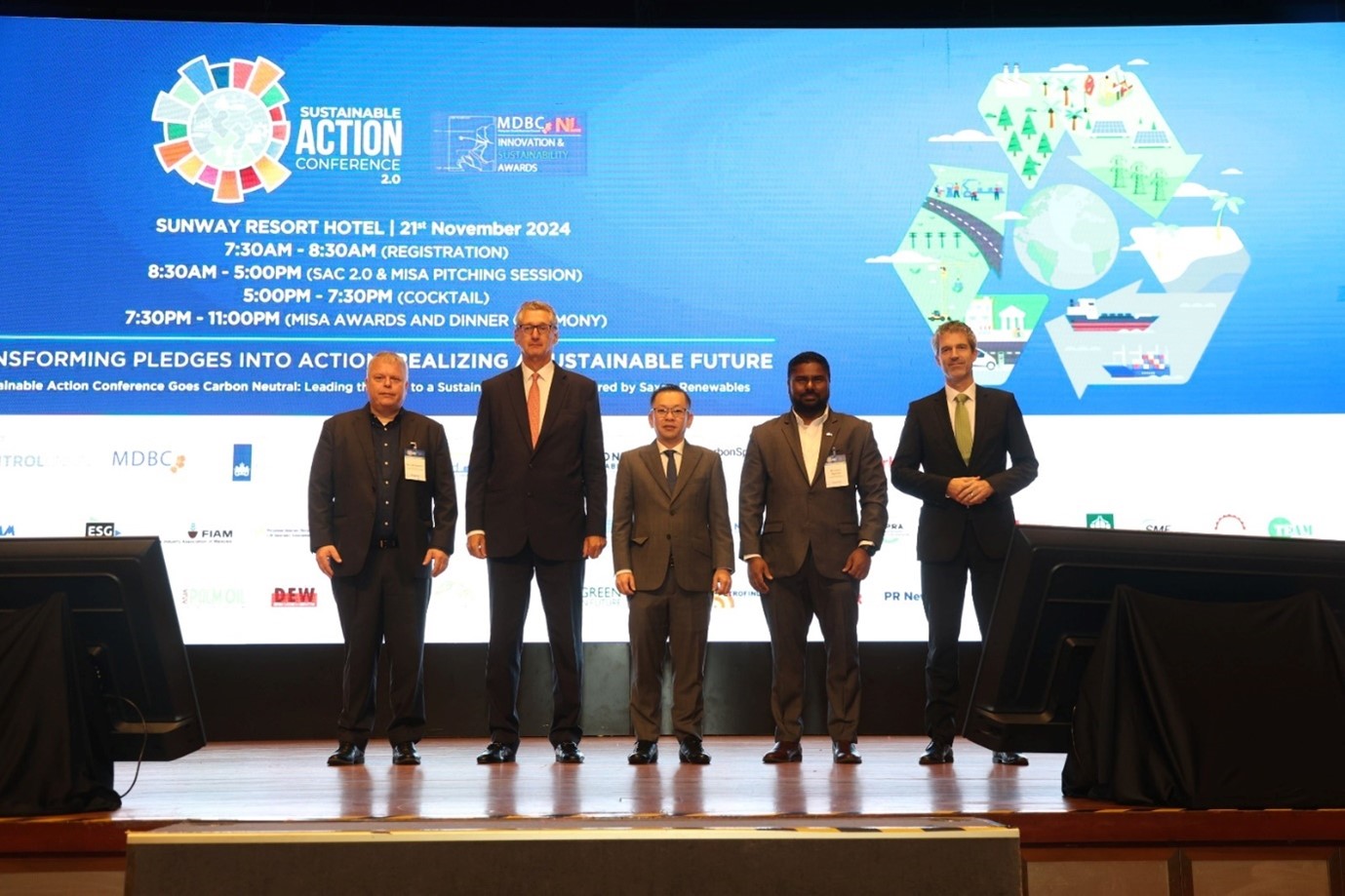
A TRANSFORMATIVE DAY AT THE SUSTAINABLE ACTION CONFERENCE 2024: OFFICIALLY LAUNCHED BY THE DEPUTY MINISTER OF PLANTATION AND COMMODITIES OF MALAYSIA, YB DATUK CHAN FOONG HIN.
Kuala Lumpur – The second edition of the Sustainable Action Conference 2024 (SAC 2.0) concluded with remarkable success on 21st November 2024 at the Sunway Resort Hotel, Malaysia. Co-organized by Control Union Malaysia and the Malaysian Dutch Business Council (MDBC), in collaboration with the MDBC Innovation & Sustainability Awards (MISA), the event was proudly supported by the Embassy of the Kingdom of the Netherlands and the Malaysia Green Technology and Climate Change Corporation (MGTC).
The conference was officially launched by YB Datuk Chan Foong Hin the Deputy Minister of Plantation and Commodities of Malaysia, accompanied by H.E. Jacques Werner, Ambassador of the Kingdom of the Netherlands to Malaysia, and H.E. Rafael Tristan Daerr, Ambassador of the European Union Delegation to Malaysia, Ir. TS. Shamsul Bahar, Group Chief Executive Officer, Malaysian Green Technology and Climate Change Corporation, Mr. Dirk Teichert, Managing Director of Control Union Asia Holdings and Mr. Supun Nigamuni, Managing Director, Control Union Malaysia.
The conference brought together corporate leaders, policymakers, and sustainability advocates from across diverse sectors such as manufacturing, plantations, forestry, energy, oil & gas, construction, finance, and tourism. With the theme “Transforming Pledges into Action: Realizing a Sustainable Future,” SAC 2024 showcased real-world case studies, provided actionable insights, and spotlighted best practices in sustainable land use, green financing, energy-efficient manufacturing, and sustainable tourism.
SAC 2024 reaffirmed its commitment to sustainability by hosting a carbon-neutral event, by offsetting emissions through the Kuamut Rainforest Conservation Project, Malaysia’s first nature-based carbon initiative registered under VERRA powered by Saxon Renewables and reinvesting all proceeds into charitable organizations supporting impactful sustainability efforts.
One of the highlights of SAC 2024 was the Non-Government Organization (NGO) funding project. After a rigorous selection process, Dignity for Children Foundation emerged as the winner of the RM 50,000 grant for the Empowerment of Orang Asli Youth Project. This initiative, designed to address educational challenges faced by the Orang Asli community, exemplifies the impact of aligning visionary projects with actionable sustainability goals. This was made possible through the generous sponsorship of Control Union Malaysia, CarbonSpace, Saxon Renewables, SaraCarbon, EPIC Berhad, and Corsair, reaffirming their commitment to driving impactful change through sustainable practices.
The conference featured distinguished speakers from leading organizations, including PETRONAS, Bursa Malaysia, Bank Negara Malaysia, CIMB Islamic Bank, European Union, Malaysian Timber Association (MTA), SP Setia Berhad, Tourism Malaysia, MATRADE, Climate Governance Malaysia, Malaysia Forest Fund (MFF), Kuala Lumpur Kepong Berhad (KLK), SD Guthrie, Signify, and more. Their insights provided invaluable guidance on incorporating sustainability into business strategies, addressing global environmental challenges, and fostering innovation.
SAC 2024 marked a significant milestone in Malaysia’s sustainability journey, offering a platform for collaboration, learning, and impactful decision-making. By uniting thought leaders, policymakers, and innovators, the event underscored the importance of collective efforts to advance sustainability across core industries.
Control Union Malaysia thanks all attendees, sponsors, and partners for making SAC 2024 a success and looks forward to further strengthening Malaysia’s commitment to sustainability.
For more information on SAC 2024 and future initiatives, visit www.sustainableactionconference.com.
-

Jom Kosong @ Tealive to fund 1 million school meals
(From left) Bryan Yeow, Director of Special Projects & International Business of Loob Holding; Datuk William Ng, President of Small and Medium Enterprises Association (SAMENTA) Malaysia; Bryan Loo, Founder and CEO of Loob Holding; Dr Fuziah Salleh, Deputy Minister of Domestic Trade and Cost of Living (KPDN); Datuk Roziah binti Abudin, Deputy Secretary General (Domestic Trade) of KPDN and Nazrin Shashadin, Head of Programme Coordination & Distribution for Yayasan Didik Negara, during the launch of Tealive’s Jom Kosong campaign. Putrajaya – Tealive, the top Southeast Asian lifestyle tea brand, today pledged to provide one million free school meals in support of the Jom Kosong campaign, an initiative of the Ministry of Domestic Trade and Cost of Living to promote zero-sugar options.
Loob Holding Sdn Bhd founder and CEO Bryan Loo said for each cup sold under the campaign, 20 sen would be contributed to the Tealive School Meals Fund.
“We will contribute directly to Yayasan Didik Negara (YDN) which runs the school meals programme and we understand that RM3.5 million is required to fund one million meals,” he said.
Tealive will officially kick off its Jom Kosong campaign on Dec 1 and Loo is confident the targeted amount would be raised within one year, depending on the number of customers who support its Jom Kosong campaign.
Deputy Minister of Domestic Trade and Cost of Living, Dr Fuziah Salleh, launched Tealive’s Jom Kosong campaign at the Tealive outlet at the Ministry premises. Also present were Hirudin bin Mohit, Deputy Director of Daily School Management Division (BPSH) under Ministry of Education, and Mohd Razi bin Jaafar, YDN’s Acting CEO, as well as officials from the two Ministries.
Elaborating on its support for the Jom Kosong campaign, Loo said all Tealive customers had always been empowered to customise their drinks to their preference. They could opt for different sugar and even ice levels.
“Tealive wants to show our commitment in supporting this Ministry initiative and we thought it would be a noble effort to get our customers to raise funds together to provide school meals.
“We hope our customers will come forward to support this initiative, especially knowing that the 20-sen per cup goes directly to provide nutritious school meals for B40 children,” he said.
“Let us positively impact the community,” Loo added.
Tealive customers who contributed to the school meals programme will also get an acknowledgement in their drink receipts stating the amount they have contributed.
Those ordering on the Tealive app will also get the option to support this programme and their contribution will also be visible to them during their purchase journey within the app.
-

Scoot Expands its Network to Padang, Phu Quoc and Shantou, Bringing Malaysians Closer to Asia’s Hidden Treasures
MALAYSIA – Scoot, the low-cost subsidiary of Singapore Airlines (SIA), today announced
the launch of three new flight services to Phu Quoc in Vietnam, Padang in Indonesia and
Shantou in China. Flights to Phu Quoc and Padang will commence on 20 December 2024
and 6 January 2025, respectively, and will be operated on the Embraer E190-E2 aircraft
while flights to Shantou will begin on 16 January 2025 on the Airbus A320 family aircraft.Known for its rare wildlife and pristine beaches, Phu Quoc is a tropical haven perfect for a
holiday of adventure or relaxation. It also houses the Phu Quoc National Park, recognised as
a UNESCO Biosphere Reserve. At present, Phu Quoc is the only destination in Vietnam that
has a 30-day visa-free policy, offering international travellers convenient access. From 20
December 2024, Scoot will operate three times weekly flights to Phu Quoc. Two more
weekly flights will be added from 25 January 2025, bringing the total number of weekly flights
between Singapore and Phu Quoc to five times.Padang, the capital city of West Sumatra and the birthplace of Padang cuisine (Nasi
Padang), is a vibrant destination known for its Minangkabau culture and breathtaking
beaches for surfing. Whether a culture seeker, a nature or food lover, Padang is a hidden
gem waiting to be discovered. Scoot will operate four times weekly flights to Padang.Shantou, a coastal city located in the province of Guangdong in China, is a destination with
deep cultural heritage and home to Chaoshan cuisine including marinated raw seafood.
Travellers may like to stroll down Shantou Small Park to see the memorial hall of Dr Sun Yat-
sen at Zhongshan Memorial Pavilion, or escape the city to bask in Nan Ao Island’s blue
skies, sandy beaches and majestic mountains. Scoot will operate three times weekly flights
to Shantou.In addition to the new destinations, Scoot will be making some adjustments to its network to
better match capacity to demand and optimise fleet deployment.Scoot will add two more weekly flights to Jakarta, bringing the total number of weekly flights
to 19 times weekly from 24 November 2024. Services to Koh Samui will be increased from
14 to 21 times weekly from 20 December 2024, and services to Davao will increase from five
times weekly to daily flights from 22 December 2024. Flights to Vientiane will increase from
four to five times weekly from 9 February 2025. Operations to Nanchang will be suspended
after the last flight on 14 February 2025.With the launch of services to Phu Quoc, Padang and Shantou, Scoot will offer Malaysians
easier access to Asia’s hidden gems, with 31 weekly flights to three cities in Vietnam, 84
weekly flights to 11 cities in Indonesia and 89 weekly flights to 17 points in China by January
2025.Flights to Phu Quoc, Padang and Shantou will be available for booking from today, via
Scoot’s website, mobile app, and progressively through other channels. One-way Economy
class fares 1 start from RM299 to Phu Quoc, RM269 to Padang, and RM409 to Shantou,
inclusive of taxes.Mr Leslie Thng, Chief Executive Officer of Scoot said, “We are happy to announce the
introduction of flight services to Padang, Phu Quoc and Shantou, and hope to inspire more
travellers to discover the diverse experiences our new destinations have to offer. We will
continue to seek opportunities, expand our network and connect our customers to new travel
experiences.”