Category: What’s News Asia

Corporate News from Media OutReach Newswire

  • TrueHealth Medical (02697.HK) H1 Revenue Surges over 30-Fold; Surgical Robots Enter Accelerated Commercialization

    TrueHealth Medical (02697.HK) H1 Revenue Surges over 30-Fold; Surgical Robots Enter Accelerated Commercialization

    HONG KONG SAR – EQS Newswire – 31 August 2026 – A national charging framework for surgical robots was formally established earlier this year, heralding imminent industry-wide volume growth. With payment rules clarified, billing barriers for hospitals procuring such equipment have been removed, opening a window for accelerated installation of domestic surgical robots.

    On 28 August, TrueHealth Medical (02697.HK, the “Company”) released its maiden interim results. During the reporting period, the Company booked revenue of RMB 5.671 million, jumping nearly 32 times year-on-year. Gross profit reached RMB 4.363 million, soaring more than 36 times year-on-year, with an overall gross margin of 76.9%, representing an uplift of 9.8 percentage points against the prior-year period. Revenue from surgical robot products stood at RMB 5.16 million, accounting for 91.0% of total revenue, marking the commencement of revenue recognition.

    Consumables business grew in tandem, delivering consumables sales of RMB 408,000 during the period, up 135.8% year-on-year. As device installations scale up, profitability from repeat orders has improved, with gross margin rising from 67.1% in the same period last year to 79.9%. Sales coverage has also expanded, shifting from a Beijing-only footprint last year to multiple regions including North and South China. North China emerged as the core delivery market in the period, contributing 57.7% of sales, while South China accounted for 35.8%. Driven by rising device installations, repeat purchases of consumables and geographic expansion, the Company’s overall business has entered a sustainable growth trajectory.

    The Company stated in its announcement that the “device plus consumables” business model has been validated by its first batch of post-listing operational data. It will maintain its existing pace for pipeline advancement and ecosystem buildout in H2, retaining confidence in sustained commercial expansion.

    TrueHealth Medical specializes in percutaneous puncture surgical robots and has completed the full commercialization cycle from technology development to market validation. All four models of its core products have obtained Class III medical device registration certificates from the National Medical Products Administration (NMPA), giving the Company the largest number of approved models among Chinese peers and a comprehensive product portfolio. Its installed base spans nearly 100 medical institutions across major regions, ranking among the industry leaders. The sales system built on distributor networks, benchmark hospitals and clinical training support is fully in place.

    While the commercial foundation solidifies, the Company has ramped up R&D investment. R&D expenditure totaled RMB 26.931 million in the reporting period, rising 15.2% year-on-year. Investment focuses on two key areas: expansion of clinical indications and overseas registration.

    On clinical indication expansion: R&D spending on core products increased from RMB 7.4 million in the prior-year period to RMB 10.7 million. The pulmonary indication of TH-X MW, the world’s first and only microwave ablation surgical robot integrating precision localization and microwave ablation, received NMPA approval within the reporting period. With this milestone, this globally-first percutaneous microwave ablation surgical robot now covers both liver and lung tumor treatment scenarios. The registration clinical trial for the flagship TH-S1 puncture surgical robot, expanded for retroperitoneal lesions, has enrolled 16 patients. The Company plans to file the registration application in Q4 2026, with NMPA approval anticipated in H2 2027. For overseas registration: CE certification applications for core products were submitted and accepted in January 2026, with certification expected in Q4 2026. Upon obtaining CE certification, the percutaneous puncture surgical robots will be able to enter the EU market, extending the Company’s footprint beyond China.

    Additionally, the Company’s forward-looking long-term pipeline, including the organ normothermic perfusion system, follows a clear timeline. The system recently won the bid for the research equipment procurement project of the Yunnan Key Laboratory of Gene-edited Miniature Pigs and Xenotransplantation at Yunnan Agricultural University. This milestone confirms completion of engineering finalization and prototype verification, laying the technical foundation to move from research settings to preclinical studies and eventual clinical adoption. It marks a pivotal transition of TrueHealth Medical’s organ normothermic perfusion system from R&D to industrialization. This cutting-edge technology aligns closely with the 15th Five-Year Plan strategic roadmap in China, which identifies organ manufacturing, life support devices and advanced biotechnologies as prioritized research areas.

    Beyond scaling commercial sales, the Company continues to build strategic depth across channels, products and technologies. Three landmark initiatives were finalized in August: a strategic cooperation agreement with Genertec Liaoning Pharmaceuticals to systematically deliver minimally invasive diagnosis and treatment solutions to regional markets via this state-owned enterprise platform, unlocking large-scale hospital adoption; the organ normothermic perfusion system winning the Yunnan Agricultural University tender, bringing the second growth curve into market validation; and a collaboration with the Tianjin Embodied Intelligence Innovation Center to build technical capabilities for surgical robots to evolve from “execution tools” into “intelligent agents”, securing a leading edge for long-term technological advancement.

    Policy tailwinds have materialized, and the Company’s commercial flywheel is now gaining traction. In August, TrueHealth Medical was included in the Hang Seng Composite Index, qualifying it for Stock Connect inclusion. Its maiden interim results validate the robustness of its “device plus consumables” business model, laying a solid foundation for sustained commercial scaling ahead. Several key dimensions merit close attention: robust expansion in new installations, consistent growth in recurring consumables revenue, timely roll‑out of clinical indication expansions for pipelines including TH‑S1, overseas market penetration following CE certification, and validation of follow‑on orders for emerging businesses such as organ perfusion systems.

    Hashtag: #TrueHealthMedical

    The issuer is solely responsible for the content of this announcement.

    About TrueHealth Medical Technology Development Co., Limited

    A nationally accredited “Little Giant” enterprise (Specialized, Sophisticated, Distinctive & Innovative), Guangdong TrueHealth Medical Technology Development Co., Limited leverages artificial intelligence and robotic control technologies to develop and commercialize intelligent robots for soft tissue puncture diagnosis and organ repair. Its core offerings cover percutaneous puncture navigation and microwave ablation guided systems. The ZhenYiDa® percutaneous puncture navigation and positioning system holds NMPA China-first certification, while the ZhenYiDa® navigation and positioning microwave ablation system is accredited as a world-first innovation by NMPA. The Company undertakes key projects under China’s 14th Five-Year National Key R&D Program, with its products featured in national flagship schemes including high-end medical device roll-out initiatives, AI medical device innovation program and the Catalog of Outstanding Domestic Medical Devices. TrueHealth Medical aims to deploy AI and surgical robotics to advance precision, minimally invasive therapeutic solutions for widespread clinical use.
  • Cushman & Wakefield Speaks at RICS China Summit 2026, Sharing Insights into Global Assets and Technology Reshaping Under the New Landscape of the 15th Five-Year Plan

    Cushman & Wakefield Speaks at RICS China Summit 2026, Sharing Insights into Global Assets and Technology Reshaping Under the New Landscape of the 15th Five-Year Plan

    HONG KONG SAR – Media OutReach Newswire – 31 August 2026 – Cushman & Wakefield, a leading global real estate services firm, has participated in the RICS China Summit 2026. The firm’s representative speakers at the event included KK Chiu, International Director and Chief Executive, Greater China, Cushman & Wakefield, and Chair, RICS China Board; Cathy Liu, Senior Director, Head of Valuation & Advisory Services, Shanghai; and Chris Yang, Head of Valuation & Advisory Services, Beijing and Head of REITs Practice Group. The expert team attended the event and shared their insights through engaging panel discussions.

    The launch of China’s 15th Five-Year Plan marks a pivotal stage in the nation’s transition from “scale growth” to “high-quality advancement,” bringing significant transformation to the real estate and construction sectors. These changes are being driven by four key forces: institutional restructuring, technological revolution, spatial reshaping, and upgraded openness. Under the theme “Global Assets and Technology Reshaping Under the New Landscape of the 15th Five-Year Plan, the RICS China Summit 2026 focused on the core objectives of the Five-Year Plan and explored five key areas: policy and top-level strategic planning, technology-driven industry transformation, global asset allocation, capital and asset revitalization, and green, low-carbon transition.

    KK Chiu, International Director and Chief Executive, Greater China, Cushman & Wakefield, and Chair of the RICS China Board, was invited to deliver the opening remarks. He said: “This year marks the launch of China’s 15th Five-Year Plan, and is also a pivotal turning point for the domestic real estate and construction industries as they move from scale expansion towards high-quality development and upgrading. During this process, RICS is continuing to promote the adoption of international surveying and valuation standards, guidance on the responsible use of AI, and global sustainability and ESG guidelines. Through close collaboration with leading domestic institutions and enterprises, RICS supports Chinese professionals in contributing to the development and refinement of global standards during the 15th Five-Year Plan period.”

    KK Chiu also moderated a panel discussion together with leading industry experts. The discussion examined the industry’s core transformation from “asset holding” to “asset operation + capital management,” and explored implementation pathways for the dynamic optimization of REIT portfolios. Panelists also discussed the impact of different listing platforms on commercial real estate valuations and examined how emerging factors, including land lease renewal policies and the recognition of data assets on balance sheets, are reshaping real estate asset values, in turn helping the industry optimize valuation methodologies and improve operational efficiency.

    The industry case study handbook From Sustainability Performance to Asset Value Enhancement: Pathways to Financial Returns in Green Real Estate, jointly written by Cushman & Wakefield, RICS China and GRESB China, was officially launched during the RICS China Summit 2026.

    The handbook examines the localized value transmission mechanisms of ESG performance and is built around the core premise that “green asset value is characterized by multiple pathways and differentiated outcomes, and should be assessed from a full lifecycle and risk-adjusted return perspective.” It establishes a four-dimensional analytical framework covering revenue, costs, valuation and financing, and systematically analyses the mechanisms through which ESG factors influence asset cash flow, risk assessment, capital expenditure, financing conditions and market liquidity. The handbook provides practical reference guidance for investors, asset managers, valuers, rating agencies, financial institutions and industry practitioners.

    At the real estate sub-forum, Cathy Liu, Senior Director, Head of Valuation & Advisory Services, Shanghai, Cushman & Wakefield, joined other industry leaders in a panel discussion titled “From Sustainability Performance to Asset Value Enhancement: Pathways to Financial Returns in Green Real Estate.” During the discussion, she noted: “2026 marks the 50th anniversary of the RICS Valuation — Global Standards, commonly known as the Red Book, and is also a critical milestone for the systematic integration of ESG factors into global real estate valuation standards. As ESG becomes fully embedded across the entire investment, operation, financing and valuation chain, how the value of green assets can be translated into observable and measurable financial returns has become a core issue for the industry.”

    Chris Yang, Head of Valuation & Advisory Services, Beijing, and Head of REITs Practice Group, Cushman & Wakefield, participated in the REITs panel discussion. During the session, titled “How Financial Instruments Can Drive Asset Value Enhancement: Empowering New Infrastructure, New Energy and GPU Computing Centers through REITs,” he commented: “As an important financial innovation tool, REITs provide an effective capital operation pathway for emerging asset classes such as new infrastructure, new energy and GPU computing centers. Cushman & Wakefield’s professional expertise in asset securitization can help clients seize this historic opportunity.”

    Hashtag: #CushmanWakefield #RICSSummit #RealEstate


    The issuer is solely responsible for the content of this announcement.

    About Cushman & Wakefield

    Cushman & Wakefield (NYSE: CWK) is a leading global commercial real estate services firm for occupiers and investors with approximately 53,000 employees in over 350 offices and nearly 60 countries. In Greater China, a network of 23 offices serves local markets across the region. In 2025, the firm reported revenue of $10.3 billion across its core services of Valuation, Consulting, Project & Development Services, Capital Markets, Project & Occupier Services, Industrial & Logistics, Retail, and others. Built around the belief that Better never settles, the firm receives numerous industry and business accolades for its award-winning culture. For additional information, visit or follow us on LinkedIn ().

  • XiangLu Robotics Unveils Cooking AI ‘Brain’ and Robot Chefs at Beijing Conference

    XiangLu Robotics Unveils Cooking AI ‘Brain’ and Robot Chefs at Beijing Conference

    The company says CookingMuse is the world’s first multimodal AI foundation model trained on real kitchen data. Its cooking robots already operate in 13,000 stores across nearly 350 cities.

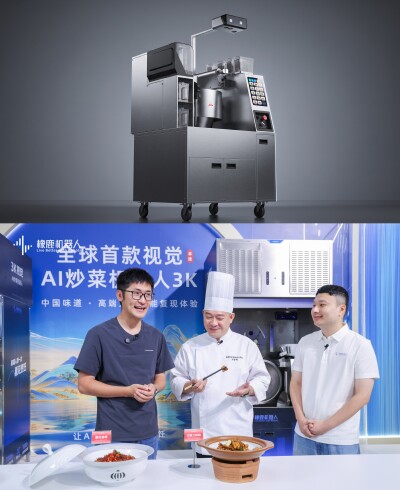
    BEIJING, CHINA – Media OutReach Newswire – 31 August 2026 – XiangLu Robotics on Sunday unveiled three major new cooking products at the 2026 World Robot Conference, headlined by what it said is the world’s first multimodal AI foundation model trained on data gathered from real kitchens.

    image for XiangLu Robotics

    The Aug. 23 launch pairs the model — called CookingMuse, or Chuqi — with the 3K Vision Cooking Robot and an embodied cooking robot named RoboCook, the company said. Spanning the understanding of cooking, sensory judgment and embodied execution, the three products lay out a complete technological path for AI to enter real kitchens and solve real problems, pushing robots from “demonstrating capabilities” toward “creating real value” — or, as the company put it, moving AI from “following recipes” to “understanding cooking.” Each represents Xianglu’s latest breakthrough in one of three fields: cooking AI, intelligent robots and embodied intelligence.

    The machines already operate at scale. Xianglu said its AI cooking robots cover nearly 350 cities in China and more than 20 countries and regions overseas, deployed with 3,000 brands, covering 13,000 stores, with nearly 600 million customer visits served to date. Its in-house AI recipe-generation system has accumulated nearly one million digital recipes of Chinese cuisine — and entering real kitchens at scale, the company said, has gradually formed its continuously evolving “robot — data — model — robot” loop.

    A foundation model for the kitchen

    Yang Jiancheng, Xianglu’s founder and chairman, described the multimodal cooking AI foundation as the underlying artificial intelligence system the company built for future kitchens — and the first multimodal cooking AI foundation model anywhere trained on real kitchen data, taking AI from “recognizing cooking” to “understanding cooking.”

    By fusing vision, cooking-process data and intelligent decision-making, the system means AI cooking robots no longer merely complete actions under preset programs but begin to understand what is happening to a dish and decide what to do next, Yang said. Xianglu called that a capability leap from “automation” to “intelligence.”

    Older machines relied on fixed timing, fixed heat levels, fixed ingredient loading and fixed procedures. But a real kitchen is no standard laboratory: the freshness, moisture content, size and temperature of ingredients — and the state inside the wok — are in constant flux. The truly scarce ability of great chefs, the company argued, is not repeating motions but continuously observing, judging and adjusting as conditions change.

    The real problem cooking intelligence must solve, Xianglu said, is not “how to make movements more precise” but whether, when reality changes, the machine still knows what it should be doing now.

    On that premise, CookingMuse connects multimodal perception, cooking understanding and dynamic decision-making, so robots look beyond “what dish is this” to understand “what state is this dish in, why did that state appear, and what should happen next.” Judgments once reserved to chef experience — whether sugar has caramelized properly, whether sauce has reduced to the target, whether meat has reached the right doneness — are being converted into capabilities AI can learn, understand and execute, the company said.

    More importantly, Xianglu is turning real kitchens themselves into the arena of AI’s continuous learning: robots enter working kitchens and generate real cooking data; the data trains the model; the model’s capabilities return to the robots, which enter still more real kitchens for continuous iteration. The resulting “robot — data — model — robot” loop means Xianglu’s edge no longer comes from any single piece of hardware alone, but from a cooking-intelligence system capable of continuously evolving in the real world.

    “Cooking has no standard answer”

    “Cooking has no standard answer — children need nutrition, the elderly need less salt, and people away from home miss the taste of their mother’s cooking,” Yang said. “So we let AI walk into real kitchens: to see every second of change in the ingredients, to see master chefs’ decades of experience, and ultimately to see each person’s needs.”

    The company hopes, he said, to use technology to break through the limits of space, time, social class and manpower — so that good food is no longer bound by geography, the flavors of generations past can be passed down digitally, and master-level dishes can reach ordinary households. “We hope that one day, no matter where a person is, how old they are, or where they come from, they can more easily get a truly suitable good meal,” Yang said. “Because what robots truly need to see has never been just a dish, but every person.”

    The 3K: a cooking robot with eyes

    The 3K Vision Cooking Robot, the second of the three products Xianglu globally debuted during the WRC, is the world’s first intelligent AI cooking robot to fuse AI vision with what Xianglu calls its “cooking brain” — in the company’s words, an AI chef that truly understands cooking. It is also the first product equipped with Xianglu’s multimodal cooking AI foundation.

    Beyond its intelligent brain, the 3K carries three 40-megapixel global-shutter industrial cameras that capture the wok at 30 frames per second, feeding a large AI model trained on data from millions of dishes, which judges the state of ingredients in real time. With the world-first foundation model and the newly added vision hardware, the company said, an AI cooking robot can for the first time both “see” the changes inside the wok and make autonomous decisions on that basis.

    The result, Xianglu said: a sharply lower cooking “failure rate” on complex dishes and lower ingredient costs for restaurant operators. The 3K moves dish quality control from after-the-fact inspection to in-process adjustment, substantially improving back-of-house efficiency and cost control at branded restaurant locations through a higher degree of unmanned operation — which the company called the biggest change the product brings to the industry.

    Legacy AI cooking robots ran on preset programs; whenever ingredient size, moisture content or thawing state deviated from the defaults, dish quality fluctuated, and problems often surfaced only once the dish left the wok. The 3K dynamically adjusts heating power, stir-fry duration, stirring speed and seasoning quantities at the millisecond level, intervening in real time during the cook — so that even inconsistent ingredients or a misplaced tray still produce a good dish. Its AI-supervision capability monitors store-level operational anomalies in real time, from ingredient cutting specifications, thawing state and actual quantities loaded, to tray position, calibration and dispensing anomalies, automatically identifying issues, generating reports and pushing them to operations to help stores standardize operations.

    In Xianglu’s product evolution, the 3K can smoothly complete a three-step leap: getting eyes, becoming an AI supervisor, and becoming an AI chef.

    The company put those capabilities on public display at the WRC, where — on camera — the 3K cleared two live challenges that, it said, traditional AI cooking robots cannot overcome. In the first, “The Disappearing Cup of Water,” two 3K machines stir-fried the same mapo tofu side by side; 100 grams of water not in the recipe was poured in mid-cook, and the system, detecting the change in the wok, re-assessed the sauce-reduction state and held until the wok’s state returned to target before moving to the next step. In the second, “The Wok Hei Is Back,” two machines cooked chili-pepper stir-fried pork side by side — one using meat that had not fully thawed, the other normal ingredients; the 3K recalculated its cooking plan in real time and closed the gap in heat control.

    Where people are, hot meals follow

    While the foundation model and the 3K are “invisible” technologies hidden in restaurant back-of-houses or built into the products themselves, the third launch of this event from XiangLu Robotics — RoboCook — is a new category consumers can see and touch.

    Built around embodied intelligent robots, it pairs a humanoid robot with dedicated cooking robots to link the entire chain from picking and placing ingredients to cooking to serving, letting AI not only understand cooking but enter the real world and deliver a complete meal. The product is a mobile, miniature unmanned back-of-house system: an end-to-end unmanned closed loop running from chilled storage of prepped vegetables through fresh cooking, bowl dispensing and serving, oil-fume treatment and equipment self-cleaning. It supports high-heat stir-fried Chinese dishes, Western pasta and fried rice, among other categories — effectively a small mobile unmanned restaurant that needs no chef, no exhaust ductwork installation and no fixed storefront.

    For the first time, RoboCook takes AI from a single piece of back-of-house equipment to the entire arc of commercial operation, with core features including genuinely unmanned running, dual-wok parallel cooking, end-to-end digitization and mobile deployment. For restaurant operators, end-to-end digital management no longer depends on store managers’ rounds or human experience.

    More importantly, the company said, dual-wok parallel cooking plus mobile deployment can absorb demand surges in peak dining hours while making real the idea that “wherever people queue for food, a RoboCook can be placed”: ready to use the moment it is towed into position at high-traffic events such as exhibitions, music festivals and sports events; freshly cooked hot meals inside tech parks, office-building clusters and university towns, with employees never needing to leave the premises; ready to sell wherever it stops at scenic spots, campsites and night markets. Compared with manned food trucks and automated food vending machines, Xianglu argued, RoboCook delivers not one AI cooking robot but a complete, mobile back-of-house capability that can rapidly replicate diverse, complex menus.

    The launch extends a push that began earlier this month: in early August, Xianglu’s fully automated AI beverage workstation, Xianka Fangzhou, made its appearance inside JD.com’s Seven Fresh Kitchen (Qixian Xiaochu) “24-hour end-to-end robot store,” bringing end-to-end intelligent production into beverage preparation for the first time. RoboCook now carries the same end-to-end unmanned capability from beverages to fresh stir-frying, and from fixed stores to more places, opening what the company calls a new product category — the mobile unmanned foodservice workstation.

    From Chinese kitchens to global kitchens, from understanding a dish to seeing every person

    What Xianglu presented at this year’s WRC was not just three new products but a cooking-intelligence system that keeps evolving from understanding to sensing to execution, the company said.

    “Robots enter real kitchens and produce data; real data enters the model, and the model begins to understand cooking; new capabilities return to the robots; smarter robots enter more kitchens and produce more, and more valuable, data,” Yang said.

    On top of that continuously evolving cooking intelligence, Xianglu’s products and use cases keep growing — from commercial AI cooking robots to the 3K and RoboCook, and on to future home AI cooking robots. Product forms and use cases will change, the company said, but the underlying cooking intelligence will not: understanding each brand’s dish-quality standards in restaurants, and different people’s taste, nutrition and dietary needs at home.

    At the same time, Xianglu is taking the capability into real kitchens in more countries and regions, where different ingredients, climates, cooking methods and eating habits will become new variables for the AI’s continuous learning. From understanding Chinese kitchens to understanding kitchens around the world, the company said it ultimately hopes to build a cooking intelligence that can continuously learn and understand global cuisine.

    But however many dishes robots come to understand or kitchens they enter, technology ultimately still faces real, individual people.

    At the launch, Xianglu screened its brand vision film “Seeing”: a middle-aged father who spent years away from home studying and building businesses, years after his mother’s death, uses AI digital technology to recreate, before his own son, the braised pork belly the boy’s grandmother once made. What the machine reconstructed was not just a dish, but a family memory that spans time.

    Hashtag: #XiangLuRobotics

    The issuer is solely responsible for the content of this announcement.

  • XcanMow Mix 2000 Robot Mower Makes Its European Debut at IFA Berlin 2026

    XcanMow Mix 2000 Robot Mower Makes Its European Debut at IFA Berlin 2026

    LiDAR and camera vision in place of the buried wire and the RTK antenna — Booth CCBB-154, 4-8 September

    BELIN, GERMANY – Media OutReach Newswire – 31 August 2026 – Xcanbot arrives at IFA Berlin 2026 with two machines on Booth CCBB-154: the XcanMow Mix 2000 robot mower, making its European debut, and the Mate X seated mobility robot. Demonstrations run daily, 4-8 September, at Messe Berlin.

    Where robot mowers fail is rarely the open lawn. It is the narrow passage beside the house, the corner under a tree where satellite reception dies, the front garden the machine cannot reach. Wire-guided mowers need a cable buried around the whole plot. RTK mowers lose their fix under canopies and beside walls.

    The Mix 2000 does without both. Its XcanSense system fuses LiDAR with camera vision to map the garden automatically on the first run, with no wire, no antenna, no base station and no boundary walk, and holds roughly 2 cm positioning accuracy in shade, beside walls and after dark.

    It passes through gaps as narrow as 55 cm, climbs 25-degree slopes, clears 5 cm obstacles and covers up to 2,000 m² at around 180 m² per hour. Cutting height runs from 30 to 60 mm. It works at 61 dB, carries an IPX6-rated body, and ships with 4G, GPS, a rain sensor, a swappable battery and multi-zone mapping as standard.

    “Every robot mower is advertised on the same flat, open lawn,” said Zhanbin Li, founder and CEO of Xcanbot. “We built the Mix 2000 for the garden with a narrow gate, a slope and a big tree. That is most gardens.”

    The Mate X shares the stand: a seated mobility robot sold as consumer technology, driving itself to a chosen destination while watching 180 degrees ahead. It appears next at REHACARE International 2026, Düsseldorf, 23-26 September, Booth 1A57-3.

    The Mix 2000 launches on Kickstarter later this year. Sign up at launch.xcanmow.com for launch notice and an early discount.

    Hashtag: #Xcanbot

    The issuer is solely responsible for the content of this announcement.

    About Xcanbot

    Xcanbot develops consumer robotics for everyday life, including the Mate X smart mobility companion robot and the XcanMow Mix 2000 robot lawn mower.

  • V Aesthetics Holdings Commits S$400,000 to Support Dogs in SOSD’s Care

    V Aesthetics Holdings Commits S$400,000 to Support Dogs in SOSD’s Care

    Largest single-year corporate commitment received by SOSD will support welfare staffing, improved bedding, enhanced nutrition and shelter upgrades for close to 200 dogs in its care.

    SINGAPORE – Media OutReach Newswire – 31 August 2026 – V Aesthetics Holdings, the operator of one of Singapore’s largest aesthetics group, has committed S$400,000 over one year to local animal welfare charity SOSD through a dedicated V Aesthetics Holdings Animal Welfare Fund. The commitment is the largest single-year corporate contribution SOSD has received to date.

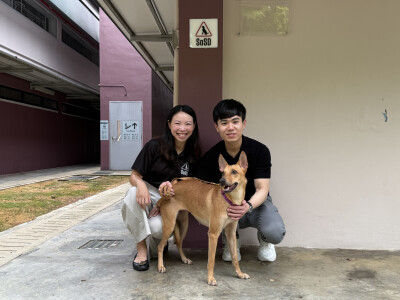
    Dr Ian Tan, Founder and Medical Director of V Aesthetics Holdings and May Ngu, President of SOSD with Mira, a dog under SOSD's care
    Dr Ian Tan, Founder and Medical Director of V Aesthetics Holdings and May Ngu, President of SOSD with Mira, a dog under SOSD’s care

    SOSD is a Singapore-based animal welfare organisation dedicated to the rescue, rehabilitation and rehoming of dogs. It currently cares for close to 200 dogs across its shelters and foster network, and relies on public support and partnerships to sustain its work.

    The partnership, formalised through a Memorandum of Understanding signed on 28 July 2026, will run from September 2026 to August 2027 under V Aesthetics Holdings’ ongoing “Care Beyond Aesthetics” initiative. Funds will be ring-fenced for initiatives that directly improve the welfare and quality of life of dogs under SOSD’s care.

    A Meaningful Commitment to Animal Care

    The S$400,000 commitment is equivalent to approximately one quarter of SOSD’s FY2025 expenditure of S$1.54 million. The funding is expected to support:

    • Two contract welfare staff dedicated to daily walking, care and rehabilitation of shelter dogs;
    • Around 150 elevated beds to improve comfort and reduce prolonged contact with hard shelter flooring;
    • Enhanced daily meals, including meat and cooked food;
    • Supplements for ageing dogs and those with chronic conditions; and
    • Shelter enhancements at The Animal Lodge and Jurong Island to create more comfortable living spaces.

    By directing resources to these practical areas, the partnership aims to improve the dogs’ day-to-day comfort, enrichment and overall wellbeing while they await adoption.

    A Personal Connection Behind “Care Beyond Aesthetics”

    The contribution marks V Aesthetics Holdings’ first major initiative under “Care Beyond Aesthetics”, with further community programmes planned. Animal welfare was chosen as the inaugural cause because of Founder and Medical Director Dr Ian Tan’s personal connection to dogs.

    “Animal welfare is personal to me. The first dog I ever adopted was a former breeding dog. Giving him a home showed me how much a second chance can change an animal’s life, and that experience has stayed with me ever since. SOSD gives that same second chance to dogs every day. I hope this fund allows their team to spend less time worrying about financial constraints and more time giving each dog the care, comfort and opportunity for a loving home that they deserve,” said Dr Ian Tan, Founder and Medical Director, V Aesthetics Holdings.

    The initiative reflects V Aesthetics Holdings’ broader belief that businesses have a role not only in serving customers, but also in contributing meaningfully to the communities in which they operate.

    “We are deeply grateful for V Aesthetics Holdings’ generosity and a commitment of this size changes how we can plan,” said May Ngu, President of SOSD. “A gift of this size goes a long way, but it doesn’t mean our need for public support goes away. Sustaining the shelter and caring for our dogs is an ongoing commitment, and we’ll continue to work hard to get funding for many years to come.”

    Supporting Better Daily Care at the Shelter

    Animal care in a shelter environment requires consistent attention, structured routines and sufficient manpower. The two additional welfare staff will support more regular walks, play sessions and enrichment activities, complementing the improved nutrition, bedding and shelter resources funded through the partnership.

    These daily efforts are especially important for dogs awaiting adoption. By strengthening both the basics and the quality of everyday care, the dedicated funding will enable SOSD to provide a more comfortable, stable and enriching environment for the animals it supports.

    Hashtag: #VAesthetics

    The issuer is solely responsible for the content of this announcement.

    V Aesthetics Holdings

    V Aesthetics Holdings is one of Singapore’s largest medical aesthetics group, operating 45 outlets in Singapore and 5 outlets in Malaysia offering medical aesthetics treatments, body slimming and hair restoration. The Group employs around 70 Singapore Medical Council-registered doctors and a team of approximately 250 consultants. Beyond its clinical work, V Aesthetics Holdings runs “Care Beyond Aesthetics”, its ongoing community initiative supporting causes beyond the beauty and aesthetics industry.

    SOSD

    Founded in 2011, SOSD (formerly known as Save Our Street Dogs) is a volunteer-supported charity dedicated to the welfare of Singapore’s street dogs, rescuing, rehabilitating and rehoming dogs to give them a second chance at life. SOSD currently cares for close to 200 dogs, including those in foster care, and operates shelters at The Animal Lodge and Jurong Island. It is recognised by NParks’ Animal & Veterinary Service as one of Singapore’s official Trap-Neuter-Rehome/Release-Manage (TNRM) Dogs Grant partners.

  • WisPaper Introduces TrueCite to Help Researchers Verify AI-Generated Academic References

    WisPaper Introduces TrueCite to Help Researchers Verify AI-Generated Academic References

    SINGAPORE – Media OutReach Newswire – 31 August 2026 – WisPaper has introduced TrueCite, a citation verification tool designed to detect and flag AI-hallucinated academic references as concerns grow over fabricated citations appearing in AI-assisted research and scientific literature.

    As generative AI becomes increasingly embedded in academic research and writing, a new problem is emerging alongside its productivity gains: AI can produce references that appear entirely credible but do not actually exist. In 2026, growing attention from researchers and scientific publications has highlighted how fabricated and hallucinated citations are making their way into papers and preprints, raising broader concerns about research reliability and academic integrity.

    TrueCite is designed to add a verification layer to AI-assisted research. Researchers can upload a BibTeX file to TrueCite, which validates the references against real academic databases and identifies citations that may have been fabricated by AI.

    The approach is straightforward: before relying on an AI-generated bibliography, researchers can verify that the cited papers actually exist.

    This verification layer is increasingly important as large language models become better at producing references that appear academically plausible. A fabricated citation may contain a convincing author name, journal title, publication year, and paper title — making errors difficult to identify based on appearance alone.

    For WisPaper, the growing concern around citation reliability reflects a broader shift in the academic AI market. While the first wave of academic AI tools focused largely on helping researchers search, summarize, and generate content more efficiently, the next stage is placing greater emphasis on whether the information behind AI-generated outputs can be traced and verified.

    TrueCite is part of WisPaper’s broader vision for a more trustworthy AI research workflow. Rather than positioning itself as another AI writing assistant, WisPaper is building an AI-native research workspace that supports researchers across literature discovery, deep reading, cross-paper synthesis, research-gap identification, hypothesis development, and academic writing.

    Across these workflows, WisPaper places particular emphasis on source traceability and verifiable academic evidence. As AI becomes more capable of producing convincing academic content, researchers need tools that help them distinguish between information that merely sounds authoritative and information that can actually be traced back to real research.

    WisPaper believes researchers should not have to choose between speed and academic rigor. Instead, AI research tools should make it easier to move quickly while preserving the ability to inspect, trace, and verify the evidence behind the work.

    TrueCite represents one step toward that goal. As academic AI continues to evolve, WisPaper expects verification to become an increasingly important part of AI-assisted research, alongside generation, analysis, and synthesis.

    In academic research, a particularly significant risk is not simply an obviously incorrect AI-generated answer, but a convincing one supported by a citation that does not exist. For WisPaper, the future of academic AI will therefore be shaped not only by what AI can generate, but also by what researchers can verify.

    Hashtag: #WisPaper

    The issuer is solely responsible for the content of this announcement.

    About WisPaper

    WisPaper is an AI-powered academic research agent designed as a full-stack research accelerator. It supports literature retrieval, analysis, experiment design, execution, and paper writing within a unified workflow, helping researchers manage complex scientific tasks more efficiently across disciplines. For more information, visit

  • Lee Kum Kee Sauce Creates Summer Internship Experience for Local Secondary School Students

    Lee Kum Kee Sauce Creates Summer Internship Experience for Local Secondary School Students

    Participating in the CMA’s “Business-School Partnership Programme” and FHKI & HKSTP’s “Innopreneur Experience Journey”

    HONG KONG SAR – Media OutReach Newswire – 31 August 2026 – This month, Lee Kum Kee Sauce (“Lee Kum Kee”), the century-old sauce brand, partnered with The Chinese Manufacturers’ Association of Hong Kong’s (CMA) “Business-School Partnership Programme” and the “Innopreneur Experience Journey” — co-organised by the Federation of Hong Kong Industries (FHKI) and Hong Kong Science and Technology Parks Corporation (HKSTP) – to provide a summer internship experience for four local senior secondary students. Hosted at Lee Kum Kee’s headquarters in Hong Kong, the programme was an opportunity to experience the company’s heritage and day-to-day operations first-hand, with guidance from employee mentors. The students gained insights into such aspects of the business as sauce manufacturing, research, quality assurance, brand promotion and sustainability, while also exploring future career possibilities.

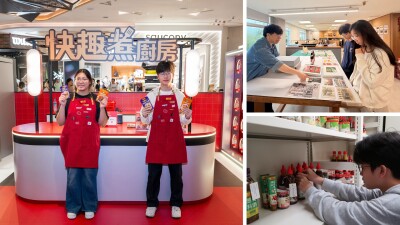
    Student interns participate in a variety of routine operations, such as going on site for a brand promotion event and restoring documents in the Sauce Archives.
    Student interns participate in a variety of routine operations, such as going on site for a brand promotion event and restoring documents in the Sauce Archives.

    The internship focused on three major experiences. First, students stepped into the Sauce Archives to assist with the restoration and preservation of historical documents, gaining a close appreciation of the brand’s history. Then, in the Testing Laboratory and Quality Assurance Laboratory, they undertook field observations and simulated testing under the supervision of technicians to understand how Lee Kum Kee maintains quality control at every stage from raw materials to finished products. During their innovation and technology experience session, students learned about the operation of Lee Kum Kee’s Oyster Sauce Smart Production Line and robotic arm, and tried their hand at 3D model sketching. Through these hands-on activities, they discovered how innovation and technology bring momentum and enhanced operational efficiency to traditional manufacturing.

    Field visits and hands-on experience help students gain a deeper understanding of the workplace environment, sauce manufacturing processes, and technological applications.
    Field visits and hands-on experience help students gain a deeper understanding of the workplace environment, sauce manufacturing processes, and technological applications.


    Reflecting on the experience, the students expressed that seeing smart manufacturing and innovation applications in the sauce industry first-hand gave them a fresh perspective on Hong Kong’s manufacturing industry. Their most memorable moment was when they participated in actual operations in the company’s laboratories and archives. The students were grateful for the guidance given by Lee Kum Kee staff, which helped them to understand why every single role and working step is crucial, as how the brand’s heritage has been shaped by an unwavering commitment to quality.

    Dodie Hung, Executive Vice President – Corporate Affairs at Lee Kum Kee Sauce, stated: “Lee Kum Kee’s value of ‘Si Li Ji Ren’ (Considering Others’ Interests) means that we have always been committed to creating diverse learning and growth opportunities for youth. We are active in industry-academic collaboration, and hope that the internship experience will help students broaden their horizons and discover their own interests and future aspirations. As Hong Kong advances new industrialisation and innovation-driven development, the integration of traditional manufacturing and innovation has become a general trend, and we hope programmes like this can help nurture future talent for Hong Kong.”Hashtag: #LeeKumKee

    The issuer is solely responsible for the content of this announcement.

    About Lee Kum Kee Sauce

    Lee Kum Kee Sauce is the global gateway to Asian culinary culture, dedicated to promoting Chinese culinary culture worldwide. Since 1888, it has brought people together over joyful reunions, shared traditions, and memorable meals. Beloved by consumers and chefs alike, Lee Kum Kee Sauce’s range of more than 300 sauces and condiments sparks creativity in kitchens everywhere, inspiring professional and home chefs to experiment, create and delight. Headquartered in Hong Kong, China and serving over 100 countries and regions, Lee Kum Kee Sauce’s rich heritage, unwavering commitment to quality, sustainable practices and “Constant Entrepreneurship” combine to enable superior experiences through Asian cuisine for people worldwide. For more information, please visit .

    About The Chinese Manufacturers’ Association of Hong Kong’s Business-School Partnership Programme

    Established in 1934, The Chinese Manufacturers’ Association of Hong Kong (CMA) is a non-profit-making industrial organisation. With some 3,000 member companies, the CMA is committed to promoting Hong Kong’s industrial and commercial development. Since 2009, CMA has launched the “Business-School Partnership Programme”, offering diverse career exploration and work experience opportunities to students from its two secondary schools during every summer holiday, while helping member enterprises fulfill corporate social responsibility. The programme aims to help S4 and S5 students understand the actual operations of different industries and experience the daily work of various roles through authentic workplace experiences, thereby discovering their own interests and career potential, enhancing transferable skills, and preparing them for higher education and entering society. For more details, please visit .

    About “Innopreneur Experience Journey” Co-organised by the Federation of Hong Kong Industries and Hong Kong Science and Technology Parks Corporation

    Co-organised by the Federation of Hong Kong Industries (FHKI) and the Hong Kong Science and Technology Parks Corporation (HKSTP), the “Innopreneur Experience Journey” was launched in 2022. This year’s programme brings together 22 companies from AI, electronics, Life and Health Technology and other sectors to mentor 59 students from 28 secondary schools through a series of I&T and new industry-related activities, including work experience opportunities, company visits, and networking and exchange programmes. The initiative aims to help students gain early exposure to the latest developments and opportunities in innovation and technology as well as Hong Kong’s industrial sector, gain first-hand exposure to real workplace environments and required skill sets, and inspire their interests and aspirations while broadening their perspectives for future career planning. For more details, please visit and .

  • 2026 ALUXE Unveils the New Disney Winnie the Pooh 100th Anniversary Wedding Ring Collection

    2026 ALUXE Unveils the New Disney Winnie the Pooh 100th Anniversary Wedding Ring Collection

    The Honey Halo Collection Captures a Heart-Stirring Journey of Love Through Two-Tone Diamonds and Honeycomb-Inspired Design

    SINGAPORE – Media OutReach Newswire – 31 August 2026 – The year 2026 marks the 100th anniversary of A. A. Milne’s original Winnie-the-Pooh, first published in 1926. Over the past century, the honey-loving bear’s gentle humour and sincere friendships have become a cherished symbol of companionship for generations. To celebrate this milestone, ALUXE introduces the new Disney Winnie the Pooh “Honey Halo” wedding ring collection, featuring an engagement ring and a pair of wedding bands. Inspired by honey, the collection transforms the geometric order of the honeycomb and the softness of flowing curves into a harmonious design language shared across all three pieces.

    ALUXE Disney Winnie the Pooh

    A Honey-Inspired Halo Illuminating a Love Made to Last

    In the Hundred Acre Wood, honey is always a source of anticipation. Yet its appeal lies not only in its sweetness, but also in the friends who are always there along the way. The Honey Halo Collection begins with this sentiment. Centred on the idea of a “Honey Halo,” yellow and white diamonds intertwine in layers reminiscent of sunlight passing through golden honey. Love does not exist only in its brightest moment; it gradually takes shape as two people draw closer, understand one another and learn to embrace their differences. Just as honey deepens in flavour with time, a relationship becomes all the more precious through enduring companionship.

    The engagement ring features a wreath of yellow and white diamonds encircling the centre stone and is presented in a Disney Winnie the Pooh velvet ring box. RSDW_06


    Disney Winnie the Pooh Engagement Ring | A Golden Halo Embraces the Centre Diamond, Elevating Life’s Most Meaningful Promise

    The Honey Halo engagement ring gathers an abundance of sweetness around its centre stone. A brilliant diamond sits at the heart of the design, surrounded by a layered wreath of yellow and white diamonds, like bees drawn towards the light and fragrance of a honeycomb. Yellow diamonds bring a warm, honeyed glow, while white diamonds capture and reflect the light, allowing golden tones to blend naturally into their brilliance—much like two distinct personalities finding their perfect place within a relationship over time. Pavé diamonds extend along the intersecting lines of the band. Viewed from the side, the elevated setting gently lifts the centre stone, as though preserving a single precious drop of honey. The promise it represents is given a tangible form: carefully held, and lovingly kept.

    The women's wedding band sets a single diamond within a hexagonal setting, with yellow and white pavé diamonds extending along the angled facets of the band. RGDW006


    Disney Winnie the Pooh Women’s Wedding Band | Honeycomb Geometry and Flowing Light Portray a Quiet Love That Endures Through Time

    The Honey Halo women’s wedding band continues the story with understated elegance. A single diamond rests within a hexagonal setting, translating the structure of a honeycomb into a crisp yet delicate detail. Yellow and white pavé diamonds extend along the angled facets on both sides of the band, resembling honey flowing gently along the edge of a vessel. The hexagonal form creates a defined silhouette, while the diamond lines bring a soft rhythm. Refined and subtle in everyday wear, the ring reveals delicate flashes of brilliance with every movement of the hand.

    If the engagement ring captures the moment two people choose to make a lifelong promise, the women’s wedding band represents every day that follows—not just a fleeting intimacy, but a steady and lasting sweetness built through the ordinary moments of life.

    The men's wedding band reflects the fluid form of honey through softly rounded lines, contrasting matte and polished finishes, and a single central diamond. RBDW006


    Disney Winnie the Pooh Men’s Wedding Band | Strength and Softness Come Together, Allowing Two Distinct Rings to Complete One Another

    The Honey Halo men’s wedding band echoes the fluid form of honey through softly rounded lines. Its clean, grounded silhouette brings together a fine matte finish contrasted with polished surfaces, allowing light to shift across contrasting textures. A single central diamond appears like a point of light held in place, adding a refined detail to the understated design.

    Placed side by side, the two wedding bands become a reflection of a relationship. The women’s ring draws on the structured geometry of the honeycomb, while the men’s ring follows the rounded fluidity of honey. One offers structure; the other preserves softness. They form a pair not because they are identical, but because each retains its own character while making the other feel more complete.

    Disney Winnie the Pooh 100th Anniversary Wedding Ring Collection | Carrying the Warmth of a Century-Old Story into Everyday Life

    For one hundred years, Winnie the Pooh has offered comfort in the simplest way: by reminding us to slow down and cherish the people beside us. Happiness does not always come from grand gestures. Sometimes, it is simply someone remembering what you love, or quietly staying close when you need them most.

    From the honey-inspired halo of the engagement ring and the two-tone brilliance of the women’s band to the gentle curves of the men’s ring, the Honey Halo Collection transforms the warmth of companionship into three jewellery designs made to be worn and treasured for years to come.

    Disney Winnie the Pooh 100th Anniversary Collection | Limited-Time Gift


    Limited-Time Gift with the Disney Winnie the Pooh 100th Anniversary Collection

    To celebrate the launch of the Disney Winnie the Pooh 100th Anniversary Collection, customers who purchase selected pieces during the promotional period will receive a Winnie the Pooh jewellery box. Designed for both display and storage, it offers a gentle, dedicated place to protect every treasured piece. The collection is now available at ALUXE boutiques across Taiwan, Hong Kong and Singapore.

    Explore the Honey Halo Collection https://www.aluxe.com/sg-en/news/WinniethePooh_sg_2026/
    Book a Boutique Appointment https://www.aluxe.com/sg-en/
    Hashtag: #ALUXE


    The issuer is solely responsible for the content of this announcement.

    ALUXE

    Founded in Taiwan, ALUXE specialises in bridal jewellery and operates 19 boutiques across Taiwan, Hong Kong and Singapore. Guided by its brand philosophy, “Crafted for Love,” ALUXE offers GIA-certified diamonds, transparent pricing and personalised services, accompanying every couple through life’s most meaningful milestones. © Disney. Based on the “Winnie the Pooh” works by A. A. Milne and E. H. Shepard.

    Press Contact | ALUXE

    Lala Yan, Brand Marketing | ✉️ lala.yan@aluxe.com

  • Taiwan outpaces asia average in workplace AI adoption: 96% of professionals use AI at work, skills confidence ranks highest across 10 markets

    Taiwan outpaces asia average in workplace AI adoption: 96% of professionals use AI at work, skills confidence ranks highest across 10 markets

    Nearly 8 in 10 professionals see AI as a career opportunity, not a threat

    • 96% of professionals in Taiwan are already using AI at work, above the Asia average of 93%; 79% believe AI will have a positive impact on their future career opportunities, compared with 75% across Asia.
    • 73% of Taiwan professionals are confident in their ability to keep their skills up to date as roles evolve, the highest level among the 10 Asian markets surveyed.
    • Predictive analytics and decision support (62%) is the most common AI use case among professionals in Taiwan, suggesting AI adoption is moving beyond content generation into analysis and decision-making.
    • 76% of Taiwan employers identify critical thinking and fact-checking as a key capability in an AI-driven workplace, compared with 64% across Asia.
    • The top AI concerns among Taiwan professionals are data misuse and confidentiality (54%) and accountability for AI-driven decisions (51%) — both the highest levels recorded across the 10 markets.
    • 53% of Taiwan employers expect at least a quarter of their workforce to require reskilling or upskilling over the next five years, highlighting the scale of workforce transformation ahead.

    TAIPEI, TAIWAN – Media OutReach Newswire – 31 August 2026 – AI has quickly become part of everyday working life across Asia. According to The Jobs of Tomorrow: How AI is Reshaping Work Across Asia, the latest research from Robert Walters, the world’s most trusted talent solutions business, 93% of professionals across 10 Asian markets are actively using AI at work, while 58% of employers have formally introduced AI into the workplace.

    Taiwan stands above the Asia average not only in AI adoption, but also in career optimism and confidence in adapting to changing skill requirements. 96% of Taiwan professionals already use AI at work, while 79% believe it will positively impact their future career opportunities. Most notably, 73% are confident they can keep their skills relevant as roles evolve — the highest level across all 10 markets surveyed.

    As AI becomes more deeply embedded in workflows, Taiwan’s workplace is moving beyond the question of whether to use AI towards how to use it effectively and responsibly — from applying AI to analysis and decision-making, to validating outputs and establishing clearer accountability. Robert Walters Taiwan notes that the most immediate impact is not widespread job elimination, but a reconfiguration of work: routine execution is increasingly supported by technology, while human contribution moves towards judgement, oversight and accountability for outcomes.

    Taiwan professionals show Asia’s highest confidence in keeping skills up to date

    While AI usage is consistently high across Asia, professionals differ significantly in how confident they feel about adapting their skills as work evolves.

    For Taiwan professionals, continuous skills development is becoming increasingly important as AI reshapes job requirements. 53% of Taiwan employers expect at least a quarter of their workforce to require reskilling or upskilling within the next five years, while 18% expect this to apply to more than half of employees.

    At the same time, 73% of Taiwan professionals are confident in their ability to continue learning and keeping their skills up to date, compared with 51–59% across the other Asian markets surveyed. This suggests that while the scale of skills transformation will be significant, Taiwan professionals are relatively confident in their ability to adapt.

    John Winter, Country Manager of Robert Walters Taiwan, said: “As AI continues to reshape the way we work, knowing how to use AI is quickly becoming a baseline capability. What will differentiate professionals in the future is their ability to continuously evolve their skills and turn technology into meaningful business outcomes.”.

    Beyond content generation: 62% of Taiwan professionals use AI for predictive analytics and decision support

    Across Asia, the most common applications of AI at work are content creation (47%), data analysis and insights (40%) and research (38%), reflecting AI’s growing role as a first layer for drafting, information gathering, data processing and baseline analysis.

    Taiwan appears to be more focused on analytical and decision-support activities. Predictive analytics and decision support (62%) is the most common application of AI among Taiwan professionals, followed by content creation (58%) and data analysis and insights (40%).

    The findings suggest that Taiwan’s workplace AI adoption is not only above the Asia average in scale, but is also moving beyond productivity support into analysis, insight generation and decision-making.

    Commenting on the shift, John Winter said: “As AI moves from content generation into analysis and decision support, the value professionals bring will also change. The real differentiator is not how quickly someone can get an answer from AI, but whether they can validate the information, apply business context and turn those insights into better decisions and outcomes.”

    Taiwan professionals are less concerned about job loss — and more focused on data, trust and accountability

    The impact of AI on jobs remains a major topic of discussion. In Taiwan, employers identify Administration & Business Support (45%), Accounting & Finance (28%), and IT & Digital Transformation (22%) as the functions most exposed to change as AI becomes more integrated into the workplace.

    Even as AI reshapes roles, Taiwan professionals remain broadly optimistic about its impact on their careers. 79% believe AI will have a positive impact on their career opportunities. While one in five professionals in neighbouring Hong Kong believe AI will negatively affect their career opportunities, concerns in Taiwan are less focused on whether AI will replace jobs and more on whether it can be used safely and responsibly. 54% of Taiwan professionals are concerned about data misuse and confidentiality, while 51% are concerned about accountability for AI-driven decisions. Both are the highest levels recorded across the 10 Asian markets surveyed.

    In parallel, employers are placing greater emphasis on the human capabilities needed to work effectively alongside AI. 76% of Taiwan employers identify critical thinking and fact-checking as one of the most important skills in an AI-driven workplace, highlighting the growing importance of human judgement. As AI becomes faster at providing information and answers, professional value is increasingly shifting from simply finding information to validating it, applying the right context and knowing when to challenge an AI-generated response.

    AI is reshaping today’s workplace as the “jobs of tomorrow” begin to take shape

    As AI adoption deepens, demand is growing for professionals who can combine technology understanding, data capabilities and commercial judgement. Robert Walters identifies three key areas of growth:

    • AI-adjacent and hybrid roles that bridge technical teams and business needs, such as AI Product Managers and AI Business Analysts.
    • Data, insights and transformation roles that turn AI-generated insights into measurable business outcomes, such as Data Analysts and Business Intelligence professionals.
    • Governance, ethics and trust-related roles that support responsible AI adoption, including AI Governance or Risk Managers, Responsible AI Leads and Data Privacy Officers.

    Together, these roles reflect a broader shift in talent demand, moving beyond pure AI engineering expertise towards professionals who can combine technology, data, commercial judgement and governance capabilities.

    John Winter added: “AI is already widely embedded in the way professionals in Taiwan work, and people are confident in their ability to keep learning as skills evolve. For organisations, the next step is not simply to introduce more AI tools, but to rethink job design, workforce capabilities and how AI is used responsibly. AI can improve efficiency, but sound judgement and the ability to turn technology into real business value remain fundamentally human.”

    Note to editor:

    About The Jobs of Tomorrow: How AI is Reshaping Work Across Asia

    Robert Walters surveyed close to 5,000 professionals and companies across 10 Asian markets — Taiwan, Hong Kong, Singapore, Japan, Mainland China, Malaysia, Indonesia, the Philippines, Thailand and Vietnam — during the fourth quarter of 2025.

    The research examines how AI is reshaping job content, skills requirements and career pathways across Asia, as well as the capabilities organisations and professionals will need to remain competitive as AI adoption accelerates.

    To access the full report, please visit: https://reurl.cc/be9MDo

    Hashtag: #RobertWaltersTaiwan

    The issuer is solely responsible for the content of this announcement.

    About Robert Walters

    Robert Walters is the world’s most trusted talent solutions business. Across the globe, we deliver recruitment, recruitment process outsourcing and advisory services for businesses of all shapes and sizes, opening doors for people with diverse skills, ambitions, and backgrounds. We help organisations find the skills and solutions to reach their goals and assist talented professionals to power their unique potential.

    The Taipei office specialises in placing candidates in the following specialities: accounting & finance, electronics & industrial, healthcare, human resources, IT & digital transformation, marketing, manufacturing, sales, semiconductors, software, supply chain, logistics & procurement.

  • Style3D Advances Fashion AI from Content Generation to Connected Product Workflows

    Style3D Advances Fashion AI from Content Generation to Connected Product Workflows

    MUNICH, GERMANY – Media OutReach Newswire – 31 August 2026 – Style3D connects generative AI, 3D technology, and structured product data to help fashion teams move from ideas to connected workflows across design, development, content, and production.

    One example is GarmageNet, developed by Style3D Research with Zhejiang University, Shanghai Jiao Tong University, and Zhejiang Sci-Tech University. Published in ACM Transactions on Graphics and presented at SIGGRAPH Asia 2025, it addresses a central fashion-AI challenge: connecting 2D patterns with 3D garment forms.

    The framework captures pattern outlines, 3D geometry, and sewing information in a unified representation. It can use text, sketches, images, patterns, or point clouds as inputs, then generate structured assets, reconstruct sewing relationships, and initialize physical simulation for design exploration, digital sampling, and editing. By linking inputs with patterns, sewing relationships, and simulation, GarmageNet illustrates how fashion AI can become part of a connected product-development workflow rather than remain an isolated image-generation tool.

    GarmageNet is supported by GarmageSet, a dataset of 14,801 professionally created garments. In the paper’s evaluations, GarmageJigsaw achieved 99.16% precision and 97.13% recall in sewing-point identification. GarmageNet achieved a 91.41% simulation-initialization success rate on 150 complex patterns, with reported inference time of approximately eight seconds per garment under the study’s test conditions.

    The research reflects Style3D’s foundation in deformable-object simulation, garment deformation, digital fabrics, and AI-assisted workflows. Style3D maintains a substantial, dedicated R&D organization, and had published more than 30 papers at conferences including SIGGRAPH, SIGGRAPH Asia, CVPR, NeurIPS, and 3DV.

    As of 28 July 2026, Style3D held 106 granted patents worldwide, including 58 invention patents and 12 granted in Europe and the United States, with a further 155 invention patent applications pending. It also operates an overseas R&D center in Germany.

    Style3D’s AI and 3D technologies are already being applied across diverse customer workflows. German menswear brand OLYMP uses Style3D and Assyst to connect 2D patterns, 3D simulation, visualization, and digital showrooms. The company reports developing styles in days rather than weeks, reducing physical samples and improving communication across design, sales, and production.

    As Style3D CEO Eric Liu told Just Style, “The most important development is the agent. We use agents to link different skills.” Style3D is advancing a connected fashion workflow in which AI agents can coordinate product data, 3D design, simulation, content creation, and production preparation—while human teams retain creative and operational responsibility.

    Hashtag: #Style3D

    The issuer is solely responsible for the content of this announcement.