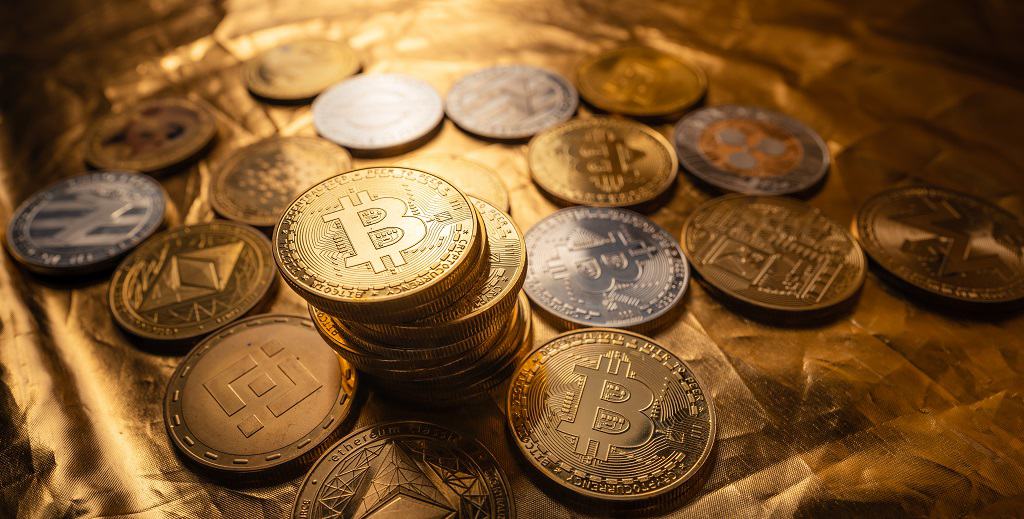
The COVID-19 pandemic outbreak shows an increasing trend of hackers and scammers stealing information and financial data since many business operations have shifted to global scale, and consumers have an increased dependence on online payment systems.
This is true for cryptocurrency or crypto investments. But why is crypto scams in Malaysia still on the rise despite countless news regarding it that have made headlines both worldwide and nationwide?
The possible reason behind this is the attractive and fast return of investment. Success stories of those who are lucky enough to succeed in this investment became the fascination for others to do the same.
After all, crypto investments do exist and are real. In Malaysia, the potential is massive as our financial industry is accelerating into Fintech and digitalisation as portrayed in the Bank Negara Malaysia (BNM) Financial Sector Blueprint 2022-2026 and Malaysia Fintech Report 2022.
Shariah wise, the legitimacy and the nature of trade plays a big role in determining whether an investment is permissible or otherwise. It is reminded that Muslims are prohibited to invest in something which contains element of gambling or an investment which involved speculation in its nature of trading.
The importance of the legitimacy and nature of investment, in relation to the works of Imam Al-Ghazali, was described in his Magnum Opus, Kitab Ihya Ulumuddin. Al-Ghazali mentioned that the understanding of Fiqh is crucial as the action taken in making investments are properly managed and done according to the Shariah.
Checklist On Crypto Scams In Malaysia
It is best to refer to the two checklists below before getting involved in any crypto investments, or you may expose yourself to crypto scams in Malaysia.
1. Checklists regarding investment and investing in crypto:
Study the investment model, risk, and return to see whether it is reasonable.
Muslims can check regarding the Fatwa given on cryptocurrency investments and if it is permissible, check further if there are any circumstances where a crypto investment is considered impermissible? There are many other pointers given by the Shariah Advisory Council (SAC) regarding Islamic investments.
When in doubt, you can check with the Compliance Officer from Bank Negara Malaysia, Securities Commission Malaysia (SC), Ministry of Domestic Trade and Consumer Affairs, Cybersecurity Malaysia or other relevant authorities regarding the licensing status of the local or foreign investment company or find out if there are any latest warning issued regarding cryptocurrency investments.
2. Checklists in identifying and avoiding crypto scams in Malaysia:
You could contact the National Scam Response Centre (NSRC) if you realised you had been scammed and provide the authorities with the relevant details.
To check whether the investment account has any police report record linked to its bank account number. This can be done through the website of the Royal Malaysia Police Commercial Crime Investigation Department, which is supported by Bank Negara Malaysia (BNM), Ministry of Domestic Trade and Consumer Affairs (MDTCA) alongside with the Ministry of Communication and Multimedia Commission (MCMC).
When the transaction amount is suspicious, the Bank officers might stop it for the purpose of due diligence. Be cautious if the Bank officer advice you not to proceed with the transaction without providing any specific reason. They usually have the basic background detail regarding the account you were transferring money to. If you had transferred the money and regretted it, you may call the Bank immediately to cancel it.
Although praise should be given to ‘financial advocates’ who hunt after scammers personally in real life, prevention is better than cure. In this case, it is better to be an informed investor. Hopefully the checklists above can prevent you from becoming a victim of crypto scams in Malaysia.
About the Author
Azah Atikah Anwar Batcha has an Accounting, Finance, Auditing, and Islamic Finance background. She has worked with two of the Big four firms prior to pursuing her postgraduate studies at University of Technology Malaysia (UTM), Kuala Lumpur. She can be contacted at aaabwrite@gmail.com
We have seen it before. The business looks legit and takes on paid orders from customers. Then the business suddenly folds and absconds with all the money. Thus, the name ‘fly-by-night’. It is one of the oldest and simplest ways to operate a scam. But people still fall for it.
In the murky world of cryptocurrencies, this takes on a whole new meaning with rug pull.
“If I Die, I Won’t Completely Die”
Gerald Cotten built a platform that was once the top destination for crypto investors in Canada and the first to be licenced as a money service business by the country’s anti-money laundering authority. At one point, it was processing 90% of crypto trading volumes there.
Everyone loved Gerald. He looked like the guy you’d hangout for drinks in a bar, with giggly boyish charms and a knack for big boys’ toys.
Barely one month after his wedding in a Scottish castle, he allegedly faked his death while traveling to Jaipur, India. He was only 30 years old.
It was two weeks before Christmas 2018. He and he alone had access to a billion ringgit’s worth of crypto belonging to over 76,000 investors!
The cause and circumstance of his death were mysterious to say the least. It launched a media and doxxing frenzy. He was seemingly healthy and died from what local doctors claimed to be Crohn’s disease – which is generally not fatal. It begged the question why he chose to travel without medical precaution.
His name was misspelt on the death cert, no autopsy was done, and the funeral was ‘closed casket’. His will was signed a few days before his death, naming his newlywed wife as the executor and sole beneficiary.
According to some internet sleuths, Jaipur is known to be a mill for fake death certs. Plastic surgeries are also on hand to give the undead a new face. Back home, investigators dug into Gerald’s books and found a massive Ponzi scheme, while investors sought to dig up his corpse to verify it was him. It became clear that he was in grave financial trouble (pun intended) during his final months with the motive to run.
This exit scam or rug pull is immortalised in crypto folklore and the fraud bible, and perfectly summed up by the quote from surrealist master Salvador Dali: “Si muero, no muero por todo” or “If I die, I won’t completely die.”
As we go deeper into the DeFi (decentralised finance) part of the cryptoverse, exit scams have become the weapon of choice. They contributed 37% of all crypto scam revenue in 2021, surging from 1% in 2020!
They are much faster: the average active period for each scam was 70 days in 2021, down from 192 in 2020. And they have a catchy new name: “rug pull”, like when the rug is quickly pulled from underneath and makes you fall.
The tactics used to rug pull investors are creative. In Compounder, the smart contract used for the investment was injected with a few lines of malicious code to drain out the funds. Investors could do nothing but watch and be left holding the bag.
In SushiSwap, the founder cashed out all his tokens at a high after successfully sucking billions in liquidity from a rival platform with a cloned blockchain protocol – this is called a ‘vampire attack’ as liquidity is the lifeblood.
In Squid Game (no relation to the Netflix show), the token created so much hype off a popular meme but flash-crashed when the founders pull out – from peak of US$2861 to a fraction of a cent, in 10 minutes! The token was intentionally designed with exit barriers which made it harder to sell and fueled market panic as everyone is reeling from the rug pull.
In more recent news, the fugitive owner of Thodex, the top exchange in Türkiye was arrested after a grand ~RM10 billion rug pull. He shut down the exchange by faking cyber-attacks, locked up the funds of 391,000 investors, and fled overseas with a USB drive. He faces up to 40,000 years in jail.
In the conventional world, what you see is what you get. But crypto is invisible. Which is all the more reason for you to know what you’re getting into. The vast majority of investors do not read the technical code before they buy crypto, not because they don’t want to but they don’t know how to.
Even with safeguards like security audits, timelocks, burnt keys, and what-nots, it is not failsafe. Many high-profile scams were audited by reputable firms! Worse, most of these scammy founders are anonymous – pushed proudly as a selling point rather than warning sign since the whole industry is founded by a phantom named Satoshi Nakomoto!
Only detailed forensics can tell you what went wrong. The real truth is found in the digital fingerprints. Even then, you won’t be completely safe from rug pull.
For those of you who tend to have FOMO (fear of missing out), you missed nothing. Instead, please enjoy the JOMO of not losing money as seen above. Crypto is not for everyone. There are other less risky products out there to aim your FOMO. It is better to invest in what you know or to stay within your “circle of competence”, as Warren Buffet would say.
Crypto is a great invention, but is in continuous iteration, and you can afford to wait it out until the products improve and mature over time. Do remember to make your due diligence or you could become a victim of rug pull.
Edmund Yong is the managing partner of Celebrus Advisory and appointed by MDEC as part of its Talent Expert Network (formerly known as Digital Expert Panel) for blockchain technology. Members of the public with similar experiences and who are looking for investigative and forensic services in digital assets from authorised representatives, or to support their litigation efforts, can contact the CEO of Imperium Universe at jason@imperiumuniverse.xyz.
The Securities Commission Malaysia (SC) and key agriculture agencies have discussed ways to address financing gaps faced by Micro, Small and Medium-sized enterprises (MSMEs) involved in the agriculture sector in a bid to boost the country’s food security.
Some 40 representatives from agencies and industry players this week attended a workshop called GROW® – a new collaborative programme under SC’s fintech flagship initiative, SCxSC.
GROW® is a collaborative effort by the SC and ecosystem partners to harness the potential of alternative fund-raising digital platforms to meet the needs of underserved players in strategic sectors, such as agriculture.
Equity crowdfunding (ECF) and peer-to-peer (P2P) financing were among the alternative financing mechanisms that were addressed during the workshop as potential ways to help fund the sector.
The SC Chairman Dato’ Seri Dr. Awang Adek Hussin stressed the importance of broadening access to the capital market for local businesses.
“We have seen how technology has democratised financing via digital platforms such as ECF and P2P financing,” he told the workshop. “We believe these alternative financing avenues have the potential to address some of the funding needs of the MSMEs in the agriculture sector as well.”
Senior officials from relevant ministries, agencies and key players in the agriculture ecosystem attended the one-day workshop. They include the Ministry of Agriculture and Food Industry, Federal Agricultural Marketing Authority (FAMA) and Agrobank.
At the workshop, participants called for greater ecosystem coordination to move the agriculture sector forward and strengthen the country’s food security.
They also emphasised the need for greater awareness on the role of alternative financing for the agriculture sector. They welcomed the development of more innovative financing instruments to cater to the diverse agro-business needs.
Following the workshop, the SC plans to have greater industry engagements with key stakeholders next year including organising a GROW® Fintech Conference. This will be followed by a nationwide GROW® roadshow to raise awareness on ECF and P2P financing as viable funding options for agro-based MSMEs to grow their businesses.
These programmes will complement ongoing efforts by the government to support alternative fundraising by agriculture businesses such as the Malaysia Co-investment Fund (MyCIF).
MyCIF, a public-private co-investment vehicle administered by the SC on behalf of the Ministry of Finance, has observed a greater uptake of ECF campaigns in the agriculture sector after implementing a special ratio of 1:2 in 2022 for this sector. MyCIF invests RM1 for every RM2 raised from private investors on the participating platforms by eligible issuers.
It has co-invested in a range of agriculture projects in upstream and downstream activities, including firms applying technology to improve agriculture yields and aquaculture production.
About the Securities Commission Malaysia
The Securities Commission Malaysia (SC), a statutory body reporting to the Minister of Finance, was established under the Securities Commission Malaysia Act 1993. It is the sole regulatory agency for the regulation and development of capital markets. The SC has direct responsibility for supervising and monitoring the activities of market institutions, including the exchanges and clearing houses, and regulating all persons licensed under the Capital Markets and Services Act 2007. More information about the SC is available on its website at www.sc.com.my. Follow the SC on twitter at @SecComMy for more updates.
Bored of the usual investment vehicles such as stocks, ETF (Exchange Traded Fund), bonds, unit trusts, robo-advisors, properties and the rest? Looking for something else?
With alternative investments, there are plenty of other options that you can consider to invest in. But just like any other investments, don’t just go diving in without first taking the time to understand what it’s all about.
Warren Buffett reminded us that we must not invest into something that we don’t even understand. Otherwise it will be just like gambling, rather than investing.
You have to know yourself first, know your risk tolerance, know how much capital that you can invest, whether it is a lump sum or you can invest every month. With this knowledge in hand, you will be able to sleep soundly at night. Because you then understand what investment is all about, the risks involved, and the potential return from the investment over the years.
Why Alternative Investments?
Normally an individual will start looking for alternative once he or she have exhausted the current options. Which usually means that the person have already invested in traditional investment vehicles such as the stock market, unit trusts and properties. It is mainly a strategy to further diversify their investment portfolio.
Or it could also be that the current investment options that are available could be the investment horizon is too long or the potential returns are not high enough. There’s no stopping you from going for alternative investments, as long as you know what you are getting yourself into.
One of the popular alternative invesments is peer-to-peer (P2P) financing. It allows entrepreneurs and small businesses to unlock capital in small amounts from a pool of individual lenders. It means that you can borrow money without having to go through a bank.
There’s also equity crowdfunding (ECF) which is an innovative form of alternative fundraising that allows small businesses to raise capital from the public. As you may have noticed the word equity here, this means that the investors will get some equities, which effectively makes them shareholders of the company.
Both P2P and ECF are alternative sources of funding that offer access to fi nancing to the micro, small and medium enterprises. They disrupt the traditional banking system by enabling businesses to obtain capital from a pool of investors via an online platform.
The key difference between P2P financing and ECF is that in ECF, you become a shareholder of the company that you invest in.
Of those considering alternative investments, cryptocurrency is currently gaining attention as the most popular asset class. It started with the birth of Bitcoin in 2009, and it has also been referred to as digital gold.
Last year Bitcoin’s performance outperformed every other asset classes and was the biggest winner, however this year, the crypto market comes crashing down. From its height of US$69,000 in November 2021, to the low of US$17,500 in June 2022, it is defi nitely not for the faint hearted.
Then who could forget how Luna (one of the top 10 cryptocurrency at the time) lost almost 100% of its value in just a few days time. It sent shockwaves through the market and this leads to panic all over.
We all heard of the concept, ‘high risk high return’. One of the reasons that alternative investments are gaining popularity, is on the high return aspect of it. But are you willing to take the risks associated with it?
High risk investments can be a part of your investment portfolio as it can help grow your wealth. However, it is crucial to understand the existing risks involved and decide whether it is aligned with your investment objectives. Finally, remember not to put all your eggs into one basket to ensure you minimise risk to your capital.
Do take note that your risk profile, commitments and requirements may also change throughout the years and you may want to adjust your investment portfolio and exposure to high risk investments accordingly.
With the rise of inflation and higher interest rates, it presents a challenge to investors all over the world. It is also challenging to find good investments these days.
Smart Investor spoke to Datuk Wira Ismitz Matthew De Alwis, Executive Director & Chief Executive Officer, Kenanga Investors Berhad to find out more about the challenging global equity markets as well as his thoughts on alternative investments.
Navigating The Challenging Global Equity Markets
Smart Investor: What are the challenges that you and the investors are currently facing, now that we are witnessing the rise of inflation and higher interest rates?
Datuk Wira Ismitz Matthew De Alwis: Global equity markets have been particularly challenging in recent times, due to rising inflation, monetary tightening and geopolitical conflicts. As the post pandemic re-opening has progressed across the globe in 2022, many have felt the effects of higher infl ation due to the clash between a rebound in demand and supply shortages.
The global equity market was further weakened by the Russia-Ukraine geopolitical conflict. In response, central banks have tightened monetary policy in an effort to control the rise in inflation. These factors have negatively affected asset prices, as liquidity is drained from the system and the cost of capital increases.
Globally, companies have been affected by high inflation rates through both rising cost and lower demand as consumers scale back on discretionary spending. Local companies were also impacted, especially those companies with export-based revenue and those that have imported raw materials. Additionally, rising risk aversion also dampens fund flows and general investor sentiment.
Generally, we have adopted a defensive portfolio stance in light of the challenging global equity market, with over-weights on sectors that have pricing power, resilient demand and will also benefit from higher interest rates. These include selected companies in the financials, consumer and industrials weakness as an opportunity to deploy capital to companies where long-term fundamentals still remain solid such as the technology sector.
SI: Is it still a good time to invest in stocks or unit trusts, despite the challenging global equity market? How to select the good ones to invest for long term?
IMDA: Unit trust funds remain an excellent choice of investment as it has a low entry point, provides diversification at a reasonable cost, and is usually expertly managed by licensed professionals. There is also an abundance of choice when it comes to unit trusts as investors can select their pick based on their risk tolerance and investment objectives.
More recently, due to the surge in interest towards impact investing, investors have also begun to divert their attention towards businesses that aim to generate specific beneficial social or environmental effects in addition to just financial gains.
Aside from that, factors such as fund strategy, asset allocation, and sector allocation will also come into play during the investment decision process. Ultimately, investors should perform their own due diligence on all the variables laid out in front of them, and make an informed decision to pick the investment tool that would best suit their own personal objectives.
SI: Why would anyone be interested to invest in alternative investment such as P2P, ECF and crypto?
IMDA: Alternative investments can offer investors several traits that are not commonly found in traditional investments such as equities or bonds. These typically include one or more of the following attributes: long term, high risk, or illiquid investments that are associated with higher returns; low correlation with traditional assets to deliver diversification benefits; inflation-hedging benefits; and scalability.
Alternatives will be able to encompass a wide range of asset classes, including private equity real estate and private equity infrastructure funds, secondary funds, and private debt funds. Just like the traditional counterparts, alternative investments also differ from each other from its volatility, risk, and returns.
Cryptocurrency is the current trending topic no matter the age group from millennials to experienced investors. It is especially popular due to its nature (low fees, unaffected by fluctuating interest rates and a global market place without geographical restrictions) and the rise of popular tech culture in the media. Its rising popularity can also be attributed to its innovative blockchain technology, which promotes extreme security for its users and offers unrivalled transparency in the case of its fully auditable and accurate ledger of transactions.
On the other hand, it is also widely famous for its outrageous volatility, as seen in the recent meltdown of TerraUSD (one of the world’s largest stable coins) which is seen as the less volatile variant of cryptocurrencies**.
My most repeated advice to anyone wanting to dive into any forms of investment is to always conduct their own research regardless of experience level, as it is their own money and their sole responsibility to know where it is being invested into. Tune out the noise in the market and focus on reputable news to formulate your own conclusions. Consistent self-education is one of the most powerful tools anyone can practice as it enables us to not solely rely on third-party information which may or may not provide us with a false sense of the market.
SI: What does Kenanga Investors have to offer in terms of alternative investments? Is this something that the company has yet to explore?
IMDA: As the alternative investments pioneer within the Malaysian market, we are able to offer sophisticated and diversified investment instruments for the modern-day investor. From the conservative to the more dynamic investor profile, our alternative instruments are an additional source of uncorrelated returns, the key to success being a delicate balance of the right manager and the right strategy in line with one’s investment profile.
For Kenanga Investors’ Alternative Investments, we do look at various opportunities and asset classes. E.g. private equity (direct investments into private companies), wholesale funds (launch of Kenanga Sustainability Series, with the most recent being the Kenanga Sustainability Series: High Yield Bond Fund, the Kenanga Global Unicorn Series and the Kenanga Global Multi Asset Fund) and asset-backed high-yielding notes.
From investment advice to bespoke alternative investment portfolio management, our expertise lies in alternative strategies with varying degrees of liquidity to complement or bolster an investor’s existing portfolio.
We are confident that our growing presence within the alternative space has added depth to the products and services offered to our investors, enabling both retail and institutional investors to capture market opportunities in a volatile environment.
SI: With so many legitimate investment schemes out there, why do you think people still fall for scams?
IMDA: Some people still fall for financial or investment scams regardless of the amount of legitimate investment schemes due to one crucial factor, lack of patience. They are often discouraged by the slow process of capital gains or accumulation of returns in legitimate investment schemes.
Therefore, when a get-rich-quick scheme presents itself, they often fall to temptation and suffer high amounts of losses to their valuable savings. These scams often exploit the human weakness of instant gratification where they promise quick and higher returns.
SI: What are some of your plans in the near future?
IMDA: Since 2021, we have steadily been releasing a series of funds that follows Kenanga Investors’ sustainable and socially-responsible investing roadmap such as the Kenanga Waqf Al-Ihsan Fund and our suite of multiasset products, Kenanga Sustainability Series. The Series was conceptualised in wake of the ever-growing demand for ESG adoption among companies by investors, especially post pandemic.
We are excited for the future as we will be introducing fresh new funds in the KSS line-up which will further provide our investors with a more robust portfolio stemming from ESG analytics which captures new opportunities aside from standard qualitative and quantitative metrics. In respect of this, we are also looking to enhance our Shariah-compliant investment experience by adding value-added products and services to stimulate the local impact investing landscape.
Alongside our intention to have more ESG products in our lineup, we will also be looking at converting existing selected funds (both global and domestic) to meet the threshold required to qualify as ESG relevant.
With multiple successful product launches, a dedicated team of professionals in deal sourcing and idea generation, and an intricate network of relationships with expert alternative partners all over the world, we have achieved what we set out to do, bridging the gap between retail investors and more sophisticated forms of products which were previously only available to institutional or accredited investors.
“Wen lambo?” or “Wen moon” are just some of the phrases that is quite common in the crypto world. It is a way to ask crypto investors on when they are going to get rich with their crypto investment. The misspelling looks cool in a way, but investment is actually serious business.
Crypto investment is considered to be a very high risk investment with a very high potential return, the question is do you really want to invest your hard-earned money into it?
Fancy yourself a return of 16,000% per year? It is possible with crypto investment, in fact there were two cryptos that managed to achieve this staggering return on crypto investment in 2021.
Imagine putting in RM100 in 1st January 2021, your crypto investment would be worth RM16,365 by 31st December 2021. Now imagine investing RM1,000, by the end of the year the crypto investment in The Sandbox will be worth RM163,653.
Sounds too good to be true, right? But that is what happened last year.
On 9th May 2022, the whole world was shocked when Luna comes crashing down – losing 99.99% percent of its value in just 48 hours. Who would have thought that Luna was once a top 10 cryptocurrency in terms of market capitalisation, would be brought down to its knees in a way that was unimaginable.
Well, that’s crypto for you. You can make big money, and you can also lose it all. We managed to talk to a few financial planners for their advise on crypto investment.
“I won’t advise my clients to invest into crypto investment unless they are higher risk investor and I see they are matured enough for this type of investment. Normally even if they are, we would work out a small portion of their assets or net worth to be invested in alternative investments, which is not more than 10%,” says Ng Ka Hoe, Founder of J Advisory, a personal finance academy.
Ng Ka Hoe, Founder of J Advisory
Before You Start Investing In Crypto
According to Ka Hoe, he would ensure that his clients understand the following before embarking on their crypto investment:
What are the alternative investments’ underlying assets?
What are the risk involved?
Have they invested into traditional investments such as property, stocks and unit trusts? If they haven’t, why not?
It is important not only for the financial planner to understand what makes their client’s emotional ticks, but it is more important for the client themselves to know and understand their own emotions, as it is truly the investor’s emotions that makes or breaks their investment.
Don’t Go All In With Crypto
Essentially, crypto assets are assets that are non-income generating but more for the crypto investment objective for capital gain. While it is undeniable that crypto currency has helped make many new millionaires, for this wealth to be sustained into the future, one may want to explore how this new wealth can be protected or kept, so that even if the value of the asset class reverses its course, this person will not be knocked back to the ‘pre-crypto’ life.
“Of course, it is perfectly fine if we remain having 100% of our wealth be invested in crypto assets. However, that will also mean we tie our future financial health and possibility in life to a single asset class,” opines Kevin Neoh, a licensed financial planner and NextGen Money Coach.
Kevin Neoh, licensed financial planner and NextGen Money Coach
Don’t Invest In Crypto
Meanwhile there are also opinions on the other side of the fence that warns against investing in crypto.
“Ask yourself when it comes to crypto, are you investing, trading, speculating or gambling?” says John Chan, CEO of YES Financial, a financial advisory firm.
John Chan, CEO of YES Financial
Apparently, we ourselves are confused with the terms. Trading or investing in crypto may incur a significant level of risk, even worse if you are using an unregulated or an unlicensed platform.
Conventionally, when a person is betting on horse racing, they will tell you all sorts of stories and logic with regards to horse riding. When a person is speculating on crypto, they may tell you all kinds of fintech and futuristic tech stories about blockchain or even the recent hot topic of Metaverse and NFTs to push up prices.
In conventional gambling, there are licensed casino and the underground operators. Why do some governments grant casino a license? The most common reasons are due to profit making, demand and the need to safeguard public interest through monitoring and control.
The Myth Behind Decentralisation
Everyone wants to have freedom, and nobody likes to be controlled. Some level of freedom is good but it would be a disaster if there is absolute freedom.
Imagine that you are living in a place with no government in power What would be the scenario?
“When there is no effective government, there are bound to be warlords or mafias controlling the area. Is it a safe place to stay then?” mentions John.
Instead, there would be chaos all over as everyone will be fighting for power.
Scarcity, Really?
Bitcoin is called Digital Gold as there is a maximum supply of 21 million Bitcoins. This means that Bitcoin has a unique feature of scarcity. This is where people seem to illustrate the scarcity of Bitcoin to Gold, as there is a limited supply of Gold available on our planet.
However, gold exist and play its role in civilization since ancient times as precious metal, jewelleries, commodity, storage of value, medium of transfer, barter trade, technology components, currencies etc. It is kept by government and central banks as reserves.
“Gold is a natural resources and is not created by human beings. Unlike cryptocurrencies that are created by humans and there are now more than 19,000 cryptocurrencies in existence,” shares John.
Ask yourself, is ‘scarcity’ real then?
Crypto As Legal Tender?
According to BIS Annual Economic Report 2018, for cryptocurrencies with decentralised trust model such as Bitcoin, each user needs to download and verify the history of all transactions ever made. This has the effect of slowing down transaction processing time, making it not scalable to facilitate day-to-day retail payments.
Compared to major international cards networks which is able to process 2,000 to 3,500 transactions per second, Bitcoin is only able to process 3.3 transactions per second.
“Most cryptocurrencies are not likely to be used as payment instruments primarily because they do not exhibit the universal characteristic of money. Not to mention the price volatility, vulnerability to cyber attack, lack of scalability, not a good store of value, payment method and medium of exchange,” John emphasized.
As of March 2022, 87 countries are exploring the issuing of Central Bank Digital Currency (CBDC), according to the Atlantic Council. While CBDC may adopt blockchain or Distributed Ledger Technology (DLT), CBDC differs from normal crypto as CBDC is legal tender and is backed by a claim on the central bank. Unlike cryptos that are not legal tender and have no intrinsic value.
Bank Negara Financial Sector Blueprint 2022-2026 stated that they are looking into CBDC through multiyear exploration, starting with Phase One via Project Dunbar.
Comparison of CBDC, stablecoins and non-backed digital assets. Source: Financial Stability Board (2020), “Enhancing Cross-Border Payment System: Stage 1 Assessment Report to G20”
Asset Allocation Is Important
At the end of the day, there is no one investment that suits everyone. It will be best if you diversify your investments into several asset classes, such as stocks, properties, unit trusts, robo-advisors, fixed deposits, bonds etc.
There should be a mixture of low risk investments with low returns, some in medium risk investments with medium returns, and some in high risk investments with high returns such as crypto investment. Because you never know with crypto, you can go big but you can also go home with nothing.
Malaysia became the first country in the ASEAN region to regulate P2P financing with the registration of six P2P operators with the Securities Commission Malaysia (SC) in 2016 – B2B FinPAL, Ethis Kapital, FundedByMe Malaysia, ManagePay Services, Modalku Ventures and Peoplender (Fundaztic)–which were fully operational by 2017. Since then, a few more operators launched their platforms including Cofundr in July 2020 and microLEAP in October 2019.
The question in our minds, it it worth investing in P2P financing?
What Is P2P Financing?
The Peer-to-peer (P2P) financing aims to address funding needs of SMEs to raise working capital or capital for growth. It is also recognised as one of the alternative investments that one can consider which come with different risks and rewards. Nevertheless, an investment still serves the same purpose; to gain profit and to hedge against inflation.
Number of campaigns and amount raised by year. Source: SC
Based on the data from 2017 until 31 March 2022 by the SC, the total amount raised from P2P financing was RM2.62 billion, with 35,499 campaigns and 32,925 investors. Thus, P2P financing has been a major contributor in helping SMEs to fund their current operation and expand their businesses.
Of the investors, mostly (86.7%) are retail investors, with 7.9% angel investors while high-net-worth (HNW) individuals and HNW entities made up the balance.
Type of P2P Financing investors. Source: SC
Smart Investor talks to several industry experts to find out more about P2P financing and investing in P2P financing.
Alternative Financing Through Crowdfunding
Paul Kuan, chief executive officer of Cofundr says that P2P financing is a platform to finance SMEs by raising funds via the internet. The investors will invest in a portion of the financing known as investment notes for a risk-rated return.
Paul Kuan, chief executive officer of Cofundr
He informs that in every P2P financing, there are three parties involved; the issuer (SMEs), investors and facilitator (the P2P platform such as Cofundr) to facilitate the entire P2P ecosystem.
“In layman terms, P2P financing is a form of alternative financing through crowdfunding which enables businesses to obtain loans directly from individuals, facilitated through a P2P financing platform, cutting out financial institution as the middleman,” adds Jeff Tan, acting chief executive officer of Peoplelender Sdn Bhd that manages the P2P financing platform known as Fundaztic.
Jeff Tan, acting chief executive officer, Fundaztic
“P2P operator facilitates businesses to raise funds from both retail and sophisticated investors through an online platform. Through the SC’s registered platform, an investor may invest in an investment note issued by businesses for a specified tenure with the expectation of a predetermined financial return,” Er Chiang Chuan, head of business development and operations for B2B Finpal, explains.
Er Chiang Chuan, head of business development and operations for B2B Finpal
He adds that with a sophisticated risk algorithm and extensive SME experience, B2B Finpal ecosystem helps to connect those underserved SMEs with investors for quick and easy financing access.
Percentage of issuers who have successfully and unsuccessfully raised funds. Source: SC
From 2017 until Q1 2022, 99.4% of issuers have successfully fundraised. It shows that the chance of getting successful financing through P2P financing is very high.
How can someone raise funds for their businesses through the P2P platforms? Will it be difficult with stacks of documents needed to be provided?
Tan briefly shares that for businesses, the general procedure is to ensure that they meet the required criteria in place by the P2P platform. When an issuer applies for funding, the P2P operator will evaluate the issuer’s eligibility, among others, by assessing its capacity to repay through credit history checks and analysis of any alternative data.
“As a fintech P2P platform, all onboarding procedures are being done via our website or mobile app. This applies to both issuers looking for financing as well as investors looking for investment opportunities,” Kuan responds.
“microLEAP also provides value-added services, such as Free Personal-Accident (PA) Insurance on the business Key-Person, online video tutorial on basic debt management and accounting in both Malay and English, as well as absorbing all Shariah-related fees,” adds Marzuki Musa, chief marketing officer of microLEAP.
Marzuki Musa, chief marketing officer of microLEAP
Each P2P financing platform may have different registration and application process. Er provides us the general overview of how they work:
1. Sign up on the P2P platform The issuers are required to provide business information and documents such as the nature of their business, contact details, financial information, directors and shareholders information, etc.
2. Verification and approval by the P2P financing platform The P2P operator will evaluate the issuer’s suitability, among others by assessing its capacity to repay through credit history checks and analysis of any alternative data.
3. Execute the issuer agreement Once the issuers have accepted the offer and executed the issuer agreement, their funding request will be published on the P2P financing platform and investors can choose whether or not to fund their business.
4. Receive funds The funds will be credited to the issuer’s bank account once it has reached the target amount set earlier during the application.
Investing In P2P Financing, Knowing Your Risk Appetite
Generally, for those interested in investing in P2P financing platform’s investment notes, they will first have to open an account with the respective platform and provide information such as their name, address and contact information for the operator to carry out identity verification and undergoes the Know Your Customer (KYC) process.
According to Er, the process is important to protect the investors and P2P operators from misuse of data and it is also required by the law. But what are the criteria or guidelines that an individual need to consider before investing in P2P?
Marzuki shares that there is always an element of default risk when it comes to investing in P2P financing market.
“Hence, microLEAP encourages all investors to diversify their risk by investing in as many investment notes as possible for a given amount of funds,” he says.
microLEAP is a Shariah-compliant and conventional P2P financing platform that provides alternative financing for MSMEs, that is funded by both investors who are looking for a Shariah-compliant yield as well as impact investment.
“P2P financing indeed provides higher returns than traditional investments, but investors take on higher risks as well,” Er concurs.
He adds that investors need to be aware that the returns from investing in P2P financing are not guaranteed. “The issuers may default on their P2P financing and might not be able to repay their monthly dues to investors. In the event of a default, some platforms may take legal action against defaulted issuers or work with them to propose alternative repayment solutions.”
Furthermore, risk appetite is different for every investor. It is tempting to go for higher-risk businesses that provide higher returns, but Er emphasizes the need to ask yourself on what you can stand to lose if they default on their payments.
“To further help investors, Cofundr uses Factsheet that contains the company background, years established, business sector, litigation status of the company and if the company has been blacklisted before.
However, at Cofundr, we practice a “noname” basis where we do not reveal the issuer’s name. This is to protect the Issuer’s confidentiality,” Kuan shares.
Compared to conventional investments such as equities, unit trust or fixed deposit, is there a safety net for investors that are investing in P2P Financing? Or is there a potential to suffer a total loss from capital? As such, how would an investor mitigate the risks?
“Diversifying your portfolio is by far the best strategy to minimise any risks or losses you may encounter in the long run. To diversify means to spread your investment across as many notes as possible in terms of number as well as type of issuers,” Tan says.
The biggest risk in investing in P2P financing is repayment or default risk where the issuer might not be able to repay the fund in full.
“To mitigate the risk for our investors, our credit assessment team is very selective with the issuers we onboard and we often make an arrangement such as guarantor arrangement, assignment of proceeds, post-dated cheques and others to rotect our investors. Investors can suffer losses when investing in P2P financing. Hence, we always advise investors to diversify their investment into several investment notes rather than focusing on just one,” Kuan further adds.
Going Forward
On what are the future plans for the P2P financing industry players, here are what they share.
“We aim to elevate the financial well-being of the communities through P2P financing. We also plan to offer more dynamic products for both the issuer and the investor. Recently, we launched our Shariah-compliant products, Takaful Contribution Financing and Islamic Invoice Financing to serve the Islamic market in the P2P ecosystem,” Kuan shares on the plans for Cofundr.
“We will also continue to educate the public about P2P investment and how it can become an alternative investment asset class for them to consider when building their wealth,” he adds.
“After establishing ourselves in several states in Malaysia, we will look to expand regionally. microLEAP’s plans to branch beyond Klang Valley and increase our presence in other states such as Negeri Sembilan, Johor, Sarawak and Sabah,” Marzuki informs.
B2B Finpal expects to see a V-shaped recovery as consumers start to spend again after the recent COVID-19 pandemic that has hit businesses very hard. “B2B Finpal will be ready to support the recovery of Malaysian SMEs,” Er says.
As for Fundaztic, Tan informs that they will expand their sales force to other states to make Fundaztic accessible to all MSMEs across Malaysia. Fundaztic has also expanded to Singapore since last year and they are now exploring further expansion to other countries as well.
Now that you know more about the P2P financing and have heard from the industry players, do you think that investing in P2P financing should be considered as one of your alternative investments?
Investment is a very hot topic among us Malaysians. If there’s one investment that has been picking up in recent years, it is peer-to-peer financing, or better known as P2P financing.
In a nutshell, P2P financing – a type of digital financing – is an alternative financing raised through crowdfunding that allows businesses to get financing from individuals via a digital platform. Smart Investor speaks to Chai Kien Poon, Country Head of Funding Societies Malaysia, the largest SME digital financing platform in Southeast Asia.
Inflation Is Rising Fast
Chai Kien Poon, Country Head of Funding Societies Malaysia
Investors and businesses alike are facing great challenges due rising inflation. Latest figures show that Malaysia’s inflation has increased by 3.4% to 127.4 in June 2022 from 123.2 in the same month of the preceding year. The Food Index has increased by 6.1% and remained as the main contributor to the rise in inflation during the month of June 2022. This results in a lower purchasing power and greater pressure to increase one’s income.
Concerns surrounding inflation are coupled with the heightened uncertainties brought forward by geopolitical conflicts and other global issues. Hence, investment diversification is more crucial than ever to maintain a stable portfolio.
“The P2P financing, or SME digital financing portfolios, are not publicly traded and hence, sheltered from daily market fluctuations. SMEs will still be making fixed repayments regardless of short term FTSE Bursa Malaysia KLCI movements or interest rate fluctuations,” Chai says.
With a variety of SME debt investments offered on digital financing platforms, it can cater to investors with different investment objectives and risk appetites. It is a win-win situation too, as investors will be able to directly support local SMEs needing additional working capital for further growth or meet cash flow requirements, and earn returns.
“Businesses can expect a more challenging period ahead, driven by persistent supply chain disruptions, inflation (rising wage and materials costs) and longer repayment cycle from customers. This has put pressure on margins (as cost increases while consumers lose purchasing power) and impacted cash flows,” says Chai.
To some extent, a rising rate environment also leads to higher monthly payments (for variable rates financing), adversely impacting SMEs’ overall expenses and pose a threat to their cash flow. Moving forward, lenders such as traditional financial institutions may also tighten their lending criteria.
Subsequently, this will lead to a larger group of creditworthy SMEs to be further underserved, or unserved as the already significant SME financing gap continues to widen during this critical moment as businesses return to their full economic potential.
Why Should Malaysians Invest In Digital Financing?
“Malaysians are more familiar with equity investments: stock market, unit trusts, etc. On Bursa Malaysia, there are about 1,200 publicly listed companies being traded,” shares Chai.
“In contrast, there are 1.2 million micro, small and medium enterprises (MSMEs) in the country, and a huge bulk of these numbers are always looking for financing opportunities to fulfill their business obligations and objectives.”
These underserved, yet creditworthy MSMEs turn to Funding Societies to seek tailored financing solutions for their businesses. They represent a large volume of potential transactions which investors can invest in, and receive the principal invested plus returns upon the maturity or repayment of the financing facilities.
To protect investors, rigorous rounds of background checks are performed based on proprietary evaluation matrices before approval for financing, while simultaneously raising the investment notes for investors.
As we are now in a period of heightened uncertainty, Funding Societies is constantly innovating to offer more investment products to meet the needs of investors’ investment objectives and risk appetite across business cycles.
Its recently launched Guaranteed Investment Notes (GIN) offer more consistent (albeit lower returns), where the non-repayment or default risk are guaranteed by an appointed guaranteeing entity instead of the investors themselves. This may appeal to investors having a more cautious outlook in the short to medium time horizon.
By having less disposable income, we will be more cautious with our investment – often looking for the diamonds in the rough. So, how well are the businesses being filtered before they are on-boarded onto the digital financing platform?
“When SMEs submit an application through the digital platform, they will be assessed through our Know-Your-Clients (KYC) process that identifies and validates the SME’s existence and business, and its proprietors or directors,” Chai explains.
Credit and risk assessment on an SME is based on a combination of factors which includes financials, nonfinancials, and behavioral data. A risk rating will then be generated for each SME. Only qualified SMEs will be placed on Funding Societies’ platform for the crowdfunding process. A
s for investors, the investments start from as low as RM100 per note. To help investors build a diversified portfolio, investors can limit their exposure to each SME on the platform via the website and mobile application.
Moreover, investors are also provided with a factsheet which they can refer to evaluate the investment opportunities further. These factsheets include information like tenure, paid-up capital, SME credit score, payment behavior, entity type, and number of guarantors.
Digital Financing Is Booming
Launched in 2015, Funding Societies has been doing very well and has since achieved a lot of success. Some of their notable milestones within this year include crossing the RM1 billion in financing disbursement in Malaysia, its multi-million Series C+ fundraise, its investment in Indonesia’s Bank Index, its expansion into Vietnam as the Group’s latest market entry, as well as its acquisition of regional payment solutions provider, CardUp.
Along with these accomplishments, Funding Societies Malaysia also introduced more new products including the Islamic Trade Financing and BizFund, an enhanced SME-focused term financing product. In terms of businesses, the digital financing platform saw more than 60% increase in MSMEs compared to the same period in 2021. During the same period, total disbursements also grew by more than 60% compared to the same period last year.
As for investors, in the first half of 2022, there was around 10% increase in investors compared to the first half of 2021. Over 60% of its investors comprise Millennials and Gen Zs, with more than 40% of the investors are based in the Klang Valley.
In just seven years, the platform has helped finance over five million business deals, with over RM11 billion in funding. What is even greater, Funding Societies’ default rate remains stable – between 2% to 3% – despite having to navigate the pandemic for the past few years.
Minimising Risks While Maximising Gains
Rainbow Chan
The ‘high risk, high return’ concept rings true when it comes to investment. But with technology on our side, here’s what existing investors have to say about digital financing investment:
“I wanted to diversify into a more convenient asset class, something which I can monitor using a device. After investing through Funding Societies, I find it to be a platform that empowers users to direct their own funds, minimise risks, while maximising the gains. Returns are predictable and stable, such as with the Guaranteed Investment Notes (GIN). Funding Societies is a great place to start your second stream of income without much hassle or big capital,” says investor, Rainbow Chan.
Getting The Much-Needed Capital Without Much Hassle
As for the SMEs, digital financing has certainly helped in getting capital in a much easier and faster way.
“We saw an increase in our sales during the pandemic and needed to increase our inventory to cater to these demands. Having been turned down by traditional financial institutions, we turned to Funding Societies for a term financing. We found the application process to be smooth and seamless and we were able to receive the capital that we needed to replenish our stocks quite fast,” say Abdul Hadi Wisman, Co-Founder & CEO of Sellection Sdn Bhd, a 5-year-old e-Commerce retailer selling imported branded handbags and leather accessories.
Looking For Guaranteed Returns?
Going forward, Funding Societies intends on focusing on providing more Guaranteed Investment Notes (GIN) for investors. GIN is Funding Societies’ first investment product that provides investors with guaranteed principal and interest returns on their investments.
Investors can start with a minimum investment amount of RM100 for a duration of between one to 24 months. GIN investors can enjoy net returns of up to 6% per annum before fees.
The platform is also looking to expand their offerings to include Shariah-compliant financing and investment opportunities. Following the launch of its Islamic trade financing facility in May, there were encouraging responses and high demand on the expansion of Shariah-compliant products, both from the SMEs as well as investors’ sides.
This is in line with the Islamic ECF and financing markets’ performance last year, which saw RM225.9 million being raised. For comparison, only RM1.5 million was raised through this avenue in the previous year.
For those on the lookout to diversify their investments and are considering alternative investment options, it is definitely worth taking a closer look at what digital financing has to offer. Just make sure you do your due diligence and understand the risks involved before diving in. Perhaps start small, just to get your feet wet, and take it from there.
While there are substantial views talking about crypto investment, especially views about cryptocurrency and blockchains are the future of financial services, disruptive fintech, potential lucrative returns and many more about the bright side the asset class.
However, what are the cons and risks, and should you invest in it?
Gambling, Speculating, Trading or Investing?
First and foremost, we must ask ourselves what are your objectives in crypto investment. Are you coming from the angle of financial planning? Which means that it serves as a tools to fit into a portfolio along your journey to achieve your financial objective such as retirement or child education.
Or, are you investing merely to earn fast money? Or, are you merely speculating. Speculating Trading is an active income and it merely cannot categorised as investment. Many people actually confused between trading and investing.
Between speculating and gambling, there are also many similar characteristics. Thus, in other words are you ‘investing’ into Cryptos for ‘gambling’?
In this modern world where public are generally getting more educated compared to the post-war era, there are least people going for the conventional gambling, but diverting into so-call speculative financial markets to ‘gamble’, yet seems above the class in eye of the public.
Conventionally, when a person is betting on horse racing, they will tell you all sorts of stories and logic in regards to horse riding. Hence, when a person is speculating on Cryptos, they may tell you all kinds of fintech and futuristic tech stories about blockchain or even the recent hot topic of Metaverse and NFTs.
In conventional gambling, there are licensed casino and the underground operators. Why do some governments grant casino a license then? Of course, there are many reasons, but probably few of the common reasons are due to profit making, demand and the need to safeguard public interest thru monitoring and control.
Would it be some similar reasons where many regulators or some financial institutions started to involve in Crypto business recently? Trading or investing in Crypto may incur significant level of risk, worst still if using unregulated or unlicensed platform.
‘Gambling’ is a bad habit across human civilization. Thus, one had to be aware that is he gambling, trading or investing.
Myth Behind Decentralisation
‘I like freedom!’
These might be the voice from many people especially the young ones. Indeed, everyone wish to have freedom. Some level of freedom is good for overall mankind living. However, would it be disaster behind ‘unregulated’ freedom?
Nobody like to be controlled. However, if you are living in a location which there are no government in place, what would be the scenario? When there are no effective government, there are mafia around. In another word, mafia may be controlling the area. Is it a safe place to stay?
Behind decentralisation, government may have great challenge to control their monetary policies. If we would imagine that our human body live because of blood as blood carries all the oxygen, nutrients etc to every part of our body in order to keep us alive while the brain is the regulator regulating the blood, then money is medium similar to blood that keep a country alive while the regulators act as ‘the brain’ to regulate.
Thus, every Central Banks and Government are working hard to keep their monetary policies in place and in control. Some may argue that blockchain technology in the Crypto can actually play the role of transparency and some kind of ‘self-governed’. Indeed, blockchain is a great technology for financial services. However, many people may be confused. Cryptocurrencies and Blockchain are totally two different matters.
As of March 2022, there are approximately 87 countries are exploring into issuing Central Bank Digital Currency (CBDC), according to the Atlantic Council. While CBDC may adopt blockchain or Distributed Ledger Technology (DLT), CBDC differs from Cryptos as CBDC is legal tender and backed by a claim on the central bank unlike Cryptos that are not legal tender and have no intrinsic value.
Bank Negara Financial Sector Blueprint 2022-202 stated that Bank Negara are exploring into CBDC thru a multi year exploration starting with Phase I via Project Dunbar.
Diagram : Comparison of CBDC, stablecoins and non-backed digital assets
Source : Financial Stability Board (2020), “Enhancing Cross-Border Payment System : Stage 1 Assessment Report to G20”
Crypto As Future Legal Tender?
According to BIS Annual Economic Report 2018, crypto currencies with decentralised trust model, such as Bitcoin, each user needs to download and verify the history of all transactions ever made. This has the effect of slowing down transaction processing time, making it not scalable to facilitate day-to-day retail payments.
Compared to major international cards networks which able to process 2,000 to 3,500 transactions per second, Bitcoin is only able to process 3.3 transactions per second. Most Cryptocurrencies are not likely to be used as payment instruments primarily because they do not exhibit the universal characteristic as money.
Due to price volatility, vulnerability to cyber attacks and lack of scalability, they are not a good store of value, payment method and medium of exchange.
Scarcity, Really?
People used to describe Bitcoin as Digital Gold as there are only a maximum capacity of 21 million coins in Bitcoin. Thus, it is said that Bitcoin has a unique feature of scarcity. Many people seems to illustrate the scarcity of Bitcoin to Gold.
There are limited supply of Gold in our planet. However, gold exist and play its role in mankind civilization since the ancient era as precious metal, jewelries, commodity, mean of storage of value, medium of transfer, barter trade, technology components, currencies etc. It is kept by government and central banks as reserve.
Gold are natural resources and does not created by human being. Thus, there are no other type of gold in existence. Cryptos are created by human being and there are more than 19,000 cryptocurrencies as to date.
Thus, ‘Scarcity’ is it for real then? Thus, it might not be accurate to compare cryptocurrencies to gold in terms of scarcity.
In short, one have to be clear about their objectives in investing into crypto. Is he or she gambling, speculating, trading or investing in crypto? Due to numerous uncertainty in regards to crypto market, one had to be very careful while placing their hard earned money into crypto investment.
About the Author
John Chan Ninyii FAR CMSRL BEng RFP ShRFP MBA PJM CEO of YES Financial Sdn Bhd Bank Negara Approved Financial Adviser Securities Commission Capital Markets Services Licensed Firm Email: john.chan@yesfinancial.co
A very simple definition of Financial Planning is the process of managing our resources to help us achieve our life goals. Now that we are in the cryptocurrency age, how do embrace crypto in our financial planning?
It is a process which we proactively look at our financial situation and determine the better routes which can allow us to use these resources to help us accomplish what we hope to have to call it a good life.
Many people seem to think that when we have got a financial plan done, we have done financial planning, and hence we can then on our way to become richer, and retire early, or sending our children to study abroad.
The truth is that financial planning is a process but not a touch-and-go activity that produces a document called financial plan. Life is full of changes, so any plan we make today will always be challenged or need to change in response to the actual situation in life.
Financial Wreck Caused By The Pandemic
For instance, no financial plan will have predicted COVID-19 and prepare everyone for the Movement Control Order (MCO) and all the consequences from having these shutdowns in the past two years.
Our money is one of the resources we have that can be used to help us accomplish our goals, and money itself is not the goal.
If our reason to invest in good deals or engage in financial planning conversation is to have more money, this reason itself invites more questions than being an answer.
“More money for what?”
“More money to do what?”
“Why do you need to have more?”
To have more, there’s a trade-off that we must accept.
More Work = More Money = Less Rest
For example, to earn more, one must work more, to work more, it could mean one has to let go of time for rest, or to not spend more time with loved ones, or not able to enjoy activities that they like.
It could also means taking more risk so that we have a potential higher return from our investing activity.
So, in our pursuit for more money, we may fare better if we adopt a big-picture view but not only focus on having more money.
Sometimes, we decide to delay, or postpone doing things we really want or hope to because we are afraid to do it. And often, it is due to our feeling of afraid we don’ that enough to ‘just do it’, or the fear of “cannot afford to”.
This is not abnormal, and I can totally understand this emotion. When we do not know how much we need for the rest of our life, how are we able to feel we have got enough, right?
A good financial planning process is one where we spend more time to understand the person, identify the values (what’s important for this person), then take a look at their money management habit and their net worth (what they have left after minus what they owe), then we can have an idea if this person will have enough money for the rest of their life.
What Are Your Life’s Goals?
This process helps us understand a few important answers, such as:
Do I have to reduce my spending today?
Should I get a side hustle to boost up my income today?
Do I have to take more risk on my investment?
Can I change my car or house without affecting my future?
Can I quit the job I hate and accept a new job with lower pay?
At what age may have a huge cashflow deficit?
At what point (or age) will I run out of money in the future?
If I lose all my investment money today, how bad will my future looks like?
Establishing a good financial planning process can help us to bring our future to the present, and by looking at this future we can assess what are the thing we do not like so that we can make the change to it today.
Imagine having to wait for 20 years only to find out that we will still run out of money at a certain age, versus knowing this scenario is likely to happen 20 years earlier and we have 20 years of time to change something, which route would you prefer to take?
Through proper financial planning, we get a ‘preview’ of our future today, but at the same time, we make some assumptions of what might happen, such as inflation, potential investment return, our spending and potential future income, taxes, etc.
Hence, one of the things we will be thinking about is where or how should we allocate our money, to what kind of asset classes. And nowadays, it is likely most people have heard of and are quite keen to understand where cryptocurrency or crypto assets can fit into their plan.
Dawn Of The Crypto Age
Before the emergence of crypto assets, people have allocated their savings to various types of asset classes like stocks, debts, some keep most of their savings in cash or cash equivalent, businesses, real estates, arts, collectibles, gold or silver, to name a few.
Some of the assets have a low risk and value tend to not fluctuate too much and are ‘predictable’, while some the value may deviate quite a lot, and are considered ‘risky’.
One of the key considerations in determining our asset allocation, is to understand if we need the investment to generate additional income, or to have the value increase in future for us to have ‘gain’.
Essentially, crypto assets are assets that are non-income generating but more for the investment objective for capital gain.
While it is undeniable that crypto currency has helped make many new millionaires, for this wealth to be sustained into the future, one may want to explore how this new wealth can be protected or kept, so that even if the value of the asset class reverses its course, this person will not be knocked back to the ‘pre-crypto’ life.
Of course, it is perfectly fine if we remain having our 100% of our wealth be invested in crypto assets. However, that will also mean we tie our future financial health and possibility in life to a single asset class.
Imagine a person putting all their savings for old age to the stock of the single company they work at, and over the course of years for whatever reason, this company went out of business, or the company’s business dropped a lot due to new competition, or innovation.
The above example is not just pure imagination, we have seen a few big company’s gone through such trajectory before. Will this person be better off ‘putting all the eggs in different basket’ instead of ‘in the only basket’?
It does not matter what asset classes we are thinking about, it seems that it is not a bad idea to limit our downside risk and avoid over-concentration.
What about people who have not experienced the explosive growth or have not invested in crypto assets before?
Diversification Is Key
Generally, crypto assets or digital assets are one new asset class for us to incorporate to our personal investment portfolio to achieve diversification beyond the common asset classes mentioned above.
Depending on your tolerance for risk, and your investment objective, you will then understand how expose you can be, just like on every other asset classes. A person who is conservative or cannot sleep well even with a small up and down may want to limit exposure to volatile asset class, regarding the potential upside, and vice versa.
For asset class that can have a large swing in value, non-income-generating, it is advisable that we limit our exposure and do not over commit our wealth to it.
However, if one decides to do so, it will be prudent to ensure that we have prepare sufficient savings that can offer us liquidity and peace of mind during challenging time in life, or when the asset value is not at a good level for us to make withdrawal.
It is also very important that people only invest into cryptocurrency via digital assets exchanges that are operated by operators approved by Securities Commission Malaysia [1]. This ensures your investment will not fall into schemes that are unregulated or hands of scammer.
Regardless of what we do with our money, it is important that we understand why we want to do certain thing, and how this fit into the overall big picture of our life. By having a proper asset allocation that can support our future and lifestyle, we can avoid overexpose to certain asset classes, or certain asset.
A good financial planning process is about setting a good foundation, and manage our risk, so that we can increase our chance of living a life we consider well lived.