Category: Cash Management

  • 3 Values Of Financial Planning: Here’s Why You Need To Start Early

    3 Values Of Financial Planning: Here’s Why You Need To Start Early

    Anwar reached out to me in 2018 as he needed help with his personal finances. As the only son in his family, he was the executor of his late father’s inheritance. His father passed away many years ago due to cancer, and he remembered clearly the financial drain from cancer treatment.

    34-year-old Anwar is a lecturer at one of Malaysia’s largest universities. His wife is a housewife taking care of their two children, aged 7 and 4.

    “Although my father’s death hit us badly, we were thankful that he did not leave us with massive medical bills. This is because our prudent father had a healthy emergency fund,” shared Anwar.

    Being the main breadwinner of his own growing family, he needed to prepare for such emergencies. Just like his father, he wanted to ensure that his wife and children are well-provided for in case anything happened to him.

    Anwar’s father was a banker and had taught his children about saving money. Anwar also has a keen interest in personal finance and investment, and had read books and attended a Do-It-Yourself (DIY) course from a financial guru.

    However, he found that the information was too overwhelming and didn’t know where to start with regards to his own personal finances. Having been approached by unit trust and insurance agents, he was wary as he recalled, “They were more interested in pushing their products for commission rather than to put a roadmap and direction for me to achieve my financial goals”.

    Here are the 3 values of a full financial planning.

    1. An Expression Of Love

    Anwar and his wife know how dire their financial situation will be if Anwar passes away prematurely. People tend to forget verbal reminders easily. But if it is written in the form of a will, wishes, hopes and dreams; it helps tremendously.

    Furthermore, the engagement allows him to translate his expression of love, his long-term and short-term goals into actions, and not just a wish. During our discussion, one of Anwar’s goals is to support his wife’s pastry business once his financial situation has improved.

    After the third year of our advisory engagement, Anwar manages to make his wife’s goal into a reality. (You can check it out on Instagram Pastreen; it’s really delicious)

    2. Aligning Strategy With Financial Goals

    We provided insights to help him map out the strategies to reduce the Debt-to-Service Ratio (DSR), ideal asset allocations for his financial resources and guidance on financial products he should consider getting with the time horizon he needed in order to achieve his financial goals.

    Since he was willing to start early, he will have more options and opportunities to optimise his wealth. As his financial planner, my role is to guide him with the options available so that he can take ownership in his financial planning by making an informed decision.

    Anwar now understands the importance of building a healthy cashflow, and how to lead his ideal life within his means.

    3. Financial Needs And Wants

    A common situation is the relationship between savings for building cash reserves and other goals in life such as buying an asset. Many are unsure if they are over-committing one financial goal at the expense of another.

    With a holistic financial plan, we can see how extra commitments will affect other financial goals. It helps to adjust our actions, weighing the pros and cons before deciding. Most importantly, it is a tool to effectively communicate your financial situations and life goals.

    Conclusion

    Anwar is a real-life story of “It is not about how much income you make, but how well you manage your income”. Without a roadmap and direction, we might spend unnecessarily and make poor financial decisions. Financial mistakes are painful.

    Similar to inflation, financial goals and financial freedom are a challenge to understand and to manage, because it is intangible. Only after acknowledging what an ideal life is, you can move on to support your goals in life.

    About the Author

    Saidah Asilah started her career as a graduate trainee with Securities Commission Malaysia. Then, with a deep interest in investments, she furthered her studies in MSc in International Business and Emerging Markets, graduating in 2013 from The University of Edinburgh, UK. She is a Licensed Financial Planner, CFP Professional & IFP Certificant and describes herself as a multi-talented adventurer with a positive impact to whomever she meets. She can be contacted at saidah@wealthvantage.com.my.

    We at Smart Investor and Wealth Vantage is committed to help you better manage your financials. Get a free consultation from an expert by filling in your details here: https://www.smartinvestor.com.my/SIxWealthVantage

  • IRB Tax Audits And Investigations

    IRB Tax Audits And Investigations

    The Inland Revenue Board of Malaysia (IRB) conducts tax audits to ensure that taxpayers have declared the right amount of income in their income tax returns in accordance with current tax laws and regulations.

    There are two types of tax audits that can be carried out by the IRB, namely, desk audits and field audits.

    Desk audits are conducted on the supporting documents requested by the IRB from selected taxpayers in relation to the taxpayers’ business transactions and income tax paid. As the name suggests, field audits are usually carried out at the taxpayers’ premises. However, during the Covid-19 pandemic, the IRB officers have been mainly conducting desk audits to comply with the standard procedures enforced by the Malaysian government.

    The period of review for the tax audit ranges from three to five years of assessment. Cases selected for tax audits are mainly based on risk assessment, third party information, specific industries targeted by the IRB, specific issues related to taxpayers, etc.

    A tax investigation is another approach adopted by the IRB to examine documents relating to taxpayers’ business and financial matters, including their personal documents.  While there is a limited period of review for tax audits, there is no limitation as to the investigation period, but it normally covers five years of assessment based on the IRB’s current practice.

    The modus operandi of the IRB investigation officers is to carry out an inspection visit to taxpayers’ business premises, residences, tax agents’ premises and other related premises. Taxpayers may be chosen through a random selection and computer screening process.

    The basis of selection of investigation cases includes risk analysis, insider information, intelligence information and information from other law enforcement agencies. During the Covid-19 situation, the IRB investigation officers have cancelled inspection visits. As an alternative, desk investigations which are similar to desk audits are carried out.    

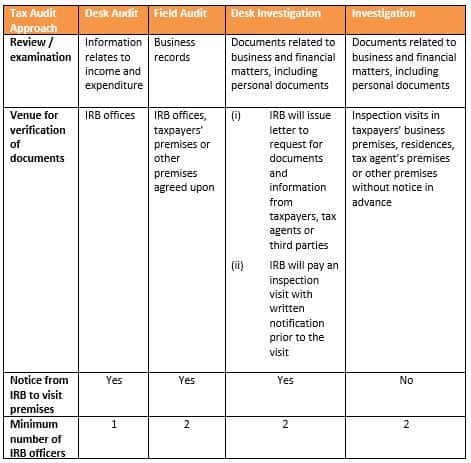
    A comparison between tax audits and tax investigations conducted by the IRB officers is as follows:

    Source: Crowe KL Tax Sdn Bhd.

    Taxpayers should be aware that a tax audit is merely an examination of records and does not imply that taxpayers have intentionally made errors in their income tax returns. Having said that, one should be prepared for a potential tax audit or investigation by keeping in mind the following information.

    Keep Sufficient Records For Seven Years

    Taxpayers are required to keep sufficient records for a period of seven years from the end of the year to which any income from the business or operations relates. This means keeping records in manual or electronic form to explain each transaction, that have enabled a true and fair profit and loss account and balance sheet to be prepared.

    Although tax audits or investigations may only involve examination of accounting records for a period of three to five years of assessment, it is mandatory for taxpayers to keep sufficient records to avoid a penalty of RM300 to RM10,000, or imprisonment of up to a term not exceeding 12 months, or both.

    Supporting Documents For Any Payments Made


    During a tax audit or investigation, the IRB officers will request for supporting documents for expenses incurred or payments made. Invoices, purchase orders, receipts or any proof of payment are essential to substantiate the expenses claimed in the tax computation.

    Otherwise, the expenses claimed will be disallowed for deduction.

    Payments Made To Non-Residents

    The payments made to non-residents such as royalty or contract payments may be subject to withholding tax. If the payment is subject to withholding tax but no withholding tax had been deducted and remitted to the IRB previously, taxpayers are not allowed to claim tax deduction for these payments.

    As such, taxpayers are advised to determine the withholding tax implications for any payments made to non-residents.

    Accruals Or Provisions For Expenses

    The deductibility of expenses depends on the nature of expenses. If an expense is an accrual amount (an amount set aside for a known expense) and taxpayers are able to provide the relevant invoices or other supporting documents, i.e. the final amounts are ascertainable, the expense will be allowed as a deduction. However, if the amount is merely an estimate and no supporting documents from a third party are available to prove the expense, the expense may be disallowed.

    Segregation Of Expenses Between Separate Business Sources

    If a business entity carries out several business activities which are distinctly different from one another and therefore treated as separate business sources for tax purposes during a year of assessment, taxpayers should be able to segregate the expenses incurred in respect of the different business sources with proper justifications.

    Taxpayers should take note that different expenses may be allocated by using different bases of apportionment to ensure that allocation of expenses between different business sources is fair and reasonable.

    Capital vs Revenue

    Tax authorities and taxpayers frequently have major contentions about whether a receipt is capital or revenue in nature. If a taxpayer has received a large lump sum of income during a year of assessment, it is important for the taxpayer to determine the taxability of the income received or obtain a tax opinion from a reputable tax consultant as to its tax position.

    An assessment of the income received based on the badges of trade or other tax principles may provide the relevant indications as to the taxability of the receipts.

    Allowance For Doubtful Debts Or Bad Debts

    It is common for business entities to make provisions for doubtful debts or write off bad debts if the trade debtors fail to settle their amounts owing due to various commercial reasons. Based on Public Ruling No. 4/2019, Tax Treatment of Wholly or Partly Irrecoverable Debts and Debt Recoveries, taxpayers are required to take reasonable steps to recover the doubtful debts or bad debts, e.g. issue letters of demand, reminder letters or other correspondences.

    Otherwise, the IRB may disallow the doubtful debts or bad debts recorded in the financial statements.

    Direct Expenses Incurred In Respect Of Other Income

    Taxpayers may receive other income in addition to the business income from their business operations. To gain maximum deduction, taxpayers may need to identify the direct expenses incurred to generate the other income as these expenses are not allowed for set-off against business income. Any adjusted loss (income less allowable expenses) derived from the other income is a permanent loss for taxpayers.

    Taxpayers will need to keep the supporting documents for direct expenses incurred because the IRB may verify these documents during a tax audit or investigation.

    If the above cannot be properly substantiated during an IRB’s tax audit, any adjustments made by the IRB would result in additional tax payable and penalties being imposed under Section 113(2) of ITA. Therefore, taxpayers should consult their licenced tax agents on the taxability or deductibility of income or expenses prior to the transaction taking place or prior to submission of income tax returns.

    About the Author

    Dr. Voon Yuen Hoong is an Executive Director of Crowe KL Tax Sdn Bhd.

  • Are Malaysian Millennials Really That Bad At Managing Money?

    Are Malaysian Millennials Really That Bad At Managing Money?

    The young and broke millennial was cast in the spotlight several months ago following comments from Finance Minister Tengku Zafrul who said that over 40% of millennials in the country are spending beyond their means. A slow but perilous path to financial ruin strewn with avocado toast, online shopping splurges and syrupy frappuccinos. 

    As a millennial myself, I’d be lying if I said I wasn’t slightly triggered by these headlines. I’d like to think that I’m a functioning young adult who is responsible. But I guess what irked most millennials was to be painted with a broad brush.

    Still, it’s something I ruminated over and asked if we’re really that terrible at managing our finances. And what I realised is that millennials as well as any generation really (e.g. Gen X, baby boomers) are products of their environment and the times they lived in.

    Our relationship with money goes beyond the personal, shaped by experiences that are distinctly our own. A millennial like myself who grew up around low interest rates and relatively benign inflation (despite our protests of price increases at the local mamak) will certainly not be conditioned to save as much as someone who grew up in 1974 when inflation was at its highest in Malaysia at over 17%

    If we go further back to a generation who lived through World War II and the Malayan Emergency, during times of great scarcity the need for savings was even greater. My late grandfather was frugal to a fault and never spent anything on himself beyond the bare necessities.  

    Debt Trap

    Whether anyone wants to admit it, millennials are also inheriting a fractured capitalist and hyper commercialised system that encourages debt and excess. Easy access to credit and ‘attractive’ low interest rates are pushing millennials off a cliff into a debt spiral with multiple credit cards, smartphone instalment plans and personal loans.

    There are obvious commercial reasons why credit cards and personal loans are pushed as much as possible because of the higher margins and fees. From an economic perspective, some thinkers also see the increase in household debt as positive to fuel consumption and growth.

    But for millennials growing up in the digital age being fed a constant diet of marketing ads and WhatsApp messages on the latest deals, it can be tricky terrain to manoeuvre. Financial language has evolved and marketers are more sophisticated in their targeting now.

    It is a stretch to expect all millennials with different levels of financial literacy to understand what a debt covenant or the base rate (BR) is, many of whom are unlikely to stand a chance against entrenched business and commercial interests.

    YOLO to FOMO

    Another stark difference that separates millennials from past generations is the ubiquity of technology and social media which has changed behavioural norms. The study of digital anthropology has been neatly summarised into two internet slangs over the years.

    First it was YOLO, which stands for “you only live once”. Now it’s FOMO or the “fear of missing out” which is that crippling feeling of anxiety you get from not being with the ‘in’ crowd.

    It sounds petty, but the significance of FOMO is more than just cultural. It has real meaning for millennials to be seen and accepted as well as intrinsic properties of validation. Friends would gawk and tell me how jealous they were about someone on holiday in France or the Caribbean. 

    Of course, keeping up with appearances is not something unique only to the millennial generation. However, it has certainly been magnified to pixel proportions where anything that is not picture-perfect is unacceptable.

    This often translates to bad money decisions that millennials end up spending to please others as opposed to for themselves. And you end up with unnecessary purchases without realising that most influencers on social media are sponsored by corporations with deep pockets.

    It is indirect, but cultural attitudes and how society views money is also shifting. It used to have a primarily utilitarian purpose as a medium of exchange to buy goods or services. But now we cannot even see money with the advent of online payments.

    So, what is money for now then? Unfortunately, years of generational baggage and past obsession with wealth has not led to great examples. Materialism and excess have become idealised models of success throughout the course of history.

    Money gets things done. And you do not need to be successful, but rather just look successful. These are deemed as accepted ‘realities’ of life where someone on the street is literally invisible if they do not have a cent to their name. Money makes you seen and noticed. This allure of wealth then leads many of us astray through rash investment decisions with promises of a quick buck. Even worse, some take the crooked path because they are too greedy.

    The world is changing but most millennials I know are adapting well. We are tough, savvy and have become more empowered consumers. Importantly, our values are also changing with a new generation of investors more conscious about aligning purpose and profits.

    Obviously, my experience with money is not definitive and can apply to anyone especially those living on the fringes. There are very real systemic issues concerning inequality, access and education that has to be considered towards policy formulation to ensure every young Malaysian gets a fair shot in life. But certainly, some empathy and understanding of the unique socio-cultural and technological changes that millennials go through is needed, as opposed to common wealth platitudes.

    About the Author

    Lee Sheung Un is a communications officer at Affin Hwang Asset Management. A millennial, he is still finding that balance between wealth, freedom and purpose. Views expressed are his own.

  • Tax For The 6 Common Investments In Malaysia

    Tax For The 6 Common Investments In Malaysia

    Most investors swear by the saying “Never put all your eggs in one basket”. They usually invest in various types of investment vehicles by putting more money into safer types of investments rather than the riskier ones. Previously, most Malaysians chose shares, unit trusts, real estates, fixed deposits and bonds as the main vehicle to grow their money.

    Over the last few years, a range of new investment vehicles have emerged in Malaysia, namely, cryptocurrencies, peer-to-peer (P2P) financing, robo-advisors and equity crowdfunding.

    As the saying goes, there are two things you cannot avoid in life – death and taxes. This article aims to explore the tax concerns when investing into certain types of investment vehicles in Malaysia, with a greater focus on these popular, emerging investment vehicles:

    1. Shares

    Over the shoulder view of and stock broker trading online while accepting orders by phone. Multiple computer screens ful of charts and data analyses in background.

    When investing in shares or stocks, investors may focus on investing either for dividend yields or capital gains. Any capital gains on shares are not subject to tax under the Malaysian Income Tax Act, 1967 (ITA).

    However, if the activity of trading in shares is frequent enough, the Malaysian Inland Revenue Board (IRB) may treat the gain as a revenue gain which will be taxable. Alternatively, dividends distributed by a company is taxed at the company’s level as a final tax. Hence, dividend yields are exempted from tax in the hands of the shareholders.

    2. Unit Trusts

    The return on investment for unit trust holders is usually in the form of income distribution or capital appreciation which is derived from the pool of assets supporting the unit trust fund. Generally, unit holders are subject to tax on their share of the total taxable income of the unit trust.

    The distribution received by the unit holders are net of tax. In this regard, unit holders are advised to check their dividend statements to identify the Section 110 tax credit. Unit holders are entitled to utilise this tax credit to offset against any income tax payable by them. In the event the tax credit exceeds the tax liability of the unit holder, the excess will be refunded to the unit holders.

    3. Equity Crowdfunding

    Happy young Asia businessmen and businesswomen meeting brainstorming some new ideas about project to his partner working together planning success strategy enjoy teamwork in small modern home office.

    Start-ups and small-to-medium enterprises often use equity crowdfunding to raise funds from the public. The term “angel investor” is usually related to equity crowdfunding. An angel investor is generally a high net-worth individual who invests in start-ups.

    In Malaysia, angel investors are accorded tax incentives in terms of a tax exemption of up to RM500,000 per year in the second year of assessment following the year of assessment in which an investment is made. Prospective angel investors are required to apply to the Malaysian Business Angel Network (MBAN) to ensure that the eligibility criteria are met and to accredit them as angel investors (see Public Ruling 12/2020, IRB).

    4. Cryptocurrencies

    The IRB has mentioned that all cryptocurrency transactions will fall within the ambit of the ITA. The IRB referred to Section 3 of the ITA where any gains from trading in cryptocurrencies will be taxed if it is revenue in nature for the investor.

    Therefore, gains made by occasional trading in cryptocurrencies should be viewed as capital gains and under the local tax law, capital gains are not taxed.

    With that said, the Malaysian tax authorities have recently updated its Guideline on Taxation of Electronic Commerce Transactions in 2019 to include digital currency under its scope of charge. This now effectively allows the IRB to collect revenues generated by cryptocurrency trading.

    With the absence of any provisions in the Malaysian tax law on taxing virtual assets, investors involved in digital currency activities are strongly advised to keep their transaction records and any relevant documents for seven years in case of a tax audit.

    5. P2P Financing

    Millennial Asia businessmen and businesswomen having conference video call meeting brainstorming ideas about new project colleagues working together planning strategy enjoy teamwork in modern office.

    P2P financing is akin to traditional borrowing with the exception of a financial intermediary such as a bank or financial institution. Therefore, the subject of concern in P2P financing will be the interest earned. So will the interest income be subject to tax? Yes, the interest earned is taxable for both Malaysian resident and non-resident investors.  

    What is the tax treatment on your P2P interest earned? While Malaysian resident investors will need to declare the interest earned as interest in their annual income tax returns, the P2P financing operators will directly deduct 15% withholding tax at source for non-resident investors.

    6. Robo-Advisors

    Certain investors prefer to simply let a third party handle the investment aspect of their money. This is possible with the existence of robo-advisory platforms which use algorithms to allow an investor’s portfolio management to be automated.

    Robo-advisor platforms typically invest in exchange traded funds (ETFs) which are a compilation of stocks, bonds and other investments. Furthermore, most robo-advisor platforms in Malaysia tend to focus on foreign ETFs.

    Investors should be aware that the dividend yields from trading in foreign ETFs may be subject to withholding tax depending on the jurisdiction of the ETF. The distributions received from the foreign ETFs will be exempted from tax in Malaysia as it is considered a foreign source of income.

    About the Author

    Shanthini Parama Dorai is a Tax Senior Manager at Crowe Malaysia PLT. Crowe Malaysia PLT is a member firm of the Crowe Global network of independent accounting and advisory services firms. She can be contacted at shanthini.dorai@crowe.my.

  • Tax Obligations For Self-Employed Entrepreneurs

    Tax Obligations For Self-Employed Entrepreneurs

    With the rise of self-employed entrepreneurs, here are some tax compliance obligations and common oversights.

    There has been a dramatic growth in recent years on the number of self-employed entrepreneurs in Malaysia. From 2017 to 2018 alone, this number increased from 2.57 million to 2.86 million, an increase of 11.3% (source: Department of Statistics, Malaysia). In 2018, the self-employed are the second largest category (19.3%) in the Malaysian workforce out of a total of 14.8 million working adults.

    Malaysia adopts a self-assessment system where taxpayers are responsible to determine their own tax liability and to submit their tax returns accordingly. As the number of self-employed entrepreneurs continues to grow in the Covid-19 economy, it is important for the self-employed to be aware of one’s tax obligations especially in the area of tax compliance. Failure to do so could result in penalties and additional tax payable.

    A self-employed person is an independent contractor or a sole proprietor. The self-employed consists of sub-contractors working in the trades or construction sectors to professionals such as doctors, lawyers, accountants, engineers, and management consultants. Recent iterations include freelancers working in the commonly named “gig economy” (such as e-hailing drivers).

    Here are some tax compliance obligations a self-employed individual should take note of:

    1. Registration of Tax Identification Number (TIN) and submission of tax return

    A self-employed individual should register for a TIN when the person has taxable income which exceeds a threshold of approximately RM28,000 per annum. A TIN can be registered at the nearest Inland Revenue Branch (IRB) branch or via e-Daftar at the IRB website.

    For entrepreneurs running a business, the income tax return (Form B) will need to be submitted by 30 June the following year (eg. Form B for the year of assessment 2020 is due by 30 June 2021*extended to 30 September 2021 due to Government movement control, IRB website)

    2. Estimate of Tax Payable

    Under the Malaysian tax regime, a taxpayer pays income taxes on a “Pay-As-You-Earn” basis. Where an individual taxpayer receives other than employment income, the IRB may issue a Form CP500 setting out the estimate of tax payable under an instalment scheme. The Form CP500 is determined based on the tax liability of the previous year. What should you take note of:

    • The tax estimate is six (6) bi-monthly instalments commencing from the month of March every year.
    • Each tax instalment payment needs to be made within 30 days from the due date.
    • The remittance slip (Form CP501) should be submitted together with the instalment payment.
    • Should there be a need to revise the tax estimate which affects the instalment amount, you must submit Form CP502 to the IRB not later than 30 June each year on the revision payments. The IRB will issue a Form CP503 if the application is successful.
    • The penalty for late payment of 10% shall be imposed on the unpaid amount if the tax instalment payment has not been paid within 30 days from the due date.
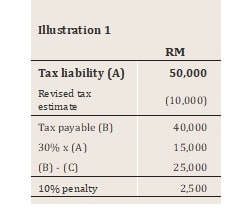
    • Where there is a difference between the revised tax estimate submitted and the final tax liability which exceeds 30% of the tax payable, the difference will be subject to a penalty of 10%.

    The following illustration shows the impact when an estimate of tax payable is inaccurate.

    3.Employer’s Responsibilities

    As an entrepreneur, you might hire employees to expand your business. In this case, you will be considered as an Employer for tax purposes. The responsibilities of an Employer are as follows:

    • The Employer is to inform IRB of any new employees within one month from the date of commencement of employment.
    • Submission of Return of Remuneration by an Employer (Form E) to the IRB on or before 31 March each year. <continues…>

    [ You may read the full article HERE ]


  • How to Make a Financial Plan for Myself As a Beginner?

    How to Make a Financial Plan for Myself As a Beginner?

    A good financial plan creates a roadmap or a guiding light for your financial life journey. It’s more than money and gives you an overall picture of where you stand financially and where you’re heading to. It should include financial details about your cash flow, savings, debts, investments, insurance, and any other aspects of your finances. Financial planning is an ongoing process that allows you to get your money and life under control so that you can reduce stress, fear, and worries about your future life. I think everyone should have one, and it can be done in your own style or with a financial planner. Remember, financial planning is not only for the wealthy or people earning a high income. You don’t need sophisticated software or tools to draw up your own financial plan; instead a blank piece of paper will help you to kick start the process. Start by listing down what you have (assets eg. savings account, EPF, investment account, investment property, business, etc.) and what you owe (liabilities eg. mortgage loan, car loan, personal loan, credit card, study loan, etc.), income (cash inflow) and expenses (cash outflow). This will give you a snapshot of whether you’re at a financial surplus or deficit, making it easier to work out a financial plan – covered in the next step.

    Setting goals for your financial plan

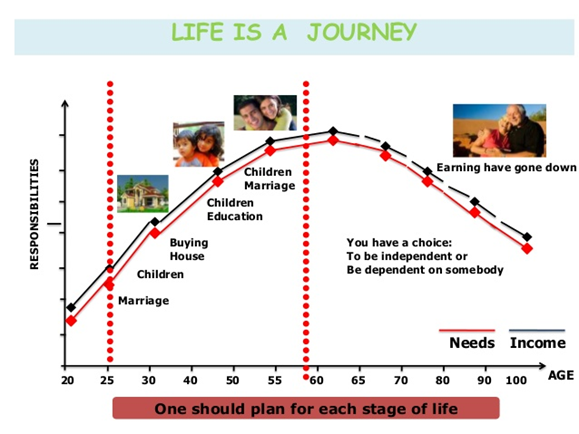
    This is where you decide how to design your own life. When crafting your own financial plan from the viewpoint of what your money can do for you, you’ll make saving and investing feel more intentional than overspending it. Your goals should be inspirational, measurable, and realistic – ask yourself where do you see yourself in five years’, 10 years’ or even 20 years’ time? It’s important because it gives you direction to achieve your financial goals at different life stages and it also influences how you plan your career as well. For example, there will be different needs when doing financial planning in your 20s, 30s, 40s and 50s. In your 20s, you might want to make sure you have sufficient emergency savings that lasts for at least three to six months so that in emergencies you won’t  be running on credit. Don’t forget to factor in insurance and ensure you get adequate coverage for personal accidents and a medical plan. In your 30s to 50s, you’ll likely be experiencing high commitments due to getting married, raising kids, preparing university tuition fees, and funding your retirement fund. As you progress from different life stages, you’ll need to regularly keep an eye on your allocations for investing and spending. If you know that these things will happen in your 30s to 50s, you may save and invest more in your 20s or prolong the retirement age from 55 to 60.

    Monthly budgeting for your financial plan

    The next step is to allocate your monthly budgeting – what is coming in and what is going out to understand your spending habits and only able to take a balance between spending and savings. It depends on where you live and how you spend – living in an urban area may result in spending more due to higher rent, eating out more etc. If you don’t spend more than half of your income, then you can start saving enough to fund your goals. Of course, you can’t own the whole world, but you can own the things that you value the most!

    Executing your financial plan

    This is all about allocating your resources or cash surplus to fund your goals. Saving and investing must come into play and you should consider the types of financial products, the risks, returns and liquidity, as well as understanding your risk tolerance. For example, if you set aside 15% of your gross income for long-term goals like retirement, you may consider investing in stocks or equity funds that aim for capital appreciation. For shorter goals like saving for an emergency fund, you wouldn’t put your money in a high-risk fund because you might need it quickly in an emergency. It’s best to have separate accounts for different funding purposes.

    Review your financial plan

    Lastly, review and monitor your financial plan regularly to ensure you exercise strict discipline with the flexibility to adjust accordingly in the future, especially when entering different life stages. It’s easy to talk and plan, but execution remains the most challenging task as we may not have the discipline to stay on track. So, reviewing, monitoring and fine-tuning acts as reminders of your goals all the time. It’s best if you can make it measurable so that you can reward yourself with small gift when you are on track!
      A good financial plan is not a beautifully written document that is presented nicely to you. It’s a tool to track your progress and help you reevaluate plans after a life milestone such as getting married, raising a kid, buying your first property, upgrading to a new car, preparing for a kid’s college fee, or building your retirement fund. When everything is handled, you can enjoy living your life. The small steps you are taking now will definitely have a huge, positive impact on your future.

    About the author 

    Eewen is a licensed financial planner and strongly upholds the belief that financial wellness is all about money bringing a positive impact into your life. She can be contacted at keaheewen@vka.com.my
  • What I Learned From a Free Financial Health Check

    What I Learned From a Free Financial Health Check

    Nowadays, the words “health” and “healthy” are very important. While the pandemic has taught many people different lessons, one of the most central ones is that it’s important for us to be healthy. Without good health, all other things may not take place, or be sustainable. The concept of being healthy isn’t just limited to medicines or the fitness industry – it’s also widely used in the financial industry. These days, there are plenty of marketing messages that have the phrase “Financial Health” or “Financial Health Check” in a big, hard-to-miss font! At a glance, it seems that we can get free financial health checks from different companies that offer different kinds of products. Life insurance companies offer this, banks may also offer this service, and in social media, we can see many different individuals, or product companies offering this, for free! As a curious person, I tend to try out new things. And the most memorable one, I’d say, is one by a reputable insurance company offering a financial health check. I logged in to the portal to do mine; a few questions were asked about my age, marital status and whether I have children. It then asked me to rate a few scenarios that “concerns me”:
    • Hospitalisation
    • In the event I’m diagnosed with critical illness
    • In the event I’m disabled
    • In the event I meet with an accident
    • If I’m concern about money for my children’s education
    After these questions, the next segment asked me to indicate how much insurance I have in respect to the areas mentioned above, followed by a question of how much of my current income goes to insurance premiums. Boom, the results came out and I was eager to see if I’m considered financially healthy! The results show me, based on the coverage amount I keyed earlier, compared to people like me at this insurance company, whether I had higher or lower coverage for the respective areas. It even comes with a recommendation of what I “need”. You get it – according to this financial health check, I need more insurance products! Just like this, am I supposed to say I’m financially healthier than most just because I have higher coverage on death and total permanent disability? Am I supposed to feel concerned just because “people like me” at this insurance company have a RM20,000 paid savings plan, but I have RM0; does that make me a bad father? Comparing our situation to “people like me” as defined by a company, isn’t a good way to assess if we’re financially healthy. If this is a good approach, we should start comparing our situation to people in other countries, societies, and at other offices. But what is a fitting benchmark for this? If this is considered a good approach, then if “people like me” in this country have a high amount of debt, should I start going all out and accumulating debt? I’m not sure how this makes any sense. It may make sense to some, but I’m still looking for a good explanation! Comparison is the root of all evil and how we lose the clarity we need to live our own life. It also helps in feeding insecurity, jealousy, greed and other emotions that don’t empower us to be a better version of ourselves. I think that if we want to understand if we’re financially healthy, it’s because we want to know if we have a good financial foundation. It’s like a table with four legs; we want to know if these four legs are strong enough, or whether it’s unstable and at risk of collapsing. We need this information because we care about maintaining the table and want it to continue being stable so that what’s on the table will be sustained and maintained. In life, what’s on my table will be what’s important to me. For me, this includes my family, what kind of difference I can bring to the society, whether I’m making a difference, and helping people be better than they were the day before. But, without those four legs supporting my table top, these three items may not be around for long. In the context of money and life, we can start from these four legs to find out if we’re financially healthy.

    What are these four legs?

    Emergency savings

    For a start, I’d suggest looking at your emergency savings. If your savings can support you during sudden spikes in unexpected expenses, or ensure you go through challenging times when you lose your main income without having to lose sleep, your leg is quite stable and strong.

    Are you saving enough?

    Assess if you’re saving part of your income. A person spending all their income today will probably have to always look for money. The day their income stops, they’ll have issues maintaining the lifestyle they lead. On the contrary, a person who saves too much of their income today may not be able to enjoy life at all. Striking a balance seems to be important since none of us know if we’ll get the chance to enjoy our savings 20 years later.

    Debt and commitments

    Take a look at your debt situation. Do you have a habit of carrying outstanding debts forward month to month? How much of your take-home pay are you using to pay off loan instalments? If this amount takes up most of your income, it means you probably have less freedom and flexibility to try something new, since there are weights dragging this leg down. This means you may not be able to put on more weight to your table top.

    Life goals

    Finally, how well have you been preparing to achieve your life goals? For instance, my family is important to me, and if I were to leave them too soon, how long can they continue with minimal disruption? Have I done anything to ensure my frozen estate can reach them as quickly as possible with minimal costs? Am I on-track to provide my child with the kind of education I want? By looking at your financial progress from this perspective, the benchmark you’ll use isn’t public, but rather what you want, and compared to where you are now. This allows you to fairly review the legs of your table. It’ll help you stay on-track and compare your current situation to your ideal goals instead of other people’s. The points above are the four basic areas I think we should review if we want to understand our financial health. Of course, there are more areas such as if assets are optimised or liquid enough, ways to legally reduce taxes, or reducing the fees and cost we pay when we grow our wealth, etc. But this is a good starting point. When was the last time you did a financial health check? By being part of the Money Warriors Community, you can learn how to make improvements to the four basic areas – save more, spend with peace of mind, reduce your debt, and be brave when you think of money.

    About the author

    Kevin Neoh is a NextGen Money Coach who works with people to help them transform their relationship with money to improve their lives with the money they have. Kevin can be contacted at kevin@nextgenadvisors.my and www.kevinneoh.my
  • Get Out of Credit Card Debt

    Credit card debt has been an issue for decades, especially among Malaysians. According to a report from the Malaysian Department of Insolvency in December 2019​, credit card debt made up 10% of bankruptcy cases from 2015 to 2019.

    A 2015 survey from the Asian Institute of Finance revealed that 47% of Gen Y respondents aged between 20 and 33 were engaged in expensive credit card borrowings​.

    These days, spending future money is so easy with credit cards where a simple wave will do or shopping online for your favourite items and only worrying about paying it later.

    Many people will continue to pile up debts and only make the minimum payment each month, making things worse. This leads to huge credit card debts that seem to last forever with no end in sight.

    I have a friend that used an extreme method to manage her credit card debt – she physically cut her credit card into two and never owned a credit card again.

    While not everyone will need to resort to such drastic measures, are there other ways to manage credit card debt?

    For me, a credit card is still a very useful financial tool that allows us to make payment for big ticket items or for emergencies where we don’t carry much cash. 

    Steps to get out of credit card debt

    1. Stop using your credit cards until you pay them off

    Credit card balances can grow rapidly due to very high interest rates of 15% to 18% (or more)!

    People often find themselves on a debt treadmill, struggling to make minimum payments and helplessly watch their principal balance grow each month. 

    Stop chasing your debt balances. Use cash or debit cards until your credit cards are paid off.  In this way, you can focus on paying down your balances and you won’t be tempted to spend more than you can afford.

    2. Get organised and prioritise

    If your credit card debt is spread across several different banks, get organised and prioritise payments on the credit card with the highest interest rate.

    Here’s a tip – the interest rate of local bank credit cards are usually cheaper than foreign banks. Review your total credit card statements and settle the debts one by one in order of interest.

    3. Never pay the minimum amount

    I found that many people are in the habit of paying the minimum 5% of their credit card statement each month.

    Do you know that all your statements clearly highlight the disadvantage of paying the minimum each month? However, many still choose to ignore it.  

    You can refer to the table below. If your outstanding debts are RM10,000 and you only pay the minimum amount (RM500), then the repayment period will be 88 months.

    However, if you pay a slightly higher amount (RM600), this repayment period shortens to just 20 months. Don’t ever underestimate the rate of compounding, especially when it comes to debt.

    credit card debt table - getting out of credit card debt

    4. Credit card balance transfer plan

    Do pay attention to promotions or offers from different banks or credit card companies. You may be able to transfer the existing balance on your current credit card to a new or unused credit card​.

    This can be used to consolidate the balance from multiple credit cards into a single credit card, making the debt much easier to manage. You also can take advantage of lower interest rates compared to your existing credit card interest rate, which means you’ll pay less in the long run.​

    5.  Personal loans from banks​

    This works by making full use of the difference in interest rates between the loan and the credit card. Current personal loan rates can range from 5% to 8% depending on the bank and terms and conditions.

    If you can get a personal loan at 5% per annum compared to 18% in credit card interest, then you can save up to 13% in interest. That’s a lot of savings!

    6.  Seek help from AKPK (Credit Counselling and Debt Management Agency)

    Many Malaysians may not know this but AKPK can help you better manage your debt. They’re a good resource for those who are straddled with debt and are worried about being unable to pay it off. 

    AKPK will help you to develop a budget, explore options for getting out of debt, and provide you with a customised action plan. They can also help rebuild your credit and offer financial advice for free!  

    I’d like to highlight and repeat that AKPK is FREE. There are some scammers out there using the AKPK name to charge fees to desperate people in debt. Do be careful and always call AKPK directly.

    7. Manage cash flow and spending habits

    Do some budgeting and manage your cash flow every month. There are many apps that help you to track your expenses so you can understand your spending pattern and look for ways to reduce or cut irrelevant purchases. 

    For example, reduce the frequency of dining out or going to the cinema, and set a limit to online shopping time.

    I’ve found that many young people have the habit of buying online everyday. They say “I’ll spend RM20 only” but that RM20 will add up to become RM600 each month.

    Online shopping is a great temptation and while some may say that it releases stress, trust me that piling up debts is much more stressful – it’s just that the stress comes later!

    After tracking your cash flow for a few months, you may find that your expenses always exceeds your income. If there’s really no way to reduce your spending, it means your income isn’t enough to sustain you.

    Instead of spending your free time relaxing, you may consider using this time to find a part-time job or even start an online business. When your income increases, then you’ll be able to pay off your credit card debts and start leading a better life.

    Let me borrow a phrase from Warren Buffet to make my point: “Don’t save what is left after spending; spend what is left after saving”.   

    I advocate this habit to all my clients by putting regular savings in unit trust so they can grow their money rather than complain that they’ll only save if they have money left after spending.

    By saving than spending, you won’t overspend because you’ve already saved the relevant amount.

    The saved amount will have many objectives such as emergency funds, retirement planning, etc, which means you won’t be using a credit card as your emergency fund and build up credit card debt.

    About the Author

    Andrea Siew is a financial advisor, approved and licensed by Bank Negara Malaysia and the Securities Commission Malaysia. She can be contacted at andreasiew@harveston.com.my

  • Setting your Short- and Long-Term Financial Goals

    When I graduated and first started my career, I always loved buying coffee at premium coffee outlets each day. It’s widely accepted and seen as a cool thing culturally, and such outlets are also a frequent hang out for friends or colleagues. I wasn’t thinking about my financial goals.

    In recent times, the very trendy and fancy boba tea and or yoghurt drink culture has led to multiple chains and outlets mushrooming everywhere in our country. It’s not uncommon to find entire streets or areas such as Subang Jaya dedicated solely to selling different brands of boba and yoghurt drinks.

    What could you do if you save the money used to buy a cup of coffee or boba tea each day? Imagine if you could spend or accumulate these savings over a period of a month, a year, five years, or more than 20 years?

    Here are some alternatives that you can consider:

    Short-term

    Charitable organisation

    You could make a difference in other people’s lives by helping those less fortunate than yourself. For example, for as little as RM65 per month, you can sponsor a child through World Vision Malaysia – a charitable organisation dedicated to working with children, families, and communities to overcome poverty and injustice. If there are other causes that you are passionate about, why not consider using part of these savings to donate to those organisations? 

    Fine dining

    If you are a food lover, why not consider celebrating a special event with your loved ones, family, or friend at a fine dining restaurant or a hotel buffet? Based on the above assumption, you may just need to save up for at least two months of drink expenses for you to enjoy such a meal. However, it’s likely to be a memorable experience instead of a routine afternoon drink!

    Holiday trip with your family

    Where are your favourite places to visit? I spent around RM3,000 in total for my family trip (with my wife and parents) to Kota Kinabalu two years ago. When interstate travel is allowed or after the Covid pandemic, you may consider using the savings that you put aside for over a year to bring your family for a holiday and spend quality time together.  

    Books or personal development course

    With RM250, you could purchase up to 10 books with one of the leading online book retailers in town. You can also consider using part of the savings to pay for a subscription to join organisations like Toastmasters for you to become a better communicator and better leader. Also, you may want to allocate the amount saved to invest in one or two personal development courses that will eventually help you to become a better person.

    “The best investment you can make, is an investment in yourself. The more you learn, the more you’ll earn” – Warren Buffett

    Medium-term

    Save for a wedding or downpayment for a house

    If you can save RM250 per month from your daily coffee/drink, you would have accumulated up to RM18,000 in a five-year period. This amount would be good for you to plan for wedding and or other medium-term goals.

    And if you saved the same amount over a 10-year period, you would end up with RM46,000 in addition to your other savings. This is likely to be sufficient to pay the downpayment for a house that you have been dreaming to own!

    Long-term

    Private Retirement Scheme

    Private retirement scheme is a voluntary long-term savings that allows individuals to save more for their retirement. By regularly saving RM250 a month or RM3,000 a year, contributors not only save up for their retirement, but also can take advantage of the tax relief available until 2025 of up to RM3,000 each year. 

    Assume an individual who is only 25 years of age saves RM250 diligently every month for over 30 years in a PRS fund that grows at approximately 8%. Taking compounding interest into account, he or she would have accumulated RM375,000 by the age of 55. This doesn’t even include any other investment vehicles, such as EPF and other savings that might have been invested or grown along the way.

    Saving money on a cup of coffee / tea may seem like a small amount after a single day or even over a month. However, over a long period of time, this amount can grow to become quite substantial, where there are different choices available to spend, to save or even to grow, whichever resonates with your financial goals in life. 

    The aim of this article is not to say that you can’t enjoy your coffee or drink once in a while, but to give you an idea of how decisions you make will have some financial implications in the future. It’s never too early to start thinking about financial planning!

    Assumptions used for illustrations mentioned above: 

    • A drink costs RM12.50
    • Saving for 5 days a week (1 month = 20 days)
    • 1 month = RM12.50 x 20 = RM250
    • Invest in a vehicle that grows with annual compounding of 8% per annum

    About the Author

    Goh Chee Yong is a Licensed Financial Planner under Capital Markets Services Representative License (CMSRL) and Bank Negara approved Financial Advisor Representative (FAR). He can be contacted at cygoh@imaxfinancial.com.my

  • Saving Towards Your RM1 Million Goal

    Lots of us would like to reach our RM1 million goal, but how do we do it?

    What is your MAGIC number to reach your first million?

    While it may seem like a number that’s hard to achieve, let’s break it down to see how it’s possible to do so with discipline, time and the power of compounding!

    When do you want to achieve your RM1 million?

    Keep a time-based goal in mind.

    For example, if you set a timeline of 30 years to achieve your first million, that will take you RM2,777.78 of savings a month.
    But, if you want to achieve it in a shorter time span of 10 years for example, it requires you to save a whopping RM8,333.33 a month without compounding. Therefore, keep in mind that time is your best friend.

    Longer time = lesser RM saved each month
    Lesser time = more RM saved each month

    So, the time is NOW! It’s just a matter of how much you want to commit to saving on a monthly basis.

    What is your targeted return rate?

    I’d like to introduce to you the rule of 72!

    Some of you may be asking what this rule is so allow me to explain.

    It’s a fast track to calculate how long it takes to double your money with a fixed interest rate without using a financial calculator.

    How does it work?

    For example, if you have RM100,000 in a fixed deposit that yields 3% interest, how long does it take to double your money?

    Simply take 72 / 3 = 24. This means your RM100,000 will take 24 years to become RM200,000. If you were to get an interest rate of 5%, 72 / 5 = 14.4 years to double your money.

    Below is a table with some examples of the rate of return that will affect the amount of years needed to double up. The higher rate of return, the faster you’ll achieve your goal of RM1 million.

    Rate of Return Years it would take to Double Up
    3% 24
    5% 14.4
    8% 9
    10% 7.2
    15% 4.8

    For example, RM100,000 at a rate of return of 15% per annum will accumulate as per the table below. This means it will take 20 years to reach RM1.6 million!

    Year Amount (RM)
    1 100,000
    5 200,000
    10 400,000
    15 800,000
    20 1,600,000

    How much would I need to save each month?

    Let’s use an example of 8% return per annum.

    This table below shows that the more money you set aside, the faster you can achieve your RM1 million.

    If you were to increase your savings from RM500 to RM1,000 a month, you can achieve your first million eight years faster!

    Monthly Savings Years to RM1 Million
    500 33
    1,000 25
    2,000 18
    3,000 15
    4,000 12
    5,000 10
    10,000 6

    Summary

    Ultimately, it doesn’t matter if you’re 10 years or 30 years away from your RM1 million target. Take some time to think of the three steps below and apply the rule of 72 to it.

    1. When do you want to achieve your RM1 million?

    2. What is your targeted rate of return?

    3. How much am I saving monthly?

    With the above information now set in stone, you’re now able to clearly plan your destination and search for a vehicle or investment products that are able to drive you towards your goals.

    Saving as much as you can now will help you to reach your first million as soon as possible.

    The more time you let your money grow, the less you’ll need to set aside each month, and this in turn will mean you can accept lesser returns to reach your designated amount and goal.

    While lesser returns may not sound attractive at first, it also means you don’t have to expose yourself to much market risk and simply let time do the work for you.

    As the saying goes, better late than never.

    So keep in mind that it’s never too late to start saving now and I hope this will help you to achieve your goal with more clarity and direction!

    About the author 

    Nick Lim is a licensed financial planner under Capital Markets Services Representative License (CMSRL) and a Bank Negara-approved financial advisor representative (FAR). He can be contacted at nicklim@imaxfinancial.com.my