Category: Enterprise

  • Renting VS Buying: When You Should Rent And When You Should Buy

    Renting VS Buying: When You Should Rent And When You Should Buy

    Renting vs buying is one of the hottest topics around town. This is for those who can’t decide whether to purchase a house in 2023 or keep renting until you can afford a home!

    Purchasing your own home or property is one of the biggest achievements in life. The concept of putting a big amount of money into such an asset is overwhelming, and it is something that requires careful consideration.

    Economists anticipate a contraction in the global economy in 2023, although most economies worldwide have largely returned to normal operations since the COVID-19 epidemic.

    It’s also important to consider the costs associated with purchasing a home, which include mortgage payments, stamp duty, legal fees, valuation fees, mortgage insurance (MRTA), and real estate agent fees.

    Yet, on the other hand, like most Malaysian millennials, you are probably sick of paying a sizable portion of your monthly rental income. And wouldn’t it be lovely to own your home, which could lead to a future period of strong capital growth?

    Read: Is Malaysia Property Still Worth To Invest In?

    Nonetheless, there are several grey areas in the renting vs buying decision. In the end, everything relies on the situation and future goals of the individual.

    Did you know that based on the recent findings by National Property Information Centre (NAPIC), Malaysia’s median house price is RM320,000? But as you can see from the photo below, there is a huge median price difference across states in Malaysia.
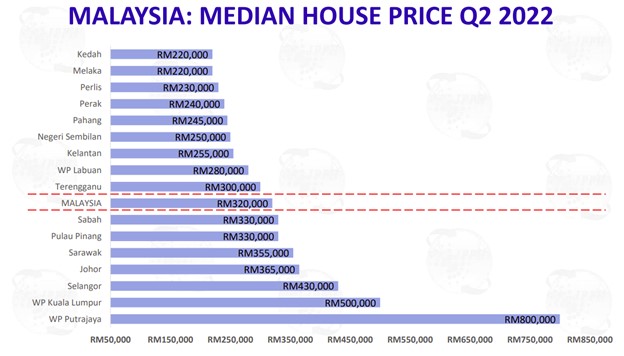
    According to NAPIC, the median home price in Malaysia in 2022 was RM320,000, up from RM305,000 in 2021. However, it fell to RM295,000 in Q1. The most expensive states to own a home in are Putrajaya, Kuala Lumpur, and Selangor, but this price differs. The median home price in Kedah and Melaka is RM220,000, which is half that of Kuala Lumpur.

    Does it also depend on your location and whether you should rent or buy a house? There is no accurate answer to that. It all depends on you.

    Yes! Every one of you has different life commitments, needs, and others.

    Read: Do You Have The Patience To Make Money In Property?

    Renting Vs Buying: Is Owning a Home Cheaper Than Renting?

    We’ll use a renting vs buying calculator to estimate how much renting versus buying will cost.

    Consider that you have decided to purchase a condominium at Setia Alam in Selangor for RM560,000. You will need to pay

    • 10% upfront as a down payment
    • 4% as a closing fee (legal fees, stamp duty and valuation fees)
    • 3% Home Insurance
    • Monthly payments of about RM2,500
    • RM250 maintenance fee

    The following are used to compute this:

    • 10% down payment
    • 4.25% interest rate
    • 30-year loan term.

    In contrast, the identical unit will cost you RM2,100 monthly to rent. You must pay the following before committing: RM5,750 as a down payment (equivalent to 2.5 monthly rent)

    The renting vs buying Calculator makes the following assumptions:

    • Property values grow by 2% year over year.
    • Rental rates for the same properties increase at a 2% YoY rate.
    • 4.0% as an investment yield (the percentage of annual earnings from investment in FD, stocks etc.)
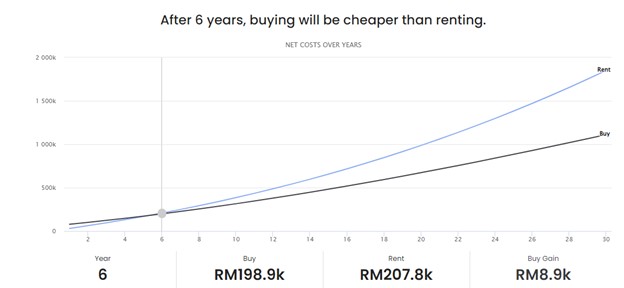
    Renting VS Buying: Cost

    After 6 years, your total cost of homeownership (down payment, mortgage, taxes, etc.) for an RM560,000 home in Malaysia would be RM829,577. Renting leaves you with RM616,246 in your pocket (including the money you didn’t spend on a down payment).

    Renting VS Buying: Gain

    After 6 years, if you buy, your home will have RM181,393 in equity (available to you when you sell). However, if you instead rent and invest your down payment and the other money you save, at a 4% return rate, it will earn around RM17,602 in 6 years.

    Looking at your gross costs, equity and investment potential, buying is better for you to buy than renting if you plan to live in your home for more than 6 years.

    As a result, it is better for you to only invest in a property that you are positive will meet your and your family’s needs over the long run. Dont forget about RPGT!  It must also be considered by buyers who intend to upgrade in 5 years or fewer.

    Remember that this is only an example for us to understand and see the whole picture. Prices for buying and renting property can vary significantly depending on the type of dwelling, the age of the property, and the location.

    There are many other factors in deciding whether buying or renting is better for you. However, one of the easiest and fastest ways to do it is by using a renting vs buying calculator.

    You should experiment with the renting vs buying calculator to determine whether buying your property right now makes sense.

    In conclusion, the decision to rent or buy property in Malaysia ultimately comes down to one’s circumstances, financial status, and market trends. For those not yet ready to make a long-term commitment or who need flexibility, renting may be a better option.

    On the other hand, buying a property may be a better choice for those looking for stability and long-term investment. It is important to consider all factors and make an informed decision based on needs and circumstances.

    Read: How To Save 50% Of Your Housing Loan Interest In Half The Time, And Get Your Dream Car For Free

  • AWS’ Cloud Infrastructure Region To Accelerate Rate Of Innovation For Malaysia

    AWS’ Cloud Infrastructure Region To Accelerate Rate Of Innovation For Malaysia

    Amazon Web Services’ RM25.5 billion investment into Malaysia – making it the first in the region for cloud computing infrastructure with 3 availability zones is a catalyst on many fronts.

    MRANTI believes this will accelerate the rate of innovation as it opens up more bandwidth for Malaysian innovators to closely collaborate with leading science, technology and innovation teams across the value chain, from anywhere in the world, at speed and with greater capacity, reliability, availability, manageability and security. This will raise the stature of our R&D for commercialisation while elevating more Malaysian technologies to market. 

    This in turn, will enhance the country’s security of innovation supply.

    AWS’s investment also opens up new pathways for upstream and downstream R&D services and solutions to be developed in Kuala Lumpur – which is ranked as a top 10 innovation hub in the region.

    It will also help us draw in the right talent and move Malaysia up the innovation value chain as the next-generation cloud infrastructure system will support a host of technologies by high-growth companies, set to take flight in the coming years.

    Malaysia is already a base for many leading multinational and leading technology companies, and we believe more will follow in AWS’ lead in this regard.

    Dzuleira Abu Bakar, CEO MRANTI

    MRANTI is committed to connecting investors and innovators to accelerate ideas to impact.  In this regard, we look forward to collaborating with AWS and Malaysian institutions, startups, and companies to deliver cloud-powered applications to fuel economic development across the country and to spur job creation, skills training, and educational opportunities for communities.

    Ultimately, it will serve the needs of the rakyat, business and industry  – as outlined in the Ministry of Science, Technology and Innovation (MOSTI)’s strategic initiatives and framework to enable Malaysia to migrate from a technology consuming to a technology producing nation strongly based on an innovation-driven economy.

    About MRANTI

    MRANTI is the one-stop research commercialisation agency with the resources to accelerate the commercialisation of innovative ideas that will drive impact. As a connector, collaborator and catalyst, MRANTI will connect problem statements (demand) with solutions (supply), bridging collaboration between public and private sectors (transition);  increase private sector participation, either through market access, investment, advisory or consultation and facilities for testing and prototyping.

  • Krenovator Introduces AI Coding Assistant to Accelerate Coding Learning for Tech Talents

    Krenovator Introduces AI Coding Assistant to Accelerate Coding Learning for Tech Talents

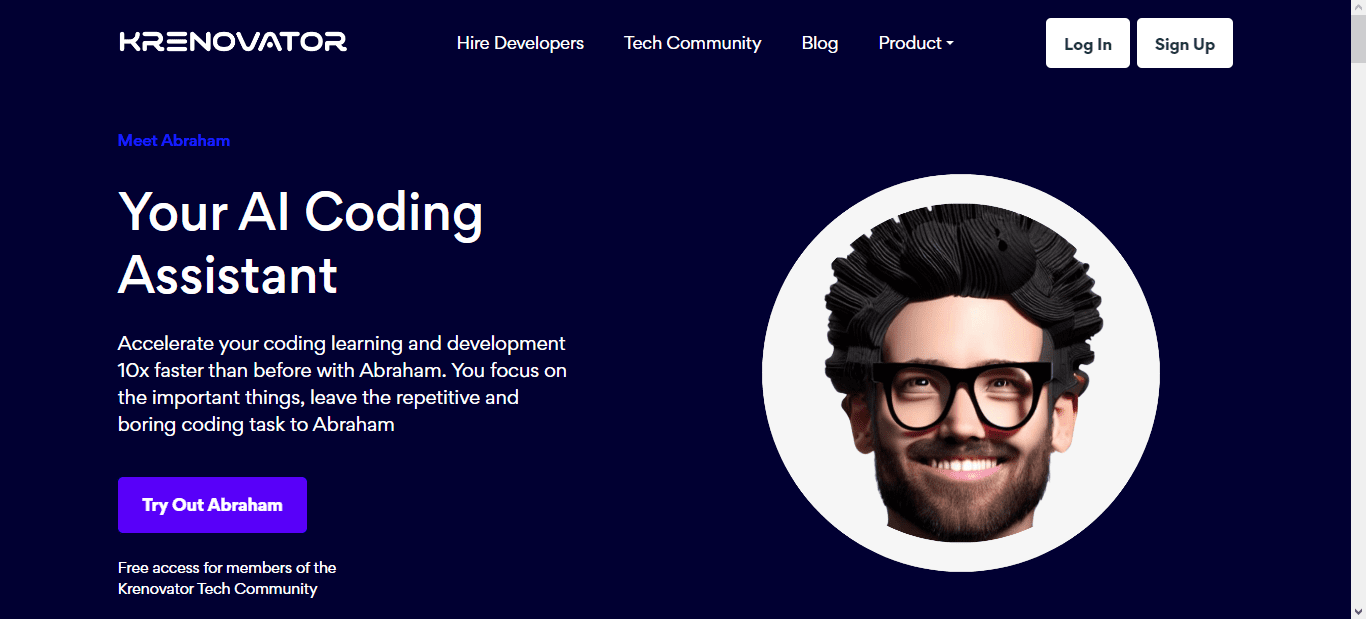
    Krenovator Technology Sdn. Bhd. announced the immediate availability of Abraham, an AI Coding Assistant on its digital Tech Talent Platform that was launched late last year. The new tool provides users with real-time feedback and suggestions, helping them to improve their coding skills efficiently and effectively. It also allows users to create new software at a much faster rate than conventional methods. The intelligent coding assistant is available for users at no charge.

    Among Abraham’s main capabilities are to assist users in completing unfinished code as well as detect any syntax or semantic errors in a code.
    Mahadhir Yunus, CEO of Krenovator said, “We are thrilled to introduce Abraham to the world. As a provider of coding training, we often receive a high volume of questions from our users. Some of these questions were unique, which made it challenging to provide quick answers, while others were repetitive. These situations have inspired us to create an intelligent and efficient method of learning to code. Our objective is to offer targeted assistance to developers worldwide so that they can create high-quality and innovative solutions.”

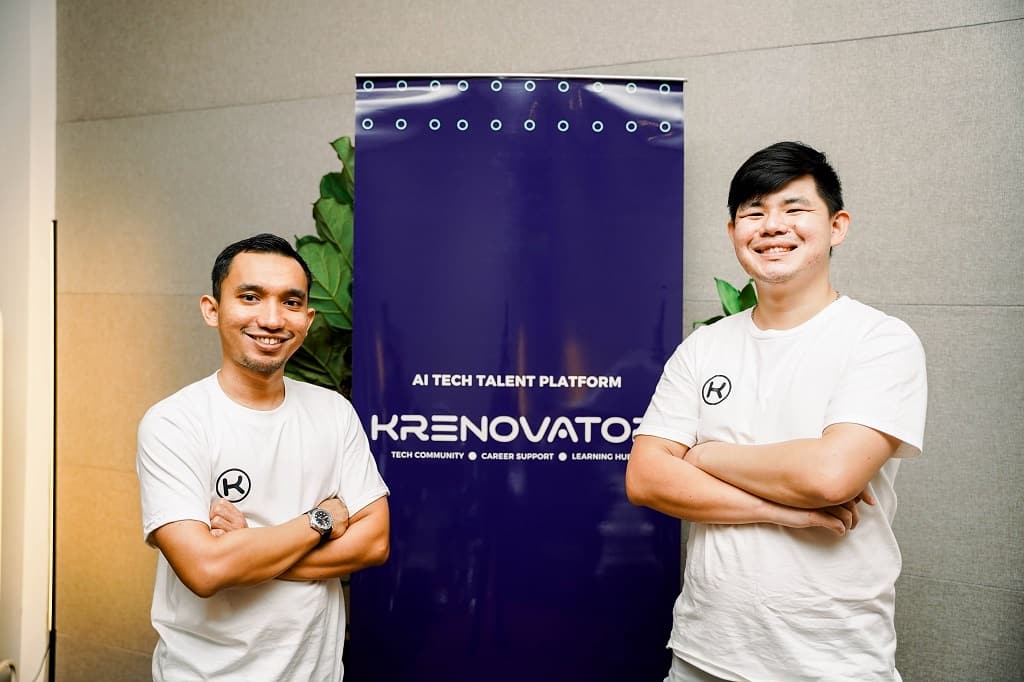
    (L-R) Mahadhir-Yunus, CEO and Calvin Lim, COO

    Currently, Abraham supports full-stack programming covering 17 popular programming languages and frameworks including frontend, backend, database, API, Angular, DevOps, Flutter, .NET, PHP, Python, Java, and Javascript. Krenovator is working on expanding the list.

    “We are glad that the work that began in early 2022 to develop Abraham has finally come to fruition now. Whether it’s a junior coder trying to fix a bug or a senior software engineer wanting to inspect their codes, Abraham can assist 24/7,” Mahadhir explains.

    “We see that Abraham has the potential of becoming the first line support assistance when it comes to coding,” he concludes.

    Krenovator plans to introduce an enterprise version of the AI coding assistant in the future. Krenovator’s Tech Talent Platform offers free coding and training modules developed by the Company. It has also recently partnered with Coursera to allow users to obtain a certification. The platform currently has more than 3,000 tech talents from Malaysia and Indonesia combined.

    About Krenovator

    Founded in 2019, Krenovator is an AI tech talent and placement platform that provides services to two main groups – individuals who want to learn and improve coding skills, and companies looking to hire qualified software developers. The Company’s digital platform which was launched in late 2022 has attracted over 3,000 tech talents from Malaysia and Indonesia. So far, the Company has also successfully helped more than 200 qualified talents to land a tech job with employers from Malaysia, Singapore, and the United Kingdom. Krenovator is based in the state of Selangor, Malaysia. Visit us at: www.krenovator.io.

  • Bintang Capital Invests In Involve Asia, A Marketing Technology Company

    Bintang Capital Invests In Involve Asia, A Marketing Technology Company

    Bintang Capital Partners Berhad (“Bintang” or the “Firm”) announced its second investment under its maiden fund, BCP Asia Fund I L.P., into Involve Asia Technologies Sdn. Bhd. (“Involve Asia” or the “Company”) to support the Company’s expansion across Southeast Asia and Australasia, as well as the development of a new product suite to cater to its customers’ increasing digital marketing needs.

    Involve Asia is a Malaysian-based marketing technology company that operates a performance-based marketing technology platform, providing a single platform to help brands market digitally through advertising attribution, partner workflow management, and creative distribution. Involve Asia partners with content creators, influencers, developers, and affiliate partners worldwide. The platform tracks and manages returns on these digital marketing partnerships for global brands. The Company operates in 6 countries, catering to over 500 brands and over 4,000 offers with more than 400,000 affiliate partners on its platform, driving over USD1.5 billion in transactions since its inception in 2014.

    The USD10 million investment round was led by Bintang, and supported by co-investors Orbit Capital Malaysia, 500 Global, and Monumental Productions. Fundraising proceeds will be utilised to fuel the Company’s recent expansion into Vietnam and the Philippines, as well as to continue cementing its footprint across Southeast Asia and Australasia. Involve Asia also plans to put part of the proceeds to use in catalysing its in-house development of a new product suite. This intends to meet the demands and needs of clients with a solution to track and attribute their business in the global online commerce industry. Amongst these include creating an in-house business intelligence team to provide its stakeholders with detailed insights into consumer purchasing patterns and developing a novel content management system for its marketing partners to manage their multi-channel promotions on a single platform.

    Bintang’s investment into growing the Company’s burgeoning Southeast Asian presence underscores the Firm’s belief that the long-term prospects in Southeast Asia continue to outweigh growing uncertainty and global headwinds. A growing working population and expanding upper-middle class underline the strong demographic trends that fortifies Southeast Asia’s position as an appealing consumer market and attractive investment destination.

    The investment in the Company was driven by the extraordinary shift in Southeast Asian consumer behaviour towards digital consumption, with more than 80% of Southeast Asian consumers expected to have transacted online by the end of 2022. Bintang believes that the increasing internet and mobile penetration in Southeast Asia would also provide significant long-term opportunities for value creation on a regional scale.

    Bintang’s Founder, Johan Rozali-Wathooth

    “Bintang believes that Involve Asia is well-positioned within Southeast Asia’s fast-growing and rapidly transforming digital marketing and digital commerce space. Its’ highly innovative business model also has great potential to catalyse positive social impact by providing opportunities for individuals and small-to-medium-sized marketing companies to harness their networks by partnering with global brands,” said Bintang’s Founder, Johan Rozali-Wathooth. With that, Johan adds, “Bintang believes that this can create new jobs and provide economic uplift opportunities for individuals in the process. These aspirations are very much aligned to Bintang’s philosophy of ‘Investing in Impact and Innovation.’”

    Jimmy How, CEO of Involve Asia

    Jimmy How, CEO of Involve Asia shared, “The team is thrilled to join forces with Bintang, Orbit Capital Malaysia, and Monumental Productions, and fortifying our partnership with 500 Global further. These partnerships and their long-term backing allows us to continue growing our platform to better serve brands, publishers, and affiliates, as well as to double down on growth.” He adds, “After closing 2022 with a record revenue of RM90 million, we’re confident this momentum will make 2023 a really significant year for Involve.”

    About Bintang

    Bintang is the private equity arm of AHAM Asset Management Berhad (“AHAM”), a leading independent Malaysian asset management group. Bintang further benefits from a parentage that includes leading global investment managers including CVC Capital Partners and Nikko Asset Management.

    Bintang focuses on deploying capital into fast-growing mid-sized ASEAN companies with proven track records: we back visionary entrepreneurs who are aligned to Bintang’s twin core investment philosophies of Innovation and Impact. Bintang is a signatory to the United Nations Principles of Responsible Investing (“UN PRI”). The Firm is also the first Malaysian signatory to the Operating Principles for Impact Management (“the Impact Principles”), an initiative whose development was led by the International Finance Corporation (“IFC”), a member of the World Bank Group.

    The Firm’s maiden fund, BCP Asia Fund I (“BCPAF I”) is anchored by Dana Penjana Nasional, an investment fund under the Malaysian Government’s Ministry of Finance aimed at catalysing the country’s post Covid-19 economic recovery whilst supporting the local private capital industry.

    BCPAF I invests in high performance, high impact and high innovation companies who are well-placed to meet the challenges, opportunities and disruption brought about by rapid advancements in technology, as well as who are committed towards delivering impact from environmental, community, employee, customer and governance perspectives.

    Further information about Bintang is available at www.bintangcapitalpartners.com.

    About Involve Asia

    Involve Asia is a global marketing technology company that provides a platform for advertisers to measure, manage and scale their marketing partnerships by automating workflows and providing attribution to marketing campaigns. Using its proprietary cookie-less tracking technology for highly accurate, future-proofed digital marketing.

    Involve has tracked over USD1.5 billion in transactions for multinationals such as Lazada, Shopee, Grab, Marriott, Malaysia Airlines, Air Asia, Nike, Citibank and over 500 customers across E-commerce, Travel, Finance and Services sectors.

    Founded in 2014, Involve Asia has been backed by major venture capital firms such as 500 Global, OSK Technology Ventures, and Cradle Seed Ventures and has an established presence across Asia with offices in Malaysia, Indonesia, Philippines, Singapore, Thailand and Vietnam.

  • Over 700 Vendors Gain Digitalisation Upskills From PLATS

    Over 700 Vendors Gain Digitalisation Upskills From PLATS

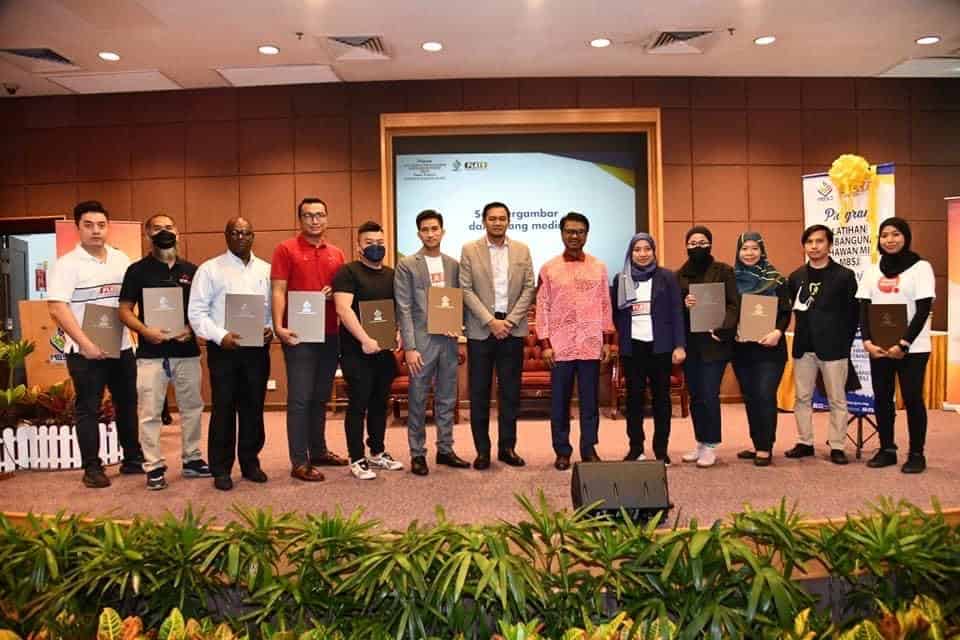
    60 hawkers from Hulu Langat, Selangor joined the latest session of the Selangor Micro Hawkers Development Training Programme held on 27 January to gain digitalisation skills organised by Platform Selangor (PLATS).

    A total of 708 hawkers from across Selangor’s 12 districts have been trained about the impact of digitalisation on the economy by Platform Selangor (PLATS) since August 2022.

    PLATS is an initiative of Permodalan Negeri Selangor Berhad  (PNSB) and Menteri Besar Selangor Incorporated (MBI), and arranging the training is a proactive step by the state to help citizens elevate their business through a digital community platform. It aims to mobilise the merchants, hawkers and grocers.

    The half-day long training – typically conducted with local partners including Maybank, OCBC and the Employees Provident Fund (EPF) – counsels these vendors about the benefits of digitalisation to their business.

    To date, it has benefited individuals from the Selangor Micro Hawker Development Training Programme from Kuala Selangor (80), Subang Jaya (100), 109 individuals from the Kajang programme, and 177 people from the Shah Alam branch. All individuals have received certificates from PLATS to help boost their business.

    In its most recent session, around 50 people from the Kuala Langat Micro Hawker Development Training Programme were involved. In the near future, more trainings will be held in Majlis Perbandaran Klang (MPK), Majlis Bandaraya Petaling Jaya (MBPJ) and Majlis Perbandaran Selayang (MPS).

    “PLATS helps provide a platform for these individuals to grow and move towards the digital world. In doing so, we are confident that these merchants, hawkers and grocers can be more sustainable in the future,” said Y.M. Raja Ahmad Shahrir Iskandar bin Raja Salim, Chief Executive Officer of PNSB.

    He adds that the training programme serves as a foundation for these small business owners to learn – hard skills as well as soft skills – and is the best avenue for them to raise questions in their quest to gain clearer knowledge about digitalisation.

    PLATS’ training comprises topics of managing social media accounts, basic editing of social media posts, management process of online orders, adaptation of Cashless Transactions, basic digitalisation of business, and an introduction to PLATS. There are 12 sections during training and attendees gain awareness and information on their journey towards the modernisation of the economy.

    Y.M. Raja Ahmad Shahrir Iskandar emphasised that PLATS prioritises the growth of merchants and grocers in the state. In future, he said, the programme targets to improve its website: to make it easier and more convenient for merchants and users, as well as trainers and speakers for the training.

    About PLATS

    Platform Selangor – PLATS – is the initiative of the Selangor State Government to support and promote the businesses of hawkers and other small merchants. This digital directory of merchants was mooted in 2020 with the launch of the PLATS e-bazaar, Malaysia’s first ever digitalised Ramadan bazaar.  Following this, the PLATS 2.0 efforts in 2022 has seen it become Selangor’s digitalisation platform catalyst for small business owners. 

    For more information on PLATS, visit the website at www.platselangor.com

    About Permodalan Negeri Selangor Berhad – PNSB (www.pnsb.com.my)

    Permodalan Negeri Selangor Berhad, or as it is more widely known, PNSB is a Selangor State Government subsidiary, under the supervision of Menteri Besar Selangor (Incorporated) or MBI.  As a subsidiary organisation of the Selangor state government, PNSB focuses on real estate development as its core business, developing residential and commercial property as well as housing estate and townships that are sustainable and affordable in Selangor and the Klang Valley.

    Through its subsidiary, PNSB offers insurance service via PNSB Insurance Brokers Sdn. Bhd. (PIBSB), project management consultancy services via PNSB Management Consultancy Sdn. Bhd. (PMC), mining activity through PNSB Trading Sdn Bhd (PTSB) and aeronautical exploration services via PNSB Aero Frontier Sdn Bhd. With its mission to diversify its business, PNSB also intends to seek opportunities to work with investors through its subsidiary, PNSB Investment Venture Sdn. Bhd. (PIV).

    PNSB also plays a vital role in carrying out corporate social responsibility obligations as it is a government subsidiary with conscience taking an active role in corporate social responsibility (CSR) on behalf of the Selangor state government and as well as for PNSB itself.

    About MBI

    Menteri Besar Selangor (Incorporation) was established under the Selangor Menteri Besar Enactment (Enactment No: 3 1994) on 21 September 1994. MBI Selangor is a body established specifically to administer the management of assets and investments belonging to the State Government in carrying out activities business that is outside the jurisdiction of the State Government. MBI also plays a role in promoting and supporting the development efforts of the State of Selangor in addition to fulfill social responsibility obligations to the community For more information on MBI, visit the website at https://www.mbiselangor.com/ms/

  • Digitalization Is Your ESG Enabler

    Digitalization Is Your ESG Enabler

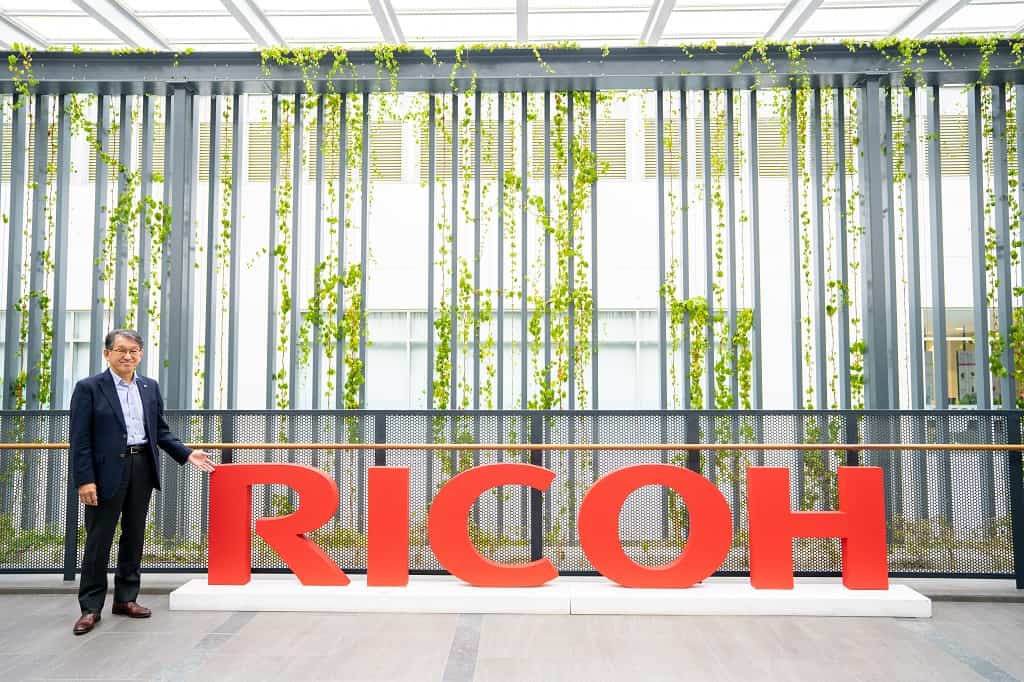
    Mr. Jake Yamashita, President and CEO of RICOH, paid a visit to RICOH Malaysia’s newly renovated headquarters in Shah Alam today. This marks a number of milestones for the company, including Ricoh’s smart office transformation, which has catapulted the company into a new era of digitalization, as well as Yamashita’s first visit to Malaysia from Japan. To acknowledge this gracious occasion, RICOH Malaysia held an exclusive roundtable discussion for the media to highlight the importance of digitalisation and Environment, Social and Governance in the workplace.

    Accompanying Jake on the panel was Joji Takunaga, Managing Director of Ricoh – Asia Pacific + Latin America and Steven Burger, General manager of Ricoh – Asia Pacific + Latin America. The afternoon was addressed by Alice Lee, Managing Director of Ricoh (M) Sdn Bhd.

    Many topics were touched during the panel discussion which included Ricoh’s new approach to the ever-changing world which is to assist businesses make a seamless digital transformation towards their goals in achieving genuine ESG. 

    From left Joji, Jake & Steven at the Media Roundtable

    Jake’s visit to Malaysia is intended to address several issues that RICOH and the majority of companies globally are facing – the need for digital transformation. RICOH Graphic Communications, RICOH Industrial Solutions, and RICOH Futures are all important players in the digitalization of workplaces, because these business sectors frequently engage in advanced technological and conceptual areas.

    Jake claims that many people associate Ricoh with copiers or the environment. He stated that he appreciates this because it demonstrates the collaborative efforts of RICOH management and employees over the years. Since 1998, RICOH has advocated environmental management, and its cumulative efforts in a progressive approach to environmental, social, governance (ESG) have been the reason customers and dealers worldwide choose RICOH as their preferred partner. Because of this, RICOH refers to ESG as future finance.

    The adoption of digital technologies and their potential to influence ESG priorities are becoming increasingly convergent. Improved data collection, reporting, and analysis will have the biggest impact right away and will benefit every part of the business. Additionally, finance and treasury organisations are adopting next-generation technology, including cloud infrastructure, robotics for shared service centre operations, artificial intelligence (AI), machine learning, and blockchain to digitise supply chains. They are also deploying new data and collaboration tools to achieve important objectives like regulatory compliance, data protection, workforce productivity, and much more.

    The secret to effectively using digital technology as an ESG enabler is to ensure that a comprehensive strategy is in place with collaboration across an ecosystem of partners, including businesses, governments, banks, multilateral organisations, and other third-party providers, who can offer solutions and share information in pursuit of important goals.

    Mr. Joji Tokunaga, Managing Director, Ricoh APAC & LA, at the Asia Pacific Central Refurbishment Center that refurbishes Ricoh hardware and give them a new lease of life

    “When we decided to become a digital services company focused on the world of work, some people wondered if we were abandoning our manufacturing roots. Some businesses have undoubtedly adopted a strategy of outsourcing hardware production and focusing on services. Our approach, on the other hand, is to collaborate with customers. Edge devices are critical to achieving our objectives,” Jake explained.

    People generate a wide variety of data at work. It is crucial to extract the required and important data from the massive volumes that are produced. The effectiveness of analysis and artificial intelligence-based work is increased by high-quality data. Jake continued, “It will be challenging to create an ecosystem where data can add value. Even if you build a great platform, without good edge devices, you will only get meaningless information. This is where the RICOH Smart Integration co-creation platform comes into play.

    Jake believes that people must be innovative, generate useful ideas, and broaden their perspectives because they are at the centre of all work processes. It is essential to make artificial intelligence, systems and networks, and other digital platforms more approachable, accessible and user-friendly for people because they are analogue beings living in a world that is becoming more and more digital. “I think the Ricoh Group can pull this off”. Although AI and other machines have historically had limited capabilities, Jake suggested that as they have advanced quickly, the possibilities have greatly increased too.

    Robotic Process Automation (RPA) was implemented by RICOH in 2018. They started re-evaluating the duties that employees should carry out as they overhauled their business processes. Consider the possibility that one business process can be automated by a single robot. Will the other 50 workers be idle if 70 robots and 50 employees can complete the work that 100 people previously handled? Should we be pleased that we can reduce labour costs by half?

    Mr. Jake Yamashita, President & CEO, Ricoh Ltd. a strong advocate for ESG highlighting Ricoh Malaysia’s in-office recycling efforts

    “No. We should be delighted to have freed those people up to take on new and creative work. We should invest in educating and reskilling these people accordingly”, affirmed Jake.

    “I would be thrilled if customers were to realize that Ricoh is always there for them, willing to assist them with their work needs. Of course, we take pride in the fact that we have always supported our clients, and we intend to keep doing so while harnessing the power of digital technology to address their issues and remain accessible to them, assisting them with digital transformation and their advancement towards their ESG practices. We will make an effort to focus all investments, development of human resources, and management decisions on achieving that objective, and we will keep working to provide top-notch goods and services.

    We are boldly taking on new challenges with our eyes fixed on the opportunities that lie ahead precisely because we are all generally going through a difficult time. The Ricoh Group will keep working to achieve Fulfilment through Work so that our stakeholders will continue to hold high expectations for our efforts”, Jake concluded.

    About Ricoh

    Ricoh is empowering digital workplaces using innovative technologies and services that enable individuals to work smarter from anywhere. With cultivated knowledge and organizational capabilities nurtured over its 85-years history, Ricoh is a leading provider of digital services, information management, and print and imaging solutions designed to support digital transformation and optimize business performance.

    Headquartered in Tokyo, Ricoh Group has major operations throughout the world and its products and services now reach customers in approximately 200 countries and regions. In the financial year ended March 2022, Ricoh Group had worldwide sales of 1,758 billion yen (approx. 14.5 billion USD).

    For further information, please visit www.ricoh.com

  • It Is Everyone’s Business To Be Breast Health Aware

    Breast cancer conjures images of disfigurement, pain, and all things negative, yet it is highly treatable if discovered early and given timely and appropriate treatment. Early discovery also means the overall treatment may be simpler, less costly, and more effective.

    The exact cause of breast cancer is unknown. Many of the risk factors are those we cannot change— such as being born female, getting older, having dense breasts (a feature best seen on mammograms), and inheriting certain gene changes (although genetics only causes 5-10 per cent of cases).

    “Early detection is the best protection.”

    – Ranjit Kaur Pritam Singh, Board Member of Reach to Recovery International

    So How Do We Go About Discovering Cancer Early?

    Understanding and getting to know your breasts’ characteristics and appearance is the first step towards being breast health aware, and this applies to both men and women. In the ideal situation, one examines one’s own breasts systematically once a month, about 3 days after menstruation ends, or in those who are menopaused or who are male, on the same date each month. Ladies older than 18 years can begin this self-familiarisation process.

    If you feel or observe something of concern in your breasts, and it persists after two menstrual cycles, please see your doctor. For those who are menopausal or male, please see your doctor without too much delay. While we might be worried about getting breast cancer, worrying does not make cancer go away. Instead, you may be wasting precious time. Good news, ladies, most abnormalities felt (commonly a lump) are not cancerous.

    The Routine Procedure That Can Save Your Life

    As a woman gets older, an annual clinical breast examination (by a doctor or breast care nurse) may be added to her routine. If you are female, even if you feel nothing wrong in your breasts, consider a screening mammogram once you are over 40 years old, when the risk of getting breast cancer has increased enough to make screening useful.

    Then get it done regularly at one or two year intervals. Screening means getting a mammogram even when you do not feel or see anything wrong with your breasts. A mammogram can detect cancer before you can feel it, which means early discovery.

    “Cancer is just a word. With the right mindset and support, we can thrive beyond imagination.”

    – Kim Lim President of Breast Cancer Welfare Association Malaysia

    The mammogram is a series of special low dose X-rays with the breasts in optimal compression. The standard mammogram is made up of two views per breast. The 3D mammogram obtains a series of low dose X-rays in an arc for each view. This produces many images, each with less overlapping breast tissue, thereby improving the ability to pick up abnormalities.

    The mammogram does not have a 100 per cent cancer pick up rate. The ability to detect cancer depends on several factors. This includes each person’s unique breast tissue pattern and density (proportion of fat in relation to the fibroglandular tissue). Therefore, it is important to keep your old mammograms for comparison to improve detection and accuracy rates. Despite these factors, the mammogram continues to be the gold standard for breast cancer screening.

    Now is the time to take charge of your own health.  Remember, early cancer discovery saves lives.

    About the Author

    Dr Evelyn LM Ho is a Consultant Clinical Radiologist at ParkCity Medical Centre; Technical Advisor -Breast Cancer Welfare Association Malaysia; and Immediate Past President – Asian Oceanian Society of Radiology.

  • Post GE-15: Malaysia’s Economic Challenges

    The post-electoral coalition between Pakatan Harapan (PH) and Barisan Nasional (BN), along with Gabungan Parti Sarawak and Gabungan Rakyat Sabah, has vividly shown us what “politics as the art of the possible” really means. But what about Malaysia’s economic challenges?

    After all, who would have thought BN, whose legitimacy has been relentlessly challenged since Datuk Seri Anwar Ibrahim’s fall from grace in 1998, would eventually erode when it lost a two-thirds majority in 2008 and the popular vote in 2013 to the Anwar-led Barisan Alternatif. BN’s reign ended with the power shift to PH in 2018.

    At least for now, the seemingly strong coalition with two-thirds majority seats masks a critical fact: nearly two-thirds of Malay voters believe in Perikatan Nasional (PN) as a reliable political party after UMNO when it comes to protecting their interests. Many of them are young, semi-skilled, and reside in rural areas.

    However, whether the shifting landscape of Malay votes is purely ideological and political remains to be observed. Its economic roots should not be taken lightly. Of all the economic dissatisfactions capable of shaping voting preferences, nothing can be more personal and consequential than the low, nearly stagnant, and relatively unfair wage progress.

    Let’s chart out a few hypotheticals.

    Malaysia’s Economic Challenges

    A beautiful shot of the Kuala Lumpur buildings under a cloudy sky at Malaysia

    Let us take an honest, hard look at what Malaysia’s economic challenges mean. Suppose we take 2010 as the year of comparison. In 2021, gross national income expanded by 71%, or 6.45% on average each year since. Going at this speed, the national income would have doubled every 11 years.

    At the same time, half of the wage earners in Malaysia witnessed the purchasing power of their income stall at 22%. It is, at most, better than the individuals in the same income group were 11 years ago.

    Compared to 2010, when the B50 earned RM1,000, their standard of living has only gone up by RM220, or RM22 per year. To double B50’s monthly income after adjusting for the cost of living will take 35 years or more.

    The truth becomes even more obnoxious if we go down the demographic road. Look at the purchasing power of the income for B50, aged 30 to 34 years old, and it is just 11% better over the same period of time, or 1% on average each year.

    In other words, it takes 70 years for a B50 in this age cohort to live one time better than the older generations. Unfortunately, the gross national income is already 64 times higher by then!

    The worst is for those in the younger age cohort. The income of people aged 25 to 29 in 2021 was 4% less than that of the same age group in 2010. This means that they have less money to spend, and this is one of the main issues when it comes to Malaysia’s economic challenges.

    Malaysia’s Economic Challenges: Of Regions And Skill

    Turning to the perspective of regions and skill level, it is perhaps unsurprising to find out that rural and semi-skilled median wage earners, which constitute more than half of our labour force, benefit the least in their categories from the growing economic prosperity.

    Source: DOSM; Author’s own calculation

    Rural residents are 14% better, while semi-skilled workers are 20% better. What’s more surprising is that race doesn’t matter as much as we used to believe. Actual salaries and wages for Bumiputera B50 in 2019 were 65% greater than that of the 2010 cohort, outperforming the 44% advancement for Chinese B50.

    Bumiputera B50, on the other hand, was hit the hardest by the pandemic and had been getting better more slowly. Putting all this together, the lesson is straightforward: not all Malaysians prosper equally. And when they don’t, it instigates a sense of unfairness.

    As economic anxiety and discontent mobilises voters, it must be more than just a coincidence that rural residents, semi-skilled workers, and young voters identified along the racial line, who are losing out in the horse race of prosperity and suffering the most in the pandemic, happen to be bowling with Perikatan Nasional in the most recent general election.

    Against this backdrop, addressing economic anxiety and discontent makes the economic slogan ‘shared prosperity’ meaningful. Perhaps more importantly, it works to break down electoral divisions based on ethnicity, geography, and occupation without using racial rhetoric.

    Bolstering economic growth, though necessary, is no longer sufficient to lift the living standard of the majority. The trickle-down effect of growth is long dead. For this, the Anwar government and cabinet need a paradigm shift in their policy-making philosophy.

    Growth policies shouldn’t stop looking for new growth sectors. Instead, they should make existing products and sectors more complicated. That means investment policies cannot be satisfied by bringing in more foreign direct investment. It will be done by strengthening ties between domestic and foreign companies and giving domestic companies more ways to work with the rest of the world and export.

    That means labor policies shall not be bound by the traditional domain of labor issues when laborers go through the gig economy route and become entrepreneurs. The employer-employee social contract is evolving.

    Welfare policies will be more than just a one-time cash transfer and financial aid for marginalised communities and poor families. It is, in fact, a way for all Malaysians to get automatic protection against risk and a way to share returns. This is done by coordinating cash transfers, tax rebates, unemployment insurance, subsidies, and other programs.

    That also means that government functions shouldn’t be put in separate boxes and that policies should be thought about, designed, and put into place in a way that doesn’t divide them up. It’s true that politics is the art of the possible, the attainable, and the best.

    But don’t get it wrong. A power play for the possible and attainable without pivoting to the economic needs of the people only ends with pushing voters to their next best option.

    “Good politics is the art of bringing the possible and the attainable to the people.”

    I hope the new Malaysian government will take a severe look at Malaysia’s economic challenges and take the right step towards addressing them.

    About the Author

    Wong Chin Yoong is a professor of economics in Universiti Tunku Abdul Rahman, and an external consultant to Max Wealth Group. This article is in collaboration with Max Wealth Education Sdn Bhd, an approved Education Provider for the CFP Certification Program.

  • Talentbank Reveals 140 Top Employers in Malaysia in the Graduates’ Choice Award 2023

    Talentbank recently revealed the winners of the Graduates’ Choice Award (GCA) 2023 – Asia Pacific’s Most Authoritative Graduate Employer Branding Award.

    The event which was held on January 5, 2023 at Sunway Resort Hotel, was officiated by Guest of Honour Datuk Mohammad Yusof Apdal, Deputy Minister, Ministry of Higher Education and Datuk Prof. Dr. Husaini Omar, Director General, Ministry of Higher Education. Also in attendance were Vice-Chancellors from tertiary education institutions including Universiti Teknologi MARA, Universiti Malaysia Perlis, Sunway University, Heriot-Watt University Malaysia, University of Nottingham Malaysia, UOW Malaysia and Multimedia University.

    The GCA 2023 takes into account the wants and needs of more than 23,000 public and private education students – in various aspects – as well as their most preferred employers. The results were vetted by a group of audit members to ensure that the findings were independent and valid.

    “Since its establishment in 2018, Talentbank’s GCA has received more than 200,000 accumulative votes from university graduates, giving the award meaning when it comes to what graduates want in an employer.

    “University and tertiary education students voted for a solid 12 months for GCA 2023 and as we continue to receive an increasing number of votes each year, undergraduates are signalling to the industry on the growing importance of employer branding,” Ben Ho, Chief Executive Officer of Talentbank said.

    He added that without the right employer branding, employers risk not hiring the right talent.

    The Graduates’ Choice Awards, he said, is a big part of an effort to improve Malaysia’s employability landscape. It serves to pave the way for graduates to find their preferred careers.

    GCA’s 2023 survey revealed flexible working opportunities to be a popular attribute for employment besides the value for work-life balance. Salary and bonuses, career development and company culture remain in the top three important attributes and there was a stark increase in graduates expecting salaries ranging between RM3,000 and RM3,500.

    On the topic of career readiness, GCA’s 2023 results found employers rating career readiness among fresh graduates a 6 out of 10, indicating the importance of equipping fresh graduates with adequate skill sets. Based on the results, Talentbank encourages further active engagement between universities and students, while seeking alternative methods to ensure graduates are well prepared before entering the job market.

    “Communication and interpersonal skills rank top in the critical skills employers look for in fresh graduates and besides good academic skills, talents with good attitude are always sought for by employers,” Ho said.

    In his key address, Datuk Mohammad Yusof Apdal commended Talentbank for its effort that corresponds with the ministry’s development of an ecosystem to provide a high-quality education to develop individuals’ potential and meet national aspirations.

    “The private sector has a big role to play in the process of improving our graduates’ employability, while being supported with the right policies to create a sustainable environment. Talentbank plays the conduit through which universities and the industry can form a successful ecosystem linking top employers and graduates,” he said.

    Noting the constant evolution of the job market and skills demanded for in the workforce, Datuk  Mohammad Yusof Apdal said human talents are still pivotal even as the world moves towards a more digital workforce.

    “According to a study by McKinsey, superior talent can be up to eight times more productive. Unfortunately, talent is not easy to come by. Great talent is scarce. The competition to attract and retain talents is becoming increasingly fierce. This is why I applaud Talentbank for starting this journey of recognising the importance of employer branding”.

    “It does not only reward the companies that go above and beyond to build a brand amongst university graduates, but more importantly it provides a fair and robust measurement on which graduates can start researching on their preferred employers and careers,” he said, adding that employer branding can be the silver bullet to attract top candidates.

    “A strong employer brand increases the chances of recruiting the right talents significantly”, the Deputy Minister said.

    The GCA 2023 saw big brands like Maybank, Petronas, Shopee, Google, and Microsoft on the Top 25 list of the 2023 Graduates’ Choice of Employers. Also making the list were Maxis, Shell, EY, CIMB and Intel.

    The brands that have made the list for five consecutive years are: AIA Berhad in the insurance category, Maybank in the banking category, Nestlé in the fast-moving consumer goods (FMCG) category and in the engineering category, Petronas.

    Talentbank also revealed that Sunway Group bagged five Champion positions across nine industry categories while Maybank took three Champion, and made the Overall Champion across the categories. Petronas won three Champion titles in four categories they were listed in and EY clinched two Champion awards in the field of accounting and consulting.

    “We applaud all the winners for your hard work, determination, and the excellence and distinction you achieved in exceptional employer branding in Malaysia,” said Ho.

    About Talentbank

    Established in 2010, Talentbank is an enabler in the employability ecosystem, focused on producing career-ready candidates and providing them with better career paths by connecting them with industry leaders. Over the last 13 years, Talentbank has helped tens of thousands of graduates in finding their feet post-graduation. Talentbank also assisted hundreds if not thousands of employers in hiring talents from universities nationwide. This list includes the likes of Maybank, Petronas, Shopee, Maxis, Shell, EY, Huawei, CIMB, Shopee, Intel and many others.

  • How Technology And ESG Making The World A Better Place

    How Technology And ESG Making The World A Better Place

    Environmental, social, and governance (ESG) are gaining momentum and becoming the talk of the town worldwide, including in Malaysia. We are committed to becoming a nation with net-zero greenhouse gas emissions by 2050, and it needs a concerted effort by the government and the private sector.

    Smart Investor spoke to an industry expert, Ben Lim, to learn more about how technology and ESG are making the world a better place. Ben is Epicor Malaysia’s Senior Country Manager with ten years of ERP (Enterprise Resource Planning) experience.

    Epicor Software Corporation equips hard-working businesses with enterprise solutions that keep the world turning. For almost 50 years, Epicor’s customers in the automotive, building supply, distribution, manufacturing, and retail industries have trusted Epicor to help them do business better.

    Ben Lim, Senior Country Manager, Epicor Malaysia

    How Technology And ESG Making The World A Better Place

    Smart Investor: What does ESG mean to you, and why is it important to your business?

    Ben Lim: ESG for Epicor is about understanding how we can help our customers better understand their environmental waste data, such as reduced energy consumption and carbon emissions, and support our customers’ social interdependencies, such as data hygiene and data security. Epicor helps companies improve hiring and onboarding best practices and logistics to achieve their business goals.

    Progress on ESG initiatives is taking place at many levels, with businesses increasingly looking to strengthen their brand reputations through environmentally sound organisational practices. Cloud computing is uniquely positioned to help businesses save energy, reduce waste, and adopt sustainable business practices that support a healthier environment. Epicor’s customers in Malaysia can do just that.

    Epicor has researched the opinions of technology decision-makers on their opinions and benefits of cloud computing with regard to their organisation’s sustainability objectives. Overall, the research results point to a positive trend when it comes to prioritizing sustainability within the corporate agenda.

    An overwhelming 93% of IT decision-makers surveyed named sustainability as their focus area, with 41% saying it is a key focus area.

    SI: How do technology and ESG impact your industry?

    BL: A recent quote from Gartner summarizes the importance of sustainability and the impact it has on our industry, stating: “By 2025, 40% of all manufacturing company IT departments will own the responsibility of data modelling for sustainability and net-zero carbon targets”.

    Malaysia has also committed to achieving carbon neutrality by the year 2050. This highlights the urgency for IT departments to start taking ownership and looking both internally and externally at how they can help to achieve this goal.

    Clear evidence of this necessity is the increase in customer type and the need to understand more about how to achieve better consumption rates. Customer migrations are another important impact, including the reasons behind it.

    SI: What are the key factors for a successful technology and ESG deployment?

    BL: Cloud computing can have a direct and positive effect on sustainable operations, particularly when it comes to running IT daily operations, offices or facilities. This includes digitizing paper-based communications with cloud-based electronic document signature solutions to simplify the process, reduce reliance on paper and minimize environmental impact.

    Complex manufacturing systems and data flows are monitored and controlled for improved efficiency in operations. This ultimately results in the maximization of resources and the reduction of resource wastage which reduces adverse effects on the environment.  All of this is right in the wheelhouse of Epicor, being an ERP software as a service (Saas).

    Another key factor for successful deployment is a clear understanding of the industry, its processes for which areas that need improvement can be identified and the right solutions (not just immediate/quick fixes but also fit for the future. (i.e. workforce gaps, automation on the factory floor, production processes, and measurement/consumption of energy deployment needs to be about industry expertise and then having the right solutions now that are also fit for the future).

    About half of the IT leaders surveyed (47%) believe they can reduce paper wastage through digitization efforts, and 42% believe that cloud computing will significantly reduce IT hardware wastage within their organisations.

    SI: What are the key trends you see gaining traction for technology and ESG?  What are the areas of growth amongst the pillars to look at in 2023?

    ESG, Environmental, Social and Governance printed in blue with two rubber stamps over white background. Corporate responsibility concept.

    BL: The Covid pandemic has momentously shifted working patterns for good, with the growing number of employees working remotely from home, either permanently or part-time, as part of a hybrid model. Cloud computing acts as an enabler for the distributed workforce and ‘work from anywhere’ practices. However, the environmental impact of remote work is not as easy to measure.

    The worsening global climate crisis and conflict in Ukraine are propelling complex risks, and organisations need to be aware of how these risks affect their businesses and help management plan strategically and tactically. Climate and geopolitical issues should be a permanent part of a company’s enterprise risk management.

    The traditional shareholder-centric capitalism of the past half century is giving way to a broader set of shareholder considerations, expectations, and interests where employees, customers, regulators, suppliers and others are playing more important roles.

    SI: How do technology and ESG trends shape Epicor as an organisation and its services?

    In Malaysia, we are witnessing manufacturing companies become more observant of how their data is being collected and a trend where data is being managed via a formal energy intelligence system, connecting executives to the day-to-day tactical operations to achieve the strategic business goals that include ESG. One of the key solutions that Epicor heavily invests in is the Epicor Manufacturing Execution Systems (MES) which collects data from shop floor resources such as machines and operators.

    On the factory floor, the complex manufacturing systems and data flows are monitored and controlled for improved efficiency in manufacturing operations. This ultimately results in the maximization of resources and the reduction of resource wastage which reduces adverse effects on the environment.

    SI: How has Epicor Software helped improve many organisations with their software?

    Image by Freepik

    Epicor solutions fit very well for organisations that Make, Move & Sell. The Manufacturing, Distribution and Services industries are the three key industries that Epicor focuses on in Malaysia, and we have helped these organisations harvest exponential growth and improve their bottom line.

    We are proud to have worked with Solarvest Holdings Berhad, one of Malaysia’s market leaders in the growth of the solar photovoltaic energy industry. The implementation of the Epicor ERP, Kinetic, has aided Solarvest in boosting their productivity and their capability to take on more projects than they were previously.

    According to their CEO Davis Chong, Solarvest may have only been able to commit to 30 projects in a year but with the support of Epicor Kinetic, the company is now able to take on as many as 100 projects a year.

    SI: How can Epicor help or contribute to Malaysia’s SME digital transformation?

    Image by rawpixel.com on Freepik

    BL: At Epicor, we’ve built our reputation on knowing exactly what our customers need. According to the OECD (Organisation for Economic Co-operation and Development), research has indicated that 70% of SMEs have intensified their use of digital technologies due to COVID-19. SMEs are one of our key markets, and implementing ERP as part of their digital transformation is a key success factor for our SME customers’ growth.  

    We work hand-in-hand with our customers to better understand their businesses and industries to deliver market-leading industry productivity solutions and practices via Enterprise Resource Planning (ERP) Software to solve our customers’ real business problems and provide seamless customer experiences.

    Epicor in Malaysia has successfully assisted SME organisations in the following industries: metal/steel services, industrial machinery, electronics, medical devices, automotive, F&B, engineering, and chemical.

    Now you know how technology and ESG make the world better.